
 Posts
Posts


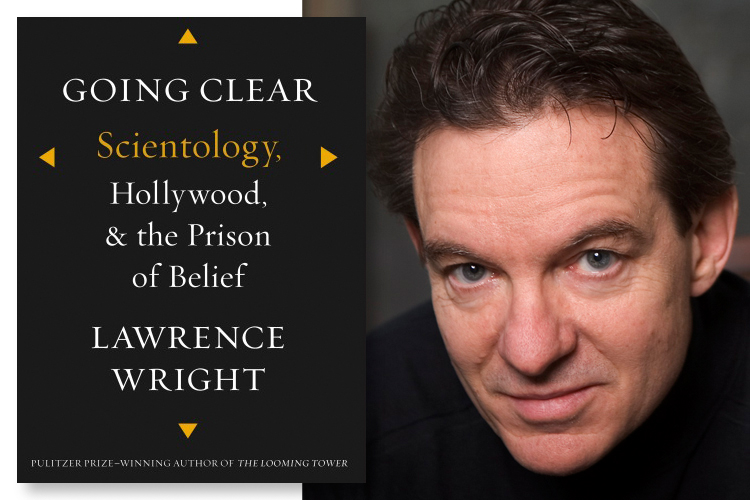
“Going Clear”: Scientology exposed
Lawrence Wright's enthralling, meticulously fact-checked account of the insular church and its celebrity members
Topics:
Scientology,
Church of Scientology,
lawrence wright,
The New Yorker,
Religion,
Cults,
Editor's Picks,
Nonfiction,
Books,
What to Read,
David Miscavige, Entertainment News
Several years ago, for a series of Salon articles about Scientology, I was asked to review the founding text of the church, “Dianetics”
by L.Ron Hubbard, first published in 1950. The book seemed so clearly
the work of a man suffering from particular and pronounced mental health
issues that I became, for the first time, curious about its author.
Like most self-help books, “Dianetics” frequently invokes case histories
or hypothetical scenarios, but unlike most self-help books, Hubbard’s
stories featured an alarming amount of violence, specifically domestic
violence.
Over and over, when imagining a childhood source for an individual’s problems, Hubbard spins tales of unfaithful wives and husbands who beat and verbally abuse them, sometimes kicking their pregnant bellies. Perhaps we can attribute some of this to a preoccupation with prenatal trauma; “Dianetics” insists that fetuses can understand damaging statements made to the women carrying them. Nevertheless, to me, the most striking thing about the book — besides Hubbard’s belief that it is “not uncommon” for women to make “twenty or thirty” attempts at a self-induced abortion with orange sticks and other implements — is its author’s assumption that such beatings are a commonplace aspect of most people’s home lives.
I wanted to find out if Hubbard had grown up amid such abuse, or had experience of it in his adult life, so I went online to poke around. What I found, on assorted anti-Scientology websites and discussion forums, seemed so outlandish and extreme that I decided not to refer to those charges at all in my review. I couldn’t be sure they were substantiated.
Scientology has involved preposterous claims from the very start — from before the very start, actually, since “Dianetics” (published two years before the foundation of the church) promises that a “clear” (an individual who has succeeded in using the Dianetic “technology” to free him- or herself of all impairing “engrams”) will attain assorted superpowers. These include healing his or her own disabilities and illnesses, as well as perfect recall, the capacity to perform “mental computations” at lightning speeds and various forms of mind reading and control. Scientology’s critics, on the other hand, accused Hubbard of — yes — domestic violence (including an incident in which he demanded that his second wife kill herself to prove she really loved him), to bigamy, lying about his service in World War II, engaging in black magic rituals and throwing followers who displeased him off the high deck of his ship. The church has countered such attacks by flinging accusations at its critics, from public drunkenness to adultery and homosexuality.
Over and over, when imagining a childhood source for an individual’s problems, Hubbard spins tales of unfaithful wives and husbands who beat and verbally abuse them, sometimes kicking their pregnant bellies. Perhaps we can attribute some of this to a preoccupation with prenatal trauma; “Dianetics” insists that fetuses can understand damaging statements made to the women carrying them. Nevertheless, to me, the most striking thing about the book — besides Hubbard’s belief that it is “not uncommon” for women to make “twenty or thirty” attempts at a self-induced abortion with orange sticks and other implements — is its author’s assumption that such beatings are a commonplace aspect of most people’s home lives.
I wanted to find out if Hubbard had grown up amid such abuse, or had experience of it in his adult life, so I went online to poke around. What I found, on assorted anti-Scientology websites and discussion forums, seemed so outlandish and extreme that I decided not to refer to those charges at all in my review. I couldn’t be sure they were substantiated.
Scientology has involved preposterous claims from the very start — from before the very start, actually, since “Dianetics” (published two years before the foundation of the church) promises that a “clear” (an individual who has succeeded in using the Dianetic “technology” to free him- or herself of all impairing “engrams”) will attain assorted superpowers. These include healing his or her own disabilities and illnesses, as well as perfect recall, the capacity to perform “mental computations” at lightning speeds and various forms of mind reading and control. Scientology’s critics, on the other hand, accused Hubbard of — yes — domestic violence (including an incident in which he demanded that his second wife kill herself to prove she really loved him), to bigamy, lying about his service in World War II, engaging in black magic rituals and throwing followers who displeased him off the high deck of his ship. The church has countered such attacks by flinging accusations at its critics, from public drunkenness to adultery and homosexuality.
 Laura Miller is a senior writer for Salon. She is the author of "The Magician's Book: A Skeptic's Adventures in Narnia" and has a Web site, magiciansbook.com.

No comments:
Post a Comment