Tuesday, September 23, 2014

Over 46 million Americans now on food stamps as nation descends into poverty

  
5

       (NaturalNews) Backers of the current administration hate to acknowledge something that they willingly believed about the previous administration: That he who sits in the White House owns the economy.

When Sen. Barack Obama was running for his first presidential term in 2007-2008, he and fellow Democrats incessantly blamed then-President George W. Bush for the then-budding economic crisis, an accusation that, nearly six years later, is finally fading but still believed by millions of Americans.

In order to deflect blame for any economic bad news in the years since Obama has been in the White House, his team devised a strategy that went something like this: "You know, the president (Obama) inherited the worst economy since the Great Depression, so how can he be expected to turn it around so quickly?"

Okay, well, Obama ran for the presidency because he wanted to be president; no one forced him to do so. Secondly, how many years does the man get to "turn around" the economy? Bush was blamed for the near-collapse of the economy during his last year in office, and for policies that were enacted by the previous Democratic president, Bill Clinton.

The stats are abysmal - still

In any event, six years into Obama's tenure, it is ludicrous to continue blaming George Bush for the economy. The numbers are terrible, and they are as much a reflection of Obama's failure to push for pro-growth economic policies as Congress' inability to pass pro-growth legislation.

Since Obama has been in office, for instance, poverty has skyrocketed, as reflected in the numbers of Americans now receiving taxpayer-provided assistance. As reported by CNS News, the number of people on food-stamp assistance has risen to a record 49.5 million, or about one in six, "which is enough to fill the Yankee Stadium 925 times."

The news site further reported:

Yankee Stadium is equipped to hold 50,291 persons, meaning that the 46,496,145 Supplemental Nutrition Assistance Program (SNAP) recipients in June 2014 could fill the stadium 925 times. The number of recipients was up 270,999 since the previous month in May 2014 when there were 46,225,146 individuals participating in the program.

In addition, the number of households that are participating in the SNAP program has grown as well, from about 22.5 million in May of this year to more than 22.7 million in June, an increase of more than 123,500.

Participation in the program peaked for individuals in December 2012, CNSNews.com reported, when more than 47.7 million people were receiving benefits. Since then, individual participation has declined by about 1.3 million people.

According to the website for the U.S. Department of Agriculture, which managed SNAP and other food-related welfare programs, participation has increased 7.6 percent since 2010, or about 3.3 million people.

Still Bush's fault?

Other Obama-era economic figures include:

-- Unemployment: In November 2007, before the Great Recession was in full swing, the U.S. unemployment rate stood at 4.7 percent, according to the Department of Labor's Bureau of Labor Statistics. A year later, the rate stood at 6.8 percent; during the height of the economic crisis, the rate grew to 10 percent, the highest in a generation. In August, the rate had fallen to 6.1 percent -- a rate touted by the administration as a major sign that the president's economic policies are working.

While there is some hiring, a number of economists have noted that a major contributor to the declining unemployment rate is that labor-force participation is at an all-time low; in other words, the rate is falling because Americans by the millions have left the work force (now making a "living" on government assistance, as evidenced by the rising participation rates discussed above). Labor participation earlier this year fell to 62.8 percent, from 65.7 percent.

-- Income levels: Since 2008, median household incomes have fallen from $55,900 to $52,100 in January of this year.

Are these figures still Bush's fault? Or should they be owned by the Obama Administration, since the president has had six years to deal with the crisis -- and considering tht the administration said the current economic recovery began four years ago?

Sources:

http://www.cnsnews.com

http://fivethirtyeight.com

http://www.gallup.com

http://content.time.com

http://www.ijreview.com

http://www.dailykos.com
Saudi Connections to ISIS? Nah, Can’t Be True After 9/11…
Posted By Bryson Hull On September 20, 2014 @ 7:22 pm In Domestic,Fresh Takes,International,National Securityhttp://whowhatwhy.com/2014/09/20/saudi-connections-to-isis-nah-cant-be-true-after-911/print/
Getting payback (or is it blowback?) in Iraq and Syria [1]
Getting payback (or is it blowback?) in Iraq and Syria
Now that the U.S. is back at it in Iraq [2] against a new foe, there’s suddenly renewed focus on evidence of Saudi involvement in 9/11.
More specifically, questions are now being asked about whether the U.S. government’s suppression of what it learned about Saudi Arabia during the 9/11 investigations contributed directly to the rise of the Islamic State in Iraq and Syria [3].
Former Sen. Bob Graham, who co-chaired the official 9/11 inquiry, told Counterpunch that “the failure to shine a full light on Saudi actions and particularly its involvement in 9/11 has contributed to the Saudi ability to continue to engage in actions that are damaging to the U.S.—and in particular their support for ISIS.”
Though it’s now well-known that there was some Saudi involvement in 9/11, WhoWhatWhy was the first news organization to uncover the fact that a Saudi in Florida, who hosted the hijackers, worked directly for the Saudi prince in charge of aviation. [4] We also pointed out that there was no hurry to dig deeper [4] into the story by the mainstream media.
The direct contacts we established are a crucial part of the story. So too is the FBI’s reluctant admission [5] that it knew about—and covered up—“many connections” between a Saudi family and the hijackers. Then there’s also the information contained in 28 pages redacted from the congressional report [6] on 9/11, a part of the puzzle getting a new look in the New Yorker thanks to the ISIS news peg [7].
***
What all this leads us to ask is this: Why is the U.S. once again plunging into a fight that is at least partially of its own making [8]? (That’s to say nothing of the contribution of America’s failed policy in Iraq [9] to the current fiasco.) ISIS is yet another example of a militant group that grew into a threat in large part due to the support of an ostensible ally.
In this latest case, said ally is going to be hosting training camps for moderate Syrian rebels [10], who are supposed to be some of the boots-on-the-ground against ISIS. This couldn’t possibly be a bad idea [11], could it?
That Saudi Arabia has a role, either tacit or implicit, in funneling money to Islamic militants is no secret to anyone, least of all the United States government. Hilary Clinton, when she was Secretary of State, was explicit in her request to put greater pressure on the Saudi government to knock off its loose approach to jihadi financing [12].
“Saudi Arabia remains a critical financial support base for al-Qa’ida, the Taliban, LeT, and other terrorist groups, including Hamas, which probably raise millions of dollars annually from Saudi sources,” Clinton wrote in a Dec. 30, 2009 cable obtained by WikiLeaks.
Haven’t we see this before? An ally that, for its own foreign policy or domestic political reasons, supports (or turns a blind eye to homegrown support for) groups that fight directly against the United States? You could start with Pakistan’s nurturing of al Qaeda and the Taliban, which began with the CIA’s backing of Afghan mujahideen who counted Osama bin Laden among their benefactors.
A BAD REMAKE
This latest episode of the U.S. vs Jihadis show is clearly a repeat [13], like a ham-handed Hollywood remake of a beloved TV series from an earlier time. At least the recurring characters are familiar.
Now, it looks like it’s the Saudis again—at a minimum, by way of a laissez-faire attitude toward fundraising on its soil—as well as rich Qataris and Kuwaitis [14]. Official Washington, the powerful interests behind the scenes and the think-tanks allied to them [15] would tell you otherwise, although there is some dissent [16].
So the cycle of post-9/11 warfare continues, with minimal official scrutiny of the history of how it started. Any guesses as to why it keeps going with no end in sight?

WhoWhatWhy plans to continue doing this kind of groundbreaking original reporting. You can count on us. Can we count on you? What we do is only possible with your support. Please click here [17] to donate; it’s tax deductible. And it packs a punch.


Article printed from WhoWhatWhy: http://whowhatwhy.com
URL to article: http://whowhatwhy.com/2014/09/20/saudi-connections-to-isis-nah-cant-be-true-after-911/
URLs in this post:
[1] Image: http://whowhatwhy.com/wp-content/uploads/2014/09/123-24.png
[2] back at it in Iraq: http://whowhatwhy.com/2014/08/09/context-iraq-just-the-tip-of-the-spear/
[3] contributed directly to the rise of the Islamic State in Iraq and Syria: http://www.counterpunch.org/2014/09/15/saudi-arabia-911-and-the-rise-of-isis/
[4] worked directly for the Saudi prince in charge of aviation. : http://whowhatwhy.com/2011/09/22/saudi-royal-ties-to-911-hijackers-via-florida-saudi-family-0/
[5] the FBI’s reluctant admission: http://whowhatwhy.com/2014/07/20/classic-who-fbi-knew-about-saudi-911-hijacker-ties-but-lied-to-protect-national-security/
[6] 28 pages redacted from the congressional report: http://whowhatwhy.com/2013/12/19/saudi-sized-cracks-in-the-911-wall-of-silence/
[7] a new look in the New Yorker thanks to the ISIS news peg: http://www.newyorker.com/news/daily-comment/twenty-eight-pages
[8] of its own making: http://www.counterpunch.org/2014/09/19/how-the-us-helped-create-al-qaeda-and-isis/
[9] America’s failed policy in Iraq: http://www.usatoday.com/story/opinion/2014/06/12/iraq-us-obama-bush-malaki-editorials-debates/10408671/
[10] hosting training camps for moderate Syrian rebels: http://www.reuters.com/article/2014/09/11/us-iraq-crisis-obama-saudi-idUSKBN0H51QC20140911
[11] be a bad idea: http://abcnews.go.com/International/top-syrian-warns-congress-moderate-rebels-sell-weapons/story?id=25539314
[12] pressure on the Saudi government to knock off its loose approach to jihadi financing: http://www.theguardian.com/world/us-embassy-cables-documents/242073
[13] clearly a repeat: http://www.theatlantic.com/international/archive/2014/06/isis-saudi-arabia-iraq-syria-bandar/373181/
[14] as well as rich Qataris and Kuwaitis: http://www.thedailybeast.com/articles/2014/06/14/america-s-allies-are-funding-isis.html
[15] think-tanks allied to them: http://www.washingtoninstitute.org/policy-analysis/view/saudi-funding-of-isis
[16] there is some dissent: http://www.nytimes.com/2014/08/23/opinion/isis-atrocities-started-with-saudi-support-for-salafi-hate.html?_r=0
[17] click here: http://www.whowhatwhy.com/donate

Violation of International Law: Where is Obama’s “Authorization to Use Force” in Iraq


Obama-Wars3
There was much enthusiasm in 2008 that President Barack Obama would bring a saner and more lawful approach to issues of foreign policy and war and peace. Six years later — with Americans still being killed in Afghanistan, Guantanamo Bay still in active operation, US drones killing people in several countries and even American citizens, and now new mischief in Iraq — it is clear that President Obama has done little more than expand the already large war-making powers of his predecessor and fully enabled the vision of a “unitary executive” with unfettered powers in war and peace.
Where is, for example, President Obama’s domestic authorization for the use of force in Iraq against the Islamic State? Obama has taken the position that the 2001 Authorization of Use of Force (“AUMF”) passed by Congress in the wake of the 9/11 attacks, as well as the 2002 AUMF against Iraq passed before that war provide him with the legal basis for further air strikes. None other than John Yoo, the famous ratifier of torture in the George W. Bush Administration, has rushed to Obama’s defense, claiming that Obama has all the legal authority he needs under the 2001 and 2002 AUMFs.
But the notion that these Authorizations support current military action against the Islamic State more than a decade after they were initially passed is highly flawed. The 2001 AUMF was specifically limited to terrorist groups that had planned or aided the 9/11 attacks. There is zero evidence (and no government official has yet argued) that the Islamic State is somehow tied to 9/11. The 2002 AUMF, which provided the domestic legal basis for the Iraq War, is also untenable as justification for this war as it was based on the purported “threat” posed by Saddam Hussein. Indeed, through his National Security Advisor Susan Rice, Obama himself called for the revocation of the 2002 AUMF in July, mere weeks before now claiming it as a renewed basis for the adventurism in Iraq.
The attacks are also bereft of any basis in international law. Under the United Nations Charter, a country may only use armed force against another country in self-defense, or when approved by the United Nations Security Council. There is no resolution that has authorized the US strikes in Iraq; and the notion that the United States must lob bombs into Iraq as a matter of self-defense is simply not credible.
While not made explicitly (at least not yet), the White House will likely rely on a tenuous theory in international law called the “responsibility to protect,” which argues that countries may involve themselves militarily in other countries in order to protect civilians or prevent other imminent humanitarian harms. This was the basis of the bombing campaign against the former Yugoslavia, which never had UN Security Council authorization. Obama’s current Ambassador to the United Nations, Samantha Power, is a well known advocate of this doctrine and she has recently argued that the US has all the legal authorization it needs for the air campaign.
But there is no basis in international law for such a theory, and more clear-minded observers have rightly concluded that the so-called “responsibility to protect” is a thinly-veiled excuse for Western meddling in countries thousands of miles away. As Antony Loewenstein notes:
We never hear any [responsibility to protect] backers pushing for a military intervention in Gaza to protect the Palestinians from Israeli missiles. Nobody is talking about protecting Egyptian civilians from the brutal, US-backed dictatorship in Egypt. Barely a word is raised to protect the repressed activists in Bahrain or Saudi Arabia. Whether it’s dressed up as solidarity, a responsibility to protect, or an intervention to prevent breaches of human rights, from Iraq to Libya these are grotesque experiments on helpless civilians, the conclusions of which are clear for us to see.
The Nuremberg Trials, which outlawed wars not conducted in conformity in international law, made no exceptions for “responsibility to protect,” and in fact labeled any war not conducted with a solid legal footing as the “crime of aggression,” considered the supreme international crime – largely because of the horrific consequences that take place when wars break out. Yet here, too, this White House has recently argued to the Northern District of California that the Nuremberg Trials are “irrelevant” to the determination of whether Presidents can be held accountable for their actions with respect to war and peace.
From a historical point of view, it is ironic that a young senator from Illinois who campaigned in large part agains the Iraq War and who showcased his credentials as a constitutional scholar would be the handmaiden of the permanent “state of exception” described by the National Socialist philosopher Carl Schmitt, who argued that sovereigns should have the right to suspend the legal and juridical constraints of their societies so that they may act outside of law. This is the opposite of the legal constitutionalism that forms the philosophical basis of the American legal order, which can be summarized with the words of Edward Coke: “The King himself should be under no man, but under God and the Law.”
Even six years later, the stings and scars of the Bush-era wars still haunt those who favor civilization over barbarity, and certainly continue to physically affect those who fought on either side, as well as the millions of civilians who always suffer when wars take place.
The failure of President Obama to seek a more rational foreign policy is a disquieting but important lesson:  those pressing for a lawful, constitutional government that resolves international conflicts instead of initiating them have far more work to do and cannot rely on the promises — falsely given — by politicians from any political party. The last Administration was wrong, but it was openly wrong and harbored no pretenses that it sought an imperial Presidency. In contrast, this Administration has cloaked itself in sanctimony even while consolidating the grave excesses of its predecessor. Both parties remain committed to imperialism and the wars that accompany them, or in the immortal words of Tacitus, writing two millennia ago of those who dismantled the ancient republic in Rome in order to create a dynastic and militant empire: “To ravage, to slaughter, to usurp under false titles, they call empire; and where they make a desert, they call it peace.”
D. Inder Comar is legal director at Comar Law. Comar Law is currently litigating a lawsuit against members of the Bush Administration for allegedly committing aggression against Iraq (Saleh v. Bush, N.D. Cal. Mar. 13, 2013, 13-cv-1124 JST). 

6 Notoriously Misleading Food Terms Used To Trick Consumers

by .
FD005285

Our modern day food industry has become quite the debacle, with chemicals being sprayed all over our fruits and vegetables, to genetically modifying to processed food. As a result, the world has seen a large resistance to modern day food practices, and the resistance continues to grow, and for good reason.
The marches against Monsanto over the past few years are a perfect example of that, where millions of people all across the globe gathered to protest the existence and agricultural practices of the biotech giant.
There are also numerous studies available that justify the critical questioning of our food industry, and as many of us know, there are corporations out there that are willing to do anything, including lie, if it means that their product will continue to generate a large profit.
One way they do this is through false labeling, where the label doesn’t truly represent the truth about the food itself. Below are six commonly abused food industry terms that are used to mislead and trick consumers.

1. Natural

One of the biggest scams out there is the so called “natural” label we commonly see on food products. Truth is, a lot of the food products with this label are FAR from natural. They may still be GMO, and they are probably still covered with pesticides. They may contain growth hormones, antibiotics and may be processed. Does this sound natural to you? Adding the “natural” label to food products increases profitability by lying to consumers.
We as consumers should be doing our homework. We are constantly deceived, tricked, manipulated and subliminally programmed in so many ways. The fact that the FDA allows the ‘natural’ label despite the food being far from it is very dishonest. According to the FDA:
“From a food science perspective, it is difficult to define a food product that is ‘natural’ because the food has probably been processed and is no longer the product of the earth. That said, the FDA has not developed a definition for use of the term natural or its derivatives. However, the agency has not objected to the use of the term if the food does not contain added color, artificial flavors, or synthetic substances.” (source)
So the next time that you see the world “natural” on your food, remember that it’s most likely not as healthy of an option as it seems. Don’t ignore the ingredients and the reality of what’s really in your food, read the ingredients! If you don’t know what some of the ingredients are -which is commonly the case for a lot of us -take a picture, do some research and see for yourself what you are putting into your body on a daily basis.
Below is a great video titled “The Natural Effect,” done by onlyorganic.org. It’s funny, and very well done.

The Natural Effect

2. Organic

The organic label has become quite popular, especially over the past couple of years given the amount of information that’s now become available on pesticides, GMOs and more. Pesticides sprayed on conventional foods have been shown to be extremely detrimental to human health. For more information, and for more articles with studies embedded in them on that subject, please click here.
Many of today’s foods are labelled ‘organic’ but still contain ingredients that are not organic. Organic food however, does not use GMOs in the production of their foods, and there are several guidelines that a company must follow in order to label their food ‘organic.’ A complete list can be found here. You can also find out more information here.
The truth is, we can never really quite know if our food is truly organic, and the global collective has lost so much trust in government organizations that are responsible for this type of oversight which has led to a complete lack of truth. The only way to truly know is to grow your own food.
On the other hand, there is sufficient evidence showing that organic food in grocery stores is still better than non-organic food. For example, a recent study found that an organic diet for just one week dropped pesticide levels in adults by 90 percent. You can read more about that here. Another recent meta-analysis looked at over 300 studies that dealt with this issue, and found that organic food was far more nutritious than conventional food. You can read more about that here.
As far as meat goes, it’s important to keep in mind that organically raised chickens on some farms suffer from higher mortality rates than drugged chickens because of extremely crowded and filthy housing conditions, coupled with a lack of antibiotics. This can lead to even more parasites than are already found in drugged chickens.
Many “organically raised” cows are sent to factory-farm feedlots to be fattened prior to slaughter, where they are caked with feces and mud. Cows who are fattened on feedlots can still be labeled organic as long as they’re given organic feed.
You can read more about this here.

3. Sugar

Sugar cane is real, natural sugar. It’s provided by nature and provides a number of different vitamins and minerals. What we call sugar today is not really sugar, it’s completely artificial and has zero health benefits.
It’s no secret that junk food is designed to be addictive, and that the sugar within it literally kills you and has been linked to cancer.
A recent UCLA study determined that it is also lowering our IQ. You can read more about that here. Another study found it to be just as addictive as heroin, you can read more about that here. Here is a video of a Coca Cola executive being shown just how much “sugar” is in their drink.
This deadly artificial sweetener comes in multiple forms, such as high fructose corn syrup, so be on the lookout and remember, “sugar” isn’t really real sugar.

4. Grass Fed

Grass fed does not mean organic, and as mentioned above, “organically” raised cows are sent to factory farm feedlots to be fattened prior to slaughter. It’s also important to remember that grass fed cows can be injected with growth hormones and antibiotics.

5. Spices

Most spices have been found to be chemically produced, just like everything else. Many of them are not real spices, in fact, much of our food is not even real food! Most spices and herbs are really good for you, but when they’re put on a food label you can’t really ensure that they are what they say that they are. Spices are also not required to be free from contaminants.
Keep in mind that products on the shelves of your average grocery chain my have been there for a year or more, and they probably sat in a warehouse up to a year before that. Since the average shelf life of ground spices maxes out around six months, chances are you’re buying stale spices. Also remember that these spices are generally of very poor quality and may contain nasty contaminants, which we’ll look at in a minute.
Last year, for instance, the Food Safety Network (FSN) conducted a full-scale investigation into the legitimacy of honey, and found that more than 75 percent of all the so-called honey sold in stores is not actually honey. You can read more about that here. We don’t often think about spices in this manner so it’s important to be aware.

6. Fat Free or Low Fat

There isn’t much I have to say here. This reminds me of a popular meme I saw floating around social media recently that said:
“Anytime you see a “fat free” or “low fat” label, just think “chemical shit storm.”
Many of these products are packed with harmful chemicals and artificial flavoring that are detrimental to human health. It’s a big time marketing gimmick for unsuspecting consumers.
A great example is fat free yogurt, which was found to be associated with greater weight gain. Studies have shown that the sugars and additives used to replace missing fat, drive up insulin resistance, which leads to greater weight gain. This applies to all types of “low fat” food options. You can read more about that here.
I hope that this article reminds you to be very weary of the labels on your food. Pick and choose with caution, do some research and select foods with awareness. Don’t just believe everything you read at a grocery store.

The Benefits of Non-GMO Soy for Farmers: Less Birth Deformities, Lower Medicine Costs and More Profits    ~ gee who'd have thought letting Nature take it's course would B so good , huh ?

Region:

Changing_from_GMO_to_non-GMO_soy1
“Pilegaarden” (Willow Farm)
Healthier, more productive pigs, more profit, and much less birth deformities; an important lesson for all farmers not to use GMO feed or glyphosate on their land.
I want to tell you what I have seen on my farm and about the on-farm and lab investigations carried out in collaboration with Professor Monika Krüger and other scientists.
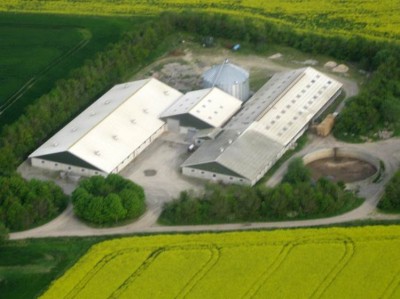
My farm – ‘Pilegaarden’ – which translates as ‘Willow Farm’ – is an average Danish farm in the small village of Hvidsten. Our pigs are raised accordingly to United Kingdom regulations for pig housing, and exported to the UK for consumption.
Inside the pig farm is a straw-based system for the sows as well as a standard farrowing house.
I had read about the effects that GM feed has on rats in lab experiments (see [1] GM Soya Fed Rats: Stunted, Dead, or SterileSiS 33), so I decided to change the feed from GM to non-GM soy in April 2011 without telling the herdsman on the farm.
Instant benefits from non-GMO soy
Two days afterwards, he said to me: “You have changed the food.” He always notices whenever there is any problem with the feed and tells me. This time was different. Something very good was happening with the food as the pigs were not getting diarrhoea any more.
The farm was using two thirds less medicine, saving £7.88 per sow. Not just my farm but three other farms in Denmark that switched from GMO to non GMO feed have also seen the same.
Medication after the changeover in the weaners barn also went down dramatically by 66%. One type of antibiotic has not been used since.
The sows have higher milk production; we can tell because the sows are suckling one, two or three more piglets and have more live born pigs, on average 1.8 piglets more per sow. They wean 1,8 pigs more per litter, and have more live born pigs.
We have seen an aggressive form of diarrhoea disappear altogether from the farm. It affected young piglets in the first week of life, killing up to 30% of the animals. It has completely gone now for over three years.
Sows no longer suffer from bloating or ulcers and they have longer productive lives, only dropping in fertility after eight litters compared to 6 on GM soy.
So, a change to non-GM soy makes the herd easier to manage, improves the health of the herd, reduces medicine usage, increases production and is very profitable.
Glyphosate toxicity

Deformities in the pigs used to be very rare and I used to be proud to send Siamese twins to schools for classes because it was a ‘one in a million’ event. But then they became frequent.
So I read a lot on the subject and my suspicion fell on glyphosate. I read how glyphosate had been shown in scientific studies (see [2] Lab Study Establishes Glyphosate Link to Birth DefectsSiS 48, [3]) to cause deformities and noted it was the same type of deformities that I was seeing in my pigs.
I also observed deformities matching those found in anencephaly babies in Washington counties in US [4] that Don Huber talked about as well as the birth defects in Argentina [5, 6] (Argentinas Roundup Human Tragedy , SiS 48), as described by Dr Medardo Avila-Vasquez where high levels of glyphosate are used.
I had looked at studies showing that a 2-day exposure to 3.07 mg/l glyphosate herbicide caused only 10% mortality but caused malformations in 55% of test animals [7].
A toxicological study in 2003 led by Dr Dallegrave [8] found bone abnormalities, absence of bones or parts of bones, shortened and bent bones, asymmetry, fusions, and clefts in rats. So, after this I began to list all the deformities I saw in my pigs.
A catalogue of deformities in piglets
I decided to be on the safe side, by listing the clear deformities that cannot be missed, like a back that is totally kinked over (see Figure 1, above right). I have pictures of all the deformed piglets, which are born alive in most cases.
One had a 180° bend in one of its vertebra. There were also deformities in the soft tissue, and one without an anus. One had kidney problems; another had its stomach outside the body. One had a cranial deformity, with no eyes and its brain outside the head; this is very typical. One had no cranium at all.
Some are even messier. There was a piglet with only one eye, and one completely headless. There was a little nose, but it had no bones to grow on so it probably would have died just after birth. We also started counting deformities of the tail, which are never fatal but are actually spinal deformities.
I sent the deformed piglets to Germany to be analysed by Krüger at Leipzig University. She opened them up and took the organs including the lungs, liver, kidneys, muscles, nervous system, intestines and heart; and she found glyphosate in all of the organs (see Box). You can see some of them in the scientific paper I published with Krüger and other scientists [9].

Figure 1   List of documented deformities observed (with Chinese translations) in piglets born to sows fed a diet containing different amounts of glyphosate. Glyphosate is present in all animal feed (except organic) due to the indiscriminate use of Roundup pre-seeding, or as desiccant; manure has Roundup residues in it and is recycled in the feed.
Glyphosate detected in malformed piglets
A total of 38 deformed Danish one-day old piglets were euthanized and the tissues analysed for glyphosate using ELISA (enzyme-linked immunosorbent assay).
All organs or tissues had glyphosate in different concentrations. The highest concentrations were seen in the lungs ((0.4-80mg/ml) and heart (0.15-80 mg/ml). The lowest were in muscles (4.4-6.4 mg/g).
Rate of malformation increased to one out of 260 born piglets if sow feeds contain 0.87-1.13 ppm glyphosate in the first 40 days of pregnancy. In case of 0.25 ppm glyphosate one out of 1,432 piglets was malformed.
These piglets showed different abnormalities as ear atrophy, spinal and cranial deformations, cranium hole in head and leg atrophy; in one piglet only a single large eye developed. Piglets without trunk, with elephant tongue, and female piglet with testes were also present.
One malformed piglet showed a swollen belly and fore gut and hind gut were not connected.
The researchers note: “Further investigations are urgently needed to prove or exclude glyphosate in malformations in piglets and other animals.”
Teratogenic dose a fraction of the regulatory allowed dose
In addition to these experiments, I had over 30,000 piglets born over two years and therefore have statistical data that are not easily available in the lab and this is where farmers have the ideal opportunity to do their own testing.
I tested the food, the foetuses, the urine and the grains that came into the farm. To do the tests, I would take representative samples from the batches of food, mix them, and take 100 grams in a plastic bag of each to be tested, or 100 ml of liquids.
When taking muck and urine for testing, you need patience. Blood tests can be done by a vet. Send it for analyses to a lab that has the facilities to test glyphosate down to about 0.1ppb = 0.1 milligram per tonne. If tests are only detecting at above 0.1ppm = 0.1 grams per ton, it cannot show you what is in urine and muck. It costs about £30-50 for one test. Tests in oils might not be possible; you need to ask beforehand.
The results of the tests showed that with 0.06 mg/kg of glyphosate residue in the feed – much lower than the allowed 20 mg/kg – I was getting cranial and spinal deformities after two months of feeding (see Figure 2, above right). At 0.1 mg/kg I was also getting deformities, but not many so that one pig could alter the numbers.
But, at 0.2 mg/kg the deformities start to go up. At the maximum dose used (but still under 12% of the maximum permitted dose) of 2.26 mg/kg the numbers start to get very high.
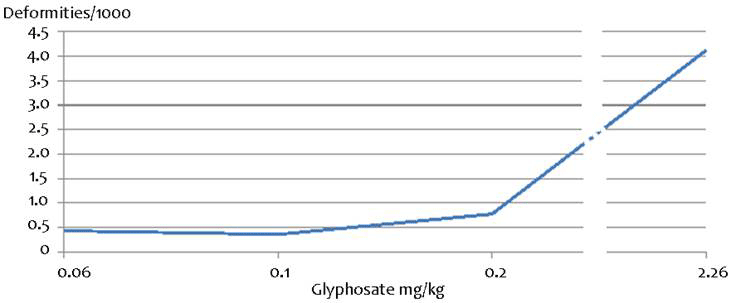
Figure 2   Rates of cranial and spinal deformities in pigs fed increasing levels of glyphosate in feed
Fewer piglets per litter
I also got help from Thomas Böhn from Norway who told me to look at longer intervals. We got numbers after six months to see an accumulative effect. The story is exactly the same. There is a very clear difference between low and high levels of glyphosate.
We also looked at the numbers of pigs born in each litter, which was significantly less after eating food with higher levels of glyphosate (see figure 3). We found a significant average difference of 0.95 fewer pigs born per sow when glyphosate was eaten in feed, between ‘low’ and ‘high’ intakes.
This was measured as accumulated intake of glyphosate over a 35 day period – the last five weeks of pregnancy. The ‘low’ intake was defined as under 3 mg/kg body weight, and the high intake was 3-9 mg/kg body weight.
So with glyphosate present in the feed, we have fewer births, as well as the odd ones that are deformed.
In short, a five-fold increase in glyphosate levels from 0.2 to 1 part per million (ppm) resulted in a five-fold increase in cranial and spinal deformities at birth, five times times more abortions, and 0.95 less piglets born per litter.
Glyphosate has known toxicities at extremely low concentrations
We can also relate the actual levels of glyphosate in feed to the level in the urine. So for 1,132 ppb (or 1.13 ppm), there is 44 ppb (~ 4%) in the urine and 246.33 ppb (~22%) in dung.
When I tested my own urine, I found that I had 2.58 ppb – and that is not from eating GM contaminated feed but from eating normal food from the Danish shops.
This is already at the level of higher rates of abortions and deformities and probably also fertility problems. Is this why in the Western world we have a very big problem with fertility (see [9] Glyphosate/Roundup and Human Male InfertilitySiS 62)?
And at 1,000 ppb, glyphosate is patented by Monsanto as an antibiotic, actually killing the beneficial microorganisms. At 0.1 ppb (less than 1/25 the level measured in my urine) Roundup caused tumours in 80% of rats compared to 20% in the controls [10], which only developed them at 700 days.
To have that high level of glyphosate in my urine, I must have consumed at the level of about 0.2ppm or 2,000 times more than the test rats. So what does that mean for the rates of cancer (see [11] Glyphosate and Cancer, SiS 62)?

Figure 3   Rates of liveborn per sow after consuming low and high levels of glyphosate in feed in last 5 weeks of pregnancy; the amount of glyphosate is the total summed over the last 5 weeks
I have a short film about how it is to be a farmer, I always feel very bad about my pigs getting ill so I leave the film for people to see. These same things must be happening in Chinese farms also, as they are using the same feed as I used to.
Even non-GM soya contains glyphosate and we as farmers need to demand that it is not sprayed down with glyphosate, because it can affect people as well as pigs.
To conclude
Any farmer who switches away from GMOs and Roundup will experience improved health in their herd and crops.
I know of the scientific studies on malformations due to the chemical Roundup. I know that one in 80 people in certain towns in Argentina have the same defects after being exposed to the chemical. And I know of 14 Danish people born with deformities of the same type.
Now what I have seen in my pigs makes me wonder what we are doing – not just to them but to ourselves. And it scares me.
A farmer’s task is to provide nutritious and healthy food for consumers, GMOs and Roundup provide neither. We can look back to DDT and how we thought that was healthy. That should remind us that we cannot ignore the warning signs for glyphosate.
Ib Borup Pederson is a Danish pig farmer serving the UK market, now also a scientific researcher and campaigner.
This article is based on a lecture at the 1st Forum of Development and Environmental Safety, under the theme ‘Food Safety and Sustainable Agriculture 2014′, 25 – 26 July 2014, Beijing. It was originally published by the Institute for Science and Society.
References
  1. Ho MW. GM soya fed rats: stunted, dead or sterile. Science in Society 33, 4-6, 2007.
  2. Ho MW. Lab study establishes glyphosate link to birth defects. Science in Society 48, 32-33, 2010.
  3. Antoniou M. Habib MEM, Howard CV, Jennings RC, Leifert C, Nodari RO, Robinson CJ and Fagan J. Teratogenic effects of glyphosate-based herbicides: divergence of regulatory decisions from scientific evidence. J Environ Anal Toxicol 2012, S4, 006, doi:10,4172/2161-0525.S4-006.http://omicsonline.org/teratogenic-effects-of-glyphosate-based-herbicides-divergence-of-regulatory-decisions-from-scientific-evidence-2161-0525.S4-006.php?aid=7453
  4. Anencephaly Investigation, Washington State Department of Health, accessed 5 September 2014, http://www.doh.wa.gov/YouandYourFamily/IllnessandDisease/BirthDefects/AnencephalyInvestigation
  5. “Birth defects, cancer in Argentina linked to agrochemicals: AP investigation”, Michael Warren and Natacha Pisarenko, The associated Press, 20 October 2013,http://www.ctvnews.ca/health/birth-defects-cancer-in-argentina-linked-to-agrochemicals-ap-investigation-1.1505096
  6. Robinson C. Argentina’s Roundup human tragedy. Science in Society 48, 30-31, 2010.
  7. Lajmanovich RC, Sandoval MT, Peltzer PM. Induction of mortality and malformation inScinax nasicus tadpoles exposed to glyphosate formulations. Bull Environ Contam Toxicol2003, 70, 612-18.
  8. Dallegrave E, Mantese FD, Coelho RS, Pereira JD, Dalsenter PR, et al. The teratogenic potential of the herbicide glyphosate-Roundup in Wistar rats. Toxicol Lett 2003, 142, 45-52.
  9. Krüger M, Schrödl W, Pedersen I and Shehata AA. Detection of glyphosate in malformed piglets. J Eviron Anal Toxicol 2014, 4, 1000230, http://dx.doi.org/10.4172/2161-0525.1000230
  10. Ho MW. Glyphosate/Roundup & human male infertility. Science in Society 62, 14-17, 2014.
  11. Sôralini G-E. Clair E, Mesnage R, Gress S, Defarge N, Malatesta M, Hennequin D and de Vendômois JS. Republished study: long-term toxicity of a Rounup herbicide and a Roundup-tolerant genetically modified maize. Environmental Sciences Europe 2014, 26, 14, doi:10.1186/s12302-014-0014-5, http://www.enveurope.com/content/26/1/14
  12. Ho MW. Glyphosate and cancer. Science in Society 62, 12-14, 2014.