---BREAKAWAY CIVILIZATION ---ALTERNATIVE HISTORY---NEW BUSINESS MODELS--- ROCK & ROLL 'S STRANGE BEGINNINGS---SERIAL KILLERS---YEA AND THAT BAD WORD "CONSPIRACY"--- AMERICANS DON'T EXPLORE ANYTHING ANYMORE.WE JUST CONSUME AND DIE.---
Repairing the “Broken Window” Fallacy
Extremely influential economists like Paul Krugman and Martin Feldstein promote the myth that war is good for the economy.
Talking heads like senior Washington Post political columnist David Broder parrot this idea.
Their ideas are based on the main economic myth encouraging war … the “broken window” fallacy.
David R. Henderson – associate professor of economics at the Naval
Postgraduate School in Monterey, California and previously a senior
economist with President Reagan’s Council of Economic Advisers - writes:
Is military conflict really good for the economy of the country that engages in it? Basic economics answers a resounding “no.”*** Money not spent on the military could be spent elsewhere. This also applies to human resources. The more than 200,000 U.S.
military personnel in Iraq and Afghanistan could be doing something
valuable at home. Why is this hard to understand? The first reason is a point
19th-century French economic journalist Frederic Bastiat made in his
essay, “What Is Seen and What Is Not Seen.” Everyone can see that
soldiers are employed. But we cannot see the jobs and the other creative
pursuits they could be engaged in were they not in the military. The second reason is that when economic times are tough and
unemployment is high, it’s easy to assume that other jobs could not
exist. But they can. This gets to an argument Bastiat made in discussing
demobilization of French soldiers after Napoleon’s downfall. He pointed
out that when government cuts the size of the military, it
frees up not only manpower but also money. The money that would have
gone to pay soldiers can instead be used to hire them as civilian
workers. That can happen in three ways, either
individually or in combination: (1) a tax cut; (2) a reduction in the
deficit; or (3) an increase in other government spending. *** Most people still believe that World War II ended the Great Depression …. But look deeper. *** The government-spending component of GNP went for guns, trucks,
airplanes, tanks, gasoline, ships, uniforms, parachutes, and labor. What
do these things have in common? Almost all of them were destroyed. Not
just these goods but also the military’s billions of labor hours were
used up without creating value to consumers. Much of the capital and
labor used to make the hundreds of thousands of trucks and jeeps and the
tens of thousands of tanks and airplanes would otherwise have been
producing cars and trucks for the domestic economy. The assembly lines
in Detroit, which had churned out 3.6 million cars in 1941, were
retooled to produce the vehicles of war. From late 1942 to 1945,
production of civilian cars was essentially shut down. And that’s just one example. Women went without nylon stockings so
that factories could produce parachutes. Civilians faced tight rationing
of gasoline so that U.S. bombers could fly over Germany. People went
without meat so that U.S. soldiers could be fed. And so on. These resources helped win the war—no small issue. But the war was
not a stimulus program, either in its intentions or in its effects, and
it was not necessary for pulling the U.S. out of the Great Depression. Had
World War II never taken place, millions of cars would have been
produced; people would have been able to travel much more widely; and
there would have been no rationing. In short, by the standard measures,
Americans would have been much more prosperous. Today, the vast majority of us are richer than even the most affluent
people back then. But despite this prosperity, one thing has not
changed: war is bad for our economy. The $150 billion
that the government spends annually on wars in Iraq and Afghanistan
(and, increasingly, Pakistan) could instead be used to cut taxes or cut
the deficit. By ending its ongoing wars … the U.S. government … would be developing a more prosperous economy. *** Whatever other reasons there may be for war, strengthening the economy is never one of them.
Indeed, we have thoroughly documented that war makes us poor. Postscript: While war is bad for us, it is very good for a handful of defense contractors and banksters who make huge sums from fighting or financing unnecessary war.
"they" billy "i just want 2 do gods work" kates & that ilk .... r soooooooo worried bout over pop ... Y don't "they" kill themselves & free UP some space Oops or "they" shouldn't "mind" if WE Pray 4 "their" "early" death huh ... after all we just wanna do Gods work ...2 or hows cum "their" god never ,fucking EVER tells em 2 lower "their" prices Or do the 'christian' 'thing' & give "their" shit away fer free huh .....parasite motherfuckers lol folks u give "these" corksuckers :O just a chance & you' ll C how fast "they" throw r ass's in the ..oven ? ... um not the coldest beer in the fridge or the sharpest knife in the drawer ...but um pretty sher the god "they" work fer is the fucker wit the "S" on the back of his uni lol no shit the fucker wit the pitch fork lol
So what’s the biggest time-bomb for
Obama, America, capitalism, the world? No, not global warming. Not
poverty. Not even peak oil. What is the absolute biggest, one like the
trigger mechanism on a nuclear bomb, one that’ll throw a wrench in
global economic growth, ending capitalism, even destroying modern
civilization?
The one that — if not solved soon —
renders all efforts to solve all the other problems in the world,
irrelevant, futile and virtually impossible?
News flash: the “Billionaires Club” knows: Bill Gates called billionaire philanthropists to a super-secret meeting in Manhattan last May. Included: Buffett, Rockefeller, Soros, Bloomberg, Turner, Oprah and others meeting at the “home of Sir Paul Nurse, a British Nobel prize biochemist and president of the private Rockefeller University, in Manhattan,” reports John Harlow in the London TimesOnline. During an afternoon session each was “given 15 minutes to present their favorite cause. Over dinner they discussed how they might settle on an ‘umbrella cause’ that could harness their interests.”
The world’s biggest time-bomb? Overpopulation, say the billionaires.
And yet, global governments with
their $50 trillion GDP, aren’t even trying to solve the world’s
overpopulation problem. G-20 leaders ignore it. So by 2050 the Earth’s
population will explode by almost 50%, from 6.6 billion today to 9.3
billion says the United Nations.
And what about those billionaires
and their billions? Can they stop the trend? Sadly no. Only a major
crisis, a global catastrophe, a collapse beyond anything prior in world history will do it. Here’s why:
“One of the disturbing facts of history is that so many civilizations collapse,” warns Jared Diamond, an environmental biologist, Pulitzer prize winner and author of “Collapse: How Societies Choose to Fail or Succeed.” Many “civilizations share a sharp curve of decline. Indeed, a society’s demise may begin only a decade or two after it reaches its peak population, wealth and power.”
Other voices are darker, shrill:
“We’re past the point of no return.” “It’s already too late.” “The end
is near.” As with Rome’s collapse, it happens fast. Clueless leaders are caught off-guard, like Greenspan, Bernanke and Paulson a couple years ago.
Call it “WWIII: The Population
Wars.” A few years ago Fortune analyzed a classified Pentagon report
predicting that “climate could change radically and fast. That would be
the mother of all national security issues” Population unrest would then
create “massive droughts, turning farmland into dust bowls and forests
to ashes.” And “by 2020 there is little doubt that something drastic is
happening … an old pattern could emerge; warfare defining human life.”
War will be the end-game: For capitalism, civilization, earth?
Diamond’s 12-part equation is very
simple, fits perfectly with a global warfare scenario: “More people
require more food, space, water, energy, and other resources … There is a
long built-in momentum to human population growth
called the ‘demographic bulge’ with a disproportionate number of
children and young reproductive-age people.” And if the “bulge” stops
for any reason, game over. Economic “growth” ends, killing capitalism.
So look closely: Diamond’s
equation has 12 time-bombs. But note, the first two are the biggest
triggers in the formula. The other 10 are derivative variables.
1. Overpopulation Multiplier
According to TimesOnline: A few
months before the billionaires meeting Gates noted: “Official [U.N.]
projections say the world’s population will peak at 9.3 billion [up from
6.6 billion today] but with charitable initiatives, such as better
reproductive health care, we think we can cap that at 8.3 billion.”
Still, that’s 23% more than today’s 6.6 billion.
Can it be stopped? In a recent
special issue of Scientific American, population was called “the most
overlooked and essential strategy for achieving long-term balance with the environment.” Why? Population’s the new “third-rail” for politicians. So they ignore it.
Yet, if all nations consumed
resources at the same rate as America, we’d need six Earths to survive.
Unfortunately that scenario is unstoppable. Because by 2050, while
America’s population grows from 300 million to a mere 400 million, the
rest of the world will explode from 6.3 billion to 8.9 billion, with
over 1.4 billion each in China and India.
2. Population Impact Multiplier
Diamond warns: “There are
‘optimists’ who argue that the world could support double its human
population.” But he adds, they “consider only the increase in human
numbers and not average increase in per-capita impact. But I have not
heard anyone who seriously argues that the world could support 12 times
it’s current impact.” And yet, that’s exactly what happens with “all
third-world inhabitants adopting first-world standards.”
Folks, we oversold the American
dream. Now everyone wants it. Not just 300 million Americans, but 6.3
billion people worldwide are demanding more, more, more!
“What really counts,” says
Diamond, “is not the number of people alone, but their impact on the
environment,” the “per-capita impact.” First-world citizens “consume 32
times more resources such as fossil fuels, and put out 32 times more
waste, than do the inhabitants of the Third World.” So the race is on:
“Low impact people are becoming high-impact people” aspiring “to
first-world living standards.” The American dream is now the global
dream.
Warning: The “Impact Multiplier” will drive the global “WWIII-Population Wars” equation even if there is zero population growth to 2050!
In Diamond’s masterpiece, “Collapse,”
the two key variables are what we call the “Over-Population Multiplier”
and “Population Impact Multiplier.” Now let’s closely examine Diamond’s
other 10 variables that are driving our “WWIII-Population Wars”
equation:
3. Food
Two billion people, mostly poor,
depend on fish and other wild foods for protein. They “have collapsed or
are in steep decline” forcing use of more costly animal proteins. The
U.N. calls the global food crisis a “silent tsunami.” Food prices rise
making it worse for the 2.7 billion living below poverty levels on two
dollars a day.
In “The End of Plenty,” National Geographic warns that even a new “green revolution” of “synthetic fertilizers, pesticides, and irrigation, supercharged by genetically engineered seeds” may fail. Why? A joint World Bank/U.N.
study “concluded that the immense production increases brought about by
science and technology the past 30 years have failed to improve food
access for many of the world’s poor.”
Meanwhile, a Time cover story
warns that America’s “addiction to meat” has led to farming that’s
“destructive of the soil, the environment and us.”
4. Water
Diamond warns: “Most of the
world’s fresh water in rivers and lakes is already being used for
irrigation, domestic and industrial water,” transportation, fisheries
and recreation. Water problems destroyed many earlier civilizations:
“Today over a million people lack access to reliable safe drinking
water.” British International Development Minister recently warned that
two-thirds of the world will live in water-stressed countries by 2015.
Water will trade
like oil futures as wars are fought over water and other basic
essentials noted earlier in Fortune’s analysis of the Pentagon report
predicting that warfare will define human life in this scenario of the
near future.
5. Farmland
Crop soils are “being carried away
by water and wind erosion at rates between 10 to 40 times the rates of
soil formation,” much higher in forests where the soil-erosion rate is
“between 500 and 10,000 times” replacement rate. And this is increasing
in today’s new age of the 100,000-acre megafires.
6. Forests
We are destroying natural habitats
and rain forests at an accelerating rate. Half the world’s original
forests have been converted to urban developments. A quarter of what
remains will be converted in the next 50 years.
7. Toxic chemicals
Often our solutions create more
problems than they solve. For example, industries “manufacture or
release into the air, soil, oceans, lakes, and rivers many toxic
chemicals” that break down slowly or not at all. Consider the deadly
impact of insecticides, pesticides, herbicides, detergents, plastics …
the list is endless.
8. Energy resources: oil, natural gas and coal
Pimco manages $747 billion:
equity, bonds and commodity funds. Manager Bill Gross recently described
a “significant break” in the world’s “growth pattern.” He’s betting
we’re past the “peak oil” tipping point. Consumer shopping will continue
declining as economies grow very slowly in the future and “corporate
profits will be static.”
A recent issue of Foreign Policy
Journal warns of the “7 Myths About Alternative Energy.” Are biofuels,
solar and nuclear the “major ticket?” No, they’re not, never will be.
9. Solar energy
Sunlight is not unlimited.
Diamond: We’re already using “half of the Earth’s photosynthetic
capacity” and we will reach the max by mid-century. In “Plundering the
Amazon,” Bloomberg Markets magazine warned that Alcoa, Cargill and other
companies “have bypassed laws designed to prevent destruction of the
world’s largest rain forest … robbing the earth of its best shield
against global warming.”
Free market capitalism may be the enemy of survival.
10. Ozone layer
“Human activities produce gases
that escape into the atmosphere” where they can destroy the protective
ozone or absorb and reduce solar energy.
11. Diversity
“A significant fraction of wild
species, populations and genetic diversity has been lost, and at present
rates, a large percent of the rest will disappear in half century.”
12. Alien species
Transferring species to lands
where they’re not native can have unintended and catastrophic effects,
“preying on, parasitizing, infecting or outcompeting” native animals and
plants that lack evolutionary resistance.
In spite of the clear message in
Diamond’s 12 time-bombs, he still says he’s a “cautious optimist.” What
fuels his hope? Our leaders need “the courage to practice long-term
thinking, and to make bold, courageous, anticipatory decisions at a time
when problems have become perceptible but before they reach crisis
proportions.”
Unfortunately, history tells us
that cautious leaders are myopic, driven more by self-interest and
nationalism than courage and long-term thinking. Eventually they’re
caught off guard and their worlds collapse, fast. They only respond to
crises.
And, yes, out of crisis may come
opportunity. As Nobel economist Milton Friedman put it in his classic,
“Capitalism and Freedom:” “Only a crisis — actual or perceived —
produces real change” because in the aftermath of crisis “the
politically impossible becomes politically inevitable.” Too many,
however, delay and respond to crises with too little, too late.
Bottom line: The betting odds are 100%
that global leaders will wait for a Pentagon-style “black swan” crisis
before acting. Unfortunately, that delay positions the “WWIII: The
Population Wars” dead ahead.
Ukraine Crisis: Just Another Globalist-Engineered Powder Keg
When one studies history, all events seem to revolve around
the applications and degenerations of war. Great feats of human
understanding, realization and enlightenment barely register in the
mental footnotes of the average person. War is what we remember,
idealize and aggrandize, which is why war is the tool most often
exploited by oligarchy to distract the masses while it centralizes
power.
With the exception of a few revolutions, most wars are instigated and
controlled by financial elites, manipulating governments on both sides
of the game to produce a preconceived result. The rise of National
Socialism in Germany, for instance, was largely funded by corporate
entities based in the U.S., including Rockefeller giant Standard Oil,
JPMorgan and even IBM, which built the collating machines used to
organize Nazi extermination camps, the same machines IBM representatives
serviced on site at places like Auschwitz. As a public figure, Adolf
Hitler was considered a joke by most people in German society, until, of
course, the Nazi Party received incredible levels of corporate
investment. This aid was most evident in what came to be known as the
Keppler Fund created through the Keppler Circle, a group of interests
with contacts largely based in the U.S.
George W. Bush’s grandfather, Prescott Bush, used his position as
director of the New York-based Union Banking Corporation to launder
money for the Third Reich throughout the war. After being exposed and
charged for trading with the enemy, the case against Bush magically
disappeared in a puff of smoke, and the Bush family went on to become
one of the most powerful political forces in America.
Without the aid of international conglomerates and banks, the Third Reich would have never risen to power.
The rise of communism in Russia through the Bolshevik Revolution was
no different. As outlined in Professor Anthony Sutton’s book Wall Street And The Bolshevik Revolution
with vast detail and irrefutable supporting evidence, it was globalist
financiers that created the social petri dish in which the communist
takeover flourished.
Wall Street Funded the Bolshevik Revolution - Professor Antony Sutton
The two sides, National Socialism and communism, were essentially
identical despotic governmental structures conjured by the same group of
elites. These two sides, these two fraudulent ideologies, were then
pitted against each other in an engineered conflict that we now call
World War II, resulting in an estimated 48 million casualties globally
and the ultimate formation of the United Nations, a precursor to world
government.
Every major international crisis for the past century or more has
ended with an even greater consolidation of world power into the hands
of the few, and this is no accident.
When I discuss the concept of the false left/right paradigm with
people, especially those in the liberty movement, I often see a light
turn on, a moment of awareness in their faces. Many of us understand the
con game because we live it day to day. We see past the superficial
rhetoric of Republican and Democratic party leadership and take note of
their numerous similarities, including foreign policy, domestic defense
policy and economic policy. The voting records of the major players in
both parties are almost identical. One is hard-pressed to find much
difference in ideology between Bush and Barack Obama, for example; or
Obama and John McCain; or Obama and Mitt Romney, for that matter.
When I suggest, however, that similar false paradigms are used
between two apparently opposed nations, the light fades, and people are
left dumbstruck. Despite the fact that globalist financiers shoveled
capital into the U.S., British, German and Soviet military complexes all
at the same time during World War II, many Americans do not want to
believe that such a thing could be happening today.
In response, I present the crisis in Ukraine versus the crisis in Syria.
Ukraine Versus Syria
It seems as though much of the public has already forgotten that at
the end of 2013, the U.S. came within a razor’s edge of economic
disaster — not to mention the possibility of World War III. The war
drums in Washington were thundering for “intervention” in Syria and the
overthrow of Bashar Assad. The only thing that saved us, I believe, were
the tireless efforts of the independent media in exposing the darker
motives behind the Syrian insurgency and the bloodlust of the Obama
Administration. The problem is that when the elites lose one avenue
toward war and distraction, they have a tendency to simply create
another. Eventually, the public is so overwhelmed by multiple trigger
points and political powder kegs that they lose track of reality. I
often call this the “scattergun effect.”
The crisis in the Ukraine is almost a carbon copy of the civil war in
Syria, culminating in what I believe to be the exact same intent.
The Money
Money from globalist centers has been flowing into the Ukrainian
opposition since at least 2004, when the Carnegie Foundation was caught filtering funds to anti-Russian political candidate Viktor Yushchenko, as well as to the groups who supported him.
The Ukrainian Supreme Court called for a runoff due to massive voter
fraud and the rise of the pro-Western Orange Revolution, determining the
winner to be Yushchenko over none other than Viktor Yanukovych.
Yanukovych went on to win the 2010 elections, and the revolution
returned to oust him this year.
It has been discovered that the current revolution has also been
receiving funds from NATO and U.S. interests, not just from the State
Department, but also from billionaires like Pierre Omidyar,
the chairman of eBay and the new boss of journalist Glen Greenwald, the
same journalist who is now famous for being the first to expose
National Security Agency documents obtained by Edward Snowden.
Much of the monetary support from such financiers was being funneled
to men like Oleh Rybachuk, the right-hand man to Yanukovych during the
Orange Revolution and a favorite of neoconservatives and the State
Department in the U.S.
The International Monetary Fund
has also jumped at the chance to throw money at the new Ukrainian
regime, which would prevent default of the country and allow the
opposition movement to focus their attentions on Russia.
The revolution in Syria was also primarily driven by Western funds
and arms transferred through training grounds like Benghazi, Libya.
There is much evidence to suggest that the attack on the U.S. consulate in Benghazi
was designed to possibly cover up the arming of Syrian rebels by the
CIA, who had agents on the ground who still have not been allowed to
testify in front of Congress.
After this conspiracy was exposed in the mainstream,
globalist-controlled governments decided to openly supply money and
weapons to the Syrian insurgency, instead of ending the subterfuge. Note from the Editor:
Round two of the financial meltdown is predicted to reach global
proportions, already adversely affecting Greece, Spain and most of
Europe. It appears less severe in the states because our banks are
printing useless fiat currency. I’ve arranged for readers to get two
free books—Surviving a Global financial Crisis and Currency Collapse,
plus How to Survive the Collapse of Civilization—to help you prepare for
the worst. Click here for your free copies.
The ‘Rebels’
Some revolutions are quite real in their intent and motivations. But
many either become co-opted by elites through financing, or they are
created from thin air from the very beginning. Usually, the rebellions
that are completely fabricated tend to lean toward extreme zealotry.
The Syrian insurgency is rife with, if not entirely dominated by, men
associated with al-Qaida. Governments in the U.S. and Israel continue
to support the insurgency despite their open affiliation with a group
that is supposedly our greatest enemy. Syrian insurgents have been
recorded committing numerous atrocities, including mass execution, the
torture of civilians and even the cannibalism of human organs.
The revolution in Ukraine is run primarily by the Svoboda Party, a
National Socialist (fascist) organization headed by Oleh Tyahnybok.
So far, the opposition in Ukraine has been mostly careful in avoiding
the same insane displays of random violence that plagued the Syrians’
public image. It is important to remember though that mainstream outlets
like Reuters went far out of their way in attempts to humanize
Syrian al-Qaida. Their methods were exposed only through the vigilance
of the independent media. With the fascist Svoboda in power in the
Ukraine, I believe it is only a matter of time before we see video
reports of similar atrocities; but at that point, it may be too late.
John McCain?
I am now thoroughly convinced that John McCain is a ghoul of the
highest order. He claims to be conservative yet supports almost every
action of the Obama Administration. He is constantly defending
anti-Constitutional actions by the Federal government, including the
Enemy Belligerents Act, which was eventually melded into the National
Defense Authorization Act; NSA surveillance of U.S. citizens; and even gun control.
And for some reason, the guy keeps showing up before or during major overthrows of existing governments. McCain was in Libya during the coup against Moammar Gadhafi.
McCain showed up to essentially buy off the rebels in Tunisia.
McCain hung out with al-Qaida in Syria.
And, what a surprise, McCain met with the Ukrainian opposition
movement just before the overthrow of Viktor Yanukovych. Why McCain? I
have no idea. All I know is, if this guy shows up in your country, take
cover.
Russia In The Middle
The great danger in Syria was not necessarily the chance of war with
Assad. Rather, it was the chance that a war with Assad would expand into
a larger conflagration with Iran and Russia. Russia’s only naval
facility in the Mideast is on the coast of Tartus in Syria, and Russia
has long-standing economic and political ties to Syria and Iran. Any
physical action by the West in the region would have elicited a response
from Vladimir Putin. The mainstream argument claims that the threat of
Russian intervention scared off Obama, but I believe the only reason war
actions were not executed by the White House and the globalists was
because they didn’t have even minimal support from the general public.
For any war, you need at least a moderate percentage of the population
to back your play.
In Ukraine, we find the globalists creating tensions between the West
and the East. Russia’s most vital naval base sits in Crimea, an
autonomous state tethered to the Ukrainian mainland. Currently, Russia
has flooded Crimea with troops in response to the regime change in
Ukraine. The new Ukrainian government (backed by NATO) has called this
an “invasion” and an act of war, while Western warmongers like McCain
and Lindsay Graham spread the propaganda meme that Russia made such a move only because Putin believes the Obama Administration to be “weak.”
Clearly, the idea here is to engineer either high tensions or war
between Russia and the United States. Syria failed to produce the
desired outcome, so the Ukraine was tapped instead.
The False Paradigm And The Globalist Chessboard
So far, I have outlined what appears to be a correspondence of
conspiracy between Syria and the Ukraine and how each event has the
continued potential to trigger regional conflict or world war. But is
this conspiracy one-sided? Are only the West and NATO being manipulated
by globalists to box in Russia and provoke a conflict? And what do
globalists have to gain by sparking such disaster?
As with every other catastrophic war, the goal is the erasure of
sovereign identity while consolidating of economic, political and social
power. It is not enough that global financiers dominate the banking
industry and own most politicians; they want to transform the public
psyche. They want us to ask them for global governance.
This manufacture of consent is often achieved by pitting two controlled
governments against each other and then, in the wake of the tragedy,
calling for global unification. The argument is always presented that if
we simply abandoned the concept of nation states and reform under a
single world body, all war would “disappear.”
The question is whether Russia’s Putin is aware of the plan. Is he a part of it?
What I do know is that Putin has, a number of times in the past,
called for global control of the economy through the IMF and the
institution of a new global currency using the IMF’s Special Drawing Rights (SDR).
Loans from the IMF are what saved Russia from debt default in the
late 1990s. And Putin has recently called for consultations with the IMF
concerning Crimea. Remember, this is the same IMF that is working to fund his opponents in Western Ukraine.
Bottom line, if you believe in national sovereignty and decentralization of power, Putin is not
your buddy. Once again, we have the globalists injecting money into
both sides of a conflict. Global governance of finance and money
creation ultimately means global governance of everything else.
Is a war being created through the false paradigm of East versus West
in order to pave the road for global government? It is hard to say if
the Ukraine will be the final trigger; however, the evidence suggests
that if a conflict occurs, regardless of who “wins” such a nightmare
scenario, the IMF comes out on top.
Imagine you are playing a game of chess by yourself. Which side wins
at the end of that game: black or white? The answer is it doesn’t
matter. You always win when you control both sides. –Brandon Smith
& looky,looky "who" has NO fucking IDEA ..."they" r laundering IT (drug $$$) none, zero, fucking zip ....drug $$$ we's don't C no drug $$$ .... ALLLLL the fucking "spying" on the American /World people ??? but "our" gov. ...hasn't a FUCKING clue !!! that the "big" banks r laundering IT lol ...maybe! just maybe !! "them" motherfuckers r ALLLLLL in the same bed , huh hey mr/mrs average American cit ..... bet if U pushed couple million/billion $$$ THRU yer check~in count . yer /our ass's would geeet ...water boarded so fuck~in fast ...make yer/our heads spin huh Oops lol
With the recent capture of “El Chapo,” the richest drug cartel leader
in the world, let’s take a look at what he was known for — a global
drug trade. It’s a big question.
There’s a world of drugs out there:
Methamphetamine
Amphetamines
Cannabis
Heroin
Opium
Cocaine
Ecstasy
Hallucinogens
And a world of drug users…
Drug Users by Region: Africa:
Cannabis Users-
Lower estimate-27,680,000
Upper estimate-52,790,000
Average-16,735,000
Opiate Users-
Lower estimate-680,000
Upper estimate-2,930,000
Average-1,805,000
Cocaine Users-
Lower estimate-1,020,000
Upper estimate-2,670,000
Average-1,845,000
Amphetamine Users-
Lower estimate-1,550,000
Upper estimate-5,200,000
Average-3,375,000
Ecstasy users-
Lower estimate-350,000
Upper estimate-1,930,000
Average-1,140,000
The Americas: North America:
Cannibis Users-
Lower estimate-29,950,000
Upper estimate-29,950,000
Average-29,950,000
Opiate Users-
Lower estimate-1,290,000
Upper estimate-1,380,000
Average-1,335,000
Cocaine Users-
Lower estimate-6,170,000
Upper estimate-6,170,000
Average-6,170,000
Amphetamine Users-
Lower estimate-3,090,000
Upper estimate-3,200,000
Average-3,150,000
Ecstasy Users-
Lower estimate-2,490,000
Upper estimate-2,490,000
Average-2,490,000 Caribbean and South/Central America:
Cannabis Users-
Lower estimate-8,260,000
Upper estimate-10,080,000
Average-9,170,000
Opiate Users-
Lower estimate-1,000,000
Upper estimate-1,060,000
Average-1,030,000
Cocaine Users-
Lower estimate-2,550,000
Upper estimate-2,910,000
Average-2,732,500
Amphetamine Users-
Lower estimate-1,670,000
Upper estimate-2,690,000
Average-2,180,000
Ecstasy Users-
Lower estimate-550,000
Upper estimate-3,031,000
Average-1,790500 Asia:
Cannabis Users-
Lower estimate-31,510,000
Upper estimate-64,580,000
Average-48,045,000
Opiate Users-
Lower estimate-6,446,000
Upper estimate-12,540,000
Average-9,493,000
Cocaine Users-
Lower estimate-430,000
Upper estimate-2,270,000
Average-1,350,000
Amphetamine Users-
Lower estimate-4,430,000
Upper estimate-37,990,000
Average-21,210,000
Ecstasy Users-
Lower estimate-2,370,000
Upper estimate-15,620,000
Average-8,995,000 Europe:
Cannabis Users-
Lower estimate-29,370,000
Upper estimate-29,990,000
Average-29,680,000
Opiate Users-
Lower estimate-3,290,000
Upper estimate-3,820,000
Average-3,555,000
Cocaine Users-
Lower estimate-4,570,000
Upper estimate-4,970,000
Average-4,770,000
Amphetamine Users-
Lower estimate-2,500,000
Upper estimate-3,190,000
Average-2,845,000
Ecstasy Users-
Lower estimate-3,850,000
Upper estimate-4,080,000
Average-3,965,000 Global Numbers:
Cannabis Users-
Lower estimate-128,910,000
Upper estimate-190,750,000
Average-159,830,000
Opiate Users-
Lower estimate-12,840,000
Upper estimate-21,880,000
Average-17,360,000
Cocaine Users-
Lower estimate-15,070,000
Upper estimate-19,380,000
Average-17,225,000
Amphetamine Users-
Lower estimate-13,710,000
Upper estimate-52,900,000
Average-33,305,000
Ecstasy Users-
Lower estimate-10,540,000
Upper estimate-25,820,000
Average-18,180,000
Which equals A LOT of dough
Estimated annual value of global criminal markets in the 2000′s Cocaine: $88 billion USD
Opiates: $65 billion USD
By comparison, only $1 billion in criminal firearms markets.
That’s 153 times bigger than the criminal firearms trade.
– (And that’s only counting Cocaine and Opiates) By Value, most drugs originate in 3 nations.
Afghanistan, Colombia, and Peru manufacture a majority of cocaine and heroine. Top destinations for Afghani Heroin:
Europe
Russian Federation
China
The Americas
Africa
Top destinations for Afghani Opium
Iran
Europe
Afghanistan
Pakistan
Africa
Top destinations for Peruvian and Colombian Cocaine:
North America (40% of global annual users)
EU
South America/Central America/Caribbean
Africa
Asia
Once the money gets rolling…
Cocaine:
Pan-American Route:
With drugs, you pay for risk, as much as the product itself.
1 kilo = $2,000 in Colombia or Peru
1 kilo = $10,000 in Mexico
1 kilo = $30,000 in the U.S.
Or broken up into grams = $100,000 in U.S. There’s no stopping it.
Even with a wall at the border drug traffickers use:
Catapults (to throw packages over the wall)
Planes (over the wall)
-Cesnas to 747′s.[2]
(747′s can carry 13 tons of cocaine)
(that’s $1.179 billion in cocaine once it’s in America and parceled out)
Boats (around the wall)
Tunnels (below the wall)
Sandbag Bridges (over rivers)
When your trafficking a 100 kilos, a wrecked Cesna, a sunk boat, or a broken tunnel is a cost you can deal with.
The U.S. is the single largest customer base of drugs worldwide.
Estimates for US drug expenditures:[in billions USD]
Cocaine: 28
Heroin: 27
Marijuana: 41
Meth: 13
Former Mexican President Porfirio Diaz–“Poor Mexico, so far from God and so close to the United States.” [2]
Colombian and Mexican Cartels take in $18-$39 billion from US sales each year.
$6.6 billion = Mexican Cartel gross revenue.
50% of this is made by the Sinaloa Cartel
Equals $3 billion in revenue.
About 1/2 of Facebook’s revenue
Close to Netflix’s revenue
And that’s just the cartels of two countries. These are some massive players.
With several drug kingpins landing on Forbes richest in the world list in recent years.
Drug Kingpins:
El Chapo Guzman:[2]
Forbes billionaire list: 2009-2012
Chicago’s Public Enemy No. 1
Notable Achievements:
1st to traffic drugs through tunnel underneath border.
Known for using a catapult to throw drugs over the border.
Had a large pot farm guarded by armed guards in northern Wisconsin.
Escaped from a high security Mexican prison in a laundry basket.
Saw the future with methamphetamine, gave it away for free to establish a customer base. Zhenli Ye Gon[2]
A Chinese-Mexican businessman believed to have sold precursors of meth to cartels.
And this is a lot of meth.
Meth ingredient seizures at ports:
22 tons in October 2009; 88 tons in May 2010; 252 tons December 2012
Zhenli is a notorious gambler. [2]
Losing so much at a casino that they gifted him a Rolls-Royce.
How much do you have to lose to be given a Rolls-Royce?
$72 million was how much Zhenli lost at one casino that year. Pablo Escobar:[4]
At his height had a fleet of:
16 planes
1 Learjet
6 helicopters
Boats
Remote control submarines.
Largest load: sent 25 tons of cocaine on a boat.
Spent $2,500 a month on rubber bands to stack money.
Wrote off 10% of income from “spoilage” by rats nibbling at stacks of money. This is too much money to ignore. In the drug trade, if you can make it, users will always come.
Copyright; top-criminal-justice-schools.net, 2014 Citations:
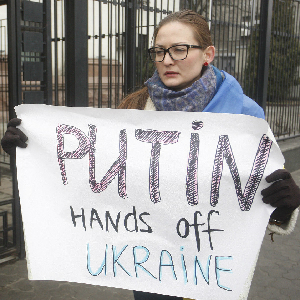
The Soviet Union no longer exists. The Russian Federation is not a
socialist state. But the U.S. military and political establishment
still seek to destroy Russia. That’s the object of the crisis the
Pentagon, State Department and CIA are orchestrating in Ukraine.
What drives this seemingly irrational course of action?
The same thing that drove the George W. Bush regime to invade Iraq in
2003. The same thing that’s driving the violent anti-China rhetoric
from the Pentagon and the White House: financial need and cold economic
calculation.
Not the financial need of the hungry and homeless, of the millions
who need jobs at living wages, of those who can’t pay their rent or
mortgages or who must choose between heating and eating.
It’s the need of Wall Street bankers and corporate CEOs to pump up
their profits, stock prices and rates of return on their invested
capital amid a global economic slowdown caused by capitalist
overproduction.
The U.S. Energy Information Administration projects that the United
States will replace Russia this year as the world’s top hydrocarbon
energy producer. It says the U.S. will replace Saudi Arabia as the
world’s No. 1 oil producer by 2015.
This is the result of the U.S. capitalist class investing hundreds of
billions of dollars over the past 10 years in fracking — the hydraulic
fracturing of oil and natural gas from shale rock. ExxonMobil, the
world’s most profitable company, spent $41 billion in 2010 to buy
fracking giant XTO Energy. ExxonMobil is now the largest U.S. natural
gas producer.
Chevron, Phillips 66, Valero, Berkshire Hathaway and General Electric
are other top 10 Fortune 500 companies betting billions on the
superprofits they hope fracking will bring. Some of them have ascended
to the top 10 based on these investments. Halliburton, the Koch brothers
and hedge funds like KKR are heavily invested. So is every major bank.
But these environment-destroying investments would not be profitable
without the triple-digit oil prices of the past decade. These record
prices were made possible by the violent suppression of Middle East and
North African energy production by the Pentagon through war and
sanctions. Iraq War a bonanza for Big Oil
The U.S. invasion of Iraq devastated that country. And it hit hard at
working class and oppressed communities in the United States. For Big
Oil and Wall Street it was a bonanza.
In 2002, before U.S. invaders destroyed Iraq’s state-owned oil
industry, the price of West Texas Intermediate crude, a benchmark used
by the oil industry, hovered around $20 a barrel. By April 2003, when
U.S. tanks rolled into Baghdad, WTI crude was over $40 a barrel.
ExxonMobil and Chevron, the biggest U.S. oil companies, saw their
profits rise nearly 300 percent.
By mid-2008, war threats and sanctions against Iran combined with the
continued wars in Iraq and Afghanistan to drive oil up to $147 a
barrel. It was ExxonMobil’s most profitable year ever.
War in the Middle East made profitable the plunder of Canada’s tar
sands, the proposed Keystone XL pipeline and new mountaintop removal
projects in Appalachia. It enabled the building of the Anglo-U.S.-owned
Baku-Tbilisi-Ceyhan pipeline from former Soviet Central Asia to the
Mediterranean and new U.S. energy investments in Africa.
But capitalists will do what capitalists do. When profits and prices
are booming, they will produce “more than the market can bear.” The
third quarter of 2008 saw a global capitalist economic crisis and oil
prices began to fall. Sanctions against Iran and Sudan, the 2011
U.S./NATO bombing of Libya and the CIA-orchestrated war in Syria, which
blocks a potential Iranian oil pipeline to the Mediterranean, have
slowed the decline but not reversed it.
Some analysts predict prices as low as $50 a barrel by 2015. Oil and
natural gas prices tend to move in tandem, and oil prices of $60 to $80 a
barrel are needed for most fracking projects to break even. Shale
reserves with a value of $26 trillion at today’s prices could become
worthless.
A crisis that disrupts the flow of Russian energy to Europe would
change the picture radically. On April 14, CNBC announced “oil hovers
near $108 as Ukrainian crisis worsens.” ‘Cold War’ chained Western Europe to U.S.
In the 1970s the Soviet Union was the world’s top energy producer.
Much of its production was consumed domestically or provided to other
socialist countries in barter arrangements. Western Europe relied on
Arab and Iranian oil and gas sold by U.S. and British monopolies.
In the early 1980s, German and French banks financed a massive Soviet
pipeline project, called Urengoi 6, to bring Siberian natural gas to
Western Europe. The Reagan regime launched an overt and covert campaign
to sabotage the project. (“A Tale of Two Pipelines,” Workers World, June
10, 2005) Washington wanted to hurt the Soviet economy, of course. It
also wanted to keep Western Europe dependent on U.S. energy monopolies.
The project was completed, however, and Soviet natural gas poured into
Europe.
In 1998, Russia, now capitalist, responded to a speculative attack on
its currency by devaluing the ruble. Oil fell below $11 a barrel,
throwing the Western oil industry into a panic.
The U.S. responded with missiles and bombs. The target was not Russia
but Iraq. Within three months the Clinton regime came up with an excuse
for a massive bombing campaign against Iraq, which was already
suffering from U.S.-orchestrated sanctions. Two years earlier, U.S.
Secretary of State Madeleine Albright had admitted that sanctions had
killed 567,000 Iraqi children. She said the “price was worth it.”
As bombs rained on Iraq, Energy Secretary William Richardson was
begging U.S. oil executives to build oil and gas pipelines to former
Soviet Central Asia to cement U.S. influence there. They told him it
would not be worth it unless he could guarantee oil prices above $40 a
barrel for a sustained period. It took the 2003 invasion of Iraq to do
that. War to restrict production
Energy is the world’s most profitable commodity. But other interests
are at stake. The Pentagon needs to protect and expand its bloated
budget, which faces “mandatory” cuts in 2016. The generals want to
expand NATO to the east and put U.S. troops in the former Soviet Union.
The military-industrial complex wants more arms sales to Eastern Europe,
with Ukraine as a customer.
Then there is the heart of the system — Wall Street itself. Bankers
and politicians know that war and crisis abroad drive capital into the
United States, cutting the deficit, propping up the dollar and helping
keep U.S. banks at the center of the world economy. Wall Street analysts
hope and predict that capital flight from Russia alone could reach $150
billion this year, more than twice what it was in 2013.
The monopoly-dominated world capitalist market is saturated with
commodities and capital. It is in a permanent battle because of a crisis
that is unique to the capitalist system: overproduction. Bankers sit on
trillions of dollars they cannot reinvest at an “acceptable” rate of
profit.
The world imperialist system cannot absorb the productive capacity of
the vast industrial-technological-scientific apparatus that exists in
the former Soviet Union — just as it cannot absorb the labor power, the
minds and capabilities of hundreds of millions of people around the
world.
The imperialist market has no room for the Eurasian Union, the
Commonwealth of Independent States, the Shanghai Economic Cooperation
Organization or the rising bloc of BRICS nations (Brazil, Russia, India,
China and South Africa), which Iran seeks to join. It has no room for
the African Union or the Bolivarian Alliance of the Peoples of Our
America.
The dominant mode of production in the above-mentioned blocs Is
capitalist. But an important factor in their economic growth is the
state-powered economy of the People’s Republic of China, a product of
the great socialist revolution of 1949. Moreover, the state-owned sector
of Russia’s economy has risen to 60 percent under the Putin
administration.
The “Cold War” did not end with the fall of the Soviet Union, because
it was driven not only by hostility to socialism but by the internal
contradictions of capitalism itself.
In the “Cleveland massacre” of 1872, John D. Rockefeller drove
hundreds of independent drillers out of business to create the Standard
Oil trust. Apologists for capitalism have justified such practices as
“creative destruction.” In its time of decay, the U.S. monopoly
capitalist class and its state apparatus must destroy in order to
survive.
when "it" ALL comes crashing down & "it" ..will we've lost our compass ,we've forgotten how 2 invest in each other ? an soon ,very soon ... time is gonna force US 2 ....remember .... an let it come :0
Two months ago I read a story that
Huffington Post had put out about a bride that died while cliff jumping
with her husband on their honeymoon. After reading the story I felt a
deep sense of sadness for the people involved in the tragedy, even
shedding an empathetic tear thinking about how truly horrible it would
have been to go through something like that. I was curious what others
had to say about the story, so I began reading the comments below. I was
completely shocked by what some people had written. “Serves her right”,
one woman wrote. “What an idiot,” another commenter responded.
During the summer Olympics back in 2012, British diver Tom Daley reported
a rather repulsive comment on Twitter following his gold medal loss.
The bully wrote, “You let your dad down I hope you know that,” referring
to the fact that Daley was hoping to win the gold in honor of his
father, who died the prior year from brain cancer. These are but a few
examples of the callous comments that are made online on a daily basis.
Where is the empathy? Where is the compassion and humanity?
Something I’ve come to notice within my
experience at Collective Evolution (CE) and with the world of the
internet as a whole is the large sense of disconnect there seems to be
between the people and their words. I’ve seen people say some pretty
nasty things to one another in the comment sections, even personally
attacking different writers of the CE team for articles that challenge
their belief systems. This is especially the case when sensitive subject
matter is being discussed, such as religion, science, sexual
orientation, health, politics, ETs, etc. But sometimes the harassment
comes out of nowhere. One commenter began making insults towards a
writer who published an article about the health concerns around
non-organic tea, making fun of her display picture and proceeding to
talk about her personal life as if they knew her.
Truth be told, the internet can be a
treacherous world full of cynicism, harassment, and bullying, leaving
many to feel hurt or offended by the unfiltered words of public. Cyber
bullying has become a major problem in today’s social-media based
culture, affecting a reported 43% of teens aged 13 to 17.[1]
But is it in our true nature to be
horrible to one another? Is technology in part to blame for the
desensitization of the masses and the loss of empathy?
You Can’t See Me So….
For the most part, people don’t speak to
one another in public as they do online, instead there is usually a
mutual respect for someone else’s opinion and equal reciprocation within
a conversation or debate. I see these kinds of healthy conversations at
my local coffee shop when I spend my afternoons there writing. People
are open and genuinely nice to each other, not slamming someone for
having a certain belief. So the question begs, are people being
authentic when they are in public? Or is their online persona their true self without the worry of consequences because they most likely will never see the people they are speaking with?
“The majority of communication is
non-verbal, composed of body language, eye contact, speech tone and
language patterns. Without this information to help us process and
categorize information, our minds are left to sort through the
uncertain. And, thanks to a leftover prehistoric penchant for fight or
flight, being unsure about another person’s intent often creates a
negative reaction to a perceived threat [source: Gardner].
This lack of inhibition also may be
connected to a physical distance from the people to whom comments are
directed. Turns out, the closer physical proximity you have to someone,
the less likely you are to be mean-spirited. For example, one recent
study found game show contestants were less likely to vote off a
contestant standing next to them than one standing further away
[source: Dallas].”
Gary Small and Gigi Vorgan from CNN.com
propose that desensitization begins at an early age, when the developing
mind is exposed to a plethora of shocking and sensational videos and
images. In the article, “Is The Internet Killing Empathy?”,
the authors discuss findings from the Kaiser Family Foundation which
revealed that 8- to 18-year-olds on average spend 11½ hours a day using
their technology.[2]
“Their brains have become “wired” to use their tech
gadgets effectively in order to multi-task — staying connected with
friends, texting and searching online endlessly, often exposing their
brains to shocking and sensational images and videos. Many people are
desensitizing their neural circuits to the horrors they see, while not
getting much, if any, off-line training in empathic skills.”
This disconnection from emotion can be a
deadly mechanism. When we lose sight of compassion and empathy, we are
losing touch with what it means to be human, and essentially reality.
Take A Step Back
When someone attacks you online for
something you believe, or makes a negative comment about something that
you feel is inappropriate, it’s a good idea to step back before
responding. Too often we get caught in defence mode after someone
attacks something we’ve said. This is due to the attachment we have to
our belief systems, a strong bond we share with information we’ve
acquired throughout our life. Belief systems have caused wars throughout
human history, they can be a powerful catalyst.
Here’s a good question to ask yourself
before responding to a negative comment: Is it worth the mental energy
to even dignify it with a response? Most of the time people don’t even
want to hear your side of the debate anyways, but rather are only
waiting to get their two cents in. It’s OKAY to agree to disagree,
rather than trying to prove someone wrong or vice versa. Sometimes
walking away from a hopeless conversation or debate can be the most
liberating thing you can do, sitting at peace in your own mind with your
understanding rather than having to justify it to someone who either
isn’t understanding where you are coming from or just has no respect.
Lastly, the one tool that I believe will
truly help anyone in their life is the use of empathy. Empathy means to
really connect with and understand another person’s situation,
feelings, or difficulties. Putting yourself in this space will fill you
with a genuine compassion that will help you gain a true understanding
of the matter at hand. It is a brave space to put yourself in, allowing
yourself to identify and feel a feeling that may not always be good. But
if we all practiced bringing more empathy into our lives, the world
would be a much better place for it.
We all have struggles, we are all here
on the same human journey, and ultimately we all want the same thing in
the end, peace. So let’s remember this in our daily life!
Editor’s Note: If you’ve ever spent some time reading Karl Denninger’s Market Ticker
you’ve come to realize that he is a straight-shooter of the highest
order. Whether commenting on geo-politics, the economy, corruption or
the persistent destruction of our liberties, Denninger doesn’t mince
words. His arguments are not only logical in a world plagued by
irrationality, but backed up with solid data. In the following article Denninger details the lies, half-truths
and coverups surrounding America’s gun debate and the war on drugs. As
it relates to gun control, our government and the politicians running it
often cite manipulated statistics in order to push forward their
agenda. The goal is to disarm America’s tens of millions of law abiding
citizens of their right to bear arms. But as is often the case,
Denninger blows their entire argument to smithereens with real facts,
showing that the violent crime statistics often used to justify the
actions of gun control proponents are created by their very own actions
and policies. This is a set up and most Americans, especially those who
subscribe to the notion that government is trying to make everything
better, haven’t a clue that they’re being indoctrinated by the very
people who have caused the problem. The Real Gun Violence Issue By Karl Denninger / The Market Ticker
Take away the astroturf games like the so-called grassroots organization(s)
that sprung up (by magic!) out of Newtown and you wind up with a truly
ugly truth when it comes to gun violence in this country: Most of it is gang-related, most of the gangs are in our inner cities, and our President, along with the rest of the so-called “mainstream media”, simply refuses to address any of it. Take a recent shooting in Chicago. The media pictures of both shooter and victim are radically inaccurate measured against their own social media postings.
The truth about that particular shooting? The gun, originally claimed to be stolen, wasn’t.
It instead passed through a number of hands, at least one of them on
probation and a second person who allegedly took the weapon to the
shooter knowing it was going to be used to commit violence, a 30ish old aunt who allegedly went for the show (seriously!) someone who unjammed the gun after it malfunctioned and gave it back to the girl who had just tried to murder the victim but the weapon failed to fire.
Nor is that all. We have another case where
a “cute little charter-school graduate” (as presented by the family and
the media) appears to have a bunch of social-media postings of her
bearing weapons of all sorts, including a rather-large revolver that
looks right out of a Clint Eastwood movie and a pump-action shotgun.
Oh, and this angel apparently capped at least two people before being killed herself. She was 17.
Are we ever going to address this instead of playing Astroturf games with kids who are drugged up on various psychotropic meds and then go insane — a rare but obviously far-too-common event? Probably not.
Why not?
Because our Black President won’t talk about it. Our liberal media
won’t talk about it. And we won’t talk about it either, nor will we
bring to the forefront the fact that we have essentially invented this problem out of whole cloth by generating a welfare and police state that empowers gangs by giving them the fuel (money) on which they rely.
And how did we do that? We declared various self-destructive behaviors among and between consenting adults unlawful, generating an entire second economic system under the carpet that was then used to justify a “war” that we ourselves created and then declared.
The result has not only been a monstrously-high prison population it has also been an explosion of violence, without which we would be far down the list when it comes to the abuse of guns and property crimes.
Instead of admitting our stupidity in this regard just as is the case with the medical industry and its monopolist scams in the general case we have instead grown an entire industry around arresting, prosecuting and imprisoning huge numbers of people, most of them minorities. What’s worse is that we are also watching them murder each
other with wild abandon, while we sit in our chairs and refuse to talk
about the statistical facts.
Indeed, if you take out black-on-black homicide in the major cities
from our so-called “blood-red streets” that Bloomberg and others claim
as our emblem of “endemic gun violence” you find that something like three quarters of all gun murders disappear.
There is a basic principle when it comes to solving problems in the general sense, and it applies here as with most issues: 80% of any particular problem is easy to solve, and reasonably cheap. The last 20% is both expensive and hard.
But we won’t talk about the 80% or how it gets generated. We don’t want to talk about the fact that we create these gangs by giving them an underground economy fueled by what appears to be an innate desire of man to addle his own mind, and which we can actually track back to the animal kingdom generally!
In the early part of the 20th Century we allowed power-brokers who
were trying to protect their own industries to play on now-documented racism and false claims when it came to various drugs, with the now-iconic Reefer Madness being
one of the poster children for that era. We banned alcohol sales and
created, almost overnight, an entire criminal class that shot up our
cities and reaped huge amounts of profit from the desire of people to
simply have a drink. The Depression effectively forced the end of
Prohibition, but only for booze.
Today we have the worst of both worlds. On the corner about two
miles from my home is a store that has more forms of a popular drug in
it than would be necessary to kill platoons of men, yet
I can buy and consume as much of it as I desire. In the gas station
and grocery store I can buy still other forms of the same drug, again,
limited only by my wallet.
At the same time in the nearest big city (and probably in my “nice” small town) there is a thriving underground
economy. Police officers with whom I’m acquainted tell me of the crack
houses they bust with crude labs that threaten to blow up entire
buildings — not through terrorist action but rather because the “chemists” inside don’t know what they’re doing or don’t care because they’re too stoned to be concerned with reasonable safety precautions.
The mind-altering substances they produce are addled with
God-knows-what, the ingredient list likely driven by whatever is
cheapest to get as a diluting agent so as to “stretch” what they’re
producing for sale. Some percentage of those drugs, along with
mass-produced quantities in Mexico and elsewhere, stream into our major
cities where the trade in them generates huge profits and massive amounts of violence, all aimed at “protecting” the highly-profitable trade in same.
Have we ever asked if the people who get hooked on meth and similar
monstrously-destructive drugs would use them absent this pipeline of illegal supply and coercive sales capacity? If those people could walk into any pharmacy and simply buy whatever you wanted, having only to prove they’re of adult age, being supplied not only their drug of choice but also a pamphlet describing exactly what was in the package were buying and its expected long and short-term effects,would they? Would they rob and mug people if the price of maintaining their addiction was one tenth of what it costs today via illegal routes of supply?
Or would they choose to try something else — perhaps a bottle of liquor or a pack of 20 Class A joints?
I don’t know and neither does anyone else, but what we do know is
that plenty of people were addicted to opiates and other drugs before
the “War on Drugs” was launched, and a very significant percentage of
them were able to hold down jobs and lead reasonably-productive lives.
Oh sure, they eventually got sick and some died, but what we didn’t
have was 17 year old kids shooting each other over insults, real or
imagined, trumped up by what amounts to a trade war within our own borders.
I understand why Obama, Rahm and Bloomberg don’t want to entertain
this debate. If they were to do so with someone like me they’d be in a
very tough spot, because I’d put facts and figures in front of them and
the audience might conclude that we’ve created not only a prison industry and siphons off tens of billions of dollars, not only have we destroyed the earnings power of millions, most of them minorities with these same policies, but in addition we
have a more than 50-year history that says we cannot win this war nor
do we give a good damn about those who die as a consequence of our
puerile and outrageous policy pronouncements in this area, most-especially the young people of color who are overwhelmingly both victim and perpetrator. Indeed, some people might conclude that our President and the
rest of the drug-warriors are in fact racists of the highest order in
that they’re complicit in the murder of far more black people in a
single year than the KKK ever hung from trees through its entire sordid
history.
This much I’m absolutely certain of — our black community organizer-cum-President surely doesn’t want to face his rank hypocrisy on this issue.
Nor, for that matter, do the rest of the so-called Progressives.
The Market Ticker
content may be reproduced or excerpted online for non-commercial
purposes provided full attribution is given and the original article
source is linked to. Please contact Karl Denninger for reprint
permission in other media or for commercial use.

 Posts
Posts