CIA Reactions to JFK Assassination Included “Suspicions of Soviet or Cuban Involvement”; Desire to “Bond” with LBJ
“Kryptos” (1990), by James Sanborn, a
sculpture containing a message encoded with frequency tables, located
at the CIA’s New Headquarters Building. (Photo credit: CIA)
Washington, D.C. –
The CIA’s
reactions to the November 22, 1963, assassination of President John F.
Kennedy — 51 years ago this week — went from initial shock to suspicions
of Soviet or Cuban involvement, to increasingly bureaucratic concerns
such as the desire to establish a positive “bond” with incoming
President Lyndon Johnson, according to a newly declassified internal CIA
article published for the first time today by the National Security
Archive (
www.nsarchive.org).
Fears that Moscow might have masterminded the president’s killing
rose sharply when the CIA was unable to locate Soviet Premier Nikita
Khrushchev for 24-48 hours afterwards. Agency officials worried that
he was “either hunkering down for an American reprisal, or possibly
preparing to strike the United States.”
This article is one of several from the CIA’s
Studies in Intelligence in-house
journal that the agency released as a result of litigation by a former
CIA official against his former employer. It appears today as part of
an update to a compilation of similar articles the National Security
Archive posted in June 2013.
The documents, both those from the original posting as well as the
more recent ones, provide insider perspective and accounts of a variety
of topics, including:
- The Presidential ban against CIA assassinations of foreign leaders,
first enacted in 1976, which reflected both moral and practical reasons
but never spelled out the exact scope of the prohibition
- A proposal for a far more draconian version of the Intelligence
Identities Protection Act – including secret courts for intelligence
officers accused of violating that law and criminalizing any revelation or purported revelation of a covert intelligence officer’s identity. (Document 10)
- A description of how President Kennedy ordered Director of Central
Intelligence John McCone to halt his effort to launch a second
investigation of the actions of U-2 pilot Francis Gary Powers — who had
been shot down during a May 1, 1960 overflight of the Soviet Union. (Document 14)
- An account of how CIA and Army intelligence analyses in the late
1970s indicated that the U.S. had significantly underestimated North
Korean military strength — and derailed President Carter’s plan to
withdraw U.S. ground forces from South Korea. (Document 5)
- A description of the evolution of the CIA’s role in counterterrorism
— with the Directorate of Operations initially being the primary
component dealing with terrorist issues, and the Directorate of
Intelligence eventually emerging in a leading role. (Document 23)
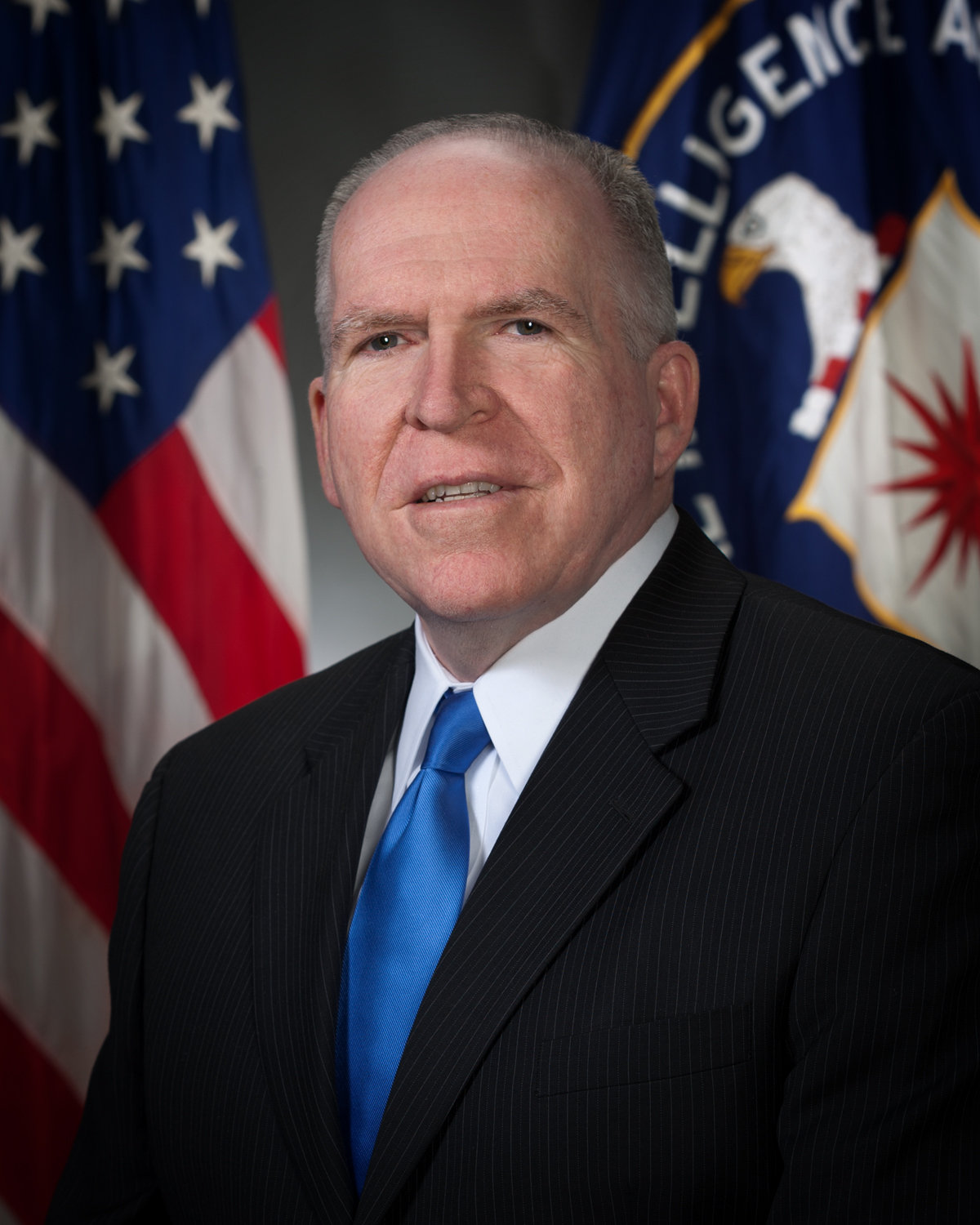
- A 2004 interview with current Director of the Central Intelligence Agency, John Brennan. (Document 20)
- An account of the origins of the CIA’s first human intelligence organization — the Office of Special Operations (Document 16).
- The recollections of Michael J. Morell, who would go on to become
Deputy Director of the Central Intelligence Agency, of September 11,
2001, which he spent with President Bush. (Document 22).
- A description of the origins and applications of U.S. nuclear
intelligence by Henry Lowenhaput, whose career in the field lasted for
six decades. (Document 18).
The CIA began publishing
Studies in Intelligence in 1955 to
help build an understanding within the agency of the intelligence
profession based on the insights and recollections of practitioners. The
items in today’s updated posting fall into a number of categories —
legal issues, intelligence analysis, CIA-NSA relations,
counterintelligence, interviews, intelligence support and liaison,
‘denied in their entirety,’ the Kennedy assassination, and odds &
ends.
New Revelations from Studies in Intelligence Articles
By Dr. Jeffrey T. Richelson
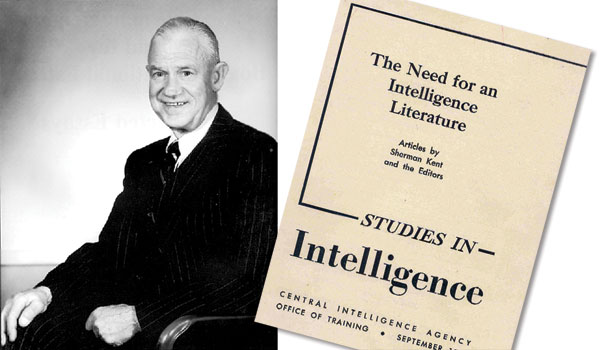 Image,
right: Sherman Kent, the “father of intelligence analysis,” with the
inaugural issue of Studies in Intelligence. (Photo credit: CIA)
Image,
right: Sherman Kent, the “father of intelligence analysis,” with the
inaugural issue of Studies in Intelligence. (Photo credit: CIA)
In 1955, at the suggestion of Sherman Kent, the head of the Board of
National Estimates, the CIA launched a classified journal, titled
Studies in Intelligence,
“to promote a sense of professional identity, enhance proficiency, and
build knowledge of intelligence cumulatively from the shared insights of
its practitioners.”
1 The
journal soon evolved into a quarterly containing articles whose
classification, with rare exceptions, ranged from Unclassified to
Secret. While the articles are not official statements of CIA or federal
government views or policy, they do represent the thinking and
recollections of an assortment of intelligence professionals.
Eventually, the CIA began declassifying some of the articles and
releasing them to the National Archives and Records Administration
(NARA). In 1992, the agency also published its first unclassified
edition of
Studies — available to anyone interested. In 2002,
the CIA began posting on its website unclassified articles from
classified issues of
Studies — a practice that continues to this day.
Today, information about and copies of
Studies articles can
be found on the CIA website – in addition to the 1992 and beyond
material. They appear in an index of declassified articles (which
apparently only lists articles declassified by the CIA at its
initiative); other indices which allow direct access to some of the
declassified articles; and the CREST/Electronic Reading Room collection.
Apparently not available electronically are articles that have been
declassified in response to FOIA/Mandatory Declassification Requests or
litigation.
FOIA/MDR and Litigation
Over the last decade, the author filed a series of FOIA requests,
starting with a 2002 request for tables of contents of 1997-2002 issues
of
Studies as well as any unclassified articles that appeared
in those issues. (As noted above, the CIA did not post unclassified
articles from classified issues until sometime in 2002). Subsequent
requests covered tables of contents for 1985-1996, and years subsequent
to 2003. Tables of contents for those and other years were also obtained
via litigation by the National Security Counselors organization.
2
Classified articles of interest whose titles appeared in the
declassified tables of contents were then requested under the FOIA.
Today’s collection consists of articles obtained from those requests as
well as some of the unclassified articles obtained from the 2002
request.
The first posting would have been more extensive had the CIA not
denied, over a period of two years, requests (in their entirety) for 17
of 20 articles.
3 Four
of those articles have since been released as the result of lawsuit on
behalf of Jeffrey Scudder a former CIA employee who had filed a FOIA
request for hundreds of articles — an act that apparently cost him his
job.
The Posted Articles
The 26 posted articles in this briefing book can be grouped into a
number of categories — legal issues, intelligence analysis, CIA-NSA
relations, counterintelligence, interviews, intelligence support and
liaison, ‘denied in their entirety,’ the Kennedy assassination, and odds
& ends.
LEGAL
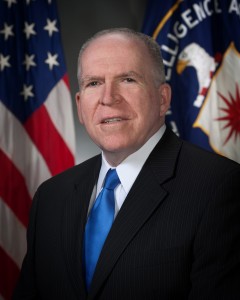 John
Brennan, currently CIA director, previously served as director of the
Terrorist Threat Integration Center. (Photo credit: CIA)
John
Brennan, currently CIA director, previously served as director of the
Terrorist Threat Integration Center. (Photo credit: CIA)
Legal issues covered in these
Studies articles include
prepublication review, the protection of the identities of U.S.
intelligence officers, and assassination. The prepublication review
process is treated (
Document 24) by a former Directorate of Intelligence representative to the Publications Review Board, who offers an anodyne view
of the process and an extensive list of “myths and realities.”
4
The protection of intelligence officer identities is the subject of two articles. One (
Document 11)
provides a history of the Intelligence Identities Protection Act (IIPA)
— from initial proposals, through opposition and revisions, to final
passage. Another (
Document 10)
suggests that the legislation did not go nearly far enough. Thus, the
author, who served as a law clerk in the CIA’s Office of General
Counsel, asks: “if an intelligence officer may sign away his First
Amendment right to free speech, then cannot the same officer also
contract away his Sixth Amendment right to a public court?”
With respect to journalists, the author also suggests removing the
limitations of the IIPA in prosecuting those who reveal the identity of a
covert intelligence officer. While numerous newspapers and books have
stated that the IIPA prohibits such disclosure, it actually only
prohibits the disclosure by those who have had authorized access to such
an identity (e.g. John Kiriakou) or who engage in a “pattern of
activities” which seek to undermine/expose the U.S. intelligence effort.
5The author suggests criminalizing not only any disclosure but any
purported disclosure
– so that even an erroneous disclosure would be a criminal offense.
Further, his suggested wording for amended legislation would seem to
leave open the possibility of prosecution for disclosing information
that might lead to such identification even if it was not explicit.
A 1996 article (
Document 3)
is a significant contrast to post-9/11 legal issues concerning targeted
killings. Its focus is on the implications of the prohibition on
assassination that appeared in President Gerald Ford’s 1976 executive
order and subsequent executive orders on intelligence.
6 The
article addresses the implications with regard to support for
paramilitary operations, coup preparations (addressing the specific case
of Panama and Gen. Manual Noriega), counterproliferation operations,
and even deception operations directed at individuals — which might
result in their imprisonment, torture, or execution by their own
government. This is in sharp contrast to the discussion of legal issues
in the Justice Department’s white paper on targeted killings, which
focuses on the legal
justification for a targeted killing of a U.S. citizen.
INTELLIGENCE ANALYSIS
Four articles deal with various aspects of intelligence analysis. In one case (
Document 12),
the article focuses on a subject of concern to many intelligence
analysts during the Cold War – the cost of Soviet defense programs and
the burden they imposed on the Soviet economy. Another (
Document 17) examines intelligence analysis related to the Strategic Defense Initiative and successor missile defense programs.
A third article (
Document 5),
is the result of a CIA-funded study at the John F. Kennedy School of
Government at Harvard — and illustrates the decades-long difficulty of
producing reliable studies and estimates concerning North Korea. It
examines the intelligence estimates produced by the CIA and Army
concerning North Korean military strength — which significantly altered
previous conclusions – and how they ultimately derailed President
Carter’s plan to withdraw U.S. ground forces from South Korea.
Also, of contemporary relevance is the article (
Document 23)
on the inception and evolution of terrorism analysis in the CIA. The
author notes that there was little pressure on the agency to produce
terrorism analysis during its first quarter-century, and products such
as the 1968 special national intelligence estimate,
Terrorism and Internal Security in Israel and Jordan “were
relative rarities.” The article goes on to describe increasing policy
maker interest subsequent to the 1972 murder of Israeli Olympic
athletes, and resulting Intelligence Community focus on the issue. He
also describes how initially the Directorate of Operations’ clandestine
collection activities were the principal element of the CIA’s
counterterrorism activities — before the emergence of the Directorate of
Intelligence as a key player in that effort.
CIA & NSA
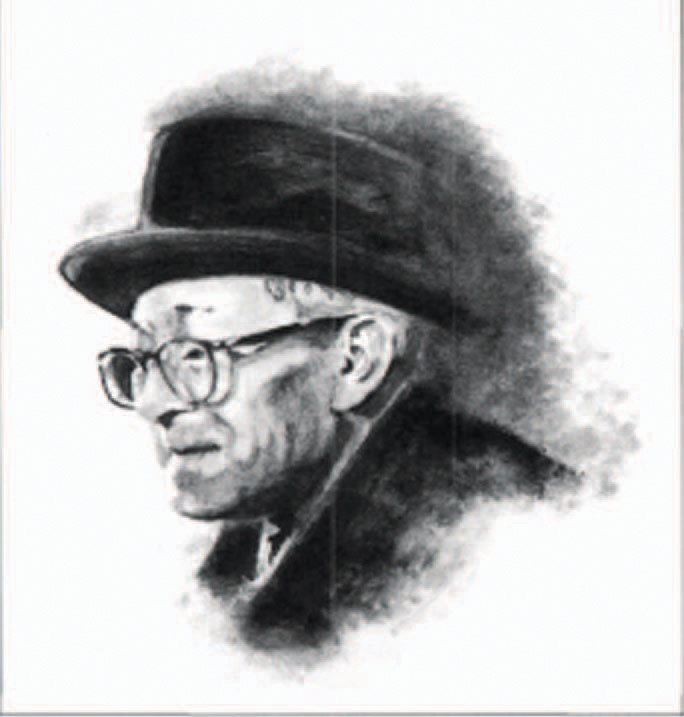
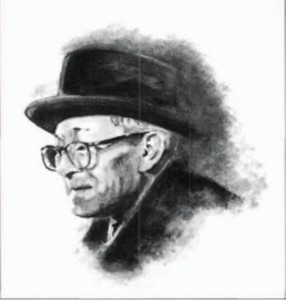 Image,
right: James Jesus Angleton, head of counterintelligence and “CIA’s
answer to the Delphic Oracle” from 1954-1974. (Photo credit: CIA)
Image,
right: James Jesus Angleton, head of counterintelligence and “CIA’s
answer to the Delphic Oracle” from 1954-1974. (Photo credit: CIA)
Various works on intelligence have noted both the past competition
and present cooperation between the CIA and National Security Agency.
7 In “A Brave, New World” (
Document 19),
the author states that the CIA and NSA “are moving their strategic
partnership beyond the optional cooperation of the past into a new era
of collaboration,” and notes that the Director of Central Intelligence –
George J. Tenet at the time – had viewed much of the success against
al-Qaeda and its allies as the “direct result of CIA and NSA working
together.”
He goes on to examine the origins of CIA-NSA discomfort in World War
II and beyond, barriers to partnership, hints of change, the impact of
the September 11, 2001 attacks, tangible results, asks if the
partnership would last, and addresses the challenges ahead. Among the
challenges identified are the development of joint strategic planning
forums, increasing the pace and scope of efforts to find joint solutions
to technical problems, and the incorporation of the concerns of line
officers.
COUNTERINTELLIGENCE
Two articles address counterintelligence issues during very different portions of the CIA’s history. One (
Document 23)
addresses the roles of CIA counterintelligence chief (1954-1974) James
J. Angleton and KGB defector Anatoliy Golitsyn in promulgating the
thesis of widespread and successful Soviet deception against the West
(the “Monster Plot”) and their impact on CIA operations and personnel.
Among those whose lives or careers suffered were former KGB officer
Alexandr Cherepanov (who was executed after the U.S. embassy returned
materials he had provided), Yuri Nosenko (who was incarcerated by the
CIA), and CIA officers Richard Kovich and David Murphy, who would each
come under suspicion of being a Soviet mole.
8
Another treatment of counterintelligence (
Document 21),
by former chief of the National Clandestine Service Michael J. Sulick,
focuses on counterintelligence in the counterterrorist effort. He argues
that, because of how history played out, while counterintelligence
failures during the Cold War were never exploited by the Soviet Union to
launch attacks, similar failures against terrorist groups could result
in “catastrophic” damage. Sulick goes on to discuss several topics: how
terrorist groups operate like intelligence services; terrorist attempts
to infiltrate their targets; the fact that there are now “more employees
to worry about” because “personnel and facilities must also be defended
from individuals with minimal or no clearance;” terrorist denial and
deception; intelligence sharing; and further steps to be taken.
INTERVIEWS
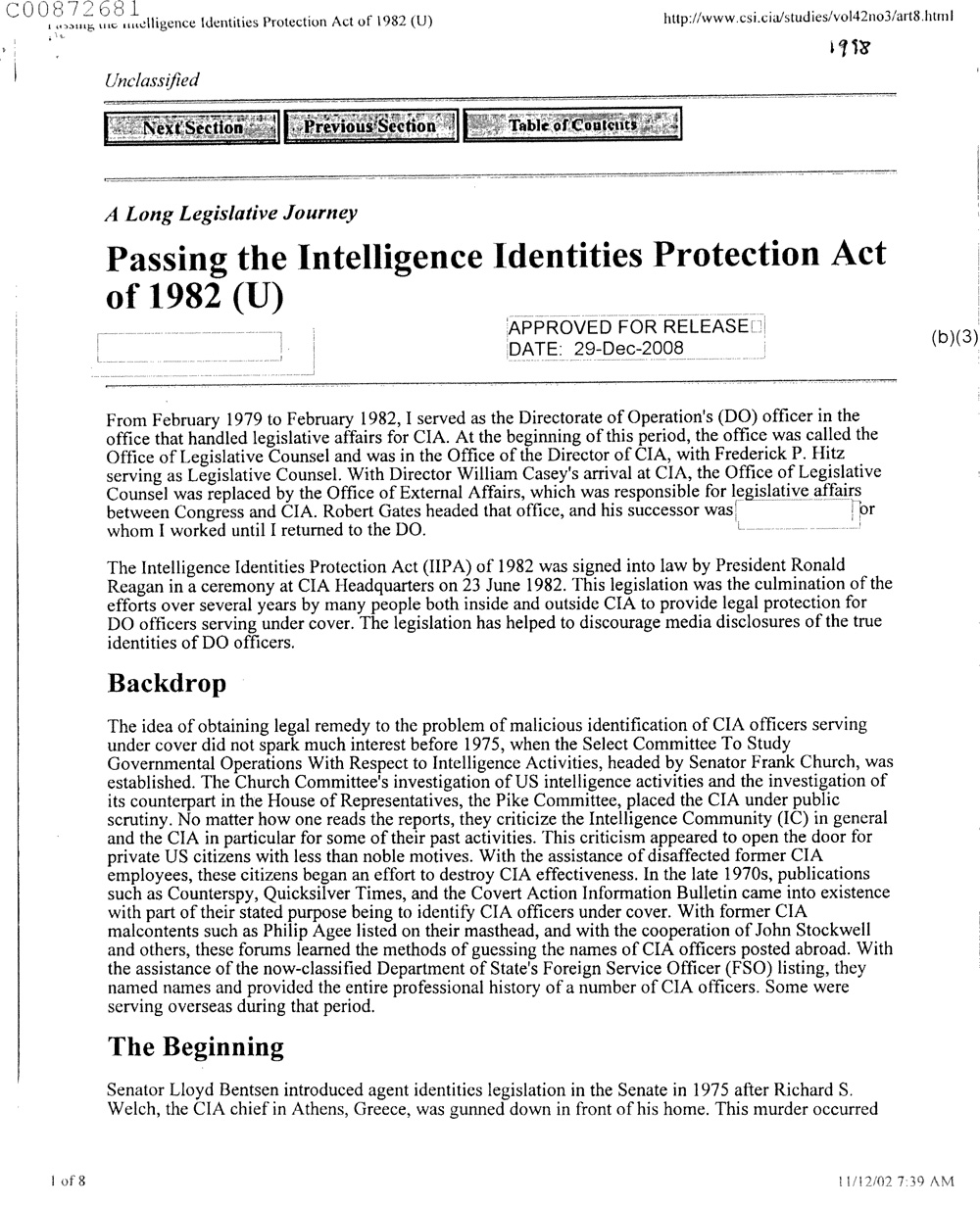
 Image of Document 8 (“Passing the Intelligence Identities Protection Act,” 1982)
Numerous issues of
Studies have contained interviews with
former or current senior intelligence personnel. In 1999, Studies
published an extensive interview with John M. McMahon (
Document 14),
who joined the CIA in 1951, and eventually became Deputy Director for
Operations, Deputy Director for Intelligence, and finally Deputy
Director of Central Intelligence before retiring in 1986.
The interview covers his first years with the CIA in Germany, the U-2
program, the battle during the 1960s with the National Reconnaissance
Office over satellite reconnaissance systems, a number of his senior
positions (including DDO, DDI, and DDCI), relations with Congress, and
covert action with regard to Iran and Afghanistan. With regard to U-2
pilot Francis Gary Powers (who was shot down in May 1960 over the Soviet
Union, captured, and subsequently exchanged), he “did exactly what he
was told,” McMahon noted. He went on to state that DCI John McCone was
not convinced and planned to have Powers investigated for a second time –
by the Air Force Office of Special Investigations – until President
John F. Kennedy called McCone and ordered him not to pursue the matter.
The following year,
Studies published an interview with then NSA director Lt. Gen. Michael V. Hayden (
Document 15). Hayden spoke,
inter alia,
about his attempts to bring significant change to NSA, the impact of
telecommunications change on NSA ( “our technological adversary is not a
nation state but the global telecommunications industry”), the
relationship between NSA and CIA, signals intelligence requirements, and
limitations on NSA support to military commanders.
In 2004, current Director of the Central Intelligence Agency and
then-director of the Terrorist Threat Integration Center (the
predecessor of the National Counterterrorism Center) John Brennan was
interviewed by
Studies (
Document 20)
— an interview which focused on terrorism analysis. Brennan noted the
TTIC had access to 26 unclassified and classified networks, and
discussed whether “counterterrorism analysis” would represent a distinct
career track; TTIC organization and practices as a model for the
Intelligence Community; the need to break down the distinction between
foreign and domestic intelligence; the distribution of terrorism
analysis in the Intelligence Community; and information sharing.
Two additional interviews were conducted with former NSA Director and
Deputy Director of Central Intelligence William O. Studeman (
Document 2) and former NSA Deputy Director William Crowell (
Document 1).
The interviews focus on both internal Intelligence Community issues as
well as public and Congressional attitudes concerning the Intelligence
Community.
INTELLIGENCE SUPPORT & LIAISON
Three articles deal with three aspects of intelligence support and
liaison. One focuses on intelligence support to Congress, another on
support to policymakers, and the third on support to military
commanders. In “CIA’s Intelligence Sharing with Congress” (
Document 6),
the author describes “the phenomenon of the President’s own finished
intelligence being used by Congress to question and attack the
President’s foreign policy initiatives.” Specific examples include
Indochina (during the Nixon administration), the Persian Gulf, and
Haiti.
CIA support to executive branch policymakers is the subject of a 1998 article (
Document 9),
written by a CIA official who spent two years as the agency’s liaison
to the State Department’s Ambassador-at-Large for the New Independent
States — a position established “to improve the CIA’s ability to
understand the policy priorities and concerns of the bureau.” Half of
the four-page article is devoted to the author’s specification of six
ways in which CIA support for senior policymakers could be improved —
which include “living with the customer” and “early bird service.”
Intelligence support to military forces, in the form of National
Intelligence Support Teams (NISTs) is the subject of an article (
Document 8) in a 1998 issue of
Studies.
The author reviews the background and operation of NISTs, which
combined personnel and provided support from key national and defense
intelligence agencies (including CIA, the Defense Intelligence Agency,
the National Security Agency, and the National Imagery and Mapping
Agency) and provide support to commanders of joint task forces such as
those involved with Operations UPHOLD DEMOCRACY (Haiti) and JOINT
ENDEAVOR (Bosnia). In addition, the author makes a number of suggestions
for improvements.
THE KENNEDY ASSASSINATION AND THE DCI
The posted article (
Document 26)
was drawn from a classified history of John McCone’s tenure as Director
of Central Intelligence (1961-1965). One part focuses on the initial
investigation of a possible conspiracy — domestic or foreign — and
McCone’s role. It notes that the CIA’s “inability to locate Nikita
Khrushchev right after the assassination especially alarmed McCone and
his deputies. The Soviet premier’s apparent absence from Moscow could
have meant that he was in a secret command center, either hunkering down
for an American reprisal, or possibly preparing to strike the United
States.”
‘DENIED IN THEIR ENTIRETY’
What is particularly notable about four of the articles is that they
were denied in their entirety by the CIA between 2010 and 2012 in
response to FOIA requests — with the agency claiming that there were no
releaseable portions either because information was classified or
revealed sources and methods. The denied articles concerned a diverse
set of topics — intelligence support to the U.S. Transportation Command (
Document 4), the founding of the CIA’s human intelligence unit (
Document 16), the origins and applications of nuclear intelligence (
Document 18), and the recollections of a CIA officer (
Document 22) of spending September 11, 2001 with President George W. Bush. An appeal of the denial of
Document 4 was also denied.
The articles are notable in two ways. One is that they illustrate
serious problems with the way the CIA responds to FOIA requests — often
denying requests in their entirety based on no objective standard, and
often seemingly on factors (such as convenience) other than legitimate
FOIA exemptions. An examination of these articles released due to the
Scudder lawsuit reveal a multitude of paragraphs that clearly should
have been released, many clearly marked as unclassified.
The four articles also provide yet another illustration of the
differences between Freedom of Information Act requests and litigation.
The prospect of the CIA having to justify its refusal to release
documents, in whole or in part, before a judge often produces a more
reasonable response with regard to the release of information.
ODDS & ENDS
 Ribbon-cutting ceremony at the Terrorist Threat Integration Center, May 1, 2003. (Photo credit: FBI)
Two additional articles concern events separated by over two hundred years. One (
Document 7),
focuses on Britain’s penetration of the United States diplomatic
mission to France during the Revolutionary War. Penetration involved
British recruiting of agents with access to mission members, theft of a
mission member’s journal and Britain’s control of agents ostensibly
operating on behalf of the United States.
In November 1990, at its Langley headquarters, the CIA dedicated an
encrypted sculpture named ‘Kryptos’ – a structure with several messages
carved into its surface, but messages whose content was concealed
through encryption. [Since that time three of the four messages
contained in the sculpture have been solved.
9 One of the individuals, from the Directorate of Intelligence, in a 1999 article (
Document 13) a member of the Directorate of Intelligence describes his work in decrypting the message.
For more information contact:
Jeffrey T. Richelson 202/994-7000 or nsarchiv@gwu.edu
Updated – November 20, 2014 (Originally Posted – June 4, 2013)
THE DOCUMENTS
Document 1: William Nolte, "An Interview with William P. Crowell, Deputy Director, NSA, Studies in Intelligence 39, 3 (1996). Secret.
Source: Scudder Litigation Release.
This interview with the Deputy Director of NSA, discusses, inter
alia, key issues facing the Intelligence Community (which Crowell
identifies as including information systems and the volume of NSA
collection), the interaction between different intelligence collection
techniques, and the declassification of VENONA material (concerning the
decryption of Soviet diplomatic communications from the 1940s that
identified a large number of U.S. citizens spying for the Soviet Union).
Document 2: William Nolte, "An Interview with Adm. William O. Studeman, Studies in Intelligence, 40, 1 (1996). Secret.
Source: Scudder Litigation Release.
This interview with Studeman, who served as Director of the National
Security Agency (1988-1992) and Deputy Director of Central Intelligence
(1992-1995), covers his early career and a number of issues — including
the problems of interaction with other intelligence agencies, the
problem of the Intelligence Community's transition to the post-Soviet
world, public and Congressional attitudes toward NSA, and Congressional
oversight.
Document 3: [Deleted], “Covert Action, Loss of Life and the Prohibition on Assassination, 1976-1996,” Studies in Intelligence, 40, 2 (1996). Classification Not Available.
Source: CIA Freedom of Information Act Release.
In this article, the author examines the effect of the decision no
longer to employ assassination as an instrument of U.S. policy, and the
issues the prohibition raised with respect to other CIA activities that
might result in the loss of life. These include lethal operations that
directly risk the loss of life, lethal operations indirectly risking
loss of life (e.g. demolition of a facility when it is believed to be
unoccupied), and nonlethal operations (e.g. deception) directed at
identifiable persons.
Document 4: [Author Name Deleted], “National Intelligence Support to the US Transportation Command,” Studies in Intelligence 40, 2 (1996). Secret.
Source: Scudder Litigation Release.
The U.S. Transportation Command (TRANSCOM) was established in 1987 to
centralize the Defense Department’s strategic airlift resources. The
article explores operations in Somalia, the command’s information
requirements, the command’s evolution, Intelligence Community support,
connectivity between the Intelligence Community and TRANSCOM’s
intelligence component.
Document 5: Joe Wood, “Persuading a President: Jimmy Carter and American Troops in Korea,” Studies in Intelligence, 40, 4 (1996). Classification Not Available.
Source: CIA Freedom of Information Act Release.
During his 1976 presidential campaign, Jimmy Carter promised to
withdraw U.S. ground forces from South Korea. This article is the result
of a case study prepared at Harvard’s John F. Kennedy School of
Government, and funded by the CIA. It reports on the intelligence
estimates and studies on North Korean military strength produced early
in Carter’s administration, and how those estimates resulted in U.S.
forces remaining in South Korea.
Document 6: [Deleted], “CIA’s Intelligence Sharing With Congress,” Studies in Intelligence, 41, 3 (1997). Classification Not Available.
Source: CIA Freedom of Information Act Release.
This short article focuses on “the phenomenon of the President’s own
intelligence being used to question and attack the President’s foreign
policy initiatives.” Specific cases discussed concern Indochina, the
Persian Gulf, and Haiti.
Document 7: [Deleted], “British Penetration of America’s First Diplomatic Mission,” Studies in Intelligence, 41, 4 (1997). Classification Not Available.
Source: CIA Freedom of Information Act Release.
The focus of this article is Britain’s penetration of the U.S.
diplomatic mission in Paris during the Revolutionary War. Successes
included recruiting several access agents to provide intelligence on
mission activities as well as the theft of the journal of mission member
Arthur Lee, and the mission’s “recruiting” agents who were actually
under British control.
Document 8: Capt. James M. Lose, “The National Intelligence Support Team,” Studies in Intelligence, 42, 1 (1998) .
Unclassified.
Source: CIA Freedom of Information Act Release.
The author reviews the background and operation of National
Intelligence Support Teams (NISTs) — combining personnel from key
national and defense intelligence agencies (including CIA, the Defense
Intelligence Agency, the National Security Agency, and the National
Imagery and Mapping Agency) — which provided support to commanders of
joint task forces such as those involved with Operations UPHOLD
DEMOCRACY (Haiti) and JOINT ENDEAVOR (Bosnia). In addition, the author
makes a number of suggestions for improvements.
Document 9: [Deleted], “Increasing CIA’s Value Added to the Senior Policymaker,” Studies in Intelligence, 42, 2 (1998). Unclassified
Source: CIA Freedom of Information Act Release.
This article is based on the author’s two years serving as the CIA’s
liaison to a State Department component and focuses on his suggestions
for increasing the CIA’s value to policymakers — including “living with
the customer,” better service for “second tier” officials, one-stop
shopping for “the facts,” stronger community partnerships, and “early
bird” service.
Document 10: [Deleted], “Legislative and Judicial Safeguards for US Intelligence Personnel,” Studies in Intelligence, 42, 2 (1998). Unclassified.
Source: CIA Freedom of Information Act Release.
The author, who served as a law clerk with the CIA’s Office of the
General Counsel, examines the history and enforcement of the
Intelligence Identities Protection Act (IIPA), as well as exploring a
number of options to enhance the protection of US intelligence personnel
— including secret trials, and amending the IIPA to allow criminal
penalties for
any individual who reveals or purports to reveal the identity of covert intelligence personnel.
Document 11: [Deleted], “Passing the Intelligence Identities Protection Act of 1982,” Studies in Intelligence, 42, 3 (1998). Unclassified
Source: CIA Freedom of Information Act Release.
This article provides a short history of the background behind the
IIPA, the initial proposals for a law criminalizing the revelation of
the identify of covert intelligence personnel, the various attempts to
pass such legislation, opposition to some proposed provisions, and the
ultimate passage of the IIPA.
Document 12: [Deleted], “Analyzing Soviet Defense Program, 1951-1990,” Studies in Intelligence, 42, 3 (1998). Unclassified
Source: CIA Freedom of Information Act Release.
This article focuses on what was a major concern of some intelligence
analysts during the Cold War — determining the actual cost of Soviet
defense programs and the burden they placed on the Soviet economy. Among
the author’s assertions was that “in every case, the [Intelligence
Community] concluded that Soviet economic difficulties would impinge
only marginally, if at all, on Soviet defense plans” and that “Only when
Gorbachev’s perestroika was foundering was the idea of economic
constraints on the defense budget gain a foothold in the national
estimates arena, and even then the majority opinion rejected the notion
that the USSR would unilaterally reduce its defense spending as it did
in 1989.”
Document 13: [Deleted], “Cracking the Courtyard Crypto,” Studies in Intelligence, 43, 1 (1999). Unclassified.
Source: CIA Freedom of Information Act Release.
In 1990, the CIA unveiled a sculpture name “Kryptos” in the agency’s
courtyard — a sculpture whose surface was covered with an encrypted
message. This article, by a member of the Directorate of Intelligence,
describes the process by which he deciphered most of the message.
Document 14: [Deleted], “An Interview with Former DDCI John N. McMahon,” Studies in Intelligence, 43, 1 (1999). Classification Not Available.
Source: CIA Freedom of Information Act Release.
This interview, with John N. McMahon, who joined the CIA in 1951 and
served in a variety of positions before he retired in 1986, covers his
early days in the agency, the U-2 program, battles over satellite
reconnaissance systems, as well as his tours as head of the clandestine
service, the intelligence directorate, and as Deputy Director for
Central Intelligence. In addition, he discusses the CIA-Congressional
relationship as well as covert action with regard to Iran and
Afghanistan.
Document 15: [Deleted], “An Interview with NSA Director Lt. Gen. Michael V. Hayden,” Studies in Intelligence , 44, 1 (2000). Secret/[Deleted]
Source: CIA Freedom of Information Act Release.
In this interview, Michael Hayden, then the director of the National
Security Agency, discusses his attempt to bring significant change to
NSA, his belief that “our technological adversary is not a nation state
but the global telecommunications industry,” the relationship between
NSA and the CIA (also discussed in
Document 19), and other topics.
Document 16: Michael Warner and Kevin Ruffner, “The Founding of the Office of Special Operations,” Studies in Intelligence 44, 2 (2000). Secret/Noforn.
Source: Scudder Litigation Release.
This article, written by two CIA historians, focuses on the CIA’s
first human intelligence organization — which would be merged in 1952
with the Office of Policy Coordination to form the Directorate of Plans
(subsequently the Directorate of Operations and today the National
Clandestine Service). It discussed the early post-World War II
development of U.S. espionage activities, foreign liaison dilemmas,
observations by foreign services, and moving from theory to practice.
Despite the decades that have passed since the events described, the
article has been heavily redacated before release.
Document 17: [Deleted], “Intelligence and US Missile Defense Planning,” Studies in Intelligence, 45, 2 (2001). Classification Not Available.
Source: CIA Freedom of Information Act Release.
After providing a brief introduction to the early origins of missile
defense, this article addresses the establishment of the Strategic
Defense Initiative, the post-Cold War shift in U.S. missile defense
emphasis and the challenges of providing intelligence on threats,
technical issues, and foreign reactions.
Document 18: Henry S. Lowenhaupt, “Origins and Applications of Nuclear Intelligence,” 47, 3 (2003). Secret.
Source: Scudder Litigation Release.
This article, written by one of the CIA’s long-time experts on
nuclear intelligence, particularly the intelligence on the Soviet
nuclear program, explores the early years on the U.S. nuclear
intelligence effort. Lowenhaupt discusses nuclear intelligence
collection in World War II, the detection of nuclear detonations,
tracking airborne radioactivity, seismic technology, acoustic and EMP
measurement, measuring plutonium production, environmental collection,
as well as the contribution of U-2 and infrared imagery. A number of the
sections are heavily redacted and the section on nuclear detection
satellites is deleted in its entirety (despite the substantial amount of
declassified information on the subject).
Document 19: [Deleted], “A Brave, New World,” Studies in Intelligence, 48, 2 (2004). Classification Not Available .
Source: CIA Freedom of Information Act Release.
This article addresses the relationship between the CIA and National
Security Agency in the aftermath of the September 11, 2001 terrorist
attacks. It notes the origins of CIA-NSA enmity going back to World War
II, barriers that have existed to a partnership between the two
agencies, hints of change in the late 1990s, and the impact of 9/11. Its
final sections focus on tangible results, the likelihood that the
partnership will last, and the challenges ahead.
Document 20: [Deleted], “An Interview with TTIC Director John Brennan,” Studies in Intelligence, 48. 4 (2004). Secret.
Source: CIA Freedom of Information Act Release.
This interview with John Brennan, currently the Director of the
Central Intelligence Agency, was conducted in 2003 — when he was the
director of the Terrorist Threat Integration Center (which was
subsequently absorbed by the National Counterterrorism Center).
Questions include those about the center’s access to intelligence data,
counterterrorism analysis as a specialty, the different components of
the Intelligence Community involved in counterterrorism analysis, and
the division of responsibilities for different aspects of
counterterrorism analysis.
Document 21: Michael J. Sulick, “Counterintelligence in the War Against Terrorism,” Studies in Intelligence, 48, 4 (2004). Secret/[Deleted].
Source: CIA Freedom of Information Act Release.
The author, who served as CIA Associate Deputy Director for
Operations and became chief of the National Clandestine Service in 2007,
notes that whereas U.S. counterintelligence defeats during the Cold War
were never exploited by the Soviet Union in an actual war, terrorists
“can immediately exploit information gained through espionage to launch
attacks.” He goes on to explore the subjects of “terrorists as
intelligence operatives;” “exposing terrorist spies;” “more employees to
worry about;” terrorist denial and deception; intelligence sharing; and
further actions.
Document 22: Michael J. Morell, “11 September 2001: With President,” Studies in Intelligence, 50, 3 (2006) Secret/Noforn.
Source: Scudder Litigation Release.
This article recounts the author’s experience with President Bush on
the day of the al-Qaeda attacks on New York and Washington. Morell, who
subsequently served as Deputy Director of the CIA (2010-2013) begins in
the hours before the attack and continues until Morell arrived back in
Washington. It focuses less on intelligence and more on the movements
and reactions of Bush and others.
Document 23: [Deleted], “Terrorism Analysis in the CIA: The Gradual Awakening (1972-80),” Studies in Intelligence, 51, 1 (2007). Secret.
Source: CIA Freedom of Information Act Release.
This article, after discussing the emergence of terrorism as an
international issue, traces the development of terrorism analysis in the
CIA from the Truman to Nixon administrations. It covers increased
policymaker interest in the subject (particularly following the murder
of Israeli Olympic athletes by Palestinian terrorists in 1972), and the
resulting increased Intelligence Community interest; the initially
ascendant role of the Directorate of Operations; the Directorate of
Intelligence’s subsequent larger role in terrorism analysis; and early
analytical challenges.
Document 24: [Deleted], “CIA Prepublication Review in the Information Age,” Studies in Intelligence, 55, 3 (September 2011).Confidential.
Source: CIA Freedom of Information Act Release.
The author, who served as the first senior representative of the
Directorate of Intelligence on the CIA Publication Review Board (PRB)
offers an anodyne view of the publication review process. Topics covered
include the origins and evolution of the PRB and review process, the
impact of a vast increase in the number of submitted manuscripts, the
meaning of the ‘appropriateness’ requirement, and “myths and realities
of the process.” Asserted myths included that “the prepublication review
process is unfair, arbitrary, capricious” and that “the PRB often
doesn’t know what has already been released.”
Document 25: [Deleted], “James J. Angleton, Anatoliy Golitsyn, and the ‘Monster Plot’: Their Impact on CIA Personnel and Operations,” Studies in Intelligence, 55, 4 (December 2011). Secret.
Source: CIA Freedom of Information Act Release.
This article examines the roles of CIA counterintelligence chief
James J. Angleton and KGB defector Anatoliy Golitsyn in the formulation
of the “Monster Plot” — which asserted that the Soviet Union had
conducted decades-long, massive and successful deception operations
against the West, including the use of false defectors and volunteers.
It then examines the impact of Angleton and Golitsyn’s thinking on a
number of cases and individuals — including Yuriy Nosenko, Lee Harvey
Oswald, and several CIA officers who were alleged to be possible Soviet
moles.
Document 26: David Robarge, “DCI John McCone and the Assassination of John F. Kennedy,” Studies in Intelligence 57, 3 (September 2013). Secret.
Source: CIA Freedom of Information Act Release.
Director of Central Intelligence John McCone’s actions in the
aftermath of the assassination of President Kennedy is the subject of
this article, drawn from a classified book on the Mc Cone’s tenure as
DCI. It notes that McCone’s first action after hearing that the
president had been shot was to visit Robert Kennedy at his home. The
remainder of the article discusses McCone’s oversight of the
investigation of a possible conspiracy, his interaction with the Warren
Commission, the impact of detection of KGB officer Yuri Nosenko, and his
participation in what the author describes as a ‘benign conspiracy.’
NOTES
1. H, Bradford Westerfield,
Inside CIA’s Private World: Declassified Articles from the Agency’s Internal Journal, 1955-1992 (New Haven: Yale University Press, 1995), pp. vii, xii-xiv.
2. The tables of contents, starting with the initial issue of
Studies, can be found at
www.nationalsecuritylaw.org.
A significant disparity existed between the CIA’s response to the 2010
FOIA request for 1985-1996 tables of contents and their response to
National Security Counselors litigation. Approximately 130 more titles
were released in response to litigation than to the author’s FOIA
request. Some of the titles not released in response to the FOIA request
but produced under litigation include: “Psychology of Treason,” “The
Decline and Fall of the Shah,” “On Analytic Success and Failure,” “The
DI’s Organizational Culture,” and “Observation Balloons and
Reconnaissance Satellites.” “Psychology of Treason” actually appeared in
the Westerfield collection (pp. 70-82) while “Observation Balloons and
Reconnaissance Satellite” had been released in its entirety and could be
found on the CIA’s website.
3.
Articles denied in their entirety included “Overhead Imagery during the
Yom Kippur War,” “Sifting the Evidence on Vitaly Yurchenko,” “Iraq’s
Nuclear Weapons Program,” and “The Need for Improved Strategic
Counterintelligence Analysis.” On Scudder’s background, actions, and the
results, see Greg Miller, “CIA employee quest to release information
‘destroyed my entire career’,” www.washingtonpost.com, July 4, 2014.
4. Various authors have found the PRB process less than reasonable. For example, see David H.Sharp,
The CIA’s Greatest Covert Operation: Inside the Daring Mission to Recover a Nuclear-Armed Soviet Sub (Lawrence, Ks.: University Press of Kansas, 2012), pp. xi-xii; Robert Wallace and H. Keith Melton,
Spycraft: The Secret History of the CIA’s Spytechs from Communism to Al-Qaeda (New York: Dutton, 2008), pp. xx-xxi.
5.
Thus, the new head of the National Clandestine Service, who is still
officially undercover, as well as the temporary head (also undercover)
have been named without a violation of the law. See “CIA’s New Chief Spy
Outed on Twitter,” www.gawker.com, accessed May 9, 2013.
6.
Although it is often assumed that the first prohibition of
assassination was Gerald Ford’s 1976 executive order, DCI’s Richard
Helms and successor William Colby had issued internal directives
prohibiting such action – Richard Helms, “Allegations of
Assassinations,” March 6, 1972; William E. Colby, Subject: Policy
Against Assassination,, August 29, 1973.
7.
For example, see James R. Taylor, Deputy Director of Operations,
National Security Agency, Subject: Thoughts on Strategic Issues for the
Institution, April 9, 1999, Document 21 in Jeffrey T. Richelson (ed.),
NSA Electronic Briefing Book #24,
The NSA Declassified , March 11,2005,
www.gwu.edu/~nsarchive/NSAEBB/NSAEBB24.
8. Two major accounts of Angleton and the Molehunt are: Tom Mangold,
Cold Warrior – James Jesus Angleton: The CIA’s Master Spy Hunter(New York: Simon & Schuster, 1991), and David Wise,
Molehunt: The Secret Search for Traitors that Shattered the CIA (New York: Random House, 1992).

 Posts
Posts