Friday, December 7, 2012

Why Discussing New Business Models That Work Is A Good Idea

Why Discussing New Business Models That Work Is A Good Idea

from the not-a-responsibility,-but-helpful dept

Jack Zeal has a really interesting post over on Rick Falkvinge's InfoPolicy site, in which he argues that it's not "our" job to "fix" the broken business model of those who rely on copyright. He talks about having yet another discussion with the typical copyright system supporter, in which they make one of those "but without copyright..." arguments, and he starts pointing out alternative business models. However, he's come to believe that strategy is pointless because, effectively, it's not our job to fix your broken business model. And, to some extent, he's right. It's not our job to do so, but as someone who's been taking part in these discussions for a very long time, and who has spent an awful lot of time and effort highlighting successful new business model opportunities, I still think it's incredibly helpful and useful. I'll explain why by responding to each of Jack's points. To be clear, I don't think Jack's argument is a bad one, and I can understand the frustration, but I still think our focus is more productive long run.
If we propose specifics, we leave ourselves vulnerable to the “but what about A or B? Those couldn’t work with business model C!” It’s an unending cat-and-mouse game. The classic example is the old “How to finance a blockbuster-caliber movie?” trope. Nobody ever considers that maybe the current system is the reason movies have to cost that much, do they?
So? That's always true. People can always bring up a "what if?" and it's easy to then point out that there are similar "what ifs?" with the current system. To be honest, I've often found the "what if" discussions useful in thinking through even more new business model ideas, which is kind of cool.
If we offer generalities, like “Merchandise and sell experiences instead of commodities”, they tend to be shot down in snarky sound-bites, like “So bands will have to sell T-shirts instead of records?”
There are always going to be some people who misunderstand or (more likely) misrepresent your arguments. The "sell lots of t-shirts" trope is so common we used to sell an actual t-shirt that said "looooooooots of t-shirts" on it. And it was a decent seller! Point being: you'll never convince everyone -- especially those who have no interest in being convinced. But, having been at this for a long time, I can assure you that for every person misrepresenting such arguments, there are many others who are recognizing the truth of the opportunities opening up around them. I can't even begin to tell you how many content creators contact me talking about how they used to believe the old party line on copyright (or, more commonly, that they believed there was no hope for making money these days), but that they ended up becoming inspired by reading through some of the many examples of business models that worked.
It keeps the conversation on the content industry’s terms. They can be the “victims” needing a “rescue” strategy. It’s sure a great shift of attention from the rest of society being denied access to information and the natural rights to communicate and share
I'm not sure about this at all. In talking to and working with numerous content creators working through business model challenges, I just don't see this. The discussions about business models are never about "rescuing" anyone -- just straight up brainstorming about cool things that can be done.
It’s needlessly speculative. Indeed, it reminds me a lot of the earliest “home computer” books dumped out by the thousands in the late 1970s and early 1980s. The authors spent hours arguing that we’d all be managing recipies or doing computer-driven teaching, and then VisiCalc happened and people forgot all about recipe-management. No doubt it will be the same. Someone finds the “killer model” for post-monopoly revenue generation, but it’s probably not gonna happen until there’s no other choice but to find one. And much like the cuddly toy in the caption image, some of the suggested models aren’t gonna fly in the real world.
Well, to be clear, we've always said that there isn't a magic bullet business model that works for everyone -- and that the "new business model" involves experimenting with a number of opportunities, much of which depends on the content creator themselves, their audience and the relationship between the two.

So, for us, the highlighting of new business models serves a number of different purposes. First off, it's just plain helpful to lots of artists. And that seems like a good thing. Second, it debunks the claim that copyright is the only business model, which seems to be an implicit (and sometimes explicit) assumption by many, unfortunately. Third, doing so quite often inspires others to try more cool new things themselves. And that can only be a good thing. Much of this is about experimenting and recognizing that there isn't just one way to do things any more. That can be scary and a big challenge for many artists, but it also means that there's tremendous opportunity.

Finally, whether or not it's "our job" to highlight alternative business models, if you don't, none of the claims above go away. People will still attack and complain that there are no business models that work without copyright. A decade ago (after about five years of highlighting problems with the system) I finally started focusing more regularly on highlighting positive examples, and on the whole the experience has been much more beneficial than negative. It's resulted in a lot more interesting conversations with content creators from super stars to kids just starting out -- often leading to cool new experiments and more opportunities. It's also resulted in some really interesting conversations with execs from the legacy industry really looking to help adapt to the changing market. If I was just talking about the problems of copyright, none of that would likely have happened.

A friend of mine who is a successful CEO had a rule at his company, which was that no one was allowed to highlight a problem without also at least tossing out a possible solution, even if it was just to kick off brainstorming. That might be extreme, but it seems like a handy tool. If you're only complaining, it's easier for people to write you off. If you're also highlighting possible solutions, there's a lot of benefit. Also, frankly, it's often a lot of fun to talk about cool things that people are doing.

The DVR That Watches You Back: Verizon Applies For 'Ambient Action' Detecting Device Patent

The DVR That Watches You Back: Verizon Applies For 'Ambient Action' Detecting Device Patent

from the comes-with-pair-of-glue-on-googly-eyes-to-make-product-seem-fun-and-less-creepy dept

Here's another patent application to keep an eye on, following on the heels of Microsoft's patent app for a TV that counts noses in order to charge each viewer for content, potentially turning your living room into something akin to a porn store viewing booth or bus stop TV -- "please insert $2 to continue viewing." Verizon's patent application also involves a device eyeballing your living room, this time in an effort to target advertising.

Verizon's living room intruder is a DVR that observes "ambient action," identifies it and scans its ad database for an appropriate ad to serve up during the next commercial break. This sounds about as creepy as an ad exec watching you through your open living room drapes in order to decide which flyers to shove in your mailbox. Rest assured, Verizon's use of the phrase "ambient action" is designed for maximum innocuousness. It's not until you get to the list of possible "ambient actions" that the creep factor really kicks in.
[0016] To illustrate, an exemplary ambient action may include the user eating, exercising, laughing, reading, sleeping, talking, singing, humming, cleaning, playing a musical instrument, performing any other suitable action, and/or engaging in any other physical activity during the presentation of the media content. In certain examples, the ambient action may include an interaction by the user with another user (e.g., another user physically located in the same room as the user). To illustrate, the ambient action may include the user talking to, cuddling with, fighting with, wrestling with, playing a game with, competing with, and/or otherwise interacting with the other user. In further examples, the ambient action may include the user interacting with a separate media content access device (e.g., a media content access device separate from the media content access device presenting the media content). For example, the ambient action may include the user interacting with a mobile device (e.g., a mobile phone device, a tablet computer, a laptop computer, etc.) during the presentation of a media content program by a set-top box (“STB”) device.
It looks as though Verizon has carefully avoided naming any other ambient actions that viewers may not want to have "watched back," like "having sex with," "fighting with," "yelling at," "masturbating to," "Farmvilleing at" or "blogging about." All joking aside, it's a bit disconcerting that Verizon's main concern isn't the potential privacy violations, but rather that its customers just aren't watching TV hard enough.
[T]raditional targeted advertising systems and methods fail to account for one or more ambient actions of a user while the user is experiencing media content using a media content access device. For example, if a user is watching a television program, a traditional targeted advertising system fails to account for what the user is doing (e.g., eating, interacting with another user, sleeping, etc.) while the user is watching the television program. This limits the effectiveness, personalization, and/or adaptability of the targeted advertising.
I suppose that, in this era of "second screens" and "promiscuous 'cuddling' teens," it's tough to get the sort of "captive audience" that advertisers (and the companies that sold customers to them) used to take for granted. The bold, new paradigm is the "observed audience," an innocuous phrasing in itself. The "tracked audience." The "surveilled audience." These terms are a little more accurate, especially considering how much information Verizon covers under the pillow-soft, marketing-friendly, customer-disarming term "ambient."
[0019] Detection facility 104 may be additionally or alternatively configured to analyze data received by way of a detection device in order to obtain information associated with a user, an ambient action of the user, a user's surroundings, and/or any other information obtainable by way of the data. For example, detection facility 104 may analyze the received data utilizing one or more motion capture technologies, motion analysis technologies, gesture recognition technologies, facial recognition technologies, voice recognition technologies, acoustic source localization technologies, and/or any other suitable technologies to detect one or more actions (e.g., movements, motions, gestures, mannerisms, etc.) of the user, a location of the user, a proximity of the user to another user, one or more physical attributes (e.g., size, build, skin color, hair length, facial features, and/or any other suitable physical attributes) of the user, one or more voice attributes (e.g., tone, pitch, inflection, language, accent, amplification, and/or any other suitable voice attributes) associated with the user's voice, one or more physical surroundings of the user (e.g., one or more physical objects proximate to and/or held by the user), and/or any other suitable information associated with the user.
There's also wording in the application regarding recognizing the tune a viewer is humming and reacting accordingly (presumably by contacting the nearest PRO and reporting an unlicensed public performance). It also leaves the option open for detecting other animate and inanimate objects, including pets and branded products. And, like Microsoft's application, Verizon's suggests the system will be able to distinguish between adults and children and activate parental controls.

This being Verizon, the advertising watch-and-push isn't limited to the all-seeing DVR. The user's phone or tablet will most likely be receiving additional advertising or content based on what "ambient actions" are detected. I can only imagine the delighted thrill of customers watching their DVR shove ads onto their phones simply because they weren't paying enough attention to the ad on the TV screen.

Once again, this is nothing more than a patent application, which doesn't necessarily mean this product will ever make it to market, USPTO 'OK' or not. But it does give you some idea of Verizon's theories on where targeted advertising is headed.

Nurse Who Answered Prank Call at Kate’s Hospital Found Dead

http://vigilantcitizen.com/latestnews/nurse-who-answered-prank-call-at-kates-hospital-found-dead/             ???

Nurse Who Answered Prank Call at Kate’s Hospital Found Dead

Dec 7th, 2012 | Category:


One of the first “commoners” to be somewhat in contact with Kate and William’s unborn baby is found dead shortly afterwards in suspected “suicide”. The events leading to this death are quite strange.
Nurse Jacintha Saldanha took a prank call made by an Australian radio station impersonating the Queen and transferred it to another nurse who divulged personal information about Kate’s health. According to news sources, this faux-pas might have caused her to take her own life shortly afterwards.
It is way too early to advance any kind of conclusion regarding this story, but its premise is rather suspicious. I hope we are not looking at some kind of ritual sacrifice.

Nurse Jacintha Saldanha who took a prank phone call at Duchess of Cambridge’s hospital is found dead in suspected suicide

A nurse who was duped into transferring a prank call from two Australian radio presenters at the hospital treating the Duchess of Cambridge for severe morning sickness was found dead in a suspected suicide.
Jacintha Saldanha, 46, a nurse at the King Edward VII’s Hospital in central London, answered the call at 5.30am on Tuesday from the Sydney-based 2Day FM station, whose DJs pretended to be the Queen and Prince Charles. Ms Saldanha put them through to a colleague who provided details of the Duchess’s condition.
Mrs Saldanha was found unconscious at a nurses’ residence close to the private hospital in Marylebone, central London, at about 9.35am this morning and despite the efforts of paramedics could not be revived. Scotland Yard said the death was not being treated as suspicious, and a source said officers were investigating whether she had taken her own life. Mental health experts cautioned against any assumptions about factors contributing to her death.
The nurse, a mother-of-two who started working at the hospital in 2008, is the first member of staff heard to answer on a recording of the hoax call from presenters Mel Greig and Michael Christian.
Ms Greig, seeking to impersonate the Queen, asked to be put through to “my grand-daughter”, prompting Mrs Saldanha to reply: “Oh yes, just hold on ma’am.”
The hospital, which is rated as one of London’s best private medical establishments and has a reputation for closely guarding the privacy of its patients, spoke of its shock and “very deep sadness” at the death of Ms Saldanha, whose partner and two sons live in Bristol. Her family said last night: “We as a family are deeply saddened by the loss of our beloved Jacintha.”
In a statement, the hospital said: “She was an excellent nurse and well-respected and popular with all of her colleagues.
“We can confirm Jacintha was the victim of a hoax call to the hospital. The hospital had been supporting her throughout this difficult time.”
Lord Glenarthur, the hospital’s chairman, added: “This is a tragic event. Jacintha was a first class nurse who cared diligently for hundreds of patients during her time with us.”
The radio prank, which was pre-recorded and vetted by lawyers from the radio station before it was broadcast, was picked up by media worldwide and acutely embarrassing for the hospital, which has a long history as the hospital of choice for the royal family.
In a statement earlier this week, the hospital’s chief executive John Lofthouse condemned the prank, adding: “We take patient confidentiality extremely seriously and we are now reviewing our telephone protocols.”
Mr Lofthouse added: “I think this whole thing is pretty deplorable; our nurses are caring, professional people trained to look after patients, not to cope with journalistic trickery of this sort.”
The hospital offers its VIP patients private lines that are connected directly to their rooms but the Australian DJs were able to reach the Duchess’s personal nurse via the switchboard in an apparent breach of procedure.
It is understood that Mrs Saldanha, who was registered to practice in Britain in July 2003, had not been disciplined or suspended by the hospital.
She answered the hospital’s phone line in her role as duty nurse because there was no receptionist manning the switchboard at the time of the call.
St James’s Palace said that neither Prince William and his wife nor any royal staff had complained to the hospital about the prank, adding that they had offered their “full and heartfelt support” to staff and to the nurses involved.
The couple, who had to announce that they are expecting their first child sooner than planned after Kate was hospitalised with acute morning sickness on Monday, said that they were “deeply saddened” by Mrs Saldanha’s death. A spokesman at St James’s Palace said: “Their Royal Highnesses were looked after so wonderfully well at all times by everybody at King Edward VII Hospital, and their thoughts and prayers are with Jacintha Saldanha’s family, friends and colleagues at this very sad time.”
While little information about Mrs Saldanha’s mental health was available, nurses’ leaders last night suggested that there could be a link between her death and the prank.
Dr Peter Carter, chief executive of the Royal College of Nursing, said: “It is deeply saddening that a simple human error due to a cruel hoax could lead to the death of a dedicated and caring member of the nursing profession.”
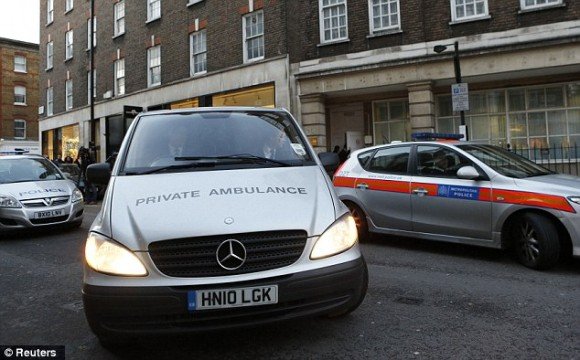
In a statement, the ambulance service said: “We were called at 9.25am this morning to an address on Weymouth Street. We sent two ambulance crews and a duty officer. Sadly the patient, a woman, was dead at the scene.”
The owners of the Sydney radio station said last night that the two presenters were “deeply shocked” at the nurse’s death and had agreed to stop broadcasting until further notice.
- Source: The Independent

The bizarre fate of Phil Schneider

http://www.ufodigest.com/article/bizarre-fate-phil-schneider        

The bizarre fate of Phil Schneider

Doc Vega's picture
Phil with his son shortly before his apparent execution.
The old saying, “where there’s smoke there’s fire,” seems quite appropriate when considering the suggestive evidence that points to UFOs and underground bases. Phil Schneider, a government geological engineer, not only saw too much, but paid the ultimate price for reporting it to the public.
It has been rumored for sometime that secret underground military bases have been under development and construction since 1947. Is it any coincidence that 1947 marked the year that the Roswell Incident occurred in New Mexico? It seems that the two events are interrelated according to the testimony of many.
In the employ of secret deep underground installations
It was his job to evaluate rock strata below the surface and determine what type of formations at certain depths existed where underground projects had been chosen to begin. These evaluations involved Phil and others to be lowered into deep shafts to observe layers of sedimentary and igneous rock which would determine the type of excavation to be used. From there he would recommend to construction teams what types of explosives, whether the rock would be melted with high heat, or displaced with the powerful kinetic energy of remote charges.
In posession of forbidden knowledge
For many years he lived with the knowledge that our government was concealing highly controversial operations that centered around secret installations deep within the earth. These military constructs more and more pointed to something sinister as he became more deeply involved.
Strange Partnership
According to Schneider, he was made aware that someone else was working with the human workers who risked their lives in these operations. Someone dwelled deep beneath the surface of the earth, who was dangerous. Unfortunately, Phil Learned too late before being involved in a terrible firefight deep within a dark shaft he had been lowered down into by a basket.
To see Phil Schneider giving a lecture you were immediately gripped by his sincerity and candidness, but there was something else distressingly convincing. Phil had lost 3 fingers on his right hand, apparently severed with the precise beam of a deadly weapon that operated with surgical precision. He had also suffered numerous other life threatening injuries although he was amazingly sharp and concise as he described the fantastic events that enveloped him on his ill fated journey beneath the topography of the New Mexico desert.
On an appointment with destiny
On a typical descent into an exploratory shaft designed for sampling the underlying rock formations Phil had been lowered down in a protective suit. It was suspected that radiation levels might be unsafe. Three shafts were drilled that day. Incredibly two began spewing a kind of black soot. They were curious to see what was causing the strange reaction. Phil descended with a pistol on a hip holster. Several hundred feet down terrible things began to happen.
Schneider spotted a extraterrestrial type of creatures and immediately drew his hand gun, which was not particularly easy with his cumbersome protective wear. Two small,  gray, aliens were his targets and he quickly fired killing both, but another entity, much taller, and with no apparent weapon, simply waved its hands in front of its torso. Phil was struck with a blue beam of intense heat that immediately blew 3 of his fingers off and cut open his stomach! His right foot was burned to a crisp as if he had been struck by lightning. He had not been killed, but blown backwards and knocked down. Schneider was dazed and surely destined to die.
Saved by a Green Beret
If not for the efforts of a Green Beret soldier who hoisted Phil to a sitting position and activated the winch to ascend upwards, Schneider admitted he would have been dead. The heroic efforts of the Green Beret soldier only resulted in his own death as he was struck fatally by the disintegrating force of another beam. As Phil sat almost helplessly a vicious exchange between US military men and the alien creatures raged underground. Many men were killed according to Phil, who was enraged that the US government had not informed them that there were indeed malevolent creatures beneath the earth’s surface that had been there a long time, and were ready to use force if disturbed.
The unofficial underground war
Phil Schneider told his audiences that the US was at war with a subterranean enemy, alien invaders who had apparently been on the planet for centuries, and man had stumbled upon them in his secretive projects. So here he was in front of the camera speaking live to a spellbound audience, his hand before him looking like a lobster claw due to the missing index, middle, and ring fingers, sheered off by a deadly alien weapon.
Inconsistencies in scientific timelines
Archeologists as fossil experts have often puzzled over the awkward discoveries of erratic finds or evidence that do not fit the age or genre of strata it is encased with. Miners have stumbled upon ancient rooms or chambers thousands of feet below the surface of the earth, inexplicable, mysterious, resisting explanation. In the book “Footprints in Time” the author makes many references to bizarre finds that are cast aside by science because they contradict the timelines that have been theoretically devised to build a consistent documented history. However, the text book procedure falls short by failing to explain the erratic, the obvious flaw in their paradigm.
The intentional inaccuracies of teaching the fossil record
Emmanuel Velikovsky pointed out in such books as “Ages In Chaos” that the Archeological community was using flawed data by ignoring erratics that had to be explained. Why were dinosaurs with grass in their mouths found in upheavaled strata distinctly different than the layers they should have been encased within? His theory established that asteroid and comet strikes had violently transformed the earth and disrupted the predictable erosion patterns of the planet. Yet, until his theories were accepted, Velikovsky was ridiculed by science, unwilling to reconsider its mistaken recreation of geologic and archeological history.
Now we today must reconsider many of the assumptions we have made about a history fed to us by our educators that is incapable of answering the strange incidents described by people such as Phil Schneider. According to him somebody that remains largely unknown to the surface dwelling human race is lurking below, ready to lash out at man whenever he intrudes.
Phil makes a road show out of exposing government secrets
For the last two years of his life, Schneider spent time making his shocking lectures wherever and whenever he could. His scientific expertise and extraordinary accounts remind us that all is not what it seems, and that governments are not to be trusted. Unfortunately, Phil Schneider didn’t live long enough to inform more people than he might have.
An underserved end of a patriot's life
Within the last months of his life, Phil had suffered a divorce and was having emotional problems. In 1996 at his apartment in Wilsonville, Oregon, Phil Schneider was found dead, executed in military fashion, tortured and strangled with piano wire. Schneider was suffering from terminal cancer and did not have long to live anyway. Why would someone consider him to be such a threat that even in his dying condition, Phil Schneider had to be assassinated? Obviously, this is an ominous indicator that he had trespassed too close and for too long upon the forbidden reality the government attempts to cover up and conceal from the people? Such is the perilous journey some of us are brave enough to take when we are determined to shed the light of day upon, not only, the evil that men do, but that entities from beneath the earth undertake as well.
Extra information about the article: 
Phil with his son shortly before his apparent execution.
Categories:

James Holmes: three ways to get set up for murder

http://jonrappoport.wordpress.com/2012/12/01/james-holmes-three-ways-to-get-set-up-for-murder/    

James Holmes: three ways to get set up for murder

JAMES HOLMES: THREE WAYS TO GET SET UP FOR MURDER
by Jon Rappoport
November 30, 2012
www.nomorefakenews.com
A prison inmate claims Holmes confessed he was a mind-controlled assassin. Paul Watson, writing at Infowars, covers the story:
http://www.infowars.com/inmate-james-holmes-told-me-he-was-programmed-to-kill-by-evil-therapist/
There are three roads that can lead to the hugely inconvenient truth about Holmes.
One: he was set up and subjected to mind control, after which he committed the murders at the Aurora theater. He was programmed to kill.
Two: he was a patsy. He didn’t kill anybody. He was drugged and dumped in his car at the theater, set up to be arrested there, not at the door of the theater. The drug would have induced short-term amnesia. Holmes was clueless.
Three: he was a victim of standard psychiatric drugging, at the hands of any of three psychiatrists at the U of Colorado, where he had been a student. For example, ordinary “therapeutic” dosing with antidepressants like Prozac, Zoloft, or Paxil could very well have induced a homicidal rage. In that case, the U of Colorado would be bracing for a billion-dollar lawsuit.
This is one reason for the very tight information-control on the case.
It should be understood that standard psychiatric drugging and the drugging that would have taken place, in mind-control programming, are two very different protocols.
You don’t feed somebody Prozac and feel certain he will kill as directed. The SSRI antidepressants are unpredictable. Under intentional mind-control programming to kill, the drugs would have assisted accompanying hypnosis. The drugs would have induced temporary passivity and increased suggestibility.
The exception? If Holmes had been subjected to long-term mind control, all sorts of disorienting drugs could have been used to soften him up; for example, LSD at high doses, or similar designer hallucinogenics.
Nothing public has been released about the results of Holmes’ tox-screen blood tests while in jail.
It would, of course, be quite revealing to learn what drugs Holmes was given by his psychiatrist(s). If any of them, e.g, Dr. Lynne Fenton, was actually involved in programming him, they would have avoided standard meds, because such unpredictable chemicals could have disrupted Holmes’ orders to kill.
In 1995, a presidential committee set up to hear testimony on illegal radiation experiments suddenly bloomed into testimony about mind control. Two patients of New Orleans therapist, Valerie Wolf, Claudia Mullin and Cris De Nicola, took the stand and recounted how radiation had been used on them, as part of a much wider-ranging program.
They spoke about their long-term nightmare, starting as children, during which hallucinogenic drugs, spinning tables, blinking lights, hypnosis, and programming were employed to make them into agents under the CIA’s secret MKULTRA aegis. In those cases, the drugs were used to scramble their brains.
In Holmes’ case, more sophisticated means could have been deployed. For instance, electronic transmissions that would have disrupted normal functioning of his brain, and even induced thought-replacement, if he had been already placed under sufficient duress.
One of the crude forerunners of these techniques was invented by the world-famous Canadian psychiatrist, Ewen Cameron, who carried out experiments on unwitting patients during the 1950s. Partially funded by a CIA front, Cameron’s torture method was called psychic driving.
After horrendous electric shocks, drugs were given to place patients in days of prolonged sleep. Cameron then subjected them to audio tapes he made, in which he repeated phrases thousands of times, in order to produce new personalities for them.
A 2012 lawsuit filed by veterans’ groups, against the CIA and the DOD, refers to Cameron’s methods. The suit also states that two researchers, Dr. Louis West and Dr. Jose Delgado, working together under the early MKULTRA subproject 95, utilized two protocols: brain implants (“stimoceivers”) and RHIC-EDOM to program the minds of victims.
RHIC-EDOM stands for Radio Hypnotic Intracerebral Control-Electronic Dissolution of Memory. Translation: bury memory, and insert commands.
The stimoceiver was an implant developed by Delgado, who was a famous Yale researcher. He set out to prove he could control physical actions.
Delgado’s most dramatic experiment involved stepping into a ring with a bull, who had been outfitted with the stimoceiver implant. The bull charged Delgado, who pressed a button on a handheld device…and the bull stopped dead in his tracks.
In ensuing years, RHIC-EDOM and Delgado’s stimoceiver were researched using a variety of newer methods. The main objective was production of artificial emotion, thought, and action.
On the other hand, if James Holmes wasn’t an MKULTRA-type assassin, but instead a simple psychiatric patient, there is ample evidence in the medical literature to indicate murder is an outcome of various drugs.
In other words, Holmes’ personal problems weren’t enough to push him into the theater where he killed people at random. That was an ordinary effect of the drugs, which scrambled his neurotransmitter systems and literally drove him crazy.
See the work of Dr. Peter Breggin, who has been aptly called “the conscience of psychiatry.” In his first landmark book, Toxic Psychiatry, and in later books and articles, Breggin makes a clear case for psychiatric meds as the cause of suicides and homicides. (www.breggin.com)
In interviews with me, Breggin stated that, in the 1999 Columbine school-shooting case, one of the shooters, Eric Harris, was on Luvox, an SSRI antidepressant. “This type of drug,” Breggin said, “can cause the patient to kill, but also to make grandiose plans for destruction.”
Holmes as a simple patsy is the third road of investigation. There are clues to suggest this path. The “other gas mask” found at the back of the theater, after the murders, is still unexplained. It could have been cast aside by a shooter, not Holmes, during an escape.
At least two witnesses have testified there were two shooters in the theater. This, of course, suggests, a planned operation. The idea of Holmes collaborating with another killer is odd, to say the least, given the background we’ve been fed about his unstable mental condition and his loner status.
Initial reports claimed Homes surrendered himself to police, at a theater exit, after the shootings. This is contradicted by witness assertions that he was arrested in his car.
To sort out what really happened at the Aurora theater, one must follow all three tracks of inquiry.
Possible overlaps exist. Holmes could have been drugged merely to set him up as the patsy, in which case, he committed no crime at all. He could have been drugged and programmed prior to him visiting a psychiatrist at the U of Colorado. In that scenario, the basic op was enforced by psychiatric “boosters” involving, perhaps, hypnosis. Or Holmes was indeed programmed to kill and become the patsy, allowing other shooters to escape—but Holmes didn’t, finally, carry out the murders.
This last scenario resembles what happened in the 1968 assassination of Robert Kennedy. Sirhan Sirhan, the patsy, did in fact have a gun at the Ambassador Hotel. But he was standing in front of RFK in the kitchen, and the shots that killed RFK came from behind. Sirhan had kept notebooks in which, prior to the assassination, he revealed an obsessed and apparently dissociated state of mind.
See this account of the RFK murder, which casts overwhelming doubt on the official story:
http://www.maryferrell.org/wiki/index.php/Robert_Kennedy_Assassination
Holmes, like Sirhan, kept a notebook, which he mailed to his psychiatrist at the U of Colorado. What was in it?
If we ever find out, we may see even closer parallels to the RFK assassination, in which all signs pointed to Sirhan, including his programming…but those clues were laid down to divert the investigation from the real shooter, who stood behind Kennedy in the kitchen of the Ambassador Hotel.

The Matrix Revealed

Perhaps the most tantalizing clues of all come from a kind of social/media analysis. Here is a section from an earlier article of mine, “Were the Batman Murders a Covert Op?” (note: click here for the full article):
It is noteworthy that a young neuroscience student, Holmes, who was at one point studying “the biological basis of mental disorders,” winds up as an accused mass murderer who is “obviously deranged” and “suffering from a chemical imbalance in the brain.”
At this point, we go down the rabbit hole, and the pieces of the puzzle are strange.
A video has emerged of Holmes, at age 18, six years ago, lecturing to fellow attendees at a science summer camp at Miramar College in San Diego.
http://www.youtube.com/watch?v=lotOPjLlbDU
Holmes explains he has been studying temporal illusions and subjective experience. A temporal illusion, he states, is the idea that you can change the past.
At the Cannonfire blog (http://cannonfire.blogspot.com) there are comic-book panels posted from what Joseph Cannon calls “the most famous passage in the most famous of all Joker stories, Alan Moore’s ‘The Killing Joke.’”
The Joker is asked: “I mean, what is it with you? What made you the way you are? Girlfriend killed by the mob? Maybe brother carved up by some mugger…?”
The Joker replies: “Something like that happened to me, you know…I’m not exactly sure what it was. Sometimes I remember it one way, sometimes another…if I’m going to have a past, I prefer it to be multiple choice! Ha ha ha!”
James Holmes, at 18 years of age, said he was studying temporal illusion, “the idea that you can change the past,” a feat the fictional Joker had obviously accomplished.
In the last ten years, the film that explored this subject—and Holmes’ other interest, the subjectivity of experience—most deeply, through its treatment of dreams and the insertion of synthetic experience in the mind, was Inception, directed by Christopher Nolan, who of course also directed the recent Batman trilogy, including The Dark Knight Rises.
In yet another version of changing the past, in 2000 Nolan directed Memento, which unraveled its story backwards, as a victim of anterograde amnesia, who can’t store memories, tries to revenge his wife’s murder by leaving clues for himself that will lead him to the identity of her killer.
Are we simply talking about a neuroscience student’s (Holmes’) interest in comics and films, or did he participate in experiments that attempted to alter his subjective view of the world and his own past?
For example, there is wealth of information about the criminal experiments conducted by Canadian psychiatrist, Dr. Ewan Cameron, who operated with funding from the CIA during the 1950s. Cameron ran MKULTRA Subproject 68, during which he used massive electroshocks, sensory isolation, drug-induced periods of sleep (7-10 days), and audiotapes of “re-patterning” commands to attempt to wipe out patients’ pasts, their memories, their former subjective mindsets, their very personalities—in favor of recreating these patients as “new and improved people.”
As a teen, Holmes interned at the Salk Institute in San Diego. Salk carries out studies using functional MRI, a technique of brain mapping that involves correlating read-outs with various mental activities. It’s only speculation at this point, but somewhere along the line, did Holmes participate in such experiments, and were the results used to map regions of his brain for later inputs, so someone could achieve behavioral/thought control over him?
To even suggest Holmes may be a mind-control subject brings immediate criticism, to which I would offer this counter: why accept the scenario of the crime put forward by the Aurora police? Why do they deserve the benefit of the doubt? Why limit and narrow the investigation to their story?
Was law enforcement correct about the JFK and JFK and MLK assassinations? Was law enforcement correct about the Columbine massacre, in which 101 witnesses state they saw other shooters? Was law enforcement correct about the lone duo of plotters in the Oklahoma bombing? Was law enforcement correct about 9/11?
In all cases—no.
I’ll tell you this. If the authorities really wanted to know what makes James Holmes tick (a prospect I strongly doubt), their best chance would be to send someone into his cell who could talk to him about Christopher Nolan, Inception, Memento, functional MRI, and the TV series, Lost, which contained time-travel themes and was a show he and his friend, Ritchie Duong, used to watch together every week when they attended UC Riverside. Talk to Holmes about what he wants to talk about. Who knows what would eventually unravel?
It would be far more than the police wish to uncover.
Jon Rappoport

What countries have banned GMO crops?

http://www.examiner.com/article/what-countries-have-banned-gmo-crops      

What countries have banned GMO crops?

These days in Southern Minnesota, it's hard to find any fields that aren't planted with genetically modified corn or soybeans. While GMO crops are quickly taking over the landscape in the United States and Canada, not all countries have embraced these questionable crops.
Here's a list of countries (and U.S. counties) that have banned genetically modified crops in one way or another.
In the United States: Only the California counties of Mendocino, Trinity and Marin have successfully banned GM crops. Voters in other Calilfornia counties have tried to pass similar measures but failed.
In Australia: Several Australian states had bans on GM crops but most of them have since lifted them. Only South Australia still has a ban on GM crops, though Tasmania has a moratorium on them until November of 2014.
In Japan: The Japanese people are staunchly opposed to genetically modified crops and no GM seeds are planted in the country. However, large quantities of canola are imported from Canada (which is one of the world's largest producers of GM canola) and there is now GM canola growing wild around Japanese ports and roads to major food oil companies. Genetically modified canola such as Monsanto's Roundup Ready canola have been found growing around 5 of the 6 ports that were tested for GM contamination.
In New Zealand: No GM foods are grown in the country.
In Germany: There is a ban on the cultivation or sale of GMO maize.
In Ireland: All GM crops were banned for cultivation in 2009, and there is a voluntary labeling system for foods containing GM foods to be identified as such.
In Austria, Hungary, Greece, Bulgaria and Luxembourg: There are bans on the cultivation and sale of GMOs.
In France: Monsanto's MON810 GM corn had been approved but its cultivation was forbidden in 2008. There is widespread public mistrust of GMOsthat has been successful in keeping GM crops out of the country.
In Madeira: This small autonomous Portugese island requested a country-wide ban on genetically modified crops last year and was permitted to do so by the EU.
In Switzerland: The country banned all GM crops, animals, and plants on its fields and farms in a public referendum in 2005, but the initial ban was for only five years. The ban has since been extended through 2013.
In India: The government placed a last-minute ban on GM eggplant just before it was scheduled to begin being planted in 2010. However, farmers were widely encouraged to plant Monsanto's GM cotton and it has led to devastating results. The UK's Daily Mail reports that an estimated 125,000 farmers have committed suicide because of crop failure and massive debt since planting GM seeds.
In Thailand: The country has zigzagged in its support and opposition of GM crops. The country had widespread trials of GM papayas from Hawaii but reversed its plans when the seeds got wild and began contaminating nearby crops. Several countries such as Japan moved to restrict the importation of Thailand's papayas as a result, not wanting to import any GM foods. Thailand is currently trying to embrace both sides -- producing organic foods for some countries at a high price while moving towards embracing more and more GM crops. The country has also tried declaring some areas GMO-free zones in order to encourage other countries to trust their foods.
What countries have embraced GM crops?
  • The U.S. now grows mostly GM varieties of corn, canola and soy. Hawaii now grows GM papayas. Approvals have also been given for GM alfalfa, zucchinis, beet sugar and tomato varieties, though not all are currently being grown. A recent attempt to approve GM salmon was defeated.
  • China is one of the largest producers of GM crops.
  • Germany, Sweden and the Czech Republic are approved for growing GM potatoes.
  • Finland's government and population is receptive to GM foods. None are currently grown in the country, however, because no approved GM crops are suitable for the country's growing conditions.
  • The Zambian government has launched a campaign to get the public to support GM technology.
  • Canada has widespread GM crop usage. Nearly all Canadian canola is GM, as is a large portion of the country's soy and corn. Prince Edward Island tried to pass a ban on GMO cultivation but failed, and GM crops in the region are currently increasing.
  • Spain currently grows GMO maize (about 20% of the country's maize is GM).
  • The Czech Republic, Slovakia, Portugal, Romania and Poland all grow some GMO maize.
  • The Phillipines grow GM crops.
  • The European Union (EU) has approved the cultivation of many GM crops (including potatoes and maize) but individual countries are able to opt out from growing them. However, most EU countries are not permitted to reject the sale of GM foods.
  • South Africa is growing an increasing number of GM crops.
  • Britain officially supports GM crops and has trials of GMOs like potatoes planted. However, there is widespread public distrust of the crops and Prince Charles has been a vocal opponent of GMOs.
  • South America has widespread planting of GM crops.
  • As mentioned above, Thailand is alternately embracing and rejecting GM crops.
  • India also has widespread GM cotton use. Also mentioned above, the widespread planting of Monsanto's GM cotton has led to tragedy throughout India. The Indian government even banned conventional seeds from many government seed banks in an attempt to please Monsanto (in return, the country was given International Monetary Fund loans to help its economy) and slow the nation's poverty rates. An estimated 1,000 farmers commit suicide each month in the country as a result of the crop failure and debt caused by planting the GM seeds. Farmers were convinced to spend what was often 1,000 times the cost of conventional seed on the "magic seeds" after listening to Monsanto's promises of increased yields and resistence to pests. Despite the promises, the crops were often destroyed by bollworms. In addition, the farmers weren't warned that the crops would require twice as much water as conventional cotton, leading to many crops drying up and dying. The "terminator" seeds also must be purchased again every year. For farmers used to saving seed from year to year, this was often a final financial blow that led to insurmountable debt.
The variation in each country's laws and views regarding GMOs has led to complications when it comes to exporting foods. For example, Thailand has been working to reassure other countries about the safety of its food but recently had its canned tuna rejected by Greece and the Netherlands after testing showed GM ingredients. The tuna was packed in soybean oil imported by the United States, where most soy is genetically modified.
Some Americans are now looking for foods like canola oil and soy products that are not grown in the United States, thinking that it's a way to avoid GM foods. This is obviously not a good idea. It's important not to assume that just because a food was not produced in the United States, it's not genetically modified.
Until consumers have the right to labeling informing us of which foods contain GM ingredients, it's important to be aware of which countries are now growing GM foods and which foods are produced.
How can you avoid GMOs? See this article:
15 Ways to take a stand against Monsanto and avoid GMO foods
The status of GM crops is constantly changing, both in the United States and around the world. Public outcry is rising against these largely untested foods and crops. The industry claims of "super yields" and an end to poverty and famine have proven to be dangerously inaccurate. Now, more than ever, is the time when our voices (and purchases) can make a real difference.

That’s No Phone. That’s My Tracker

http://www.propublica.org/article/thats-no-phone.-thats-my-tracker         

That’s No Phone. That’s My Tracker

(Flickr/matsuyuki)
7/20/2012: This story has been updated.
This story was co-published with The New York Times.
This story is not subject to our Creative Commons license.
The device in your purse or jeans that you think is a cellphone — guess again. It is a tracking device that happens to make calls. Let’s stop calling them phones. They are trackers.
Most doubts about the principal function of these devices were erased when it was disclosed Monday that cellphone carriers responded 1.3 million times last year to law enforcement requests for call data. That wasn’t even a complete count, because T-Mobile, one of the largest carriers, did not initially reveal its total. It appears that millions of cellphone users have been swept up in government surveillance of their calls and where they made them from. Many police agencies don’t obtain a search warrant when requesting location data from carriers.
Thanks to the explosion of GPS technology and smartphone apps, these devices are also taking note of what we buy, where and when we buy it, how much money we have in the bank, whom we text and e-mail, what Web sites we visit, how and where we travel, what time we go to sleep and wake up — and more. Much of that data is shared with companies that use it to offer us services they think we want.
We have all heard about the wonders of frictionless sharing, whereby social networks automatically let our friends know what we are reading or listening to, but what we hear less about is frictionless surveillance. Though we invite some tracking — think of our mapping requests as we try to find a restaurant in a strange part of town — much of it is done without our awareness.
“Every year, private companies spend millions of dollars developing new services that track, store and share the words, movements and even the thoughts of their customers,” writes Paul Ohm, a law professor at the University of Colorado. “These invasive services have proved irresistible to consumers, and millions now own sophisticated tracking devices (smartphones) studded with sensors and always connected to the Internet.”
Mr. Ohm labels them tracking devices. So does Jacob Appelbaum, a developer and spokesman for the Tor project, which allows users to browse the Web anonymously. Scholars have called them minicomputers and robots. Everyone is struggling to find the right tag, because “cellphone” and “smartphone” are inadequate. This is not a semantic game. Names matter, quite a bit. In politics and advertising, framing is regarded as key because what you call something influences what you think about it. That’s why there are battles over the tags “Obamacare” and “death panels.”
In just the past few years, cellphone companies have honed their geographic technology, which has become almost pinpoint. The surveillance and privacy implications are quite simple. If someone knows exactly where you are, they probably know what you are doing. Cellular systems constantly check and record the location of all phones on their networks — and this data is particularly treasured by police departments and online advertisers. Cell companies typically retain your geographic information for a year or longer, according to data gathered by the Justice Department.
What’s the harm? The U.S. Court of Appeals for the District of Columbia Circuit, ruling about police use of tracking devices, noted that GPS data can reveal whether a person “is a weekly church goer, a heavy drinker, a regular at the gym, an unfaithful husband, an outpatient receiving medical treatment, an associate of particular individuals or political groups — and not just one such fact about a person, but all such facts.” Even the most gregarious of sharers might not reveal all that on Facebook.
There is an even more fascinating and diabolical element to what can be done with location information. New research suggests that by cross-referencing your geographical data with that of your friends, it’s possible to predict your future whereabouts with a much higher degree of accuracy. This is what’s known as predictive modeling, and it requires nothing more than your cellphone data.
If we are naïve to think of them as phones, what should we call them? Eben Moglen, a law professor at Columbia University, argues that they are robots for which we — the proud owners — are merely the hands and feet. “They see everything, they’re aware of our position, our relationship to other human beings and other robots, they mediate an information stream around us,” he has said.
Over time, we’ve used these devices less for their original purpose. A recent survey by O2, a British cell carrier, showed that making calls is only the fifth-most-popular activity for smartphones; more popular uses are Web browsing, checking social networks, playing games and listening to music. Smartphones are taking over the functions that laptops, cameras, credit cards and watches once performed for us.
If you want to avoid some surveillance, the best option is to use cash for prepaid cellphones that do not require identification. The phones transmit location information to the cell carrier and keep track of the numbers you call, but they are not connected to you by name. Destroy the phone or just drop it into a trash bin, and its data cannot be tied to you. These cellphones, known as burners, are the threads that connect privacy activists, Burmese dissidents and coke dealers.
Prepaids are a hassle, though. What can the rest of us do? Leaving your smartphone at home will help, but then what’s the point of having it? Turning it off when you’re not using it will also help, because it will cease pinging your location to the cell company, but are you really going to do that? Shutting it down does not even guarantee it’s off — malware can keep it on without your realizing it. The only way to be sure is to take out the battery. Guess what? If you have an iPhone, you will need a tiny screwdriver to remove the back cover. Doing that will void your warranty.
Matt Blaze, a professor of computer and information science at the University of Pennsylvania, has written extensively about these issues and believes we are confronted with two choices: “Don’t have a cellphone or just accept that you’re living in the Panopticon.”
There is another option. People could call them trackers. It’s a neutral term, because it covers positive activities — monitoring appointments, bank balances, friends — and problematic ones, like the government and advertisers watching us.
We can love or hate these devices — or love and hate them — but let’s start calling them what they are so we can fully understand what they do.
Update:
An earlier version of this story said T-Mobile had refused to reveal how many cellphone data requests it received from law enforcement. Based on additional information from T-Mobile and Rep. Ed Markey, D-Mass., it has been updated to say the company did not initially reveal its total. After the story appeared, T-Mobile responded that it had privately provided a number to Markey’s office before the congressman, on July 9, publicly reported that other cell companies had answered 1.3 million data requests from law enforcement last year. Markey’s office said T-Mobile declined repeated appeals to make the company’s number public, so the office agreed to keep it confidential. The figure — 191,000 requests in 2011 — was not included in T-Mobile’s May 23 letter of response to Markey, who had written to nine carriers asking for the data. In an email to ProPublica, company spokesman Glenn Zaccara explained: “Because each carrier has different ways of calculating the total number of lawful requests, we were initially concerned the comparison could lead to an inaccurate portrayal.” T-Mobile did not respond to specific questions about conversations with Markey’s office. Zaccara said T-Mobile gave the number on July 9 to TR Daily, a subscription-only trade publication.

Appeals Court Holds Firm: The Government Cannot Be Sued For Violating Its Own Wiretapping Laws

http://www.techdirt.com/articles/20121206/14371621263/appeals-court-holds-firm-government-cannot-be-sued-violating-its-own-wiretapping-laws.shtml      

Appeals Court Holds Firm: The Government Cannot Be Sued For Violating Its Own Wiretapping Laws

from the US-Government-issues-blank-check-for-4th-Amendment-violators dept

There's more bad news on the Fourth Amendment front as the appeals court reviewing a lawsuit filed against the US government for illegally spying on American citizens has declined to rehear the Al-Haramain case.
A federal appeals court is refusing to reconsider its August ruling in which it said the federal government may spy on Americans’ communications without warrants and without fear of being sued.

The original decision by a three-judge panel of the 9th U.S. Circuit Court of Appeals this summer reversed the first and only case that successfully challenged President George W. Bush’s once-secret Terrorist Surveillance Program.

Without comment, the San Francisco-based appeals court announced Wednesday that it would not rehear (.pdf) the case again with a larger panel of 11 judges, effectively setting the stage for a Supreme Court showdown. The appeals court Wednesday also made some minor amendments (.pdf) to its August ruling, but the thrust of it was the same as before.
Not only does this mean the plaintiffs will have to take the case to the Supreme Court (if it will hear the case), but it also means the damages awarded ($20,000 each for the two plaintiffs and $2.5 million in legal fees) have been reversed.

This also means the Bush's Terrorist Surveillance Plan will continue unchecked as citizens will be unable to bring suits against the government for warrantless spying. The decision rests on a couple of dubious items: a "missing" sovereign immunity waiver and a document mistakenly sent to the plaintiffs that was later designated a "state secret."
The San Francisco-based appeals court had ruled that when Congress wrote the law regulating eavesdropping on Americans and spies, it never waived sovereign immunity in the section prohibiting targeting Americans without warrants. That means Congress did not allow for aggrieved Americans to sue the government, even if their constitutional rights were violated by the United States breaching its own wiretapping laws...

A lower court judge found in 2010 that two American lawyers’ telephone conversations with their clients in Saudi Arabia were siphoned to the National Security Agency without warrants. The allegations were initially based on a classified document the government accidentally mailed to the former al-Haramain Islamic Foundation lawyers Wendell Belew and Asim Ghafoor.

The document was later declared a state secret, removed from the long-running lawsuit and has never been made public.
Concern about the government's ability to designate nearly anything as a "state secret" in order to prevent the release or use of possibly damning evidence has already been discussed by the Supreme Court during oral arguments in the Clapper v. Amnesty International case. In this case, the belated "state secret" designation effectively limited the plaintiffs to citing circumstantial evidence, which is far less effective than producing an actual document showing that the NSA was doing exactly what the plaintiffs claimed it was.

Between the "sovereign immunity" that is unlikely to ever be waived and the ability to designate damning evidence post-facto as "state secrets," the NSA has set itself up with the ability to run a constitutionally dubious, but legally sound, domestic spying program. The system of checks and balances our nation was formed on now more closely resembles a series of erected walls protecting government agencies from being held accountable for their actions.

Transhumanism, Genesis, and Kurzweil’s Singularity

http://sharonkgilbert.com/?p=2151#more-2151                       

Transhumanism, Genesis, and Kurzweil’s Singularity

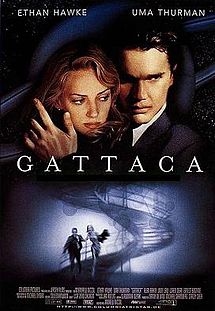
The 1997 thriller, GATTACA, envisions a dark future where eugenics is king.
Transhumanism is a word that is only just now making its way into mainstream consciousness, but the idea is an old one—as old as the Garden of Eden. After Adam and Eve fell prey to Satan’s plans to subvert God’s authority, YWHE (Jehovah) pronounced a unique and most exciting new plan:
“I will put enmity between you and the woman, and between your offspring and her offspring; he shall bruise your head, and you shall bruise his heel.” (Gen. 3:15 ESV)
The above quote is from the English Standard Version, but the King James uses the term ‘seed’ translated above as ‘offspring’. Either way, it is clear that the enemy (Satan) would produce ‘seed’ or ‘offspring’ destined to hate the ‘seed’ or ‘offspring’ of mankind—in particular, one very specific human offspring, the promised Messiah—God made flesh. The battle lines had been drawn, and so the non-human (angelic) camp waste little time before commencing to do battle with the human camp.
The war begins in Genesis 6, where we learn that the ‘sons of God’ or angels who have been charged to ‘watch’ humanity look upon the daughters of men and find them beautiful and desirable. (Note: I will refer to these non-human entities as angels, but this term is not precise for it is primarily used to denote spiritual entities who serve YWHE and are sent on particular missions – ie. Messengers. It is entirely possible that God created a heavenly realm as diverse as our earthly realm). The extrabiblical book of Enoch expands on Genesis 6 and names many of these ‘Watchers’, numbering them as 200 strong. The result of this angelic/human coupling (whether consensual or forced) were gigantic beings known as Nephilim, a human/angelic hybrid. It is most probable that God sent the Great Flood to wipe out the corrupted human/angelic DNA, saving only Noah and his family (whose DNA was uncorrupted – a man ‘perfect in his generations’, that is, having unpolluted DNA). Why? The promised Messiah’s human lineage must remain unblemished ‘in its generations’.
After the flood, the fallen angels may well have returned to their old habits, because we find numerous references to ‘giants’. Nimrod, the leader who commanded his citizens to help build a tower that would reach to God, may have claimed to be ‘two-thirds god’ (if, as some scholars believe, Nimrod is another name for Gilgamesh). God had promised Noah that He would not to destroy the Earth again by flood, so we see Him choose a people for Himself—a people whom He would protect by commanding them to restrain from intermarrying with the surrounding tribes. Numbers 13:33 says this:
“And there we saw the Nephilim (the sons of Anak, who come from the Nephilim), and we seemed to ourselves like grasshoppers, and so we seemed to them.” (Numbers 13:33 ESV)
But did Satan consider the war over? Not by a long shot.
Anakim (sons of Anak), Rephaim, Zuzim, and Emim were also listed as tribes of larger than average height. For instance, Og of Bashan, a Rephaim king, was listed as being over 13 feet tall (Deut. 3:11). I Chronicles offers tantalizing information:
And it came to pass after this, that there arose war at Gezer with the Philistines; at which time Sibbechai the Hushathite slew Sippai, [that was] of the children of the giant: and they were subdued. And there was war again with the Philistines; and Elhanan the son of Jair slew Lahmi the brother of Goliath the Gittite, whose spear staff [was] like a weaver’s beam. And yet again there was war at Gath, where was a man of [great] stature, whose fingers and toes [were] four and twenty, six [on each hand], and six [on each foot]: and he also was the son of the giant. (I Chron. 20:4-6 KJV)
Satan’s drive to pollute the human gene pool so that no woman ‘perfect in her generations’ might be found in Israel failed. Mary (Miriam) gave birth to a son whom she called Emanuel, ‘God with us’. Jesus Christ, Yeshuah ha Mashiach, was born, died, and resurrected, defeating Satan and his followers.
But did Satan consider the war over? Not by a long shot.
Fast forward to the late 19th century, and we see a modern day return to an old theme. This time the drive to tamper with human DNA is called the ‘science of eugenics’. I’ve written several essays on the topic of early 20th century eugenics, so I will not repeat those here entirely, but let me summarize by reminding you, dear reader, that the root of the modern eugenics movement is the Enlightenment of the 18th century, which spawned numerous clubs and ‘secret societies’ where civilized men of Europe (particularly England/Scotland) met to discuss forbidden topics (and in some cases, perhaps engage in pagan behaviors, i.e. the infamous Hellfire Club). One of these civilized gentlemen was one Erasmus Darwin, founding member of the Lunar Society, and lettered physician, botanist, physiologist, natural philosopher. Erasmus Darwin was also the grandfather to both Charles Darwin, the man who gave us the theory of evolution through ‘natural selection’ in his seminal book ‘On the Origin of the Species’, and Francis Galton, who not only pioneered eugenics, but also gave us the term itself.
Galton’s mind turned to many scientific endeavors, but it was his cousin’s book that drove him to ponder human breeding programs as a means for modifying human traits. Fascinated by statistics and numerical data, Galton catalogued every human characteristic he could find, including fingerprints. He then determined to learn whether these characteristics were inheritable. To establish his theory that traits are passed from generation to generation, Galton created pedigrees for noteworthy, influential thinkers of his day. He studied all the data he could gather on each man—from biographies, news sources, etc.—which he then enumerated into comparable data. His 1883 book Inquiries into Human Faculty and Its Development contains his conclusions and suggests ways that British society might improve through early marriage, selective breeding
Fascinated by statistics and numerical data, Galton catalogued every human characteristic he could find, including fingerprints.
(through appropriate marriage partners), and even encouraged the ‘weak’ to seek fulfillment in monasteries or convents (thus preventing further spread of their weak traits to progeny). Galton also proposed twin studies, where one twin would be raised in a different environment, an effort to determine whether nature or nurture played a greater role in personality and measurable traits.
Darwin, Galton, and Thomas Henry Huxley shaped the science of mid-to-late19th century England, and their theories led inevitably to a Science that eschewed Biblical foundations in favor of humanist ones. Man needed no ‘god’ but his own reason, and shaping a new Man became an all driving passion.
In 1907, the Eugenics Education Society was born with Sir Francis Galton elected as first president. One early member, David Starr Jordan, helped found the genetics program at this author’s alma mater, Indiana University, where the Biology building bears Jordan’s name. In fact, Jordan went on to become the first president of Stanford University in California. (Jordan also joined The Bohemian Club, a secret organization that is best known for its roster of high profile politicians and for a peculiar summer ritual, the Cremation of Care, that features a giant owl statue). The Eugenics Education Society boasted many Americans on its roster, including Margaret Sanger (founder of Planned Parenthood, Julian Huxley, John Harvey Kellogg (yes, that Kellogg!), and John Maynard Keynes (whose influence on 20th and 21st century economics has led to the current ‘fiscal cliff’ and rampant, reckless spending).
Early American eugenicists advocated sterilization and even euthanasia of the ‘weak’, particularly those with dark skin. These early genetic scientists looked
Though history has branded Hitler’s eugenics research as barbaric, British and American scientists and philosophers had actually pioneered the field!
at behaviors and social aspects as heritable. Among their list of ‘unfit traits’ were feeblemindedness, criminality, insanity, epilepsy, and pauperism. These degenerate traits could be bred out, they believed, through carefully managed pairings—not unlike the breeding programs in cattle or sheep. In these nascent years of genetics research, DNA had not yet been isolated in human cells, but scientists proposed that a germ plasm might be responsible for many human traits. Though history has branded Hitler’s eugenics research as barbaric, British and American scientists and philosophers had actually pioneered the field!
Today, genetics has become a precise and respected science, and the recently completed Human Genome Project, provides a frame of reference for a eugenics movement that never truly died out, but only changed names. The search for the perfect man—what Hitler called der Ãœbermensch—continues. Genetics, epigenetics, and even metagenetics (a theoretical branch) are exploding fields of research. But for some, the search for this perfect man requires more than selective breeding—it requires interbreeding. This is the essence of Transhumanism—to take us beyond mere humanity to superhuman realms.
‘Parahuman’ and ‘cybrid’ are terms given these days to such animal/human hybridization. The field began, innocently enough, when researchers sought ways to mass produce human insulin for diabetics. Next, experimental mice became transgenic mice (with human genes introduced). According to a 2011 article in The Daily Mail, over 150 animal/human hybrid embryos had been created since the UK’s 2008 Human Fertilization Embryology Act, which legalized the creation of such embryos. The argument that hybrid experimentation will lead to ‘fetal stem cell’ cures is misleading if not an outright lie, since nearly all successful stem cell treatments come from adult not fetal stem cells.
Also, a 2005 article from  Associated Press revealed the existence of whole flock of sheep with partially ‘human’ livers, hearts, brains, etc. to allow researchers to test new drugs and other protocols before using them on humans.
But what if animal DNA were inserted into a human fetus? Could we manufacture a soldier with enhanced running due to cheetah DNA? Or what about a fighter pilot with greater visual acuity (eagle DNA) or one who required very little sleep, water, or even food? Bigger muscles, heightened senses–taller, smarter, blue eyes, blonde hair, beautiful? Where does the tinkering stop? What about longer life span?  This is the dream of inventor/scientist Ray Kurzweil, who hopes that he will never die.
Kurzweil, a high intellect whom Erasmus Darwin and Francis Galton might have considered a peer worthy of study and inclusion in their quirky clubs, imagines a human who has moved beyond the mundane into a future he calls the ‘singularity’. In 2001, Kurzweil wrote his controversial essay, The Law of Accelerating Returns, in which he explains the concept of the coming Singularity.
If we apply these principles at the highest level of evolution on Earth, the first step, the creation of cells, introduced the paradigm of biology. The subsequent emergence of DNA provided a digital method to record the results of evolutionary experiments. Then, the evolution of a species who combined rational thought with an opposable appendage (i.e., the thumb) caused a fundamental paradigm shift from biology to technology. The upcoming primary paradigm shift will be from biological thinking to a hybrid combining biological and nonbiological thinking. This hybrid will include “biologically inspired” processes resulting from the reverse engineering of biological brains. [emphasis SKG]
Reverse-engineering biological brains? What he implies here is that soon, science will have the capability to produce brains that are not necessarily biological but technological. Homo sapiens may give way to Homo silica. And if you’ve ever heard me speak at a conference, you can imagine my response: “Science, get your own dirt.”
Kurzweil believes the 21st century technology will outpace its 20th century predecessor by 1000 times at least. If you think the internet has led to vast changes in society, imagine something one thousand times more advanced. This is the terrifying engine that drives Kurzweil’s Singularity train. This rushing railcar of scientists cannot keep going faster forever. Eventually, the train will derail or crash. Kurzweil calls this ‘the event horizon’ of scientific advancement:
My view is that despite our profound limitations of thought, constrained as we are today to a mere hundred trillion interneuronal connections in our biological brains, we nonetheless have sufficient powers of abstraction to make meaningful statements about the nature of life after the Singularity. Most importantly, it is my view that the intelligence that will emerge will continue to represent the human civilization, which is already a human-machine civilization. This will be the next step in evolution, the next high level paradigm shift.
He goes on to further explain:
From my perspective, the Singularity has many faces. It represents the nearly vertical phase of exponential growth where the rate of growth is so extreme that technology appears to be growing at infinite speed. Of course, from a mathematical perspective, there is no discontinuity, no rupture, and the growth rates remain finite, albeit extraordinarily large. But from our currently limited perspective, this imminent event appears to be an acute and abrupt break in the continuity of progress. However, I emphasize the word “currently,” because one of the salient implications of the Singularity will be a change in the nature of our ability to understand. In other words, we will become vastly smarter as we merge with our technology. [emphasis SKG]
The prequel TV series, Caprica, revealed the first merging of human with machine in the ‘Battlestar Gallactica’ universe.
Merge with our technology. Homo silica. Cylons. This is where transhumanism is heading, and it is nothing new. In Genesis 6, humanity merged with interdimensional, supernatural beings. In the 21st century, Kurzweil would have us merge with the internet, an otherworldly construct of bits and bytes and electrons governed by physics held together by a divine cosmos. We transcend and become ‘as gods’ with eternal life. Of course, there’s nothing new here—it’s the oldest lie of all.
Perhaps, in reading this, you’ve encountered a new concept or two. Bravo. Welcome to the new ‘paradigm’. If you’re a Christian or Jew who places faith in the Creator God of the Old Testament–YWHE, Who saw human hybridization as cause for global judgement, then you must surely tremble at Kurzweil’s hubris and foolhardy notions. Satan sought to unseat God, and he used God’s beautiful new creation, Mankind, as a pawn. Transhumanism is just one more tactic in this ongoing war against heaven. Satan is betting that God will again be grieved for ever making Man. If you are a Christian, then you know that God loves us despite our foolish choices—loved us so much that He sent His only Son to die in our place rather than destroy us, though we certainly deserve it.
The future holds a series of final judgments, found in the book of Revelation. As you read this, we are so near to those final years that one can almost hear the hoofbeats of the four horsemen. Kurzweil may be brilliant, but his science will fail him in the end. Technology will fail him. And the Singularity for which he longs will never come.
However, Christ WILL come. And to this we who love Him must say, “Even so, come, Lord Jesus.”

Colorado Businesses Declare War Upon Residents Of Colorado

give em  some brownies   ...  as   a  peace  offering hehe                    beforeitsnews.com/2012/2012/12/cern-lhc-largest-ever-experiment-coincides-with-mayan-end-date-2440756.html        
Profile image

By Live Free or Die (Reporter)


Colorado Businesses Declare War Upon Residents Of Colorado
Thursday, December 6, 2012 13:31

An absolutely abhorent story is coming out of Colorado today, where Colorado business leaders have declared war upon the residents of Colorado.

According to Stop The Drug War, some 20 Colorado business organizations wrote a letter to US Attorney General Eric Holder last Friday urging him to enforce federal laws barring the sale and possession of marijuana. In doing so, the business groups are taking direct aim at the will of the voters, who passed Amendment 64 legalizing marijuana with 55% of the vote last month.

For Coloradans and others who want to know who is attempting to undercut the will of the voters and respond in an informed and appropriate manner, here is the complete list of signatory organizations. Additionally, contact information for the usurpers is below this list. I encourage anyone else disgusted by this war declared by Colorado businesses upon the citizens of Colorado to make phone calls and write emails and help these folks understand who truly pays their bills, the residents of Colorado, not the US Department of Injustice and Eric Holder.

  • Colorado Concern

  • Northern Colorado Legislative Alliance

  • Associated Builders and Contractors — Rocky Mountain Chapter

  • Colorado Technology Association

  • Fort Collins Chamber of Commerce

  • Grand Junction Chamber of Commerce

  • Greeley Chamber of Commerce

  • Pueblo Chamber of Commerce

  • Colorado Springs Regional Business Alliance

  • Northern Colorado Economic Development Corporation

  • Upstate Colorado Economic Development Association

  • Colorado Contractors Association

  • International Electrical Contractors — Rocky Mountain Chapter

  • National Federation of Independent Business — Colorado and Wyoming Chapter

  • Club 20

  • Loveland Chamber of Commerce

  • Colorado Bankers Association

  • Colorado Auto Recyclers Association

  • Chrisland Commercial

  • Douglas County Business Alliance