
 Posts
Posts


Deconstructing the State. Getting Smaller. Developing the Local Economy. Redirecting the Power from the Centre to the Periphery
Part VI of a Six Part Essay

War
has indeed become perpetual and peace no longer even a fleeting wish
nor a distant memory. We have become habituated to the rumblings of war
and the steady drum beat of propaganda about war’s necessity and the
noble motives that inspire it. We will close hospitals. We will close
schools. We will close libraries and museums. We will sell off our
parklands and water supply. People will sleep on the streets and go
hungry. The war machine will go on.
What are we to do? The following text is Part VI of a broader analysis entitled War and the State: Business as Usual.
For Parts I-V, click here.
***
Suppose
we chose to join hands with our anti-Federalist ancestors and decided
we want to live in a Nation where, “peace, union, and industry, under a
mild, free, and steady government” prevail (Storing, 67). Is such an
outcome possible? How could we bring it about?
Well, it certainly is possible. Above I offered five examples of countries past and present that were Nations, not States:
1) India;2) Holland in the 17th century;3) the United States in the decade between 1776 — the Declaration of Independence — and 1787 — the signing of the Constitution;4) Switzerland;5) Iceland.
There is no reason why the United
States — now a State — cannot return to its roots and become a
federation of fifty states — a Nation — with a weak central government
like the one that existed under The Articles of Confederation. The mechanism is a simple one. We . RedirectHere is an excellent example of how that works.
The Bank of North Dakota
The
United States has a central banking system. Although the Board of
Governors are presidential appointees, basically The Federal Reserve
Bank — the “Fed” —is run to serve the interests of a small number of
private banks deemed “too big to fail.” In 2008, billions if not
trillions of dollars were passed along to these banks to help them
recover the monies they lost from bad bets while ignoring the needs of
those who lost their life savings and their homes and were reduced to
living in tents. There was an economic collapse from which the country
has not fully recovered nine years later. Now let’s take a look at what
happened in the state of North Dakota.
In
1836, the U.S. Congress failed to renew the charter for the Second Bank
of the United States, (today the Federal Reserve). Subsequently, the
states of Alabama, Kentucky, Illinois, Vermont, Georgia, Tennessee and
South Carolina all created banks that were completely owned by the state
government. None of those banks survived.
The
movement for state banking was revived in the early 1900’s when
mid-western farmers were at the mercy of privately held banks. Farmers
counted heavily on loans for equipment and loans to get them through
harsh growing seasons when wheat yields were meager. Banks in
Minneapolis and Chicago continued raising interest rates. Farmers were
left in a precarious position. In response an independent political
party was formed known as the “Non-Partisan League.” The “League” gained
control of the North Dakota state government in 1918. In 1919, the
state legislature established the Bank of North Dakota (BND).
The
mission of the BND is to serve North Dakota agriculture, commerce and
industry. It does not compete with privately held banks but partners
with them in lending monies to local business. In 1967, BND made the
first federally insured student loan in the country and currently has
one of the lowest interest rates for state loans.
About
twenty years ago, the bank began buying home loans made by local banks
and credit unions. By buying up mortgages BND gave local banks a way to
move loans off their books, thus freeing them up to make new loans, but
without handing the business to their competitors.
BND services the mortgages it buys,
ensuring that the mortgage interest homeowners pay each month stays in
the state rather than flowing to Wall Street. Between BND’s mortgages
and those held by local banks and credit unions, roughly 20-25 percent
of the state’s mortgage debt is held and serviced within North Dakota.
The
primary deposit base of the BND is the State of North Dakota. All
state funds and funds of state agencies (excluding pension funds and
trusts managed by the state) are deposited with the bank. Over the last
21 years, BND has generated almost $1 billion in profit. Nearly $400
million of that, or about $3,300 per household, has been
transferred into the state’s general fund, providing support for
education and other public services, while reducing the tax burden on
residents and businesses.
One of the core missions of the Bank
of North Dakota is to cultivate the state’s economy by supporting local
banks and credit unions. Thanks in large part to BND, community banks
are much more numerous and robust in North Dakota than in other states.
While locally owned small and mid-sized banks and credit unions account
for only 29 percent of deposits nationally, in North Dakota they have
83 percent of the market. By helping to sustain a large number of local
banks and credit unions, BND has strengthened North Dakota’s economy,
enabled small businesses and farms to grow, and spurred job creation in
the state.
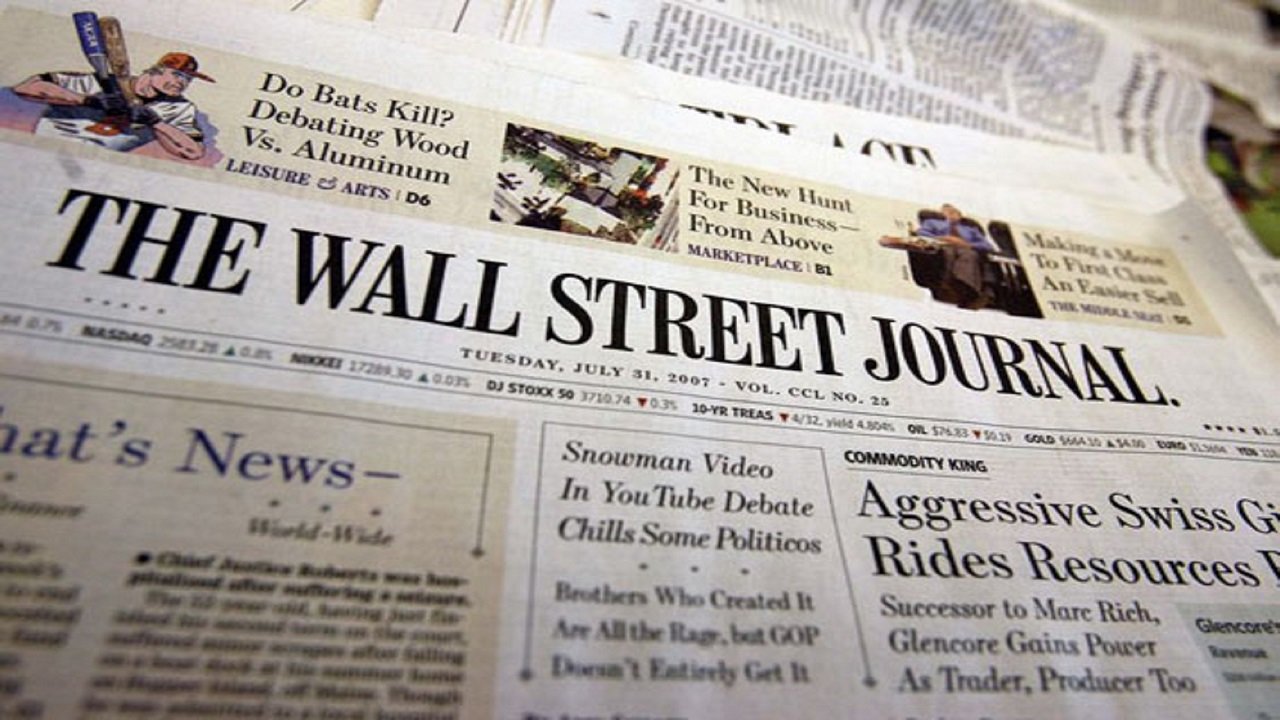
In November 2014, the Wall Street Journal reported
that the BND was more profitable even than J.P. Morgan Chase and
Goldman Sachs. And yet in 2014, BND was lending money for school
infrastructure at 1%. In 2015, it introduced new infrastructure programs
to improve access to medical facilities, remodel or construct new
schools, and build new road and water infrastructure. A bank can be
profitable and serve the common good.
In
2008-2009 when the United States economy suffered one of its worst
economic crises, BND had one of its most profitable years. There was no
credit freeze. BND created its own credit and the economy flourished.
BND acts as a kind of mini-fed for the state, providing liquidity,
clearing checks and buying up loans when there is risk to share.1
A Multiplicity of State Banks
Just
suppose that instead of one state bank there was one state bank for
every state in the union, which is to say fifty “mini-Feds.” How would
that affect the economy? How would that affect the political power
dynamics? How would that affect the day-to-day lives of the average
American?
Economically,
the American economy would be more stable, more robust. Credit would be
used to fund education, business development, and infrastructure
improvement. It would not be syphoned off to bloat the profits of
private banking interests.
It
has long been understood that private interests in control of credit on
a national level was a chronic menace to the public wheal. In 1832, President Andrew Jackson
refused to renew the charter for the Bank of the United States. Among
other concerns was the possibility that with centralization and
privatization of the system of credit, foreign interests could gain
control of the American economy and shape it to their benefit.
“Controlling our currency, receiving our public moneys, and holding
thousands of our citizens in dependence, it would be more formidable
and dangerous than the naval and military power of the enemy.” (C.S.)
After signing into law the Federal Reserve Act of 1913, President Woodrow Wilson had this to say,
I am a most unhappy man. I have unwittingly ruined my country. A great industrial nation is controlled by its system of credit. Our system of credit is concentrated. The growth of the nation, therefore, and all our activities are in the hands of a few men. We have come to be one of the worst ruled, one of the most completely controlled and dominated Governments in the civilized world, no longer a Government by free opinion, no longer a Government by conviction and the vote of the majority, but a Government by the opinion and duress of a small group of dominant men. (Wikiquote)
Thomas Jefferson put it simply,
“I believe that banking institutions are more dangerous to our liberties than standing armies.”
Said James Madison,
“History records that the money changers have used every form of abuse, intrigue, deceit, and violent means possible to maintain their control over governments by controlling money and its issuance.”
Here are the words of Mayer Amschel Rothschild (1744-1812), founder of the House of Rothschild.
“Let me issue and control a nation’s money and I care not who writes the laws.”
So
that if we set up our fifty state banks we take back that power and
redistribute it so that no single entity can take control of the
monetary system. No longer do the too-big-to-fail banks and their lackey
the Federal Reserve run — ruin — the economy. The “Fed” becomes a
vestigial organ. It begins to wither and might eventually disappear. The
withering is contagious and begins to affect the centralized power of
the State.
 The
State has two primary functions: prop up private banks, make war. These
two functions form an interlocking conglomerate, a servo-mechanism in
which one function feeds the other. The State needs war to accrue power.
It needs money to pay for the war. Banks need war so they can supply
the government with funds and then collect interest. In 2015, the U.S.
spent $223 billion, or 6 percent of the federal budget, paying for
interest on the debt. Good news for banks. In 2014, the Federal Reserve
bought up $2.461 trillion worth of the national debt, thus making it the
largest holder in the world.
The
State has two primary functions: prop up private banks, make war. These
two functions form an interlocking conglomerate, a servo-mechanism in
which one function feeds the other. The State needs war to accrue power.
It needs money to pay for the war. Banks need war so they can supply
the government with funds and then collect interest. In 2015, the U.S.
spent $223 billion, or 6 percent of the federal budget, paying for
interest on the debt. Good news for banks. In 2014, the Federal Reserve
bought up $2.461 trillion worth of the national debt, thus making it the
largest holder in the world.
In
1933 — subsequent to the crash of 1929 — Congress passed the
Glass-Steagall Act. No longer were commercial banks allowed to engage in
those speculative banking activities that were allowed to investment
banks. In 1999 — in acquiescence to private banking interests — Congress
reversed itself and repealed the Glass-Steagall Act, leading to the
crash of 2008.
This
is but one example of how a centralized government and a centralized
and privatized banking system work so well together in satisfying the
wishes of private interests at the expense of public well-being. With
our fifty state banks in place power has been fragmented and
redistributed. Such a grand collusion is no longer possible.
The Withering Has Begun
The
deconstruction and withering of the State have been in the works for
some time. In 2003, Thomas Naylor, co-author of the 1997 book Downsizing the U.S.A.
founded a secessionist movement in the state of Vermont. A poll taken
in 2007 indicated that 13% of the voters supported the move to leave the
union and become and independent polity. The more the center ignores
the rights and interests of the periphery the more the periphery will
begin to assert itself.
On
June 26, 2011, mayors from around the world met in Baltimore and
approved a resolution that the federal government bring home the troops
and stop funding the wars in Iraq and Afghanistan. In this instance,
voices on the periphery are challenging the power at the center. They
are claiming the right to be heard and to influence decisions at the
center. We the citizenry are listening and begin to understand that the
center is not the only source of power and that central power can be
challenged.
On
June 29, 2015 — yielding to considerable grass roots political pressure
— the New York State Department of Environmental Conservation issued a
ban on fracking in the State of New York. The state of Vermont had
banned fracking in 2012. The center is lethargic in responding to the
environmental crisis and so local government takes action, once again
demonstrating how irresponsible central government is and how power can
be redirected to local governments that can take crucial steps in
safeguarding the planet. 2
In 2014, Ellen Brown
ran for California State Treasurer. The center of her platform was a
California State Bank. She ran on the Green Party ticket and garnered
more votes for that party than any other candidate in the party’s
history. (ellenbrown.com) Phil Murphy, the leading
Democratic candidate for governor of New Jersey, has made a state-owned
bank a centerpiece of his campaign. (Ellen Brown, Intrepid Report, April
13, 2017)
Various states have challenged the
legitimacy and benefit of the “Affordable Care Act.” There is a movement
in the state of Colorado to suspend both the ACA and Medicaid and
replace these national healthcare programs with a state program run by a
board of 21 elected trustees.
“A state program, responsible to patients and providers, will do much better than a rigid national program, responsible to lobbyists,” says organizer Ivan Miller.
John Rohn Hall, a
native of Santa Fe, New Mexico is promoting “Amerexit,” America’s answer
to Brexit. It is a “Plan for State Sovereignty and an End of Empire.”
(Hall, Dissident Voice, February 26, 2017) Santa Fe has for years been a
sanctuary city, i.e., a city that welcomes refugees and immigrants.
Under Trump Santa Fe would lose federal funding. If that is the case,
since there is no benefit, why not just leave the union, “New Mexit?” As
Hall points out there is a “Calexit” movement with over 585,000
signatures. He imagines what the world would be like with the “Republic
of California” and the “Republic of New Mexico.” And then he thinks
ahead to when the remaining 48 join California and New Mexico and become
sovereign nations.
The marble
buildings and monuments of Washington, D.C. become museums. The United
Nations and The International Court of Justice grow teeth, becoming the
law of all lands. National borders gradually disintegrate and disappear.
Multilateral Nuclear Disarmament is now International Law. Wars of
aggression are relegated to the dark recesses of history.
“Divided we stand,” says Hall. “United we fall.”
Here
is a version of the deconstructed State that does away with any
overarching unity, even as weak as the Articles of Confederation. Yet it
is all in the same spirit. There would be local banks, local healthcare
plans, local environmental initiatives. The State is gone. Monies
previously reserved for propping up private banks and waging war are
redirected from the center to the periphery where they are used to serve
the common good.
The
State is making itself less and less relevant and making it more and
more difficult to justify the revenues it receives. If vital services
are sold off and privatized and tax revenues are directed almost
exclusively to war, what motivation do citizens have to pay taxes? 2a
What Do Our Federal Taxes Buy?
Let’s
take a look at what our tax dollar is buying. You might think that your
federal tax dollar goes to paying the electric bill at your local post
office. In fact, the USPS is a self-supporting agency that is mandated
to pay its personnel and operating costs out of revenues from the sale
of postage. Up until the year 2007, the USPS saw a continued rise in
mail handled and a continued rise in revenues. It was solvent.
Then
Congress decided that USPS should pre-fund future retiree health
benefits for the next 75 years and do so within a decade, something no
other public agency or private company is required to do. Now the post
office is $15 billion in debt. Resources are diverted to pay off debt
that would have been devoted to servicing customers. USPS starts
recording losses. Despite the handicap, in February of 2016, the post
office recorded a profit for the first time in five years. Nonetheless,
President Obama proposed cutting 12,000 jobs and discontinuing Saturday
mail delivery.
At 493,381, — down from 787,538 in the
year 2000 — post office workers are the largest non-violent workforce
employed by the government, which explains why they are expendable.
Their only purpose is to bring together people separated by distance who
wish to exchange thoughts and good wishes. A totally useless function
if war is your game.
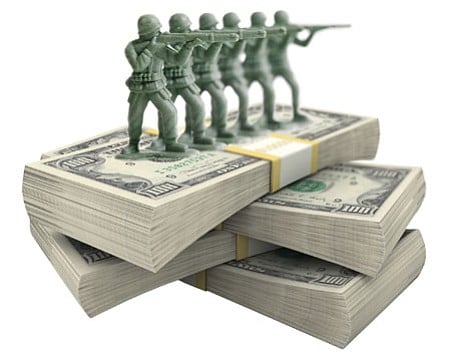
President Obama’s downsizing the
postal system while simultaneously personally overseeing the
assassination by drone of thousands of “militants” in Pakistan and
Afghanistan as well as hundreds if not thousands of “non-militants,”
i.e. innocent civilians, i.e. collateral damage, is consistent with his
role as W.I.C. (Warrior In Chief). If you’re not killing, you’re not
doing your job.
The
Government Accountability Office reports declines in the workforce
between 2004 and 2012 in the Departments of Agriculture, Education,
Housing and Urban Development, Interior, the Environmental Protection
Agency, GSA, NASA, and the Social Security Administration. In the same
period 94 percent of the Federal workforce growth occurred in the
Departments of Defense, Veterans Affairs, and Homeland Security.
In
2013, Defense (sic) employed 738,300, while Education employed a paltry
4,100. Total Federal civilian employment — excluding the Post Office —
was 2,058,000. Adding together Defense, Homeland Security and Veterans
Affairs we end up with 1,279,800 or 62% of total civilian employment
devoted to violence and its consequences. That’s what your tax dollar is
buying.
At
what point is enough, enough? ”Empire never has enough,” said US Army
Colonel Lawrence Wilkerson during an interview in December of 2015.
“That’s the nature of imperial power. It never has enough.”
War Is A Racket
Smedley Darlington Butler (1881–1940) was a United States Marine Corps major general.
He was active in more than a half dozen wars. At the time of his death
he was the most decorated Marine in U.S. history. In the 1930s, after
retiring from service, he became an outspoken opponent of war. He wrote a
pamphlet entitled War Is A Racket.
He is bitter, angry and outraged at the ravages of war and the grossly
swollen profits of the bankers and industrialists that war provides. 3
Butler
points out that During WWI war profits surged to “three hundred, and
even eighteen hundred per cent — the sky is the limit. … Uncle Sam has
the money. Let’s get it.” That was the mentality during the war years.
In the period 1910 – 1914 DuPont Chemical had earnings of $6 million.
During the period 1914 -1918 — the years of WWI — their profits jumped
to $58 million a year, an almost ten fold increase.
By
contrast, the soldier was paid $30 per month. Half of that wage was
sent home to dependents. $6 was deducted for “accident insurance” and
then another $9 for “Liberty Bonds” that were issued to pay for the war
—$2 billion worth. Leaving most soldiers with nothing on payday.
When
returning soldiers could not find work the banks would buy back the
$100 bonds for $84, leaving themselves $16 as profit. And of course the
same soldiers would pay taxes so the government could make interest
payments to the banks on the bonds the banks purchased.4
After
visiting soldiers in their hospital beds, surveying the mangled minds
and bodies, and considering the ruined lives of the families, the
outrageous lies that pass for truths that are used to manipulate a
nation into going to war, Butler concludes, “War is Hell.” These are the
words of a Major General. He ought to know.
Change and Fear of Change
If
the goal is “a warless world founded in warless societies” then we need
to make some changes. We need to create an alternative to empire. We
need to restructure the power dynamics so that power in the center — the
power of the empire — is redistributed to the periphery, where states
can create governments that serve the common good.
Change
is a word that sends ripples of fear through the human body, through
the body politic. Change has its mysteries. It can seem daunting and
intimidating which is why meaningful change occurs so rarely. There is
the mistaken belief that change will only make things worse. And that
there is no risk in maintaining the status quo. Although we cannot
guarantee the outcome if we bring about fundamental political change, we
can pretty much guarantee the outcome if we don’t. The planet will
become unlivable.
When social/political or psychological
transformative change occurs, cognitive and emotional issues arise. We
have a certain image of what our government is and how we relate to it.
Our government has an identity; it is seen as a certain kind of
government, behaving in a certain way. We as individual citizens become
subsumed within this identity, whether we choose to be or not. What
happens to us when our government changes? In some measure our universe
has been tampered with. That is an unsettling feeling, which is one
reason why transformative change is resisted so rigorously.
There
was a time when being identified as being American would bring a smile
of gratitude and a handshake from a foreigner. Now it is just as likely
to bring a snub. Do we like our government and how it is seen around the
world? Do we like the way it feels to be associated with such a
government? Would we like to be associated with a different kind of
government? Are we pleased with the way in which our government
addresses the needs of its citizens? These are questions we should be
asking ourselves. Perhaps some readers would like to live under a
government that is less feared and more respected, a government that is
kinder and gentler, a government that embraces the common good.
Contemplating
change brings us face to face with the unknown. We cannot predict the
outcome once we initiate the process of change. We lose control. Maybe
the worst will happen. We will lose our freedoms. We will be enslaved.
Such thoughts are not necessarily rational but they occur nonetheless.
We cling to the stability of the status quo. David Popper provides an
interesting example.
Piecemeal Change As The Answer?
David Popper
(1902 – 1994) was an Austrian born philosopher. He had a major impact
on scientific thinking in the 20th century. He argued that no amount of
induction could make a scientific theory true. But that for a theory to
be considered scientifically valid it had to be falsifiable. There had
to be a means to prove that the theory was invalid.
Let
us say that I have a theory that says blue-eyed men are taller than
brown-eyed men. The theory is scientific by Popper’s standards. All I
have to do is find one brown-eyed man who is taller than a blue-eyed.
Marx’s
theory of historical materialism says that the economic evolution in
the means of production will lead to socialism and the dictatorship of
the proletariat. Such a theory is more a vision or an ideology than it
is a scientific theory. There is nothing one can do to falsify it.
Popper wrote a book entitled The Open Society And Its Enemies,
published in 1945. Popper’s book is a defense of liberal democracy and
an attack on the idealist, historicist philosophers — philosophers like
Plato, Hegel and Marx — who believe that history has an inherent
causality that can’t be altered. Such philosophers will lead us to
totalitarian societies, says Popper. The individual will be denied the
opportunity for self-expression and critical thinking. These
philosophers are the enemies of the open society.
Popper’s
goal is “democracy,” a government dedicated to the preservation of free
thought. His concern is the rise of tyranny and the crushing of
individuality. In a democracy there is a means of self-protection and
that is “the right of the people to judge and dismiss their government…
the only known device by which we can try to protect ourselves against
the misuse of political power.” (Popper, 335) We see here a negative
definition of democracy, a definition based in fear, fear of
governmental abuse. Says Bourne,
“Mere negative freedom will not do as a 20th century principle” (read 21st century) (Bourne, 46).
“The
right of the people to judge and dismiss their government” is the right
to vote in elections, which, as has been explained above, creates
oligarchy, not democracy. Democracy is a form of government in which
citizens debate and legislate on their own behalf.
Popper’s
fear of governmental abuse leads him to be cautious in undertaking
major changes that could lead to unpredictable and dangerous outcomes.
There is no vision of a better world. Such a vision is labeled
“utopian.” He is critical of those writers who would “go to the very
root of the social evil” and completely eradicate it. (Popper, 154)
By means of “piecemeal social engineering,” Popper would diminish human suffering, not eliminate it.
“The piecemeal engineer will [fight against] the greatest and most urgent evils of society, rather than searching, and fighting for, its greatest ultimate good. (Popper, 148) Each rising generation has the right to “a claim not to be made unhappy,” says Popper (Popper, 149), an awkward double negative brought on by an over concern to keep things just as they are.
Popper
wrote his book as WWII was drawing to a close. Hitler had a vision for a
new world, starting with a clean canvas. Millions died. Mao had a
similar vision. Millions died. Understandably, Popper is concerned that
those with “vision” should gain power. Nonetheless a political
philosophy based in fear is useless. It is based in the irrational
belief that holding fast to a system that ignores the common good is
safe but that change is dangerous. The outcome we fear is actually our
current reality, a political system that owes its existence to
propaganda and misinformation, a system that ignores basic human needs
and tramples on an eco-system that is running out of patience.
Political vs Economic Change: Which Comes First?
There
are those who advocate change, but not political change. Economic
inequality is the primary concern. “Let us redistribute the wealth and
bring an end to the gross inequality that is a cancer in our society,”
they say. Or “Let us create a form of government where the government
itself — not private interests — is in control of the economy. Then we
can decide who gets what.” Economic transformation comes first.
Benjamin Barber thinks otherwise.
“Democracy proclaims the priority of the political over the economic,” says Barber.(Barber, 257) “Politics precedes economics,” he says, because it “creates the central values of economy and society.”(Barber, 252) “[Politics] remains the sovereign realm in which the ordering of human priorities takes place.” (Barber, 266)
Says Karl Popper,
”Economic power must not be permitted to dominate political power.” (Popper, 335)
I agree. The first step is to redistribute political power, to set up a new political structure. Economic change will follow.
China
affords an interesting example of how easy it is to change economic
systems while leaving the underlying power structure intact. With Mao in
charge, the Chinese people lived under a brutal totalitarian communist
regime. Mao is alleged to have taken the lives of 40 million of his
fellow countrymen. With very little fanfare this communist State seems
to have become transformed into a capitalist State, or something close
to it.
In
other words, socialism/communism and capitalism are not that different
in their power dynamics. Both require strong central governments and
both lead to the abuse of power that central governments are prone to.
If our goal is social justice, a government that serves the common good
and is responsive to the wishes of the citizenry then we need to think
in terms of political change, the restructuring of the prevailing power
dynamics.
Change is Possible
“But,”
you say in quiet despair, “how can our government possibly be changed?
It is simply not possible.” Although such a belief is certainly
understandable, I do not believe it is justified. I believe that change
is possible, provided it is introduced in a thoughtful and gradual way.
First
we change our attitude, our outlook on life. To repeat the thoughts of
Henry George, right reason precedes right action. We become thoughtful,
rather than reactive. We take nothing for granted. We become more
analytical, more skeptical, and less credulous about the government we
live under; we become more imaginative and hopeful about the government
we intend to replace it with. We allow our imagination free rein as we
think up new possibilities. For it is only through imagination and
creativity that change comes about.
As we become actively involved in
deconstructing the State and more and more power shifts to local
governments, the State begins to whither. Communities begin to flourish.
As local politics become more meaningful and communities more vibrant,
the individual becomes more robust, less frightened, more engaged in
political life.
As
citizens see how government can actually function to their benefit,
they are less enthusiastic about sending money to the central
government, which does little or nothing on their behalf. As the
individual feels more politically alive he is less likely to be
intimidated by the State, less likely to be swayed by fake news and
government manipulation. He becomes more thoughtful, more articulate,
more empowered. And this is our goal, “the realization of the individual
through the beloved community.” (Bourne, 51)
Yes, power can be abused at the local
level. But it is less likely to cause WWIII. And there is a way out. It
is called sortition. The ancient Greeks used sortition to select their
magistrates. Sortition is another word for lot, or drawing straws.
Instead of allowing the major parties to stack the deck in favor of
corporate power when they choose the candidates who appear on our
primary ballots, we can allow citizens to volunteer for office. Once a
year a sortition is held. This is a random event. Those whose number is
pulled appear on the ballot. We could even do away with elections
altogether and count on sortition alone to put people in power.5
Another way of limiting the
concentration of power is setting a limit on the concentration of
wealth. Enormous wealth is a menace to a free society. In ancient Athens
there were laws forbidding a display of wealth in public places. They
were called sumptuary laws. Here is an example.
A free-born woman may not be accompanied by more than one female slave, unless she is drunk; she may not leave the city during the night, unless she is planning to commit adultery; she may not wear gold jewelry or a garment with a purple border, unless she is a courtesan; and a husband may not wear a gold-studded ring or a cloak of Milesian fashion unless he is bent upon prostitution or adultery.
Times have changed, chaste or
profligate we can dress as we choose. However, there should be a limit
to the amount of wealth an individual or a family can accumulate. A
billionaire has enormous power that he uses to suit his political
purposes, thus defeating us in our attempts to serve the common good.
$40 million should be enough for any individual. Such a sum would allow
for at least two residences, a yacht and a racehorse or two. Twice that
amount for a family. Anything beyond that amount is taxed at one hundred
percent.6
For
us to reach our goals, we must have ideals, values and a vision of a
better world based on a decentralized form of government. In other
words, we must do exactly what Popper tells us not to do. The process is
gradual — as he would wish — but the vision is all encompassing. There
is little to fear because we are taking power away from the powerful
center, not granting it.
The War Machine Withers
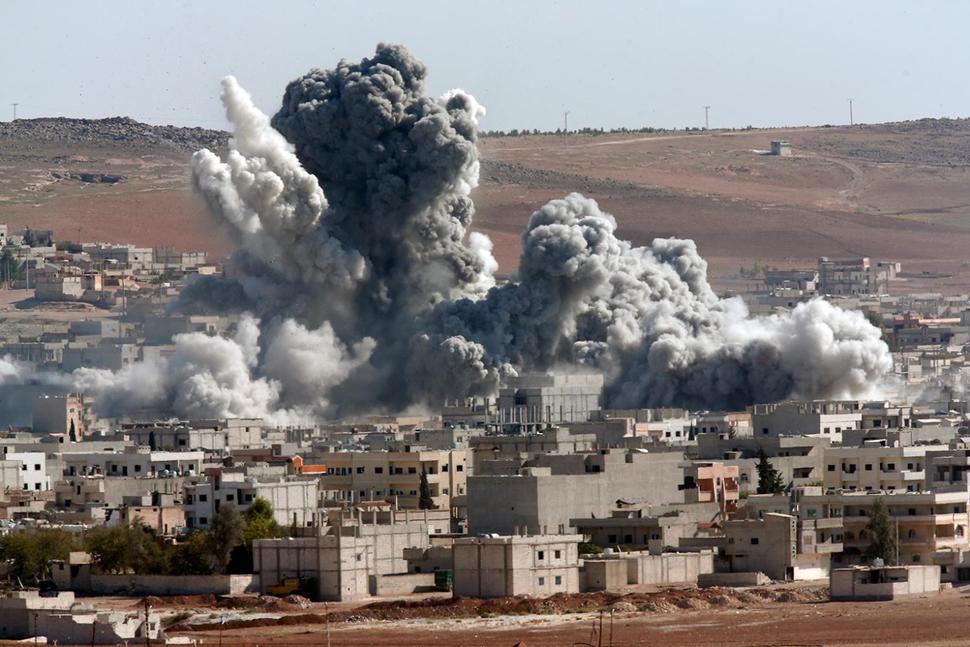 As
the State goeth, so goeth the war machine, the house of power, the
Pentagon. As monies are diverted away from the center, there is less
available for big-ticket war items at grossly inflated prices. War loses
some of its glamour. It becomes a sometime thing not the full-time
pass-time of generals and their subordinates.
As
the State goeth, so goeth the war machine, the house of power, the
Pentagon. As monies are diverted away from the center, there is less
available for big-ticket war items at grossly inflated prices. War loses
some of its glamour. It becomes a sometime thing not the full-time
pass-time of generals and their subordinates.
The
Pentagon begins its decline. A few panes of glass have been shattered
and go unrepaired. Some pigeons build a nest and take up residence. Mice
can be seen scurrying about Pentagon hallways in broad daylight. There
are fewer and fewer cars in the parking lot. Grass starts growing up in
the cracks.
Eventually it is simply too costly to
heat this enormous space in the winter and cool it in the summer. One
wing is boarded up entirely. Eventually another wing follows. One
central section remains open. Generals are bundled up against the cold.
Whereas once they dined on caviar and Veuve Clicquot, they now have to
settle for chicken fingers and fries. Soon the Pentagon is no longer a
viable operation. It has lost the political clout it once had. And so it
must pass on to the dustbin of history.
On
a Wednesday, in December, in the year 2031, it is announced that bids
are being let out to level the entire structure. In late spring of 2032 a
building that was once the most formidable presence in the country has
been reduced to a pile of rubble. In August of the same year a bake sale
is held. Bakers from around the country arrive with grandma’s recipe
for everything from apple pie to double chocolate brownies and linzer
tarts. Money is being raised to create a park and a playground for
children. There is even talk of a botanical garden. I can’t wait to get
my hands on one of those cranberry-walnut scones.
Above text is part VI of a six part essay.
For Parts I-V, click here
Link to War and the State: Part 1
Link to War and the State: Part 2
Link to War and the State Part 3
Link to War and the State Part 4
Link to War and the State Part 5
1. War and the health of the State: What causes war
2. Federated governments: The Nation vs. the State
3. Origin of the State: Barbarians at the gate
4. End Game: War goes on
5. Critical Thinking: A bridge to the future
6. Deconstructing the State: Getting small
SOURCES
Benjamin Barber, Strong Democracy: Participatory Politics for a New Age.
Frank Barlow, The Feudal Kingdom on England 1042-1216.
Edward Bernays, Propaganda.
EllenBrown.com
Ellen Brown, “What a state-owned bank can do for New Jersey,” Intrepid Report, April 13, 2017
Ellen Brown, The Public Bank Solution: From Austerity to Prosperity.
Smedly Butler, War Is A Racket.
James Carroll, House of War.
Gearoid O Colmain, “The Weaponisation of the Refugee,” Dissident Voice, January 20, 2016.
Rob Cooper, “Iceland’s former Prime Minister found guilty over country’s 2008 financial crisis but will avoid jail,” Daily Mail, April 23, 2012.
C.S., “Constitution Society,” Andrew Jackson, July 10, 1832.
Deborah Davis, Katherine The Great.
Thomas J. DiLorenzo, The Real Lincoln.
M.I. Finley, The Portable Greek Historians.
F.P. The Federalist Papers. Ed. Clinton Rossiter.
Mark H. Gaffney: “9/11: The Evidence for Insider Trading,” May 25, 2016: ICH (Information Clearing House).
GPF (Global Policy Forum,) “War and Occupation in Iraq,” Chapter 2.
Ramachandra Guha, India After Gandhi.
John Rohn Hall, “Amerexit: A Plan for State Sovereignty and an End of Empire,” Dissident Voice, February 26, 2017.
Victor David Hanson, Carnage and Culture.
Chris Hedges, “The American Empire: Murder Inc.” Truthdig, January 3, 2016.
Georg Wilhelm Friedrich Hegel, The Philosophy of History (Dover, 1956).
J. Christopher Herold, The Age of Napoleon.
Karl Hess, Community.
Peter Hoy, “The World’s Biggest Fuel Consumer,” Forbes, June 5, 2008.
J.H. Huizinga, Dutch Civilization in the 17th Century.
Peter Koenig, “Towards a Foreign Imposed “Political Transition” in Syria?” Global Research, November 3, 2015.
John Macpherson (1899). Mental affections; an introduction to the study of insanity.
Patrick Martin, 16 April 2003, wsws.org.
Edgar Lee Masters, Lincoln The Man.
Gaetano Mosca, The Ruling Class.
Ralph Nader, “Uncontrollable — Pentagon and Corporate Contractors Too Big to Audit,” Dandelionsalad, March 18, 2016.
Thomas Naylor and William H. Willikmon, Downsizing the U.S.A.
Karl Popper, The Open Society And Its Enemies.
Simon Schama, The Embarrassment of Riches: An Interpretation of Dutch Culture in the Golden Age.
Charles Hugh Smith, “Are Cities the Incubators of Decentralized Solutions?” March 14, 2017, oftwominds.com
John Stauber and Sheldon Rampton, “Lies Damn Lies and the Public Relations Industry.” (Web)
Herbert J. Storing, The Anti-Federalist: Writings by the Opponents of the Constitution, edited by Herbert J. Storing.
Jay Syrmopoulus, October 15, 2015,
“Iceland Just Jailed Dozens of Corrupt Bankers for 74 Years, The
Opposite of What America Does.” Read more at
http://thefreethoughtproject.com/icelands-banksters-sentenced-74-years-prison-prosecution-u-s/#UHP3qHr1WIAuRFSs.99.
“The Economic Value of Peace, 2016” (PDF) Institute for Economics and Peace.
Washington Blog, February 23, 2015 “ICH”(Information
Clearing House) http://www.informationclearinghouse.info/article41086.htm
Clearing House) http://www.informationclearinghouse.info/article41086.htm
Max Weber, Political Writings.
John W. Whitehead, March 29, 2016, “From Democracy to Pathocracy: The Rise of the Political Psychopath,” Intrepid Report, April 1, 2016.
Wikipedia, “Energy usage of the United States military.”
Wikiquote, Woodrow Wilson, Federal Reserve Act of 1913.
Sheldon Wolin, Democracy Incorporated: Managed Democracy and the Specter of Inverted Totalitarianism.
NOTES
1 See Ellen Brown, The Public Bank Solution: From Austerity to Prosperity
2
Needless to say, the warrior class has little love for Mother Nature,
and little concern for her failing eco-system. Their god is Thanatos,
the god of death. Happily, they would oversee the extinction of the
human species. A total of 192 countries have signed and ratified the
Kyoto Protocol, the 1997 treaty that’s the closest thing we have to a
working global agreement to fight climate change. The only nations that
haven’t signed are Afghanistan, Sudan & the U.S.A.
2a
Charles Hugh Smith (oftwominds.com) offers another solution. Why not
build our decentralized government around cities? He refers to the
writing of urban studies theorist, Richard Florida.
3 See ratical.org for an online copy of Butler’s War Is A Racket.
4
As mentioned earlier in this essay. This was the system that prevailed
during the Revolutionary War. Speculators ran around buying up war bonds
that returning soldiers would sell for as little as fifteen cents on
the dollar. These same speculators then demanded that the full value of
the bonds be honored. The U.S. Constitution was written in part to
satisfy these demands. Article I, Section 10 prevents states from
passing laws, “impairing the Obligation of Contracts.” When these words
were written the contracts being referred to were the bonds that the
speculators had bought up for as little as fifteen cents on the dollar.
5 See Arthur D. Robbins, “Do Away With Elections?” http://www.intrepidreport.com/archives/15514
6 According to Forbes magazine there are 1,810 billionaires in the world worth a total of $6.5 trillion.
Arthur D. Robbins
is the author of “Paradise Lost, Paradise Regained: The True Meaning of
Democracy,” hailed by Ralph Nader as an “eye-opening, earth-shaking
book,… a fresh, torrential shower of revealing insights and vibrant
lessons we can use to pursue the blessings and pleasures of a just
society through civic efforts that are not as difficult as we have been
led to believe.” Visit http://acropolis-newyork.com to learn more.
The original source of this article is Global Research
Copyright © Arthur D. Robbins, Global Research, 2017


