Tuesday, May 28, 2013

CIA Investment Arm Has Its Sights And Money Set On Security Startups

Source: CM
A publicly funded investment arm of the CIA has injected millions into the security industry, making strategic investments in companies that put its development requests to the front of the line, often giving the government’s needs the highest priority.
Investments made by Arlington, Va.-based In-Q-Tel have influenced almost every area of information security, from identity management and data analytics to vulnerability management and malware analysis. Former and current In-Q-Tel staff and leaders at six of the dozen or so security firms that accepted funding from the firm told CRN that the injection of cash helped foster innovative new security technologies.
In-Q-Tel, which was created in 1999 as a nonprofit, has long been seen as the investment arm of the CIA. The venture capital firm receives more than $50 million in taxpayer funding annually through the CIA and other government sources, but also attracts private sector funds from venture capital firms to co-invest in the startups it finds attractive. In addition to the CIA, In-Q-Tel has broadened its scope to support the National Geospatial-Intelligence Agency, the Defense Intelligence Agency and the Department of Homeland Security Science and Technology Directorate.
“We like to call ourselves a public-private partnership,” said Peter Kuper, a partner at In-Q-Tel, at a recent media dinner showcasing two firms that had accepted investments from In-Q-Tel. “We formed to break down the barrier between the government and private sectors to support the intelligence community with the tools they need.”
SECURITY INVESTMENTS
The list of security companies receiving funding from In-Q-Tel includes ArcSight, a security information and event management company that was acquired by Hewett-Packard in 2010 for $1.5 billion. In-Q-Tel made a reported $3 million investment in the startup in 2002. Silver Tail Systems, which detects online fraud in real time by monitoring website behavior, accepted In-Q-Tel funding in 2010; it was acquired last year by EMC.
In-Q-Tel doesn’t disclose exactly how much money it gives companies, but data gathered from the organization’s tax forms and other sources indicate that it typically invests up to $3 million in startups. The list of information security companies also includes RedSeal Systems; Reversing Labs; SafeWeb, now part of Symantec; Cleversafe; and Oculis.
In-Q-Tel’s investments aren’t limited to security, however. The company also has made investments in big-data-related companies such as Palentir and Cloudera and file-sharing and collaboration platforms such as Huddle. In-Q-Tel provided funding to biotechnology firms as well.
Amit Yoran, who served a brief stint as CEO of In-Q-Tel in 2006, said the firm is an invaluable way for the CIA to tap into the private sector for innovative technologies. Yoran also spent a year as director of the Department of Homeland Security’s National Cyber Security Division, where he helped build out the capabilities of the United States Computer Emergency Response Team.
“Government procurement practices are challenging and In-Q-Tel is trying to get over the high walls of the intelligence community, which is even more challenging, to help identify startups with technologies that would never make their way into the government or the intelligence community through the typical procurement practices,” Yoran said.
Yoran has a relatively long history in the security industry, having co-founded network security company RipTech, which was acquired by Symantec in 2002. He was CEO of NetWitness, which was acquired in 2011 by RSA, the Security Division of EMC, and is currently senior vice president and general manager of the security management and compliance business unit at RSA.
“In-Q-Tel is less about the investment. as the core to its mission is to find commercially available capabilities and help them make their way into the intelligence community,” Yoran said.
The innovation brought on by the government and, more specifically, In-Q-Tel, fosters innovation across the entire security spectrum, said Jim Butterworth, a former intelligence official who currently serves as chief information security officer of HBGary, which provides incident response and malware analysis.
“They would rather find a commercial entity and throw money at it to develop it than have the government create a huge research lab and innovate on its own,” Butterworth said. “I don’t think these guys can develop and research like a free market can.”
Butterworth pointed to advances in data analytics and the potential for combining threat data with business data for contextual awareness as one of the areas being fostered by In-Q-Tel funding and other federal sources with seed money. Advances in behavioral analysis and malware functionality also are receiving funding.
TOO CONFIDENTIAL?
Skeptics, however, point out the difficulty in ensuring funding benefits without an entity in place, usually the public, to ensure an organization doesn’t balloon out of control. Burgeoning budget expenditures and a lack of transparency have long been associated with the black budget — secret military expenses that are kept confidential for national security reasons, said Pete Sepp, executive vice president of the National Taxpayers Union, one of the oldest taxpayer organizations in the nation, which calls itself nonpartisan.
“A fund or a mechanism like this is not necessarily a bad idea, but questions ought to be asked about how this is different from the problem-plagued current [government] processes and [whether it can] avoid becoming a problem,” Sepp said. “Generally, trying to resolve the clash between the need for some parts of secrecy over details of projects and the need for transparency over the results and financial propriety is very difficult, and getting it right is important not only for national security, but for fiscal security too.”
The government is not skilled at being an early adopter of important technologies and has a difficult job weeding out red tape in its procurement processes, Sepp said.
While In-Q-Tel doesn’t provide specific details about its investment activities, the nonprofit does provide a good deal of transparency into its operations in its 990 tax forms. For its fiscal year from April 1, 2011, to March 31, 2012, the organization reported it received $64 million in government funding.
The 990 discloses the firm’s operating expenses and currently lists assets totaling more than $218 million. In-Q-Tel said it receives 98 percent of its funding from the federal government. The document also provides a glimpse into some of its investments, but not a complete picture. Each year, the organization lists its top five highest-paid “independent contractors.” In its latest filing, In-Q-Tel disclosed that it spent $7.5 million on technology development with five firms.
In that same fiscal year, In-Q-Tel paid out $22 million in salaries. In addition to 11 trustees, the company lists 14 full-time employees. Christopher Darby, CEO of In-Q-Tel, is listed as earning $1.6 million in compensation and $271,000 in additional compensation, which includes retirement and other benefits, according to the tax form. Darby’s base salary is $617,000. He received a bonus of $1 million in the fiscal year.
Steve Bowsher, executive vice president who heads the firm’s investment strategy, received $1.2 million in compensation and about $251,000 in retirement and other benefits. Bowsher’s base salary is $569,000. He received a bonus of more than $701,000 in the fiscal year.
Darby has renewed his contract with In-Q-Tel through 2016, receiving a $400,000 signing bonus. His base salary is frozen at $630,000, according to the IRS document. Bowsher also renewed his contract, receiving a $200,000 signing bonus. His base salary is frozen at $580,000.
The investment firm states on its 990 form that it is bound to the CIA by a charter agreement. In-Q-Tel participates in reviews by the CIA’s Inspector General’s office and the U.S. Select Committee on Intelligence to test the effectiveness of the technologies it gets from its investments.
ROAD MAP INFLUENCE
Recipients of In-Q-Tel funding, while typically tight-lipped about how much money they’ve received from the investment group, told CRN that In-Q-Tel has influenced their product plans to effectively drive innovation in the security industry.
The government overall does a good job at developing security standards but relies on the private sector to develop security technology, said Chris Wysopal, chief technology officer at Veracode, which accepted In-Q-Tel funding in a 2008 deal that Wysopal said has benefited the company’s product portfolio.
Veracode underwent a thorough review by In-Q-Tel, including an analysis of the potential for its application security technology and its long-term road map, Wysopal said.
“In-Q-Tel accelerates the parts of your business that help the intelligence community,” Wysopal said. “Sometimes they steer you and say that the thing you have a year or two years out is something the intelligence community can use today.”
Wysopal said the impact has been beneficial for all customers.
“The relationship is not much different than having a large customer requesting a feature,” Wysopal said. “You find yourself doing a balancing act between helping out a customer with a specific need and working on features and functions that have more broad appeal to some degree.”
Dov Yoran, co-founder and CEO of ThreatGrid, an antimalware analysis platform that recently received In-Q-Tel funding, said the investment firm required a certain influence on the product road map. The funding ensures that the intelligence community not only gets the technology, but gets a product that is more refined for their needs, he said.
Government procurement cycles and technology adoption are tremendously long and slow, and to get something on a proper schedule can be extremely costly, which eliminates companies with limited resources, Yoran said.
“In-Q-Tel helps you break that government veil of being an outsider looking in,” Yoran said. “It benefits the company with not only larger exposure to potential clients, but real clients that are actually going to buy.”
All In-Q-Tel funded firms interviewed by CRN declined to disclose the specific technologies or features that were developed for the intelligence community. At least one security startup rejected In-Q-Tel funding because it didn’t want to be restricted by the firm’s requirements, an executive at the security firm told CRN.
Meanwhile, Ron Gula, CEO of Tenable Network Security, said sometimes features from In-Q-Tel requests make it into the product set for all customers, but “sometimes it isn’t something all our customers want.”
“James Bond may need a feature that most customers don’t,” said Gula, a former National Security Agency staffer. “The relationship we have with them is that they’re introducing us to things to work on that require us to innovate and it may only be a one-off feature.”
Tenable has accepted a $15 million investment that included funding from In-Q-Tel. With 13,000 customers worldwide, it’s impossible to work on every feature request that comes in, Gula said. In-Q-Tel requests get fast-tracked, he said.
“In our case, In-Q-Tel is asking us to go quicker,” Gula said. “We think their feature requests are indicative of a mature type of customer for us.”
Gula, an advocate of continuous monitoring for vulnerabilities and configuration issues, pointed to In-Q-Tel’s investment in his firm and Veracode as a sign of the importance of software security. Gula said In-Q-Tel’s investment in FireEye helped trigger advancements being made in sandboxing. Network monitoring is gaining subtle improvements and security is being embedded into deeper layers of the system, he said.
And the innovative technology for intelligence gathering is needed by the government more than ever before, according to In-Q-Tel’s Kuper. The latest report from security firm Mandiant links China to hundreds of attacks against U.S. firms. The Aurora attacks in 2009 illustrated how a nation-state attack, believed to be driven by China, can target 30 of the top U.S. technology companies simultaneously, Kuper said at the media dinner.
“Aurora was organized, structured smash and grabs where it is literally damaging to the United States economy,” Kuper said. “They are stealing intellectual property that we would be minting for our benefit and they will be replicating over there.”

Prenda Continues Character Assassination Of Alan Cooper

from the do-they-think-this-helps-them? dept

You may recall that Prenda briefly tried a strategy of claiming that Alan Cooper was mentally unstable and off his meds in trying to explain to Judge Otis Wright why Cooper said he had absolutely nothing to do with AF Holdings, despite his purported signature being on court documents as the representative from the company that Judge Wright and many others have said is clearly a shell company owned and controlled by Prenda lawyers John Steele, Paul Hansmeier and Paul Duffy. The whole "off his meds" argument didn't get much play in Wright's courtroom, but apparently Prenda hasn't given up on that strategy.

Last week, in yet another Prenda case, this time in Arizona, a local lawyer hired by Prenda, named Steven Goodhue, decided to double down with fanciful tales of Alan Cooper. In this case, the judge, G. Murray Snow, read Judge Wright's order and rightfully pointed out that it raised serious questions about the case in his courtroom, and asked Prenda/AF Holding to explain why the whole case shouldn't be dismissed. There will be hearing on this on Friday, but in the meantime, Goodhue decided to file a response that has to be read to be believed. In this case, another mysterious name showed up besides just Cooper's: Raymond Rogers. Goodhue responds to questions about who signed the documents by insisting that it's exactly who it said on the document:
The persons who signed Exhibit B to Plaintiff’s complaint are Raymond Rogers and Alan Cooper. Although Cooper has repudiated his corporate representative status, Cooper’s repudiation lacks credibility for the reasons set forth herein.
And then we dig into why Goodhue/Prenda insists Cooper is not credible, which goes deep into conspiracy theory territory, implying that EFF is somehow paying off Cooper to come out against Prenda:
Alan Cooper’s repudiation of his corporate representative status is not credible. To put Cooper’s repudiation in its proper context, the Court might consider the following questions: (1) why is an individual from Northern Minnesota testifying before courts across the United States in copyright infringement actions; (2) how is he paying for all of this; and (3) when did he get his start? Cooper’s testimony at a March 11, 2013, hearing before Judge Wright provided some clues.
Well, the answer to the first question is fairly easy: he was testifying in California (as far as I know the only court "across the United States" that Cooper has testified in) because Judge Wright ordered him to show up, along with Team Prenda, who chose not to show up. As for paying for that one trip, it's already been stated that EFF paid for that trip, but I don't see how that's damning in any way. Cooper had to show up one way or the other, and EFF covered his travel budget.
At the hearing, Cooper revealed that he first became involved in this nationwide effort when he received an anonymous text message with contact information for EFF panel attorney, Paul Godfread. The text message informed Cooper that he needed to contact Godfread to avoid serious liability.... Shortly thereafter, Cooper, through attorney Godfread, filed a lawsuit against attorney John Steele and others seeking $4.6 million in damages for the misuse of his name.... Contemporaneously with those efforts, EFF panel attorneys from across the nation began using Cooper’s repudiation to launch collateral attacks on Plaintiff’s copyright infringement lawsuits.... These attacks met with limited success, with one notable exception—the sanctions order issued by Judge Wright. EFF panel attorneys paid for Cooper and Godfread to fly from Minnesota to the Los Angeles, California hearing before Judge Wright and Cooper was escorted around at the hearing by an EFF staff attorney who has spearheaded the EFF’s efforts to stymie copyright enforcement nationwide.
This is a bit of revisionist history, but it ignores the key point: which is that someone whom Prenda/AF Holding insisted he had signed a key document, explained that he never had, and presented quite detailed info suggesting that John Steele had been signing his name. And, let's not forget evidence in other cases that John Steele clearly claimed to be Alan Cooper at times. All of that seems relevant. The fact that lots of courts were alerted to the same possible fraud on the court isn't "collateral attacks," it's relevant information in multiple cases involving what appears to be pretty blatant and outright fraud.

The filing digs deeper into the conspiracy theory, arguing that Godfread is representing Cooper just to boost his own business, which is the type of claim you make when you're completely desperate and have no real argument. From there it descends into a massive character attack on Alan Cooper. It lays out Cooper as being a close friend of Steele's who "joined Steele’s family for dinner over 100 times" and "babysat Steele’s daughter," but who ran into some financial difficulties and asked Steele for any job leads. He then claims that Steele explained the whole copyright trolling business to Cooper, and Cooper wanted to get in on it, with Steele's help, though eventually he didn't go that route:
Steele described the litigation and his business to Cooper. At some point in early 2011, Steele and Cooper discussed how a friend of Steele’s was exploring opportunities relating to purchasing and marketing adult content. Cooper expressed interest in learning more about these opportunities and Steele offered to help him learn more. Eventually, Steele and Cooper agreed that Steele would help Cooper form a business entity that would allow Cooper to pursue these opportunities. He spoke to Steele many times about this project. Cooper was overheard by his long time friend, Brent Berry, asking Steele, “How’s my porn company doing?” He further joked about never having to worry about having beer money again. Cooper’s then-wife was against Cooper’s participation in the adult industry. They regularly fought about this issue, and these fights were overheard by multiple people, including Steele and a mutual friend, Jason Flesher.
Those statements about "how's my porn company doing?" came out in that earlier filing, but many people noted that if Cooper was actually running the company, that's not the kind of question he would ask, so it only served to raise more questions about Prenda/Steele's involvement. So, in this filing, they try to work around that by claiming that Cooper wasn't talking about AF Holdings, but about a different company Steele was supposedly going to set up for him, but that never actually happened. Again, if that's true, that doesn't make any sense, because if he didn't go forward with it, why would he ask how his "company" was doing?
Cooper ended up not moving forward with the ideas Steele proposed to him, but he continued to express interest in connecting with people in the industry to learn more about the business. Steele offered to introduce Cooper to Mark Lutz, who operated two companies, AF Holdings, LLC and Ingenuity13, LLC. Id. Specifically, Steele informed Cooper that he could volunteer as a corporate representative for these companies in order to gain exposure to the industry and people who could help him. Id. In this way, Cooper could identify opportunities for himself, and possibly develop partnerships with industry insiders. Cooper participated in a limited number of transactions in the latter half of 2011, including acknowledging two assignment agreements on behalf of AF Holdings, LLC.
Again, this doesn't make any sense. Being the "corporate representative" does nothing to help him get more exposure in the industry, and of course this directly contradicts Cooper's own testimony and claims. From there, we go deeper into the character assassination of Cooper. The filing makes some fairly serious allegation against Cooper including that he was "usually inebriated and acting aggressively," threatening people staying in Steele's cabins, that he was constantly asking Steele for money and coming up with "half-baked business ideas." Then he accuses Cooper of outright theft and property destruction:
In September 2012, due to this worsening behavior, Steele asked Cooper to leave his property... Cooper was extremely upset and embarked on an extensive campaign of revenge.... Cooper used a chainsaw to remove large portions of load-bearing walls in Steele’s guest cabin, tore down nearly every interior wall in the guest cabin, stole 4 rifles, 1 shotgun and 5 pistols Steele stored on his property, threatened prospective buyers of Steele’s property, cut down significant acreage of wood and unlawfully removed it from Steele’s property, and stole hundreds of items, including tools, equipment, lumber, and virtually every item that was not bolted down in Steele’s kitchen. Id. Cooper even stole a large trailer of Steele’s that Cooper used to haul away entire rooms of furniture from Steele’s cabin.
Those are pretty serious charges, and I wonder if there's a police report to support those claims filed at the time. Steele further claims that Cooper demanded "a lot of money" from Steele or that "he would be sorry for kicking him out," and a couple months later, Cooper and Godfread carried through with their threats. They also claim that "Over time, Cooper’s accusations against Steele and Plaintiff have changed." Having followed this case pretty closely, I've yet to see any changes to the accusations. I've seen Steele's story change repeatedly, but not Cooper's.

Also, given the character attacks on Cooper, it seems odd that Goodhue/Prenda/Steele appear to be arguing (1) Cooper is mentally unstable, unable to hold down a job, not very intelligent or capable and (2) that he's masterminded a huge sneaky scam that involves first having Steele get him involved in copyright trolling, and then turning around and shaking down Steele for forging his name on various documents. The first doesn't match very well with the second.

At this point, it's clear that at least one person is clearly flat out lying in the various cases concerning Alan Cooper, and despite the character assassination attempts, I'd argue that Cooper has been significantly more credible from the outset.        http://www.techdirt.com/articles/20130528/10002623229/prenda-continues-to-argue-alan-cooper-is-crazy.shtml

Before the Blast, West Fertilizer’s Monsanto Lawsuit

Before the Blast, West Fertilizer’s Monsanto Lawsuit

AP
Firefighter conduct search and rescue of an apartment destroyed by an explosion at a fertilizer plant in West, Texas
By Alexandra Berzon
As details emerge about the Texas fertilizer plant that was the site of Wednesday’s fatal explosion and fire, a few tidbits can be gleaned from a 2007 lawsuit that the plant’s owners filed against agribusiness giant Monsanto Co. MON +0.69%
The suit, filed as a potential class action in U.S. District Court for the western district of Texas, claimed that Monsanto had artificially inflated prices for its herbicide Roundup through anti-competitive actions. The suit did not relate to storing fertilizer, believed to be at the root of Wednesday’s blast.
The suit was filed by Texas Grain Storage Inc. The company now calls itself West Fertilizer Co.
In the suit, the company said that it was started in 1957 as a grain-storage business by the Plasek family in the town of West, Texas. It later built a small fertilizer-blend plant and started selling fertilizer to area farmers.
Zak Covar, executive director of the Texas Commission on Environmental Quality, told a news conference Wednesday that the fertilizer storage and blending facility had been there since 1962.
In 1970 it started selling other agricultural products, including some from Monsanto, and by 1997 it had struck a deal with Monsanto to directly purchase Roundup each year.
A court filing in 2008 indicated that Texas Grain Storage recently had been sold. Emil Plasek is listed as a former owner.
Texas Grain Storage said it monitored the Roundup, stored in a stainless steel tank, through a telephone connected to the tank, the company said.
Many documents in the case are sealed, and the public documents don’t reveal the names of the plant’s then-current owners. Texas corporation records list the president of the company as Donald R. Adair, and show a business operating as Adair Grain Inc. at the same address.
Texas Grain Storage was represented by roughly 30 lawyers at 12 firms, according to court records. One lawyer who represented Texas Grain said the suit stalled in 2010 after a magistrate judge denied a request to certify the case as a class action. The lawyer said Texas Grain appealed the ruling, and that a district judge has yet to rule on the appeal. The last public filing in the case was in 2010.
Monsanto responded to Texas Grain’s complaint by saying the company didn’t have standing to bring the case and was barred by the statute of limitations. Thursday, a Monsanto spokesman said, “The long dormant lawsuit filed by Texas Grain had nothing to do with fertilizer or the operation of the West, Texas plant.”

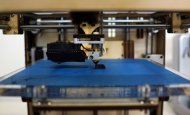
How 3D printing could take over the manufacturing industry

http://news.yahoo.com/3d-printing-could-over-manufacturing-industry-090000134.html
Imagine a machine that could disassemble old unwanted objects, and use the materials to print new objects — all in the comfort of your own home
The laptop I typed this article on is the culmination of a vast, sprawling, and elaborate process over many continents, using many resources, many people, and many machines.
My laptop's construction incorporates plastics built out of crude oil, metals mined in Africa and forged into memory in Korea and semiconductors in Germany, and an aluminium case made from bauxite mined in Brazil. Gallons and gallons of refined oil were used to ship all the resources and components around the world, until they were finally assembled in China, and shipped out once again to the consumer. That manufacturing process stands upon the shoulders of centuries of scientific research, and years of product development, testing, and marketing.

The manufacturing industry today is a huge mesh of complex processes. Capitalism and the systems that it builds are the product of an evolutionary process gradually adjusting around consumer demand and the imperative of maximizing profit. Just as the internet has revolutionized communications and the distribution of information, new technologies already exist that if widely adopted may do the same thing for manufacturing.
3D printers allow physical objects to be designed digitally and printed using physical materials — mostly plastic, but increasingly almost anything (including human cells). Designs can be shared — or bought and sold — through the internet. Already, there are schematics for cars, homes, guns, sex toys, and all manner of trinkets and household items.

The technology is about 30 years old, but with the costs of the machinery rapidly falling — entry-level, fully assembled 3D printers are now for sale for under $500 — 3D printing is poised to move into the mainstream.
Home-based 3D printing has the potential to lower costs, and decentralize and democratize manufacturing, especially as technologies improve and as more complex multi-material printers become available. While buyers of entry-level equipment are mostly limited to plastic trinkets at present, the sky is the limit. As technology improves, sooner or later the elaborate process of building a computer could be reduced to home manufacture via 3D printer. For cost and convenience, 3D printing at home could become the new normal. That would eliminate a great amount of the costs currently associated with global manufacturing, and ease dependency on fragile global supply chains. It could also drastically reduce the barriers to entry to industrial design and manufacturing, allowing for an influx of new competitors, unleashing a flood of creativity and increasing consumer choice.

An equally exciting possibility: The eventual creation of a disassembler, also known as a Santa Claus Machine, that could recycle household and industrial waste into materials to be reused in a 3D printer. Households could simply disassemble old unwanted objects, and use the materials to print new objects. Combined with a cheap source of renewable energy like solar panels, many households and communities could become very self-sufficient.
Of course, there are already some legal problems. The U.S. State Department recently demanded that schematics for a 3D-printed gun be taken offline. A schematic has been published for handcuff keys, as well as another to create cash machine skimmers that could be used to steal credit card details. And the technology poses a massive challenge to any concept of intellectual property — 3D scanners can scan the physical characteristics of an object, allowing for the easy reproduction of just about anything.

So like with any industrial revolution, there will be challenges and difficulties. As happened with the internet, some people will use new technology for crime and terrorism. The economist Joseph Schumpeter once wrote that "economic progress in capitalist society means turmoil." But like with the internet, it seems probable that the upsides of 3D printing will greatly outweigh the downsides.
Still, the 3D printing revolution may not be as swift as we'd like. For example, although online commerce has allowed businesses and consumers to cut out the middleman, still only 5 percent of all retail sales are done online. Progress is a slow process, and it is hard to predict precisely the time when society will adopt a new technology, system, or idea en mass. But as 3D printing technology spreads, its potential to lower costs and increase convenience has the potential to make the impact of the internet look rather small.

Monsanto Has Been Removed And Banned By: Austria, Bulgaria, Germany, Greece, Hungary, Ireland, Japan, Luxembourg, Madeira, New Zealand, Peru, South Australia, Russia, France, and Switzerland!

monsanto
(NaturalNews) By now, most of us are aware of the GMO problem and the political corruption akin to it.
Monsanto claims that GMOs are safe.
This was the same comment made by the tobacco companies back in the 40s and early 50s regarding cigarette smoking.

gmo monsanto
Now we know without a doubt that smoking and lung and throat cancer are kissing cousins. Because GMOs have been around for 15 years or so, with no long-term studies other than Monsanto’s being done, we only have Monsanto’s word that GMOs are safe.
  1. Monsanto Killer Cults: Obama USA & Harper Canada ~ Deregulates International Borders For Streamlining Monsanto GMO Foods That Are Linked To Organ Failure.
  2. Alabama & Oklahoma Ban NWO Agenda 21 Banking Scheme: States At War With Their Over Taken Federal Corporation!
monsanto-children-of-the-corn.jpg.pagespeed.ce.RtQAzZKGJU
Fortunately, there have been studies done by Michael Antoniou of Earth Open Source and Dr. Giles-Eric Seralini of the University of Caan in France that say otherwise.
  1. Big Milk & Big Dairy To Add Monsanto’s Aspartame!
What Antoniou and Seralini have found is that GMOs, which are inundated with pesticides like RoundUp Ready containing glyphosate and 2-4-D, the active ingredient in Agent Orange, create numerous health problems, including birth defects, cancer, neurological imbalances, embryonic deaths, DNA damage, and fetal death. It’s not rocket science to understand that when you eat a steady diet of these horrible chemicals, you will suffer disastrous health ramifications despite the fact that the GMO crops are designed to resist the heavy poisoning of the pesticides and herbicides.
So, where does the corruption tie in? Obviously with the politicians.
We know that when Obama campaigned in 2008, he promised he would label GMOs. When elected, not only did he renege on that promise but immediately appointed former Monsanto VP and attorney Michael Taylor, aka “Monsanto Mike”, as the Head of Food Safety at the Fraud and Drug Administration and Tom Vilsack, another biotech hooker, as the Secretary of Agriculture.
I don’t know about other States, but in Hawaii, from the Governor on down, almost all the Legislators have been bought, with none wanting to bite the hand that feeds them.
In Hawaii, Monsanto has six registered lobbyists – John Radcliffe, George “Red” Morris, Dawn Bicoy, Paul Koehler, Alan Takemoto, Fred Perlak, and Alicia Maluafiti. Radcliffe and Morris have an iron grip on our politicians and Maluafiti is the Executive Director of the Hawaii Crop Improvement Association and along with Radcliffe and Morris, they have bought off with thousands of dollars our, if you will pardon the expression, lawmakers. The other biotech monsters are Syngenta, Pioneer (DuPont), Bayer (aspirin anyone?), and BASF, each having their own lobbyists as well.
monsanto
Recently at our City Council we had endless hearings on GMO labeling. Of the seven Council members, five were bought off and recommended that labeling should be done at the Federal level and put in the hands of the President, the FDA, and the Agriculture Department. Talk about frustration.
  1. Monsanto’s Diet Sweetener Aspartame Linked To Leukemia & Lymphoma In Landmark Study On Humans
Yet, despite this endless array of governmental corruption, there is a bright note. Recently the Hawaii Board of Water Supply denied Monsanto’s request to use 2.6 million gallons of water a day to water their highly pesticide laden poisonous so-called food. Maybe there’s hope for use yet.
When studying the world we find that the countries of Austria, Bulgaria, Germany, Greece, Hungary, Ireland, Japan, Luxembourg, Madeira, New Zealand, Peru, South Australia, and Switzerland have rejected GMO and kicked out Monsanto.
In California, believe it or not, the counties of Mendocino, Trinity and Marin have banned GMOs.
The countries caring little for their people are Canada, China, England, the European Union, Philippines, South Africa, and the good ol’ U S of A.
Thailand and France are on the fence. Damned if they do and damned if they don’t. And if India had its way, Monsanto would be gone in a heart’s beat.
Recently, Jon Rappaport wrote and incredible article talking about how Monsanto loves the labeling issue and could not care less one way or another.
When I go into any of the mainstream supermarkets in Hawaii and watch the shoppers it blows me away. They go to a shelf, pick a product, and put it in their cart. Never once does anyone ever read the label. And, I see basically the same thing in the natural food stores.
What that tells me is that for the most part the people are clueless with any part of any issue with GMOs. In fact, if you ask most people what they know about GMOs, their response is usually, Whaaaaaaat?
monsanto
And Monsanto loves that. So if labeling happens or doesn’t happen it’s a win-win situation for them. The few people that know about GMOs and read labels will not buy them but the clueless ones that never read labels anyway will continue to buy them. And Monsanto will continue laughing all the way to the bank.
So, I say, the hell with labeling. Let’s fight to BAN GMOs in the United States. Trust me, that’s a fight that will really get Monsanto’s attention. And if that happens, so many cockroaches will come out of the woodwork it will make your head swim.
tomato gmo
For those of you that have never seen the film “Soylent Green“, please get it and watch it and realize that in the generations to come, if we do not unite and fight, Monsanto will ultimately open the first Soylent Green factory.
In closing and to apologize for saying the same thing over and over in every article I write about GMOs, if the following do NOT say non-GMO or organic, DO NOT BUY THEM – soy, corn, cotton.
Those are the big three to stay away from. Canola, whether it says organic or non-GMO, do not touch it with a 10 foot pole unless you can tell me how an industrial solvent can be organic and good for your health.
The biotech demons are also getting into alfalfa, sugar beets, and potatoes. So sprout your own alfalfa seeds or buy them from a reputable place where you can ascertain they are not GMO.
First lady Michelle Obama gestures as she speaks at a Let's Move event with children from Iowa schools, Thursday, Feb. 9, 2012, at the Wells Fargo Arena in De Moines, Iowa, during her three day national tour celebrating the second anniversary of Let's Move.  (AP Photo/Carolyn Kaster)
First lady Michelle Obama gestures as she speaks at a Let’s Move event with children from Iowa schools, Thursday, Feb. 9, 2012, at the Wells Fargo Arena in De Moines, Iowa, during her three day national tour celebrating the second anniversary of Let’s Move. (AP Photo/Carolyn Kaster)
  1. Peddling Monsanto Poison To Our Most Innocent Our Children: Michelle Obama’s 2nd-Term Agenda ~ Impact Nature of Food With Monsanto!
Stay way from sugar and go with honey or maple syrup. And for the most part, buy and eat as much organically grown vegetables and grains as you can to be safe.
And for you non-vegetarians out there, your dead animals are fed GMO grains as well as the feathers, blood, the dead, dying, diseased, and decayed animals not fit for sale, as well as road-kill. And if you are so fixed on the range-fed scam, it’s the saturated fat that found in all animal flesh that gives you just about every disease known to mankind.
Oh yeah, all the fish in the world are loaded with mercury, radiation, heavy metals and toxic wastes. And now, Frankensalmon does not have to be labeled as such.
Aloha!
by: Hesh Goldstein
About the author:
I have been doing a weekly radio show in Honolulu since 1981 called “Health Talk”. In 2007 I was “forced” to get a Masters degree in Nutrition because of all the doctors that would call in asking for my credentials.
They do not call in anymore. Going to www.healthtalkhawaii.com enables you, among other things, to listen to the shows. I am an activist. In addition to espousing an organic vegan diet for optimum health, I am strongly opposed to GMOs, vaccines, processed foods, MSG, aspartame, fluoridation and everything else that the pimps (Big Pharma, Monsanto and the large food companies) and the hookers (the doctors, the government agencies, the public health officials, and the mainstream media) thrust upon us, the tricks.
waco gif
divider_044
After being vaccinated with the DTP vaccine as a child I developed asthma. After taking the organic sulfur crystals (they are harvested from the pine trees in Louisiana) in November of 2008 for 10 days my asthma reversed and has not come back over 4 years later, 18 cases, so far, of autism have been reversed, as has cancer, Alzheimer’s and Parkinson’s disease, osteoarthritis, joint pain, astigmatism, gum disease, increased sexual activity, heavy metal and radiation elimination, parasite elimination, free radicals elimination, faster athletic recovery time, increased blood circulation, reduced inflammation, resistance to getting the flu, reduction of wrinkles, allergy reduction, reduced PMS and monthly period pain, nausea, migraines and so much more.
And it’s only possible because of the oxygen it releases that floods the cells of the body. The sulfur, as proven by the University of Southampton in England, enables the body to produce vitamin B12 and the essential amino acids.
waco
You can find out more about this incredible nutrient also on my website - www.healthtalkhawaii.com - Products and Services. There is also an organic, 70%, cold processed dark chocolate out there that contains sulfur based zeolite, which removes radiation and heavy metals.
You can find out more by reading the article “A Dark Chocolate To Die For” on my website under Articles, or by going to www.mywaiora.com/701848.
I am 73. I have been a vegetarian since 1975 years and a vegan since 1990. I have no illnesses and take no meds. I play basketball 2 hours a week, am in 2 softball leagues, racewalk, body surf, do stand-up paddling, do weight workouts and teach women’s self defense classes based upon 25 years of Wing Chun training.
My firm belief – if it had a face and a mother or if man made it, don’t eat it.
Aloha!
Natural News
mexico immigrants

How Facebook and Twitter mess with DUI checkpoints

Commissioner Anabell Brumford: Ladies and gentlemen, I would now like to introduce a most special American. Tonight, he is being honoured for his 1000th drug-dealer killed.
Lt. Frank Drebin: (to applause) Thank you. But, in all honesty, the last three I backed over with my car. Luckily, they turned out to be drug-dealers                           

How Facebook and Twitter mess with DUI checkpoints                                        

They come out during the day too.
(Credit: 2StrokeYardSale/YouTube Screenshot by Chris Matyszczyk/CNET)
The police are sometimes accused of linear thinking, especially when it comes to DUI checkpoints.
They set them up on Friday and Saturday nights. They redouble their efforts on New Year's Eve.
Perhaps the finest example would was one police force in the wine country of Northern California that decided to put a DUI checkpoint at the bottom of a winery's driveway. Yes, on barrel-tasting day.
The police now have a stronger enemy in the people -- the people who are using social media to warn others that this particular Friday or Saturday night has been selected for special drunk-driving checking.
At first, it seems that police were a little bemused by the very idea that people wouldn't want other people to be caught be the police.
Now, however, some police forces have decided to use more sprightly tactics to ensnare those who are unwise enough to imbibe and drive.
As the Associated Press reports, big checkpoints may be on the way out.
They're too obvious, take too long to set up and word travels too quickly, as they're so often located on busy roads -- on the shooting-fish-in-barrel principle.

Now, some police forces say they are using roads less traveled and even setting up in the middle of the week in order to catch their quota.
The AP quoted Barbara Harsha, executive director of the Governors Highway Safety Association, as saying: "Social media cuts both ways. It can be a good tool to inform the public about what's going on, and it also can be used to undermine enforcement efforts."
But is informing others on Facebook and Twitter that the police are out in force truly undermining enforcement efforts? Or does it, in fact, show a peculiar form of solidarity that isn't always evident in other aspects of social life?
It's quite common for people to keep themselves to themselves. Caring for one's fellow human isn't always such a natural impulse, as the debate over universal health care often shows.
Perhaps there's something about DUI checkpoints that people find essentially unfair (which doesn't mean they're unnecessary, of course).
Perhaps there's also that element of so many knowing that there, but for the grace of Facebook and Twitter, go they.
It's almost as if there is some unspoken understanding that we should all be allowed to party a little, given life's gamut of tribulations.
Yes, we shouldn't get behind the wheel when we drink, but many seem to be saying that it would be a shame if we were actually caught doing so.            http://news.cnet.com/8301-17852_3-57579508-71/how-facebook-and-twitter-mess-with-dui-checkpoints/

Chris Matyszczyk is an award-winning creative director who advises major corporations on content creation and marketing. He brings an irreverent, sarcastic, and sometimes ironic voice to the tech world.

Local hero? Man tweets DUI checkpoint locations

:O           
“Like a blind man at an orgy, I was going to have to feel my way through.”
Naked Gun 33 ½: The Final Insult (1994)

Local hero? Man tweets DUI checkpoint locations                        http://news.cnet.com/8301-17852_3-57586241-71/local-hero-man-tweets-dui-checkpoint-locations/  May 26, 2013 11:50 AM PD

Mr. Checkpoint is a man who alerts thousands of people where police are setting up DUI checkpoints in San Diego and the L.A. county areas. Not everyone approves of his motivations.


Mr. Checkpoint himself.
(Credit: CBS8 Screenshot by Chris Matyszczyk/CNET)
When there's a long weekend, the police sometimes create longer lines of traffic by setting up random checkpoints to test whether you have enjoyed yourself to the point of irresponsibility.
It's a tradition not unlike grilling and insulting a relative.
Increasingly, however, social media has allowed real human beings to contact other real human beings in order to avoid being randomly stopped and having their breath searched.
Sennett Devermont has turned checkpoint alerts into what he believes is a public service.
Devermont, a co-founder of the dating site site DateUp (later sold to IAC) and various other ventures, has created the superhero name Mr. Checkpoint, and his site works hard to ensure that his followers receive text alerts as soon as the information comes to him.
His Twitter feed now has more than 43,000 followers, who hang on his every revelation.
However, as CBS8 in San Diego reports, not everyone believes that his motivation is entirely Clark Kentian.
San Diego, California News Station - KFMB Channel 8 - cbs8.com Pat Rillera, executive director of Mother Against Drunk Driving in L.A. and Ventura counties, told CBS8: "While we support the publication of checkpoints as a deterrent to drunk driving, sites like MrCheckpoint alert drunk drivers so they can evade arrest. It's not meant as a positive."
How would she know? Does she have evidence that Devermont is merely one more 25-year-old encouraging one more unsafe act?
Mr. Checkpoint himself says that he has support among MADD members and insists: "When I realized the positive impact it had -- people were taking designated drivers, taxis, sleeping in hotels, I decided to make the service free."
Some might find it peculiar, though, that he has the need of a lawyer's services. Mary Frances Prevost also appeared on camera and offered that "when there's more talk about DUI checkpoints and more advertising about them, there is a 20 percent reduction in DUIs and DUI fatalities."
I am not sure where this statistic might have been born. Importantly, though, Mr. Checkpoint isn't stealing information. He isn't some sort of Wikileaker of police procedure. The information is public, released by local police departments.
Indeed, he believes his method is a genuine deterrent, because, he says, he is targeting the right people through social media.
On his LinkedIn page he offers: "An organization as well known as Mothers Against Drunk Drivers (MADD) who helps countless victims of drunk driving doesn't necessarily identify with the right demographic when trying to make a difference on the road. MrCheckpoint prides itself in identifying and targeting the right demographic being twenty-one to thirty-five year olds, which make up majority of arrests and accidents relating to DUI."
You might be wondering whether Mr. Checkpoint is doing this entirely out of the kindness of his soul. Well, his service is ad-supported, so one might imagine that there are tidy sums being made here. He says on LinkedIn that he has sent more than 1 million text messages since August 2012.
He is also highly skeptical of police methods.
He added on LinkedIn: "The reality is that DUI checkpoints only identify .45% of DUI drivers who go through DUI checkpoints. When officers want to arrest drunk drivers they perform DUI saturation patrols which yield a 14% arrest rate."
You might, though, feel a touch of cynicism wash over you when you hear that, on signing up for his text alerts, you have to tick a box promising not to drink and drive. How many times have you agreed to something electronically just to get what you wanted?
Police all over America have become increasingly disturbed with how people are receiving electronic warnings of their checkpoint activities.
Some have decided to create checkpoints on unexpected days and in unexpected places.
In Devermont's case, though, his motivation to disseminate information is more personal. As L.A. Weekly reports, he says he was once stopped by police, made to take a field sobriety test and was told he had failed.
When breathalyzed, however, the machine said that there was no alcohol in his system at all.

He then decided to examine the law. A field sobriety test cannot be imposed on you. If you say "no" to the test, this does not legally constitute an admission of guilt. You don't, according to him, have to talk to talk to the police.
And this is where Prevost comes in. She is defending him after a 2011 stop, in which she says police went against the law.
She told L.A. Weekly: "We're throwing the kitchen sink at them for violating his civil rights. We're suing for false arrest, emotional distress, battery (tight handcuffs), searching his personal belongings."
Five months after this incident, he was again stopped -- this time for allegedly turning right without stopping. He says he was arrested for refusing a sobriety test. His car was allegedly impounded and he was tossed in jail.
In all these tales, some might see a deeper motivation than merely providing a public service.
Still, not every member of the police force is against his methods. L.A. Weekly quoted Lt. Shan Dale of Beverly Hills Traffic Bureau: "If we can get people thinking about these checkpoints so they're not driving drunk, then it's good. Take a cab, or give your keys to a friend."
Naturally, those who plan to get drunk and not stopped by the police will also be helped by Mr. Checkpoint. They will decide whether it's worth the risk to drive or not.
But at least they might think about the potential consequences when they're still sober.

BREAKING, photos: TX abortionist impales, twists heads off live babies

EVERY AMERICAN in This Country ..Should Be FORCED 2  SEE !!!  ..what you NAZI (choicers )  are  REALLY Doing !!!    the Nazi's  had/have nut~tin  on u sick ,twisted fucks  !               ....LOOK!  at the PICTURES  ...u demons from the bowels  of Hell.         ah  oh yea ...it's "just"  a fetus  ...right . 

BREAKING, photos: TX abortionist impales, twists heads off live babies

breakingnews2Operation Rescue and Life Dynamics have released photos, video, and witness testimony about a late-term abortionist in Houston, Texas, who routinely murders babies in horrendous ways after he aborts them alive.
Three former employees of abortionist Douglas Karpen (pictured below left) have come forward with shocking testimony, which they have corroborated with video and photos.karpen
In the video below Gigi Aguliar, Deborah Edge, and Krystal Rodriguez say Karpen aborts babies beyond the legal limit in Texas of 24 weeks.
The informants also say they witnessed Karpen routinely kill babies after they were born by puncturing the soft spot or impaling the stomach with a sharp instrument, twisting the head off, or puncturing the throat with his finger.http://www.scribd.com/doc/141550822/Photos-of-Babies-1-2
They maintain babies Karpen aborted babies alive and then murdered them “daily.”    
See graphic photos below taken by informants of two very late-term aborted babies (my guess is ~ 7 months), the first whose throat was punctured and the second whose head was nearly decapitated.
The informant, Deborah Edge, told Fox News she came forward after receiving a postcard from OR encouraging clinic employees to contact the group “if they suspected illegal activity at the clinic.”
Working with attorneys at Alliance Defending Freedom and Abby Johnson’s group, And Then There Were None, the three informanta submitted affidavits to the Texas Medical Board and Texas Attorney General Greg Abbott in 2012.
On February 8, 2013, OR received a letter from the TMB stating it was dismissing the case due to “insufficient evidence.”
It was at this point the decision was made to go public.
Ironically, late-term mass murderer Kermit Gosnell’s trial got in the way, and so release of the information was delayed until this week.
The abortion lobby and media have been claiming Kermit Gosnell was an anomaly, while pro-life activists know there are many more just like him. How can it not be that late-term abortionists blur the line between preborn and postborn?agga_smile
I urge the TMB and AG Abbott to reopen their investigation of Karpen, particularly in light of the fact that the U.S. Congress has now launched a probe into shoddy abortion clinics, late-term abortions, and live birth abortions.
By now Abbott, pictured right, has received a letter from the House Judiciary Committee inquiring how he is enforcing the federal Born Alive Infants Protection Act and how limits on late-term abortions are enforced.
Operation Rescue has many more details on this developing story, including video shot within the clinic.

Dumb Idea Or Dumbest Idea: Letting Companies Use Malware Against Infringers

from the dumbest-ideas-ever dept

We already did a post exploring the ridiculous background and bad assumptions of the so-called IP Commission Report, but we're going to explore some of the "recommendations" of the report as well. In that first post, we noted that the basis, assumptions and methodology of the report were all highly problematic, so it should come as little surprise that the "recommendations" that come out of it are equally ridiculous.

Let's start with the one that has received the most attention: the fact that the report recommends a "hack back" legalization, to allow those who feel their (loosely defined) "intellectual property" has been infringed to "hack back" at those who infringe. As Lauren Weinstein summarizes, this proposal more or less is a plan to legalize malware against infringers. Of course, this kind of idea is not new or unique. It's been around for a while. Almost exactly ten years ago, Senator Orrin Hatch proposed allowing copyright holders the right to destroy the computers of anyone infringing. The specifics here are explained over two "suggestions" that, when combined (hell, or even individually), are somewhat insane for anyone even remotely familiar with the nature of malware. First up, legalizing some basic spyware/malware:
Support efforts by American private entities both to identify and to recover or render inoperable intellectual property stolen through cyber means.

Some information or data developed by companies must remain exposed to the Internet and thus may not be physically isolated from it. In these cases, protection must be undertaken for the files themselves and not just the network, which always has the ability to be compromised. Companies should consider marking their electronic files through techniques such as “meta-tagging,” “beaconing,” and “watermarking.” Such tools allow for awareness of whether protected information has left an authorized network and can potentially identify the location of files in the event that they are stolen.

Additionally, software can be written that will allow only authorized users to open files containing valuable information. If an unauthorized person accesses the information, a range of actions might then occur. For example, the file could be rendered inaccessible and the unauthorized user’s computer could be locked down, with instructions on how to contact law enforcement to get the password needed to unlock the account. Such measures do not violate existing laws on the use of the Internet, yet they serve to blunt attacks and stabilize a cyber incident to provide both time and evidence for law enforcement to become involved.
Basically, malware/DRM-on-steroids. As if that will work. Anyone who had even a modicum of experience with DRM or watermarking knows that these things aren't difficult to get around, and are basically a huge waste of time and money for those who employ them. The idea that they might then lock down entire computers if an incorrect file gets onto one seems even more ridiculous. Given how often DRM causes problems for legitimate users of the content, you can imagine the headaches (and potential lawsuits) this kind of thing would lead to. A complete mess for no real benefit.

So, then, they take it up a notch. If bad DRM/watermarking isn't enough, how about legalizing the pro-active hacking of infringers? No, seriously.
Reconcile necessary changes in the law with a changing technical environment.

When theft of valuable information, including intellectual property, occurs at network speed, sometimes merely containing a situation until law enforcement can become involved is not an entirely satisfactory course of action. While not currently permitted under U.S. law, there are increasing calls for creating a more permissive environment for active network defense that allows companies not only to stabilize a situation but to take further steps, including actively retrieving stolen information, altering it within the intruder’s networks, or even destroying the information within an unauthorized network. Additional measures go further, including photographing the hacker using his own system’s camera, implanting malware in the hacker’s network, or even physically disabling or destroying the hacker’s own computer or network.
Notice how that recommendation gets even more insane the further you read. "Retrieving" info? Okay. "Destroying info on an unauthorized network"? Yeah, could kinda see where someone not very knowledgeable about computers and networks thinks that's a good idea. "Photographing the hacker"? Well, that's going a bit far. "Implanting malware in the hacker’s network"? Say what now? "Physically disabling or destroying the hacker's own computer or network"? Are you people out of your minds?

This isn't just a bad idea, it's a monumentally dangerous idea that will have almost no benefit, but will have tremendously bad and dangerous consequences. Hell, today we already have to deal with a plethora of bogus DMCA takedown notices. Imagine if that morphed into bogus malware attacks or destroying of computers? It makes you wonder how anyone could take anything in the study seriously when you read something like that.

To be fair, the authors of the report say they don't recommend legalizing this stuff yet, but immediately make it clear that something like this is going to need to happen in the future, because "the current situation is not sustainable." Based on what? Well, as we explained in the first post about this report, that's mostly based on the authors' overactive imaginations, rather than anything fact-based.

Fear Mongering Report Suggests 'IP Theft From China' One Of The Biggest Problems America Faces

from the based-on-what? dept

A bunch of folks have been sending in variations on a report that came out last week, grandly titled "The IP Commission Report" as if it were some sort of official body. In the subhead, we find out that it's actually by the even more ridiculously named "The Commission on the Theft of American Intellectual Property." Who put together this "commission"? Well, it's the National Bureau of Asian Research, which also is not an official government organization as you might think, but a private think tank that more or less was spun out of the University of Washington, and was originally the National Bureau of Asian and Soviet Research, put together at the behest of Senator Henry Jackson, who believed strongly that America should intervene around the globe to promote American interests, often at the expense of those where we were intervening. He supported interning Japanese Americans during WWII. He strongly supported the Vietnam War. He's considered the spiritual father of today's neoconservatives. As you may have guessed, the "National Bureau of Asian Research" is not exactly about figuring out the best way to understand and improve relationships between the US and Asia. It's about how US interests can dominate Asia.

As the NY Times points out, the report itself was put together by two ex-Whitehouse officials, both of whom left "on strained terms," Dennis Blair (former Director of National Intelligence) and John Huntsman Jr. (former ambassador to China, who ran for President, badly, in the last election). The report itself is quite incredible. Based on almost nothing factual, it makes incredibly sweeping statements about "IP theft" (which it never actually defines, and it seems to use the broadest possible way of determining it), and then insists that the problem is incredibly big. It also assumes, without any proof, that the only possible way to have incentives to innovate is to have the strictest possible intellectual property regime out there -- and that IP is the fundamental incentive for innovation. The fact that this has been disproved by a tremendous amount of evidence doesn't even enter into the conversation. Blair and Huntsman take it on faith that strong IP absolutely leads to greater economic benefit.
The second, and more fundamental, effect is that IP theft is undermining both the means and the incentive for entrepreneurs to innovate, which will slow the development of new inventions and new industries that can further expand the world economy and continue to raise the prosperity of all. This effect has received some attention in the cases of a few industries, but it affects others as well. Unless current trends are reversed, there is a risk of the relative stagnation of innovation, with adverse consequences for both developed and developing countries.
Except, that's simply not true. It assumes, incorrectly, that without IP there's no incentive to innovate. Yet, actual research shows that most innovation happens because companies or individuals need the innovation themselves, or they see value in selling the actual product or service in the market. You can do that whether or not there's IP protection. But the report's authors don't even consider that a possibility -- perhaps because they're not actually even remotely tied to innovative industries.

As you might have guessed from the name of the commission itself, they talk a lot about "theft" even in nonsensical ways:
On an unprecedented level, a critical driver of this worldwide economic growth is in trouble. Trade secrets, patents, copyrights, and trademarks are being stolen, especially from American but also from European, Japanese, and other nations’ companies and organizations
But what does that even mean? Does it mean copied -- as in infringement? Or does it mean someone actually "stealing" the underlying products? Or does it mean somehow registering a patent or copyright or trademark away from the original holder (about the only thing that would actually be "theft")? How the hell do you "steal" a trademark anyway? Or a patent? None of this makes any sense, which makes it difficult to take seriously. The report never actually defines IP theft. It just leaves it out there, and sometimes appears to be talking about actual stealing of hard drives of information, but often, it just seems to be about whatever the hell the report's authors want it to mean. There is simply no intellectual rigor behind this. It's just throwing everything together into a giant messy, stupidly meaningless pile.

The report correctly notes that much of the value of publicly traded companies is tied up in "intangible assets" but then falsely claims that this is the same as "IP." But it's not. So much growth in intangible assets often comes from a lack of intellectual property, allowing for greater information exchange and sharing, which grows the overall pie. Leave it to a bunch of politicians to not understand the difference between a zero sum and non-zero sum economy. Throughout the report, the authors confuse any kind of intangible concept or knowledge with "intellectual property." But "intellectual property" are laws, not the actual ideas -- and knowledge grows not by strengthening the laws, but frequently by ignoring those laws and having information and innovation shared. Under this report, massive economic growth driven by open source software, for example, is credited to strong IP laws. Which is absurd.

More ridiculous: in discussing the impact of "IP theft" it only looks at one side of the equation. Take the following two examples:
Effects on industry. Lost sales; lost brand value; reduced scope of operations; lost jobs and reduced ability to provide employee benefits; reduced ability to conduct R&D; increased IP protection expenses for prevention, remediation, and enforcement; increased costs from dealing with malware acquired from unlicensed software; reduced incentive to innovate.
Um. What about about increased sales, increased services, ability to do things more cheaply thanks to lower resource costs? How about increased incentives for innovation due to stronger motivation to keep ahead of the competition? All of those things have been widely observed. All of them are ignored.
Effects on consumers. Harm to health, harm to safety, costs incurred as a result of product failure, decreased or increased purchasing power.
How about keeping prices of proprietary goods in check as they need to compete? How about the ability to be productive, to accomplish more for less? How about the ability to make use of these products to create even more economic wealth? Again, ignored.

Even worse, it completely ignores the fact that the $200 billion estimate it extrapolates as one basis for claiming $300 billion has been debunked over and over again, and is based on layers upon layers of bogus premises from decades ago, that today is just expanded every few years by lobbyists who insist it's growing. Of course, when the actual numbers were looked at closely, it was discovered that a more accurate assessment might be about 2% of that number. But Huntsman and Blair instead insist that the $300 billion is probably too low. Based on what? Nothing. Just the fear mongering they hear from companies and lobbyists -- the same companies who certainly have a very strong vested interest in protectionism against Chinese competitors (oh wait...).

The authors are further suckered by the ridiculous belief that China's growth in its patent system is "a response to a concerted government effort to spark innovative activity." That's wrong. There was a concerted government effort to spark growth in the patent system because China understands what US politicians still can't grasp: patents are a purely protectionist system, and having more Chinese patents (no matter what they're for, and no matter whether or not they spur any innovation at all) means they can leverage those as a weapon against US and other foreign companies. Nearly every single major patent case in China has been a Chinese company against a foreign company and (spoilers!) the foreign company always loses.

We'll be having a few more posts about the suggested "remedies" set forth in the paper, but since they all seemed to be based on ridiculously poor methodology and assumptions, as you can imagine, the recommendations are ridiculously problematic as well. We'll highlight one quick one, and then delve in deeper in a few later posts:
Designate the national security advisor as the principal policy coordinator for all actions on the protection of American IP.
Yes, you read that right. They want to elevate "the protection of American IP" to the level of a national security issue. As if it hasn't already gotten to an insane level by having Homeland Security and Immigrations and Customs Enforcement cowboys shutting down websites based on nothing. Now we're going to make it into a national security issue? Based on a report that's almost entirely wrong? Yikes.

The whole paper is incredibly problematic, based on bad methodology and ridiculously bad assumptions. It conflates a number of different topics, ignores significant amounts of well-respected research debunking huge parts of the claims, and makes a number of outlandish statements based on a near total ignorance of how actual innovation works today. The paper is a complete joke.