Wednesday, May 14, 2014

Transhumanists: Superhuman Powers And Life Extension Technologies Will Allow Us To Become Like God


lol Y don't u go ask Victor! (Frankenstein) hows that "god" thing ...work~in  hehe   :) it's ALL fun & games ..till yer fucking monster starts chas~in   yer ass ... than IT'S save me God ...save me lol

truther
Michael Snyder
If you could merge your current mind and body with technology that would give you superhuman powers and would allow you to live forever, would you do it?  This is essentially what the transhumanism movement is seeking to accomplish.  Transhumanists envision a day when technology will allow humanity to become so advanced that sickness, disease, poverty and war will essentially be eradicated.  They believe that merging with machines will permit us to become trillions of times more intelligent than we are today, and they also believe that radical life extension technologies will make it possible for humanity to actually achieve immortality.  Many transhumanists are convinced that such a world can be achieved within their lifetimes.  They point to Moore’s Law and to the fact that technology already appears to be growing at an exponential rate.  As the technology curve continues to steepen, transhumanists believe that our world will rapidly become transformed into a place that would be unrecognizable to us today.  Just a few decades from now, transhumanists believe that superhuman powers and extremely advanced life extension technologies will allow them to essentially become like gods.
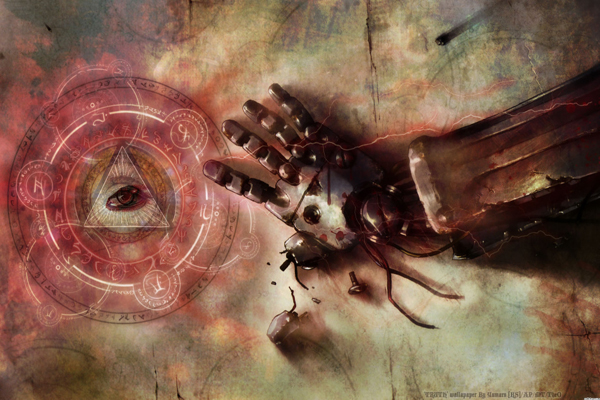
Transhumanists Superhuman Powers And Life Extension Technologies Will Allow Us To Become Like God
The key moment that most transhumanists are looking forward to is known as “the Singularity”.  That is the moment when artificial intelligence will actually surpass human intelligence and a massive technological chain reaction will be triggered.  At that time, most transhumanists believe that biological intelligence will merge with non-biological intelligence and humanity will become vastly more intelligent than it is today.  During this transition, society will be fundamentally transformed
After the Singularity occurs, it is predicted that vast changes will sweep through society; changes so drastic that they are nearly inconceivable at the present time. Experts in the movement say that after the Singularity, indefinite human life extension will rapidly become the norm. Many scientists working in this field are particularly interested in the concept of achieving immortality.
To most people, the idea of achieving immortality in our decaying physical bodies would sound absolutely ridiculous.
But transhumanists are very serious about this.
One way they are seeking to accomplish this is by searching for a method that will enable them to store the human mind on a computer.  If your entire consciousness could be “uploaded” into a computer, it could conceivably later be downloaded into a futuristic avatar of some sort once that technology has been developed.
But that is not the only life extension technology that transhumanists are working on.  Some other examples include embedding nanobots in our bodies and brains and eliminating diseases through the process of “genetic reprogramming”…
Other futurists and transhumanists are working toward improving longevity through more biological means, such as growing new organs from stems cells, replacing worn out parts of the body with high-tech updated models, and curing diseases through genetic reprogramming. A third method of achieving a transhuman state of being may come through merging the biological and non biological in equal measure, such as embedding nano robots into the bloodstream and brain; and replacing atoms with nano computers to solve the degeneration that comes with aging.
According to transhumanists, not only will we be able to live much longer, but our quality of life will also be so much better in the future.  The following is how one transhumanist envisions what life will be like in the 2050s
Robots have become an important family acquisition. Ability to replicate self-assembling robot parts in nanofactories, make these machines easily available and affordable. By 2050, technologies advancing at “Moore’s Law” speeds have produced an android-like creature nearly indiscernible from a human.
Programmed with Internet-downloaded software, 2050s household robots cater to our every whim. They also manage the nanorobots that whiz through our veins keeping us healthy 24/7, and monitor our safety when we connect to simulation events that whisk us away in a Star Trek Holodeck-like adventure.
That sounds wonderful doesn’t it?
But how will we earn the money to pay for all of those things?
If robots are so advanced at that point, why would companies even need human workers?
Or will we have to “enhance” ourselves with technology just to be useful in the workforce?
In a recent article by Andrew Smart, he suggests that these “enhancements” could just turn us into “better slaves”…
Could it be that we’ve been tricked into pouring our innovative energy into making ourselves better slaves? If the digital elite achieves its dream of a perfect union with machines, what becomes of the rest of us who either can’t afford cyborgification or who actually enjoy life as a regular human being? Would one Singularitized human be expected to handle the workload of 100 unenhanced workers? Robots will have of course taken the rest of the jobs.
In fact, robots are already taking our jobs at a staggering pace.  This is even happening in low wage countries such as China
Chinese company Hon Hai, the world’s largest contract electronics manufacturer, has announced it intends to build a robot-making factory and replace 500,000 workers with robots over the next three years.
But transhumanists are not really concerned with such matters.  They insist that we will become so intelligent that we will easily figure out the solutions to such social issues.
Yes, most transhumanists concede that there will be bumps on the road to utopia, but they argue that it would be foolish not to “take control of our own evolution”.  They believe that we can use science and technology to guide the evolution of society and that this will create a far better world than we have today.  The following is what one participant stated at a recent conference about transhumanism and religion
Transhumanism is a thrust toward transcendence. It is not classical mysticism but seeks a temporal transcendence The driving force behind this is evolution…
What is reality? Reality is evolution. It has a direction from the simple to the complex; the most complex [outcome] is intelligence. Thus evolution is aimed at intelligence.
We should thus have a will to evolve. We have a moral responsibility to increase evolution and do so by continually striving to expand our abilities throughout life by acting in harmony with the evolutionary process…
Science and technology move us toward Utopia. One of the most exciting things about transhumanism is that all will be fixed.
That all sounds so alluring.
After all, who wouldn’t want to live in a “utopia” where everything that is currently wrong with our planet has been “fixed”?
But transhumanists don’t just stop there.  They believe that eventually we will possess such superhuman powers and will enjoy such radical life extension technologies that we will essentially be like God.
The most famous transhumanist on the globe, Ray Kurzweil, takes 150 vitamin supplements a day in an attempt to extend his life until more advanced life extension technologies can be developed.  In chapter 7 of “The Singularity Is Near: When Humans Transcend Biology”, he expresses his belief that evolution and technology are systematically moving us in the direction of becoming more like God…
“Evolution moves toward greater complexity, greater elegance, greater knowledge, greater intelligence, greater beauty, greater creativity, and greater levels of subtle attributes such as love. In every monotheistic tradition God is likewise described as all of these qualities, only without any limitation: infinite knowledge, infinite intelligence, infinite beauty, infinite creativity, infinite love, and so on. Of course, even the accelerating growth of evolution never achieves an infinite level, but as it explodes exponentially it certainly moves rapidly in that direction. So evolution moves inexorably toward this conception of God, although never quite reaching this ideal. We can regard, therefore, the freeing of our thinking from the severe limitations of its biological form to be an essentially spiritual undertaking.”
Transhumanist Mark Pesce is even more extreme.  He openly states that he believes that transhumanism will allow us “to become as gods”

Human Cloning Researcher Richard Seed - When the shift hits the fan

“Men die, planets die, even stars die. We know all this. Because we know it, we seek something more—a transcendence of transience, translation to incorruptible form. An escape if you will, a stop to the wheel. We seek, therefore, to bless ourselves with perfect knowledge and perfect will; To become as gods, take the universe in hand, and transform it in our image—for our own delight. As it is on Earth, so it shall be in the heavens. The inevitable result of incredible improbability, the arrow of evolution is lipping us into the transhuman – an apotheosis to reason, salvation – attained by good works.”
And what transhumanist Dr. Richard Seed has to say about all of this is quite frightening.  He warns of “warfare” if anyone tries to prevent him from becoming a god…

2045: A New Era for Humanity

If you want to get an idea of where transhumanists want to take us, just check out the YouTube video posted below.  It was produced by “the 2045 Initiative”, and as you can see, they believe that the world will be infinitely superior in the year 2045 than it is today

X DARPA Director & Google Exec Pushes Microchipping Human Beings


by .
With the recent revelations by NSA whistle blower Edward Snowden, it’s no secret that we live on a planet characterized by mass surveillance and virtually zero privacy. We live in a world where we are constantly bombarded with the idea that we face threats, that a high level of national security is needed in order to keep us safe. Think about it, the United States pumps a large majority of their money into the Department of Defence. A state of fear, war and terror is needed to keep those funds flowing in that direction. Many people are starting to wake up and realize a lot of the so called threats we face and have been facing are largely manufactured and fabricated in order to justify a specific agenda, agendas that deal with the black budget world.
“It is ironic that the U.S. would begin a devastating war, allegedly in search of weapons of mass destruction when the most worrisome developments in this field are occurring in your own backyard.  It is ironic that the U.S. should be fighting monstrously expensive wars  allegedly to bring democracy to those countries, when it itself can no longer claim to be called a democracy when trillions, and I mean thousands of billions of dollars have been spent on projects which both congress and the commander in chief no nothing about” - Paul Hellyer, Former Canadian Defence Minister (source)
It doesn’t stop there, remember when credit and debit cards changed into one with a chip? That could be you in a few years as multiple corporations are pushing to microchip the human race. In fact, microchip implants in humans are already on the market. For example, an American company called Applied Digital Solutions (ADS) has developed one approximately the size of a grain of rice, and has already had it approved by the U.S. Food and Drug Administration for distribution and implementation. (1)
Below is a video of  DARPA director and Google Executive Regina Dugan promoting the idea of microchipping humans.

Regina Dugan at D11 2013

Ask yourself, what if this becomes a requirement for authentication and identification? To withdraw money or go to the grocery store? Would you do it?
These microchips would be implanted under the skin, and allow the wearer’s movements to be tracked and store personal information about them. This kind of reminds us of George Orwell’s “Big Brother” police state doesn’t it?
According to a report drawn up by a team of academics for (then) Britain’s Information Commissioner Richard Thomas in 2006, within the next couple of years our almost every movement, purchase and communication could be monitored by a complex network of interlinking surveillance technologies (if it isn’t already). (2)
This isn’t about safety and national security, it’s about controlling the human population even more so than it is today. We live in the illusion of freedom where our potential as a human race to create something better is not wanted. We spend our entire lives working and acquiring little pieces of paper to gather the necessities we need, and in doing so we become blind to what is really happening on, to, and around our planet.
Money should never come in the way of necessity, and we have the potential to create a world where everybody’s needs are provided for. From that place of freedom, just imagine what we can do. We have the potential, and we have the power to do it, we just have to open our eyes and realize it’s possible. Those who monitor us so closely don’t really want to see us thrive, and it seems that they don’t really care about us.
The power does not lie with them, it lies with us. At any time we can choose to wake up and change the way we do things here on the planet. Not many people are resonating with the state of our world today and more people are starting to realize that we can do something about it.
Sources:

The Magna Cortica: A bill of rights for our future, implant-enhanced brains

BrainExplosion In 1215 the feudal barons in England imposed the Magna Carta upon King John. The document was designed not only to proclaim their liberties and protect their rights, but to constrain the seemingly unlimited scope of the King’s will. In a nod to the prescience of the Magna Carta and social expediency it spawned, a group of neurally-inclined futurists have begun to draft a similar constitution for our time. This new “Magna Cortica” has set for itself the task of defining a set of rights and restrictions to preempt potential abuses in the rapidly growing field of cognitive enhancement.
The Magna Cortica
1. The right to self-knowledge
2. The right to self-modification
3. The right to refuse modification
4. The right to modify/refuse to modify your children
5. The right to know who has been modified
The five points of the Magna Cortica, drawn up by Jamais Cascio of The Institute for the Future, may remind some of Issac Asimov’s famous Laws of Robotics. The Cortica represents an excellent starting point. The rights to self knowledge, and to seek or to refuse self modification, appear somewhat obvious but provide the necessary foundation. The fourth point, the right to modify or refuse the same for our children, would increasingly loom in direct contradiction to the previous points as any child matured, but similarly lays the groundwork for where we might later set this bar. (Read: US military begins research into moral, ethical robots, to stave off Skynet-like apocalypse.)
I, Robot - killer robot
The proposed right to know who has been modified seems to be the one that may need further refinement. Clearly patrons would like to be assured that their tour bus driver is still capable of achieving sufficient REM sleep, but what one does at age, and independent of external effect, should ideally remain within the province of self. The problem with full public disclosure of who has been modded with what is not so much it’s futility, but rather — as we have seen in digital rights management — it is the greater injustice wrought through any attempt to enforce it. The right to know what others might have done to their brains, essentially their medical history, presently stands in direct contradiction to the social behemoth we might affectionately call the HIPAA (Health Insurance Portability and Accountability Act) monster. That barely even knocks upon the door of other possible ethical incongruency.
The right to reasonable free speech, for example, does not exist independent from context. What we might speak (or type) can not be extricated from who it is spoken to, when and where it is spoken, and in our progressive times, by who speaks it. Might we therefore expect any more or less right to its complement, the right to non-disclosure? In other words the right not to speak and to maintain privacy? As we maintained in a recent post on stem cells, ethics does not just involve contradictions, it is the science of them. The best we can offer for now is to do exactly what we are doing: propose ideals on a public forum and let them compete for our minds as the hardware concerning them is realized and becomes commonplace.
Magna CorticaIn that spirit we have asked for additional comment from Ayden Jacob the President of The Academy of Medical Ethics in Bio-Innovation. AMEBI has been grappling with the balance between increasing human capabilities while remaining within the bioethical zone of acceptable enhancements. With regards to the Magna Cortica, Ayden had this to say:
“It is with fervor and zeal that scientists, and society as whole, approaches this new horizon of innovation in the brain. We long to enhance our cognitive abilities at all costs, even when pharmacologic intervention may hinder us with unpleasant side effects. Philosophically speaking, man is made to develop into the greatest Man we can become. Scientifically speaking, man can become the most influential and powerful Man when technology and physiology are linked together within the human brain. As we aim to increase our cognitive abilities, whether that be to think smarter, faster, quicker or longer, it will be important to allow science to explore various opportunities at enhancing the brain’s lurking power. And to accomplish such a goal, many may feel we are tainting Nature. This is the debate. But it is only right that we give science the room, freedom, and ability to push us to the next level of human capabilities.”
There are significant concerns beyond the inter-citizen familiarity issues we have described. In particular, the very real problem of discordance between patient and device/implant maker needs to be dealt with. An example is the trouble one test subject had with his deep brain stimulation device in a trial conducted by St. Jude Medical in cooperation with Stanford. The video below serves as a cautionary warning to some of the issues that can arise with any transformative neurotechnology: Namely, if your brain’s functionality is significantly altered by a device, do you still own your brain and the work that it does?

DBS Treatment Resistant Depression https://www.youtube.com/watch?v=M01GH5uXXfU

The Nexus of Tyranny: The Strategy Behind Tucson, Aurora and Sandy Hook

School closed, actors used: Robbie Parker, entertainer, exposed

THE GMO SCRAPBOOK: CHANGING THE FORM, NOT THE SUBSTANCE

Ms. M.W. sent me this important article, and it is definitely worth sharing. The game is afoot, it seems, for yet another of those cosmetic Madison avenue approaches to “address” the GMO issue, not with substantive science, but by more tinkering with language, which has become the fundamental tool in the arsenal of social engineering; substantive issues can be diffused and real debate and science replaced by mere adjustments, George Orwell style, to language:
World Food Prize winner outlines shift in strategy FOCUS ON CONSUMERS NOT JUST GROWERS
What’s behind the move? Well, as the article notes, perhaps it’s Mon(ster)santo having been voted Most Evil Corporation of the Year:
“Perhaps, but one thing is certain: Monsanto does seem acutely aware that the battle between supporters and opponents of GM has heated up and is extremely fierce. Moreover, after years of accumulating what Fraley views as an unfairly bad reputation, the Gene Giant has decided to change strategy: It plans to get closer to the consumer so it can work at convincing skeptics and critics of the safety of its products and the positive effects biotechnology presumably has on world agriculture [sic].
Monsanto admits it has a growing “credibility crisis” among consumers worldwide but it is playing an old discursive trick, asserting that this is not a problem of risk but of risk communication. According to Faus’s report, Monsanto’s lack of credibility is more complicated as illustrated by consumer rankings for ‘Most Evil Corporation of the Year.’”
The Orwellian nature of the planned coming campaign is quite succinctly and aptly stated: 
Monsanto likely realizes this is more than a problem of risk communication and is instead more a question of taking control of risk characterization to manipulate and create confusion and hence inaction among the broadest consumer market segments possible. Doublethink style, education is obfuscation. (Emphasis added)
True enough, that is what “education” is in modern corporate crapitalist oligarchical corrupt America: it’s just another system of obfuscation:
“The artist [sic] in the age of digital reproduction becomes an information manager who is best when s/he recognize how to manipulate language and other symbolic discursive games, especially through what we might term systematically-distorted communication. Presumably it then becomes a simple matter of activating mass media discourse agents to define and constrain truth claims and the qualification of those deemed able to make objective truth claims by virtue of a particular (reductionist) way of knowing the world.”
As is evident, this skilfully written and considered article is as much about the GMO issue as a culturally defining issue, exposing the methods and interests of corpoate elites and their attempts to manipulate the public through what can only be described as social engineering gimmicks: all form, and, typical for Mon(ster)santo and other GMO corporations and advocates, no substance.  So watch for it, folks, because it’s coming: the agribusiness racketeers will now change the vocabularly in their commercials and appearances, from “Genetically Modified Organisms” to “Genetically Improved Food”, and voila! Crisis averted.
Of course, it won’t work, and it won’t work because these people are clueless, and they are clueless because they have surrounded themselves with their own yes men and propaganda. What they don’t get and will never admit is that the real science is increasingly against them, the real production figures and economics of genuine heirloom seeds are increasingly against them; they will never admit that their science was inadequate, they will never admit that they wickedly stacked the government deck in their favor, and that they wickedly pursued the small farmer. They won’t admit that the issue is substantive, and not something that people will fall for in another advertising campaign by merely tinkering with language. They won’t admit even the possibility that there may be another legitimate point of view. The inability to even acknowledge this possibility is always the first step toward Orwellian “solutions” of doublespeak.
That said, watch for the coming “language change”, rather like when global warming didn’t pan out, it had to be changed to “climate change.” Well.. duh! The climate changes! We used to call it “the seasons.”

May 1945: “Operation Sunrise”, Nazi Germany Surrenders, But… on May 7, 8, or 9?


germansurrender
After the Casablanca Conference of January 1943, the Americans, British, and Soviets had agreed that there would be no separate negotiations with Nazi Germany with respect to its capitulation, and that the Germander surrender would have to be unconditional. In the early spring of 1945, Germany was as good as defeated and the Allies were getting ready to receive its capitulation. The expected unconditional German capitulation vis-à-vis all three Allies would have to be concluded somewhere, but where – on the Eastern Front, or on the Western Front? 
If only for reasons of prestige, the Western Allies preferred that this would happen on the Western Front. Secret talks with the Germans, which the British and Americans were holding at that time (i.e. in March 1945) in neutral Switzerland, code-named Operation Sunrise, were useful in that context, not only with an eye on a German surrender in Italy, which had actually led to the talks, but also in view of the coming general and supposedly unconditional German capitulation, of which intriguing details – such as the venue of the ceremony – might possibly be determined in advance and without input from the the Soviets. There were many possibilities in this respect, because the Germans themselves kept approaching the Americans and the British in the hope of concluding a separate armistice with the Western powers or, if that would prove impossible, of steering as many Wehrmacht units as possible into American or British captivity by means of “individual” or “local” surrenders, i.e. surrenders of larger or smaller units of the German army in restricted areas of the front.           
The Great War of 1914-1918 had ended with a clear and unequivocal armistice, namely in the form of an unconditional German surrender, which everybody knows went into effect on the eleventh hour of the eleventh day of the eleventh month of 1918. The Second World War, on the other hand, was to grind to a halt, in Europe at least, amidst intrigue and confusion, so that even today there are many misconceptions regarding the time and place of the German capitulation. The Second World War was to end in the European theatre not with one, but with an entire string of German capitulations, with a veritable orgy of surrenders.
It started in Italy on April 29, 1945, with the capitulation of the combined German armies in southwestern Europe to the Allied forces led by Alexander, the British field marshal. Signatories on the German side included SS General Karl Wolff, who had conducted the negotiations with American secret agents in Switzerland about sensitive issues such as the neutralization of the kind of Italian anti-fascists for whom there was no room in the American-British post-war plans for their country. Stalin had expressed misgivings about the arrangement that was being worked out between the Western Allies and the Germans in Italy, but in the end he gave his blessing to this capitulation after all.           
Many people in Great Britain firmly believe even today that the war against Germany ended with a German surrender in the headquarters of another British field marshal, namely Montgomery, on the Luneburg Heath in northern Germany. Yet this ceremony took place on May 4, 1945, that is, at least five days before the guns finally fell silent in Europe, and this capitulation applied only to German troops that had hitherto been battling Montgomery’s British-Canadian 21st Army Group in the Netherlands and in Northwest Germany. Just to be on the safe side, the Canadians actually accepted the capitulation of all German troops in Holland the next day, May 5, during a ceremony in the town of Wageningen, a town in the eastern Dutch province of Gelderland.[1]           In America and also in Western Europe the event on the Luneburg Heath is rightly viewed as a strictly local capitulation, even though it is recognized that it served as a kind of prelude to the definitive German capitulation and resulting ceasefire. As far as the Americans, French, Belgians, and others are concerned, this definitive German surrender took place in the headquarters of General Eisenhower, the supreme commander of all Allied forces on the Western Front, in a shabby school building in the city of Reims on May 7, 1945, in the early morning. But this armistice was to go into effect only on the next day, May 8, and only at 11:01 p.m. It is for this reason that even now, commemoration ceremonies in the United States and in Western Europe take place on May 8.
However, even the important event in Reims was not the final surrender ceremony. With the permission of Hitler’s successor, Admiral Dönitz, German spokesmen had come knocking on Eisenhower’s door in order to try once again to conclude an armistice only with the Western Allies or, failing that, to try to rescue more Wehrmacht units from the clutches of the Soviets by means of local surrenders on the Western Front. Eisenhower was personally no longer willing to consent to further local surrenders, let alone a general German capitulation to the Western Allies only. But he appreciated the potential advantages that would accrue to the Western side if somehow the bulk of the Wehrmacht would end up in British-American rather than Soviet captivity. And he also realized that this was a unique opportunity to induce the desperate Germans to sign in his headquarters the general and unconditional capitulation in the form of a document that would conform to inter-Allied agreements; this detail would obviously do much to enhance the prestige of the United States.
In Reims it thus came to a byzantine scenario. First, from Paris an obscure Soviet liaison officer, Major General Ivan Susloparov, was brought over in order to save the appearance of the required Allied collegiality. Second, while it was made clear to the Germans that there could be no question of a separate capitulation on the Western Front, a concession was made to them in the form of an agreement that the armistice would only go into effect after a delay of forty-five hours. This was done to accommodate the new German leaders’ desire to give as many Wehrmacht units as possible a last chance to surrender to the Americans or the British. This interval gave the Germans the opportunity to transfer troops from the East, where heavy fighting continued unabatedly, to the West, where after the signing rituals in Luneburg and then Reims hardly any shots were being fired anymore. The Germans, whose delegation was headed by General Jodl, signed the capitulation document at Eisenhower’s headquarters on May 7 at 2:41 a.m.; but as mentioned earlier, the guns were to fall silent only on May 8 at 11:01 p.m. Local American commanders would cease to allow fleeing Germans to escape behind their lines only after the German capitulation actually went into effect. It can be argued, then, that the deal concluded in the Champagne city did not constitute a totally unconditional capitulation.[2]


The document signed in Reims ( see image left) gave the Americans precisely what they wanted, namely, the prestige of a general German surrender on the Western Front in Eisenhower’s headquarters. The Germans also achieved the best they could hope for, since their dream of a capitulation to the Western Allies alone appeared to be out of the question: a “postponement of execution,” so to speak, of almost two days. During this time, the fighting continued virtually only on the Eastern Front, and countless German soldiers took advantage of this opportunity to disappear behind the British-American lines.[3]
However, the text of the surrender in Reims did not conform entirely to the wording of a general German capitulation agreed upon previously by the Americans and the British as well as the Soviets. It was also questionable whether the representative of the USSR, Susloparov, was really qualified to co-sign the document. Furthermore, it is understandable that the Soviets were far from pleased that the Germans were afforded the possibility to continue to battle the Red Army for almost two more days while on the Western Front the fighting had virtually come to an end. The impression was thus created that what had been signed in Reims was in fact a German surrender on the Western Front only, an arrangement that violated the inter-Allied agreements. In order to clear the air, it was decided to organize an ultimate capitulation ceremony, so that the German surrender in Reims retroactively revealed itself as a sort of prelude to the final surrender and/or as a purely military surrender, even though the Americans and the Western Europeans would continue to commemorate it as the true end to the war in Europe.[4]

General Keitel signs Germany’s unconditional surrender in Berlin (right)
It was in Berlin, in the headquarters of Marshal Zhukov, that the final and general, political as well as military, German capitulation was signed on May 8, 1945 or, put differently, that the German capitulation of the day before in Reims was properly ratified by all the Allies. The signatories for Germany, acting on the instructions of Admiral Dönitz, were the generals Keitel, von Friedeburg (who had also been present in Reims) and Stumpf. Since Zhukov had a lower military rank than Eisenhower, the latter had a perfect excuse for not attending the ceremony in the rubble of the German capital. He sent his rather low-profile British deputy, Marshal Tedder, to sign, and this of course took some luster away from the ceremony in Berlin in favour of the one in Reims.[5]
As far as the Soviets and the majority of Eastern Europeans were concerned, the Second World War in Europe ended with the ceremony in Berlin on May 8, 1945, which resulted in the arms being laid down the next day, on May 9. For the Americans, and for most Western Europeans, “the real thing” was and remains the surrender in Reims, signed on May 7 and effective on May 8. While the former always commemorate the end of the war on May 9, the latter invariably do so on May 8. (But the Dutch celebrate on May 5.) That one of the greatest dramas of world history could have such a confusing and unworthy end in Europe was a consequence, as Gabriel Kolko writes, of the way in which the Americans and the British sought to achieve all sorts of big and small advantages for themselves – to the disadvantage of the Soviets – from the inevitable German capitulation.[6]
The First World War had ended de facto with the armistice of November 11, 1918, and de jure with the signing of the Treaty of Versailles on June 28, 1919. The Second World War came to an end with an entire string of surrenders, but it never did come to a peace treaty à la versaillaise, at least not with respect to Germany. (Peace treaties were in due course concluded with Japan, Italy, and so on.) The reason for this is that the victors – the Western Allies on the one side and the Soviets on the other side – were unable to come to an agreement about Germany’s fate. Consequently, a few years after the war two German states emerged, which virtually precluded the possibility of a peace treaty reflecting an agreement acceptable to all parties involved. And so a peace treaty with Germany, that is, a final settlement of all issues that remained unresolved after the war, such as the question of Germany’s eastern border, became feasible only when the reunification of the two Germanies became a realistic proposition, namely, after the fall of the Berlin Wall.
That made the “Two-plus-Four” negotiations of the summer and fall of 1990 possible, negotiations whereby on the one hand the two German states found ways to reunify Germany, and whereby on the other hand the four great victors of the Second World War – the United States, Great Britain, France, and the Soviet Union – imposed their conditions on the German reunification and cleared up the status of the newly reunited country, taking into account not only their own interests but also the interests of other concerned European states such as Poland. The result of these negotiations was a convention that was signed in Moscow on September 12, 1990, and which, faute de mieux, can be viewed as the peace treaty that put an official end to the Second World War, at least with respect to Germany.[7]
Notes
[1] German surrenders in Italy and on Lüneburg Heath: Germany Surrenders 1945, Washington, DC, 1976, pp. 2-3.
[2] Germans want separate surrender or at least gain time: Herbert Kraus, “Karl Dönitz und das Ende des Dritten Reiches”»,in Hans-Erich Volkmann (ed.), Ende des Dritten Reiches- Ende des Zweiten Weltkriegs: Eine perspektivische Rückschau, Munich and Zürich, 1995, pp. 4-5, 12; Germany Surrenders 1945, p. 6; Klaus-Dietmar Henke, Die Amerikanische Besetzung Deutschlands, Munich, 1995, pp. 687, 965-67; Helene Keyssar and Vladimir Pozner, Remembering War: A U.S.-Soviet Dialogue, New York and Oxford, 1990, p. 233.
[3] Germans profit from delay: Henke, op. cit., pp. 967-68.
[4] Questionable procedures in Reims: Gabriel Kolko, The Politics of War: The World and United States Foreign Policy, 1943-1945, New York, 1968, p. 387; Germany Surrenders 1945, p. 8.
 [5] Ceremony in Berlin: Germany Surrenders 1945, pp. 8-9.
[6] Kolko-quotation: Kolko, op. Cit., p. 388.
[7] “2+4 negotiations”: Ulrich Albrecht, Die Abwicklung der DDR: Die «2+4 Verhandlungen »: Ein Insider-Bericht, Opladen, 1991.