Saturday, February 2, 2013

How the FBI protected Al Qaeda’s 9/11 Hijacking Trainer New Revelations about Ali Mohamed

How the FBI protected Al Qaeda’s 9/11 Hijacking Trainer

New Revelations about Ali Mohamed

How the FBI protected Al Qaeda’s 9/11 Hijacking Trainer
The following text is an expanded version of Peter Dale Scott’s Talk at Berkeley, September 24, 2006, entitled “9/11 and American Empire: Intellectuals Speak Out.”
I want to talk tonight about using the 9/11 Report as evidence – evidence of what is being suppressed. We can use it in this way because some parts of the Report are accurate and reliable. This base line of reliability helps define other parts of the Report which are misleading, and in a few places I believe dead wrong. These relevant omissions and deceptions should be taken as clues as to what is being suppressed, and where the hidden truth lies.
I shall talk of the Report’s occasional resistance to the truth. Let me give an easy and incontrovertible analogy from the Warren Report. The Warren Report got many things right; but it also minimized the links between Jack Ruby and organized crime.1 This resistance was a clue that Ruby in fact was crime-related and that this was important. The House Select Committee on Assassinations, even though they got many things wrong, amply confirmed the importance of Ruby’s crime links.
We find similar symptomatic resistance in the 9/11 Report.
1) Here is an easy example: the identity of the hijackers. The FBI had distributed a list naming 18 of the 19 alleged hijackers by 10 AM on 9/11.2 Within two weeks the identities of at least six of the hijackers were unclear; as men in Arab countries with the same names and histories, and in some cases the same photographs, were protesting that they were alive and innocent.3 In response to these protests, FBI Director Robert Mueller soon acknowledged that the identity of several of the suicide hijackers was in doubt.4 But there is no discussion of this problem in the detailed treatment of the alleged hijackers in the 9/11 Commission Report.5
2) WTC-7. This is obviously a big area of doubt, as you have just heard. The Report’s solution was not to mention WTC-7 at all. And yet Kean and Hamilton, the 9/11 Commission Co-Chairs, have the nerve to claim in their new book that after the Report “those believing conspiracy theories now had to rely solely on imagination, their theories having been disproved by facts.”6 In other words, they are still covering up that there was a cover up.
3) The U.S. government’s intimate on-going connection to al-Qaeda and a chief 9/11 plotter.
In our book, 9/11 and Empire: Intellectuals Speak Out, I wrote of Ali Mohamed, the close ally of Osama bin Laden and his mentor Ayman al-Zawahiri.7 It is now generally admitted that Ali Mohamed (known in the al Qaeda camps as Abu Mohamed al Amriki — “Father Mohamed the American”)8 worked for the FBI, the CIA, and U.S. Special Forces. As he later confessed in court, he also aided the terrorist Ayman al-Zawahiri, a co-founder of the Egyptian Islamic Jihad, and by then an aide to bin Laden, when he visited America to raise money.9
The 9/11 Report mentioned him, and said that the plotters against the U.S. Embassy in Kenya were “led” (their word) by Ali Mohamed.10 That’s the Report’s only reference to him, though it’s not all they heard.
Patrick Fitzgerald, U.S. Attorney who negotiated a plea bargain and confession from Ali Mohamed, said this in testimony to the Commission
Ali Mohamed. …. trained most of al Qaeda’s top leadership – including Bin Laden and Zawahiri – and most of al Qaeda’s top trainers. He gave some training to persons who would later carry out the 1993 World Trade Center bombing…. From 1994 until his arrest in 1998, he lived as an American citizen in California, applying for jobs as an FBI translator.11
Patrick Fitzgerald knew Ali Mohamed well. In 1994 he had named him as an unindicted co-conspirator in the New York landmarks case, yet allowed him to remain free. This was because, as Fitzgerald knew, Ali Mohamed was an FBI informant, from at least 1993 and maybe 1989.12 Thus, from 1994 “until his arrest in 1998 [by which time the 9/11 plot was well under way], Mohamed shuttled between California, Afghanistan, Kenya, Somalia and at least a dozen other countries.”13 Shortly after 9/11, Larry C. Johnson, a former State Department and CIA official, faulted the FBI publicly for using Mohamed as an informant, when it should have recognized that the man was a high-ranking terrorist plotting against the United States.14
As I say in our book, in 1993 Ali Mohamed had been detained by the Royal Canadian Mounted Police in Canada, when he inquired at an airport after an incoming al Qaeda terrorist who turned out to be carrying two forged Saudi passports. Mohamed immediately told the RCMP to make a phone call to the United States, and the call secured his release.15 We’ve since been told that it was Mohamed’s West coast FBI handler, John Zent, “who vouched for Ali and got him released.”16
This release enabled Ali to go on to Kenya, take pictures of the U.S. Embassy, and deliver them to bin Laden for the Embassy bombing plot.
In August 2006 there was a National Geographic Special on Ali Mohamed. We can take this as the new official fallback position on Ali Mohamed, because John Cloonan, the FBI agent who worked with Fitzgerald on Mohamed, helped narrate it. I didn’t see the show, but here’s what TV critics said about its contents:
Ali Mohamed manipulated the FBI, CIA and U.S. Army on behalf of Osama bin Laden. Mohamed trained terrorists how to hijack airliners, bomb buildings and assassinate rivals. [D]uring much of this time Mohamed was …, an operative for the CIA and FBI, and a member of the U.S. Army.17 …Mohamed turned up in FBI surveillance photos as early as 1989, training radical Muslims who would go on to assassinate Jewish militant Meir Kahane and detonate a truck bomb at the World Trade Center. He not only avoided arrest, but managed to become an FBI informant while writing most of the al Qaeda terrorist manual and helping plan attacks on American troops in Somalia and U.S. embassies in Africa.18
That Mohamed trained al Qaeda in hijacking planes and wrote most of the al Qaeda terrorist manual is confirmed in a new book by Lawrence Wright, who has seen US Government records.19 Let me say this again: one of al-Qaeda’s top trainers in terrorism and how to hijack airplanes was an operative for FBI, CIA, and the Army.
Yet this TV show, just before the 9/11 anniversary, was itself another cover-up. It suppressed for example the information given it about Mohamed’s detention and FBI-ordered release in Canada. According to Peter Lance, the principal author for the show, the show suppressed many other sensational facts. Here is Lance’s chief claim: that Fitzgerald and his FBI counterpart on the Bin Laden task force, John Cloonan, learned shortly after 9/11 that Mohamed “knew every twist and turn of” the 9/11 plot.20
Within days of 9/11 Cloonan rushed backed from Yemen and interviewed Ali, whom the Feds had allowed to slip into witness protection, and demanded to know the details of the plot. At that point Ali wrote it all out – including details of how he’d counseled would-be hijackers on how to smuggle box cutters on board aircraft and where to sit, to effect the airline seizures.21
If all these latest revelations about Ali Mohamed are true, then:
1) a key planner of the 9/11 plot, and trainer in hijacking, was simultaneously an informant for the FBI.
2) This operative trained the members for all of the chief Islamist attacks inside the United States – the first WTC bombing, the New York landmarks plot, and finally 9/11, as well as the attacks against Americans in Somalia and Kenya.
3) And yet for four years Mohamed was allowed to move in and out of the country as an unindicted conspirator. Then, unlike his trainees, he was allowed to plea-bargain. To this day he may still not have been sentenced for any crime.22
Peter Lance has charged that Fitzgerald had evidence before 1998 to implicate Mohamed in the Kenya Embassy bombing, yet did nothing and let the bombing happen.23 In fact, the FBI was aware back in 1990 that Mohamed had engaged in terrorist training on Long Island; yet it acted to protect Mohamed from arrest, even after one of his trainees had moved beyond training to an actual assassination.24
Mohamed’s trainees were all members of the Al-Kifah Center in Brooklyn, which served as the main American recruiting center for the Makhtab-al-Khidimat, the “Services Center” network that after the Afghan war became known as al Qaeda.25 The Al-Kifah Center was headed in 1990 by the blind Egyptian Sheikh Omar Abdel Rahman, who like Ali Mohamed had been admitted to the United States, despite being on a State Department Watch List. 26 As he had done earlier in Egypt, the sheikh “issued a fatwa in America that permitted his followers to rob banks and kill Jews.”27
In November 1990, three of Mohamed’s trainees conspired together to kill Meir Kahane, the racist founder of the Jewish Defense League. The actual killer, El Sayyid Nosair, was caught by accident almost immediately; and by luck the police soon found his two co-conspirators, Mahmoud Abouhalima and Mohammed Salameh, waiting at Nosair’s house. They found much more:
There were formulas for bomb making, 1,440 rounds of ammunition, and manuals [supplied by Ali Mohamed] from the John F. Kennedy Special Warfare Center at Fort Bragg marked “Top Secret for Training,” along with classified documents belonging to the U.S. Joint Chiefs of Staff. The police found maps and drawings of New York City landmarks like the Statue of Liberty, Times Square – and the World Trade Center. The forty-seven boxes of evidence they collected also included the collected sermons of blind Sheikh Omar, in which he exhorted his followers to “destroy the edifices of capitalism.”28
All three had been trained by Ali Mohamed back in the late 1980s at a rifle range, where the FBI had photographed them, before terminating this surveillance in the fall of 1989.29
The U.S. Government was thus in an excellent position to arrest, indict, and convict all of the terrorists involved, including Mohamed.
Yet only hours after the killing, Joseph Borelli, Chief of NYPD detectives, struck a familiar American note and pronounced Nosair a “lone deranged gunman.”30 Some time later, he actually told the press that “There was nothing [at Nosair’s house] that would stir your imagination…..Nothing has transpired that changes our opinion that he acted alone.”31
Borelli was not acting alone in this matter. His position was also that of the FBI, who said they too believed “that Mr. Nosair had acted alone in shooting Rabbi Kahane.” “The bottom line is that we can’t connect anyone else to the Kahane shooting,” an F.B.I. agent said.”32
In thus limiting the case, the police and FBI were in effect protecting Nosair’s two Arab co-conspirators in the murder of a U.S. citizen. Both of them were ultimately convicted in connection with the first WTC bombing, along with another Mohamed trainee, Nidal Ayyad. The 9/11 Report, summarizing the convictions of Salameh, Ayyad, Abouhalima, and the blind Sheikh for the WTC bombing and New York landmarks plots, calls it “this superb investigative and prosecutorial effort.”33 It says nothing about the suppressed evidence found in Nosair’s house, including “maps and drawings of New York City landmarks,” which if pursued should have prevented both plots from developing.
What explains the 9/11 Report’s gratuitous and undeserved praise for the superb effort of Patrick Fitzgerald and the FBI in the New York landmarks case? How can it be “superb” to know that terrorists intend to blow up buildings, to lie to protect them from arrest, to allow them to bomb the WTC, and only then to arrest and convict them? Lance now alleges that Kenya was allowed to happen as well, before a few of the bombers there were convicted with the aid of the arch-plotter. This pattern of toleration can make for good arrest and conviction records, but at a terrible cost to public security.
Did the authors of the 9/11 Report recognize that here was an especially sensitive area, which if properly investigated would lead to past U.S. protection of terrorists? This question returns us to Peter Lance’s charge that Fitzgerald had evidence before 1998 to implicate Mohamed in the Kenya Embassy bombing, yet did nothing and let the bombing happen. Did Fitzgerald have similar advance evidence before the 9/11 attack, and again do nothing as well? Skeptics will need a thorough investigation before they can be reassured that this is not the case.
As a first step, all U.S. agencies should release the full documentary record of their dealings with Ali Mohamed, the FBI and CIA informant who allegedly planned the details of the airline seizures. Then and only then will a close interrogation of Fitzgerald satisfy those who accuse members of the U.S. Government of assisting the 9/11 plot, or alternatively of failing to prevent 9/11 from happening.34
Now, what did the 9/11 Commission know about this scandalous situation? I suspect they knew more than they let on. Is it just a coincidence that they selected to write the staff reports about al Qaeda and the 9/11 plot, and conduct the relevant interviews, a man who had a personal stake in preventing the truth about Mohamed from coming out. This man was Dietrich Snell, who had been Fitzgerald’s colleague in the Southern District of New York U.S. Attorney’s office. (Thus Snell presumably drafted the praise for the superb effort by his former colleague Patrick Fitzgerald and the FBI). Of the nine people on Snell’s team, all but one had worked for the U.S. Government, and all but two for either the Justice Department or the FBI.35
Keep in mind that what I have said so far is about a government-Mohamed connection and cover-up that goes back to at least 1990, long before the Bush-Cheney administrations. But the 9/11 Commission staff reports went out of their way to cover this up. The 9/11 Report, based on the Snell staff reports, mentions Mahmoud Abouhalima and Mohammed Salameh, two co-conspirators of Ramzi Yousef in the first WTC bombing of 1993 (72). It does not mention that these two men had been trained by Ali Mohamed, even though Fitzgerald referred obliquely to this fact in his testimony. Nor does it mention that, had it not been for a police and FBI cover-up protecting Ali Mohamed back in 1990, Abouhalima and Salameh should probably have been in jail at the time of the WTC bombing –for their involvement in the murder of Meir Kahane by Ali Mohamed’s trainees three years earlier.36
If I had had time today, I would have written about other key areas where the 9/11 Report shows resistance to relevant facts and allegations. Central to these, and to my forthcoming book on 9/11, would have been the Report’s failure to deal with important testimony challenging Vice President Cheney’s account of his conduct on 9/11, and in particular his important relationship (which the Report obscured) to the stand-down and shoot-down orders of that day. There was important testimony contradicting both Cheney and the Report itself from two eyewitnesses inside the White House, Norman Mineta and Richard Clarke, which the Report flagrantly, and symptomatically, failed to deal with.
But I consider the scandal of Ali Mohamed’s tolerated terrorism to be a still more fundamental problem, an on-going problem for which we need a more serious remedy than just putting a Democrat in the White House. As has happened after past intelligence fiascoes, our intelligence agencies were strengthened as a result of the 9/11 Commission, and their budgets increased.
It’s time to confront the reality that these agencies themselves, and their own sponsorship and protection of terrorist activities, have aggravated the greatest threats to our national security.
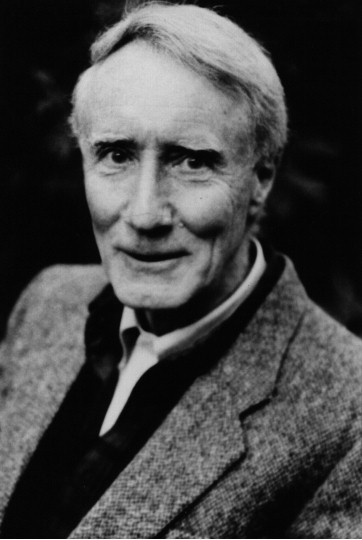
Peter Dale Scott, a former Canadian diplomat and English Professor at the University of California, Berkeley, is a poet, writer, and researcher. His website is http://www.peterdalescott.net.
Notes
1 Warren Report, 801.
2 Richard Clarke heard that the FBI had the names at 9:59 AM, the time of the collapse of WTC Tower 2. See Richard A. Clarke, Against All Enemies: Inside America’s War on Terrorism (New York: Simon & Schuster, 2004), 13-14; Thompson, The Terror Timeline, 441. This investigative tour de force is even more amazing when we consider that in the FBI, according to the 9/11 Report (77), “prior to 9/11 relatively few strategic analytic reports about counterterrorism had been completed. Indeed, the FBI had never completed an assessment of the overall terrorist threat to the U.S. homeland.”
3 Peter Dale Scott, “The 9/11 Commission Report’s Failure to Identify the Alleged Hijackers,” http://socrates.berkeley.edu/~pdscott/Hijackers.mht .
The mainstream U.S. press, such as the New York Times, later attributed the confusion about the hijackers’ identity to the number of different Arabs sharing the same names. But at least five shared histories as well as names with the alleged hijackers. Waleed al-Shehri told the BBC “that he attended flight training school at Dayton Beach in the United States, and is indeed the same Waleed Al Shehri to whom the FBI has been referring. But, he says, he left the United States in September last year, became a pilot with Saudi Arabian airlines and is currently on a further training course in Morocco” (BBC, 9/23/01). Saeed al-Ghamdi, alive and flying planes in Tunisia, also studied at Florida flight schools, as late as 2001. According to the London Telegraph (9/23/01), CNN used his photograph in describing the hijacker with his name. Abdulaziz al-Omari acknowledged the same date of birth as the accused hijacker al-Omari, but claimed his passport was stolen when he was living in Denver, Colorado (London Telegraph, 9/23/01; Thompson, The Terror Timeline, 497).
4 BBC, 9/23/01; Newsday, 9/21/01; Paul Thompson, The Terror Timeline: Year by Year, Day by Day, Minute by Minute (NewYork: HarperCollins/Regan Books, 2004), 498.
5 9/11 Report, 1-14, 215-42. Discussion in David Ray Griffin, The 9/11 Commission Report: Errors and Omissions (Northampton, MA: Olive Branch Press, 2005), 19-23.
6 Thomas H. Kean and Lee H. Hamilton, with Benjamin Rhodes, Without Precedent: The Inside Story of the 9/11 Commission (New York: Knopf, 2006), 268.
7 David Ray Griffin and Peter Dale Scott (eds.), 9/11 & American Empire: Intellectuals Speak Out. (Northampton, MA: Olive Branch Press, 2006), 74, 76-77.
8 San Francisco Chronicle, 9/21/01; Toronto Globe and Mail, 11/22/01.
9 This admitted connection to al-Zawahiri has led some to identify Mohamed (Abu Mohamed al Amriki) with the al-Amriki alleged by Yossef Bodansky to have acted as go-between between Zawahiri and the CIA: “In the first half of November 1997 Ayman al-Zawahiri met a man called Abu-Umar al-Amriki (al-Amriki means “the American”) at a camp near Peshawar, on the Pakistan-Afghanistan border. High-level Islamist leaders insist that in this meeting Abu-Umar al-Amriki made al-Zawahiri an offer: The United States would not interfere with or intervene to prevent the Islamists’ rise to power in Egypt if the Islamist mujahideen currently in Bosnia-Herzegovina would refrain from attacking the U.S. forces there. Moreover, Abu-Umar al-Amriki promised a donation of $50 million (from unidentified sources) to Islamist charities in Egypt and elsewhere. This was not the first meeting between Abu-Umar al-Amriki and Zawahiri. Back in the 1980s Abu-Umar al-Amriki openly acted as an emissary for the CIA with various Arab Islamist militant and terrorist movements… then operating under the wings of the Afghan jihad…. In the late 1980s, in one of his meetings with Zawahiri, Abu-Umar al-Amriki suggested that Zawahiri would need “$50 million to rule Egypt.” At the time, Zawahiri interpreted this assertion as a hint that Washington would tolerate his rise to power if he could raise this money. The mention of the magic figure, $50 million, by Abu-Umar al-Amriki in the November 1997 meeting was interpreted by Zawahiri and the entire Islamist leadership, including Osama bin Laden, as a reaffirmation of the discussions with the CIA in the late 1980s about Washington’s willingness to tolerate an Islamic Egypt. In 1997 the Islamist leaders were convinced that Abu-Umar al-Amriki was speaking for the CIA — that is, the uppermost echelons of the Clinton administration” (Bodansky, Bin Laden, 212-13). As we shall see, it is the case that Mohamed was allowed to travel to Afghanistan even after his designation as an unindicted co-conspirator in 1994 (San Francisco Chronicle, 10/21/01).
10 9/11 Report, 68.
11 Patrick Fitzgerald, Testimony before 9/11 Commission, June 16, 2004, http://www.9-11commission.gov/hearings/hearing12.htm, emphasis added. Actually Mohamed was in Santa Clara, California, by 1993 (New Yorker, 9/16/02). Fitzgerald was flagrantly dissembling. Even the mainstream account by Daniel Benjamin and Steven Simon (The Age of Sacred Terror [New York: Random House, 2002], 236) records that “When Mohamed was summoned back from Africa in 1993 [sic, Mohamed in his confession says 1994] to be interviewed by the FBI in connection with the case against Sheikh Rahman and his coconspirators, he convinced the agents that he could be useful to them as an informant.”
12 Peter Lance, “Triple Cross: National Geographic Channel’s Whitewash of the Ali Mohamed Story,” Huffington Post, 8/29/06, http://news.yahoo.com/s/huffpost/20060829/cm_huffpost/028270. Unfortunately Lance’s book on Mohamed, Triple Cross, was not yet available as this book went to press. Cf. Lawrence White, The Looming Tower: Al-Qaeda and the Road to 9/11 (New York: Knopf, 2006), 181-82; Daniel Benjamin and Steven Simon, The Age of Sacred Terror (New York: Random House, 2002), 236; Lawrence Wright, New Yorker, 9/16/02: “In 1989…Mohamed talked to an F.B.I. agent in California and provided American intelligence with its first inside look at Al Qaeda.”
13 Raleigh News & Observer, 10/21/01, http://www.knoxstudio.com/shns/story.cfm?pk=ALIMOHAMED-10-24-01&cat=AN.
14 San Francisco Chronicle, 11/04/01. What was clear to Johnson cannot be clear to the American public. We have no way of knowing whether or not Mohamed forewarned his American handlers about the embassy bombings, or even (since his current whereabouts are a mystery) about 9/11. See below.
15 Toronto Globe and Mail, 11/22/01, http://www.mail-archive.com/hydro@topica.com/msg00224.html; Peter Dale Scott, “How to Fight Terrorism,” California Monthly, September 2004, http://www.alumni.berkeley.edu/Alumni/Cal_Monthly/September_2004/How_to_fight_terrorism.asp. Mohamed’s companion, Essam Marzouk, is now serving 15 years of hard labor in Egypt, after having been arrested in Azerbaijan. Mohamed’s detention and release was months after the first WTC bombing in February 1993, and after the FBI had already rounded up two of the plotters whom they knew had been trained by Ali Mohamed.
16 Peter Lance, “Triple Cross: National Geographic Channel’s Whitewash of the Ali Mohamed Story,” Huffington Post, 8/29/06,
http://news.yahoo.com/s/huffpost/20060829/cm_huffpost/028270. Unfortunately Lance’s book, Triple Cross, was not yet available as this book went to press.
17 Dave Shiflett, Bloomberg News, 8/28/06, http://www.bloomberg.com/apps/news?pid=20601088&sid=aNWwkZYujCIs&refer=home.
18Glenn Garvin, Miami Heraldhttp://www.miami.com/mld/miamiherald/entertainment/columnists/glenn_garvin/15310462.htm
19 Lawrence Wright, The Looming Tower: Al-Qaeda and the Road to 9/11 (New York: Knopf, 2006), 181.
The Report claims (56) that “Bin Ladin and his comrades had their own sources of support and training, and they received little or no assistance from the United States.” But Wright reports that Mohamed, while on a leave from the U.S. army, went to Afghanistan and trained “the first al-Qaeda volunteers in techniques of unconventional warfare, including kidnappings, assassinations, and hijacking planes.” This was in 1988, one year before Mohamed left active U.S. Army service and joined the Reserve.
20 Peter Lance, “Triple Cross: National Geographic Channel’s Whitewash of the Ali Mohamed Story,” Huffington Post, 8/29/06,
http://news.yahoo.com/s/huffpost/20060829/cm_huffpost/028270. Cloonan was the FBI agent in the Bin Laden squad who received the famous memo from Kenneth Williams in Phoenix recommending that the FBI compile a list of all the Arabs attending flight schools. He reportedly “wadded it into a ball and threw it against a wall. `Who’s going to conduct the thirty thousand interviews?’ he asked the supervisor in Phoenix” (Lawrence White, The Looming Tower: Al-Qaeda and the Road to 9/11 [New York: Knopf, 2006], 350).
21 Peter Lance, “Triple Cross: National Geographic Channel’s Whitewash of the Ali Mohamed Story,” Huffington Post, 8/29/06, http://news.yahoo.com/s/huffpost/20060829/cm_huffpost/028270 .
22According to publicity for the National Geographic special, Mohamed is “currently in U.S. custody,” but “his whereabouts and legal status are closely guarded secrets” (Rocky Mountain News, 8/28/06, 2D). Lance wrote that Mohamed was put into the witness protection program. “David Runke [Ruhnke], a defense attorney in the African embassies bombing case, says, “I think the most likely thing that will happen is he’ll be released, he’ll be given a new name and a new identity, and he will pick up a life someplace.’’’ (Shiflett, Bloomberg News, 8/28/06). As of November 2001, Mohamed had not been sentenced and was still believed to be supplying information from his prison cell.
23 “Ali Mohamed had stayed in [El-Hage’s] Kenyan home in the mid 90′s as they plotted the bombings. Another agent in Fitzie’s squad Dan Coleman, had searched El-Hage’s home a year before the bombings and found direct links to Ali Mohamed and yet Fitzgerald failed to connect the dots” (Lance, “Triple Cross,” Huffington Post, 8/29/06).
24 Peter Lance, 1000 Years for Revenge (New York: Regan Books/ Harper Collins, 2003), 29-37.
25 Robert Dreyfuss, Devil’s Game: How the United States Helped Unleash Fundamentalist Islam (New York: Metropolitan Books/Henry Holt, 2005), 278; John K. Cooley, Unholy Wars: Afghanistan, America, and International Terrorism (London: Pluto Press, 1999), 87-88; Lance, 1000 Years for Revenge, 29-31; Independent, 11/1/98.
26 Rahman was issued two visas, one of them “by a CIA officer working undercover in the consular section of the American embassy in Sudan” (Peter L. Bergen, Holy War, Inc.: Inside the Secret World of Osama bin Laden [New York: Free Press, 2001], 67). FBI consultant Paul Williams writes that Ali Mohamed “settled in America on a visa program controlled by the CIA” (Paul L. Williams, Al Qaeda: Brotherhood of Terror [[Upper Saddle River, NJ]: Alpha/ Pearson Education, 2002], 117). Others allegedly admitted, despite being on the State Department watch list, were Mohamed Atta and possibly Ayman al-Zawahiri (Nafeez Mosaddeq Ahmed, The War on Truth: 9/11, Disinformation, and the Anatomy of Terrorism [Northampton, MA: Olive Branch Press, 2005], 205, 46).
27 Wright, The Looming Tower, 177.
28 Lance, 1000 Years, 34.
29 Lance, 1000 Years, 31; Peter Lance, Cover Up: What the Government Is Still Hiding about the War on Terror (New York: Regan Books/ HarperCollins, 2004), 25.
30 Newsday, 11/8/90; quoted in Lance, 1000 Years, 35.
31 New York Times, 11/8/90; Robert I. Friedman, Village Voice, 3/30/93.
32 New York Times, 12/16/90.
33 9/11 Report, 72.
34 Fitzgerald is of course the U.S. Attorney who for years has been investigating the leak of the name of CIA covert operative Valerie Plame. It could appear that he has been putting pressure on the Bush White House to forestall disclosure of his own (and possibly the CIA’s) embarrassing and improper relationship to the chief planner of the 9/11 plot.
35 Kean and Hamilton, Without Precedent, 273 (chapters); Lance, Cover Up, 212-20 (reports). Snell was assisted by Douglas MacEachin, the former CIA deputy Director for Intelligence.
36 Lance, 1000 Years, 31-35.

9/11 in Historical Perspective: Flawed Assumptions Deep Politics: Drugs, Oil, Covert Operations and Terrorism, A briefing for Congressional staff

How  far  ahead is this Man ???              deep, Deep! DEEP !!   op , within an Op ,within  an OP ?

9/11 in Historical Perspective: Flawed Assumptions

Deep Politics: Drugs, Oil, Covert Operations and Terrorism, A briefing for Congressional staff

9/11 in Historical Perspective: Flawed Assumptions

Deep Politics: Drugs, Oil, Covert Operations and Terrorism, A briefing for Congressional staff

9/11 in Historical Perspective: Flawed Assumptions
                                                    
The American people have been seriously misled about the origins of the al Qaeda movement blamed for the 9/11 attacks, just as they have been seriously misled about the reasons for America’s invasion of Iraq.
The truth is that for at least two decades the United States has engaged in energetic covert programs to secure U.S. control over the Persian Gulf, and also to open up Central Asia for development by U.S. oil companies. Americans were eager to gain access to the petroleum reserves of the Caspian Basin, which at that time were still estimated to be “the largest known reserves of unexploited fuel in the planet.”[1]
To this end, time after time, U.S. covert operations in the region have used so-called “Arab Afghan” warriors as assets, the jihadis whom we loosely link with the name and leadership of al Qaeda.[2] In country after country these “Arab Afghans” have been involved in trafficking Afghan heroin.
America’s sponsorship of drug-trafficking Muslim warriors, including those now in Al Qaeda, dates back to the Afghan War of 1979-89, sponsored in part by the CIA’s links to the drug-laundering Bank of Credit and Commerce International (BCCI).[3] It was part of CIA Director Casey’s strategy for launching covert operations over and above those approved and financed by a Democratic-controlled Congress.
The most conspicuous example of this alliance with drug-traffickers in the 1980s was the Contra support operation. Here again foreign money and drug profits filled the gap after Congress denied funds through the so-called Boland amendments; in this case government funds were used to lie about the Contras to the American people.[4] This was followed by a massive cover-up, in which a dubious role was played by then-Congressman Lee Hamilton, later of the 9/11 Commission.[5]
The lying continues. The 9/11 Commission Report assures Americans that “Bin Ladin and his comrades had their own sources of support and training, and they received little or no assistance from the United States.”[6] This misleading statement fails to consider that:
1) Al Qaeda elements received considerable indirect U.S. Government assistance, first in Afghanistan until 1992, and thereafter in other countries such as Azerbaijan (1992-95). Before 1992, for example, the Afghan leader Jallaladin Haqqani organized and hosted the Arab Afghan volunteers known later as al Qaeda; and Haqqani “received bags of money each month from the [CIA] station in Islamabad.”[7] The Arab Afghans were also trained in urban terrorism, including car bombings, by Pakistani ISI operatives who were in turn trained by the CIA.[8]
2) Key members of the network which became al Qaeda, such as Sheikh Omar Abdel Rahman, Ali Mohamed, Mohamed Jamal Khalifa, and lead hijacker Mohammed Atta, were granted visas to enter the United States, despite being suspected of terrorism.[9] Al Qaeda foot soldiers were also admitted to the United States for training under a special visa program.[10]
3) At Fort Belvoir, Virginia, an al Qaeda operative was given a list of Muslim candidates for al Qaeda’s jihad.[11]
4) When al Qaeda personnel were trained in the United States by a key al Qaeda operative, Sergeant Ali Mohamed of the U.S. Army Special Forces, Mohamed was still on the U.S. Army payroll.[12]
5) Repeatedly al Qaeda terrorists were protected by FBI officials from investigation and prosecution.[13]
In part America’s limited covert assistance to al Qaeda after 1989 was in order not to offend al Qaeda’s two primary supporters which America needed as allies: the intelligence networks of Saudi Arabia and Pakistan. But unquestionably the entry of United States oil companies into oil-rich Azerbaijan was achieved with the assistance of a U.S.-organized covert program using “Arab Afghan” operatives associated with bin Laden. Oil was the driving force of U.S. involvement in Central and South Asia, and oil led to U.S. coexistence with both al Qaeda and the world-dominating Afghan heroin trade.
This brings us to another extraordinary distortion in the 9/11 Report:
While the drug trade was a source of income for the Taliban, it did not serve the same purpose for al Qaeda, and there is no reliable evidence that Bin Ladin was involved in or made his money through drug trafficking.[14]
That drug-trafficking does support al Qaeda-connected operations has been energetically asserted by the governments of Great Britain and many other European countries, as well as the head of the U.S. Congressional Task Force on Terrorism. Heroin-trafficking has been a source of income in particular for al Qaeda-related warriors in Tajikistan, Uzbekistan, Azerbaijan, Chechnya, and Kosovo. Most recently it has supported terrorist attacks in the Netherlands and Spain.
U.S. support for al Qaeda elements, particularly in Azerbaijan and Kosovo, has increased dramatically the flow of heroin to Western Europe and the United States.
The Example of Azerbaijan
In the former Soviet Republic of Azerbaijan, Arab Afghans clearly assisted this effort of U.S. oil companies to penetrate the region. In 1991-92, Richard Secord, Heinie Aderholt, and Ed Dearborn, three veterans of U.S. operations in Laos and Iran-Contra, turned up in Baku under the cover of an oil company, MEGA Oil.[15] MEGA never did find oil, but did contribute materially to the removal of Azerbaijan from the sphere of post-Soviet Russian influence.
As MEGA operatives in Azerbaijan, Secord, Aderholt, Dearborn, and their men engaged in military training, passed “brown bags filled with cash” to members of the government, and above all set up an airline on the model of Air America which soon was picking up hundreds of Mujahideen mercenaries in Afghanistan.[16] (Secord and Aderholt claim to have left Baku before the Mujahideen arrived.) Meanwhile, Mujahideen leader Gulbuddin Hekmatyar in Afghanistan, who at the time was still allied with bin Laden, was “observed recruiting Afghan mercenaries [i.e. Arab Afghans] to fight in Azerbaijan against Armenia and its Russian allies.”[17] At this time, heroin flooded from Afghanistan through Baku into Chechnya, Russia, and even North America.[18] It is difficult to believe that MEGA’s airline (so much like Air America) did not become involved.[19]
The triple pattern of drugs, oil, and al Qaeda was seen again in Kosovo in 1998, where the Al-Qaeda-backed Islamist jihadis of the Kosovo Liberation Army (KLA) received overt American assistance from the U.S. Government.[20] Though unmentioned in mainstream books on the war, both the al Qaeda and drug backgrounds of the KLA are recognized by experts and to my knowledge never contested by them.[21]
Though the origins of the Kosovo tragedy were rooted in local enmities, oil and drugs were prominent in the outcome. At the time critics charged that US oil interests were interested in building a trans-Balkan pipeline with US Army protection; although initially ridiculed, these critics were eventually proven correct.[22] BBC News announced in December 2004 that a $1.2 billion pipeline, south of a huge new U.S. Army base in Kosovo, has been given a go-ahead by the governments of Albania, Bulgaria, and Macedonia.[23] Meanwhile by 2000, according to DEA statistics, Afghan heroin accounted for almost 20 percent of the heroin seized in the United States — nearly double the percentage taken four years earlier. Much of it is now distributed by Kosovar Albanians.[24]
Sergeant Ali Mohamed and U.S. Intelligence Links to the Al Qaeda Leadership
The Report describes Ali Mohamed as “a former Egyptian army officer who had moved to the United States in the mid-1980s, enlisted in the U.S. Army, and become an instructor at Fort Bragg,” as well as helping to plan the bombing of the U.S. Embassy in Kenya (68). In fact Ali Mohamed was an important al Qaeda agent who, as the 9/11 Commission was told, “trained most of al Qaeda’s top leadership,” including “persons who would later carry out the 1993 World Trade Center bombing.”[25] But the person telling the 9/11 Commission this, U.S. Attorney Patrick J. Fitzgerald, misrepresented Ali Mohamed’s FBI relationship. He told the Commission that, “From 1994 until his arrest in 1998, [Mohamed] lived as an American citizen in California, applying for jobs as an FBI translator and working as a security guard for a defense contractor.”[26]
Ali Mohamed was not just an FBI job applicant. Unquestionably he was an FBI informant, from at least 1993 and maybe 1989.[27] And almost certainly he was something more. A veteran of the CIA-trained bodyguards of Egyptian President Anwar Sadat, he was able, despite being on a State Department Watch List, to come to America around 1984, on what an FBI consultant has called “a visa program controlled by the CIA”, and obtain a job, first as a security officer, then with U.S. Special Forces.[28] In 1988 he took a lengthy leave of absence from the U.S. Army and went to fight in Afghanistan, where he met with Ayman al-Zawahiri (later bin Laden’s chief deputy in al Qaeda) and the “Arab Afghan” leadership.[29] Despite this, he was able to receive an Honorable Discharge one year later, at which point he established close contact with bin Laden in Afghanistan.
Ali Mohamed clearly enjoyed U.S. protection: in 1993, when detained by the RCMP in Canada, a single phone call to the U.S. secured his release. This enabled him to play a role, in the same year, in planning the bombing of the U.S. Embassy in Kenya in 1998.[30]
Congress should determine the true relationship of the U.S. Government to Ali Mohamed, who was close to bin Laden and above all Zawahiri, who has been called the “main player” in 9/11.[31] (Al-Zawahiri is often described as the more sophisticated mentor of the younger bin Laden.)[32] In particular Congress should determine why Patrick Fitzgerald chose to mislead the American people about Mohamed’s FBI status.
In short, the al Qaeda terror network accused of the 9/11 attacks was supported and expanded by U.S. intelligence programs and covert operations, both during and after the Soviet Afghan War. Congress should rethink their decision to grant still greater powers and budget to the agencies responsible for fostering this enemy in the first place.
Sane voices clamor from the Muslim world that the best answer to terrorism is not war but justice. We should listen to them. By using its energies to reduce the injustices tormenting Islam, the United States will do more to diminish terrorism than by creating any number of new directorates in Washington.
Notes
[1]  Michael Griffin, Reaping the Whirlwind: The Taliban Movement in Afghanistan (London: Pluto Press, 2001), 115. Exploration in the 1990s has considerably downgraded these estimates.
[2] Western governments and media apply the term “al Qaeda” to the whole “network of co-opted groups” who have at some point accepted leadership, training and financing from bin Laden (Jason Burke, Al-Qaeda: The True Story of Radical Islam [London: I.B. Tauris, 2004], 7-8). From a Muslim perceptive, the term “Al Qaeda” is clumsy, and has led to the targeting of a number of Islamist groups opposed to bin Laden’s tactics. See Montasser al-Zayyat, The Road to Al-Qaeda: The Story of Bin Lāden’s Right-Hand Man [London: Pluto Press, 2004], 100, etc.).
[3] Peter Truell and Larry Gurwin, False Profits: The Inside Story of BCCI, the World’s Most Corrupt Financial Empire (Boston: Houghton Mifflin, 1992), 132; Peter Dale Scott, Drugs, Oil, and War (Lanham, MD: Rowman & Littlefield, 2003), 42.
[4] Robert Parry, Secrecy & Privilege: Rise of the Bush Dynasty from Watergate to Iraq (Arlington, VA: Media Consortium, 2004), 213-28, 235-39, 245-47.
[5] For Hamilton’s role on the conspiratorial whitewashing of contra drug activities, see Jonathan Marshall, Peter Dale Scott, and Jane Hunter, The Iran-Contra Connection: Secret Teams and Covert Operations in the Reagan Era (Boston: South End Press, 1987), 179-81. At least eight men in the current Bush Administration were criticized for their roles in Iran-Contra, including two (Poindexter and Abrams)who were convicted.
[6] 9/11 Commission Report, 56.
[7] Steve Coll, Ghost Wars: The Secret History of the CIA, Afghanistan, and Bin Laden, from the Soviet Invasion to September 10, 2001 (New York: Penguin Press, 2004), 157 (hosted); George Crile, Charlie Wilson’s War: The Extraordinary Story of the Largest Covert Operation in History (New York: Atlantic Monthly Press, 2003), 521 (bags).
[8] George Crile, Charlie Wilson’s War (New York: Atlantic Monthly Press, 2003), 335 (car bombings); Steve Coll, Washington Post, 7/19/92 (ISI/CIA).
[9] Rahman was issued two visas, one of them “by a CIA officer working undercover in the consular section of the American embassy in Sudan” (Peter L. Bergen, Holy War, Inc.: Inside the Secret World of Osama bin Laden [New York: Free Press, 2001], 67; cf. 218 (Khalifa). FBI consultant Paul Williams writes that Mohamed “settled in America on a visa program controlled by the CIA” ((Paul L. Williams, Al Qaeda: Brotherhood of Terror [[Upper Saddle River, NJ]: Alpha/ Pearson Education, 2002], 117). Others allegedly admitted despite being on the State Department watch list include Mohammed Atta and possibly Ayman al-Zawahiri (Nafeez Mosaddeq Ahmed, The War on Truth: 9/11, Disinformation, and the Anatomy of Terrorism [Northampton, MA: Olive Branch Press, 2005], 205, 46).
[10] Former State Department officer Michael Springmann, BBC 2, 11/6/01; Ahmed, War on Truth, 10.
[11] US v.. Sheikh Omar Abdel Rahman et al, Federal Court, SDNY, Testimony of Rodney Hampton-El, 8/3/95.
[12]  Peter Lance, Cover Up: What the Government Is Still Hiding about the War on Terror [New York: Regan Books/ HarperCollins, 2004], 25); Andrew Marshall, Independent, 11/1/98, http://billstclair.com/911timeline/1990s/independent110198.html: “Mr. Mohamed, it is clear from his record, was working for the U.S. government at the time he provided the training: he was a Green Beret, part of America’s Special Forces…. A confidential CIA internal survey concluded that it was ‘partly culpable’ for the World Trade Centre bomb, according to reports at the time.” Williams writes that Mohamed’s “primary task as a U.S. soldier was to train Muslims to fight the Soviets in Afghanistan” (Williams, Al Qaeda: Brotherhood of Terror. 117).  Cf. 9/11 Commission Report, 68.
[13] The most prominent example was the blocking by David Frasca at FBI HQ of the investigation of Zacarias Moussaoui under the Foreign Intelligence Surveillance Act (FISA). Frasca also failed to act on the July 2001 request from the Phoenix FBI office urging a systematic review of Muslim students at U.S. flight schools (Ahmed, War on Truth, 251-57).
[14] 9/11 Commission Report, 171. This statement is one-sided and misleading. But so is the opposite claim of Yossef Bodansky: “The annual income of the Taliban from the drug trade is estimated at $8 billion. Bin Laden administers and manages these funds – laundering them through the Russian mafia…” (Bodansky, Bin Laden, 315).
[15] Thomas Goltz, Azerbaijan Diary: A Rogue Reporter’s Adventures in an Oil-Rich, War-Torn, Post-Soviet Republic (Armonk, NY: M. E. Sharpe, 1999), 272-75. A fourth operative in MEGA Oil, Gary Best, was also a veteran of North’s Contra support effort. For more on General Secord’s and Major Aderholt’s role as part of Ted Shackley’s team of off-loaded CIA assets and capabilities, see Marshall, Scott, and Hunter, The Iran-Contra Connection, 26-30, 36-42, 197-98.
[16] Goltz, Azerbaijan Diary, 272-75; Peter Dale Scott, Drugs, Oil, and War (Lanham, MD: Rowman & Littlefield, 2003), 7. As part of the airline operation, Azeri pilots were trained in Texas. Dearborn had previously helped Secord advise and train the fledgling Contra air force (Marshall, Scott, and Hunter, The Iran-Contra Connection, 197). Richard Secord was allegedly attempting also to sell Israeli arms, with the assistance of Israeli agent David Kimche, another associate of Oliver North. See Scott, Drugs, Oil, and War, 7, 8, 20. Whether the Americans were aware of it or not, the al Qaeda presence in Baku soon expanded to include assistance for moving jihadis onwards into Dagestan and Chechnya.
[17] Cooley, Unholy Wars, 180; Scott, Drugs, Oil, and War, 7. These important developments were barely noticed in the U.S. press, but a Washington Post article did belatedly note that a group of American men who wore “big cowboy hats and big cowboy boots” had arrived in Azerbaijan as military trainers for its army, followed in 1993 by “more than 1,000 guerrilla fighters from Afghanistan’s radical prime minister, Gulbuddin Hekmatyar.” (Washington Post, 4/21/94). The Azeri “Afghan Brigade” was formally dissolved in 1994, after which it focused more on sabotage and terrorism (Cooley, Unholy Wars, 181).
[18] Cooley, Unholy Wars, 176.
[19] As the 9/11Commission Report notes (58), the bin Laden organization established an NGO in Baku, which became a base for terrorism elsewhere. It also became a transshipment point for Afghan heroin to the Chechen mafia, whose branches “extended not only to the London arms market, but also throughout continental Europe and North America (Cooley, Unholy Wars, 176).
[20] See Lewis Mackenzie (former UN commander in Bosnia), “We Bombed the Wrong Side?” National Post, 4/6/04: “Those of us who warned that the West was being sucked in on the side of an extremist, militant, Kosovo-Albanian independence movement were dismissed as appeasers. The fact that the lead organization spearheading the fight for independence, the Kosovo Liberation Army (KLA), was universally designated a terrorist organization and known to be receiving support from Osama bin Laden’s al-Qaeda was conveniently ignored….The Kosovar Albanians played us like a Stradivarius violin. We have subsidized and indirectly supported their violent campaign for an ethnically pure Kosovo. We have never blamed them for being the perpetrators of the violence in the early 1990s, and we continue to portray them as the designated victim today, in spite of evidence to the contrary. When they achieve independence with the help of our tax dollars combined with those of bin Laden and al-Qaeda, just consider the message of encouragement this sends to other terrorist-supported independence movements around the world.” Cf. John Pilger, New Statesman, 12/13/04.
[21] “`Many members of the Kosovo Liberation Army were sent for training in terrorist camps in Afghanistan,’ said James Bissett, former Canadian ambassador to Yugoslavia and an expert on the Balkans. `Milosevic is right. There is no question of their participation in conflicts in the Balkans. It is very well documented” (National Post, 3/15/02, http://www.nationalpost.com/news/world/story.html?f=/stories/20020315/344843.html). Cf. Frank Ciluffo of the Globalized Organized Crime Program, in testimony presented to the House of Representatives Judicial Committee (12/13/00): “What was largely hidden from public view was the fact that the KLA raise part of their funds from the sale of narcotics.” Contrast e.g. Michael Ignatieff, Virtual War : Kosovo and Beyond (New York: Metropolitan/ Henry Holt, 2000), 13: “the KLA, at first a small band of poorly trained and amateurish gunmen.” For the al Qaeda background to the UCK and its involvement in heroin-trafficking, see also Marcia Christoff Kurop, “Al Qaeda´s Balkan Links,” Wall Street Journal Europe, 11/1/01. “According to Michel Koutouzis, the DEA’s website once contained a section detailing Kosovar trafficking, but a week before the U.S.-led bombings began, the section disappeared” (Peter Klebnikov, “Heroin Heroes,” Mother Jones, January/February 2000, http://www.motherjones.com/news/feature/2000/01/heroin.html).
[22] George Monbiot, Guardian, 2/15/01.
[23] BBC News, 12/28/04. Those who charged that such a pipeline was projected were initially mocked but gradually vindicated (Guardian, 2/15/01; Scott, Drugs, Oil, and War, 34). See also Marjorie Cohn, “Nato Bombing of Kosovo: Humanitarian Intervention or Crime against Humanity?”  International Journal for the Semiotics of Law, March 2002, 79-106.
[24] Klebnikov, “Heroin Heroes,” Mother Jones, January/February 2000.
[25] Cf. 9/11 Commission Report, 68.
[26] Patrick Fitzgerald, Testimony before 9/11 Commission, June 16, 2004, http://www.9-11commission.gov/hearings/hearing12.htm, emphasis added.
[27] Fitzgerald must have known he was dissembling. Even the mainstream account by Daniel Benjamin and Steven Simon (The Age of Sacred Terror [New York: Random House, 2002], 236) records that “When Mohamed was summoned back from Africa in 1993 [sic, Mohamed in his confession says 1994] to be interviewed by the FBI in connection with the case against Sheikh Rahman and his coconspirators, he convinced the agents that he could be useful to them as an informant.” Cf. Lawrence Wright, New Yorker, 9/16/02: “In 1989…Mohamed talked to an F.B.I. agent in California and provided American intelligence with its first inside look at Al Qaeda.” Larry C. Johnson, a former State Department and CIA official, faulted the FBI publicly for using Mohamed as an informant, when it should have recognized that the man was a high-ranking terrorist plotting against the United States. In Johnson’s words, “It’s possible that the FBI thought they had control of him and were trying to use him, but what’s clear is that they did not have control” (San Francisco Chronicle, 11/04/01).
[28] Lance, 1000 Years, 30 (Watch List); Williams, Al Qaeda: Brotherhood of Terror, 117 (visa program); Bergen, Holy War, Inc., 128 (security officer).
[29] Yossef Bodansky, Bin Laden: The Man Who Declared War on America (New York: Random House/Prima, 2001), 106; cf. Richard H. Shultz, Jr. and Ruth Margolies Beitler, Middle East Review of International Affairs, June 2004, http://meria.idc.ac.il/journal/2004/issue2/jv8n2a6.html. In 1995 Mohamed accompanied Ayman al-Zawahiri of Islamic Jihad, already effectively merged with al-Qaeda, on a secret fund-raising trip through America (Bodansky, Bin Laden, 105; Peter L. Bergen, Holy War, Inc. [New York: Free Press, 2001], 201).
[30] Cf. 9/11 Commission Report, 68. The Globe and Mail later concluded that Mohamed “was working with U.S. counter-terrorist agents, playing a double or triple game, when he was questioned in 1993” (Globe and Mail, 11/22/01, http://www.mail-archive.com/hydro@topica.com/msg00224.html).
[31] al-Zayyat, The Road to Al-Qaeda, 98: “I am convinced that [Zawahiri] and not bin Laden is the main player in these events.” In contrast the 9/11 Commission Report (151) assigns no role to Zawahiri in the 9/11 plot. Was Mohamed in touch with Zawahiri at this time? The San Francisco Chronicle has written that “until his arrest in 1998 [by which time the 9/11 plot was already under way], Mohamed shuttled between California, Afghanistan, Kenya, Somalia and at least a dozen other countries” (San Francisco Chronicle, 10/21/01).
[32] Burke, Al-Qaeda, 150.
Dr.

The JFK Assassination and 9/11: the Designated Suspects in Both Cases

The JFK Assassination and 9/11: the Designated Suspects in Both Cases
Global Research recently published my essay entitled  9/11, Deep State Violence and the Hope of Internet Politics  In this article, I argue that 9/11 should be analyzed as a deep event (an event not fully aired or understood because of its intelligence connections) and above all as one of a series of deep events which from time to time have frustrated peace initiatives or become pretexts for war.
In support of this overall thesis I pointed to features of 9/11 which recalled similar deep events: the still not fully understood outbreak of the Korean War in 1950, the JFK assassination, and the so-called Second Tonkin Gulf Incident of 1964 (an alleged attack on U.S. destroyers which we now know never happened).
The similarities between these deep events which have disturbed American history since World War Two suggest that they are not just a sequence of unrelated external accidents, but at least in part the product of some on-going deep indigenous force not yet adequately understood.
In this series of deep events, perhaps the most striking similarities are between the JFK assassination (henceforward referred to as “JFK”) and 9/11. Earlier talks and articles I have delivered on this topic are developed even further in my forthcoming much expanded reissue of my early book, The War Conspiracy. As The War Conspiracy: JFK, 9/11, and the Deep Politics of War, it is due to be published by the Mary Ferrell Foundation Press in August 2008.
The following essay is the concluding section of the new book, and has never hitherto been published.]
I wish to summarize again the first striking similarity between 11/22/63 and of 9/11/01: the dubious detective work on those two days. Less than fifteen minutes after the President’s assassination, the height and weight of Kennedy’s alleged killer was posted.1 Before the last of the hijacked planes crashed on 9/11, the FBI told Richard Clarke that they had a list of alleged hijackers.2
In the case of Oswald, within fifteen minutes of the assassination and long before Oswald was picked up in the Texas Theater, Inspector Sawyer of the Dallas police put out on the police radio network, and possibly other networks, a description of the killer – “About 30, 5’10″, 165 pounds.”3 As noted, this height and weight exactly matched the measurements attributed to Lee Harvey Oswald in Oswald’s FBI file, and also in CIA documents about him.4
The announced height and weight were however different from Oswald’s actual measurements, as recorded by the Dallas police after his arrest: 5’9 1/2″, 131 pounds.5 More importantly, there is no credible source for the posted measurements from any witness in Dallas. (The witness said to have spotted him, Howard Brennan, failed to identify Oswald in a line-up.)6 This leaves the possibility that the measurements were taken from existing files on Oswald, rather than from any observations in Dallas on November 22. If so, someone with access to those files may have already designated Oswald as the culprit, before there was any evidence to connect him to the crime.
A similar situation pertains to the alleged hijackers on 9/11. For example, shortly afterwards men in Saudi Arabia complained that “the hijackers’ `personal details’” released by the FBI — “including name, place, date of birth and occupation — matched their own.”7 One of them, Saeed al-Ghamdi, claimed further that an alleged photograph shown on CNN (of an alleged Flight 93 hijacker with the same name) was in fact a photograph of himself. He speculated “that CNN had probably got the picture from the Flight Safety flying school he attended in Florida.”8
If the above information is accurate, then the details posted by the FBI and CNN about the alleged hijackers cannot have derived from the events of 9/11, with which the survivors in Saudi Arabia would appear to have been uninvolved. Once again this leaves the strong possibility that the details were taken from existing files, rather than from empirical observations on September 11.9
And some of the hijackers, like Lee Harvey Oswald, may have been in CIA files for a special reason: because the CIA had an operational interest in them.
Internal CIA Evidence of Operational Interest in Oswald and the Hijackers
I have speculated that Oswald, like the al-Qaeda trainer Ali Mohamed, might have been a double agent reporting to the FBI about the terrorist group (Alpha 66) with which some law enforcement officers associated him.
I would like now to discuss more unequivocal evidence, from internal CIA records, about an operational CIA interest in first Oswald and later two of the alleged al-Qaeda hijackers, Nawaz al-Hazmi and Khalid al-Mihdar. In 2001 as in 1963 the CIA inexplicably withheld information about the subjects from the FBI, which ought categorically to have received it. The anomalies are extreme.
This is now easy to show in the case of Oswald. On October 10, 1963, six
weeks before the assassination of John F. Kennedy, CIA Headquarters sent out two messages about Oswald, a teletype to the FBI, State, and Navy, and a cable to the chief of the CIA’s Mexico City station. Both messages contained false and mutually contradictory statements, and also withheld known facts of great potential importance.10 The teletype to the FBI withheld the obviously significant information that Oswald had reportedly met in Mexico City with a Soviet Vice-Consul, Valeriy Kostikov, who was believed by CIA officers to be an officer of the KGB.11
One CIA officer, Jane Roman, helped draft both messages. In 1995 she was confronted by two interviewers with irrefutable evidence that she had signed off on erroneous information about Oswald in the CIA cable to Mexico City. After much questioning, she finally admitted, “I’m signing off on something I know isn’t true.” One of the interviewers, John Newman, then asked her, “‘Is this indicative of some sort of operational interest in Oswald’s file?’ ‘Yes,’ Roman replied. ‘To me it’s indicative of a keen interest in Oswald held very closely on the need-to-know basis.’” She later repeated, “I would think there was definitely some operational reason to withhold it [the information at CIA headquarters on Oswald], if it was not sheer administrative error, when you see all the people who signed off on it.”12
Other CIA officers withheld important information from the FBI in January 2000, with respect to Khalid al-Mihdar, who would later be identified as one of the al-Qaeda hijackers on September 11, 2001. The NSA overheard on a Yemeni telephone about a meeting in Malaysia which al-Mihdar would attend, along with Tewfiq bin Attash, the mastermind of the fatal attack on the USS Cole.13 It notified the CIA but not the FBI. In consequence
[Khalid al-Mihdar’s] Saudi passport – which contained a visa for travel to the United States – was photocopied [in Qatar] and forwarded to CIA headquarters. The information was not shared with FBI headquarters until August 2001. An FBI agent detailed to the Bin Ladin unit at the CIA attempted to share this information with colleagues at FBI Headquarters. A CIA desk officer instructed him not to send the cable with this information. Several hours later, this same desk officer drafted a cable distributed solely within CIA alleging that the visa documents had been shared with the FBI.14
Lawrence Wright, reviewing this and other significant anomalies, reported in The Looming Tower the belief among FBI agents following bin Laden “that the agency was protecting Mihdar and [his companion, the alleged 9/11 hijacker Nawaz al-] Hazmi because it hoped to recruit them,” or alternatively that “the CIA was running a joint venture with Saudi intelligence” using al-Mihdhar and al-Hazmi.15 Wright himself speculated in a companion essay he wrote for The New Yorker that “The CIA may also have been protecting an overseas operation and was afraid that the F.B.I. would expose it.”16
The Consequences of the CIA’s Withholding of Evidence
As just noted, the CIA, in its teletype to the FBI of October 10, 1963, withheld the information that Oswald had reportedly met with a KGB officer, Valeriy Kostikov. Former FBI Director Clarence Kelley in his memoir later complained that this failure to inform the FBI was the major reason why Oswald was not put under surveillance on November 22, 1963.17 In other words, the withholding enabled Oswald to play whatever role he played on that fateful day, even if it was only to become a designated patsy.
FBI officials are even more bitter about the consequences of the withholding of information about al-Mihdar:
They didn’t want the bureau meddling in their business – that’s why they didn’t tell the FBI….They purposely hid from the FBI, purposely refused to tell the bureau that they were following a man in Malaysia who had a visa to come to America….And that’s why September 11 happened. That is why it happened….They have blood on their hands. They have three thousand deaths on their hands.18
But the CIA withheld information from the FBI about bin Attash (already the subject of a criminal investigation) as well, even when asked by an FBI agent, Ali Soufan, about bin Attash and the Malaysia meeting. According to Wright,
The agency did not respond to his clearly stated request. The fact that the CIA withheld information about the mastermind of the Cole bombing and the meeting in Malaysia, when directly asked by the FBI, amounted to obstruction of justice in the death of the seventeen American sailors.”19
In late August 2001, only days before 9/11, FBI agent Steve Bongardt, complaining about the CIA’s withholding of information about al-Mihdar, correctly predicted in an angry email to the CIA’s bin Laden unit that “someday someone will die.”20
The CIA’s Dishonest Efforts to Cover-Up
From the moment Congress, in the 1970s, began to evince an interest in the Kennedy assassination, former CIA officer David Phillips became a vigorous defender of the CIA’s performance. With respect to false information about Oswald in CIA cables both to and from Mexico City (where Phillips was in charge of Cuban affairs for the CIA station), Phillips’s first response was to dismiss Oswald as “a blip” of no interest.21
A similar defense of the CIA’s failure to act on al-Mihdar was offered to the Congressional Joint Inquiry into 9/11 by the Director of the CIA’s Counterterrorism Center, Cofer Black: “I think that month we watchlisted about 150 people.”22 The same defense was offered by Dale Watson, the FBI’s former counterterrorism chief:
There were a lot of red flags prior to 9/11….So it’s a mass of information and it’s a sea of threats, and it’s like working against a maze. If you know where the end point of a maze is, it’s certainly easier to work your way back to the starting point than trying to go through the maze and sort out all the red flags.23
The problem with this excuse is that both Oswald and al-Mihdar were singled out for special CIA attention, not left floating in a sea of red flags. The cable to Mexico City which Jane Roman signed off on was not handled routinely, it was sent for signature to the CIA’s Assistant Deputy Director for Plans, Thomas Karamessines. And in the case of al-Mihdar in Malaysia, back in 2000
CIA leaders were so convinced about the potential significance of the al Qaeda meeting in Malaysia, they not only set up surveillance of it, but provided regular updates to the FBI director [Louis Freeh], the head of the CIA [George Tenet], and the national security advisor [Samuel Berger].24
That Freeh and Berger were being notified at the top about the Malaysia meeting (at the same time that the regular FBI bureaucracy was being cut out) is confirmed in accounts by Terry McDermott and Philip Shenon.25
CIA officials testified falsely to congressional committees with respect to both Oswald and al-Mihdar. James Angleton was asked by the staff of the House Select Committee on Assassinations about a memoir written by the CIA’s station chief in Mexico City, Win Scott, and later personally retrieved for the Agency after Scott’s death by Angleton himself. Angleton testified that Scott’s “manuscript was fictional and did not include a chapter on Oswald.” In fact, according to Jefferson Morley, “The only surviving manuscript is clearly nonfictional and does have a chapter on Oswald.”26
Both George Tenet and Cofer Black testified before the Congressional Joint Inquiry into 9/11 that the FBI had been granted access to the information linking al-Mihdar and Tewfiq bin Attash (alias Khallad), the mastermind of the Cole bombing. The 9/11 Commission, after a lengthy review of the matter, concluded “this was not the case.”27
The CIA, Oswald, and Al-Mihdar: Suppression of Vital Records
That the CIA regards its relationship to the suspects Oswald and al-Mihdar as sensitive is further illustrated by its suppression of vital evidence with respect to both. Although in the 1990s all government agencies were required by law to submit their Oswald-related documents to the Assassination Records Review Board, the CIA has been vigorously resisting pressure to do this in the case of former CIA officer George Joannides. In 1963 Joannides was the case officer for AMSPELL, the CIA’s operation in support of the Cuban exile group DRE (Directorio Revolucionario Estudiantil). In August 1963 the DRE was in contact with Oswald and participated with him in a radio broadcast which was later distributed with CIA help throughout Latin America.28
According to Jefferson Morley, “four decades after the fact, the most important AMSPELL records are missing from CIA archives – perhaps intentionally.” Monthly reports on DRE activities were filed by CIA case officers Ross Crozier and William Kent, and these records were declassified by the ARRB for the periods September 1960-November 1962 and after May 1964.
But the board was unable to locate any monthly AMSPELL reports from December 1962 to April 1964. There was a seventeen-month gap in the AMSPELL records, which coincided exactly with the period in which George Joannides handled the group.29
With respect to 9/11, all that is known about suppression so far has to do with the public record. Here it is striking that the Report of the Joint Inquiry by Congress into 9/11 has one glaring redaction of twenty-eight pages, dealing with “sources of foreign support for some of the September 11th hijackers while they were in the United States.” Press reports have specified that this refers to Saudi money which reached al-Mihdar and al-Hazmi in 2000 while they were in San Diego. According to committee cochair Senator Bob Graham,
The draft contained a twenty-eight page passage that detailed evidence that Saudis in the United States – Saudi government “spies,” Graham called them – had provided financial and logistical support to [al-Mihdar and al-Hazmi] while they lived in Southern California.30
Similarly the 9/11 Commission failed to deal with the information on an FBI “hijacker timeline” that al-Mihdar and al-Hazmi were met at the airport on their first arrival in the United States by Omar al-Bayoumi, the transmitter of the Saudi funds, whom Graham claimed was obviously “a low-ranking Saudi intelligence agent.”31 The FBI findings were leaked in an early story in Newsweek:
At the airport, they were swept up by a gregarious fellow Saudi, Omar al-Bayoumi, who had been living in the United States for several years. Al-Bayoumi drove the two men to San Diego, threw a welcoming party and arranged for the visitors to get an apartment next to his. He guaranteed the lease, and plunked down $1,550 in cash to cover the first two months’ rent.32
One month later, “In January 2003, Graham and the other members of the committee were …the focus of a criminal investigation by the FBI into whether someone on the panel had leaked classified information.”33
The 9/11 Commission avoided this sensitive area. It cited the FBI Chronology a total of 52 times in its footnotes, for example at 493n55, concerning al-Mihdar’s travel from Yemen to the Malaysian meeting. But it suppressed the FBI’s report that al-Bayoumi met al-Mihdar and al-Hazmi on their arrival; and it substituted what Shenon calls an “improbable tale” supplied by al-Bayoumi himself: namely, that he had run into the two men two weeks later by accident “at a halal food restaurant” near Los Angeles.34
It is clear that two members of the 9/11 Commission staff who redacted this part of the report – Dietrich Snell and Philip Zelikow – were concerned to tone down what junior staffers considered to be “explosive material” on the Saudis.35 Shenon tells how this section of the 9/11 report was rewritten by Snell and Zelikow, until the text “removed all of the most serious allegations against the Saudis.”36
But Snell and Zelikow may have been protecting the CIA as well as the Saudis. We have already noted how Lawrence Wright, looking at the extraordinary CIA record on withholding information about al-Mihdar and al-Hazmi, concluded, “It is also possible, as some FBI investigators suspect, the CIA was running a joint venture with Saudi intelligence.”37
Conclusion
It is clear, as everyone who has studied these matters closely and impartially concurs, that there have been cover-ups of the CIA’s relationships to first Oswald and later al-Mihdar – cover-ups which in both cases have not yet been adequately resolved.
A reasonable conclusion from the available evidence is that the cover-ups were in order to conceal prior CIA operational interest in the designated subjects, just as in the case of Ali Mohamed in the early 1990s. It could of course be a coincidence that people of operational interest to the CIA became designated subjects in the deep events of JFK and 9/11. Another, more disturbing possibility is that those responsible for these events knew of the CIA’s operational interest, and exploited it in such a way as to ensure that the government would be embarrassed into covering up what really happened on those days.
A lot of books about 9/11, including my own, have focused on the roles played by Bush, Cheney, and Rumsfeld on that day. But it is clear that 9/11 involved a USG connection to at least one figure (Ali Mohamed) so sensitive that it had been covered up from the time of the Nosair murder in 1990 and the first World Trade Center bombing in 1993. It is probable that Oswald’s covert USG connections also dated back to the time of his strange release from the U.S. Marine Corps in 1959, enabling him to travel to the Soviet Union.38
In short there is a substratum of covert operations underlying both events that antedates the presidencies in which they occurred. Thus one should not expect the cover-up of 9/11 in the G.W. Bush administration to dissipate simply because the Democrats take over the White House, just as the Johnson administration’s cover-up of the Kennedy assassination did not dissipate with the election of Richard Nixon.39
This is said not out of despair, but out of belief in the ultimate resilience and good sense of the American people. The analysis in this book is that America’s involvement in two disastrous wars – first Vietnam and later Iraq – was not an outcome of the people’s will, but rather in large part because of deep events that were used to manipulate that will. Thus this analysis is not an attack on America, but on that manipulative mindset that has twice succeeded in maneuvering America into war.
This dominant mindset is not restricted to intelligence agencies, though it is largely rooted there. Over time it has spread into other parts of government, and has also corrupted large sections of the media and even universities. That the mindset is widespread does not however make it either omnipotent or invincible.
It is important to identify the dominant mindset clearly, if we are ever going to displace it. It is important also to recognize that the dark topics discussed in this book are not representative of America as a whole. In the half century since the CIA’s first adventures in Burma and Laos, America has continued to be, as in the two centuries before it, a source of life-enhancing innovations, such as the computer and the internet.
As Amy Chua has written in her book Day of Empire,
If America can rediscover the path that has been the secret to its success since its founding and avoid the temptations of empire building, it could remain the world’s hyperpower in the decades to come – not a hyperpower of coercion and military force, but a hyperpower of opportunity, dynamism, and moral force.40
I have tried to suggest in this book that the key to this rediscovery is the
identification and displacement of the manipulative forces that have maneuvered America, almost unsuspectingly, into two unnecessary and disastrous wars.
If there is any merit to my analysis, then, to isolate those forces, we must press for the truth about both the Kennedy assassination and 9/11.
NOTES
1 Transcript of Dallas Police Channel Two, 12:44 PM; cf. Channel One 12:45 PM,
http://mcadams.posc.mu.edu/dpdtapes/; Warren Report 5, 17 Warren Commission Hearings 397, 23 Warren Commission Hearings 916.
2 Clarke, Against All Enemies, 13-14. The list of 19 names, accepted without question by the 9/11 Commission Report, was given by the FBI to the press on September 14, 2001 (Daily Telegraph, September 15, 2001,
http://www.telegraph.co.uk/news/main.jhtml?xml=/news/2001/09/15/whunt15.xml).
3 Transcript of Dallas Police Channel Two, 12:44 PM; cf. Channel One 12:45 PM,
http://mcadams.posc.mu.edu/dpdtapes/; Warren Report 5, 17 Warren Commission Hearings 397.
4 E.g. Dallas FBI Report from John Fain, May 12, 1960, 17 Warren Commission Hearings 704, NARA #157-10006-10213 (“Height: 5’10″ Weight: 165 lbs.” [inaccurate description supplied by Marguerite Oswald]); CIA HQ Cable DIR 74830 to Mexico City, 10 Oct 1963, NARA #104-10015-10048, reproduced in John Newman, Oswald and the CIA (New York: Carroll & Graf, 1995), 512 (“five feet ten inches, one hundred sixty five pounds”).
5 Fingerprint card dated “11-25-63,” 17 Warren Commission Hearings 308.
6 Warren Report 5, 144; Sylvia Meagher, Accessories After the Fact (Mary Ferrell Foundation Press, 2006), 10-13, 78n. After seeing Oswald twice on television, Brennan picked out Oswald in a second lineup (Warren Report, 143).
7 Daily Telegraph, September 23, 2001,
http://www.telegraph.co.uk/news/main.jhtml?xml=/news/2001/09/23/widen23.xml.
Cf. Guardian, September 21 2001,
http://www.guardian.co.uk/world/2001/sep/21/afghanistan.september112 :” Abdulaziz
Al-Omari has also come forward to say he was not on the flight from Boston that crashed into the north tower of the World Trade Centre. An electrical engineer who works in Saudi Arabia, Mr Al-Omari said he was a student in Denver during the mid-1990s, and that his passport and other papers were stolen in a burglary in the US five years ago. … `The name is my name and the birth date is the same as mine,’ he told Asharq al-Aswat, a London-based Arabic newspaper. `But I am not the one who bombed the World Trade Centre in New York.’”
8 Daily Telegraph, September 23, 2001,
http://www.telegraph.co.uk/news/main.jhtml?xml=/news/2001/09/23/widen23.xml.
9 On October 4, 2001, the FBI issued a press release showing what appeared to be photos from surveillance videotape of two hijackers, Mohammed Atta and Abdulaziz Al-Omari, entering Portland Jetport on the morning of September 11, 2001 (FBI Press Release, October 4, 2001,
http://www.fbi.gov/pressrel/pressrel01/100401picts.htm ). If valid, these would constitute evidence from the event itself. However the photos are anomalous, in that they show two time superimposed stamps, one showing 5:45, the other showing 5:53. The photos are not cited as evidence in the 9/11 Commission Report. On July 22, 2004, the date of the release of the 9/11 Commission Report, CNN aired what they said was surveillance videotape of two hijackers, Majed Moqed and Khalid al-Mihdar. entering “at one of the security screening points at Dulles International” (CNN, http://transcripts.cnn.com/TRANSCRIPTS/0407/22/lad.04.html ). The authenticity of the videotape has been challenged, however, because it lacks the time and date and location identification normally burned into a surveillance video image (Rowland Morgan and Ian Henshall, 9/11 Revealed: The Unanswered Questions [New York: Carroll and Graf, 2005], 117-19).
10 I have argued that the conflicting messages were part of a so-called “marked card” or “barium meal” test to determine if and where leaks of sensitive information were occurring. This was a familiar technique, and was the responsibility of the CI/SIG or Counterintelligence Special Intelligence Group which drafted the two cables. See Peter Dale Scott, Deep Politics II: The New Revelations in U.S. Government Files,1994-1999 (Ipswich, MA: Mary Ferrell Foundation Press, 2007), 17-18, 92; also Peter Dale Scott, “Oswald and the Hunt for Popov’s Mole,” The Fourth Decade, III, 3 (March 1996), 3;
www.maryferrell.org/mffweb/archive/viewer/showDoc.do?absPageId=519798.
11 Peter Dale Scott, Deep Politics II, 30-33.
12 Jefferson Morley, Our Man in Mexico: Winston Scott and the Hidden History of the CIA (Lawrence, KA: University Press of Kansas, 2008), 196-98. See Peter Dale Scott, Deep Politics II, 30-33.
13 Lawrence Wright, The Looming Tower: Al-Qaeda and the Road to 9/11 (New York: Knopf, 2006), 310.
14 9/11 Commission Report, 502n44.
15 Wright, The Looming Tower, 312, 313.
16 Lawrence Wright, “The Agent,” New Yorker, July 10 and 17, 2006, 68.
17 Clarence M. Kelley, Kelley: The Story of an FBI Director (Kansas City: Andrews, McMeel, & Parker, 1987), 268.
18 James Bamford, A Pretext for War: 9/11, Iraq, and the Abuse of America’s Intelligence Agencies (New York: Doubleday, 2004), 224.
19 Wright, The Looming Tower, 329. In his New Yorker story (p. 70), Wright wrote that “By withholding the picture of Khallad [bin Attash]…the C.I.A. may in effect have allowed the September 11th plot to proceed.”
20 9/11 Commission Report, 271; Wright, The Looming Tower, 353-54.
21 David Atlee Phillips, Nightwatch, 139; quoted in Morley, Our Man in Mexico, 184. Morley observes that in the 1970s Phillips offered a total of “four not entirely consistent versions of the story of Oswald’s visit to Mexico City.”
22 J. Cofer Black testimony before 9/11 Congressional Joint Inquiry, 107th Cong., 2nd Sess., July 24, 2003.
23 Dale Watson testimony before Joint Inquiry, 107th Cong., 2nd Sess., September 26, 2002.
24 Amy B. Zegart, Flying Blind: The CIA, the FBI, and the Origins of 9/11(Princeton, NJ: Princeton UP, 2007), 117.
25 Terry McDermott, Perfect Soldiers: The Hijackers: Who They Were, Why TheyDid It (New York: HarperCollins, 20050, 294n45; Philip Shenon, The Commission: The Uncensored History of the 9/11 Investigation (New York: Twelve/Hachette, 2008), 141.
26 Morley, Our Man in Mexico, 7, 294.
27 9/11 Commission Report, 267.
28 Peter Dale Scott, Deep Politics and the Death of JFK (Berkeley: University of California Press, 1998), 81-86; Morley, Our Man in Mexico, 170-77.
29 Morley, Our Man in Mexico, 177.
30 Shenon, The Commission, 50-51.
31 Larisa Alexandrovna, “FBI documents contradict 9/11 Commission report,” RawStory, February 28, 2008, http://rawstory.com/news/2008/FBI_documents_contradict_Sept._11_Commission_0228.html (met at the airport); Shenon, The Commission, 52 (al-Bayoumi). Al-Bayoumi “apparently did work for Dallah Avco, an aviation-services company with extensive contracts with the Saudi Ministry of Defense and Aviation, headed by Prince Sultan, the father of the Saudi ambassador to the United States, Prince Bandar” (“The Saudi Money Trail,” Newsweek, December 2, 2002, http://www.newsweek.com/id/66665).
32 “The Saudi Money Trail,” Newsweek, December 2, 2002. The FBI “hijacker timeline” was released by the FBI on February 4, 2008. See Larisa Alexandrovna, “FBI documents contradict 9/11 Commission report, Rawstory.com, February 28, 2008,
http://rawstory.com/news/2008/FBI_documents_contradict_Sept._11_Commission_0228.html.
33 Shenon, The Commission, 54.
34 9/11 Commission Report, 217; Shenon, The Commission, 52-53.
35 Shenon, The Commission, 398.
36 Shenon, The Commission, 398.
37 Wright, The Looming Tower, 313. Looking at the same evidence, Christopher Ketcham has raised an alternative possibility, that “the CIA may have subcontracted to Mossad, given that the agency was both prohibited by law from conducting intelligence operations on U.S. soil, and lacked a pool of competent Arabic-fluent field officers. In such a scenario, the CIA would either have worked actively with the Israelis or quietly abetted an independent operation on U.S. soil…. When in the spring of 2002 the scenario of CIA’s domestic subcontracting to foreign intelligence
was posed to the veteran CIA/NSA intelligence operative, with whom I spoke extensively, the operative didn’t reject it out of hand” (Christopher Ketcham, “Cheering Movers and Art Student Spies: What Did Israel Know in Advance of the 9/11 Attacks?” CounterPunch, February 7, 2007,
http://www.conspiracyplanet.com/channel.cfm?channelid=73&contentid=4253&page=2 ).
38 Oswald requested a dependency discharge from the Marines in August 1959, “on the ground that his mother needed his support” (Warren Report, 688). Accordingly Marine Lt. A.G. Ayers, Jr. signed a document for Oswald’s release to inactive duty on September 11, 1959 (19 WH 679, cf. 17 WH 762) “by reason of hardship (19 WH 678). However Lt. Ayers should have known that Oswald had no intention of staying in Texas to support his mother; he had already, on September 4, 1959, signed an affidavit in support of Oswald’s passport application “to attend the College of A. Schweitzer, Chur, Switzerland and the Univ of Turku, Turku, Finland” (22 WH 77-79). (It is a sign of some covert intrigue that the language of instruction at the University of Turku was Finnish, a language Oswald did not know.)
39 A significant symptom of this enduring substratum has been the Bush Administration’s protection of Samuel Berger, Clinton’s national security advisor. Berger pleaded guilty in April 2005 to having stolen 9/11 documents from the National Archives (Shenon, The Commission, 414). A condition of his plea bargain was to submit to a Justice Department polygraph test, to determine what documents had been stolen. Republican Congressman Dana Rohrabacher, a long-time critic of CIA operations in Afghanistan, revealed to the House in February 2008 that he had written to the Bush Justice Department, demanding that it administer the polygraph test, and that the Justice Department had rejected his demand (Congressional Record, February 26, 2008, House, pp. H1065-H1072). We have already seen that Berger when in office was receiving regular reports from the CIA about the presence of al-Mihdar and al-Hamzi at the Kuala Lumpur meeting (Zegart, Flying Blind, 117). It is possible that these were the reports he was stealing from the Archives, and that the Justice Department refusal to administer the polygraph test is part of a cover-up to protect the CIA’s relationship to the two Saudis.
40 Amy Chua, Day of Empire: How Hyperpowers Rise to Global Dominance – and Why They Fall (New York: Doubleday, 2007), 342.
Peter Dale Scott, a former Canadian diplomat and professor at the University of California, Berkeley, is the author of the forthcoming The War Conspiracy: JFK, 9/11, and the Deep Politics of War, due in August 2008. This previously unpublished essay is the concluding section of the new book, which can be ordered from the Mary Ferrell Foundation Press by clicking here at http://www.maryferrell.org/wiki/index.php/MFF_Store. His website is http://www.peterdalescott.net.