---BREAKAWAY CIVILIZATION ---ALTERNATIVE HISTORY---NEW BUSINESS MODELS--- ROCK & ROLL 'S STRANGE BEGINNINGS---SERIAL KILLERS---YEA AND THAT BAD WORD "CONSPIRACY"--- AMERICANS DON'T EXPLORE ANYTHING ANYMORE.WE JUST CONSUME AND DIE.---
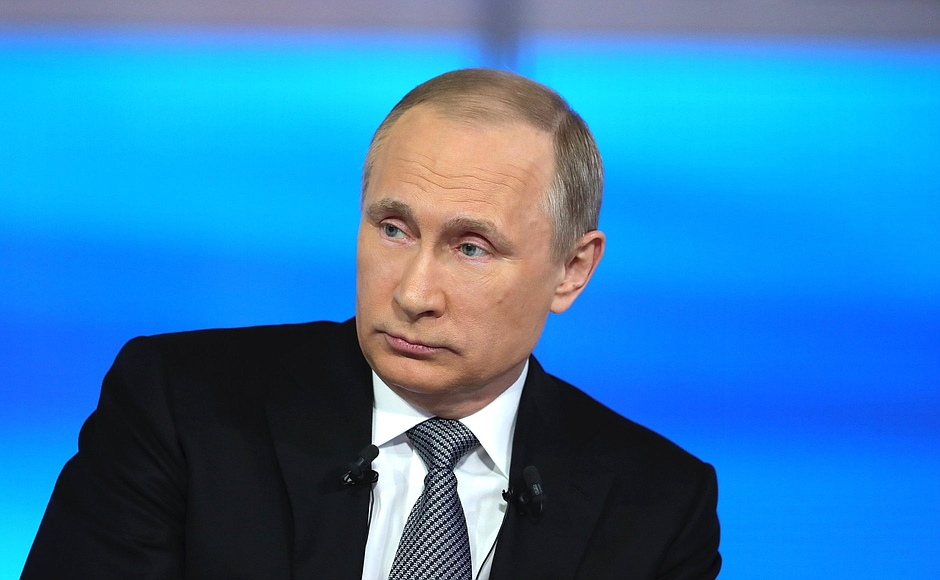
Silent war? Over a dozen Russian officials killed since election day ~ hehe 1 set of "elites" whacking the "other" ...soon , very soon the "whack`in" "war"... b spill~ ing in the ...streets ?
Lately, many Republicans seem to have developed a strange
fascination with Vladimir Putin and the Russian government. If you were
to go through every single speech and interview President Trump has
given, you would be hard pressed to find a time when he has been even
slightly critical of Putin. Naturally, his most loyal supporters follow
his lead. This is odd, because even though the Russians may not be an
immediate threat to the United States, they are still dangerous.
Vladimir Putin is a mass murdering, genocidal fascist, believed to be responsible for the mysterious deaths
of hundreds of Russian civilians over the past few decades. This is not
a man that the United States should be cozying up to. Oddly enough, seven Russian officials have mysteriously been found
dead since Election Day four months ago. Although the deaths have yet to
be linked to Donald Trump becoming the 45th president of the United States, many questions remain. Sergei Krivov, a consular duty commander at the Russian Consulate in
Manhattan, was found unconscious on the floor after suffering blunt
force trauma to the head. He was dead before medical assistance could
reach him. Krivov’s lack of a paper trail made his death all the more
bizarre. BuzzFeed reported on Krivov’s role at the consulate:
“That position is no ordinary security guard,” they explained.
“According to other public Russian-language descriptions of the duty
commander position, Krivov would have been in charge of, among other
things, ‘prevention of sabotage’ and suppression of ‘attempts of secret
intrusion’ into the consulate.” Andrey Karlov was killed on December 19th during a speech
at an art exhibit, when an off duty Turkish police officer by the name
of Mevlüt Mert Altıntaş began firing shots from behind. Karlov was
killed, and several others were injured. Eventually, authorities learned
that Mevlüt Mert Altıntaş had declared Jihad and gained entry into the
gallery with his law enforcement identification. On the same day in which Karlov was killed, Petr Polshikov met a
similar fate. Polshikov, a senior diplomat in the Latin America division
of the Russian foreign ministry, was found in his Moscow apartment with
a gunshot wound to the head. The circumstances surrounding Polshikov’s
death are still uncertain, but it was reported that two bullet shells
and one firearm were found at the crime scene. December 29th was the day that Ex-KGB chief Oleg Erovinkin
was found dead in his black Lexus. Erovinkin was allegedly involved in
the release of the 35-page dossier released about Donald Trump,
detailing wild accounts of the president engaging in sexual acts and
inappropriate behavior. An investigation into Erovinkin’s death is now
underway. Andrey Malanin, the head of the consular section at Russia’s Athens embassy, was, according to Reuters,
“found on the floor of his bedroom by a member of the embassy’s staff
with no evidence of a break-in.” Authorities do not believe that Malanin
was killed, but an investigation into his death is underway because of
his diplomatic status. On January 26th, 67-year-old Aleksandr Kadakin, the
Russian ambassador to India, died in New Delhi. The cause of death was
allegedly heart failure. Even though it appeared that Kadakin had died
peacefully because of old age, the fact that he died around the time
that other Russian officials were killed is beyond coincidental; perhaps
it is not coincidental at all. Finally, just this past week, Russian ambassador to the United
Nations Vitaly Churkin, passed away due to heart failure just before his
65th birthday. The New York Times reported, “The
Russian government said he died suddenly but did not specify a cause.
The New York City police said there were no indications of foul play.” Sources IntelliHub.com NYtimes.com
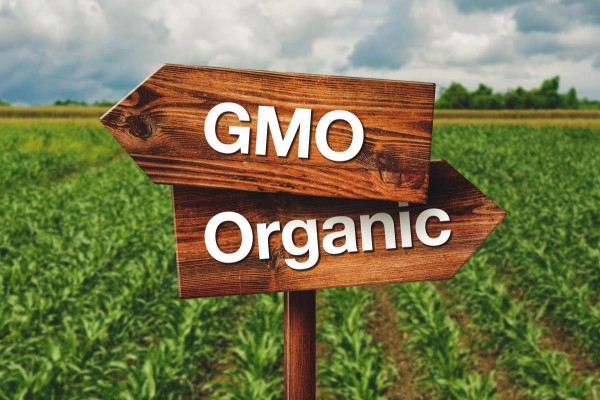
Indian state will pay farmers to go 100% organic and GMO-free
(Natural News)
Is India on its way to becoming an entirely organic nation? Just over
two years ago, in September 2014, the Indian Government launched their
revolutionary Rastriya Krishi Vikas Yojana (National Agriculture
Development Program) as a way to encourage organic farming, and decrease
dependence on chemical agents. In January 2015, the state of Sikkim
was declared as the country’s first 100 percent organic state. Sikkim
produces 800,000 tons of organic produce that’s free of harmful
pesticides, chemical fertilizers and toxic GMOs — accounting for roughly
65 percent of India’s total organic produce yields. The western Indian state of Rajasthan launched plans for dedicating thousands of hectares of land for the farming of organic pulses just
a few months later. Their effort seeks to combat the rampant protein
malnutrition, and the unsustainable practice of chemical
fertilizer-based farming. Another western Indian state now also seeks to join in. Goa has also
recently announced that they will be looking to reduce the use of
chemical fertilizers and pesticides, and is also seeking to go 100
percent organic. The State Department of Agriculture has launched a
state sector plan titled, “Assistance for use of organic inputs by the
farmer.” Ulhas Pai Kakode, Director of Agriculture, commented, “This is the
first step we have taken in the direction of organic farming in the
state. Hopefully, more and more farmers should adopt the practice of
organic farming after availing this scheme.” Under this new plan, farmers can receive significant assistance from
the government when it comes to obtaining organic agricultural inputs,
such as organic fertilizers and bio-pesticides. Up to 50 percent of the
tab will picked up by the state government, but there will be some
limitations. AnonHQ explains that these benefits will be limited to
10,000 Indian Rupees (INR) per hectare with a maximum of up to two
hectares , or INR 20,000 per beneficiary for all categories of farmers
on the use of organic inputs. Farmers with plots as small as 0.1 hectare
will be considered eligible for the program — which will also help to
keep the tradition of small-scale ingidenous farming alive and well. Organic farming is nothing new; its a tradition that has sadly been
overtaken by overzealous coroporations. In India, organic farming has
been practiced since ancient times and once ensured quality food for
consumers. The recent resurgence of organic farming in India, however,
is largely due to the increasing demand for organic products in Western
nations. The organic food
and fiber market is growing at an incredibly rapid pace, with some
estimates suggesting that the market is expanding by up to 25 to 30
percent. A study by ASSOCHAM,
which stands for The Associated Chambers of Commerce and Industry of
India, suggests that the organic food market in India will reach $1.36
billion by the year 2020. The study also suggested that organic farming
efforts short focus largely on pulses and grains. The exponential growth of the organic market has even led food
manufacturers in the United States to pay their farmers to make the
switch to organic practices. In the US alone, sales in organic
marketplace expanded by about 11 percent — reaching a whopping $43.3
billion last year — equalling about four times the growth in sales of
food products, overall. Organic farming
in India is also expected to continue to grow, especially as the
government continues to financially support organic farming endeavors.
Increased awareness and availability of organic foods has also greatly
contributed to the sucess of organic food. Additionally, the rise in
health consciousness and healthier lifestyle changes have also played a
significant role in the growth and demand of organic foods. Sources: AnonHQ.com TimesOfIndia.IndiaTimes.com EconomicTimes.IndiaTimes.com

 Posts
Posts