Subscribe To


 Posts
All Comments
Posts
All Comments
Tuesday, November 12, 2013

 the same "stuff" cums outta em :o

Meet One Of The Victims Of Obama’s “Economic Recovery”
 By Michael Snyder, on November 11th, 2013

 Have
you ever cried yourself to sleep because you had no idea how you were
going to pay the bills even though you were working as hard as you
possibly could? You are about to hear from a single mother that has
been there. Her name is Yolanda Vestal and she is another victim of
Obama's "economic recovery". Yes, things have never been better
for the top 0.01 percent of ultra-wealthy Americans that have got
millions of dollars invested in the stock market. But for most of the
rest of the country, things are very hard right now. At this point, more than 102 million working age Americans do not have a job, and 40 percent
of those that are actually working earn less than $20,000 a year in
wages. If we actually are experiencing an "economic recovery", then why
is the federal government spending nearly a trillion dollars a year
on welfare? And that does not even include entitlement programs such
as Social Security and Medicare. We live in a nation where poverty is exploding
and the middle class is shrinking with each passing day. But nothing
is ever going to get fixed if we all stick our heads in the sand and
pretend that everything is "just fine".
Have
you ever cried yourself to sleep because you had no idea how you were
going to pay the bills even though you were working as hard as you
possibly could? You are about to hear from a single mother that has
been there. Her name is Yolanda Vestal and she is another victim of
Obama's "economic recovery". Yes, things have never been better
for the top 0.01 percent of ultra-wealthy Americans that have got
millions of dollars invested in the stock market. But for most of the
rest of the country, things are very hard right now. At this point, more than 102 million working age Americans do not have a job, and 40 percent
of those that are actually working earn less than $20,000 a year in
wages. If we actually are experiencing an "economic recovery", then why
is the federal government spending nearly a trillion dollars a year
on welfare? And that does not even include entitlement programs such
as Social Security and Medicare. We live in a nation where poverty is exploding
and the middle class is shrinking with each passing day. But nothing
is ever going to get fixed if we all stick our heads in the sand and
pretend that everything is "just fine".What you are about to read is an open letter to Barack Obama that has gone absolutely viral on the Internet in recent days. It is a letter that a single mother named Yolanda Vestal posted on her Facebook page, and it has really struck a nerve because countless other young parents can clearly identify with what she is going through. The following is the text of her letter...
Dear President Obama,These are the kinds of emotions that millions of American parents are wrestling with on a daily basis. Many of them are working as hard as they possibly can and yet still find themselves unable to adequately provide for their families.
I wanted to take a moment to say thank you for all you have done and are doing. You see I am a single Mom located in the very small town of Palmer, Texas. I live in a small rental house with my two children. I drive an older car that I pray daily runs just a little longer. I work at a mediocre job bringing home a much lower paycheck than you or your wife could even imagine living on. I have a lot of concerns about the new “Obamacare” along with the taxes being forced on us Americans and debts you are adding to our country. I have a few questions for you Mr. President.
Have you ever struggled to pay your bills? I have.
Have you ever sat and watched your children eat and you eat what was left on their plates when they were done, because there wasn’t enough for you to eat to? I have.
Have you ever had to rob Peter to pay Paul, and it still not be enough? I have.
Have you ever been so sick that you needed to see a doctor and get medicine, but had no health insurance because it was too expensive? I have.
Have you ever had to tell your children no, when they asked for something they needed? I have.
Have you ever patched holes in pants, glued shoes, replaced zippers, because it was cheaper than buying new? I have.
Have you ever had to put an item or two back at the grocery store, because you didn’t have enough money? I have.
Have you ever cried yourself to sleep, because you had no clue how you were going to make ends meet? I have.
My questions could go on and on. I don’t believe you have a clue what Americans are actually going through and honestly, I don’t believe you care. Not everyone lives extravagantly. While your family takes expensive trips that cost more than most of us make in two-four years, there are so many of us that suffer. Yet, you are doing all you can to add to the suffering. I think you are a very selfish and cold hearted man, who does not care what is best for the people he was elected by (not by me) to represent, but more so out for the glory of your name attached to history. So thank you Mr. President, thank you for pushing those of us that are barely staying afloat completely under water and driving America into the ground. You have made your mark in history, as the absolute worst and most hated president of the United States. God have mercy on your soul!
Sincerely,
Yolanda Vestal
Average American
And now that food stamps are being cut back, more of them than ever are going to be forced to turn to food banks for help. The following is what the head of a large food bank in Casper, Wyoming told one local newspaper about the increase in demand that he is witnessing in his area...
Across the state, food banks and other related programs aiming to feed the needy are worried the supply to meet the uptick in need during the holiday season won’t meet the growing demand for food caused by the expiration of SNAP benefits.And of course this is not just happening in rural areas either. Margarette Purvis, the head of the largest food bank organization in New York City, says that she is anticipating a huge surge in demand and that veterans are being hit particularly hard...
“People are scared to death of the lack of food availability,” Martin said.
Martin called Joshua’s Storehouse a reliable barometer for measuring the rate of need in Casper. The number of people using the food bank skyrocketed before the reduction in SNAP, he said.
Fewer than 2,000 people used the food bank in October 2012. Last month 2,500 people went there for help.
"On this Veterans Day, when we’re waving our flags — I need every New Yorker to know — 40 percent of New York City veterans are relying on soup kitchens and pantries."Purvis says that there are 95,000 vets relying on food banks in New York City alone.
That is a lot of people.
And while Barack Obama may trot out a few vets on national holidays and promise that "we will never forget" them, the truth is that most of the time the federal government treats our military veterans like human garbage. If you doubt this, please see my previous article entitled "25 Signs That Military Veterans Are Being Treated Like Absolute Trash Under The Obama Administration".
Meanwhile, anger and frustration with the economy are starting to rise to very dangerous levels in this nation.
In a previous article, I noted that violent crime in America rose by 15 percent last year. One of the primary reasons for this is the economic despair that we see in our streets.
As the economy gets even worse, people will become even more desperate. We will start to see even more flash mob crimes like we saw in Chicago recently. Posted below is a video news report that shows footage of a flash mob in Chicago dragging entire racks of merchandise out of a Sports Authority store...
When you watch stuff like this, it helps to explain why demand for armored vehicles among the ultra-wealthy in America is skyrocketing.
Unfortunately, most Americans cannot afford armored vehicles and walled vacation homes in the middle of nowhere.
Most Americans are going to have to live right in the middle of all of this as it happens.
A volcano of anger, frustration and despair is simmering just below the surface in America.
When that volcano finally erupts, it is going to be a very frightening thing to behold.
Obama’s health care counterrevolution
 how LONG AGO ..you were told a fucking was cumming & STILL !!!
 Obama’s health care counterrevolution
28 July 2009//http://www.wsws.org/en/articles/2009/07/pers-j28.html
The New York Times is spearheading the campaign for President Obama’s health care proposals. His drive for an overhaul of the health care system, far from representing a reform designed to provide universal coverage and increased access to quality care, marks an unprecedented attack on health care for the working population. It is an effort to roll back social gains associated with the enactment of Medicare in 1965.It is a counterrevolution in health care, being carried out in the profit interests of the giant pharmaceutical companies, insurance conglomerates and hospital chains, as well as the corporations, which will be encouraged to terminate health care for their employees and force them to buy insurance plans providing less coverage at greater out-of-pocket expense.
In a full-page editorial published on Sunday, entitled “Health Care Reform and You,” the Times seeks to allay growing concerns in the US population over the legislation proposed by the White House that is currently working its way through Congress. A recent Kaiser Family Foundation poll found that 21 percent believe they will be worse off under the new legislation, double the number in February.
“Premiums and out-of-pocket spending for health care have been rising far faster than wages. Millions of people are ‘under-insured’—their policies don’t come close to covering their medical bills. Many postpone medical care or don’t fill prescriptions because they can’t afford to pay their share of the costs. And many declare personal bankruptcy because they are unable to pay big medical debts.”
This describes the failure of a health care system based on private profit. This—the central issue—the Times completely evades.
Instead, the newspaper shifts the blame onto the so-called “fee-for-service system.” The newspaper writes, “Virtually all experts blame the system for runaway health care costs because it pays doctors and hospitals for each service they perform.”
What experts? The newspaper does not say.
The editorial justifies Obama’s drive to do away with the fee-for-service system by replying to critics who fear that health care will be rationed to cut costs. “The truth is that health care is already rationed,” the Times writes, adding cynically, “No insurance, public or private, covers everything at any cost.”
The Times notes that “An earlier wave of managed care plans concentrating on reining in costs aroused a backlash among angry beneficiaries who were denied the care they wanted.” In an attempt to disarm such concerns, the newspaper provides a series of sophistic arguments on the theme that ending fee-for-service and imposing cost controls and restrictions will actually improve patient care.
Under the present payment system, it states, “patients often get very expensive care but not necessarily the best care.” Fee-for-service provides a “financial incentive to order excessive tests or treatments, some of which harm the patients.” It adds, “The most expensive treatment is not always the best treatment.”
These are loaded words, which conceal an unstated agenda. What is “excessive” or needlessly “expensive” will be determined not by patients and doctors, but by insurance companies, drug companies and hospital chains, which are driven by the profit motive.
Mammograms do not detect cancer in every instance. By the logic employed by the Times, they can therefore be deemed “excessive.” The most advanced drugs do not always improve medical outcomes. Another source of waste and “inefficiency.”
Needless to say, such judgments will apply only to ordinary people. The rich will continue to have access to the most “excessive,” expensive and “inefficient” care.
It does not take a great deal of critical reflection to recognize that these are rationalizations for depriving millions of workers and poor people access to the most advanced procedures, tests and drugs.
That the newspaper is seeking to sell the public a bill of goods is demonstrated by the deliberately vague terms it employs to describe the Obama scheme. The bills in Congress “would require all Americans to carry health insurance with specified minimum benefits or pay a penalty,” the editorial states. The bills would require most businesses to “provide and subsidize insurance that meets minimum standards for their workers or pay a fee for failing to do so.” The editorial speaks of a “specified level of benefits” and “yet-to-be-determined ‘essential benefits.’” [Emphasis added].
What these “minimum benefits” and “essential benefits” are, the newspaper does not say.
The editorial describes private “health insurance exchanges” that will be established by the insurance companies, and indicates, in deliberately vague terms, that companies will be allowed to terminate health plans for their employees, who would then be forced, by law, to purchase their own insurance, providing unstated “minimum benefits,” from these exchanges.
Talking out of both sides of its mouth, the newspaper at one point asserts that workers “might end up with better or cheaper coverage,” but at another writes: “Less clear is what financial burden middle-income Americans would bear when forced to buy coverage. There are concerns that the subsidies ultimately approved by Congress might not be generous enough.”
In other words, “middle-income Americans,” i.e., the vast majority of the population, will see an immense decline in their coverage. That is not all. People who presently assume that tests, drugs and procedures will be covered by their company plans will suddenly be told that a host of things are no longer covered and will cost extra to receive.
The editorial devotes a section to Medicare, which is a central target of the Obama plan. It suggests the kind of cost-cutting regimen that will be introduced into the government insurance system for the elderly, including “payment incentives in Medicare to reduce needless readmissions to hospitals.”
“Not everyone in Medicare will be happy,” the Times acknowledges. Congress, it notes, is “likely to reduce or do away with” subsidies for Medicare Advantage Plans upon which millions depend. “... many of these plans are apt to charge their clients more for their current policies or offer them fewer benefits,” it states.
Yet somehow, the Times writes approvingly, “President Obama insisted that benefits won’t be reduced, they’ll simply be delivered in more efficient ways...”
Reductions in care for those on Medicare will set a precedent. As the Times puts it, the changes in Medicare will “percolate throughout the health care system.”
As for extending coverage to the 50 million Americans who are uninsured, the newspaper says the various versions in Congress of the Obama plan “do a good job.” In fact, it is estimated that at least 16 million children and adults will remain without any coverage.
Also on Sunday, the Washington Post published an editorial, “The Health-Care Sacrifice,” which provides a more frank presentation of the implications of the Obama plan. The Post criticizes the president for failing to level with the public and prepare it for massive cuts in their health care—a change that has the newspaper’s full support.
“Getting health costs under control,” the Post writes, “will require saying no, or having the patient pay more...”
The newspaper notes that technological innovation in medical care is the fundamental driver of health-care inflation, and declares that reducing costs will require rationing access to the most advanced treatments. “In other words,” it states, “You can’t always get want you want—at least if you want costs to be lower. This would require an enormous change from the current practice, particularly in Medicare...”
Obama’s health care counterrevolution is of a piece with his entire domestic agenda. It parallels the multi-trillion-dollar bailout of the banks, the imposition of mass layoffs and wage and benefits cuts in the auto industry, and a stepped-up attack on public education and on teachers.
The economic crisis has been seized upon by the American financial aristocracy, with the Obama administration as its central instrument, to carry through a class-war agenda, long in preparation, that is directed against the vast majority of the American people. All that remains of the social reforms from the 1930s and 1960s, and the gains won by previous generations of workers in bitter struggle, is to be wiped out.
The immense growth of social inequality and the domination of society and the political system by a financial aristocracy are incompatible with institutions and programs that retain any vestige of a democratic and egalitarian impulse. Public education and health care must be reorganized more openly and directly along class lines.
This is the basic program of all factions of the ruling elite—liberal and conservative, Democratic and Republican.
Kate Randall and Barry Grey
Crypto Wars! Obama Wants New Law to Wiretap the Internet
spying ..what spying LMMFAO (laughing my motherfucking ass off ) .."they" weren't spying ..Oops it's "transparent" huh LMMFAO 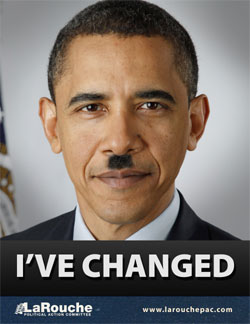
 In a reprise of the crypto wars of the 1990s, the U.S. secret state
is mounting an offensive that would force telecommunication companies to
redesign their systems and information networks to more easily
facilitate internet spying.
In a reprise of the crypto wars of the 1990s, the U.S. secret state
is mounting an offensive that would force telecommunication companies to
redesign their systems and information networks to more easily
facilitate internet spying.
Touted as a simple technical “fix” that would “modernize” existing legislation for wiretaps, government security officials will demand that telecommunication firms and internet service providers provide law enforcement with backdoors that would enable them to bypass built-in encryption and security features of electronic communications.
With the Obama administration rivaling, even surpassing antidemocratic moves by the Bush regime to monitor and surveil the private communications of the American people, The New York Times reported last week that “federal law enforcement and national security officials are preparing to seek sweeping new regulations for the Internet.”
Following closely on the heels of FBI raids on antiwar and international solidarity activists, the “change” administration now wants Congress to require all providers who enable communications “to be technically capable of complying if served with a wiretap order.”
Times’ reporter Charlie Savage informs us that the administration will demand that software and communication providers build backdoors accessible to law enforcement and intelligence agencies, thus enabling spooks trolling “encrypted e-mail transmitters like BlackBerry, social networking Web sites like Facebook and software that allows direct ‘peer to peer’ messaging like Skype” the means “to intercept and unscramble encrypted messages.”
Calling new legislative strictures a “reasonable” and “necessary” tool for law enforcement that will “prevent the erosion of their investigative powers,” FBI mouthpiece, general counsel Valerie E. Caproni, told the Times, “We’re talking about lawfully authorized intercepts.”
Really?
Caproni’s assertion that the Bureau and spy shops such as the National Security Agency are not interested in “expanding authority” but rather “preserving our ability to execute our existing authority in order to protect the public safety and national security,” is a thin tissue of lies lacking credibility.
In fact, the state’s “existing authority” to spy upon private communications under the USA Patriot Act and assorted National Security- and Homeland Security Presidential Directives (NSPD/HSPD) in areas as such as “continuity of government” (NSPD 51/HSPD 20), “cybersecurity” (NSPD 54/HSPD 23) and “biometrics” (NSPD 59/HSPD 24), have led to the creation of overly broad and highly classified programs regarded as “state secrets” under Obama.
As I have written many times, most recently in August (see: “Obama Demands Access to Internet Records, in Secret, and Without Court Review,” Antifascist Calling, August 12, 2010), since his 2009 inauguration President Obama has done nothing to reverse this trend. Indeed, he has taken further steps through the Comprehensive National Cybersecurity Initiative (CNCI), a highly-sanitized version of NSPD 54/HSPD 23, to ensure that the “President’s Surveillance Program” (PSP) launched by Bush remains a permanent feature of daily life in the United States.
In a widely circulated report last year, the inspectors general from five federal agencies, including the Justice Department, the Defense Department, the Central Intelligence Agency, the National Security Agency and the Office of the Director of National Intelligence, noted that following advice from the Office of Legal Counsel under torture-enablers Jay Bybee and John C. Yoo, “the President authorized the NSA to undertake a number of new, highly classified intelligence activities” that went far beyond warrantless wiretapping in their scope, encompassing additional unspecified “activities” that have never been disclosed to the public.
What were once regarded by Democrats and their ever-shrinking base of acolytes, cheerleaders and toadies as unspeakable crimes when carried out by Republican knuckle-draggers, are now regarded as “forward thinking,” even “visionary” policies when floated by the faux “progressive” occupying the Oval Office.
And with “homegrown terrorism” and “cybersecurity” high priorities on the administration’s to-do list, White House changelings and their friends from the previous regime are pulling out all the stops.
Last week, speaking at a Washington, D.C. “Ideas Forum,” former Director of National Intelligence Mike McConnell, currently a top executive with the spooky Booz Allen Hamilton private security corp, said that cybersecurity is the “wolf at the door” and that a “large-scale” cyberattack “could impact the global economy ‘an order of magnitude surpassing’ the attacks of September 11,”The Atlantic reported.
McConnell and former Bushist Homeland Security Adviser, Frances Fragos Townsend, the current chairwoman of the Intelligence and National Security Alliance (INSA), a D.C. lobby shop catering to security and intelligence grifters, urged the Obama administration to transform “how it defends against cyberattacks,” claiming that the secret state “lack[s] the organizational ability and authorization to prevent and respond to cybersecurity threats.”
Their prescription? Let NSA pit bulls off the leash, of course! Townsend said that “the real capability in this government is in the National Security Agency.”
True enough as far as it goes, however Townsend mendaciously asserted that NSA is legally forbidden from domestic spying, not that it prevented her former boss from standing up NSA’s internal surveillance apparatus through programs such as STELLAR WIND and PINWALE, the agency’s domestic email interception program.
Both Townsend and McConnell claim that the “laws haven’t kept up” with the alleged threat posed by a cyberattack and urged the administration to give the NSA even more authority to operate domestically.
No mention was made by liberal interventionist-friendly Atlanticreporter Max Fisher that McConnell’s firm has reaped multiyear contracts worth billions for their classified cybersecurity work for the secret state.
Hardly slouches themselves when it comes to electronic eavesdropping, the FBI is seeking to expand their already-formidable capabilities through their “Going Dark” program.
As Antifascist Calling previously reported (see: “FBI ‘Going Dark.’ Budget Request for High-Tech Surveillance Capabilities Soar,” May 17, 2009), the Bureau sought–and received–$233.9 billion in FY 2010 for the development of a new advanced electronic surveillance program.
ABC News first disclosed the program last year, and reported that “the term ‘Going Dark’ does not refer to a specific capability, but is a program name for the part of the FBI, Operational Technology Division’s (OTD) lawful interception program which is shared with other law enforcement agencies.”
According to ABC, “the term applies to the research and development of new tools, technical support and training initiatives.”
The New York Times reported last week that OTD spent $9.75 million last year “helping communications companies” develop “interception capabilities” for the Bureau.
Administration Hypocrisy
The administration’s push for more control is all the more ironic considering that the U.S. State Department according toReuters, said in August it was “disappointed” that “the United Arab Emirates planned to cut off key BlackBerry services, noting the Gulf nation was setting a dangerous precedent in limiting freedom of information.”
As The Washington Post told us at the time, UAE securocrats claimed that “it will block key features on BlackBerry smartphones because the devices operate beyond the government’s ability to monitor.”
Citing–what else!–”national security concerns,” the measure “could” be motivated “in part” by state fears that “the messaging system might be exploited by”–wait!–”terrorists or other criminals who cannot be monitored by local authorities.”
That regional beacon of democracy, Saudi Arabia, said it would follow suit. In response, State Department shill P.J. Crowley said that the United States is “committed to promoting the free flow of information. We think it’s integral to an innovative economy.”
With a straight face, Crowley told a State Department news briefing, “It’s about what we think is an important element of democracy, human rights and freedom of information and the flow of information in the 21st century.”
“We think it sets a dangerous precedent,” he said. “You should be opening up societies to these new technologies that have the opportunity to empower people rather than looking to see how you can restrict certain technologies.”
Pointing out the Obama regime’s hypocrisy, Yousef Otaiba, the UAE Ambassador to the United States counteracted and said it was Crowley’s comments that were “disappointing” and that they “contradict the U.S. government’s own approach to telecommunication regulation.”
“Importantly,” Otaiba said, “the UAE requires the same compliance as the U.S. for the very same reasons: to protect national security and to assist in law enforcement.”
The BBC informed us in July that Emirate officials are concerned that the encrypted software and networks used by Research in Motion, BlackBerry’s parent company, “make it difficult for governments to monitor communications.”
Although this is precisely the autocratic mindset that rules the roost here in the heimat, corporate media report identicalmoves by the U.S. government with nary a critical word, failing to point out the disconnect between administration rhetoric and ubiquitous “facts on the ground.”
Among the proposals being considered by the administration, the Times reports that officials “are coalescing” around several “likely requirements” that include the following: “Communications services that encrypt messages must have a way to unscramble them.” U.S. law will apply to overseas businesses, not just domestic firms. The Times avers that “Foreign-based providers that do business inside the United States must install a domestic office capable of performing intercepts.” And finally, a kiss of death for privacy rights, “Developers of software that enables peer-to-peer communication must redesign their service to allow interception.”
Firms that fail to comply “would face fines or some other penalty.” The Times neglected to tell us however, what penalties await software developers or individual users who have the temerity to design–or avail themselves–of systems that bypass backdoors mandated by the secret state.
An Electronic Police State
Far from being an “enhanced security feature,” the administration’s proposal for peer-to-peer snooping would be a boon to hackers, thieves and other miscreants who routinely breech and exploit whatever “firewall” grifting firms and their political allies devise to “keep us safe.”
In fact, as computer security and privacy researchers Christopher Soghoian and Sid Stamm revealed in their paper,Certified Lies: Detecting and Defeating Government Interception Attacks Against SSL, secret state agencies havealready compromised the Secure Socket Layer certification process (SSL, the tiny lock that appears during supposedly “secure,” encrypted online transactions), and do so routinely.
In March, Soghoian and Stamm introduced the public to “a new attack, the compelled certificate creation attack, in which government agencies compel a certificate authority to issue false SSL certificates that are then used by intelligence agencies to covertly intercept and hijack individuals’ secure Web-based communications.”
The intrepid researchers provided “alarming evidence” suggesting “this attack is in active use,” and that a niche security firm, Packet Forensics, is already marketing “extremely small, covert surveillance devices for networks” to government agencies.
It now appears that the Obama administration will soon be seeking legislative authority from Congress that legalizes surreptitious snooping by security officials and a coterie of outsourced contractors who grow fat subverting our privacy rights.
Commenting on the administration’s proposal in a recent post, Soghoian points out that when wiretap reporting requirements were amended in 2000, similar arguments were made that strong encryption would “harm national security.”
Congress inserted language that compelled secret state agencies like the FBI to “include statistics on the number of intercept orders in which encryption was encountered and whether such encryption prevented law enforcement from obtaining the plain text of communications intercepted pursuant to such order.”
It didn’t.
However in a replay of the crypto wars of the 1990s, FBI general counsel Caproni brushed off breech of privacy concerns and told the Times that service providers “can promise strong encryption. They just need to figure out how they can provide us plain text.”
Senator Patrick Leahy (D-VT) argued a decade ago that “compiling the statistics would be a ‘far more reliable basis than anecdotal evidence on which to assess law enforcement needs and make sensible policy in this area’.”
“Since then,” Soghoian writes, “the Administrative Office of the US Courts has compiled an annual wiretap report, which reveals that encryption is simply not frequently encountered during wiretaps, and when it is, it never stops the government from collecting the evidence they need.”
In light of statistical evidence provided by the government itself, demands that communications’ providers cough-up their customers’ private data to unaccountable government snoops is quintessentially a political decision, and not, as mendaciously claimed, a “law enforcement” let alone a “national security” problem.
In fact, while police and intelligence agencies “look through thousands of individuals’ email communications, search engine requests or private, online photo albums each year,” they don’t “obtain wiretap orders to intercept that data in real time. Instead,” Soghoian tells us “[they] simply wait a few minutes, and then obtain what they want after the fact as a stored communication under 18 USC 2703,” the Stored Communications Act.
“Unfortunately,” Soghoian avers, “while we have a pretty good idea about how many wiretaps law enforcement agencies obtain each year, we have no idea how many times they go to email, search engine and cloud computing providers to compel them to disclose their customers’ communications and other private data.”
Therefore, “we find ourselves in the same situation as 12 years ago, where law enforcement officials were making anecdotal claims for which no evidence existed to prove, or disprove them.”
As security expert Bruce Schneier pointed out, while the “proposal may seem extreme … it’s not unique.” Averring that sinister snooping laws were “formerly reserved for totalitarian countries,” Schneier writes “this wholesale surveillance of citizens has moved into the democratic world as well.”
Citing moves by Sweden, Canada and Britain to hand “their police new powers of internet surveillance” compelling “communications system providers to redesign products and services they sell,” securocrats, as is their wont, are lusting after the capacity to transform all aspects of daily life into “actionable intelligence.”
On top of this, as Schneier and others such as Cryptohippie andQuintessenz have revealed, so-called democratic states, not just usual suspects like China (whose “Golden Shield” was designed by Western firms, after all) “are passing data retention laws, forcing companies to retain customer data in case they might need to be investigated later.”
In their 2010 report, The Electronic Police State, Cryptohippieinformed us that data retention “is criminal evidence, ready for use in a trial, and that “it is gathered universally (‘preventively’) and only later organized for use in prosecutions.”
How does such a system work? What are the essential characteristics that differentiate an Electronic Police State from previous forms of oppressive governance? Cryptohippie avers:
“In an Electronic Police State, every surveillance camera recording, every email sent, every Internet site surfed, every post made, every check written, every credit card swipe, every cell phone ping… are all criminal evidence, and all are held in searchable databases. The individual can be prosecuted whenever the government wishes.”
As the World Socialist Web Site points out, the proposal by the Obama regime “goes far beyond anything envisioned by the Bush administration.”
While the White House claims that new legislation is needed to combat “crime” and “terrorism,” socialist critic Patrick Martin writes that “the Obama administration has defined ‘terrorism’ so widely that the term now covers a vast array of constitutionally protected forms of political opposition to the policies of the US government, including speaking, writing, political demonstrations, even the filing of legal briefs.”
Just ask activists raided last month by FBI bully-boys in Minneapolis and Chicago!
The American Civil Liberties Union denounced the proposal and called on Congress to reject calls “to make the Internet wiretap ready.”
ACLU Legislative Counsel Christopher Calabrese derided the move, saying: “Under the guise of a technical fix, the government looks to be taking one more step toward conducting easy dragnet collection of Americans’ most private communications.”
Clamping Down on the Freedom of Information Act
Entreaties by civil libertarians however, are likely to fall on deaf ears in the Democratic-controlled Congress.
In a clear sign that the Obama administration is moving to clamp down further on the free flow of information even as they seek access to all of ours’, Politico reported that the Office of the Director of National Intelligence (ODNI) “appears to be on the verge of prevailing in an attempt to put some information it receives from other intelligence agencies beyond the reach of Freedom of Information Act requests.”
National Counterterrorism Center Director Michael Leiter pushed through an onerous section to Intelligence Authorization Act legislation that exempts so-called “operational files” from four secret state agencies–the CIA, NSA, National Reconnaissance Office and the National Geospatial-Intelligence Agency–from FOIA requests.
Apparently the American people, long the targets of illegal driftnet spying by the intelligence and security apparatus, will soon find another door slammed shut, even as the administration claims sweeping new powers, including the right to assassinate American citizens deemed “terrorists,” in secret and without due process, anywhere on the planet.
And they call this transparency…
Crypto Wars! Obama Wants New Law to Wiretap the Internet
Touted as a simple technical “fix” that would “modernize” existing legislation for wiretaps, government security officials will demand that telecommunication firms and internet service providers provide law enforcement with backdoors that would enable them to bypass built-in encryption and security features of electronic communications.
With the Obama administration rivaling, even surpassing antidemocratic moves by the Bush regime to monitor and surveil the private communications of the American people, The New York Times reported last week that “federal law enforcement and national security officials are preparing to seek sweeping new regulations for the Internet.”
Following closely on the heels of FBI raids on antiwar and international solidarity activists, the “change” administration now wants Congress to require all providers who enable communications “to be technically capable of complying if served with a wiretap order.”
Times’ reporter Charlie Savage informs us that the administration will demand that software and communication providers build backdoors accessible to law enforcement and intelligence agencies, thus enabling spooks trolling “encrypted e-mail transmitters like BlackBerry, social networking Web sites like Facebook and software that allows direct ‘peer to peer’ messaging like Skype” the means “to intercept and unscramble encrypted messages.”
Calling new legislative strictures a “reasonable” and “necessary” tool for law enforcement that will “prevent the erosion of their investigative powers,” FBI mouthpiece, general counsel Valerie E. Caproni, told the Times, “We’re talking about lawfully authorized intercepts.”
Really?
Caproni’s assertion that the Bureau and spy shops such as the National Security Agency are not interested in “expanding authority” but rather “preserving our ability to execute our existing authority in order to protect the public safety and national security,” is a thin tissue of lies lacking credibility.
In fact, the state’s “existing authority” to spy upon private communications under the USA Patriot Act and assorted National Security- and Homeland Security Presidential Directives (NSPD/HSPD) in areas as such as “continuity of government” (NSPD 51/HSPD 20), “cybersecurity” (NSPD 54/HSPD 23) and “biometrics” (NSPD 59/HSPD 24), have led to the creation of overly broad and highly classified programs regarded as “state secrets” under Obama.
As I have written many times, most recently in August (see: “Obama Demands Access to Internet Records, in Secret, and Without Court Review,” Antifascist Calling, August 12, 2010), since his 2009 inauguration President Obama has done nothing to reverse this trend. Indeed, he has taken further steps through the Comprehensive National Cybersecurity Initiative (CNCI), a highly-sanitized version of NSPD 54/HSPD 23, to ensure that the “President’s Surveillance Program” (PSP) launched by Bush remains a permanent feature of daily life in the United States.
In a widely circulated report last year, the inspectors general from five federal agencies, including the Justice Department, the Defense Department, the Central Intelligence Agency, the National Security Agency and the Office of the Director of National Intelligence, noted that following advice from the Office of Legal Counsel under torture-enablers Jay Bybee and John C. Yoo, “the President authorized the NSA to undertake a number of new, highly classified intelligence activities” that went far beyond warrantless wiretapping in their scope, encompassing additional unspecified “activities” that have never been disclosed to the public.
What were once regarded by Democrats and their ever-shrinking base of acolytes, cheerleaders and toadies as unspeakable crimes when carried out by Republican knuckle-draggers, are now regarded as “forward thinking,” even “visionary” policies when floated by the faux “progressive” occupying the Oval Office.
And with “homegrown terrorism” and “cybersecurity” high priorities on the administration’s to-do list, White House changelings and their friends from the previous regime are pulling out all the stops.
Last week, speaking at a Washington, D.C. “Ideas Forum,” former Director of National Intelligence Mike McConnell, currently a top executive with the spooky Booz Allen Hamilton private security corp, said that cybersecurity is the “wolf at the door” and that a “large-scale” cyberattack “could impact the global economy ‘an order of magnitude surpassing’ the attacks of September 11,”The Atlantic reported.
McConnell and former Bushist Homeland Security Adviser, Frances Fragos Townsend, the current chairwoman of the Intelligence and National Security Alliance (INSA), a D.C. lobby shop catering to security and intelligence grifters, urged the Obama administration to transform “how it defends against cyberattacks,” claiming that the secret state “lack[s] the organizational ability and authorization to prevent and respond to cybersecurity threats.”
Their prescription? Let NSA pit bulls off the leash, of course! Townsend said that “the real capability in this government is in the National Security Agency.”
True enough as far as it goes, however Townsend mendaciously asserted that NSA is legally forbidden from domestic spying, not that it prevented her former boss from standing up NSA’s internal surveillance apparatus through programs such as STELLAR WIND and PINWALE, the agency’s domestic email interception program.
Both Townsend and McConnell claim that the “laws haven’t kept up” with the alleged threat posed by a cyberattack and urged the administration to give the NSA even more authority to operate domestically.
No mention was made by liberal interventionist-friendly Atlanticreporter Max Fisher that McConnell’s firm has reaped multiyear contracts worth billions for their classified cybersecurity work for the secret state.
Hardly slouches themselves when it comes to electronic eavesdropping, the FBI is seeking to expand their already-formidable capabilities through their “Going Dark” program.
As Antifascist Calling previously reported (see: “FBI ‘Going Dark.’ Budget Request for High-Tech Surveillance Capabilities Soar,” May 17, 2009), the Bureau sought–and received–$233.9 billion in FY 2010 for the development of a new advanced electronic surveillance program.
ABC News first disclosed the program last year, and reported that “the term ‘Going Dark’ does not refer to a specific capability, but is a program name for the part of the FBI, Operational Technology Division’s (OTD) lawful interception program which is shared with other law enforcement agencies.”
According to ABC, “the term applies to the research and development of new tools, technical support and training initiatives.”
The New York Times reported last week that OTD spent $9.75 million last year “helping communications companies” develop “interception capabilities” for the Bureau.
Administration Hypocrisy
The administration’s push for more control is all the more ironic considering that the U.S. State Department according toReuters, said in August it was “disappointed” that “the United Arab Emirates planned to cut off key BlackBerry services, noting the Gulf nation was setting a dangerous precedent in limiting freedom of information.”
As The Washington Post told us at the time, UAE securocrats claimed that “it will block key features on BlackBerry smartphones because the devices operate beyond the government’s ability to monitor.”
Citing–what else!–”national security concerns,” the measure “could” be motivated “in part” by state fears that “the messaging system might be exploited by”–wait!–”terrorists or other criminals who cannot be monitored by local authorities.”
That regional beacon of democracy, Saudi Arabia, said it would follow suit. In response, State Department shill P.J. Crowley said that the United States is “committed to promoting the free flow of information. We think it’s integral to an innovative economy.”
With a straight face, Crowley told a State Department news briefing, “It’s about what we think is an important element of democracy, human rights and freedom of information and the flow of information in the 21st century.”
“We think it sets a dangerous precedent,” he said. “You should be opening up societies to these new technologies that have the opportunity to empower people rather than looking to see how you can restrict certain technologies.”
Pointing out the Obama regime’s hypocrisy, Yousef Otaiba, the UAE Ambassador to the United States counteracted and said it was Crowley’s comments that were “disappointing” and that they “contradict the U.S. government’s own approach to telecommunication regulation.”
“Importantly,” Otaiba said, “the UAE requires the same compliance as the U.S. for the very same reasons: to protect national security and to assist in law enforcement.”
The BBC informed us in July that Emirate officials are concerned that the encrypted software and networks used by Research in Motion, BlackBerry’s parent company, “make it difficult for governments to monitor communications.”
Although this is precisely the autocratic mindset that rules the roost here in the heimat, corporate media report identicalmoves by the U.S. government with nary a critical word, failing to point out the disconnect between administration rhetoric and ubiquitous “facts on the ground.”
Among the proposals being considered by the administration, the Times reports that officials “are coalescing” around several “likely requirements” that include the following: “Communications services that encrypt messages must have a way to unscramble them.” U.S. law will apply to overseas businesses, not just domestic firms. The Times avers that “Foreign-based providers that do business inside the United States must install a domestic office capable of performing intercepts.” And finally, a kiss of death for privacy rights, “Developers of software that enables peer-to-peer communication must redesign their service to allow interception.”
Firms that fail to comply “would face fines or some other penalty.” The Times neglected to tell us however, what penalties await software developers or individual users who have the temerity to design–or avail themselves–of systems that bypass backdoors mandated by the secret state.
An Electronic Police State
Far from being an “enhanced security feature,” the administration’s proposal for peer-to-peer snooping would be a boon to hackers, thieves and other miscreants who routinely breech and exploit whatever “firewall” grifting firms and their political allies devise to “keep us safe.”
In fact, as computer security and privacy researchers Christopher Soghoian and Sid Stamm revealed in their paper,Certified Lies: Detecting and Defeating Government Interception Attacks Against SSL, secret state agencies havealready compromised the Secure Socket Layer certification process (SSL, the tiny lock that appears during supposedly “secure,” encrypted online transactions), and do so routinely.
In March, Soghoian and Stamm introduced the public to “a new attack, the compelled certificate creation attack, in which government agencies compel a certificate authority to issue false SSL certificates that are then used by intelligence agencies to covertly intercept and hijack individuals’ secure Web-based communications.”
The intrepid researchers provided “alarming evidence” suggesting “this attack is in active use,” and that a niche security firm, Packet Forensics, is already marketing “extremely small, covert surveillance devices for networks” to government agencies.
It now appears that the Obama administration will soon be seeking legislative authority from Congress that legalizes surreptitious snooping by security officials and a coterie of outsourced contractors who grow fat subverting our privacy rights.
Commenting on the administration’s proposal in a recent post, Soghoian points out that when wiretap reporting requirements were amended in 2000, similar arguments were made that strong encryption would “harm national security.”
Congress inserted language that compelled secret state agencies like the FBI to “include statistics on the number of intercept orders in which encryption was encountered and whether such encryption prevented law enforcement from obtaining the plain text of communications intercepted pursuant to such order.”
It didn’t.
However in a replay of the crypto wars of the 1990s, FBI general counsel Caproni brushed off breech of privacy concerns and told the Times that service providers “can promise strong encryption. They just need to figure out how they can provide us plain text.”
Senator Patrick Leahy (D-VT) argued a decade ago that “compiling the statistics would be a ‘far more reliable basis than anecdotal evidence on which to assess law enforcement needs and make sensible policy in this area’.”
“Since then,” Soghoian writes, “the Administrative Office of the US Courts has compiled an annual wiretap report, which reveals that encryption is simply not frequently encountered during wiretaps, and when it is, it never stops the government from collecting the evidence they need.”
In light of statistical evidence provided by the government itself, demands that communications’ providers cough-up their customers’ private data to unaccountable government snoops is quintessentially a political decision, and not, as mendaciously claimed, a “law enforcement” let alone a “national security” problem.
In fact, while police and intelligence agencies “look through thousands of individuals’ email communications, search engine requests or private, online photo albums each year,” they don’t “obtain wiretap orders to intercept that data in real time. Instead,” Soghoian tells us “[they] simply wait a few minutes, and then obtain what they want after the fact as a stored communication under 18 USC 2703,” the Stored Communications Act.
“Unfortunately,” Soghoian avers, “while we have a pretty good idea about how many wiretaps law enforcement agencies obtain each year, we have no idea how many times they go to email, search engine and cloud computing providers to compel them to disclose their customers’ communications and other private data.”
Therefore, “we find ourselves in the same situation as 12 years ago, where law enforcement officials were making anecdotal claims for which no evidence existed to prove, or disprove them.”
As security expert Bruce Schneier pointed out, while the “proposal may seem extreme … it’s not unique.” Averring that sinister snooping laws were “formerly reserved for totalitarian countries,” Schneier writes “this wholesale surveillance of citizens has moved into the democratic world as well.”
Citing moves by Sweden, Canada and Britain to hand “their police new powers of internet surveillance” compelling “communications system providers to redesign products and services they sell,” securocrats, as is their wont, are lusting after the capacity to transform all aspects of daily life into “actionable intelligence.”
On top of this, as Schneier and others such as Cryptohippie andQuintessenz have revealed, so-called democratic states, not just usual suspects like China (whose “Golden Shield” was designed by Western firms, after all) “are passing data retention laws, forcing companies to retain customer data in case they might need to be investigated later.”
In their 2010 report, The Electronic Police State, Cryptohippieinformed us that data retention “is criminal evidence, ready for use in a trial, and that “it is gathered universally (‘preventively’) and only later organized for use in prosecutions.”
How does such a system work? What are the essential characteristics that differentiate an Electronic Police State from previous forms of oppressive governance? Cryptohippie avers:
“In an Electronic Police State, every surveillance camera recording, every email sent, every Internet site surfed, every post made, every check written, every credit card swipe, every cell phone ping… are all criminal evidence, and all are held in searchable databases. The individual can be prosecuted whenever the government wishes.”
As the World Socialist Web Site points out, the proposal by the Obama regime “goes far beyond anything envisioned by the Bush administration.”
While the White House claims that new legislation is needed to combat “crime” and “terrorism,” socialist critic Patrick Martin writes that “the Obama administration has defined ‘terrorism’ so widely that the term now covers a vast array of constitutionally protected forms of political opposition to the policies of the US government, including speaking, writing, political demonstrations, even the filing of legal briefs.”
Just ask activists raided last month by FBI bully-boys in Minneapolis and Chicago!
The American Civil Liberties Union denounced the proposal and called on Congress to reject calls “to make the Internet wiretap ready.”
ACLU Legislative Counsel Christopher Calabrese derided the move, saying: “Under the guise of a technical fix, the government looks to be taking one more step toward conducting easy dragnet collection of Americans’ most private communications.”
Clamping Down on the Freedom of Information Act
Entreaties by civil libertarians however, are likely to fall on deaf ears in the Democratic-controlled Congress.
In a clear sign that the Obama administration is moving to clamp down further on the free flow of information even as they seek access to all of ours’, Politico reported that the Office of the Director of National Intelligence (ODNI) “appears to be on the verge of prevailing in an attempt to put some information it receives from other intelligence agencies beyond the reach of Freedom of Information Act requests.”
National Counterterrorism Center Director Michael Leiter pushed through an onerous section to Intelligence Authorization Act legislation that exempts so-called “operational files” from four secret state agencies–the CIA, NSA, National Reconnaissance Office and the National Geospatial-Intelligence Agency–from FOIA requests.
Apparently the American people, long the targets of illegal driftnet spying by the intelligence and security apparatus, will soon find another door slammed shut, even as the administration claims sweeping new powers, including the right to assassinate American citizens deemed “terrorists,” in secret and without due process, anywhere on the planet.
And they call this transparency…
The Dark Road from the Clipper Chip to PRISM Reveals 'Crypto Wars' Never Ended


Back in the 1990s, security researchers and privacy watchdogs were alarmed by government demands that hardware and software firms build "backdoors" into their products, the millions of personal computers and cell phones propelling communication flows along the now-quaint "information superhighway."
Never mind that the same factory-installed kit that allowed secret state agencies to troll through private communications also served as a discrete portal for criminal gangs to loot your bank account or steal your identity.
To make matters worse, instead of the accountability promised the American people by Congress in the wake of the Watergate scandal, successive US administrations have worked assiduously to erect an impenetrable secrecy regime backstopped by secret laws overseen by secret courts which operate on the basis of secret administrative subpoenas, latter day lettres de cachet.
But now that all their dirty secrets are popping out of Edward Snowden's "bottomless briefcase," we also know the "Crypto Wars" of the 1990s never ended.
Documents published by The Guardian and The New York Times revealed that the National Security Agency "actively engages the US and IT industries" and has "broadly compromised the guarantees that internet companies have given consumers to reassure them that their communications, online banking and medical records would be indecipherable to criminals or governments."
"Those methods include covert measures to ensure NSA control over setting of international encryption standards," The Guardian disclosed, along with "the use of supercomputers to break encryption with 'brute force', and--the most closely guarded secret of all--collaboration with technology companies and internet service providers themselves."
According to The New York Times, NSA "had found ways inside some of the encryption chips that scramble information for businesses and governments, either by working with chipmakers to insert back doors or by surreptitiously exploiting existing security flaws, according to the documents."
In fact, "vulnerabilities" inserted "into commercial encryption systems" would be known to NSA alone. Everyone else, including commercial customers, are referred to in the documents as "adversaries."
The cover name for this program is Project BULLRUN. An agency classification guide asserts that "Project BULLRUN deals with NSA's abilities to defeat the encryption used in specific network communication technologies. BULLRUN involves multiple sources, all of which are extremely sensitive. They include CNE [computer network exploitation], interdiction, industry relationships, collaboration with other IC entities, and advanced mathematical techniques."
In furtherance of those goals, the agency created a "Commercial Solutions Center (NCSC) to leverage sensitive, cooperative relationships with industry partners" that will "further NSA/CSS capabilities against encryption used in network communications technologies," and already "has some capabilities against the encryption used in TLS/SSL. HTTPS, SSH, VPNs, VoIP, WEBMAIL, and other network communications technologies."
Time and again, beginning in the 1970s with the publication of perhaps the earliest NSA exposé by Ramparts Magazine, we learned that when agency schemes came to light, if they couldn't convince they resorted to threats, bribery or the outright subversion of the standard setting process itself, which destroyed trust and rendered all our electronic interactions far less safe.
Tunneling underground, NSA, telcos and corporate tech giants worked hand-in-glove to sabotage what could have been a free and open system of global communications, creating instead the Frankenstein monster which AT&T whistleblower Mark Klein denounced as a "Big Brother machine."
The Secret State and the Internet
Five years after British engineer Tim Berners-Lee, Belgian computer scientist Robert Cailliau and their team at CERN developed a system for assembling, and sharing, hypertext documents via the internet, which they dubbed the World Wide Web, in 1994 the Clinton administration announced it would compel software and hardware developers to install what came to known as the "Clipper Chip" into their products.
The veritable explosion of networked communication systems spawned by the mass marketing of easy-to-use personal computers equipped with newly-invented internet browsers, set off a panic amongst political elites.
How to control these seemingly anarchic information flows operating outside "normal" channels?
In theory at least, those doing the communicating--academics, dissidents, journalists, economic rivals, even other spies, hackers or "terrorists" (a fungible term generally meaning outsider groups not on board with America's imperial goals)--were the least amenable users of the new technology and would not look kindly on state efforts to corral them.
As new communication systems spread like wildfire, especially among the great unwashed mass of "little people," so too came a stream of dire pronouncements that the internet was now a "critical national asset" which required close attention and guidance.
President Clinton's Commission on Critical Infrastructure Protection released a report that called for a vast increase in funding to protect US infrastructure along with one of the first of many "cyberwar" tropes that would come to dominate the media landscape.
"In the cyber dimension," the report breathlessly averred, "there are no boundaries. Our infrastructures are exposed to new vulnerabilities--cyber vulnerabilities--and new threats--cyber threats. And perhaps most difficult of all, the defenses that served us so well in the past offer little protection from the cyber threat. Our infrastructures can now be struck directly by a variety of malicious tools."
And when a commercial market for cheap, accessible encryption software was added to the mix, security mandarins at Ft. Meade and Cheltenham realized the genie would soon be out of the bottle.
After all they reasoned, NSA and GCHQ were the undisputed masters of military-grade cryptography who had cracked secret Soviet codes which helped "win" the Cold War. Were they to be out maneuvered by some geeks in a garage who did not share or were perhaps even hostile to the "post-communist" triumphalism which had decreed America was now the world's "indispensable nation"?
Technological advances were leveling the playing field, creating new democratic space in the realm of knowledge creation accessible to everyone; a new mode for communicating which threatened to bypass entrenched power centers, especially in government and media circles accustomed to a monopoly over the Official Story.
US spies faced a dilemma. The same technology which created a new business model worth hundreds of billions of dollars for US tech corporations also offered the public and pesky political outliers across the political spectrum, the means to do the same.
How to stay ahead of the curve? Why not control the tempo of product development by crafting regulations, along with steep penalties for noncompliance, that all communications be accessible to our guardians, strictly for "law enforcement" purposes mind you, by including backdoors into commercially available encryption products.
Total Information Awareness 1.0
Who to turn to? Certainly such hush-hush work needed to be in safe hands.
The Clinton administration, in keeping with their goal to "reinvent government" by privatizing everything, turned to Mykotronx, Inc., a California-based company founded in 1983 by former NSA engineers, Robert E. Gottfried and Kikuo Ogawa, mining gold in the emerging information security market.
Indeed, one of the firm's top players was Ralph O'Connell, was described in a 1993 document published by Computer Professionals for Social Responsibility (CPSR) as "the father of COMSEC" and the "Principle NSA Technical Contact" on Clipper and related cryptography projects.
A 1993 Business Wire release quoted the firm's president, Leonard J. Baker, as saying that Clipper was "a good example of the transfer of military technology to the commercial and general government fields with handsome cost benefits. This technology should now pay big dividends to US taxpayers."
It would certainly pay "big dividends" to Mykotronx's owners.
Acquired by Rainbow Technologies in 1995, and eventually by Military-Industrial-Surveillance Complex powerhouse Raytheon in 2012, at the time the Los Angeles Times reported that "Mykotronx had been privately held, and its owners will receive 1.82 million shares of Rainbow stock--making the deal worth $37.9 million."
The Clipper chip was touted by the administration as a simple device that would protect the private communications of users while also allowing government agents to obtain the keys that unlocked those communications, an early manifestation of what has since become know as law enforcement's alleged "going dark" problem.
Under color of a vague "legal authorization" that flew in the face of the 1987 Computer Security Act (CSA), which sought to limit the role of the National Security Agency in developing standards for civilian communications systems, the administration tried an end-run around the law through an export ban on Clipper-free encryption devices overseen by the Commerce Department.
This wasn't the first time that NSA was mired in controversy over the watering down of encryption standards. During the development of the Data Encryption Standard (DES) by IBM in the 1970s, the agency was accused of forcing developers to implement changes in the design of its basic cipher. There were strong suspicions these changes had weakened the algorithm to such a degree that one critical component, the S-box, had been altered and that a backdoor was inserted by NSA.
Early on, the agency grasped CSA's significance and sought to limit damage to global surveillance and economic espionage programs such as ECHELON, exposed by British and New Zealand investigative journalists Duncan Campbell and Nicky Hager.
Before the 1987 law was passed however, Clinton Brooks, a Special Assistant to NSA Director Lieutenant General William Odom, wrote a Top Secret Memorandum which stated: "In 1984 NSA engineered a National Security Decision Directive, NSDD-145, through the Reagan Administration that gave responsibility for the security of all US information systems to the Director of NSA, removing NBS [National Bureau of Standards] from this."
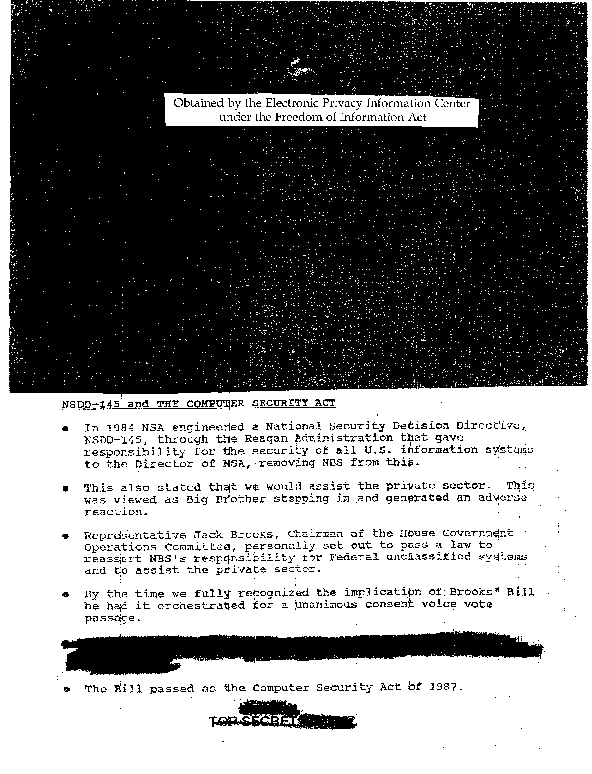
Conceived as a follow-on to the Reagan administration's infamous 1981 Executive Order 12333, which trashed anemic congressional efforts to rein-in America's out-of-control spy agencies, NSDD-145 handed power back to the National Security Agency and did so to the detriment of civilian communication networks.
Scarcely a decade after Senator Frank Church warned during post-Watergate hearings into government surveillance abuses, that NSA's "capability at any time could be turned around on the American people, and no American would have any privacy left, such is the capability to monitor everything: telephone conversations, telegrams, it doesn't matter . . . there would be no place to hide," the agency was at it with a vengeance.
"This [NSDD-145] also stated," Brooks wrote, "that we would assist the private sector. This was viewed as Big Brother stepping in and generated an adverse reaction" in Congress that helped facilitate passage of the Act.
Engineered by future Iran-Contra felon, Admiral John Poindexter, President Reagan's National Security Adviser who would later serve as President George W. Bush's Director of DARPA's Information Awareness Office, the Pentagon satrapy that brought us the Total Information Awareness program, NSDD-145 stated that the "Director, National Security Agency is designated the National Manager for Telecommunications and Automated Information Systems Security."
NSA's new mandate meant that the agency would "act as the government focal point for cryptography, telecommunications systems security, and automated information systems security."
Additionally, NSA would "conduct, approve, or endorse research and development of techniques and equipment for telecommunications and automated information systems security for national security information."
But it also authorized the agency to do more than that, granting it exclusive authority to "review and approve all standards, techniques, systems and equipments for telecommunications and automated information systems security." As well, NSA was directed to "enter into agreements for the procurement of technical security material and other equipment, and their provision to government agencies, where appropriate, to private organizations, including government contractors, and foreign governments."
In other words, NSA was the final arbiter when it came to setting standards for all government and private information systems; quite a coup for the agency responsible for standing-up Project MINARET, the Cold War-era program that spied on thousands of antiwar protesters, civil rights leaders, journalists and members of Congress, as recently declassified documents published by the National Security Archive disclosed.
NSA Games the System
Although the Computer Security Act passed unanimously by voice vote in both Houses of Congress, NSA immediately set-out to undercut the law and did so by suborning the National Bureau of Standards, now the National Institute of Standards and Technology (NIST).
The battle over the Clipper Chip would be the template for future incursions by the agency for the control, through covert infiltration, of regulatory bodies overseeing civilian communications.
According to the Clinton White House, Clipper "would provide Americans with secure telecommunications without compromising the ability of law enforcement agencies to carry out legally authorized wiretaps."
Neither safe nor secure, Clipper instead would have handed government security agencies the means to monitor all communications while giving criminal networks a leg up to do the same.
In fact, as the Electronic Privacy Information Center (EPIC) discovered in documents unearthed through the Freedom of Information Act, the underlying algorithm deployed in Clipper, Skipjack, had been developed by NSA.
Cryptography expert Matt Blaze wrote a now famous 1994 paper on the subject before the algorithm was declassified, Protocol Failure in the Escrowed Encryption Standard: "The EES cipher algorithm, called 'Skipjack', is itself classified, and implementations of the cipher are available to the private sector only within tamper-resistant modules supplied by government-approved vendors. Software implementations of the cipher will not be possible. Although Skipjack, which was designed by the US National Security Agency (NSA), was reviewed by a small panel of civilian experts who were granted access to the algorithm, the cipher cannot be subjected to the degree of civilian scrutiny ordinarily given to new encryption systems."
This was precisely as NSA and the Clinton administration intended.
A partially declassified 1993 NSA memo noted that "there will be vocal public doubts expressed about having a classified algorithm in the device we propose for the US law enforcement problem, the CLIPPER chip, we recommend the following to address this." We don't know what those agency recommendations were, however; more than 20 years after the memo was written they remain secret.
The memo continued: "If such people agree to this clearance and non disclosure process, we could go over the algorithm with them to let them develop confidence in its security, and we could also let them examine the detail design of the CLIPPER chip made for the US law enforcement problem to assure themselves that there were no trapdoors or other techniques built in. This would likely require crypto-mathematicians for the algorithm examination and microelectronics chip design engineers for the chip examination."
But the extreme secrecy surrounding Skipjack's proposed deployment in commercial products was the problem. Even if researchers learned that Clipper was indeed the government-mandated backdoor they feared, non-disclosure of these facts, backed-up by the threat of steep fines or imprisonment would hardly assure anyone of the integrity of this so-called review process.
"By far, the most controversial aspect of the EES system," Blaze wrote, "is key escrow."
"As part of the crypto-synchronization process," Blaze noted, "EES devices generate and exchange a 'Law Enforcement Access Field' (LEAF). This field contains a copy of the current session key and is intended to enable a government eavesdropper to recover the cleartext."
"The LEAF copy of the session key is encrypted with a device-unique key called the 'unit key,' assigned at the time the EES device is manufactured. Copies of the unit keys for all EES devices are to be held in 'escrow' jointly by two federal agencies that will be charged with releasing the keys to law enforcement under certain conditions."
What those conditions were however, was far from clear. In fact, as we've since learned from Snowden's cache of secret documents, even when the government seeks surveillance authorization from the FISA court, the court must rely on government assurances that dragnet spying is critical to the nation's security. Such assurances, FISA court judge Reggie B. Walton noted, were systematically "misrepresented" by secret state agencies.
That's rather rich considering that Walton presided over the farcical "trial" that upheld Bush administration demands to silence FBI whistleblower Sibel Edmonds under the state secrets privilege. Edmonds, a former contract linguist with the Bureau charged that top FBI officials had systematically covered-up wrongdoing at its language division and had obstructed agents' attempts to roll-up terrorist networks before and after the 9/11 provocation, facts attested to by FBI whistleblower Coleen Rowley in her 2002 Memo to then-FBI Director Robert Mueller.
In 2009, Walton wrote that "The minimization procedures proposed by the government in each successive application and approved and adopted as binding by the orders of the FISC have been so frequently and systemically violated that it can fairly be said that this critical element of the overall BR regime has never functioned effectively."
"The Court," Walton averred, "must have every confidence that the government is doing its utmost to ensure that those responsible for implementation fully comply with the Court's orders. The Court no longer has such confidence."
Predating those critical remarks, a heavily-redacted 1993 Memo to then-Special Assistant to the President and future CIA chief, George Tenet, from FBI Director William Sessions noted that NSA "has developed a new encryption methodology and computer chip which affords encryption strength vastly superior to DES [Digital Encryption Standard], yet which allows for real time decryption by law enforcement, acting pursuant to legal process. It is referred to as 'Clipper'."
[Two redacted paragraphs] "if the devices are modified to include the 'Clipper' chip, they would be of great value to the Federal, state and local law enforcement community, especially in the area of counter narcotics, investigations, where there is a requirement to routinely communicate in a secure fashion."
But even at the time Sessions' memo was written, we now know that AT&T provided the Drug Enforcement Administration "routine access" to "an enormous AT&T database that contains the records of decades of Americans' phone calls," The New York Times reported, and had done so since 1987 under the auspices of DEA's Hemisphere Project.
Furthermore, in the wake of Snowden revelations we also learned that listening in on the conversations of drug capos is low on NSA's list of priorities. However, programs like X-KEYSCORE and TEMPORA, which copies all data flowing along fiber optic cables, encrypted and unencrypted alike, at petabyte scales, is supremely useful when it comes to building profiles of internet users by intelligence agencies.
This was an implicit goal of Clinton administration maneuvers to compel developers to insert Clipper into their product designs.
According to Sessions, "the 'Clipper' methodology envisions the participation of three distinct types of parties." [Redacted] It is proposed that the second party, the two custodians of the 'split' key infostructure [sic], be comprised of two disinterested and trustworthy non law enforcement Government agencies or entities. Although, such decision and selection are left for the Administration, a list of reccommended [sic] agencies and entities has been prepared (and included in the text), [redacted]. This party would administer and oversee all facets of the 'Clipper' program and methodology."
Based on NSDD-145's mandate, one can assume "this party" would be NSA, the agency that designed the underlying algorithm that powered Clipper.
The Sessions memo averred: "The Clipper chip provides law enforcement access by using a special chip key, unique to each device. In the AT&T TSD 3600, a unique session key is generated, external to the Clipper chip for each call."
"This session key," the memo explained, "is given to the chip to control the encryption algorithm. A device unique 'chip key' is programmed into each Clipper at the time of manufacture. When two TSD 3600s go to secure operation, the device gives out its identification (ID) number and the session key encrypted in its chip key."
Underlining a key problem with Clipper technology Sessions noted, "Anyone with access to the chip key for that identified device will be able to recover the session key and listen to the transmission simultaneously with the intended receiver. This design means that the list of chip keys associated with the chip ID number provides access to all Clipper secured devices, and thus the list must be carefully generated and protected. Loss of the list would preclude legitmate [sic] access to the encrypted information and compromise of the list could allow unauthorized access."
In fact, that "anyone" could include fabulously wealthy drug gangs or bent corporations with the wherewithal to buy chip keys from suborned government key escrow agents!
Its ubiquity would be a key selling-point for universal deployment. The memo explained, "the NSA developed chip based 'Clipper' solution works with hardware encryption applications, such as those which might be used with regard to certain telecommunications and computers devices," which of course would allow unlimited spying by "law enforcement."
Such vulnerabilities built into EES chip keys by design not only enabled widespread government monitoring of internet and voice traffic, but with a few tweaks by encryption-savvy "rogues" could be exploited by criminal organizations.
In his 1994 paper Blaze wrote that "a rogue system can be constructed with little more than a software modification to a legal system. Furthermore, while some expertise may be required to install and operate a rogue version of an existing system, it is likely that little or no special skill would be required to install and operate the modified software."
"In particular," Blaze noted, "one can imagine 'patches' to defeat key escrow in EES-based systems being distributed over networks such as the Internet in much the same way that other software is distributed today."
In the intervening years since Blaze observed how easy it would be to compromise key escrow systems by various bad actors, governments or criminals take your pick, the proliferation of malware powered botnets that infect hundreds of thousands of computers and smart phones every day--for blanket surveillance, fraud, or both--is a fact of life.
It didn't help matters when it emerged that "escrow agents" empowered to unlock encrypted communications would be drawn from the National Institute of Standards and Technology and the Automated Services Division of the Treasury Department, government outposts riddled with "No Such Agency" moles.
As EPIC pointed out, "Since the enactment of the Computer Security Act, the NSA has sought to undercut NIST's authority. In 1989, NSA signed a Memorandum of Understanding (MOU) which purported to transfer back to NSA the authority given to NIST."
The MOU required that NIST request NSA's "assistance" on all matters related to civilian cryptography. In fact, were NIST and NSA representatives on the Technical Working Group to disagree on standards, the ultimate authority for resolving disputes would rest solely with the Executive Branch acting through the President, the Secretary of Defense and the National Security Council, thus undercutting the clear intent of Congress when they passed the 1987 Computer Security Act.
EPIC noted: "The memorandum effectively returned to NSA many of the powers rejected by the Computer Security Act. The MOU contained several key goals that were to NSA's benefit, including: NSA providing NIST with 'technical security guidelines in trusted technology, telecommunications security, and personal identification that may be used in cost-effective systems for protecting sensitive computer data;' NSA 'initiating research and development programs in trusted technology, telecommunications security, cryptographic techniques and personal identification methods'; and NSA being responsive to NIST 'in all matters related to cryptographic algorithms and cryptographic techniques including but not limited to research, development, evaluation, or endorsement'."
A critique of the Memorandum in 1989 congressional testimony by the General Accounting Office (GAO) emphasized: "At issue is the degree to which responsibilities vested in NIST under the act are being subverted by the role assigned to NSA under the memorandum. The Congress, as a fundamental purpose in passing the act, sought to clearly place responsibility for the computer security of sensitive, unclassified information in a civil agency rather than in the Department of Defense. As we read the MOU, it would appear that NIST has granted NSA more than the consultative role envisioned in the act."
Five years after the GAO's critical appraisal, NSA's coup was complete.
"In 1994," EPIC noted, "President Clinton issued Presidential Decision Directive (PDD-29). This directive created the Security Policy Board, which has recommended that all computer security functions for the government be merged under NSA control."
Since PDD-29 was issued matters have only gotten worse. In fact, NIST is the same outfit exposed in Snowden documents published by The Guardian and The New York Times that allowed NSA to water down encryption and build backdoors into the Dual EC DRBG standard adopted by the Institute in 2006.
"Eventually, NSA became the sole editor."
Besieged by widespread opposition, the Clinton administration was out maneuvered in the court of public opinion and by 1996 had abandoned Clipper. However, this proved to be a pyrrhic victory for security-minded researchers and civil libertarians as we have since learned from Edward Snowden's revelations.
Befitting a military-intelligence agency, the dark core of America's deep state, NSA was fighting a long war--and they were playing for keeps.
Obamacare Lies Exposed


This is the essence of the Affordable Care Act (ACA), better known as Obamacare. It is a health care counterrevolution posing as a progressive “reform.” Its full enactment will have devastating consequences for the health and the very lives of a large majority of the US population.
One of the newly exposed consequences of the ACA is a sharp reduction in a government subsidy that for years defrayed costs to hospitals for uncompensated and undercompensated care given to poor people. These subsidies have helped provide cancer and other life-saving treatments to those who would otherwise have no access to such care.
These funds for safety-net hospitals are set to be reduced by $18 billion through 2020 and by an additional $22 billion by 2019, inevitably resulting in increased suffering, disease and death.
It is now six weeks since the launch of the exchanges set up under the ACA to sell health insurance to the public. Virtually every day has brought new revelations showing that the promises made by President Obama in relation to his health care overhaul were lies.
The continuing crisis at the HealthCare.gov web site is more than a technical debacle. It reflects not only the ineptitude of government agencies and corporate contractors, but the character of the product the web site is peddling. It also reflects the contempt of the Obama administration for individuals and families desperate to obtain access to decent health care.
HealthCare.gov does not exist to extend affordable coverage to the millions of uninsured, offer life-saving treatments to the poor, or train new doctors and nurses. Its central feature is a requirement, backed up by fines, for people who are not insured through their employers or a government health plan such as Medicare or Medicaid to purchase coverage from a private insurance company. This will automatically expand the insurance industry’s pool of cash-paying customers.
At the same time, Obamacare will drastically reduce government expenditures on health care. It is set to slash $700 billion from the Medicare program for the elderly and disabled over the next decade.
As recently as last week, the president was making the absurd claim to supporters that through Obamacare “we were able to deliver on universal health care.” This is a brazen falsehood.
Even before the disastrous rollout of HealthCare.gov, the Congressional Budget Office was predicting that 31 million people would remain uninsured, including undocumented immigrants who are barred from receiving government subsidies to purchase coverage and millions of the very poor who will not be insured because their state governments have chosen not to expand their Medicaid programs under the ACA.
Obama was forced to go on national television last week amidst reports that hundreds of thousands of people insured through the individual market have been dropped from coverage by their insurers. These cancellations expose as yet another lie the president’s repeated claim that under Obamacare, “If you like your health plan, you can keep it.”
In the majority of cases, replacement plans offered to these customers are substantially more expensive.
ACA regulations written more than three years ago included an estimate that at least “40 to 67 percent” of the 11 million to 14 million people insured through the individual market would lose their coverage. But Obama continued to say that people would be able to keep their plans.
He attempted to cover up this lie with another in his appearance on NBC News last Thursday. “I meant what I said,” he declared, adding, “obviously we didn’t do a good enough job, and I regret that.”
The fallout over the administration’s misinformation regarding the individual insurance market is only the tip of the iceberg. Beyond this relatively small market are the 170 million Americans who are presently enrolled in health care plans through their employers. The health care overhaul has been devised as a means of dismantling this employer-based system, which for decades provided a basic level of health insurance for tens of millions of workers in the US.
Companies have already shifted their retirees off of company-administered health plans and onto privately run health care exchanges that offer plans with few benefits and large out-of-pocket expenses. City and state governments are also moving to shift their retirees, and in some cases their active employees, off of municipally funded benefits and onto privately run exchanges or directly onto the Obamacare exchanges.
Employees are offered small stipends and forced to confront gigantic health insurance corporations as individuals. This is precisely the type of voucher system that ruling class opponents of Medicare plan to institute to undermine and privatize the government-run health insurance program.
The biggest lie spread by Obama and his apologists is that the ACA constitutes a genuine social reform.
As the World Socialist Web Site correctly stated months before its passage in March of 2010, the Obama administration’s overhaul of the health care system is a “counterrevolution in health care” that is “of a piece with his entire domestic agenda,” aiming to increase social inequality.
The political strategists of the corporate-financial elite are devising schemes, such as Obamacare, aimed at reducing life expectancy for workers. As they see it, advances in medical technology have created the undesirable result of workers living too long in retirement, sapping resources that could go to further enriching the multi-millionaires and billionaires at the top of society.
The provision of universal, quality health care requires putting health care under workers’ control and placing it on socialist foundations. The working class must answer the Obamacare counterrevolution with its own program and perspective, placing the social rights of the working class above the profit drive of the outmoded capitalist system and its parasitic ruling elite.
29 Incredible Facts Which Prove That Poverty In America Is Absolutely Exploding
By Michael Snyder, on October 27th, 2013
 Did
you know that the number of Americans on welfare is higher than the
number of Americans that have full-time jobs? Did you know that 1.2
million public school students in the U.S. are currently homeless?
Anyone that uses the term "economic recovery" to describe what is
happening in the United States today is being deeply insulting to the
nearly 150 million Americans that are considered to be either "poor" or
"low income" at this point. Yes, things are great in New York City,
Washington D.C. and San Francisco, but almost everywhere else economic
conditions continue to steadily get worse. The gap between the wealthy
and the poor is at a level that America has never seen before, and this
is beginning to create a "Robin Hood mentality" that could cause a
tremendous amount of social chaos in the years ahead. Anger at the
"haves" in America continues to rise at a very alarming pace, and the
"have nots" are becoming increasingly desperate.
At some point all of this anger is going to boil over, and you won't
want to be anywhere around major population centers when that happens.
Despite unprecedented borrowing
by the federal government in recent years, and despite unprecedented
money printing by the Federal Reserve, poverty in the United States
keeps getting worse with each passing year. The following are 29
incredible facts which prove that poverty in America is absolutely
exploding...
Did
you know that the number of Americans on welfare is higher than the
number of Americans that have full-time jobs? Did you know that 1.2
million public school students in the U.S. are currently homeless?
Anyone that uses the term "economic recovery" to describe what is
happening in the United States today is being deeply insulting to the
nearly 150 million Americans that are considered to be either "poor" or
"low income" at this point. Yes, things are great in New York City,
Washington D.C. and San Francisco, but almost everywhere else economic
conditions continue to steadily get worse. The gap between the wealthy
and the poor is at a level that America has never seen before, and this
is beginning to create a "Robin Hood mentality" that could cause a
tremendous amount of social chaos in the years ahead. Anger at the
"haves" in America continues to rise at a very alarming pace, and the
"have nots" are becoming increasingly desperate.
At some point all of this anger is going to boil over, and you won't
want to be anywhere around major population centers when that happens.
Despite unprecedented borrowing
by the federal government in recent years, and despite unprecedented
money printing by the Federal Reserve, poverty in the United States
keeps getting worse with each passing year. The following are 29
incredible facts which prove that poverty in America is absolutely
exploding...1. What can you say about a nation that has more people getting handouts from the federal government than working full-time? According to the latest numbers from the U.S. Census Bureau, the number of people receiving means-tested welfare benefits is greater than the number of full-time workers in the United States.
2. New numbers have just been released, and they show that the number of public school students in this country that are homeless is at an all-time record high. It is hard to believe, but right now 1.2 million students that attend public schools in America are homeless. That number has risen by 72 percent since the start of the last recession.
3. When I was growing up, it seemed like almost everyone was from a middle class home. But now that has all changed. One recent study discovered that nearly half of all public students in the United States come from low income homes.
4. How can anyone deny that we are a socialist nation when half the people are getting money from the federal government each month? According to the most recent numbers from the U.S. Census Bureau, 49.2 percent of all Americans are receiving benefits from at least one government program.
5. Signs of increasing poverty are even showing up in the wealthiest areas of the nation. According to the New York Post, New York subways are being "overrun with homeless".
6. According to the U.S. Census Bureau, approximately one out of every six Americans is now living in poverty. The number of Americans living in poverty is now at a level not seen since the 1960s.
7. The gap between the rich and the poor in the United States is at an all-time record high. The wealthy may not consider this to be much of a problem, but those at the other end of the spectrum are very aware of this.
8. The "working poor" is one of the fastest growing segments of the U.S. population. At this point, approximately one out of every four part-time workers in America is living below the poverty line.
9. According to numbers provided by Wal-Mart, more than half of their hourly workers make less than $25,000 a year.
10. A recent Businessweek article mentioned a study that discovered that 300 employees at one Wal-Mart in Wisconsin receive a combined total of nearly a million dollars a year in public assistance...
“A decent wage is their demand—a livable wage, of all things,” said Representative George Miller (D-Calif.). The problem with companies like Wal-Mart is their “unwillingness, not their inability, to pay that wage,” he said. “They hand off the difference to taxpayers.” Miller was referring to a congressional report (PDF) released in May that calculated how much Walmart workers rely on public assistance. The study found that the 300 employees at one Supercenter in Wisconsin required some $900,000 worth of public assistance a year.11. The stock market may be doing great (for the moment), but incomes for average Americans continue to decline. In fact, median household income in the United States has fallen for five years in a row.
12. The quality of the jobs in America has been steadily dropping for years. At this point, one out of every four American workers has a job that pays $10 an hour or less.
13. According to a Gallup poll that was recently released, 20.0% of all Americans did not have enough money to buy food that they or their families needed at some point over the past year. That is just under the record of 20.4% that was set back in November 2008.
14. Young adults are particularly feeling the sting of poverty these days. American families that have a head of household that is under the age of 30 have a poverty rate of 37 percent.
15. As I wrote about a few weeks ago, one out of every five households in the United States is on food stamps. Back in the 1970s, about one out of every 50 Americans was on food stamps.
16. The number of Americans on food stamps now exceeds the entire population of Spain.
17. According to one calculation, the number of Americans on food stamps now exceeds the combined populations of "Alaska, Arkansas, Connecticut, Delaware, District of Columbia, Hawaii, Idaho, Iowa, Kansas, Maine, Mississippi, Montana, Nebraska, Nevada, New Hampshire, New Mexico, North Dakota, Oklahoma, Oregon, Rhode Island, South Dakota, Utah, Vermont, West Virginia, and Wyoming."
18. We are told that we live in the "wealthiest nation" on the planet, and yet more than one out of every four children in the United States is enrolled in the food stamp program.
19. The average food stamp benefit breaks down to approximately $4 per person per day.
20. It is being projected that approximately 50 percent of all U.S. children will be on food stamps before they reach the age of 18.
21. Today, approximately 17 million children in the United States are facing food insecurity. In other words, that means that "one in four children in the country is living without consistent access to enough nutritious food to live a healthy life."
22. It may be hard to believe, but approximately 57 percent of all children in the United States are currently living in homes that are considered to be either "low income" or impoverished.
23. The number of children living on $2.00 a day or less in the United States has grown to 2.8 million. That number has increased by 130 percent since 1996.
24. In Miami, 45 percent of all children are living in poverty.
25. In Cleveland, more than 50 percent of all children are living in poverty.
26. According to a recently released report, 60 percent of all children in the city of Detroit are living in poverty.
27. According to a Feeding America hunger study, more than 37 million Americans are now being served by food pantries and soup kitchens.
28. The U.S. government has spent an astounding 3.7 trillion dollars on welfare programs over the past five years.
29. It has been reported that 4 out of every 5 adults in the United States "struggle with joblessness, near-poverty or reliance on welfare for at least parts of their lives".
These poverty numbers keep getting worse year after year no matter what our politicians do.
So is there anyone out there that would still like to argue that we are in an "economic recovery"?
And as I mentioned above, the "have nots" are becoming increasingly angry at the "haves". For example, just check out the following excerpt from a recent New York Post article...
The maniac who butchered a Brooklyn mom and her four young kids confessed that he did it because he was jealous of their way of life, a police source told The Post on Sunday.Sadly, this was not an isolated incident. All over the western world, a "Robin Hood mentality" is growing. This is something that I am so concerned about that I made it a big part of my new book. At this point, even wealthy Hollywood-types such as actor Russell Brand are calling for a socialist-style "revolution" and a "massive redistribution of wealth".
“The family had too much. Their income (and) lifestyle was better than his,” the source said.
The bloody suspect was caught holding the kitchen knife he used during the Saturday night rampage inside the Sunset Park apartment where he had been staying with the victims, the source added.
Perhaps Brand does not understand that what he is calling for would mean redistributing most of his own wealth away from him.
When the next major wave of the economic collapse strikes, I fear that all of this anger and frustration that are growing among the poor will boil over in some very frightening ways. I believe that we will see a huge spike in crime and that we will eventually see communities all over America looted and burning.
But I am not the only one that is thinking along these lines. A new National Geographic Channel movie entitled "American Blackout" attempts to portray the social chaos that could erupt in the event of an extended national power failure...
American Blackout, National Geographic Channel’s two-hour, edge-of-your-seat movie event imagines the story of a national power failure in the United States caused by a cyberattack — told in real time, over 10 days, by those who kept filming on cameras and phones. You’ll learn what it means to be absolutely powerless.You can view a clip of the film that was made available by NatGeo for the SHTFplan.com community right here.
What would you do if something like that happened to you?
How would you handle desperate, hungry people at your fence asking for food?
And what if those people were armed and were not "asking nicely" for your food?
Don't ignore what is happening in America right now. It is setting the stage for some very chaotic times.
Get ready while you still can.
Subscribe to:
Comments (Atom)