Sunday, December 7, 2014

Snowden Reveals First Ever Public Disclosure Of Secret Black Budget Programs ~This might well qualify them as a separate civilization – one that has broken away from our own, in effect, a breakaway civilization. Still interacting with our own, its members probably move back and forth between the official reality of what we are supposed to believe, and the other reality which encompasses new truths and challenges.  ~~ & how about the deeper,Deeper ,DEEPER off the book/world budget ,huh

by .http://www.collective-evolution.com/2013/08/31/snowden-reveals-first-ever-public-disclosure-of-secret-black-budget-programs/
snowdenEdward Snowden, a former intelligence contractor has leaked the very first documentation that proves the existence of clandestine black budget operations (1)(programs that are extremely classified dealing with technology, information and more.) Did we really need this leak in order to believe that black budget programs operate in secrecy? No, many people will tell you that the existence of black budget programs was obvious and that we didn’t need any official documentation to prove it, but this still helps. The United States has a history of government agencies existing in secret for years. The National Security Agency (NSA) was founded in 1952, its existence was hidden until the mid 1960’s. Even more secretive is the National Reconnaissance Office, which was founded in 1960 but remained completely secret for 30 years.
We are talking about Special Access Programs (SAP). From these we have unacknowledged and waived SAPs. These programs do not exist publicly, but they do indeed exist. They are better known as ‘deep black programs.’ A 1997 US Senate report described them as “so sensitive that they are exempt from standard reporting requirements to the Congress.” (0)(8)
The Washington Post revealed that the “black-budget” documents report  a staggering 52.6 billion dollars that was set aside for operations in the fiscal year 2013. Although it’s great to have this type of documentation in the public domain proving the existence of  these black budget programs, the numbers seem to be off according to some statements made by some very prominent people who have been involved in the defense sector for years. There is a lot of evidence to suggest that these programs are not using billions of dollars, but trillions of dollars that are unaccounted for. Here is a statement given by Canada’s former Minister of National Defence, Paul Hellyer in 2008:
It is ironic that the U.S. would begin a devastating war, allegedly in search of weapons of mass destruction when the most worrisome developments in this field are occurring in your own backyard.  It is ironic that the U.S. should be fighting monstrously expensive wars  allegedly to bring democracy to those countries, when it itself can no longer claim to be called a democracy when trillions, and I mean thousands of billions of dollars have been spent on projects which both congress and the commander in chief no nothing about(2)
We are talking about large amounts of unaccounted-for money going into programs we know nothing about. There have been several congressional inquiries that have noted billions, and even trillions of dollars that have gone missing from the federal reserve system. On July 16, 2001, in front of the house appropriations committee, Secretary of Defense Donald Rumsfeld stated:
The financial systems of the department of defence are so snarled up that we can’t account for some $2.6 trillion in transactions that exist, if that’s believable (3)
We don’t really hear about black budget programs, or about people who have actually looked into them.  However, the topic was discussed in 2010 by Washington Post journalists Dana Priest and William Arkin. Their investigation lasted approximately two years and concluded that America’s classified world has:
Become so large, so unwieldy and so secretive that no one knows how much money it costs, how many people it employes, how many programs exist within it or exactly how many agencies do the same work (4)
Another person was aviation journalist Bill Sweetman. Within the Pentagon, he estimated that approximately 150 special access programs existed that weren’t even acknowledged. These programs are not known about by the highest members of government and the highest ranking officials in the military. He determined that most of these programs were dominated by private contractors (Lockheed Martin, Boeing, etc.) and that he had no idea as to how these programs were funded(5)(8).
Dwight Eisenhower, former 5 star U.S. general (highest possible rank) and President of the United States also warned us about  secrecy and the acquisition of unwarranted influence within the “department of defence” with his farewell speech:
In the council of government, we must guard against the acquisition of unwarranted influence whether sought or unsought, by the military industrial complex. The potential disaster of the rise of mis placed power exists, and will persist. We must never let the weight of this combination endanger our liberties or democratic processes(6)
He warns us about the influence of the military industrial complex, and the influence and power it’s capable of. After Eisenhower the next and only other president that blew the whistle on secrecy beyond the government was president John F. Kennedy in one of his most famous speeches, he is also referring to the military industrial complex:
The very word secrecy is repugnant, in a free and open society. And we are as a people inherently and historically opposed to secret societies, secret oaths and to secret proceedings. We decided long ago that the dangers of excessive and unwarranted concealment of pertinent facts far outweighed the dangers which are cited to justify it. Even today, there is little value in opposing the threat of a closed society by imitating its arbitrary restrictions. Even today, there is little value in insuring the survival of our nation if our traditions do not survive with it. And there is very grave danger that an announced need for increased security will be seized upon by those anxious to expand its meaning to the very limits of official censorship and concealment. That I do not intend to permit to the extent that it is in my control. We are opposed around the world by a monolithic and ruthless conspiracy that relies primarily on covert means for expanding its sphere of influence. On Infiltration instead of invasion, on subversion instead of elections, on intimidation instead of free choice, on guerrillas by night instead of armies by day. It is a system which has conscripted vast human and material resources into the building of a tightly knit, highly efficient machine that combines military, diplomatic, intelligence, economic, scientific and political operations. Its preparations are concealed, not published. Its mistakes are buried, not headlined. Its dissenters are silenced, not praised. No expenditure is questioned, no rumour is printed, no secret is revealed (7)
The amount that the US sets aside for sensitive operations each year is not allowed to be published for eyes outside of the intelligence community. We are in an age where the US is having a difficult time keeping sensitive information under wraps, and although there is an abundance of blatant information for the world to wake up to, that which is still kept under tight wraps has also become more transparent. Many phenomena previously labelled as merely a “conspiracy theory” are now surfacing as true and verifiable day after day.
Could some of these black budget programs be dealing with UFOs? There is a large amount of evidence to suggest that they do, and possibly even extraterrestrials. Documents from the NSA prove that UFOs and extraterrestrials are of high interest to the agency(9)(10). In fact I would like to mention that there is an overwhelming amount of evidence to suggest that these black budget programs deal with matters beyond our world. Garry McKinnon has also shed light on this fact, as have thousands of previously classified documents and statements from high level government and military personnel. The world within our own world must be quite fascinating, the fact that we are living in the time of transparency must mean that the truth cannot stay hidden forever.

Worlds Within Worlds 

Excerpt from the book “A.D. After Disclosure” written by Richard Dolan and Bryce Zabel (8).
Richard Dolan’s Thoughts on the “Breakaway Civilization”
By now, the classified world has moved far beyond the reach of the public world, and far beyond in its power and capabilities. Consider the story of a former NSA scientist who spoke with the authors. According to this individual, the NSA was operating computers during the mid-1960s with a processing clock-speed of roughly 650 megahertz(MHZ). To put that in perspective, it took 35 years for personal computers in the consumer market to reach that speed. Indeed, in 1965 there were no personal computers at all. Immediately, the near-fatal Apollo 13 mission in 1971 comes to mind, with its reliance on slide-rulers by mission specialist to guide the damaged NASA spacecraft back to Earth. When presented with this image, the NSA scientist shrugged and stated that secret computational capabilities were too important to share with NASA. So in, in computing, the National Security Agency was an amazing 35 years ahead of the rest of the world. This leads one to wonder what its computational powers are today.
Another example was the U.S. air strike against Libya in 1986. The raid employed f-111 fighter aircraft. Left out of the mission, however, was the F-117A Nighthawk, better known as the stealth fighter. It had been operational since 1983, but was still classified in 1986. In a form of logic both perverse and rational, the F-117A was so radically advanced that keeping it secret was more important than using it for this military mission.
Given the mixture of a treasure chest of government money, and private connections, the likelihood exists that six decades later there is a clandestine group that possesses:
  • Technology that is vastly superior to that of the “mainstream” world.
  • The ability to explore areas of our world and surroundings presently unavailable to the rest of us.
  • Scientific and cosmological understandings that give them greater insights into the nature of our world
  • A significant “built off the grid” infrastructure, partially underground, that affords them a high degree of secrecy and independence of action
This might well qualify them as a separate civilization – one that has broken away from our own, in effect, a breakaway civilization. Still interacting with our own, its members probably move back and forth between the official reality of what we are supposed to believe, and the other reality which encompasses new truths and challenges.
 Sources:
(5) Sweetman, Bill. “In Search of the Pentagon’s Billion Dollar Hidden Budgets: How the US Keeps Its R&D Spending Under Wraps.” Janes International Defence Reporter, Janurary  5, 2000
(8) Dolan, M. Richard and Zabel, Bryce. A.D. After Disclosure. New Page Books. 2012

On “How We Became Post-Human”


piero scaruffi
By piero scaruffi
scaruffi.com

Posted: Nov 24, 2014
http://ieet.org/index.php/IEET/more/scaruffi20141124

Hayles has written a complex and erudite book on the hidden premises and visible consequences of the information age. Ultimately, her thesis is summarized by a sentence in the prologue: “thought is a much broader cognitive function depending for its specificities on the embodied form enacting it”. Rewritten in plain English, it means that you cannot separate your “i” from the body that you inhabit. Her nightmare is “a culture inhabited by posthumans who regard their bodies as fashion accessories rather than the ground of being”. Her dream is a society in which we “understand ourselves as embodied creatures living within and through embodied worlds and embodied words.”
Hayles shows how Norbert Wiener, Claude Shannon, John von Neumann together with other pioneers of the program of intelligent machines created, spread and fueled the influential notion that information can circulate from one substance to another without losing any property ("how information lost its body").(man Dr.Joseph P. Farrell wrote an FANTASTIC "white paper" (members only" ...about what/who Satan might really be ??? ) (Artificial Intelligence and the Fall of Lucifer) folks these "kooks" never ,Never, fucking NEVER factor in ...."evil"   Oops  & guess "who" is wait~in on the "other" side   ..there IS no God ...till satan starts snap~in at "their" ass's  & it's save me God  ...SAVE ME
These founders of cybernetics regularly convened from 1946 until 1953 at the Macy Conference on Cybernetics, that sometimes occurred twice a year (Hayles erroneously states that these conferences started in 1943 and ended in 1954). Speakers at the first conference were: John von Neumann (computer science), Norbert Wiener (mathematics), Walter Pitts (mathematics), Arturo Rosenblueth (physiology), Rafael Lorente de No (neurophysiology), Ralph Gerard (neurophysiology), Warren McCulloch (neuropsychiatry), Gregory Bateson (anthropology), Margaret Mead (anthropology), Heinrich Kluever (psychology), Molly Harrower (psychology), Lawrence Kubie (psychoanalysis), Filmer Northrop (philosophy), Lawrence Frank (sociology), and Paul Lazarsfeld (sociology). The list of speakers is important because otherwise people would think the Macy group only consisted of mathematicians, when in fact it included even a psychiatrist, a philosopher, two sociologists, two psychologists and two anthropologists. Hayles may be right about the consequences of those conferences, but it would be unfair to assume that those consequences were due to the premises.
Today, the ultimate manifestation of this trend is the utopian theories about uploading one's mind to the "cloud" and the dystopian theories that we might be living in a simulated world. Quote: "Virtual reality technologies are fascinating because they make visually immediate the perception that a world of information exists parallel to the real world". (Her definition of "virtuality" is vague and/or impossible to understand like most of her definitions, but, for what it's worth, "Virtuality is the cultural perception that material objects are interpenetrated by information patterns").
She argues that Cybernetics, as well as the parallel Information Theory developed by Claude Shannon at about the same time, were the by-product of a cultural context ("The time was ripe for theories that reified information") and that gets explained only much later (in chapter four) when she outlines a parallel between self-regulating machinery and ideas embedded in Adam Smith's self-regulating free-market system and in the spirit of liberalism (democracy and decentrelized control as a form of self-regulating society) and when she refers to Mark Seltzer's study that 19th century society had started counting bodies as statistics (what he called "dematerialized materialism").
The same fate of virtualization is happening to the book (another medium of information transmission just like the human body), which is being replaced by a file. After yet another confusing and abstruse definition, this time of "informatics" ("the technologies of information as well as the biological, social, linguistic, and cultural changes that initiate, accompany, and complicate their development"), Hayles ventures into a discussion on how "information technologies... fundamentally alter the relation of signified to signifier". Hayles maintains that within informatics "a signifier on one level becomes a signified on the next-higher level." Hayles' "flickering signifier" is an extension of Lacan's "floating signifier", caused by to the "textual fluidity" that is introduced in the realm of informatics. (Note for those not familiar with semiotics: Ferdinand Saussure argued that what matters is not the signified but the differences among signifiers themselves; Jacques Lacan expanded on Saussure and argued that signifieds don't exist, that there is no a-priori signified, that signifieds are products of signifiers, and, in addition, that there is no stable relationship between two signifiers, and therefore that the bond between signifier and signified is temporary). The fact that she gives any credibility to Lacan as a thinker does not bode well for the rest of the book.
Hayles characterizes the bodily world as a world in which one can contrast presence and absence, and the virtual world of information technologies as a world in which one contrasts pattern and randomness. She objects to this trend that pattern and presence can coexist, and they should in fact be viewed as complementary. "Information, like humanity, cannot exist apart from the embodiment that brings it into being as a material entity in the world; and embodiment is always instantiated, local, and specific."
The weakest part of her writing is always where she "proves" her theses, in this case by examining the literary output of the information society, a grand total of... one novel (as usual, Gibson's "Neuromancer"); and then by casually mentioning fashionable writers of her time such as Burroughs and Calvino as somehow predating themes of cyber-novels.
An important concept that she uses throughout the book is "reflexivity", defined in an obscure sentence that i think means: when something becomes part of the system it generated. Examples she mentions: Godel's coding technique, Escher's drawings, Borges' "The Circular Ruins", the Constitution of the USA (whose goal is to produce the very people it presupposes to exist).
She thinks that Cybernetics shifted towards "reflexivity" in the 1960s, attributing the origin of "second-order cybernetics" to Austrian physicist Heinz von Foerster, who wrote "a brain is required to write a theory of a brain) and to Bateson, who organized a conference in 1968 centered on the notion that the observer cannot be left out of the theory. The Macy conference had "decontextualized" information focusing on "what information is", whereas second-order cybernetics focused on "what information does", following the example of Donald MacKay. Hayles sides with the psychiatrist Lawrence Kubie, who was opposed to the program of Cybernetics, and not with McCulloch, who famously attacked psychoanalysis in "The Past of a Delusion" (1953), basically describing Freud and his followers as charlatans (to which Kubie retorted that McCulloch needed to see a psychiatrist).
That's when Maturana and Varela happened. Hayles thinks that their work was fundamental in order to push cybernetics outside its own boundaries and to recover the "reflexive" component. She spends quite a few pages describing how Maturana's original theory had problems coexisting with the theory of evolution and with genetics. Maturana himself argued that evolution and reproduction are not necessary features of life, not as necessary as autopoiesis. Maturana viewed DNA as a technical detail only, and ignored the sensory-motor aspect of life. Varela expanded autopoiesis to include the body in its full sensory-motor glory, therefore rediscovering the importance of the body for cognition. And therefore Varela is her hero in the third wave of Cybernetics.
The second part of the book moves on to analyze cultural artifacts (mostly science-fiction novels) that relate to the idea of the cyborg. Caution should be exerted here too. Jules Verne is not as representative as Kafka or Rilke of the zeitgeist of his age. Choosing to analyze only science-fiction books (Wolfe's "Limbo", Dick's "Do Androids Dream of Electric Sheep? " William Burroughs' "Ticket that Exploded", Stephenson's "Snow Crash" and the likes) is fine if one limits her conclusions to the realm of science fiction; extrapolating those conclusions to the society at large might be as big an exaggeration as extrapolating a pop star's lyrics to the foreign policy of her time. Poets and philosophers tend to be better witnesses and predictors of social moods. Honestly, it feels like Hayles was dying to review these novels and ended up writing the whole book as an excuse to squeeze in these reviews.
The third and last part of the book focuses on the "post-human condition", one that privileges information over matter. This is the stage at which the difference between bodily reality and virtual simulation becomes blurred.
Hayles here tackles the issues related to calling a piece of software "alive" and a simulation a "world". Her conclusions are a big vague. She warns against interpreting the post-human as anti-human (it doesn't have to be that way), and even echoes Bruno Latour that maybe we've always been post-human.
Personally, i disagree that the disembodied virtualization of the individual is what is happening today. First of all, i don't think that there is a significant movement towards understanding human consciousness as mere patterns of information. I think what is happening today, in the age when people have lost faith in supernatural religion, is a quest for the immortality of our consciousness and, due to the limitations of medicine, this results in a quest for some other way to keep consciousness alive while medicine figures out a way to resurrect my rapidly decaying and soon to be dead body. Hayles is not obviously one of these people, as she dreams of a society that "recognizes and celebrates finitude as a condition of human being", a society, in other words, of individuals who are proud and happy to die.
The book is certainly a fascinating read, full of intelligent commentary and overflowing with quotations from the specialistic literature. However, there are problems.
To start with, one has to be careful how to read her apparently powerful comments, often written in an obscure language designed for maximum sensationalism but minimal critique. For example, she writes "It is a useful corrective to remember that 70 percent of the world's population has never made a telephone call." And this was 1999. From which source did she get that number?
For example, at the very beginning of the book she reminds the reader that "Turing's test" (for how we can decide whether a machine is intelligent) was a variation on a popular parlor game (the "imitation game") in which a "judge" had to guess the gender of two hidden people (one a man and the other one a woman) by writing questions to them and reading both their answers. Hayles, in criticizing the value of the Turing test, asks "what does it prove if you fail to distinguish woman from man" in the original parlor game? That is a trick question. What distinguishes a male from a female is a set of bodily organs, that result in visible bodily differences and slightly different bodily movements. If i cannot see you, i cannot tell. The nature of that Victorian-age parlor game was chauvinistic. It implicitly assumed that the hidden woman would have a hard time giving answers as smart as the hidden man's. The challenge was not only for the "judge" to figure out which hidden person is the man and which hidden person is the woman: the challenge was also for the hidden woman to be as "smart" as the hidden man in giving her replies (and perhaps a symmetric challenge was for the hidden man to give dumb answers in order to fool the judge).
Back in those days most women would not have been able to articulate a serious thought in response to a question about politics or science. Smart women capable of having a conversation with men were still a rarity. When Hayles compares the Turing test (meant to test the intelligence of a machine) with the original parlor game (meant to test the ability of a woman to pretend to be a man, and viceversa), Hayles is distorting the experiment. If i play that parlor game in my house with friends, i would not be able to tell who is the man and who is the woman because my friends have the same general education and the same general interest in world affairs. Within my circle of friends, gender does not determine who is better at cooking, cleaning and sewing; gender does not determine who is better at discussing politics, science and math. Today the "imitation game" is boring. It might make more sense to play the "imitation game" based on nationality or profession, rather than gender (as in "guess who is the Italian and who is the German", regardless of gender).
When Turing adapted that parlor game, i suspect that in his mind the game was about "can a woman be as intelligent as a man"; hence the extension to "can a machine be as intelligent as a man"? Hopefully, today we live in a society in which that parlor game cannot be applied to determining whether women are intelligent. Hence the apparently innocent question that Hayles asks "what does it prove if you fail to distinguish woman from man"? has a simple answer: nothing. The natural way to tell who is a woman and who is a man is to look at their bodies. When the bodies are hidden, you cannot tell who is whom from their intellectual abilities because their intellectual abilities (in any society that gives women equal rights to education, work, etc) are the same. The Turing test may or may not make sense, but the imitation game definitely does not make sense anymore.
It does take patience to read Hayles' English, i.e. sentences such as "The posthuman subject is an amalgam, a collection of heterogeneous components, a material-informational entity whose boundaries undergo continuous construction and reconstruction." (I suspect that this definition can be applied equally well to pre-human and human subjects: it says absolutely nothing but it says it in complicated terms). Or "incorporated knowledge retains improvisational elements that make it contextual rather than abstract".
But the main problem is that she focuses on a minor repertory of artifacts to examine the broad issue of "virtualization" of our bodies. She hardly mentions Turing, the early "electronic brains", and, more importantly, the whole history of Artificial Intelligence, not to mention the business history of the computer industry that led to IBM's mainframes, Apple's personal computers, Google's search engine and Facebook's social network. These appear as footnores in a narrative that Hayles tends to focus on what she knows best, for example, the Macy Conference (that actually had very little influence on either the intellectual debate or the technological progress of the last 50 years).
It is like someone analyzing classical Greek civilization and omitting Socrates, Plato and Aristotle and focusing disproportionally on a relatively obscure phenomenon like the Eleusinian Mysteries. Just because most people have never learned of the latter it doesn't mean that Socrates, Plato and Aristotle are irrelevant.

Images:
http://www.deviantart.com/art/Cyborg-70438560
http://www.deviantart.com/art/cyborg-302511706
http://www.deviantart.com/art/Cyborg-276127218
Other books and articles of this kind (listed chronologically):

Ihab Hassan: "Prometheus as Performer" (1977)
George Trow: "Within the Context of No Context" (1978)
Donna Haraway: "A Manifesto for Cyborgs" (1985)
Otto Mayr: "Authority, Liberty, and Automatic Machinery in Early Modern Europe " (1986)
James Beniger: "The Control Revolution" (1986)
David Harvey: "The Condition of Postmodernity" (1989)
Katherine Hayles: "Chaos Bound" (1990)
Constance Penley and Andrew Ross: "Technoculture" (1991)
Bruno Latour: "Nous n'avons jamais ete Modernes/ We Have Never Been Modern" (1991)
Mark Seltzer: "Bodies and Machines" (1992)
Richard Lanham: "The Electronic Word (1994)
Walter Fontana: "Beyond Digital Naturalism" (1994)
Robert Markley: "Boundaries - Mathematics, Alienation and the Metaphysics of Cyberspace" (1996)
Friedrich Kittler: "Discourse Networks" (1996)
Bill Nichols: "The Work of Culture in the Age of Cybernetic Systems" (1996)

piero scaruffi is an author, cultural historian and blogger who has written extensively about a wealth of topics, ranging from cognitive science to music.

How WiFi and Other Electromagnetic Fields Cause Biological Harm


emf
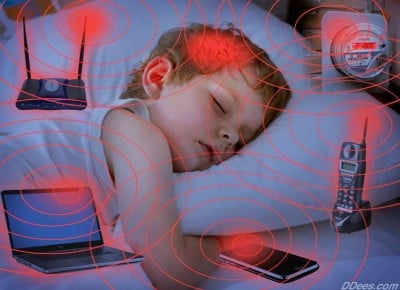
Our modern world is an electromagnetic soup filled with pulses, radio frequencies, computer screens, wireless signals, and a host of wearable gadgets that are emitting damaging radiation.
Peer-reviewed scientific studies have drawn conclusions that should concern us all, but particularly for young children and pregnant women. Government agencies are even doing battle amongst themselves over outdated scientific information that still impacts current regulations.
Yet another credible voice is now sounding the alarm about the pervasive dangers of Electromagnetic Fields (EMFs) – Professor Martin Pall, PhD – professor of Biochemistry and Basic Medical Science at Washington State University, Pullman. His lecture can be viewed below, as well as a summary of his findings amid a flood of other scientific research.
It is worth noting that Pall’s concerns have been echoed by others throughout the field of biochemistry and health science.
    • A prominent neuroscientist recently went on record in a lecture to the medical community which gave strong credence to the concerns of everyday citizens.
    • A world-renown biochemist went as far as to say that wireless radiation is a biohazard and should be abolished in certain settings.
    • British ER physician and founder of Physicians’ Health Initiative for Radiation and the Environment (PHIRE), Dr Erica Mallery-Blythe, analyzed the exponential growth of damaging sources of EMFs – damaging to all life, as life could be defined as anything that possesses an electromagnetic field. She concludes her lecture (viewed here) with some practical solutions that can be taken to mitigate the effects of bio-active frequencies which can cause disruption of our DNA fractal antenna and promote a host of stress responses.
Professor Pall states unequivocally in his lecture in Oslo, Norway:

Prof. Martin Pall - How WiFi & other EMFs Cause Biological Harm

“I think this is going to be one of the major issues in the next few years. Most people are not aware of this, and the people who are mostly know the old data – and there’s a lot of new [information] on this that’s extremely, extremely important.”
Pall shows us how, with an increasing preponderance of so-called ‘smart’ meters, ‘smart’ phones and other microwave-emitting technologies and infrastructure, the health of the public is in danger; that our young are the most at risk and that urgent action to protect people is now required.
Prof. Pall’s extensive research over recent decades into this issue shows that:
  • Microwaves damage humans at levels far below present radiation limits, through mechanisms at the cellular level
  • These biological mechanisms can – completely or partially – be behind growing “unexplained illnesses” like sudden cardiac death, ME, weakened immune system, fibromyalgia, post-traumatic stress, and increased DNA breakage, etc.
  • The effects can, in principle, affect all multicellular animals, and is proven, for example, in mussels (molluscs)
  • You need neither New Age, tendentious science or conspiracy theories to justify this.
Now is the time to become informed and keep your friends and family up to date on new research that shows the threats some of our new technologies pose to the more vulnerable among us. How many times do we need to hear the assurances of the scientific establishment that they have covered all bases in advising governments to create health guidelines that later turn out to be woefully inadequate?

THOSE BANKER DEATHS: A RECENT LIST AND SOME MORE HIGH OCTANE SPECULATION            ~READ !!!

As I’ve previously said on occasions, one of the interesting things about my job at this website is that once a week or so, I get to comb through all the articles and ideas that so many people kindly share with me. For this, I remain grateful to all of you that take the time to share articles that you’ve run across. One of the interesting things that happens because of this, is that I occasionally see that people are focused on events or things that do not become major news stories, either in the lamestream media or in the alternative media. This was one of those weeks, for while there has been a momentary “lull” in the spate of mysterious deaths of financiers and bankers during the past week, oddly some of you remained focused on it. Last Thursday I did my News and Views from the Nefarium on the death of financier Scott Therriault, another sad case of a loving man with a family, and a proven track record of performance and competence in his chosen profession. While I could find no reference to the manner of his death, one individual informed me privately that it was suspected suicide. But it’s hard to see how a man with a track record of stellar performance and apparently a loving father would do such a thing.
If one add him to the list of suspicious banker deaths, however, one gets a different picture. Consider this list, provided by a regular reader here, Ms. B.H.:
48 suspicious banking deaths
While I’m hardly sympathetic to the sort of “class envy” evidenced by the website’s title (“Hang the Bankers”), the list it provides is nonetheless interesting. Ponder the following clues just from this article alone (and there are other more thorough lists out there:
  1. Of the 48 dead bankers or financiers, five were connected to the Rockefeller interests, including JP Morgan;
  2. Of the 48 dead bankers of financiers, anywhere from five to seven were connected with aspects of finance conceivably involving some degree of competency or understanding of the use, and perhaps design, of high frequency trading algorithms;
  3. Of the 48 dead bankers, at least two are directly involved in legal and regulatory issues (and most of those dead would at least have been aware of regulatory and legal issues as a matter of professional competence);
  4. Of the 48 dead bankers, at least seventeen and possibly eighteen were CEO’s senior vice presidents, or upper echelon managers;
  5. Of the 48 dead bankers, only one was not directly involved in banking per se, and that is Mr. Richard Talley, the mortgage title businessman found dead; the official story being that he committed suicide by using a nail gun to drive several large nails into his head.
As I indicated in last Thursday’s News and Views from the Nefarium, the death of Mr. Therriault seems unusually connected to whatever pattern might be emerging, for he was (1) always in senior management and trading positions, (2) involved in “algorithmic trading”, i.e., high frequency trading, which, let it be noted, developed out of the entry of physicists into finance, (3) involved in real estate; and finally (4) involved with derivatives trading, and hence presumably knowledgeable to some degree in various commodities markets, including mortgages and (paper) bullion trades, equities, and so on.
So exactly what, if anything, is that pattern? I have been suggesting that in part this pattern is connected to algorithmic trading (HFT) itself, and to the ability of anyone with access to massive global databases and computational power, to predict and model aggregate human action in a variety of discrete contexts. In short, I’ve been arguing that at the heart of this story lies the intelligence-surveillance community and its scientists and technocrats, not the bankers.
But as I said at the beginning of this blog, this has been an unusual week… many of you were not only concentrated on the banker deaths but on the possible pattern behind them, and two or three people even made a suggestion which I had to think about. But when I did, the profundity of their insight sank in. Indeed, it left me rather breathless, for like all obvious things that are huge with significance, until that obviousness is articulated or clearly seen for what it is, one tends to miss it. So today’s “high octane speculation” is not even my own, but comes courtesy of a few regular readers here.
That insight goes something like this: Do you remember all the suspicious deaths, back in the late 1980s and early 1990s, of physicists around the world, many of them connected to various Western defense contractors? And do you remember all the suspicious deaths, in the late 1990s and on into the early 2000s, of biologists, immunologists, and geneticists around the world, many of them with various connections to various Western defense interests? In  other words, what my emailers were suggesting was to view the banker deaths in the same context as the mysterious deaths of scientists in the biological and physical sciences some decades ago, as part of the same picture. The common thread – though only an implicit one in the bankers’ cases, as I’ve been arguing – is the connection to the west’s defense and intelligence-national security infrastructures. Viewed in this light, a secret of some sort, one with huge implications, is being protected (for example, some of the physicists’ deaths in the 1980s and 1990s were connected to firms such as the UK’s Marconi group, and involved with the design of computer targeting and acquisition software in the Star Wars [Strategic Defense Initiative] of President Reagan. Such software might conceivably become the basis for computer modeling of multi-variable problems of a very different sort: aggregate human behavior. From there, it’s a short step to performance modeling of vectors of bio-chemical weapons, and so on). We are, in other words, flirting with the fringes of the notion of artificial intelligence, a subject in the news lately with Elon Musk’s and Stephen Hawking’s dire warnings that this might spell the end of humanity. Perhaps… just perhaps… these bankers uncovered something that led them to believe that while the markets were being manipulated, the manipulation was coming from a much deeper level or architecture than they ever imagined. Perhaps, my emailers were suggesting, it is time to look for the pattern – if any – not just among the bankers, but among those other “suspicious professional deaths”. Or to put it “country simple”, perhaps all that counter-intuitive behavior one sees emanating from the Western elites in recent years and events is not counter-intuitive, humanly speaking, at all. Perhaps all that multi-variable computer algorithmic modeling has summed up to something called Legion. Add in the rumors found on the internet occasionally that quantum computing “networks” already exist in the deepest recesses of the black projects world, stir, and one has quite a sauce.