Sunday, December 29, 2013


Report: NSA intercepts computer deliveries


The National Security Agency (NSA) headquarters at Fort Meade, Maryland, as seen from the air on January 29, 2010
.
View gallery

The National Security Agency (NSA) headquarters at Fort Meade, Maryland, as seen from the air on January 29, 2010 (AFP Photo/Saul Loeb)
LONDON (AP) — A German magazine lifted the lid on the operations of the National Security Agency's hacking unit Sunday, reporting that American spies intercept computer deliveries, exploit hardware vulnerabilities, and even hijack Microsoft's internal reporting system to spy on their targets.

Der Spiegel's revelations relate to a division of the NSA known as Tailored Access Operations, or TAO, which is painted as an elite team of hackers specializing in stealing data from the toughest of targets.
Citing internal NSA documents, the magazine said Sunday that TAO's mission was "Getting the ungettable," and quoted an unnamed intelligence official as saying that TAO had gathered "some of the most significant intelligence our country has ever seen."
Der Spiegel said TAO had a catalog of high-tech gadgets for particularly hard-to-crack cases, including computer monitor cables specially modified to record what is being typed across the screen, USB sticks secretly fitted with radio transmitters to broadcast stolen data over the airwaves, and fake base stations intended to intercept mobile phone signals on the go.
The NSA doesn't just rely on James Bond-style spy gear, the magazine said. Some of the attacks described by Der Spiegel exploit weaknesses in the architecture of the Internet to deliver malicious software to specific computers. Others take advantage of weaknesses in hardware or software distributed by some of the world's leading information technology companies, including Cisco Systems, Inc. and China's Huawei Technologies Ltd., the magazine reported.
Der Spiegel cited a 2008 mail order catalog-style list of vulnerabilities that NSA spies could exploit from companies such as Irvine, California-based Western Digital Corp. or Round Rock, Texas-based Dell Inc. The magazine said that suggested the agency was "compromising the technology and products of American companies."
Old-fashioned methods get a mention too. Der Spiegel said that if the NSA tracked a target ordering a new computer or other electronic accessories, TAO could tap its allies in the FBI and the CIA, intercept the hardware in transit, and take it to a secret workshop where it could be discretely fitted with espionage software before being sent on its way.
Intercepting computer equipment in such a way is among the NSA's "most productive operations," and has helped harvest intelligence from around the world, one document cited by Der Spiegel stated.
One of the most striking reported revelations concerned the NSA's alleged ability to spy on Microsoft Corp.'s crash reports, familiar to many users of the Windows operating system as the dialogue box which pops up when a game freezes or a Word document dies. The reporting system is intended to help Microsoft engineers improve their products and fix bugs, but Der Spiegel said the NSA was also sifting through the reports to help spies break into machines running Windows. One NSA document cited by the magazine appeared to poke fun at Microsoft's expense, replacing the software giant's standard error report message with the words: "This information may be intercepted by a foreign sigint (signals intelligence) system to gather detailed information and better exploit your machine."
Microsoft said that information sent by customers about technical issues in such a manner is limited.
"Microsoft does not provide any government with direct or unfettered access to our customer's data," a company representative said in an email Sunday. "We would have significant concerns if the allegations about government actions are true."
Microsoft is one of several U.S. firms that have demanded more transparency from the NSA — and worked to bolster their security — in the wake of the revelations of former intelligence worker Edward Snowden, whose disclosures have ignited an international debate over privacy and surveillance.
Der Spiegel did not explicitly say where its cache NSA documents had come from, although the magazine has previously published a series of stories based on documents leaked by Snowden, and one of Snowden's key contacts — American documentary filmmaker Laura Poitras — was listed among the article's six authors.
No one was immediately available at Der Spiegel to clarify whether Snowden was the source for the latest story.
Another company mentioned by Der Spiegel, though not directly linked with any NSA activity, was Juniper Networks Inc., a computer network equipment maker in Sunnyvale, Calif.
"Juniper Networks recently became aware of, and is currently investigating, alleged security compromises of technology products made by a number of companies, including Juniper," the company said in an email. "We take allegations of this nature very seriously and are working actively to address any possible exploit paths."
If necessary, Juniper said, it would, "work closely with customers to ensure they take any mitigation steps."
___
Geir Moulson contributed to this report from Berlin. Ryan Nakashima contributed from Los Angeles.

» Manipulations Rule The Markets — Paul Craig Roberts


Manipulations Rule The Markets

Paul Craig Roberts

The Federal Reserve’s announcement on December 18 that beginning in January its monthly purchases of mortgage-backed financial instruments and US Treasury bonds would each be cut by $5 billion is puzzling, as is the financial press’s account of the market’s response.

The Federal Reserve conveys a contradictory message. The Fed says that improvements in employment and the economy justify cutting back on bond purchases. Yet the Fed emphasizes that it is maintaining its commitment to record low interest rates “well past the time that the unemployment rate declines below 6.5 percent, especially if projected inflation continues to run below the [Open Market] Committee’s 2 percent longer-run goal. When the Committee decides to begin to remove policy accommodation it will take a balanced approach consistent with its longer-run goals of maximum employment and inflation of 2 percent.”

The last sentence in the quote states that the Fed does not regard its announced reduction in bond purchases as less accommodation or as a move toward tightening. In other words, the Fed is saying that tapering does not mean less accommodation.

To put it another way, the Fed is saying that the economy is doing well enough not to require the same amount of monthly bond purchases, but is not doing well enough to stand any change in the near zero nominal federal funds rate. The implication is that the Fed either does not think that a reduction in purchases will result in a rise in long-term interest rates or that such a rise will not derail the economy as long as the Fed keeps short-term rates at or near zero. If the $10 billion decrease in monthly bond demand results in higher long-term interest rates, what good does it do to keep the federal funds rate at zero? If the $10 billion monthly bond purchases were not needed as part of the accommodation policy, why was the Fed purchasing them?

Possibly the Fed thinks that Congress has taken steps to reduce the federal deficit, which would result in a reduced supply of bonds to match the Fed’s reduced demand for bonds, but the Fed’s statement makes no reference to federal deficit reduction, which is probably a smoke and mirrors change instead of a real one.

Moreover, the Fed’s outlook for the economy is mixed. The Fed says that “recovery in the housing sector slowed somewhat in recent months,” so why reduce purchases of mortgage-backed financial instruments? And surely the Fed is aware that the U3 unemployment rate has declined because discouraged workers who cannot find a job are not counted among the unemployed. As all measures show, real median family income and real per capita income are lower today than in 2007, and real consumer credit is not growing except for student loans. Without rising aggregate demand to drive the economy, why does the Fed see a recovery instead of faulty statistical measures that do not accurately portray economic reality?

The financial media’s reporting on the stock market’s response to the Fed’s announcement has its own puzzles. I have not seen the entirety of the news reports, but what I have seen says that the equity market rose because investors interpreted the reduction in bond purchases as signaling the Fed’s vote of confidence in the economy.

Previously when the Fed announced that it might cut back its bond purchases, the markets dropped sharply, and the Fed quickly back-tracked. Everyone knows that the high prices in the bond and equity markets are the result of the liquidity pouring out of the Fed and that a curtailment of this liquidity will adversely affect prices. So why this time did prices go up instead of down?

Pam Martens points out that there is evidence of manipulation. http://wallstreetonparade.com

As market data indicates, the initial response to the Fed’s announcement was a sharp move down as market participants sold stocks on the Fed’s announcement (see the chart of the Dow Jones Industrial Average in Pam Martens’ article). But within a few minutes the market changed course and rose on panic short-covering just as sharply as it had fallen.

The question is: who provided the upward push that panicked the shorts and sent the market up 292 points? Was it the plunge protection team and the NY Fed’s trading floor? Was it the large banks acting in concert with the Fed? It is hard to avoid the conclusion that this was an orchestrated event that forestalled a market decline.

Short selling in the paper gold futures market has been used to protect the US dollar’s value from being knocked down by the Fed’s Quantitative Easing. Following the Fed’s December 18 announcement, another big takedown of gold was launched.

William Kaye had predicted the takedown in advance. He noticed that the ETF gold trust GLD experienced a sudden loss in gold holdings as shares were redeemed for gold. Only the large Fed-dependent bullion banks can redeem shares for gold. Possession of physical gold allows the short-selling that drives down the gold price to be covered.
http://kingworldnews.com/kingworldnews/KWN_DailyWeb/Entries/2013/12/17_Absolutely_Shocking_Developments_In_The_War_On_Gold.html

Bloomberg reports that gold is exiting the West. It has been shipped out to Asia. You explain, dear reader, how the price of gold can fall so much in the West while the supply of gold dries up. http://www.bloomberg.com/video/what-s-happening-to-all-the-gold-d33u1c23SDqA0p0e~9_INw.html

In a few days prior to the Fed’s tapering announcement, GLD was drained of 25 tonnes of gold by primary bullion banks, JP MorganChase, HSBC, Deutsche Bank, Goldman Sachs, and Citicorp. As Dave Kranzler pointed out to me, these banks happen to be the biggest players in the OTC derivatives market for precious metals. HSBC is the custodian of the GLD gold and JPM is the custodian of SLV silver. HSBC and JPM are two of the three primary custodial and market-making banks for Comex gold and silver.

The conclusion is obvious. QE helps the big banks, and manipulation of the gold price downward protects the US dollar from its dilution by QE.

The Fed’s reduced bond purchasing announced for the New Year still leaves the Fed purchasing $900 billion worth of bonds annually, so obviously the Fed does not think that everything is OK. Moreover, the Fed has other ways to make up for the $120 billion annual reduction, assuming the reduction actually occurs. The prospect for tapering is dependent on the US economy not sinking deeper into depression. Massaged “success indicators” such as the unemployment rate, which is understated by not counting discouraged workers, and the GDP growth rate, which is overstated with an understated measure of inflation, do not a recovery make. No other economic indicator shows recovery.

Until a whistleblower speaks, we cannot know for certain, but my conclusion is that the Fed understands that it must protect the dollar from being driven down by QE and that the orchestrated takedowns of gold are part of protecting the dollar’s value, and perhaps also the cutback in QE is a part of the protection by signaling an end of money creation. The Fed also understands that it cannot forever drive down the gold price and that it cannot forever pour liquidity into stock and bond markets. To retreat from this policy without crashing the edifice requires successful orchestrations. Therefore, we are likely to experience more of them in the days to come.

Allegedly, the US has free capital markets, and globalism is bringing free capital markets to the world. In actual fact, US capital markets are so manipulated--and now by the authorities themselves--that manipulation cannot stop without a crash.

What American “democratic capitalism” has brought to the world is manipulated financial markets and the absence of democracy. How long this game can play depends on the outside world.

What happened to America's education?

A now declassified elite document written in 1969 says it all

Jim Stone, Dec 20 2013

Permalink

Bstep (behavioral science teacher's education program) education outlay for teachers, which was written in 1969 is agenda 21 all the way.

From page 255 of this document: The protestant ethic will atrophy as more and more enjoy varied leisure and guranteed sustenance. Work as the means and end of living will diminish in importance except for a few with exceptional drive, motivation, or aspiration. No major source of a sense of worth and dignity will replace the protestant ethic. Most people will tend to be hedonist, and a dominant elite will provide "bread and circuces" too keep dissention and social disruption at a minimum.
A small elite will carry society's burdens. The resulting impersonal manipulation of most people's lifestyles will be softened by provisions for pleasure seeking and guranteed physical necessities. Participatory democracy in the American ideal mold will mainly disappear. The worth and dignity of individuals will be endangered on every hand. Only exceptional individuals will be able to maintain a sense of worth and dignity."
Below this header, there is the outlay for impact on schools in 4 columns. They are all flaky, but column 3 reads:
"reduction to technicial level for the bulk of school personell who merely manipulate largely teacher proof programs; creation of a small group of elite practitioners who help to plan and direct in close collaberation with the total establishment"
I'd like to break that down, or translate it so to speak - By reducing school personnel to a technical level, they are stating that teachers are to be technicians, and not masters of their work. When they say these teachers will "manipulate largely teacher proof programs" they mean that they don't want the teachers getting in the way of the indoctrination they intend to inflict, they want these programs to be "teacher proof" so that a unified, self erasing curriculum with predictable outcomes is administered without any deviation from the plan laid out by "a small group of elite" who help to plan and direct in close collaberation with the total establishment".

Keep in mind that Bstep became the standard all American schools accepted. Now, 50 years later, the proof is on the table, our schools are in fact indoctrination centers that follow page 255 TO THE LETTER. Interesting stuff don't you think? The original document is HERE and keep in mind, the good stuff is buried deep. This document is over 300 pages long. For what I can see, the really damning stuff starts at around page 247. I can't write it all and don't have time to read it all, but one thing is certain this document is totally loaded with Agenda 21 destroy America script that is fluffed over to make it look benign. It was DEFINITELY the beginning of the end for America.

Sharks, bees and humans use same mathematical pattern to hunt

April Holloway | Ancient Origins | December 29, 2013

A mathematical pattern of movement called a Lévy walk describes the hunting behaviour of many animals, including sharks, birds and honeybees, and now for the first time it has been shown to describe human hunter-gatherer movements as well.

Hadza archery, Lake Eyasi, Tanzania (Photo: Wikimedia Commons)
The Lévy walk pattern involves a series of short movements in one area and then a longer trek to another area on a discrete grid rather than in a continuous space.  It appears to be ubiquitous in animals, similar to the golden ratio, phi, a mathematical ratio that has been found to describe proportions in plants and animals throughout nature.
When sharks and other ocean predators can’t find food, for example, they abandon their normal motion, for Lévy flight.
Birds and other animals also seem to follow Lévy flights and research has shown that it is optimal for searching sparsely and randomly distributed targets. Now new research has shown that the same pattern applies to humans too.
University of Arizona anthropologist David Raichlen, studied the movements of one of the last hunter-gatherer tribes on Earth, the Hadza people of Tanzania, who still hunt on foot using traditional foraging methods.  Members of the tribe wore wristwatches with GPS units that tracked their movement while on hunting or foraging bouts.
The GPS data showed that while the Hadza use other movement patterns, the dominant theme of their foraging movements is a Lévy walk. “This movement pattern seems to occur across species and across environments in humans, from East Africa to urban areas,” said Adam Gordon, study co-author and a physical anthropologist at the University at Albany. “It shows up all across the world in different species and links the way that we move around in the natural world.
This suggests that it’s a fundamental pattern likely present in our evolutionary history.” The researchers have pointed out that following a Lévy walk pattern does not mean that humans don’t consciously decide where they are going, Raichlen said. “We definitely use memories and cues from the environment as we search,” he explained, “but this pattern seems to emerge in the process.” A Lévy flight stems from the mathematics related to chaos theory and is useful in stochastic measurement and simulations for random or pseudo-random natural phenomena.
Examples include earthquake data analysis, financial mathematics, cryptography, signals analysis as well as many applications in astronomy, biology, and physics.
THIS ARTICLE ORIGINALLY APPEARED AT Ancient Origins

The Constitution

“The two enemies of the people are criminals and government, so let us tie the second down with the chains of the Constitution so the second will not become the legalized version of the first.”
-Thomas Jefferson

President Jefferson

“If a nation expects to be ignorant and free in a state of civilization, it expects what never was and never will be.”
--Thomas Jefferson, 1816.

Putin’s Purge Of The Rothschild Money Changers From Russia: Another Rothschild Goon Found Dead & Another Flees To U.K.  /  http://politicalvelcraft.org/2013/03/23/putins-purge-of-the-rothschild-money-changers-from-russia-another-rothschild-goon-found-dead-another-flees-to-u-k/

Rothschild Cabalist Boris Berezovsky, Vladimir Putin‘s most implacable enemy!
Boris Berezovsky, the exiled Russian tycoon, has been found dead at his home in Surrey, news agencies reported on Saturday.
There was no immediate information on how Berezovsky, who was 67 and who has lived in the UK since 2000, had died.

Russia Tells United States Citizens Not To Give Up Your Guns: We Learned From Experience Fighting Rothschild’s Banking Schemes!
WHEN PUTIN WAS ELECTED PRESIDENT of Russia in 2000, Russia was bankrupt. The nation owed $16.6 billion to the Rothschild-run International Monetary Fund while its foreign debt to the Rothschild-controlled Paris & London Club Of Creditors was over 36 billion dollars.
But Putin took advantage of the current boom in world oil prices by redirecting a portion of the profits of Russia’s largest oil producer Gazprom so as to pay off the country’s debt. The continual surge in oil prices greatly accelerated Russia’s capacity to restore financial sovereignty.

By 2006 Putin had paid off Russia’s debt to the Rothschilds. Russia’s financial dependence on the Mafia financiers was now over. Putin could then establish what became his Russian Unity Party’s campaign slogan:Putin’s Plan Means Victory For Russia! This slogan continues to make the New World Order Bankers very nervous… 2007 ~ Political Vel Craft

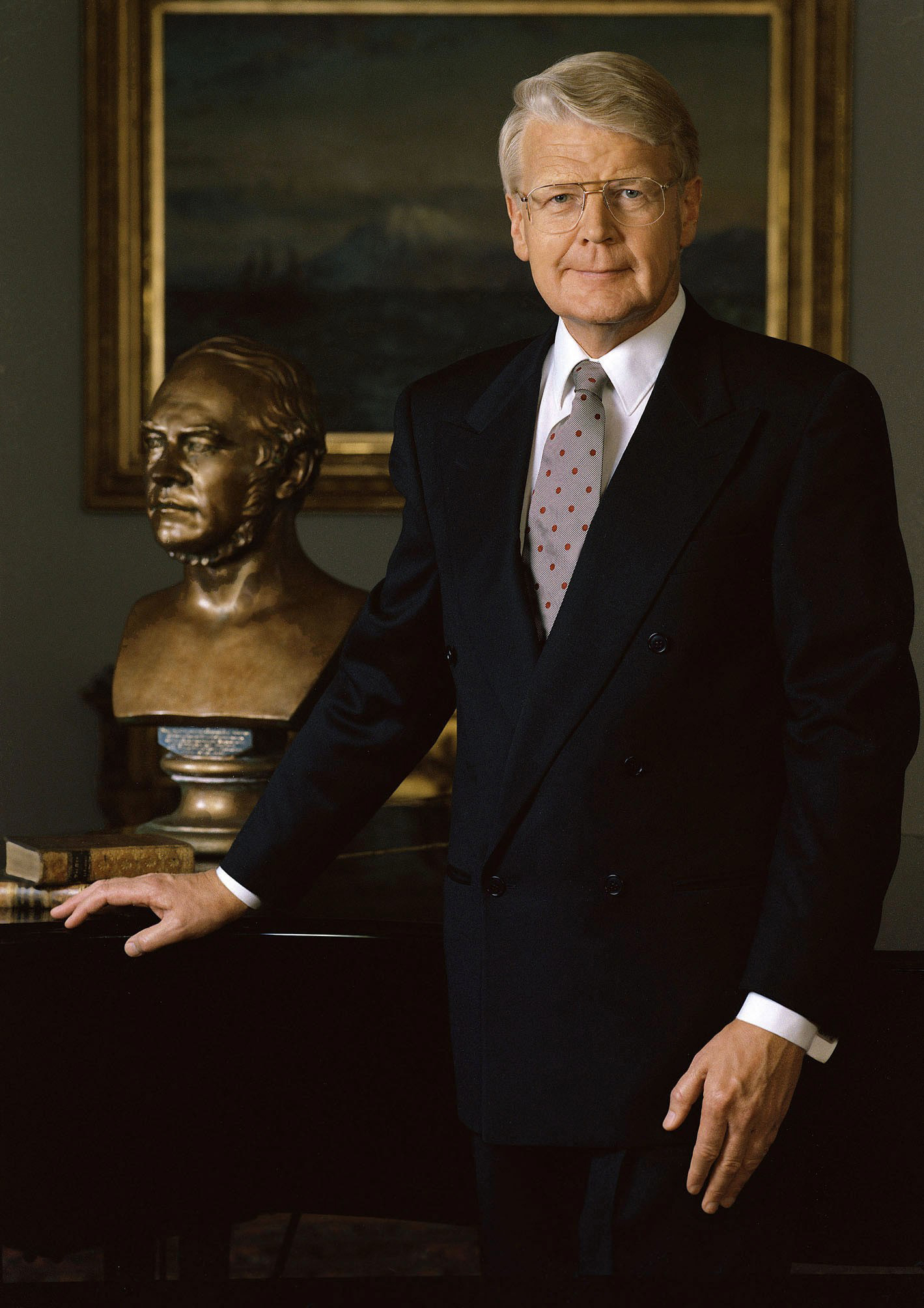
President Of Iceland Ólafur Ragnar Grímsson Arrests 10 Rothschild Bankers.
Russian media reported that Berezovsky had been found dead in his bath at his Surrey home at 11am on Saturday and that coroners were in attendance.
The Interfax news agency cited a relative, whom it did not name, as saying Berezovsky’s death had occurred at his home.
It also cited a Russian lawyer for Berezovsky, Alexander Dobrovinsky, as saying he had died.
Berezovsky has long been a wanted man in Russia and has been a dedicated opponent of Russian president Vladimir Putin for more than a decade.
He again came to prominence last year when he lost a high-profile legal action against fellow Russian businessman and Chelsea Football Club owner Roman Abramovich.
Walls Closing In Upon Jacob Rothschild!

Vatican vs Illuminati

In that case, Berezovsky claimed he was intimidated by Mr Abramovich into selling shares in Russian oil company Sibneft.
Berezovsky had been claiming £3bn ($4.7bn) in damages. However, the court ruled in Mr Abramovich’s favour, with a judge delivering a scathing judgment of Berozovsky, saying he had been an “inherently unreliable” witness.
The legal costs of that case are thought to be upwards of £100m, and Berezovsky has also faced expenses from other court battles and a divorce.
Berezovsky is a former Kremlin power broker who came to prominence after the collapse of the Soviet Union in 1991 and the rise of Boris Yeltsin. But his fortunes declined dramatically after Mr Putin established himself as Russian president.
Berezovsky had helped Mr Putin rise to power in the late 1990s. But he went into opposition and then self-imposed exile after the new president consolidated his power in 2000.
Berezovsky has survived numerous assassination attempts. He was closely allied to Alexander Litvinenko, the former KGB officer killed by polonium posioning in 2006. Litvinenko was alleged by some unnamed British security officials to have been killed at the behest of the Russian state.
Financial Times
Russia Federation's President Vladimir Putin
Russia Federation’s President Vladimir Putin
  1. Putin Bans Russian Officials From Owning Foreign Rothschild Bank Accounts & Stock! Ending The NWO Cabal….

  2. Update April 27, 2013 On West/Waco Texas Fertilizer Plant Missile/Laser Strike: Government Motives To Destroy It With A Missile!

  3. Roman Catholic Popes Have All Denounced Free Mason’s New World Order: If You Believe Otherwise You’re A Victim Of The Banker’s Propaganda.
Hyper Smash

Full Sandy Hook Police File to be released today 12/27/13 at 3PM. Thousands of Pages, many redacted - State Police Press Release.

The complete police report on Sandy Hook will be released today 12/27/13 at 3PM.  But don't expect a lot of information.  As they have redacted a lot of it according to the law.  Remember that the state had passed a law where they don't release information when children are murdered in detail.   
It will be interesting what they do have in the report.  It will be thousands of pages long. 
The comments on the article are mind boggling.  Everyone is clueless about the truth.  All who commented believe the government's story.

From article:
NEW HAVEN, Conn. (AP) — The planned release Friday of thousands of pages of police documents from the investigation into last year's school massacre in Newtown could shed additional light on the world of the 20-year-old gunman.
State police said their report totaling several thousand pages would be released at 3 p.m. The report "has been redacted according to law," and includes text, photos and 911 calls received by state police, they said Thursday.

What is interesting is a panel says the Newtown report falls short in information.  Seems there is actually very little information about Adam Lanza.

Here is the Connecticut State Police site and their press release:


The link in the above state police release is not working as of yet, but here it is.
 full report:  www.CSPSandyHookReport.ct.gov

Sandy Hook School Shooting Investigation Completed; Report to be Released http://memoryholeblog.com/2013/12/27/sandy-hook-school-shooting-investigation-completed-report-to-be-released/

From J. Paul Vance, Connecticut State Police
The Connecticut State Police report on the Dec. 14, 2012, shooting at Sandy Hook Elementary School will be released on Friday, December 27, 2013, at 3:00 p.m.

The report will be available only at this website: http://www.ct.gov/statepolicenewtownreport
The report runs several thousand pages and has been redacted according to law.
The report does contain some text, photos and 911 calls received by the State Police on the day of the shootings.
The release of this document is indicative that this State Police criminal investigation is concluded.
###END###
LT. J. Paul Vance
http://www.ct.gov/despp/cwp/view.asp?Q=537354&A=4226
http://www.despp2.ct.gov/
See also Associated Press, Police File on Newtown Shooting to be Released

THINGS THAT MAKE YOU GO “HMMM…”: NASA UNVEILS VALKYRIE ROBOT IN TIME FOR DARPA CHALLENGE


NASA unveiled a robot named Valkyrie just in time to use it as an entry in the DAPRA challenge, and this one has so many implications and even messages we simply have to talk about it here(thanks again to MS P.H. for sharing this one):
NASA’s Superhero Robot ‘Valkyrie’ Ready For DARPA Challenge
Now, there’s any number of things here that made me go “hmmm…” and I’ll bet did you too. The first is the name of the robot itself: Valkyrie, conjuring mental images and mind music of Richard Wagner, in his state of sybaritic synaesthesia, composing his librettos and Ring cycle operas, including the famous Ride of the Walkyries, a Teutonic vision of “resurrection” and blond, helmeted “goddesses” with spears who gather up the sacred dead and fly them off to Valhalla, singing all the way over a full orchestra (some off stage and through megaphones incidentally). The only thing lacking was a flying Viking longship(Wagner had already sort of done that flying ship thing with Der Fliegende Hollander. He was strange. Brilliant. But strange.)  Valkyrie, in other words, conjures images not only of Nazis-at-the-opera or in NASA, but of heavenly missions…
Which brings us to the second “hmm”: the fact that this is entered in the Diabolically Apocalyptic Research Agency’s robot competition. Think of it as a sort of Kammler Contest For Most Bizarre and Out of the Box Engineering Project. You’ll note the following paragraphs, which picqued my interest and high octane speculation:
“Valkyrie, which has the official NASA designation of “R5,” stands about 6-feet-2-inches tall and weighs almost 280 pounds. It was designed to compete in the trial stage of the DARPA Robotics Challenge (DRC). In the competition, robots are asked to complete a series of tasks, such as driving a car, walking over rough terrain, attaching a virtual hose, and turning a valve. Essentially, Valkyrie has to be able to operate in the same way a normal person would while under the control of humans who have only minimal training with robots.
“According to DARPA, the main goal of the DRC is to push innovation towards building robots that can take over tasks normally handled by humans. Using robots to perform these tasks could be advantageous in situations deemed too dangerous for humans, such as disaster areas.”
Now, having a robot that can drive a car (or pilot a space vehicle or Martian rover, or what have you), walk over rough terrain (like on Mars or the Moon), attach hoses, and turn valves, is a pretty handy thing to have around “in situations deemed too dangerous for humans” such as mining asteroids (or mining anything, anywhere, really), or repairing spacecraft(even those containing humans). Their utility to perform such tasks in space would be cost effective as well, since human asteroid miners would have to be supplied, robots, more or less, would not.
What were really looking at, in other words, is yet more evidence that the long term agenda of the commercial exploitation(and therefore eventual militarization) of space is not merely an inevitability: it is being actively planned and engaged in, and Valkyrie is just another example of how serious the agenda, and those behind it, are.

The Stoner Rock Mysteries: Top 13 Of '13


To wrap up 2013 in style I've decided to offer up my very own best-of-the-year list focusing in on the top releases from a musical genre generally referred to as "stoner rock". Stoner rock is a bit of catch all for various styles that include desert rock, traditional doom metal, sludge, drone metal, occult rock, fuzz rock, heavy psych, and so forth. As I noted before here, stoner rock is a genre that was seemingly steeped in synchro-mysticism from its very inception.

Desert rock, for instance, was spawned near the infamous thirty-third parallel north in the desert surrounding Palm Desert area. This region also includes Joshua Tree National Park, a location that became legendary in rock 'n roll lore after Gram Parsons' (of the Byrds and Flying Burrito Brothers, among others) body was burned there in a bizarre send-off by his road manager. Less than 20 years later the surrounding deserts would play host to what became known as "generator parties."


Local bands would erect makeshift stages deep in the deserts and use generators to power their amps. Festivities would begin shortly after dark, with local kids making the scene and consuming massive amounts of beer, weed and hallucinogens. Frequently the bands would play for hours, not stopping until the early hours of the next day. For all sakes and purposes these generator parties brought rock 'n roll back to its shamanistic origins and it should come as little surprise that musicians who cut their teeth in this environment would become key members in a host of bands that include Queens of the Stone Age, Kyuss, Fu Manchu, the Obsessed, Goatsnake, Yawning Man, Fatso Jetson, Masters of Reality, and so forth.

To this very day the whole Palm Desert/Joshua Tree area remains a musical mecca, with both veterans of the Palm Desert scene as well newer bands with no direct links to region heading there to record. Blaak Heat Shujaa, a group comprised of individuals from France and the eastern United States, even went so far as to relocate there before recording their most recent EP and album so as to bask in the atmosphere.

Rancho De La Luna, one of the famed recording studios in the palm Desert/Joshua Tree region
The origins of other styles associated with the stoner rock genre are not quite so dramatic, but regardless this genre has long displayed a curious relationship with the occult and mystical. Of course rock bands delving into the occult, especially in the metal genre, is rather passé in this day and age but stoner rock always took a much more original approach than the lame LaVeyian Satanism and Nordic paganism of many extreme metal bands. Consider, for instance, In the Labyrinth's The Garden of Mysteries, an album originally released in 1996. This album, recently re-released in 2012, attempts to be a kind of soundtrack to ancient Mystery traditions from across the Mediterranean. More recently Sabbath Assembly (whom I already wrote at length on here and here) set the hymns of the notorious Process Church of the Final Judgment to music in two superb albums, Restored to the One and Ye Are Gods.


In the Labyrinth's The Garden of the Mysteries (top) and Sabbath Assembly's debut (bottom)
So yes, despite the hedonistic and escapist nature of much stoner rock, there are some incredible instances of synchronicity and occult musings. For a genre that is not considered especially serious in nature it seems to routinely out do the Masonic Easter eggs of much pop music. 2013 was a year in which synchs seem especially pronounced in some of the genre's top releases. Hence, my decision to offer up to my readers the top thirteen synchro-mystic stoner rock releases of 2013. Those iTunes and Amazon gift cards would likely be put to better use exploring some of these releases rather than latest offerings from Jay Z or Lady Gaga, at least in this researcher's opinion.

Before beginning with the countdown I would like to remark on two trends I've noted in this year's releases. The first is that, despite some serious over exposure, the retro occult rock movement continues to churn out quality releases. This movement began in earnest in the mid-00s with the emergence of Sweden's Witchcraft. Witchcraft took the sound of Black Sabbath and 1970s Pentagram and the occasional prog and psychedelic flourishes and fashioned a sound so retro that it was almost more 70s than many albums that were released in the 1970s.

Witchcraft's landmark debut
Since then many bands have followed in their wake, mining the sound of late 1960s/early 1970s metal, acid rock and prog while adding increasingly occult-centric lyrics and imagery. This is in stark contrast to the approach many bands from an "alternative/indie" background take to retro rock (i.e. the Brain Jonestown Massacre, the Black Angels, the Elephant Six Collective, etc). While these bands may have painstakingly recreated the sounds of the Beatles or the Rolling Stones they generally seem to have felt the need to apply more contemporary (and even politicized) lyrics to their work (with a few exceptions, such as the great Kula Shaker). To this listener's ears, this lends a certain hollowness to much of these efforts that is hard to overcome.


By contrast, the musicians coming from a metal background were not afraid to tackle the most uncouth aspects of the Psychedelic 60s and the Heavy 70s --the witches, the mythological gods, the dragons, the pot smoking wizards, and so forth. In a way this has created an idolized version of the first great wave of heavy music (which ran from roughly 1968 till 1974), one in which every band seems to operate their own coven on the side.


While the reader may find it hard to believe after reading the upcoming list, Recluse does in fact listen to other types of music other than retro occult rock. Indeed, he contemplated rearranging the list several times to reflect this diversity (as well as making the writing process a little easier), but the fact is the albums put out by this subgenre easily surpassed many of the "modern" sounding releases of this year.

The next trend that bares noting is the reflections upon the current state of rock n' roll several of these bands engage in. Rock is of course approaching 65 (or may have already surpassed that mark, depending upon where you date the birth of rock 'n roll), and more than a few observers believe that it is getting a little long in the tooth. It is of course no longer the dominant style of music in youth culture, having long since been surpassed by hip hop, and even its historic live tradition is beginning to fade away, at least in these United States (though possibly not in Europe). This uncertainty seems to have been at the heart of several of the years best releases, inspiring both defiance and contemplation.

And with that out of the way, on to the list...

#13 --Jex Thoth, Blood Moon Rising 


Jex Thoth is both the stage name of Jessica Bowen as well as the name of her band. Miss Bowen is one of the pioneers of the modern occult rock sound. She first began recording in the mid-00s as a member of Vanishing Voice, a collective that also included Miss Bowen's ex-husband, James "Wooden Wand" Toth. Around the time their marriage started falling apart Miss Bowen founded Totem with several other members of Vanishing Voice. After realizing the name was already taken, the group was re-christened Jex Thoth and released their acclaimed self-titled debut in 2008.
Despite displaying ample influences from groups such as Black Sabbath and Amon Duul, there was a modern sensibility to Jex Thoth's self-titled that many later occult rock acts would forgo. The album itself was littered with references to the occult and the band would develop a highly ritualistic performance style that includes bathing the stage in candlelight and burning Palo Santo before beginning their set.

 Miss Bowen further upped the occult ante in 2010 when she joined Sabbath Assembly and handled the lead vocals on Restored to the One, an album based up the hymns of the Process Church of the Final Judgment. After touring with Sabbath Assembly for a time she dropped out and reformed Jex Thoth with mostly new musicians. It would not be until 2013, however, that a proper follow up to the debut full length arrived.
Blood Moon Rising finds Jex stripping away much of the psychedelic and retro aspects of her sound. This album is steeped in a stripped down, highly atmospheric brand of traditional doom metal that occasional echoes female-fronted alt-rock outfits, most obviously PJ Harvey. Jex also seems to have been influenced by some of the work Sera Timms has done with Black Math Horseman and the Ides of Gemini on this outing as well. Despite being a five-piece, the instrumentation is very sparse throughout the album. Lyrically, the album seems more personal and less occult-driven that Miss Bowen's prior work but such musings still appear rather frequently.
On the whole, this album is a step down from Jex's prior works and requires multiple listens to fully grasp. While I appreciate subtly, this album borders of meandering at times. Still, Jex remains one of the most compelling and original figures in occult rock even if she can not quite overcome the dreaded "sophomore slump."

#12 --Black Pyramid, Adversarial


On their Facebook page Black Pyramid describe their sound as "Psychedelic War Metal." Its an apt label, having grown out of a fusion of Sleep and sludgier groups such as High on Fire and The Sword. After some serious lineup turmoil the formerly Massachusetts-based power trio delivered their third, and possibly final, album earlier in the year.
The word "adversarial" is generally used in reference to the legal system used in common law countries in which two adversaries, one for the prosecution and one for the defense, square off. In some accounts this system derived from a medieval mode of trail-by-combat in which some litigants were allowed a champion to represent them. I suspect that this is the inspiration for the name of Black Pyramid's third long player, war being a reoccurring theme throughout.
The opening cut "Swing the Scimitar," possibly both the longest and heaviest track Black Pyramid has ever released, makes this clear right off the bat. Its followed by the more up tempo "Bleed Out," seemingly a condemnation of modern day warmongering. The instrumental "Issus," placed square in the middle of the album, is named after the ancient settlement located in modern day Turkey. It was the site of three battles that had ramifications for world history of varying degrees --the First Battle of Issus, in which Alexander the Great defeated Darius III of Persia; the Second Battle of Issus, a minor Roman civil war in which the Emperor Septimius Severus defeated his rival, Pescennius Niger; and the Third Battle of Issus where the Eastern Roman Empire defeated the Sassanids in a victory the Prophet Mohammed supposedly foretold.

a depiction of the First Battle of Issus
The albums closing track, "Onyx and Obsidian," is an epic that makes good use of the mythos surrounding twins, in this case of the warring variety. Both onyx and obsidian have extensive magical associations --onyx stones were worn by ancient Israel's priests and are said to be the stone of Solomon; obsidian was the material used for sacrificial knives amongst some Mesoamerican tribes while also being used as a seeing stone by the Aztecs as well as magicians such as John Dee and Joseph Smith.

# 11 --Naam, Vow


Naam is the Sanskrit word for "name" but it is also associated with the divine identity of the Creator. It is also a type of meditation, so it should be unsurprising that much of the music produced by the band Naam seems bent on capturing a journey into inner space.
With this, their second full length, Naam has joined the forefront of the mostly European-dominated heavy psych scene. While many of the bands on the other side of the Atlantic prefer epic length tracks heavy on jamming, Naam has progressively scaled back their song lengths. Only three of the albums eleven tracks go over five minutes.

 Sonically the group builds upon the space rock of Hawkwind, slowing it down and making it even more cerebral. There's also the inevitable Pink Floyd influences as well, but Naam remains their own outfit with each player carving out a distinct niche within their sound.
The major knock on this album is none of the tracks, aside from the lonesome country of "Laid to Rest" and the driving "Brightest Sight", really standout. Still, this album washes over one like a pleasant reverie and departing before overstaying its welcome.

# 10 --Purson, The Circle and the Blue Door


The debut album of a retro occult act with a sound that is largely more prog than proto-metal. This album recalls early Traffic as well as both the British folk of Fairport Convention and the Medieval vibe of King Crimson's In the Court of the Crimson Kingthough it occasionally ventures into heavier territory. The founder and chief figure in Purson, a name derived from a fabled demon, is vocalist/guitarist Rosalie Cunningham.
Cunningham was the work's chief songwriter as well as playing the bulk of the instruments on the album. Despite the band name and the album title Cunningham takes a light approach to the occult --Witness "Spiderwood Farm", an almost gleeful take on a cult. Elsewhere the album ventures into subtle character studies ("Sailor's Wife's Lament") and even sensual musings ("Well Spoiled Machine").
The album's closing track, "Tragic Catastrophe", is easily one of the year's strongest cuts. Its also one of the most poignant ruminations on the present state of rock 'n roll. The song begins with the protagonist's discover of the whole rock thing, employing almost Knowles-ian language for this moment:
"In a dusty attic, he found a magazine
Full of gods and heroes, of deities and queens
He took it as his bible, with religion in his eyes
He saw his life before him, he saw his name in lights"

But the Golden Age of rock 'n roll is long past, having succumbed to corporate masters who initially did everything in their power to reduce a vibrant medium to another soulless commodity. Now they are ready to move on from something they always found rather bothersome and cannot hide their glee. The song woefully notes:
"And what will become of him?
This day and age has no time for a dinosaur taking the stage
It's a tragic catastrophe
'Cause there's nothing else that he can do
"Chairs of computers sing
The mannequins played guitar so convincingly tonight
The man says boy get a real job,
Take off all of that make-up"

Get a real job has become something of a mantra for modern society. Thus the dreams of local garage bands become ever more unattainable to the delight of "real" professions, such stock brokers, investment bankers, corporate lawyers, defense contractors, private security specialists, CIA assets, and so forth.

#9 --Kadavar, Abra Kadavar


The sophomore outing of the German proto-metal power trio. While a solid release in its own right, this album is certainly a step down from Kadavar's self-titled debut. The debut, which truly sounded like an album that could have been released in 1968 production wise, was aided immensely by a moody atmosphere that lent mystery to its six compositions. By contrast the sophomore outing, while still suitably retro, sounds to "bright." The additional songs and longer running time don't help matters either.
Regardless, one would be hard pressed to find a more rocking collection of acid rock songs released in 2013. Kadavar seems to have both upped the tempos and the LSD intake, creating an album that would fit comfortably in rotation with the likes of Blue Cheer and Sir Lord Baltimore. The first single, "Doomsday Machine" is as driving as anything off of Kingdom Come while later tracks such as "Liquid Dream" and "Rhythm for Endless Minds" surpass the acid-washed fuzziness of Blue Cheer at their most primal. You will not find many profound insights here, but few albums released this year are quite as fun to listen too.

#8 --Spirits of the Dead, Rumors of a Presence


While certainly retro leaning, Spirits of the Dead's earlier work (that Recluse has heard, at least), offered a modern take on acid folk with occasional heavy rock interludes. The Norwegian four-piece's songwriting is firmly rooted in 60s psychedelia and 70s folk, prog and heavy rock, but the approach to production is firmly modern. Many of the tracks SOTD's last offering, The Great God Pan, are so elaborately produced and mixed that the group can not recreate them live as a four piece.
While The Great God Pan was firmly rooted in acid folk the follow up is a much more "conventional" rock album, with only one track ("Seaweed") done in the acoustic vein of the prior release. By contrast, Rumors is dominated by fuzzy, effects-laden guitars and trippy keyboards. While still firmly in the retro camp, "Golden Sun" almost sounds like something the Screaming Trees could have written in the late 1980s while the slow, Sabbathy-blues of "Red Death" wouldn't sound out of place on Goatsnake's debut. The title-track is effectively a modern fusion In the Court of the Crimson King and The Man Who Sold the World-era Bowie while the epic closer, "Oceanus", updates Secret Treaties (an album littered with synchronicities and high strangeness, as noted before here and here)-era Blue Oyster Cult.

 
 Spirits of the Dead take their name from a short story by Edgar Allen Poe, an individual with more than a passing interest in metaphysics and the occult (I briefly touched on this aspect of Poe in my examination of The Following, which can be found here). Recluse suspects that SOTD also have a fondness for such topics --the opening track, "Wheels of the World", boasts "I have a taste of forbidden knowledge" after all. Unfortunately, Recluse does not have the lyrics to this release and has problems making them out on several tracks, making an in-depth examination of this album's themes difficult. But when a band names a track after the Greco-Roman god Oceanus, a being usually depicted as having the upper half of a man and the lower half of a fish (such gods are highly significant in Robert Temple's theories concerning Sirius), its a pretty safe bet that they have more than a passing knowledge of the arcane.

#7 --Hidden Masters, Of This & Others Worlds


It's almost obligatory to put a band with the name Hidden Masters on a synchro-mystical list. Fortunately, the British trio's debut is one of the most unabashedly fun albums of 2013. Unlike many  retro bands in the stoner rock camp, Hidden Masters' sound is more Psychedelic 60s than Heavy 70s. Of This & Other World's ten tracks sound like they could have been a bonus disk for the second Nuggets box set, Original Artyfacts From the British Empire and Beyond, as well as displaying shades of more well known acts such as Cream, Revolver-era Beatles, and the Syd Barrett-fronted Pink Floyd. There are also shades of contemporary retro acts such as the Dukes of Stratosphere and Kula Shaker. In short, this is prime psychedelic garage rock with a thoroughly British sense of whimsical and the absurd.
Hidden Masters do not take a serious approach to metaphysics, at times even falling back on one of the most time-honored themes of old school garage rock: women. But these are women who bring time itself to a stand still and seemingly plunge the narrator into an alternative reality (opener "She Broke the Clock on the Long Now"); or mysterious women who possibly disappear into the "smoke and the alcohol" ("Perfume"). There are also the inevitable ruminations of altered states of consciousness, other dimensions, and beings from outer space. Like Kadavar, Hidden Masters did not turn in one of the deepest releases of the year. But there are few more fun.

#6 --Wolf People, Fain


This is the second album from the British quartet, though this author is unfamiliar with the group's debut. Like Spirits of the Dead, Wolf People craft songs that sound like 60s/70s rock, but have a contemporary edge. Throughout Fain they beautifully capture the vibe of a British countryside during the early hours of a winter morning. Wolf People manage a very Medieval atmosphere on this album, calling to mind both Fairport Convention as well as Led Zeppelin's folk-centric third album. There's also a bit of Jethro Tull and early King Crimson.
Opener "Empty Vessels" is seemingly an ode to a hungry ghost, or possibly some type of elemental being, while "When the Fire is Dead in the Grate" chronicles a magical ritual gone wrong. "Athol" and "Thief" are compelling character studies, the former seemingly in the mold of a murder ballad. The epic "Hesperus" may also be in this vein, or an allusion to the sinister forces behind a murderer. All of it adds up to a haunting atmosphere that could rival that of the after-mentioned Led Zeppelin III.

 #5 --Blood Ceremony, The Eldritch Dark


This is Blood Ceremony's third, and best, album. Like several of the other albums we've already considered, The Eldritch Dark is strongly influenced by British folk and prog such as Fairport Convention and Jethro Tull (yes, Recluse has a thing for druggy, Medieval-sounding music). Front woman Alia O'Brien even adds some Ian Anderson-style flute parts to the proceedings, along with her vocals and work on the organ. Blood Ceremony is heavier than similar groups such as Purson and Wolf People, however, and unleash ample amounts of thick, sludgy Sabbath-style riffs.
Blood Ceremony can replicate Black Sabbath with the best of them but on this album their prog and folk influences provide a compelling contrast to the more convectional proto-metal riffing. "Lord Summerisle" (an allusion to The Wicker Man) is a gorgeous ballad in the mold of Fairport Convention sung by bassist Lucas Gadke. "Ballad of the Weird Sisters" is a foot-tapping murder ballad involving two desperadoes that come upon a trio of witches. The witches take the two men in and give them a strange brew featuring "eye of newt and Mandrake root." Murder ensues.

 Closer "The Magician", clocking in at just a little over eight minutes, recounts a sorcerer named Haddo's bid to perform a Black Mass. In lesser hands this track would come off as utterly ridiculous, but Blood Ceremony manage to pull it off in style. The same could be said of the rest of the album.

#4 --Uncle Acid and the Deadbeats, Mind Control


You can't go wrong with an album named Mind Control from a band called Uncle Acid and the Deadbeats. What's more, Uncle Acid may even be a bit synchro-mystically inclined, if the press release they put out in the wake of being selected to open for Black Sabbath during their latest tour is any indication:
"Formed in Cambridge by media-shy frontman K.R. Stars, in an era of profile building, brand-expanding and over-exposure Uncle Acid & The Deadbeats are a cult genuine phenomena. The dictionary definition of cult, in fact: 'a system of religious worship, with reference to its rites and ceremonies. A group or sect bound together by veneration of the same ideal.' In this case: taking rock music back to its ritualistic beginnings when pagan heathens would stomp out a dirt-rhythm and howl at the moon. When music was the carnal catalyst for orgiastic midnight reckonings." 
In fairness to Uncle Acid, front man K.R. Stars has insisted that the group's occult pose is not serious and more inspired by old horror movies than anything else. Regardless, this album is a synchronistic gem.
While many bands have attempted to capture the sound of early Black Sabbath over the years, few have been as successful as Uncle Acid. The production and guitar throughout Mind Control sounds like vintage Vol. 4. Uncle Acid have stepped up the psychedelia on this album, their third, however. "Follow the Leader" sounds like something Revolver-era Beatles could have written pending Tony Iommi's gear could have been brought a few years into the future.

Lyrically, this album could be a concept album revolving around the various conspiracy theories surrounding the Process Church, the Manson Family and the Son of Sam murders (which I briefly touched on here, here, here and here). Opener "Mt. Abraxas" references the Great Archon in the Gnostic system of Basilides. As I noted before here, Manson seems to have embraced a kind of dualistic Gnosticism filtered through the Manichean racism of Christian Identity "theology." "Desert Ceremony" recounts an occult ritual geared towards brainwashing while the demonic biker boogie of "Evil Love" chronicles a programmed cult killer. "Valley of the Dolls" cleverly references the cult classic Beyond the Valley of the Dolls, the ending of which was inspired by the Manson family killings. Valley of the Dolls is also a book (later adapted into a movie co-starring the most famous Manson victim of all, Sharon Tate) by author Jacqueline Susann, whose autistic son Guy has rarely appeared in public after being "treated" by a doctor (Lauretta Bender) connected to the CIA's behavioral modification experiments (as noted before here). Album closer "Devil's Work" is seemingly an account of the Tate killings, even referencing Tex Watson's well known phrase.

#3 --Vista Chino, Peace


Vista Chino has its origins in Kyuss Lives!, a group formed by Kyuss veterans Brant Bjork (drums), John Garcia (vocals) and Nick Oliveri (bass) to perform the back catalog of the desert rock giants. After ample legal haggling with Queens of the Stone Age's Josh Homme (who was Kyuss' guitarist) over the name, the group (which also features guitarist Bruno Fevery) rechristened itself Vista Chino and issued its debut this year.
Kyuss of course had it roots in the generators parties of the Palm Desert scene (mentioned at the beginning of this article), an experience that would have a tremendous effect of the group's sound. Kyuss is one of the most atmospheric groups ever, their sound taking the listener to a primal place in human consciousness, namely the haunted deserts where so many holy sites of the ancient world resided. Kyuss was never an occult-centric group, but their sound was practically shamanism set to music. None of the former members, including drummer Bjork (who never ventured far from the Southern California deserts) has ever quite matched the incredible vibe of Kyuss.

 Nearly 20 years has passed since the demise of Kyuss and more than a few wondered if Bjork and Garcia would be able to recapture the old magic when they decided to cut a new album together, especially without Homme (who was Kyuss' chief songwriter) on board. Not only did they deliver, but guitarist Bruno Fevery takes Kyuss' legendary sound into the 21st century with shades of European heavy psych and Nordic fuzz rock (i.e. Dozer, TruckfightersBrain Police, etc) in his playing. Like Kyuss at its best, Peace takes the listener back to that primal state that could only be found in the harshest and most mysterious of environments.

#2 --Monster Magnet, Last Patrol


What synchro-mystical list would be complete without a band whose founder alleged was meant to do for rock 'n roll what Jack Kirby did for comic books?
Last Patrol represents a bold step for the veteran rock outfit. After over a decade of playing arena-ready heavy rock the Magnet opted to return to the heavy psych and space rock of their first three albums (Spine of God, Superjudge and Dopes to Infinity, respectively). The group only gained some semblance of mainstream success after they streamlined their sound enough on 1998's Powertrip for kids raised on White Zombie to grok. Beyond this, the band (with the exception of founder, vocalist and sometime guitarist Dave Wyndorf) is entirely different from the space rock years. Needless to say, there were probably some serious skeptics when the 57-year-old Wyndorf started talking about the Magnet returning to their roots.
But not only is Last Patrol a success, its arguably the strongest album the group has released since Dopes. Its aided in no small part by the emotional heft Wyndorf's one-of-a-kind lyrics add to the rumbling, Hawkwindian bass lines, druggy synths swooshes and effects-laden guitars. Last Patrol is an hallucinogenic take on the current state of rock 'n roll and, to an extent, Western culture on the whole. The nine minute-plus title track makes this clear, beginning with Wyndorf contemplating retirement before letting his defiance fly:
"Baby, can you save my heart and take this gig into the stars
Melt the ghosts inside my head
The same ones who told me rock was dead
No more will those dogs pervert the life I've lead in motion blur
I'll fry the fools who'll never learn
and leave them in my after-burn"

"Paradise" is seemingly a melancholy take on rock's storied live tradition and its erosion in the States. "Hallelujah" is a scathing send-up of the Mega Church age of Christianity, followed by "The Mindless One." Whether intentional or not, this track echoes long standing Gnostic sentiments concerning the Demiurge who, in some accounts, is referred to as Samael (a word literally meaning "Blind Idiot"). Closer "Stay Tuned" is as good a reflection on the sheer hollowness of Western culture at the onset of the second decade of the twenty-first century as any yet written:
"There ain't no targets to aim for
No more mountains to climb
At least they're not where they used to be
Why even keep it hard in a flat-line world
Where every piece of dung is the next big thing
"What's gonna happen now?
Will the good guys pull through somehow?
Stay tuned till next time and we'll see what's what"

Hell, Last Patrol even has a Donovan cover ("Three Kingfishers") that more than does justice to the original. In other words, it is a triumph of the highest order. Highly recommended.

#1 --Clutch, Earth Rocker


This selection should come as little surprise to regular readers of this blog as I already posted two in depth blogs (which can be found here and here) on Earth Rocker earlier in the year. As noted there, Earth Rocker is a loving tribute to rock 'n roll as well as a call to arms in the ongoing rock 'n roll wars. Thus, it is thematically linked to Last Patrol, though Clutch return to their hard rock roots on this outing rather slipping into the ether as Dave and company did. Unsurprisingly, both albums make great companion pieces to one another.

I don't have much more to add here other than give this band and album a chance if you haven't done so already. Clutch is truly one of the most intelligent and unique heavy rock outfits to emerge over the past twenty years and is still churning out great releases at a point when lesser bands had long ago become pale imitations of their former selves.

Before wrapping things, honorable mentions go to: Beelzefuzz and Vidunder's self-titled debuts, Blaak Heat Shujaa's Edge of an Era, All Them Witches' Lightning at the Door, Eye's Second Sight, ASG's Blood Drive, and Sasquatch's IV. To my readers, I would like to wish all a happy New Years and offer you a hearty thanks for making 2013 by far VISUP's most successful year. Cheers all and stay tuned till next time.