Saturday, February 21, 2015

Are Black~Budget Ops ...Stealing Their Money from The Stock Market ?


by Jon Rappoport
August 12, 2012
from JonRappoport Website


The Surveillance State has created an apparatus whose implications are staggering.


It’s a different world now. And sometimes it takes a writer of fiction to flesh out the larger landscape.

Brad Thor’s new novel, Black List, posits the existence of a monster corporation, ATS (Adaptive Technology Solutions), that stands along side the NSA in collecting information on every move we make.


ATS’ intelligence-gathering capability is unmatched anywhere in the world.

At his site, the author lists some of the open-source material he discovered that formed the basis for Black List. The material, as well as the novel, is worth reading (read "Review - “Black List” by Brad Thor".)

On pages 117-118 of Black List, Thor makes a stunning inference that, on reflection, is as obvious as the fingers on your hand:

“For years ATS had been using its technological superiority to conduct massive insider trading. Since the early 1980s, the company had spied on anyone and everyone in the financial world.
 
They listened in on phone calls, intercepted faxes, and evolved right along with the technology, hacking internal computer networks and e-mail accounts. They created mountains of ‘black dollars’ for themselves, which they washed through various programs they were running under secret contract, far from the prying eyes of financial regulators.

“Those black dollars were invested into hard assets around the world, as well as in the stock market, through sham, offshore corporations. They also funneled the money into reams of promising R&D projects, which eventually would be turned around and sold to the Pentagon or the CIA.

“In short, ATS had created its own license to print money and had assured itself a place beyond examination or reproach.”

In real life, whether the prime criminal source is one monster corporation or a consortium of companies, or elite banks, or the NSA itself, the outcome would be the same.

It would be as Thor describes it.

We think about total surveillance as being directed at private citizens, but the capability has unlimited payoffs when it targets financial markets and the people who have intimate knowledge of them.


“Total security awareness” programs of surveillance are ideal spying ops in the financial arena, designed to suck up millions of bits of inside information, then utilizing them to make investments and suck up billions (trillions?) of dollars.

It gives new meaning to “the rich get richer.”

Taking the overall scheme to another level, consider this: those same heavy hitters who have unfettered access to financial information can also choose, at opportune moments, to expose certain scandals and crimes (not their own, of course).

In this way, they can, at their whim, cripple governments, banks, and corporations. They can cripple investment houses, insurance companies, and hedge funds. Or, alternatively, they can merely blackmail these organizations.

We think we know how scandals are exposed by the press, but actually we don’t. Tips are given to people who give them to other people. Usually, the first clue that starts the ball rolling comes from a source who remains in the shadows.

What we are talking about here is the creation and managing of realities on all sides, including the choice of when and where and how to provide a glimpse of a crime or scandal.

It’s likely that the probe Ron Paul has been pushing - audit the Federal Reserve - has already been done by those who control unlimited global surveillance. They already know far more than any Congressional investigation will uncover. If they know the deepest truths, they can use them to blackmail, manipulate, and control the Fed itself.

The information matrix can be tapped into and plumbed, and it can also be used to dispense choice clusters of data that end up constituting the media reality of painted pictures which, every day, tell billions of people “what’s news.”

In this global-surveillance world, we need to ask new questions and think along different lines now.

For example,


  • How long before the mortgage-derivative crisis hit did the Masters of Surveillance know, from spying on bank records, that insupportable debt was accumulating at a lethal pace?
  • What did they do with that information?
  • When did they know that at least a trillion dollars was missing from Pentagon accounting books (as Donald Rumsfeld eventually admitted), and what did they do with that information?
  • Did they discover precisely where the trillion dollars went?
  • Did they discover where billions of dollars, in cash, shipped to post-war Iraq, disappeared to?
  • When did they know the details of the Libor rate-fixing scandal? Press reports indicate that Barclays was trying to rig interest rates as early as January 2005.
  • Have they tracked, in detail, the men responsible for recruiting hired mercenaries and terrorists, who eventually wound up in Syria pretending to be an authentic rebel force?
  • Have they discovered the truth about how close or how far away Iran is from producing a nuclear weapon?
  • Have they collected detailed accounts of the most private plans of Bilderberg, CFR, and Trilateral Commission leaders?

For global surveillance kings, what we think of as the future is, in many respects the present and the past. It’s a new world...


These overseers of universal information-detection can enter and probe the most secret caches of data, collect, collate, cross reference, and assemble them into vital bottom-lines.


By comparison, an operation like Wikileaks is an old Model-T Ford puttering down a country road, and Julian Assange, reviled as a terrorist, is a mere piker.

Previously, we thought we needed to look over the shoulders of the men who were committing major crimes out of public view. But now, if we want to be up to date, we also have to factor in the men who are spying on those criminals, who are gathering up those secrets and using them to commit their own brand of meta-crime.

And in the financial arena, that means we think of Goldman Sachs and JP Morgan as perpetrators, yes, but we also think about the men who already know everything about GS and Morgan, and are using this knowledge to steal sums that might make GS and Morgan blush with envy.
 

Car Hacking Report Refuels Concerns About Michael Hastings Crash

February 20, 2015 by
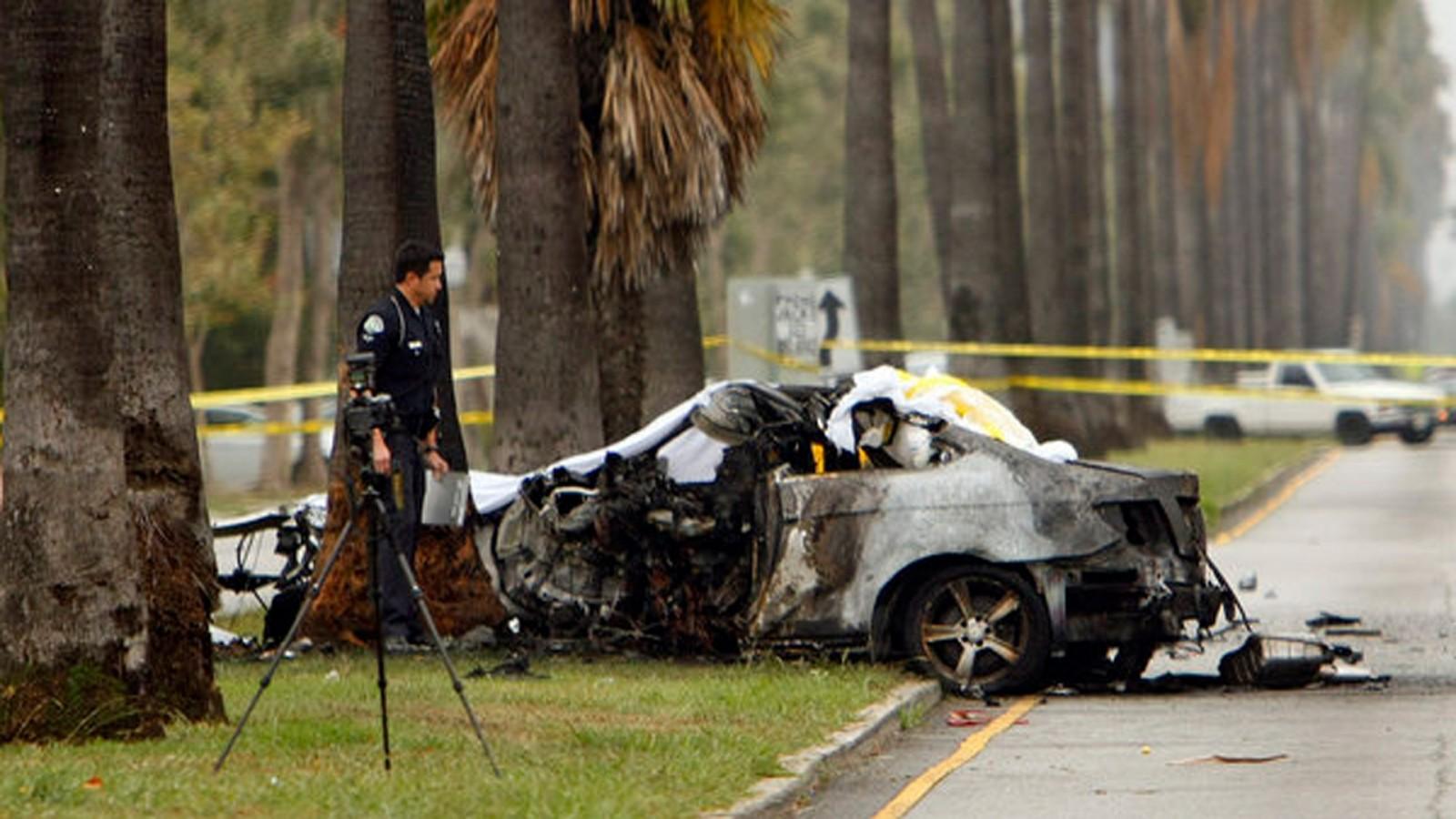
The wreckage of the car crash that killed journalist Michael Hastings.
The wreckage of the car crash that killed journalist Michael Hastings.http://whowhatwhy.org/2015/02/20/car-hacking-report-refuels-concerns-michael-hastings-crash/
Those still wondering what really happened in gonzo journalist Michael Hastings’ fiery demise likely sat up straight during 60 Minutes’ recent piece on how hackers can hijack the controls of a car.
After Hastings died in a bizarre one-car crash along a straight Los Angeles street, former counterterrorism adviser Richard Clarke noted the accident was “consistent with a car cyber attack” and that it was easy to hack cars. It seems he was right, as 60 Minutes demonstrated in a chilling fashion.
In the segment, a nervous Lesley Stahl smashed into safety cones on a driving course after two men using a laptop computer remotely commandeered her brakes. Former video game developer Dan Kaufman, who’s now working for the Defense Advanced Research Projects Agency, set up the demonstration.
In trying to figure out what kinds of attacks enemies might be plotting on American soil, government agencies are learning the same techniques. To wrest the controls from Stahl, a hacker dialed in through the vehicle’s OnStar system to first busy up the computer, then planted code that allowed it to reprogram the control systems. Kaufman stood by giving driving orders to the hackers.
The demonstration underscored what Clarke, counterterrorism chief under both Bill Clinton and George W. Bush, said after Hastings’ crash. “You can do some really highly destructive things now, through hacking a car, and it’s not that hard,” he said. “So if there were a cyber attack on the car—and I’m not saying there was—I think whoever did it would probably get away with it.” Clarke added that the LAPD was unlikely to have the tools necessary to detect such an attack, particularly after a fire.
No Crowbar Needed, Just an iPad
One thing is clear: Drivers are at risk.
In a stinging report released this week, Massachusetts Democratic Sen. Edward Markey slammed car companies for their failure to protect car owners  from hackers and intrusive data collectors who might seize control of increasingly computerized vehicles. “Automakers haven’t done their part to protect us from cyber-attacks or privacy invasions,” he said. Ed Markey         @SenMarkey
My new report on car security.Criminals don’t need crowbar,just an iPad to break into your car http://1.usa.gov/1vdltmD  pic.twitter.com/Iuu3SWaNi6
Much of the report focuses on how car computers can be used to collect driving history, from where a car is parked to where it traveled. But it also reveals hackers’ ability to remotely turn, stop and accelerate cars. Markey’s report notes that car companies can now disable vehicles if owners fall behind on their payments. Burglars can exploit the same vulnerabilities.
But Markey doesn’t believe there have been other types of incidents in which hackers seize control of cars—yet.
Nonetheless, the 60 Minutes story and Markey’s investigation likely made drivers squirm the next time they climbed behind the wheel.
The report has also reignited suspicions that arose nearly two years ago after Hastings’ crash.
***
Hastings’ work as a thorn in the side of government and the 33-year-old journalist’s death in an unusual crash in June 2013 immediately triggered speculation. A witness reported seeing Hastings’ new silver Mercedes C250 coupe speeding down a Hollywood street before dawn when it bounced, slammed into a tree and burst into flames.
Shortly before Hastings’ death, he sent what was described as a “panicky” email to friends expressing concern that associates were being interviewed by “the Feds.” He also wrote that he was onto a big story and needed to “get off the radar for a bit.” His 2010 story for Rolling Stone in which Stanley McChrystal skewered the White House and its strategy in Afghanistan led to the general’s resignation.
The FBI denied Hastings was the target of any investigation, yet a Freedom of Information Act request later unearthed an FBI file on Hastings. Hastings also told a neighbor he thought someone had been tampering with his car. At the time of his death he was working on an article about CIA director John Brennan.
The Los Angeles Police Department concluded that the crash was an accident and did not involve foul play. The coroner’s report also declared Hastings’ death, ascribed to “massive blunt force trauma,” as accidental, and revealed that there were trace amounts of marijuana and amphetamine in his system, though neither was considered a factor in the crash. The report noted that Hastings’ family had been trying to convince him to go into detox.
Just an Accident?
Hastings’ widow, who hired a private investigator to examine all the evidence, at least publicly labeled the crash an accident. “You know, my gut here, was that it was just a really tragic accident,” Elise Jordan said in an interview two months after Hastings’ death.
Hastings’ brother Jonathan said that he feared his sibling was experiencing a “manic episode” before his death, which he suspected was linked to drugs. He had flown to LA to try to convince his brother to enter rehab; Hastings died the next day. “The government is out of control in a lot of ways, so I sympathize with people who want to turn Mike’s death into some kind of symbol,” he said. “I just think that his death happens to be a bad foundation to build that case on.”
But not everyone agrees. “I’m definitely suspicious about the crash,” Montana state Rep. Daniel Zolnikov told WhoWhatWhy. The Republican legislator has introduced a bill, which he says was inspired in part by Hastings’ work, to bar state government agencies from accessing servers to get reporters’ notes.
Like Markey, Zolnikov is also concerned about risks posed by increasingly high-tech cars, which he described as “computers without protections.”
If that’s the case, then the information superhighway and highways have merged dangerous

Since 9/11, the U.S. Has Been Involved in More Than 5 Wars … and They Have All Been Disasters


War USA
Why Does America Keep “Losing” Its Wars?
Below, we demonstrate that the U.S. keeps “losing” war after war.
There are 3 potential reasons this might be happening:
  • Or is this a sign of the decline of the American empire … and we just can’t win a war anymore?
We’ll let you decide why you think this keeps happening. But if you don’t believe that the U.S. has been losing its recent wars, read on …
U.S. Keeps Messing Up
We noted last year:
Since 2001, the U.S. has undertaken regime change in Iraq, Afghanistan and Libya.
All 3 countries are now in chaos … and extremists are more in control than ever.
Iraq
In Iraq, hardcore Islamic jihadis known as ISIS have taken over much of the country – shown in red as the new “Islamic State” or self-described caliphate – using captured American weapons:

USA Today notes: “Iraq is already splitting into three states“.
Christians are being rounded up and killed, and Christian leaders in Iraq say the end of Christianity in Iraq is “very near”. But as we documented in 2012, Saddam Hussein – for all his faults – was a secular leader who tolerated Christians.
Libya
Libya has also descended into absolute chaos. We reported in 2012:
Al Qaeda is now largely in control of Libya. Indeed, Al Qaeda flags were flown over the Benghazi courthouse once Gaddafi was toppled.
(This is – again – in contrast to toleration of Christians under Gadaffi.)
The Guardian noted in March:
According to Amnesty International, the “mounting curbs on freedom of expression are threatening the rights Libyans sought to gain“. A repressive Gaddafi-era law has been amended to criminalise any insults to officials or the general national congress (the interim parliament). One journalist, Amara al-Khattabi, was put on trial for alleging corruption among judges. Satellite television stations deemed critical of the authorities have been banned, one station has been attacked with rocket-propelled grenades, and journalists have been assassinated.
***
Ever since the fall of [Gadaffi’s] dictatorship, there have been stories of black Libyans being treated en masse as Gaddafi loyalists and attacked. In a savage act of collective punishment, 35,000 people were driven out of Tawergha in retaliation for the brutal siege of the anti-Gaddafi stronghold of Misrata. The town was trashed and its inhabitants have been left in what human rights organisations are calling “deplorable conditions” in a Tripoli refugee camp. Such forced removals continue elsewhere. Thousands have been arbitrarily detained without any pretence of due process; and judges, prosecutors, lawyers and witnesses have been attacked or even killed. Libya’s first post-Gaddafi prosecutor general, Abdulaziz Al-Hassadi, was assassinated in the town of Derna last month.
***
When residents of Benghazi – the heartland of the revolution – protested against militia rule in June last year, 32 people were killed in what became known as “Black Saturday”. In another protest in Tripoli last November, 46 died and 500 were injured.
Under militia rule, Libya is beginning to disintegrate. Last summer forces under the command of the warlord Ibrahim Jadran took control of eastern oil terminals …. These forces which hijacked a oil tanker this month, prompting threats from Libya’s prime minister that it would be bombed until US forces captured it this weekend. Clashes have broken out in Jadran’s home town of Ajdabiya. In painful echoes of Iraq’s nightmare, a car bomb exploded at a Benghazi military base last week and killed at least eight soldiers, and Libya’s main airport was shut on Friday after a bomb exploded on its runway.
One of the great perversities of the so-called war on terror is that fundamentalist Islamist forces have flourished as a direct consequence of it. Libya is no exception, even though such movements often have little popular support. The Muslim Brotherhood and other elements are better organised than many of their rivals, helping to remove the prime minister, push through legislation, and establish alliances with opportunistic militias.
Ominously, Libya’s chaos is spilling across the region. The country is awash with up to 15 million rifles and other weapons, and a report by the UN panel of experts this month found that “Libya has become a primary source of illicit weapons“. These arms are fuelling chaos in 14 countries, including Somalia, the Central African Republic, Nigeria and Niger.
***
There is a real prospect of the country collapsing into civil war or even breaking up. Unless there are negotiated settlements to its multiple problems, Libya will surely continue its descent into mayhem, and the region could be dragged into the mire with it.
No wonder western governments and journalists who hailed the success of this intervention are so silent. But here are the consequences of their war, and they must take responsibility for them.
28-year CIA veteran Paul Pillar – who rose to be one of the agency’s top analysts – wrote in May:
Just when one might have thought the mess in Libya could not have gotten worse, it has.
***
Saudi Arabia and several other Arab states have evacuated their diplomats from Libya, the United States is preparing for possible evacuation of U.S. personnel, and the country appears on the brink of a larger civil war.
***
Those in Libya closest to being called secular liberals seem to be associated with military officers of the old regime.
***
The intervention already has negatively affected U.S. interests, particularly in providing a disincentive to other regimes to do what Gaddafi did in negotiating an end to involvement in terrorism and an end to production of unconventional weapons.
And things have only gotten worse since then … and Benghazi has fallen to the jihadis.
(It should be remembered that the U.S. helped sew the seeds of chaos in several ways. Not only did we engage in direct military intervention against Gadafi, but also – as confirmed by a group of CIA officersarmed Al Qaeda so that they would help topple Gaddafi.)
Afghanistan
Opium production is at an all-time high under the American occupation of Afghanistan.
And the New York Times reports this week that the Taliban are currently making huge gains in Afghanistan … in some cases expanding even beyond their traditional areas of influence prior to 2001:
The Taliban have found success beyond their traditional strongholds in the rural south and are now dominating territory near crucial highways and cities that surround Kabul, the capital, in strategic provinces like Kapisa and Nangarhar.
U.S. troops are just now leaving, and so the worst may be still to come. In addition – as we discuss below – the U.S. previously imposed regime change on Afghanistan … and the results were bad.
History repeats
The U.S. carried out regime change in Iran in 1953 … which led to radicalization in the country. Specifically, the CIA admits that the U.S. overthrew the moderate, suit-and-tie-wearing, Democratically-elected prime minister of Iran in 1953. (He was overthrown because he had nationalized Iran’s oil, which had previously been controlled by BP and other Western oil companies). As part of that action, the CIA admits that it hired Iranians to pose as Communists and stage bombings in Iran in order to turn the country against its prime minister.
If the U.S. hadn’t overthrown the moderate Iranian government, the fundamentalist Mullahs would have never taken over. Iran has been known for thousands of years for tolerating Christians and other religious minorities.
Hawks in the U.S. government been pushing for another round of regime change in Iran for decades.
Hillary Clinton and then-president Jimmy Carter’s National Security Adviser have both admitted on the record that the U.S. previously carried out regime change in Afghanistan in the 1970s by backing Bin Laden and the Mujahadin … the precursor to Al Qaeda.
And look how that turned out.
Syria
The U.S. has heavily backed the Islamic rebels in Syria in an attempt to implement regime change in that country. The result?
As shown by the map above, they’ve taken a third of the country as part of their “caliphate”
And the jihadis are now busily crucifying, beheading and slitting the throats of Christians. (Yup, Syria was previously known for tolerating Christians.)
***
We can probably add Ukraine to the list of regime changed countries falling into chaos and murderous extremism, given that:
Since then, Iraq, Syria, Libya and Ukraine have descended into still more hellish levels of chaos.
The U.S.-backed government in Ukraine is starting to lose the civil war.
Many of the U.S.-backed rebels in Syria have joined ISIS. And most of the weapons given to the “moderate” rebels have ended up in ISIS and Al Qaeda’s hands.
Mother Jones adds Yemen to the list:
So here’s my scorecard for American military interventions since 2000:
  • Afghanistan: A disaster. It’s arguable that Afghanistan is no worse off than it was in 2001, but after losing thousands of American lives and spending a trillion American dollars, it’s no better off either. [Since the government has put a gag order on all military information, it’s hard to know what’s really going on.]
  • Iraq: An even bigger disaster. Saddam Hussein was a uniquely vicious dictator, but even at that there’s not much question that Iraq is worse off than it was in 2003. We got rid of Saddam, but got a dysfunctional sectarian government and ISIS in return.
  • Libya: Another disaster. We got rid of Muammar Qaddafi, but got a Somalia-level failed state in return.
  • Yemen: Yet another disaster. After years of drone warfare, Houthi rebels have taken over the government. This appears to be simultaneously a win for Iran, which backs the rebels, and al-Qaeda, which may benefit from the resulting chaos. That’s quite a twofer.
What a sorry track record …