If you haven’t been in a bubble cut off from all forms of media
lately, it would be impossible to have missed all of the warnings being
issued about the impending loss of our electrical grid.
This isn’t just coming from so-called “gloom and doom” sites or from
alternative media. Major mainstream media sources such as ABC News, the
Washington Post, the New York Times, and CBS News have all issued the
alerts. Unfortunately, the hordes seem to be brushing these warnings off
as something that cannot happen, because the reality is too unpleasant
to even contemplate. Many seem to think that they are far better to
stick their heads in the sand and be assured it can never happen than to
prepare ahead of time.
Who Is Ringing the Warning Bell?
In case you’ve missed it, here are some of the warnings over the past few months that most people are ignoring.
When Janet Napolitano stepped down from her role as head of the DHS
she released an open letter to her successor. One chilling tidbit she
passed on was this.
The outgoing Homeland Security Secretary has a warning
for her successor: A massive and “serious” cyber attack on the U.S.
homeland is coming, and a natural disaster — the likes of which the
nation has never seen — is also likely on its way. (source)
Read more on Napolitano’s warning
HERE.
But there’s more. Big Sis isn’t the only one warning us about the possibility of a grid-down scenario.
Former North Dakota Senator Byron Dorgan has
co-authored a book about the topic with David Hagberg – his novel Gridlock is a fictional account of a very real threat.
“Our power system is very vulnerable. You could see a
shutdown by hackers in cyber terror. You could see it shutdown for days,
weeks or months, crippling this country and causing enormous havoc.” (source)
Rep. Ed Markey (D-Mass.) also actively agrees with the threat
assessment. He released a report last May that said our power
infrastructure was “highly vulnerable to attacks from Iran and North
Korea” and as well as to natural threats such as geomagnetic storms from
solar activity.
“With one well-placed keystroke, Americans could be
plunged into darkness and chaos through the damage to our electric grid.
Foreign enemies are employing Web warriors to attack our way of life,
and it’s time that our actions respond to the potential threat.” (source)
Other people in the know have attempted to make the public aware of
the potential for apocalyptic disaster, but few seem to be taking them
seriously.
We are only one act of madness away from a social cataclysm unlike anything our country has ever known.
-Congressman Trent Franks (R-AZ), Senior Member House Armed Service Committee
EMP is one of the small number of threats that could hold at risk the continued existence of U.S. civil society.
-Dr. Robert Hermann, Commissioner US Congress EMP Commission
Just one violent active region on the sun can cause
continent-wide, perhaps even planetary-scale impacts to our critical
infrastructure.
-John Kappenman, Principal Investigator US Congress EMP Commission
The Likelihood of a severe geo-magnetic event capable of crippling our electric grid is 100%.
-Congresswoman Yvette Clarke (D-NY), Senior Member House Homeland Security Committee
(source)
Former Congressman
Roscoe Bartlett has been preaching the dangers of EMP, whether deliberate or natural, for many years:
We could have events in the future where the power grid
will go down and it’s not, in any reasonable time, coming back up. For
instance, if when the power grid went down some of our large
transformers were destroyed, damaged beyond use, we don’t make any of
those in this country. They’re made overseas and you order one and 18
months to two years later they will deliver it. Our power grid is very
vulnerable. It’s very much on edge. Our military knows that.
There are a number of events that could create a situation in the cities where civil unrest would be a very high probability.
I think that those who can, and those who understand, need to
take advantage of the opportunity when these winds of strife are not
blowing to move their families out of the city. (source)
Don’t forget the veiled warnings implicit in predictive programming
entertainment. One of last year’s biggest television hits was the show “
Revolution“, which portrayed life 15 years after a deliberate takedown of the power grid.
Grid Ex Drill in November
And finally, if all of these warnings aren’t enough to alert your Spidey senses, here is one that is undeniable.
The United States, Mexico, and Canada intend to participate in a drill in November that will simulate the takedown of the grid.
An electrical grid joint drill simulation is being
planned in the United States, Canada and Mexico. Thousands of utility
workers, FBI agents, anti-terrorism experts, governmental agencies, and
more than 150 private businesses are involved in the November power grid drill.
The downed power grid simulation
will reportedly focus on both physical and cyber attacks. The
antiquated electrical system in the United States has been one of the
most neglected pieces of integral infrastructure.
The disaster drill is being described as a crisis practice unlike anything the real power grid has ever experienced. The GridEX II drill
Nov. 13-14 will focus primarily on how governments will react if the
electrical grid fails and, for instance, the food supply chain
collapses.
American utility companies are responsible for running approximately
5,800 power plants and about 450,000 high-voltage transmission lines,
controlled by various devices which have been put into place over the
past decades. Some of the utility companies which oversee the power grid
reportedly use “antique computer protocols” which are “probably” safe
from cyber hackers,” The New York Times reported.
“If an adversary lands a knockout blow, [experts] fear, it could
black out vast areas of the continent for weeks; interrupt supplies of
water, gasoline, diesel fuel and fresh food; shut down communications;
and create disruptions of a scale that was only hinted at by Hurricane
Sandy and the attacks of Sept. 11,” The Times said.
If the power grid fails, a lack of electricity and food delivery are
only the first wave of troubles facing the American people. Police could
face major problems with civil unrest. Of course, there also would not
be any electric heating or cooling, which easily could lead to many
deaths depending on the season. (source)
The most alarming thing about this drill is the trend of suspected
false flag events in America that have corresponded with “drills”.
Whether or not this will coincide in a real take-down of the grid
remains to be seen, but one only needs to think back to events such as
the Boston Marathon Bombing, the 9/11 attacks, and the Oklahoma City
Bombing to see that there is a possibility that when “drills” occur,
often the players are simply being moved into place right under the nose
of the public.
What Can You Do to Be Ready?
It doesn’t honestly matter HOW the grid goes down. Whether it is an enemy attack, as in the novel
One Second After,
a government false flag in order to institute martial law, or a natural
act that is the result of a solar flare, a long-term grid collapse will
result in an extremely high death toll.
If you are already of the preparedness mindset, you’ll fare better
than the average North American. However, many people have never
contemplated the following questions:
- How will you get food if the grocery stores are closed?
- How will you cook food if you are able to acquire it?
- What will happen to the perishable food in your refrigerator and freezer?
- How will you heat and cool your home if you are in an area subject to extreme temperatures?
- What will you use for light once the scented candle that sits on your coffee table is gone?
- How will you transport yourself if a) your vehicle doesn’t
run because the computers are fried or b) it runs but you can’t get gas
because the pumps at the station run on electricity?
- What will you drink and wash with if the municipal water
facilities are no longer providing water or if the pump on your well
runs on electricity?
Find as many solutions as possible for the issues you would face if
going for weeks (or longer) without power.
You must stay warm, eat, and drink. Everything else is a bonus. You
can live without the television, the video game console, the microwave
in the kitchen, and the laptop.
Some people like to give arguments as to why they can’t resolve these
issues. They live in an apartment, they rent, they have a limited
budget….the list is as long as indefinite detention. The fact is, by
realizing these things are necessary and refusing to face them and find
solutions for your particular situation, you are setting your family up
to suffer, and possibly even die, when it could be avoided.
A recent article encouraged readers who were new to prepping to start out by
getting ready for a two week power outage.
Apply the following information to create your own preparedness plan
for the grid failure that is sure to come. Modify the suggestions to
adapt them to your particular home, family, and climate.
Water
Everyone knows that clean drinking water is something you can’t live
without. In the event of a disaster, the water may not run from the
taps, and if it does, it might not be safe to drink, depending on the
situation. If there is a boil order in place, remember that if the
power is out, boiling your water may not be as easy as turning on your
stove.
Each family should store a two week supply of water. The rule of
thumb for drinking water is 1 gallon per day, per person. Don’t forget
to stock water for your pets, also.
You can create your water supply very inexpensively. Many people use
clean 2 liter soda pop bottles to store tap water. Others purchase the
large 5 gallon jugs of filtered water from the grocery store. Consider
a gravity fed water filtration device and water purification tablets as
well.
Food and a Way to Prepare It
There are two schools of thought regarding food during a power
outage. One: you need a cooking method that does not require the grid
to be functioning. Two: you can store food that doesn’t require
cooking.
If you opt for a secondary cooking method, be sure that you have
enough fuel for two weeks. Store foods that do not require long cooking
times – for example, dried beans would use a great deal of fuel, but
canned beans could be warmed up, or even eaten cold.
Click
HERE for a short term food storage list
Click
HERE to find a list of foods that require no cooking.
Heat (Depending on Your Climate)
If your power outage takes place in the winter and you live in a
colder climate, heat is another necessity. During the first 24 hours
after a power outage, you can stay fairly warm if you block off one room
of the house for everyone to group together in. Keep the door closed
and keep a towel or blanket folded along the bottom of the door to
conserve warmth. You can safely burn a couple of candles also, and in
the enclosed space, your body heat will keep it relatively warm. As
well, dress in layers and keep everything covered – wear a hat, gloves
(fingerless ones allow you to still function), and a scarf.
Click
HERE to learn how to stay warm with less heat.
However, after about 48 hours, that’s not going to be enough in very
cold weather. You will require back-up heat at this point in certain
climates. If you are lucky enough to have a source of heat like a
fireplace or woodstove, you’ll be just fine as long as you have a supply
of wood.
Consider a portable propane heater (and propane) or an oil heater.
You have to be very careful what type of backup heat you plan on using,
as many of them can cause carbon monoxide poisoning if used in a poorly
ventilated area.
Learn more about off-grid heat options
HERE.
Sanitation Needs
A common cause of illness, and even death, during a down-grid
situation is lack of sanitation. We’ve discussed the importance of
clean drinking water, but you won’t want to use your drinking water to
keep things clean or to flush the toilet.
For cleaning, reduce your need to wash things. Stock up on paper
plates, paper towels, and disposable cups and flatware. Keep some
disinfecting cleaning wipes and sprays (I don’t recommend using
antibacterial products on a regular basis, however in the event of an
emergency they can help to keep you healthy.) Use hand sanitizer after
using the bathroom and before handing food or beverages – there may be a
lot more germs afoot in a disaster.
Look at your options for sanitation. Does your toilet still flush
when the electricity is out? Many people discovered the hard way that
the toilets didn’t work when the sewage backed up in the highrises in
New York City in the aftermath of Hurricane Sandy. At our cabin, the
toilet won’t flush without power because the pump is electric.
If you are on a septic system, with no risk of the toilet backing up
into the house, simply store some water for flushing in the bathroom.
(At the first sign of a storm, we always fill the bathtub for this
purpose.) Add the water to the tank so that you can flush.
If this is not an option, another solution is to stock up on
extremely heavy duty garbage bags (like the kind that contractors use at
construction sites) and kitty litter. Place a bag either in your
drained toilet or in a bucket. Sprinkle some kitty litter in the bottom
of the bag. Each time someone uses the bathroom, add another handful
of litter. Be very careful that the bag doesn’t get too heavy for you to
handle it. Tie it up very securely and store it outside until services
are restored.
Light
Lighting is absolutely vital, especially if there are children in the
house. Nothing is more frightening than being completely in the dark
during a stressful situation. Fortunately, it’s one of the easiest
things to plan for, as well as one of the least expensive.
Some lighting solutions are:
- Garden stake solar lights
- Candles
- Kerosene lamps
- Flashlights (don’t forget batteries)
- Hand crank camping lantern
- Don’t forget matches or lighters
Tools and Supplies
Some basic items will make your life much easier during an emergency.
Here are some things that are essential in the event of a power outage:
- Lighter/waterproof matches
- Batteries in various sizes
- Manual can opener
- Basic tools: Pliers, screwdriver, wrench, hammer
- Duct tape
- Crazy glue
- Sewing supplies
- Bungee cords
If you’d like to expand on the basic supplies, a more detailed list of tools and hardware can be found
HERE.
First Aid Kit
It’s important to have a basic first aid kit on hand at all times,
but particularly in the event of an emergency. Your kit should include
basic wound care items like bandages, antibiotic ointments, and sprays.
As well, if you use them, keep on hand a supply of basic
over-the-counter medications, like pain relief capsules, cold medicine,
cough syrup, anti-nausea pills, and allergy medication. Particularly
important if sanitation is a problem are anti-diarheal medications.
If you want to put together a more advanced medical kit, you can find a list
HERE.
Special Needs
This is something that will be unique to every family. Consider the
things that are needed on a daily basis in your household. It might be
prescription medications, diapers, or special foods. If you have pets,
you’ll need supplies for them too. The best way to figure out what you
need is to jot things down as you use them over the course of a week or
so.
Get Started Today
You can start right now – this very minute – all you have to do is grab a pad of paper and a pen.
- Begin by personalizing the suggestions above to fit your family’s needs and make a list of your requirements.
- Next, do a quick inventory – as I mentioned above, you may be
surprised to see that you already have quite a few of the supplies that
are recommended.
- Make a shopping list and acquire the rest of the items you need. If
you can’t afford everything right now, prioritize the most important
things first.
- Organize your supplies so that they are easily accessible when you need them. It’s hard to find seldom-used items in the dark.
When the lights go out, don’t be left to the not-so-tender mercies of
those who would place themselves in charge. Maintain your independence
by strengthening the position of your family. Take steps towards
preparedness and self-sufficiency so that you won’t need the
government’s assistance to weather the storm.
If you must comply to survive, your freedom is just an illusion.
You’ve been warned – what you do with the information is up to you.
Daisy Luther is a freelance writer and editor. Her website, The Organic Prepper,
offers information on healthy prepping, including premium nutritional
choices, general wellness and non-tech solutions. You can follow Daisy
on Facebook and Twitter, and you can email her at daisy@theorganicprepper.ca

 Posts
Posts



 Consider the common public characterizations of the perpetrators of the last several mass


 By Michael Snyder, on September 23rd, 2013


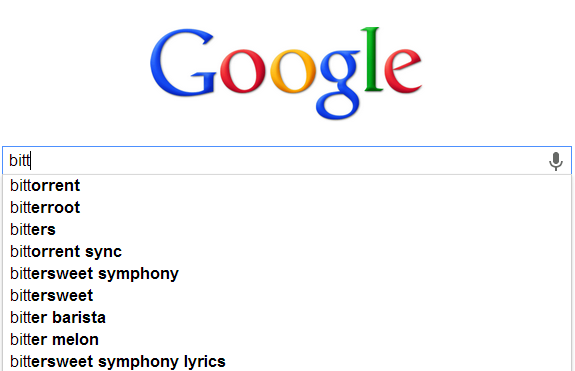
 For two years Google has been filtering “piracy-related” terms from its ‘Autocomplete‘ and ‘Instant‘ services.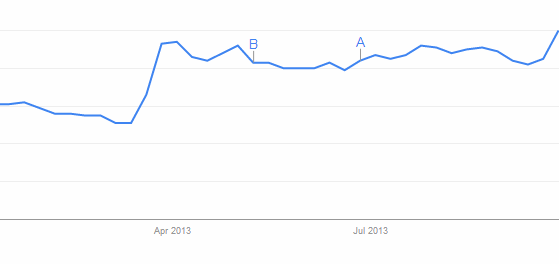
 Earlier this month H33t, one of the largest BitTorrent sites,