Tuesday, May 9, 2017

Victory: Seed sharing platform disrupting dangerous companies who control more than 60% of the global seed supply


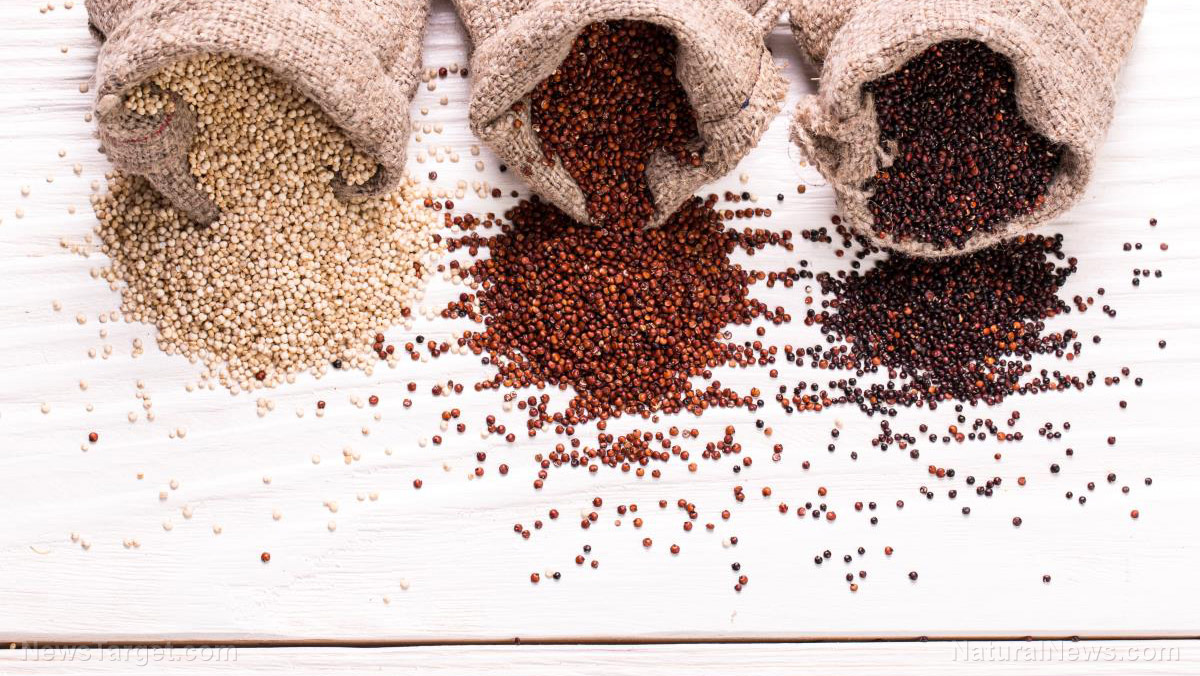
Image: Victory: Seed sharing platform disrupting dangerous companies who control more than 60% of the global seed supply
(Natural News) A new peer-to-peer seed sharing program could turn the agricultural world upside-down. In order to help preserve biodiversity and increase food security, some gardeners and small farmers are focusing on growing and saving seeds from heirloom plants and crops. Heirloom crops and plants that can be open-pollinated and that have adapted to specific climates and environments are integral to maintaining genetic diversity among plants and helps to ensure food security.
Modern farming practices, however, have taken their toll on biodiversity. In fact, in less than a century, the United States alone has seen fruit and vegetable seed diversity decrease by 1200 percent. In total, about 93 percent of once-diverse crop and plant species have vanished. Worldwide, plant diversity has decreased by a staggering 75 percent. Consolidation of agriculture has had a serious impact on plant life, and monoculture farming practices don’t help the matter. As reported, “[M]onocultures strip the land of nutrients: Where you once had self-sustaining harvest cycles, you get farm land denuded of nutrients that then needs copious chemical fertilizers to grow more food. And the crops themselves become vulnerable to plant diseases.”
The dangers of monoculture farming are made worse by the fact that just five companies own more than 60 percent of the global seed market. Monsanto, Dow, Bayer, Syngenta and DuPont have all but dominated the agricultural marketplace, and their presence has had deleterious effects on both the industry and the environment. The corporate monopoly is so bad that regulations have even made it possible for these companies to outlaw the collection and replanting of seeds — and many farmers have become trapped in a cycle of ever-shrinking crop diversity. Not only are these practices hard on farmers, they also set the stage for a possibly devastating food security crisis: Reduced diversity generally equals increased susceptibility, after all. And it’s well-known that plant diversity increases crop health and bolsters harvests — even if these toxic agribusinesses want consumers to believe otherwise.
But there is hope; many farmers and home gardeners are looking to not only increase biodiversity, but to “stick it” to the corporate world through this new peer-to-peer seed sharing program. Thanks to the Center for Food Safety, this seed-sharing initiative has a global platform to be shared on. This massive network will serve to allow more people to take part in the conservation and preservation of plant diversity — as well as to save “our public food system from corporate consolidation.”
As TreeHugger explains, “The Global Seed Network is meant to be used by farmers, home gardeners, nonprofit organizations, and the general public, who can connect with other seed savers to trade for uncommon and disease-resistant varieties that are tailored to their soil and climate conditions.”
This “social network” for seeds will not only provide opportunities for seed swapping, but also the opportunity for people to share their knowledge and experiences with a variety of growing techniques, to answer each other’s questions and more. The site will also feature a search function so users can learn more about plant species native to their region and what will grow best where they live, soil conditions, natural pest prevention, plant diseases, watering needs and more. Truly, the network will be an endless fountain of knowledge for active and engaged users.
You can learn more about this outstanding initiative at GlobalSeedNetwork.org.
Sources:
TreeHugger.com
NaturalNews.com

Indian state will pay farmers to go 100% organic and GMO-free

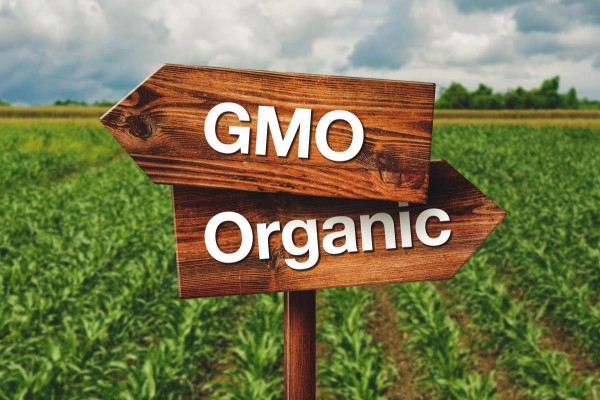
Image: Indian state will pay farmers to go 100% organic and GMO-freehttp://www.naturalnews.com/2016-12-15-indian-state-will-pay-farmers-to-go-100-organic-and-gmo-free.html
(Natural News) Is India on its way to becoming an entirely organic nation? Just over two years ago, in September 2014, the Indian Government launched their revolutionary  Rastriya Krishi Vikas Yojana (National Agriculture Development Program) as a way to encourage organic farming, and decrease dependence on chemical agents. In January 2015,  the state of Sikkim was declared as the country’s first 100 percent organic state. Sikkim produces 800,000 tons of organic produce that’s free of harmful pesticides, chemical fertilizers and toxic GMOs — accounting for roughly 65 percent of India’s total organic produce yields.
The western Indian state of Rajasthan launched plans for dedicating thousands of hectares of land for the farming of organic pulses just a few months later. Their effort seeks to combat the rampant protein malnutrition, and the unsustainable practice of chemical fertilizer-based farming.
Another western Indian state now also seeks to join in. Goa has also recently announced that they will be looking to reduce the use of chemical fertilizers and pesticides, and is also seeking to go 100 percent organic. The State Department of Agriculture has launched a state sector plan titled, “Assistance for use of organic inputs by the farmer.”
Ulhas Pai Kakode, Director of Agriculture, commented, “This is the first step we have taken in the direction of organic farming in the state. Hopefully, more and more farmers should adopt the practice of organic farming after availing this scheme.”
Under this new plan, farmers can receive significant assistance from the government when it comes to obtaining organic agricultural inputs, such as organic fertilizers and bio-pesticides. Up to 50 percent of the tab will picked up by the state government, but there will be some limitations. AnonHQ explains that these benefits will be limited to 10,000 Indian Rupees (INR) per hectare with a maximum of up to two hectares , or INR 20,000 per beneficiary for all categories of farmers on the use of organic inputs. Farmers with plots as small as 0.1 hectare will be considered eligible for the program — which will also help to keep the tradition of small-scale ingidenous farming alive and well.
Organic farming is nothing new; its a tradition that has sadly been overtaken by overzealous coroporations. In India, organic farming has been practiced since ancient times and once ensured quality food for consumers. The recent resurgence of organic farming in India, however, is largely due to the increasing demand for organic products in Western nations.
The organic food and fiber market is growing at an incredibly rapid pace, with some estimates suggesting that the market is expanding by up to 25 to 30 percent. A study by ASSOCHAM, which stands for The Associated Chambers of Commerce and Industry of India, suggests that the organic food market in India will reach $1.36 billion by the year 2020. The study also suggested that organic farming efforts short focus largely on pulses and grains.
The exponential growth of the organic market has even led food manufacturers in the United States to pay their farmers to make the switch to organic practices. In the US alone, sales in organic marketplace expanded by about 11 percent — reaching a whopping $43.3 billion last year — equalling about four times the growth in sales of food products, overall.
Organic farming in India is also expected to continue to grow, especially as the government continues to financially support organic farming endeavors. Increased awareness and availability of organic foods has also greatly contributed to the sucess of organic food. Additionally, the rise in health consciousness and healthier lifestyle changes have also played a significant role in the growth and demand of organic foods.
Sources:
AnonHQ.com
TimesOfIndia.IndiaTimes.com
EconomicTimes.IndiaTimes.com