Thursday, December 13, 2012

Psychiatry goes insane: Every human emotion now classified as a mental disorder in new psychiatric manual DSM-5

http://www.naturalnews.com/038322_DSM-5_psychiatry_false_diagnosis.html       Originally published December 13 2012

Psychiatry goes insane: Every human emotion now classified as a mental disorder in new psychiatric manual DSM-5

by Mike Adams, the Health Ranger, NaturalNews Editor

(NaturalNews) The industry of modern psychiatry has officially gone insane. Virtually every emotion experienced by a human being -- sadness, grief, anxiety, frustration, impatience, excitement -- is now being classified as a "mental disorder" demanding chemical treatment (with prescription medications, of course).

The new, upcoming DSM-5 "psychiatry bible," expected to be released in a few months, has transformed itself from a medical reference manual to a testament to the insanity of the industry itself.

"Mental disorders" named in the DSM-5 include "General Anxiety Disorder" or GAD for short. GAD can be diagnosed in a person who feels a little anxious doing something like, say, talking to a psychiatrist. Thus, the mere act of a psychiatrist engaging in the possibility of making a diagnoses causes the "symptoms" of that diagnoses to magically appear.

This is called quack science and circular reasoning, yet it's indicative of the entire industry of psychiatry which has become such a laughing stock among scientific circles that even the science skeptics are starting to turn their backs in disgust. Psychiatry is no more "scientific" than astrology or palm reading, yet its practitioners call themselves "doctors" of psychiatry in order to try to make quackery sound credible.

How modern psychiatry really works

Here's how modern psychiatry really operates: A bunch of self-important, overpaid intellectuals who want to make more money invent a fabricated disease that I'll call "Hoogala Boogala Disorder" or HBD.

By a show of hands, they then vote into existence whatever "symptoms" they wish to associated with Hoogala Boogala Disorder. In this case, the symptoms might be spontaneous singing or wanting to pick your nose from time to time.

They then convince teachers, journalists and government regulators that Hoogala Boogala Disorder is real -- and more importantly that millions of children suffer from it! It wouldn't be compassionate not to offer all those children treatment, would it?

Thus begins the call for "treatment" for a completely fabricated disease. From there, it's a cinch to get Big Pharma to fabricate whatever scientific data they need in order to "prove" that speed, amphetamines, pharmaceutical crack or whatever poison they want to sell "reduces the risk of Hoogala Boogala Disorder."

Serious-sounding psychiatrists -- who are all laughing their asses off in the back room -- then "diagnose" children with Hoogala Boogala Disorder and "prescribe" the prescription drugs that claim to treat it. For this action, these psychiatrists -- who are, let's just admit it, dangerous child predators -- earn financial kickbacks from Big Pharma.

In order to maximize their kickbacks and Big Pharma freebies, groups of these psychiatrists get together every few years and invent more fictitious disorders, expanding their fictional tome called the DSM.

The DSM is now larger than ever, and it includes disorders such as "Obedience Defiance Disorder" (ODD), defined as refusing to lick boots and follow false authority. Rapists who feel sexual arousal during their raping activities are given the excuse that they have "Paraphilic coercive disorder" and therefore are not responsible for their actions. (But they will need medication, of course!)

You can also get diagnosed with "Hoarding Disorder" if you happen to stockpile food, water and ammunition, among other things. Yep, being prepared for possible natural disasters now makes you a mental patient in the eyes of modern psychiatry (and the government, too).

Former DSM chairperson apologizes for creating "false epidemics"

Allen Frances chaired the DSM-IV that was released in 1994. He now admits it was a huge mistake that has resulted in the mass overdiagnosis of people who are actually quite normal. The DSM-IV "...inadvertently contributed to three false epidemics -- attention deficit disorder, autism and childhood bipolar disorder," writes Allen in an LA Times opinion piece.

He goes on to say:

The first draft of the next edition of the DSM ... is filled with suggestions that would multiply our mistakes and extend the reach of psychiatry dramatically deeper into the ever-shrinking domain of the normal. This wholesale medical imperialization of normality could potentially create tens of millions of innocent bystanders who would be mislabeled as having a mental disorder. The pharmaceutical industry would have a field day -- despite the lack of solid evidence of any effective treatments for these newly proposed diagnoses.

All these fabricated disorders, of course, result in a ballooning number of false positive. As Allen writes:

The "psychosis risk syndrome" would use the presence of strange thinking to predict who would later have a full-blown psychotic episode. But the prediction would be wrong at least three or four times for every time it is correct -- and many misidentified teenagers would receive medications that can cause enormous weight gain, diabetes and shortened life expectancy.

But that's the whole point of psychiatry: To prescribe drugs to people who don't need them. This is accomplished almost entirely by diagnosing people with disorders that don't exist.

And it culminates in psychiatrists being paid money they never earned (and certainly don't deserve.)

Imagine: An entire industry invented out of nothing! And yes, you do have to imagine it because nothing inside the industry is actually real.

What's "normal" in psychiatry? Being an emotionless zombie

The only way to be "normal" when being observed or "diagnosed" by a psychiatrist -- a process that is entirely subjective and completely devoid of anything resembling actual science -- is to exhibit absolutely no emotions or behavior whatsoever.

A person in a coma is a "normal" person, according to the DSM, because they don't exhibit any symptoms that might indicate the presence of those God-awful things called emotions or behavior.

A person in a grave is also "normal" according to psychiatry, mostly because dead people do not qualify for Medicare reimbursement and therefore aren't worth diagnosing or medicating. (But if Medicare did cover deceased patients, then by God you'd see psychiatrists lining up at all the cemeteries to medicate corpses!)

It's all a cruel, complete hoax. Psychiatry should be utterly abolished right now and all children being put on mind-altering drugs should be taken off of them and given good nutrition instead.

When the collapse of America comes and the new society rises up out of it, I am going to push hard for the complete abolition of psychiatric "medicine" if you can even call it that. Virtually the entire industry is run by truly mad, power-hungry maniacs who use their power to victimize children (and adults, too). There is NO place in society for distorted psychiatry based on fabricated disorders. The whole operation needs to be shut down, disbanded and outlawed.

The lost notion of normalcy

Here are some simple truths that need to be reasserted when we abolish the quack science industry of psychiatry:

Normalcy is not achieved through medication. Normalcy is not the absence of a range of emotion. Life necessarily involves emotions, experiences and behaviors which, from time to time, step outside the bounds of the mundane. This does not mean people have a "mental disorder." It only means they are not biological robots.

Nutrition, not medication, is the answer

Nutritional deficiencies, by the way, are the root cause of nearly all "mental illness." Blood sugar imbalances cause brain malfunctions because the brain runs on blood sugar as its primary energy source. Deficiencies in zinc, selenium, chromium, magnesium and other elements cause blood sugar imbalances that result in seemingly "wild" emotions or behaviors.

Nearly everyone who has been diagnosed with a mental disorder in our modern world is actually suffering from nothing more than nutritional imbalances. Too much processed, poisonous junk food and not enough healthy superfood and nutrition. At times, they also have metals poisoning from taking too many vaccines (aluminum and mercury) or eating too much toxic food (mercury in fish, cadmium, arsenic, etc.) Vitamin D deficiency is ridiculously widespread, especially across the UK and Canada where sunlight is more difficult to achieve on a steady basis.

But the reason nutrition is never highlighted as the solution to mental disorders and illness is because the pharmaceutical industry only makes money selling chemical "treatments" for conditions that are given complicated, technical-sounding names to make them seem more real. If food and nutritional supplements can keep your brain healthy -- and believe me, they can! -- then who needs high-priced pharmaceuticals? Who needs high-priced psychiatrists? Who needs drug reps? Pill-pushing doctors? And Obamacare's mandatory health insurance money confiscation programs?

Nobody needs them! This is the simple, self-evident truth of the matter: Our society would be much happier, healthier and more productive tomorrow if the entire pharmaceutical industry and psychiatry industry simply vanished overnight.

With the DSM-5, modern-day psychiatry has made a mockery of itself. What was once viewed as maybe having some basis in science is now widely seen as hilarious quackery.

Psychiatry itself now appears to be completely insane. And that might be the first accurate diagnosis to come out of the entire group.

Invent your own fictitious diseases!

By the way, you can be your own psychiatrist right here, right now! Simply use my handy-dandy Disease Mongering Engine which randomly generates real-sounding mental disorders!

Here's the link:
http://www.naturalnews.com/disease-mongering-engine.asp


All content posted on this site is commentary or opinion and is protected under Free Speech. Truth Publishing LLC takes sole responsibility for all content. Truth Publishing sells no hard products and earns no money from the recommendation of products. NaturalNews.com is presented for educational and commentary purposes only and should not be construed as professional advice from any licensed practitioner. Truth Publishing assumes no responsibility for the use or misuse of this material. For the full terms of usage of this material, visit www.NaturalNews.com/terms.shtml

NASA Goes "Apartment" Hunting

http://www.enterprisemission.com/apartmentsonmars.html      


NASA Goes "Apartment" Hunting


By Richard C. Hoagland
© 2012 The Enterprise Mission


At the annual American Geophysical Union (AGU) meeting, held in San Francisco, Monday, December 3, 2012, NASA quietly announced a “new target” for its Curiosity rover in the next few days – a curious set of “linear features,” surprisingly, located 90 degrees to its previous, months-long, relentless drive east (see map, above) … about 120 feet south of the rover’s current parked position. 

These casually announced features could, in fact – unknown to 99.9% of those watching Curiosity’s on-going mission –irrevocably alter, not only the rest of the Mission itself--

But -- if the results of their extraordinary, imminent, analysis are made public (not an automatic certainty, by any means …) – those results will ultimately alter the lives of every human being on Earth.


* * *

This all began a couple weeks ago, with sudden attention drawn to a highly anticipated Monday morning AGU session -- where NASA was supposed to unveil, according to the hype, “a Curiosity discovery for the history books”; indeed, the Curiosity science team on Monday did announce the detection of “the first simple organic molecules (chlorinated methane) found on Mars” -- coming from Curiosity’s first instrument analysis of “the reddish sands of Mars” – an announcement that should have, indeed, made headlines around the world; confirmation of “organics” could be merely a prelude to potentially a much bigger announcement some day from this same Mission … confirmation of living organisms on Mars – either extinct … or currently extant! Instead, the Curiosity Team heavily qualified their “major announcement,” cautioning that “the ultimate source of these hydrocarbon molecules has yet to be determined ... they could just as easily, at this stage in the investigation, be the result of residual contamination brought from Earth ....”

Many observers now believe that the Curiosity scientists, at the last minute, "pulled their intended, major punch"; that – for whatever reason – the "historic discovery" the Team initially intended to announce December 3, abruptly, inexplicably, was dramatically underplayed … so that the media wouldn't turn it into headlines.

At the end of this "most peculiar session," Curiosity Project Scientist, Dr. John Grotzinger, looked ahead to the immediate, itinerary for the Mission:

"As we go down [from where we're currently parked – at a place we named 'Point Lake'] into an area called 'Yellowknife Bay,' we're going to stop at … at least one other outcrop that we've called 'Shaler' … It has a different expression [of features] ... it looks like something that has a much more finely-layered aspect to it than anything we've seen so far …

"And, we're going to work our way down in there … we're going to [I] guess … probably … this should happen in the next couple of weeks [emphasis added] …."


* * *

The startling implications behind this, on the surface, “routine mission decision” cannot be overstated; for, unknown to the media currently covering the mission, or (apparently) most of the scientists on the Team, the innocuous-sounding location “Shaler” – specifically cited by Grotzinger as the next destination of Curiosity--

Is none other than the precise location of the astonishing “Martian apartments -- cited and discussed extensively by the Enterprise Mission on the national radio program, “Coast to Coast AM,” Saturday night, December 1 (below)!


Below:
The Curiosity "Apartments" Comparison with Destroyed Murrah Building in Oklahoma City.  Note Regular Vertical Support Columns and 'Ragged' Horizontal Floors...


Some observers, looking at the timing of this remarkable, sudden NASA development – the Enterprise national discussion of purported “Martian ruins,” found on newly-released official NASA imagery from Curiosity, followed within 48 hours by an abrupt “right-hand turn” of the Curiosity rover … as it is redirected to drive ~120 feet … to physically investigate close-up those same, extraordinary “Martian ruins” – have drawn the obvious conclusion—

These two events -- occurring back-to-back -- are not “coincidence.”

This analysis is strengthened if one examines an image of John Grotzinger, taken during the same AGU Meeting, as he was outlining Curiosity’s mysterious new destination from behind his open laptop—

With a prominent decal affixed to the back of his laptop screen … a decal with one word … carefully positioned to be just visible over his dais place card—

“Building.”


As if this were not enough, the high-resolution “Mastcam-100” Curiosity color images -- allowing final confirmation by Enterprise of these remarkable linear features as “artificial, high-tech ruins” (see close-up – above) – were released by JPL—
Less than an hour before the Enterprise “Coast to Coast” interview began ….
More “coincidence?”

So, what can the Curiosity rover – billed by NASA as a machine “equipped to carry out the most comprehensive remote geological survey of Mars ever undertaken” – accomplish, if suddenly thrust into the role of “robot archaeologist” … as opposed to “robot geologist?”

The answer is:

A lot.

Curiosity’s superb scientific instrumentation suite (below) – ranging from its remote materials analysis “megawatt laser system” (ChemCam), to its “contact science” (APXS) nuclear materials analysis sensor on the “arm,” to say nothing of the rover’s 17 independent black and white and color CCD cameras (including a “Magnifying Hand Lens Imager,” capable of seeing objects smaller than a human hair, from several inches (!) – is uniquely equipped to acquire a priceless treasure-trove of on-site archaeological information—


Ranging from “high-resolution, stereo color imaging” of large and small-scale architecture, to “detailed chemical and materials analysis” of the actual composition of various manufactured artifacts the rover might encounter – be they “metal” … “plastics” ... “composites” … or “cut stone.”

The on-board analytical instruments -- SAM and ChemIn – if the rover’s arm can deliver (via its drill) suitable ground up bits of architectural materials, or samples drilled from individual artifacts themselves – will be able to provide comprehensive chemical analysis of material composition … down to cataloging the nuclear isotopes embodied in these objects.

There aren’t many archaeological field investigations here on Earth which can boast of half this state-of-the-art analysis equipment – and then, it’s NOT “in the field,” but “back at the lab!”

The big question, of course -- for those of us who have spent ~30 years attempting to break down the walls of NASA secrecy around this “taboo subject” … extraterrestrial archaeology … is simply this:

Is this the “breakthrough” we have been working and waiting for ... for “oh, so many years” …? 
Or—

Will NASA, at the last minute, pull another “Lucy and the football …” -- and show us NOTHING of this extraordinary Martian archaeological site called “Shaler” … toward which Curiosity is actually now driving!?

A few e-mails from American taxpayers to NASA and JPL right now, at this crucial “tipping point” -- demanding scientific honesty on this amazing opportunity -- as well as to the White House, if not President Obama himselfcannot hurt.

“Gravity Falls”: A New Disney TV Show Loaded With Illuminati Symbolism

http://vigilantcitizen.com/moviesandtv/gravity-falls-a-new-disney-tv-show-loaded-with-illuminati-symbolism/  

“Gravity Falls”: A New Disney TV Show Loaded With Illuminati Symbolism

Jul 13th, 2012 | Category: Movies and TV |

The many articles on this site attempt to prove that the same set of symbols – those of the ruling elite – are being permeated across popular culture. While we often look at outlets intended for teenagers or young adults (such as movies and music videos), children are definitely not exempt of it. A blatant example is Disney’s new show Gravity Falls, a “quirky and endearing” cartoon about 12-year old twins spending summer with their Great Uncle Stan in Gravity Falls, Oregon.
The 40 seconds long intro theme alone is loaded with symbolism. Here it is.
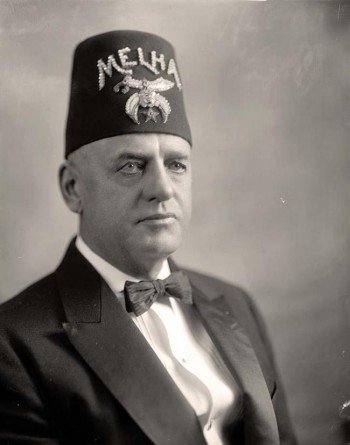
First, Great Uncle Stan wears a fez, which is the hat worn by the Shriners – an appendant body of Freemasonry. As they like to say, all Shriners are Masons, but not Masons are Shriners.

Stan wearing a Fez hat. Also, he is hiding one eye for the heck of it.

An Old School Shriner.
Up until 2010, only 32nd Degree Scottish Rite Masons (the highest degree attainable other than the honorary 33rd) or Knight Templars of the York Rite could join the Shriners. This means that Grunkle Fez is most probably a high level Freemason. Therefore, he knows what’s the deal with all of these symbols. He knows.
The show is full of eyes everywhere. There’s even a jar of eyeballs for sale at Stan’s store.

All-Seeing eye inside of triangle and more here…

This frame flashes for literally a split second at the end of the intro. We can easily recognize the Illuminati pyramid with illuminated capstone and All-Seeing eye, along with other alchemical and magical symbols. Also, there’s the Contra code on NES, which is rather hilarious.
I won’t start analyzing all of the episodes but here are some interesting shots from the first episode of Gravity Falls.
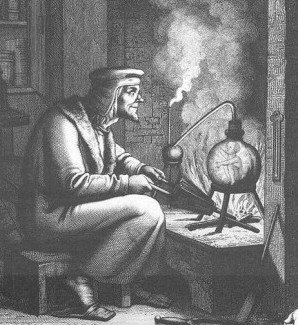
Aside from the eyeballs everywhere, the little humans in a jar are homunculi – a concept that is found in alchemy and occult rites.

19th-century engraving of Goethe’s Faust and Homunculus

All-Seeing Eye at the apex of the mountain

“Floating eyeballs, are they watching me?”.

The attic of Great Uncle Stan’s shack has a prominent Masonic stained glass window featuring a symbol that is omnipresent in this cartoon.

Stan appears to have two Owl clocks – the owl is an ancient symbol representing the occult elite (those who work in darkness), the Illuminati and the Bohemian Grove.

Check out the rug on the floor.

The letter “A” of the word “Shack” consists of a compass above and All-Seeing Eye, a combination of symbols of found in Masonic symbolism.

The entrance of a Masonic lodge.
In short, Disney’s new show is centered around a specific set of symbols associated with secret societies and the occult elite, which we call the Illuminati. While some might argue that these signs are inserted to add “mystery” to the show, we must also consider the fact that popular culture in general is being permeated with the exact same set of symbols. This show plays it part by exposing young children to the symbolism, which normalizes it and ultimately accomplishes what the occult elite has been doing for centuries: Hiding in plain sight.

“The Hunger Games”: A Glimpse at the Future?

http://vigilantcitizen.com/moviesandtv/the-hunger-games-a-glimpse-at-the-new-world-order/       

“The Hunger Games”: A Glimpse at the Future?

Apr 5th, 2012 | Category: Movies and TV |274 Comments

The hit movie “The Hunger Games” takes place in a dystopian future where the poor and wretched masses live under the high tech tyranny of a wealthy elite. Is the movie depicting the kind of society the elite is trying to establish for the New World Order? We’ll look at characteristics of the world presented in “The Hunger Games” and how they relate to plans for a New World Order.


Pushed by a gigantic marketing campaign, The Hunger Games did not take long to become a world-wide sensation, especially among teenagers and young adults. Sometimes referred to as the new Twilight, The Hunger Games has similar components to the previous book-to-movie craze (i.e. a young girl torn between two guys) but takes place in a very different context.
Set in a dystopian future (why is the future always “dystopian”?), The Hunger Games paints a rather grim picture of the world of tomorrow, whether it be from a social, economical or political point of view. In short, it is a big-brotherish nightmare where a rich elite thrives on the backs of a starving population. Meanwhile, the perversity and voyeurism of mass media is taken to absurd levels and is used by the government as a glue to keep its unjust social order intact. Is The Hunger Games giving teenagers a glimpse of a not-too-distant future? It doesn’t take a crystal ball to see the elite are trying to take the world in that direction. Is the author Suzanne Collins communicating a strong anti-NWO message to the youth by showing its dangers or is it getting the youth used to the idea? Let’s look at the fictional, yet possible, future world of The Hunger Games.
Note: This article is about the movie and not the book series. The movie has been formatted in a different way and conveys a slightly different message.

The NWO for Teenagers

The Hunger Games takes place in a context that is strikingly on-par with descriptions of the New World Order as planned by today’s global elite. One of the main characteristics of the New World Order is the dissolving of regular nation-states to form a single world government to be ruled by a central power. In The Hunger Games, this concept is fully represented as the action takes place in Panem, a totalitarian nation that encompasses the entire North-American territory. The United States and Canada have therefore merged into a single entity, a step that many predict that will happen before the full-on creation of the NWO.

The President of Panem addressing the Nation.
In Panem, the concepts of democracy and freedom have disappeared from America to be replaced by a high-tech dictatorship based on surveillance, monitoring, mass-media indoctrination, police oppression and a radical division of social classes. The vast majority of the citizens of Panem live in third-world country conditions and are constantly subjected poverty, famine and sickness. These difficult living conditions are apparently the result of a devastating event that engendered the complete economic collapse of North America. In District 12, home of the hero Katniss Everdeen, the locals live in conditions similar to the pre-industrial era where families of coal miners lived makeshift in shacks and eat rodents as meals.
While the masses look as if they are living in the 1800s, they are nevertheless subjugated to the high-tech rule of the Capitol, which uses technology to monitor, control and indoctrinate the masses. Surveillance cameras, RFID chips and 3D holograms are abundantly used by the government to manipulate the will of a weak and uneducated population (although there are signs of solidarity and rebelliousness among the peasants). To preserve the fragile social order, the Capitol relies on a massive police force that is always ready repress any kind of uprising. The workers are often rounded up in civilian camps where they are shown state-sponsored propaganda videos. Panem is therefore a high-tech police state ruled by a powerful elite that seeks to keep the masses in poverty and subjugation. As we’ve seen in previous articles on this site, all of these concepts are also thoroughly represented in other forms of media as there appears to be a conscious effort to normalize the ideas of a high-tech police state as the only normal evolution of the current political system.
Living in sharp contrast to the proletariat, the elite in The Hunger Games inhabits the glistening Capitol city and indulges in all sorts of extravagances and fashion trends. This upper-echelon of society perceives the rest of the population as an inferior race to be ridiculed, tamed and controlled. All valuable resources have been vacuumed from the people living in the districts to profit the Capitol, creating a clear and insurmountable divide between Regular People and The Elite. The concept of an opulent elite ruling over the dumbed-down and impoverished masses (thus making them easily manageable) is an important aspect of the New World Order and it is clearly depicted in The Hunger Games. The government’s reliance on high-tech surveillance and mass media to keep the population in check is something we are already seeing and, if we keep going in that direction, the world of The Hunger Games will soon become reality. There is another concept important to the occult elite that is at the heart of The Hunger Games, however: Blood sacrifices to strike fear and gain power.

Blood Sacrifices for the Elite


Katniss is selected as tribute of her district.
The government of Panem created the Hunger Games in order to remind the masses of the “great treason” they have committed by engaging in a rebellion. As punishment for their insubordination, the twelve districts of Panem must offer to the Capitol one boy and one girl between the ages of 12 and 18 to be part of The Hunger Games. The teenagers must fight to the death in an outdoor arena in a Roman Gladiator-like event that is televised across the nation. The rules of the Games reflect the elite’s contempt and total lack of respect for the masses. The name of the Games itself is a reminder of the state of perpetual starvation the lower class is purposely kept in by the rulers in order to better control it.
The boys and girls that are selected to take part in The Hunger Games are called “tributes”, a term that usually describes a payment rendered by a vassal to his lord and thus even reflects the servitude of the mass to its rulers. Since time immemorial, blood sacrifices were considered to be the highest form of “tribute” to gods and, on an occult level, were said to wield the most potent power to be tapped by rulers and sorcerers. The same way ancient Carthaginians sacrificed infants to the god Moloch, inhabitants of Panem sacrifice their children to the Capitol. The Hunger Games are therefore a modern version of these ancient rituals that the masses had to participate in to avoid the wrath of their superiors. The entire nation of Panem is forced to watch the sacrificial ritual that takes place in the Capitol, stirring up fear, anger and blood lust within them, amplifying the power of the ritual. We’ve seen in previous articles that the deaths of specific people (Whitney Houston, Heath Ledger, Amy Winehouse) become such a media event that they are, in fact, mega-rituals that entire nations participate in. The Hunger Games reflect this concept of highly publicized mega-rituals.

"Tributes" for The Hunger Games become the property of the state and are revoked of all their rights.
In The Hunger Games, the ritualistic death of young people chosen from the mass is sold as a sporting event, a nation-wide celebration that is packaged as a reality show. Not only do the poor people participate in these demeaning events, they even cheer for their favorites. Why do they accept all of this? One of the reasons is that mass media can get people to accept anything … if it is entertaining.

Appealing to the Basest Instincts

The games are broadcast to the nation in the form of a reality-show, complete with TV hosts who analyze the action, interview the tributes and judge their performance. The tributes are so indoctrinated in this culture that they readily accept the rules of the game and turn are fully willing to start killing to win the Games. The masses also actively participate in the event, cheering for their district’s representatives, even though the entire event celebrates the sacrifice of their own. This reflects a sad but true fact concerning mass media: Any kind of message can reach people if it manages to capture their attention. There are two things that automatically, almost irresistibly, grab our attention: Blood and sex, the remnants of our primal instincts. The sheer violence of the event grabs the attention of the masses, who forget that the Games serve as a reminder of the people’s servitude to its elite. This concept is already well-known and fully exploited in today’s mass media, as elite-sponsored messages are constantly sold to consumers as being “entertainment”. The Hunger Games therefore aptly portray the role of media in the manipulation of public opinion. Will the movie help young people realize this fact?
At one point in The Hunger Gamesthe death of a little girl shocked the people to a point that it brought a brief moment of lucidity and solidarity as the kill highlighted the atrocity of the Games. The live broadcasting of the death lead to a violent uprising in her district as the locals realized that they were willing participants in something terrible. The uprising was quickly quelled however, by the ever-present police force of the state. Furthermore, in order to prevent further social trouble, the producers of the show introduced a new element to the show: Love between Katniss Everdeen and Peeta Mellark, the girl and the boy from District 12. By introducing love (and, by extension, sex) into the show, the producers managed to quell the masses and brought them back to their usual state of silent stupor. This part of the movie reflects how mass media is used by the powers that be today. The worldwide reach of The Hunger Games series itself proves that stories that cleverly feature the ingredients of sex and violence are bound to get people hooked. And, even though The Hunger Games seems to be denouncing the perversity of violence in mass media, it sure brings more of it into movie theatres.

Desensitizing to a New Type of Violence

While there is no shortage of violence in Hollywood, The Hunger Games movie crosses a boundary that is rarely seen in movies: Violence by minors and towards minors. In this PG-13 movie we see kids aged between 12 and 18 violently stabbing, slashing, strangling, shooting and breaking the necks of other children – scenes that are seldom seen in Hollywood movies. While it is surely a way for the movie the grab the attention of the movie’s target audience (which happens to be teenagers aged 12 to 18) The Hunger Games brings to the forefront a new form of violence that was previously deemed too disturbing to portray in movies. But in the particular kill-or-be-killed scenario of The Hunger Games, the viewers easily go beyond this psychological barrier and find themselves yelling stuff at the movie like “Come on, Katniss, take your bow and shoot that vicious little f**cker in the head!”.

In Conclusion

The Hunger Games is set in world that is exactly what is described to be the New World Order: A rich and powerful elite, an exploited and dumbed-down mass of people, the dissolving of democracies into a police state entities, high-tech surveillance, mass media used for propaganda and a whole lot of blood rituals. There is indeed nothing optimistic in the dystopian future described in The Hunger Games. Even human dignity is revoked as the masses are forced to watch their own children killing each others as if they were caged animals. That being said, there is little to no difference between movie goers who watch the movie The Hunger Games and the masses in the movie that witness the cruelty of the Games. Both are willing participants in an event that portrays the sacrifice of their own under the amused eye of the elite. Furthermore, one can argue that the movie accomplishes the same functions as the Games in the movie: Distracting the masses with blood and sex while reminding it of the elite’s power.
Is The Hunger Games attempting to warn an apathetic youth of the danger of allowing the current system to devolve into a totalitarian nightmare? Or is it simply programming it to perceive the coming of a New World Order as an inevitability? That question is up for debate. But reading what is being said in the mass media about The Hunger Games, it seems there is an even more important question up for debate: Are you Team Peeta or Team Gale?

When Scouting the Minor Leagues, It’s Data That’s the Clincher


http://www.wired.com/playbook/2012/12/data-mining-minor-league-stats/        at what point do  we become ...de-humanized ???                           

When Scouting the Minor Leagues, It’s Data That’s the Clincher


The Visalia Oaks, now the Visalia Rawhide, in the dugout. A pair of stats-loving baseball fanatics say they’ve figured out a better way of predicting whether minor-league players will do well in The Show. Photo: Jim Merithew/Wired
A college pitcher with a knack for numbers and his statistics-loving coach have found a way to mine baseball statistics that could help big-league scouts and managers more accurately assess minor-league prospects and bring better hitters to The Show.
Major-league teams analyze reams of data when building and managing squads, a numbers-driven endeavor that’s been part of the game since the Brooklyn Dodgers hired the sport’s first full-time statistician in the 1940s. But while much work has been done on properly valuing major-leaguers, little has been done with minor-league hitters.
Predicting how minor-league players will perform in the majors is tricky because stats that matter in the Rookie league become less important as players advance to AA and AAA teams and into the pros. Hitters that keep their strikeouts down are the ones to watch in the lower leagues, but as they climb the ranks strikeouts become less of an issue so long as they’re hitting for power and getting on base regularly.
More on Stats in Sports

Guy Stevens and Gabe Chandler wanted to determine how you might assess how a minor-league player might hit in the majors before seeing him face a big-league pitcher. The answers could help teams decide who needs more time in the minors, who should go pro and who should get released.
These guys aren’t random number crunchers. Stevens is a right-handed reliever for the Pomona-Pitzer Colleges Sagehens who plays for Israel’s national team. He’s pursuing a double major in math and economics with an emphasis on statistics and hopes to get an analytics job with a big-league club. Chandler is a statistics professor and baseball coach. They’ve presented their findings in the Journal of Quantitative Analysis in Sports. (Stevens also shares his insights at Dorm Room GM.)
In trying to find a way to use minor-league statistics effectively, the pair focused on the 1999-2002 seasons, figuring that was long enough ago to see whether the players had gone on to successful pro careers. They focused on position players rather than pitchers.
“Pitchers are notoriously volatile, prone to injury or sudden lack of success,” they write. “We wonder here if hitters, less injury prone than pitchers, may be more predictable and therefore safer investments.”
Their research found that, in evaluating minor-league talent, teams placed too much emphasis on whether the player was selected early or later in the draft. The conventional wisdom held that players chosen early were superior prospects, even if the stats didn’t always bear that out. Those early-round draft picks tended to get the benefit of the doubt when it came to promotions, while late-round picks, even those with good stats, often were not promoted or even released.
A better approach, the researchers said, is to make a more objective assessment using the stats that matter at various levels: the ratio of walks to strikeouts for Rookie league hitters and OPS (on-base percentage plus slugging) at the higher levels. Using a technique called a “classification tree,” they looked for correlations between major league success and minor-league statistics of on-base percentage, home runs, and runs batted in. They found that you cannot accurately judge hitters by their early minor-league performances. Still, there were some warning signs.
“We found that high strikeout rates for high draft picks, which are almost certainly high-school draftees facing much better pitching, does not bode well for their careers,” said Chandler. If a player is overwhelmed almost immediately in Rookie ball, their chance for advancing to the majors is very slim.
The methods of evaluating players also caught their eye while researching the paper. Some clubs, like the Oakland A’s, put a premium on a player’s on-base percentage and have found success even with a limited payroll. Teams like the Pittsburgh Pirates choose to give more at-bats to players who they believe will be successful, and have found considerably less success, despite having high draft picks.
For now, the pair want to expand their study with more data. Stevens knows teams will always seek an edge in player development, and hopes his research might provide it. He’s already using some of it when he takes to the mound.
“Baseball is a huge part of my life, and I can’t always tell whether my analytical experience is changing my on-field approach, or if my playing experience is motivating my analytical approach,” Stevens said. “It’s a bit of a chicken-and-egg problem in that sense.”

Basketball Isn’t a Sport. It’s a Statistical Network

http://www.wired.com/playbook/2012/12/basketball-network-analysis/   

Basketball Isn’t a Sport. It’s a Statistical Network


Kobe Bryant, left, isn’t a player on a basketball team; he’s a node on a network, and that pass is a transfer. So say a basketball fanatic and a math whiz who have developed a new way of analyzing basketball stats. Photo: Chris Carlson/Associated Press
A basketball fanatic and a math whiz want to do for basketball what Bill James and sabermetrics did for baseball, and their innovative way of parsing data could revolutionize game analysis, providing coaches with new insights while making the game more fun to watch.
Sabermetrics, for those who haven’t seen Moneyball, is the objective analysis of baseball using game stats. Billy Beane used it to revolutionize the Oakland A’s. Compared to baseball, though, basketball is much more dynamic, and ball movement becomes a key variable in success. Passing is one of the fundamentals of hoops, and in the upper ranks of the sport, turnovers — often the result of wayward passes — contribute to ticks in the win-loss column. Fast, agile passing can make or break a team.
More on Stats in Sports
That’s why sabermetrics might not tell the entire story about what happens on the court. Researchers at Arizona State University, led by life science professor and basketball fan Jennifer Fewell and math professor Dieter Armbruster found an ideal model to explain the results of the 2010 NBA playoffs by simply keeping their eye on the ball. Their work opens the door to an entirely new line of sports analysis, from game-tape breakdown to highlight reels and augmented-reality visualizations.
To analyze basketball plays, Fewell and Armbruster used a technique called network analysis, which turns teammates into nodes and exchanges — passes — into paths. From there, they created a flowchart of sorts that showed ball movement, mapping game progression pass by pass: Every time one player sent the ball to another, the flowchart lines accumulated, creating larger and larger and arrows.
Using data from the 2010 playoffs, Fewell and Armbruster’s team mapped the ball movement of every play. Using the most frequent transactions — the inbound pass to shot-on-basket — they analyzed the typical paths the ball took around the court.


Network analysis of the Chicago Bulls, showing the majority of ball interaction remained with the point guard. Image: Jennifer Fewell and Dieter Armbruster

Network analysis of the Los Angeles Lakers shows the team is far more likely to distribute the ball among more players, using the “triangle offense.” Image: Jennifer Fewell and Dieter Armbruster
For most teams, the inbound pass went primarily to the point guard, generally a team’s best ball handler. But point guard-centric, such as the Bulls, didn’t fare well in the 2010 playoffs, the researchers told Wired.
On the other hand, the Los Angeles Lakers — which won the 2010 NBA championship — distributed the ball more evenly than their rivals, embracing what Phil Jackson calls the “triangle offense,” a technique pioneered by Hall of Fame coach Sam Barry. The basic idea is simple: Maintain balanced court spacing so any player can pass to another at any point.
In their model, Fewell and Armbruster found a mathematical explanation for why the triangle offense works — the point guard was no longer the only player feeding passes to fellow players; his teammates were just as likely to take on that role. With more potential passers, there are more potential paths for the opposition to defend.
To quantify their results, published in the journal PLOS ONE, the researchers derived the entropy, or measure of system disorder, for each team during each game. In six of the eight first rounds, winners had higher team entropy, and therefore more randomness, than losers. Though the sample size of teams in the NBA playoffs may be small, the data suggest a possible relationship between quick, unpredictable ball movement and success in games.
“[It seems] entropy wins games,” Armbruster told Wired.
Not everyone is convinced. Critics say the triangle offense marginalizes point guards. The loudest critic might just be Lakers general manager Mitch Kupchak, who boldly told reporters the triangle offense was not only wrong for a Lakers team helmed by All-Star point guard Steve Nash, but any Lakers team at all.
Triangle offense aside, there are many applications for the modeling Fewell and Armbruster used to dissect it. Krossover Intelligence is working on some of the most promising. James Piette, v.p. of analytics, said the company has used a similar approach in a video playback system that could revolutionize game tape analysis.
“We want to help coaches win,” Piette said.
All of Krossover’s videos are searchable, and their technology is sophisticated enough to create computer visualizations showing what players did — and, better yet, what they should have done.
Piette has been a stats geek since he was 18, when he wrote an artificial intelligence poker program. He’s got a triple major in mathematics, economics and computer science, and a PhD in statistics. Midway through his doctoral program, Piette met Vasu Kulkarni, a self-described basketball junkie who was just launching Krossover, a company obsessed with sports statistics. The team excels at breaking down game tape using analysis similar to, yet distinct from, what Fewell and Armbruster developed. They’ve already signed up the Caltech men’s basketball team.
“We were looking for program that would streamline process of video breakdown and stat analysis,” head coach Oliver Eslinger told Wired. He said Krossover is easier to use than his former method, which consisted of scrutinizing DVD game footage and recording results in a computer spreadsheet.
Because Krossover lets you diagram and breakdown every possession, coaches no longer have to have to fast-forward or rewind game film to show a player’s performance during a game. Need to know every shot-on-basket for John Doe during a particular game? The answer is one click away on Krossover’s platform.

Being at Caltech, where some of the brightest minds come to learn, the statistical backbone of Krossover becomes key. The players understand it’s a bona fide analysis system, not just a novelty, Eslinger said. “It’s another way to build trust with players.”
Because Krossover can repurpose some of the video data — with permission of the original team, of course — the company could create the next-gen highlight reels or visual recruiting database. For instance, coaches may be able to use the system to quickly understand how well a particular blue chip recruit performs against the 1-3-1 zone defense when on the road. Or, better yet, the program might show how much a highly overlooked player contributes to overall team play, leading to coaches recruiting the prospect.
In retrospect, Moneyball propelled the field of sports statistics more than Piette first expected. Before the book and movie became popularized, he had trouble publishing his work, because the academic community viewed sports as just a game, not serious science, Piette guesses. But the MIT Sloan Sports Analytics Conference is now packed, he told Wired.com, offering people places to publish their sports-related results in peer-reviewed publications.
Perhaps the only problem is: now everyone who took Stats 101 thinks they are an analyst. But stats aren’t linear, Piette says, and the simple regression methods that most learned won’t work. The type of rigor needed to crack these sports statistics problems are only taught in PhD programs. And while none currently exists, Piette hopes for specific advanced degrees in sports analytics one day.
While fans direct cheers that fill sports arenas toward athletic giants such as LeBron James or Kobe Bryant, bright statisticians still sit in the shadows. But when these mathematical stars begin helping LeBron improve his game, it’s certain they’ll hear more and more of the applause.

Basketball Teams as Strategic Networks

http://www.plosone.org/article/info%3Adoi%2F10.1371%2Fjournal.pone.0047445        

Basketball Teams as Strategic Networks


Jennifer H. Fewell1,3*, Dieter Armbruster2,3, John Ingraham2, Alexander Petersen2, James S. Waters1
1 School of Life Sciences, Arizona State University, Tempe, Arizona, United States of America, 2 School of Mathematical and Statistical Sciences, Arizona State University, Tempe, Arizona, United States of America, 3 Center for Social Dynamics and Complexity, Arizona State University, Tempe, Arizona, United States of America

Abstract Top

We asked how team dynamics can be captured in relation to function by considering games in the first round of the NBA 2010 play-offs as networks. Defining players as nodes and ball movements as links, we analyzed the network properties of degree centrality, clustering, entropy and flow centrality across teams and positions, to characterize the game from a network perspective and to determine whether we can assess differences in team offensive strategy by their network properties. The compiled network structure across teams reflected a fundamental attribute of basketball strategy. They primarily showed a centralized ball distribution pattern with the point guard in a leadership role. However, individual play-off teams showed variation in their relative involvement of other players/positions in ball distribution, reflected quantitatively by differences in clustering and degree centrality. We also characterized two potential alternate offensive strategies by associated variation in network structure: (1) whether teams consistently moved the ball towards their shooting specialists, measured as “uphill/downhill” flux, and (2) whether they distributed the ball in a way that reduced predictability, measured as team entropy. These network metrics quantified different aspects of team strategy, with no single metric wholly predictive of success. However, in the context of the 2010 play-offs, the values of clustering (connectedness across players) and network entropy (unpredictability of ball movement) had the most consistent association with team advancement. Our analyses demonstrate the utility of network approaches in quantifying team strategy and show that testable hypotheses can be evaluated using this approach. These analyses also highlight the richness of basketball networks as a dataset for exploring the relationships between network structure and dynamics with team organization and effectiveness.

Introduction Top

Capturing the interactions among individuals within a group is a central goal of network analyses. Useful depictions of network structure should provide information about the networks purpose and functionality. But how do network attributes relate to functional outcomes at the group and/or individual levels? A useful context to ask this question is within small team networks. Teams occur everywhere across the broad array of biological societies, from cooperatively hunting carnivores to social insects retrieving prey [1][4], and are ubiquitous in human organizations. We define teams as groups of individuals working collaboratively and in a coordinated manner towards a common goal be it winning a game, increasing productivity, or increasing a common good [5]. Within teams, individuals must coordinate across different roles or tasks, with their performance outcomes being interdependent [4][6]. The success of the team is rarely a simple summation of the tools each individual brings. Instead it must emerge from the dynamic interactions of the group as a whole [7].
How can we capture the relevance of these interactions to team function? Because teams are dynamic systems, it makes sense to use network analyses to approach this problem. The game of basketball is based on a series of interactions, involving a tension between specialization and flexibility; players must work together to move the ball into the basket while anticipating and responding to the opposing team. Thus, plays that begin as set strategies evolve quickly into dynamic interactions [8]. Unlike many sports, the game does not revolve around a series of dyadic interactions (eg tennis, baseball) or a summation of individual efforts (track and field); it is dependent on a connected team network [9].
The dynamic between within-group cooperation and conflict, and group versus individual success, is an inherent feature of both human and biological social systems. This tension, exemplified in the distribution of shooting opportunities in a game across players, or by salary dispersion inequities in a team or organization, is a fundamental issue across cooperative systems [6], [10], [11]. The dynamic between specialization and flexibility also appears across systems. In prides of lions, for example, different females assume the roles of driving or flanking prey [1]. However, in both contexts individuals must flexibly change positions in a rapidly changing game. Finally, like almost all cohesive groups, teams must compete with other teams, and their success/failure is shaped by their ability to respond to those challenges. Unlike a lion pride or business organization, however, the success and failure of specific network interactions for a basketball team can be easily measured iteratively and in real time, as the team scores points or loses the ball to a superior defense.
To evaluate basketball teams as networks, we examined the offensive ball sequences by National Basketball Association (NBA) teams during the first round of the 2010 playoffs. We graphed player positions and inbound/outcomes as nodes, and ball movement among nodes (including shots to the basket) as edges. From the iterated offensive 24 second clocks, we recorded sequences of ball movement of each of the 16 play-off teams across two games. We used the compiled data to first ask whether we can capture the game of basketball through a transition network representing the mean flow of the ball through these sequences of play (a stochastic matrix), and secondly whether individual teams have specific network signatures. We then examined how different network metrics may be associated with variation in actual play strategy. We asked whether teams vary strategically in centrality of ball distribution, such that some teams rely more heavily on a key player, such as the point guard, to make decisions on ball movement. We used degree centrality to compare teams using this strategy with those in which the ball is distributed more evenly. We similarly used clustering analyses to examine relative connectedness among players within teams and to ask whether teams differentially engaged players across multiple positions. We also asked whether ball movement rate, measured as path length and path flow rate, could capture the perceived dichotomy of teams using dominant large players, usually centers, versus small ball teams that move the ball quickly across multiple players [12].
We were interested in whether network metrics can usefully quantify team decisions about how to most effectively coordinate players. We examined two network metrics that we hypothesized might capture different offensive strategies. One is to move the ball in a way that is unpredictable and thus less defensible. To measure network unpredictability we calculated team entropy, applying Shannons entropy to the transition networks as a proxy for the unpredictability of individual passing behavior among team players. Another, not mutually exclusive, strategy is to capitalize on individual expertise by moving the ball towards players with high probability of shooting success. In a sense, this strategy reflects a coordinated division of labor between ball distributors early in the play, transitioning to shooting specialists. We looked for evidence of this strategy using a metric of uphill/downhill flux, which estimates the average change in potential shooting percentage as the ball moves between players in relation to their differential percent shooting success. Uphill/downhill and team entropy both recognize the need for coordination within a team, but they emphasize different aspects of network dynamics; one capitalizes on individual specialization while the other emphasizes team cohesion.

Methods Top

We recorded and analyzed transition networks for the 16 teams in televised games of the 2010 NBA first round play-offs. The sequential ball movement for each teams offensive plays was recorded across two games for each pair; games were picked haphazardly a priori, not based on outcome (analyzed games and outcomes in Table 1). For analysis, the five starting players for each team were assigned position numbers from 1–5, in the order of: (1) Point Guard; (2) Shooting Guard; (3) Small Forward; (4) Power Forward; (5) Center. All offensive plays with at least three of the five starters on the floor were included (player list in Table S1. This allowed us to equate positions with specific players within each team and to use player positions as nodes. Preliminary analyses indicated that offensive play paths were fairly consistent between the two games analyzed for the majority of teams, so sequences were pooled.
thumbnailTable 1. Analyzed games and outcomes.
doi:10.1371/journal.pone.0047445.t001
For initial analyses, all possible start-of-play (inbounds, rebounds and steals) and outcomes (successful/failed two point or three point shots, fouls, shooting fouls with different success outcomes, steals and turnovers) were recorded as nodes. Data per offensive play generated a sequential pathway [9], [13]. The cumulative paths throughout the game were combined to generate a weighted graph of ball movement with possession origin, players and possession outcomes as nodes and ball movement between those nodes as directed edges.
Although we chose games haphazardly, the differential in total points in analyzed games generally reflected outcomes for the play-off round (Table 1). The primary exception was the two Atlanta Hawks/Milwaukee Bucks games, in which the Bucks beat the Hawks in the series, but were defeated by a mean of 12.5 points during the two focal games. In the analyzed Dallas Mavericks/San Antonio Spurs games, Dallas won by a mean differential of 6 points, but the Spurs beat the Mavericks in the play-off series by a mean differential of 0.5; wins were split across the two games analyzed (Games 5 and 6).

Network Analyses

We generated weighted graphs from the cumulative transition probabilities. When all data were analyzed, almost all nodes became connected, making it difficult to differentiate across graphs. Therefore, we generated a series of weighted graphs at increasing cut-off weights from the 30th to 70th percentiles (with the 30th percentile graphs highlighting only the most frequently seen transitions). This allowed us to analyze changes in network structure as we move from the most likely links between players to those that were least frequent. We used the entire matrix of transitions for each team to perform structural network analyses [12], [14], adapted for offensive plays in a basketball game. Metrics included: path length, path flow rate, degree centrality, clustering coefficient, individual and team entropy, individual and team flow centrality, shooting efficiency flux.
Path length and path flow rate compared the number of passes and the speed of ball movement involved in team play. Path length simply included the number of passes between players per play, ignoring inbound and outcome nodes. Paths included all between-player edges, such that a given player could be involved twice or more across the path. Path flow rate was calculated as the number of edges per unit time from inbound to shot clock time at the end of the play. To calculate degree centrality we used the weighted graphs from iterated offensive plays across the two games. However, we aggregated outcome data into two categories of shoot and other, to reduce weighting bias from multiple outcome nodes. Degree was first calculated per position as the weighted sum of total out-edges per player. The relative distributions of player degrees were then calculated across the graph, such that a homogeneous graph (connectivity distributed most equally across all players) has zero degree centrality. For a weighted graph with weights summing to 1 and a vertex of maximal degree the degree centrality is then:
(1)
To calculate team entropy, we first determined individual player entropy. For this metric we excluded inbound passes because of the strong weight of the inbound edge. We included outcome, because the possibility of shooting the ball represents a decision point contributing to uncertainty of ball movement. As with centrality, outcomes were collapsed into two node categories of shooting or not shooting. We used Shannons entropy [15], , to measure the uncertainty of ball transitions between any player or outcome.
We then combined player entropies to determine entropy of the whole team. There are multiple ways to calculate network entropy. One possibility is to use a simple averaging of player entropies. A second is Markov chain entropy, which incorporates the conditional probability of any given player moving the ball to any other player, conditioned on the probability that the given player has the ball. However, from the opposing teams perspective, the real uncertainty of team play is the multiplicity of options across all ball movements rather than just across players. We thus calculated a whole-network or Team Entropy from the transition matrix describing ball movement probabilities across the five players and the two outcome options.
We used individual flow centrality to characterize player/position importance within the ball distribution network [16]. Individual player flow centrality was calculated as the number of passing sequences across all plays in which they were one of the nodes, normalized by the total number of plays. We also calculated a more restricted flow centrality that included only player appearances as one of the last three nodes before an outcome. This allowed us to focus on the set-up phase for a scoring drive and the actual scoring attempt. We compared this more restricted flow centrality for successful versus unsuccessful plays; this success/failure ratio was considered as a measure of the utility of an individual player to team success.
To capture a teams ability to move the ball towards their better shooters, we developed a metric we call uphill/downhill flux, defined as the average change in potential shooting percentage per pass. A team that has a high positive uphill/downhill flux moves the ball consistently to their better shooters; a team that with a negative value moves the ball on average to the weaker shooters. The latter can happen if the ball distributor (e.g. the Point Guard) is also the best shooter on the team. Letting be the shooting percentages for players and and the probability of a pass from player to player , we define the uphill/downhill flux as:
(2)
Finally, we wanted to compare teams in terms of relative player involvement, such that we can differentiate those teams for which most players are interconnected from those that rely consistently on a defined subset for offensive plays. One way to do so is to look for the occurrence of triangles, or connected 3-node subgraphs within the network. Teams with higher connectedness will contain more cases in which sets of 3 players have a link to each other; the maximum number of these triangles in a group of 5 players is 10. The clustering coefficient measures the number of triangles in a network as a percentage of all possible triangles. However, a single evaluation of this metric is again problematic. If we use all ball movement data, all nodes become connected to all other nodes, and the clustering coefficient is uniformly high. Additionally, it is important to remember that the triangles in these networks are association links and not necessarily sequences of plays. Hence we decided that the most meaningful measure to characterize the association structure of the ball movements was to calculate the clustering coefficients for undirected unweighted graphs across the different cutoffs of the cumulative weight, beginning with the 30 percentile when triangles first appear. This allowed us to compare teams with consistently high clustering to those that showed triangles only when less frequent links were included.

Results and Discussion Top

The first question posed by this study was how well a network approach can capture the game of basketball from a team-level perspective. We constructed transition networks (i.e. stochastic matrices) as first-order characterization of team play style for each team individually and for the pooled set of all observed transitions across all teams. Because even a single game generates a rich dataset, we imposed thresholds to clarify the dominant transitions, highlighting from most to least frequent the minimal set of transitions representing a particular percentile of all ball movements. At the 60th percentile, players in all but one network were connected to at least one other player (the San Antonio Spurs Center was disconnected) and all teams had an edge to at least one outcome, generally success. This matched the expectation that these are elite and cohesive teams and gave us a starting point for comparative analyses (weighted graphs for all teams across the 30th to 70th percentile thresholds shown in Supplemental Figures S1 and S2).
To look at the NBA as a whole, we combined the transition data across all teams in a compiled network (Figure 1). As a note, although it is tempting to relate the structure of play to physical location on the court, it is important to remember that these data capture passing probabilities independently of spatial information. In this network, as in an NBA game, the ball moved most frequently from the inbound pass to the Point Guard and was rebounded either by the Center or Power Forward. It was primarily distributed from the Point Guard to other players, with most likely distributions to the Shooting Guard or Power Forward. Other players generally distributed back to the Point Guard, with lower weights to edges connecting the Shooting Guard, Power Forward and Small Forward. The only edge to an outcome at this weighting was from the Power Forward to a successful shot. This NBA team thus showed a star-shaped pattern of ball movement controlled centrally by the Point Guard, with a division of labor across positional roles. Transitions from other players were most likely to be towards the Point Guard. The Shooting Guard occupied a secondary leadership role by creating connections between the Point Guard and the Power Forward who functioned as the primary shot-taker. The role of the Center was rebounding and redistribution to the Point Guard.
thumbnailFigure 1. Weighted graph of ball transitions across all teams and all games.
Edge width is proportional to probability of transition between nodes. Red edges represent transition probabilities summing to the 60th percentile.
doi:10.1371/journal.pone.0047445.g001
The importance of the Point Guard in distributing the ball identifies this as the primary leadership position in the team network. If we define leadership as the relative importance of any player or position in the network, we can capture this quantitatively using individual flow centrality, or the proportion of paths (offensive plays) involving a particular node [16]. We compared flow centrality across positions from all data (ANOVA; F = 42.02; P = ; df = 4, n = 80 (Table S2); and for the three players contacting the ball before a shot (F = 36.12; P = ). As expected from the network graphs, the Point Guard position had the highest mean centrality across all positions and was highest for the majority of teams (Figure 2). Flow centrality was conversely lowest for the Center, with intermediate and similar values for other positions. Two notable (but unsurprising) exceptions to this rule were the Cleveland Cavaliers, for which the Small Forward had high flow centrality, and the Los Angeles Lakers, for which the flow centrality of the Shooting Guard matched that of the Point Guard. These deviations match leadership roles within these teams by LeBron James and Kobe Bryant respectively. It will be interesting to compare their shifting network roles as their teams have changed; one moved to a team with an increased number of skilled offensive players (and the winning team in 2012), and the other’s team recently gained a new point guard (Steve Nash) known as an offensive strategist.
thumbnailFigure 2. Mean flow centrality by position (+/− S.D.).
Dark bars represent flow centrality calculated across all player possessions in a sequence, and light bars represent flow centrality calculated across the last 3 player possessions in successful sequences.
doi:10.1371/journal.pone.0047445.g002

Team Network Graphs

How do individual teams vary around this centralized model? The star pattern was most exemplified by the Bulls (Figure 3), who inbound only to the Point Guard at , and for which most passes were between the Point Guard and other players. Their high degree centrality is illustrated by considering that removing the point guard node would cause all other player nodes to be completely disconnected. A similar disconnect would happen to five of the sixteen teams at 60% weighting and nine teams at 50% weighting (Figure S1 and S2). There are trade-offs to a highly centralized team between clarity of roles and flexibility of response. Lack of player connectedness may allow the defense to exploit a predictable weakness in the network by moving defenders off disconnected players to double team.
thumbnailFigure 3. Weighted graphs of ball transitions across two games for the (a) Bulls, (b) 1Cavaliers, (c) Celtics and (d) Lakers.
Red edges represent transition probabilities summing to the 60th percentile. Player nodes are sorted by decreasing degree clockwise from the left.
doi:10.1371/journal.pone.0047445.g003
Deviations from the Point-Guard centered star pattern confirmed known team playing styles (Figure 3). In the 2010 Cleveland Cavaliers network the Small Forward was a highly weighted distributor of the ball, as expected by his high flow centrality (Figure 2). He also shot the ball successfully at an edge weight close to the Power Forward. Thus the network visualization again picked up Le Bron James combined skills in ball distribution and shooting. However, perhaps the most important deviation from a centralized network strategy appeared in the weighted graphs of the Los Angeles Lakers. Even at low weighting, their network included multiple between-player edges beyond those connecting to the Point Guard. One way to analyze the impact of these additional edges is by quantifying the frequency of triangles within the network [17] via a clustering coefficient [14]. Figure 4 shows the cumulative clustering coefficients of each team from the 30th to 70th percentile weighting. The Lakers had the highest cumulative clustering coefficient, primarily because they had high connectedness in their most frequent plays. In a highly clustered network like the Lakers, passing decisions are made by multiple players, expanding the possible paths that must be considered by the opposing team. In the 2010 first round only two other teams showed comparable cumulative clustering: the Boston Celtics and the San Antonio Spurs. Like the Lakers, the Celtics - who also reached the finals - built triangles even at relatively low weighting. The Spurs were unusual in that they had low connectedness when considering their most dominant edges, but high clustering when less frequent passes were included in the analysis (i.e. at the 70th percentile).
thumbnailFigure 4. Clustering coefficients for the graphs of each team for cumulative transition probabilities between 30% and 70% of all ball movements.
Networks are ordered according to the average clustering coefficient across all cutoffs.
doi:10.1371/journal.pone.0047445.g004
The network concept of triangles as a fully connected subgroups translates well to the Lakers highly discussed triangle offense. Jackson and Winter [8] define the triangle offense as a spatial concept, in which a group of three players is set up on one side of the court connecting to a balanced two-man set on the other side. It is designed to distribute players across the floor so that they can be used interchangeably, depending on open lanes and defense. In this strategy the Point Guard becomes less central to the decision process, because all players have the ability to make decisions about ball distribution depending on immediate context. Thus the triangle offense can be considered as a network strategy that can be visualized in the Lakers weighted graph.

Team Network Signatures: Degree Centrality and Entropy

An important question is whether differences in the weighted team graphs can be captured more quantitatively by network metrics. As discussed above, a primary visual distinction in our weighted graphs was between teams using a central player to distribute the ball, and those moving the ball across multiple players. Our calculated degree centralities in general matched our visual networks (Table 2). The data were not definitive, however, in whether less centralized teams had an advantage in the 2010 play-offs. Five of the 8 winning teams had lower degree centralities than opponents, but overall rankings of centrality showed no pattern of win/loss.
thumbnailTable 2. Degree centrality, team entropy, and uphill/downhill flux measured across two games for the 16 teams in the 2010 playoffs.
doi:10.1371/journal.pone.0047445.t002
Like degree centrality, entropy should be strongly influenced by the extent to which multiple players distribute the ball. Degree centrality and team entropy were negatively correlated (Pearson product moment correlation = −0.6; p<0.003; n = 16), but they captured somewhat different aspects of ball distribution, because team entropy takes into account probabilities outside the network topology. Variation in team entropy was more closely connected to individual team success/failure; winners in 6 of the 8 first round match-ups had higher team entropy, and when entropies were ranked from highest to lowest, 5 of the 8 highest entropies were for winning teams. The play-offs only provide 8 match-ups, too small a sample size to make a statistically meaningful claim (and it would be a simplistic game that allowed a predictive single metric). However, our analyses do suggest that these combined network metrics have value in: (1) capturing variation in team offense, and (2) supporting the hypothesis that complex and unpredictable ball distribution pattern is an important component of team strategy. Indeed, the 2010 Lakers and Celtics teams were arguably built around this principle. The highest entropies overall were achieved by the Lakers and Celtics, and the Lakers simultaneously had the lowest degree centrality. These assertions would be tested by the subsequent play-off seasons, one in which a team known for its dominant forward was successful (2011 Dallas Mavericks) and the next in which the winning team was built around the multi-player model (2012 Miami Heat).

Uphill-downhill Flux and Passing Rate

The Dallas Mavericks, who lost in the first round in 2010 but won the title in 2011, are an important counter-point. Their strategy was clear; move the ball consistently to their best shooter. To capture this quantitatively, we developed a new metric that uses flow flux to compare individual player flow centrality with calculated shooting percentage for each player across the two games. Uphill/downhill flux measures the degree to which teams move the ball towards versus away from players relative to their differential shooting success (Figure 5). High uphill/downhill indicates a different set of priorities in ball distribution than entropy. It focuses on playing to strengths by separating the roles of ball distribution and scoring, moving from distributors to shooters. Unsurprisingly, the 2010 Mavericks had the highest uphill/downhill flux of all teams in the play-offs. Success in this strategy was not connected consistently to team success within our data set. However, it is notable that only three teams had a combination of both higher uphill/downhill and higher entropy than their opponents. Two of the three were the Lakers and the Celtics; the third was the Heat.
thumbnailFigure 5. Weighted graphs of ball transitions with nodes sorted from lowest to highest scoring success illustrate uphill-downhill flux.
Data collected across two games for the (a) Mavericks (highest uphill/downhill), (b) Thunder (lowest uphill/downhill), and (c) Lakers.
doi:10.1371/journal.pone.0047445.g005
Our final team-level metrics were path length and flow rate (speed of ball movement through the path; Table 3). Recently, there has been increased interest in small ball teams, which distribute the ball quickly across players. Small ball has been hypothesized to allow teams to achieve success beyond what would be expected based on individual player skill levels. The exemplar small ball team in past years has been the Phoenix Suns [18]. However, in 2009–2010 they transitioned away from this approach. We predicted a correlation between path length and flow rate, such that some teams distribute the ball quickly and across multiple players, but surprisingly little variation in path length or ball movement speed showed in our data.
thumbnailTable 3. Path length and flow rate measured across two games for the 16 teams in the 2010 playoffs.
doi:10.1371/journal.pone.0047445.t003

Player Value

A question in evaluating any organizational network is the relative value of its individual members [11]. Duch et al. [16] used individual flow centrality to show that higher paid players in soccer teams are in fact strong contributors to ball movement during a game. We asked a similar question for basketball, by quantifying player involvement in paths with successful versus unsuccessful outcomes. For our analyses we used only those sequences with at least 3 of the 5 starting players on the floor. We matched each player to position and excluded any sequences in which starters clearly rotated into a different position than assigned. This allowed us to analyze individual player contribution by position, using flow centrality analyses to determine the relative frequency by which any player was involved in (1) all, (2) only successful, and (3) only unsuccessful plays. We used the ratio of (2) to (3) to determine whether we could quantify player “value” beyond apparent dominance in the game (Table 4).
thumbnailTable 4. Ratio of player flow centrality for successful versus unsuccessful plays.
doi:10.1371/journal.pone.0047445.t004
We found an interesting positional bias in the data, with the Center often having the highest success/failure ratio. In contrast, Point Guards tended to have success/failure ratios at or below 1.0. Although the ratio measure should statistically control for frequency effects, we suggest this metric might be biased mechanistically by relative player involvement. The low flow centrality of the most highly utilized position reflects the argument that high frequency player contributions become negatively affected by exposure. The nonlinear relationship between player involvement and success in our metrics may thus illustrate the price of anarchy [13], the expectation that maximizing gain within any given offensive play can ultimately jeopardize overall game efficiency. If entropy is valuable, as our data suggest, then moving the ball frequently to a specific player or position is costly, because it allows the opposition to adjust their defense accordingly.

Conclusion

We have presented a network structure analysis of basketball teams in the context of team coordination and strategy. As a starting point, we applied network-level metrics to quantitatively measure fundamental components of team offensive strategy, moving currently available individual player metrics (examples at NBA.com). The study involved more than a thousand ball movements and typically more than one hundred sequences or paths for each team. This dataset allowed us to capture the game of basketball as a network. Because our team comparisons were limited to the pairs in the first round of the play-offs, correlations between game outcome and specific aspects of network structure could not definitively test the specific hypotheses suggested. Answering the question of how network dynamics contribute to successful team strategy will be more complex than a single network variable can capture. We also expect intransitivity across games and opponents, such that the success of emphasizing any given strategy is dependent on the behavior of the opposing team. However our data do suggest that certain metric combinations, particularly entropy, centrality, and clustering, are relevant components of team strategy.
One of the advantages of this beautiful game is the wealth of available data. We encourage the expansion of both the network toolbox and the datasets analyzed. Analyses across a season will help determine whether network structures for a given team are stable or whether they respond flexibly to different defense strategies. Dissecting network shifts within games (e.g. the final quarter or as point differentials change) could help explore game dynamics. Analyses across multiple seasons could track the development of team cohesion. It would also be extremely useful to connect network with spatial and temporal models; this may not be practical with current data acquisition methods, but recent publications [19] suggest that automated ball tracking in basketball games is becoming more feasible.
Beyond basketball, this approach may act as a template for evaluating other small team collaborations. Although the specific network metrics will vary across the disparate contexts in which teams occur, the general approach of analyzing network interactions and function is robust [14]. Teams take multiple approaches to communication and leadership, from centralized to decentralized, from more rigidly bureaucratic to flexible, and from assigned roles to emergent. Each of these organizational strategies corresponds with a specific network model. As one example, our finding that the more successful teams distributed decision making about ball movement beyond a centralized leader is mirrored in models of business team structure. Network assessments suggest that business teams with mixed leadership roles optimize performance relative to highly centralized or highly distributed teams [6]. It would be interesting to see how the network measures used here apply to other small teams that are tasked differently, such as research groups organized around innovation, remote military teams on assignment, or intelligence agencies tasked with pattern recognition. The application could also be expanded to animal teams in which roles develop naturally rather than through external assignment, and for which team success/failure has a direct connection to fitness. For example, the ontogeny of team coordination is a general phenomenon. In hunting teams of lions, chimpanzees and wild dogs, new members can require years of practice to achieve coordination with the group [1][3]. These discussions highlight the potential of this approach and its applicability across the broad array of contexts in which cohesive teams are found.

Supporting Information Top

Figure S1.
Weighted graphs of ball movement for East Coast teams. Red edges represent transition probabilities summing to the percentile indicated in the column header.
(PDF)
Figure S2.
Weighted graphs of ball movement for all West Coast teams. Red edges represent transition probabilities summing to the percentile indicated in the column header.
(PDF)
Table S1.
Starting players and position assignments for the 2010 NBA playoffs, first round. Substitutes are in parentheses.
(PDF)
Table S2.
Player flow centrality. Flow centrality (FC) is calculated as the proportion of all plays in which a player was involved. Flow centrality based on outcome is calculated as the proportion of successful (FC3 S) or failed (FC3 F) plays in which a player appears as one of the last 3 player possessions in the sequence.
(PDF)

Acknowledgments Top

We thank Alex Gutierrez and Mark Goldfarb for their help in data collection and analysis, and Jon Harrison and an anonymous reviewer for comments on the manuscript.

Author Contributions Top

Conceived and designed the experiments: JHF DA. Performed the experiments: JHF JI AP. Analyzed the data: JHF JI AP DA JSW. Contributed reagents/materials/analysis tools: JHF DA. Wrote the paper: JHF DA JI JSW.

References Top

  1. Stander P (1992) Cooperative hunting in lions: the role of the individual. Behavioral Ecology and Sociobiology. 29(6): 445–454. Find this article online
  2. Boesch C (2002) Cooperative hunting roles among Tai chimpanzees. Human Nature 13(1): 27–46. Find this article online
  3. Gazda SK, Connor RC, Edgar RK, Cox F (2005) A division of labour with role specialization in group–hunting bottlenose dolphins (Tursiops truncatus) off Cedar Key, Florida. Proceedings of the Royal Society B: Biological Sciences 272(1559): 135–140. Find this article online
  4. Anderson C, Franks NR (2001) Teams in animal societies. Behavioral Ecology 12(5): 534–540. doi: 10.1093/beheco/12.5.534. Find this article online
  5. Zaccaro SJ, Rittman AL, Marks MA (2001) Team leadership. The Leadership Quarterly 12(4): 451–483. doi: 10.1016/S1048-9843(01)00093-5. Find this article online
  6. Mehra A, Smith BR, Dixon AL, Robertson B (2006) Distributed leadership in teams: The network of leadership perceptions and team performance. The Leadership Quarterly 17(3): 232–245. doi: 10.1016/j.leaqua.2006.02.003. Find this article online
  7. Eccles DW, Tenenbaum G (2004) Why an expert team is more than a team of experts: A socialcognitive conceptualization of team coordination and communication in sport. Journal of Sport Exercise Psychology 26(4): 542–560. Find this article online
  8. Jackson P, Winter T (2009) Triangle Offense. In: Gandolfi G, editor. NBA coaches playbook. Human Kinetics Publishers p. 89–111.
  9. Skinner B (2010) The price of anarchy in basketball. Journal of Quantitative Analysis in Sports 6(1).
  10. Wilson E, Hölldobler B (2009) The Superorganism. New York, NY: WW Norton & Co.
  11. Kniffin KM (2009) Evolutionary perspectives on salary dispersion within firms. Journal of Bioeconomics 11(1): 23–42. Find this article online
  12. Freeman LC (1977) A set of measures of centrality based on betweenness. Sociometry 40: 35–41. Find this article online
  13. Oliver D (2004) Basketball on Paper. Potomac Books Inc.
  14. Newman MEJ (2003) The structure and function of complex networks. SIAM review 45: 167–256. doi: 10.1137/S003614450342480. Find this article online
  15. Shannon C (1948) A mathematical theory of communication. Bell System Technical Journal 27: 379–423. Find this article online
  16. Duch J, Waitzman JS, Amaral LAN (2010) Quantifying the performance of individual players in a team activity. PloS one 5(6): e10937. doi: 10.1371/journal.pone.0010937. Find this article online
  17. Milo R, Shen-Orr S, Itzkovitz S, Kashtan N, Chklovskii D, et al. (2002) Network motifs: simple building blocks of complex networks. Science 298(5594): 824–827. doi: 10.1126/science.298.5594.824. Find this article online
  18. McCallum J (2006) Seven Seconds or Less. New York City: Touchstone.
  19. Chen F, De Vleeschouwer C (2010) Automatic production of personalized basketball video summaries from multi-sensored data. Proceedings of 2010 IEEE 17th International Conference on Image Processing September 26–29, 2010, Hong Kong.