HOW TO IDENTIFY CIA LIMITED HANG OUT OP ?
 By Webster Griffin TARPLEY, for PressTV
The operations of secret intelligence agencies aiming at the
manipulation of public opinion generally involve a combination of
cynical deception with the pathetic gullibility of the targeted
populations.
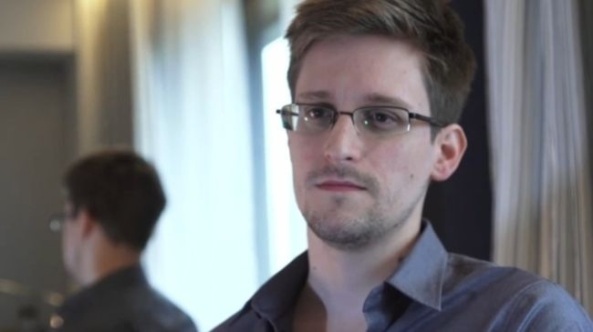
There is ample reason to believe that the case of Edward
Joseph Snowden fits into this pattern. We are likely dealing here with a
limited hangout operation, in which carefully selected and falsified
documents and other materials are deliberately revealed by an insider
who pretends to be a fugitive rebelling against the excesses of some
oppressive or dangerous government agency.
By Webster Griffin TARPLEY, for PressTV
The operations of secret intelligence agencies aiming at the
manipulation of public opinion generally involve a combination of
cynical deception with the pathetic gullibility of the targeted
populations.
There is ample reason to believe that the case of Edward
Joseph Snowden fits into this pattern. We are likely dealing here with a
limited hangout operation, in which carefully selected and falsified
documents and other materials are deliberately revealed by an insider
who pretends to be a fugitive rebelling against the excesses of some
oppressive or dangerous government agency.
But the revelations turn out to have been prepared with a view to
shaping the public consciousness in a way which is advantageous to the
intelligence agency involved. At the same time, gullible young people
can be duped into supporting a personality cult of the leaker, more
commonly referred to as a “whistleblower.” A further variation on the
theme can be the attempt of the sponsoring intelligence agency to
introduce their chosen conduit, now posing as a defector, into the
intelligence apparatus of a targeted foreign government. In this case,
the leaker or whistleblower attains the status of a triple agent.
Any attempt to educate public opinion about the dynamics of limited
hangout operations inevitably collides with the residue left in the
minds of millions by recent successful examples of this technique. It
will be hard for many to understand Snowden, precisely because they will
insist on seeing him as the latest courageous example in a line of
development which includes Daniel Ellsberg and Julian Assange, both
still viewed by large swaths of naïve opinion as authentic challengers
of oppressive government.
This is because the landmark limited hangout operation at the
beginning of the current post-Cold War era was that of Daniel Ellsberg
and the Pentagon papers, which laid the groundwork for the CIA’s
Watergate attack on the Nixon administration, and more broadly, on the
office of the presidency itself. More recently, we have had the case of
Assange and Wikileaks. Using these two cases primarily, we can develop a
simple typology of the limited hangout operation which can be of
significant value to those striving to avoid the role of useful idiots
amidst the current cascade of whistleblowers and limited hangout
artists.
In this analysis, we should also recall that limited hangouts have
been around for a very long time. In 1620 Fra Paolo Sarpi, the dominant
figure of the Venetian intelligence establishment of his time, advised
the Venetian senate that the best way to defeat anti-Venetian propaganda
was indirectly. He recommended the method of saying something good
about a person or institution while pretending to say something bad. An
example might be criticizing a bloody dictator for beating his dog – the
real dimensions of his crimes are thus totally underplayed.
Limited hangout artists are instant media darlings
The most obvious characteristic of the limited hangout operative is
that he or she immediately becomes the darling of the controlled
corporate media. In the case of Daniel Ellsberg, his doctored set of
Pentagon papers were published by the New York Times, the Washington
Post, the Boston Globe, and eventually by a consortium totaling
seventeen corporate newspapers. These press organs successfully argued
the case for publication all the way to the United States Supreme Court,
where they prevailed against the Nixon administration.
Needless to say, surviving critics of the Warren Commission, and more
recent veterans of the 9/11 truth movement, and know very well that
this is emphatically not the treatment reserved for messengers whose
revelations are genuinely unwelcome to the Wall Street centered US
ruling class. These latter are more likely to be slandered, vilified and
dragged through the mud, or, even more likely, passed over in complete
silence and blacked out. In extreme cases, they can be kidnapped,
renditioned or liquidated.
Cass Sunstein present at the creation of Wikileaks
But the revelations turn out to have been prepared with a view to
shaping the public consciousness in a way which is advantageous to the
intelligence agency involved. At the same time, gullible young people
can be duped into supporting a personality cult of the leaker, more
commonly referred to as a “whistleblower.” A further variation on the
theme can be the attempt of the sponsoring intelligence agency to
introduce their chosen conduit, now posing as a defector, into the
intelligence apparatus of a targeted foreign government. In this case,
the leaker or whistleblower attains the status of a triple agent.
Any attempt to educate public opinion about the dynamics of limited
hangout operations inevitably collides with the residue left in the
minds of millions by recent successful examples of this technique. It
will be hard for many to understand Snowden, precisely because they will
insist on seeing him as the latest courageous example in a line of
development which includes Daniel Ellsberg and Julian Assange, both
still viewed by large swaths of naïve opinion as authentic challengers
of oppressive government.
This is because the landmark limited hangout operation at the
beginning of the current post-Cold War era was that of Daniel Ellsberg
and the Pentagon papers, which laid the groundwork for the CIA’s
Watergate attack on the Nixon administration, and more broadly, on the
office of the presidency itself. More recently, we have had the case of
Assange and Wikileaks. Using these two cases primarily, we can develop a
simple typology of the limited hangout operation which can be of
significant value to those striving to avoid the role of useful idiots
amidst the current cascade of whistleblowers and limited hangout
artists.
In this analysis, we should also recall that limited hangouts have
been around for a very long time. In 1620 Fra Paolo Sarpi, the dominant
figure of the Venetian intelligence establishment of his time, advised
the Venetian senate that the best way to defeat anti-Venetian propaganda
was indirectly. He recommended the method of saying something good
about a person or institution while pretending to say something bad. An
example might be criticizing a bloody dictator for beating his dog – the
real dimensions of his crimes are thus totally underplayed.
Limited hangout artists are instant media darlings
The most obvious characteristic of the limited hangout operative is
that he or she immediately becomes the darling of the controlled
corporate media. In the case of Daniel Ellsberg, his doctored set of
Pentagon papers were published by the New York Times, the Washington
Post, the Boston Globe, and eventually by a consortium totaling
seventeen corporate newspapers. These press organs successfully argued
the case for publication all the way to the United States Supreme Court,
where they prevailed against the Nixon administration.
Needless to say, surviving critics of the Warren Commission, and more
recent veterans of the 9/11 truth movement, and know very well that
this is emphatically not the treatment reserved for messengers whose
revelations are genuinely unwelcome to the Wall Street centered US
ruling class. These latter are more likely to be slandered, vilified and
dragged through the mud, or, even more likely, passed over in complete
silence and blacked out. In extreme cases, they can be kidnapped,
renditioned or liquidated.
Cass Sunstein present at the creation of Wikileaks
As for Assange and Wikileaks, the autumn 2010 document dump was
farmed out in advance to five of the most prestigious press organs in
the world, including the New York Times, the London Guardian, El Pais of
Madrid, Der Spiegel of Hamburg, and Le Monde of Paris. This was the
Assange media cartel, made up of papers previously specialized in
discrediting 9/11 critics and doubters.
But even before the
document dumps had begun, Wikileaks had received a preemptive
endorsement from none other than the notorious totalitarian Cass
Sunstein, later an official of the Obama White House, and today married
to Samantha Power, the author of the military coup that overthrew
Mubarak and currently Obama’s pick for US ambassador to the United
Nations. Sunstein is infamous for his thesis that government agencies
should conduct covert operations using pseudo-independent agents of
influence for the “cognitive infiltration of extremist groups” – meaning
of those who reject in the establishment view of history and reality.
Sunstein’s article entitled “Brave New WikiWorld” was published in the
Washington Post of February 24, 2007, and touted the capabilities of
Wikileaks for the destabilization of China. Perhaps the point of Ed
Snowden’s presence in Hong Kong is to begin re-targeting these
capabilities back towards the original anti-Chinese plan.
Snowden has already become a media celebrity of
the first magnitude. His career was launched by the US left liberal
Glenn Greenwald, now writing for the London Guardian, which expresses
the viewpoints of the left wing of the British intelligence community.
Thus, the current scandal is very much Made in England, and may benefit
from inputs from the British GCHQ of Cheltenham, the Siamese twin of the
NSA at Fort Meade, Maryland. During the days of his media debut, it was
not uncommon to see a controlled press organ like CNN dedicating one
third of every broadcast hour of air time to the birth, life, and
miracles of Ed Snowden.
Another suspicious and tell-tale endorsement for Snowden comes from
the
former State Department public diplomacy asset Norman Solomon.
Interviewed on RT, Solomon warmly embraced the Snowden Project and
assured his viewers that the NSA material dished up by the Hong Kong
defector used reliable and authentic. Solomon was notorious ten years
ago as a determined enemy of 9/11 truth, acting as a border guard in favor of the Bush administration/neocon theory of terrorism.
Limited hangouts contain little that is new
Another important feature of the limited hangout operation if that
the revelations often contain nothing new, but rather repackage old wine
in new bottles. In the case of Ellsberg’s Pentagon Papers, very little
was revealed which was not already well known to a reader of Le Monde or
the dispatches of Agence France Presse. Only those whose understanding
of world affairs had been filtered through the Associated Press, CBS
News, the New York Times, and the Washington Post found any of
Ellsberg’s material a surprise.
Of course, there was method in Ellsberg’s madness. The Pentagon
papers allegedly derived from an internal review of the decision-making
processes leading to the Vietnam War, conducted after 1967-68 under the
supervision of Morton Halperin and Leslie Gelb. Ellsberg, then a young
RAND Corporation analyst and militant warmonger, was associated with
this work. Upon examination, we find that the Pentagon papers tend to
cover up such CIA crimes as the mass murder mandated under Operation
Phoenix, and the massive CIA drug running associated with the
proprietary airline Air America. Rather, when atrocities are in
question, the US Army generally receives the blame. Politicians in
general, and President John F. Kennedy in particular, are portrayed in a
sinister light – one might say demonized. No insights whatever into the
Kennedy assassination are offered. This was a smelly concoction, and it
was not altogether excluded that the radicalized elements of the
Vietnam era might have carried the day in denouncing the entire package
as a rather obvious fabrication.
But a clique around Noam
Chomsky and Howard Zinn loudly intervened to praise the quality of the
exposé and to lionize Ellsberg personally as a new culture hero for the
Silent Generation. From that moment on, the careers of Chomsky and Zinn
soared. Pentagon papers skeptics, like the satirical comedian Mort Sahl,
a supporter of the Jim Garrison investigation in New Orleans and a
critic of the Warren Commission, faced the marginalization of their
careers.
Notice also that the careers of Morton Halperin and Leslie
Gelb positively thrived after they entrusted the Pentagon papers to
Ellsberg, who revealed them. Ellsberg was put on trial in 1973,
but all charges were dismissed after several months because of
prosecutorial misconduct. Assange lived like a lord for many months in
the palatial country house of an admirer in the East of England, and is
now holed up in the Ecuadorian Embassy in London. He spent about 10 days
in jail in December 2010.
Assange first won credibility for Wikileaks with
some chum in the form of a shocking film showing a massacre perpetrated
by US forces in Iraq with the aid of drones. The massacre itself and the
number of victims were already well known, so Assange was adding only
the graphic emotional impact of witnessing the atrocity firsthand.
Limited hangouts reveal nothing about big issues like JFK, 9/11
Over the past century, there are certain large-scale covert
operations which cast a long historical shadow, determining to some
extent the framework in which subsequent events occur. These include the
Sarajevo assassinations of 1914, the assassination of Rasputin in late
1916, Mussolini’s 1922 march on Rome, Hitler’s seizure of power in 1933,
the assassination of French Foreign Minister Barthou in 1934, the
assassination of President Franklin D. Roosevelt in 1945, in 1963
Kennedy assassination, and 9/11. A common feature of the limited hangout
operations is that they offer almost no insights into these landmark
events.
In the Pentagon Papers, the Kennedy assassination is virtually a nonexistent event about which we learn nothing.
As
already noted, the principal supporters of Ellsberg were figures like
Chomsky, whose hostility to JFK and profound disinterest in critiques of
the Warren Commission were well-known. As for Assange, he
rejects any further clarification of 9/11. In July 2010, Assange told
Matthew Bell of the Belfast Telegraph:
“I’m constantly
annoyed that people are distracted by false conspiracies such as 9/11,
when all around we provide evidence of real conspiracies, for war or
mass financial fraud.” This is on top of Cass Sunstein’s
demand for active covert measures to suppress and disrupt inquiries into
operations like 9/11. Snowden’s key backers Glenn Greenwald and Norman
Solomon have both compiled impressive records of evasion on 9/11 truth,
with Greenwald specializing in the blowback theory.
The Damascus road conversions of limited hangout figures
Daniel Ellsberg started his career as a nuclear strategist of the Dr.
Strangelove type working for the RAND Corporation. He worked in the
Pentagon as an aide to US Secretary of Defense Robert McNamara. He then
went to Vietnam, where he served as a State Department civilian
assistant to CIA General Edward Lansdale. In 1967, he was back at RAND
to begin the preparation of what would come to be known as the Pentagon
papers. Ellsberg has claimed that his Damascus Road conversion from
warmonger to peace angel occurred when he heard a speech from a
prison-bound draft resister at Haverford College in August 1969. After a
mental breakdown, Ellsberg began taking his classified documents to the
office of Senator Edward Kennedy and ultimately to the New York Times.
Persons who believe this fantastic story may be suffering from terminal
gullibility.
In the case of Assange, it is harder to identify such a moment of
conversion. Assange spent his childhood in the coils of MK Ultra, a
complex of Anglo-American covert operations designed to investigate and
implement mind control through the use of psychopharmaca and other
means. Assange was a denizen of the Ann Hamilton-Byrne cult, in which
little children that were subjected to aversive therapy involving LSD
and other heavy-duty drugs. Assange spent his formative years as a
wandering nomad with his mother incognito because of her involvement in a
custody dispute.
The deracinated Assange lived in 50 different
towns and attended 37 different schools. By the age of 16, the young
nihilist was active as a computer hacker using the screen name “Mendax,”
meaning quite simply “The Liar.” (Assange’s clone Snowden uses the more
marketable codename of “Verax,” the truth teller.) Some of Assange’s
first targets were Nortel and US Air Force offices in the Pentagon.
Assange’s chief mentor became John Young of Cryptome, who in 2007
denounced Wikileaks as a CIA front.
Snowden’s story, as widely reported, goes like this:
he
dropped out of high school and also dropped out of a community college,
but reportedly was nevertheless later able to command a salary of
between $120,000 and $200,000 per year; he claims this is because he is a
computer wizard. He enlisted in the US Army in May 2004, and
allegedly hoped to join the special forces and contribute to the fight
for freedom in Iraq. He then worked as a low-level security guard for
the National Security Agency, and
then went on to computer
security at the CIA, including a posting under diplomatic cover in
Switzerland. He moved on to work as a private contractor for the NSA at a
US military base in Japan. His last official job was for the NSA at the
Kunia Regional SIGINT Operations Center in Hawaii. In May
2013, he is alleged to have been granted medical leave from the NSA in
Hawaii to get treatment for epilepsy. He fled to Hong Kong, and made his
revelations with the help of Greenwald and a documentary filmmaker
Laura Poitras. Snowden voted for the nominally anti-war, ultra-austerity
“libertarian” presidential candidate Ron Paul, and gave several hundred
dollars to Paul’s campaign.
Snowden, like Ellsberg, thus started off as a warmonger but later
became more concerned with the excesses of the Leviathan state. Like
Assange, he was psychologically predisposed to the world of computers
and cybernetics. The Damascus Road shift from militarist to civil
libertarian remains unexplained and highly suspicious.
Snowden is also remarkable for the precision of his timing. His first
revelations, open secrets though they were, came on June 5, precisely
today when the rebel fortress of Qusayr was liberated by the Syrian army
and Hezbollah. At this point, the British and French governments were
screaming at Obama that it was high time to attack Syria. The appearance
of Snowden’s somewhat faded material in the London Guardian was the
trigger for a firestorm of criticism against the Obama regime by the
feckless US left liberals, who were thus unwittingly greasing the skids
for a US slide into a general war in the Middle East. More recently,
Snowden came forward with allegations that the US and the British had
eavesdropped on participants in the meeting of the G-20 nations held in
Britain four years ago. This obviously put Obama on the defensive just
as Cameron and Hollande were twisting his arm to start the Syrian
adventure. By attacking the British GCHQ at Cheltenham, Britain’s
equivalent to the NSA, perhaps Snowden was also seeking to obfuscate the
obvious British sponsorship of his revelations.
Stories about Anglo Americans spying on high profile guests are as
old as the hills, and have included a British frogman who attempted an
underwater investigation of the Soviet cruiser that brought party leader
N. S. Khrushchev for a visit in the 1950s. Snowden has also accused the
NSA of hacking targets in China — again, surely no surprise to
experienced observers, but guaranteed to increase Sino-American
tensions. As time passes, Snowden may emerge as more and more of a
provocateur between Washington and Beijing.
Limited hangouts prepare large covert operations
Although, as we have seen, limited hangouts rarely illuminate the
landmark covert operations which attempt to define an age, limited
hangouts themselves do represent the preparation for future covert
operations.
In the case of the Pentagon papers, this and other leaks during the
Indo-Pakistani Tilt crisis were cited by Henry Kissinger in his demand
that President Richard Nixon take countermeasures to restore the
integrity of state secrets. Nixon foolishly authorized the creation of a
White House anti-leak operation known as the Plumbers. The intelligence
community made sure that the Plumbers operation was staffed by their
own provocateurs, people who never were loyal to Nixon but rather took
their orders from Langley. Here we find the already infamous CIA agent
Howard Hunt, the CIA communications expert James McCord, and the FBI
operative G. Gordon Liddy. These provocateurs took special pains to get
arrested during an otherwise pointless break-in at the headquarters of
the Democratic National Committee in the summer of 1972. Nixon could
easily have disavowed the Plumbers and thrown this gaggle of agent
provocateurs to the wolves, but he instead launched a cover up. Bob
Woodward of the Washington Post, equipped with a top secret security
clearance from the Office of Naval Intelligence, then began publicizing
the story. The rest is history, and the lasting heritage has been a
permanent weakening of the office of the presidency and the
strengthening of the worst oligarchical tendencies.
Assange’s Wikileaks document dump triggered numerous
destabilizations and coups d’état across the globe. Not one US, British,
or Israeli covert operation or politician was seriously damaged by this
material. The list of those impacted instead bears a striking
resemblance to the CIA enemies’ list: the largest group of targets were
Arab leaders slated for immediate ouster in the wave of “Arab Spring.”
Here we find Ben Ali of Tunisia, Qaddafi of Libya, Mubarak of Egypt,
Saleh of Yemen, and Assad of Syria. The US wanted to replace Maliki with
Allawi as prime minister of Iraq, so the former was targeted, as was
the increasingly independent Karzai of Afghanistan. Perennial targets of
the CIA included Rodriguez Kirchner of Argentina, Berlusconi of Italy,
and Putin of Russia. Berlusconi soon fell victim to a coup organized
through the European Central Bank, while his friend Putin was able to
stave off a feeble attempt at color revolution in early 2012. Mildly
satiric jabs at figures like Merkel of Germany and Sarkozy of France
were included primarily as camouflage.
Assange thus had a hand in preparing one of the largest
destabilization campaigns mounted by Anglo-American intelligence since
1968, or perhaps even 1848.
If the Snowden operation can help coerce the vacillating and
reluctant Obama to attack Syria, our new autistic hero may claim credit
for starting a general war in the Middle East, and perhaps even more. If
Snowden can further poison relations between United States and China,
the world historical significance of his provocations will be doubly
assured. But none of this can occur unless he finds vast legions of
eager dupes ready to fall for his act. We hope he won’t.
WT / HN

 Posts
Posts