State Police: All 26 Newtown Victims Shot With Assault Rifle
Thursday, January 24, 2013 14:37

 Posts
All Comments
Posts
All Comments

In August 2007, I received a call from Steve Jobs, the Chief Executive Officer of Apple. In the months before the call, several employees had moved between the two companies. On the call, Mr. Jobs expressed concern about employees being hired away from Apple by Palm. As a solution, Mr. Jobs proposed an arrangement between Palm and Apple by which neither company would hire the other's employees, including high tech employees. Mr. Jobs also suggested that if Palm did not agree to such an arrangement, Palm could face lawsuits alleging infringement of Apple's many patents.The email exchange is worth reading. Colligan makes a case for why it's silly to worry about employees changing companies, noting that every company wants to hire the best employees period, and that there's a big enough market for everyone. He notes, correctly, that the proposed agreement is "not only wrong, it is likely illegal." As he points out: "We can't dictate where someone will work nor should we try. I can't deny people who elect to pursue their livelihood at Palm the right to do so simply because they now work for Apple, and I wouldn't want you to do that to current Palm employees. We can both try to persuade them to stay but, at the end of hte day, it is their choice, and a choice we should respect."
I did not agree to Mr. Jobs's proposal and responded by sending an email on 15 August 24, 2007
Steve, we don't want to hurt Apple. As I said on the phone, Palm is focused on building the best team in the industry, and we know there is a lot of quality talent outside of Apple. On the other hand, this is a small space, and it's inevitable that we will bump into each other. Threatening Palm with a patent lawsuit in response to a decision by one employee to leave Apple is just out of line. A lawsuit would not serve either of our interests, and will not stop employees from migrating between our companies. This is a very exciting time for both of our companies, and the market is certainly big enough for both of us. We should focus on our respective businesses and not create unnecessary distractions.He follows it up by noting that any such lawsuit would just create a nuclear war situation, since Palm has its own patents, though he clearly notes that the only people this benefits are the lawyers:
That said, I want to be clear that we are not intimidated by your threat. Palm has a very robust portfolio of patents, having been in the handheld and smartphone businesses since the early 90's. in addition, Palm now owns the former Siemens mobile patent portfolio, most recently held by BenQ Corporation. This mobile computing and communications portfolio includes over 1500 patent assets, the majority filed in Europe. If you choose the litigation route, we can respond with our own claims based on these patent assets, but don't think litigation is the answer. We will both just end up paying a lot of lawyers a lot of money.Entirely true. And then Steve Jobs hits back, first mocking Palm by noting that Apple has a lot more money, so it doesn't mind throwing money away to lawyers on a bogus patent lawsuit as long as it hurts Palm, and then mocking the quality of Palm's patents that it acquired from BenQ:
I'm sure you realize the asymmetry in the financial resources of our respective companies when you say: "We will both just end up paying a lot of lawyers a lot of money."As Dan O'Connor notes in the Patent Progress blog post above, this is no different than a mob boss protection racket, using the patents to warn Palm not to hire any more Apple employees or (effectively) "someone might get hurt" -- with the patents standing in for the traditional baseball bat.
Just for the record, when Siemens sold their handset business to BenQ they didn't sell them their essential patents but rather just gave them a license. The patents they did sell to BenQ are not that great. We looked at them ourselves when they were for sale. I guess you guys felt differently and bought them. We are not concerned about them at all. My advice is to take a look at our patent portfolio before you make a final decision here.
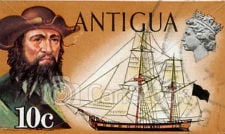 Antigua and Barbuda is a small country in the Caribbean that for years had a flourishing gambling industry.
 If it were possible to boil the success of a book down to checklists
and formula then this infographic would be all you need to guarantee the
next best seller.
If it were possible to boil the success of a book down to checklists
and formula then this infographic would be all you need to guarantee the
next best seller.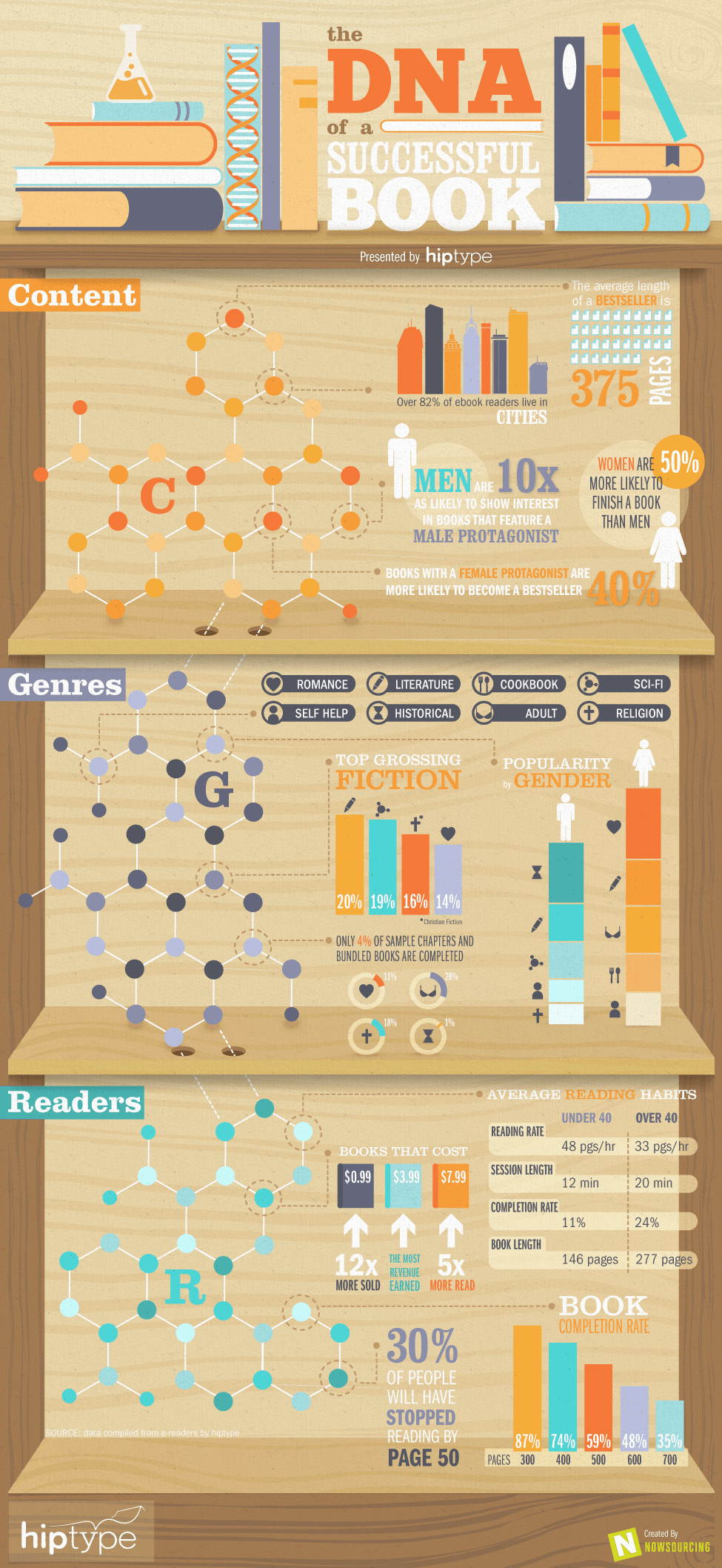
 Amazon
is a company that usually treats their customers quite well, so today’s
news of their recent boneheaded maneuver comes as a shock.
Amazon
is a company that usually treats their customers quite well, so today’s
news of their recent boneheaded maneuver comes as a shock.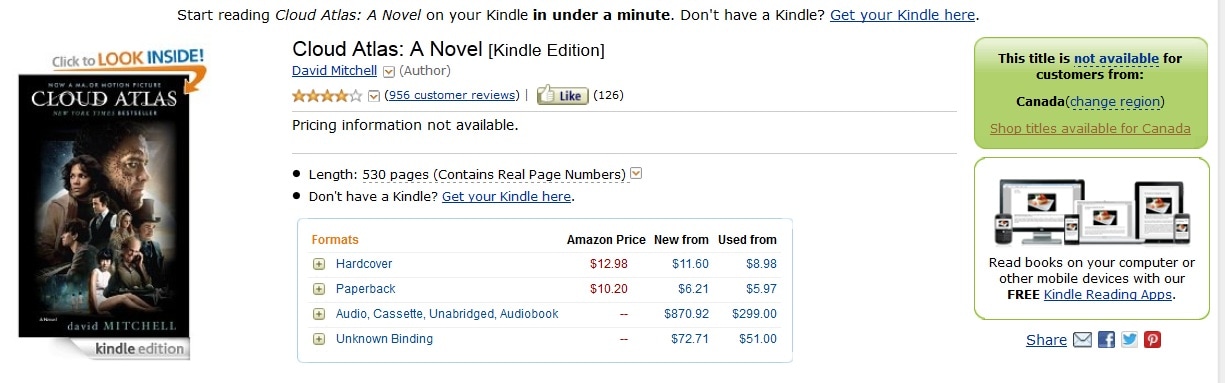
The first shot was probably the release of Stuxnet sometime during or before 2009. Even though no one has officially claimed responsibility everyone knows who was behind it. Stuxnet hit with a bang and did a whole lot of damage to Iran's uranium-enrichment capabilities. The United States followed that up with Flame–the ebola virus of spyware.That's what makes all of this seem so monumentally silly. The government is making use of an American public, which is massively ignorant about who and what Iran is and is capable of, to go legislatively nutbars in our own country. Don't ask me why they're doing it, but they are. Perhaps more importantly, we're being told that we need legislation to protect against an incapable enemy in a war that we started. If that makes sense to you, chances are you need psychiatric care.
What did the Iranians fire back with? A series of massive, on-going and ineffective DDoS attacks on American banks. This is a disproportionate response but not in the way military experts usually mean that phrase. It's the equivalent of someone stealing your car and you throwing an ever-increasing number of eggs at his house in response.
ProPublica reported yesterday that a widely cited Defense Department study claiming Iran's Intelligence Ministry constitutes "a terror and assassination force 30,000 strong" has been "pulled for revisions." It seems there's no proof whatsoever that the 30,000 number wasn't pulled out of thin air.See, it's not that I'm siding with the pea-shooters here, it's that I'm more scared of the guys that started this war with their tanks. Particularly when the result is poorly-conceived legislation.


 Despite
the rapid pace of the digital age, it’s still too soon to toss the
paper and pen. Actually, you may never want to writing for good – if you
want to further develop your brain, that is.
Despite
the rapid pace of the digital age, it’s still too soon to toss the
paper and pen. Actually, you may never want to writing for good – if you
want to further develop your brain, that is.“It sounds old-fashioned,” admits Kathleen Wright, a textbook publisher, “when you put forth the argument that you lose connection with the past. But then there’s also that scientific aspect of it. We don’t know what’s going to happen later on if you don’t teach children how to write on paper or how to write cursive.”While there are undoubtedly benefits to teaching children typing skills, the shrinking time spent on cursive and even handwriting in school classrooms may have negative effects on children’s development. Cursive writing especially seems to have a unique, positive impact on brain development. Even adults have much to gain from setting pen to paper.





* A tonne, also referred to as a metric ton, has a unit of mass equal to 1,000 kgCountry
Tonnes1.
United States
8,133.52.
Germany
3,401.83.
IMF
2,827.24.
Italy
2,451.85.
France
2,435.46.
China
1,054.17.
Switzerland
1,040.18.
Russia
784.19.
Japan
765.210.
Netherlands
612.511.
India
557.712.
ECB
501.4