Sunday, November 10, 2013

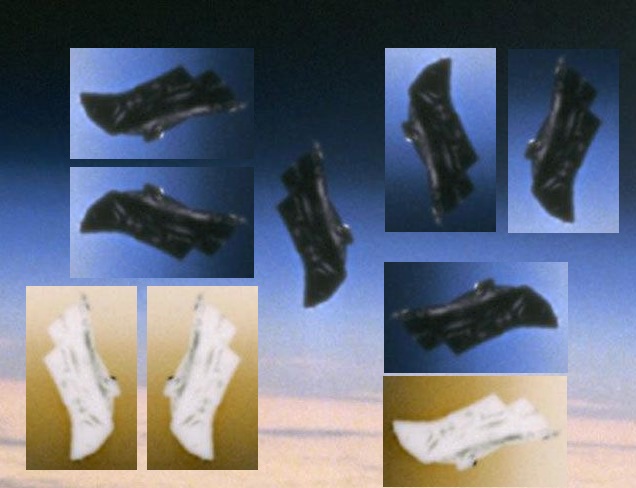
secret nasa foto stolen by hacker

secret nasa foto stolen by hacker

Published on May 18, 2012
No description available.

13000 YEAR OLD SATELLITE, THE FULL STORY OF THE BLACK KNIGHT UFO 2013 HD

13000 YEAR OLD SATELLITE, THE FULL STORY OF THE BLACK KNIGHT UFO 2013 HD

Published on May 11, 2013
Never Miss A Video (Receive A Text When I Upload!):
http://motube.us/TheLifebeyondearth

The story of the black knight UFO begins way back in 1899 with a signal which was picked up by Nikola Tesla, coming from space. This signal was picked up again on various occasions in the 1920's by radio enthusiasts and there were many sightings by astronomers who watched and studied it. It made newspapers in the 1950's and 1960's. Pictures were taken in the 1960's. In the 1970's the signal was decoded and was a diagram of epsilon bootes star system. This is an amazing story.

Artist: Optimum Vulnerability
Track: Lost Innocence
Licence: http://goo.gl/ZSoZf
Link to original - http://www.youtube.com/watch?v=VE61oS...

Artist: MODIFICA7E - Sub Conscious
Link to original - http://www.youtube.com/watch?v=4npqow...
Licence: http://goo.gl/ZSoZf

Artist: Statictide
Track: Blue Dream
Licence: http://goo.gl/ZSoZf
Link to original - http://www.youtube.com/watch?v=LckPhT...

Links to images from NASA -
http://eol.jsc.nasa.gov/sseop/images/...

WATCH IN HD!!

SOME THOUGHTS ON THE BLACK KNIGHT SATELLITE

Recently someone posted an interesting article on my Facebook page and asked me what I thought about it, and it so arrested me that I thought it deserved some commentary. But first, the article:
The Black Knight Satellite Revisited
Let’s look closer. The article states the problem succinctly enough: “Imagine in 1960 you discover a radar blip. This radar blip appears to be a satellite orbiting the Earth… but this satellite isn’t listed along side Sputnik or Explorer, in fact no-one (or any country) knows of its origin. Not only that, but this satellite, named ‘Black Knight’ – has a polar orbit!… Neither the USA nor the USSR/Soviets have accomplished a polar orbit. Black Knight was found to be many, many times larger than any current satellite orbiting our planet.”
And that prompts an obvious question: “So if we didn’t put this satellite up there, who did?” Then comes a not so obvious answer: “The options come down to two: aliens or ancient man (when I say ancient man, I’m talking about advanced civilizations).”
The article then goes on to cite a Time magazine article of March 7, 1960, which states that the US Department of Defense had finally concluded that the satellite was the debris of a US Air Force satellite, Discoverer V, which had “gone astray,” but later in the same article, the magazine reported that when it was first discovered, then-President Eisenhower was informed of it in a Top Secret memorandum. Researcher John Keel then enters the picture, for according to him (we’re given no citations in the internet article other than the reference Disneyland of the Gods…) HAM operators began to receive coded messages about the same time as the satellite was noticed. According to Keel, one of them supposedly decoded a message, and it turned out to be a star chart from 13,000 years ago.
While I am certainly not opposed to the idea of aliens and ancient lost civilizations, is this enough to conclude that the Black Knight satellite must be alien, or for that matter, a derelict from an ancient lost civilization? No it is not, and there are other possibilities.
Consider only the two possibilities and their implications: (1) The US government is telling the truth, or (2) the US government was lying. On the first count, we can all stop reading and go home; there is no further story. But on the second count, the plot thickens. Considerably….
1960 was, after all, the height of the Cold War. The USA and USSR both needed intelligence on each other’s capabilities, and a reconnaissance satellite in polar orbit would be the perfect platform by which to achieve it. From the USA’s standpoint, it makes even more sense to avoid the risky U-2 flights over Soviet Russia.
There is, however, a third possibility, even more disturbing, a possibility suggested by the wider context. In early 1947, Admiral Richard Byrd returned from Operation High Jump, the fullscale military expedition to Antarctica where, according to the cover story, we were testing winter equipment and tactics (why go there?? Wouldn’t the Canadian Arctic or Alaska do just as well? And be less expensive?) On the way back to the USA, as most people know, Byrd gave an interview to a reporter from El Mercurio newspaper in Santiago de Chile, in which he said the United States must be prepared to defend itself against enemy fighters that can fly from pole to pole with tremendous speed. So… if the satellite was ours, might one of its purposes have been not only to spy on the USSR, but on the activities and goings-on in Latin America?
Mind you, I am not a subscriber to the Nazi-survival-in-Antarctica scenario, but it does give one pause.
And there is a fourth possibility: the satellite might indeed be Nazi. While the evidence for such an idea is non-existent, the possibility is worth looking at. Contextually, the 1950s were, of course, the era of the (in)famous contactees, Van Tassel and, of course, Adamski, the latter of whom was contacted by very human, and one might even say Nordic, extra-terrestrials, flying around in their decidedly retro-looking flying saucers, and giving him messages of joy, love, harmony, peace and brotherhood. Admaski’s earthly contacts and associations are worth looking at closely, however, for one of them was the American Nazi William Pelley. And  as I mentioned in Roswell and the Reich, “our” Nazis weren’t above using “our” V-2s and cameras to spy on us, so why wouldn’t a post-war Nazi International, if it had the technology? A polar orbit satellite would be the perfect platform to watch both former enemies, the USA and the USSR. Two birds, one stone. Additionally, they had a rudimentary technology by which to boost something like that into orbit (can anyone say “Kecksburg” here?)
Later, both Dr. Von Braun and, more importantly, his crony from “the good old days” in the Third Reich, Dr. Herman Oberth, implied that the Nazis had had “help” in achieving their technological breakthroughs, the implication being that it came from “ET”. But I think not, as I have been at pains to show in my books the science represented by the Bell and other projects may be rationalized on a wholly terrestrial basis; no ET needed. So why would they make such statements? One answer – an obvious one if you think about it – is that they were lying. But to what purpose? One possibility might be that it was yet another subtle implanting of the “ET meme” into the popular culture, as part of a psychological operation conceived in conjunction with the subtle displays of advanced technology. Could the Nazis have conceived of such a plan?
The answer is a definite yes, and there is even direct evidence to support that contention (the subject of another book, I’m afraid); but for our purposes here, it suffices to say that one need not look to ET nor to ancient civilizations as being the only explanation for the Black Knight satellite story. One might look closer to home and to our own time. It could have been something Soviet, something American, or, indeed, something Nazi.

Worthless Stocks from China

http://www.businessweek.com/magazine/content/11_04/b4212058566865.htm

Worthless Stocks from China


On an April afternoon in 2009, in his home office outside Austin, Tex., John Bird was hunched over his computer trying to figure out if a Chinese company some 6,500 miles away was anything close to what it claimed to be. Silver-haired and retired, Bird, 62, likes to project an air of relaxed amusement. His personal philosophy is reflected in a sticker from The Big Lebowski over his office door: "The Dude abides..."
Some things, however, Bird takes very seriously, including what he calls the "sanctity of math," which on that afternoon was being defiled in his eyes by the claims of China Sky One Medical (CSKI), a maker of products such as "magnetizing" hemorrhoid ointments and patches that would "dispel fat." Sky One, according to its annual report filed just a few days earlier, was selling out of its inventory every seven days.
Bird's first business venture—before real estate development, a music venue called Club Foot, and a direct-mail marketing firm—was a chain of nine movie theaters in Austin in the 1970s. Audiences ate through stocks of popcorn and candy every three days or so, but supplies of cups and buckets took months to run through, adding up to an average turnover of eight to 10 days. Sky One's inventory, Bird figured, ought to move more slowly, since things like cardboard boxes for packaging and adhesives for patches are bought and stored in bulk and used bit by bit as orders come in.
They're turning their inventory over faster than a doughnut shop, thought Bird. Or, as he later put it, "It's like somebody telling you they just drove over here at 600 miles per hour. It's not going to happen."
Sky One, Bird would find, wasn't the only stock recently arrived from China, and it wasn't the only one seemingly exceeding financial speed limits. Sky One, which declined to comment for this story, is one of more than 350 small Chinese companies to have listed in the U.S. since 2004 through a process called a reverse merger, in which an operating Chinese company takes over an all-but-defunct publicly traded U.S. shell company.
The capital at stake is significant. Shares of such reverse mergers are held by many funds available to retail investors, including Oppenheimer Main Street Small Cap Fund (OPMSX) and the PowerShares Golden Dragon Halter USX China Portfolio, and are scooped up by small-cap index funds. Roth Capital Partners, an investment bank in Newport Beach, Calif., that has been one of the most active in helping such Chinese companies raise money, recently tried to measure the Chinese reverse merger market. It came up with a list of 94 companies with market capitalizations of between $50 million and $1 billion that trade an average of at least 50,000 shares daily, with a total stock market value of more than $20 billion.
Bird's involvement would evolve from irritation that a company could get away with making a claim that so obviously defies basic business logic to the conviction that many pieces of the Chinese miracle that trade in the U.S. are, in his words, "flat-ass" frauds. And what started as a retiree looking into a company has turned into a dispute that has drawn in other shorts, the Securities and Exchange Commission, auditors, and, according to recent reports, the U.S. House Committee on Financial Services. It has also revealed significant flaws in U.S. markets and how they are regulated. Although the stocks trade on U.S. exchanges, and thus project a sense of having to play by American rules, the assets and the principals of many of the companies reside in China. The companies operate on their terms, leaving injured parties and the SEC powerless. Bird says the carnage is just beginning. "The whole thing has no place to go but to blow up," he says. "That's a rational position for an investor to start with, that every one of these Chinese reverse mergers is a fraud."
Bird didn't start out on a mission against Chinese stocks, but he doesn't believe in doing things by halves. His art collection includes a nine-ton copy of a Babylonian horse figurine from 600 BC that sits next to his pool and two six-foot-tall mosaic eggs that spin in the field beyond; those are two of 18 large sculptures that dot his 70-acre property northeast of Austin. His wife of 39 years, Jenny, gave him a backgammon set a few years ago, and he now travels to Las Vegas to compete in tournaments.
Bird has never been to China; his closest brush came on a visit to Hong Kong in 1959. He came to shorting Chinese companies through a website run by Manuel P. Asensio. Now a financial adviser, Asensio was barred from the brokerage industry in 2006 by the National Association of Securities Dealers (now known as Financial Industry Regulatory Authority) for failing to cooperate with an investigation into misleading research reports. (The noirish world of short-selling is full of such compromised figures; Bird himself declared bankruptcy in 1985.) Asensio.com publishes short-selling ideas. It initiated coverage of Sky One in April 2009, questioning a history of restatements and frequent changes in auditors and sparking Bird's own investigation.
Sky One, Bird found, was a combination of Comet Technologies and American California Pharmaceutical Group. Comet Technologies was a "blank check" company, incorporated in Nevada, with no business other than finding a promising acquisition. American California Pharmaceutical Group was a holding company for Harbin Tian Di Ren Medical Science and Technology, which had been making over-the-counter medicines based on Chinese herbal remedies since 1994 in the northern city of Harbin. The shares of the new company, merged and renamed China Sky One Medical, finished 2006 at $8 and climbed 75 percent in 2007, to $14, as the company promised it was stepping upmarket from wart-removal spray to gene recombination techniques; the stock also likely benefited from the seemingly unquenchable enthusiasm for China's prospects. In 2008, Sky One moved from the OTC Bulletin Board to the American Stock Exchange and then to the Nasdaq Composite Index.
Bird turned up credit reports on Harbin Tian Di Ren from providers in Britain, India, and China. The numbers in all three matched each other, but they did not match the SEC filings. After two months of e-mails and phone calls, Bird reached a woman named Terry at Qingdao Inter-Credit Services, a credit report provider, who sent Bird the filings it used. They were from a Chinese agency called the State Administration for Industry & Commerce (SAIC). For Bird and those who followed him, the SAIC filings were "like getting X-rays of a terminal patient," he says. "It was dead stock walking."
The SAIC is the Chinese government agency responsible for market supervision, regulation, and enforcement. According to the filing, Sky One's operating unit, Harbin Tian Di Ren, had 2008 sales of 6.93 million yuan, roughly $1 million at 2008 exchange rates. Yet to the SEC, Sky One reported 2008 sales of $91.8 million, with Harbin Tian Di Ren accounting for at least 65 percent, or $59.7 million. Bird ordered reports to trace Sky One customers and suppliers; the paperwork showed companies too small to generate the orders or inventory Sky One posted.
By August 2009, Bird was ready to place a serious bet. From his home office, he logged on to his account and sold short 30,000 shares at $15.70. The natural next step of a short-seller is to get the word out, and Bird soon posted a selection of his evidence on the Web. Bird chose the URL waldomushman.com, Waldo Mushman being the occasional pseudonym of Steve McQueen, at least according to Bird.
Bird also sent his evidence to the SEC, to Sky One, and to Sky One's auditor, Cranford (N.J.)-based Moore Stephens P.C. (now known as MSPC Certified Public Accountants and Advisers). An SEC official in Los Angeles, Junling Ma, called him about the SAIC documents, as did a Nasdaq enforcement official, according to Bird. He also made regular posts to sites such as Seeking Alpha and Yahoo! Finance (YHOO), arguing his case. None of it, at first, proved much of a setback for Sky One, whose price mainly climbed, along with Chinese shares in general.
But Bird's method of checking Chinese-American stocks through SAIC filings did interest other investors, who began to use it as well. This disparate, far-flung crew included short-sellers such as Andrew Left of Citron Research in Los Angeles, the eccentrically named Muddy Waters Research, based in Hong Kong, and Sahm Adrangi, a 29-year-old Yale graduate running tiny hedge fund Kerrisdale Capital in New York.
Listing in the U.S. through a reverse merger is easier than joining the main exchanges in Shanghai and Shenzhen, where local companies face a long waiting period and profitability requirements. A public market for startups, ChiNext, only started in October 2009. A Hong Kong listing on the Growth Enterprise Market also presents hurdles, with minimum thresholds for cash flow and expected market capitalization.
A U.S. reverse merger, by contrast, can take as little as three months and cost under $1 million in fees, according to CCG, a Los Angeles investor relations firm that specializes in Chinese companies. In 2010, 78 Chinese companies listed in reverse mergers, according to DealFlow Media figures as of Jan. 6, adding to the 294 that did so from 2004 through 2009.
The Sky One deal cost between $600,000 and $800,000, according to Charles Hung Jr. of American Eastern Group, the Los Angeles investment firm that set it up. According to Hung, he and his father, Charles Sr., visited the company for more than a week to see the products on store shelves and meet the management. The company was led then and now by Chairman and Chief Executive Officer Liu Yan-qing. Liu's background was in drug marketing, journalism, and research and development, and he has a bachelor's degree from Harbin Medical University as well as an executive MBA from Tsinghua University, according to his biography on the company website.
Starting in the early 2000s, the Hungs engineered four Chinese reverse mergers, the last one for China Shen Zhou Mining & Resources (SHZ) in 2006, soon after Sky One's. In three of the deals, including Sky One's, the Hungs paired off the Chinese companies with shell company vehicles linked to Utah businessman Jack M. Gertino. Filings list Gertino as investing in real estate and having run a car tune-up franchise. He received 163,581 shares of Sky One, warrants for more shares, and a consulting deal for "financial and management planning" covering the two years after the merger. Gertino says he passed on dozens of deals before pursuing the China Sky One reverse merger, for which he visited the company in China twice. He adds that it's a "terrific" company.
The Hungs also paired Sky One with E-Fang Accountancy, a two-partner firm in City of Industry, Calif., that prepared two years of U.S.-audited financials. Hung remembers E-Fang as being "very thorough." In December 2008, the California Board of Accountancy suspended E-Fang's license for 30 days and imposed three years' probation for gross negligence and violating professional standards, without specifying which company work triggered the action. Hung now says that he wouldn't do a reverse merger unless the company agreed to a top 10 auditor.
Others in the business include Benjamin Wey, who has built a career bringing companies over from China and onto exchanges such as Nasdaq. Wey was born in China and likes to recount how he arrived in the U.S. in 1992 with $62 in his pocket and worked part-time as a Chinese chef while attending Oklahoma Baptist University. He now has offices on Wall Street, 60 employees in China, and says he accepts just 1 percent of the companies that seek him out.
Wey says that his clients don't want to wait to list at home, and a full-blown initial public offering in the U.S. is expensive and difficult, partly because banks don't want to underwrite tiny companies. "The reason these companies do reverse mergers is not because it's good or bad...they have no alternative," he says.
From a 38th-floor conference room overlooking the silver and grey glints of lower Manhattan, he describes how a typical deal works: List via reverse merger with private funding from his company, New York Global Group, jump up to a name exchange such as Nasdaq, then raise much larger amounts of money with a secondary offering once the company has established credibility. He says he assigns up to nine Chinese local staff members to lead a company through seven to 11 months of due diligence before a U.S. listing. "There's a lot of traps to try to avoid," he says.
In 2007, the American Stock Exchange delisted a fertilizer company that Wey had brought over, Bodisen Biotech, for incomplete and inaccurate disclosures related to share ownership by officers as well as payments to Wey's company. The move came in the wake of a series of stories in the New York Post and MarketWatch. The Oklahoma Securities Dept. also censured Wey in 2005 for not advising customers of the risks of stocks he sold and not disclosing consulting relationships with some of the companies. Wey agreed to a ban on working in the securities business in the state without admitting to the allegations.
A couple of weeks after waldomushman.com went live, Sky One acknowledged that its SAIC and SEC filings were "materially different" but assured investors of the accuracy of its U.S. filings. Its shares slid gradually from almost $15 to under $12 by November, then began to climb again. Bird was disappointed.
"Here I put the SAIC documents out and I expect to shake the world, and nothing much happens," Bird says. "So I thought, 'This is going to take more effort.'" Bird found a private investigator in Harbin who charged $59 an hour to take photos of Sky One's facilities and investigate land records, which Bird hoped would turn up incriminating evidence. It didn't. He also began delving into the company's patents, which Sky One valued at $1.6 million in 2007. The same seven patents were valued at $15.1 million in 2008. In the meantime, Sky One shares rose to a high of $24.25 on Dec. 28, 2009. and ended the year up 42 percent.
The rise meant Bird needed cash to cover his losses, as brokerages call for a cushion or "margin" to ensure that short sales can be settled. At the time of the stock's climb, Bird was in New Zealand with his wife and, because of the time difference, had to make trades at 3 and 4 a.m. to cover the margin call.
He returned home exhausted and down almost $90,000. Instead of cutting his losses, however, he filed suit in March against the company's auditor, MSPC, for failing to acknowledge misrepresentations in Sky One's financial statements and errors in its audit work. Bird didn't sue Sky One directly because the U.S. company's assets are in China. "I just got pissed-off, and I'm a stubborn man," he says. Michael G. Mullen, the head of MSPC's audit department, declined to comment on the ongoing litigation. MSPC audits three U.S.-listed Chinese companies and some that want to list, according to Richard J. Montalbano, a partner in the firm who focuses on China-related work. MSPC has had other problems in the field. In an April 2009 inspection report, the Public Company Accounting Oversight Board (PCAOB), part of the SEC, noted "audit deficiencies" in one case so significant that the team declared MSPC didn't have enough evidence to support its opinion on the issuer's financial statements.
By May 2010, other shorts began to emerge, waving SAIC filings, just like Bird. A Detroit forensic accountant, Steven R. Chapski, citing Sky One, posted an analysis of the 2009 SAIC and SEC filings for another company, cable- and wire-maker Lihua International, on Seeking Alpha. Lihua responded by making its 2009 SAIC filing and a reconciliation with SEC filings available on its website. Lihua gained 7.6 percent last year, but Chapski continues to question the company. "It just doesn't add up, and I've never heard anybody tell me a good reason why my thinking is wrong," he says.
In June, Chinesecompanyanalyst.com, a blog run anonymously by Kerrisdale Capital's Adrangi, accused China Marine Food Group (CMFO) of fabricating SEC financial statements, citing SAIC documents that showed 2008 revenue 85 percent lower than reported in the U.S. Adrangi also questioned China Marine's acquisition of Shishi Xianghe Food Science and Technology in January 2010 for $27.8 million, pointing out that Xianghe's proprietary algae drink formula had been worth just $8,776 in 2009, when Xianghe purchased it. China Marine shares slumped 30 percent in June. The company says that for 2009 its SAIC filings were consistent with its U.S. filings.
In November, Adrangi went after China Education Alliance (CEU), an online education company. After meeting with its executives in August, he asked a Chinese friend to look at the company's website. Nonfunctional, the friend reported. So Adrangi followed in Bird's footsteps: "If there's any person who started this, it's John Bird," he says. "He's the reason anybody is looking at the SAIC filings."
Adrangi obtained China Education's SAIC filings and sent locals to look for its products in stores and to check out its training center. The allegations seemed, by then, familiar. Local SAIC filings showed online revenue of less than $1 million in 2008, vs. $16 million in revenue from "online education" in its SEC filings. The company also had a cast of four auditors in six years and financial metrics that strain credulity when compared with those of competitors. Adrangi's report, published on Nov. 29, sent China Education shares tumbling 39 percent in two days, helping his fund to a more than 30 percent gain for the month. China Education, whose stock has lost 59 percent in 2010, denied all the allegations made in the Kerrisdale report, launched a stock repurchase program, and filed documentation of its bank balances to the SEC.
In June 2010, Hong Kong research outfit Muddy Waters took on Orient Paper (ONP), a paper maker based in Baoding, Hebei province, whose stock had surged from 24 cents to $10.48 in 2009. Muddy Waters was the brainchild of Carson C. Block, a lawyer and founder of Love Box Self Storage in Shanghai ("Get Self Storage Without BS") who also consults for his father's company, W.A.B. Capital, which promotes small companies to investors.
Muddy Waters dove right in and said in a June 28 report that Orient Paper's "purpose is to raise and misappropriate tens of millions of dollars." The report accused the company of overstating its 2008 revenue by 27 times and 2009 revenue by 40 times. Orient Paper denied the allegations, but its shares plunged 40 percent in the four trading days after the report was released. They rebounded briefly and then dropped again as the company announced in August that it had retained law firm Loeb & Loeb to coordinate an independent investigation.
In November, the audit committee released summary findings that largely dismissed the Muddy Waters report, including the SAIC/SEC mismatch, but did not make the full investigation public.
Orient's audit committee chair, Drew Bernstein, says that short-sellers are just exploiting the ignorance of U.S. investors and the inexperience of Chinese executives. "You have these Chinese chairmen, when they take green dollars from the U.S., I don't think they fully understand the obligations and responsibilities that come with it," says Bernstein, of auditor Bernstein & Pinchuk, which represents 40 U.S.-listed Chinese companies. Coupled with U.S. investors who "can't find China on a map," it's a "perfect storm" for shorts, says Bernstein.
Like many U.S.-listed Chinese companies, Orient Paper was underwritten by Roth Capital, which responded to the short attacks with a primer that aimed to explain the SAIC filings. "Divergent PRC [People's Republic of China] filings and U.S. filings do not, in and of themselves, establish error, misstatement, or fraud," researchers John Ma and Mark Tobin wrote in a July 2010 report. "This data should be viewed as one aspect of a broader due diligence process."
Since 2003, Roth, run by three brothers from Iowa, has made U.S.-listed Chinese companies (not all reverse mergers) into fully 24 percent of its business, raising $3.1 billion in capital. Its annual growth conference last year attracted more than 1,000 institutional investors who got three days of access to 350 companies, including 100 U.S.-listed Chinese companies, as well as a Billy Idol concert and an IMAX screening of Avatar.
In the past year and a half, Roth has run or helped manage share sales for China Green Agriculture, Harbin Electric, China Natural Gas, China-Biotics, Wonder Auto Technology, and Orient Paper, all targets of questions and allegations about some combination of mismatching Chinese and U.S. filings or inflated claims in U.S. filings, overpayments for acquisitions, and choosing small auditors. No regulatory action related to these companies has been announced.
Byron Roth, the company's chairman and CEO, says that as the short attacks continued, "everybody had that little moment of, 'Am I the sucker, or are they just full of it?' " Roth adds that there are doubtless cases of fraud among Chinese companies, but not enough of them to outweigh the investment opportunity. "There aren't that many companies in the U.S. growing at 20 percent-plus," Roth says. "You can't paint every Chinese company with the same brush." He also notes that, as Roth Capital's due diligence procedures "evolve," it checks SAIC filings now, too.
In August 2010, Bird learned through discovery in his suit against MSPC that the SEC was investigating Sky One. Bird promptly posted it to a Yahoo! chat room hosting conversations about Sky One, though MSPC would later get a court order making the discovery documents confidential. In August, Sky One revealed in its second-quarter report that the SEC had launched a formal investigation of its accounting.
Momentum appeared to be gathering. A July 12 audit alert from the PCAOB noted that some U.S. accountants were issuing opinions for companies without visiting China or reviewing the audit work done by local assistants. The examples cited were all companies based in China, Hong Kong, and Taiwan. In the 27 months ended Mar. 31, 2010, the report said, at least 40 U.S. accounting firms with fewer than five partners and fewer than 10 professional staffers had issued audit reports for Chinese companies. "If you're investing in a company whose operations are all in the China region, you may want to ask some questions about the quality of its audit," says Greg Scates, PCAOB deputy chief auditor.
The board has stepped up investigations and inquiries into audits of U.S.-listed Chinese companies since the alert and is coordinating with the SEC, according to its director of enforcement and investigations, Claudius B. Modesti. "Our inspectors continue to raise concerns in our inspections of certain U.S. audit firms regarding their audits of issuers either located in China or that have operations in China," he says.
Throughout the spring and summer of 2010, Bird added to his bet against Sky One and built positions against Orient Paper, China-Biotics, China Marine Foods, China Natural Gas, and China MediaExpress Holdings.
In September, Sky One lowered its 2010 revenue forecast from $160 million to $164 million to between $128 million and $136 million, citing the loss of major distributors. The distributors, Sky One said in a Sept. 3 statement, didn't want their business information disclosed in public SEC filings, which had led to increased scrutiny by the Chinese government. Its shares slumped 31 percent on the first trading day after the announcement. John Bird found himself with a profit of more than $1 million.
Soon, other bets would begin to pay off. In November, Muddy Waters issued a report on Rino International, which Bird was not shorting, accusing the maker of pollution-control equipment of fabricating some of its customer relationships and overstating its 2009 revenue by 17 times, based on SAIC filings. Days later, Rino admitted that some of its contracts did not, in fact, exist. Its shares plunged 85 percent in 2010.
Investors also dumped shares of companies that used Rino auditor Frazer Frost, including Harbin Electric, which Bird had shorted. Harbin dropped 15 percent in two days after trading in Rino shares was halted.
A couple of days later, governance research firm Audit Integrity, which rates almost 20,000 public companies, warned U.S. investors about Chinese stocks listed in the U.S. Its system for scoring companies on 100 different accounting and governance metrics had been turning up poor ratings, often a sign that companies are manipulating their numbers, says Audit Integrity's chairman, James A. Kaplan. "I noticed this issue well over a year ago," he says. "But in all candor, no one cared because of the brand of China. China was flying high. If it was branded as a Chinese company, it must mean it was going to be good and make money."
"As these companies are scrutinized, investors will uncover the facts behind the 'Chinese Curtain,' " Kaplan wrote in a Dec. 3 report. "Many of these stocks may prove to be valueless."
Still, there are believers. Bill Wells of Memphis-based Pope Asset Management, a major investor in Sky One and other reverse merger companies, says the China investment thesis still holds. "We see China, and correctly so for the last few years, as the major country with the largest amount of growth," says Wells, whose firm manages about $650 million. It started buying reverse merger Chinese companies in 2005 after large-cap Chinese stocks got expensive. "If you can work through these corporate governance issues, the valuations and the earnings growth on a lot of these companies look pretty attractive," he says. According to SEC filings, Pope Asset held 1,040,224 shares in Sky One as of June 30, 2010. As of the end of September, the fund owned 723,647 shares.
Jeff Papp, a senior analyst for the $300 million Oberweis China Opportunities Fund, which has less than 5 percent invested in reverse merger stocks, is also cautiously positive. "Right now, the whole group is trading at levels implying that they are all frauds, but those who can tell the difference will hit some home runs," he says. "We're either never going to see any of these types of Chinese companies listing here again, or we may be near a bottom in terms of valuations."
Bird did not vacation in New Zealand this past Christmas. Instead he was serenaded by the sound of waves while in a Hawaii beach rental, and he heard only good news from his short-selling experiments. Sky One's shares retreated 69 percent in 2010, and Bird put $500,000 of his $1 million-plus in profits into a startup involved in cancer drug research. His suit against Sky One's auditors drags on. Bird is still short 175,000 shares of the Chinese company and hopes the next salvo will come from the SEC. The commission did not respond to two requests for comment on this story. The SEC's Ma declined to comment.
"The story is not that murky at all. Sky One is a fraudulent company, and all the ticks on the dog are trying to make as much money as they can," says Bird. "When you know the stock is going broke, they're crooks, the SEC is going after them—where are you going to find a better short than that?" What Bird's not so clear on is why other investors don't see things the way he does, saying: "It's unbelievable how the sucker born every minute keeps on wanting to line up and throw their money at these 'opportunities of a lifetime.' "
Lawrence is a reporter for Bloomberg News in New York.

Wal-Mart: Our shoppers are 'running out of money'

Wal-Mart: Our shoppers are 'running out of money'

Outed TV exec: ‘I definitely don’t run a sex cult’

After we exposed the secure website of a secret society, they disappeared from the internet. Now they’re back, but this time with a non-threatening Comic Sans rebranding and plenty to say.
Tristan V Christann
Mark Hiley, the television executive responsible for a mysterious secure website that led to a trail of sex parties connected to London’s rich and famous, has publicly denied that he ever ran a “sex cult” in a bizarre statement on the fake society’s recently updated website.
Hiley scrambled to hide evidence of his involvement with a hoax 1,000-year-old secret sex society, The Secret Order of Libertines, after The Kernel reported Hiley’s involvement with convicted fraudster Edward Davenport.
We also revealed that Hiley falsely implicated Prince Wenzeslaus of Liechtenstein in sex cult parties using a fake Daily Mail article hosted at a domain he admitted he owned.
First to be removed from the internet following The Kernel’s revelations was a public photograph album on Hiley’s Facebook profile. Any images of inside 33 Portland Place, the mansion notorious for its hedonistic parties, and in which Hiley still resides, were either hidden or deleted.
His Facebook account now displays evidence of what Hiley describes as his “charity work in Africa”.
Screen Shot 2013-11-08 at 10.19.24
In the days following our investigation, the website of the Secret Order of Libertines was quickly removed. Neither the .com or .org domains loaded the secure log-in form or mysterious symbols we originally discovered.
But the Secret Order is back. This time the Society sports a less threatening colour scheme, a rebrand and an uncharacteristically loquacious attitude to its own affairs.
Screen Shot 2013-11-08 at 10.58.52
Gone is the black background with a white key symbol from the previous version of the site. Now we have a grey symbol on a white background. Gone are the page titles such as “terra” and “ostium”. Now we have “Home”. The elegant fonts of before are largely gone now, replaced with green Comic Sans.
The text on the new website claims that the site existed only to promote a single party which never secured funding. This differs from Mark Hiley’s previous insistence that The Secret Order Of Libertines was “a joke” created for a friend who runs sex parties.
The new website claims that the secure site that previously existed was nothing but a “spoof” for a “fancy dress” party that never took place. There is no reference to or explanation of the “outersanctum” subdomain discovered by The Kernel that is understood to have been used as a sign-up form for parties.

Photoshopped to perfection

To ensure visitors understand that The Secret Order Of Libertines was a party in 2009 that definitely never took place, the website has an interesting new logo. Someone has downloaded the key symbol that was falsely claimed to exist in the Vatican Secret Archives and has written some text next to it using a text editor program.
After taking a screenshot of their handiwork, the person responsible evidently realised that it wasn’t “2009 enough” so 2009 has been written next to it in dark green Comic Sans.
Screen Shot 2013-11-08 at 11.10.52
The amateur logo posted above was created on November 3. The site’s WHOIS record was changed on the same date.
Also on November 3, Mark Hiley sent a legal complaint to Google which means that our original article no longer appears in search results. The Kernel will of course seek to have this injunction lifted.
Screen Shot 2013-11-07 at 22.20.41
You’ll soon be able to view the full details of Hiley’s legal complaint over at Chilling Effects, a website run by the Electronic Frontier Foundation that endeavours to make legal complains and takedown requests as public as possible.
The new Secret Order Of Libertines website informs visitors that the domain is for sale. The Kernel tried to contact the Order using the webmaster email address listed, but Hiley has forgotten to enable that mailbox. Oops!

The online trail of a secret sex cult

A Kernel investigation has revealed a web of falsified newspaper articles, fake history and hedonistic celebrity parties linked to a prominent television executive and a notorious London address.
hero
  • Kernel investigation reveals TV exec behind secret sex party sites
  • He says no parties were ever held and it was all ‘just a game’
  • Online trail reveals falsified Daily Mail articles, fake Vatican quotes
  • Sex club has tried to invent a 1000-year history on Wikipedia
  • Order falsely implicated Prince Wenzeslaus of Liechtenstein
  • Fake lord who stole a property from Sierra Leone linked to club
  • Hugh Grant, Simon Cowell, Rothschilds, other celebs all snapped at sex mansion
A glamorous London mansion, a phoney British Lord serving jail time, a television executive with access to the most famous people on the planet, a secure website filled with symbols, fake news articles and falsified statements from the Vatican… 
The story of The Secret Order of Libertines reads like the plot of a film. Perhaps that’s because it is one: this secret sex society is, as the story goes, the group that the 1926 novella Dream Story was based on. In 1999, or so the sex cult would have you believe, that book became the movie Eyes Wide Shut, a louche epic of nobility, fame, cults, and exclusive orgies.
The Kernel has identified some of the people behind a group which claims to host sex parties in at least five locations across Europe. In addition, we have uncovered a series of internet fabrications invented in an attempt to weave a 1,000 year history of sex and mystery, and linked the cult to a notorious address in London owned by a convicted fraudster and “fake lord”.
The Secret Order Of Libertines is the name of a lavishly designed website with two known web presences: secretorderoflibertines.com and secretorderoflibertines.org. The websites are near-identical, featuring an ominous white key symbol that links to a map of Europe.
The symbol of The Secret Order Of Libertines guards their secure website.
The next page on the website shows the five bases of The Secret Order Of Libertines.
The stern warning that accompanies the instructions for members to enter their card numbers.
After reaching the warning screen, a log-in prompt appears. Without a valid username or password, that’s as far as you can get. Or at least, that’s what they want. Attempting to find pages other than “terra” or “ostium” by entering random URLs results in a stern warning:
Screen Shot 2013-10-22 at 12.01.47
But the site is not as polished and secure as it first appears.
In a line of HTML code on an empty subdomain on the site, we discovered an iCloud username for an account used to create a page on Apple’s now-defunct iWeb service. We traced the email address associated with that username to Mark Hiley, who also goes by the names Mark Hiley-d’Angeros and Hiley Dangerous.
Hiley is a television executive with a career history touching some of the world’s best-loved children’s television programmes. But our investigation reveals that Hiley has created something even more enthralling than The Tweenies - or even Eurotrash, for which he was a producer: the website of The Secret Order Of Libertines.
Public photographs on Mark Hiley's Facebook Timeline reveal a passion for masked parties.
Public photographs on Mark Hiley’s Facebook Timeline reveal a passion for masked parties.
In an interview from 2011, published on the website of Polish men’s magazine Logo24, Hiley, using the name “Mark Hiley-d’Angeros”, discusses feeling “honoured” to attend orgies with his famous model girlfriend. According to the interview, these parties were reminiscent of the film Eyes Wide Shut.
When contacted by The Kernel, Hiley denied giving those statements, claiming that he only agreed to dress up for a photoshoot to be published only in print and in Poland. He does, however, admit to having a former girlfriend who enjoyed sex parties.
According to Hiley, he received the original Polish text of his interview and sent it over to “a couple of Polish girlfriends” asking for them to translate it for him. After reading the contents of the article, he says they never spoke to him again.
He never admitted to attending “6 orgies with [Soho dandy] Sebastian Horsely”, he says. Hiley told us that following our reporting he has asked for the article to be removed from the internet.

Premium real estate

Mark Hiley has a public photo album on Facebook. Within it, he shares photographs of “The House”, a glamorous London mansion. The basement of the house features a sauna and specially built Jacuzzi in a private lounge that can be closed off from the rest of the basement.
The Kernel identified this address as 33 Portland Place, confirmed as the site of numerous sexually charged celebrity parties over the last few decades.
A photograph of the mansion's basement upload to Hiley's Facebook Timeline. One of his friends posted a comment that reads "if walls could speak ;)"
A photograph of the mansion’s basement upload to Hiley’s Facebook Timeline.
The private bathroom of Hiley's house, featuring a fox mask resting on a bust to the left of the oversized bath.
The private bathroom of the house, featuring a fox mask resting on a bust to the left of the ornate bath.
The full album on Facebook features many shots of the house’s lavish interior, along with masks and feathered hats.
Screen Shot 2013-10-22 at 17.29.56
Despite having advertised on Facebook for someone to “look after the place” while he goes travelling, Hiley claimed to The Kernel that he merely rents an attic room at the mansion and that the property is “filled with tenants”.

Out of order

As for The Secret Order of Libertines, little is known about them. They have no Wikipedia page, nor any articles written about them. On conspiracy forums across the internet, it is theorised that the group employs people to remove web references to them.
But, in fact, the opposite is the case. The people behind the group have posted fabricated information about themselves online, intending to concoct a sense of mystery around their activities.
Some of these falsifications are highly elaborate. Wikimedia user “Rimachehloue“, in his only activity on the site, writes: “The emblem of the Secret Order of Libertines (first known version, held in the Vatican Archives dated 10th Century and still in use today. Said to represent a key-shaped thyrsus”
Screen Shot 2013-10-22 at 16.34.46
For a document from the Vatican archives said to be at least 1,000 years old, the seal of The Secret Order Of Libertines is in remarkably good condition. That is almost certainly because it was created by whoever designed the logo for the order’s website. Indeed, on the same page that he claims the seal is over 1,000 years old, the user who uploaded it lists it as their own work.

Wiki mischief

The Order has a long history of inserting historical references to itself in Wikipedia articles to build a sense of mystery around its parties.
A Wikipedia user named “Miles Dangerfield” has made 21 edits on the site. Almost all of them were to the profiles of famous Libertines, defined as one who is devoid of most moral restraints – certainly the kind of attendee that an exclusive orgy club would welcome. “Miles Dangerfield” created the only references to The Secret Order Of Libertines on Wikipedia, slipping them into an article about infamously immoral libertines.
When The Kernel asked Mark Hiley whether he is “Miles Dangerfield”, he denied that he has used that Wikipedia name. Hiley did, however, admit to attempting to “create a bit of a buzz … which may have included Wikipedia and posting all sorts of stuff on the internet”. He also later told us he “doesn’t remember” the specifics of his Wikipedia activities.
In addition to fake Wikipedia statements, someone connected with The Secret Order Of Libertines has falsified a statement from the Vatican. Various conspiracy sites online claim that Cardinal Raffaele Farina denounced the Order as a “sex cult” after a fictitious wave of publicity including multiple Italian newspaper articles and coverage in Le Monde.
Whoever created this quotation likely chose Raffaele Farina due to his role as Archivist of the Vatican Secret Archives. But Vatican sources told The Kernel that not only do the Vatican archives contain no imagery related any organisation by this name, no statement was ever made by a Cardinal Farina about the order either.

All the news that’s fit to print

The elaborate fabrications by Mark Hiley, designed to imply the existence of a 1,000-year-old sex cult and even link European royalty to the order, include making up fake newspaper coverage on the internet.
The Kernel found a link to a story purportedly published by the Daily Mail in October 2009, which was being used by the order as proof of “censorship”. According to anonymous online conspiracy theorists, this URL used to be home to an article linking Prince Wenzeslaus of Liechtenstein to the group via a photograph of a ring he once wore.
However, the Daily Mail has never used the domain name dailymailnewspapers.co.uk, and the unique article number actually originates from an unconnected article published in October 2009 about the Taliban. When contacted by The Kernel a source at the Mail denied that the newspaper had ever published such a story.
A cached version of the page from March 31 2012 displays “This article has been removed, due to legal reasons.” and an error code. Neither the legal notice or the error code are used by the Daily Mail.
This is all that remains of the fake Daily Mail article linking the Prince to The Secret Order Of Libertines.
This is all that remains of the fake Daily Mail article linking an innocent European Prince to The Secret Order Of Libertines.
The fake news website was used to falsely link a European monarch to The Secret Order Of Libertines, presumably to build intrigue around the group. But who is behind this smear campaign? The answer is found in the WHOIS record for the domain, which is owned by the same television executive, Mark Hiley.
The WHOIS listing reveals the same Apple email address accidentally revealed in the code of The Secret Order of Libertines’s website.
Mark Hiley admitted to The Kernel that he created the fake Daily Mail site as part of a “game”. He explained how he buys similar domain names to popular brands and point them to the actual sites, hoping that the company will pay him for the website. As for the fake Daily Mail site, he claims he “forgot” to redirect it.
The WHOIS record for the fake Daily Mail lists 33 Portland Place, City of Westminster, London as its owner’s address.
Portland Place is one of London’s most famous houses. Over the years it has been the location for a raunchy Kate Moss photo-shoot, and its boozy after-party, the location for the music video of Amy Winehouse’s Rehab and also the set for Lionel Logue’s office in The King’s Speech. 33 Portland Place has over 100 rooms and 24 bedrooms.
Photographs uploaded to the 33 Portland Place website and Facebook page establish that it is the same London mansion Mark Hiley photographed for his Facebook profile.
The specially built Jacuzzi in the basement sauna of 33 Portland Place.
An attic room at Portland Place filled with bedding, cushions and velvet drapes.
Photographs of fox masks and red drapes are hardly evidence of exclusive parties. But The Kernel talked to a well-known media figure in London who preferred to remain anonymous. When we mentioned The Secret Order Of Libertines, they confirmed to us that they had been invited to an “outer sanctum” party.
The Kernel understands that these parties are invitation-only and open to people who are not members of the secretive society. After hearing of an online registration form for attendance of these parties, The Kernel used the phrase “outersanctum” to discover a subdomain on the Order’s website that included HTML code linking it to Hiley.
Hiley claims that the Secret Order Of Libertines never existed, that their website was never used, that no money was ever made and that it was a “bit of fun”, “a joke” and “a game” he created for a friend who does run sex parties. According to Hiley, no invitations were ever sent out and no parties were ever held. He does, however, admit to “occasionally wandering down” and attending the “wild” parties held at Portland Place.

Who’s your daddy

So if Hiley did not run The Secret Order Of Libertines, who did? One notorious London character is closely connected to the whole story: Edward Davenport, otherwise known as Lord Edward Ormus Sharington Davenport, or “Fast Eddie”.
Davenport is a convicted fraudster, fake peer, orgy-organiser and all-round European society hell-raiser.
Davenport first rose to infamy over the Gatecrasher Balls, giant parties in vast stately homes such as Longleat House and Weston Park. Up to 10,000 wealthy teenagers attended each party. Here’s how one attendee described his intentions at the party.
I’m here to get drunk and get laid
Davenport acquired 33 Portland Place through extremely nefarious means. He took out a lease on the property from the government of Sierra Leone. It had previously been used as their High Commission in London. However, as civil war struck the African country, Davenport swooped and claimed the property as his own.
After settling in, Davenport put the 100+ room house to work, hosting lavish parties, photo shoots, pole-dancing lessons, fashions shows and porn film shoots.
One of the most famous tales about the house has Alex James of Blur paddling a small boat across a large room filled with 1,000 litres of Courvoisier cognac.
Some of the famous figures seen in 33 Portland Place.
Edward Davenport with some of the famous figures seen in 33 Portland Place.
Davenport’s parties at Portland Place hosted some of the world’s most famous faces. His website also claims that Jessica Rothschild has hosted a birthday party there. There is no suggestion that the celebrities mentioned here have attended orgies, or are or were members of The Secret Order Of Libertines, but they have been associated with both convicted fraudster Davenport and his sex mansion.
“Lord” Davenport’s luck ran out in 2011 when he was sent to prison over a giant money-laundering and fraud scam. He was sentenced to seven years and eight months in prison. The Kernel’s sources with experience of “outer sanctum” party invitations told us that the invitations stopped coming in 2011, the year that Davenport was sent to prison.
edward-davenport-pic-pa-871845470-83469
Davenport’s former address is not his only link back to The Secret Order Of Libertines. A simple check of his Wikipedia page reveals a clue hiding in plain sight: the image on his article was uploaded by none other than “Miles Dangerfield” – the same user who spent over a year editing Wikipedia to slip in references to the secret society to popular pages.
The user describes the photograph as “My portrait of Edward Davenport, taken at his home on Portland Place”.
Mark Hiley denies being an employee, colleague or friend of Davenport. Apparently they don’t get along, and the tenants of 33 Portland Place are involved in a “legal battle” with the fraudster. One of the only interactions that Hiley has had with Davenport was “helping him with his Wikipedia page”, which Davenport was apparently “obsessed” with.
There are two possible explanations for The Secret Order Of Libertines: an aborted and fanciful idea created by mischievous media types hoping to host some fun parties, or yet another orgy club created for a notorious fraudster and friend to the stars with a passion for depraved parties.
In an attempt to clear this up once and for all, The Kernel tried to telephone Lord Edward Davenport in his new 100+ room London home: HM Prison Wandsworth. The staff explained politely that there was no way we could talk to him.

Zynga’s darkest moments


Report

Zynga’s darkest moments

Pretty much everything has gone wrong at social gaming company Zynga. Here’s some of their darkest moments.
Don Mattrick replaced founder Mark Pincus as Zynga CEO in July. Photo: Zynga
It is with some relief that once ubiquitous “games” created by social gaming giant Zynga – such as FarmVille and Mafia Wars – have faded somewhat from our national discourse.
The games studio mastered the art of hitting the pleasure and reward sweet spot in our brains with its own unique blend of challenge-free “games” designed solely to extract revenue from the user, and for a few years polluted our Facebook timelines. Thankfully, Zynga’s tumultuous decline from tech titan to laughing stock is occurring in full view of the braying public. We like to think of them as the Rob Ford of the start-up world.
Let’s look back at their darkest moments.

Scam

Startup founders have a difficult choice: take less capital and monetise quicker or take more capital and monetise for the long haul. Zynga co-founder and former CEO Mark Pincus went for option C: fuck the customers for no reason in particular.
In his own words:
“So I funded [Zynga] myself but I did every horrible thing in the book to, just to get revenues right away. I mean we gave our users poker chips if they downloaded this Zwinky toolbar which was like, I don’t know, I downloaded it once and couldn’t get rid of it. *laughs* We did anything possible just to just get revenues so that we could grow and be a real business.
“In a nutshell, the offers that monetize the best are the ones that scam/trick users. Sure we had Netflix ads show up, and clearly those do convert to some degree, but I’m pretty sure most of the money ended up getting our users hooked into auto-recurring SMS subscriptions for horoscopes and stuff.”

“Borrowing” other games

You’d be forgiven for thinking that Zynga’s entire modus operandi for creating new games is to Xerox the design of other games. And if you don’t believe it, check out this helpful graphic by the creator of the 2011 game Tiny Tower, pitting screenshots of his game against Zynga’s 2012 game Dream Heights.
Picture-1
Some claim that Zynga’s original hit, Farmville, was ripped off from a Chinese game called Happy Farm – itself heavily influenced by the Japanese video game series Harvest Moon.

Cow Clicker

Perhaps the ultimate damnation of the Zynga empire was the creation of Cow Clicker by Georgia Tech professor Ian Bogost. The idea was to make a game that distilled “the social game genre down to its essence” – the cynical exploitation of human psychology.
In the words of its creator:
“You get a cow. You can click on it. In six hours, you can click it again. Clicking earns you clicks. You can buy custom “premium” cows through micropayments (the Cow Clicker currency is called “mooney”), and you can buy your way out of the time delay by spending it.”
Picture-2
The damning part? It’s better than anything made by Zynga.

The dumbest business decision imaginable

Start-ups are supposed to take risks and make mistakes. But the blunder made by Zynga is so unbelievably stupid, it takes some time to get your head around it – the company relied almost entirely on Facebook for distribution.
It put its entire future in the hands of another booming new tech company, sat back and twiddled its thumbs as the app economy sailed by.

Stock price

How badly has Zynga messed up? This bad.
Picture-3

Firing staff

What happens when you raise a staggering amount of money, hire thousands of new employees, splash hundreds of millions buying a fancy office and then find out no-one wants to use your service anymore? There’s no shame in having to let staff go in order to keep a business afloat, but Zynga’s constant culling of staff has been staggering. At the last staff massacre earlier this year, more than 520 employees were cardboard boxed.
Firing a fifth of your staff two years after the nice men at the NASDAQ gave you $1 billion probably means you didn’t make the best strategic judgements.

Credit card

Picture-4
There have been several moments throughout Zynga’s history when it has appeared to swallow its own bullshit and start to believe that its in-game credits are actually worth something, such as its crackpot scheme in 2010 to sell pre-paid game cards in 12,800 stores.
Picking up $25 of nothing along with the weekly shop never caught on. But the most terrifying manifestation of virtual Zynga currency is the still-available Zynga Rewards American Express credit card. Why collect air-miles when you could skip a task on your non-existent farm?

Platinum Purchase Program

So Zynga’s games are a bit addictive. Some people wile away the occasional hour of their life playing them, and some even hand over their cash. What’s the harm in that?
The problem with creating a product that hooks into the addictive tendencies of humans is that some people are particularly susceptible. Or at least, that might be a problem if you had a conscience.
A small hardcore group of Zynga users are responsible for a large part of its income – they are known as “whales” and Zynga likes to harvest them.
In 2010 it was reported that Zynga was running a “Platinum Purchase Program” that gave gaming addicts who bought more than $500 of its in-game currency at a time favourable rates on payments made by wire transfer.
At least drug dealers deliver pleasure.

The Laura Knight Jadczyk Fraud

or how I learned that channeling aliens via a ouija board and conning the new age can lead to a chateau in southern France, a serious weight problem and the apocalypse.

by Jay Weidner

Laura Knight Jadczyk channels aliens from the constellation Cassiopaea through a ouija board. She also believes that aliens don't abduct those who smoke cigarettes. That must be why she chain smokes.

"Truth is not defamatory"
- Laura Knight Jadczyk


Laura Knight Jadczyk has been attacking me (Jay Weidner) on the internet for over 10 years now. Until recently I have never publicly responded to these attacks. Laura uses her vast web resources to attack me both in person and anonymously.

I have been called many things by Laura Knight Jadczyk including being called "a psychopath", and a "cointelpro agent". Laura loves to call people names, to label them in some manner and to put people in boxes. Her dysfunctional personality does not allow her to compromise or communicate with those she disagrees with, so she just attacks them.

The main reason that Laura attacks me is because I know all about one of her big con jobs which I call :
The House Raffle Scam.
http://web.archive.org/web/20021106091301/http://www.cassiopaea.org/cass/houseraffle.htm

In 2002 Laura raffled her house (see above link). I watched via the internet as she sold tickets to the house raffle. Claiming that her home is Port Richey Florida was worth three times more than it actually was, Laura never declared a winner and she and her husband Ark soon mysteriously escaped to France with all of the money.

Later Laura sold the house to the Swanson family for $95,000.00. This is clearly an illegal act. This is clearly fraud, grand theft and larceny.

No one knows but Laura how much she scammed in the House Raffle Scam. Sources close in say $150,000.00 in tickets were sold. When you add on the sale of the house the scam could be as high as $250,000.00.

Laura has never offered to give the money back to the ticket buyers. As usual she blames everyone else for the criminal activity while taking all of the money for herself. Until Laura comes forth with the truth about the House Raffle Scam we have to assume that the higher figure is correct.

Laura Knight Jadczyk knows that she made a huge mistake by getting me involved in her life. I am sure she regrets calling me names in 2001, not because she feels bad about the name-calling but because she realizes that I am watching every move she makes from here on out.

Laura knows that I have contacted every law enforcement agency that I can to inform them of her illegal activities.

Laura Knight Jadczyk first began attacking me in 2001 on her website because of my former co-writer Vincent Bridges. Vincent Bridges was on the Board of Directors of her Perseus Foundation, and was a very good friend of Laura's, having visited her several times in Florida. The Perseus Foundation was an illegal 501c3. The IRS is investigating the whole shady nature of this illegal organization right now.

Along the way Vincent had invited her to his conference held at Zaca Lake Retreat in California.
Laura said "yes" and Vincent spent thousands of dollars to promote the event. Laura finally decided that the drive to California was going to be too much for her and she cancelled at the last minute.
But instead of backing out gracefully, she decided to hide the real reasons for not attending and to make up other reasons that would appear more dramatic and raise her cache with disappointed followers who wanted to attend the conference.

She suddenly began attacking Vincent Bridges, calling him a "black magician" and a "dark sorcerer" she insulted his appearance, she called his wife names, she announced that one of the participants in the conference, Paul LavIolette, had committed murder in Poland. Everyone involved was stunned by these sudden and horrific attacks.

Because of these vicious and unexpected attacks, Vincent Bridges had to cancel the event. He sent all of the money back to the ticket buyers and tried to reason with Laura.

But Laura cannot reason. Even though she told me in an email in 2001 that she cancelled the appearance solely because she "didn't want to deal with the hassle of driving from Florida to California", she still stuck with the cover story that she never knew that Vincent Bridges was interested in the occult and that this was the main reason she cancelled.

That this occurred two years after she read the first edition of the book that I and Vincent Bridges had penned titled "A Monument to the End of Time", which specifically deals with the occult was bizarre to say the least.

Of course the accusations against Bridges were just a lie made up by Laura to get her out of the conference. When her life is fully examined we can see that this was just one of a long chain of lies going way back to her teenage years and beyond.

Vincent Bridges ended up losing over $5000.00 on the cancelled event. ($2,000 for the rental and $3,000 in advertising and promotion).

Laura repeated this whole act again recently when she cancelled out of the Nexus Conference in Amsterdam. After agreeing to appear she suddenly began attacking one of the participants, Jim Humble, as a fraud. Because he was appearing at the conference she would now be a no show. Without offering a shred of real evidence against Humble she cancelled at the last minute, just like she did at Zaca Lake.

The whole sequence of events was eerily close to what she had done nine years earlier to Vincent Bridges.

I am a witness to both events and they are bone-chillingly similar.

The real point to all of this is that Laura does not care if people are screwed, if they lose money because of her actions. All she cares about is herself.

Here is the scenario just in case you get caught in her snare:
Laura has an inside group of attack dogs and when she decides, they attack. These are her cult followers who lavish praise on her and her books (see Laura's books on amazon and then read the reviews from her cult followers).

The attack gang fills Laura's forum up with the most disgusting gossip and third hand back talk imaginable. They usually focus on one person.

Laura picks the person and the rest immediately gang up on the poor victim. They make cruel jokes about the victim's appearance and their intelligence. They call the victim the usual names that the cult has brandished for those outside their circle.

At first the victim attempts to respond in a nice and polite fashion. But her group keeps the insults coming until the victim finally starts angrily reacting. The angry reaction, engendered by Laura and her attack gang, is then used as the evidence that the victim is either a "psychopath" or a "cointelpro agent".

Realizing that she had a tiger by the tail Laura sent me an email in 2007 in which she told me that she was going to digitally publish my first book A Monument to the End of Time on her website and give it away for free to anyone who wanted it.

Like the House Raffle Scam it never occurred to Laura that this act might be unethical and illegal. The sheer immorality of even thinking of stealing someone's work and giving it away for free never crossed her mind.

I guess she thought that this email threat would intimidate me and make me back down from exposing her activities in the House Raffle Scam and other cons. She is wrong about me, just as she was wrong when she took the money.

Laura also spent a huge amount of money hiring private detectives to investigate myself and my former co-writer Vincent Bridges. When she could find zero evidence of me being involved in any kind of criminal or government activity she called off the private detectives from wasting anymore of her (stolen) money.

But she did publish the private detective's findings on Vincent Bridges (See http://www.cassiopaea.com/Vincent_Bridges_COINTELPRO_Agent/). So what did the detective discover about my former co-writer? The end result of Laura's expensive investigation revealed that Vincent Bridges had not paid a parking ticket some years earlier.

Laura could find nothing else on Vincent Bridges so she then reached the conclusion that no evidence WAS evidence. Since there was no evidence that Vincent Bridges was a 'cointelpro agent' or a 'psychopath' that HAD to be proof that he was a 'cointelpro agent' and a 'psychopath'. Like her meandering writing style, Laura's investigative skills just wind around in a loop going nowhere, discovering nothing.

Laura is obsessed with psychopaths. She writes about them all the time. Why is she obsessed with psychopaths? Psychopaths don't care what they do to other people. Psychopaths do crazy things like channel aliens through ouija boards. Psychopaths try to destroy people's lives by spreading lies about them. Psychopaths have to marry frequently because soon their spouses discover who they really are. Psychopaths rip people off of money and possessions without a thought as to whether what they are doing is right or wrong. Psychopaths invent reasons to do wrong, These reasons frequently appear to be done for the greater good. Psychopaths always claim to be victims when they are caught. Psychopaths cannot admit wrong doing, they can never apologize and they always attack first.
I contend to you oh gentle reader that Laura Knight Jadczyk's obsession with psychopaths is a direct result of her own psychopathy. Laura is literally attempting to heal her own psychosis with her obsession with psychopaths. Is it possible for a psychopath to heal themselve? Judging from Laura the answer is an absolute NO.

Because Laura is probably a psychopath she reacts to information concerning psychopaths and she inverts it. Instead of realizing that the traits of a psychopath are part of her personality Laura projects her own fears outwards and turns everyone else into a psychopath. In Laura's world everyone but her loyal followers is a psychopath or a potential psychopath. Only she and her followers are safe from the contagious disorder.

Certainly the behavior listed above is all the evidence needed to understand her obsession; channeling aliens, attacking innocent people, thinking that everyone is an agent, even Attempted Murder. Yes you heard me right. Laura Knight Jadczyk was once arrested for Attempted Murder.

There is nothing more painful for me than to see someone abusing their position and power in the spiritual community. Charlatans and frauds need to be exposed. It is the duty of all of us to report fraudulent activities in our community. That is the main point of this post. When someone uses their stature to host a Fake House Raffle it needs to be exposed.

Like the Fake House Raffle she also has a Fake News Site called SOTT which is a cut and paste operation in which she takes stories from Drudge and Rense.com.

The fake news site is designed to get people to join her doomsday cult so she can sucker more money out of them. Like everything else she does; it is a con job.

SOTT has already been caught several times plagiarizing other people's work.

Almost everything Laura does is fake. Her book reviews are fake, her channeling is fake, her research is fake, her news site is fake, her house raffle was a fake, her apocalypse is fake, her scholarship is fake.

Among the people that Laura has attacked as "psychopaths" and "cointelpro agents" are David Icke, Terry Cole Whitaker, Jordan Maxwell, myself, Jeff Rense, Alex Jones, Alex Constantine, Les Visible, Michael Tsarion, George Noory, Art Bell and about three million others. In every single case Laura has initiated the attacks and she uses her cult followers to harass, insult and demean the victim.
If you are being attacked or have already been attacked by this crazy woman you should wear it as a badge of honor. Laura only attacks those for whom she is jealous. Whatever you did that angered her and her cult followers is no doubt based on honor and telling the truth, two things for which Laura has no need.

On her early website in the late 1990's, when I first noticed her and her odd activities, she wrote several times about how George Soros and her husband Ark Jadczyk were associates. She claimed that Soros paid for Ark to travel to the US.

For sure we know that Ark Jadczyk and Soros were on a panel once to study depopulation. Now we know that Soros is behind the funding of Agenda 21 which is a depopulation plan disguised as "environmentalism".

As Soros became more well known and his funding of secretive New World Order fronts was starting to get out, Laura decided to diminish the link between her husband and the father of the New World Order: George Soros.

Her site has since been scrubbed clean of these references.
There is little doubt in my mind that the entire "cassiopaean experiment" is a mind control experiment designed by the New World Order. As well as being an associate of George Soros, Ark Jadczyk also worked for DARPA, the DOD's favorite mind control agency.

Whatever you do, stay away from Laura Knight Jadczyk. Not only will you be scammed out of all of your money but she will get into your mind and attempt to control that also. With links to pentagon mind control organizations like DARPA the smart move would be to stay far way.

She is a dangerous person.http://www.jayweidner.com/LauraKnightFraud.html

My name is Jay Weidner and if you have any information on Laura Knight Jadczyk that you would like to share with me I can be reached at info@sacredmysteries.com.

For more info on Laura read this jaw dropping nonsense from the St. Petersburg Times

If you purchased a ticket in the House Lottery Scam please contact the Pasco County Sheriff:
Jennifer Morton
352-518-5014
jmorton@pasosheriff.org