Tuesday, June 30, 2015

Keeping Dark Money in the Shadows

Congress recently passed a new bill that will ensure that “dark money” in elections will remain shrouded in secrecy.
With the Supreme Court knocking down regulations with a wrecking ball, the FEC out of commission, and an election heating up that will likely redefine the term “big money,” there are few avenues left for regulation of American elections. And now, Congress is set to close one off.
On June 17, the House Appropriations Committee passed 2016 Financial Services and General Government Appropriations bill including a collection of provisions that ensure that the so-called “dark money” of elections—money that passes through supposedly non-political social welfare nonprofits, such as the Koch Brothers’ Crossroads GPS or the League of Conservation Voters, and is therefore free from disclosure—remains very much dark.
Section 129 of the bill prevents the IRS from taking any action to investigate whether these social welfare groups are acting exclusively for social welfare; Section 625 prevents the SEC from requiring disclosure of political donations for publicly traded companies; Section 735 prevents a rule requiring that government contractors disclose their contributions to political groups, nonprofits, and trade unions.
Rules like these are aimed at preventing what some campaign watchdog groups refer to as the dark money system. Though Federal Election Commission regulations require disclosure of all donations to political candidates, 501(c)(4) groups—groups determined by the IRS to be for social welfare, not political campaigning, and exempt from taxes and donor disclosure—can be used as a workaround. Corporations and individuals do not have to disclose their donations to these groups, meaning that these groups can make donations to political campaigns using money donated by others without those original donors revealing it.
An executive order requiring disclosure rules of this sort had been one of the last hopes for election watchdogs looking for a way to keep campaign finance under control in the coming election. This action by the House Appropriations—part of a large government funding bill for which passage will likely not hinge on such small sections—has left them even more enraged at the state of current campaign finance regulations.
“I think it’s pretty outrageous that they try to kill these ideas,” Lawrence Noble, Senior Counsel for the Campaign Legal Center, told WhoWhatWhy. “They’re trying to short-circuit any attempt of disclosure of dark money.”
Jon Bonifaz, President of the Free Speech for People campaign watchdog group, agrees. “It’s another effort to essentially keep from the public the information of who is influencing our elections,” he said to WhoWhatWhy. “I don’t think this belongs in any open society in any country that believes in the fairness of its elections.”
The Appropriations Committee, for its part, celebrated these provisions in a press release, pointing to their efforts “to protect the right to free speech and political involvement.”
David Keating, President of the Center For Competitive Politics, applauds the Committee’s bill, saying that it is a victory for freedom of speech.
“It’s very dangerous for any government agency to be policing speech, especially when it’s an agency like the SEC that knows nothing about First Amendment speech,” Keating told WhoWhatWhy. He points to the way that these disclosure rules would go beyond political contributions and affect all non-profits—a problem for worthy causes that may be unpopular.
He furthermore feels that forcing rules like these for government contractors would make assigning of government contracts far more difficult. “It’s bad from a First Amendment perspective and it’s bad from a fiscal policy perspective.”
Noble disagrees with this claim.
“It is a pay-to-play situation,” he said, comparing campaign contributions by government contractors to out-and-out bribery corruption. “You can’t even get any reform to the system because the people who would be affected by reform are giving enough money to stop it.”
Polls have shown public opinion clearly supports limits on money in politics, but Congress is now making it clear that things will get worse before they get better.
“Because Congress knows that there’s public support for all this, they don’t want it to gain too much steam,” says Noble.
Bonifaz sees this action, seemingly going against the wishes of the people as another contributing factor to a public that may write off the whole political system. “It’s very difficult to maintain public confidence when you have tens of millions or hundreds of millions of dollars dark money coming in,” he says.
“It’s supposed to be we the people, not we the corporate interests.”

16 Facts About The Tremendous Financial Devastation That We Are Seeing All Over The World

Region: , ,
 
Fireball-Devastation-Public-Domain-460x305
As we enter the second half of 2015, financial panic has gripped most of the globe.  Stock prices are crashing in China, in Europe and in the United States.  Greece is on the verge of a historic default, and now Puerto Rico and Ukraine are both threatening to default on their debts if they do not receive concessions from their creditors.  Not since the financial crisis of 2008 has so much financial chaos been unleashed all at once.  Could it be possible that the great financial crisis of 2015 has begun?  The following are 16 facts about the tremendous financial devastation that is happening all over the world right now…
1. On Monday, the Dow fell by 350 points.  That was the biggest one day decline that we have seen in two years.
2. In Europe, stocks got absolutely smashed.  Germany’s DAX index dropped 3.6 percent, and France’s CAC 40 was down 3.7 percent.
3. After Greece, Italy is considered to be the most financially troubled nation in the eurozone, and on Monday Italian stocks were down more than 5 percent.
4. Greek stocks were down an astounding 18 percent on Monday.
5. As the week began, we witnessed the largest one day increase in European bond spreads that we have seen in seven years.
6. Chinese stocks have already met the official definition of being in a “bear market” – the Shanghai Composite is already down more than 20 percent from the high earlier this year.
7. Overall, this Chinese stock market crash is the worst that we have witnessed in 19 years.
8. On Monday, Standard & Poor’s slashed Greece’s credit rating once again and publicly stated that it believes that Greece now has a 50 percent chance of leaving the euro.
9. On Tuesday, Greece is scheduled to make a 1.6 billion euro loan repayment.  One Greek official has already stated that this is not going to happen.
10. Greek banks have been totally shut down, and a daily cash withdrawal limit of60 euros has been established.  Nobody knows when this limit will be lifted.
11. Yields on 10 year Greek government bonds have shot past 15 percent.
12. U.S. investors are far more exposed to Greece than most people realize.  The New York Times explains…
But the question of what happens when the markets do open is particularly acute for the hedge fund investors — including luminaries like David Einhorn and John Paulson — who have collectively poured more than 10 billion euros, or $11 billion, into Greek government bonds, bank stocks and a slew of other investments.
Through the weekend, Nicholas L. Papapolitis, a corporate lawyer here, was working round the clock comforting and cajoling his frantic hedge fund clients.
“People are freaking out,” said Mr. Papapolitis, 32, his eyes red and his voice hoarse. “They have made some really big bets on Greece.”
13. The Governor of Puerto Rico has announced that the debts that the small island has accumulated are “not payable“.
14. Overall, the government of Puerto Rico owes approximately 72 billion dollars to the rest of the world.  Without debt restructuring, it is inevitable that Puerto Rico will default.  In fact, CNN says that it could happen by the end of this summer.
15. Ukraine has just announced that it may “suspend debt payments” if their creditors do not agree to take a 40 percent “haircut”.
16. This week the Bank for International Settlements has just come out with a new report that says that central banks around the world are “defenseless” to stop the next major global financial crisis.
Without a doubt, we are overdue for another major financial crisis.  All over the planet, stocks are massively overvalued, and financial markets have become completely disconnected from economic reality.  And when the next crash happens, many believe that it will be even worse than what we experienced back in 2008.  For example, just consider the words of Jim Rogers
“In the United States, we have had economic slowdowns every four to seven years since the beginning of the Republic. It’s now been six or seven years since our last stock market problem. We’re overdue for another problem.”
In Rogers’ view, low interest rates caused stock prices to increase significantly. He believes many assets are priced beyond their fundamentals thanks to the ultra-easy monetary policies by the Federal Reserve. Fed supporters argue such measures are good for investors, but Rogers takes a different view.
The Fed might tell us we don’t have to worry and that a correction or crash will never happen again. That’s balderdash! When this artificial sea of liquidity ends, we’re going to pay a terrible price. When the next economic problem occurs, it will be much worse because the debt is so much higher.”
Of course Rogers is far from alone.  A recent article by Paul B. Farrell expressed similar sentiments…
America’s 95 million investors are at huge risk. Remember the $10 trillion losses in the crash and recession of 2007-2009? The $8 trillion lost after the dot-com technology crash and recession of 2000-2003? This is the third big recession of the century. Yes, America will lose trillions again.
Especially with dead-ahead predictions like Mark Cook’s 4,000-point Dow correction. And Jeremy Grantham’s warning of a 50% crash around election time, with negative stock returns through the first term of the next president, beyond 2020. Starting soon.
Why is America so vulnerable when the next recession hits? Simple: The Fed’s cheap-money giveaway is killing America. When the downturn, correction, crash hits, it will compare to the 2008 crash. The Economist warns: “the world will be in a rotten position to do much about it. Rarely have so many large economies been so ill-equipped to manage a recession,” whatever the trigger.
Things have been relatively quiet in the financial world for so long that many have been sucked into a false sense of security.
But the underlying imbalances were always there, and they have been getting worse over time.
I believe that we are heading into a global financial collapse that will make what happened in 2008 look like a Sunday picnic by the time it is all said and done.
Global debt levels are at all-time highs, big banks all over the planet have been behaving more recklessly than ever, and financial markets are absolutely primed for a huge crash.
Hopefully things will calm down a bit as the rest of this week unfolds, but I wouldn’t count on it.
We have entered uncharted territory, and what comes next is going to shock the world.

THE PENTAGRAM’S NEW SPACE COMMAND: PREPPING FOR SPACE WAR AGAINST CHINA AND RUSSIA?

So many of you sent me this article that it would be impossible to thank you all individually, but herewith a general "thank you". On the surface, it seems straight forward enough. The USA is opening a new space command center to counteract the growing "counter-space" capabilities of China and Russia:
Pentagon Rushing to Open Space-War Center To Counter China, Russia
Everything here is straight-forward and crystal clear, and entirely reasonable:
The ops center, to be opened within six months, will receive data from satellites belonging to all government agencies, Deputy Defense Secretary Robert Work said Tuesday at the GEOINT symposium, an annual intelligence conference sponsored by the United States Geospatial Intelligence Foundation.
“[W]e are going to develop the tactics, techniques, procedures, rules of the road that would allow us … to fight the architecture and protect it while it’s under attack,” Work said. “The ugly reality that we must now all face is that if an adversary were able to take space away from us, our ability to project decisive power across transoceanic distances and overmatch adversaries in theaters once we get there … would be critically weakened.”
And all of this is because the USA is worried about Russia and China:
The Pentagon and intelligence community are developing war plans and an operations center to fend off Chinese and Russian attacks on U.S. military and government satellites.
The problem here, however, is that we've all heard such stories before, and it seems a bit suspicious to be opening another such command center when NORAD (North American Air Defense) already covers so much of the activities being talked about in this article, including, it may be noted, the tracking of UFOs. And thus, I suspect we're not being told the complete story nor even the biggest part of it.
Recall that in last Thursday's News and Views from the Nefarium I pointed out that NASA is cooperating on projects studying the use of nuclear weapons to destroy, or "nudge", threatening asteroids. The "nudging" part intrigued me, for as one commenter on the News and Views rightly pointed out, a "nudge" may not necessarily mean a nudge away from the Earth but rather a nudge toward it, for the ultimate use of an asteroid as a kind of "mass driver" bombardment weapon. Such plans would call for a massive expansion of our detection capability, and as I noted in the News and Views, some are calling for a one hundred-fold increase  - two orders of magnitude - of that ability. Additionally, as I pointed out, this was urgently needed ("their" word, not mine).
This, I suspect, is the background for what may be taking place here, for a coordinating command center would be needed for "counter-counter space 'activities'", a bland and typical euphemism for space-based warfare, and so much the better if one can blame the whole need for such a system on Russia and China, who, the last time I looked, weren't planning to bombard America, Japan, or Europe, with asteroids, but which, in the form of Russian Prime Minister Dmitri Medvedev, did call for a planetary wide asteroid detection and defense system a month before the Chelyabinsk meteor incident provided a "coincidental" underscoring for his remarks. And, just to round out his remarks, recall that he also indicated that blasting them apart with hydrogen bombs (and Russia, let it be remembered, knows how to build some very big ones) or "other means" was a possibility. Notably, those "other means" were left undefined, but in the context of remarks by Russian premiers talking about hydrogen bombs  - think "Tsar Bomba" here folks - the "other means" takes on a rather ominous overtone.
Increasing our capability to detect and defend space assets by two orders of magnitude - especially in the light of already existing command structures handling space matters - simply to defend against Russia and China seems ... well... a bit over the top. In the context of the last few weeks' incredible focus on the mysterious Ceres lights, and of Russia's calls for an Apollo investigation, the announcement seems to indicate the potential for a rather different kind of potential threat.
In that high octane speculative context, Russia and China are just the cover story.

Is US-Russian Spy Intrigue Behind Boston Bombing?


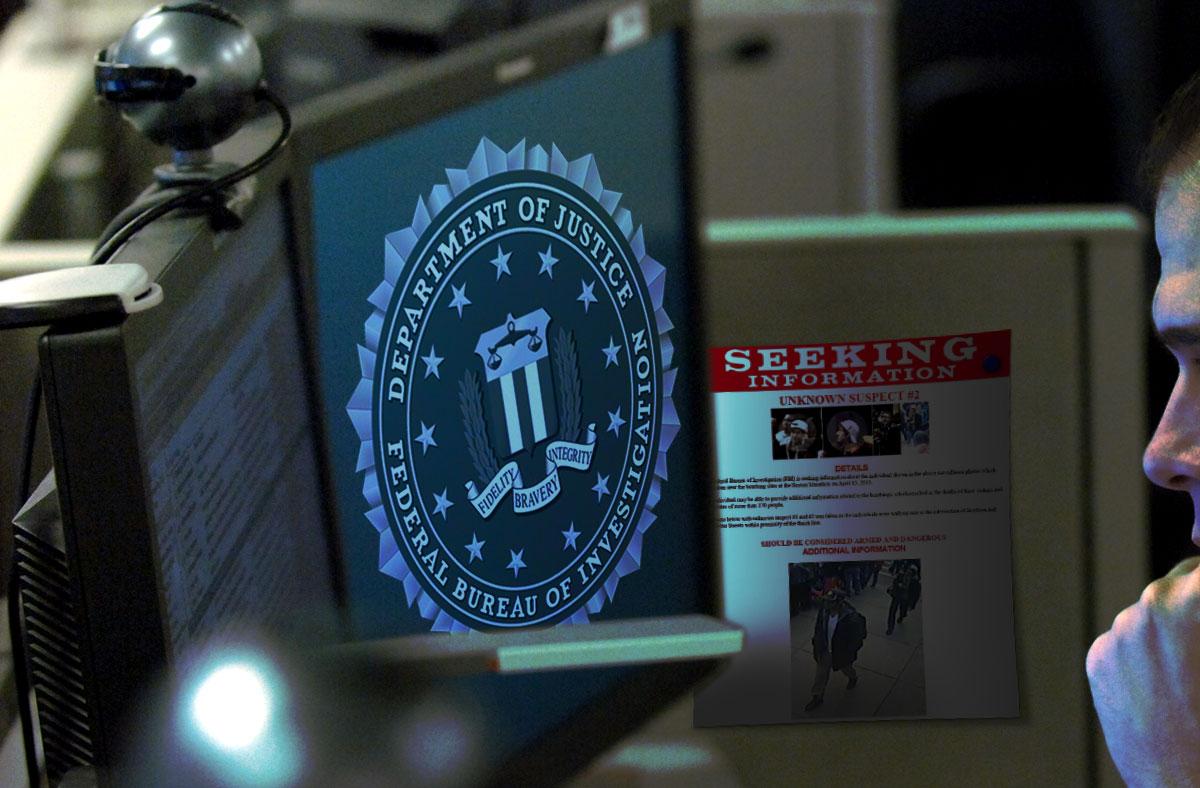
The strange ability of Tamerlan Tsarnaev to slip through airports without delay in both New York and Moscow—despite being on security watch-lists—raises questions about both American and Russian security agencies. Photo credit: Workstation: U.S.F.D.A. / Flickr
In the penalty phase of the Boston Marathon bombing trial of Dzhokhar Tsarnaev, the shadow of his dead elder brother Tamerlan looms large.
The defense team’s effort to avoid the death penalty hinges on the claim that Tamerlan was the lead player in the plot and heavily influenced his impressionable younger brother. We will soon learn if this strategy succeeds in saving Dzhokhar’s life—at the price of incarceration without chance of parole at the federal supermax prison in Florence, Colorado, known as the “Alcatraz of the Rockies.”
But one thing that the trial will not do is open a window onto the whole back story of the bombing itself, the motivations of the perpetrators, and the many signs that there may be more to it. WhoWhatWhy has provided more investigative coverage of this story than any news organization in the United States, or the world. That’s because we see the singularity of the event, the tremendous resources brought to bear on it, and the clampdown on various rights and liberties, including the government’s first-time ability to make Americans stay in their houses until told they may leave.
Nowhere do we see more of a hint of something amiss than in the US national security apparatus’ seeming lack of interest in the international travels of Tamerlan Tsarnaev before the Boston Marathon bombing—even after the authorities were explicitly warned to watch him as a threat.
Equally confounding is that Russia seems to have taken the same “hands off” approach to Tamerlan’s travels there, despite stated worries about his being a “radical Islamist.”
In truth, this “failure to look” may have been no accident. It is a common practice for intelligence services worldwide to allow those who are either would-be troublemakers or pretend troublemakers to circulate with relative freedom in order to snare bigger fish—or as dangles to opposing spy agencies. The upside—confusing or compromising your opponents—is obvious. The downside is less so, but no less significant, and tragedy can result when the maneuvering goes wrong.
Ignored or Waived Through?
US authorities didn’t bother to question Tamerlan Tsarnaev at JFK international Airport when he flew to Dagestan in 2012, despite watch-listing him as potentially “armed and dangerous.” The same thing happened when he flew back six months later.
Recall that Tsarnaev was watch-listed as a result of Russia’s March, 2011 “warning” to the FBI and the CIA that he was exhibiting a growing extremism and concocting plans to travel to the North Caucasus to join the Jihad there against Russia.
The FBI claims to have “investigated” Tsarnaev upon receiving the warning, but ultimately concluded he was not a threat to the United States, and officially closed the investigation on June 24, 2011. The “investigation” itself was laughably superficial, and largely consisted of directly confronting Tsarnaev and asking him if he was up to no good. Unsurprisingly, neither he nor his neighbors or friends reported any kind of forthcoming plot.
However, Tsarnaev was placed on at least two watch lists as a result of the Russian warnings. Why Tsarnaev was watch-listed in light of an investigation that supposedly turned up nothing is unclear. What is clear is that the language in the listing warns of a dangerous individual who must be detained.
It warns that Tamerlan might be armed and dangerous, and notes that his detention and secondary screening are “mandatory.” It also says to “immediately call the lookout duty officer at NTC [Customs and Border Protection National Targeting Center]” and that the “call is mandatory whether or not the officer believes there is an exact match.”
Either the FBI was criminally incompetent, or this easy treatment and dismissal of the high-level Russian warning was deliberate.
Tamerlan Tsarnaev? Who’s That?
The apparent neglect of Tamerlan Tsarnaev continued.
The intrigue thickens when one considers that it was not just the US that took a hands-off approach to Tamerlan’s travels, but Russia as well.
Tamerlan arrived, via Moscow, in Dagestan in late January, 2012. But why would they let him? The 2011 “warnings” issued to the FBI by Russia’s Federal Security Service (known in English by the acronym FSB) were centered specifically on Tamerlan’s traveling to Russia. Why not just refuse him entry and put him on the next plane back to New York?
Russian officials originally feigned ignorance about the fact that Tamerlan had even traveled to Dagestan. Yet, we later found out he was, in fact, stopped by local authorities and brought in for questioning. It also became known he was being filmed by anti-terrorism operatives, who at one point, “scrambled to locate him when he disappeared from sight,” indicating they were following him closely.
And two days before Tamerlan left Dagestan for the United States by way of Moscow, they “lost track of him”—meaning he didn’t get any extra attention at the airport.
How do we explain the disconnect between the warnings and watch-listing of Tsarnaev with the bewildering failures to stop him at airports in both the US and Russia?
Tamerlan the Grim Reaper

Did Russian security forces purposefully allow Tamerlan Tsarnaev to travel without impediment?
Did Russian security forces intentionally allow Tamerlan Tsarnaev to travel without impediment?
One intriguing possibility is that Russian officials allowed him into Dagestan to “smoke out” Jihadis operating in and around the area.
At least two insurgents that Tsarnaev was said to have contacts with ended up dead at the hands of Russian anti-terrorism forces—while Tamerlan was still in that country.
One of them was Mahmoud Mansur Nidal. An official from the Russian anti-extremism unit told the newspaper Novaya Gazeta that Tsarnaev had been spotted repeatedly with the suspected militant, Nidal, who was killed not long after in a counter-terrorism raid, as reported by the New York Times.
The other insurgent was William Plotnikov. An ex-boxer like Tamerlan, Plotnikov was born in Russia, but raised in Canada, and was also said to have heard the call of Jihad in the North Caucasus. Both men were in Dagestan at the same time and there are unconfirmed reports from Gazeta and others that the two had been in contact.
For American investigators, the date of Plotnikov’s death, July 14, 2012, has reportedly been of particular interest. Just a few days after Plotnikov was killed in Dagestan, Tsarnaev left the region and went back to the US in an apparent hurry. He did not even wait to pick up his new Russian passport, which, according to his father, was the reason he went to Russia in the first place. According to this logic, Tsarnaev was somehow spooked by the death of Plotnikov.
Were Russian officials trying to send a message to Tsarnaev—someone they may have suspected of being a foreign agent? After all, Russian officials were aware he’d been in contact with the FBI in the year before he traveled to Russia.
Or was Tsarnaev somehow leading Russian authorities to these insurgents, either wittingly or unwittingly?
It was also at this point that Russian authorities who were surveilling Tamerlan claimed to have “lost track” of him as he returned to the US. Did they really “lose” him? Or did they let him go?
According to US officials, Tsarnaev purchased his ticket back to the United States on June 22, 2012, three weeks before the killing of Plotnikov. Even if he changed the departure date of the ticket in haste, it’s hard to believe airline tickets purchased by individuals in the violence-plagued North Caucasus region would not receive intense scrutiny by the FSB. Yet, just as he did at JFK International, he got through Moscow without being stopped.
Watch and Learn
We are routinely reminded that the sole purpose of our ever-expanding national security apparatus is to keep us average citizens safe from bodily harm. But is that really the case? Or are our security agencies gambling with our safety by allowing violent individuals in and out of the country for some larger espionage or geopolitical game between spy agencies?
Despite the rhetoric, low-level terrorists like Tsarnaev are not, in fact, considered a strategic threat to the US by intelligence agencies. They do, however, cause a lot of misery for the unfortunates who turn out to be their victims.
It’s standard practice for opposing spy agencies to provoke one another in an effort to learn something from the other’s reaction. If something goes horribly wrong, the result is typically to increase the security apparatus’s budgets and power. In other words, there is no downside to the responsible agencies—only up, up and away.
It is worth noting that exactly a half century before the Marathon bombings, another man traveled easily between the US and Russia, with the security services of both countries inexplicably tolerant of his movements. His name was Lee Harvey Oswald. Whatever one is to make of Oswald, the net effect of the terror activity associated with him in no way slowed the growth of the national security agencies responsible, nor was anyone ever really held accountable.
Despite these gargantuan screw-ups or, more generously, misjudgments, one might think there would be a subsequent reining in of the national security apparatus—maybe even a few high-level firings. But instead, these tragic events perversely end up benefiting the agencies responsible. Public fear and outrage leads to calls to increase budgets and to double down on covert activities, only further eroding civil liberties and therefore democracy itself.
Alas, it appears to work the same the world over.
Photo credits for panorama: Boston Logan Airport Metro: Troy / Flickr, Airline Cabin: Simon Grubb / Flickr, Moscow Airport: Alex LA / Flickr, Mosque. Makhachkala, Dagestan: Gadzhi Kharkharov / Flickr, Agent 1: The White House / Flickr, Agent 2: The White House / Flickr, Camera: Matt Buck / Flickr, Agent 3: US Army Africa / Flickr