Thursday, November 19, 2015

THE EYES OF HYDRA UPON YOU

239b4653-146b-4514-ada7-257dbe59b483

THE EYES OF HYDRA UPON YOU

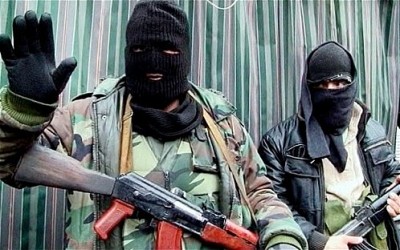
In the volatile world we live in now, we are learning there are a lot of groups that live life to the extreme. In a world of haves and have nots, we are seeing rebellion because people are too poor, or, they are denied the money they need to live decent lives. There are others that are also realizing their governments are selling them short. They are offering outsiders more opportunity and giving them more of a voice while those who are citizens, who have been in our country since their birth, are becoming voiceless.
The extreme violence, terrorism, religiosity, and political philosophies can be shown to be a by-product of exclusion. The definition of exclusion in this case can be explained as anything that hinders civil liberties and marginalizes those who believe in being free.
Freedom from economic burden, freedom of expression, freedom of choice in all things like health care, freedom to protect one’s self and others with guns or weapon of choice, and, the freedom of unwanted search, seizure and surveillance.
The majority of the world’s government’s today rule by fraud and the trick of these world-wide oligarchies are to convince the people that those who govern are the good shepherds when they are really the wolves.
Our future depends on our ability to break out of the conditioning which keeps us believing the lies they tell. All it takes is a genuine contradiction to the false reality and it is exposed as a fallacy.
In our world today, it seems as we move closer to a tyrannical globalist empire, few can gain redress for injustices inflicted upon them.
Government intrusion is becoming the most common injustice forced upon the American citizen. The enforcement of this intrusion is carried out by police forces and soon by United Nation’s troops as many cities across the country are being coerced or blindly accepting what is being called the “The Strong Cities Network.” Many local governments believe it is for the “greater good” because of the threats of civil insurrection and possible terrorist events.
Obama-Kerry-Biden-Lynch-UN
Blue helmeted United Nations personnel will be replacing municipal police forces whose ranks have been harassed and hollowed out because of civil unrest and violent activism that critics say will increase because of proposals limiting personal freedoms in the United States.
The Strong Cities Network is being launched at a time when citizens who dare to stand up for individual rights are automatically branded as dissenters who must be cowed into silence.
While we still have a voice, we must engage in what is actually happening with the criminal justice system. Voyeuristic videos that are put on You Tube showing police violence makes us all aware of the potentially violent behaviors some police officers engage in, but it is more complex than that.
It is quite obvious that what is appearing on video is offensive, but what is more offensive is how Americans are unaware of what is being proposed for future law enforcement and regardless of the fears we have about terrorism, these programs and heightened security measures will not guarantee safety.
In the wake of the recent Paris terror attacks, it would be tempting to give in to our instincts…to once again limit our own freedoms….to allow the government still greater control over our lives…to allow them to watch over us or to just watch us, and, to give in to fear.
In the aftermath of any terrorist activity, government officials often seem to talk about surveillance as if it were some sort of silver bullet.
But what surveillance proponents fail to explain is how, even with mass surveillance systems already in place in countries like France, the United States, and the United Kingdom, attacks still happen.
At the beginning of the year right after France’s Charlie Hebdo terror attack, Edward Snowden pointed out that mass-surveillance programs don’t work because they are “burying people under too much data.”
A year before the attack, France had imposed one of the harshest and most intrusive surveillance laws in the entirety of Europe which would allow them to collect tons of data.
Obviously, it did not work.
In fact, two of the terrorists were not only known to French and U.S. authorities, one of them even had a prior terrorism conviction, while the other was monitored for years by French authorities. This monitoring stopped less than a year before the attack on the magazine. They had probable cause to arrest these men, and yet still, they “failed” to act.
Another fact never provided by the media is that last Friday, France already had in place a huge security net and police agencies were ready on heightened alert for the U.N. Climate Summit and yet the terrorist attack happened.
Photo_Web_Colloque-changements-climatiques
It was also reported on French television that as luck would have it, an emergency drill was ongoing during the morning of the same day as the attacks. Patrick Pelloux, an emergency medical services specialist and one of the first responders in the Paris attacks said on French TV that in the morning at the Paris SMAU (EMT), a multi-site attack exercise had been planned so responder teams would be prepared.
What needs to be known is there was a mobilization of police forces, firemen, and EMTs, associations that came to participate and they tried to “save as many people as possible.”
Over a week ago, German police stopped a heavily-armed suspect with “an arsenal of weapons” in his car and GPS coordinates for Paris. Neither French nor German Intelligence acted upon the discovery.
Lastly, at least one of the attackers was a Frenchman who was on a terrorist watch-list for five years, yet, despite the increased surveillance powers given to the government, he was not stopped from committing his act of terror.
Now you know why the argument of this being a NATO “stay behind” operation like Gladio is so compelling. The other question is that with all of this security and surveillance – who are the real targets? Why are various police groups being trained for terrorist situations, when all the money invested does absolutely nothing to prevent these attacks?
After the French attacks, the United States is now embarking on many preventative programs that had their start in Europe and they are going to be employing various new methods of enforcement that sound like they have been pulled from a dystopian science fiction novel.
I want to point out that the French attacks last Friday are evidence these programs do not work and how government intrusion into your private life will most definitely will be in violation of our constitution.
Los Angeles launched the nation’s first Hydra system, which uses video feeds to monitor real-time decision-making during critical incident training.
lapd-hydra-facilitator-area.480.360.s
According to the publication, Emergency Management, Hydra is an immersive simulation training system using video feeds to monitor real-time decision-making during critical incidents. During simulations, trainees are divided into groups and each group is in a different room that’s monitored via closed-circuit television and boundary microphones. The rooms are outfitted with the equipment the participants would need in a real-life event.
The LAPD’s setup consists of six rooms: a control room that runs the events and houses the communications and subject-matter expert stations; a plenary room that acts as the debriefing center; three syndicate rooms that are the breakout centers and contain a Hydra computer, conference table and whiteboards; and a role-play room.
Officials control the exercise and feed information to the trainees that can consist of newscasts, intelligence briefings, and police and fire radio traffic.
Although L.A. is the first U.S. city to house a Hydra system, 60 centers operate in Europe and Canada, and Australia and Ireland each have one.
Hydra suites will expand over the next five to ten years. The LAPD, New York Police Department, Chicago Police and all the major police departments are going to have Hydra suites and this way, they can be connected so that law enforcement can run a national exercise.
Imagine simulations and drills happening all the time and still, terror will happen as it did during a simulation in France.
Some argue this is just the beginning of what is being called “predictive policing.”
crimehistory11
Some form of predictive policing is likely now in force in a city near you. Memphis was an early adopter. Cities from Minneapolis to Miami have embraced predictive policing. Time Magazine named predictive policing one of the 50 best inventions of 2011.
The term “predictive policing” suggests that the police can anticipate a crime and be there to stop it before it happens and/or apprehend suspects right away.
It is allegedly according to authorities, data that provides perfect, error-free input and unbiased processing.
The truth is that it is simply spitting out approximations, potential and correlations. It is just a little guessing game where once again the terrorists win, and where everyone is a suspect.
So what kind of data will they analyze?
How about your troubled childhood, any mental illnesses or therapy visits, any associations with gangs, or even Facebook friends from countries known for terrorism?
How about any Tweets or social media posts critical of the government, the military or law enforcement? Other data analyzed will include what movies you rent, what books you buy or check out of the library and any new gun purchases.
All this data will produce an algorithm that will indicate it is likely, but not certain, you will commit a violent crime.
Chicago authorities have a similar program that is called the “Heat List” which is an index of the roughly 400 people in the city of Chicago, supposedly most likely to be involved in violent crime.
Now remember – likely is not definitely.
Chicago Police have been known for its brutal enforcement and its civil rights abuses.
Back in February, The Guardian newspaper reported Chicago Police are operating a secret detention facility that mirrors the CIA’s “black sites.” The Black sites or secret torture facilities gave a black eye to public relations during the Iraq and Afghan wars as human rights groups pointed the finger at Americans that were carrying out torture which was changed to the Orwellian Newspeak of “enhanced Interrogations.”
Now, it is terrifying to hear there is a facility being operated in the United States for use on American citizens. From violations of due process to torture, the revelations raise serious concerns about the deteriorating state of freedom and justice in the United States.
The so-called “Black Site” has been located in Homan Square.
rtr4s8td
According to the Guardian Newspaper, suspects are interrogated without lawyers present and in fact, lawyers are often refused entry. Those who have gained access to clients claim that police still withhold information about the suspects.
The detainees are not read Miranda rights or offered due process.
Just like CIA black sites, there have been multiple instances of violence during interrogations. In one case in February of 2013, 44-year-old John Hubbard was pronounced dead after authorities at Homan said he was found “unresponsive” in an interview cell.
The Cook County Medical Examiner told the Guardian it could not locate records on Hubbard’s cause of death. There is no record of why he was there in the first place.
Though, these practices are eerily similar to torture sites run by the CIA, Homan’s victims are not all linked to terrorism.
Barack Obama is from Chicago and the question is how he can look away from this type of injustice? The irony is that after the terror attacks took place in France, his response was to release 5 prisoners from Guantanamo Bay.
So we torture and brutalize American citizens with the aid of predictive policing, eight terrorists die in France and Obama releases 5 prisoners that will resettle in the Middle East and probably be radicalized again.
What kind of warped process is this?
The eyes of the Hydra are upon all of us and there always seems to be terrorism that slips through the cracks.
The encroachment of government and the hypocrisy of their enforcement practices are now beginning to show a callousness that should not be supported.
It should be exposed.
James Trainum, a former Washington D.C. detective believes Homan Square is the only facility of its kind in the United States. Considering the high level of secrecy, it is plausible others exist but remain undiscovered.
Though not mentioned in the report, these actions resemble those made possible by the “Belligerent Act” language passed in the 2012 National Defense Authorization Act (NDAA). These provisions essentially remove due process and allow the government to indefinitely detain Americans without charge or trial, and are still in effect today.

Supply and demand: The value of a Tour victory    ~ hehe i luv the fucking ...tour !!! , France  &  Co. Fans u's lucky bastards  : ) r  shit, fuck !  ..damn  ( yes Mr. Lipton ..i once played a tree in middle school play :)  )  how long 2 the  ...race   hehe 

image: http://cdn.velonews.competitor.com/files/2015/07/20155094-276739-659x440.jpg
Thibaut Pinot won stage 20 of the 2015 Tour de France. Photo: Tim De Waele | TDWsport.com
Editor’s note: This article was originally published in the July issue of Velo magazine.
Since the dawn of the millennium fifteen years ago, 151 different riders have etched their names into the record books as Tour de France stage winners — dozens more if you count all the men who contributed to wins in nine team time trials. Those men have seized on 345 opportunities (prologues included) to earn one of the sport’s most instantly transformational victories, some multiple times, others just once. Compared to the scarcity of cycling’s other top prizes — the five monuments, the three grand tours, a world championship title — Tour stages present some appealing odds.
For those members of cycling’s top tier not destined for GC greatness, monumental glory, or rainbow stripes, winning a Tour stage is the most attainable piece of bona fide cycling stardom. No other stage win and few one-day races offer the same rewards or recognition. And the Tour offers that chance to every type of rider, from stoutest rouleur to willowy climber. So, despite the healthy supply of Tour stages in the marketplace, demand pushes their worth near the top of the sport’s value chain. A journeyman domestique or Coupe de France hero might not dare to consider winning Il Lombardia or a yellow jersey, but if everything plays out right — if he makes the break, if the GC leaders and their teams need a rest between mountain ranges, if the sprinter’s teams time it wrong — he just might be able to stand on the sport’s biggest stage for a few precious minutes.
And it is a big stage. Estimates for total television viewership vary widely, but most put the number north of 1 billion. By Tour organizer ASO’s sometimes optimistic estimate, some 12 million people stand in town squares and on mountainsides and in fields to watch it pass each summer. Win a stage, and, more than in any other bike race, the eyes of the world are upon you, from die-hard cycling fans to grandmothers out for a picnic. For the rest of your life, you have proof that you not only reached the de facto pinnacle of the sport, but emerged victorious, if only for a day.
As important as they are to a stage hunter, the value of a stage win isn’t lost on the men fighting for the Tour’s bigger honors. For those candidates for the yellow, green, and polka-dot jerseys, stage wins are an important accessory, proof of a victory achieved with panache rather than cool, calculated riding. Peter Sagan is the latest Tour jersey winner to feel the sting of a stage win’s absence, taking the green jersey in 2015 without the swashbuckling wins that had leant his three previous titles undeniable credibility and forced the cycling world to take a young, swaggering kid seriously.
It’s no new phenomenon. In 1990, the year Sagan was born, Greg LeMond’s dramatic, race-long pursuit of the unexpectedly tenacious Claudio Chiappucci featured plenty of drama and inspired riding, but the American never crossed the line first as he rode to his last Tour win. Without that defining moment — the stopped clock of a winning time trial, the victory salute of a road stage — even the grandest victory in Paris can feel lacking.
A Tour stage win is also, often, a trumpet blast that signals an arrival, a first foothold on the climb to the sport’s highest summits. Before he became the Lion of Flanders, Johan Museeuw roared in France in 1990, first in the dash to Mont-Saint-Michel and again on the Champs-Élysées. Fabian Cancellara’s talents first came to widespread attention when he crushed all comers in the 2004 prologue to wear yellow at the age of 23. Four world time trial championships and seven victories in three of the sport’s five monuments would follow. And back in 1989, high in the Pyrénées at Luz Ardiden, a domestique for defending champion Pedro Delgado seized an opportunity to ride for himself. Miguel Indurain bagged the stage and wore polka dots for a day, but returned to make yellow his own for the next five years.
For many, though, a Tour stage win is the summit, not a stepping stone; it is a career-defining achievement never to be bettered or even equaled again. It can mark the upper limit of talent for those who consider themselves race winners, or simply a shining moment in the life of an avowed domestique. Some, like Frenchman Pierrick Fédrigo, develop a knack for the Tour stage win, finding repeated success in the Tour’s pressure cooker that never quite extends to other events. But is that so bad? Victory at the Tour means a contract for the next year, bonuses, endorsements, and, if you believe the old saying, never the need to buy a beer again. Every stage winner comes from somewhere, and wherever it is, there’s a good chance there’s a cycling fan willing to buy a round just to hear the story again.
All Tour stage wins have value, whether in beer or bonuses, panache or prediction, but not all are valued equally. Unfair, perhaps, but true. In the hierarchy of Tour stages, elevation elevates. Victories in the Alps and the Pyrénées are the building blocks of legends, while the transitional stages between them are often written off as cease-fire days in the broader GC war.
Win on Mont Ventoux, for example, and your name goes down beside Gaul and Poulidor, Merckx and Thevenet. Win on Alpe d’Huez, and they put your name on a sign on one of those 21 famous hairpins — forever. Even Lance Armstrong’s name, purged from official Tour records, still marks hairpins number 19 and 21 for his 2001 and 2004 Alpe wins. And hairpin number one, that final, agonizing bend before the race launches toward the line in the ski village? That pride of place belongs to Giuseppe Guerini, who proved to be ahead of his time by getting knocked off his bike by a fan with a camera en route to victory in 1999. But Guerini’s gutsy solo win through the Massif Central at the tail end of the 2005 Tour? All but forgotten.
Compared to the rarified air of the mountains, victories in the flat heat of the field sprints are treated not as works of art, but as commodities. The locales are not legendary and their names mostly forgotten, reduced to one more tick mark in the raw tallies used to compare the sport’s legendary fast men. The man who all but created the supersprinter genre, Mario Cipollini topped out at 12 wins at the Tour, before his habit of quitting before the race hit the mountains made him a persona non grata. His foil, the more versatile but less rapid Erik Zabel managed 12 as well, as did Robbie McEwen, who unlike the blinding Cipollini remained all but invisible until 100 meters go. And then came Mark Cavendish. By the end of his third Tour, he’d surpassed them all and tied Freddy Maertens’ total of 15. Cavendish’s count now lies at 26, one more than heroic-era Frenchman André Leducq, third on the all-time stage wins list, with time left on the clock and a new team for 2016.
Though Marcel Kittel was absent this year, the context, caveats, and mitigating circumstances fall away from all but the most storied stage wins, regardless of terrain. Nobody remembers that the winning break was all but forgotten as a cat-and-mouse GC battle raged down the mountain, that the top sprinter got pinched against the barrier and had to brake, or that the winning mark in the time trial was set before the wind and rain swept in for the afternoon starters.
All of those facts are there for those who seek them, tucked into detailed histories, tattered magazine articles, and forgotten nooks of the web. But few bother to look. There are 21 new stages worth of stories each year, and the stage winner’s is just one among many. What’s the use in remembering that Traversoni’s 1997 win came only after Voskamp and Heppner were disqualified, or that André Greipel and Cavendish’s prosperous 2012 Tours came while Kittel battled and lost to a stomach bug, or that, in that same Tour, reigning world champion Tony Martin flatted in both the prologue and first individual time trial, won by Cancellara and Bradley Wiggins? No victory is achieved in a vacuum.
For the most part, only the stark truth is left in popular memory — the rider, the year, perhaps the name of a town or a mountain or an image of upstretched arms. The adulation fades, contracts come and go, careers end, the story is relegated to the barroom and the café. Only the honor and the line item on the palmares remain. And each July, like clockwork, 21 new opportunities spring forth to be fought over by 198 men hungry to claim their own piece of cycling’s most valuable property.

Read more at http://velonews.competitor.com/2015/10/tour-de-france/supply-and-demand-the-value-of-a-tour-victory_388185#c2llIcsJPEkCwMbT.99

The Answer to Terrorism is Law. Terrorism is A Crime. War is a Crime

Syrie terrorisme
The Anglo-American legal tradition is in serious trouble if not a single major U.S. politician is willing to suggest that the most effective way to combat international terrorism is through law and the courts.
Terrorism is a crime under the United States code, defined at 18 U.S.C. §§ 2331 and 2332b . It sits just a few subchapters away from piracy, another international crime which is also adjudicated, relatively successfully, by the U.S. legal system. It is probably tough to remember, but the mastermind of the 1993 World Trade Center attack, Ramzi Yousef, was tried in a civilian court. He is currently serving a life sentence in Florence, Colorado, at a federal Supermax prison.
It would reflect a great deal of strength for a politician to argue that law will dispose of terrorism. First, most of us already know that courts can successfully handle heinous international crimes. At Nuremberg, judges were able to weigh evidence and convict individuals who committed some of the most deeply offensive crimes in history. This work continues in the Hague today with the International Criminal Court. Most international scholars agree that such efforts are largely positive in helping to close the chapter on war and to move a society forward in a more positive, legally-minded direction. If a court was capable of adjudicating the Holocaust, it is surely capable of dealing with international terrorism.
There is strength in affirming fundamental values on which a civilized society is based. We cannot have a world in which some crimes go before a civilian judge, and some crimes are subject to summary execution by the President through a drone strike. In all matters of justice, separate-but-equal is a fatally flawed directive. Historically, the Anglo-American tradition has sought to limit executive power and preserve the ability of a neutral judge to adjudicate disputes — values that have been deeply weakened by 15 years of unending war and which now must be reclaimed or forever lost.
There is strength in admitting that the military approach to terrorism has not only failed, it has made the problem significantly worse. Using a bomb to solve terrorism creates a hydra where chopping off one head only produces three more. Kill Baghdadi and someone else will take his throne, or perhaps three more. Is this not what created ISIS? Is it really so difficult to see how the use of the military in the Middle East has opened the gates of Hell? Is no one really going to question the insanity of the U.S. simultaneously bombing ISIS (fighting Assad) and Assad (fighting ISIS)?
There is strength in dealing with the eventual even-handedness of justice. It is an unfortunate truth that Western countries have also, too, committed crimes since 9/11. Those crimes will require an accounting before a judge, at least some day. And in particular, there will never be peace in the Middle East without an answer for the Iraq War, which will be recognized one day by all peoples as one of the gravest international crimes since World War II. This was a war that was built on lies and sold to a fearful public like the vilest of snake oils. And its bitterness remains. The Iraq War destroyed a country, killed millions of innocent parents and their children, and is the caustic source of the violence that now roils the Middle East and strikes into Paris.  Justice requires an answer for the Iraq War —  a good and healthy thing as such justice will act as a lesson to the future that the human species will never survive if it relies on war, particularly at a time when so much destruction can be committed by so few in number.
Now, the specter of fascism creeps in this petty pace as politicians in Europe and the U.S. create false enemies and denounce refugees, threaten more war, and pander to the ugliest motivations of each of their respective nations. There is strength in rejecting this fascism.
The world should put together its finest legal minds from all countries — from the U.S., from Latin America, from Europe, from Africa, from Asia, and yes, from the Middle East. Let these minds define the problem, propose a legal solution, and then either work with the International Criminal Court in the Hague, or set up a special tribunal to adjudicate the issue of terrorism. Let that court issue warrants, and make sure that the world will cooperate with that court to arrest those who are wanted. Give the accused a lawyer, have a trial, and issue a sentence. Put the guilty in jail. And acquit those for whom there is not enough evidence, and let them go.
And after the world has set up that process, the world should do the same thing for those on all sides who are committing crimes. All people should take a look at the log in each of their own eyes, particularly after analyzing the speck in that of the other. The people of every nation must look into their hearts and their minds to figure out why governments, everywhere, are getting away with murder. The world needs to put a stop to that, as well.

The Cursed River of Australia

charon_summer_last_journey_style_1600x1200_hd-wallpaper-342527

The Cursed River of Australia

Can a place be evil? I’m not talking about the evil deeds perpetrated by the inhabitants of a certain location or its dark history, but the actual place itself, its land, air, and water saturated with a sinister energy that we cannot comprehend and which may or may not have some sentience of its own. It may seem like a rather far out notion, and perhaps it is, but there are certainly locations throughout the world that have a definite air of bizarreness and the unexplained which is not always benign in nature, and indeed lends itself to the idea that something there is not quite right. One such place is a river in Australia which has long been the origin of stories of strange creatures, ghostly phenomena, mysterious murders and disappearances, and just plain weirdness. It is a place which, if evil or cursed places do exist, is most certainly one of them.
Meandering 708 km (440 mi) through the Northern Tablelands and North West Slopes districts of New South Wales, Australia is the Namoi River, which passes the towns of Gunnedah, Boggabri, Narrabri, Wee Waa and Walgett along its course. Although most of the river’s route is marked by picturesque scenery, this scenic façade hides a variety of little known cases of strangeness with a definite malevolent flavor to them. It was here along the Namoi River, near the town of Wee Waa, that in 1908 two friends by the names of Harry Johnson and Stanley Williams set up camp for the night at a scenic spot which was known as one of the prettiest locations along the river and was quite popular among campers at the time. It was a camping excursion from which only one of the men would return alive, Stanley Williams. After a massive search for the missing man was launched, Harry Johnson’s decomposed body would be pulled from the bottom of the river, where it had been anchored intentionally by a heavy iron bar typically used as a brake block bar for a wagon strapped to its back. Williams was quickly apprehended under suspicion of murdering his friend out there at the secluded spot, and the subsequent trial would bring to light just how gruesome the killing had been, with the murdered man’s skull apparently having been brutally bashed in with a hammer. One piece of testimony in the case from a Dr. Willis published in The Sydney Morning Herald of 11 January 1909 said:
The body was exposed to the air for probably four or five days. The body I saw may have been dead only about a fortnight. Senior Sergeant Sheridan placed a hammer in my hands this morning. I fitted it to the hole in the skull of the murdered man, and found that it fitted exactly into the hole punched there in the fracture behind the ear.
The Namoi River
The Namoi River
Williams staunchly denied any wrongdoing even in the face of these damning accusations and the fact that he had been the last person to be seen with Johnson, right there where the murdered man had been found. However, the proceedings were never able to concretely link Williams to premeditated murder, no clear motive could be ascertained for why he should want to kill his good friend, and the best that authorities could do was a charge of manslaughter, for which the perpetrator was sentenced to 10 years of penal servitude. With Williams convicted and punished, it would seem that this might be the end of the whole tragic affair, but in fact this was where the weirdness would begin, and it would become apparent that whatever horrible thing had happened there by the river had perhaps left some sort of evil stain behind, if it hadn’t been there all along to begin with.
During the investigation, one news correspondent for the Border Morning Mail and Riverina Times spent a good deal of time following up on potential leads to the mysterious case, and in his travels met the acquaintance of a Thomas Underwood, who lived not far from the scene of the brutal killing. Mr. Underwood would go on to tell of various strange, menacing occurrences which had started to occur in the area in the aftermath of the murder. One of the odd accounts related by Underwood was the story of a man by the name of Arthur Perritt, who had gone to camp in the area totally unaware of the vicious killing that had transpired there. When Perritt had arrived, his two wagonette horses had reportedly become extremely agitated, and this state of panic would get worse until it had finally boiled over and the horses, foaming at the mouth in total fear, broke free and fled into the night. A cursory examination of the area turned up no reason whatsoever for what could have spooked the animals so badly. The next day, the perplexed Perritt would find his two shaken horses a few miles away from the scene, wandering around aimlessly in the wilderness.
ghost_in_the_forest_trees_smokes_dark_hd-wallpaper-1393459
Despite this unsettling experience, Perritt would pass through the area again the following week, and found that his horses absolutely refused to go anywhere near the place where they had camped the week before. It was then that Perritt approached Underwood and requested permission to use his paddock to keep the horses for him while he was away. Perritt would further relate to Underwood how the area had filled him with a sense of dread as well, and Underwood would later say “he (Perritt) did not relish the idea of again experiencing the uneasiness of mind which had attended him when last he camped there”. Perritt’s two sons apparently had experienced some amount of strangeness when camping in the area as well, when their horses also suddenly panicked and broke from their tethers to desperately flee, including one old horse that had never been known to be prone to such things. Again, in these cases the two sons had also been unaware of the gruesome murder which had taken place there at the time. Numerous cases of horses going insane with fear and fleeing the area were turned up, and this seemed to be a rather regular occurrence in the immediate vicinity of the murder.
The correspondent, his curiosity piqued at such spooky tales, requested that Underwood take him to the area where Johnson had been murdered. When the two arrived, the correspondent noticed that the area was very quaint and picturesque, stating that it was “an ideal camping ground, beautifully situated and well grassed,” yet sinister reminders of the horrible crime remained. The tree under which Johnson and Williams’ tent had been situated still bore blood stains spattered over its trunk, and the strange observation was made that although the grass grew in plentitude all around the site, the ground where Johnson’s body had lain was completely bare. The correspondent also experienced for himself the sense of deep unease that descended over him even as he stood there examining the site, likening it to a feeling of impending death, and he very much felt that he wanted to leave as soon as possible.
The-Boatman
This sense of foreboding and doom that’s was said to permeate the site like a black cloud was experienced by others as well. In one account, a couple came to the area on horseback to camp for the night. It is probably not surprising by now that the horses promptly hightailed it out of there, in this case suddenly bolting wildly into the wilderness to never be seen again. That evening, the woman suddenly became extremely upset, and began having potent panic attacks and hallucinations for no discernible reason, during which she began to madly rant that she was “struggling in a sea of human blood.” The woman became steadily more unhinged, writhing about on the ground and shouting like a lunatic until the distraught husband went to get help. He finally found himself at the house of a local named Mrs. McKenzie, who listened to the whole series of bizarre events before informing the man of the murder and other weirdness that had been going on at that same spot, of which the man had been totally unaware. Terrified by the story, he went back, collected his wife and the two hastily left the area. Allegedly, the woman immediately started to calm down as they retreated from the vicinity, and by the following evening she was back to her old self, having no real recollection of what had happened to her.
Other reports from campers in the same area described a variety of strange phenomena as well. Often reported were panic attacks or “paroxysms of terror,” sheets pulled off of bunks, tents disassembled by some unseen force, extremely powerful hallucinations both visual and auditory, and of course the profound fear the place invoked in animals. One such camper who experienced some of these bizarre phenomena stated, “I would refuse all the gold of the Empire rather than go through a similar experience again.” Interestingly, in every case the witnesses had been unaware of the murder that had happened there, and were not told of it until after they had had their brush with the unknown. The correspondent who had investigated the area in the wake of the murder would go on to chronicle many of these reports in a piece in The Border Morning Mail and Riverina Times on 25 June 1910, entitled The Namoi River Tragedy: Weird Facts That Are Terrifying.
The Bunyip
The Bunyip
All of this is strange enough, but the Namoi River had been the site of its share of weirdness since even before this sensational murder and its ensuing seemingly ghostly phenomena. It had long been an alleged favored haunt for a terrifying unknown creature called the Bunyip, which is usually said to be some sort of monstrous, amphibious creature prone to great aggression. One notable account of the Bunyip at the Namoi River comes from the 1830s, when an outlaw turned bushman named George Clarke came here to live as a fugitive in the remote wilderness among the local Gamilaraay tribe. When a police posse came through looking for Clarke in 1932, a tribal elder explained to policeman Captain John Forbes that the river was inhabited by a dangerous creature known to them as the “Wawee.” This aquatic creature was described as being enormous, having finned feet, formidable teeth, and a tusk, and was said to let loose with a horrific wailing noise on occasion. Forbes would write in his diary later of the Wawee, saying “All the Blacks express fear of it, and say that it will devour them if it can catch them in the water.”
There would be other mysteries and unexplained phenomena reported from the Namoi in the following years as well. In 1934, the river would be the location of a baffling, unsolved disappearance. An article in the Friday 23 April 1934 issue of the Sydney Morning Herald explains the disappearance of a stock and station agent by the name of George Knott, from the village of Pilliga, New South Wales. The man had gone out for a drive along the Namoi River and simply vanished, being last seen at 10AM. After a week of being missing, Knott’s car was discovered at the bottom of the river, yet the body was nowhere to be found, and bizarre clues left behind baffled police. In the rear compartment of the car were found bullet shells, which were all .22 calibre bullets of the “short type,” yet not real significance was attached to them because Knott has been a keen hunter and sportsman who was known for going on frequent shooting expeditions. A hole was found in the hood of the car that at first seemed to be from a large caliber bullet and was seen as an important clue, but the size of the hole exactly corresponded to that of a stud on the hood, and so it was later determined that as the hood of the car had been folded back by the river current, it had banged against the stud and formed the hole. The exterior of the car showed no other signs of damage.
The interior of the vehicle did little to shed any light on the case either. Inside of the car, there were no signs of struggle except for some broken fittings in the front of the compartment, but this was not seen as definitive evidence of foul play. There were also no signs of blood in the car, and while the river could have possibly washed it away, the article stated “Wet blood might have been washed away when the car was driven into the river, but blood dries quickly, and even after a very short time would have left an indelible stain.” The only other clue left behind was that there was a missing set of tools. Police set up a camp along the Namoi River and systematically dragged the bottom for a mile, but the body could not be located. Interviews of dozens of locals living in homesteads in the area turned up nothing, as no one reported hearing or seeing anything suspicious or strange. The mysterious vanishing of George Knott has never been solved and his body never found.
tumblr_mgw0pm1OBX1rlz2t4o1_500
Besides stories of Bunyips, mysterious murders, ghostly activity, the cloud of dread hanging over the murder site, and unexplained vanishings, the Namoi River has other bizarre tales attached to it as well. An article from the Sydney Morning Herald dated March 23, 1973, talks about the mysterious sudden appearance of large amounts of dead fish in the river near the cotton farming community of Wee Waa. In this case, the dead fish steadily appeared for over a week, and any birds who fed on them were reported as dying as well. Although health authorities looked into the matter, no discernible cause of death could be found, nor any reason why birds should die from eating the fish. It was finally speculated that the phenomena was perhaps linked to overuse of insecticides in the wake of a caterpillar plague that was ravaging the area’s cotton crops at around the same time, but this was not conclusive. It is not clear if this sudden mass fish die-off has anything to do with all of the other strange phenomena at the river, but it certainly is odd.
Are any of these strange occurrences related, or is this just a series of dispersed cases of strangeness that just happen to have happened along the same river? Is the ghostly phenomena reported from here related to the murder of Harry Johnson and his ghost, or is it indicative of some malevolent force imbued into the very land itself, making it a cursed or evil place that is actually causing these tragic events? Or are all of these accounts the result of exaggeration and imagination on the part of the witnesses and the news reports of the day? It is interesting to think about the idea that a place can perhaps be pervaded by forces beyond our understanding, or that tragic events might somehow implant themselves onto a location like a voice onto an audiotape. Whether this actually happens or not, places like the Namoi River certainly are strange, and make one wonder if an area or place can be possessed by mysterious forces, and indeed whether it can actually be evil.