
 Posts
Posts


US pushing local cops to stay mum on surveillance
US pushing local police departments to keep quiet on cell-phone surveillance technology

By Jack Gillum and Eileen Sullivan, Associated Press
June 12, 2014 ,http://news.yahoo.com/us-pushing-local-cops-stay-174613067.html;_ylt=AwrBJR4e65lTwmEAb7zQtDMD
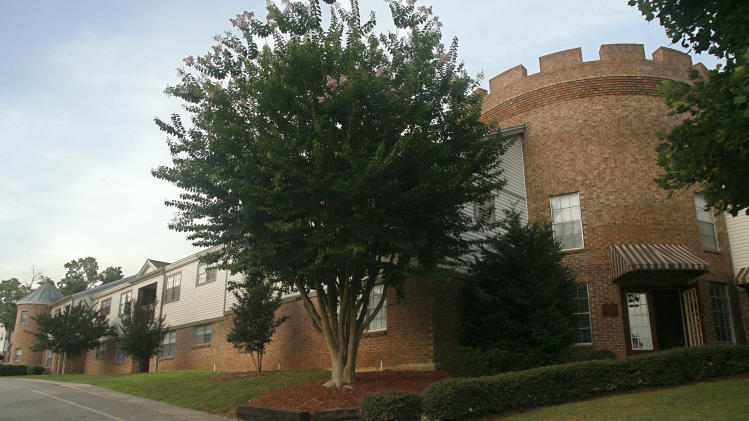
This photo taken June 11,
2014 shows the Berkshire Manor Apartments in Tallahassee, Fla., one
location where the "Stingray" surveillance device was used extensively
by the Tallahassee Police Department. The Obama administration has been
quietly advising local police not to disclose details about surveillance
technology they are using to sweep up basic cellphone data from entire
neighborhoods, The Associated Press has learned. (AP Photo/Phil Sears)
Citing
security reasons, the U.S. has intervened in routine state public
records cases and criminal trials regarding use of the technology. This
has resulted in police departments withholding materials or heavily
censoring documents in rare instances when they disclose any about the
purchase and use of such powerful surveillance equipment.
Federal
involvement in local open records proceedings is unusual. It comes at a
time when President Barack Obama has said he welcomes a debate on
government surveillance and called for more transparency about spying in
the wake of disclosures about classified federal surveillance programs.
One
well-known type of this surveillance equipment is known as a Stingray,
an innovative way for law enforcement to track cellphones used by
suspects and gather evidence. The equipment tricks cellphones into
identifying some of their owners' account information, like a unique
subscriber number, and transmitting data to police as if it were a phone
company's tower. That allows police to obtain cellphone information
without having to ask for help from service providers, such as Verizon
or AT&T, and can locate a phone without the user even making a call
or sending a text message.
But
without more details about how the technology works and under what
circumstances it's used, it's unclear whether the technology might
violate a person's constitutional rights or whether it's a good
investment of taxpayer dollars.
Interviews,
court records and public-records requests show the Obama administration
is asking agencies to withhold common information about the equipment,
such as how the technology is used and how to turn it on. That pushback
has come in the form of FBI affidavits and consultation in local
criminal cases.
"These extreme secrecy efforts are in relation to
very controversial, local government surveillance practices using
highly invasive technology," said Nathan Freed Wessler, a staff attorney
with the American Civil Liberties Union, which has fought for the
release of these types of records. "If public participation means
anything, people should have the facts about what the government is
doing to them."
Harris
Corp., a key manufacturer of this equipment, built a secrecy element
into its authorization agreement with the Federal Communications
Commission in 2011. That authorization has an unusual requirement: that
local law enforcement "coordinate with the FBI the acquisition and use
of the equipment." Companies like Harris need FCC authorization in order
to sell wireless equipment that could interfere with radio frequencies.
A
spokesman from Harris Corp. said the company will not discuss its
products for the Defense Department and law enforcement agencies,
although public filings showed government sales of communications
systems such as the Stingray accounted for nearly one-third of its $5
billion in revenue. "As a government contractor, our solutions are
regulated and their use is restricted," spokesman Jim Burke said.
Local
police agencies have been denying access to records about this
surveillance equipment under state public records laws. Agencies in San
Diego, Chicago and Oakland County, Michigan, for instance, declined to
tell the AP what devices they purchased, how much they cost and with
whom they shared information. San Diego police released a heavily
censored purchasing document. Oakland officials said police-secrecy
exemptions and attorney-client privilege keep their hands tied. It was
unclear whether the Obama administration interfered in the AP requests.
"It's
troubling to think the FBI can just trump the state's open records
law," said Ginger McCall, director of the open government project at the
Electronic Privacy Information Center. McCall suspects the surveillance
would not pass constitutional muster."The vast amount of information it sweeps in is totally irrelevant to the investigation," she said.
A
court case challenging the public release of information from the
Tucson Police Department includes an affidavit from an FBI special
agent, Bradley Morrison, who said the disclosure would "result in the
FBI's inability to protect the public from terrorism and other criminal
activity because through public disclosures, this technology has been
rendered essentially useless for future investigations."
Morrison
said revealing any information about the technology would violate a
federal homeland security law about information-sharing and arms-control
laws — legal arguments that that outside lawyers and transparency
experts said are specious and don't comport with court cases on the U.S.
Freedom of Information Act.
The FBI did not answer questions about its role in states' open records proceedings.
But
a former Justice Department official said the federal government should
be making this argument in federal court, not a state level where
different public records laws apply.
"The
federal government appears to be attempting to assert a federal
interest in the information being sought, but it's going about it the
wrong way," said Dan Metcalfe, the former director of the Justice
Department's office of information and privacy. Currently Metcalfe is
the executive director of American University's law school Collaboration
on Government Secrecy project.
A
criminal case in Tallahassee cites the same homeland security laws in
Morrison's affidavit, court records show, and prosecutors told the court
they consulted with the FBI to keep portions of a transcript sealed.
That transcript, released earlier this month, revealed that Stingrays
"force" cellphones to register their location and identifying
information with the police device and enables officers to track calls
whenever the phone is on.
One
law enforcement official familiar with the Tucson lawsuit, who spoke on
condition of anonymity because the official was not authorized to speak
about internal discussions, said federal lawyers told Tucson police
they couldn't hand over a PowerPoint presentation made by local officers
about how to operate the Stingray device. Federal officials forwarded
Morrison's affidavit for use in the Tucson police department's reply to
the lawsuit, rather than requesting the case be moved to federal court.
In
Sarasota, Florida, the U.S. Marshals Service confiscated local records
on the use of the surveillance equipment, removing the documents from
the reach of Florida's expansive open-records law after the ACLU asked
under Florida law to see the documents. The ACLU has asked a judge to
intervene. The Marshals Service said it deputized the officer as a
federal agent and therefore the records weren't accessible under Florida
law.
___
Associated Press writer Brendan Farrington in Tallahassee, Florida, contributed to this report.
___

