Wednesday, January 30, 2013

Alien Base On The Moon In Detail, Clear UFO Photos Released By NASA Taken By Astronauts, Pilot Films UFO From Air
Wednesday, January 30, 2013 14:03
0


Date of discovery: January 2013
Location of discovery: Earths Moon, near Bessel crater and North of Mara Serenitatis
 
Waring says, "I was looking over old Apollo photos when I cam across this one that looks like a definite structure created by intelligent beings. The circle structure has an arm the goes off to a four leaf clover-like area with buildings on it. This is really strange and I ask that others look into this by clicking on the links below."
 
One link in an official NASA link. It no longer has the hi-res photos but only the low-res photos of the area. The other link is of a persons site that saved massive amounts of NASA photos ten to fifteen years ago for the public to view. His photo of the same area is hi-res and gives us this amazing close up that is mind boggling to say the least. The hacker Gary McKinnon said in an interview that he hacked into US military computers and saw first hand documents that stated the US military has off world officers stationed on an alien base, and since the moon is the closest celestial body it has to be there. SCW
 
NASA Link: http://www.lpi.usra.edu/resources/apollo/frame/?AS15-87-11697
Moon Photo Site (Hi-Res): http://keithlaney.net/ApolloOrbitalimages/AS15/h/AS15-87-11697.jpg

UFO Pictures Released by NASA - Taken by American Astronauts

UFO Pictures RELEASED by NASA - Taken by American Astronauts http://www.youtube.com/watch?feature=player_embedded&v=4xYsq5zVljY

 
Dr. Franklin Roach, said that based on his careful analysis of the photos and video footage provided to him by the astronauts, he concluded and later published in the book Scientific Study of Unidentified Flying Objects that while in orbit the crew did iun fact witness a visual sightings of what later came to be known as UFOS, after his publication NASA attempted to explain the sightings as mere debris, this explanation was later dismissed by experts in various fields of science. 
 
Additional video evidence was later obtained from the crew of mission STS-48 of the Space Shuttle Discovery, the full crew report indicated that while in orbit on September 15, 1991 a flash of light and several objects were witnessed flying in an artificial and controlled fashion around the shuttle. NASA explained the objects as ice particles reacting to engine jets. James Oberg claimed that the flash was from a thruster firing. Philip C. Plait discussed the issue in his book Bad Astronomy, agreeing with NASA. 
Dr. Jack Kasher analyzed the movement of the objects in 1996, and found five arguments that the footage could not depict ice particles. However, Lan Fleming uncovered severe discrepancies in the video time stamps of the video first released by the NASA FOIA office in 1999, leaving many of their conclusions inconclusive and undetermined. While in orbit mission STS-75 of Space Shuttle Columbia Astronauts witnessed hundreds of objects flying around the shuttle and began to captured the event on a camera capable of seeing past the visible light spectrum, this incident was archived by NASA as Undetermined and Classified, the complete documents, footage and video evidence was never released by NASA for further study. 
 
Another similar video was taken during mission STS-80 of Space Shuttle Columbia which were analyzed by Mark J. Carlotto which show three different unusual phenomena on December 2, 1996: Two slow moving circular objects; a strange rapidly moving burst of light near the earth's surface; and a number of fast moving objects in space near the shuttle. The first two can not be accurately verified as shuttle debris. 
The fast moving objects in space near the shuttle appear as bright streaks, and analysis of their speeds and directions indicates that they can not be shuttle debris nor meteors. This incident with all it's material was classified and archived by NASA as Unidentified Flying Objects.
 
 
Incredible UFO Filmed By Commercial Pilot 2013 1080p HD

Incredible UFO Filmed By Commercial Pilot 2013 1080p HD http://www.youtube.com/watch?feature=player_embedded&v=UQSJnrKMC7A

Published on Jan 30, 2013 Stephen Hannard ADGUK·
 
Footage captured by a pilot over costa rico appears to show an unidentified flying object. The footage corresponds to a flight on Wednesday, January 23, 2013
 
In the video we see a rapidly moving object below the aircraft.
The video was captured by the commercial pilot Joseph Daniel Araya, who has more than 500 flight hours. Araya says he was recording with his cell phone when suddenly the camera screen saw the object moving, When he looked out of the aircraft there was nothing, said the pilot,
 
To find an answer to what happened we went to Jose Alberto Villalobos, astronomer and UFO researcher Alexis Astua.
 
Villalobos estimated that the object on the screen could have a length between 7 and 10 meters. Its speed could reach 3600 kilometers per hour, seven times more than the ship from which the footage was captured,
 
Meanwhile Astua does not rule out a UFO but also a secondary reflection theory.The sighting in the South is not strange, since in this region there are constant reports.


Universal Music Settles Key Fight Over Eminem Royalties... With Secret Agreement

from the of-course dept

For years, we've been covering a key legal fight in the music business, involving Eminem's producers, FBT, and Universal Music, over how much was owed on iTunes sales. The key issue: is an iTunes purchase a "sale" or a "license." Older music contracts that predated the internet era tended to focus on sales, in which artists tend to get about 15% royalties. "Licenses," on the other hand, tended to be for things like commercials or movies, but commanded around 50% royalties. But when you talk about iTunes songs, you can make somewhat compelling cases that it's either a sale or a license, depending on which details you focus on. Universal Music, of course, insisted that it was just like a CD sale. FBT argued it was just like a license. There are a ton of other similar lawsuits ongoing, but after losing at the district court level, FBT won on appeal. That resulted in a somewhat insane and contentious fight over how much Universal would have to pay up, with a judge slamming Universal for hiding revenue with tricky funny money accounting, and even trying to expense the cost of this very lawsuit back against what they owed.

However, the damages phase of the case was set to go to trial in the spring, and it would have (1) revealed an awful lot about the blackbox of Universal Music's accounting practices and (2) given a roadmap for the many other similar lawsuits against Universal Music (and the other major labels). Given that, it should come as no surprise that Universal Music scrambled to come up with a way to get FBT to settle... with the terms of the settlement being secret. This almost certainly means that UMG paid through the nose, with the hope that it makes it more difficult for other artists to get similar rewards, and while allowing Universal to keep its secrets secret... for now.

Judge Blasts Universal in Key Eminem Royalties Case Ruling (Exclusive)

A judge is allowing FBT to go forward with new allegations that Universal is shielding revenues overseas in a decision that slaps the music giant hard for "an attempt to dupe the Court."

Universal Music Group logo L
Universal Music has been handed an epic smackdown by the California judge presiding over a battle with producers of many hit Eminem recordings. In a decision that is sure to have tongues wagging throughout the music industry, Judge Philip Gutierrez suggests that Universal has been "bamboozling" and attempting to "dupe" him into overlooking an issue that could mean substantial money for the plaintiffs in the case and perhaps musicians throughout the country.
PHOTOS: MTV VMAs Greatest Feuds
Many observers have been closely watching this lawsuit brought by FBT Productions against Universal Music for years. The case involves whether record labels must account for digital music downloads as "licenses" instead of "sales" -- a significant difference when it comes to sharing revenue with song artists. This is the case cited by other musicians bringing similar claims.
But as the case heads to trial a second time, after the 9th Circuit Court of Appeals confirmed that digital music should be treated under the licensing provisions of a contract, another huge issue has come up: the way a big music conglomerate like Universal apportions revenues between its foreign and domestic divisions before sharing the proceeds with revenue participants.
On Wednesday, in a potentially significant decision, FBT was given the green light to amend its complaint to allege that Universal has breached an implied covenant of good faith and fair dealing as well as breaching a previous settlement agreement. Just as notable are the judge's harsh words for Universal.
FBT now wishes to allege that not all money generated by foreign sales of Eminem songs returns to Aftermath, the Universal division that releases the rapper's music. Instead, the plaintiffs say that under an intercompany agreement at Universal, 71 percent of the revenue is paid to Universal's foreign affiliates while Aftermath only gets 29 percent of the revenue.
It's Universal's position that when it comes to splitting money with the artist, it only has to pay on the 29 percent, instead of the 100 percent that FBT wishes.
This is potentially huge now that consumers are buying songs on digital outlets like iTunes and downloads are on the verge of being treated as "licenses" instead of "sales," assuming that the decision in the 9th Circuit in the FBT case withstands further judicial review. Under the old system, artists got about 15 percent of revenue from sales. Now, the rate is primed to be bumped up to a 50 percent split on licenses, but if they're only getting a split on a quarter of the overall pot, that's a step backward for the artists. FBT was incensed upon learning that it might actually owe Universal money.
So FBT attempted to amend their lawsuit to bring new claims, which prompted an objection from Universal.
Universal made a few arguments. The music giant said that FBT has known about these claims for years and should not be allowed to raise them now, just before the second trial. Even if FBT had realized what was going on recently, Universal said that it had still delayed in bringing the claims. Universal also asserted that the claims were futile, and lastly and most controversially, the company contended the issues FBT wished to raise were resolved on summary judgment in October.
Gutierrez disagreed that the claims came late and said the merits will have to be dealt with later, but it's that point about whether he previously ruled on this that has brought judicial fireworks.
Last autumn, Universal brought a motion for summary judgment on the phrase "our net receipts" in the agreement in question. In response, the judge ruled that "our" referred to Aftermath. So Universal says the judge's ruling means FBT has to live with what Aftermath gets (29 percent) instead of what Universal gets (100 percent).
"The Court disagrees,"  Gutierrez wrote in his opinion Wednesday.
He said the ruling mostly referred to "net receipts" and whether Universal could deduct distribution costs. He said he was not discussing the revenue sharing between Aftermath and foreign affiliates at all.
Both FBT and the judge were slow about what Universal now says it meant. And the judge said it's hardly FBT's fault. "Defendants contend FBT was being 'coy' and actually knew precisely the issue Defendants were raising," he wrote. "The Court finds it hard to swallow the assertion that in this hotly contested case FBT would have played possum on Defendants’ summary judgment motion, just so FBT could attempt to raise this issue later in a supplemental complaint."
Then, the judge opened fire on Universal Music. Here's the key paragraph in full:
"Furthermore, the Court is deeply troubled by Defendants’ argument. While it is hard to see what FBT could gain by feigning ignorance, it is now quite apparent what Defendants could hope to gain by bamboozling the Court and Plaintiffs on this issue. Defendants’ current stance makes it appear as though Defendants carefully inserted the issue into the motion for summary judgment before they had notified FBT or the Court of what percentage of the revenues from foreign sales of permanent downloads and mastertones would be paid to FBT. An attempt to dupe the Court into a premature ruling will not serve as the basis to deny FBT an opportunity to challenge Defendants’ accounting practices."
So the judge is allowing FBT to go forward with its new claims that Universal isn't dealing fairly by keeping revenues overseas.
We've reached out to Universal, and if we get comment, we'll update.
Richard Busch, the attorney from King & Ballow representing FBT, says he can't comment on pending legal matters except to say, "This is an enormous victory for our clients."

How Big Music Companies Are Stealing Hundreds Of Millions In Royalties From Artists

from the follow-the-bouncing-ball dept

It's no secret that various major labels and big music organizations have a history of not paying artists what they're owed under the law. We've covered plenty of examples of fancy "accounting" to avoid having to pay, such that even big stars claim they never see royalties. However, Jeff Price, over at Tunecore has uncovered what may be an even bigger scam on the publishing/songwriting side of the business, creating a giant shell game, wherein major labels are getting hundreds of millions in royalties that are owed to songwriters, but are never paid.

The details are quite complex. Jeff's post has all the details, but let's just focus in on one key part of it. Basically, outside the US, digital music services need to pay two separate licenses to US songwriters -- one for reproduction rights and one for public performance rights (we won't get into why there are two separate rights and how they collided back together in digital music, as that's a different rant for a different day). However, almost no one actually buys both licenses. Typically they just get one (the reproduction right, as provided as a compulsory rate via ASCAP/BMI/SESAC) which they then pay through a local collection society. Technically, that means digital music services outside the US need to directly negotiate deals with US songwriters for the public performance right. But they don't do that.

Instead, they just pretend that the reproduction license they have covers it. And then, the local collection society arbitrarily split the reproduction license into components, pretending some of it is for the ASCAP/BMI/SESAC and some of it is for the public performance license... even if no such license has been secured (as it rarely is). Then, to make it even crazier, the local collection society skims its own take off the top for administration (despite having no right to the money in the first place) and then passes the money on... to the major labels. Jeff lays out an example:
You are a member of ASCAP, BMI or SESAC. These three organizations are in a relationship with other performance rights organizations around the world to collect and pass back and forth Public Performance royalties.

Your song sells via download in Japan (the same scenario plays out in just about every country).

The digital store pays the songwriter’s money to the local collection agency in Japan (called JASRAC) for the right of Public Performance. JASRAC has the right to issue licenses and collect money for the songwriter’s Public Performance as the right of Public Performance was passed to it by ASCAP/BMI/SESAC.

Now here’s where it gets really screwed up:

JASRAC arbitrarily splits the money paid by the digital store between mechanical royalties and Public Performance. For example, JASRAC decides 70% of the money it got paid by the digital music service for Public Performance goes to mechanical royalties and 30% of the money goes to Public Performance royalties.

There is no basis in copyright law for how the split is determined. The split differs from country to country and from collection agency to collection agency. It is based on who sits on the board of directors at each collection agency. If there are more publishers on the board, the split goes more toward mechanicals; if there are more songwriters, the split favors Public Performance.

Important: JASRAC does not represent the songwriter for Reproduction and has no right to split the money paid to it by the digital store. Nevertheless, the collection agencies ignore this (and apparently so do many digital music services).

For the mechanical royalties, JASRAC takes around 15% of the songwriter’s money as an “administration” fee despite not administering it (not to mention it had no right to the money in the first place).

Then, as the songwriter never joined JASRAC to get the mechanical royalties that JASRAC had no right to collect, JASRAC gives the songwriter’s money to Warner Bros., EMI, Sony, Universal and others based on each company’s market share in that country.

In other words, they give some portion of the songwriter’s money from Public Performance away to other entities. Eerily close to stealing the songwriter’s money…
He goes on to point out that it's effectively impossible for a songwriter to actually get this money that is required by law to go back to the songwriter.

Jeff has been on the warpath about this, trying to get back the royalties songwriters signed to Tunecore are owed. If you heard the story last month of Amazon suddenly taking down all Tunecore music in Europe, you might reasonably put two and two together to recognize that someone wasn't getting all the licenses required...

This is unquestionably a complex legal issue, with a variety of different separate rights under copyright law, which collide in slightly awkward ways online, combined with different laws in different jurisdictions on a global internet. The root of the problem is how copyright law itself is setup -- which is that each time a new technology comes along, regulators duct tape on a different "right" to handle things, and assume that they've fixed the issue. But that leaves us in a bit of a mess today where the internet is sorta like a sale, sorta like a license, sorta like a performance, etc... and then there's a big mess.

A true solution would be to recognize that the way copyright law is set up today is a huge Frankenstein-beast, but that seems unlikely to happen. In the meantime, however, this level of complexity appears to have opened up a way for the major labels to effectively just steal (and yes, in this case it is stealing) a ton of money from songwriters by more or less laundering the money through the complex and nearly impossible to understand international collection society system. As Jeff summarizes, the whole thing is pretty crazy:
The digital store has not gotten the right to Reproduction and has never paid the songwriter the money he/she is owed.
  • The collection agency has taken the songwriter’s Public Performance royalties, split them into two, taken a % of the royalty it does not represent and then has made it impossible for the songwriter to get what’s left over.
  • Other entities that have no right to the songwriter’s royalties knowingly take the royalties from the collection agencies.
From the portion of the money JASRAC was legally allowed to collect and arbitrarily assign to the Public Performance royalty, it takes somewhere between 15% – 25% of it as an administrative fee (it is not clear how much as they will not reveal the exact % they take from a particular source) and then about 6 – 12 months later, JASRAC passes it back to ASCAP/BMI/SESAC.

ASCAP/BMI/SESAC then takes an international administrative fee of around 3.7% of what’s given to them and then splits the Public Performance royalty in half, assigning 50% of the money to the songwriter and 50% of the money to the “publisher” (side note: there is no basis in copyright law for this, but it was done to protect songwriters in publishing deals).

ASCAP/BMI/SESAC then pays the songwriter 50% of the leftover Public Performance royalty 6 – 12 months after having gotten it (almost two years after it was generated) and the other 50% gets sent to the publisher; if the songwriter is both the songwriter and publisher, the songwriter receives both payments. If the songwriter is in a publishing deal, the publisher payment goes to the other entity that takes another 10% – 50%. This entity then sits on it for another 3 – 6 months before finally sending the remaining royalty back to the songwriter close to over three years after it was generated.

No one can follow exactly what is going on due to the complexity, lack of transparency and audit trail, and time delays. In the process songwriters’ royalties are either being taken from them or not paid to them in the first place.

It’s one hell of a global copyright shell game that funnels songwriter money into the pockets of everyone but the songwriter.
Yeah, and all the folks profiting then talk up in the press about how they're doing so much to "protect" artists and musicians?

Some Facts & Insights Into The Whole Discussion Of 'Ethics' And Music Business Models

from the well-needed dept

I know we've written a few times now about David Lowery's now infamous shaming of an intern because she apparently doesn't give him enough of her money, but that story keeps getting attention. Thankfully, a lot of that attention comes in the form of people from all over the music business popping up to explain (1) how Lowery's factual claims are false , (2) his ethical claims are silly and (3) it's time to get with the future, rather than pine for a mythical past that never existed. Here's a collection of some of the more interesting such posts.

First up, we have Jeff Price from Tunecore -- the company that helps thousands of artists release and sell music. Jeff has more data on how artists make money than probably anyone else alive. And he says that nearly all of Lowery's factual claims are wrong, or at best, misleading. Here's a snippet, but the whole thing is worth reading:
Well here’s some truth about the old industry that David somehow misses.

Previously, artists were not rolling in money. Most were not allowed into the system by the gatekeepers. Of those that were allowed on the major labels, over 98% of them failed. Yes, 98%
.

Of the 2% that succeeded, less than a half percent of those ever got paid a band royalty from the sale of recorded music.

How in the world is an artist making at least something, no matter how small, worse than 99% of the world’s unsigned artists making nothing and of the 1% signed, less than a half a percent of them ever making a single band royalty ever?

Finally, as much as I hate to say it, being an artist does not entitle the artist to get money. They have to earn it. And not everyone can.
This is a point that Lowery and his friends always ignore: because they don't count all the bands that failed under the old system. Those artists don't matter to them. The fact that those guys can make some money today where they made $0 before means nothing to them. The only artists who count are the artists who used to make lots of money, but don't make much money any more. Another example of Lowery being wrong that Price responds to is the claim that recorded music revenue to artists has been going down. Price has data:
This is empirically false. Revenue to labels has collapsed. Revenue to artists has gone up with more artists making more money now than at any time in history, off of the sale of pre-recorded music.

Taken a step further, a $17.98 list price CD earned a band $1.40 as a band royalty that they only got if they were recouped (over 99% of bands never recouped).

If an artist sells just two songs for $0.99 on iTunes via TuneCore, they gross $1.40.

If they sell an album for $9.99 on iTunes via TuneCore, they gross $7.00.

This is an INCREASE of over 700% in revenue to artists for recorded music sales.
Yeah, but you have to actually work at it now. Go read Jeff's entire writeup. It's pretty damning for Lowery.

Next up, we've got famed musician/producer Steve Albini's response, in which he notes that Lowery's facts are wrong and he's pining for a past that doesn't exist and ignoring all sorts of new opportunities:
In addition to vastly overstating the generosity of record labels toward artists in the old paradigm, Lowery openly sneers at the booming avenues for income that define the new music industry, merchandising and live performance.

As is true every time an industry changes, the people who used to have it easy claim the new way is not just hard for them but fundamentally wrong. The reluctance to adapt is a kind of embarrassing nostalgia that glosses over the many sins of the old ways, and it argues for a kind of pity fuck from the market.

It's doomed thinking. When it became obvious that the studio recording industry was not going to remain an analog domain, we built Electrical Audio to be as self-sufficient as possible so we could continue to use those methods we thought had important advantages despite changes in the greater industry. We didn't whine at the moon and expect the rest of the industry to indulge us. We also bought a Pro Tools rig to accommodate the sessions that weren't going to be done in the analog domain regardless.

Adapt to conditions or quit. Bitching is for bitches.
Next up, we've got successful "internet-era" musician Jonathan Coulton, who Lowery and his friends are claiming wrote a post supporting them. But that's only if you read the beginning, where Coulton claims that he agrees with Lowery. If you actually read the whole thing, Coulton's point is much more clear. He agrees that artists should get compensated, but scolding your customers is no way to do it. In fact, he talks about how exciting the future is going to be where more and more stuff is available for download for free, and how that will shake up lots of industries, beyond just music -- and just how exciting that is:
This is my bias: the decline of scarcity seems inevitable to me. I have no doubt that this fight over mp3s is just the first of many fights we're going to have about this stuff. Our laws and ethics already fail to match up with our behaviors, and for my money, those are the things we should be trying to fix. The change is already happening to us, and it's a change that WE ARE CHOOSING. It's too late to stop it, because we actually kind of like a lot of the things that we're getting out of it.
My one quibble with Coulton is that he seems to accept it as fact that artists make less money these days. His own experience and number from folks like Jeff Price above show that's simply not true. It may be true that the small circle of folks, like Lowery, who had some success in the past under the old system, and who then fail to adapt, may make less money, but that's the nature of a competitive marketplace.

Former record label guy Ethan Kaplan, whose insights we've discussed before, also weighed in with a more philosophical take, which is worth reading too. He makes two key points. As a guy who ran technology for Warner Music, he certainly has first hand knowledge about the role of innovation in the music business, and according to him, innovation was seen as a problem, because it broke the gatekeeper basis on which the old labels were built:
Innovation was antithetical to value for content, as it diminished the use of accessibility to increase relative worth.
Get that? He's pointing out that the labels' entire model was built on them being the gatekeeper -- limiting accessibility, in order to artificially suppress supply to keep prices high. The problem with innovation is that it inevitably moves towards greater efficiency. And that means pulling down artificial barriers. In the end, that's what Lowery is really complaining about, even if he doesn't realize it. He and his friends who once had some success as musicians face a more difficult world not because of unethical kids or because of technology... but because the way they used to make money was based on an artificial barrier that limited supply and competition, and allowed them to artificially inflate prices. It was good for them, but sucked for everyone who was kept out of the market. Why do you think this same crew is now arguing for a "new elitism" and directly insulting artists who succeed through more open means? It's because they want to go back to a limited supply. That's not happening.

And that brings up Ethan's second key point. There is no right to make money:
It is not a musician’s god given right to make money from their art. No one ever said this would continue as is.

This is a hard lesson. It doesn’t mean that copyright isn’t important. It doesn’t mean that artists can’t make money. It just means that it’s not a given, nor is it the responsibility of others to make this possible.
No one has ever had a "right" to make money from what they create. They have a right to try to do so. And many people have figured out how to do so under the current system. Those complaining don't seem to understand that you don't just get to sit back and have people give you money. You have to work at it, every day. That's the lesson Amanda Palmer provided everyone with her massively successful fundraising. She didn't raise that money based on any "ethical" arguments or anything having to do with copyright at all. In fact, she's explained how infringement has always helped her. She's able to do that because she works hard every single day to not just create great music, but to connect with her fans at a very deep level. She doesn't scold her fans -- she celebrates them. And because of that, she can make a ton of money and her fans love her for it.

Finally, we've got musician Travis Morrison, who was in a decently successful band (Dismemberment Plan) for a while and now works for the Huffington Post. He points out that this argument that there's some sort of ethical issue with the "kids these days" ignores the fact that past generations got music for free too, and for him, it was a huge boost to both his fandom and his desire to become a musician:
Music is so important to people. It is majorly important to young people. And to me? Literally somewhere below water and air but above food. And I just went for it. I bought a lot of music; I got a lot of free music from whatever sources were at hand; I just had to have it by any means necessary. If you duped a copy of a Dismemberment Plan record in college or something, it's cool. I guess I'd like to have the money, but you know what, I hope you just listened to it with even 1/10 of the consciousness I gave to the music I listened to as a kid--copied, stolen, or bought. And you know, maybe take some of the sermonizing from my peer group with a grain of salt. I think some of them did some of the things I did. Or... maybe a lot of them.
He's basically reinforcing the original point that Emily made and which kicked this whole thing off. Access to music and compensation of artists are two separate issues. The fact is that people know that the technology today enables access to pretty much every piece of music around. And it's a shame that we try to suppress that. The issue of compensation is somewhat separate from that -- and plenty of smart musicians are figuring it out. But arguing that access automatically means you need to compensate musicians at a high level (remember, Spotify's no good according to this bunch) or it's "unethical" just doesn't make sense, and has never made sense.

This debate has been interesting, but I'm glad to see that tons of people who live directly in that world have been coming out to correct the many inaccuracies in Lowery's post, which a few too many people took as gospel without understanding the details.

TuneCore Fires Last Remaining Founder, Gets Into Ridiculously Petty Fight With Jeff Price

from the destroying-its-credibility dept

Last summer, we wrote about some of the bizarre happenings at TuneCore, a very cool and useful service that has helped more musicians actually make money than probably any other service out there, ever. It basically became the de facto standard for musicians who wanted to get their music into the various top digital music stores. TuneCore was founded by Jeff Price -- who is known for being opinionated and not afraid to share his opinion. This rubs some people the wrong way, but even when I've disagreed with Jeff, I've always found him to be completely genuine in his singular belief that the most important thing to him was to help artists as much as possible. Many people who have dealt with TuneCore over the years quickly realized that Jeff was the driving vision and heart behind the company. However, last summer, he was pushed out under questionable circumstances with no explanation from the company or its board (who has maintained a pretty uniform wall of silence).

Over the last few days, it seems that more has developed, which raises some serious questions about the priorities of TuneCore management and its board. What has become clear (and confirmed from multiple sources) is that TuneCore's lawyer from the law firm of O'Melveny & Myers, contacted Price to say that it was "investigating" whether or not he had "faked" a $500 invoice from a trip. Apparently, the invoice came from a bed and breakfast that Price stayed at because it was cheaper than a hotel, and where he paid cash, because the operator of the BnB offered a discount that way. TuneCore's lawyer is arguing that no legitimate lodging would send a Microsoft Word document as an invoice -- and thus, he must be faking it. One wonders just how much TuneCore is spending on its lawyers to "investigate" a single invoice for a $500 reimbursement.

The situation led TuneCore co-founder Peter Wells to send every shareholder at the company an email arguing that this was a ridiculous move, a waste of time and money and clearly just an attempt to embarrass or intimidate Jeff. It also raises serious questions about TuneCore's priorities at the moment. Is it about serving artists, or about attacking their founder and fired CEO Jeff Price? The full letter Peter sent is included at the bottom of this post, but this key line is the important one: "We at TuneCore ask artists to trust us with their music, their money and their relationships with iTunes and Amazon and more. How can we ask them to trust us if we act like this towards our own?"

As I was trying to learn more about the details behind all of this, the other shoe dropped. The third co-founder of the company, and the only remaining co-founder still employed by TuneCore was fired earlier today, with some believing it was some sort of retaliation for Peter's email to the shareholders, and as the company continues to try to maintain a wall of silence.

Jeff Price, too, is upset about this whole situation. He told me that his main concern is that this whole thing is a distraction for the company, and that he feels he has "an obligation to the artists to have TuneCore reach its potential." He also noted that the fact that the company is focusing on this is "heartbreaking" before going on to note:
The idiocy here is beyond me. It just makes me so sad. I get called out for being on a company business trip where I saved the company money. It's just so strange. I don't get it. Why is the company spending its money this way? What's the end game? How does this benefit the company? If they're capable of doing this to me, what are they doing for artists?
As for the supposed "faked" invoice, I've got an email from the woman who runs the bed and breakfast, explaining that she rents out her place via AirBnB, and that for "return guests" that they liked, they would often just deal in cash with invoices (which they report as income) and charge a slightly lower rate (I assume to save on the AirBnB fees). She confirms Jeff stayed and that while a Word doc is not very "formal" -- it is legitimate. Thus, it appears that this was, indeed, a case of Jeff saving TuneCore money.

Others -- including shareholders and customers of TuneCore -- are speaking out, and many are quite concerned about the direction of the company. Gian Caterine, who for years was TuneCore's CFO was incredulous about the accusations against Jeff and quite worried about the future of the company itself. Regarding the idea that Jeff might fudge a $500 bed and breakfast invoice, Gian found that to be "ridiculous."
Jeff is the "king of coach." He's such a frugal guy. Of all the criticisms you could have about Jeff, stealing $500 is not on that list. It's ridiculous.
But his much larger concern was what all of this meant for the company.
It looks like the company has lost its path. There's no one left at TuneCore that has any meaningful background in music. Jeff was always the spokesperson for musicians' values. There's no evidence that the company has any vision, and I can only see this leading to a loss of credibility among artists.... There's a big, big issue with vision and leadership now. They have not articulated a vision and there's no one with the necessary experience left to help.... I don't know if it's ignorance or arrogance, but the damage is pretty severe.

Rather than pointing fingers at Jeff, they need to get on with it. The whole situation leads me to believe that there's something really wrong that has nothing to do with Jeff.
Another shareholder, Joel Morowitz, who helped co-found Jeff's previous company, the indie label SpinArt, was similarly angry about the attack on Jeff and what it meant for TuneCore.
Personally, and as a shareholder, I am absolutely disgusted by these allegations against Jeff. It reeks of desperation and diversion. I have known Jeff for over 30 years, and while no person is perfect, I can personally attest to his high ethical standards, especially with regard to his tenure at Tunecore. More than anyone, you know how much time and effort he put into it. And now, after building Tunecore into the undisputed leader in the field, and quite literally, changing the model of the music industry, they now shout "lack of confidence" and "mismanagement"!? It just doesn't wash...and they know it. They have never been forthcoming about Jeff's termination.
He further pointed out that having a law firm investigate a $500 reimbursement is nothing more than "wasting valuable time and resources," questioning just how much the law firm was charging for such an investigation: "the sum of the bill is most likely far greater than the amount being disputed." Again, he is at a loss as to why there's this focus on attacking Jeff:
I am so saddened that this situation has devolved into a stalemate. Instead of focusing on the continued growth and diversification of Tunecore, they have chosen to turn this into a battle against Jeff. It is abundantly clear that whatever the real reasons are for Jeff's termination, Tunecore has been on the decline since his departure. Jeff was certainly not without controversy in the public eye, but no visionary CEO ever is. He was the clearly best person for the job. What do we have now?....a company with no vision, no direction, low morale, and most importantly, no effective leadership.
I've also been speaking to a few TuneCore's customers, who have expressed similar concerns. Andy Richards, who notes that he was TuneCore's 23rd customer way back in the beginning after randomly finding them online, notes that Jeff always struck him as "an extremely driven and passionate entrepreneur, but above all, a music fan who truly respected the artists with whom he worked." Furthermore, he notes that he's still on TuneCore, and hasn't seen any direct changes yet, but he's "definitely keeping an eye on things and will jump ship if I don't like what I see."

Disputes between startup management and investors is nothing new. We see it in the startup world all the time. Sometimes it does just make sense to bring in new management, but for companies built around driven and visionary CEOs, such changes can be quite problematic, especially when they leave a complete void where the vision used to be. The fact that TuneCore now seems focused on simplistic and petty disputes about a $500 reimbursement -- even to the point of accusing Jeff of having faked the invoice seems to raise serious questions about just what the company is focused on these days.

Over the past few days, I've reached out to every single board member at TuneCore, along with key remaining members of the management team. I've heard nothing from the board. However, just as I was about to go to press with this story, I heard from a PR person (he apparently leads the "crisis communications" team at his PR firm) who told me that he didn't think this was a matter that the press should be concerned with as it's a "private" issue. He then issued a further statement:
Tunecore focuses on its core business of helping artists reach their fans and consumers. It is expanding into Japan, Canada and on campuses, and has several exciting initiatives on the horizon which will increase its value to its artists/customers. The matter of the dispute is one more appropriately handled behind closed doors with the parties’ attorneys, and if necessary, in a courtroom. It is not for public consumption, nor does it have any bearing on its work toward its core mission.
The company offered no comment at all on Gary Burke being fired, saying there was nothing to say on the matter.

Again, disputes between management and investors are a common plotline in the startup world. But this one seems particularly messy, and unfortunate, given the large role that Price and his cofounders played in turning TuneCore into such a large player in the space.

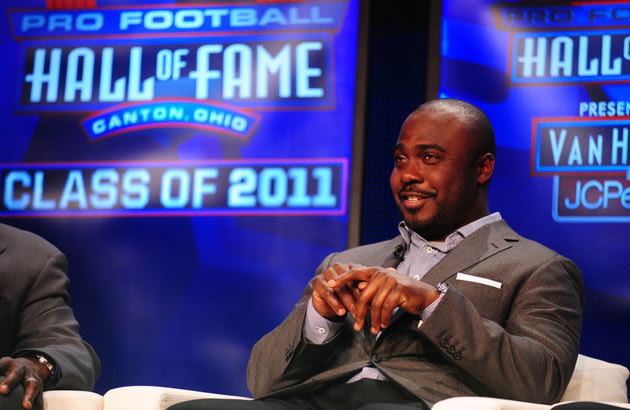
Marshall Faulk brings up Spygate: ‘I’ll never be over being cheated out of the Super Bowl’

(USA Today Sports Images)The NFL undoubtedly would be happy if the New England Patriots "Spygate" scandal never got brought up again. It was terrible for the league and it puts a cloud over one of the NFL's greatest dynasties.
Marshall Faulk's quotes from Super Bowl week, some of the most powerful and angry comments on the matter, brings the matter back from the dead.
[Buy Super Bowl XLVII tickets | Buy Super Bowl XLVII merchandise]
Faulk was the star running back on a St. Louis Rams team that lost Super Bowl XXXVI to the Patriots in New Orleans, the site of this year's game. And he's not happy with the thought that the Patriots may have had some inside information.

"Am I over the loss? Yeah, I'm over the loss. But I'll never be over being cheated out of the Super Bowl. That's a different story," Faulk said, according to a story by Tom Curran of Comcast SportsNet New England. "I can understand losing a Super Bowl, that's fine . . . But how things happened and what took place. Obviously, the commissioner gets to handle things how he wants to handle them but if they wanted us to shut up about what happened, show us the tapes. Don't burn 'em."
NFL commissioner Roger Goodell destroyed the Patriots' tapes after the investigation, just one controversial part of one of the league's biggest controversies.
The Patriots-Rams Super Bowl was a major part of the scandal, because of a report that the Patriots taped the Rams' walk-through practice on the Friday before the game. Although the league denied that the team taped the walk-through or that such a video ever existed and the Boston Herald apologized for the original report that the practice was taped, Patriots video assistant Matt Walsh said he was present for the Rams practice and shared information with then-Patriots assistant Brian Daboll. That's something Daboll said he didn't recall (and the NFL said if the conversation did take place, it's not a violation of league rules).
[ Video: Why are they called 'Ravens' and '49ers'?]
Faulk added more fuel to the old controversy by telling Curran that the Patriots were ready for plays that the Rams had never run in the red zone before – plays Faulk said were only practiced at that walk-through.
"Any time that I was offset, I was always stationary," Faulk told ComcastSportsnet. "And we had (created) motioning in the backfield at the same depth on the other side of the field. And they created a check for it. It's just little things like that.
"It's either the best coaching in the world when you come up with situations that you had never seen before. Or you'd seen it and knew what to do."

Tomorrow, he will kill. Tomorrow, he will regain his honor

The Murderer’s Honor


- Daniel Greenfield (Bio and Archives)  Wednesday, January 30, 2013
The story of Islam is a murder mystery. It’s not the kind of murder mystery where you wonder who did it, but when it will end. The detective peering with his magnifying glass at a scrap of fiber left behind on the carpet or a curly piece of hair caught in the door isn’t really trying to sort out who did it. He knows who did it. The great mystery that consumes him is how to make the killer stop.
This isn’t a story about right and wrong. Right and wrong aren’t serious propositions in the arid deserts where the murderer comes from. Right is power. Wrong is not having power. A man is right because he has power. A woman is wrong because she doesn’t. A Muslim is right because he has power. A Christian is wrong because he doesn’t.
When a woman has power and a man doesn’t, then the man has been dishonored. When a Christian has power and a Muslim doesn’t, then the Muslim has been dishonored. There is only one answer for dishonor, death. Kill the one who has dishonored you so that you can feel powerful again. The men with the magnifying glasses will call it extremism, but it’s much simpler and much more complicated than that.
The powerful need not compromise. They have honor. Those who have no power but do not compromise also have honor. The extremist does not compromise whether in power or out of it. Therefore he always has honor. The extremist is willing to die for the power and honor of Islam.
Islam is never powerless, but is always compromised in some way short of perfect purity.  Perhaps it fails to drive out all the non-Muslims and doesn’t force women to cover their eyes. Or maybe it tolerates chess and kite flying. Even the crudest Salafist finds some human norm short of total and complete extremism. He compromises and the seed of that compromise gives birth to a movement that will not compromise even on that. Each Islamic movement carries within it the seeds of its own extremist counter-movement and that movement too will carry its own seeds of death. The Islamic revolution devours its own children forever for honor’s sake.
Absolute power corrupts absolutely. Absolute honor is the search for absolute power. A power so pure that it transcends the human means necessary to achieve that glorious end. A purity so total that it will elevate the smuggled cocaine, the rapes and murders, the torture and the broken oaths to the golden truth that the ends of Islam justify all its mangled means.
The murderer kills because he wants power. He goes on killing for honor’s sake. When the blade slips or the victim pulls a gun, then the murderer skulks off into the night nursing his grudges and pledging that he will return or his children will return or their children, on and on through the ages.
All this may have started because the murderer wanted a goat, a gold coin or a wife, but it continues because it is now a matter of honor. A moment ago the murderer only wanted a gold coin, but having failed to obtain it, it is now a matter that will not leave off for all the gold coins in the world. Murder transmutes the gold coin into honor. The motive no longer matters. It is all about the end now.
The more the murderer is resisted, the angrier he becomes. The failure to kill forces him to take refuge in myth. He begins inventing glorious stories of his battles complete with poems and epic battles. There are sacred deaths with drops of blood falling like jewels and doves ascending into the sky. Every man becomes a lion and every enemy a monstrous eater of children. Eventually the story becomes his whole reason for being. It is a tale that is passed down through the tribe until countless of the murderer’s descendants derive their identity from the story. Until they are all murderers.
Having been thwarted, the murderer cannot stop. The failure to kill has left him powerless, no better than a woman or an infidel. It causes him to doubt the worth of his religion and his people. It robs life of its sweetness. The only way to heal his trauma is to finish what he started.  The only way for him to be at peace is to be at war.
Speak to him of peace and he will not listen, except as a ploy for finishing the unfinished murder. Peace is for the powerless. To desire peace is to admit to weakness. It is to give in to the prosaic mortality of the ordinary life. Before he began to kill, the murderer might have been satisfied with the ordinary life, but it is no longer good enough for him. Nothing will do but the knife and the blood and the screams.

The murderer will lie about wanting peace, but he will not make peace

The murderer will lie about wanting peace, but he will not make peace. To lie in order to kill is honorable, but to live in peace is not honorable. Peace narrows the borders and closes off horizons. What was once a green territory that the grandchildren or great-grandchildren might overrun in a hundred years is suddenly forever lost and forever foreign. How can he be asked to make such a terrible concession?
You might as well ask the sailor to stay on the land and the explorer to put up his feet in front of the fire. The murderer isn’t a mere murderer, he is a romantic at heart, and whether he lives in a mud hut or a tacky palace decorated with giant portraits of himself, in secret he imagines himself a sultan or an emir. And if not him, then his children or grandchildren.
The land he sits on is merely land, he wastes it for the most part for what good is it to him. He may write poems about the beloved land, but it isn’t the land he loves, but the idea of conquering it, killing for it and dying for it. And when there is no need to do any of the three, then like an amorous adulterer of the soil he goes seeking for other lands to conquer, to kill and die for.
This is his story and the myth that governs his life. He is not a builder. In his part of the world, it is the slaves who build. It is the men who have no power and no honor who work a set schedule, lifting bricks and arranging girders. Nor is he a farmer, that too is work fit only for serfs. He makes a decent merchant, cheating and being cheated in turn in a ritual mercantile combat. In a pinch he might be a shepherd, wandering the hills aimlessly, and watching his flock nibble the sparse desert grasses down to a wasteland, killing and eating them when it suits him like a little grubby god.
Whatever his profession, he fancies himself a warrior and the kind of war that he prefers is the raid. Village against village. Riders against caravans. Hijacked planes against skyscrapers. If he wins, then he gains honor. If he loses then he gains honor by vowing vengeance, for even the worst of losers can always hang on to his honor by threatening to kill the winners.
And that is where the murders become a mystery, at least to those detectives whose little magnifying glasses can make out the grooves on a thread, but not the distorted rage on a murderer’s face. The more they try to convince the murderer to stop, the more he kills. There is a pattern here, but unlike carpet fibers and footprints, it is not one that they can understand.
The men with the magnifying glasses want their lives back. So does the murderer. And the only way he can get it back is by taking theirs. The institution of the feud has lapsed in their world, but it is the defining one in his. Both detective and murderer are trapped in a cycle, but the murderer has a way out. All he has to do is kill them. The detectives cannot do the same thing. There is no room in their rational world for such a crude solution. They try to break the cycle with words. He tries to break it with bombs and bullets. And the cycle of violence continues.
Failure goads the murderer. The more he fails at killing, the more he aspires to it. On his tenth attempt he is ten times as motivated as on his first attempt. Like all people he has his ups and downs, but he always keeps on trying harder.
Each time he fails, he tells himself that the game wasn’t fair, the other side broke the rules, rigged the contest and undermined him. He spins complex conspiracies of spies and saboteurs in which the mind of the enemy is as convoluted as his, and that only fuels his outrage. How dare his victim plot so cleverly to undermine his own murder! Outraged, he spins his own convoluted plots, playing Wiley E. Coyote to an oblivious Roadrunner who is occasionally baffled to learn that he is alleged to have controlled every major public figure in the Middle East or seeded the Nile with trained sharks.
“Sure,” says the murderer. “You didn’t expect him to admit it, did you? I wouldn’t in his place.”
In this way the murderee takes on an outsized importance until he, she or it comes to represent every obstacle that the murderer has ever faced in his life, every nightmare and night terror. Whatever crimes the murderer commits, he is certain that the murderee has committed even more of them. The murderer’s dark side steps out of the shadow and takes on the role of his victim so that the act of murder becomes an act of purification that purifies nothing for the dark forces that the murderer tries to kill are still inside him even while his victim bleeds on the floor.
Eventually the murderee fills the world. Rushdie was only a minor writer until a series of random events caused his name to come to the attention of a shaky Iranian leadership looking for a scapegoat. And then Rushdie became an obsession for the Iranian regime. Rushdie filled their world. Likewise the average Muslim did not spend any time thinking about the Jews, who were always despised, but like most non-Muslims, weren’t of consequence. Having conquered their lands and their persons, they could go about ignoring them, aside from the usual thefts, murders and assorted cruelties. But then, after making numerous compromises, the honorless Jews, the sons of apes and pigs, defeated armies far stronger than them. The murderers were robbed of their honor. And when the murderer is Muslim and the victim is non-Muslim, then the honor of the murderer is the honor of the whole Muslim world.
And there can be no peace now. Not tomorrow or in a thousand years. Not with the Golan Heights, the West Bank, Gaza, East Jerusalem, the Galilee and the grimier parts of Tel Aviv. Nothing will do but for the murderers to finish what they started, the aborted murder, the unfinished crime and the unconsummated honor killing to end all honor killings. Nothing will do but death.
A murderer will forgive many things. You may kill his son and rape his daughter, so long as the blood price or the honor price changes hands. You may do the same with all of his many relatives and their relatives, as is so often the case in these dirty little wars that are really packs of murderers roaming and raiding, firing at each other and falling back, and then waiting for the mourning women to come out and wail over the bodies of the dead. You may even cheat him as much as you like, for he will probably cheat you worse, even while you fancy that you are coming out ahead. But what you cannot do is take away his honor.
Do not mock the murderer’s gods, for they are his power, or refuse his hospitality, for it is how he shows that he has more than you, or make him feel small and weak. Though he may smile afterward, he will never forgive you for it, the insult will go on chafing his heart until it overflows with that species of black blood that tastes of bitterness and death.
The House of Saud has never forgiven the House of Washington for helping aid its power. It draws a blood price from it every year, but it cannot rest until the House of Washington falls. So too all alliances must one day end in betrayal or death. There is no room in the green country of the horizon for two tribes to rule. Nor is there room in the inner palaces of honor with their bejeweled tapestries and arabesque curves for a helping hand. The Sultan and Emir, like Allah, can have no antecedent. Like Mohammed, he must be the final revelation of power over a powerless world.
And the murderer? He cannot sleep. The man he tried to kill has filled his world. Once he wanted gold or goats, but now it is honor he wants. On his bed, the murderer dreams of killing a man whose only crime was humiliating him by refusing to die. The murderer rolls over and smiles. Tomorrow, he will kill. Tomorrow, he will regain his honor.
Daniel Greenfield is a New York City writer and columnist. He is a Shillman Journalism Fellow at the David Horowitz Freedom Center and his articles appears at its Front Page Magazine site.
Daniel can be reached at: sultanknish@yahoo.com

The Obama administration's modus operandi for defusing scandals

Stonewalling Benghazi Into Irrelevancy


Author
- Arnold Ahlert (Bio and Archives)  Wednesday, January 30, 2013     http://www.canadafreepress.com/index.php/article/52776
Last week, the dwindling number of Americans who believe this administration owes them an honest explanation regarding the murders of ambassador Chris Stevens and three other Americans in Benghazi were likely expecting that Secretary of State Hillary Clinton might be forced to shed some light on the issue. What they got instead was a well-rehearsed theatrical presentation, complete with tears, anger and self-righteous indignation.
When Senator Ron Johnson (R-WI) contended that the administration had deliberately misled the American public, Clinton answered angrily. “With all due respect, the fact is we had four dead Americans,” she said. “Was it because of a protest, or was it because of guys out for a walk one night who decided they’d go kill some Americans? What difference—at this point—does it make? It is our job to figure out what happened, and do everything we can to prevent it from ever happening again, Senator.” That is an abject lie. As CBS reporter Sharyl Attkisson has so masterfully revealed, the real “job” of this administration is to stonewall this scandal into irrelevancy.
Towards that end, Attkisson has compiled a list of penetrating questions Obama administration officials have steadfastly refused to answer, since she began asking them as early as last October. To wit:
  • What time was Ambassador’s Stevens’ body recovered, what are the known details surrounding his disappearance and death, including where he/his body was taken/found/transported and by whom?
  • Who made the decision not to convene the Counterterrorism Security Group (CSG) the night of the Benghazi attacks?
  • We understand that convening the CSG[is] a protocol under Presidential directive (“NSPD-46”). Is that true? If not, please explain… if so, why was the protocol not followed? Is the Administration revising the applicable Presidential directive? If so, please explain.
  • Who is the highest-ranking official who was aware of pre-911 security requests from US personnel in Libya?
  • Who is/are the official(s) responsible for removing reference to al-Qaeda from the original CIA notes?
  • Was the President aware of Gen. Petraeus’ potential problems prior to Thurs., Nov. 8, 2012? What was the earliest that any White House official was aware?
  • What is your response to the President stating that on Sept. 12, he called 911 a terrorist attack, in light of his CBS interview…on that date in which he answered that it was too early to know whether it was a terrorist attack?
  • Is anyone being held accountable for having no resources close enough to reach this high-threat area within 8+ hours on Sept. 11, and has the Administration taken steps to have resources available sooner in case of emergency in the future?
  • A Benghazi victim’s family member stated that Mrs. Clinton told him she would find and arrest whoever made the anti-Islam video. Is this accurate? If so, what was Mrs. Clinton’s understanding at the time of what would be the grounds for arrest?
  • The Administration is reported to have asked that the anti-Islamist YouTube video initially blamed in Benghazi be removed from YouTube. If true, what is the Administration’s view regarding other videos or future material that it may wish were not published, but are legal? What is the Administration’s criteria in general for requesting removal of a YouTube or other Internet video?
Attkisson further highlights administration stonewalling, noting that a White House official indicated that none of the above questions will be answered, and that Freedom of Information Acts (FOIAs) filed by CBS asking for answers from the State Department, CIA, FBI and Defense Department have been ignored. The same stonewalling applies to “repeated requests” for the “promised surveillance video from Benghazi,” White House photos taken on the night of the attack and “an accounting” of President Obama’s decisions and actions.
How does the administration get way with sweeping a monumental scandal like this one under the rug? Sunday night’s “60 Minutes” on CBS offered a perfect example of the overt media corruption that makes it possible. Despite the fact that Steve Croft scored an interview with both President Obama and Hillary Clinton, presenting him with a perfect opportunity to press the issue, here is the totality of questioning regarding Benghazi:
Kroft: “You said during the hearings, I mean, you’ve accepted responsibility. You’ve accepted the very critical findings of Admiral Mullen and Ambassador Pickering. As the New York Times put it, you accepted responsibility, but not blame. Do you feel guilty in any way, in—at a personal level? Do you blame yourself that you didn’t know or that you should have known?
Here’s how both Clinton and Obama “answered” the question.
Clinton: “Well, Steve, obviously, I deeply regret what happened, as I’ve said many times. I knew Chris Stevens. I sent him there originally. It was a great personal loss to lose him and three other brave Americans. But I also have looked back and tried to figure out what we could do so that nobody, insofar is possible, would be in this position again. And as the Accountability Review Board pointed out, we did fix responsibility appropriately. And we’re taking steps to implement that. But we also live in a dangerous world. And, you know, the people I’m proud to serve and work with in our diplomatic and development personnel ranks, they know it’s a dangerous and risky world. We just have to do everything we can to try to make it as secure as possible for them.”
Obama: “I think, you know, one of the things that humbles you as president, I’m sure Hillary feels the same way as secretary of state, is that you realize that all you can do every single day is to figure out a direction, make sure that you are working as hard as you can to put people in place where they can succeed, ask the right questions, shape the right strategy. But it’s going to be a team that both succeeds and fails. And it’s a process of constant improvement, because the world is big and it is chaotic. You know, I remember Bob Gates, you know, first thing he said to me, I think maybe first week or two that I was there and we were meeting in the Oval Office and he, obviously, been through seven presidents or something. And he says, ‘Mr. President, one thing I can guarantee you is that at this moment, somewhere, somehow, somebody in the federal government is screwing up.’ And, you know you’re—and so part of what you’re trying to do is to constantly improve systems and accountability and transparency to minimize those mistakes and ensure success. It is a dangerous world. And that’s part of the reason why we have to continue to get better.”
The so-called investigation by the Accountability Review Board took 13 weeks. It concluded that no one was responsible for the security breakdown that left four Americans dead, even as it completely ignored finding out why administration officials peddled the “Muslim video” excuse for the attacks. As for Obama callously characterizing this scandal as little more than one of an expected series of government “screw-ups,” perhaps the only thing worse was the president’s previous description of the murders as “bumps in the road.”
An American Thinker column by Daren Jonescu explains how this stonewalling not only serves the administration’s purposes regarding Benghazi, but the entire progressive agenda as well. After noting that Clinton could never have gotten away with saying, “what difference—at this point—does it make” in the days or even the first few weeks immediately following the attacks, Jonescu lays the progressive strategy bare:
“The key to the progressive ‘ratchet,’ as it is often, correctly, called, is that no step forward may ever be retraced. Each stage of degradation is to be rationalized after the fact, precisely by the means exemplified in Hillary Clinton’s stark question…Was modern public education conceived as a tool for preventing the development of individualism and exceptional men, in favor of a morally and intellectually stunted ‘workforce’ of the compliant to support an entrenched oligarchy?...Would ObamaCare’s individual mandate stand up to the judgment of the framers of the U.S. Constitution?...The key to the success of Western socialism’s ‘progress’ is not the periodic lurches toward the abyss. It is the art of effective stalling. All of today’s political and moral outrages will be rationalized with a shrug tomorrow: ‘What difference—at this point—does it make?’”
Before the November election, the Obama administration was embroiled in four major scandals: Fast and Furious gunrunning to Mexico, the leaking of top-secret intelligence information most likely from the White House, a string of “green” company bankruptcies tied to political donors, and Benghazi. In each case, this administration, abetted by fellow Democrats and see-no-evil media apparatchiks, has moved further and further away from the point where each one occurred, to the place where, at “this point” in time, this cavalcade of overt corruption can be characterized as an unnecessary or unseemly effort to “rehash” old news. Furthermore, if anyone dares to bring up Benghazi when Mrs. Clinton makes her inevitable run for presidency in 2016, this unholy alliance of protectors will undoubtedly accuse her detractors of misogyny for daring to bring up something that—at this point—no longer makes any difference.
Four dead Americans and no remotely credible explanation as to who was responsible or why, ought to say otherwise. That it doesn’t—and won’t—is a testament to the level of corruption that the majority of the public and the media are willing to tolerate, as long as the progressive cause is served. For the American left, there will always be screw-ups and bumps along the road to utopia. When the ends justify the means…what difference do they make?
Arnold was an op-ed columist with the NY Post for eight years, currently writing for JewishWorldReview.com and FrontPageMag.com. Arnold can be reached at: atahlert@comcast.net

3 Eyewitnesses Survive Sandy Hook Shooting – Mayor Scott Jackson Heads-Up Investigative Commission

http://theintelhub.com/2013/01/24/3-eyewitnesses-survive-sandy-hook-shooting-mayor-scott-jackson-heads-up-investigative-commission/
Note: One of the eyewitnesses to the shooting is a little girl whom was attending class at the time of the shooting. In no way is the author of this article claiming that anyone should ask this little girl any questions at this time, after she was traumatized by such a horrific event, as two other adult witnesses should suffice. 

By Shepard Ambellas
theintelhub.com
January 24, 2012
NEWTOWN — Many questions still remain surrounding the Sandy Hook School shooting, including the question, “Was there more than one shooter?”
According to reports there are at least 3 eyewitnesses to the shooting that took place on December 14, 2012, at the Sandy Hook Elementary School that could shed light on the situation and put potential internet rumors to rest.
On the day of the shooting NBC reported that, “Police said Monday that two adults were injured but survived the shootings at Sandy Hook Elementary School in Connecticut and will be interviewed as soon as they’re well enough to answer questions.”
The third witness has been identified as a student of the school.
Witness #1 — Natalie Hammond
Lead Teacher of Sandy Hook Natalie Hammond was reported to have come face to face with the gunman Adam Lanza the day the mass shooting occured.
It was reported by NewsTimes.com on December 17, 2012, that;
Hammond, the recently promoted lead teacher at the school, is one of two wounded survivors of the nightmare that befell Sandy Hook on Friday.
At about 9:30 a.m., she ran out of a meeting with Principal Dawn Hochsprung and school psychologist Mary Sherlach. They came face-to-face with 20-year-old Adam Lanza, who had just shot his way into the school with a high-powered semiautomatic rifle.
Lanza’s burst of fire killed Hochsprung and Sherlach. Hammond was shot in the foot, leg and hand, but managed to crawl to safety behind a door. Lanza then went down the hall to two classrooms, where he killed 20 children and four teachers.
Ten minutes later, Lanza fired a bullet into his own head.
The NYPost.com reported Dec. 16th that, “Natalie Hammond, 40, also was in the meeting and may have tried to use her body to block Lanza from entering the office — likely keeping him from killing others inside.”

A search of Hammond in the states Educators Database reveals Hammond is licensed in Connecticut.
Hammond recently was given a promotion before the shooting according to reports. The Sandy Hook Elementary School’s official website lists her as “Lead Teacher”.
Witness #2 — Unidentified as of  Yet
We know that there is a second survivor that was shot from Lt. Paul Vance’s statements to the media. However, we do not know who this witness is.
Witness #3
A student of the elementary school (little girl) was described by eyewitnesses standing outside the school after the shooting to have exited the school covered in blood, but appeared to be uninjured.
Other reports like Andy Campbell’s detail how the little girl survived;
Of 16 children in the classroom, the unidentified girl was the only survivor.
“She ran out of the school building covered from head to toe with blood and the first thing she said to her mom was, ‘Mommy, I’m OK but all my friends are dead,’” Solomon said. “Somehow in that moment, by God’s grace, she was able to act as she was already deceased.”
The girl was reportedly the first student to flee the building after the massacre at the school, which left 20 children, six adults and the gunman dead.
It’s also interesting to note that Hamden Mayor Scott Jackson was appointed by Gov. Malloy to head-up the 16-member panel of the Sandy Hook School Shooting Investigative Commission as reported by CNN that,
“We live in a society that has destigmatized violence, but has refused to destigmatize (mental health) treatment,” said Gov. Malloy, who emphasized the need for greater scrutiny of policies that may have contributed to the deadly December 14 incident.
The first-term Democrat set up the 16-member panel of experts last month and appointed Hamden, Connecticut, Mayor Scott Jackson to head up the commission.
“We are here because of a tragedy,” said Jackson, who is tasked with devising recommendations to address gun control, school safety and the state’s mental health policies.
The panel must meet a March 15 deadline for its initial report, which Malloy is expected to use in drafting initiatives aimed at reducing gun violence. The group includes experts who reviewed policies after mass shootings in Colorado and at Virginia Tech.
As citizens we need to demand that Mayor Scott Jackson investigates and answers all prudent questions regarding the Sandy Hook School shooting.
*****
Read more articles by this author HERE.
Shepard Ambellas is the founder & director of theintelhub.com (a popular alternative news website), researcher, investigative journalist, radio talk show host, and filmmaker.