Posts
Posts


If you’ve been reading the Symbolic Pics of the Month series on this site, you are probably aware of the culture of death prevalent in the fashion world where death, violence and dehumanization are glamorized in photoshoots. This trend has been going on for years and is so disturbing that it caused outrage at numerous occasions.
The prevalence of death culture in fashion is so noticeable that it became the subject of an article in the peer-reviewed Scan Magazine of Macquarie University, a journal that analyzes media, arts an culture.
Here is the article in its integrity, complete with references. It is a perfect in-depth complement to the material that has been exposed on Vigilant Citizen for years.
To Die For: Skull Style and Corpse Chic in Fashion Design, Imagery, and Branding
Jacque Lynn Foltyn ,,,http://scan.net.au/scan/journal/display.php?journal_id=151
IntroductionIs fashion something to die for? If one examines the content of fashion magazines, websites, videos, blogs, and fashion itself, the answer is a resounding "yes". Death is a fashion star, used to sell clothing, accessories, brands, celebrity, magazines, style-based television programming and websites, and cross-media collaborative efforts. From Alexander McQueen and Ralph Lauren to Target and H&M, skulls, crossbones, and skeleton motifs have taken over fashion. Death is the darling of not only the fashion set but also of the masses - and their dogs, who wear skull bedecked cardigans and collars and lounge on skeleton embossed beds. In mainstream fashion and lifestyle magazines, models, actors, stylists, and socialites not only model skull style, they model 'death' itself, in gruesome pantomimes of murder, suicide, and eco-disaster. These "corpse chic" (Foltyn, 2008b, 2009) narratives are 'ripped from the headlines', but are also inspired by literature, music, cinema, and true-crime television genres; they are the basis for photos shoots for the reality TV program America's Top Model. In the twenty-first century, and in more ways than one, fashion, to paraphrase Karl Lagerfeld, is not only "ephemeral" and "unfair"; it is "dangerous" (2006).
This article explores the fashioning of death as a mainstream advertising strategy, branding ploy, artistic expression and style trend, and examines its continuity with other representations of death, past and present. Since fashion is about consumption and conformity (Veblen 1902; Simmel 1957); reflects the preoccupations of contemporary culture; can be linked to specific historical and political contexts (Kaiser 1990); and speaks to the characteristics of modern culture itself (Blumer 1969; Baudrillard 1998; Evans 2003), it is argued here that skull style and corpse chic reveal current attitudes about not just contemporary society but about celebrity, beauty, fashion, and death. In turn, this article considers the following questions: Why is death a fashion star? Why are the fashion-obsessed, death-obsessed? Why are beautiful models and actors posing as cadavers? What does the popularity of skull style and corpse chic say about who we are? What does this trend of viewing and wearing death as a fashion statement say about our relation to the Grim Reaper? Finally, how can we reconcile living in a culture in which death is, on the one hand, denied (Becker 1973) and hidden away (Walter 1991), while on the other is a constant grisly presence in our information culture and entertainment society - even something that we wear?
To answer these questions, this article first considers examples, influences, and precursors of skull style and corpse chic, collected through historical research and qualitative methodologies (observation, interviews, content analysis, and visual sociology); and then moves on to a discussion of the larger socio-cultural significance of this deathly fashion trend.
Designing Death: Skull Style
In February 2010, Le Bel Age Boutique, a fashion store in San Diego, had an unusual window display: bone models (see Figure 1). "I call them 'couture skeletons'", said Valerie Lee Ferrari, the store's proprietor. Ferrari explained that while her initial motivation in creating the plastic skeletons had been to celebrate Halloween, she had been influenced by the gothic movement and wanted to create a mannequin with "an edge". Noting that the fan base for the couture skeletons had become so large that she was now manufacturing and selling them, Ferrari remarked: "I display them as a kind of "puppet theatre. They take on a life of their own. People 'get' them or not". She drolly added, "Death as a style influence is very much in the air" (Interview February 3, 2010).
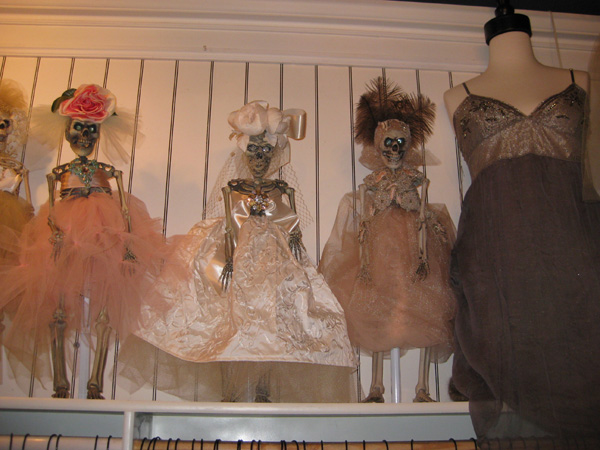
Figure 1: Couture skeletons, San Diego
The year-round popularity of Ferrari's couture skeletons is a sign of the contemporary importance of death as a design motif and creative feature of fashion media and marketing. The human skeleton has arrived in the mainstream world of fashion and is no longer a rare artistic expression. This was not the case in November 1995, when The New Yorker published Richard Avedon's 'In Memory of the Late Mr. and Mrs. Comfort' (see Figure 2). A ghoulish, strangely beautiful marriage of fashion, art, commerce, and death, Avedon's 'ode' featured supermodel Nadja Auermann and a male skeleton partner, dressed in designer fashions, and in a cinema-style narrative. It had scenes of courtship and of the couple copulating, arguing, sitting on toilets, and playing with a cadaver baby. (Images in Archive, under Fashion, 1973 - 2004, at http://www.richardavedon.com/)
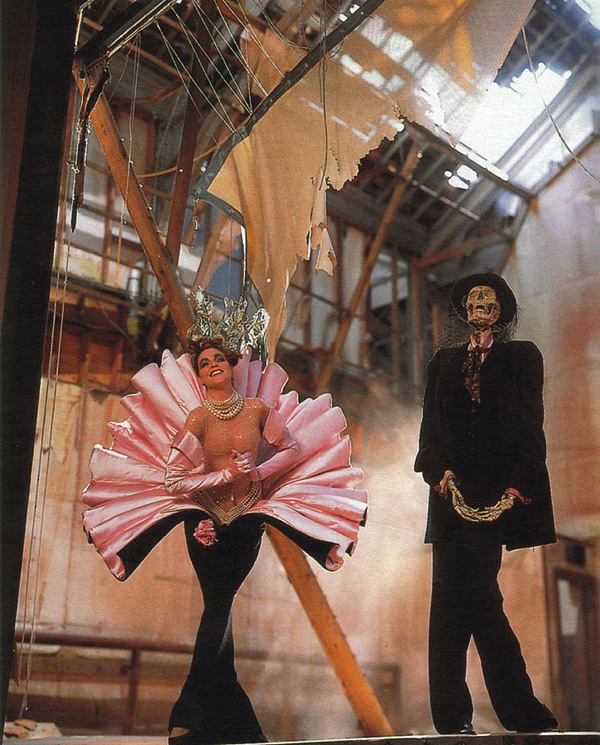
Figure 2: Richard Avedon, The New Yorker
Now, Avedon's use of skeletons as fashion models has worked its way not only into a San Diego boutique but a Spring/Summer advertising campaign for Alexander McQueen's 'Eyes' (sunglasses), inspired by artist Damien Hirst (see Figure 3). In the June 2010 issue of W magazine, readers were confronted with a grinning human skull, with silver metal-coated teeth, wearing sunglasses, against a backdrop of pink, red, and white flowers. (Two images from this campaign can be viewed at http://coutequecoute.blogspot.com/2010/06/alexander-mcqueen-springsummer-2010.html )
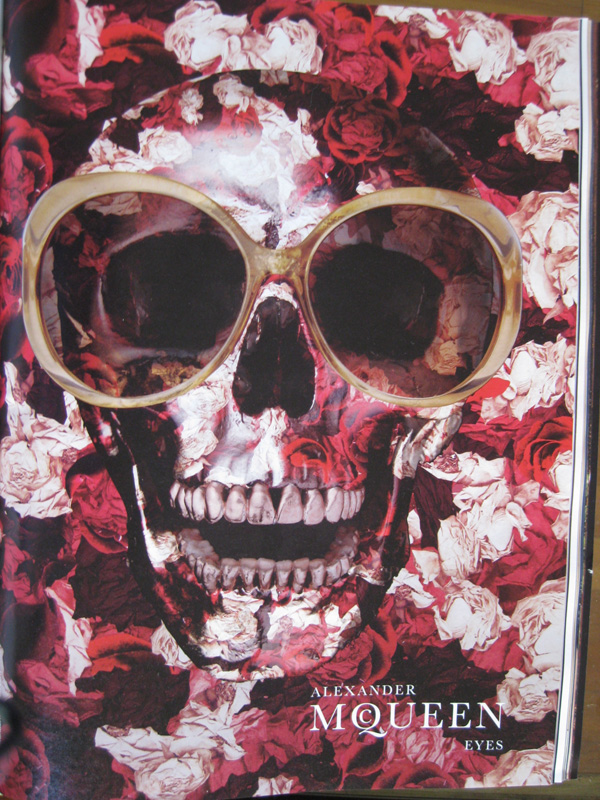
Figure 3: Alexander McQueen, 'Eyes'
Carlos, a middle-aged Hispanic male who works in the US weapons industry, occasionally wears what has come to be known as skull style. At the time of interview, he wore a black Marc Echo Cut & Sew polo shirt, embroidered with a white skull and cross-bone/needle motif, with the script 'Deadly Tailors & Passionate Lovers, NYC'. When asked why he was wearing this imagery, Carlos looked down at the death head on his shirt, smiled wryly and replied, "I don't know. I guess it's 'fashion-y.' My wife picked it out for me. She says 'this looks good; it's hip.' So I said, 'okay'" (Interview July 31, 2010).
'Fashion-y' skull style is one of the most prominent emblems in contemporary fashion, and so commonplace as to have lost any shock value. The phrase 'in fashion' summarises an important but downplayed aspect of social life: the pull towards others (connection) and the push toward the new (Hemphill and Suk 2009). As a sign of both consumption as well as conformity, babies, children, and pets wear skull style, as well as 'wholesome' starlets like Jessica Alba. It is a design aesthetic for jewellery, clothing, accessories, baby slings and diaper bags, and is sold at high end and low end retail venues. Even Ralph Lauren, whose preppy 'to-the-manor-born' aesthetic seems far removed from death, has embraced the skull as a fashion muse. In 2010, Lauren sold skull-decorated pyjamas, slippers, bedding, wallets, ties, puppy collars and cardigans, and barware festooned with skeletons. Stylish jewellery is now fashioned from human bones, both real and simulated. While human bones, ashes, and hair have been worn as trophies, religious relics, objects of mourning, and memento mori (both historically and cross-culturally), today bone jewellery sits within the sphere of modern consumer society (Barratt 2005).
In the contemporary world of style, death is worn as a prop in the performance of fashion. Following Erving Goffman's (1959) dramaturgical sociology and Judith Butler's (1990) 'performative' arguments about the construction of identity, Valerie Steele, editor of Fashion Theory, commonly frames fashion as a staged performance. The presentation of self can be viewed as a series of theatrical acts, with the realisation of these presentations consisting of a front stage, where the actual act is presented for the audience, and a backstage, where the act is prepared, complete with a script, rehearsals, cosmetics, masks, and costumes. From whence did this wearing of death as part of the performance of the contemporary self emerge?
Keith Richards was wearing skull style decades before dogs and babies. The most irascible Rolling Stone, the iconic Richards is one of many rock stars who have shaped death as a fashion statement (see Figure 3). Richards, whose ironically named memoir Life (2010) reveals brushes with death through drug use, accident, and a debauched 'devil-may-care' lifestyle, has been wearing a widely imitated skull ring, created for him by David Courts and Bill Hackett, since 1978. Aware of his public image as a raging outlaw, 'Prince of Darkness', and seemingly indestructible dodger of death, Richards confesses that he has felt obligated to live up to this "necromantic" image. He writes: "I can't untie the threads of how much I played up to the part that was written for me. I wear the skull ring" (2010: 364). Noting the "people love that image," Richards believes they identify with the "raging Keith Richards" - so his typically middle aged, middle-class fans send him skulls "by the truckload" (2010: 365).
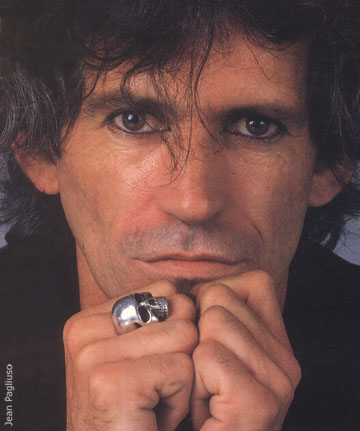
Figure 4: Keith Richards
The bony remains of human beings have complex histories not only as memento mori in religious iconography but also as logos for street gangs, motorcycle clubs, and other outcast (often criminal) groups. The cult-like followers of The Grateful Dead call themselves Deadheads, and the punk and gothic movements have embraced the skull as a symbol. Such deathly images remain confrontational style statements when worn by members of subcultures to suggest, symbolise, or signal 'outlaw' status such as Richards's, and alienation from, disaffection with, and rebellion against conventional culture. Among fashion's many social functions is the expression of uniqueness and social deviation for cultural outsiders searching for ways to differentiate themselves from so-called 'normal' society (Simmel 1957). Fashion reflects symbolic meanings and social ideals (Barthes 1983) and designers search for new looks not only among elites (Veblen 1902) but on the street, and among members of subcultures, and marginalised and decadent individuals who are determined to make themselves appear distinctive (Simmel 1957). Fashion designers, editors, and photographers frequently respond positively to rule breakers, the counterintuitive, and the 'out of the ordinary' - and often think of themselves as such: what could be more confrontational and indeed provocative than the 'wearing' and staging of death?
Skulls and skeletons have rich cultural histories and symbolic meanings that provide them with other sources of deathly allure. Associated with Halloween, they were worn by the living in autumnal religious rituals (the Celtic Samhain and the Christian All Hallows Day) to disguise the self and scare away ghouls on days when they were thought to roam the earth (Rogers 2002). Death heads figure in military insignia and are worn by warriors as memento mori, to protect them from death, and to proclaim their status as violent, frightening dealers of death. The Death Head was a symbol of one branch of the Nazi SS. Hussar military uniforms, with their horizontal gold braids, gold chain loops, and decorative frogging that stretch across the chest, evoke the skeleton, and have been a prominent feature of the rock military style (Langkjaer 2010) and surface as popular style statements. The bony remains of human beings are props in pirate, vampire, and CSI themed films, television shows and video games, and figure in the tie-in merchandise worn by fans of these genres, such as the Pirates of the Caribbean skull and cross-bone T-shirts.
It's not surprising that skulls and skeletons were objects of fascination for Alexander McQueen, a designer known to be interested in the more macabre aspects of popular culture and with outsider subcultures. McQueen's designs nod to pirates, witches, warriors, and predators and their prey; and he staged catwalk extravaganzas oriented around Jack the Ripper and the 1969 film They Shoot Horses, Don't They?, about a deadly dance marathon. Arguably the designer most associated with skull style and runway props, McQueen wove skulls into clothing and scarves; fastened death head charms to ankle boots; exhibited an aluminium rib cage corset cast from an actual human skeleton; and had runway models carry giant skulls and bones, drag skeletons from their feet, and wear masks that made them look like death heads. There are McQueen skull cuffs, bracelets, bangles, charms, earrings, rings, and tongue jewellery. The commercial value of the death head is such that Winged Death, one of McQueen's most famous iterations of the skull, has become the subject of a trademark infringement suit filed by the Hell's Angels Motorcycle Club (Alexander 2010). The fact that McQueen hung himself in February 2010 speaks to the performative role of death in his life, while those who knew McQueen well enough to write personal obituaries have noted not only a depressed state but also his obsession with death. On February 1, McQueen's Twitter messages showed both a troubled state of mind as well as a revealing statement about his creative process: "From heaven to hell and back again, life is a funny thing. beauty [sic] can come from the most strangest of places even the most disgusting places" [sic] (Collins 2010). McQueen's 'genius' and theatre of the macabre made him a favourite among fashion journalists and helped move skull style from the periphery to the centre of fashion.
There are periods when fashion embraces melancholy subjects (Lipovetsky 1993). In the 1990s, McQueen was one of many young conceptual, deconstructionist, 'post-fashion' designers (Vinken 2005: 35) whose work was "at the edge commercially," focused on dark themes, and valued fashion primarily for its symbolic possibilities (Evans 2003: 5; Steele and Park 2009). Fashion can provide a window and commentary on social change (Veblen 1902; Simmel 1957; Crane 2000), and experimental designers such as McQueen, Martin Margiela, Hussein Chalayan, and Viktor & Rolf infused their designs with macabre imagery in response to social, economic, ecological, technological, and political changes that have created alienation, the distressed body, war, terror, violence, forced migration and a fear of instability, change, and death (Evan 2003). Some of those who wear skull style are no doubt responding to the tenor of our times, while others identify with the outsider, 'dodger-of-death' symbolism of Keith Richards. Others wear it as a memento mori, while others like Carlos wear the style more 'lightly', to project a slightly edgy look. Then there are those who seem impervious to the cultural meanings of the imagery; for them skull style has been drained of its symbolism and is worn simply for it trendiness, a response to the unthinking consumerism that Adorno (2002) argued modern capitalism engenders. Regardless of the reasons for wearing skull style, slavishly following trends is a prominent feature of affluent consumer societies (Baudrillard 1998, Lipovetsky 1993), and designers, editors, and marketers have now recognised consumer attraction to death.
Death by Fashion: Corpse Chic
In the mainstream fashion performance of death, 'corpse chic' represents a different kind of dead body narrative, in which supermodels and celebrities pose as cadavers. Corpse chic styles death with the flesh of the living rather than the bones of a skeleton and glamorises the freshly or decomposing 'dead' body, transforming the alluring living body into an alluring 'dead' one. Such imagery draws attention to its creators' artistry, of course, and to the fashion site where the image is featured, but its goal is to sell the fashions modelled by the 'corpse'. The assumption that a 'dead' body can now be an engaging fashion model is a perceptive one, as the viewer's attention is grabbed at a time when actual and simulated death images have become a pervasive part of modern entertainment. There is interplay with the real death shown in the news, the simulated deaths of popular culture, and the contrived images of death currently seen in fashion, a theme that will be developed in more detail shortly.
For thousands of years death has been performed in theatre and dance, as cultural reflection and expression. It then appeared in photography, film, television, videogames and, more recently, fashion. Corpse chic imagery is commonly appropriated from amorous death scenes from literature, mythology, and art. Shakespeare's suicides are a source of inspiration, for example, the Romeo & Juliet themed 'Love of a Life Time', by Annie Leibovitz for Vogue (December 2008). Here, the doomed lovers lie 'dead,' arms entwined - modelling McQueen.
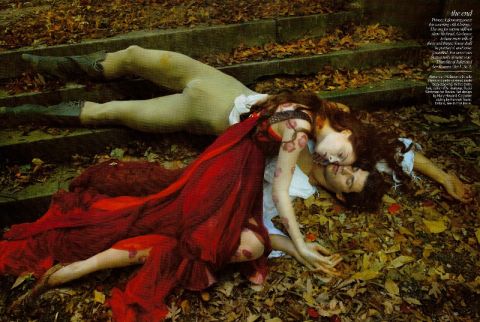
Figure 5: Annie Leibovitz, Vogue 2008
In the 2010 Pirelli Calendar, Terry Richardson's photograph of model Lily Cole as a modern-day Ophelia (from Hamlet) also pays homage to Shakespeare.

Figure 6: Lily Cole as Ophelia
However it is the victim of violent crime, rather than the romantic suicide, that is most common in the performance of corpse chic. This model has typically suffered a heinous 'death' at the hands of a murderer, serial killer, sexual sadist, paedophile, animal, or even demented toy (Foltyn 2009). Consider the themes and images of four corpse chic pictorials published in W magazine between 2007 and 2009.
'Honeymoon Hotel', from July 2009, stars the nude or semi-nude actor Bruce Willis and his wife Emma, performing torture, dying, and death in a macabre sado-masochistic themed pantomime, photographed by Steven Klein and styled by Camilla Nickerson. Willis appears with spouse model Keiko and designers (including Michael Kors) in a series of images that involves masks, whips, metal fingernails, death heads, and an emergency vehicle. (Slide show: http://www.wmagazine.com/celebrities/2009/07/bruce_emma_willis_ss#slide=1 ).
In 'Love/Hate', from October 2008, supermodel Linda Evangelista, styled by Camilla Nickerson and photographed by Steven Klein, appears in a series that W's editors dubbed 'operatic'. In one image, Evangelista hovers over her 'dead' male lover (model Tyson Ballou) in a garden scene, while beautifully wearing Michael Kors, Balenciaga, and Chloe. (Slide show, http://www.wmagazine.com/fashion/2008/10/love_hate#slide=10).
In 'Pinup', from March 2008, one image features top model Lara Stone lying on a clear plastic coated bed, legs parted wide, eyes staring upwards vacantly. She is dressed in a pink Bottega Veneta tulle bustier and a Roberto Cavalli pink rooster vest: a fetishist's fantasy. Set in a seedy motel, and photographed by Mert & Marcus, Stone's body is foreshortened so that the viewer looks up her dress. The editorial copy of this shoot describes the models as "girls gone wild...in some rather compromising positions", but there is no mention that the two models have been styled to appear dead -slide 4 & 17. (Slide show: http://www.wmagazine.com/fashion/2008/03/pinup#slide=17_).
Perhaps the most disturbing tableaux from W is 'Into the Woods', from August 2007; this was also photographed by Mert & Marcus, and styled by Alex White. Dressed in various furs, Dutch supermodel Doutzen Kroes poses with stuffed toy animals that caress and menace her; in some images, she appears a cadaver-white, thumb-sucking child, who has been ravished by either the soft plush toys or an out-of-view paedophile. There is an implicit connection here to a sexual subculture called the 'furries', in which people dress up in animal costumes to have sex (Foltyn 2009). While the images have been removed from the W website, some of them can be viewed at http://www.flickr.com/photos/calliope_fashion/1022039956/ and in their entirety in the bottom segment of http://www.flickr.com/photos/calliope_fashion/sets/72157601655356484/with/1022039450/
Corpse chic imagery such as these moves beyond the sensual to more dubious territory, a subdivision of dead body imagery I call "corpse porn" (Foltyn 2008b). Corpse porn highlights the simulated dead body's sexuality in ways that go beyond the erotic; its themes are the vulnerability, debasement, decomposition, and sexuality of the un-mourned corpse, which it transforms in theatrical ways to titillate viewers with glimpse of sexual fetishes and perverse sexual subcultures.
On the other hand, serious social issues are occasionally addressed by corpse chic. Inspired by the recent oil spill in the Gulf of Mexico, in August 2010 Italian Vogue staged model Kristin McMenamy as an oil soaked feathered sea creature, washed ashore, surviving (dressed in Ralph Lauren Collection), dying (spitting out oil) or dead, dressed in torn black nets. The story - 'Water and Oil' - was covered across the media, in 'hard' news, fashion websites, and the blogosphere. As the magazine's editor Franca Sozzani explained: "in the face of this dramatic, catastrophic stalling, the images of Steven Meisel make up a precious reportage that delivers an artistic impact. Unforgettable images, created purposely to unnerve the viewer, capture the reality of the situation." (Images and video at http://www.vogue.it/en/magazine/cover-story/2010/08/water--oil)
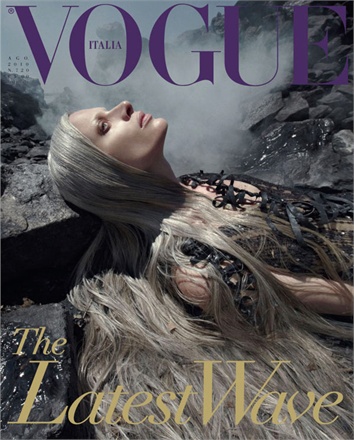
Figure 7: Italian Vogue
For the September 2010 issue of Harper's Bazaar, celebrity stylist (and now celebrity) Rachel Zoe appears in a campy performance of corpse chic. The tongue-in-cheek, Hitchcock-style piece 'Rachel Zoe: I Die' has Zoe 'killed' by some of her favourite designers. She is buried alive in clothes by Michael Kors; Marc Jacobs shocks her with a hairdryer; and shoe designer Brian Atwood nails her with a stiletto. (Slide show at http://www.harpersbazaar.com/fashion/fashion-articles/rachel-zoe-i-die-0910; the video is available at http://www.harpersbazaar.com/fashion/fashion-video/#v441723084001 ). The layout is unusual for its frivolity and ironic, exaggerated sensibility, hallmarks of the camp performance (Sontag 1964). As a commentary on Zoe, it mocks her favourite expression ('I die'), but also points to the increasing banality of corpse chic imagery.
Campy or serious, corpse chic imagery is a subcategory of a long tradition of the beautiful dead body in art. Sculptors, painters, photographers, filmmakers, video gamers, webmasters, and pornographers have used their imaginative minds to create 'dead sexy' looks to instruct, entertain, excite, scandalise and horrify (Foltyn 1996). Representations of dead beauties are an enduring theme in western art and pop culture, from the eroticised 'dead' bodies of Greco-Roman warriors to the crucified Christ; the surrealist images of Dada, Magritte, Bunuel, and Visconti; the photographs of Man Ray, Edward Westin, and Weegee; and the vampires of the Twilight trilogy. Today's corpse chic imagery is indebted to the avant-garde and subversive fashion photographer Guy Bourdin, whose images of gorgeous 'dead' women (between the 1960s and 1980s) were embraced by clients known for their edgy aesthetics (Drake 2006) (See images at http://www.guybourdin.org/under the Vogue caption). Corpse chic is indebted to film noir, b-grade movies, and television dramas, current affairs, and reality programming that focuses on violent crime and forensics (Foltyn 2009); as well as to contemporary art photographers such as Izimar Kaori and Melanie Pullen, whose installations merge high fashion, crime, and death. Pullen's models, for instance, wear high fashion and are arranged in positions based on actual NYPD and LAPD crime scene files, photojournalism, cinema, and television.
As the 'supermodel' sex that is most sexualised and most associated with beauty and fashion, it was inevitable that most corpse chic would star women. In the history of art, young beautiful females have often been paired with skulls and mirrors to warn of the perils of vanity and the brevity of life, and have been associated with disease, death, and decay (Dijkstra 1983). Simone de Beauvoir (1974) and Mary Douglas (1966) claim that existential conditions have caused human beings to place woman closer to not only sex, birth, and dirt, but to beauty and death. Images of dead female beauties are a staple of contemporary visual culture (Britto et al 1997; Hughes 2006); indeed, the beautiful female murder victim has been a regular feature of newspapers since the early twentieth century (Cohen 1997). Today, the violent death or murder of any pretty (usually white) female can make an instant celebrity of a previously unknown individual (Foltyn 2005). Forensic science has supplied new ways to explore her demise in modern media culture (Foltyn 2008b). Mad Men, Desperate Housewives, and The Sopranos have all inspired fashion layouts in the era of media convergence, so why not CSI? It is a complex feat to grab the attention of sophisticated consumers who 'buy' fashion as an expression of self and who are bombarded with all matter of advertising messages, and 'dead' women remain successful 'hooks.' Fashion editors and advertisers ply consumers' psyches with seductively unsettling death imagery and by linking objects not typically seen together, for example, a cadaver and a handbag.
Cultural critics have explored the connection between woman, beauty, and death. Bronfen (1992) argues that beauty, like death, has a quality of stillness. A photo of a supermodel can be viewed as a work of art, is statue-like, and be regarded as a still life (nature morte), that is, dead. In The Mechanical Bride, Marshall McLuhan wrote of modern capitalism's assembly-line production of the 'lifeless' beauty: the showgirl, Hollywood glamour queen, and woman as cultural commodity and spectacle (McLuhan 2002). Symbolising the modern loss of individuality, conceptual designers such as Margiela, Chalayan, and McQueen have experimented with the idea of the female model as a doll-like generic commodity, and presented catwalk models as dummies, automatons, cyborgs, androids, and dead - to negate fashion's emphasis on idealised bodies (Evans 2003). The word 'model' is a synonym for mock-up, replica, reproduction, and pattern: a simulacrum rather than 'the real thing.' In his essay on the uncanny, Freud (1955) argued that people develop lifeless doubles for positive, if delusional reasons, as a defence against annihilation and death. In the fashion world, the generic runway model is evocative of memento mori and can be viewed as a dead woman walking.
Since representations of death can be alluring and revolting, evoking a perplexing mix of fear, disgust, and desire (Freud 1952; Lacan 1992), it figures that those in the fashion world would fasten onto this provocative mix. Death, like beauty, attracts and repulses us, inspiring cultural awe, but also ambivalence, anger, and anxiety, so much so that beautiful victims have been offered as sacrifices in various cultural contexts (Foltyn 1996). When supermodels and film stars pose as chic corpses for today's fashion media (such as Gwyneth Paltrow in W, August 2007; Kate Hudson in W September, 2008), we can visualise what they might look like dead (Foltyn 2009). Is there a collective fantasy to see icons of beauty dead? An MGM executive thought so, noting that studio heads repeatedly cast Greta Garbo as a victim because the public liked to see her die (Paris 2005). Understanding this fascination with bringing the beautiful down to size through death, Lady Gaga, one of the most daring cross-media and fashion influences in contemporary pop culture, told Vanity Fair that she staged her own death in the Paparazzi video as a way of taking "something not fashion at all and [making] it fashion."
I had this incredible fascination with how people love watching celebrities fall apart, or when celebrities die; I wanted to know, what did they look like when they died? Marilyn Monroe, Princess Diana, JonBenet Ramsey...I think about all these dead girls, these blonde, dead icons....So then I thought, 'Well maybe if I show what I look like when I die, people won't wonder. Maybe that's what I want people to think I'll look like when I die (Robinson 2010: 330).
What Gaga doesn't mention though are the sexualised corpses of these dead beauties, a facet of contemporary dead beauty imagery that is staged for public amusement and aesthetic enjoyment, and covered as an infotainment phenomenon (Foltyn 2008b). Gorer (1955) argued that historically death and sex exchange positions as forbidden subjects. In the last decades of the twentieth century, we became accustomed to viewing overtly sexualised images of beautiful people in various pop cultural venues, including fashion. But as images of the sexual body became part of the public conversation, the corpse body remained socially acceptable only in more limited forums. In societies oversaturated with sex, death has become "the new sex" (Foltyn 2005: 29-30), the corpse and its simulated versions is the new fetishised body to be voyeuristically explored. The novelty of corpse chic is that it combines both culturally forbidden bodies, violating long held taboos about both death and sex. Just as with the popular CSI television franchise, where the sexualised 'cadavers' of young beauties are part of the visual formula, corpse chic representations amplify opportunities for voyeuristic exploration of the gorgeous dead body.
Refashioning Death
Skull style and corpse chic mine an evocative place where endings, beginnings, sex, beauty, death, fashion, and consumption meet. Fashion imagery and fashion itself - with its 'birth' and 'death' cycles, trends, and nostalgia - is by its very logic associated with dying and death. In his work about passages, Walter Benjamin observed that "fashion was never anything but the parody of the gaily decked-out corpse" (quoted in Bruno 2002: 147). For Benjamin, fashion plays a role in the human struggle against decay, by offering "sex appeal to the inorganic" (Bruno 2002: 147). Objects such as clothes, accessories, and mannequins, in Benjamin's view, lure the living to "the realm of dead things." In the nineteenth century, Marx was critical of the vagaries of fashion, blaming it for unpredictable garment and textile markets that impoverished common workers and created exploitative, dangerous work conditions that could kill them (Ross 1997), a critique that remains valid for some workers in today's globalised fashion industrial complex. The very language of fashion culture is connected with death, beyond the "I die" of Rachel Zoe. Models are 'shot' by photographers and are featured in 'shoots.' People who dress fashionably are said to be 'dressed to kill' or to have 'killed a look', while particular items of fashion are 'to die for'.
Beauty, one of fashion's most important aesthetics, is also aligned with death. Freud (1957) claimed that beauty and death share a "hidden identity" and that beauty's ephemeral nature augurs the transience of life, foreshadows bereavement, articulates a human attraction to death, and can be viewed as an aesthetic substitution for it. For Freud , "the goal of all life is death" (1952: 652). Similarly, Lacan maintained that a function of beauty is to present death as a "dazzling' sight" (1992: 62), attracting us to our own demises. "For", as poet Rainer Maria Rilke writes, "beauty is nothing but the beginning of terror we can just barely endure, and we admire it so because it calmly disdains to destroy us" (1992).
While death as a theme was once at the periphery of the style world, explored by avant garde photographers and by experimental fashion designers who staged and designed it to call attention to socio-political problems, it is now at its center. In Fashion at the Edge (2003), Caroline Evans posits that imagery of "death, decay and dereliction" from the 1990s stands for mutability "[rather] than for mortality" and is more about the "change, instability, and uncertainty" that came with "rapid technological and social transition than with death itself" (2003: 10-11). While Evans' analysis is useful and extremely well-documented, it is now 2010 and more than ever, death as a fashion aesthetic is about death itself.
Since fashion designs and imagery are consumed, and fashion is about what's 'hot' and registers the pulse of contemporary culture, the fact that deathly styles and images are mainstream style trends tells us something important about what is happening now. That is, a resurfacing of an interest in death itself. It is no accident that this 'to die for' trend coincides with the larger cultural fascination with forensic images of the corpse, both real and contrived, and interest in information about the dead bodies of celebrities and victims of war, terror, disasters, and corpse abuse scandals, all of which are beamed directly into our houses. While some find this trend appalling, others respond positively to this macabre imagery. The debate about the effects of violence and death as themes of popular culture is probably as old as the images that have been produced. Research has found that the violence seen on television evokes a variety of responses from viewers, from fear, acceptance, antisocial behaviour, the craving for more violent imagery, and desensitisation (Cantor 2000). Whether telling 'an important story' or commercially exploiting lurid public appetites for such imagery, representations of human remains have become major infotainment commodities and US exports (Foltyn 2008a). Information about the processes of dying, death, decomposition, and bereavement make bestseller lists and have also brought dying, death, and the corpse to the fore (for example, Mary Roach's Stiff: The Curious Lives of Human Cadavers 2003; Joan Didion's The Year of Magical Thinking 2005) (Foltyn 2008a, 2008b). So strong is the desire to see 'real' death that a plethora of websites devoted to dubiously acquired images of the dead and autopsied bodies of the famous have sprung up (such as eBaum's World Famous Corpse gallery, at http://www.ebaumsworld.com/pictures/view/80709927/).
Death, as the boutique owner Valerie Ferrari observed, is "very much in the air". Perhaps fashion imagery and styles are tapping into what Lacan (1992) called the collective fascination with death, allowing it to resurface from a historical graveyard where it had been buried as incompatible with the optimistic mood of modern capitalism (Aries 1974; Gorer 1955). Since fashion reflects the social zeitgeist, the emergence of a death-oriented style tells us something about our changing attitudes towards dying and death in postmodern societies where our relation to death is disjointed and is being redefined. Perhaps deathly fashion imagery is another example of how death, to paraphrase McIlwaine (2005) 'has gone pop': fashion's skull style and corpse chic imagery helps bring death 'out of the closet', and reverses the historical changes that, over the past century, made it something to hide and disguise (Foltyn 1996).
The refashioning of fashion to include skull style and corpse chic reveals the underbelly of a culture progressively preoccupied with death, and with a paradoxical orientation toward the Grim Reaper. On the one hand, we entertain ourselves with death, peruse its imagery in fashion venues, and wear its symbols. On the other hand, we live in a period when death has receded from everyday life, is viewed as the 'failure of a cure' in affluent modern societies where it's expected that one will live to be old (Aries 1974). Longevity is greater, infant and maternal mortality is lower, and people tend to die 'invisibly' in hospitals or hospices rather than at home. Many people have never see an actual corpse in person, including those of their deceased loved ones, preferring to celebrate their lives in memorial services, with no cadaver, casket, or urn present. Ours is an era in which many of have seen portents of our future skeletonised remains, through x-ray scans that reveal the interior of our bodies (Sawday 1995), and yet we are unclear about what happens to our 'self,' post-mortem, a source of very real fear in modern secular societies. While we are increasingly members of what Bogard (2008) called "the empire of the living dead", where biomedical, genomic, and cloning technologies have made the divisions between the living and the dead more fluid, the fact is that modern medicine has not defeated death. Perhaps we look at images of death and wear its symbols as futile attempts to confront, ward off, and master death. Or perhaps our psyches crave acknowledgement of the reality of death, even as our society does not sufficiently acknowledge that each of us will die. In corpse chic, the 'most beautiful' among us - supermodels and celebrities - 'die', that is, model death for the rest of us, and serve notice that death is indeed the great leveller. Perhaps the 'stillness' of death (Bronfen 1992), seen in corpse chic and worn in skull style, is something that members of our frenetic time-poor culture seek. A multiplicity of explanations is necessary to understand the emergence in mass culture of these deathly fashion trends, as subcategories of the larger cultural intoxication with death, and to explain why we are attracted to, revolted by, and ambivalent toward it. Even the world of fashion registers this ambivalence. How else can we explain why death remains fashionable in the world of style, even as it claims its deeply mourned icons, muses, and stars through disease (Yves Saint Laurent, Herb Ritts, Jacqueline Kennedy Onassis, Audrey Hepburn); old age (Francesco Scavullo, Irving Penn); or violence (Gianni Versace, Alexander McQueen, Princess Diana, John F. Kennedy, Jr., Carolyn Bessette-Kennedy and Isabella Blow)?
Do skull style and corpse chic matter in the larger scheme of human life? Well, yes. To a degree, everyone is a consumer of fashion, one of the most imaginative, productive industries in the global economy; in the US alone, apparel and accessories are responsible for several hundred billions of dollars per annum in sales, more than those for films, books, and music, combined (Hemphill and Suk 2009). Fashion is not only a business; it is a feature of popular culture. Fashion's thematic content is important for understanding larger trends in mass society and who we are. The fashion world has merged with a globalised death culture and made skulls, skeletons, and simulated corpses chic. But as we naively wear or gaze upon these often beautiful spectacles of death, we may forget that one day death will come for us too, and its arrival won't be a style statement.
References
Adorno, T. W., with Horkheimer, M. (2002) Dialectic of Enlightenment, Trans. E.Jephcott, Stanford: Stanford University Press [1947].
Alexander, E. "McQueen Sued", Vogue.com, http://www.vogue.co.uk/news/daily/101027-hells-angels-sue-alexander-mcqueen.aspx, accessed 29 October 2010
Aries, A. (1974) Western Attitudes toward Death: From the Middle Ages to the Present, Trans. P. Ranum, Baltimore and London: Johns Hopkins University Press.
Barratt, C. (2005) "Bones, Biotechnology and 'Bling': Human Remains in Contemporary Jewellery" in Mortality 10: p. 10.
Barthes, R. (1983) The Fashion System, New York: Farrar, Straus, & Giroux [1967].
Baudrillard, J. (1998) The Consumer Society: Myths and Structures, Thousand Oaks: Sage [1970].
Becker, E. (1973) The Denial of Death, New York: Simon & Schuster.
Benjamin, W. (1991) Passages, cited in The Dialectics of Seeing: Walter Benjamin and the Arcades Project, by S Buck-Morris, Cambridge: MIT Press.
Blumer, H. (1969) "Fashion: From Class Differentiation to Collective Selection" in Sociological Quarterly 10: pp. 275 - 291.
Bogard, W. (2008) "Empire of the Living Dead" in Mortality 13:2: pp. 187-200.
Britto, S., Hughes, T., Saltzman, K. & Stroh, C. (1997) "Does 'Special' Mean Young, White And Female? Deconstructing the Meaning of 'Special' in Law & Order: Special Victims Unit" in Journal of Criminal Justice and Popular Culture14: pp. 39-57.
Bronfen, E. (1992) Over Her Dead Body, Death, Femininity and the Aesthetic, Manchester: Manchester University Press.
Bruno, G. (2002) Atlas of Emotion: Journeys in Art, Architecture, and Film, New York: Verso.
Burfoot, A. & Lord, S. (eds) (2006) Killing Women: The Visual Culture Of Gender And Violence, Waterloo: Wilfred Laurier University.
Butler, J. (1990) Gender Trouble: Feminism and the Subversion of Identity, New York: Routledge.
Cantor, J. (2000) "Media Violence" in Journal of Adolescent Health 27: pp. 30-34.
Cohen, D. A. (1997) "The beautiful female murder victim: Literary genres and courtship practices in the origins of a cultural motif, 1590-1850" in Journal of Social History 31: pp. 277-306.
Collins, N. (12 February 2010) "Alexander McQueen's Twitter Revealed Troubled Mind" in Telegraph.co.uk, http://www.telegraph.co.uk/news/uknews/7219465/Alexander-McQueens-Twitter-revealed-troubled-mind.html, accessed 24 October 2010
Crane, D. (2000) Fashion and Its Social Agendas: Class, Gender, and Identity in Clothing, Chicago: University of Chicago Press.
de Beauvoir, S. (1974) The Second Sex, H. M. Parshley (ed & trans.), New York: Vintage Books.
Dijkstra, B. (1983) Idols of Perversity: Fantasies of Feminine Evil in Fin-de-Siècle Culture, Oxford: Oxford University Press.
Douglas, M. (1966) Purity and Danger: An Analysis of the Concepts of Pollution and Taboo, London: Routledge & Kegan Paul.
Drake, A. (2006) The Beautiful Fall: Lagerfeld, Saint Laurent, and the Glorious Excess in 1970s Paris, Boston: Little, Brown.
Evans, C. (2003) Fashion at the Edge: Spectacle, Modernity and Deathliness. New Haven: Yale University Press.
Foltyn, J. L. (2009) "Corpse Chic: 'Dead' Models and 'Living' Corpses in Fashion Photography," Session 3: Fashion, Fantasy and Representation: Fashion as a Stylized Form of Artistic Expression, Conference proceedings, 1st Global Conference Fashion: Exploring Critical Issues. Mansfield College, Oxford University, September 25-27.
______. (2008a) "The Corpse in Contemporary Culture: Identifying, Transacting, and Recoding The Dead Body in The Twenty-First Century" in Mortality 13:2: pp. 99-104.
_______. (1996) "Dead Beauty: The Preservation, Memorialisation, and Destruction of Beauty in Death", in Contemporary Issues in the Sociology of Death, Dying, and Disposal. G. Howarth & P. Jupp (eds), New York: St. Martin's Press, pp. 72-83.
______. (2008b) "Dead Famous and Dead Sexy: Popular Culture, Forensics and the Rise of the Corpse" in Mortality 13:2: pp. 153-173.
______. (1990) The Importance of Being Beautiful: The Social Construction of the Beautiful Self. ProQuest, 1990, Publication number: AAT 8926072, http://proquest.umi.com/pqdweb?did=743986011&sid=1&Fmt=2&clientId=1506&RQT=309&VName=PQD. ProQuest document ID: 743986011. Full text is also available. Also: Ann Arbor: UMI, 1989.
_______, (2005) "The New Sex: The Rise of the Dead Body in Popular Culture" in Mortality 10S: pp. 29-30.
Freud, S. (1952) "Beyond the Pleasure Principle" in Freud. Vol 54 of Great Books of the Western World. R. M. Hutchins (ed), M. Adler (general ed), Chicago: Encyclopedia Britannica, Inc., pp. 399-411.
_______. (1957) "On Transience" in Complete Psychological Works, J Strachey, (ed), vol 14. London: Hogarth Press [1916, 1915], pp. 303-308.
_______. (1955). 'The Uncanny' in Complete Psychological Works, J Strachey (ed), vol 17, London: Hogarth Press, 1955 [1919], pp. 235-237.
Goffman, E. (1959). The Presentation of Self in Everyday Life, Garden City: Doubleday.
Gorer, G. (1955) "The Pornography of Death" in Encounter 5: pp. 49 - 52.
Haraway, D. (1991) "A Cyborg Manifesto: Science, Technology, and Socialist-Feminism in the Late Twentieth Century" in Simians, Cyborgs and Women: The Reinvention of Nature, New York: Routledge, pp.149-181.
Hemphill, C. S. & Suk, J. (2009) "The Law, Culture, and Economics of Fashion" in Stanford Law Review 61: pp. 1147-1200.
Kaiser, S. (1990) The Social Psychology of Clothing: Symbolic Appearances in Context. New York: Macmillan.
Lacan, J. (1992) The Seminar, Book VII. The Ethics of Psychoanalysis, 1959-1960. J. A. Miller (Ed), D. P. Porter (trans), New York: W.W. Norton & Co.
Lagerfeld Confidential. (2006) R. Marconi (director), Koche Lorber Films.
Langkjaer, M. A., (2010) "Then How Can You Explain Sgt. Pompous and the Fancy Pants Club Band? Utilization of Military Uniforms and Other Paraphernalia by Pop Groups and the Youth Counterculture in the 1960s and Subsequent Periods" in Textile History and the Military 41, pp. 182-213.
Lipovetsky, G. (1993) The Empire of Fashion: Dressing Modern Democracy. New Haven: Princeton University Press [1987].
McIlwaine, C. D. (2005) When Death Goes Pop: Death, Media & the Remaking of Community. New York: Peter Lang.
Paris, B. (1995) Garbo, New York: Alfred A. Knopf.
Richards, K. (2010) Life, Boston: Little, Brown (with James Fox).
Rilke, R. M. (1992) Duino Elegies, Elegy 1, New York: W. W. Norton & Company.
Robinson, L. (2010, September) "Lady Gaga's Cultural Revolution" in Vanity Fair, pp. 280-287, 329-331.
Rogers, N. (2002) Halloween: From Pagan Ritual to Party Night, Oxford: Oxford University Press.
Ross, A. (ed). (1997) No Sweat: Fashion, Free Trade and the Rights of Garment Workers, New York: Verso.
Sawday, J. (1995) The Body Emblazoned: Dissection and the Human Body in Renaissance Culture, New York: Routledge.
Simmel, G. (1957) "Fashion" in The American Journal of Sociology 62: May: pp. 541-558.
Sozzani, F. (2010) How to Decide a Cover in Vogue Italia 720, http://www.vogue.it/en/magazine/cover-story/2010/08/water--oil, accessed August 14 2010
Sontag, S. (1964) Notes on Camp in Against Interpretation and Other Essays, New York: Farrar Straus & Giroux.
Steele, V. and Park J. (2008, August) Gothic: Dark Glamour, New Haven: Yale University Press.
Veblen, T. (1902) The Theory of the Leisure Class: An Economic Study of Institutions, New York: Macmillan [1899].
Vinken, B. (2005) Fashion Zeitgeist: Trends and Cycles in the Fashion System, Oxford: Berg.
Adorno, T. W., with Horkheimer, M. (2002) Dialectic of Enlightenment, Trans. E.Jephcott, Stanford: Stanford University Press [1947].
Alexander, E. "McQueen Sued", Vogue.com, http://www.vogue.co.uk/news/daily/101027-hells-angels-sue-alexander-mcqueen.aspx, accessed 29 October 2010
Aries, A. (1974) Western Attitudes toward Death: From the Middle Ages to the Present, Trans. P. Ranum, Baltimore and London: Johns Hopkins University Press.
Barratt, C. (2005) "Bones, Biotechnology and 'Bling': Human Remains in Contemporary Jewellery" in Mortality 10: p. 10.
Barthes, R. (1983) The Fashion System, New York: Farrar, Straus, & Giroux [1967].
Baudrillard, J. (1998) The Consumer Society: Myths and Structures, Thousand Oaks: Sage [1970].
Becker, E. (1973) The Denial of Death, New York: Simon & Schuster.
Benjamin, W. (1991) Passages, cited in The Dialectics of Seeing: Walter Benjamin and the Arcades Project, by S Buck-Morris, Cambridge: MIT Press.
Blumer, H. (1969) "Fashion: From Class Differentiation to Collective Selection" in Sociological Quarterly 10: pp. 275 - 291.
Bogard, W. (2008) "Empire of the Living Dead" in Mortality 13:2: pp. 187-200.
Britto, S., Hughes, T., Saltzman, K. & Stroh, C. (1997) "Does 'Special' Mean Young, White And Female? Deconstructing the Meaning of 'Special' in Law & Order: Special Victims Unit" in Journal of Criminal Justice and Popular Culture14: pp. 39-57.
Bronfen, E. (1992) Over Her Dead Body, Death, Femininity and the Aesthetic, Manchester: Manchester University Press.
Bruno, G. (2002) Atlas of Emotion: Journeys in Art, Architecture, and Film, New York: Verso.
Burfoot, A. & Lord, S. (eds) (2006) Killing Women: The Visual Culture Of Gender And Violence, Waterloo: Wilfred Laurier University.
Butler, J. (1990) Gender Trouble: Feminism and the Subversion of Identity, New York: Routledge.
Cantor, J. (2000) "Media Violence" in Journal of Adolescent Health 27: pp. 30-34.
Cohen, D. A. (1997) "The beautiful female murder victim: Literary genres and courtship practices in the origins of a cultural motif, 1590-1850" in Journal of Social History 31: pp. 277-306.
Collins, N. (12 February 2010) "Alexander McQueen's Twitter Revealed Troubled Mind" in Telegraph.co.uk, http://www.telegraph.co.uk/news/uknews/7219465/Alexander-McQueens-Twitter-revealed-troubled-mind.html, accessed 24 October 2010
Crane, D. (2000) Fashion and Its Social Agendas: Class, Gender, and Identity in Clothing, Chicago: University of Chicago Press.
de Beauvoir, S. (1974) The Second Sex, H. M. Parshley (ed & trans.), New York: Vintage Books.
Dijkstra, B. (1983) Idols of Perversity: Fantasies of Feminine Evil in Fin-de-Siècle Culture, Oxford: Oxford University Press.
Douglas, M. (1966) Purity and Danger: An Analysis of the Concepts of Pollution and Taboo, London: Routledge & Kegan Paul.
Drake, A. (2006) The Beautiful Fall: Lagerfeld, Saint Laurent, and the Glorious Excess in 1970s Paris, Boston: Little, Brown.
Evans, C. (2003) Fashion at the Edge: Spectacle, Modernity and Deathliness. New Haven: Yale University Press.
Foltyn, J. L. (2009) "Corpse Chic: 'Dead' Models and 'Living' Corpses in Fashion Photography," Session 3: Fashion, Fantasy and Representation: Fashion as a Stylized Form of Artistic Expression, Conference proceedings, 1st Global Conference Fashion: Exploring Critical Issues. Mansfield College, Oxford University, September 25-27.
______. (2008a) "The Corpse in Contemporary Culture: Identifying, Transacting, and Recoding The Dead Body in The Twenty-First Century" in Mortality 13:2: pp. 99-104.
_______. (1996) "Dead Beauty: The Preservation, Memorialisation, and Destruction of Beauty in Death", in Contemporary Issues in the Sociology of Death, Dying, and Disposal. G. Howarth & P. Jupp (eds), New York: St. Martin's Press, pp. 72-83.
______. (2008b) "Dead Famous and Dead Sexy: Popular Culture, Forensics and the Rise of the Corpse" in Mortality 13:2: pp. 153-173.
______. (1990) The Importance of Being Beautiful: The Social Construction of the Beautiful Self. ProQuest, 1990, Publication number: AAT 8926072, http://proquest.umi.com/pqdweb?did=743986011&sid=1&Fmt=2&clientId=1506&RQT=309&VName=PQD. ProQuest document ID: 743986011. Full text is also available. Also: Ann Arbor: UMI, 1989.
_______, (2005) "The New Sex: The Rise of the Dead Body in Popular Culture" in Mortality 10S: pp. 29-30.
Freud, S. (1952) "Beyond the Pleasure Principle" in Freud. Vol 54 of Great Books of the Western World. R. M. Hutchins (ed), M. Adler (general ed), Chicago: Encyclopedia Britannica, Inc., pp. 399-411.
_______. (1957) "On Transience" in Complete Psychological Works, J Strachey, (ed), vol 14. London: Hogarth Press [1916, 1915], pp. 303-308.
_______. (1955). 'The Uncanny' in Complete Psychological Works, J Strachey (ed), vol 17, London: Hogarth Press, 1955 [1919], pp. 235-237.
Goffman, E. (1959). The Presentation of Self in Everyday Life, Garden City: Doubleday.
Gorer, G. (1955) "The Pornography of Death" in Encounter 5: pp. 49 - 52.
Haraway, D. (1991) "A Cyborg Manifesto: Science, Technology, and Socialist-Feminism in the Late Twentieth Century" in Simians, Cyborgs and Women: The Reinvention of Nature, New York: Routledge, pp.149-181.
Hemphill, C. S. & Suk, J. (2009) "The Law, Culture, and Economics of Fashion" in Stanford Law Review 61: pp. 1147-1200.
Kaiser, S. (1990) The Social Psychology of Clothing: Symbolic Appearances in Context. New York: Macmillan.
Lacan, J. (1992) The Seminar, Book VII. The Ethics of Psychoanalysis, 1959-1960. J. A. Miller (Ed), D. P. Porter (trans), New York: W.W. Norton & Co.
Lagerfeld Confidential. (2006) R. Marconi (director), Koche Lorber Films.
Langkjaer, M. A., (2010) "Then How Can You Explain Sgt. Pompous and the Fancy Pants Club Band? Utilization of Military Uniforms and Other Paraphernalia by Pop Groups and the Youth Counterculture in the 1960s and Subsequent Periods" in Textile History and the Military 41, pp. 182-213.
Lipovetsky, G. (1993) The Empire of Fashion: Dressing Modern Democracy. New Haven: Princeton University Press [1987].
McIlwaine, C. D. (2005) When Death Goes Pop: Death, Media & the Remaking of Community. New York: Peter Lang.
Paris, B. (1995) Garbo, New York: Alfred A. Knopf.
Richards, K. (2010) Life, Boston: Little, Brown (with James Fox).
Rilke, R. M. (1992) Duino Elegies, Elegy 1, New York: W. W. Norton & Company.
Robinson, L. (2010, September) "Lady Gaga's Cultural Revolution" in Vanity Fair, pp. 280-287, 329-331.
Rogers, N. (2002) Halloween: From Pagan Ritual to Party Night, Oxford: Oxford University Press.
Ross, A. (ed). (1997) No Sweat: Fashion, Free Trade and the Rights of Garment Workers, New York: Verso.
Sawday, J. (1995) The Body Emblazoned: Dissection and the Human Body in Renaissance Culture, New York: Routledge.
Simmel, G. (1957) "Fashion" in The American Journal of Sociology 62: May: pp. 541-558.
Sozzani, F. (2010) How to Decide a Cover in Vogue Italia 720, http://www.vogue.it/en/magazine/cover-story/2010/08/water--oil, accessed August 14 2010
Sontag, S. (1964) Notes on Camp in Against Interpretation and Other Essays, New York: Farrar Straus & Giroux.
Steele, V. and Park J. (2008, August) Gothic: Dark Glamour, New Haven: Yale University Press.
Veblen, T. (1902) The Theory of the Leisure Class: An Economic Study of Institutions, New York: Macmillan [1899].
Vinken, B. (2005) Fashion Zeitgeist: Trends and Cycles in the Fashion System, Oxford: Berg.