Saturday, December 20, 2014

Fixed Fortunes: Biggest US Corporate Political Interests Spend Billions, Get Trillions

Region:

Corporate-America
Between 2007 and 2012, 200 of America’s most politically active corporations spent a combined $5.8 billion on federal lobbying and campaign contributions. A year-long analysis by the Sunlight Foundation suggests, however, that what they gave pales compared to what those same corporations got: $4.4 trillion in federal business and support.
That figure, more than the $4.3 trillion the federal government paid the nation’s 50 million Social Security recipients over the same period, is the result of an unprecedented effort to quantify the less-examined side of the campaign finance equation: Do political donors get something in return for what they give?
Four years ago, the U.S. Supreme Court suggested the answer to that question was no. Corporate spending to influence federal elections would not “give rise to corruption or the appearance of corruption,” the majority wrote in the landmark Citizens United v. Federal Election Commission decision.
Sunlight decided to test that premise by examining influence and its potential results on federal decision makers over six years, three before the 2010 Citizens United decision and three after.
We focused on the records of 200 for-profit corporations, all of which had active political action committees and lobbyists in the 2008, 2010 and 2012 election cycles — and were among the top donors to campaign committees registered with the Federal Election Commission. Their investment in politics was enormous. There were 20,500 paying lobbying clients over the six years we examined; the 200 companies we tracked accounted for a whopping 26 percent of the total spent. On average, their PACs, employees and their family members made campaign contributions to 144 sitting members of Congress each cycle.
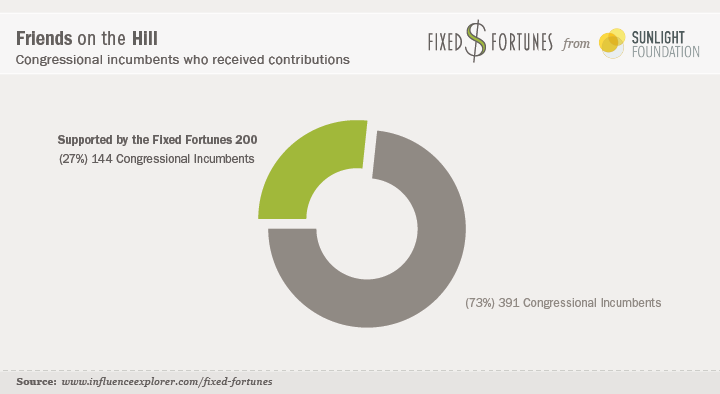
On average, 144 sitting members of Congress received money from the Fixed Fortune 200 each cycle. Graphic credit: The Sunlight Foundation
After examining 14 million records, including data on campaign contributions, lobbying expenditures, federal budget allocations and spending, we found that, on average, for every dollar spent on influencing politics, the nation’s most politically active corporations received $760 from the government. The $4.4 trillion total represents two-thirds of the $6.5 trillion that individual taxpayers paid into the federal treasury.
Welcome to the world of “Fixed Fortunes,” a seemingly closed universe where the most persistent and savvy political players not so mysteriously have the ability to attract federal dollars regardless of who is running Washington.
Political change, permanent interests
During the six years we studied, newly elected Democratic majorities took control in the House and Senate. Two years later, the White House shifted from Republican to Democratic control, and two years after that the GOP came back to take the House. The collapse of the housing bubble in 2007 led to massive bailout efforts by the Treasury Department and the Federal Reserve Board, two massive stimulus bills and the loss of more than eight million jobs. Congress passed laws that overhauled health care insurance and financial industry regulation. Troops surged in Afghanistan and withdrew from Iraq. There were 16 separate “continuing resolutions” to fund the government, a debt ceiling standoff that caused a downgrade in the nation’s credit rating and a “super committee” to wrestle with the federal budget. As middle class Americans lost ground, the Fixed Fortune 200 got what they needed.
What they needed included loans that helped automakers and banks survive the recent recession while many homeowners went under. It included full funding and expansion of federal programs started in the 1930s that, year after year, decade after decade, help prop up prices for agribusinesses and secure trade deals for our biggest manufacturers. It included budget busting emergency measures that funneled extra dollars to everything from defense contractors to public utility companies to financial industry giants. The record suggests that the money corporations spend on political campaigns and Washington lobbying firms is not an unwise investment.
The Fixed Fortune 200 come from a wide range of industries. There are a host of familiar names among them, like Ford Motor Company, McDonald’s and Bank of America, as well as some less famous, like MacAndrews & Forbes, the Carlyle Group and Cerberus Capital Management. (For the complete list, including what they gave and what they got, click here.) There are retailers and investment banks, construction and telecommunications firms, health insurers and gun makers, entertainment conglomerates, banks and pharmaceutical manufacturers, among others.
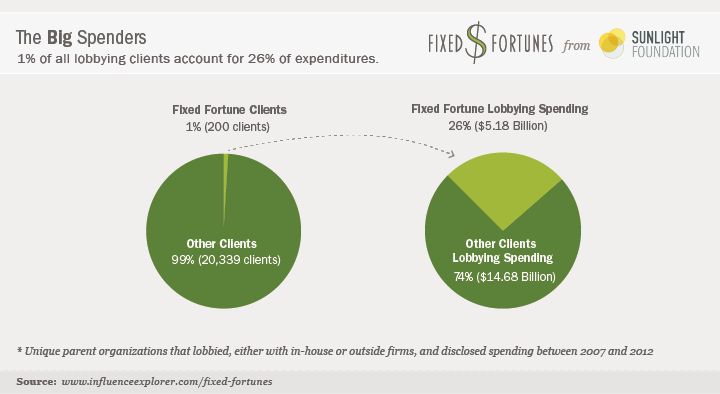


Out of 20,500 paying lobbying clients, the Fixed Fortune 200 accounted for a whopping 26 percent of the total spent. Graphic credit: The Sunlight Foundation
Overall, the Fixed Fortune 200’s PACs, employees and their family members gave $597 million to political committees and disclosed spending $5.2 billion on lobbying. They make this enormous investment in politics in large part because their businesses are inextricably entwined with government decisions — including spending decisions.
Government as business partner
For example, the federal government issued contracts to purchase goods and services that totaled a little more that $3 trillion during the period; companies among the top 200 corporate political givers won $1 trillion of that, a third of the total. The Treasury Department managed $410 billion in loans and other assistance issued under the Troubled Asset Relief Program, created by Congress to cope with the 2008 financial crisis; of that amount, $298 million, about 73 percent, went to 16 firms among the Fixed Fortune 200. When the Federal Reserve took extraordinary measures in the wake of the 2008 financial crisis, it funneled nearly $2.8 trillion through 29 Fixed Fortune firms. The companies that participated the most in politics got huge returns.
Of the 200 corporations we examined, we could sum the financial rewards for 179. Of those, 138 received more from the federal government than they spent on politics, 102 of them received more than 10 times what they spent on politics, and 29 received 1,000 times or more from the federal government than they invested in lobbyists or contributed to political committees via their employees, their family members and their PACs.
As for the other 21 companies on our list, while we could not quantify the financial benefits that some received, we were able to identify them. Some examples:
  • Arch Coal lists the Tennessee Valley Authority (TVA), the government corporation that’s the largest public electricity producer, as one of its three biggest customers. TVA does not release data on its coal purchases.
  • Forest City Enterprises does not appear as a landlord in the Government Services Agency’s database of federal rental agreements, though its annual report notes that the U.S. government is the third-biggest customer for its pricey New York City office space.
  • Occidental Petroleum has leases on federal land to extract natural gas, but the government does not release information on how much that gas is withdrawn or how much it is worth.
  • And while the government has so far refused to release information on what retailers get the most purchases via food stamps, Wal-Mart went so far as to acknowledge in a filing with the Securities and Exchange Commission that reductions in the now $78 billion-a-year Supplemental Nutrition Assistance Program — or food stamps — could have a significant impact on the company’s earnings, which totaled $476 billion in its most recent fiscal year.
Of the 200 companies analyzed for Fixed Fortunes, 28 are in what the money in politics research organization the Center for Responsive Politics classifies as the communications and electronics sector, 21 in healthcare, 13 in defense and aerospace, 13 agribusinesses, 11 in energy and natural resources, and 7 in transportation. The biggest sector, accounting for 48 of the 200, was finance, insurance and real estate, which is consistently the largest source of campaign funds for politicians cycle after cycle. Congress and the executive branch have paid particular attention to the industry, approving hundreds of billions in aid to help it weather the financial crisis. Meanwhile, the Federal Reserve advanced trillions in credit, which the nation’s central bank hoped would trickle down through the rest of the economy.


See the full list of corporations — including how much each gave and what they got in return — on our Influence Explorer page.
Companies with the biggest returns on their political investments include three foreign financial service and banking firms, UBS and Credit Suisse Group from Switzerland, and Deutsche Bank of Germany, all of which benefited from the Treasury Department’s taxpayer-financed rescue of American International Group. Investment banks Goldman Sachs and Morgan Stanley as well as commercial banks like JPMorgan Chase & Co., Citigroup, Wells Fargo and Bank of America also received far more from government than they put into politics: They benefited from the bailouts of the financial industry undertaken by Treasury and the Federal Reserve. Weapons manufacturers like Boeing and Lockheed Martin, both of which disclosed spending more than $10 million each year on lobbying, also made the list. So did McKesson, a pharmaceutical wholesaler that is the biggest vendor for Veterans Affairs, and the Carlyle Group, a wealth management firm started by former government insiders who invest in firms that have significant involvement with government, such as defense, telecommunications and health care.
A range of returns
To catalogue the money flowing to and from the Fixed Fortune 200, we examined data on campaign contributions and lobbying expenditures. We compiled and queried a host of government spending records, including spending approved through the normal budgeting process. We also looked at additional spending measures — extra-budgetary spending on the Global War on Terror, renamed Overseas Contingency Operations in 2009, and emergency or one-time measures like the Emergency Economic Stabilization Act of 2008 and the American Recovery and Reinvestment Act of 2009. And because the Federal Reserve made use of its power to advance credit to private firms in extraordinary circumstances, we also examined its interventions in the economy.


For every dollar spent influencing politics, the Fixed Fortune 200 received $760 from the government. Graphic credit: The Sunlight Foundation
See our methodology for a complete explanation of how we arrived at these numbers and more.
Some of the gets are harder to quantify. While corporate interests disclose lobbying on federal spending — the budget and appropriations process — more than any other issue, they also seek to influence trade agreements, labor rules, environmental regulation and the Internal Revenue Code.
Blue Cross and Blue Shield has its own provision in the tax code, section 833, that saves its companies an estimated $1 billion a year. Life insurance companies like New York Life and Pacific Mutual, and their customers, are eligible for tax breaks that save the industry $30 billion a year, with about $3 billion going to the companies and the balance going to their policyholders. The corporate tax code is full of loopholes and subsidies that companies lobby for to help their bottom lines; Citizens for Tax Justice researched the Securities and Exchange Commission disclosures filed by publicly traded corporations in an effort to determine their effective tax rates; its analysis included 89 members of the group Sunlight examined. The average effective tax rate of those companies was 17.7 percent between 2008 and 2012. Federal law, meanwhile, sets the corporate tax rate at 35 percent.
As far as we can tell, one thing the Fixed Fortune 200 did not do, for the most part, was take advantage of the new opportunities to spend on politics that the Citizens United decision afforded them. The 200 corporate donors gave just $3 million to super PACs, with the bulk of that amount a single $2.5 million donation from Chevron to the Congressional Leadership PAC, a super PAC that’s been linked to House Speaker John Boehner. It’s important to note, however, that contributions by these companies to politically active nonprofits (a category that includes the Chamber of Commerce) are impossible to track because of tax laws that allow those entities to shield donors.


Though beyond the scope of our study, which focused on the federal government, it is worth noting that 174 of the 200 corporations won subsidies from state and local governments, according to Good Jobs First, an organization that tracks economic development programs. The Citizens United decision also applies to state election laws, giving corporations the right to speak at the state and local levels as well.
Nonetheless, opinion polls show that majorities of Americans generally trust governments in their city halls, township boards and state capitals. That doesn’t compare well to the mere 19 percent of Americans who trust their federal government. Frustration with Washington runs high for any number of reasons, but consider:
  • Two-thirds of Americans believe corporations pay too little in taxes and that they should pay more, but tax reform stalls in Congress year after year;
  • Prominent politicians from both parties have criticized corporate welfare programs that benefit big business for more than two decades, but not one of those programs has been repealed;
  • The president and Congress ended a reduction in payroll taxes that benefited wage earners in January 2013 but extended business tax breaks for insurers, energy companies and other corporations;
  • Federal bailouts returned financial industry firms that started the crisis to profitability, while middle class income and net worth of the middle class fell.
More than seven years after Washington passed the first measures to stimulate the economy as the housing bubble started to burst, more and more Americans are living on less and less, without as much savings and other assets to fall back on in hard times. Washington policies that have restored corporate profits and made the stock market boom have left much of the country behind. Perhaps that’s why a whole host of polls, from networks and news organizations and nonprofit groups, show large majorities of Americans, year after year, saying that the country is on the wrong track.
In its Citizens United decision, the court took for granted that “favoritism and influence” are inherent in electoral democracy and that “democracy is premised on responsiveness” of politicians to those who support them. We found ample evidence of that.
“The appearance of influence or access,” the court said, “will not cause the electorate to lose faith in our democracy.”
It appears that the electorate — who stayed away from the polls this year in droves — might not agree.


Out Of The Black U-196's Full Mission Is Revealed

Posted by George Freund on December 18, 2014
by David Child-Dennis


It’s believed that the Glocke plans (NAZI Bell) were the bargaining chip for U-196 crew and scientists and the reason for its NZ mission. 

The conclusion - So what happened after the war? Part 5

The story so far- The Mission…

The U-196 arrived off the Northland coast sometime in May 1945, with a small team of German nuclear scientists and their equipment. They had been ordered there by the commander of the German submarine forces, Admiral Dönitz, as part of a secret agreement between Germany and Britain, after the United States had determined to exclude Britain from the Manhattan Project, immediately after the second bomb was dropped on Japan….


Photo Chemistry – creating weapons grade uranium without a nuclear reactor
In 1945, during their incarceration at Farm Hall, a small country estate buried in rural England, the captured German nuclear scientists Gerlach, Diebner and Harteck all referred to the photo-chemistry method for obtaining fissile uranium, the explosive core of the nuclear bomb. Yet historical accounts remain utterly silent about the process to which they refer.

Photo-chemistry is a nuclear process where, in this case, mercury is vaporised, using high-voltage electrical currents, while being spun at extremely rapid rates in a vacuum chamber. To increase the transfer rate of electrons between the mercury and thorium, a catalyst, known only as ‘xerum 525’, a grey coloured metallic paste, was added to the centre of the spin unit. It dramatically increased the speed of the transfer of electrons.


No one has been able to identify exactly what this ‘xerum 525’ was, although Jacob Sporrenberg (an SS officer in charge of Glocke security) referred to the use of beryllium oxide inside the bell centrifuge. Some researchers have claimed ‘xerum 525’ was highly radioactive, but accounts of this material being hand loaded into the ‘Glocke’ and test bombs would seem to contradict this. Researchers now believe ‘xerum 525’ was also a ‘super conductor’. Super conductors allow the passage of very high electrical energy loads to pass through or across them, with almost no loss of energy. If there is no energy loss, there is no mechanical or electrical ‘friction’. Thus, the two ceramic plates in the ‘Bell’, turning in opposite directions, were able to spin at such a high rate that mercury could be turned into plasma, the flash you see in lightning - at which point the electron and neutron transfer process took place. The greater the transfer of these particles to the thorium, the more quickly it was transformed into weapons grade uranium. What it appears the Germans were attempting to achieve was fusion, or the adding of neutrons and protons to thorium 232, to transform it into uranium 233.


The production of weapons grade uranium is complex and time consuming. The American Manhattan Project spent from 1942 until August 1945 attempting to produce enough uranium to make just one bomb. Dr Robert Oppenheimer, the scientific leader of the American bomb project, stated to a Congressional hearing after the war that it would have been September 1945 before the US was in a position to produce enough uranium 235 to make their first bomb. The American enrichment process was slow and too inefficient. The arrival of the German submarine U-234 in mid-May 1945, carrying 560 kgs of uranium 233, an unknown quantity of ‘xerum 525’ and at least six bomb fuses, allowed the Americans to manufacture and deploy two bombs, by August 1945, against Japan.


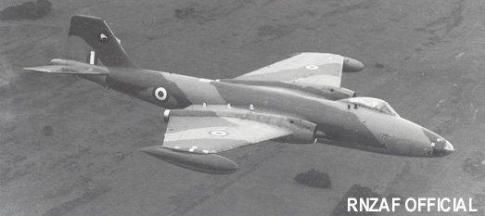
The nuclear capable Canberra B1(12) bomber supplied on loan to New Zealand from the RAF in 1956.

Kammler held all the cards…

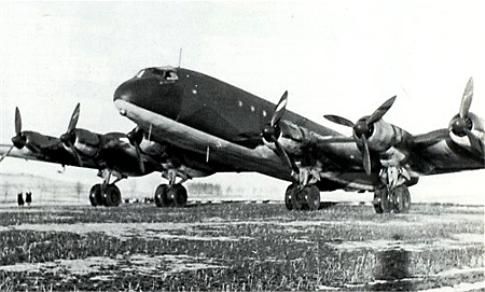
The most difficult part in producing a successful nuclear weapon is the fuse. The German approach to achieving a successful detonation was the ‘implosion’ method by which neutrons bombarded the uranium core of the bomb. This had been proven with the dropping of the second neutron bomb (Fat Man) over Nagasaki in August 1945. It was considerably more powerful for its size than the first bomb dropped on Hiroshima a few days earlier. The American bombs all required German fuse units, of which six had been brought out of Germany just days before the end of the war in Europe. Kammler and Dönitz were the only ones who knew where the equipment and scientists were that could produce more fuses. This was one of their most valuable bargaining chips in the immediate post war negotiations with the Allies. At the time, the Allies had no inkling about the concurrent ‘Projekt Saucer’ operation, aboard the only Junkers Ju390-01 heavy transport aircraft. Late in April 1945, disguised as a Swedish airliner, the Junkers carried a small scientific team, with plans and records, from Munich to Uruguay in South America. It was last sighted in Portuguese Guinea, where it refuelled for its trans-Atlantic flight. Dönitz was probably unaware of the Ju390 flight, but Kammler certainly knew. He had arranged it before vanishing soon after it took off. He is believed to have arrived in Uruguay by U-boat several weeks later.

With U-196 somewhere near the Sunda Straits, and carrying the only fully equipped scientific team capable of making a fuse, Kammler ordered Dönitz to direct the U-boat to the Northland area, and prepare to make a landing. The British government, deeply offended at the American refusal to share further nuclear intelligence and research, would have directed Dönitz to send the U-boat to New Zealand, which was well away from American forces, by then preparing to prevent the Russians from landing on Hokkaido, the northernmost Japanese homeland island. It is more than possible the U-196 met with a British supply ship (not the Orion as previously thought) in the Sunda Straits, to receive maps, charts and recognition signal instructions. After refuelling and re-provisioning, U-196 would have headed south.


As soon as the U-196 arrived in New Zealand, the German scientific team would have confirmed the Japanese were close to producing their own fusion bomb. The likelihood of a Russian nuclear weapon being produced soon after the capture of the Hungnam Nuclear Research plant and Japanese scientists, in Korea, became apparent as the Soviet Army prepared to invade Manchuria in June 1945.


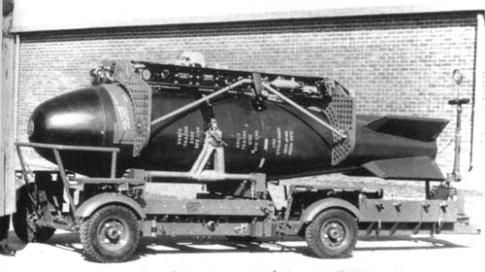
‘Red Beard’ – a revolutionary, German designed, 15-kilotonne fission bomb – of which 48 were stored at RAF Tengah in Singapore ready for deployment by RNZAF, RAAF and RAF Canberra bombers

The British government reacts

On August 29, 1945, the British nuclear weapon research programme began after a small, highly secret cabinet committee, GEN163, led by Prime Minister Atlee and six ministers, instructed William G Penny, a highly experienced nuclear scientist, to commence a research programme for the production of a free fall nuclear bomb, based on the American ‘Fat Man’ bomb dropped on Nagasaki. Penny had flown as an observer on the Nagasaki raid and later visited the city to survey the damage. Penny had also witnessed the American Bikini Atoll test, ‘Operation Crossroads’, in 1946, and upon his return to England prepared a report - Plutonium Weapon – General Description. It came to the conclusion that as at October 1946, the British could not produce a nuclear weapon without United States assistance. From Penny’s preliminary reports, it was clear the British had managed to gain some understanding of the wartime German bomb research and manufacturing processes, but they lacked the crucial fuse and initiator components. The British government immediately solicited the help of Australia (thorium, uranium and bomb test ranges), South Africa (uranium and various metals) Canada (enriched uranium) New Zealand (thorium and bomb fuse design and testing) for what was to become known as ‘The Empire Bomb Project’. I suspect both the French and German governments were silent partners in this project, as was the Kammler organisation, after re-establishing itself in Argentina and Uruguay.

The project began by developing a bomb based on the wartime 14,000-pound ‘Tallboy’ bomb, which proved to be so large and heavy it required the introduction of the ‘V Bomber’ force to carry them. As a ‘free fall’ weapon they proved too dangerous for the crews of the Vulcan and Victor to use. It was not until the arrival of the German nuclear weapons specialists from the late 1940s that real progress was made in designing smaller, more reliable weapons. The first operationally successful nuclear weapon, code named ‘Red Beard’, used a warhead with a unique means of implosion, which allowed the overall size of the weapon to be reduced. The 15 kilotonne yield bomb weighed only 1750 pounds, (760 kgs), which at the time was a major breakthrough for a nuclear bomb. It was first tested on September 27,1956 at Maralinga in Australia. The mushroom cloud rose to a height of 11,430 metres (47,663 feet).


The advent of the jet age in the last months of World War Two dramatically altered the world strategic balance. Suddenly, the world was faced with tactical rather than strategic nuclear weapons, carried by a revolutionary, unarmed, light-weight jet bomber. Now, the post-war British Empire possessed a weapon that could not be ignored by potential military rivals.

Red Beard

In 1956, the RNZAF began taking delivery of 12 ‘on loan’ Canberra B1(12), jet bombers, while we awaited the delivery of our B2 variants (which we substituted for US A4 Skyhawks). These B1(12) were deployed for a ‘toss bombing’ delivery using the Low Altitude Bombing System (LABS), utilizing the Blue Silk Doppler radar system to ensure highly accurate radar altimeter settings for the bomb fuses. Forty-eight bombs were stored at RAF Tengah, in Singapore. British, Australian and New Zealand Canberras regularly deployed to Tengah during the late 1950s, presumably to familiarise crews in the use of ‘Red Beard’. The bombs were never intended for use during the Malaysian emergency, but clearly threatened southern China after the Korean War. All the German scientists brought into Australia after 1945 had the expertise required for the development of this weapon.

The bomb fuse supposedly developed by the U-196 scientific detachment at Army Bay Whangaparaoa, using ‘xerum 525’, was a key factor in the early development of tactical nuclear weapons following the Americans' rupture of nuclear cooperation after August 1945. Somewhere between Tikipunga in Whangarei, where there are numerous deep mine shafts, and Army Bay, Whangaparaoa, there must have been several ‘Bells’ in operation producing ‘xerum 525’ and enriched uranium 233. We believe the Australians were duplicating the same programme in Melbourne from the beginning on 1946, using the similar ‘Tokomak’ system.


Naming Names: The Scientists With A Past

The following list of German scientists demonstrates the British Empire shared a common interest in pursuing the development of nuclear weapons. It’s a mistake to assume that all those who were recruited by the Anglo-Australian nuclear project have been identified in this ‘Age’ article. Their arrival dates into Australia is suspect as well. Why? The fracture in the Allied nuclear arrangement occurred in August 1945, soon after the dropping of the second bomb on Nagasaki. Britain’s new Prime Minister, Clement Atlee, elected in July 1945, demanded Britain pursue a nuclear weapons programme as soon as possible, to counter the Russian capture of Japanese and German nuclear scientists, which he knew must result in a Russian weapon. Accordingly, Australia, New Zealand, Canada, South Africa and Britain embarked on their own nuclear programme based in Australia and their Pacific territories. In 1946, the Australian, Peter Thonemann, and Sir George Thomson, from Britain, pioneered studies of plasma magnetic confinement in a toroidal configuration at Oxford University. Peter Thonemann was closely identified with the landmark ‘toroidal pinch’ experiment in the ZETA unit, a nuclear project that explored electro magnetic field containment of extremely high voltages, for the manufacture of weapons grade uranium and plutonium. While it attracted a great deal of press attention in the 1960s, little real relevant information was disclosed.


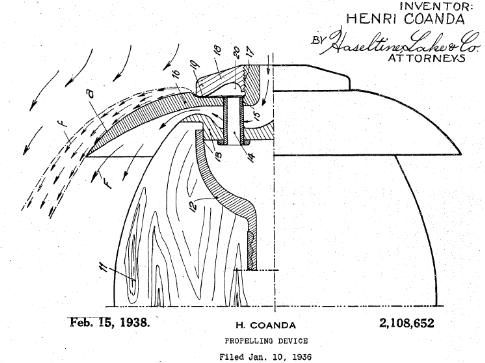
The Coanda Effect – named after its Romanian inventor in 1910 – relies on directing a stream of high pressure air down the outside of the vehicle to cause lift due to a vacuum effect under the centre

The Age – Melbourne, Australia - Tuesday August 17, 1999

ALBRECHT, Dr Fritz. Meteorologist (expert on atmospheric radiation). Born 23/9/1896 in Guben. Member Nazi Party 1933-45. Deputy head of Meteorological Observatory, Potsdam. War work included thermal imaging project code-named ``Potsdam". Arrived 4/7/1949. Employed by Melbourne University.

ALTER, Mrs Edith Hertha Regina. Metallographer. Born 8/9/1907. Member Nazi Party 1937-45 (party number 3,934,051). Worked 1937-41 as chief metallographer at Deutsche Versuchsanstalt fur Luftfahrt. Metallographer at Siemens-Halske 1941-43. Arrived August 1949. Nazi Party membership undiscovered until after starting with Defence Research Laboratories, Adelaide.

BAUER, Dr Rudolf Erich. Design engineer (electronics specialist). Born 5/4/1905 in Berlin. Member Nazi Party. Employed by Siemens and Halske, Berlin, 1933-45. Arrived 19/9/1949. Employed at Defence Research Laboratories, Melbourne (later cleared for secret work).

BILLING, Dr Heinz Eduard. Physicist (specialist in electronic computing devices). Born 7/4/1914 in Salzwedel (Magdeburg). Member of Nazi Party 1937-45. Worked for Luftwaffe meteorological service 1939-40. Head of acoustic section of Aerodynamische Versuchsanstalt Gottingen 1941-45, developing acoustic targeting device for enemy aircraft. Arrived 25/9/1949. Employed Council for Scientific and Industrial Research division of electrotechnology. Returned to Germany at the end of contract.

FEUERRIEGEL, Theodor. Design and development engineer (specialist in optical equipment). Born 17/2/1906 in Grone near Gottingen. Member DAF (NSBO) 1939-45, NSV 1939-45, Reichsluftschutzbund 1939-45. Employed by G Heyde K G, Dresden 1938-45, developing military telescopes and optical devices for aircraft. Arrived 29/3/48. Employed at Australian Optical Company, Melbourne. March, 1952, moved to Defence Research Laboratories, Melbourne.

HOFFMANN, Dr Robert Morton Friedrich. Born 26/9/1900 in Berlin. Industrial chemist (expert in surface treatment of metals). Member DAF (NSBO), NSV, NS-Bund Deutscher Technik, NS-Reichsbund Fur Leibesubungen, Reichsluftschutzbund. Chief chemist, Siemens-Halske plant, Berlin. First scientist to be brought to Australia under scheme exclusively for use of private industry. Arrived 29/2/1948. Employed Electricity Meter and Allied Industries Ltd (Email), Sydney.

KAMPHAUSEN, Heinz August. Glass technician (specialist in making glass apparatus for analysis). Born 18/8/1907 at Wuppertal. Member DAF (NSBO) 1938-45, NSV 1938-40, NS Rechsbund Fur Leibesubungen. Manufactured glass apparatus for analysis in benzine synthesis for Mineral Oil Mining Company in Berlin 1940-45. After war employed by I G Farbenindustrie, Elberfeld. Arrived 15/8/1948. Employed at University of Melbourne.

MULLER, Dr Walter. Atomic physicist (co-inventor of Geiger counter). Born 6/9/1905. Member Nazi Party 1937-45 (party number 4,780,623). Employed Siemens, specialising in X-ray tubes and electron optics, 1929-39. Research physicist at factories of Pintch in Berlin, 1939-40. Research physicist at firm of Rontgenmuller 1940-45. Recommended for employment with Defence Research Laboratories, Adelaide, but DRL concerned because he had been described as an ``active Nazi". Eventually employed by Division of Industrial Development, Melbourne. Arrived 10/4/51.

RITTER, Dr Helmuth. Physicist (expert in optical and geodetic instruments). Born 17/4/1902, Landstuhl (Palatinate). Member Nazi Party 1938-45. Member of Provincial Council 1941-46. Arrived 29/2/48. Employed in Council for Scientific and Industrial Research's division of meterology, Sydney.

RUCKERT, Hans. Electrical engineer (expert in ceramic condensors). Born 30/5/1914 at Posen. Member SA (stormtroopers) 1933-38. Employed as manager of HF Laboratory at Luftwaffe's technical academy in Berlin in 1942. Seconded to Rosenthal-Insulator works in Selb to manage HF laboratories in 1944. Arrived in Australia 17/7/1951. Employed by Ducon Condensers Ltd, Sydney.

SCHMIDT, Werner. Engineer (machine tool expert). Born 7/11/1902 at Cologne. Member Nazi Party and DAF (NSBO). Employed by Herbert Lindner Tool Makers, Berlin, 1937-38. In Tokyo 1939-47 as representative of Schutte Engineering. Arrived 10/6/1951. Employed by W A Deutsher Pty Ltd, Melbourne.

SCHWIETZKE, Dr Werner. Nuclear physicist. Born 2/3/1910, Berlin. Member Nazi Party since 1933. Joined German Army in 1941, where he carried out research at Physics Institute in Berlin University into atomic and nuclear physics. Arrived 19/1/1949. Employed by Defence Research Laboratories, Melbourne (later cleared for secret work).

TETTWEILLER, Dr Karl Freidrich. Micro chemist (one of foremost micro analysts in Germany). Born 29/9/1906 at Elberfeld. Member DAF (NSBO) 1936-45, NSV 1938-45, NS-Lehrerbund 1934-36. Employed by I G Farben, Elberfeld, 1936-44. Arrived 16/8/1947. Employed at Melbourne University. Returned to Germany 1948.

WAGNER, Kurt Max. Organic research chemist. Born 15/10/1908 at Zwickau. Member Nazi Party. Employed 1936-41 at Langbein-Pfanhauser Werke, Leipzig and Vierjahresplaninstitut Fur Elektrochemie 1941-45. Arrived 12/6/1951. Employed by Division of Industrial Development, Melbourne.

WOLTERSDORFF (WOLTERSDORF), Dr Friedrich Wilhelm. Physicist. Born 24/4/09, Bernburg, Saale. Member DAF (NSBO) 1936-45. Development engineer with Siemens-Halske, researching better searchlights/carbon arc lamps. Arrived 16/7/48. Employed Defence Research Laboratories, Melbourne (cleared for secret work). In 1954 moved to DRL in South Australia where he became principal scientific officer of the Jet Propulsion Division, Weapons Research Establishment.


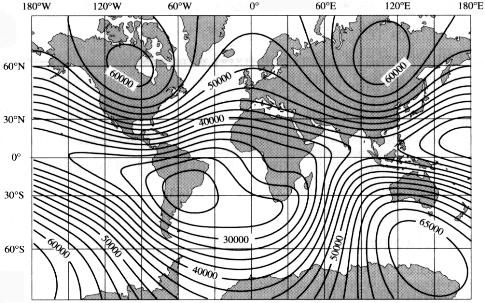
Magnetic Force field lines that cross the globe. Note the lines crossing through New Zealand. These ‘ley-lines’ were vital for the successful operation of the ‘Bell’.

A final word from the author…

I would ask readers to remember that much of the official information relating to nuclear research projects was deliberately misleading, or withheld critical information. This was done principally to misdirect Soviet intelligence during the ‘Cold War’. The Chernobyl disaster was in part, a consequence of this policy. Unfortunately, most of the people involved in this early work were not in a position to speak about it before the material was declassified.

German nuclear research led the world in 1945

While the main thrust of the German research during the war was aimed at producing nuclear weapons, a second and parallel programme was directed towards developing anti-gravity systems and time displacement. The system was called ‘Latemontrager’ (Lantern bearer) or ‘Chronos’. Anti-gravity technology had existed from about 1925, the ‘Coanda effect’ being the main line of research. But the Coanda system was based on conventional jet engine and rocket technology. Kammler and the SS scientists appear to have been developing an electromagnetic Coanda effect from as early as 1942. This team was far advanced in its thinking about quantum physics - all because of the way in which the Thule Society trained its members to solve problems.

Seeing is believing…

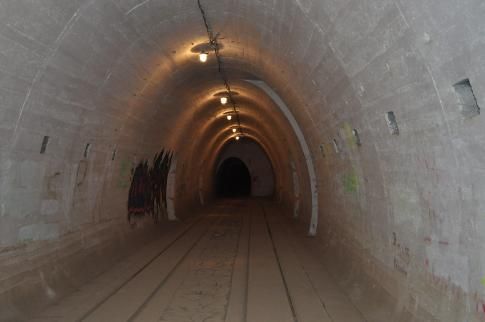
The first optical effect observed during ‘Glocke’ operations was ‘magnetic lensing’, whereby a light source ‘bends’ as it passes through any magnetic field. This effect is now commonly used in astronomical observations. Because of this, the Germans immediately realised time was not a constant. It exhibited ‘local variations’ according to the environment in it was measured. But it was soon discovered such experiments involved highly dangerous levels of x-ray radiation that living tissue couldn’t survive. Death usually occurred 8-12 hours after exposure. Some electro-magnetic effects could not be shielded against – and the only solution was to site the ‘Glocke’ deep underground, or in disused mineshafts.

Throughout this series, I have referred to ‘Projekt Saucer’, developed in parallel with the ‘Glocke’ spinhutte technology, which was truly revolutionary. If there is enough reader interest in the Projekt Saucer subject, I shall begin a new series that hopefully explores one of the most fascinating technological breakthroughs in human history. Is there a local New Zealand dimension to this event? I’ll let the reader decide that for themselves, after they have read the new series….


U-196 parts 1-5 are available on ww.elocal.co.nz

U-Boat 196's Mission Now Goes Deep Black, Part 4

Posted by George Freund on December 16, 2014
by David Child-Dennis


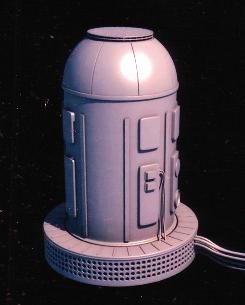
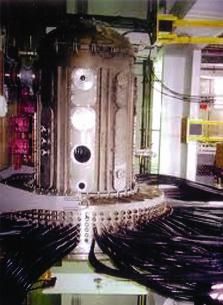
A modern ‘Glocke

What was hidden in New Zealand and why?

Author’s note:

I believe with the unconditional surrender of Germany on May 8, 1945, the then commander of Germany’s submarine fleet, Admiral Karl Dönitz, used the only bargaining chip he had left, German nuclear research, spirited away from the advancing Russians, often with only hours to spare. Germany had begun a joint nuclear research programme with Japan some time in 1942, establishing a research facility in North Korea on the Hungnam River….

The story so far…

According to an American researcher writing in ‘Science' magazine in 1978…

“Japan's nuclear efforts were disrupted in April 1945 when a B-29 raid damaged Nishina's thermal diffusion separation apparatus. Some reports claim the Japanese subsequently moved their atomic operations to Konan [Hungnam, now part of North Korea]. The Japanese may have used this facility for making small quantities of heavy water. The Japanese plant was captured by Soviet troops at war's end, and some reports claim that the output of the Hungnam plant was collected every other month by Soviet submarines.”

Dönitz ordered the return of all Gruppe Monsun U-boats from the Pacific towards the end of January 1945, when defeat became inevitable. There appears reason to believe U-196 was ordered south, from Korea, and directed to land her cargo and research team evacuees in Northland. They were immediately assigned to build the necessary machinery to continue their nuclear research….

EUROPE March 1945 - as the Allies cross the Rhine, the corner of the veil is lifted on German research…


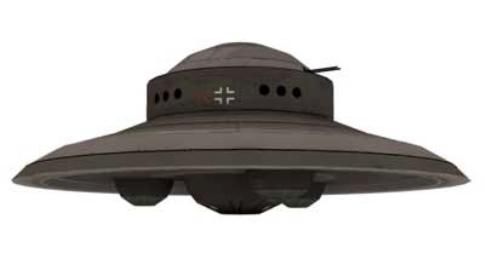
The Shauberger ‘Repulsin’ disc craft – first flown in 1942

TOP SECRET REPORTS: April 27, 1945 SHAPE HQ

“For the eyes of General Marshall and the War Minister of Eisenhower’s special ALSOS mission, led by Boris Pash and collaborating with the Task Force of the Sixth Army Group.

“Have found the jackpot in the area of Hechinger, and have found personal information and materials that exceeds their wildest expectations. The full details will be communicated later by the usual secret channels, but we no doubt have everything, although nothing was known of that information.”

Biography of Dr Boris Pash, ALSOS team Europe.

And…

“A top-secret report entitled ‘Engine Interference Counter Measures’ addressed to Air Technical Services Command (USAF), Wright Field, Dayton, Ohio. The OSS appears to be involved in identifying the source of the interference, which they claimed was in the Frankfurt/Main region.

The report states:

“An influencing with conventional aircraft … however incredible it might appear, to project from the ground to a height of 30,000 feet, sufficient magnetic energy to interfere with the functioning of the ignition system of an airplane. It must be concluded that the enemy not only intends to interfere with our aircraft by some immaterial means, but also succeeded in accomplishing this intention.”

The story continues…

There is a prevailing, intelligence sponsored myth, claiming the Germans were so completely disorganised by internal rivalries, they managed to derail most of their important weapons projects. Nothing could be further from the truth. In fact, German counter intelligence was so effective, many of the projects disclosed to the Allies after the surrender were unsuspected or beyond the understanding of most Allied technical teams. These projects became what the Americans have termed ‘deep black’, never to be revealed at any cost, nor subject to budgetary scrutiny by Congress, or Parliament.


The long range Junkers Ju390A – disguised as a Swedish civilian aircraft, last seen in Portugal late April 1945. It’s said to have taken high ranking German officers and scientists with an undisclosed cargo


These are the facts we know….

Type IXD2 “Gruppe Monsun’ U-Boat deployments at the end of the war.

U-234 (front boat of 33rd Flotilla) departed Kristiansand, Norway on April 16, 1945, commanded by K L Fehler, bound for Kobe, Japan. It carried 10 German and two Japanese passengers. Cargo was loaded at Kiel in January-February 1945 and the boat sailed. The U-234 entered Plymouth Navy Yard, New Hampshire on May 17, 1945, with 560 kgs of uranium oxide in gold lined containers. Specific handling instructions were given to Falck and a Lt Pfaff was responsible for loading the boat. On May 24, 1945, when the Navy began unloading the U-234, there had been no decision to use the atom bomb. On May 30 both the Secretary of State, Stimson, and President Truman were agreed no alternative existed but to do so.

Lt Col John Lansdale, Chief of Security for the Manhattan Project, wrote in 1996 that he “personally handled the disposal of the 10 cases from the U-234.” He stated the American military authorities “reacted with panic when they learned what the containers contained.”

In Pfaff’s interrogation report he stated that the cylinders could be safely handled like TNT, but if opened the material became sensitive and dangerous if exposed to air. No nuclear physicist has been able to deliver an opinion as to what the substance in the cylinders was and why it required such extraordinary precautions.

British Intelligence Objectives Sub-Committee Final Report (142g)

“Information obtained from targets of opportunity in the Sonhofen area (HMSO London)”


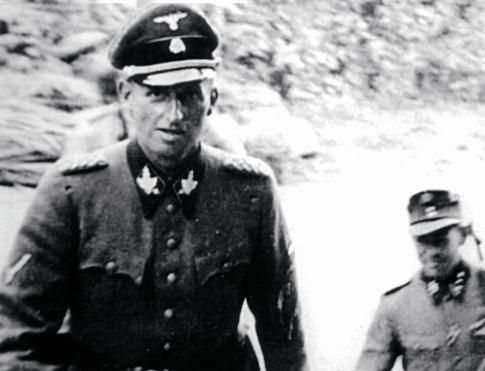
SS-Obergruppenführer Hans Kammler, responsible for the entire SS nuclear weapons programme from 1942.


The report states:

“During 1944 an explosive mixture of 60% liquid air and 40% finely powdered coal dust, invented by Dr Mario Zippermayer, was tested at Döberitz explosives ground near Berlin, and found to be very destructive over a radius of 600 metres. Waffen SS scientists then became involved and added some kind of waxy substance to the explosive. The bombs had to be filled immediately prior to the aircraft taking off. Bombs of 25 kgs and 50 kgs were dropped on the Starnberger See and photos taken. Standartenführer Klemm showed these to Brandt (Himmler’s scientific advisor). The intensive (sic) explosion covered an area up to 4.5 kms. This waxy substance was a reagent of some kind, which was said to interact with air during the development of the explosion, causing it to change its composition and so create meteorological change in the atmosphere. Lightning storms at ground level consumed all available oxygen. Göring’s statement upon his arrest in May 1945 is significant. He claimed to have led a revolt against Luftwaffe use of the bomb, ‘which would have destroyed all civilisation.’ The bomb was not a nuclear weapon, and it appears to have been a conventional explosive which used a reagent or catalyst produced by Tesla methodology or similar, for its inexplicable effect.”

…and U-196?

It is therefore completely reasonable to assume, given the last known position of U-196, that it was in transit from the Japanese nuclear research facility in Hungnam, North Korea, with technicians and materials needed for the manufacture of a ‘bell’ centrifuge device. We have also been informed that upon its arrival, the scientific party was instructed to immediately begin work on a nuclear bomb fuse device, something that would have required ‘xerum 525’, which we now understand the U-196 was probably carrying in a gold lined cylinder.

We have established there were a number of U-boats in transit to locations around the world. U-530 was in transit to Montevideo, Uruguay, U-234 to New York and U-862 in transit from Batavia (Indonesia) to Germany on February 15, 1945. There were also some 20 Type XXI U-boats – the very latest ‘electro-boats’ – unaccounted for at the end of the war. All the Monsun Gruppe boats are known to have been carrying ‘uranium oxide’ or mercury in special containers. Admiral Dönitz, appointed Head of State by Hitler in late April 1945 before he allegedly committed suicide, and SS General Hans Kammler, in charge of the SS nuclear programme, had determined they would spread the remaining nuclear research as far across the globe as practicable, in order to ensure one such site would survive and continue the work suspended by the end of hostilities. Facilities were established in Argentina, Uruguay, North Korea, Australia and New Zealand.

Again, because of the lack of precise details, we must draw our conclusions from the available circumstantial evidence. It was originally believed the U-196 equipment had been brought ashore and set up in a disused dairy factory, having the electrical and water supplies necessary for the project. But as research deepened this appeared unlikely. What the Germans had discovered during the ‘Bell’ operations was the necessity for deep underground shielding from the intense electro-magnetic radiation surrounding the working ‘Bell’. This electro-magnetic field was something not well understood in 1945, even though Tesla had been experimenting with such phenomena since the 1890s. The German technicians understood the extreme dangers associated with the unexpected fluctuations that could occur, and were still perfecting their control techniques.


A modern ‘Glocke


This possibly explains the five German graves discovered some time in the 1980s. Something happened during the operation of the ‘Bell', resulting in their deaths. Of equal interest was the reaction of the authorities - nothing! Given they were foreign nationals, and essentially prisoners of war, their deaths could be ignored with little risk of discovery. All burials apparently occurred in remote graves somewhere in Northland. It was only by chance one grave was discovered, revealing the occupant to be German, according to the clothing remains recovered.

So, with the problem of shielding large amounts of EM radiation, where could the project be housed? Army Bay, Whangaparoa, seemed the logical place. It was isolated, under complete military control, contained deep ammunition and command bunkers and an independent electrical system. It also had a radar post to warn of shipping that might stray too close. Just as importantly, it had seawater for decontamination.

Late in 1945 or early 1946, there was an unexplained very large explosion in, or near, Army Bay. Like other, similar events, it was attributed to a sea mine or some such other large explosive device the army may have wished to dispose of. But no such event had been reported. There were several mines detonated off Whangarei Heads during the war, but they were some distance from Army Bay.

So what could it have been? Perhaps it was the Army testing Xerum 525, which had been brought ashore, in gold lined cylinders, as part of the U-196 nuclear materials consignment. Xerum 525 is believed to have been part of the ‘initiator’ for the nuclear weapon detonator. It was particularly dangerous to handle once exposed to air. There is New Zealand Archive’s film of a test explosion at Army Bay in 1945, which looks suspiciously like such a test. Or could it have been a sonic boom created by a time wave?

The dawning of a new age.

But there was more. During the operation of the ‘Bell’, it required very precise control over the time the unit operated. Most ‘spins’ lasted between one and three minutes, never longer. The reason for this has not been fully explained, but it is assumed the electro-magnetic fields became uncontrollable as the ceramic disc plates accelerated from 5,000 to 50,000 rpm. Very few German manufacturers could meet such specifications, as Viktor Shauberger was to discover when building his first flying disc in 1942.

The run times were monitored with high precision stopwatches both from within and outside the electro-magnetic fields. The Germans noticed a difference between the two readings and immediately recognised they had created a time displacement effect. That is, there was a measurable difference between time measured within the electro-magnetic fields close to the ‘Bell’ and those outside the fields. They also understood, theoretically, they had created an anti-gravity field, although this would have been difficult to measure around the ‘Bell’. What could be achieved by this project were three distinct, yet parallel outcomes. Nuclear fissionable material for the British nuclear weapons programme now hastily moved to Australia and predominantly led by German researchers brought in immediately after the war; a gravitational displacement field project, based on the work of Schauberger, and, most importantly, an exploration of time dilation fields. Each of these projects could have been hermetically sealed, as they had been by Kammlerstab in Germany and later in America for NASA. It was a matter of compartmentalising the data streams.

Why this location in New Zealand?

Surely there must have been an equally suitable number of other secure locations, even further away from a major city such as Auckland? Yes, that’s true. But there weren’t any located close to what have been called ‘Ley Lines’, vital for increasing the efficiency of these experiments. Hence the reason for the Argentine, Uruguay, Australian and Northland locations. They all occupied a primary Ley Line. So what is a ‘Ley Line’? Ley Lines are those mysterious places on the planet where particularly strong electro-magnetic fields break through the earth’s crust and often cause anomalous physical phenomena such as levitation of rocks and physical effects on humans, such as nausea, vomiting and headaches. Sometimes, only certain species of plants can survive near them. Probably the most famous is Stonehenge in England.

Yet this massive stone structure is not unique. Similar structures exist all over the globe, built by largely unknown civilisations before the dawn of our era. All occupy Ley Lines. The Germans, through the Vril and Thule Societies, had explored this phenomenon since the late 19th century. Both groups attracted some of Germany’s best scientific minds, dedicated to understanding this force of nature. It was from these groups the SS Kammlerstab secretly recruited, to develop the most advanced scientific programmes known to mankind.

Both the Vril and Thule Societies shared a common philosophy, the exploration of the natural forces of the universe. But their most important achievement was to train researchers to look at problems, outside the paradigm of the 1890s. It mattered not if the researcher was a PhD in physics, or a talented amateur, their expertise was considered to be of equal value. Max Planck may have been a brilliant mathematician, but Victor Shauberger, an apparently simple Austrian forester, solved problems of fluid dynamics that had eluded everyone. Even Ernst Heinkel was forced to ask him for his help in completing the design of the Heinkel Hs8 jet turbine, after stealing the design concept from Shauberger’s patent covering water turbines.

Once the British scientific research teams had begun to appreciate the significance of the Kammlerstab expertise, the sky suddenly became the limit… literally. They soon realised the Russians would also possess such a weapon and a general paranoia descended over the military as the scientists began to explore the damage inflicted on Japan by the two bombs. New Zealand willingly joined its British Empire colleagues as they faced a nuclear-armed Russia and a former ally, the United States, now determined to deny them access to future nuclear research. Is U-196 the missing link to greater things?

Next issue:

Per ardua ad astra… through adversity to the stars