Monday, December 15, 2014

The Real Treasure! Ghost Ship Reveals
Posted by George Freund on December 14, 2014
by David Child-Dennis


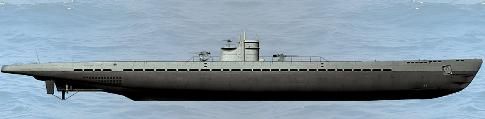
Type XXI U-boat, 20 of which have never been accounted for.


The story so far…

On May 8, 1945, with Germany’s unconditional surrender, Admiral Dönitz, the commander of Germany’s submarine force, ordered a number of specialised cargo U-boats, still at sea, to proceed to foreign ports across the world. These U-boats carried Germany’s most secret nuclear research materials and some of their most important scientists and technicians. One such U-boat – U-196 – is now suspected to have arrived off Northland, near Dargaville, where, with the assistance of the New Zealand government, machinery and personnel were brought ashore, then the submarine was scuttled. In the early 1980s local divers discovered the hulk of the U-196, sparking a renewed search for those who came ashore in 1945…

Author’s note: “While we may never find out what happened to U-196 and the missing crew, I would like to take readers on a journey which, although at first sight may read like science fiction, is indeed based on the best evidence I can find.”
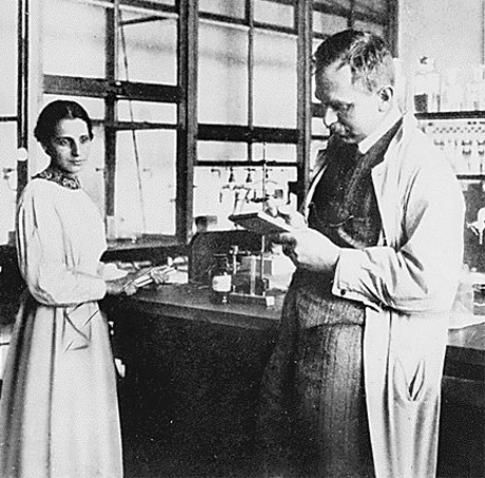

Pictured Otto Hahn, winner of the 1944 Nobel Prize in Chemistry with collaborator Lise Meitner.

A step through time…

At the beginning of the 20th century we saw a massive scientific interest in nuclear physics and electrical energy, fields both considered to be closely related. Einstein, among others, was beginning to formulate a view on what was to become known as the Unified Field Theory (UFT). Tesla, Marconi and other scientists had been looking at radio waves and beyond. By the end of the First World War (1918), understanding of these matters had advanced considerably. In fact, the idea of a ‘death ray’, capable of killing humans or disabling machinery, was being taken very seriously indeed. It resulted in the laser.

World War Two saw the introduction of radar and from that, what we all know today as the micro-wave oven. But that was only the beginning of the story. By 1943, both the Allies and the Germans had begun serious research into two highly secret projects - atomic weapons and the electronic masking of large ships at sea. Both, as it turned out, required a radical rethink in previously held assumptions about the way in which the universe works and the mathematics we use to describe this. It required the development of quantum mechanics. When the first atomic bomb of the 'Trinity' series was detonated at the Alamogordo, New Mexico, USA, test site, no one knew exactly what was likely to happen. There was a substantial block of scientific opinion that believed it was possible to ignite earth’s atmosphere with catastrophic consequences. Fortunately, they were proven wrong, but the scientists went ahead and did it anyway.
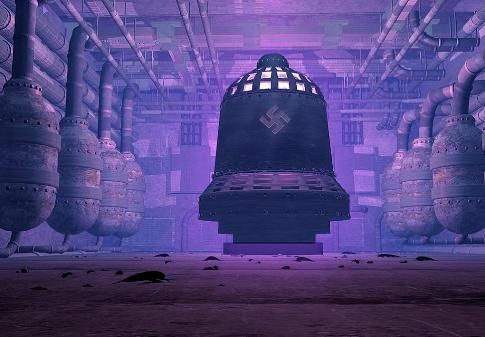

Many readers will have heard of the ‘Philadelphia Experiment'  which involved the electronic masking of the US Navy destroyer-escort DE173 USS Eldridge. The experiment involved passing a large electric current through the ship using heavy copper cables placed lengthways around the hull, so as to reduce, or remove, the ability of enemy radar to obtain a reflective signal from the target ship. On October 28, 1943, according to credible eyewitness accounts, the ship simply vanished for several minutes to reappear hundreds of miles away, then just as suddenly, reappear at its moorings in the Philadelphia Naval Shipyard. The problem was it returned, missing crew, and there were even reports of crewmen being embedded in the deck plating, and still alive. What the Allies didn’t know at the time was the Germans were looking for a similar solution to the same problem, due to unsustainable U-boat losses in the Atlantic.

Ringing the 'Bell’

Since before the Second World War, Germany had been following the various scientific papers circulating among the academic community about the theoretical possibility of a sustained nuclear reaction for the generation of domestic electricity. It was not until about 1932 that theoretical physicists and mathematicians began to discover a way of achieving this. In Germany, Hermann Goering, then a leading member of the Nazi Party, was instructed to ‘bury’ this operation in the Post Office budgets, where many other secret projects were hidden.

But the Germans took a very different approach to nuclear science from the Americans, British and Russians. They looked at the ‘metaphysical’, the unseen, hidden aspects of nuclear energy. They reasoned there was much more to nuclear energy than just a large bang. German science believed that, buried within the processes making up a nuclear reaction, was the key to unlocking time itself. Even Einstein considered this more than a remote possibility, referring to it as the ‘space-time continuum’. He suspected, as did other researchers, time was possibly ‘elastic’, and depending on how fast the observer was moving, either sped up or slowed down.

Igor Witkowski, a Polish journalist attempting to uncover secret Nazi nuclear experiments, claims to have been shown Polish intelligence files after the collapse of the former Communist regime in 1990. From research by revolutionary German thinkers, like Reich, Stern and his understudy, Gerlach, at the Goethe Institute in Frankfurt-am-Main in the 1920s, came Project Thor. They developed a process, known as the fluorescence of mercury, under the influence of magnetic fields. This system creates a dense plasma field contained by powerful electric magnets to cause the fluorescence of mercury, using photo-chemistry. Excited mercury ions would then cause the beryllium (a catalyst within the reaction process) to emit slow neutrons to be captured by the thorium 232, changing it into uranium 233. A variation of this method using uranium 238 could also conceivably breed plutonium for atomic weapons without the need for a nuclear reactor. It is modern alchemy. Now we can understand why so many of the monsun boats were carrying large quantities of mercury to the Far East.
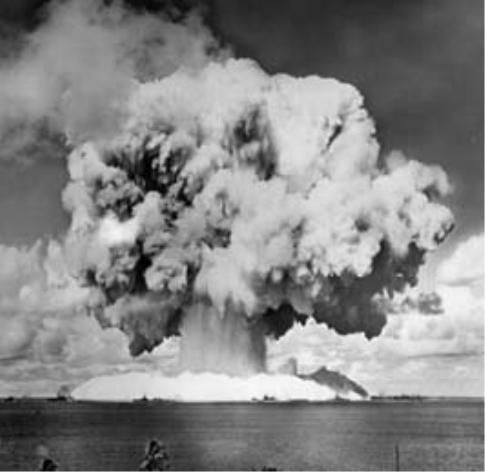
 

When the first atomic bomb was detonated no one knew exactly what was likely to happen.

Project Thor began with Heeres Versuchanstalt No10 - a German Army laboratory, in January 1942. The project office was originally located at Torgau, a small medieval town in eastern Germany, but later moved west as the Russians advanced through Poland and into East Prussia, during 1944. On November 2, 1944, Dr Ernst Nagelstein, a German nuclear engineer, visited a conference in Switzerland where he disclosed to an American intelligence agent that a plant at Auer was refining thorium into metal, when there was no known industrial use for thorium. He also suggested that Otto Hahn was working on an atomic bomb using either uranium or thorium. This thorium production was associa...

CUT FROM SOURCE

TO BE CONTINUED...
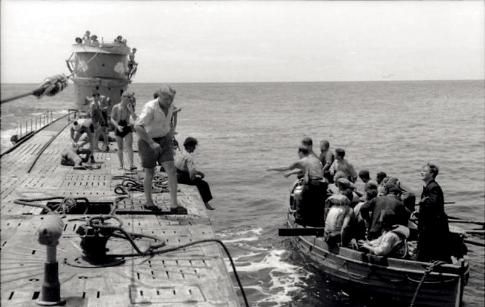
U196 The Mystery Continues Gold Bullion - Uranium - Loot

Posted by George Freund on December 14, 2014 at 7:05 AM
by David Child-Dennis


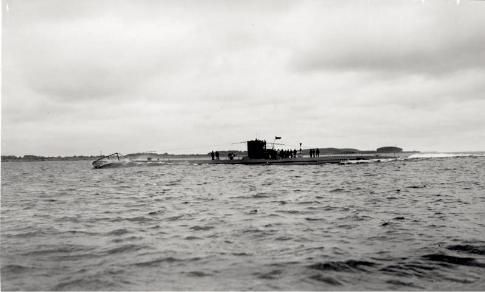
One could imagine this being the view of 196 approaching the beach


What really happened? Will we ever truly know?

Part II

The ‘Monsun Gruppe’


Before continuing my attempt to reconstruct what I believe to be the fate of the crew of U-196 after they reached New Zealand, it might be useful to give readers an overview of the events surrounding U-196 at that time. Beginning in December 1942, the German navy had been requested to make a series of U-boat sailings to Japan, carrying high-ranking Japanese diplomats and technical information. The Japanese capture of the Malay Peninsula and Indonesian archipelago gave them bases at Jakarta (then called Batavia) and Penang, which greatly increased the operational areas available to their submarines. The 33rd Submarine Flotilla, based at Flensburg, detached a small squadron to these bases, beginning in 1943. They were to combine raiding, with re-supply operations, into the Indian Ocean region under the code name Operation Monsun (Monsoon).


Perhaps longboats were waiting for the crew and cargo of U-196.

While there were eventually two waves of U-boats assigned to the operation, it was the second wave, beginning in 1944, in which U-196 was despatched. To give some idea of the cargo these boats carried we must return to U-234, which had surrendered to the Americans on May 15, 1945. This boat was assigned to Gruppe Monsun and had been in transit to Kobe, Japan, when the war ended. It carried 75 tons of lead, 26 tons of mercury, 12 tons of steel, 7 tons of optical glass, 43 tons of aircraft parts and plans, 560kg of uranium oxide and a disassembled Me262 jet fighter.

How was it possible to house a disassembled Me262 in the restricted space within any submarine? Presumably the boat carried only core engine parts and instruments for the Me262. It also carried two Japanese nuclear scientists, who committed suicide rather than face capture by the Americans.


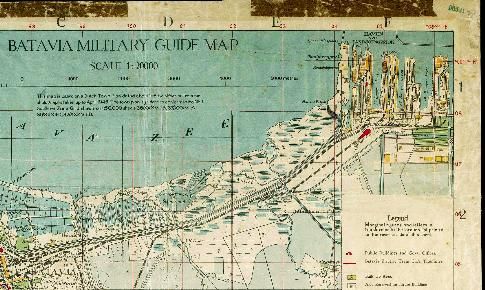
Wartime Map of Batavia’s Docks where U-196 was ordered to refuel a sister U-boat in the Indian Ocean
On September 23, 1944, another Gruppe Monsun boat, U-859, also a Type IXD2, was sunk in the Malacca Straits by the Allied submarine HMS Trenchant. She was carrying 31 tons of mercury for the Japanese munitions industry and allegedly a quantity of uranium oxide. In 1972, a salvage team recovered 12 tons of mercury for the West German government. However, no mention was made of any uranium oxide recovery from the wreck. It is clear from the above the Japanese were receiving advanced weapons technology from Germany and the Gruppe Monsun U-boats were a key link in that programme. If the Allies had not been able to penetrate the German Enigma codes using ULTRA, these U-boats may well have succeeded in reaching Japan with their uranium oxide cargoes.


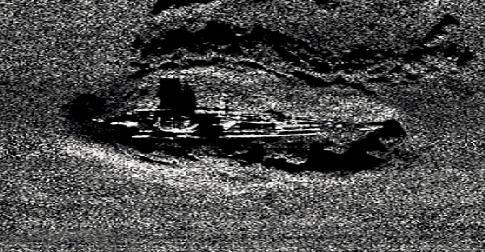
Sonar mapping reveals the ghostly image of the sunken U-Boat

U-196 sailed from Jakarta on November 11, 1944 and according to Martin Brice, Axis Blockade Runners of World War II (1981) was allegedly lost on November 30, 1944, while traversing an Allied minefield. That’s 19 days after she sailed, well within the time required to reach North Korea and the Japanese nuclear research facility. Fuel oil became a major difficulty for U-boats after the Brake, a 10,000-ton fleet oiler, was sunk on March 15, 1944, by a Royal Navy destroyer, near Mauritius in the Indian Ocean. This meant unrefined oil from Brunei became the only available fuel. Thus, U-196 was likely to have sailed north from Jakarta to refuel before proceeding on the next stage of the journey. Realising the war was coming to an end, and Allied success against the U-boats was dramatically increasing, Gruppe Monsun was ordered back to Germany, carrying vital strategic supplies.


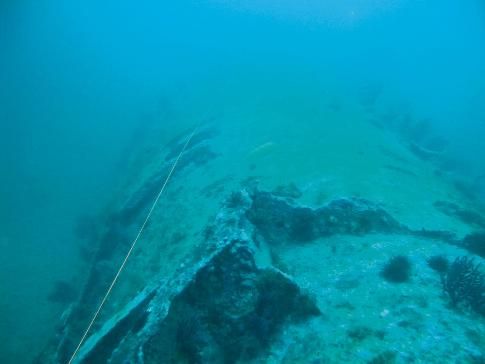
 Laying peacefully in it’s underwater grave

Operation Monsun effectively came to an end in late 1944. However, as U-234 and possibly U-859 were to demonstrate, the technical aid being supplied to Japan did not stop with Monsun. But how would the Japanese deliver a nuclear bomb, and against what target? It’s considered that it would have been by balloon against Iwo Jima or Okinawa. The Japanese had already launched a number of incendiary balloon attacks against the western United States, in an attempt to destroy the northern Californian timber forests. The bomb-carrying balloon, lofted from Manchuria or western Honshu, would have lifted into the very high jet streams travelling east towards the intended target. Once the balloon was in the jet stream it would have been beyond the altitude of Allied aircraft to intercept it. Even a relatively small atomic bomb could have severely damaged most of the US fleet anchored off Okinawa. Such an entirely unexpected blow could have extended the war into 1946, resulting in an armistice or worse, a stalemate, giving the Japanese time to regroup.

It’s believed that the surrender of U-234 was a pre-arranged event, just as it’s suspected that the U-196 arrival off Northland was similarly pre-arranged. With the arrival of U-234, the Allies suddenly realised they were in a deadly race against the Japanese to deploy the ultimate war-winning weapon.


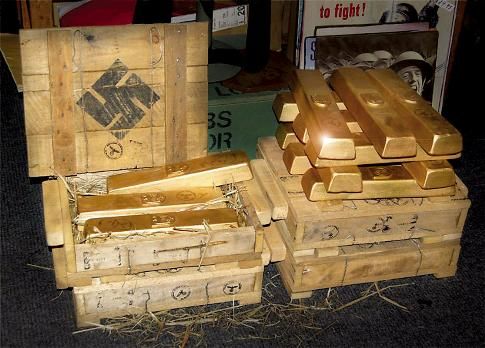
 Rumoured to have Nazi gold taken ashore as part of the Military operation.

The key was to remove the scientific and technical support the Germans were supplying the Japanese. There is one key component to bomb making that proved to be a challenging problem: fusing. When ‘Enola Gay’ dropped the first bomb on Hiroshima, the fuse unit was manually inserted into the bomb case by a technical officer minutes before the bomb was dropped. It required great care in handling to ensure it worked correctly. German research was well advanced in fuse design and as such, a critical part of the Japanese bomb project.


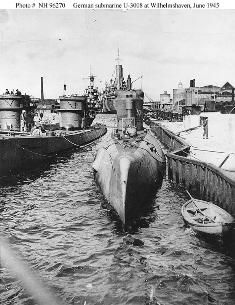
Type IXD type 2 transporter alleged to be the U-Boat found

The End of the War in Europe


Some time on or about May 1, 1945, the German High Command had issued a general warning that hostilities were about to cease. By May 5 hostilities had all but ceased as preparations were completed for the formal surrender on Luneberg Heath on the 8th. Admiral Dönitz, ‘godfather’ of the U-boat arm and newly appointed head of state, authorised to sign the surrender document, was in an excellent position to direct any U-boat to undertake one last mission.
U-196 would have been well informed of any developments. I believe the U-196 was ordered to collect German technical staff from the Japanese nuclear research facility in northern Korea and sail for southern waters before the official announcement of any surrender. Had the U-196 been in a Japanese port at the time of the German surrender, Japan would have seized the boat as a prize of war, as were those boats that remained in Jakarta after May 8, 1945. The movement of scientist

TO BE CONTINUED...

THE SOURCE MATERIAL HAS BEEN CLEANSED FROM THE INTERNET OVERNIGHT.


Treasury Department Seeking Survival Kits For Bank Employees


Emergency masks, solar blankets to be delivered to every major bank in the U.S.
BY:

The Department of Treasury is seeking to order survival kits for all of its employees who oversee the federal banking system, according to a new solicitation.
The emergency supplies would be for every employee at the Office of the Comptroller of the Currency (OCC), which conducts on-site reviews of banks throughout the country. The survival kit includes everything from water purification tablets to solar blankets.
The government is willing to spend up to $200,000 on the kits, according to the solicitation released on Dec. 4.
The survival kits must come in a fanny-pack or backpack that can fit all of the items, including a 33-piece personal first aid kit with “decongestant tablets,” a variety of bandages, and medicines.
The kits must also include a “reusable solar blanket” 52 by 84 inches long, a 2,400-calorie food bar, “50 water purification tablets,” a “dust mask,” “one-size fits all poncho with hood,” a rechargeable lantern with built-in radio, and an “Air-Aid emergency mask” for protection against airborne viruses.
Survival kits will be delivered to every major bank in the United States including Bank of America, American Express Bank, BMO Financial Corp., Capitol One Financial Corporation, Citigroup, Inc., JPMorgan Chase & Company, and Wells Fargo.
Items will also be delivered to OCC offices across the country, from Champaign, Ill. to Billings, Mont. The agency also has offices in Sioux City, Iowa; Joplin, Mo.; and Fargo, N.D.
The mission of the OCC is to “ensure that national banks and federal savings associations operate in a safe and sound manner, provide fair access to financial services, treat customers fairly, and comply with applicable laws and regulations.”
The agency has roughly 3,814 employees, each of which would receive a survival kit. The staff includes “bank examiners” who provide “sustained supervision” of major banks in the United States.
“Examiners analyze loan and investment portfolios, funds management, capital, earnings, liquidity, sensitivity to market risk for all national banks and federal thrifts, and compliance with consumer banking laws for national banks and thrifts with less than $10 billion in assets,” the OCC website explains. “They review internal controls, internal and external audit, and compliance with law. They also evaluate management’s ability to identify and control risk.”
It is not clear why the Treasury Department is ordering the kits. Contracts for survival kits are usually made for the military, or law enforcement such as the FBI.
The OCC did not return request for comment before publication of this story.