Wednesday, February 19, 2014

Wolfgang Halbig’s Quest for Truth 

Requests for public records under the Connecticut Freedom of Information Act can result in threats of arrest under felony harassment charges. This is what former Florida State Trooper and school safety expert Wolfgang Halbig discovered after repeatedly telephoning and sending the series of emails below to Newtown, Connecticut state and U.S. federal officials demanding more information on the Sandy Hook School massacre of December 14, 2012.

All of the requests below, spanning from records on Sandy Hook’s routine asbestos inspections to the key FBI crime report on the incident, have been met with almost complete silence. The non-responses from Connecticut and federal agencies were punctuated by two residential visits from local Lake County Sheriff’s deputies threatening to lock Halbig up if he persists in his pursuit of the truth. The most recent visit from law enforcement took place on Monday, February 17, when deputies questioned Halbig on his recent remarks to American Free Press’ David Gahary that he intended to travel to Newtown on a fact-finding mission in March.-JFT
From: Wolfgang Halbig
Fri, 27 Sep 2013 09:00:43 -0500
To: first.selectman@newtown-ct.gov
Cc: susan.marcinek@newtown-ct.gov
Subject: Mike Kehoe your Police Chief should be immediately fired for Negligence
Mrs Llordra:
I find this e-mail very difficult to write but as a Former Florida State Trooper and old now find the actions of your Police Chief very disturbing.
I have dedicated my life in public service and to read about your police chief giving Lt. George Sinko only a letter of reprimand for failing to respond to the Sandy Hook Elementary School Shooting on Dec 14, 2012
You should ask yourself as to how a Lt. working an off-duty detail at a construction site and making overtime money can ignore 911 calls and a Newtown police dispatcher requesting help from police officers for shots fired at The Sandy Hook Elementary School.
I cannot imagine any police officer ignoring emergency help requests when children and school staff lives are being threatened.  To sit in your car and listen to all those emergency calls go over the airwaves and do nothing is negligence.
For over two hours he sits and does absolutely nothing while children and school staff are being shot and killed.
Your Police Chief states in the newspaper that he is not a first responder.  He also states that he was off duty.
I can tell you and so can any other certified law enforcement officer when working an off-duty detail that you are never off-duty especially when lives of children and school staff are at stake.
We in law enforcement are on duty 24/7 always on call.
This Lt is  24 year veteran and if he does not know his responsibilities then he should also be immediately be fired along with the Police Chief.
This is a national embarrassment that clearly demonstrates negligence by both the Police Chief for not calling him to duty that morning and for the Lt not responding to this crisis.
We are all first responders even if you are a Lt.
How embarrassing for the City of Newtown Ct having a Lt. sit for over two hours and not respond and only be given a letter of reprimand.
I know that there is more to the story and I only hope that you use common sense in handling this huge embarrassment for your City.
Wolfgang W Halbig
From: Wolfgang Halbig
Date: Thu, 17 Oct 2013 14:11:53 -0500
To: Kathy June <junek@newtown.k12.ct.us>
Cc: “60m@cbsnews.com”  “brian.ross@abcnews.com”
Subject: Last try for Freedom of Information Act from your Interim Superintendent
Kathy;
Please tell your Interim School Superintendent that his response is total Horsepoop.
Hiding behind the safety of children and school staff in not releasing my information request is unprofessional if he is an educator.
I am simply asking for the Vendors name who you the school district or school hired to install the security system at Sandy Hook Elementary School with address and contact numbers
Just like Stanley Security Solutions has installed all of the security tools at the Sandy Hook replacement school.
They have donated over $100,000 thousand dollars in front door access control with CCTV CAMERA AND ACCESS BUTTON WITH CMAERA BEING A COLOR CAMERA.
THEY HAVE PROVIDED CARD READERS AT VARIOUS DOORS FOR STAFF USE.
THEY HAVE PROVIDEd YOUR SCHOOL WITH A NUMBER OF CCTV COLOR CAMERAS PLACED IN VARIOUS AREAS OF THE SCHOOL WHICH I DON’T WANT TO DISCLOSE SINCE IT MAY PLACE CHILDREN AND SCHOOL STAFF AT RISK.
What is wrong with your school district and your superintendents?  What are they afraid off?
I need the total cost of the project.
I need the date of completion.
I need the breakdown of the total cost as to what did the cameras cost? Are they color or just black and white?
I do not want to know the locations as I do know the placement of the cameras at the Sandy Hook replacement school and I promise not to ever hurt any child or staff in your school district.
Please comply with my FOIA as soon a possible since I have been waiting forever.
Wolfgang W Halbig
From: Wolfgang Halbig
Date: Tue, 29 Oct 2013 09:12:28 -0500
To: <joe.rios@newtown-ct.gov>
Cc: Kathy June <junek@newtown.k12.ct.us>, “Katersky, Aaron” <Aaron.Katersky@abc.com>, “brian.ross@abcnews.com”, “60m@cbsnews.com”
Subject: Freedom of Information Act for the State of Ct.
Captain Rios:
Please provide me with copies of the contracts  and costs for the Crime Scene Cleanup in Decontaminating and Sanitizing the Sandy Hook Elementary School after Dec 14, 2012 .
The School Districts was considering allowing children and school staff to return to the school and now they have decided just to tear it down.
Who was the company that you the police allowed in the school providing me with the start date and end date of removing all of the Bio-Hazard materials.
Copy of the licenses that the company provided to you for transporting Medical Waste.
They would have to remove all the blood, bodily fluids, brain matter, skull fragments and around 45-60 gallons of blood based on the number of children and school staff shot and killed that day.
I am the Chief Investigator for the Children’s Safety Institute and a School safety Expert which now requires this information to be made available since it has been 11 month and you have not even provided a simple police or incident report.
If you do not have that information then please direct me to the agency that would have been responsible for decontaminating the crime scene and Sanitizing it since you allowed them into the school to remove furniture.
My address is [address]
Wolfgang W halbig
From: Wolfgang Halbig
Date: Wed, 13 Nov 2013 11:00:41 -0500
To: Boston <Boston.Mail@ic.fbi.gov>
Subject: Re: Do I need to get arrested to show the FBI’s negligence in Sandy Hook?
Boston FBI Offices;You get things done.Boston Marathon Bombing and spectators killed and seriously  injured and you the Boston FBI in three days solve this heinous crime.Millions of people watching and with a President stating in a National Press Conference that he will use every resource in his office in solving this horrendous crime just as he stated during the Sandy Hook Press Conference.You are good and now I am being told that the FBI has NO jurisdiction in the Sandy Hook Elemenatry School Shooting. That only the CT State Troopers and the Dansbury State Attorney control this event yet I am told that you the FBI in New Haven are being told to retract your official report and that is why it is taking so long.I call this Bullshit.  Sorry for the profanity.I know the FBI since I worked with you guys in Miami, Florida as a Florida State Trooper and will never for get April 11, 1986 when two of your Agents were killed and five others were serioulsy injured.>We are law enforcment partners for life and after having to seen that crime scene my request for information and help should not be that difficult.I understand crime scenes and how we collect evidence but after 11 months and the failure of disclosing the truth has caused National Panic and Fear in all schools across this country and I can take you guys on a field trip and show it.Panic and fear should not drive school safety especially when we have not heard the truth.You act accordingly when knowing all the facts. Please help and I know it is New haven but they refuse to respond.
Wolfgang W halbig
From: Wolfgang Halbig
Date: Wed, 13 Nov 2013 17:17:45 -0500
To: <newhaven@ic.fbi.gov>
Subject: Do I need to get arrested to make my point?
Newhaven FBI Field Offices:
In major crimes such at Sandy Hook Elementary School Shooting multiple agencies work closely together is trying to solve a crime as quickly as possible so rummors don’t fly around and create panic and fear as it now has now at sandy Hook.
You are part of this huge problem because I know that President has the report on the Sandy Hook supposed incident.
I know that the Attorney General Eric Holder has the report of the supposed incident at Sandy Hook.  Why not the National Media and put this ever occurring Sandy Hook terms to bed.
Boston; FBI replied and this was my response back to them.
>You make things happen.
You get things done.
Boston Marathon Bombing in which spectators were killed and seriously  injured and you the Boston FBI in three days solve this heinous crime.
Millions of people watching and with a President stating in a National Press Conference that he will use every resource in his office in solving this horrendous crime just as he stated during the Sandy Hook Press Conference.
You are good and now I am being told that the FBI has NO jurisdiction in the Sandy Hook Elementary School Shooting. That only the CT State Troopers and the Dansbury State Attorney control this event yet I am told that you the FBI in New Haven are being told to retract your official report and that is why it is taking so long.
I call this Bullshit.  Sorry for the profanity.
I know the FBI since I worked with you guys in Miami, Florida as a Florida State Trooper and will never for get April 11, 1986 when two of your Agents were killed and five others were serioulsy injured.
We are law enforcment partners for life and after having to seen that crime scene my request for information and help should not be that difficult.
I understand crime scenes and how we collect evidence but after 11 months and the failure of disclosing the truth has caused National Panic and Fear in all schools across this country and I can take you guys on a field trip and show it.
Panic and fear should not drive school safety especially when we have not heard the truth.
You act accordingly when knowing all the facts.
Please help and I know it is New haven but they refuse to respond.
Wolfgang W Halbig
From: Wolfgang Halbig
Date: Thu, 14 Nov 2013 08:18:58 -0500
To: Kathy June <junek@newtown.k12.ct.us>
Subject: CT Freedom of Information Request again
Kathy;
You don’t return my phone calls and now I am requesting again the following which has nothing to do with the criminal investigation or places children and school staff at risk.
Please provide quickly.
Please provide me with copies of the contracts  and costs for the Crime Scene Cleanup in Decontaminating and Sanitizing the Sandy Hook Elementary School after Dec 14, 2012 .
The School Districts was considering allowing children and school staff to return to the school and now they have decided just to tear it down.
Who was the company that you the police allowed in the school providing me with the start date and end date of removing all of the Bio-Hazard materials.
Copy of the licenses that the company provided to you for transporting Medical Waste.
They would have to remove all the blood, bodily fluids, brain matter, skull fragments and around 45-60 gallons of blood based on the number of children and school staff shot and killed that day.
I am the Chief Investigator for the Children’s Safety Institute and a School safety Expert which now requires this information to be made available since it has been 11 month and you have not even provided a simple police or incident report.
If you do not have that information then please direct me to the agency that would have been responsible for decontaminating the crime scene and Sanitizing it since you allowed them into the school to remove furniture.
My address is [address]
Thanks
Wolfgang W halbig
From: Wolfgang Halbig
Date: Wed, 27 Nov 2013 20:22:37 -0500
To: <michael.kehoe@newtown-ct.gov>
Subject: Re: Criminal Investigation is now closed so please provide my FOIA request now.
You need to be fired and actually if it turns out to be a conspiracy you need to go to jail and loose your pension like so many others in this heinous crime.
You guys should be ashamed of what you have done.
Your Lt stay on an off-duty construction site detail for over two hours and you justify it by saying he is not a first responder. I hope when you do your speaking engagements you share that will all our other law enforcement police chiefs and officers so they can have a great laugh.
You and vance are at the head of the line and you know it.  The truth will get out sooner or later.
Hope you sleep well you coward.
wolfgang
From: “Kehoe, Michael”
Reply-To:
Date: Wed, 27 Nov 2013 12:39:28 -0500
To: Wolfgang Halbig
Subject: Fwd: Criminal Investigation is now closed so please provide my FOIA request now.
Sir
The items you seek under FOIA are exempt from disclosure under the same law.
Thank you!!
Chief Michael Kehoe
Newtown Police Department
3 Main Street
Newtown, CT 06470
203.270.4256
From: Wolfgang Halbig
Date: Tue, Nov 26, 2013 at 3:28 PM
Subject: Criminal Investigation is now closed so please provide my FOIA request now.
I need you and your school superintendent to honor my CT State FOIA request that have been requested three months ago.
I requesting again under the CT State FOIA request protocols the following;
Contractors name and business address and contact numbers who was hired by the Sandy Hook Elementary School or the Newtown School District in installing the security system at the old Sandy Hook Elementary School.
The cost of the total project
The cost broken down by line item such as door locks at the front door, camera system to monitor people at the door and the recording system costs.
The cost of CCTV cameras for the school and the recording device purchased.
I do not want to know the locations of those cameras for school safety reason,
You were provided a complete and free security system by Stanley Security K-12 which included card readers for school staff, front door access controal with video monitoring and color CCTV cameras throughout the school.
I even know were they are located but I do not care about that just provide the information for the old Sandy Hook School.
Second Request under the Ct State FOIA request procedures;
1.The company that you the Newtown School Board and the Director of Facilities contracted to decontaminate and Santize the Sandy Hook Elementary School of all Bio-Hazards rsulting from the Dec 14, 2012 school killings.
2. The start date of the project in removing all Bio-Hazards such as Blood, Bodily Fluids, brain matter, skull  fragments, blood stained carpets in room 8 and room 10, blood splatter on desks and walls and windows etc.
3. The ending date of the project and total cost for decontaminationg the Sandy Hook Elementary School since you were considering opening the school again.
4. A copy of the contractors certification that he is approved in conducting crime scene decontamination of all Bio-Hazards in the State of Ct.
Your secretary took my other request of the FOIA dealing with the Life Insurance that the school board had to pay to six school satff members beneficiaries when they were killed in the line of duty.
Also the workers Compensation death benefits paid by the school board to the school  staff members beneficiaries who were killed in the line of duty by the school district.
This is my research project for my Doctorate so please provide this information.
Thanks
Wolfgang W halbig
352——–
[address]
From: Wolfgang Halbig
Date: Mon, 02 Dec 2013 09:06:02 -0500
To: Kathy June <junek@newtown.k12.ct.us>
Subject: Ct Freedom of Information Act Request
Kathy;
This FOIA request is for the the name and all contact numbers of the Newtown School Districts licensed School Asbestos Inspector.
This request is also for all copies of all reinspections required every three years starting in 1997 through the demolition of the Sandy Hook Elementary School in 2013.
1997
2000
2003
2006
2009
2012
Please provide copies of written notification for each of the years listed to parents, school staff and employees organizations on an annual basis regarding the availability of the Sandy Hook Asbestos Management Plan.
Please provide training verification for your custodial Staff at Sandy Hook of the 14 hours of training and the two hours of training within the first 60 days of hire.
I hope that is not exempt as you always respond exempt.
Also do not make the Police Chief respond to my Newtown School District FOIA requests it is your responsibility.
I have forwarded my complaints to the Freedom of Information Commission for a response of your stone walling my requests.
Please mail all information requested to [address]
Thanks
Wolfgang w halbig
352———
From: Wolfgang Halbig
Date: Mon, 02 Dec 2013 08:43:53 -0500
To: Sally Cox <coxs@newtown.k12.ct.us>
Subject: SHS Parent Contact
I am a trainer for the US Justice Department COPS IN SCHOOL PROGRAM.
Are you a registered Nurse?
Why in the closet for four hours?
Why close your eyes when you have seen blood before you are a nurse?
Wolfgang W halbig
From: Wolfgang Halbig
Date: Mon, 23 Dec 2013 10:51:52 -0500
To: “Vance, Paul” <Paul.Vance@ct.gov>
Cc: “Kehoe, Michael” <michael.kehoe@newtown-ct.gov>, “Ross, Brian E.” “60m@cbsnews.com” “Tom Winter (Personal)”
Subject: CT Freedom of Information Act request again
Lt. Vance;
You are great at ignoring CT Freedom of Information requests which being a law enforcement officer makes you intentionally reposnible since you threatened others for posting false information.
You threatened people with arrest and yet you fail to comply with the laws of CT.
I am requesting againg the Flight log of Ct Trooper One Helicopter for Dec 13, 2012 and Dec 14, 2012 starting each day at 6:00 am and ending each of those days at 6:00 pm.
I am requesting the helicopter manifest as to who was on board and all copies of video that was shot and recorded for both days that are dated and time stamped for accuracy.
I am also requesting the company that was contracted to clean up all Bio-Hazards such as all the blood, brain matters, bone fragments, stained carpet with blood.  Bookbags and furniture that was contaminated and had to be sanitized.
These are simple questions that even you should understand and have this request processed urgently
The case is closed and I believe the information is not exempt form public records.
Please act accordingly as someone who is a PIO for the CT State Police.
Thanks
Wolfgang W halbig
[address]
352———
From: Wolfgang Halbig
Date: Tue, 28 Jan 2014 09:25:05 -0500
To: Kathy June <newtown.k12.ct.us>
Cc: “Ross, Brian E.” <Brian.E.Ross@abc.com>, “60m@cbsnews.com”
Subject: Asbestos in the Sandy Hook School
Kathy;
I am requesting under the CT Freedom of Information Act the Tri-annual Asbestos Inspection reports from a private individual certified in conducting this required inspections.
I want the name of the company ans contact numbers.
I need copies of the reports starting in 2002 through 2011.
I need copies of letetrs sent to parents and teachers informaing them of all of the Asbestos inside the Sandy Hook Elemenatry School.
There is NO doubt that Asbestos was present since I am providing you a picture of a company demolishing the scvhool and not using the proerr Asbestos removal protocol which is a serious federal violation.
Please provide this quickly since I have tried over and over again with NO return phone calls or repsonses to my Ct of Information Act requests.
Thanks again
Wolfgang W Halbig

“Pirate Sites Generate $227 Million In Ad Revenue a Year”

A new report published by the Digital Citizens Alliance estimates that the top "pirate sites" generate $227 million in annual ad revenue. The major torrent sites have the highest profit margins and earn over $6 million each per year, partly funded by major brands such as Amazon, McDonalds and Xfinity.
cashIt’s no secret that running a torrent portal, linking site, or cyberlocker can be highly profitable. Thus far, however, only a few have attempted to quantify the money that flows into these businesses.
This week the Digital Citizens Alliance is trying to fill this gap. The group released a new report titled “Good Money Gone Bad: Digital Thieves and the Hijacking of the Online Ad Business,” which aims to offer insight into the ad dollars that end up at pirate sites.
The term “pirate site” should be used loosely here, as the sample is based on all websites for which Google received more than 25 takedown requests during the third quarter of 2013. Foreign sites and sites without ads were removed from the sample, bringing the total number of sites down to 596.
The report divides these sites into three sizes based on the number of unique visitors per month; large (>5 million), medium (1-5 million) and small (<1 million). They are further classified into different categories, including torrent portals, linking sites, streaming sites and direct download sites.
Based on the number of ad positions, page views and estimates of the various ad-rates, the report gives an overview of the advertising income of the sites in the various segments.
In total, the sites are estimated to generate $227 million in annual ad revenue. More than half of this flows to the 30 largest sites and the top torrent sites earn the most, over $6 million per site per year.
"The 30 largest sites studied that are supported only by ads average $4.4 million annually, with the largest BitTorrent portal sites topping $6 million. Even small sites can make more than $100,000 a year from advertising," the report reads.
pirate-revenueThe table on the right shows a breakdown of the aggregate quarterly revenue per site category and site size.
In total half of all ad-revenue goes to torrent portals, which make up less than a quarter of the total sample.
Based on an estimate of the operating costs, torrent sites are also believed to be the most profitable, with profit margins up to 94.1%.
It has to be noted, however, that ad revenue is often the only source of income for torrent sites, where direct download hubs and streaming sites have secondary revenue streams through subscriptions and affiliate deals.
According to the report some of the world’s most respected brands are funding pirate sites. The report shows that a large percentage of the ad revenue comes from premium brands, including Amazon, American Express, Dell, Ford, Lego, McDonalds, Xfinity.
“Premium brand ads appeared on nearly 30% of large sites, highlighting the ineffectiveness of current approaches to protecting the brands’ reputation and value.”
Most of these ads are sold and resold through various channels, so the brands themselves are not aware of these placements. However, according to Digital Citizens Alliance the association with these pirate sites can result in damage to the brand’s reputation.
“Premium brands are those easily recognizable companies familiar to most consumers, and which suffer reputational damage when their ads appear on content theft site, often alongside ads for illicit sites and services,” the report explains.
All in all the report provides some interesting insight into the profitability of so-called pirate sites. How accurate the estimates are is unknown, but with the top sites serving hundreds of millions of pageviews a month, the figures don’t seem unrealistic.
What’s more problematic is that not all of the sites listed are “pirate sites.” Many sites have perfectly legitimate uses, and a site such as vcdq.com doesn’t host or link to infringing content at all.
Digital Citizens Alliance, however, concludes that their findings should be a wake-up call for advertisers and ad-networks. They urge the various parties involved to increase their efforts to prevent ads from being displayed on questionable sites and services.
“Advertisers and ad agencies, networks and exchanges can start by enhancing their voluntary best practice standards. The technology and services to identify and filter out content theft sites are available and should be adopted in the online advertising community,” the report reads.
“Just as brands do not advertise on porn or hate sites, they can take steps to assure they are not on content theft sites,” it concludes.

Kim Dotcom Raid Warrants Legal, Court of Appeal Rules

The New Zealand Court of Appeal has this morning ruled that the search warrants used by police during the raid on Kim Dotcom's mansion contained errors, but were valid. The decision, which found that a "reasonable" person would understand what the warrants related to, overturns an earlier ruling that found the documents lacked specificity. Dotcom and his legal team are expected to take their case to the Supreme Court.
January 2012, New Zealand police carried out the largest ever action against individuals accused of copyright infringement.
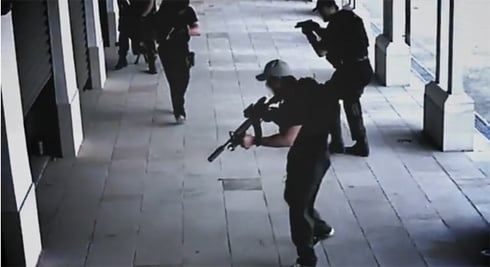

Following allegations from the United States government acting on behalf of Hollywood, officers of STG, New Zealand’s elite counter-terrorist force, raided Kim Dotcom’s mansion, detaining the German-born businessman along with his wife and his children.
Adding momentum to mounting controversy, six months later a High Court judge found the warrants to be overbroad and therefore illegal. The decision was a huge boost to Dotcom’s fight against looming extradition to the United States.
This morning, however, the case has taken a new twist, with the Court of Appeal overturning the earlier High Court ruling that the warrants lacked specificity. Conceding that the warrants contained flaws, a panel of three judges found that overall the warrants were legal.
“[We] are satisfied that the defects in the search warrants have not caused any significant prejudice to the respondents beyond the prejudice caused inevitably by the execution of a search warrant,” the judges write in their ruling.
“In this case the practical consequences for the respondents must be assessed in light of the nature of the electronic items that were seized when the warrants were executed. Assessed in this way it is clear that..[..]..no more items were seized than would have been without the defects in the search warrants.”
In support of this assertion the judges note that despite police seizing more than 135 electronic items containing 150 terabytes of data, a number of electronic items, which the police concluded did not contain relevant evidence, were not seized.
The raids on Kim Dotcom’s mansion. Legal, says Court of AppealDotcomRaid
Noting that Kim Dotcom’s “life and soul is on his computer”, the judges said the entrepreneur would have understood want the warrants were all about.
“In our view a reasonable reader in the position of the recipients of the search warrants would have understood what they related to. This view is reinforced by the fact that Mr Dotcom was a computer expert who would have understood without any difficulty the references in the search warrant to his companies (Megaupload, Megavideo and Megastuff Ltd) and the description of the various categories of electronic items,” the judges write.
“The defects in these warrants were therefore not so radical as to require them to be treated as nullities..[..].. here there was no disconnect between what there were reasonable grounds to believe might be at the properties and what the warrant authorized the police to take. In other words, this really was a case of error of expression. The defects were defects in form not in substance,” the decision adds.
“We therefore allow the appeal in respect of the validity of the search warrants. These warrants are consequently valid,” the judges conclude.
However, the decision by the Court of Appeal does not go entirely in favor of the authorities. The data contained on the electronic devices seized in the raid was previously cloned by the police and sent to the United States, an act that was found to be unlawful in earlier proceedings. This morning the Court of Appeal upheld that conclusion.
“In our view the words of the Solicitor-General’s direction in the present case plainly did not authorize removal of the clones to the United States,” the ruling adds.
Kim Dotcom’s US-based lawyer Ira Rothken announced on Twitter that his team his currently analyzing today’s ruling by the Court of Appeal.
“Our @KimDotcom legal team is reviewing the rulings made by the Court of Appeal and will likely seek leave to appeal to the Supreme Court,” Rothken said.
Ahead of an extradition hearing currently scheduled for April, Dotcom took a swipe at US authorities and suggested that the fight would continue.
“The only party found to have committed piracy in the #Megaupload case: The FBI. Shipping my hard drives unlawfully to the US,” he wrote on Twitter.
“I’m not sorry that fighting back, getting up and being successful are encoded in my DNA. I’m happy I can support my family & challenge evil,” he said.
Tagged in: ,

29 Percent Of All U.S. Adults Under The Age Of 35 Are Living With Their Parents

Why Are So Many Young Adults Moving Back In With Mommy And DaddyWhy are so many young adults in America living with their parents?  According to a stunning Gallup survey that was recently released, nearly three out of every ten adults in the United States under the age of 35 are still living at home with Mom and Dad.  This closely lines up with a Pew Research Center analysis of Census data that looked at a younger sample of Americans which found that 36 percent of Americans 18 to 31 years old were still living with their parents.  That was the highest level that had ever been recorded.  Overall, approximately 25 million U.S. adults are currently living at home with their parents according to Time Magazine.  So what is causing all of this?  Well, there are certainly a lot of factors.  Overwhelming student loan debt, a depressing lack of jobs and the high cost of living are all definitely playing a role.  But many would argue that what we are witnessing goes far beyond temporary economic conditions.  There are many that believe that we have fundamentally failed our young people and have neglected to equip them with the skills and values that they need to be successful in the real world.
More Americans than ever before seem to be living in a state of "perpetual adolescence".  As Gallup noted, one of the keys to adulthood is to be able to establish independence from your parents...
An important milestone in adulthood is establishing independence from one's parents, including finding a job, a place to live and, for most, a spouse or partner, and starting one's own family. However, there are potential roadblocks on the path to independence that may force young adults to live with their parents longer, including a weak job market, the high cost of living, significant college debt, and helping care for an elderly or disabled parent.
Unfortunately, it is becoming increasingly difficult for young people to become financially independent.  While they are in high school, we endlessly pound into their heads the need to go to college.  Then we urge them to take out whatever loans that they will need to pay for it, ensuring them that they will be able to get "good jobs" which will enable them to pay off those loans when they graduate.
Of course a very large percentage of them find that there aren't any "good jobs" waiting for them when they graduate.  But because of the crippling loans that they have accumulated, they quickly realize that they have decades of debt slavery ahead of them.
Just consider the following numbers about the growth of student loan debt in the United States...
-The total amount of student loan debt in the United States has risen to a brand new all-time record of 1.08 trillion dollars.
-Student loan debt accounted for 3.1 percent of all consumer debt in 2003.  Today, it accounts for 9.4 percent of all consumer debt.
-In the third quarter of 2007, the student loan delinquency rate was 7.6 percent.  Today, it is up to 11.5 percent.
This is a student loan debt bubble unlike anything that we have ever seen before, and it seems to get worse with each passing year.
So when is the bubble going to finally burst?
Meanwhile, our young adults are still really struggling to find jobs.
For those in the 18 to 29-year-old age bracket, it is getting even harder to find full-time employment.  In June 2012, 47 percent of those in that entire age group had a full-time job.  One year later, in June 2013, only 43.6 percent of that entire age group had a full-time job.
And in many ways, things are far tougher for those that didn't finish college than for those that did.  In fact, the unemployment rate for 27-year-old college dropouts is nearly three times as high as the unemployment rate for those that finished college.
In addition, since Barack Obama has been president close to 40 percent of all 27-year-olds have spent at least some time unemployed.
So it should be no surprise that 27-year-olds are really struggling financially.  Only about one out of every five 27-year-olds owns a home at this point, and an astounding 80 percent of all 27-year-olds are in debt.
Even if a young adult is able to find a job, that does not mean that it will be enough to survive on.  The quality of jobs in America continues to go downhill and so do wages.
The ratio of what men in the 18 to 29-year-old age bracket are earning compared to what the general population is earning is at an all-time low, and American families that have a head of household that is under the age of 30 have a poverty rate of 37 percent.
No wonder so many young people are living at home.  Trying to survive in the real world is not easy.
Many of those that are trying to make it on their own are really struggling to do so.  Just consider the case of Kevin Burgos.  He earns $10.50 an hour working as an assistant manager at a Dunkin Donuts location in Hartford, Connecticut.  According to CNN, he can't seem to make enough to support his family no matter how hard he works...
He works 35 hours each week to support his family of three young children. All told, Burgos makes about $1,800 each month.
But his bills for basic necessities, including rent for his two-bedroom apartment, gas for his car, diapers and visits to the doctor, add up to $2,400. To cover these expenses without falling short, Burgos would need to make at least $17 per hour.
"I am always worried about what I'm going to do for tomorrow," Burgos said.
There are millions of young people out there that are pounding their heads against the wall month after month trying to work hard and do the right thing.  Sometimes they get so frustrated that they snap.  Just consider the following example...
Health officials have temporarily shut down a southern West Virginia pizza restaurant after a district manager was caught on surveillance video urinating into a sink.
Local media reported that the Mingo County health department ordered the Pizza Hut in Kermit, about 85 miles southwest of Charleston, to shut down.
But as I mentioned earlier, instead of blaming young people for their failures, perhaps we need to take a good, long look at how we have raised them.
The truth is that our public schools are a joke, SAT scores are at an all-time low, and we have pushed nearly all discussion of morality, values and faith out of the public square.
No wonder most of our young people are dumb as a rock and seem to have no moral compass.

The Military Industrial Complex: A Capitalist System Running Amok


milispending
The Military Industrial Complex has solidified its ties and deeply inserted his long horns into the arteries of the American taxpayers.
Creating wars to feed the blood-thirsty and greedy beast of the military industry complex has been a common practice in an allegedly democratic nation. Taxpayers’ have flipped this bill for decades under the guise of self-preservation and protection. As always government has used fear to fashion people’s consent and obedience. Meanwhile, corruption is prevalent, our national debt is skyrocketing, and our parasitic superpower is broke. Parasitic it is, because you can’t become super-rich or super-powerful unless you suck the blood and the life out of someone else. In this case, it is the taxpayers (the proles).
Under the guise of the Private-Public Partnership (PPP) phenomenon, the Military Industrial Complex has solidified its ties and deeply inserted his long horns into the arteries of the American taxpayers. Citizens for responsibility and ethics in Washington (CREW) has recently issued a scathing and disturbing report exposing this unethical and frightening phenomenon where high-ranking generals and admirals earn their stars, their stripes, and then, they earn their the big cash.
The CREW report found that 70 percent (or 76) of the 108 three-and-four star generals and Admirals who retired between 2009 and 2011 took jobs with defense contractors or consultants. In at least a few cases, the retirees have continued to advise the Department of Defense while on the payroll of defense contractors, suggesting the Pentagon may not always be receiving unbiased counsel.
The retired generals and admirals moving into the private sector in general do not appear to be breaking any rules. Nonetheless, their heavily traveled path through the military-industrial complex continues to raise important questions about the intersection of national security and the interests of private companies that stand to make billions of dollars. [1].
A 2010 Boston Globe investigation revealed that the number of retired three-and-four star Generals and admirals moving into lucrative defense industry jobs rose from less than 50 percent between 1994 and 1998 to a stratospheric 80 percent between 2004 and 2008, findings that brought new scrutiny to this unethical revolving door. [2], [1]
CREW’s research shows the number of high-level retirees taking those jobs has since ticked down, though the vast majority of retiring generals and admirals continue to sign on with defense contractors vying for their services.
Every year, the Pentagon awards hundreds of billions of dollars in contracts to the defense industry. [3], [1] Retired generals, with their strong relationships, robust contact lists, and insider knowledge, are valuable assets in the competition for contracts and can easily make more than their base pay – currently $164,221 per year for a three-star general and $179,700 for a four-star general – by serving on a single corporate board. [4], [1]
A recent study found that when a defense company announced the hiring of a former defense department political appointee, on average, the company’s stock price increased. [5], [1] The relationship was statistically weak but positive, suggesting investors believe such hires bring benefits. [5], [1]
In 2011 alone, the Department of Defense committed to spending nearly $100 billion with the five largest defense contractors – Lockheed Martin, Boeing, General Dynamics, Raytheon, and Northrop Grumman. [3], [1] At least nine of the top-level generals and admirals who retired between 2009 and 2011 took positions with those five companies. In addition, 12 generals who retired during that period have gone on to work for Burdeshaw Associates, a “renta-general” consulting firm specializing in helping companies obtain defense contracts. [2], [1]. Burdeshaw’s clients have included Northrop Grumman. [2], [1]
Further, CREW found some retired generals and admirals work for defense contractors while they continue to advise the Pentagon. Per example, both Gen. James Cartwright, who retired from the U. S. Marine Corps on September 1, 2011 after serving as vice chairman of the Joint Chiefs of Staff, and Adm. Gary Roughead, who retired from the Navy in 20119 after serving as the chief of naval operations, were appointed to the Defense Policy Board on October 4, 2011. [6]. [1] The board’s charter mandates that it provide the secretary of defense “with independent, informed advice and opinion concerning major matters of defense policy.” [7], [1]
Gen. Cartwright, shortly after his retirement, was elected to the Raytheon Co. board of directors. [8], [1]
Raytheon, a public company that reports director compensation, disclosed paying each of its non-employee directors an $85,000 annual cash retainer in 2011, as well as a $1,500 meeting fee for each board or committee meeting attended in person or by teleconference.[9], [1]
In addition, directors received $120,000 worth of restricted stock grants in 2011. [9], [1] Gen. Cartwright is also on the board of advisors of TASC, Inc., [10], [1] a former subsidiary of Northrop Grumman that advises military agencies, [11], [1] and a member of the U.S. federal advisory board of Accenture Federal Services.[12], [1].
Less than four months after his retirement, Adm. Roughead joined Northrop Grumman’s board, for which he is paid $115,000 per year. [13], [1] Northrop Grumman, a public company that reports director compensation, will also pay him an additional $10,000 per year for serving on the board’s audit committee, and he receives an annual grant of $130,000 in deferred stock.[13], [1] Adm. Roughead also sits on the strategic advisory council of The SI Organization, [14], [1] a systems engineering and integration company previously owned by Lockheed Martin. [15], [1].
In some cases the revolving door spun quickly, with senior military officers retiring and almost immediately taking industry jobs related to their military work. The examples are numerous (see CREW report for more details about our generals). In addition, the revolving door doesn’t stop at the generals’ doors but expands its horns to the lobbyists.
CREW’s research shows defense companies also covet lobbyists with backgrounds in appropriations and strong connections on the Hill. CREW analyzed the employment history of in-house lobbyists registered on behalf of Lockheed Martin, Boeing, Northrop Grumman, Raytheon, and General Dynamics as of the first quarter of 2012 and found at least 68 percent had prior public sector experience. Nearly half of the 84 lobbyists had worked for Congress. In addition, 21 percent, or 18 lobbyists had worked for a federal agency. Of those lobbyists with experience on the Hill, roughly a third – 14 lobbyists – had worked for either the House or Senate Appropriations Committees, the powerful panels responsible for directing billions of dollars in government spending. There were also other connections to the appropriations committees: of the 16 lobbyists who worked directly for members of Congress, seven had worked for members of the appropriations committees. [1]
The five companies spend millions of dollars on federal lobbying every year, and receive billions of dollars in federal contracts. Lobbying records show their collective spending on lobbying increased by nearly 40 percent between 2007 and 2011, skyrocketing from $44.6 million to $62.3 million. Over the same period, the total amount of dollars committed to them in federal contracts increased by roughly 13 percent, growing from $100.61 billion in fiscal year 2007 to $113.28 billion in fiscal year 2011.[48]
The five companies spent roughly $33 million lobbying during the first half of this year, indicating a likely overall increase for 2012 as well. As defense contractors step up the fight against planned budget cuts, well-connected lobbyists and senior military personnel are likely to become even more valuable. [1]
Boeing
  • Registered lobbyists as of first quarter 2012: 25
  • Revolving door lobbyists: 21
  • Amount spent on lobbying since 2007: $86.93 million
  • Campaign contributions since 2008 cycle: $7.58 million [2]
  • Top congressional recipients of campaign contributions during the 2012 election cycle:
  • Rep. Buck McKeon (R-CA), Rep. Ron Paul (R-TX), Sen. Maria Cantwell (D-WA)
  • Total dollars obligated to Boeing for Defense Department contracts in 2011: $20.49 billion. [1]
General Dynamics
  • Registered lobbyists as of first quarter of 2012: 10
  • Revolving door lobbyists: 2
  • Amount spent on lobbying since 2007: $53.08 million
  • Campaign contributions since 2008 cycle: $4.79 million [2]
  • Top congressional recipients of campaign contributions during the 2012 election cycle: Rep.
  • Buck McKeon (R-CA), Sen. Scott Brown (R-MA), Rep. Jim Langevin (D-RI)
  • Total dollars obligated to General Dynamics for Defense Department contracts in 2011:
  • $17.98 billion. [1]
Lockheed Martin
  • Registered lobbyists as of first quarter 2012: 26
  • Revolving door lobbyists: 18
  • Amount spent on lobbying since 2007: $74.23 million
  • Campaign contributions since 2008 cycle: $ 8.03 million [2]
  • Top congressional recipients of campaign contributions during the 2012 election cycle: Rep.
  • Buck McKeon (R-CA), Rep. Kay Granger (R-TX), Sen. Bill Nelson (D-FL)
  • Total dollars obligated to Lockheed Martin for Defense Department contracts in 2011:
  • $35.76 billion. [1]
Northrop Grumman
  • Registered lobbyists as of first quarter 2012: 10
  • Revolving door lobbyists: 7
  • Amount spent on lobbying since 2007: $83.85 million
  • Campaign contributions since 2008 cycle: $6.19 million [2]
  • Top congressional recipients of campaign contributions during the 2012 election cycle: Rep.
  • Buck McKeon (R-CA), Rep. John Boehner (R-OH), Rep. Dutch Ruppersberger (D-MD)
  • Total dollars obligated to Northrop Grumman for Defense Department contracts in 2011:
  • $11.88 billion. [1]
Raytheon
  • Registered lobbyists as of first quarter 2012: 13
  • Revolving door lobbyists: 9
  • Amount spent on lobbying since 2007: $36.84 million
  • Campaign contributions since 2008 cycle: $5.85 million [2]
  • Top congressional recipients of campaign contributions during the 2012 election cycle: Sen.
  • Scott Brown (R-MA), Rep. Buck McKeon (R-CA), Rep. Jim Langevin (D-RI)
  • Total dollars obligated to Raytheon for Defense Department contracts in 2011: $13.57
  • Billion. [1]
Conclusion
Finally, The CREW report titled “Strategic maneuvers, the Revolving Door from the Pentagon to the Private Sector” is a stunning report of immense importance because it clearly exposes a capitalist system that has gone awry. The Defense Industry as well as other global corporations have co-opted and owned everyone in the Federal government under the guise of Public-Private Partnership. All of the watchdogs have been transformed into lap-dogs and sacrificed their integrity and country for few dollars and for ephemeral power. Meanwhile, the public continues its unconscious path by empowering the ten horned beast that has devoured everyone in its path.
The final solution would be to kill this beast by ceasing the cash nexus that perpetuates its strength, and to dethrone the harlot (our public leaders and elected officials) who is riding him and driving the American people and the nation into the abyss.
Notes
1. http://www.citizensforethics.org/generals
2. Bryan bender, From the pentagon to the private sector, Boston Globe, December 26, 2010
3. Center for Strategic and International studies, U.S. Department of Defense Contract Spending and the Supporting Industrial Base, September 2012.
4. http://militarypay.defense.gov/PAY/BASIC/docs/Active%20Duty%20Tables/2012%20basic%20pay%20tab;e%20-%20Active%20uncapped.pdf
5. Simon Luechinger and Christopher Moser, The value of the revolving Door: Political Appointees and the Stock market, KOF Working papers No. 310, August 2012, available at http://papers.ssm.com/sol13/papers/cfm? Abstract id=2147674
6. Press Release, department of defense, DoD Announces New Defense PolicyBoard Members, October 4, 2011.
7. André Velroy and Daniel Politi, Advisors of Influence: Nine Members Of The Defense Policy Board Have Ties to Defense Contractors, Center for Public Integrity, March 28, 2003.
8. Press Release, Raytheon Co., James E. Cartwright Elected to Raytheon Board of Directors, January 27, 2012.
9. Raytheon Co., Proxy Statement for 2012 Annual Meeting of Shareholders, April 27, 2012, p. 16.
10. Press Release, TASC, Inc., TASC, Inc. Names Gen. James Cartwright to Board of Advisors, November 29, 2011.
11. Peter Lattman and Jeffrey McCracken, Northrop to Sell TASC Unit for $1.65 Billion, Wall Street Journal, November 9, 2009.
12. Press Release, Accenture Federal Services, Accenture Announces Advisory Board for U.S. Federal Business, February 7, 2012.
13. Press Release, Northrop Grumman, Former U.S. Navy Chief of Naval Operations Gary Roughead Joins Northrop Grumman Board of Directors, February 16, 2012; Northrop Grumman Corp., 8-K Report, February 17, 2012.
14. Press Release, The SI Organization, Inc., The SI Names Admiral Gary Roughead To Strategic Advisory Council, January 4, 2012.
15. http://www.thesiorg.com/about-us/legacy.
Rev. Richard Skaff is author of the Terrorism Industrial Complex

Dollar Dump: China just sold almost $50 billion in US Treasurys… But don’t panic just yet

Source: QZ
China just sold almost $50 billion in US Treasurys But don’t panic just yet
China’s holdings of US Treasurys dropped to the lowest levels in two years after China dumped $47.8 billion in paper—equal to about 3.6% of its Treasury holdings as of November—bringing its total holdings to $1.27 trillion. Not that this should come as a shock. Yi Gang, a deputy governor of China’s central bank, hinted at the move when he announced in late November that the country no longer benefits from increasing its foreign reserves.
Though this news is likely to stoke fears of a US bond market sell-off, it’s way too early to judge whether this is a fluke or a new PBoC strategy. If China continues to slash its Treasury holdings, that could be grim tidings indeed for the US Treasury market, especially with the Federal Reserve also winding down its bond-buying, as BNP Paribas’s Aaron Kohli told Caijing. (Note also that even as China and Japan offloaded US Treasury securities, overall foreign holdings of US Treasurys increased ever so slightly, thanks largely to a $56-billion Belgian splurge.)
But there are some reasons to doubt that this is the new normal. For one, Yi’s remarks—implying that China will scale back its currency interventions, curbing its demand for US government debt—have the paradoxical effect of inviting more speculation on yuan appreciation. The way this works is that the PBoC buys dollars at its desired exchange rate in order to keep the value of the yuan, which is pegged to the dollar, from rising too much. If it stops buying dollars, there’s nothing preventing the yuan’s value from rising.
The promise of a strengthening yuan adds another layer of appeal to the already inviting returns available in wealth management products and money-market funds. If those twin attractions pull in more “hot money,” as speculative capital is called, and if foreign direct investment and net exports continue to boom, the PBoC will have to keep buying dollars—or allow a stronger yuan to hurt exports.
And as long as it keeps piling dollars into its reserves, the central bank has few other options than US securities. Though it has been diversifying into Korean, Canadian and Japanese securities of late, as the Peterson Institute of International Economics’ Kevin Troutman recently pointed out, the PBoC will still be hard-pressed to find a market big and liquid enough to be a suitable alternative to US Treasurys. To give you a sense of proportion, check out this rough approximation of Chinese foreign reserve holdings:
If and when the Chinese government does finally loosen its hold on the yuan, however, the impact on US government bonds will very likely be a big one.
“When China finally begins to allow the [yuan] to float more freely and thus does not have to accumulate further foreign reserves, a large, price-insensitive source of demand (and thus force for lower rates) will exit the market,” wrote PIIE’s Troutman in a recent blog post. “Who steps in (and at what price) to provide the demand, as well as the speed and manner in which China unwinds its own unconventional monetary policy, will determine the ultimate repercussions on the global financial markets.”

How Jury Nullification Accelerates the Drug War’s Demise

I recently had the privilege of joining three jury nullification heavyweights on a panel hosted by the International Drug Policy Reform Conference. The discussion focused on how strategic jury nullification can be used to dismantle the War on Drugs.
If you watch this 84-minute panel from beginning to end, you’ll become a jury nullification genius. But if you don’t have the time to spare, I’ve prepared a rough transcription below featuring my favorite quotes and moments. If you want to jump to the the beginning of a specific speaker’s transcript or video presentation, you can do that after the jump.

Panel: How to Use Jury Nullification to Quell the War on Drugs

Clay Conrad is the writer of Jury Nullification: Evolution of a Doctrine, the leading academic work on jury nullification. Currently a lawyer in private practice, he discusses the history and background of jury nullification. (Jump to Clay’s transcript or video timecode.)

Tim Lynch is the director of the Cato Institute’s Project on Criminal Justice. He’s a leading voice in support of the Bill of Rights and civil liberties. He’s a prolific writer on jury nullification. He discusses the new jury nullification protection law in New Hampshire and the prospects for future legislation. (Jump to Tim’s transcript or video timecode.)
Kirsten Tynan is the national coordinator for the Fully Informed Jury Association (FIJA). She’s been a grassroots pro-liberty activist for more than 20 years. She gives us an overview of what FIJA does in the area jury nullification activism, advocacy, and education. (Jump to Kirsten’s transcript or video timecode.)
Steve Silverman is the founder & executive director of Flex Your Rights. I discuss how our upcoming movie, Jury Duty: What the Government Doesn’t Want You to Know, will help dismantle the War on Drugs. (Jump to Steve’s transcript or video timecode.)
Audience Q&A addresses important questions about government retaliation against jurors who nullify. It concludes with a frank discussion about the potential for jury misconduct. (Jump to Q&A transcript or video timecode.)
Lindsay Lasalle, the panel’s moderator, sets the tone…
“How many of you when you get a jury summons are super-excited? At the end of this panel, that should be your feeling. When you get that jury summons in the mail you should be excited because you know that this is a tool for activism to end the War on Drugs. You as one juror have the potential to change an individual case. And if enough individual cases get changed we can make an impact on the policies and laws that have so failed and are incarcerating hundreds of thousands of nonviolent drug offenders.”

Clay Conrad

Clay Conrad: Jury Nullification
Today judges tell jurors to commit injustice in the name of the law, and we call that progress  –Clay Conrad
Clay Conrad is the writer of Jury Nullification: Evolution of a Doctrine, the leading academic work on jury nullification. Currently a lawyer in private practice, he discusses the history and background of jury nullification. (Jump video of Clay’s talk.)

What is Jury Nullification?

“Jury nullification is the act of a criminal trial jury in refusing to convict on conscientious grounds in spite of proof of guilt beyond a reasonable doubt, because they think the law is unjust, the law is misapplied, or the punishment is inappropriate.”
“Juries have always had [a political] role. That’s what the founders intended to protect in the 6th Amendment, and that’s what’s guaranteed in the constitutions of all 50 states.”
“The understanding of the phrase ‘judges of both fact and law’ has changed over the years because our understanding of where the law comes from has changed. Back in that period of history, people believed in natural law doctrine. That was the generally accepted view of where the law comes from. Law was considered part of natural science to be discovered.”
“Today we have a much more technocratic understanding of the law. Natural law doctrine has given way to a positive, formalistic conception of law. But under natural law doctrine when you say the jury is the finder of fact and law, it means they can determine where justice lies, because justice is what the law was. It was the understanding of what was just that was their understanding of the law.”
“Today judges tell jurors to commit injustice in the name of law, and we call that progress.”

Key Historical Cases

“In the 1670 case of William Penn and William Mead the jurors were punished for acquitting the two men of conducting a tumultuous assembly for holding a Quaker meeting. This is important, because it is the only time in history where a Quaker meeting has been deemed a tumultuous assembly. [Audience laughter.]”
[Edward] Bushell’s case did not deal with jury nullification. That’s a common misunderstanding. What Bushell’s case dealt with was that a juror could not be punished for their verdict because the judge could not determine how the jurors decided the facts.”
The Zenger case was the foundation of both our understanding of where a jury comes from and our understanding of freedom of the press. This is the history the founders knew. This was the background they had in mind when they wrote the 6th Amendment. They understood the powers of the jury as having the authority to acquit in the teeth of law and facts when the law was wrong.”
“[The Zenger jurors] were told by [Alexander] Hamilton, ‘Where a jury does not question the law they become useless if not worse’.”
“The Supreme Court in 1895 determined a murder case, Sparf vs. US, in which they determined that a court did not have to allow jury nullification to be argued in front of the jury. They didn’t say that a court couldn’t allow it; they just said they didn’t have to.”
“During the Prohibition era nearly 60% of cases ended in acquittals.”
“That challenge for us a lawyers, and those of you who are lawyers, is to get jurors to act on this [jury nullification] prerogative. Most people are sickeningly obedient to authority. If you’re not familiar with the Stanley Milgram experiment, let’s talk about that later. But people do what they’re told. As lawyers we have to free them from that obedience to authority. As activists we must educate potential jurors, because they’re not going to learn about this prerogative in court. They have to know it before they come into court if we are going to have any hope of them acting upon it. As citizens we simply need to show up for jury duty. We need to keep our mouths shut during jury selection as much as possible. Not lie but not volunteer anything. And if we just show up we’ll have an outside impact on future cases, because the world is run by those who show up.”

Tim Lynch

Tim Lynch Cato Insitute
“We can accelerate the pace for marijuana reform by simply spreading the word about jury nullification.” –Tim Lynch
Tim Lynch is the director of the Cato Institute’s Project on Criminal Justice. He’s a leading voice in support of the Bill of Rights and civil liberties. He’s a prolific writer on jury nullification. He discusses the new jury nullification protection law in New Hampshire. (Jump to video of Tim’s talk.)

The Power of Jury Instructions

“At the conclusion of every criminal trial just before the jury goes off to deliberate, the judge gives them a set of legal instructions. These instructions are very, very important, because the jurors who show up for service want to do the right thing. And while they listen to the attorneys for the defense and the prosecution, they turn to the judge for guidance on what they can and cannot do.”
“The typical instruction that jurors hear goes something like this: ‘Your job is to determine the facts. My job is to instruct you on the law. It is your duty to follow the law as I’ve explained it to you, even if you disagree with it.’ So you get the idea? You’re to leave your conscience and your opinions and your convictions outside the courthouse.”

Why Jurors Convict Medical Marijuana Defendants (even if they hate the law)

“You can understand what happens in these drug cases we all read about. Take a case that goes into federal court where somebody is on trial for marijuana possession and the defense wants to say ‘My client has a medical condition. She was using marijuana for medical purposes. She has cancer. She was using marijuana to help her appetite, because she’s undergoing chemotherapy treatment. The federal prosecutor would say ‘This evidence shouldn’t even come into court, Your Honor. There’s no medical exception under federal law, so all that information is irrelevant. Tell the jury their duty is to follow the law.’ So what’s going to happen in that case? It’s very likely the jurors are going to think ‘I don’t like this, but we have to follow the law’ and they’re going to bring in a conviction.”

Why Jurors Might Convict for Marijuana (even when it’s legal)

“Yesterday Ethan Nadelman mentioned that even as the momentum for reform swings over into our favor, we do have some odd regulations that are on the books. Here in Colorado you can grow marijuana at home. But there are limits, right? Up to six plants. So what happens if the police arrest someone and they find eight to ten plants in their possession? What’s going to happen to them? Maybe the prosecutor is going to make an example out of this person. ‘We’ve got rules. We’ve got to follow them,’ so what’s going to happen when the jury hears those instructions? Again, they’re likely to get a conviction in that case when those are the jury instructions.”

Why New Hampshire’s Jury Nullification Law is Important

“New Hampshire has a new law that makes it unique among the 50 states. Here’s what the new law there says:
In all criminal proceedings the court shall permit the defense to inform the jury of its right to judge the facts and the application of the law in relation to those facts in controversy.
“This is big. This New Hampshire law is different. In all of the courthouses in all the other states, public defenders and defense attorneys are not allowed to inform the jury of these things. You’ve seen it on TV when the judge gets angry and threatens to hold the defense attorney in contempt of court. That’s the power judges use to keep them from arguing the justice of a law in court.”
“So we’ve had this new law on the books since January [2013]. How’s it working out so far? It’s not the easiest thing to find out because jurors are not organized. At the end of trials they don’t hold press conferences and say ‘This is what we did. This is why we did it.’ There’s no institutional support behind jurors the way there is behind prosecutors and police. When the case is over they go home and back to work.”

How is New Hampshire’s Law Working?

“I called some defense attorneys in NH to give me their impression of how the new law is working. They say it’s been a mixed bag so far. When they’re able to argue jury nullification they get an acquittal or at least a hung jury mistrial. And I said ‘What do you mean when you can argue nullification?’ It turns out some of the judges are fighting back and are basically ignoring the new law. They are doing this in two ways…
“First, sometimes the judge might say ‘I’m going to decide if this is a nullification case or not. If I think it’s a nullification case, then you can argue nullification. If I don’t think it’s a nullification case, then you can’t argue nullification.’ It goes right against the spirit of the law.
“The second way judges have undermined the law is by allowing the defense to make their jury nullification argument to the jury, but then they give a misleading instruction to the jury right before they go into deliberations. This is what happened in the case of Rich Paul who was convicted of selling marijuana to an undercover agent. This case is pending appeal by the Supreme Court of New Hampshire. There should be a ruling within the next six months.

Jury Nullification Legislation Forecast

“I think we’re in a pretty good place. If the New Hampshire Supreme Court orders a new trial for Rich Paul, and slaps down what this trial judge has done then we’re back in business and we’re even stronger than we were before. But if the New Hampshire Supreme Court approves the shenanigans of what this trial judge did, I think it’s going to prompt a reaction from the legislature. And then we’ll have a chance to write an even stronger and more explicit law on what should be the nullification arguments and procedures in trial courts.
“And then once we have this jurisdiction where nullification procedure is solidly in place for a while, we’re going to demolish one of the primary objections we’ve heard over the years. (This is the same dynamic going on with legalization in Washington and Colorado) We’ve finally got some jurisdictions to break this wide open and say ‘Look now we’re going to find out if there are problems or if things will work out fine.’ Then we can go to other states and say ‘Look, we’re doing it in New Hampshire. It affects some cases, but it’s not a big deal. The sky isn’t falling.’”

Top 3 Common Objections to Nullification

1) Doesn’t jury nullification undermine rule of law?
“No. Jury nullification is a part of our law. It’s part of the checks and balances in our constitutional system. Just as pardon power is used by governors and the president, juries have the power to bring back acquittals.”
2) Can’t jury nullification blow back on the defendant?
“We can set it up in such a way where the defense will be in control. It will be up to the defense to make a jury nullification argument to the jury. Or it’s up to the defense to ask for a jury nullification instruction from the judge. It’s a tactical decision, just like whether or not the defendant will testify or not in court. It’s totally up to the defense to exercise the option or not.”
3) Doesn’t jury nullification violates the jurors’ oath?
“If there’s any problem, the problem is the way with which these oaths are written. The problem is not with the ability of jurors to vote according to their conscience.”

How Jury Nullification Advances Drug Reform

“In Washington and Colorado we won through the initiative process by going around politicians. Jury nullification is another mechanism to go around the politicians by going directly to the people in the community. My role on this panel has been to report on developments in New Hampshire and the prospect for [changing laws in other states]. But in the meantime, before these state legislative battles, we can accelerate the pace for reform by simply spreading the word about jury nullification.”
“There aren’t many people here who have close ties to politicians. But I bet everybody here has a family member, a friend, an acquaintance, a neighbor, or a coworker who has received—or is going to receive—a jury summons. Don’t let these opportunities slip by. In ten minutes you can share important information about jury nullification from your laptop or iPad. Blast this information to all of your contacts. When we win an acquittal through jury nullification that’s an opportunity to start this cycle all over again. Take that news story and blast it to all your contacts, planting the seeds again for a future case by reminding people that the nullification prerogative is out there and they can use it when the situation is right.”

Kirsten Tynan

Kirsten Tynan FIJA
“We have adults alive today who have never had a president who hasn’t violated a drug law, yet none of these presidents have ever been prosecuted under the laws that are typically used to ruin other people’s lives.” –Kirsten Tynan
Kirsten Tynan is the national coordinator for the Fully Informed Jury Association (FIJA). She’s been a grassroots pro-liberty activist for more than 20 years. She gives us an overview of what FIJA does in the area jury nullification activism, advocacy, and education. (Jump to video of Kirsten’s talk.)
Tynan opens with the 1928 case of George Bevin, a defendant on trial for an alcohol violation. In pursuit of investigating the facts, the jury drank up all the evidence. (They had to be certain Bevin was in violation of the law.) With the evidence gone, the prosecution was forced to acquit.
“This jury gave prohibition laws all the respect they were due, and that was none at all!”

Alcohol Prohibition vs. Drug Prohibition

“Alcohol prohibition was passed during a rigorous constitutional amendment process, but the War on Drugs was much more easily instituted by presidential edict and statutory law. Alcohol prohibition, like the drug war, was a huge failure, but it was repealed in just over 13 years. Whereas we’ve had 40-plus years of the War on Drugs.”
Apply jury nullification for faster results
“The court system was heavily clogged with alcohol violation cases and prosecutors leaned heavily on the plea bargain to clear the system. They were relatively generous with those pleas. On the other hand, now 90% of felonies, many of which are drug cases, never even get to a jury trial, and that is because prosecutors are maliciously stacking charges. We’re seeing mandatory minimums. We’re seeing drug courts and other elements that are tilting the playing field, bullying defendants into forgoing their right to trial by jury and taking a plea bargain—and those plea bargains are much harsher than they would have been during prohibition.”

Drug War & Race

“We’re also seeing a two-tiered system just as we did during prohibition. Back then, prominent members of the community, often government officials, would have their own private entrances to speakeasies so that they could violate the law in privacy and comfort. In the current situation we actually have adults alive today who have never had a president who hasn’t violated a drug law, yet none of these presidents have ever been prosecuted under the laws that are typically used to ruin other people’s lives—and especially used against low-income individuals and and people of color.”

Fugitive Slave Era: Jury Nullification’s Finest Hour

Slave_kidnap_post_1851_boston
1850s-style rights flexing
Kirsten displayed this pre-Civil War know-your-rights flyer, urging Northern abolitionists not talk to police tasked with enforcing fugitive slave laws. She highlights famous Shadrack Minkins fugitive slave case and others where Northern prosecutors repeatedly failed to secure convictions under these onerous laws.

Re: “Disingenuous Fact Finding”

“I’d like to reframe something that Clay [Conrad] said. He referred to jury nullification as ‘disingenuous fact finding.’ I’d like to suggest an alternative framing. I consider it a genuine finding that a law applied in a case at hand is wrong. The true disingenuous of the system is from laws that redefine vices, which harm nobody, as crimes. Crimes are actually things that harm people or property. And further disingenuousness comes from judges who explicitly misinform jurors of their rights.”
“With all of these parallels [between alcohol prohibition and the fugitive slave era], there is a notable missing parallel. Mass jury nullification undermined the Fugitive Slave Act and the Compromise of 1850, contributing to bringing emancipation. Mass jury nullification made a laughing stock of prohibition, but we’re not seeing those things now. Jury nullification really should be a tool that we use to provide relief from the War on Drugs and to protect all of our rights. And the fact that we’re not makes me a little nuts. It boggles my mind. But it is indeed a tool for policy change, and we can see that because two constitutional amendments were helped along to their final passage through jury nullification.”
“The highest and best purpose of the independent jury is to protect each other from the unjust laws and abusive prosecutions imposed by government.”

What’s at Stake?

“What is at stake is huge. You can save reputations. You can save relationships. You can save people’s livelihood or property. You can save their educations, because they might not be able to get a student loan if convicted. You can save their freedom, and you can in fact save their life. (Even if it’s not a death penalty case people get killed in prison.) You cannot be required to check your conscience at the courthouse door. No victim means no crime. If there is no victim, then the law is wrong. The person is not guilty.”

Steve Silverman

Steve Silverman on Jury Duty
“Every new jury nullification acquittal or hung jury mistrial for a drug defendant is a potential viral media event, especially when jurors decide to speak out.” –Steve Silverman
Steve Silverman is the founder & executive director of Flex Your Rights. He discusses our upcoming movie, Jury Duty: What the Government Doesn’t Want You to Know, and how it will inspire a wave of jury nullification acquittals that help dismantle the War on Drugs. (Jump to video of my talk.)

Hero Inspiration by Norman Rockwell

Jury Holdout
The Jury, by Norman Rockwell
“This is a Norman Rockwell painting called The Jury. It debuted on the cover of The Saturday Evening Post in 1959. At that time women were prohibited from serving on juries in three states and their jury service was restricted in eighteen states. The predominant sexist attitude of the time suggested that women jurors would crumple too easily under the intense psychological pressure of the deliberation room. This painting is Rockwell’s response to that.”
“One thing that strikes me about this young woman is that she could fit perfectly inside a jury deliberation room today. Maybe today she’s a punk rock chick hiding scene tattoos underneath her blouse. Or maybe she’s a hippie Burner who cut off her dreads and removed a facial piercing or two after receiving her summons.”
“But most importantly, she represents US. She represents the 58% of Americans who according to this most recent Gallup poll support the legalization of marijuana—yet we are routinely disqualified from serving as jurors in cases where a non-violent drug defendant’s liberty is on the line.”

Viral Disruption of The War on Drugs

“The possibility for profound systemic disruption of the War on Drugs is exactly why Flex Your Rights is now taking on jury nullification as the subject of our next big film.”
“I’ve received hundreds of emails and Facebook and YouTube comments from people thanking me for helping save their ass in one way or another. That’s great, but aside from a few viral videos where we’ve seen brave individuals who successfully flexed their rights while filming their police encounters, the impact of our work is primarily anecdotal and therefore hard to quantify.”
“This project will be different. For one thing, each and every time one of our viewers is able to either secure an acquittal for a drug drug defendant or even simply hang the jury because they refused to vote ‘guilty’—this creates the potential for a viral media event, especially if the juror decides to speak out. If we can inspire hundreds or even thousands of these jury nullification events within a short period of time this will shock the shit out of police, prosecutors, judges and lawmakers. And when these jury nullification events continue to happen with no end in sight, they will take notice that ‘We the people’ will no longer tolerate Drug War policies that violate our American values of liberty and justice for all.”

Who will see this movie?

“The first thing our hero does after getting her summons is Google ‘jury duty.’ This gets to the heart of the question a lot of smart people are asking me. And that is: How are you going to get people to see this film? If you Google ‘police searches‘ or ‘my rights‘ you will see that Flex Your Rights is the top search result. We will do the same thing for jury duty.”

Jury Duty Tips

DC Metro billboard sponsored by FIJA
“For starters, [a jury] hero simply shows up for service. Instead of tossing the summons in the trash like about 70% of us do, she seizes the opportunity to do what is perhaps the single most important and powerful thing an individual citizen can do to stop the War on Drugs. To put it another way, being a trial juror is the most important and powerful political position any of us will likely hold in our entire lives.”
“Instead of using jury selection as an opportunity to expound on her views as a proud drug policy reformer, our hero chooses a path that is more likely to help set free a drug war prisoner and make a powerful public statement.”
“For my money, the two articles that present the most clear-minded strategic approach to being an intelligent and conscientious juror are Clay Conrad’s article A Guide to Surviving as a Juror and an article called Jury Nullification: The Top Secret Constitutional Right [PDF] by Prof. James Duane.”
“Our movie will borrow lots of tips from these articles which show you how to answer prosecutors’ and judges’ question truthfully and improve your odds of getting selected. My favorite tip is from Clay’s article. He says if, for example, you’re asked in a drug case ‘Would you be able to put your opinions aside and vote guilty?’ The correct answer is ‘yes.’ Of course you ‘could’ vote guilty. Just like you ‘could’ shove your arm down a garbage disposal, that doesn’t mean you’re legally committed to doing so! [Audience laughter.] You can always change your mind later.”
“The key to improving your odds of getting picked for the jury is to always present yourself as having an open mind, or perhaps even a mind that maybe hasn’t yet given a whole lot of thought to the issue.”

Just Say “Not Guilty”

“The judge and jury won’t make it easy [to vote 'not guilty']. Our hero will have to stick to her guns and she’s going to have to resist saying anything that smacks of any knowledge of jury nullification.”
“So what can our hero reasonably do to persuade other jurors to vote ‘not guilty’ when there doesn’t seem to be much reasonable doubt about technical guilt? Maybe she could try to open up some doubt about the trustworthiness of witness who cut a deal with the prosecutor to betray their partner? Or maybe she could even try to cast doubt on the political motivators of the ambitious lead prosecutor? But even if she can’t convince anybody to change their mind. Even if she’s all alone, our hero will stick to her guns and vote her conscience and calmly repeat ‘Not Guilty.’”

Audience Q&A

Dorothy Gaines: Drug War Prisoner

Dorothy Gaines is #WhyWeNullify bad drug laws.
Former drug war prisoner Dorothy Gaines recounts her heartbreaking story story of prosecutorial misconduct leading to a 19-year prison sentence for crack cocaine conspiracy. (She eventually received a commutation by Pres. Bill Clinton.) She’s a powerful of example of the type of defendant jury nullification should be used to protect.

What if the government retaliates against me for nullifying?

Jesse Stout: How would you advise someone who has been contacted by the government after nullifying. I have a close friend who recently successfully hung a federal drug sales jury. He called me and I congratulated him on exercising this constitutional right. And only a few weeks later he called to say “The FBI is called me. They want to talk about my jury service,” and I was curious what our experts on the panel would advise we tell people who are concerned about the government tampering, interfering, or trying to retaliate against someone who’s exercising this important right?
Clay Conrad: First, nobody should ever talk to the FBI unless you are subpoenaed to a grand jury. [Audience applause.]. And even then you should talk to a lawyer before you do so. Anything you say can be used against you, of course. Not only that, but any statements you make might be deemed a false statement and then can be used to indict you. That’s how they got Martha Stewart, and she can probably afford better lawyers than anybody in this room. So when the FBI comes knocking at your door, unless your child has been kidnapped, you probably want to say “No comment.”
Lindsay Lasalle: Is it the case that people who’ve nullified and have been public about it, has there been any legal repercussions for any of those individuals?
Clay Conrad: The short answer is “no.” There was a woman named Laura Kriho that some of you might know about. She’s from Colorado. She was charged after her jury duty with perjury for allegedly not being candid during jury selection. That case was thrown out on appeal because she was honest in answering the questions she was asked. She didn’t lie. They were upset that she didn’t volunteer information that the prosecutors felt she knew they wanted to know.
Audience Heckler: So they suck at voir dire and it’s her fault?
Clay Conrad: Exactly! They didn’t ask the right questions, because they were afraid A) they were going to put ideas into the minds of the jurors and B) they didn’t want to offend anybody. So they didn’t ask penetrating questions. She didn’t volunteer information. That’s okay. You don’t have to volunteer anything. During jury selection you have to tell the truth. You don’t have to volunteer anything. You don’t have to be any more specific than the question demands.
If they say, “Could you do something?” Yeah. “Would you do something?” I don’t know; I haven’t seen the evidence yet. But you don’t have to be any more specific than the question demands. You don’t have to volunteer anything. Now if they ask “Have you ever attended a drug reform conference,” you would have to say “yes.” My personal feeling is if I were on jury duty I’d continue to be vague. If they did nail me then I’d probably make a short two or three sentence speech in order to infect the rest of the juror pool.

What about racist juries?

Retired District Court, Judge John Delaney: I’m a member of Law Enforcement Against Prohibition (LEAP). I’ve been a trial court judge in the state of Texas for 30 years and a lawyer for 40 years. As you can imagine I have some mixed feelings. I’m a drug reformer, but I labor in the garden of law. I’m had about 570 jury trials, and I’m concerned that this whole notion of jury nullification has the potential for some mischief—unintended consequences.
I think about the prosecutions in Mississippi in the 1960s where white men killed freedom riders, and loyal members of the community refused to convict. I think about the movie To Kill a Mockingbird, which we have the flip of your argument where the government’s case was aided by the racial prejudice of the twelve white men on the jury. I know from quite a bit of experience that jurors are not always driven by the highest moral values. There’s some evil that lurked there in the community just as it does in the halls of government.
Enough editorializing, I want to ask a technical question about that New Hampshire law. When it says that the defense is entitled to argue, what does that do about the defense’s rights during voir dire and the government’s rights during voir dire to take people off the panel?
We don’t take away the government’s power, because their powers have the potential for abuse. -- Tim  Lynch
“We don’t take away the government’s power, because their powers have the potential for abuse.” –Tim Lynch
Tim Lynch: Clay Conrad has in his book an entire chapter addressing the problem of racist verdicts, which is a common objection that does come up, and I’ll let Clay address that. But the quick response is that to use Clay’s words, juries are sometimes scapegoated because there’s a potential for abuse there.
We have to remember that police officers have discretion to make arrests. Sometimes that discretion is abused. Prosecutors have discretion about whether they bring charges and how many types of charges, so prosecutorial power can also be abused.
We don’t take away the government’s power, because their powers have the potential for abuse. But when people talk about juries and their potential for abuse they want to take away the jury’s prerogative for leniency, so we have to put that into perspective.
Going back to your question about voir dire, my understanding is that the voir dire procedures haven’t changed because of the New Hampshire law. So whatever the voir dire procedures were before, there hasn’t been much change there.
Clay Conrad: If you have a malevolently-racist community, what kind of sheriffs are they going to elect? What kind of judges are they going to elect? What kind of district attorney are they going to elect? If you have a malevolently-racist community, there ain’t no way you’re getting justice.
In the Byron De La Beckwith trial in Mississippi—the first trial—two police officers got up and testified that Beckwith was hundreds of miles away at the time Medgar Evers was “getting himself shot”—their words. In the Emmett Till murder trial the sheriff would stand at the door and greet the black congressmen and black journalists that came to the trial with catcalls of “Hello nigger!”
What kind of justice are you going to get in that community? But it’s easy to blame the jury for what the sheriff and the prosecutor and the judges have done, because the jury doesn’t exist after the trial. So you can “Oh, it was the jury’s fault.” But you know a grand jury from that same community indicted. And then we have the federal civil rights trials that followed after the state acquittals, and those ended in convictions! Juries from the same community. They convicted! What was the difference? It was the judges. It was the prosecutors. It was the investigators. But you can always blame the jury, because they don’t exist after the trial is over.
Now are juries perfect? Of course not. Is jury nullification perfect? Of course not. Any power, any prerogative can be abused. But I will say that a panel of twelve diverse citizens acting through deliberation are less likely to abuse their power than the judge, or the prosecutor, or the police. That they are more likely to act in the interest of justice than one person or a small group of like-minded people acting in the privacy of a closed office that would be my judgement.
So I would say out of all the actors in the criminal justice system, the jury is the least racist—and that is backed up in death penalty cases. Where it has been shown that a black man is more likely to be sentenced to death for killing a white man than in any other situation because he’s more likely to be prosecuted and charged with a capital offense, the discretion is almost always on the part of the prosecutor. Maybe a small percentage [of the discretion] is on the part of juries, but it’s very small compared to the discretion the prosecutor tends to have and the impact the prosecutor has in that disparity.