Is US-Russian Spy Intrigue Behind Boston Bombing?
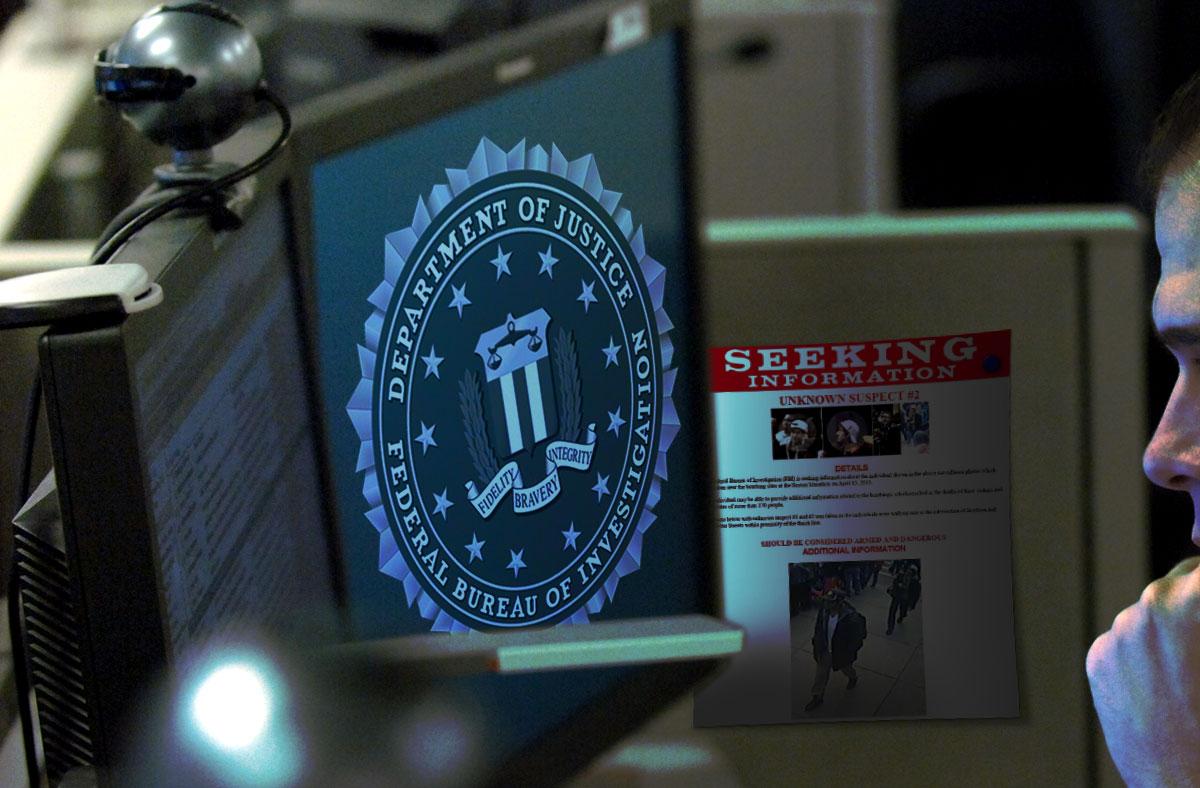
The
strange ability of Tamerlan Tsarnaev to slip through airports without
delay in both New York and Moscow—despite being on security
watch-lists—raises questions about both American and Russian security
agencies. Photo credit: Workstation: U.S.F.D.A. / Flickr
In the penalty phase of the Boston Marathon bombing trial of Dzhokhar
Tsarnaev, the shadow of his dead elder brother Tamerlan looms large.
The
defense team’s effort to avoid the death penalty hinges on the claim
that Tamerlan was the lead player in the plot and heavily influenced his
impressionable younger brother. We will soon learn if this strategy
succeeds in saving Dzhokhar’s life—at the price of incarceration without
chance of parole at the federal supermax prison in Florence, Colorado,
known as the “Alcatraz of the Rockies.”
But one thing that the trial will not
do is open a window onto the whole back story of the bombing itself,
the motivations of the perpetrators, and the many signs that there may
be more to it. WhoWhatWhy has provided more investigative coverage
of this story than any news organization in the United States, or the
world. That’s because we see the singularity of the event, the
tremendous resources brought to bear on it, and the clampdown on various
rights and liberties, including the government’s first-time ability to
make Americans stay in their houses until told they may leave.
Nowhere
do we see more of a hint of something amiss than in the US national
security apparatus’ seeming lack of interest in the international
travels of Tamerlan Tsarnaev before the Boston Marathon bombing—even
after the authorities were explicitly warned to watch him as a threat.
Equally
confounding is that Russia seems to have taken the same “hands off”
approach to Tamerlan’s travels there, despite stated worries about his
being a “radical Islamist.”
In truth, this “failure to look” may
have been no accident. It is a common practice for intelligence services
worldwide to allow those who are either would-be troublemakers or
pretend troublemakers to circulate with relative freedom in order to
snare bigger fish—or as dangles
to opposing spy agencies. The upside—confusing or compromising your
opponents—is obvious. The downside is less so, but no less significant,
and tragedy can result when the maneuvering goes wrong.
Ignored or Waived Through?
US authorities didn’t bother to question Tamerlan Tsarnaev at JFK
international Airport when he flew to Dagestan in 2012, despite
watch-listing him as potentially “armed and dangerous.” The same thing
happened when he flew back six months later.
Recall that Tsarnaev was watch-listed as a result of Russia’s March, 2011 “warning” to the FBI and the CIA that he was exhibiting a growing extremism and concocting plans to travel to the North Caucasus to join the Jihad there against Russia.
The
FBI claims to have “investigated” Tsarnaev upon receiving the warning,
but ultimately concluded he was not a threat to the United States, and
officially closed the investigation on June 24, 2011. The
“investigation” itself was laughably superficial, and largely consisted
of directly confronting Tsarnaev and asking him if he was up to no good.
Unsurprisingly, neither he nor his neighbors or friends reported any
kind of forthcoming plot.
However, Tsarnaev was placed on at least
two watch lists as a result of the Russian warnings. Why Tsarnaev was
watch-listed in light of an investigation that supposedly turned up
nothing is unclear. What is clear is that the language in the listing
warns of a dangerous individual who must be detained.
It warns that Tamerlan might be armed and dangerous,
and notes that his detention and secondary screening are “mandatory.”
It also says to “immediately call the lookout duty officer at NTC
[Customs and Border Protection National Targeting Center]” and that the
“call is mandatory whether or not the officer believes there is an exact
match.”
Either the FBI was criminally incompetent, or this easy
treatment and dismissal of the high-level Russian warning was
deliberate.
Tamerlan Tsarnaev? Who’s That?
The apparent neglect of Tamerlan Tsarnaev continued.
The
intrigue thickens when one considers that it was not just the US that
took a hands-off approach to Tamerlan’s travels, but Russia as well.
Tamerlan
arrived, via Moscow, in Dagestan in late January, 2012. But why would
they let him? The 2011 “warnings” issued to the FBI by Russia’s Federal
Security Service (known in English by the acronym FSB) were centered
specifically on Tamerlan’s traveling to Russia. Why not just refuse him
entry and put him on the next plane back to New York?
Russian officials originally feigned ignorance about the fact that Tamerlan had even traveled to Dagestan. Yet, we later found out he was, in fact, stopped by local authorities and brought in for questioning. It also became known he was being filmed by anti-terrorism operatives, who at one point, “scrambled to locate him when he disappeared from sight,” indicating they were following him closely.
And
two days before Tamerlan left Dagestan for the United States by way of
Moscow, they “lost track of him”—meaning he didn’t get any extra
attention at the airport.
How do we explain the disconnect between
the warnings and watch-listing of Tsarnaev with the bewildering
failures to stop him at airports in both the US and Russia?
Tamerlan the Grim Reaper
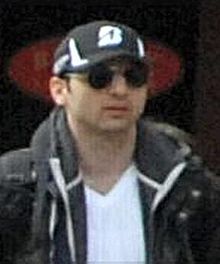
Did Russian security forces intentionally allow Tamerlan Tsarnaev to travel without impediment?
One intriguing possibility is that Russian officials allowed him into
Dagestan to “smoke out” Jihadis operating in and around the area.
At
least two insurgents that Tsarnaev was said to have contacts with ended
up dead at the hands of Russian anti-terrorism forces—while Tamerlan
was still in that country.
One of them was Mahmoud Mansur Nidal. An official from the Russian anti-extremism unit told the newspaper Novaya Gazeta
that Tsarnaev had been spotted repeatedly with the suspected militant,
Nidal, who was killed not long after in a counter-terrorism raid, as reported by the New York Times.
The
other insurgent was William Plotnikov. An ex-boxer like Tamerlan,
Plotnikov was born in Russia, but raised in Canada, and was also said to
have heard the call of Jihad in the North Caucasus. Both men were in
Dagestan at the same time and there are unconfirmed reports from Gazeta and others that the two had been in contact.
For American investigators, the date of Plotnikov’s death, July 14, 2012, has reportedly been of particular interest.
Just a few days after Plotnikov was killed in Dagestan, Tsarnaev left
the region and went back to the US in an apparent hurry. He did not even
wait to pick up his new Russian passport, which, according to his
father, was the reason he went to Russia in the first place. According
to this logic, Tsarnaev was somehow spooked by the death of Plotnikov.
Were
Russian officials trying to send a message to Tsarnaev—someone they may
have suspected of being a foreign agent? After all, Russian officials
were aware he’d been in contact with the FBI in the year before he
traveled to Russia.
Or was Tsarnaev somehow leading Russian authorities to these insurgents, either wittingly or unwittingly?
It
was also at this point that Russian authorities who were surveilling
Tamerlan claimed to have “lost track” of him as he returned to the US.
Did they really “lose” him? Or did they let him go?
According to US officials, Tsarnaev purchased his ticket back
to the United States on June 22, 2012, three weeks before the killing
of Plotnikov. Even if he changed the departure date of the ticket in
haste, it’s hard to believe airline tickets purchased by individuals in
the violence-plagued North Caucasus region would not receive intense
scrutiny by the FSB. Yet, just as he did at JFK International, he got
through Moscow without being stopped.
Watch and Learn
We
are routinely reminded that the sole purpose of our ever-expanding
national security apparatus is to keep us average citizens safe from
bodily harm. But is that really the case? Or are our security agencies
gambling with our safety by allowing violent individuals in and out of
the country for some larger espionage or geopolitical game between spy
agencies?
Despite the rhetoric, low-level terrorists like Tsarnaev are not, in fact, considered a strategic threat
to the US by intelligence agencies. They do, however, cause a lot of
misery for the unfortunates who turn out to be their victims.
It’s
standard practice for opposing spy agencies to provoke one another in
an effort to learn something from the other’s reaction. If something
goes horribly wrong, the result is typically to increase the security
apparatus’s budgets and power. In other words, there is no downside to
the responsible agencies—only up, up and away.
It is worth noting
that exactly a half century before the Marathon bombings, another man
traveled easily between the US and Russia, with the security services of
both countries inexplicably tolerant of his movements. His name was Lee
Harvey Oswald. Whatever one is to make of Oswald, the net effect of the
terror activity associated with him in no way slowed the growth of the
national security agencies responsible, nor was anyone ever really held
accountable.
Despite these gargantuan screw-ups or, more
generously, misjudgments, one might think there would be a subsequent
reining in of the national security apparatus—maybe even a few
high-level firings. But instead, these tragic events perversely end up
benefiting the agencies responsible. Public fear and outrage leads to
calls to increase budgets and to double down on covert activities, only
further eroding civil liberties and therefore democracy itself.
Alas, it appears to work the same the world over.
Photo credits for panorama: Boston Logan Airport Metro:
Troy / Flickr, Airline Cabin:
Simon Grubb / Flickr, Moscow Airport:
Alex LA / Flickr, Mosque. Makhachkala, Dagestan:
Gadzhi Kharkharov / Flickr, Agent 1:
The White House / Flickr, Agent 2:
The White House / Flickr, Camera:
Matt Buck / Flickr, Agent 3:
US Army Africa / Flickr

 Posts
Posts