Thursday, November 14, 2013

MPAA Wants Advanced Anti-Piracy Measures at Movie Theaters

The MPAA has updated its anti-piracy guidelines for movie theaters, providing tips and tricks on how to catch “camming” pirates on the spot. Among other things the movie group wants theaters to forbid the use of mobile phone cameras, and be vigilant of suspect cup holders and cameras built into eyeglass frames. To increase motivation, theater employees who bust a movie thief can look forward to a $500 reward.
gogglesTo prevent movie piracy, theaters nowadays are becoming more secure than some airports.
During pre-release screenings and premieres employees are often equipped with night-vision goggles and instructed to closely monitor movie goers. In some cases members of the public are instructed to hand over all recording-capable devices including phones, or even their candy.
While these measures are not always appreciated by the average movie goer they appear to have had some effect, as so-called “CAM” releases are becoming more rare. Perhaps motivated by this success, the MPAA has now updated its “Best Practices to Prevent Film Theft” guide for movie theaters.
In the revised guide the MPAA has stripped the billions of dollars in claimed losses that were included previously, but stresses that illegal camcording remains a significant problem. The movie industry group therefore advises theater owners to strictly prohibit the use of equipment that can record audio, video, or even take photographs.
“The MPAA recommends that theaters adopt a Zero Tolerance policy that prohibits the video or audio recording and the taking of photographs of any portion of a movie,” MPAA states.
The best practices now also clarify that when a suspect individual is spotted, theater employees should take immediate action. Even when in doubt, the local police should be notified as soon as possible.
“Theater managers should immediately alert law enforcement authorities whenever they suspect prohibited activity is taking place. Do not assume that a cell phone or digital camera is being used to take still photographs and not a full-length video recording.”
lcbusted“Let the proper authorities determine what laws may have been violated and what enforcement action should be taken.”
The MPAA further stresses that all possible recording equipment locations in the theater should be considered, including cup holders. In addition, employees should be alert on possible concealed recording equipment, as often seen in the movies.
“Movie thieves are very ingenious when it comes to concealing cameras. It may be as simple as placing a coat or hat over the camera, or as innovative as a specially designed concealment device (e.g., a small camera built into eyeglass frames or a camera built into the lid of a beverage container).”
While it’s not a new recommendation, the MPAA also notes that movie theater employees must be wary of co-workers who invite friends into the theater, as these may be up to no good.
“Does one member of your staff frequently have ‘friends’ joining them at the theater at odd times? Look for non-employees coming or going out of the projectionist’s booth or those arriving at odd hours claiming to be ‘friends’ of an employee or manager,” MPAA writes.
The MPAA adds that even third-party security firms should be carefully vetted before they are hired for a job, as there may be rogue agents embedded in these teams.
recillegal
While all forms of camcording are a problem for the movie industry, the most stringent security procedures should be applied for pre-release screenings.
For these events, theater owners are advised to post signs in- and outside the theater explaining that people who record movies “will be prosecuted.”
Pre-release screenings are also events where night vision binoculars should be used to inspect movie-goers. In addition, “low light security measures” may also have to be deployed to augment security. The MPAA doesn’t explain what these measures entail, but they were not mentioned in the previous guide.
“If your theater maintains night vision devices or low light binoculars, please employ these during the screening in the darkened auditorium,” MPAA writes.
“In the event that MPAA Investigators have been requested to augment the theater security for the event, additional low light security measures may be implemented.”
Finally, movie theater employees can score themselves a $500 reward for catching a movie pirate. This Take Action! Reward was introduced a decade ago and is meant to motivate personnel to be more vigilant.
How many of these movie pirate bounties have been claimed since is unknown.
The latest version of MPAA’s “Best Practices to Prevent Film Theft” is available here, including an application for the Take Action! Reward.

Pre-release screening guidelines
prerelsc

The Most Nefarious Part Of The TPP Proposal: Making Copyright Reform Impossible

from the the-tricks-they-pull dept

So with yesterday's revealing of the IP chapter of the TPP, there are plenty of great analyses out there of what's in there, but I wanted to highlight some parts that are the most nefarious and downright slimy in that they represent parties (mainly the US) pretending to do one thing while really doing another. These are tricks pulled by a dishonest, shameful USTR, entirely focused on making his corporate buddies richer at the expense of everyone else. Remember, our current USTR, Michael Froman, has a long history of this kind of crap. While he hasn't been there throughout the negotiating process, it shouldn't be surprising that he "delivers" this sweetheart deal to a few legacy industry players.

Watch closely, and you'll see supporters of TPP, and especially USTR employees, make the claim that nothing or almost nothing in the TPP will require legal changes in the US. They'll say that this is just about "harmonizing" norms across borders to make it easier for businesses to do business internationally. This is a lie.

It's a lie in two different ways. First, there are multiple provisions in here that will absolutely require changes to US law. We'll discuss a few in other posts, but what's much more nefarious and downright obnoxious, is that this would lock in a variety of really bad copyright policies, making it nearly impossible for Congress to go back and change them. And that's a real issue, because, as we've been discussing, Congress is actually discussing copyright reform again. The head of the US Copyright Office, Maria Pallante, has proposed a bunch of changes to copyright law (some good, some bad), and astoundingly, just as Congress is at least trying to have the discussion about whether or not those and other ideas make sense, the USTR is looking to effectively tie everyone's hands by saying "these things cannot be changed," including many of the reforms that Pallante has directly proposed.

That's really quite incredible if you think about it. On the one hand, you have the very head of the Copyright Office suggesting some reforms, and you have Congress beginning the process to explore that. On the other, you have the USTR totally ignoring the sole power of Congress to make copyright and patent law, and effectively saying "you cannot make any of the suggested reforms." And then the USTR has the gall to ask Congress to give up its power to challenge specific provisions in the agreement? While we're concerned about the Congressional copyright reform process, at least it's being done in the open. The USTR has been hashing out the plan in TPP in total secrecy for years.

Who the hell does the USTR think they are that they can flat out override the Constitution and the Congressional process, and effectively block them in and stop any meaningful attempt at copyright reform? All done via a process driven entirely by a few special interests? It's anti-democracy. It's pure corporate cronyism by the worst cronies around.

Now, defenders of this proposal will lie. They'll claim that technically (1) Congress has to approve this and (2) nothing in a trade agreement can limit Congress's ability to pass laws. Neither point is really true (the fun with things that are "technically" true, but false in reality). As mentioned above, the USTR (and President Obama) is pushing extra hard for Trade Promotion Authority, which basically is Congress granting the USTR full power over the TPP. Normally, Congress would be able to debate, challenge and reject questionable provisions in the agreement. But, with TPA "fast track" ability, Congress could only give a yes/no vote on the whole package. And, yes, some will claim that they can just vote no, but the reality is that there are other parts of this agreement that are designed to make that nearly impossible. There are all sorts of little things that we'll be told we "need." TPA is a bit of theater. What's delivered to Congress will almost have to be passed -- so if it's granted (before it's even public what's in the full agreement) -- Congress has effectively approved the whole agreement.

As for the claim that Congress' hands cannot be bound by a trade agreement, this is again technically true, but it ignores that it becomes realistically impossible. The second that Congress tries to change a law that goes against the TPP -- such as, say, reducing the term of copyrights from the insane level today to merely crazy -- lobbyists and pundits will come screaming from every direction about how we can't abandon our "international obligations." We'll hear horror stories about how breaking the agreement will have widespread implications, including trade wars, tariffs and other horrible things. Once it's in the trade agreement, "breaking it" becomes effectively impossible.

The lobbyists for the entertainment industry know this stuff cold. Over the past three decades they've perfected this process of getting crap they can't get done in Congress pushed through in various trade agreements, and then they use that to mold US law to exactly how they want it. They're not even shy about it, admitting this is exactly how they got the DMCA in the first place. Considering that the TPP has a form of DMCA-on-steroids, it shouldn't be a surprise that they're using an even bigger trade agreement to do the same thing.

All of this should lead to a basic question: why is the USTR and President Obama directly trying to undermine Congress' sole authority over copyright and patent policy? Are they proud of the tricks they tossed in the agreement? I imagine that when the USTR staffers move on to their jobs in the same industries that pushed them to write the agreement this way, they'll all laugh about that time they fucked over the American public.

Derivatives are Destroying the Real Economy

Derivatives are Destroying the Real Economy

Drug War? American Troops Are Protecting Afghan Opium. U.S. Occupation Leads to All-Time High Heroin Production

Region:
In-depth Report:

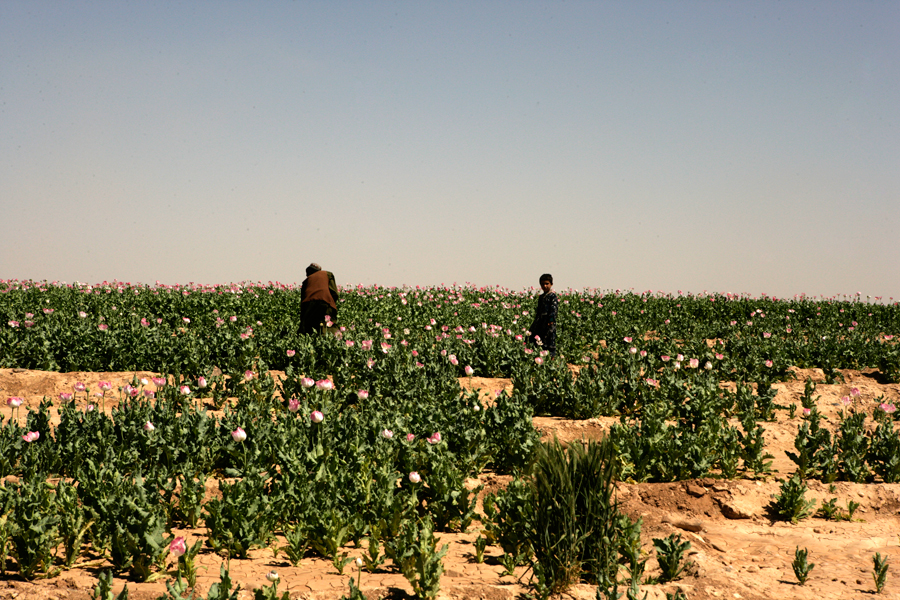
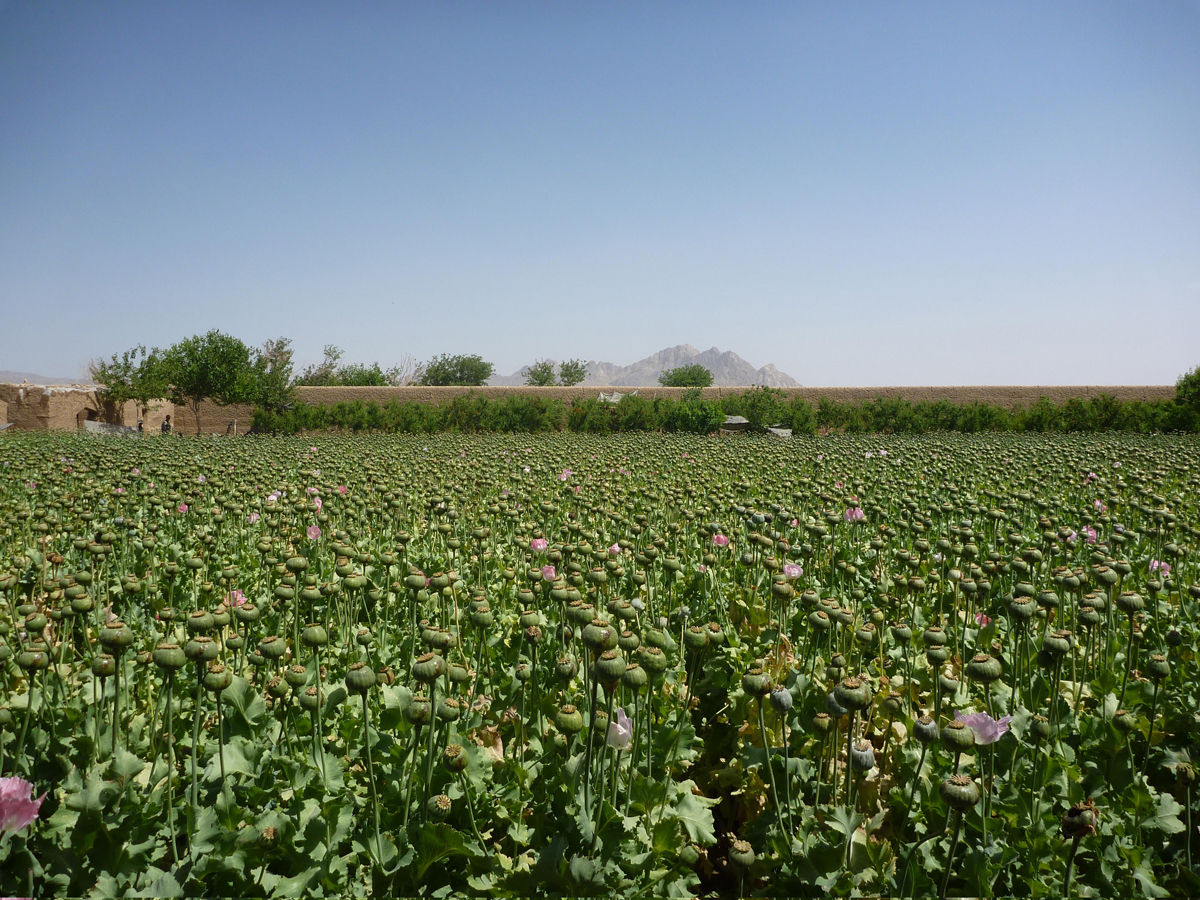
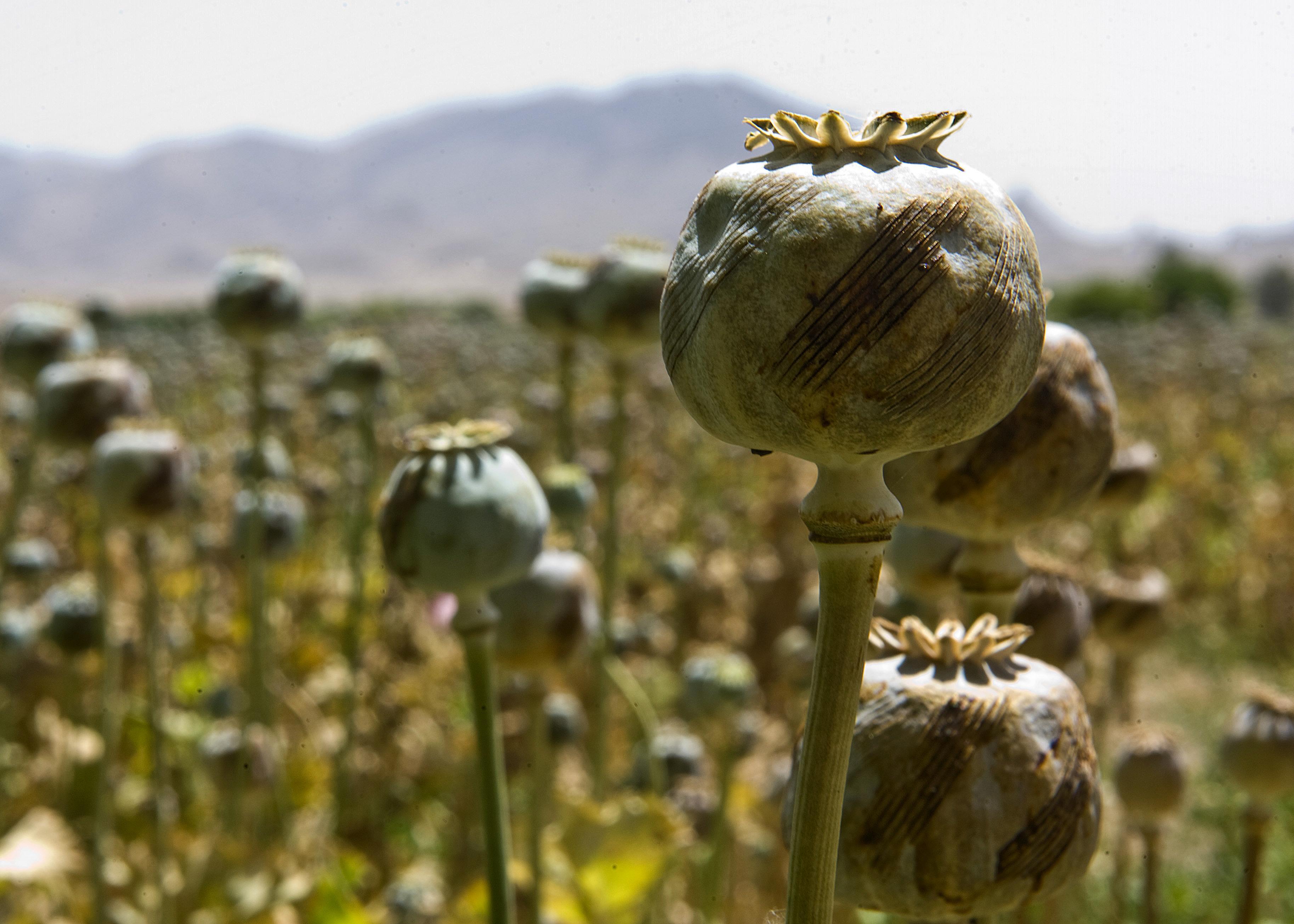
poppy
It is well-documented that the U.S. government has – at least at some times in some parts of the world – protected drug operations.
(Big American banks also launder money for drug cartels. See this, this, this and this. Indeed, drug dealers kept the banking system afloat during the depths of the 2008 financial crisis. And the U.S. drug money laundering is continuing to this day.)
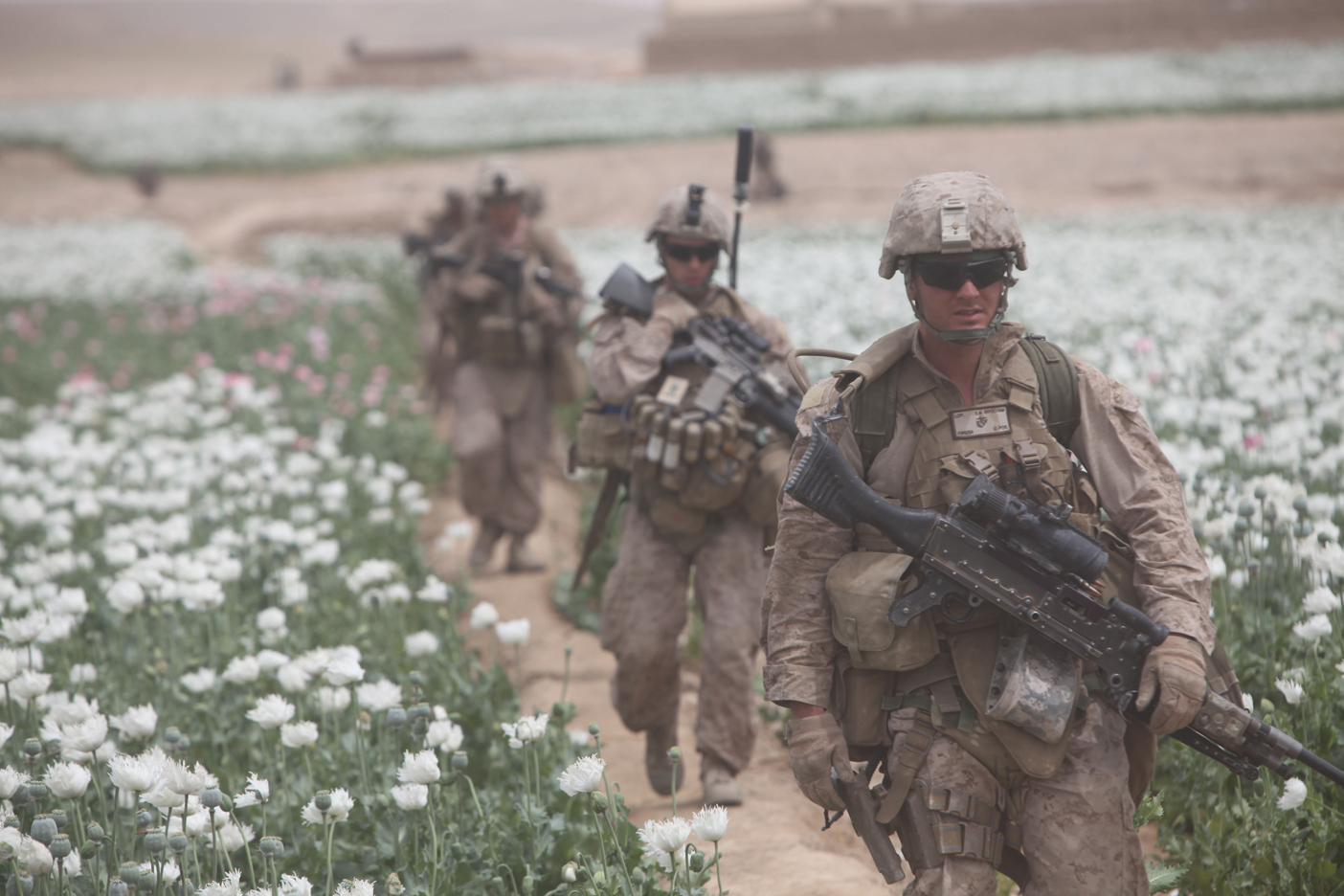
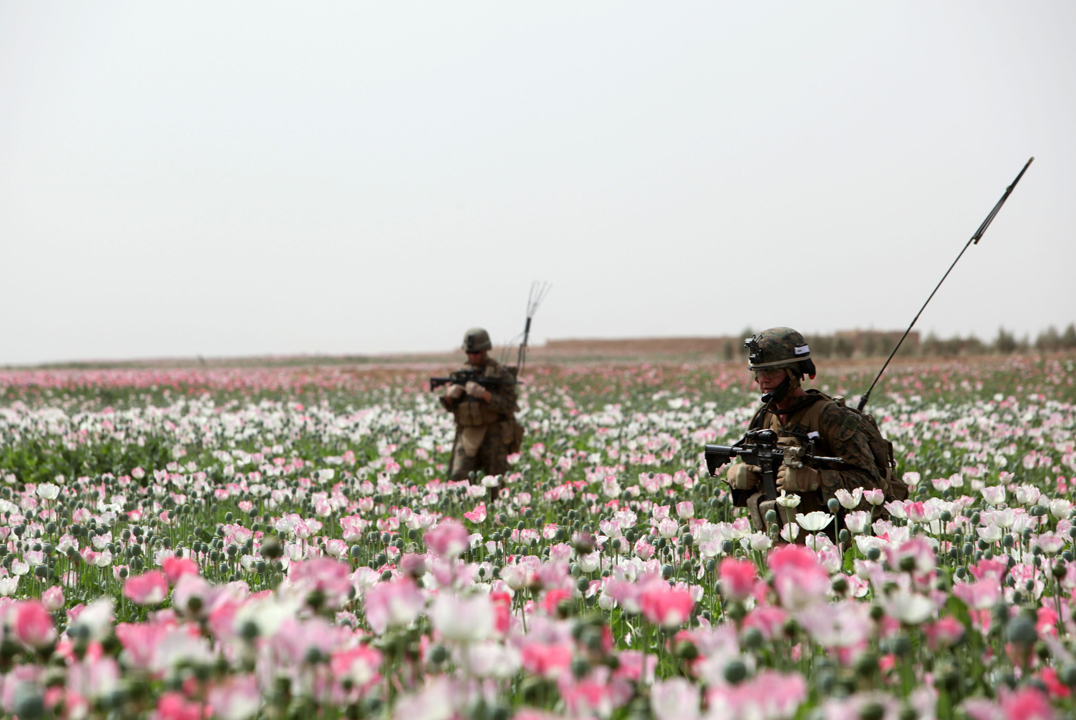
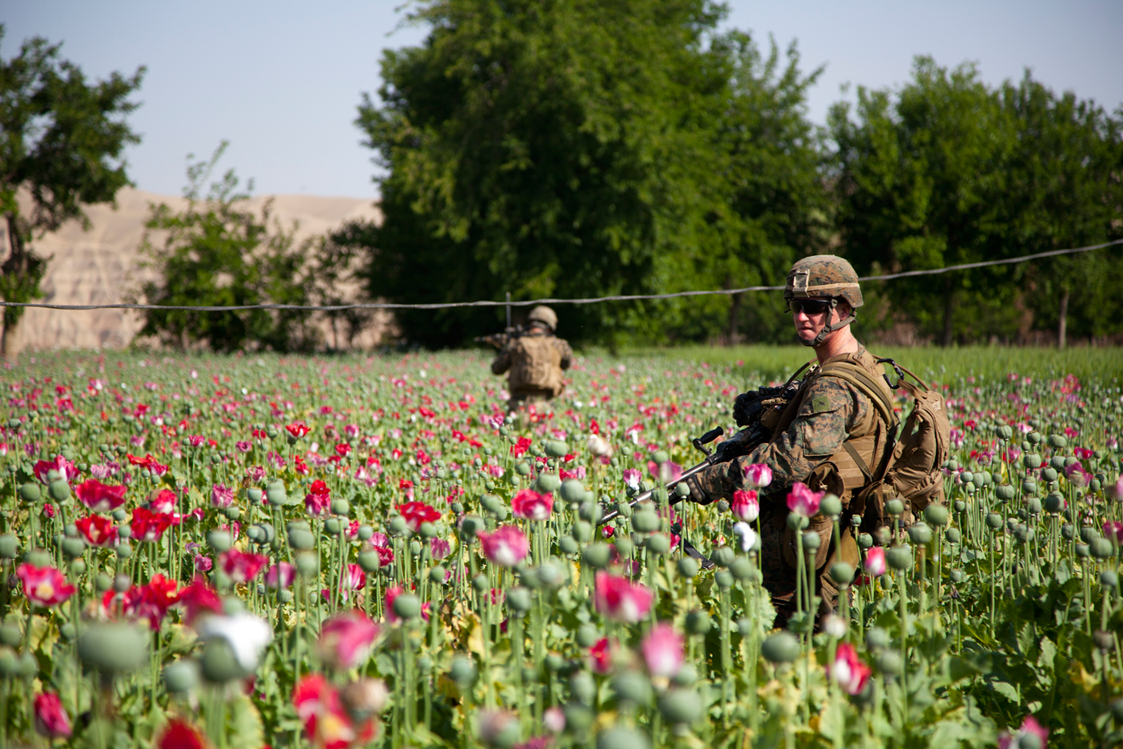
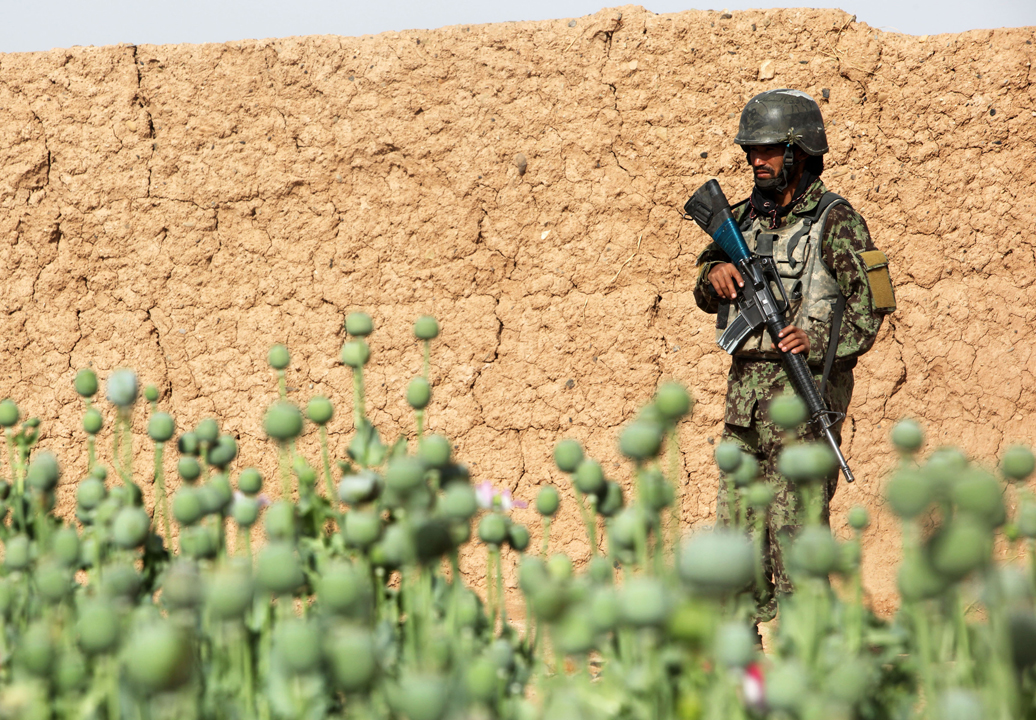
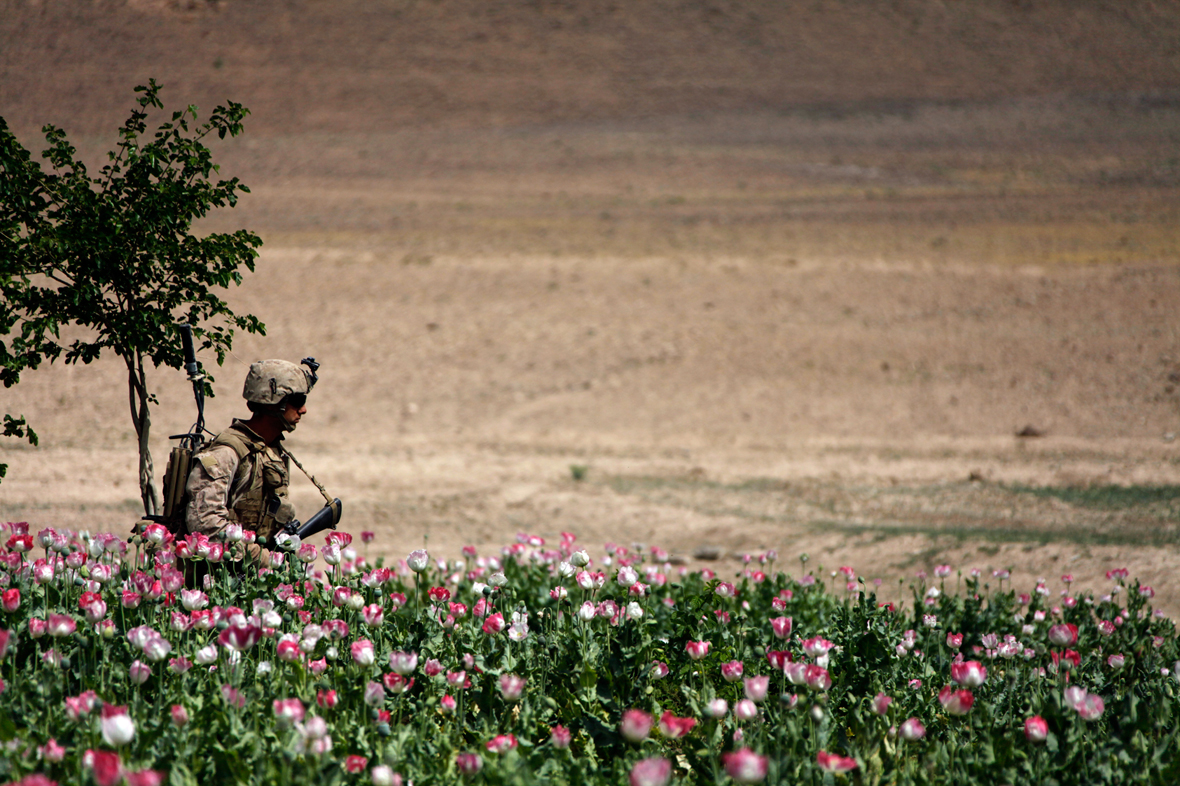
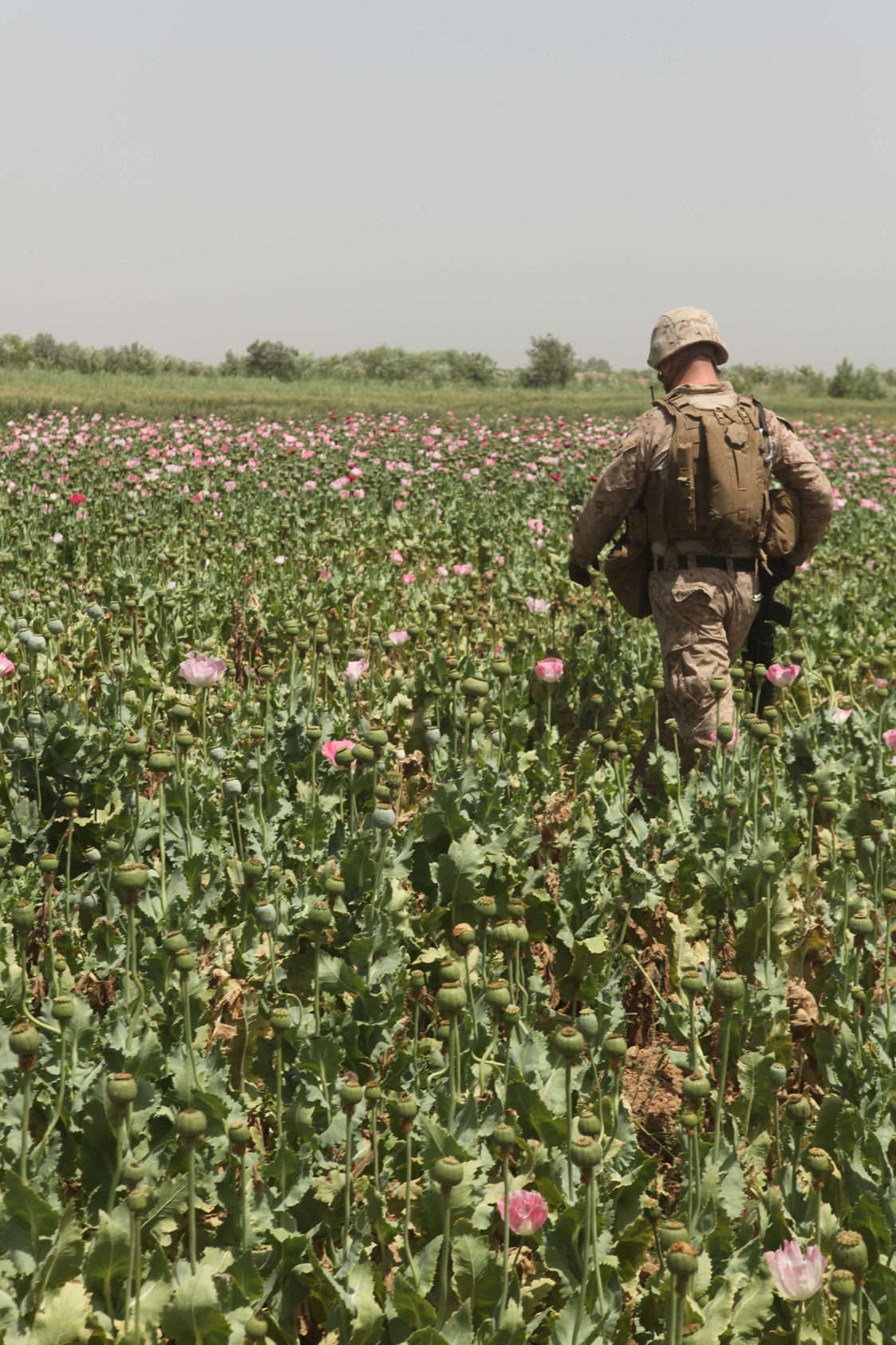
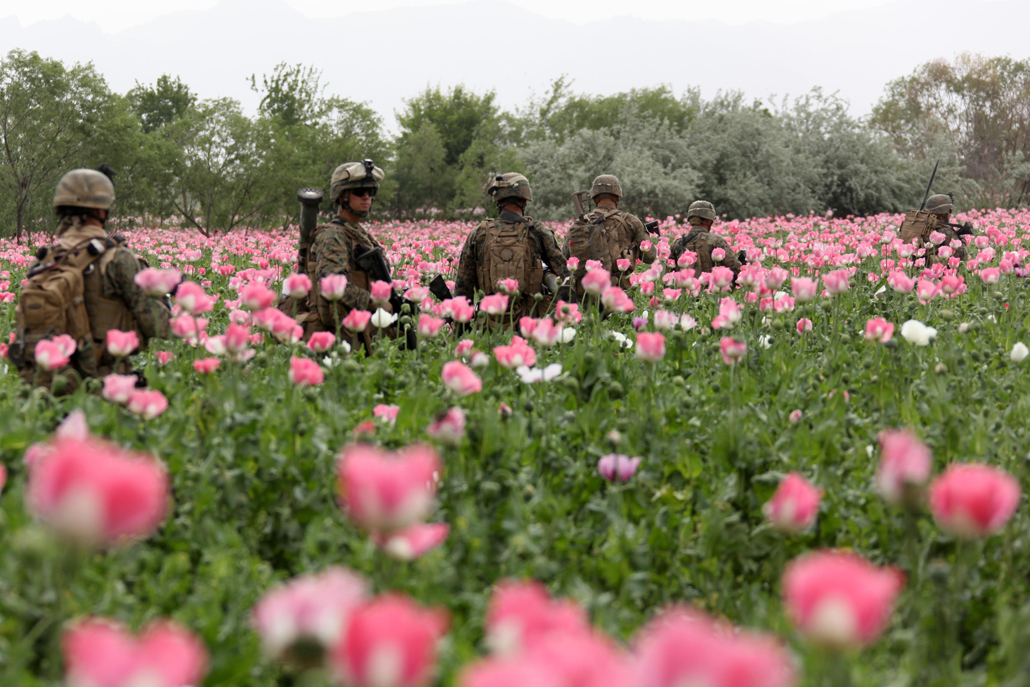
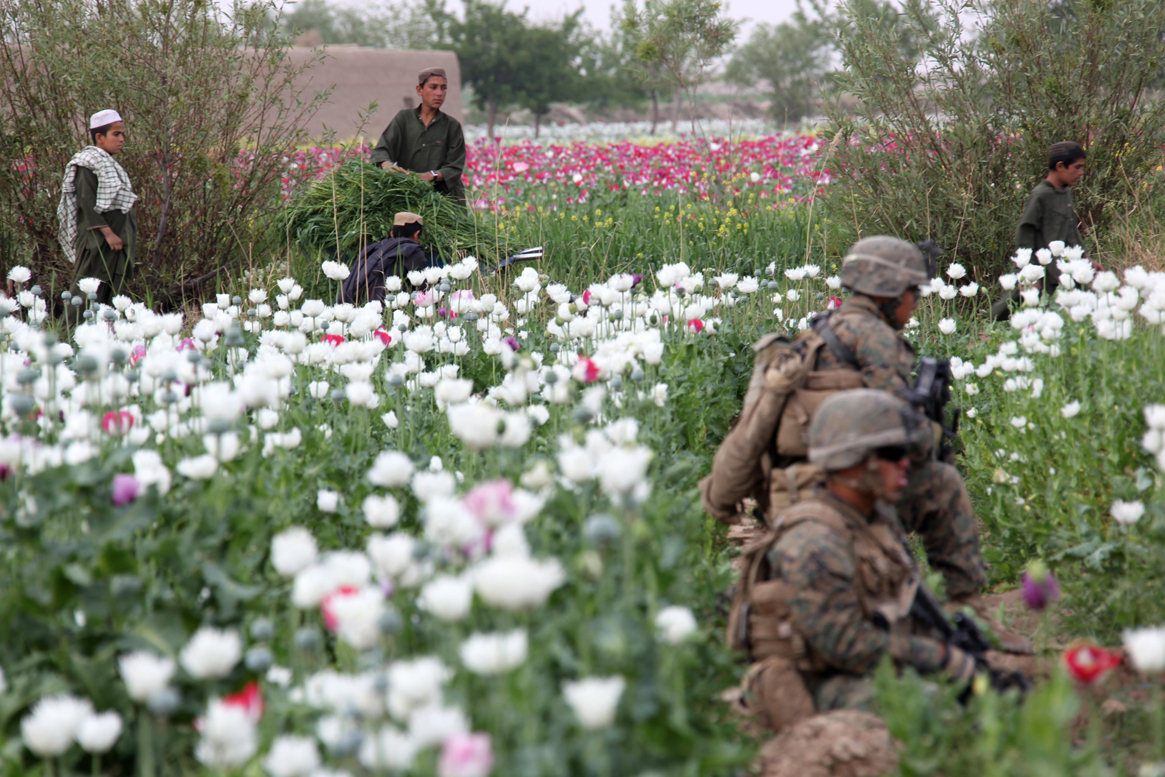
The U.S. military has openly said that it is protecting Afghani poppy fields:

As Wikipedia notes:
Opium production in Afghanistan has been on the rise since U.S. occupation started in 2001.
Indeed, a brand new report from the United Nations finds that opium production is at an all-time high.
Common Dreams notes:
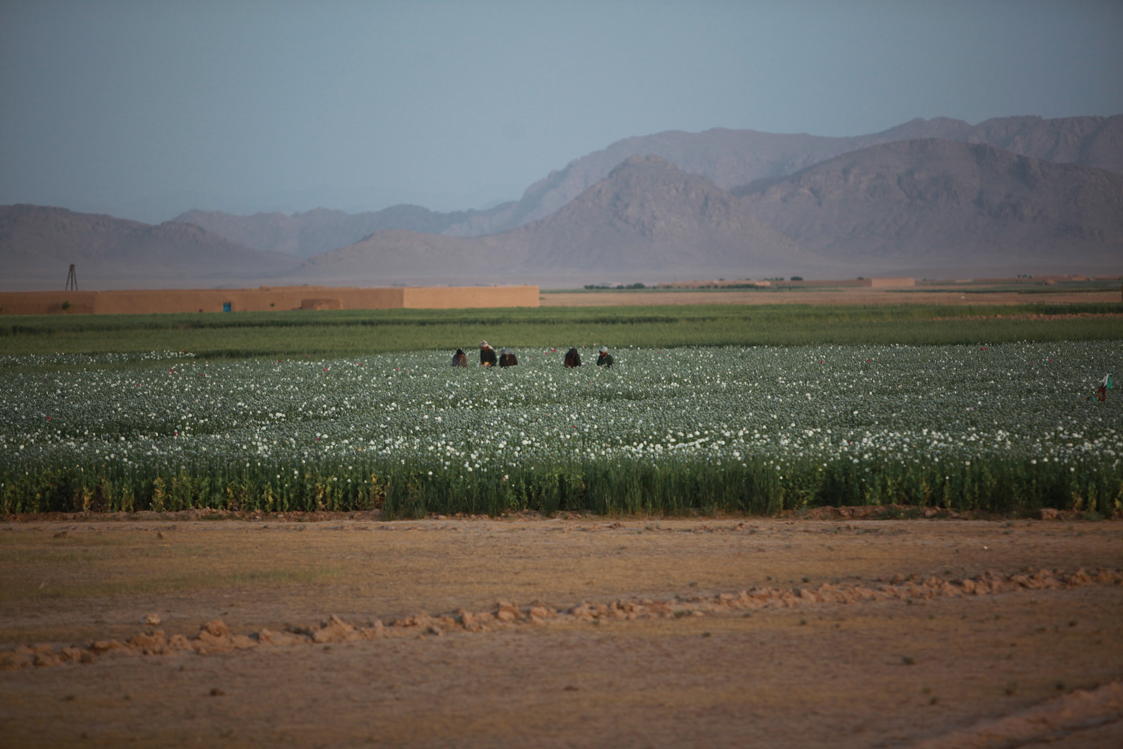
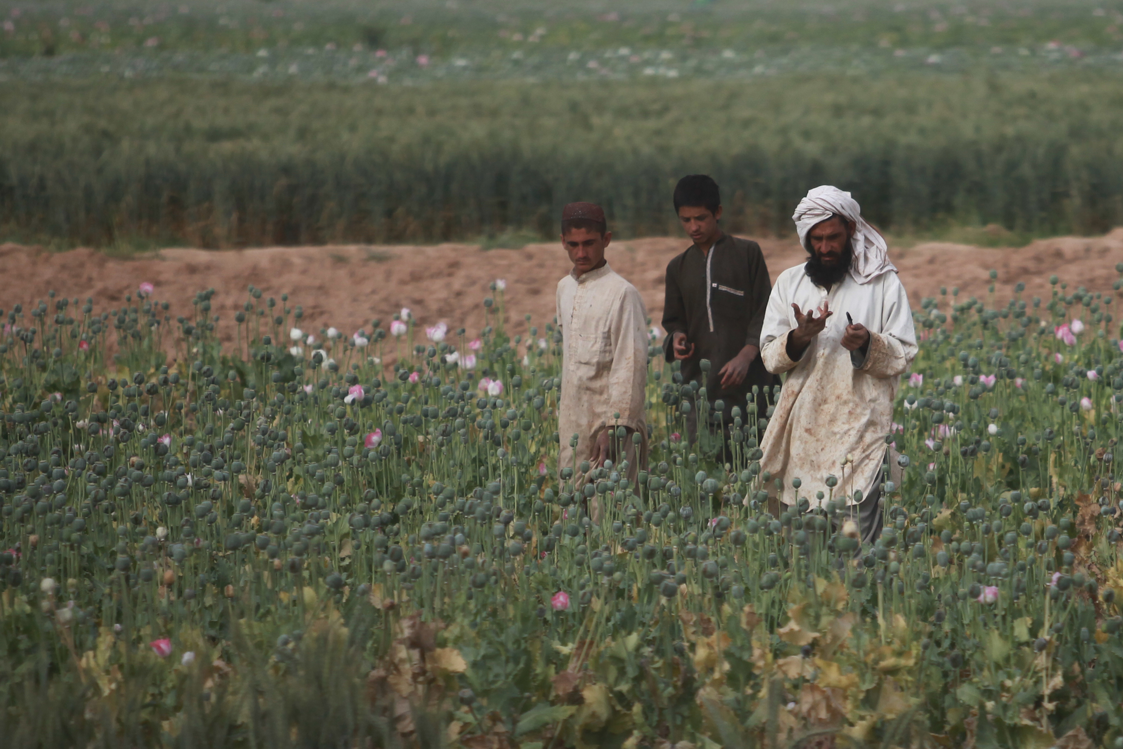
The cultivation of opium poppy in Afghanistan—a nation under the military control of US and NATO forces for more than twelve years—has risen to an all-time high, according to the 2013 Afghanistan Opium Survey released Wednesday by the United Nations.
According to the report, cultivation of poppy across the war-torn nation rose 36 per cent in 2013 and total opium production amounted to 5,500 tons, up by almost a half since 2012.
“This has never been witnessed before in the history of Afghanistan,” said Jean-Luc Lemahieu, the outgoing leader of the Afghanistan office of the United Nations Office on Drugs and Crime, which produced the report.
***
The U.S. military has allowed poppy cultivation to continue in order to appease farmers and government officials involved with the drug trade who might otherwise turn against the Afghan Karzai government in Kabul. Fueling both sides, in fact, the opium and her

The U.S. protecting opium fields in Afghanistan

oin industry is both a product of the war and an essential source for continued conflict.

nwo Soldiers Help Grow And Protect Poppy Fields for heroin production.flv


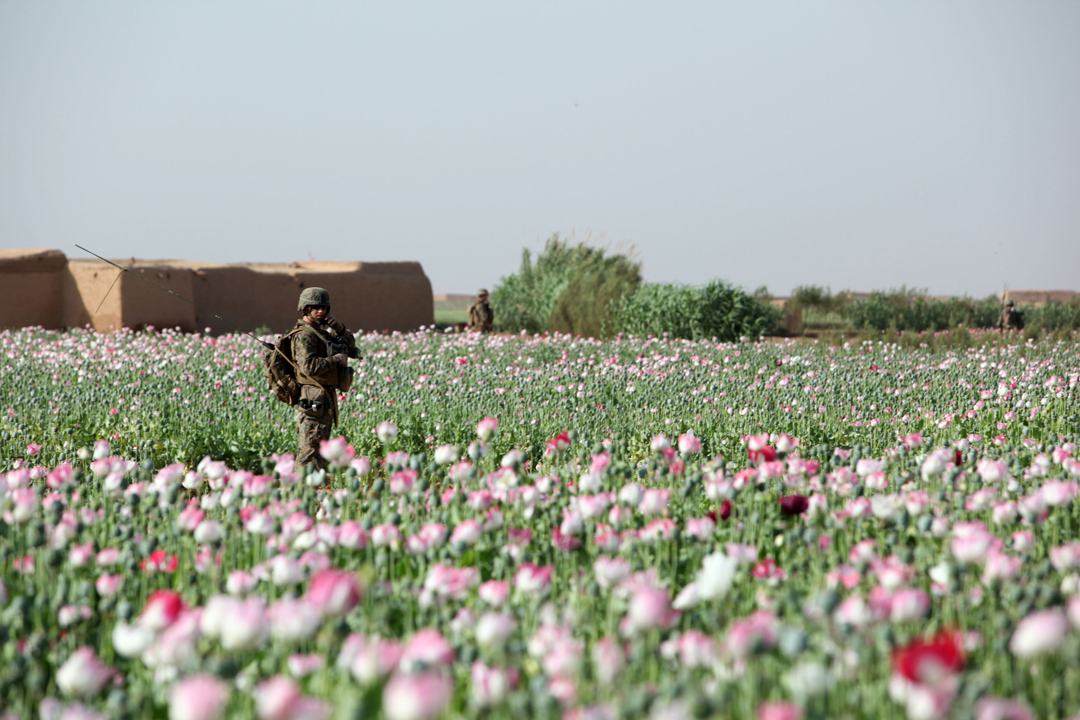
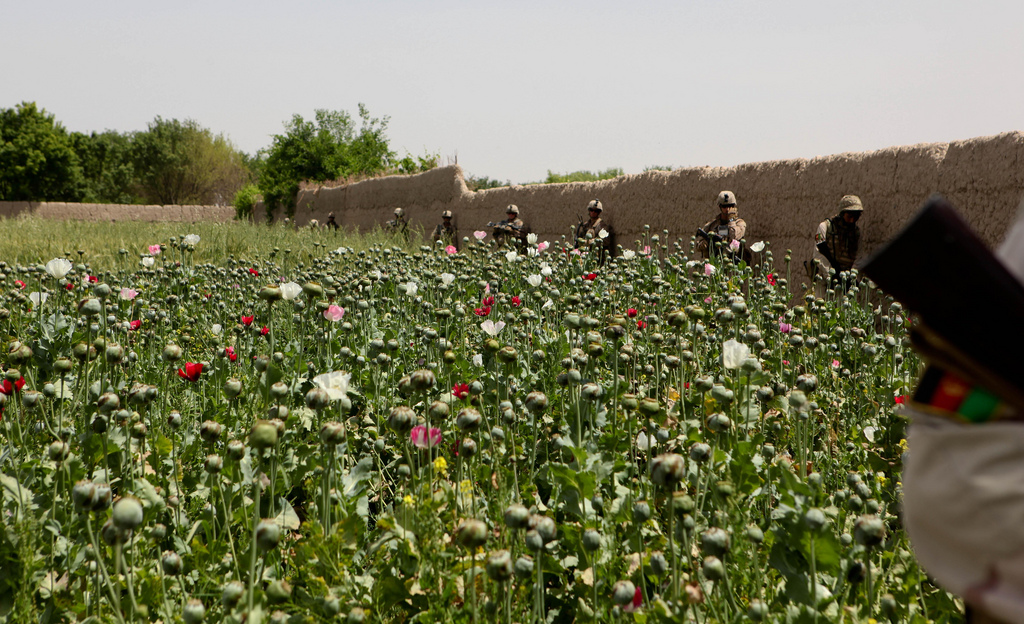
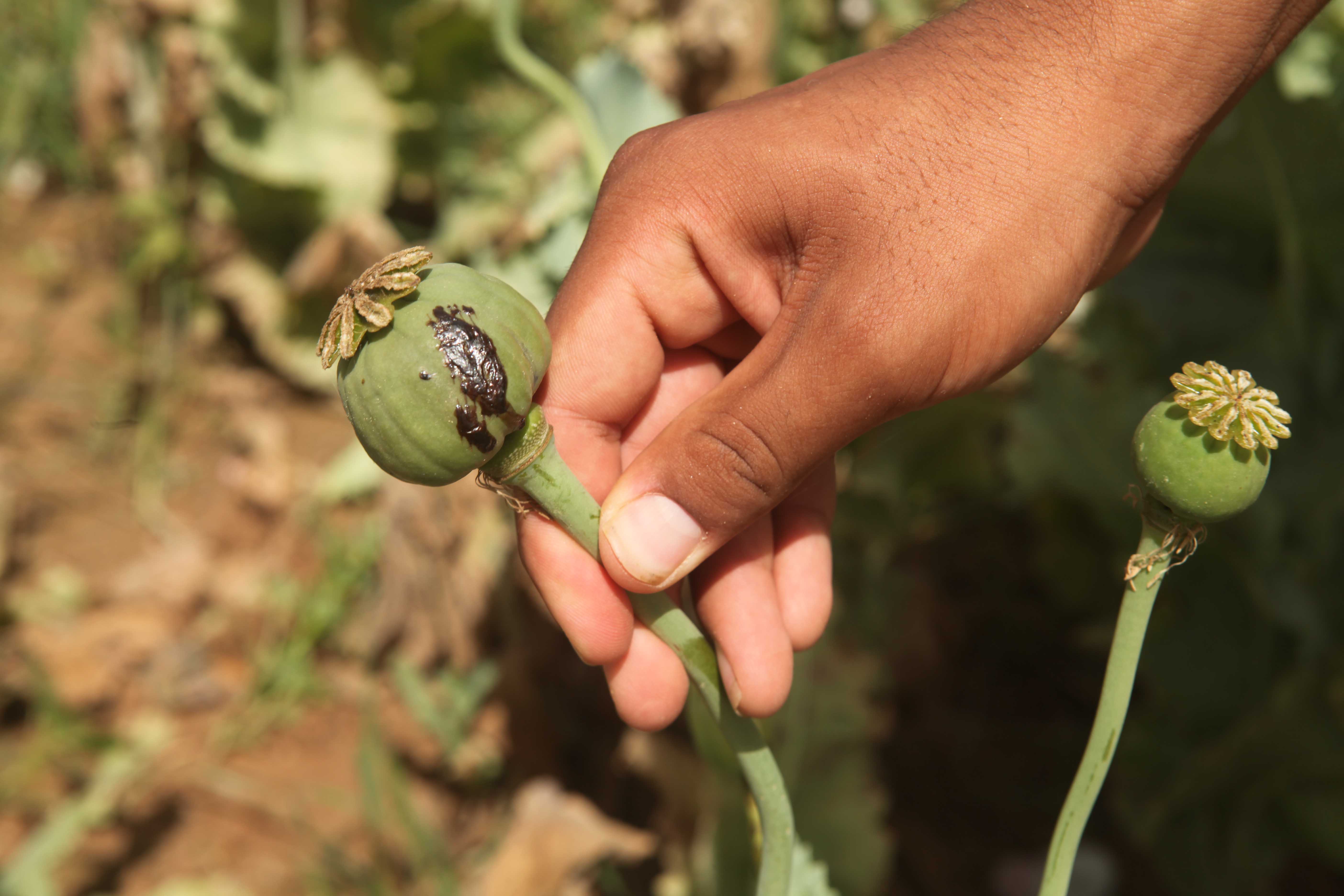
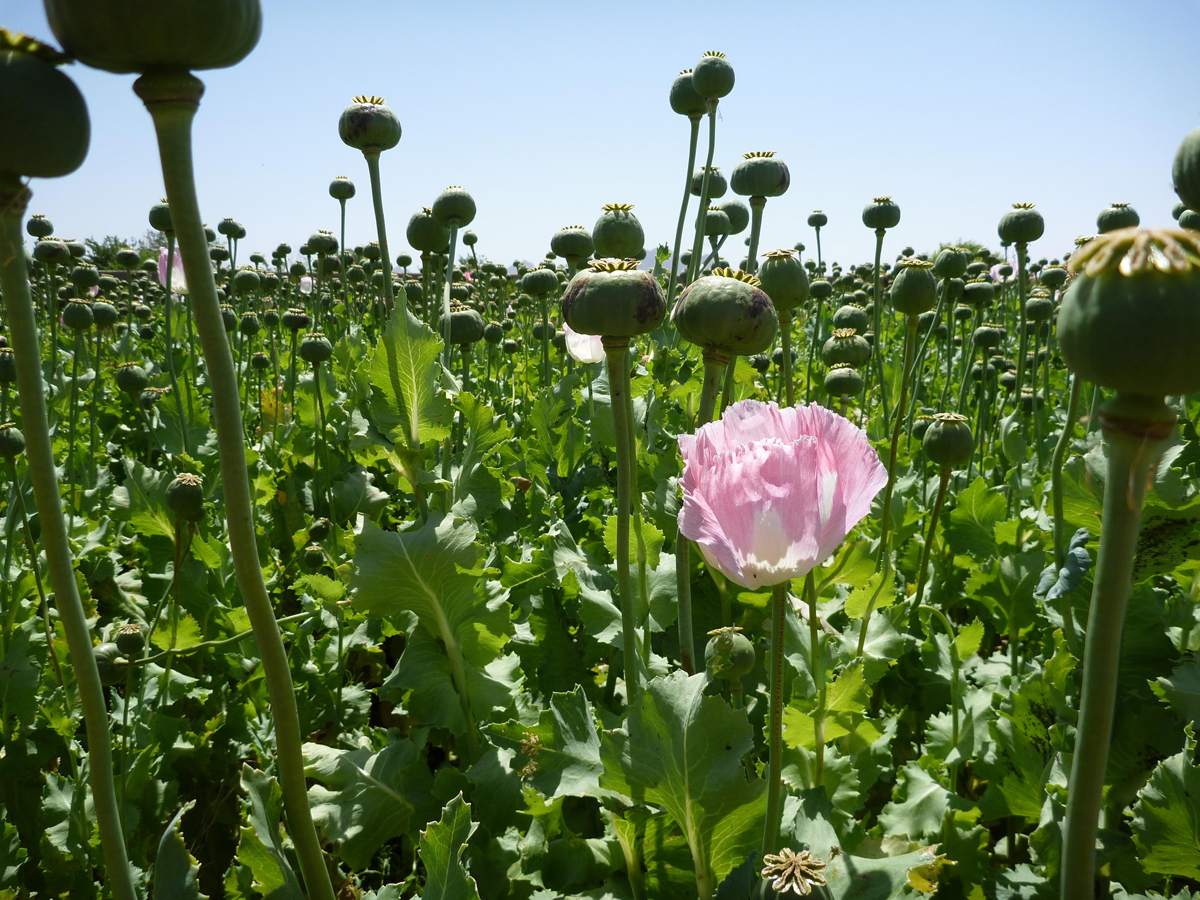
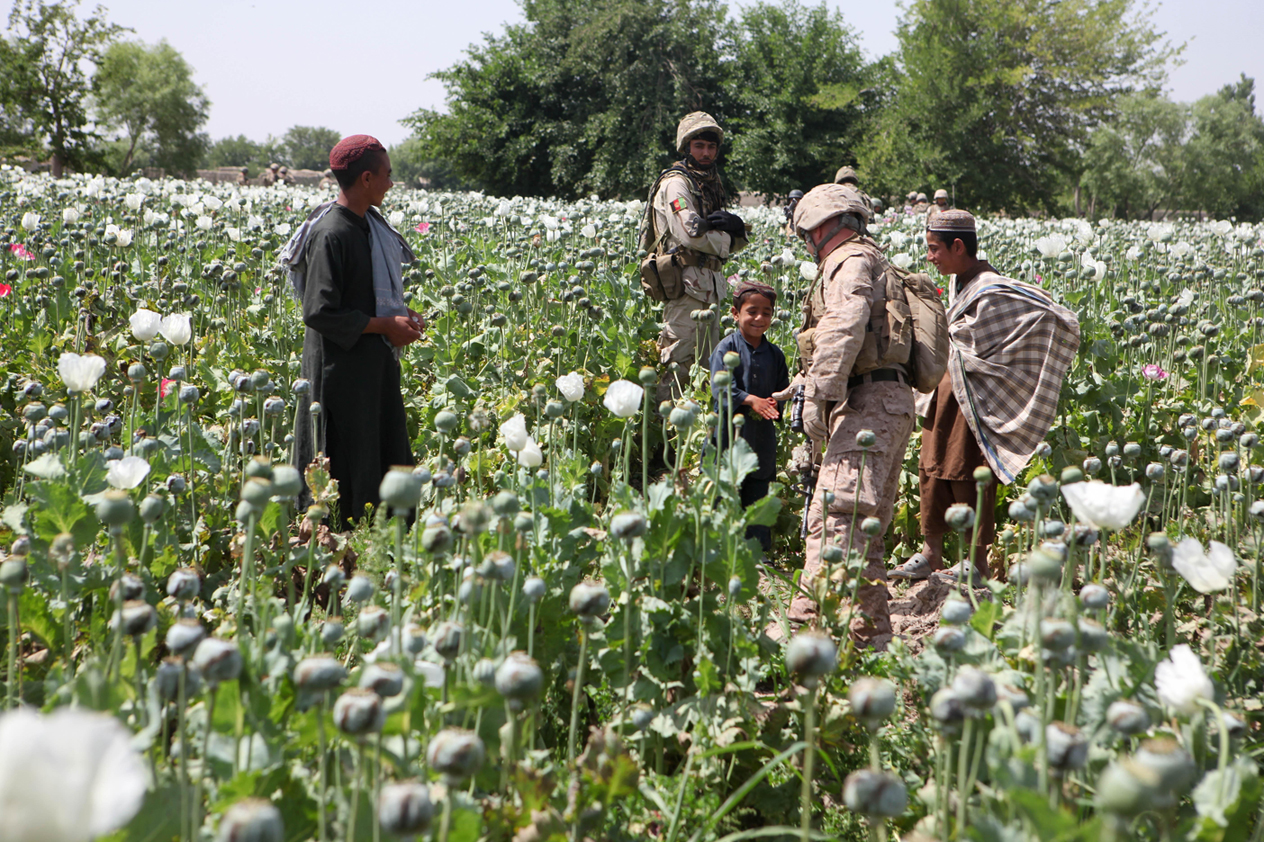
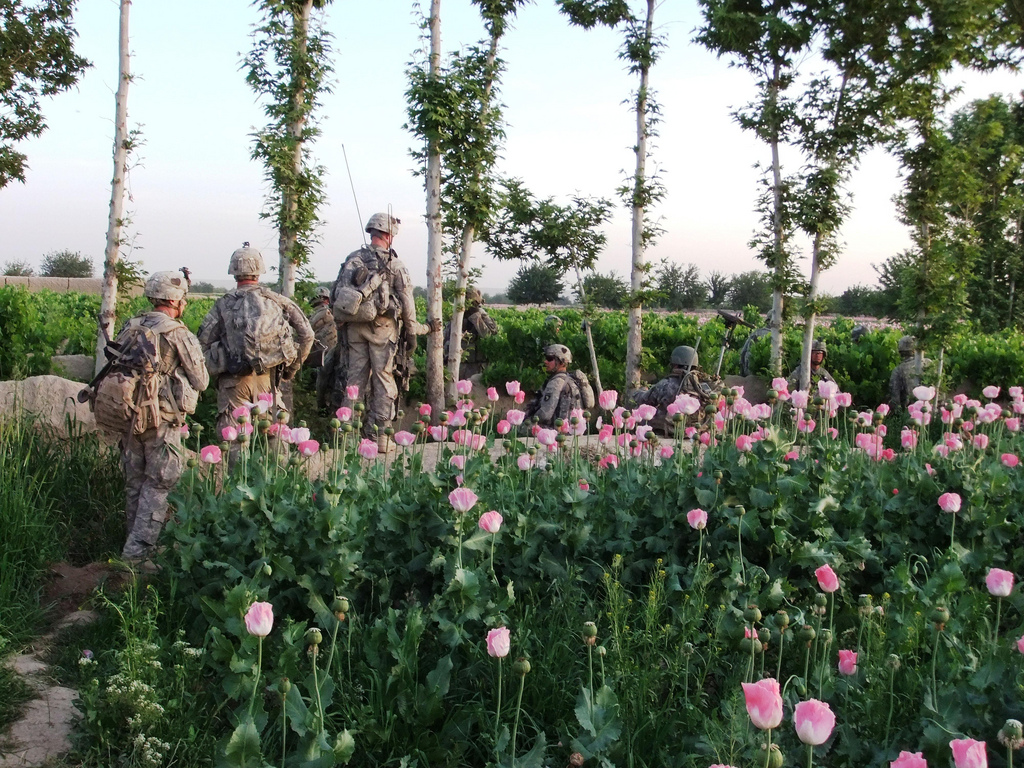
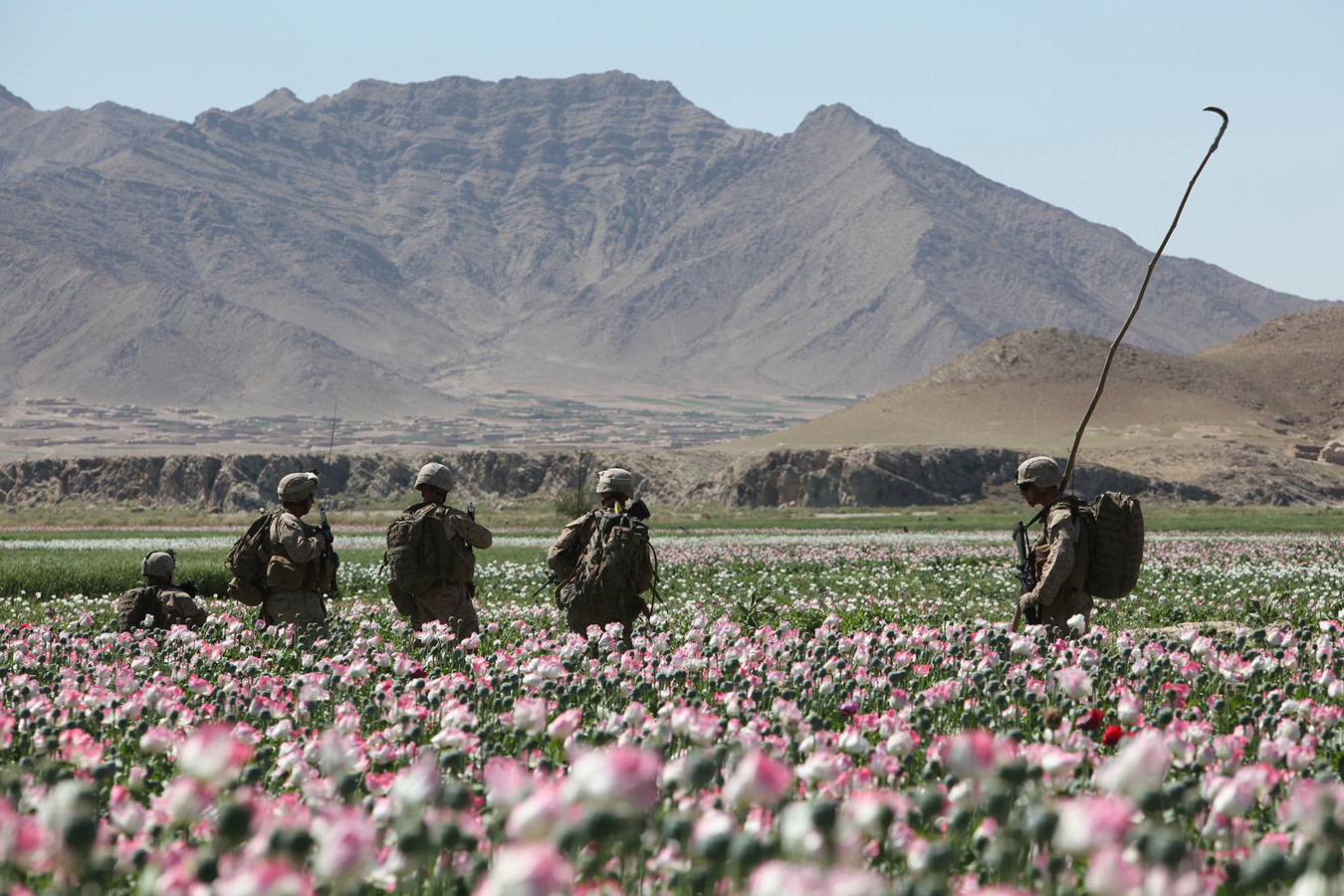
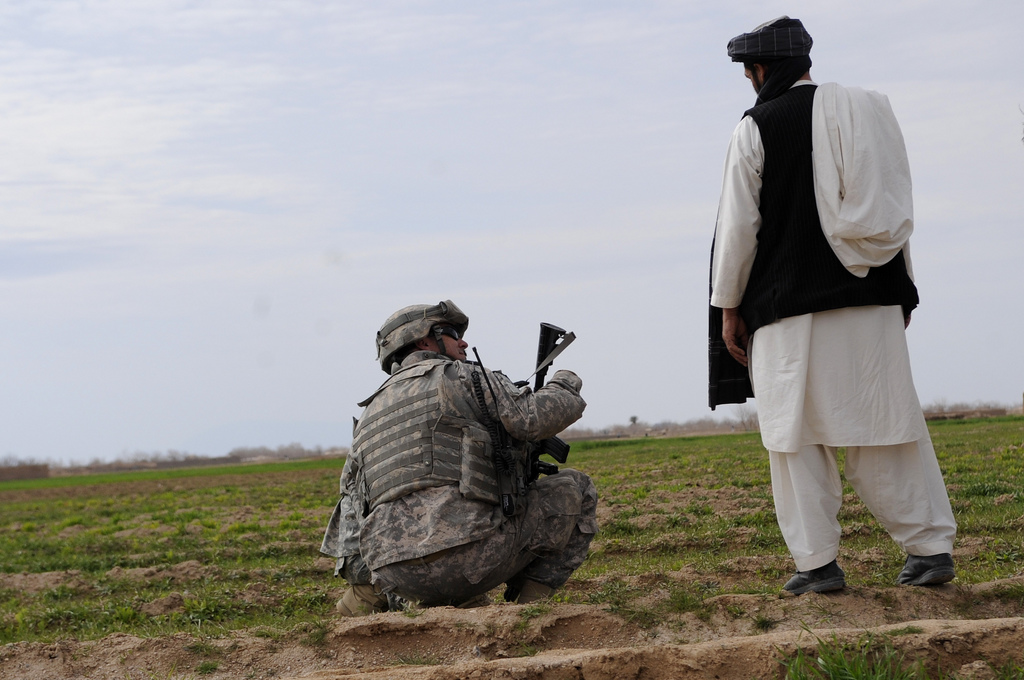
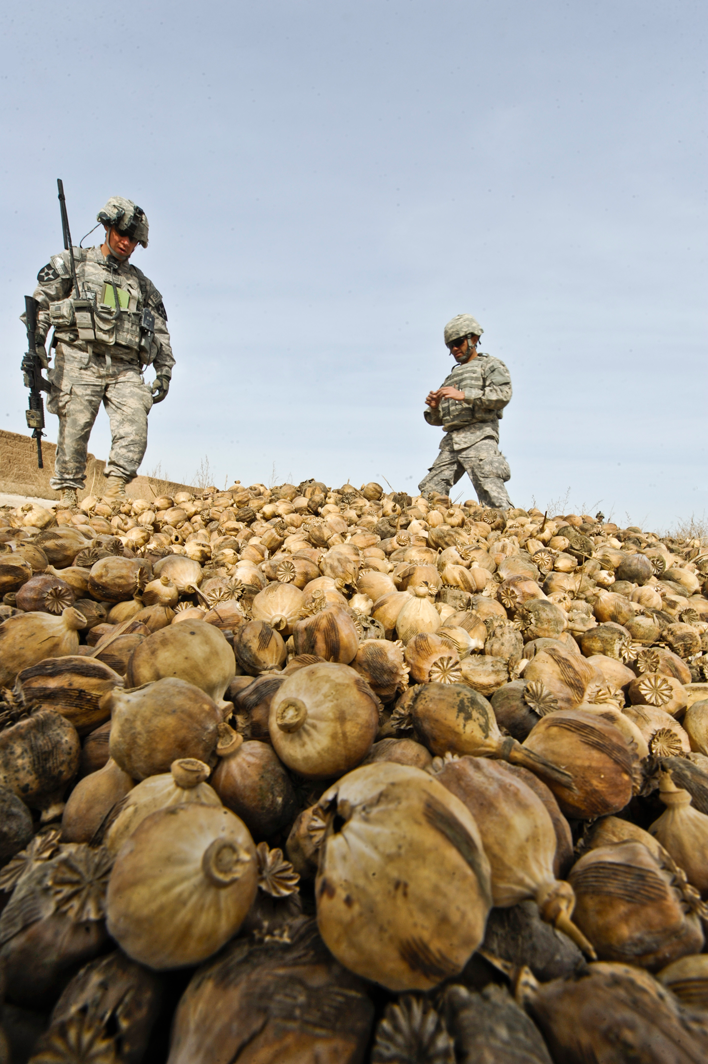
Public Intelligence has published a series of photographs showing American – and U.S.-trained Afghan – troops patrolling poppy fields in Afghanistan. Public Intelligence informs us that all of the photos are in the public domain, and not subject to copyright, and they assured me that I have every right to reproduce them.
We produce these photos and the accompanying descriptions from Public Intelligence without further comment.


U.S. Marine Corps Sgt. Noel Rodriguez, a team leader with Alpha Company, 1st Battalion, 7th Marine Regiment, Regimental Combat Team 6, communicates with an adjacent squad while on patrol in Sangin, Helmand province, Afghanistan, May 1, 2012. Marines patrolled to provide security in the area and interact with the local populace.