Sunday, January 5, 2014

How Kim Dotcom became Hollywood's biggest villain

                http://news.cnet.com/8301-1023_3-57616565-93/how-kim-dotcom-became-hollywoods-biggest-villain/?part=rss&tag=feed&subj=
A "60 Minutes" report this Sunday will look at the lavish life of the Megaupload founder and why the entertainment industry considers him to be the world's No. 1 pirate. Here's a preview.
                                         He's known as Kim Dotcom, and this former hacker-turned Internet entrepreneur lives in a lavish mansion on a vast estate outside Auckland, New Zealand. He leads a lifestyle that is part tech mogul, part Bond villain -- and he says, in many ways, his life was inspired by the movies. "Some characters had private islands and super tankers converted into yachts...underwater homes...I got inspired by that," he tells Bob Simon. But Kim thinks it is this outsized lifestyle that's also fueling the US government's prosecution of him for large-scale copyright infringement.
Kim Dotcom denies the allegations that he got rich by allowing millions to illegally share copyrighted content on the Web service he founded, Megaupload. He is a perfect Hollywood villain, he says, and that's why they've decided to go after him. Simon's visit with Kim Dotcom on his estate will be broadcast on "60 Minutes" this Sunday, January 5 at 7 p.m. ET/PT.
"Because of my flamboyant lifestyle, because of me being German, the way I am, I am the easiest person to sell as a villain," says Dotcom, who changed his name from Kim Schmitz. "I'm the perfect target."
US authorities have charged Kim with copyright infringement, racketeering and money laundering, and are seeking his extradition from New Zealand. Dotcom maintains that he complied with the law and tried his best to remove copyrighted material from Megaupload. For now, Dotcom is stuck in New Zealand fighting extradition. He can't leave the country, and says he's trapped in a Golden Cage.
Megaupload was an Internet service that allowed users to store or share large files, like home movies or photo albums. It made its money by selling advertising and premium subscriptions. But according to federal authorities, Megaupload also allowed users to illegally share the hottest new films, or hit music, or books, videogames and TV programs -- including some CBS shows -- on a massive scale.
"Megaupload knowingly created and facilitated the distribution of stolen property," says Former FBI Executive Assistant Director Shawn Henry. As for why the government is targeting the wealthy and flamboyant German, Henry says, "People aren't investigated for the way they look...they're investigated because there's an allegation that they're involved in illegal activity."
Before authorities raided his mansion and shuttered his site, the US government says Kim Dotcom cost the entertainment industry more than $500 million in lost revenue. Eriq Gardner, senior editor at The Hollywood Reporter, says the film industry considered Kim Dotcom a major threat. "This was the No. 1 pirate in their eyes," says Gardner, who says Megaupload had a reported 50 million users a day. "To the entertainment industry, those are 50 million people who are not paying $12 for a DVD...$15 for a movie ticket," he tells Simon.
But Kim insists that he's not responsible for what other people chose to do on his site. "Do I have to go to jail for that? Because I didn't do it. I didn't upload these things to Megaupload," says Kim.
This story originally appeared at CBSNews.com under the headline "Hollywood's Villain: Kim Dotcom."


Internet Censors Came For TorrentFreak & Now I’m Really Mad


ISPs exist to provide us with unfettered access to the Internet, not the version they or their technology partners feels is appropriate for us. Their ‘parental controls’ do not achieve their stated aim of “protecting children” and are already causing collateral damage by blocking totally innocent sites such as the one you are reading now. It’s hard not to get angry when you realize your website’s accessibility is becoming disabled by default.
chillSomeone once told me never to go food shopping when hungry, never to argue when drunk, and more recently never to write when angry. Take a deep breath, go for a run, get the aggression out anyway you can first, I was advised.
I’ve done all of that this morning and none of it has worked. In fact, I might be even more fired up than before. This website blocking nonsense that is beginning to pollute the Internet has gone way too far and is becoming my sworn enemy.
Here at TF we’ve long been opponents of website blocking. It’s a blunt instrument that is prone to causing collateral damage and known for failing to achieve its stated aims. We recently discovered that thanks to Sky’s Broadband Shield filtering system, TorrentFreak is now blocked on one of the UK’s largest ISPs by users who think they are protecting their kids.
Our crimes are the topics we cover. As readers know we write about file-sharing, copyright and closely linked issues including privacy and web censorship. We write about the positives and the negatives of those topics and we solicit comments from not only the swarthiest of pirates, but also the most hated anti-piracy people on the planet.
If the MPAA, RIAA, FACT, BPI, RightsAlliance, BREIN and every DMCA takedown company on earth want to have their say they can do that, alongside the folks at The Pirate Bay. We won’t deny anyone their voice, whether it’s someone being raided by the police or the people who instigated the raid. Getting the news out is paramount.
We are not scared to let anyone have their say and we embrace free speech. But apparently the people at Sky and their technology masters at Symantec believe that we should be denied our right to communicate on the basis that we REPORT NEWS about file-sharing issues.
That’s just utter nonsense.
Symantec write about viruses and malware ALL THE TIME, so are they placed in the malware and virus category? Of course not. Thanks to their very own self-categorization process they wear the “Technology and Telecommunication” label. Is their website blocked by any of their own filters? I won’t even bother answering that.
Examining other sites helpfully categorized by Symantec and blindly accepted by Sky reveals no more clarity either. UK ISP Virgin Media runs its own Usenet access, customers can find it at news.virginmedia.com. From there it’s possible to download every possible copyrighted movie and TV show around today, yet that service is listed by Symantec as a “Technology and Telecommunication / Portal” site. Download.com, possibly the world’s largest distributer of file-sharing software, is also green-lighted through.
stopstopOn the other hand, TorrentFreak – which neither offers or links to copyrighted files and hosts no file-sharing software whatsoever – is blocked for any Sky household filtered for under 18s? Really? Our news site is suitable for all ages yet when Sky’s teenager filter is turned on we are put on the same level as porn, suicide, self harm, violence and gore.
Are you kidding me?
Thanks to Ernesto’s annual ‘most-pirated‘ charts we have been cited countless dozens of times in the past few weeks by fellow news resources all over the Internet. Yet Sky users who are “protecting their children” find that when they try to follow the link to the source of those stories they are effectively informed that TorrentFreak is unsuitable for anyone under 18. What does that do for our reputation?
As an earlier statement from Sky points out, the parental filters can be modified to let certain sites through, TorrentFreak.com included. However, when someone in a family asks the account holder for a site to be unblocked (they are the only person who can do that), why would they do so when Sky and Symantec make it very clear on their block screen that we are a file-sharing site? Who will most people believe, a teenager or a “respectable” corporation that cares so much about kids? Furthermore, what are the chances that the account holder even remembers how to turn filtering off once the initial ‘default on’ settings are accepted?
There can be little doubt that little by little, piece by piece, big corporations and governments are taking chunks out of the free Internet. Today they pretend that the control is in the hands of the people, but along the way they are prepared to mislead and misdirect, even when their errors are pointed out to them.
I’m calling on Sky, Symantec, McAfee and other ISPs about to employ filtering to categorize this site correctly as a news site or blog and to please start listening to people’s legitimate complaints about other innocent sites. It serves nobody’s interests to wrongfully block legitimate information.
And to Sky, please don’t try pretending that you’re actually trying to stop file-sharing with your parental controls, because if you really meant business you would have blocked the actual protocols, not merely some websites. But that would cost you money in customer churn, and we obviously need to avoid that at all costs.

Ronald Reagan and the occultist: The amazing story of the thinker behind his sunny optimism

The Gipper's warm "morning in America" worldview was directly shaped by his reading of occult thinker Manly P. Hall


Ronald Reagan and the occultist: The amazing story of the thinker behind his sunny optimismRonald Reagan at his California vacation home, Rancho del Cielo, near Santa Barbara, Calif., Aug. 14, 1981. (Credit: AP)
Ronald Reagan often spoke of America’s divine purpose and of a mysterious plan behind the nation’s founding. “You can call it mysticism if you want to,” he told the Conservative Political Action Conference in 1974, “but I have always believed that there was some divine plan that placed this great continent between two oceans to be sought out by those who were possessed of an abiding love of freedom and a special kind of courage.” These were remarks to which Reagan often returned. He repeated them almost verbatim as president before a television audience of millions for the Statue of Liberty centenary on July 4, 1986.
When touching on such themes, Reagan echoed the work, and sometimes the phrasing, of occult scholar Manly P. Hall.
From the dawn of Hall’s career in the early 1920s until his death in 1990, the Los Angeles teacher wrote about America’s “secret destiny.” The United States, in Hall’s view, was a society that had been planned and founded by secret esoteric orders to spread enlightenment and liberty to the world.
In 1928, Hall attained underground fame when, at the remarkably young age of twenty-seven, he published “The Secret Teachings of All Ages,” a massive codex to the mystical and esoteric philosophies of antiquity. Exploring subjects from Native American mythology to Pythagorean mathematics to the geometry of ancient Egypt, this encyclopedia arcana remains the unparalleled guidebook to ancient symbols and esoteric thought. “The Secret Teachings” won the admiration of figures ranging from General John Pershing to Elvis Presley. Novelist Dan Brown cites it as a key source.
After publishing his “Great Book,” Hall spent the rest of his life lecturing and writing within the walls of his Egypto-art deco campus, the Philosophical Research Society, in L.A.’s Griffith Park neighborhood. Hall called the place a “mystery school” in the mold of Pythagoras’s ancient academy.
It was there in 1944 that the occult thinker produced a short work, one little known beyond his immediate circle. This book, “The Secret Destiny of America,” evidently caught the eye of Reagan, then a middling movie actor gravitating toward politics.

advertisement

Hall’s concise volume described how America was the product of a “Great Plan” for religious liberty and self-governance, launched by a hidden order of ancient philosophers and secret societies. In one chapter, Hall described a rousing speech delivered by a mysterious “unknown speaker” before the signing of the Declaration of Independence. The “strange man,” wrote Hall, invisibly entered and exited the locked doors of the statehouse in Philadelphia on July 4, 1776, delivering an oration that bolstered the wavering spirits of the delegates. “God has given America to be free!” commanded the mysterious speaker, urging the men to overcome their fears of being hanged or beheaded, and to seal destiny by signing the great document. Newly emboldened, the delegates rushed forward to add their names. They looked to thank the stranger only to discover that he had vanished from the locked room. Was this, Hall wondered, “one of the agents of the secret Order, guarding and directing the destiny of America?”
At a 1957 commencement address at his alma mater Eureka College, Reagan, then a corporate spokesman for General Electric, sought to inspire students with this leaf from occult history. “This is a land of destiny,” Reagan said, “and our forefathers found their way here by some Divine system of selective service gathered here to fulfill a mission to advance man a further step in his climb from the swamps.” Reagan then retold (without naming a source) the tale of Hall’s unknown speaker. “When they turned to thank the speaker for his timely words,” Reagan concluded, “he couldn’t be found and to this day no one knows who he was or how he entered or left the guarded room.” Reagan revived the story in 1981, when Parade magazine asked the president for a personal essay on what July 4 meant to him. Presidential aide Michael Deaver delivered the piece with a note saying, “This Fourth of July message is the president’s own words and written initially in the president’s hand,” on a yellow pad at Camp David. Reagan retold the legend of the unknown speaker—this time using language very close to Hall’s own: “When they turned to thank him for his timely oratory, he was not to be found, nor could any be found who knew who he was or how he had come in or gone out through the locked and guarded doors.”
Where did Hall uncover the tale that inspired a president? The episode originated as “The Speech of the Unknown” in a collection of folkloric stories about America’s founding, published in 1847 under the title “Washington and His Generals, or Legends of the Revolution” by American social reformer and muckraker George Lippard. Lippard, a friend of Edgar Allan Poe, had a strong taste for the gothic—he cloaked his mystery man in a “dark robe.” He also tacitly acknowledged inventing the story: “The name of the Orator . . . is not definitely known. In this speech, it is my wish to compress some portion of the fiery eloquence of the time.”
For his part, Hall seemed to know almost nothing about the story’s point of origin. He had been given a copy of the “Speech of the Unknown” by a since-deceased secretary of the occult Theosophical Society, but with no bibliographical information other than its being from a “rare old volume of early American political speeches.” The speech appeared in 1938 in the Society’s journal, The Theosophist, with the sole note that it was “published in a rare volume of addresses, and known probably to only one in a million, even of American citizens.”
There are indications that Reagan and Hall may have personally met to discuss the story. In an element unique to Hall’s version, the mystic-writer (dubiously) attributed the tale of the unknown speaker to the writings of Thomas Jefferson. When Reagan addressed the Conservative Political Action Conference in Washington on January 25, 1974, he again told the story, but this time cited an attribution—of sorts. Reagan said the tale was told to him “some years ago” by “a writer, who happened to be an avid student of history. . . . I was told by this man that the story could be found in the writings of Jefferson. I confess, I never researched or made an effort to verify it.”
Whether the president and the occultist ever met, it is Hall’s language that unmistakably marks the Reagan telling.
Biographer Edmund Morris noted Reagan’s fondness for apocryphal tales and his “Dalíesque ability to bend reality to his own purposes.” Yet he added that the president’s stories “should be taken seriously because they represent core philosophy.” This influential (and sometimes inscrutable) president of the late twentieth century found an illustration of his core belief in America’s purpose within the pages of an occult work little known beyond its genre.
“Anything Is Possible”
During the 1980 president campaign, many Americans were electrified by Reagan’s depiction of America as a divinely ordained nation where anything could be willed into existence.
In announcing his candidacy in 1979, Reagan declared: “To me our country is a living, breathing presence, unimpressed by what others say is impossible. . . . If there is one thing we are sure of it is . . . that nothing is impossible, and that man is capable of improving his circumstances beyond what we are told is fact.” It was a vastly different kind of political oratory than the restrained, moralistic tones of his opponent, Jimmy Carter.
Through his reiteration of this theme of America’s destiny, and his powers as a communicator, Reagan shaped how Americans wanted to see themselves: as a portentous people possessed of the indomitable spirit to scale any height. This American self-perception could bitterly clash with reality in the face of a declining industrial base and falling middle-class wages. Nonetheless, the image that Reagan gave Americans of themselves—as a people always ushering in new dawns—formed the political template to which every president who followed him had to publicly adhere.
After Reagan, virtually every major campaign address included paeans to better tomorrows, from Bill Clinton’s invocation of “a place called Hope” (and his use of Fleetwood Mac’s “Don’t Stop Thinking About Tomorrow”), to Barack Obama’s “Yes, we can.” In his 2011 State of the Union address, Obama echoed one of Reagan’s signature lines when he declared: “This is a country where anything is possible.” The one recent president who complained that he couldn’t master “the vision thing,” George H. W. Bush, was not returned to office.
Political Psychology
In Reagan’s private life, positive thinking didn’t always allow for deep relationships. Reagan’s campaign aides and White House staffers were sometimes seriously hurt by the manner in which he would forget all about people and relationships that no longer suited a new phase or role in which he found himself. This was his habit in all areas of life—and it layered him with a kind of emotional buffer. While recovering from an operation for colon cancer in 1985, Reagan pointed out to Time magazine that he did not “have cancer”—rather he was a man who “had cancer,” past tense. “But it’s gone,” he explained, “along with the surrounding tissue. . . . So I am someone who does not have cancer.”
That is how Reagan dealt with almost every challenge: He found the terms to conceptualize himself in the strongest possible manner based on the demands of the moment. That talent could make him seem shallow and insincere, yet it allowed him to adapt in unexpected ways. Just as the young New Dealer of the 1930s transformed into the law-and-order conservative of the 1960s, so did the man who campaigned as a flinty Cold Warrior transform into a global peacemaker during his second term.
In the latter years of his presidency, Reagan was one of the few world figures who not only believed in the authenticity of glasnost and perestroika in the Soviet Union (as most conservatives at the time did not) but who possessed a vision of what the post-Soviet era would look like (as most liberals then did not). In a mixture of dream making and idealism, Reagan firmly believed that his “Star Wars” initiative would rid the world of the nuclear threat and open the borders of all nations to peaceful commerce and exchange.
For those who looked carefully, his global outlook had been foreshadowed during his Hollywood career. Soon after World War II, Reagan joined a group called the United World Federalists. The organization advocated a worldwide government organized along a United Nations–style system of rule making and dispute resolution. It was precisely the kind of “big picture” idea that excited Hollywood politicos of the mid-twentieth century (and that evokes deep suspicion in Tea Party activists of the twenty-first century). Globalist peacemaking touched something in Reagan’s earliest ideals. “I went through a period in college,” he later recalled, “in the aftermath of World War I, where I became a pacifist and thought the whole thing [i.e., the war] was a frame-up.”
Reagan’s penchant for science fiction has been widely noted. The United World Federalists could seem like the kind of universal government that sometimes showed up in sci-fi entertainment, like the United Federation of Planets in “Star Trek,” or the Galactic Republic (replaced by the evil Galactic Empire) in the “Star Wars” movies. Perhaps not coincidentally, Reagan also spoke openly of his belief in UFOs for much of his life. According to family friend Lucille Ball, Reagan insisted in the 1950s that he and Nancy had a close brush with a flying saucer while they were driving down the coastal highway one night. The couple, Ball recalled, arrived almost an hour late for a Los Angeles dinner party at the home of actor William Holden. They came in “all out of breath and so excited” and proceeded to tell shocked friends about witnessing a UFO. As president, Reagan more than once assured Soviet premier Mikhail Gorbachev that an interstellar threat would unite U.S. and Soviet societies. Gorbachev honestly seemed perplexed as to whether Reagan was kidding, but ultimately decided he was not.
Reagan’s Irish ancestors might have called that side of him “barmy.” But this aspect of Reagan should not be dismissed as shallowness or mental weakness. Reagan thought in epic, picturesque terms—about the Soviet Union as “evil,” about himself as a man of “destiny,” about the mission of America as “mystical.” Reagan’s mother, Nelle, left him with a sense of enchantment about the power of big ideas. One of the ironies of twenty-first-century politics is how the nationalistic, anti-immigration activists of the Tea Party often extol Reagan as their hero. However passionately Reagan favored tax cutting or getting rid of “government waste,” his outlook was fundamentally globalist and even a touch utopian.
Reagan also inherited his mother’s passion for self-improvement. As a boy, he learned to read before starting school. He mastered scripts and later policy papers with rapidity. Critics thought Reagan was not a details man, but that wasn’t exactly correct. Reagan could voraciously digest information that tapped his enthusiasm; he ran on enthusiasm, and without it he was adrift. In adulthood he maintained reading habits that extended to seven daily newspapers. Reagan would never be caught dead on camera, unlike his avowed admirer Sarah Palin, unable to cite a daily paper he read or to identify a favorite Founding Father. Part of Reagan’s ire toward student activists while he was governor of California stemmed from how the small-town college boy in him felt an Oz-like wonder toward the University of California and the motto on its coat of arms: “Let There Be Light.” He resented those who he believed desecrated its intellectual opportunities.
It must also be said, however, that Reagan’s style was to read selectively and to question narrowly. As soon as he homed in on a position—such as his belief in massive welfare fraud—he would constantly happen upon fact after fact, usually in the form of stories or an offbeat statistic, to buttress his conviction. Campaign aides told of sometimes “misplacing” the chief’s favorite magazines in order to avoid his glomming on to a factoid—such as trees causing air pollution—that would later prove an embarrassment. If there is an adjunct to Reagan’s credo “Nothing is impossible,” it might be: If I believe it that makes it so. That outlook may have helped a poor Depression-era boy adopt a powerful (and needed) faith in self. But it could reflect a dangerous self-indulgence in the realm of policy making.
Reagan, Norman Vincent Peale, Napolean Hill, Dale Carnegie, and other positive thinkers had so thoroughly, and subtly, convinced the public over the course of decades that what you think is what matters most that by 2010 few objected or even noticed when New York’s Democratic senator Charles Schumer defended a scaled-down jobs creation bill by claiming that it was the very act of passage, rather than the policy particulars themselves, that made the difference: “. . . the longer I am around, I think it’s the market’s psychology that matters dramatically.” In substance, it was not much different from mental healer Phineas Quimby concluding a century and a half earlier: “Man’s happiness is in his belief.”

Infographic: How to Handle a Police Encounter

January 3, 2014

An infographic released by Online-Paralegal-Programs.com shows Americans how to better protect themselves during an encounter with law enforcement:
know-your-rights
(Source: Online-Paralegal-Programs.com)

China's Moon Landing Hoax Becoming Increasingly Obvious By The Day

December 29, 2013

Source: Lee Rogers, Blacklisted News


A few weeks ago the Chinese supposedly landed an unmanned craft on the moon and launched a lunar rover to explore the surface.  Since that point in time there has been very little information released by the Chinese as to their scientific findings.  A simple Google News search reveals that there has been very little coverage of this event since the initial landing.  The little coverage there is seems to primarily focus on the political implications of this so-called lunar landing as it pertains to China emerging as a world power.  There are very little if any stories focusing on their exploration of the moon.  At this point, one would expect at minimum that we would be seeing droves of video clips and pictures taken from the lunar surface.  Instead we have seen almost nothing.  The lack of scientific findings, video and photos is just more evidence that the Chinese lunar landing is nothing more than a staged hoax.
The only video footage shown from the mission has been highly questionable to begin with.  So far we have only seen video of the craft’s alleged approach to the moon and the lunar rover supposedly rolling out on to the lunar surface.  There are significant issues with both video clips which suggest that they have been completely manufactured in a studio environment.  The anomalies are mentioned in my previous article which originally questioned the authenticity of this event. 
At this point it is highly questionable that this is the only available video footage originating from the mission.  This is despite the fact that the lunar rover should have been on the moon for over two weeks now.  There should be hours upon hours of video footage and thousands of photos taken from the moon's surface.  Surely if this were a legitimate moon landing the Chinese would be anxious to share their video and photos with the world.  This would go a long way to prove what a technological power China has become. 
It is also interesting to note that on Christmas Eve it was announced that the moon rover would be put to sleep because of the lunar night which lasts roughly around two weeks.  In other words, it looks like they won’t be accomplishing a whole lot for at least a little while.  It was also claimed that they had completed a number of scientific tests but few if any details about these particular tests have been provided.
What is amazing is how many people are merely accepting this event at face value when there is little if any evidence to suggest that the Chinese have actually landed anything on the moon.  This is important because it is helping shape a narrative suggesting that the Chinese are emerging as a power in space.  If this wasn’t the case than why is it that the focus of this story has primarily been on the political implications of this news instead of what they are trying to accomplish in terms of scientific exploration?
Here’s another question.  If the Chinese really have the capabilities to put a craft on the moon, why wouldn’t they roll their lunar rover past the sites of the alleged Apollo moon landings?  This would be a huge boost to the Chinese no matter what they find at these sites.  If they find nothing at these sites they could embarrass the United States by announcing to the world that the Americans faked the Apollo moon missions.   In the unlikely scenario that there is actually gear from the Apollo missions on the lunar surface, they would be able to provide the world with concrete evidence that they are on the moon.  Unfortunately for the United States government and NASA the chances of any equipment from the Apollo missions being found on the moon is virtually zero.  Anyone who has examined the Apollo missions carefully would agree that these missions were faked.  If they weren’t faked NASA would have had countless other successful missions to the moon in the past several decades considering the exponential increase in technological capabilities.  It is ridiculous to suggest otherwise.

It should be interesting to see how this story develops but the longer the Chinese hold out on releasing new information the more obvious the hoax becomes.  Perhaps it is just taking them longer than they originally anticipated to fake additional video and photos of the lunar surface.  After all, the amount of resources they put into creating the phony stuff they’ve released so far must have taken some time and effort.

Linchpin of Pentagon’s School-based Recruitment: Student Testing Program (ASVAB) Rife with Errors and Contradictions

Student Privacy Compromised by Massive Program

Region:

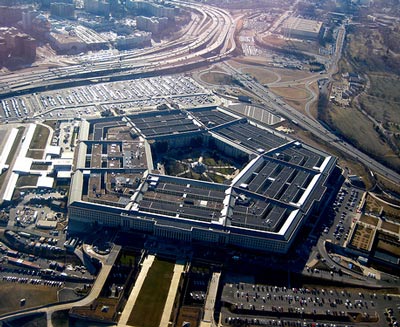
pentagon3
In late December, 2013 the Department of Defense released a database on the military’s controversial Student Testing Program in 11,700 high schools across the country.  An examination of the complex and contradictory dataset raises serious issues regarding student privacy and the integrity of the Student Testing Program in America’s schools.
The data was released after a protracted Freedom of Information Act (FOIA) request.
See the State ASVAB Databases and the National Database.
The DoD’s Freedom of Information office reports that 678,000 students participated in the Armed Services Vocational Aptitude Battery Career Exploration Program (ASVAB-CEP) during the 2012-2013 school year, down nearly 10% from the previous school year. The three-hour test is the linchpin of the Pentagon’s school-based recruiting program and provides the Military Entrance Processing Command (USMEPCOM) an invaluable tool in prescreening candidates for military service.
 The ASVAB is the military’s entrance exam that is given to fresh recruits to determine their aptitude for various military occupations. Since 1968 the test has also been used as a recruiting tool in high schools. It’s used by USMEPCOM to gain sensitive, personal information on high school students, the vast majority of whom are under the age of 18. Students typically take the test at school without parental consent and often without parental knowledge.
The Pentagon admits military testing in the nation’s schools is a crucial component of maintaining an “all-volunteer” force. In recent years military recruiting has evolved into an exceptionally sophisticated psychological campaign aimed at enticing high school children to enlist. From a myriad of social websites and a host of other sources, recruiters may know, before first contact, that a young man reads wrestling magazines, weighs 155, can bench press 230, drives a ten year-old truck, listens to “classic rock,” and enjoys fly fishing.  They know where his girlfriend stands on his looming decision to enlist. But the ASVAB opens the door to a student’s cognitive abilities, something recruiting services can’t purchase or find on line. A child’s virtual social being, his intellectual capabilities, and mechanical aptitude are combined to create a precise, virtual portrait, all before a recruiter’s first contact.
 In 1974 The Educational Rights and Privacy Act (FERPA) stood in the way of the DoD’s carte blanche access to student education records. The law, which is still in effect today, requires a signed parental release statement before “education records” are released to third parties.  The Pentagon’s position, explained in the ASVAB Counselor Guide (See page 14)  is that the ASVAB is proctored by DoD personnel and that ASVAB results become education records only after the test is scored by the DoD and returned to the school.  This way, the brass argues, ASVAB results are not education records. Instead, they’re “military records”. ASVAB results are the only information about students leaving American schools without providing for parental consent.
 USMEPCOM Regulation 601-4 (Section 3) identifies several options schools have regarding the administration and release of ASVAB information. These options range from Option 1, which permits test results and other student information to be released to military recruiters without prior consent, to Option 8, the only one that prevents test results from being used for recruiting purposes. The problem is that many, if not most school administrators are unaware the release options exist and USMEPCOM officials are not going out of their way to tell them. Coalition partners in several states report telling hundreds of school officials who did not know about release options.
Inaction on the part of a school will cause USMEPCOM to automatically select Option 1.
53% of all students taking the ASVAB across the country did so under Release Option 1. Students and parents may not determine which release option is used; therefore they cannot opt out of releasing the information individually.  Just 15% of students taking the ASVAB had Option 8 selected by school officials.
DoD officials wash their hands of the privacy issue. “Whether or not a school official seeks students’ or parents’ or guardians’ permission is entirely up to that school, and we don’t have anything to say about that at all,” said Curtis Gilroy, the Pentagon’s prior Director of Accession Policy during an NPR Interview in 2010.
Meanwhile, the DOD markets the ASVAB in high schools without revealing its tie-in to the military or its primary function as a recruitment tool. School counselors and administrators encourage students to take the test that many claim assists students in matching their abilities with certain career paths. It is terribly deceptive.

A Snapshot of the data
INDICATOR                        2011-2012                   2012-2013

Total Tested                  752,758                       678,248
 Total Schools                  11,754                         11,741
 # Students Option 8     122,636                      105,222
 % Option 8                         16.29                           15.51
 # Schools Option 8           2177                            2408
 # Schools Mandatory        1219                              938

Mandatory Testing
Pursuant to the FOIA request, the data released by the DoD contains a column that identifies whether the test was mandatory for students. The data shows that 931 schools required nearly 50,000 students to take the test.
 Interestingly, military regulations forbid recruiters from suggesting the ASVAB be made mandatory. According to USMEPCOM Regulation 601-4,
“School and student participation in the Student Testing Program is voluntary. DOD personnel are prohibited from suggesting to school officials or any other influential individual or group that the test be made mandatory. Schools will be encouraged to recommend most students participate in the ASVAB CEP. If the school requires all students of a particular group or grade to test, the Military Entrance Processing Command will support it.”
School officials in several states are under the impression that ASVAB testing is mandated by federal law.  For instance, counselors in Nebraska have reported they’ve been told by recruiters that testing is required.
Kevin Haake of the Nebraska Coalition to Protect Student Privacy explains it this way, “We’d rather not have the military actively recruiting in our schools but I don’t see an egregious violation of civil rights when a couple of  kids voluntarily sign up to take this military test.  It’s another matter when entire classes of children are told they’ve got to take this thing and all their information is shipped to the Pentagon without mom and dad knowing about it.”
 The line between mandatory and voluntary testing is blurred with U.S. Army Recruiting Command Regulation  601-107 page 25 Item 8 which ranks each high school based on how receptive it is to military recruiters. Schools are awarded extra points when they make the ASVAB mandatory.
 Regardless of the perceptions of school officials concerning the voluntary or mandatory nature of the testing regime many principals and counselors are sold on the utility of the ASVAB as a useful career exploration program that assists students in determining career paths.  Critics claim 16 year-olds are generally clueless regarding the “careers” they may eventually choose. They say the test fails miserably in this regard – and they’re not alone.
The U.S. Marine Corps Military Personnel Procurement Manual contains the following,
“The ASVAB is used by the Armed Forces for recruiting purposes and by school counselors for vocational guidance counseling. The ASVAB’s ability for determining civilian job skills has not yet been proven.” See Sec. 4104 3b (pg 237 of this document)
It’s mind boggling.
Once the test is administered and scored, the recruiting command sends recruiters to the schools after the tests are scored to discuss “career paths” with students.
 The military has done a tremendous job marketing the program in high schools across the country.   American high schools are blanketed with posters and announcements that read like this:
“Explore your interests. Expand your horizons. Realize your strengths. Realize your dreams. Start opening doors to your future. Participate in the ASVAB Career Exploration Program on (DATE). It’s free! See your counselor to register today.”  See ASVAB Snippets.
The Pentagon’s marketing to students in the high schools never explains what “ASVAB” stands for and never mentions the primary purpose of the testing regime, which is to procure leads for recruiters. Its website, http://www.asvabprogram.com/ looks nothing like a DoD site and buries any mention of the military.
Do huge numbers voluntarily take the test?
The database purports to reflect the number of schools and students that participate in mandatory testing but there are several problems with its accuracy.
 The ASVAB provides the first, massive, national litmus test for enlistment.  Consider five schools in the Miami area. North Miami Beach HS tested 855. It has a minority population of 96%..  Coral Gables HS tested 695 with a minority population of 90%.   Coral Park HS had 429 take the test. It has a minority population of  96% Miami Central High School tested 645 and Miami Northwestern HS sat down 642. Both have minority populations of 99%.  None of these five schools are listed in the DoD database as having “mandatory” testing and there’s no evidence online that students were required to take the test.
Voluntary?
 A web search of seven Michigan high schools listed in the newly released data as “Not Mandatory” clearly shows that students are required to take the ASVAB.  Pickford, Watersmeet, Goodrich, Manistique Lake Linden, Rapid River, and Ironwood High Schools all force students to take the test.
 Munford High School in Munford Tennessee tested 855 but is listed in the database as not mandatory.  Perhaps patriotism is rampant in Munford, but how, exactly, do they manage to get 855 teenagers to voluntarily sit for three hours to take a military exam?
 Scranton High School in Arkansas is listed as being mandatory for all grades but only 11 students took the test, according to the data.  Scranton has a total enrollment of 181.  It begs the question: Just how many students are required to take the test in Arkansas? Last year the state led the nation with more than 10,000 students being forced to take the ASVAB. After a robust email campaign to school officials, that number has dropped to 7,333 although 140 schools still require students to take the test.  (That’s an average of 52 per school.)  One school counselor explained that the test has always been required and no one had ever complained. Certainly there have been no complaints from the Military Entrance Processing Command in Little Rock, until now, perhaps.
 Two important questions remain concerning mandatory testing, despite the data. How can we tell from the statistics furnished by the DoD exactly how many are taking the test and how do we know if a school requires students to take the ASVAB?  If the Pentagon admits there are nearly a thousand schools that require military testing, how many are there, really? There’s never been outside accountability. This is tragically ironic because we’re dealing with the most sensitive information the state can possess regarding our children.
 According to the data, 6,536 schools or 56% of the total nationally, tested ten or fewer children, comprising just 6% of the total number of students tested.  Most of these children, it may reasonably be assumed if the data is accurate, were offered the opportunity to participate, rather than being required to do so.
 The average American high school has an enrollment of 595 students and the average junior class has about 120 students.  If our hypothetical high school has 120 juniors what number of juniors tested might provide us a clue that the test was required?  Alternately, how small must the number of test takers be to reasonably demonstrate the voluntary nature of the exam?
 There have been numerous press reports concerning student and parent dissatisfaction with mandatory military testing. Often, juniors and seniors use these ASVAB testing days to simply skip school, reducing the numbers of those being tested.  3,600 schools tested more than 50 students. Is it reasonable to assume that these students were required to do so?   Is it a stretch to suggest that the number of children in America that are forced to take the ASVAB is substantially higher than what the Pentagon publicly admits?
 The U.N. weighs in on mandatory testing
 In early 2013 The UN’s Committee on the Rights of the Child called on the Obama Administration to “Ensure that schools, parents and pupils are made aware of the voluntary nature of the ASVAB before consenting to the participation into it.”  See the  Concluding observations on the Second Report of the United States of America, Adopted by the Committee on the Rights of the Child at its sixty-second session (14 January–5 2013) regarding the  Optional Protocol on the Involvement of Children in Armed Conflict
http://www2.ohchr.org/English/bodies/crc/docs/co/CRC_C_OPAC_USA_CO_2.doc
The Committee had previously found that “Parents and children are often unaware of the voluntary nature of the Armed Services Vocational Aptitude Battery (ASVAB) test organized in schools or its links to the military and that in some instances students were reportedly informed that the test was mandatory.”
Members of the Committee in Geneva found it incredulous that a thousand American schools force underage children to take this military test without parental consent. 
 The United States ratified the Optional Protocol to the Convention on the Rights of the Child on the Involvement of Children in Armed Conflict (OPAC) in 2002.  Article 3.3 of OPAC states that recruitment practices involving minors should be voluntary. Forced military testing in American public schools for recruitment purposes without parental consent violates the treaty. In late 2012 the Obama Administration denied the mandatory nature of the testing regime. The US replied to the Committee,“Participation in the ASVAB CEP is entirely voluntary. DOD does not require schools to participate, nor does it require schools to test all students within a participating school.”
 The ASVAB is “free”
There is a compelling financial reason why so many take the ASVAB.  It is often the only “free” assessment on “test day”.   A third of all high school students are not college bound.  If these students are offered a choice between taking the PSAT which is a college entrance exam and involves paying a fee — or taking the ASVAB which is free, they’ll typically pick the ASVAB.  The military will list these children as voluntarily taking the ASVAB, although they’re actually forced to do so.
 At Crown Point HS in Indiana,
“11th grade students that wish to take the PSAT, and potentially qualify for national merit scholarships, will be required to pay $14.00.  Juniors may register to take the PSAT in room c-203 from September 7-14th.   11th grade students that do not wish to take the PSAT will be administered the ASVAB exam. The ASVAB exam is free of charge.”
Crown Point tested 469 students last year and they’re listed as not mandatory. All had their results shipped to recruiting services without parental consent.
 It’s the same deal at Woodridge High School in Ohio,
“Juniors may take the PSAT or the ASVAB.  The cost of the PSAT is $14, Students register for the PSAT in Guidance and the deadline is September 16, 2013. There is no cost for the ASVAB.”  The DoD lists Woodridge as “not mandatory”.
 Administrative and Legislative Inroads by the DoD
 New Jersey allows the ASVAB to be used as a substitute for mandatory graduation tests.  The guidelines call for receiving a 31 on the AFQT, the Armed Services Qualifying Test. The ASVAB is used to calculate the AFQT.  A 31 is the minimum score for enlistment in the Army.  A 31 on the AFQT  is roughly comparable to 5th or 6th grade proficiency in reading and math.
 Kentucky calls for a 55 on the AFQT for a student to earn a diploma. A 55 on the AFQT is the same as a composite SAT score of 840, according to the widely distributed ASVAB Concordance Table provided by the recruiting command.  An 840 on the SAT won’t open college doors. It represents the bottom 5th of national SAT scores. A 55, however, opens the door to a host of military occupations.  Kentucky, it should be noted, allows the military access to all student academic records upon request by any agency of the federal or state government for the purpose of determining a student’s eligibility for military service. It’s the worst law in the nation.
Mississippi’s Department of Education is close to allowing students who score a 36 or better on the ASVAB in addition to a passing score on a state vocation test or approved industry certification to receive a high school diploma. The Magnolia State’s board of education is seeking public input and is widely expected to approve the changes in January of 2014. The proposed policy does not address privacy concerns.
 In Minnesota a new policy allows students to take the ASVAB to meet graduation assessment requirements in reading, mathematics and writing.
 Missouri schools now encourage the universal use of the ASVAB and track all ASVAB scores as an integral part of the state’s school improvement program.
 Missouri and Kentucky alone tested 21,000 more students than they did last year.  The rapid decline in the popularity of the testing regime nationally is somewhat arrested by these developments. Meanwhile, the vast majority of these new test takers had their personal information sent to military recruiting services without parental consent, undermining the efforts of privacy advocates.
 The Military Entrance Processing Command is also aided by a dozen state governors who have issued proclamations calling on all students to take the ASVAB.  In 2008 Alaska’s Governor Palin became one of the first to proclaim ASVAB Career Exploration Month although no arrangements were made in Alaska or any other state to protect student privacy.
 We’re witnessing the institutionalization of a direct informational pipeline to the Military Entrance Processing Command.
Psychology 101
School officials often ask, “What’s the problem with sharing student information with the recruiting command?”
Some aren’t too smart and they can get killed would be the answer.
Military recruiting is an exceptionally sophisticated psychological program aimed at enticing high school children. The American Public Health Association (APHA) has called for the cessation of military recruiting in the nation’s high schools, citing the vulnerable stage of brain development of youth and their “limitations in judging risk at this stage in life. They are unable to fully evaluate the consequences of making a choice to enter the military.”  The APHA specifically calls for the end to military testing in the high schools.
Patterns of Obfuscation
In 2010 Maryland became the first state to pass a law requiring the universal selection of Option 8 for all high school students taking the ASVAB.  When the bill was working its way through the legislature, the USMEPCOM Battalion Commander at Fort George G. Meade warned school officials and legislators of a “disinformation campaign” regarding the school testing program.  The Colonel wrote that the efforts to encourage schools to select Option 8 are “bent on disrupting any effort to build, support, or sustain the military.”
It is apparent the Pentagon has orchestrated a “disinformation” campaign of its own.
Guidance counselors in high schools in a dozen states across the country have said they were told by MEPS personnel that privacy concerns are misplaced because students sign a “Privacy Act Statement” that is part of the ASVAB answer sheet.  It is a very familiar refrain.  The counselors are led to believe that the Privacy Act Statement gives students notice of the release of test results to military recruiters and provides student consent for the release of information.  The statement, however, says nothing about recruiter contact. The statement is not a proper waiver of rights because it does not disclose that ASVAB test results may be used for recruitment purposes, and it does not do away with the obligation to obtain consent from a parent or guardian when a student is under age 18. This is precisely where the program runs afoul of state laws.
See the 2013 report Best Practices for ASVAB-CEP Administrationfrom Rutgers Law School. The report makes a compelling case that high school counselors have both legal and professional responsibilities to ensure that ASVAB student test information is not automatically released to military recruiters.
Another misperception spread by the recruiting command is the notion that the “Opt Out” law covers ASVAB testing.  Every fall parents of American high school children are provided the opportunity to “opt out” of information being forwarded to recruiting services pertaining to their children. If parents haven’t “opted out”, the reasoning goes, their kids are fair game for the ASVAB.   The “opt out” law is found in Section 9528 of the Elementary and Secondary Education Act (ESEA) and is limited to the release of a student’s name, address, and phone number.  The ASVAB, on the other hand, provides an in-depth cognitive picture of a student, along with detailed demographic information and social security number. ESEA doesn’t regulate ASVAB testing.
Still, another obfuscation practiced by USMEPCOM is the use of ASVAB Test Request Forms that are distributed to high school administrators that purposely leave off Option 8.  See this form distributed by the recruiting command to school administrators in Prince George’s County, Maryland.  School officials were so incensed they supported an effort that resulted in passing a law that mandates the selection of Option 8 across the state.
Another reprehensible practice involves recruiters who lurk on internet chat rooms like Yahoo Answers. It’s a way for Staff Sergeants to procure leads to meet their monthly quotas and sometimes it’s laughable. Consider this post in mid-December, 2013,
“I’m a junior in high school (17) and I took the ASVAB. When I was taking the test it didn’t seem hard. Yes it was timed, and I have test anxiety. I think that’s why I did so poorly. I made a score of 16. I cried afterwards because one, I felt stupid, and two, I want to join the military and I know getting a 16 won’t qualify me for any jobs. I am planning on joining the Marine Corp. I know you’re probably going to tell me to study. But can you give me some good advice on what to do to keep my head up and keep trying?”
A score of 16 would mean our Yahoo friend is functionally illiterate. A 16 roughly equates to a 2nd grade level and is half of the score necessary to enlist in the Army.  Several of the comments alluded to the contradiction between the claimed score of 16 and the rather well written question.  Yahoo Answers enforces Community Guidelines.  Under the heading “Exploiting the Community” Yahoo requires participants “to be responsible and don’t misrepresent yourself or claim false credentials… Yahoo Answers is a place to gain knowledge, not customers.”
Yahoo is quick to remove these miscreants and has done so a dozen times.
The question has been deleted.
The greatest fallacy perpetrated by the Pentagon is their insistence that ASVAB testing is not subject to the Family Educational Rights and Privacy Act. It is ludicrous to suggest that ASVAB results are not education records because the military, instead of the school, proctors the test. Although the recruiting command may send one civilian employee to officially administer the exam, it is school employees who market the test over several weeks, assemble and keep track of students, and provide much of the work controlling a large group of teenagers for a few hours.
It’s unconscionable that ASVAB results are the only information leaving American schools regarding children without providing for parental consent, but the tide is turning.
Diane Wood with the Texas Coalition to Protect Student Privacy reflects common sense Lone Star State attitudes, “I support the military but I got fired up when I discovered this egregious violation of civil liberties that’s been going on entirely unnoticed.  I don’t care if it’s the Department of Defense or who ever. The thing that’s surprised me is that this privacy campaign has resonated with Tea Party activists down here.  We all see ASVAB testing as an unwarranted and illegal federal incursion into our lives.”  It’s a peculiar campaign that attracts allies on opposite ends of the political spectrum.
Wood’s tireless organizing and her testimony to the nationally maligned Texas State School Board probably contributed to Texas testing 6,600 fewer students in 2012-2013 than the year before.  In Texas Option 8 rates increased from 14.7% to 15.5% while the number of students forced to take the test shrunk from 15,805 to 4,825 and the number of  schools requiring students to take the ASVAB decreased from 181 to 70.
In many states, smart, targeted community activism has been shown to translate into quantifiable results.
Barbara Harris with the New York Coalition to Protect Student Privacy has been at it for years and has helped to eliminate mandatory testing in the Empire State. “We’ve witnessed several trends here in New York. The number of test takers continues to drop, the percentage of schools that have selected Release Option 8 continues to rise, and mandatory testing has disappeared. I’m hopeful we’ll soon get the Board of Regents to mandate Option 8 across the state.”
It’s the same in Connecticut and Massachusetts. Seth Kershner with the Connecticut Coalition to Protect Students Privacy reports, “Testing numbers in Connecticut and Massachusetts have plummeted in recent years to about 4,000 in each state. There’s no mandatory testing. Nearly half of the students being tested do so under Option 8.  We’re hoping to duplicate successes in Hawaii and Maryland and have policies or laws enacted that mandate Option 8.”
Oregon’s school officials have responded to our campaign.  Don Chapin with the Oregon Coalition to Protect Student Privacy reports that 57.2 % of students taking the test have Option 8 selected. See the statistics on the National Coalition’s website www.studentprivacy.org
Will Hopkins with the Coalition in New Hampshire has lobbied to introduce a bill in the New Hampshire. HB 1321 mirrors Maryland’s law.
 Outreach to moderate school board members in the north citing privacy concerns are often taken into consideration, resulting in policy changes.  In the South and the Midwest, however, many responses have been hostile, especially after school officials consult with their local military entrance processing command.
If the Pentagon called the shots across the country every high school student would be subjected to taking the ASVAB for enlistment purposes.  The program is fraudulent but it is sponsored by the military, a sacrosanct institution that remains above constitutional restraint and the rule of law in the view of many American school officials and state legislators.  We must convince them otherwise.
Pat Elder is the Director of the National Coalition to Protect Student Privacy. www.studentprivacy.org     

The Left after The Failure of Obamacare

yea the rats are leaving .....but folks the $$$$$$$$$$$$$$$$$$$$$$$$$$  these motherfuckers r pissing away !!!  whats gonna b left  folks ?  WE THE PEOPLE holding our cocks & twats ....that's what   :0     


healthcare1
It’s satisfying to watch rats flee a sinking ship.  This is because onlookers knew the ship was doomed long ago, and swimming rats signify that the drawn-out tragedy is nearing an end.  A collective sense of relief is a natural response.
The rats who propped up the broken boat of Obamacare are a collection of liberal and labor groups who frittered away their group’s resources—and integrity— to sell a crappy product to the American people.
Those in the deepest denial went “all in” for Obamacare— such as some unions and groups like Moveon.org— while the more conniving groups and individuals—like Michael Moore— playacted “critical” of Obamacare, while nevertheless declaring it “progressive”, in effect adding crucial political support to a project that deserved none.
But of course Obamacare was always more barrier than progress: we’ve wasted the last several years planning, debating, and reconstructing the national health care system, all the while going in the wrong direction— into the pockets of the insurance mega corporations.    A couple of progressive patches on the sails won’t keep her afloat.  It’s shipbuilding time.
It was painful to watch otherwise intelligent people lend support to something that’s such an obviously bad idea.  So it’s with immense relief that liberals like Michael Moore, labor groups, and others are finally distancing themselves from Obamacare’s Titanic failure.   Now these individuals and groups can stop living in denial and the rest of us can proceed towards a rational discussion about a real health care solution.
The inevitable failure of Obamacare is not due to a bad website, but deeper issues.   The hammering of the nails in the coffin has begun:  millions of young people are suddenly realizing that Obamacare does not offer affordable health care.  It’s a lie, and they aren’t buying it, literally.
The system depends on sufficient young people to opt in and purchase plans, in order to offset the costs of the older, higher-needs population.    Poor young people with zero disposable income are being asked to pay monthly premiums of $150 and more, and they’re opting out, inevitably sinking Obamacare in the process.
Those young people who actually do buy Obamacare plans—to avoid the “mandate” fine— will be further enraged when they attempt to actually use their “insurance”.   Many of the cheapest plans—the obvious choice for most young people— have $5,000 deductibles before the insurance will pay for anything.   For poor young people this is no insurance at all, but a form of extortion.
At the same time millions of union members are being punished under Obamacare: those with decent insurance plans will suffer the “Cadillac” tax, which will push up the cost of their healthcare plans, and employers are already demanding concessions from union members in the form of higher health care premiums, co-pays, deductibles, etc.
Lower paid union workers will suffer as well.  Those who are part of the Taft Hartley insurance plans will be pressured to leave the plans and buy their own insurance, since they cannot keep their plans and get the subsidy that the lowest income workers get.   This has the potential to bust the whole Taft Hartley health care system that millions of union members benefit from, which is one of the reasons that labor leaders suddenly became outraged at Obamacare, after having wasted millions of union member’s dollars propping it up.
 Ultimately, the American working class will collectively cheer Obamacare’s demise.   They just need labor and other lefties to cheer lead its destruction a little more fiercely.
 Surprisingly, most of the rats are still clinging to Obama’s hopeless vessel, frantically bailing water.  Sure they’ve put on their life preservers and anxiously eyeing the lifeboats, but they’re also preaching about how to re-align the deckchairs.
For example, in his “critical” New York Times op-ed piece, Michael Moore called Obamacare “awful”, but also called it a “godsend”, singing his same tired tune.   Part of Moore’s solution for Obamacare—which was cheered on in the Daily Kos— is equally ludicrous, and follows his consistently flawed logic that Obamacare is worth saving, since its “progress” that we can build on.   Moore writes:
“Those who live in red [Republican dominated] states need the benefit of Medicaid expansion [a provision of Obamacare]…. In blue [Democrat dominated] states, let’s lobby for a public option on the insurance exchange — a health plan run by the state government, rather than a private insurer.”
This is Moore at his absolute worst.  He’s neck deep in the flooded hull of the U.S.S Obamacare and giving us advice on how to tread water.
Of course Moore doesn’t criticize the heart of Obamacare, the individual mandate, the most hated component.
 Moore also relies on the trump card argument of the pro-Obamacare liberals: there are progressive aspects to the scheme—such as the expansion of Medicaid— and therefore the whole system is worth saving.
 Of course it’s untrue that we need Obamacare to expand Medicaid.  In fact, the expansion of Medicaid acted more as a Trojan horse to introduce the pro-corporate heart of the system; a horse that Moore and other liberals nauseatingly continue to ride on.
But Moore’s sneakiest argument is his advice to blue states to  “…lobby for a public option on the insurance exchange…”
Again, Moore implies that it’s ok if we are “mandated” to buy health insurance, so long is there is a public option.  But that aside, the deeper scheme here is that Moore wants us to further waste our energy “reforming” Obamacare, rather than driving it to the bottom of the sea.
Moore surely knows that very few people are going to march in the streets demanding a public option at this point; he therefore knows that even this tiny reform of the system is unachievable. He’s wasting our time.  Real change only happens in politics when there is a surge of energy among large sections of the population, and it’s extremely unlikely that more than a handful of people are going to be active towards “fixing” Obamacare— they want to drown it.
Moore’s attempt to funnel people’s outrage at Obamacare towards a “public option” falls laughably short, and this is likely his intention, since his ongoing piecemeal “criticisms” of the system have only served to salvage a sunken ship.
Instead of wasting energy trying to pry Obamacare out of the grip of the corporations, Moore would be better served to focus exclusive energy towards expanding the movement for Medicare For All, which he claims that he also supports, while maintaining that somehow Obamacare will evolve into Single Payer system.
Most developed nations have achieved universal health care through a single payer system, which in the United States can be easily achieved by expanding Medicare to everybody.  Once the realities of Obamacare directly affect the majority of the population and exacerbates the crisis of U.S. healthcare, people will inevitably choose to support the movement of Medicare for All, the only real option for a sane health care system.
Shamus Cooke is a social service worker, trade unionist, and writer for Workers Action (www.workerscompass.org).  He can be reached at shamuscooke@gmail.com
Notes
http://www.dailykos.com/story/2013/11/22/1257552/-It-s-Inequality-Stupid-Defending-Affordable-Healthcare
http://www.aflcio.org/About/Exec-Council/Conventions/2013/Resolutions-and-Amendments/Resolution-54-AFL-CIO-Convention-Resolution-on-the-Affordable-Care-Act
http://www.nytimes.com/2014/01/01/opinion/moore-the-obamacare-we-deserve.html?_r=0

Fukushima Meltdowns: A Global Conspiracy of Denial


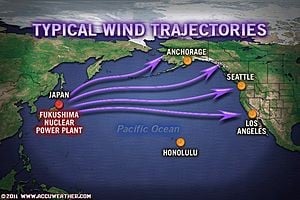
fukushima-radiation-wind-trajectories
Does anyone in authority anywhere tell the truth about Fukushima? 
 If there is any government or non-government authority in the world that is addressing the disaster at Fukushima openly, directly, honestly, and effectively, it’s not apparent to the outside observer what entity that might be.
There is instead an apparent global conspiracy of authorities of all sorts to deny to the public reliably accurate, comprehensible, independently verifiable (where possible), and comprehensive information about not only the condition of the Fukushima power plant itself and its surrounding communities, but about the unceasing, uncontrolled release of radioactive debris into the air and water, creating a constantly increasing risk of growing harm to the global community. 
While the risk may still be miniscule in most places, the range of risk rises to lethal in Fukushima itself. With the radioactive waste of four nuclear reactors (three of them in meltdown) under uncertain control for almost three years now, the risk of lethal exposure is very real for plant workers, and may decrease with distance from the plant, but may be calculable for anyone on the planet. No one seems to know. No one seems to have done the calculation. No one with access to the necessary information (assuming it exists) seems to want to do the calculation.
 There is no moral excuse for this international collusion. The excuses are political or economic or social, but none of them excuses any authority for withholding or lying about information that has potentially universal and destructive impact on everyone alive today and everyone to be born for some unknown generations. 
 Japanese authorities may be the worst current offenders against the truth, as well as the health and safety of their people. Now the Japanese government has passed a harsh state secrets law that threatens to reduce or eliminate reliable information about Fukushima. The U.S. government officially applauded this heightened secrecy, while continuing its own tight control on nuclear information. Japanese authorities are already attacking their own people in defense of nuclear power: not only under-measuring and ignoring varieties of radioactive threat, but even withholding the iodine pills in 2011 that might have mitigated the growing epidemic of thyroid issues today. Failing to confront Fukushima honestly, the Japanese are laying the basis for what could amount to a radiological sneak attack on the rest of the world.
Just because no one seems to know what to do about Fukushima is no excuse to go on lying about and/or denying the dimensions of reality, whatever they might be.
There are hundreds, probably thousands of people with little or no authority who have long struggled to create a realistic, rational perspective on nuclear threats.  The fundamental barrier to knowing the scale of the Fukushima disaster is just that: the scale of the Fukushima disaster.
Chernobyl 1986 and Fukushima 2011 are not really comparable
Chernobyl is the closest precedent to Fukushima, and it’s not very close. Chernobyl at the time of the 1986 electric failure and explosion had four operating reactors and two more under construction. The Chernobyl accident involved one reactor meltdown. Other reactors kept operating for some time after the accident. The rector meltdown was eventually entombed, containing the meltdown and reducing the risk. Until Fukushima, Chernobyl was considered the worst nuclear power accident in history, and it is still far from over (albeit largely contained for the time being). The Chernobyl Exclusion Zone of roughly 1,000 square miles remains one of the most radioactive areas in the world and the clean-up is not even expected to be complete before 2065. 
 At the time of the March 11, 2011, earthquake and tsunami, the Fukushima plant had six operating reactors. Three of them went into meltdown and a fourth was left with a heavily laden fuel pool teetering a hundred feet above the ground. Two other reactors were undamaged and have been shut       down. Radiation levels remain lethal in each of the melted-down reactors, where the meltdowns appear to be held in check by water that is pumped into the reactors to keep them cool. In the process, the water gets irradiated and that which is not collected on site in leaking tanks flows steadily into the Pacific Ocean. Within the first two weeks, Fukushima radiation was comparable to Chernobyl’s and while the levels have gone down, they remain elevated.
 The plant’s corporate owner, Tokyo Electric Power Company (TEPCO), in turn effectively owned by the Japanese government after a2012 nationalization, began removing more than 1,500 fuel rod assemblies from the teetering fuel pool in November, a delicate process expected to take a year or more. There are additional fuel pools attached to each of the melted down reactors and a much larger general fuel pool, all of which contain nuclear fuel rod assemblies that are secure only as long as TEPCO continues to cool them. The Fukushima Exclusion Zone, a 12-mile radius around the nuclear plant, is about 500 square miles (much of it ocean); little specific information about the exclusion zone is easily available, but media coverage in the form of disaster tourism is plentiful, including a Google Street View interactive display.   
 Despite their significant differences as disasters, Chernobyl and Fukushima are both rated at 7 – a “major accident” on the International Nuclear Event Scale designed in 1990 by the International Atomic Energy Agency (IAEA). That is the highest rating on the scale, a reflection of the inherent denial that colors most official nuclear thinking. Designed by nuclear “experts” after Chernobyl, the scale can’t imagine a worse accident than Chernobyl which, for all its intensity, was effectively over as an accident in a relatively short period of time. At Fukushima, by contrast, the initial set of events was less acute than Chernobyl, but almost three years later they continue without any resolution likely soon. Additionally Fukushima has three reactor meltdowns and thousands of precarious fuel rod assemblies in uncertain pools, any of which could produce a new crisis that would put Fukushima clearly off the scale. 
 And then there’s groundwater. Groundwater was not a problem at Chernobyl. Groundwater is a huge problem at the Fukushima plant that was built at the seashore, on a former riverbed, over an active aquifer. In a short video, nuclear engineer Arnie Gunderson makes clear why groundwater makes Fukushima so hard to clean up, and why radiation levels there will likely remain dangerous for another hundred years.
Fukushima Unit #3 activity led to some panic-driven reporting in 2013
 The Japanese government and nuclear power industry have a history of not telling the truth about nuclear accidents dating back at least to 1995, as reported by New Scientist and Rachel Maddow, among others. Despite Japan’s history of nuclear dishonesty, Japanese authorities remain in total control of the Fukushima site and most of the information about it, without significant objection from most of the world’s governments, media, and other power brokers, whose reputation for honesty in nuclear matters is almost as bad as Japan’s. In such a context of no context, the public is vulnerable to reports like this from the Turner Radio Network (TRN) on December 28:  
Five days after this story was posted, the “radiation cloud” had not developed despite the story’s assertion that: “Experts say this could be the beginning of a ‘spent fuel pool criticality (meltdown)’ involving up to 89 TONS of nuclear fuel burning up into the atmosphere and heading to North America.” The story named no “experts” and provided links only to TEPCO announcements in Japanese. The bulk of the story reads like an infomercial for “protective” gear of various sorts that TRN makes a point of saying it does NOT sell.  Despite such obvious warning signs, others – such as The Ecologist and Gizmodo – reported the threat of “another meltdown” at Fukushima Unit #3 as imminent. 
Clarification and reassurance quickly started chasing the “new meltdown” rumor around the Internet. ENENEWS (Energy News) promptly posted the TEPCO reports in English, demonstrating that there was nothing “sudden” about the steam releases, they’ve been happening more or less daily since 2011, but condensation caused by cold weather makes them visible. At FAIREWINDS (Energy Education), Arnie Gunderson posted on January 1: 
“… the Internet has been flooded with conjecture claiming that Fukushima Daiichi Unit 3 is ready to explode…. Our research, and discussions with other scientists, confirms that what we are seeing is a phenomenon that has been occurring at the Daiichi site since the March 2011 accident…. While the plants are shutdown in nuke speak, there is no method of achieving cold shut down in any nuclear reactor. While the reactor can stop generating the actual nuclear chain reaction, the atoms left over from the original nuclear chain reaction continue to give off heat that is called the decay of the radioactive rubble (fission products)…. constantly releasing moisture (steam) and radioactive products into the environment.” [emphasis added]   
In other words, Fukushima Unit #3 continues to leak radioactivity into both air and water, as Units #1 and #2 presumably do as well. But as Gunderson explains, the level of radioactivity has declined sharply without becoming benign:
 “When Unit 3 was operating, it was producing more than 2,000 megawatts of heat from the nuclear fission process (chain reaction in the reactor). Immediately after the earthquake and tsunami, it shut down and the chain reaction stopped, but Unit 3 was still producing about 160 megawatts of decay heat. Now, 30 months later, it is still producing slightly less than 1 megawatt (one million watts) of decay heat…. 1 megawatt of decay heat is a lot of heat even today, and it is creating radioactive steam, but it is not a new phenomenon.” 
 Reassurances about Fukushima are as misleading as scare stories
The reassuring aspects of the condition of Unit #3 ­– radioactive releases are not new, they’re less intense than they once were, the nuclear waste is cooling ­– while true enough, provide only a false sense of comfort. Also true: radiation is released almost continuously, the releases are uncontrolled, no one seems to be measuring the releases, no one seems to be tracking the releases, no one is assessing accumulation of the releases. And while it’s true that the waste is cooling and decaying, it’s also true that a loss of coolant could lead to another uncontrolled chain reaction. (“Fukushima Daiichi Unit 3 is not going to explode,” says Gunderson in a headline, but he can’t know that with certainty.)
 For the near future, what all that means, in effect, is that the world has to accept chronic radiation releases from Fukushima as the price for avoiding another catastrophic release. And even then, it’s not a sure thing.
But there’s another aspect of Fukushima Unit #3 that’s even less reassuring. Unit #3 is the one Fukushima reactor that was running on Mixed oxide fuel, or MOX fuel, in its fuel rods. MOX fuel typically uses Plutonium mixed with one or more forms of Uranium. Using Plutonium in fuel rods adds to their toxicity in the event of a meltdown. In part because Plutonium-239 has a half-life of 240,000 years and can be used to make nuclear weapons of “dirty bombs,” its use in commercial reactors remains both limited and controversial. Because it contains Plutonium, MOX fuel is more toxic than other nuclear fuel and will burn at lower temperatures. As Natural Resources News reported in 2011:
 “The mixed oxide fuel rods used in the compromised number three reactor at the Fukushima Daiichi complex contain enough plutonium to threaten public health with the possibility of inhalation of airborne plutonium particles…. Plutonium is at its most dangerous when it is inhaled and gets into the lungs. The effect on the human body is to vastly increase the chance of developing fatal cancers.”
Reportedly, TEPCO plans don’t call for the removal of the MOX fuel in Unit #3 for another decade or more. Fuel removal from Units #1, #2, and #3 is complicated by lethal radiation levels at all three reactors, as well as TEPCO’s inability so far to locate the three melted cores with any precision.
There is ample reason to hope that Fukushima, despite the complex of uncontrollable and deteriorating factors, will not get worse, because even the Japanese don’t want that. But there is little reason to expect anything but  worsening conditions, slowly or suddenly, for years and years to come. And there is even less reason to expect anyone in authority anywhere to be more than minimally and belatedly truthful about an industry they continue to protect, no matter how many people it damages or kills. 
The perfect paradigm of that ruthlessly cynical nuclear mentality is the current Japanese practice of recruiting homeless people to work at Fukushima in high level radiation areas where someone with something to lose might not be willing to go for minimum wage.