---BREAKAWAY CIVILIZATION ---ALTERNATIVE HISTORY---NEW BUSINESS MODELS--- ROCK & ROLL 'S STRANGE BEGINNINGS---SERIAL KILLERS---YEA AND THAT BAD WORD "CONSPIRACY"--- AMERICANS DON'T EXPLORE ANYTHING ANYMORE.WE JUST CONSUME AND DIE.---
(Natural News)
A new bombshell development has surfaced in the continuing
investigation into the deadliest mass shooting in U.S. history: The hard
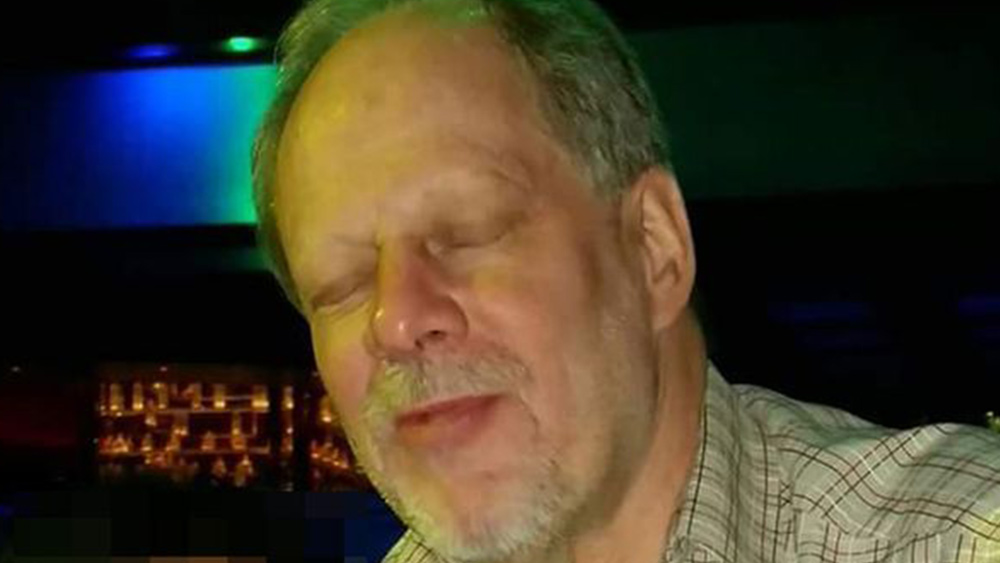
drive of a laptop belonging to Las Vegas shooter Stephen Paddock is
missing, say sources close to the probe. As reported byABC News,
police and other investigators found the laptop in Paddock’s 32nd-story
Mandalay Bay hotel room, from which he rained fire down on a crowd of
22,000 people attending an outdoor country music festival across from
the famed casino/hotel Oct. 1. Reports said 58 people were killed in the
attack and more than 500 wounded. Sources told the news network that authorities were hoping to find
some sort of clue, or motive, on the laptop, but are now stymied because
it’s hard drive has been taken. What’s also odd is that, according to authorities, Paddock had
purchased software that is designed to wipe all data from hard drives,
though it’s not clear whether the software was used on the laptop
because authorities can’t locate the hard drive. What makes this new development particularly odd is that it coincides
with previous reports that the FBI confiscated cellphones and other
personal devices from eyewitnesses of the shooting and wiped them clean
before returning them. YourNewsWirereported that one female eyewitness wrote about the incident in a Facebook post: A bunch of people that worked the Route 91 said they got their
cell phones back today. They all said that all their phones are
completely wiped clean! All messages and info from that weekend are
completely gone. Anyone else experience this? A few different people who
were vendors there are all saying the same thing. Route 91 is the concert venue Paddock attacked. A manager from the venue also confirmed that at least some of the content on his laptop was wiped by the FBI. “Of course,” he wrote on Facebook. “It’s an active federal crime
scene. They can wipe it clean. I was the beverage manager for the entire
event.” Other publications including Infowars reported that they were contacted by others who told the same story. “The fact that all the information relating to the massacre has been deleted is sure to prompt further claims of a cover-up,” YourNewsWire reported. Conservative columnist Ann Coulter has even written about the
inconsistencies in the narrative regarding the shooting given by local
police, which is also making people more suspicious: I don’t know what happened — and, apparently, neither do the cops —
but it’s kind of odd that we keep being told things that aren’t true
about the Las Vegas massacre, from the basic timeline to this weird insistence that Paddock made a good living at gambling. She went on to point out a number of irregularities and issues that
remain unanswered, such as why Paddock checked into his Mandalay Bay
hotel room days earlier than police initially said he did; why was he
wearing gloves if he had planned to commit suicide all along (police
said they determined that he planned to survive the attack); and why the shooter fired “200 rounds at a security guard who was checking on someone else’s room before beginning his massacre” [emphasis added]. (Related: Police: Vegas gunman shot security guard several minutes before rampage) There are other unexplained irregularities too: — One former CIA and intelligence officer said that his sources have told him police already know there was a political motive behind his rampage, but they are loathe to announce it yet. Retired Lt. Col. Tony Shaffer, a Fox News contributor,
said, “My sources tell me they reviewed the information on those videos
and there are things that do lay out some understanding of his
motivation,” he said. — Las Vegas police also said that they had discovered Paddock “lead a
secret double life,” which could also point to a possible motivate
behind the attack. J.D. Heyes is also editor-in-chief of The National Sentinel. Sources include: TheNationalSentinel.com YourNewsWire.com ABCNews.com
(Natural News)
While it seems like there’s no end to
the debate about the legalized use of cannabis, even health experts can
no longer deny that marijuana lets individuals enjoy certain medical
benefits. Several studies have proven that cannabis is a preventative medicine that can reduce the likelihood of developing Alzheimer’s, arthritis, cancer, and certain neurodegenerative diseases. There are studies that have also
gathered proof that cannabis is a viable treatment for chronic pain and
seizures. Others even believe that the regular use of cannabis oil can
help treat cancer. (Related: Cannabis innovators set out to map the marijuana genome: new information could prevent the sale of falsely advertised bud.) Pharmaceutical companies are also
taking advantage of the benefits of the drug by funding the development
of cannabinoid-based medicines. These drugs often contain cannabidiol (CBD) and tetrahydrocannabinol (THC), the two cannabinoids that are responsible for the medicinal properties of the plant. Despite these touted benefits of
cannabis, not many are aware that it is also a good option for those
considering preventative medicine for a number of common health issues.
In 2014, researchers from the University of South Florida and Thomas
Jefferson University collaborated on a study which revealed that THC
contributes to the prevention of beta-amyloid plaque build-up in the
brain. This plaque can cause nerve cell death and eventually, Alzheimer’s. THC also improves mitochondrial
function. A cell’s mitochondria take nutrients which, after being broken
down, is turned into energy. Studies have proven that mitochondrial
dysfunction is one of the first signs of Alzheimer’s. A separate 2014 study made at
Tel-Aviv University in Israel looked into the effects of extremely-low
dosages of THC in protecting the brain from inflammation-induced
deficits. Alzheimer’s, Huntington’s, and Parkinson’s are some of the
common neurodegenerative diseases. The researchers stated , “Our results
suggest that an ultralow dose of TCH that lacks any psychotrophic [sic]
activity protects the brain from neuroinflammation-induced cognitive
damage and might be used as an effective drug for the treatment of
neuroinflammatory conditions, including neurodegenerative diseases.” Meanwhile, a 2017 study conducted by
researchers from Dalhousie University in Canada shared findings on CBD’s
effects on osteoarthritis (OA). A degenerative condition, at least
millions of individuals all over the globe are diagnosed with OA. Its
symptoms include join tneuropathy and pain. HT Philpott of the Departments of
Pharmacology and Anaesthesia, Pain Management and Perioperative
Medicine, one of the researchers, said that CBD can help prevent the
development of nerve damage and joint pain in patients with OA. Other studies have confirmed that
cannabis can also help prevent the spread of cancer. Researchers have
also studied which cannabinoids affect certain types of cancer cells. In
2014, researchers conducted a study at Ohio State University, and their
findings were published in Oncotarget.
Banda Chakravarti et al wrote, “Cannabinoids exert a direct
anti-proliferative effect on tumors of different origin. They have been
shown to be anti-migratory and anti-invasive and inhibit MMPs which in
turn degrade the extra-cellular matrix (ECM), thus affecting metastasis
of cancer to the distant organs.” With proof such as those provided in
the studies mentioned above, even skeptics might soon consider cannabis
as a preventative medicine. In the meantime, medical experts are still
looking into the best options for administering cannabinoids to help
fight diseases such as cancer.
Minimizing seizures
– Epidiolex, a strawberry-flavored oil with CBD, is now being used in a
study involving 150 patients. Medical marijuana can soon help
individuals with epilepsy find relief and reduce the occurrences of
seizures in both children and adults.
Nausea relief– As early as the 80’s, the Food and Drug Administration
(FDA) approved the use of synthetic versions of TCH to help patients
with AIDS or those who need chemotherapy to deal with nausea and
vomiting.
Pain relief – Patients
with AIDS, diabetes, spinal cord injuries, and other injuries could
soon take medical marijuana to help alleviate their pain. Trials on
marijuana cigarettes with different THC-levels could soon help patients
with chronic neuropathic pain that can’t be aided by other treatments.

 Posts
Posts