Posts
Posts


Does New Boston Bombing Report Hint at Hidden Global Intrigue?
 The
US government’s latest report on the Boston Marathon bombing is so full
of revealing information buried in plain sight, it seems as if an
insider is imploring someone—anyone—to dig deeper. It reads like the
work of an unhappy participant in a cover-up.
The
US government’s latest report on the Boston Marathon bombing is so full
of revealing information buried in plain sight, it seems as if an
insider is imploring someone—anyone—to dig deeper. It reads like the
work of an unhappy participant in a cover-up.Properly contextualized, the particulars in the report point to:
• A Boston FBI agent seemingly
recruiting and acting as Tamerlan Tsarnaev’s control officer,
interacting personally with him, preventing on multiple occasions
serious investigations of Tsarnaev’s activities, and then pleading
ignorance to investigators in the most ludicrously improbable manner.
• The likelihood that the blame game
between the US and Russia over who knew what, and when, regarding
Tamerlan Tsarnaev and his activities, masks a deeper geopolitical game
which may very well point to the sine qua non of most such struggles—the battle for the control of precious natural resources.
• The sheer inability of well-meaning
US government officials—who either may know or suspect that the
“official” account of the Boston bombing, with the Tsarnaev brothers as
lone wolf terrorists, is utterly false—to come out and state their true
beliefs. The most recent report is an example of the necessity of
reading between the lines.
***The other day, we explained a key point missing from most coverage of the Boston Bombing story: that the US government may have been in contact with the alleged bombers before the Russians ever warned about them.
Now, it seems, the plot thickens further. As the mass media predictably overwhelms the public with a fanciful scenario in which we all are “Boston Strong” and everything ends well, we believe the citizenry—and the victims of the bombing—deserve better.In our previous story, we were working from a leaked article about a forthcoming government report on the bombing—whose central message was that the bombing might have been prevented if only the Russians had not held back still more information beyond what they had provided to US intelligence. In other words, “Putin did it.”
Since then, the report itself has been released. It is the coordinated product of probes by Inspectors General from a number of intelligence agencies and other governmental entities. Actually, what’s been released is not the report itself—just an unclassified summary filled with redactions. Even so, it is enormously revealing, as much for what it does not say as for what it does.
***
Be advised that this is not a short read. Our take is an in-depth look at how the government loads the dice for its own purposes. As such, it is necessarily complicated, with layers of obfuscation that need to be peeled away. But if you want to get some inkling of what might actually lie behind the Boston Marathon Bombing, read on.
Let’s start by taking a look at the summary report.
On Page 1 you will find this paragraph:
In March 2011, the FBI received
information from the FSB alleging that Tamerlan Tsarnaev and Zubeidat
Tsarnaeva were adherents of radical Islam and that Tamerlan Tsarnaev was
preparing to travel to Russia to join unspecified underground groups in
Dagestan and Chechnya. The FBI-led Joint Terrorism Task Force in Boston
(Boston JTTF) conducted an assessment of Tamerlan Tsarnaev to determine
whether he posed a threat to national security and closed the
assessment three months later having found no link or “nexus” to
terrorism.
So, in March 2011, the FBI received information from the FSB (Russian
internal security service, comparable to the FBI), warning about
terrorist threats posed by the Tsarnaev family.We have long been told that this Russian warning was the first time the Tsarnaevs were on the US government’s radar.
But wait. Go to Page 18 of the summary report, and take a close look at Section V, under a heading “INFORMATION OBTAINED OR FIRST ACCESSED AND REVIEWED AFTER THE BOMBINGS.”
That heading seems to suggest that what follows in Section V was unknown to American law enforcement prior to the bombings. The first item in the list–and the only one to be redacted—is of primary interest:
This information included certain [approximately two lines redacted] to show that Tsarnaev intended to pursue jihad…
After that paragraph comes a sub-section labeled JANUARY 2011 COMMUNICATIONS. The entirety of that section, including a lengthy footnote, has been redacted.Reading a government report with redactions is like reading tea leaves in the bottom of a dirty cup. You can’t know for sure what’s been suppressed, but you can hazard some educated guesses about why certain material was deemed too dangerous for the public to know.
In this case, you have to ask: Why would the first item in Section V and the entire subsection labeled “January 2011 Communications” be suppressed. The answer may lie in a story that appeared in the New York Times last week. Based on a leak exclusive to the Times, the story quoted a “senior government official” who claimed that the Russians had withheld some key information when it informed the US about the Tsarnaevs’ jihadist leanings in March 2011—information that might have made the US government pay more attention to the Tsarnaevs, and so perhaps could have helped avert the Marathon bombing.
As we previously noted, much earlier, back in 2013, the New York Times reported another leak. That leak asserted that US authorities had been in contact with the Tsarnaevs as early as January 2011. If true, this assertion would be enormously consequential, because it would mean the Tsarnaevs were known to US authorities two months before American intelligence learned from the Russians that the Tsarnaevs might be terrorists.
 As far as we know, no one in the media ever followed up on this leaked assertion. When we queried the Times about it, the paper never replied. Nor has the Times ever published a correction. Now, it is possible that the official who provided the Times with that earlier leak was mistaken, or that the Times got the date or the facts wrong and did not want to admit its error in public.
But it’s hard not to see a link between that leaked assertion and the government’s redaction, in the just released summary, of the entire section labeled January 2011 Communications. What is in that section that’s so disturbing to the censors in the American intelligence community?
One possibility is that the US censors are not so concerned about the information in those “communications” as in the way that information was obtained.
Russia Eavesdropping on American Telephone Conversations?
If they are concerned about something relating to January communications captured by the Russians, it could be because the “communications” appear to have been phone conversations purportedly between Tamerlan and his mother, Zubeidat—both of whom were, in early 2011, living in the United States. (In the recent leak to the New York Times, the “senior US official” mentioned that the Russians had withheld certain information—specifically including that Tamerlan and his mother spoke of “jihad” in a telephone call.)
It would of course be news if the Russians were capturing domestic American telephone conversations, and if they were so interested in the Tsarnaevs that they launched a very risky and complicated operation to eavesdrop on that family’s communications within US borders.
This real possibility can be further contextualized. The Boston area has long been a hotbed for spy-vs-spy intrigue. With top military research going on at Cambridge-based MIT and other area institutions, that’s not surprising.
Consider that the Tsarnaevs lived in Cambridge—home to members of a ring of Russian spies that was broken up shortly before the Tsarnaevs came under scrutiny. Remember that the US rolled up a spy ring in June of 2010—after monitoring it for a decade, and that an exchange of prisoners quickly followed. An American mole inside Russian foreign intelligence, Col. Alexander Poteyev, who was back-channeling to American intelligence while simultaneously directing the stateside ring from Russia, fled to the US before the arrests. His role was obscured by American officials; and his identity was only revealed when a Russian court later found him guilty in absentia.
Few Americans remember Poteyev’s role, or any of the other more remarkable “details.” Indeed, US media coverage of the Russian spy ring story quickly focused on the sexiness of one of the characters, Anna Chapman, who returned to Russia as part of the exchange and became a lingerie model, corporate spokesperson, and national icon.
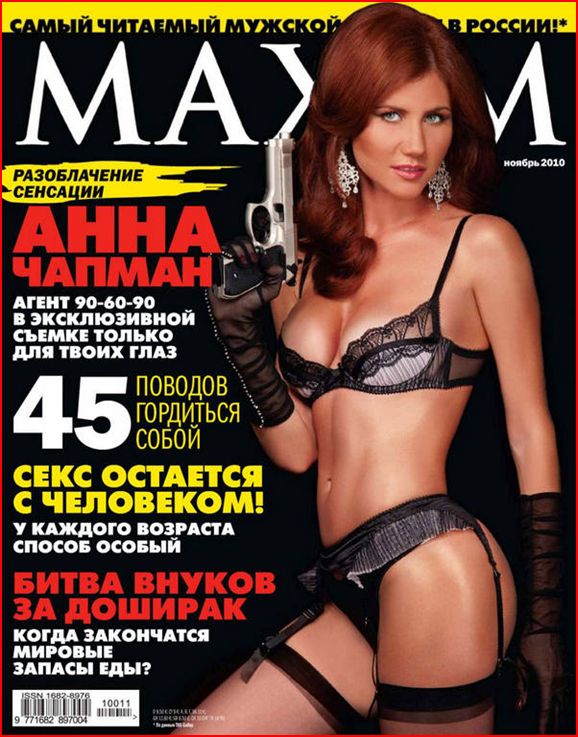
Anna Chapman on the cover of Russia’s Maxim
Given the “shocking” exposure of the Russian ring, it is equally shocking to contemplate that, less than a year later, the Russians have gone from spying to “helping” the US—by notifying American intelligence of potential terrorists in our midst. Either that, or the Russians were notifying the US out of self-interest, to ensure that yet another anti-Russian terrorist did not succeed in jihad on Russia’s turf.
To us, frankly, neither explanation is wholly satisfying. It seems there is more going on.
Tamerlan Tsarnaev an “Asset”?
Was the US itself monitoring the Tsarnaevs at the same time the Russians were? Of even more interest, did US authorities, as Dzhokhar Tsarnaev’s defense suggests, seek to turn Tamerlan Tsarnaev into an asset?
The defense’s claim that the FBI tried—but failed—to get Tamerlan to work for the US is hard to accept, not because the FBI doesn’t regularly try to recruit immigrants like the Tsarnaevs through a carrot-and/or-stick approach, but because it’s hard to imagine the FBI failing in such an endeavor. The “failure” part of the defense claim seems like a concession to the likelihood that detailed information about FBI recruitment would not be admissible in such a case. Also, Dzhokhar Tsarnaev’s lead federal public defender is accomplished at getting her clients charges reduced—in this case, presumably to avoid the death penalty—not at exposing giant falsehoods perpetrated by her government.
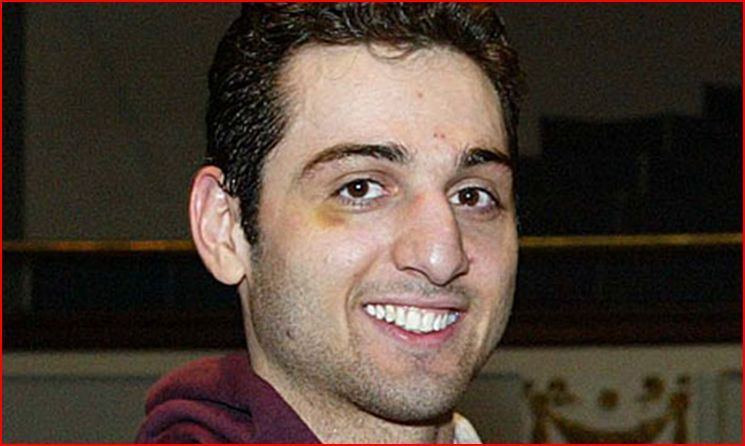
If the defense is half-right—that the feds pushed Tamerlan Tsarnaev to become an operative—would they simply have accepted, willingly, if he said, “No, thanks”? Intelligence and security services don’t tend to take no for an answer, and traditionally have played very rough with those who decline. So it is unlikely that a foreign national like Tamerlan Tsarnaev—whose family arrived less than a year after 9/11 and who was given “derivative asylum status”—could simply decline to cooperate. (Family members, including Tamerlan, were later made Lawful Permanent Residents—with the hope of full citizenship. And as we shall see, the FBI agent whose job was to interact with Tamerlan Tsarnaev later said he had no objection when Tamerlan was being processed for citizenship, suggesting that he was not unhappy with Tamerlan in the least.)
For context on whether or not Tamerlan Tsarnaev may have agreed to cooperate, consider the FBI’s tactics with people from the Tsarnaevs’ extended circle who did not cooperate, as reported in this earlier piece we did.
Moreover, one line in the summary report is telling:
The FBI-led Joint Terrorism Task Force in
Boston (Boston JTTF) conducted an assessment of Tamerlan Tsarnaev to
determine whether he posed a threat to national security and closed the
assessment three months later having found no link or “nexus” to
terrorism.
Surely if he were working for the US and involved with anti-Russian
activities, he would rightfully be found to “have no link
to…terrorism”—inasmuch as terrorism (so far as the FBI is concerned)
would likely be defined as a threat only to US national security.Also, as the report summary notes, the Russians repeatedly pinged the Americans, presumably because they saw no serious action taking place. They provided information to the FBI in March 2011, and similar material to the CIA in September. (The report states flatly, and without emphasis, that the FBI had failed to share intelligence with the CIA—a suspiciously common practice that dates back to the John F. Kennedy assassination if not earlier).
Did the Russians decide that FBI inaction meant the Bureau had recruited Tamerlan, and either had not notified the CIA or had not done so through official channels? In October, in any case, the CIA passed the Russian intelligence along to a range of agencies, including the Department of Homeland Security and the State Department. It also passed it along to the FBI, as if it did not know that the FBI itself already had the information from half a year earlier. Finally, the information was passed on to the National Counterterrorism Center, which put Tamerlan Tsarnaev on a terrorist watch list.
Incredibly, even after this, when Tamerlan traveled to Russia three months later, exactly as the Russians said he would, and while on that terror watch list, US authorities did nothing.
Here’s what the Report Summary says about cooperation:
This lead information was investigated by
the FBI through the Boston JTTF. Representatives from the DHS, CIA, and
other federal, state, and local agencies work directly with FBI-led
JTTFs across the country, including in Boston.
Notice the waffling. The summary authors state a standard principle:
FBI-led investigation units “work directly” with other federal and local
agencies. They explicitly do not say that the FBI did so in this case.
And how could they? Because the FBI clearly did not.Mind you, this is WhoWhatWhy’s attempt at coherently and accurately summing up the content of the Summary Report. It is instructive that those who prepared the report did not feel the need to emphasize these rather glaring and seemingly deliberate “failures”—and instead basically give the FBI and US government a free pass for their cover-up.
From Russia…With Truth?
It’s also worth considering what the Russians themselves told a visiting Congressional delegation barely six weeks after the bombing, and what they showed them: the warning letter from Moscow. Keep in mind as you read the particulars, how much more forthcoming the Russians have been than their American counterparts. This is from an account by Rep. Bill Keating (D-MA) to the Washington Post:
Keating said the letter gave Tsarnaev’s
date of birth, his cellphone number, information about his boxing
career, weight and Golden Gloves matches. It talked about his wife and
mother, giving the mother’s Skype number. The up-close look at
Tsarnaev’s life raised questions, which went unanswered, about how the
FSB had accumulated so much information about a family in Boston.
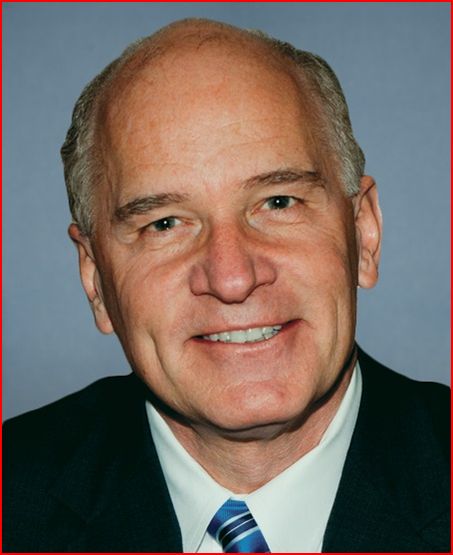
Rep. Bill Keating (D-MA)
The Russian authorities provided personal
information about both Tamerlan Tsarnaev and Zubeidat Tsarnaeva,
including their telephone numbers and e-mail addresses, and requested
that the FBI provide the FSB with specific information about them,
including possible travel by Tsarnaev to Russia.
The Summary report leaves out the other details, but does include a
caveat that somehow characterizes the material as less valuable (though
both errors would normally be overcome by standard procedures):
Importantly, the memorandum included two
incorrect dates of birth (October 21, 1987 or 1988) for Tamerlan
Tsarnaev, and the English translation used by the FBI transliterated
their last names as Tsarnayev and Tsarnayeva, respectively.
Only later do we read that an FBI agent had no difficulty resolving these issues.Frustrated Inspectors General, Complying, but not Too Happily
The Inspectors General go on to say that, in considering whether information that existed prior to the bombings was at that time “available” to the U.S. government, the OIGs did look at the Russian information, but also “took into account the limited facts known to U.S. government agencies prior to the bombings and the extent of the government’s authority under prevailing legal standards to access that information.” [Italics added for emphasis]
So they began their inquiries with two predispositions: (1) that the government had very little information available on its own, and (2) that completely contrary to Edward Snowden’s revelations about NSA abuses, US agencies are scrupulously careful about how they collect private data on individuals.
The Inspectors General also made clear what side they were on, a bad thing for a justice system:
[T]he OIGs were mindful of the sensitive
nature of the ongoing criminal investigations and prosecutions related
to the bombings, and were careful to ensure that the review would not
interfere with these activities. We carefully tailored our requests for
information and interviews to focus on information available before the
bombings and, where appropriate, coordinated with the U.S. Attorney’s
Office conducting the prosecution of alleged bomber Dzhokhar Tsarnaev.
Presumably, a truly independent investigation would involve
coordinating with anyone who had information to impart, including
Dzhokhar’s defense.In a rare outburst hinting at how they were hobbled, the OIG’s write:
As described in more detail in the
classified report, the DOJ OIG’s access to certain information was
significantly delayed at the outset of the review by disagreements with
FBI officials over whether certain requests fell outside the scope of
the review or could cause harm to the criminal investigation. Only after
many months of discussions were these issues resolved, and time that otherwise could have been devoted to completing this review was instead spent on resolving these matters. [Italics added for emphasis]
And there’s this important note, at the beginning of a section called “CHRONOLOGY OF EVENTS”:
In this section, we summarize the
chronology of events relating to the U.S. government’s knowledge of and
interactions with Tamerlan Tsarnaev, members of his family, and other
associates before the bombings. Many of the activities and events that
occurred during the period discussed below cannot be included in this
unclassified summary.
That’s just a sampling of the Inspector Generals’ cries of impotency.
One of the three objectives stated by the Inspectors General in their
summary is to determine “Whether there are weaknesses in protocols and
procedures that impact the ability to detect potential threats to
national security.” But if that was never the underlying game, then the
Inspector Generals are victims in this as well. They hint as much:
Redactions in this document are the
result of classification and sensitivity designations we received from
agencies and departments that provided information to the OIGs for this
review. As to several of these classification and sensitivity
designations, the OIGs disagreed with the bases asserted. We are
requesting that the relevant entities reconsider those designations so
that we can unredact those portions and make this information available
to the public.
Good luck with that.FBI Special Agent Schlemiel
As the report notes, an FBI counterterrorism officer
conducted database searches, reviewed
references to Tsarnaev and his family in closed FBI counterterrorism
cases, performed “drive-bys” of Tsarnaev’s residence, made an on-site
visit to his former college, and interviewed Tsarnaev and his parents.
The question is obvious: Why no effort to monitor the Tsarnaevs’
covertly? What about, instead of warning them that they were under
suspicion, keeping a close and quiet watch on them? Isn’t that how you
would proceed if you wanted to find out what a suspected terrorist was
up to?Instead of raising this point, the OIG summary questions why the FBI did not make even more noise, including interviewing others who knew the family. Then it notes the FBI agent’s failure to query every database, but points out that such an additional effort would not likely have garnered much new information. And while acknowledging that the FBI failed to share information with other agencies, it gives the Bureau an out by lamely saying that if other agencies had known where to look it a shared database, they might have happened upon the information.
And if it’s Tuesday, this must be Belgium.
One of the most interesting statements in the summary report is surely this:
The DOJ OIG also determined that the CT
Agent did not attempt to elicit certain information during interviews of
Tsarnaev and his parents, including information about Tsarnaev’s plans
to travel to Russia, changes in lifestyle, or knowledge of and sympathy
for militant separatists in Chechnya and Dagestan. The CT agent told the
DOJ OIG that he did not know why he did not ask about plans to travel
to Russia,
The rest of this paragraph is blacked out. In fact, that’s the first
redaction you come to in the whole report. For some reason, the OIGs do
not make more of this—though it demonstrates that the FBI
counterterrorism officer failed to ask the questions that mattered most.And when the CT officer’s supervisor told him to write to the Russians seeking more information, the FBI man included in his letter that Tamerlan, then in his mid-twenties, was a “former prosecutor.” (!)
When Opacity Is a Virtue
It is not hard to see how introducing a plethora of such small obfuscations into a “Summary Report” can keep even expert readers from focusing on the larger issues in play. And when the readers are less-than-expert representatives of the mass media, the tactic is even more effective. A review of articles about the report in major newspapers makes this abundantly clear.
The report concludes that a Customs and Border Patrol officer most likely notified the FBI when Tamerlan Tsarnaev traveled to Russia in 2012. The Customs officer also flagged Tamerlan so his record would be visible for his own colleagues when Tsarnaev re-entered the country.
For some reason, that notification was turned off before Tsarnaev returned. (This is not to be understated—Michael Springmann, a former US consul to Saudi Arabia, has repeatedly stated that his efforts to prevent jihadists from traveling to America were somehow overridden at higher levels)
In Tamerlan Tsarnaev’s case, the Customs officer told IG investigators that he had most likely consulted with the FBI agent before Tsarnaev’s record was made invisible to Customs personnel. Because of this, Tsarnaev was not subjected to a so-called “secondary inspection” (an uncomfortable process which this reporter has been through in the past). The report does not properly underline this point about the disturbing failures to monitor Tsarnaev—indeed, the way the report is written makes it all too easy to gloss over such “details.”
FBI officials interviewed by the Inspectors General played good cop/bad cop with them. While the FBI counterterrorism officer’s superiors made clear that they would have ramped up activity and interest if they had learned of Tamerlan’s visit to Russia—including reopening their investigation of the man—the local Boston CT agent insisted he “would not have done anything differently.”
This kind of inconsistency makes it all but impossible to get to the bottom of things, and the IGs don’t seem to have tried hard.
Everything about this case suggests that we might want to learn more about the Boston FBI agent and his most unusual behavior. Was he wildly incompetent and reckless, or operating under some kind of instructions? Unfortunately, the names of such significant personnel are almost never made public.
Amazingly, after all this, and just months after Tamerlan’s return from Russia in 2012, Tamerlan applied for US citizenship. Even more striking, that same unidentified FBI agent who knew so much about Tamerlan nevertheless stated: “There is no national security concern related to [Tamerlan Tsarnaev] and nothing that I know of that should preclude issuance of whatever is being applied for.”
A US Citizenship and Immigration Services officer says he actually met with the FBI agent and told him that Tsarnaev was on track to be granted citizenship. Despite all that he knew, the FBI agent apparently had no objection.
In its conclusion, the Inspectors General write,
Based on all the information gathered
during our coordinated review, we believe that the FBI, CIA, DHS and
NCTC generally shared information and followed procedures appropriately.
We identified a few areas where broader information sharing between
agencies may have been required….
And, finally:
In light of our findings and conclusions
summarized above, the participating OIGs found no basis to make broad
recommendations for changes in information handling or sharing. We
nonetheless identified some areas in which existing policies or
practices could be clarified or improved.
Making Sense of It AllWhen your instincts tell you that a major effort is underway to make sure no one gets to the bottom of things, you’re inclined to look for larger explanations. To wit: Could some kind of larger geo-strategic battle relate to the Boston bombings, with the on-the-ground players mere pawns?
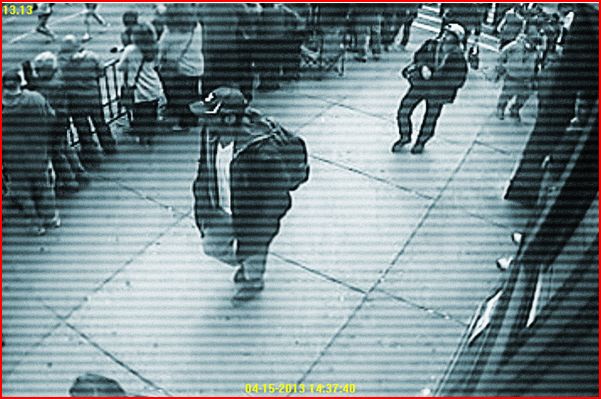 We’ll
have more to say later about the larger circle of
national-security-community figures that has surrounded Tamerlan and
Dzhokhar Tsarnaev for years. But for now, we want to step back a little.
We’ll
have more to say later about the larger circle of
national-security-community figures that has surrounded Tamerlan and
Dzhokhar Tsarnaev for years. But for now, we want to step back a little.Given the tendency of spy services to play elaborate games with a long view, it is reasonable to wonder whether the Russians had more in mind than just being helpful when they notified the US that it ought to look at the Tsarnaevs.
Could the notice to the FBI have been a warning that the Russians knew the US was already in contact with the Tsarnaevs? Given the possibility that Tamerlan Tsarnaev was supposed to infiltrate anti-Russian jihadists, that essentially puts the two intelligence services on the same side in this matter. Or were the Russians worried that the Americans were playing a double game, seemingly hunting jihadists while simultaneously using those jihadists to put pressure on the Russians in their majority-Muslim, oil-bearing southern flank?
There is also the possibility that, as with the US mole in Russian intelligence, Colonel Potayev, both sides thought they were controlling the Tsarnaevs. This would have made them players in a still more dazzling game. Pull out your old spy novels for this one.
Consider, as one must, what would be worth such extraordinary measures? What would justify so many redactions in a Summary Report? What would compel a bunch of Inspectors General, purportedly responsible for getting to the bottom of things, to participate in a whitewash?
What else but an issue of “national security”?
And since, as we know, there were no actual terrorist attacks or credible near-attacks on US soil between 9/11 and the Marathon bombings more than a decade later, these “national security” concerns might logically relate to something else. We hate to sound like a broken record, but keeping the lights and computers on and the cars moving pretty well approximates national security these days. And we all know what powers the grid—and where the next big oil and gas hub is after the Middle East deposits are tapped out. It’s the Caucasus region, the southern portion of the old Soviet Union, which encompasses a bunch of places where the US and Russia have been duking it out in recent years, including notably, Georgia, South Ossetia, Abkhazia, Dagestan and Chechnya. The first three of these are loci of military operations which saw the US and Russia on opposite sides, and the last two are restive, heavy-Muslim-majority Russian Republics with which the Tsarnaevs are associated.
If all this sounds improbable, let’s focus for a moment on several seminal moments many of us have forgotten or never knew:
• 1992, when a group under George HW Bush, helmed variously by Dick Cheney and Paul Wolfowitz,
decided that the end of the Soviet Union presented an opportunity for
the US to seize permanent status as the world’s only superpower, with
the right and expectation to intervene anywhere, globally, at will
• 2000, when members and confidants of that same group of neocons, now temporarily out of power, but operating via the Project for a New American Century,
warned that the American public would never go along with such
interventions “absent some catastrophic and catalyzing event—like a new
Pearl Harbor.”
• 2001, when, according to former NATO
Commander Gen. Wesley Clark, he was shown a Top Secret memo laying out
seven countries the US was prepared to invade with 9/11 as the justification. In an exclusive video interview with WhoWhatWhy, Gen. Clark expanded on that, emphasizing the role oil plays in US military policy.
It will take a lot more research to determine whether the story
neither government is likely to tell is really about a titanic struggle
for the earth’s wealth. But, given historical precedents, it would not
be so far-fetched.Indeed, it is only the official story of the Boston Marathon bombing which sounds far-fetched.