Sunday, February 16, 2014

Wall Street’s Biggest Banks Had a Trading Scheme With Madoff

By Pam Martens: October 30, 2013
The trial of five former employees of Bernard Madoff’s Ponzi operation is currently playing out in Manhattan as the U.S. Justice Department weighs bringing charges against JPMorgan Chase, where Madoff had his primary business banking account, for ignoring flashing red lights that a fraud was taking place.
According to lawsuits filed by Irving Picard, the Trustee handling the Madoff recovery fund, JPMorgan knew that Madoff was supposed to be engaged in managing stock portfolios for hundreds of clients. JPMorgan even created structured investments that allowed investors to make leveraged bets on the returns achieved by Madoff. But the Madoff business bank account that JPMorgan Chase oversaw, showed billions of dollars in cash being wired in and out but no payments ever going to any party engaged in processing or clearing a stock trade. Under Wall Street’s Know Your Customer Rule, the activity in the account should have been reported to U.S. regulators because it was completely incompatible with transactions that would be happening in a legitimate investment advisory account.
On October 28, 2008, less than two months before the Madoff Ponzi scheme collapsed following a confession by Madoff, JPMorgan finally did reveal its suspicions to a regulator that Madoff was running a fraud – to the Serious Organized Crime Agency. That regulator is based in the United Kingdom. According to Picard, JPMorgan never reported its suspicions to U.S. authorities.
But there are four other major Wall Street firms and their high-priced lawyers who have some explaining to do. According to prosecutors trying the current case against the five former employees, Madoff was funneling tens of millions of dollars that he was stealing from his investment advisory clients into his broker-dealer operation. Madoff has heretofore said this was a legitimate business. One such check for $31 million was dated December 28, 1999.
That was a little more than three months after Madoff started a business with four of the biggest names on Wall Street, effectively putting these primary dealers to the U.S. government’s Treasury auctions in business with the biggest financial felon in U.S. history.
On September 14, 1999, Citigroup’s Smith Barney, Morgan Stanley, Merrill Lynch and Goldman Sachs partnered with Madoff to compete with the New York Stock Exchange in a venture called Primex Trading. When Wall Street behemoths create a joint venture with a much smaller firm like Madoff’s, it would be expected that the top law firms on Wall Street would have been crawling all over its books and conducting a thorough due diligence.(Major European banks were harmed in the Madoff collapse. No major Wall Street bank had any serious exposure.)
Madoff had purchased the rights to a new technology called Financial Auction Network (FAN) created by Christopher Keith, a 17-year veteran of technology creation at the New York Stock Exchange (NYSE). Keith had retired from the NYSE and started a technology think tank in lower Manhattan in the early 1990s called Exchange Lab. FAN was one of the early technology offerings and the rights to develop it were bought by Madoff, ostensibly with stolen customer funds it now appears. The firm that emerged was Primex Trading, a division of Primex Holdings.
In addition to Keith from the New York Stock Exchange, Primex hired Glen Shipway, the Executive Vice President of Nasdaq, whose duties had included market surveillance of broker dealers. Madoff and his big Wall Street partners told the press that the purpose of the venture was to bring better price execution on stock trades to the investing public. A very different motive was at work.
The real goal for Primex was to legitimize the highly questionable practice of “internalization,” where big Wall Street firms match their customers’ buy and sell orders in house.
On October 29, 2002, the Securities and Exchange Commission (SEC) held a Market Structure Hearing to look at internalization, among other market issues. (We now know from the ongoing Madoff trial in Manhattan that in 2002, Madoff’s business was insolvent, even though he was paying for order flow, i.e., for trades to be sent to his firm.) Below are relevant excerpts from that SEC hearing:

“[Edward] Kwalwasser, [Group Executive Vice President at the NYSE in charge of regulation at the time]: I think we have to look at, from a market perspective, and when we talk about payment for order flow and internalization. The last panel — first panel agreed that one of the characteristics of a National Market System that we all said — who were sitting here said was really good, was that customer orders should be able to interact without the benefit of a dealer. Both internalization and payment for order flow are distortions of that public good that we all agree was there. And, to the extent that those orders aren’t in the marketplace, they’re not helping create the best price for all orders in the marketplace…I never thought Bernie [Madoff] was a bad guy. I started out, however, out of law school representing people in the record industry and in the rock-and-roll part of the business. And to think that the securities industry has a lower code of conduct than the record industry is really, I think, something that I — I never wanted to believe would be part of an industry that I was working at…

“[Bernard] Madoff: …Now, we came up with a — with a system, and joined in partnership with — with four of the largest firms that exist today in — in the United States and NASDAQ, to build a system that — that achieves that. I won’t mention the name of the system because this is not to be a marketing effort.

“[Robert] COLBY [SEC]: Primex System.

“[Bernard] Madoff: But — but, basically, the concern that all of these firms had was that they wanted to internalize their order flow, but they all very fully realized that the danger of having these various pockets of liquidity not visible to everybody and not allowing orders to interact, this was a problem unto itself. And even though that may be what a lot of people would like to do, if you — if you degrade the market in such a way that you really don’t do what you’re supposed to do for the investor, then you really have no marketplace, anyhow. So we went about building this type of system that would allow firms to internalize their order flow, allow orders to interact with limit orders, and to do it anonymously…”
In the end, the Primex idea failed. Nasdaq licensed the Primex Auction System and ran it for two years before abruptly shutting it down on January 16, 2004. Madoff was left with just his Ponzi scheme and a third market operation facing competition from every direction.
Below is the timeline of the Wall Street big boys’ venture into a trading scheme with Madoff:
September 14, 1999: Mainstream media report that Citigroup’s Salomon Smith Barney, Morgan Stanley, Goldman Sachs, and Merrill Lynch are investing alongside Bernard L. Madoff Investment Securities as partners in Primex Trading.
March 31, 2000: Primex announces that the NASD, parent of Nasdaq, has approved moving forward with its agreement to license the Primex Auction System for U.S. equities.
December 17, 2001: Nasdaq begins operation of the Primex Auction System with trading limited to the 30 stocks of the Dow Jones Industrial Average.
January 7, 2002: Nasdaq adds the stocks in the S&P 100 to the Primex Auction System.
January 22, 2002: the Nasdaq 100 stocks are added to the Primex Auction System.
March 3, 2003: Nasdaq announces that the SEC has given permanent approval to the Primex Auction System.
December 31, 2003: Nasdaq announces that it will cease offering the Primex Auction System, effective January 16, 2004.

Dillon, Read & Co. Inc. and the Aristocracy of Prison Profits: Part I

Inside the Financial World, Government Agencies and their Private Contractors Lies a Hidden System of Money Laundering, Drug Trafficking and Rigged Stock Market Riches


By Catherine Austin Fitts
A Six-Part Series for The Narco News Bulletin

“Make a Law, Make a Business” — Old New Jersey street saying
There is a strongly held myth in America. The myth says that large corporations are efficient. They have big profits. They have lots of capital to hire the best people, the best accountants and the best law firms. Everyone looks so spiffy. Their technology is the latest. The best thing for the economy, sings the siren song, is for inefficient government to defer to corporate leaders and corporate “survival of the fittest.” Powerful corporations, the myth goes, earned their power through performance in the marketplace by providing the best services and products.
The real truth on the corporate model is far darker, however, and can be found by understanding our current central banking-warfare economic model and the resulting total economic return of activities. That means not just looking at the corporate profits and growth in stock price, but the true cost to people, the environment and government of a particular corporate activity. This necessitates understanding the economy as an ecosystem that is a dynamic living system in places. If corporate profits come from laundering narcotics trafficking used to destroy communities, and from government contracts used to build expensive prisons crammed full of small time non-violent drug distributors and customers, then they are part of a “negative return on investment” economy. This is an economy where the real cost of things is hidden behind secret black budgets, complex government finances, under-the-table deals, market manipulations and economic and military warfare, until they finally show up in the most irrefutable ways: environmental destruction and the exhaustion and death of communities. I refer to this destructive economic force as “the tapeworm” — a financial parasite that weakens and even kills its host.
“Dillon Read & Co. Inc. & the Aristocracy of Prison Profits” is a case study in “tapeworm economics” and how the tapeworm game is played, written by a former partner and member of the board of directors of Dillon Read whose life and business were intimately affected by the events described. Through this one case study we see the patterns of the dominant business model operating in our politically managed economy today. We see how private investors arrange for new laws which are contrary to societies’ best interests. With the help of revolving doors between board rooms, law firms and high level government positions, large government contracts and purchases are engineered which increase the value of private stock investments. Those who enjoy rich stock market profits then funnel large political contributions to the political parties and politicians who engineer the laws and contracts.
And so a cycle of public-private profiteering grows that drains real productivity, and increasingly threatens life itself. As we see the Wall Street/Washington merry-go-round unfold, we realize that what we’re watching is a deeply bipartisan system that reflects a golden triangle of high finance full of corporate leaders, central bankers, politicians, investors, economic hit men and kingpins of organized crime. Ultimately, through our retirement savings, our personal investments, our bank deposits, our donations and our purchases, most of us are complicit in helping to finance and promote the system. This is a system that cannot be changed through traditional electoral politics but by a fundamental reordering and “coming clean” of who and what we are. This includes where we bank, who we invest in, the charities and universities that we support, the media we give our attention to, how we bring transparency and accountability to the government resources in our community and for whom and what we “vote” for with our time, attention and money.
This series is both an exposé and an invitation to shift the power of wealth creation from those things that diminish and destroy to those which support freedom and productivity in transformative ways.
Read on for Part I Part II: Narco Dollars in Mena and LA, Insider Deals at Dillon Read and Massive Mortgage Fraud in HUD related to Iran-Contra
Part III: Graft Makes HUD Under George H.W. Bush “A Sewer”; also, as Dillon Read Goes Into Business with Cornell Corrections, the Prison Contractor’s Dirty Secrets Begin to Come to Light
Part IV: The Clinton Years: Progressives for Private Prisons, HUD’s Corrupt Role in Centralizing Debt and Corporate Dirty Tricks

Part V: HUD and DOJ Begin All-Out Legal War and “Enforcement Terrorism” to Destroy the Author’s Company, and Dillon Read Cashes Out on Cornell Corrections
Part VI: A Financial Coup d’État, the Role of Private Banking, and Closing Thoughts
Brady, Bush, Bechtel & “the Boys”[1]
I remember when John Birkelund first came to Dillon Read in 1981 to serve as President and Chief Operating Officer.[2] Dillon was a small private investment bank on Wall Street with a proud history and a shrinking market share as technology and globalization fueled new growth. I had joined the firm three years before and, after a period in corporate finance, had migrated to the Energy Group — helping to arrange financing for oil and gas companies who were clients of Birkelund’s predecessor, Bud Treman. Bud was a member of the old school — an ethical man increasingly frustrated with the corrupting influence of hot money and easy debt.

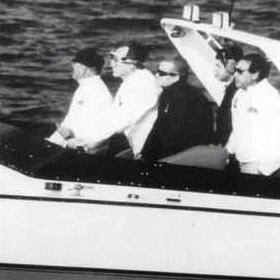
Cruising the Florida Keys 1984: Then Vice President George H.W. Bush, former CIA Director who led the National Security Council during Iran Contra (second from left), photographed with Nicholas F. Brady, then Chairman of the Wall Street firm Dillon Read, lead investment banker for RJR Tobacco, and later U.S. Treasury Secretary (third from left).
White House Photo
This was a time of transition. Dillon’s Chairman, Nicholas F. Brady, was considered one of George H. W. Bush’s most intimate friends and advisors. Both attended Yale, both were children of privilege. Bush had left his home in Greenwich Connecticut and with the help at his father’s networks at Brown Brothers Harriman had gone into oil and gas in Texas. Brady had gone to Harvard Business School and then returned to the aristocratic hunt country of New Jersey, where the Bradys and the Dillons had estates, to work at Dillon Read. Bush climbed through Republican politics to become Director of the Central Intelligence Agency (CIA) during the Ford Administration. After spending four years displaced by the Carter Administration, Bush was now Reagan’s Vice President with Executive Order authority for the National Security Council (NSC) and U.S. intelligence and enforcement agencies. Bush’s new authority was married with expanded powers to outsource sensitive work to private contractors. Such work could be funded through the non-transparent financial mechanisms available through the National Security Act of 1947, and the CIA Act of 1949.

C. Douglas Dillon, Secretary of the Treasury during the Kennedy Administration.
Photo courtesy Harvard University
This was a secret source of money for funding powerful new weaponry and surveillance technology and operations owned, operated or controlled by private corporations.[3] Carter’s massive layoffs at the CIA had created plenty of private contractor capacity looking for work.[4] An assassination attempt on President Reagan’s life two months after the inauguration meant that Vice President Bush and his team were called on to play an expanded role. Meantime, Nicholas Brady continued as an intimate friend and collaborator from his position as Chairman of Dillon Read.[5] In April of 1981, Bechtel, working through the Bechtel private venture arm Sequoia, bought the controlling interest in Dillon Read from the Dillon family, led by C. Douglas Dillon, former U.S. Treasury Secretary[6] and son of the firm’s namesake, Clarence Dillon. This was a time when Bechtel was facing increased competition globally while experiencing a decline in the nuclear power business that they had pioneered.[7]
We found ourselves with new owners whose operations were an integral part of the military and intelligence communities and who had demonstrated a rapacious thirst for drinking from the federal money spigot.[8] George Schultz, former Secretary of the Treasury during the Nixon Administration, and now Bechtel executive, joined our board.

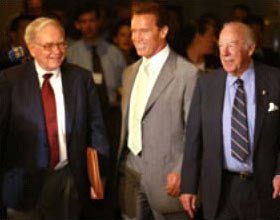
George Shultz, Bechtel Executive, Dillon Read Board Member, Secretary of the Treasury in the Nixon Administration and Secretary of State in the Reagan Administration appears with Warren Buffet and California Governor Arnold Schwarzenegger.
AP Photo
Unusual things started to happen that were very “un-Dillon-Ready-like.” First came a new bluntness. I will never forget the day that one of the partners brought around a very charming retired senior Steve Bechtel to tour the firm. Upon introduction, he peered up at me through thick glasses and said “Far out, a chick investment banker.” Then came strategic planning with SRI International, the think tank offshoot of Stanford University that had long standing relationships with the Bechtel family and Schultz. The head of the Energy Group that I worked for at the time was part of the planning group. His mood changed during this period and he later left the firm, retiring from the industry. Before going he warned me that I should do the same. He never said why…leaving a chill that I have felt many times since as ominous changes continue that have no name or a face. The planning group recommended that we expand our business into merchant banking. This means managing money in venture investment by starting and growing new companies or taking controlling interests in existing companies, including “leveraged buy-outs.” Rather than serving companies who needed to raise money by issuing securities, or make markets in existing securities, we were going to start raising money so we could create, buy and trade companies. A company was no longer a customer. They were now a target. Wall Street was its own customer who would raise money to buy companies who would work for us. This required new people with new skills.
A Rothschild Man
John Birkelund arrived at Dillon Read in September 1981. Born in Glencoe, Illinois, he had graduated from Princeton and then had joined the Navy where he served with the Office of Naval Intelligence in Berlin. While in Europe he became friends with Edward Stinnes, who recruited him after a short career with Booz Allen in Chicago to work in New York for the Rothschild family, considered to be one of if not the wealthiest family in the world. He started at Amsterdam Overseas Corporation, which then moved its venture capital business into New Court Securities with Birkelund as co-founder. New Court was owned by the Rothschild banks in Paris and London, Pierson Heldring Pierson in Amsterdam and the management. Their venture successes included Cray Research, inventor of the high-powered computers by that name, and Federal Express, the courier company based in Memphis, Tennessee.[9]

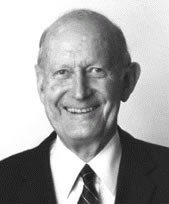
John Birkelund, Chairman and CEO of Dillon, Read & Co. Inc.
Photo courtesy Columbia University
A Time Magazine story from December 1981, “The Rothschilds Are Roving” describes a decision by the French Rothschilds in response to the nationalization of Banque Rothschild by President Mitterrand to move significant operations and focus to the U.S. Time reports that they are changing the name of their aggressive venture capital firm, New Court Securities to Rothschild, Inc. and are taking over from the current CEO, John Birkelund.[10] Birkelund was tall and energetic. He had piercing blue eyes, a driving and hard working ambition and intelligence. He seemed frustrated by the process of organizing and invigorating Dillon’s club-like culture. There was much about his willingness to try that endeared him to me — a point of view that was not reciprocated. Whatever the reason, I was not Birkelund’s cup of tea. I will never forget one of his early addresses to the banking group. He was full of energy and launched a section of his pep talk, “When you get up in the morning and look into the mirror to shave…” He suddenly froze, looking at me (one of few or possibly the only woman in the room) with fear that his reference to a masculine practice would offend. In the hopes of putting him at ease, I said with merriment, “Don’t worry, John, girls shave too.” The whole room burst out laughing and John turned red.
Birkelund had his hands full after arriving at Dillon Read. In 1982, Nick Brady left temporarily to serve in the U.S. Senate, appointed by Governor Tom Kean of New Jersey to serve out Harrison Williams term. George Schultz left Bechtel to serve as Secretary of State under Reagan. With Brady and Schultz in Washington D.C., the Bechtel relationship stalled. With Brady returning in 1983, Birkelund engineered the repurchase of the firm from Sequoia by the partners and the creation of meaningful venture and leveraged buyout efforts. In 1986, Brady and Birkelund lead the sale of Dillon Read to Travelers, the large Connecticut insurance company that later became part of Citigroup. The relationship with Travelers expanded our capital resources to participate in the venture capital and leveraged buyout businesses. In no small part thanks to Birkelund’s hard work and dictatorial cajoling, Dillon Read would not be left behind in the 1980s boom time.
One of my favorite Dillon Read officers was the son of a former Dillon chairman and, thus, remarkably wise about the ways of the firm. I sought him out after a Birkelund temper tantrum and said that Birkelund was not at all like a “Brady Man” and that I was surprised at Nick’s choice. My colleague looked at me with surprise and said something to the effect of “Brady did not choose Birkelund. Birkelund is a ‘Rothschild Man’.” I then said something about Dillon being owned by the Dillon partners, so what did the Rothschilds have to do with us? My colleague rolled his eyes and walked away as if I was an interloper out of my league among the moneyed classes — clueless as to who and what was really in charge at Dillon Read and in the world.
After all, even Time Magazine had declared that the Rothschild invasion of America was underway.[11]
RJR Nabisco
If you want to understand Dillon Read in the 1980s, you must understand R.J. Reynolds (RJR), a tobacco company based in Winston-Salem, North Carolina. According to the official Dillon history, The Life and Times of Dillon Read by Robert Sobel (Truman Talley Books/Dutton, 1991) at pages 345-346, RJR had been Dillon client for many years:
“With Dillon’s assistance Reynolds expanded out of its tobacco base into a wide variety of industries — foodstuffs, marine transportation, petroleum, packaging, liquor, and soft drinks, among others. In the process the R. J. Reynolds Tobacco Co. of 1963, which had revenues of $117 million, became the R. J. Reynolds Industries of 1983, a $14 billion behemoth.”
Throughout the 1980s, RJR’s huge cash flow fueled the buying and selling of companies that generated significant fees for Dillon Read’s bank accounts and investor connections for our Rolodexes.

Joe Camel: Camel cigarettes were a leading RJR brand. If the European Union is to be believed, Camel cigarettes are also a valued currency serving global mafia.
In 1984 and 1985, Dillon Read helped RJR merge with Nabsico Brands, making the combined RJR Nabisco one of the world’s largest food processors and consumer products corporations. Nabisco’s Ross Johnson emerged as the President of the combined entity. Johnson preferred the bankers he had used at Nabisco — Lehman Brothers. Johnson was on the board of Shearson Lehman Hutton. To help RJR Nabisco digest the Nabisco acquisition, Dillon and Lehman helped to sell off eleven of RJR Nabisco’s businesses. In the process, numerous Lehman Brothers partners joined Dillon Read. Among them was Steve Fenster, who had been an advisor to the leadership of Chase Manhattan Bank and was on the board of American Management Systems (AMS), a company that figures in our story in the 1990s.
After tours of duty in Dillon’s Corporate Finance and Energy Groups, I spent four years recapitalizing the New York City subway and bus systems on the way to becoming a managing director and member of the board of directors in 1986. I did not work on the RJR account. Odd bits of news would float back. They were always about the huge cash flows generated by the tobacco business and the necessity of finding ways to reinvest the gushing profits of this financial powerhouse.
One of the young associates working for me teamed up with another young associate who worked on the RJR account to buy a sailboat in Europe. The second associate arranged to have the sailboat shipped to the U.S. through Sea-Land, an RJR subsidiary that provided container-shipping services globally. I was told RJR tore up the shipping bill as a courtesy. What kind of cash flows did a company have that could just tear up the shipping bill for an entire boat as a courtesy to a junior Dillon Read associate?
I was to get a better sense of these cash flows many years later when I read the European Union’s explanation. The European Union has a pending lawsuit against RJR Nabisco on behalf of eleven sovereign nations of Europe who in combination have the formidable array of military and intelligence resources to collect and organize the evidence for such a lawsuit. The lawsuit alleges that RJR Nabisco was engaged in multiple long lived criminal conspiracies.
Excerpt From European Lawsuit Against RJR Nabisco
If you like spy novels, you will find that the European Union’s presentation of fact to be far more fascinating than fiction. One of the complaints filed in the case describes a rich RJR history of business with Latin American drug cartels, Italian and Russian mafia, and Saddam Hussein’s family to name a few. The Introduction reads as follows:
1. For more than a decade, the DEFENDANTS (hereinafter also referred to as the “RJR DEFENDANTS” or “RJR”) have directed, managed, and controlled money-laundering operations that extended within and/or directly damaged the Plaintiffs. The RJR DEFENDANTS have engaged in and facilitated organized crime by laundering the proceeds of narcotics trafficking and other crimes. As financial institutions worldwide have largely shunned the banking business of organized crime, narcotics traffickers and others, eager to conceal their crimes and use the fruits of their crimes, have turned away from traditional banks and relied upon companies, in particular the DEFENDANTS herein, to launder the proceeds of unlawful activity. 2. The DEFENDANTS knowingly sell their products to organized crime, arrange for secret payments from organized crime, and launder such proceeds in the United States or offshore venues known for bank secrecy. DEFENDANTS have laundered the illegal proceeds of members of Italian, Russian, and Colombian organized crime through financial institutions in New York City, including The Bank of New York, Citibank N.A., and Chase Manhattan Bank. DEFENDANTS have even chosen to do business in Iraq, in violation of U.S. sanctions, in transactions that financed both the Iraqi regime and terrorist groups.
3. The RJR DEFENDANTS have, at the highest corporate level, determined that it will be a part of their operating business plan to sell cigarettes to and through criminal organizations and to accept criminal proceeds in payment for cigarettes by secret and surreptitious means, which under United States law constitutes money laundering. The officers and directors of the RJR DEFENDANTS facilitated this overarching money-laundering scheme by restructuring the corporate structure of the RJR DEFENDANTS, for example, by establishing subsidiaries in locations known for bank secrecy such as Switzerland to direct and implement their money-laundering schemes and to avoid detection by U.S. and European law enforcement.
This overarching scheme to establish a corporate structure and business plan to sell cigarettes to criminals and to launder criminal proceeds was implemented through many subsidiary schemes across THE EUROPEAN COMMUNITY. Examples of these subsidiary schemes are described in this Complaint and include: (a.) Laundering criminal proceeds received from the Alfred Bossert money-laundering organization; (b.) Money laundering for Italian organized crime; (c.) Money laundering for Russian organized crime through The Bank of New York; (d.) The Walt money-laundering conspiracy; (e.) Money laundering through cut outs in Ireland and Belgium; (f.) Laundering of the proceeds of narcotics sales throughout THE EUROPEAN COMMUNITY by way of cigarette sales to criminals in Spain; (g.) Laundering criminal proceeds in the United Kingdom; (h.) Laundering criminal proceeds through cigarette sales via Cyprus; and (i.) Illegal cigarette sales into Iraq.
The European Union goes on to explain the role of cigarettes in laundering illicit monies:
V. THE LINK BETWEEN RJR’S CIGARETTE SALES, MONEY LAUNDERING, AND ORGANIZED CRIME Money-Laundering Links Between Europe, The United States, Russia, and Colombia
20. Cigarette sales, money laundering, and organized crime are linked and interact on a global basis. According to Jimmy Gurule, Undersecretary for Treasury Enforcement: “Money laundering takes place on a global scale and the Black Market Peso Exchange System, though based in the Western Hemisphere, affects business around the world. U.S. law enforcement has detected BMPE-related transactions occurring throughout the United States, Europe, and Asia.”
21. The primary source of cocaine within THE EUROPEAN COMMUNITY is Colombia. Large volumes of cocaine are transported from Colombia into THE EUROPEAN COMMUNITY and then sold illegally within THE EUROPEAN COMMUNITY and the MEMBER STATES. The proceeds of these illegal sales must be laundered in order to be useable by narcotics traffickers. Throughout the 1990s and continuing to the present day, a primary means by which these cocaine proceeds are laundered is through the purchase and sale of cigarettes, including those manufactured by the RJR DEFENDANTS. Cocaine sales in THE EUROPEAN COMMUNITY are facilitated through money-laundering operations in Colombia, Panama, Switzerland, and elsewhere which utilize RJR cigarettes as the money-laundering vehicle.
22. In a similar way, the primary source of heroin within THE EUROPEAN COMMUNITY is the Middle East and, in particular, Afghanistan, with the majority of said heroin being sold by Russian organized crime, Middle Eastern criminal organizations, and terrorist groups based in the Middle East. Heroin sales in THE EUROPEAN COMMUNITY and the MEMBER STATES are facilitated and expedited by the purchase and sale of the DEFENDANTS’ cigarettes in money-laundering operations that begin in THE EUROPEAN COMMUNITY and the MEMBER STATES, Eastern Europe, and/or Russia, but which ultimately result in the proceeds of those money-laundering activities being deposited into the coffers of the RJR DEFENDANTS in the United States.
Background on the Convergence of Narcotics Trafficking and Money Laundering
23. This complaint is about Trade and Commerce or, more correctly, illegal Trade and illegal Commerce, and how money laundering facilitates the financing and movement of goods internationally. Merchants engaging in global trade often turn to the more stable global currencies for payments of goods and services purchased abroad. In many markets, the United States dollar is the currency of choice and, in some cases, the United States dollar is the only accepted form of payment. Merchants seeking dollars usually obtain them in a variety of ways, including the following three methods. Traditional merchants go to a local financial institution that can underwrite credit. Private financing is usually available for those with collateral. A third and least desirable source of dollar financing can be found in the “black markets” of the world. Black Markets are the underground or parallel financial economies that exist in every country. Criminals and their organizations control these underground economies, which generally operate through “money brokers.” These “money brokers” often fulfill a variety of roles not the least of which is an important intermediate step in the laundering process, one that we will refer to throughout this complaint as the “cut out.
24. The criminal activity that provides the dollars for these black market money laundering operations is often drug trafficking and related violent crimes. South America is the world leader in the production of cocaine, and the United States and the European Union are the world”s largest cocaine markets. Likewise, Colombia and countries in the Middle East produce heroin. Cocaine and heroin are smuggled to the United States and Europe, and are sold for United States dollars as well as in local European currencies (and now the Euro). Russian drug smugglers obtain heroin from the Middle East and cocaine from South America, and sell both drugs in large quantities in the United States and in Europe. Retail street sales of cocaine and heroin have risen dramatically over the past two decades throughout the United States and Europe. Consequently, drug traffickers routinely accumulate vast amounts of illegally obtained cash in the form of United States dollars in the United States and Euros in Europe. The U.S. Customs Service estimates that illegal drug sales in the United States alone generate an estimated fifty-seven billion dollars in annual revenues, most of it in cash.
25. A drug trafficker must be able to access his profits, to pay expenses for the ongoing operation, and to share in the profits; and he must be able to do this in a manner that seemingly legitimizes the origins of his wealth, so as to ward off oversight and investigation that could result in his arrest and imprisonment and the seizure of his monies. The process of achieving these goals is the money-laundering cycle.
26. The purpose of the money-laundering cycle is to establish total anonymity for the participants, by passing the cash drug proceeds through the financial markets in a way that conceals or disguises the illegal nature, source, ownership, and/or control of the money.
Background on Black Market Money Exchanges
27. Within Europe, the United States, South America, and elsewhere, a community of illegal currency exchange brokers, known to law-enforcement officials as “money brokers,” operates outside the established banking system and facilitates the exchange of narcotics sale proceeds for local cash or negotiable instruments. Many of these money brokers have developed methods to bypass the banking systems and thereby avoid the scrutiny of regulatory authorities. These money exchanges have different names depending on where they are located, but they all operate in a similar fashion.
28. A typical “money-broker” system works this way: In a sale of Colombian cocaine in THE EUROPEAN COMMUNITY, the drug cartel exports narcotics to the MEMBER STATES where they are sold for Euros. In Colombia, the cartel contacts the money broker and negotiates a contract, in which the money broker agrees to exchange pesos he controls in Colombia for Euros that the cartel controls in Europe. The money broker pays the cartel the agreed-upon sum in pesos. The cartel contacts its cell (group) in the European Union and instructs the cell to deliver the agreed-upon amount of Euros to the money broker”s European agent. The money broker must now launder the Euros he has accumulated in the European Union. He may also need to convert the Euros into U.S. dollars because his customers may need U.S. dollars to pay companies such as RJR for their products.
29. The money broker uses his European contacts to place the monies he purchased from the cartel into the European banking system or into a business willing to accept these proceeds (a process described in more detail below). The money broker now has a pool of narcotics-derived funds in Europe to sell to importers and others. In many instances, the narcotics trafficker who sold the drugs in THE EUROPEAN COMMUNITY is also the importer who purchased the cigarettes. Importers buy these monies from the money brokers at a substantial discount off the “official” exchange rates and use these monies to pay for shipments of items (such as cigarettes), which the importers have ordered from United States companies and/or their authorized European representatives, or “cut outs.” The money broker uses his European contacts to send the monies to whomever the importer has specified. Often these customers utilize such monies to purchase the DEFENDANTS’ cigarettes in bulk and, in many instances, the money brokers have been directed to pay the RJR DEFENDANTS directly for the cigarettes purchased. The money broker makes such payments using a variety of methods, including his accounts in European financial institutions. The purchased goods are shipped to their destinations. The importer takes possession of his goods. The money broker uses the funds derived from the importer to continue the laundering cycle.
30. In that fashion, the drug trafficker has converted his drug proceeds (which he could not previously use because they were in Euros) to local currency that he can use in his homeland as profit and to fund his operations; the European importer has obtained the necessary funds from the black market money broker to purchase products that he might not otherwise have been able to finance (due to lack of credit, collateral, or U.S. dollars, and/or a desire for secrecy); the company selling cigarettes to the importer has received payment on delivered product in its currency of choice regardless of the source of the funds; and the money broker has made a profit charging both the cartel and the importer for his services. This cycle continues until the criminals involved are arrested and a new cycle begins. Money laundering is a series of such events, all connected and never stopping until at least one link in the chain of events is broken.
31. Many narcotics traffickers who sell drugs in THE EUROPEAN COMMUNITY now also purchase and import cigarettes. In particular, as the trade in cigarettes becomes more profitable and carries lesser criminal penalties compared to narcotics trafficking, the “business end” of selling the cigarettes has become at least as attractive and important to the criminal as the narcotics trafficking. Finally, it makes no difference whatsoever to the money laundering system whether the goods are imported and distributed legally or illegally.
Regardless of whether he sells his cigarettes legally or illegally, the narcotics trafficker has achieved his goal in that he has been able to disguise the nature, location, true source, ownership, and/or control of his narcotics proceeds. At the same time, the cigarette manufacturer (in this case RJR) has achieved its goal because it has successfully sold its product in a highly profitable way.
Particularly endearing, the European Union alludes to one of the most important secrets of money laundering — that the attorney-client privilege of lawyers and law firms, particularly the most prestigious Washington and Wall Street law firms, are a preferred method for the communication of corporate crimes:
“RJR has been aware of organized crime’s involvement in the distribution of its products since at least the 1970s. On January 4, 1978, the Tobacco Institute’s Committee of Counsel met at the offices of Phillip Morris in New York City. The Committee of Counsel was the high tribunal that set the tobacco industry’s legal, political, and public relations strategy for more than three decades. The January 4, 1978 meeting was called to discuss, among other things, published reports concerning organized crime’s involvement in the tobacco trade and the tobacco industry’s complicity therein. The published reports detailed the role of organized crime in the tobacco trade (including the Colombo crime family in New York) and the illegal trade at the Canadian border and elsewhere. RJR’s general counsel, Max Crohn, attended and participated in the meeting. All of the large cigarette manufacturers were present at the meeting and represented by counsel, such as Phillip Morris (Arnold & Porter, Abe Krash) [Author’s note: Arnold & Porter is a firm that will come up several times later in our story] and Brown & Williamson (Paul Weiss Rifkind Wharton & Garrison, Martin London). The Committee of Counsel took no action to address, investigate, or end the role of organized crime in the tobacco business. Instead, the Committee agreed to formulate a joint plan of action to protect the industry from scrutiny of the U.S. Congress.”
You will find an update in the litigation section in the SEC annual report for 2004 for RJR’s successor corporation, Reynolds American, as well as other updates on litigation cases involving smuggling and slavery reparations.[12]
According to Dillon Read, the firm’s average return on equity for the years 1982-1989 was 29 percent. This is a very strong performance, and compares to First Boston, Solomon, Shearson and Morgan Stanley’s average returns of 26 percent , 15 percent, 18 percent and 31 percent respectively.[13] Given what we now know from the European Union’s lawsuit and other legal actions against RJR Nabisco and its executives, this begs the question of what Dillon’s profits would have been if the firm had not made a small fortune reinvesting the proceeds of — if we are to believe the European Union — cigarette sales to organized crime including the profits generated by narcotics flowing into the communities of America through the Latin American drug cartels.
To understand the flow of drug money into and through Wall Street and corporate stocks like RJR Nabisco during the 1980s, it is useful to look more closely at the flow of drugs from Latin America during the period — and the implied cash flows of narco dollars that they suggest. Two documented situations involve Mena, Arkansas and South Central Los Angeles, California.
Catherine Austin Fitts is the author of the Narco News series “Narco-Dollars for Beginners: How the Money Works in the Illicit Drug Trade.” She is a former managing director and member of the board of directors of Dillon Read & Co, Inc, a former Assistant Secretary of Housing-Federal Housing Commissioner in the first Bush Administration, and the former president of The Hamilton Securities Group, Inc. She is currenly president of Solari, Inc., an investment advisory firm (in formation) based in Hickory Valley, Tennessee.
Next in Part II: Narco Dollars in Mena and LA. Also, Catherine leaves Dillon to avoid participating in fraud and is appointed as President Bush’s Assistant Secretary of Housing… only to find massive mortgage fraud in HUD related to Iran-Contra.
Footnotes
[1] “The Boys” is a nickname used to refer to the CIA and/or the U.S. intelligence community.
[2] The Life and Times of Dillon Read, Robert Sobel, Truman Talley Books/Dutton, 1991.
[3] See “The Negative Return on Investment Economy — A Discourse on America’s Black Budget” by Chris Sanders and Catherine Austin Fitts, World Affairs Journal. See also, Tim Weiner, Blank Check: The Pentagon’s Black Budget. New York, Warner Books, 1991.
[4] Carter’s Director of CIA, Admiral Stansfield Turner fired over 800 covert operators. This wave of covert operators is said to have created a significant infrastructure of private intelligence operatives, including a group called “The Company”. In Barry & “the boys”: The CIA, the Mob and America’s Secret History, Mad Cow Press, 2001, pages 234-235 and 404, Daniel Hopsicker writes:
“After Carter takes over in 1976 and Admiral Stansfield Turner cleans house at the CIA, finding jobs for long time CIA assets like (Barry) Seal became a priority that was often fulfilled by smuggling under color of narcotics interdiction, “ stated Hemming. “All these guys had to be placed somewhere after that choirboy Admiral started getting rid of them. The majority of the operators that were contract employees had to be placed somewhere. There had to be money to take care of these guys. Hemming is referring to what “Deadly Secrets” calls Turners Great Terror when the new CIA Director purged over 800 covert operatives after the Congressional revelations of the CIA’s dirty laundry by the Church and Pike Committees investigations. These investigations, which then-CIA Director Bush fought every step of the way, led directly to the election of (Carter). Even…General Manuel Noriega was let go in the purge, it was a sign of the desperation of the times. And it prompted droves of angry CIA cowboys to enlist in the George Bush for President Campaign, where their unofficial campaign slogan must have been “Never ever again.” Headquartered outside of St. Louis, “The Company” launched in 1976 and grew into an enterprise with over 350 employees, with separate executives in charge of buying airports, leasing warehouses and even giving polygraph tests to new employees. There was even a $2 million fund for bail. In just two years, The Company had acquired 33 airplanes, 3 airports, warehouses in 7 states and profits of $48 million. 1976 was the year that Barry Seal’s drug smuggling career began according to his wife.
When the DEA busted them..”they had secret radio frequencies of federal, state and local authorities,” a DEA spokesman said. “They had mechanical programmers and night-viewing devices. They had air-to-ground radios so sophisticated we don’t even have them on our airplanes.”
[5] See various references in Tarpley & Chaitken, The Unauthorized Biography, including a reference to Brady’s meeting with Bush, Oliver North and Felix Rodriguez in the White House, http://www.tarpley.net/bush18.htm:
“1986-Vice President Bush and his staff met in the White House with Felix Rodriguez, Oliver North, financier Nicholas Brady, and the new U.S. ambassador to El Salvador, Edwin Corr.”
[6] Dillon had helped Donovan found the OSS. Not surprisingly, Dillon Read also had numerous ties, like most Wall Street firms, with the intelligence community. See The Life and Times of Dillon Read, Robert Sobel, Truman Talley/Dutton, 1991.
[7] See the description of Stephen Bechtel, Jr., Chairman of Bechtel and his concern for the outlook for Bechtel’s business on his way to the Bohemian Group he is in the Mandalay Camp — most esteemed of The Grove’s 127 encampments as reported in Friends in High Places: The Bechtel Story — The Most Secret Corporation and How It Engineered the World, Laton McCartney, Ballentine Books, 1988, pps. 12-16. Mandalay’s attendance that year is described as follows:
“Its membership and guest list included Steve, his father, Stephen D. Bechtel, Sr.; Henry Kissinger; former Bechtel Group President and Secretary of State designate George P. Schultz (who this year was bringing West German Chancellor Helmut Schmidt as his personal guest); former IBM chairman and U.S. Ambassador to the Soviet Union Thomas J. Watson; former CIA director John A McCone (former Bechtel partner); Attorney General William French Smith (who had just signed the MOU three months earlier relieving the CIA of the need to report drug dealing by its networks); industrialist Edgar F. Kaiser, Jr.; former Nixon political aide Peter M. Flanigan; Pan American World Airways’ onetime boss Najeeb Halaby; Wells Fargo Bank Chairman Richard P. Cooley; former General Electric chairman Philip D. Reed; Southern California Edison chairman J.K. “Jack” Horton; Utah International Chairman Edmund W. Littlefield; Dillon Read’s former boss Nicholas F. Brady, who was serving as an interim senator from New Jersey and, like Peter Flanigan, was Steve junior’s guest; tire and rubber heir Leonard K. Firestone and, not least, Gerald Ford, the former President of the United States. In addition, this year’s encampment would feature such notables as former Secretary of State Alexander Haig, FBI Director William Webster; computer magnate (and former deputy Defense secretary) David Packard; Chief of Naval Operations Thomas Hayward; Eastern Airlines president Frank Borman; Federal Reserve Bank chairman Paul Volker; World Bank president Alden W. Clausen; Union Oil Chairman Fred L. Hartley; Atlantic Richfield Chairman Robert O. Anderson; publishing czar William Randolph Hearst, Jr.; Southern Pacific Railroad president Alan C. Furth; show business personalities Charlton Heston, Art Linkletter and Dennis Day; and including, among various other pooh-bahs, the Presidents of Dean Witter Reynolds the Bank of America and United Airlines…Page 16 describes problems Bechtel is facing…Confronted with a recession, declining oil prices and stiffer competition abroad…and how George Schultz, former Bechtel President and now Secretary of State will be at the Grove to help…”
[8]Friends in High Places: The Bechtel Story — The Most Secret Corporation and How It Engineered the World by Laton McCartney, Ballentine Books, 1988.
[9] A recent announcement (http://www.frick.org/html/2005_board.htm) by the Frick Museum appointing Birkelund to the board describes his resume as follows:
“John P. Birkelund comes to the Board of the Frick as a dedicated supporter of the arts and the humanities. He is a founding member of the new Frick Collection support group called the “Director’s Circle.” He has been a strong supporter of The New York Public Library where he serves as trustee and chairs its finance committee. He has also been engaged for many years as a trustee of Brown University and currently chairs the board of Overseers of its Thomas J. Watson Institute for International Studies. Mr. Birkelund serves as well on the board of The American Academy in Berlin and the Phi Beta Kappa Society. He recently retired as chairman of the National Humanities Center and the International Executive Service Corps and has served as a trustee of the Getty Foundation dedicated to the support of the National Gallery in London. Mr. Birkelund, formerly chairman and chief executive of Dillon Read & Co., is presently engaged as managing director of Saratoga Partners, a private equity investment firm that he co-founded in 1984. Corporate directorships have included the New York Stock Exchange, N.M. Rothschild & Co., and Barings Brothers. He is a member of the Council on Foreign Relations and holds an honorary degree from Brown University. In 1990, Mr. Birkelund was asked by President George H.W. Bush to chair the Polish American Enterprise Fund, a federal aid program designed to stimulate the then newly privatized Polish economic sector. The success of this program led to recognition by the Polish government and the U.S. State Department and the creation of the Polish American Freedom Foundation which he presently chairs.”
[10] From Time Magazine, December, 1981
“The Rothschilds are roving”: “It’s a little bare now,” apologizes Baron Guy de Rothschild, 72, waving his hand at the empty black lacquered walls of his office on the 7th floor at 21 Rue Lafitte in Paris…..Reason: the Banque Rothschild is being nationalized by the socialist government of French President Francois Mitterrand, along with the country’s other major banks and holding companies. The Rothschilds, who are stepping out of the bank’s management, have demanded that the government operate the institution without the Rothschild name.
“Nor has their bitterness at being nationalized been quenched by proposed government compensation payments of $100 million, a sum they believe is less than the bank’s worth.
“But the members of the French Rothschild clan will not lack for things to do with their money. Unaffected by the nationalization are the non bank personal holdings of Baron Guy and Cousins Baron Alain and Baron Elie, including New Court Securities, a US investment firm based in New York City, which will now receive more of the family’s attention and money. And beginning January 1, 1982, New Court will change its name to a more golden sounding sobriquet: Rothschild, Inc.
“Founded with $2 million 1967, New Court today manages a portfolio worth more than $1 billion, including funds from such corporate clients as General Foods, TRW and Hughes Aircraft. New Court’s other owners included NM Rothschild & Sons in London, which represents the English branch of the family and is headed by Evelyn de Rothschild, 50, and the Rothschild Zurich bank, of which Swiss Cousin Baron Edmond de Rothschild is part owner.
“New Court is an aggressive venture capital firm that has some $200 million invested in fledgling American companies (Author Note: Federal Express was an important New Court venture investment.) Last year its return on current investment of $17 million was 35%. In July, its American chairman John P. Birkelund, 51, asked the Rothschilds for more control over the firm. Instead, the family sacked Birkelund, named Guy and Evelyn as cochairmen and installed a new manager, Family Confidant Gilbert de Botton, 46.
“The new Rothschild man in New York City had previously directed the family’s bank in Zurich, which grew from a paltry $2.5 million in 1968 to its present capitalization of more than $35MM. De Botton is currently investing heavily in sagging stocks of US energy companies, especially those with large domestic reserves of oil and gas. He also plans to strengthen the firm’s venture capital thrust. Says he: The US is the prime market in the world for startup, small and medium size companies.
“That bullishness on America’s prospects is shared by Co-Chairman Guy, who has been commuting monthly since last June between Paris and New Court’s offices in New York City’s Rockefeller Center. Guy will not move permanently to the US and Cousin Ellie’s son Nathaniel, 34, a graduate of the Harvard Business School, is a prime candidate to direct US operations eventually. Says Guy: My great-grandfather sent one of his sons, my grandfather Alphonse, to America in 1848. After returning to France, Alphonse pleaded with his father that the US was the coming country and that there should be a House of Rothschild there. It’s an enormous pity that my grandfather’s advice was not heeded. As far as I’m concerned we should have had a Rothschild bank in the US since the middle of the 19th century. Our involvement in America now is really 100 years late in arriving.”
[11] December, 1981, From Time Magazine “The Rothschilds are roving.”
[12] From Reynolds SEC filing 10-K litigation section: http://www.reynoldsamerican.com/common/ViewDoc.asp?postID=1050&DocType=PDF
“On September 18, 2003, RJR, RJR Tobacco, RJR-TI, RJR-PR, and Northern Brands were served with a statement of claim filed by the Attorney General of Canada in the Superior Court of Justice, Ontario, Canada. Also named as defendants are JTI and a number of its affiliates. The statement of claim seeks to recover under various legal theories taxes and duties allegedly not paid as a result of cigarette smuggling and related activities. The Attorney General is seeking to recover $1.5 billion in compensatory damages and $50 million in punitive damages, as well as equitable and other forms of relief. The parties have agreed to a stay of all proceedings until February 2006. The time period for the stay may be lengthened or shortened by the occurrence of certain events or agreement of the parties. “Over the past few years, several lawsuits have been filed against RJR Tobacco and its affiliates and, in certain cases, against other cigarette manufacturers, including B&W, by the European Community and the following ten member states, Belgium, Finland, France, Greece, Germany, Italy, Luxembourg, the Netherlands, Portugal and Spain, as well as by Ecuador, Belize, Honduras, Canada and various Departments of the Republic of Colombia. These suits contend that RJR Tobacco and other tobacco companies in the United States may be held responsible under the federal RICO statute, the common law and other legal theories for taxes and duties allegedly unpaid as a result of cigarette smuggling. Each of these actions discussed below, seeks compensatory, punitive and treble damages.
“On July 17, 2001, the action brought by the European Community was dismissed by the United States District Court for the Eastern District of New York. However, the European Community and its member states filed a similar complaint in the same jurisdiction on August 6, 2001. On October 25, 2001, the court denied the European Community’s request of August 10, 2001, to reinstate its original complaint. On November 9, 2001, the European Community and the ten member states amended their complaint filed on August 6, 2001, to change the name of the defendant Nabisco Group Holdings Corp. to RJR Acquisition Corp. RJR Tobacco and the other defendants filed motions to dismiss that complaint on November 14, 2001, and the court heard oral argument on those motions on January 11, 2002. On February 25, 2002, the court granted the defendants’ motion to dismiss the complaint and, on March 25, 2002, the plaintiffs filed a notice of appeal with the United States Court of Appeals for the Second Circuit. The Second Circuit affirmed the dismissal on January 14, 2004. On April 13, 2004, the European Community and its member states petitioned the United States Supreme Court for a writ of certiorari. Briefing is complete. A decision by the Supreme Court is pending.
“On October 30, 2002, the European Community and the following ten member states, Belgium, Finland, France, Greece, Germany, Italy, Luxembourg, the Netherlands, Portugal and Spain, filed a third complaint against RJR, RJR Tobacco and several currently and formerly related companies in the United States District Court for the Eastern District of New York. The complaint, which contains many of the same or similar allegations found in two earlier complaints that were previously dismissed by the same court, alleges that the defendants, together with certain identified and unidentified persons, including organized crime organizations and drug cartels, engaged in money laundering and other conduct for which they should be accountable to the plaintiffs under civil RICO and a variety of common law claims. The complaint also alleges that the defendants manufactured cigarettes, which were eventually sold in Iraq in violation of U.S. sanctions against such sales. The plaintiffs are seeking unspecified actual damages, to be trebled, costs, reasonable attorneys’ fees and injunctive relief under their RICO claims, and unspecified compensatory and punitive damages, and injunctive and equitable relief under their common law claims. On April 1, 2004, the plaintiffs fled an amended complaint. The amended complaint does not change the substance of the claims alleged, but primarily makes typographical and grammatical changes to the allegations contained in the original complaint and adds to the description of injuries alleged in the original complaint. This matter remains pending, but all proceedings have been stayed pending a decision by the Supreme Court on the petition for certiorari filed by the plaintiffs in connection with the dismissal of their previous complaint.
“On December 20, 2000, October 15, 2001, and January 9, 2003, applications for annulment were filed in the Court of First Instance in Luxembourg challenging the competency of the European Community to bring each of the foregoing actions and seeking an annulment of the decision to bring each of the actions, respectively. On January 15, 2003, the Court of First Instance entered a judgment denying the admissibility of the first two applications, principally on the grounds that the filing of the first two complaints did not impose binding legal effects on the applicants. On March 21, 2003, RJR and its affiliates appealed that judgment to the Court of Justice of the European Communities. The application for annulment filed in connection with the third action is still pending before the Court of First Instance. On September 18, 2003, however, the Court of First Instance stayed the proceedings in the third action, pending resolution of the appeals from the January 15, 2003 judgment denying the admissibility of the first two applications.
“RJR Tobacco, B&W and the other defendants filed motions to dismiss the actions brought by Ecuador, Belize and Honduras in the United States District Court for the Southern District of Florida. These motions were granted on February 26, 2002, and the plaintiffs filed a notice of appeal with the United States Court of Appeals for the Eleventh Circuit on March 26, 2002. On August 14, 2003, the Eleventh Circuit announced its decision affirming the dismissal of the case. On November 5, 2003, Ecuador, Belize and Honduras filed a petition for a writ of certiorari requesting the United States Supreme Court to review the decision of the Eleventh Circuit. The court denied the petition on January 12, 2004. B&W and the other defendants filed motions to dismiss a similar action brought by Amazonas and other departments of Colombia in the United States District for the Eastern District of New York. These motions were granted on February 19, 2002, and plaintiffs appealed to the United States Court of Appeals for the Second Circuit. The Second Circuit affirmed the dismissal on January 14, 2004. On April 13, 2004, Amazonas and other departments of Colombia petitioned the United States Supreme Court for a writ of certiorari. On June 17, 2004, B&W and the other defendants filed a brief opposing the petition, and the Amazonas and other departments of Colombia filed a reply brief on June 29, 2004. A decision by the Supreme Court is pending.
“RJR Tobacco has been served in two reparations actions brought by descendants of slaves. The plaintiffs in these actions claim that the defendants, including RJR Tobacco, profited from the use of slave labor. These two actions have been transferred to Judge Norgle in the Northern District of Illinois by the Judicial Panel on Multi-District Litigation for coordinated or consolidated pretrial proceedings with other reparation actions. Seven additional cases were originally filed in California, Illinois and New York. RJR Tobacco is a named defendant in only one of these additional cases, but it has not been served. The action in which RJR Tobacco is named, but has not been served, was conditionally transferred to the Northern District of Illinois on January 7, 2003, but the plaintiffs contested that transfer, and the Judicial Panel on Multi-District Litigation has not yet issued a final ruling on the transfer. The plaintiffs filed a consolidated complaint on June 17, 2003.
“On July 18, 2003, the defendants moved to dismiss the plaintiff’s complaint. That motion was granted on January 26, 2004, although the court granted the plaintiffs leave within which to file an amended complaint, which they did on April 5, 2004. In addition, several plaintiffs have attempted to appeal the trial court’s January 26, 2004 dismissal to the United States Court of Appeals for the Seventh Circuit. Because the dismissal was not a final order, that appeal was dismissed. All the defendants moved to dismiss the amended complaint that had been filed on April 5, 2004. A decision is pending.”
[13] Page 355, The Life and Times of Dillon Read, Robert Sobel, Truman Talley Books/Dutton, 1991. The calculation for First Boston is for 1982-1988.

'Unprecedented increase in opium production'

Yuri Fedotov, the head of the United Nations Office on Drugs and Crime, tells DW that Afghanistan is now producing record amounts of opium poppy which is destined to become heroin in "new markets."
DW: There is concern in the United States and Europe of a flood of heroin on to their markets - where is that heroin coming from?
Yuri Fedotov: There are different sources of heroin and basically if we take Europe it comes mostly from Afghanistan - which produces almost 80 percent of all opium and heroin in the world - and unfortunately the latest reports of the UNDCP show there is an unprecedented increase both in cultivation and production of opium - especially in cultivation. There is a record figure that has reached 200,000 hectares.
They never had such an area of opium poppy cultivation even in the peak of production in 2007 and 2008. So it means that producers and drug dealers, they are guided by the well-known principles of a market economy, and they would never increase production if they were not sure there will be new markets. Destination is mostly Europe but also Africa. Our recent report on Africa indicated there are more and more seizures of heroin in West Africa in addition to cocaine which goes through the trans-Atlantic route from South America to Europe through west Africa. Some of this heroin may reach the United States as well but we estimate that this is not the major route supplying heroin to the United States.
80 percent is the figure given for the increase in use of heroin in the US in recent years - given all the effort that is put into drug control, doesn't it suggest that the policies are failing?
It depends on how you appreciate that. Indeed in the United States there has been a tremendous, a quite noticeable decline in consumption of cocaine in recent decades, almost four-fold, which indicates there are some results but the recent trend of course, the greater use of heroin but also prescription opioids, is a new quite worrisome trend. It means that more efforts have to be done to understand this phenomena and to take appropriate steps.
You've mentioned opioids and drug enforcement officials are also talking about a link between prescription pain killers and heroin abuse. Is it the case that heroin users are moving from those drugs to heroin because of restrictions on the prescription drugs?
I don't see there are major problems in the US of getting prescription drugs. Of course it's more complicated - you need to see a doctor - but there've been no reports of major problems in getting these drugs if they are prescribed by doctors. The point is, prescription drugs produce a less effective high - the state of euphoria is lower than when you are using heroin. Of course when they are already addicted they want to get more and they switch to heroin. Also another explanation is that they can get heroin, not pure heroin but up to 30 to 40 percent purity, so it means it's less expensive than some of the prescription drugs with a more powerful result.
There is obviously publicity around the death of the actor Philip Seymour Hoffman - are you worried that the image of heroin is changing from a negative - the junkie - to a drug associated with a creative high-profile life-style? So a more positive image than in the past…
I think you are right. Drug addiction does not distinguish between rich and poor, successful or losers. The latest victim was not the first one and we have previous reports of tragic deaths of other outstanding Hollywood stars in the US. But we have not to forget that they are not alone and every day about 500 people all over the world are dying of drugs, of drug addiction - not of violence related to drugs, not of related diseases but simply from drug addiction. That is too much.
Afghanistan is the main source of the poppy crop that eventually becomes heroin. As the international forces leave Afghanistan after this long conflict, what are your predictions for the amount of heroin coming on to the markets of Western Europe?
It's a crucial period for the future destiny of this country. The whole situation is quite complicated because of the political transition. That is why we must continue to consider the drug issue and the illicit economy of Afghanistan - and not just as one of the problems this country is facing but as an over-reaching issue that affects everything - security, stability, health of people. Afghanistan is known to have the highest addiction rate of opium and heroin in the world. But also, it generates other forms of trans-national organized crime… corruption.
Do you fear that will increase in the near future?
If the international community does not take that very seriously and does not prioritize efforts to support Afghanistan in this transitional period, it may happen.
The UN's own stated goal is to offer alternatives to the drug crops for the farmers of Afghanistan and other parts of the world - a policy that you have been pursuing for some time. Is it working?
To have a successful alternative development we need two conditions, firstly political commitment of the government and international community and secondly, sufficient funding. Funding which is not only aimed at distributing seeds and fertilizers but development of the whole infrastructure including markets for alternative products. In countries where it works and where governments have been able to develop such a system - supporting farmers including marketing of alternative products - like Colombia - it works. It works in Thailand.
Many years ago they succeeded completely to eradicate opium poppy cultivation, replacing it with other crops. But where we don't have political commitment and even less financial support… we have some programs in Afghanistan but they are just a few drops in the ocean. I visited Afghanistan several times, I met with farmers who are growing opium poppy and psychologically they are prepared to switch from illicit to licit but they complain that they could not find markets for their products. There are no roads, no bridges, no marketplaces, so it complicates hugely the development of alternative crops.
Yuri Fedotov is the Executive Director of the United Nations Office on Drugs and Crime. He is a former Deputy Foreign Minister of the Russian Federation and a former Russian ambassador to the United Kingdom.// http://www.dw.de/unprecedented-increase-in-opium-production/a-17428227
Monday Morning Skeptic: In Boston Bombing, FBI Fights for Public’s Right to Know… Nothing
FBI Director, James B. Comey [1]
FBI Director, James B. Comey
For more than six months, WhoWhatWhy has been asking questions [2] about the Boston Marathon bombing and aftermath [3], pursuing our constitutionally protected duty. By and large, reaction from official sources has been mute.
Is the FBI conducting an honest investigation or working diligently on a cover-up? It’s impossible to know.
But the Bureau’s silence should be a red flag, since the FBI and other secretive U.S. agencies have a well-known record of duplicity when left to operate in the shadows.
Secrecy has become the rule. In Boston, the prosecutor of accused bomber Dzhokhar Tsarnaev has asked the judge to withhold filings from the media. The FBI won’t even identify the agent who shot and killed a key witness in the investigation in Orlando, Florida, let alone clear up the muddy circumstances around the shooting. And the Bureau has ordered the sealing of a county coroner’s completed autopsy report of that killing.
And it’s not only the media that is being stonewalled. Politicians are being shut out, as well.
U.S. Sen. Charles Grassley, a reliably conservative Republican from Iowa, is now demanding answers [4] from the FBI about its bombing investigation. In a letter to bureau Director James Comey, Grassley criticized the FBI’s lack of transparency and asked for answers to a series of questions about the bombing he first asked in June.
Three months ago, U.S. Rep. William Keating, a Massachusetts Democrat, asked his own questions in a scathing letter [5] to Comey.
524161748 [6]
Favored Reporters Are Fed Leaks
The information blackout of the past six months stands in stark contrast to the FBI’s river of leaks to pet reporters during the week following the April 15 bombing.
This tactic of handing out selective “scoops” gave the FBI control of the narrative as it steered public opinion toward viewing the Boston Bombing as an open-and-shut case against the Tsarnaev brothers, Tamerlan and Dzhokhar.
As part of the quid pro quo for these scoops, favored journalists are not likely to press the government for answers to discomfiting questions.
But don’t take our word for it.
CBS News correspondent John Miller enjoys most-favored-journalist status as a former flack for the FBI and other law enforcement agencies. He explained the scoops-for-softballs system in an interview [7] with David Bauder of the Associated Press.
“I am reluctant to criticize authorities,” Miller said. “My interpretation of when they need to be (criticized) and somebody else’s might be different…If you’ve been there and you know how that works and what it’s like, and how easy it is to take potshots from the outside, your criticism is more measured, your analysis of what is worthy of criticism and what isn’t is slightly different.”
Our Pursuit of a Police Report
According to the official narrative, the Tsarnaev brothers were “self-radicalized” Muslims who hatched the bomb plot unassisted, constructed rather sophisticated bombs on their own, killed university police Officer Sean Collier for his gun (which they somehow did not take), and carjacked the still-anonymous “Danny” (who either escaped or was let go).
And in order to catch the Tsarnaevs, the Boston region was in essence locked down under martial law.
In scrutinizing the prevailing narrative, WhoWhatWhy has found it instructive to follow one of the many loose threads.
We sought a copy of a Cambridge, Massachusetts police report related to the “Danny” carjacking in Cambridge on the night the Tsarnaev brothers were revealed as suspects. We hoped to clear up some conflicting information.
We know the report exists. The Wall Street Journal [8] published a story based on the document. The reporter, Pervaiz Shallwani, claims to have been given access to the official document.
Police incident reports are considered public information. Since the report had already been released to a Wall Street Journal reporter, we thought it would be a simple matter to get a copy for WhoWhatWhy.
Report Withheld; ‘Ongoing Investigation’
We called Daniel Riviello, a Cambridge police communications specialist, to ask for the report. He replied that he would have to find out whether it was available for release.
Later that day, he replied by email that the report was being withheld under an exemption of the Massachusetts Public Records Law because it was part of an ongoing investigation.
That’s a broad exemption. It is hard to conceive of a fresh police report that is not part of an ongoing investigation.
We pointed out to Riviello that the report already had been released to the Wall Street Journal, and we sent him a link to the story. We asked him to explain what had changed in the release status of the police report since that reporter was given access.
Riviello replied by email:
I do not know how the Wall Street Journal (reportedly) obtained a copy of the report in question as it was not released by my office. My office is responsible for all releases to the media and this report was not released to the WSJ or any other outlets.
So we called Journal reporter Shallwani. He said he got the report from “a law enforcement source,” although he would not elaborate. He said the narrative section of the report included the name of the police officer who interviewed “Danny,” but the carjacking victim’s real name was blacked out.
Later, Cambridge police said the report had been forwarded to the U.S. Attorney’s Office in Boston, which is prosecuting the bombing case. We contacted Christina Dilorio-Sterling, the prosecutor’s spokeswoman, many times. She hasn’t replied.
‘Wide Swaths of Records Omitted’
WhoWhatWhy and the two skeptical politicians are not alone in wondering why law enforcement agencies are refusing to allow access to information about the Boston Marathon bombing.
Gatehouse Media, which publishes the Quincy Patriot Ledger, the Fall River Herald News and other papers in the Boston area, complained in a letter [9] to the federal district court in Boston about the unprecedented lock on information about the bombing investigation.
Gatehouse alleges violations of the public’s constitutionally guaranteed right to scrutinize legal proceedings. The Herald News reported [10] in late August that 48 entries were missing from the court file related to Dzhokhar Tsarnaev, which the publisher says is a violation of the First Amendment.
The article quoted from the letter:
Wide swaths of court records have been omitted in their entirety from the docket listings. The incomplete public docket sheet maintained in this case … does not accurately reflect the materials on file with the Court. As a result, the Newspapers’ constitutionally protected newsgathering and reporting efforts have been frustrated.
The fact that the circumstances culminating in Mr. Tsarnaev’s arrest and the charges against him have received extensive media attention is simply not enough to seal allegedly prejudicial information, (attorney Michael) Grygiel said, arguing that the high-profile nature of the case requires more transparency, not less, because justice must not only be done, it must be perceived as being done.
And, it turns out, Dzhokhar Tsarnaev’s defense team is facing the same obstacles.
A motion [11] filed in court by the defense team lists numerous requests for exculpatory information that have either been denied or provided incompletely during discovery.
The Rush to Judgment In 1996
“Discovery” is a good idea, whether it’s part of a legal compact between adversarial attorneys or the often-contentious relationship between law enforcement and a robust, skeptical media.
Rushing to judgment, after all, is certifiably foolish.
One egregious media stampede involved Richard Jewell, the luckless security guard on whom was pinned the Atlanta Olympics bombing of July 27, 1996. The media circus was triggered by a scurrilous “extra edition” scoop [12] in the Atlanta Journal, based largely on the reporting of an intern.
Richard Jewell [13]
Richard Jewell
The article said Jewell “fits the profile of the lone bomber,” and the rush to judgment commenced. The FBI pursued Jewell relentlessly after the bombing, which killed two and injured 111 people.
Ultimately, it became clear that Jewell could not possibly have perpetrated the bombing. The FBI and the media were forced to admit their mistakes after tormenting Jewell and his family for months.
A decade later, Eric Rudolph, a violent anti-abortionist activist, was identified as the Olympic bomber. Jewell died of complications from diabetes not long after the true bomber was outed.
Eric Rudolph [14]
Eric Rudolph
Simplistic View of Complicated Events
Would the investigation of Jewell have developed any differently today?  And how would we have reacted to the false accusation of this man today?  If anything, we seem even quicker now to accept simplistic views of complicated events—at least in part because we are kept in the dark by law enforcement.
In Connecticut, for example, the Hartford Courant continues to argue [15] for release of the full state report on the massacre last December at Sandy Hook Elementary School.  Are there details in the report that might help stop future atrocities?
We may never know.
The timely release of detailed information related to complicated criminal investigations – the Kennedy assassinations, Sandy Hook, the Atlanta and Boston bombings–is one thing that makes open societies different from closed ones, democracies from oligarchies.
In all such cases, the media has a simple imperative: disclosure to the full extent possible. To do this, we must ask tough questions in the name of a public that has the right, and the need, to know the truth.
WhoWhatWhy plans to continue doing this kind of groundbreaking original reporting. You can count on it. But can we count on you? We cannot do our work without your support. Please click here [16] to donate; it’s tax deductible. And it packs a punch.
IMAGE: James Comey [17]   IMAGE: Obama and Comey [18]   IMAGE: Richard Jewell [19]   IMAGE: Eric Rudolph [20]

Article printed from WhoWhatWhy: http://whowhatwhy.com
URL to article: http://whowhatwhy.com/2013/11/04/monday-morning-skeptic-in-boston-bombing-fbi-fights-for-publics-right-to-know-nothing/
URLs in this post:
[1] Image: http://whowhatwhy.com/wp-content/uploads/2013/11/FBI-director-James-Comey.gif
[2] asking questions: http://whowhatwhy.com/2013/08/05/monday-morning-skeptic-questioning-authority-in-the-sprawling-boston-bombing-case/
[3] the Boston Marathon bombing and aftermath: http://whowhatwhy.com/2013/05/23/officer-collier-shooting-rosebud-moment-of-the-boston-bombing/
[4] demanding answers: http://whowhatwhy.com/2013/10/25/grassley-on-boston-bombing/
[5] a scathing letter: http://whowhatwhy.com/2013/08/01/boston-marathon-bombing-u-s-rep-keating-demands-answers-from-new-fbi-director/
[6] Image: http://whowhatwhy.com/wp-content/uploads/2013/11/524161748.jpg
[7] in an interview: http://bigstory.ap.org/article/cbs-miller-rises-above-fray-boston-case
[8] Wall Street Journal: http://online.wsj.com/article/SB10001424127887323735604578437642076883194.html
[9] complained in a letter: http://images.politico.com/global/2013/08/01/gatehousetsarnaev.pdf
[10] The Herald News reported: http://www.heraldnews.com/news/x511617768/GateHouse-Media-lawyer-says-Tsarnaev-court-docket-still-contains-sealed-records
[11] motion: http://images.politico.com/global/2013/10/07/tsarnaevdefcompel302s.html
[12] “extra edition” scoop: http://www.ajr.org/article.asp?id=437
[13] Image: http://whowhatwhy.com/wp-content/uploads/2013/11/richard-jewell.jpg
[14] Image: http://whowhatwhy.com/wp-content/uploads/2013/11/untitled.png
[15] continues to argue: http://www.courant.com/news/opinion/editorials/hc-ed-sandy-hook-investigation-delay-feeds-conspir-20131021,0,3258569.story
[16] click here: http://www.whowhatwhy.com/donate
[17] IMAGE: James Comey: https://www.google.com/search?hl=en&site=imghp&tbm=isch&source=hp&biw=1600&bih=775&q=%22james+comey%22+fbi&oq=%22james+comey%22+fbi&gs_l=img.3..0l2j0i24l2.2002.11394.0.11670.32.24.8.0.0.0.94.1637.24.24.0....0...1ac.1.30.img..4.28.1529.UruW2mnjOgs#facrc=_&imgdii=_&imgrc=I5O4iwO2BXOc3M%3A%3BOgxzvb7uDgD4XM%3Bhttp%253A%252F%252Fwww.thenewstribe.com%252Fwp-content%252Fuploads%252F2013%252F09%252FFBI-director-James-Comey.gif%3Bhttp%253A%252F%252Fwww.thenewstribe.com%252F2013%252F09%252F21%252Fnew-fbi-di
[18] IMAGE: Obama and Comey: http://www.nydailynews.com/news/politics/obama-lauds-new-fbi-boss-record-guarding-privacy-article-1.1499156
[19] IMAGE: Richard Jewell: http://www.businessinsider.com/lessons-from-richard-jewell-2013-4
[20] IMAGE: Eric Rudolph: https://www.google.com/search?hl=en&site=imghp&tbm=isch&source=hp&biw=1600&bih=775&q=eric+rudolph+olympic+bomber&oq=eric+rudolph&gs_l=img.1.3.0l7j0i24l3.3558.5901.0.8277.12.10.0.2.2.0.91.729.10.10.0....0...1ac.1.30.img..0.12.747.mkfogZZMXhM#facrc=_&imgdii=_&imgrc=6C4qhP1Dt6eJTM%3A%3Bo6aYdU-7uirPQM%3Bhttp%253A%252F%252Fstatic.guim.co.uk%252Fsys-images%252FGuardian%252FPix%252Fpictures%252F2013%252F4%252F23%252F1366747648123%252FEric-Rudolph-Atlanta-Olym-008.jpg%3Bhttp%253A%252F%252Fwww.thegua
Copyright © 2009-2011 WhoWhatWhy. All rights reserved.