Friday, June 13, 2014

Apollo 11: 40 years on, where is software engineering today?

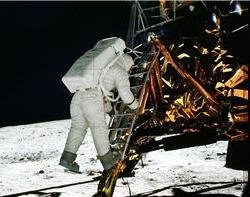
The Apollo 11 lunar landing would have been impossible had it not been for software engineering. But today, with commercial pressures, software engineering is in danger of becoming a lost art.


Nasa needed checks and procedures to ensure software bugs could not creep in and put the lives of astronauts Michael Collins, Buzz Aldrin and Neil Armstrong at risk. Although the term software engineering was coined midway through the Apollo programme, experts today recognise the contribution those programmers on Apollo made to improving software development.
Today, source code in software is written rather than engineered. "Programmers do not apply engineering principles," warns Daniel Dresner, chairman of the Institute of Information Security Professionals.
Formal approaches to software development have become unfashionable with the advent of rapid application development, agile development and extreme programming. These approaches take a user-centric view to software projects to help IT align with business goals. However, the pace at which software can be churned out using these approaches has led to poorer quality source code.
"The quicker you roll out software, the less it is tested before deployment, which increases the risk of a failure," Dresner says.
Some experts argue that Nasa, Boeing and the aerospace industry are in a different league when it comes to software engineering, compared to the programming effort involved in producing software for business. However, Microsoft, the world's most successful software company, has perhaps belatedly demonstrated with its Trustworthy Computing initiative how quality pays off.
Since 2002, Microsoft has worked to improve internal processes, with the aim of building higher-quality software with fewer bugs. It seems to be working. Microsoft claims Vista has fewer bugs than Windows XP, and Windows 7 should have even fewer problems than Vista.
In 1969 IBM described the 6Mbyte programs it produced for the Apollo mission as "among the most complex ever written". The current download for Windows 7 RC1 is around 2.3Gbytes - approximately 380 times larger. Windows has often been described as more complex than the software that took man to the moon. As such, software engineering has become key to the way it develops software.
While Microsoft continues on its Trustworthy Computing mission to improve the way its software is engineered, the British Computer Society hopes to raise the level of professionalism in IT, which should see more focus on turning programming into engineering.
"Software engineering is as important today as it was on Apollo 11. As computers affect more of our lives, we need to define standards, training, certification and qualifications," says Adrian Walmsley, vice-president, member services at the BCS.
There are more embedded computing devices in existence than there are people on Earth, controlling and monitoring many aspects of day-to-day life. As with the code in the Apollo mission, bugs in these complex IT systems could potentially be life-threatening. As such, software engineering will become increasingly important.
Apollo 11: 40th anniversary special report >>
Pictures taken from Rex Features.

Apollo 11: The computers that put man on the moon

It is hard to appreciate the technical challenges involved in putting a man on the moon, but 1960s computer technology played a fundamental role.

Full Apollo 11 coverage

By today's standards, the IT Nasa used in the Apollo manned lunar programme is pretty basic. But while they were no more powerful than a pocket calculator, these ingenious computer systems were able to guide astronauts across 356,000 km of space from the Earth to the Moon and return them safely.
The lunar programme led to the development of safety-critical systems and the practice of software engineering to program those systems. Much of this knowledge gleaned from the Apollo programme forms the basis of modern computing.
Apollo Guidance Computer
The lunar mission used a command module computer designed at MIT and built by Raytheon, which paved the way to "fly by wire" aircraft.
The so-called Apollo Guidance Computer (AGC) used a real time operating system, which enabled astronauts to enter simple commands by typing in pairs of nouns and verbs, to control the spacecraft. It was more basic than the electronics in modern toasters that have computer controlled stop/start/defrost buttons. It had approximately 64Kbyte of memory and operated at 0.043MHz.
The instruction manual for the AGC shows the computer had a small set of machine code instructions, which were used to program the hardware to run various tasks the astronauts needed.
The AGC program, called Luminary, was coded in a language called Mac, (MIT Algebraic Compiler), which was then converted by hand into assembler language that the computer could understand. The assembler code was fed into the AGC using punch cards.
Amazingly, the code listing for the AGC program can be downloaded as a PDF file. There is also an equivalent program for the lunar lander.
The AGC was designed to be fault-tolerant and was able to run several sub programs in priority order. Each of these sub programs was given a time slot to use the computer's sparse resources. During the mission the AGC became overloaded and issued a "1202" alarm code.
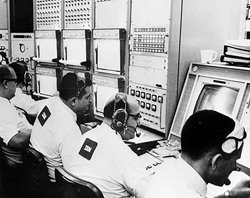
Neil Armstrong asked Mission Control for clarification on the 1202 error. Jack Garman, a computer engineer at Nasa (pictured below, left), who worked on the Apollo Guidance Program Section, told mission control that the error could be ignored in this instance, which meant the mission could continue. Apollo 11 landed a few seconds later.
Experts cite the AGC as fundamental to the evolution of the integrated circuit. It is regarded as the first embedded computer.
The importance of this computer was highlighted in a lecture by astronaut David Scott who said: "If you have a basket ball and a baseball 14 feet apart, where the baseball represents the moon and the basketball represents the Earth, and you take a piece of paper sideways, the thinness of the paper would be the corridor you have to hit when you come back."
While the astronauts would probably have preferred to fly the spacecraft manually, only the AGC could provide the accuracy in navigation and control required to send them to the Moon and return them safely home again, independent of any Earth-based navigation system.
IBM computers on Apollo 11
Along with the APG, mainframes were also heavily used in the Apollo programme. Over 3,500 IBM employees were involved, (pictured below). The Goddard Space Flight Center used IBM System/360 Model 75s for communications across Nasa and the spacecraft. IBM Huntsville designed and programmed the Saturn rocket instrument unit, while the Saturn launch computer at the Kennedy Space Center was operated by IBM.
An IBM System/360 Model 75 was also used at Nasa's Manned Spacecraft Center in Houston. This computer was used by Neil Armstrong and Buzz Aldrin to calculate lift-off data required to launch the Lunar Module off the Moon's surface and enable it to rendezvous with Command Module pilot Michael Collins for the flight back to Earth.
At the time, IBM described the 6Mbyte programs it developed, to monitor the spacecrafts' environmental and astronauts' biomedical data, as the most complex software ever written.
Even the simplest software today would far exceed the technical constraints the Apollo team worked under. The Apollo programme was pre-Moores's Law: in 1965 Intel co-founder Gordon Moore wrote his vision of how the performance of computer hardware would double every 18 months for the same price.
That a USB memory stick today is more powerful than the computers that put man on the moon is testimony to the relentless pace of technological development encompassed in Moore's Law. However, the Apollo programme proved that computers could be entrusted with human lives. Man and machine worked in unison to achieve something that 40 years on, has yet to be surpassed.

Irrefutable proof we are all being sprayed with poison: 571 tons of toxic lead 'chemtrailed' into America's skies every year

naturalnews.com

Originally published June 13 2014

lead

by Mike Adams, the Health Ranger, NaturalNews Editor

(NaturalNews) America is being doused every minute of every day with the toxic heavy metal lead as it is burned in "avgas" -- aviation gas, the fuel that powers most piston-driven aircraft (i.e. anything with a propeller). A grand total of 571 tons of lead are dumped each year into the air over our heads from aircraft alone, according to the U.S. Environmental Protection Agency. (1)
According to a scientific paper titled, "Lead and Halogen Contamination from Aviation Fuel Additives at Brackett Airfield," (2) X-Ray Fluorescence instrumentation was used to analyze lead, chlorine and bromine content in avgas liquids. The tests showed avgas contains the following:

Lead: 48 ppm
Bromine: 42.6 ppm
Chlorine: 605.2 ppm

Lead is a highly toxic heavy metals that causes bone diseases, brain damage and cancer. Chlorine is a highly-reactive chemical with powerful oxidative properties. The fact that both are being sprayed daily into the air above America is inexcusable.

964 tons of lead released into the air (from all sources)

How much lead is being "chemtrailed" across America due to aviation fuel? According to General Aviation News (3), about 681,000 gallons of avgas were burned each day in 2013.

Avgas weighs approximately 6 lbs per gallon, meaning over 4 million pounds of avgas is burned each day, or over 1.8 million kg of avgas.

If lead is 48 ppm in avgas, that means each kg of avgas contains 48 mg of lead. Multiplied by the 1.8 million kg of avgas burned each day, this means avgas fuel is emitting 86.4 kg of lead PER DAY in the skies over our heads. Over a year, that's 31,536 kg of lead dumped directly into our air, and that lead falls onto our farming soils, forests, lakes, rivers, streams, oceans, children's playgrounds, cattle ranches, and so on.

The National Emissions Inventory says that lead emissions are even higher than what I've calculated here. "Piston-engine aircraft are the chief source of lead emissions in the United States, emitting 57% of the 964 tons of lead put into the air in 2008, according to the most recent figures from the National Emissions Inventory," reports the NIH. (4)

Small aircraft pilots dismiss the problem

Some pilots seem inclined to dismiss this problem entirely. "I'm hooked on lead. Maybe not in the way a junkie is addicted to drugs, but hooked nonetheless," writes Air & Space Magazine columnist David Freed, a Pulitzer Prize-winning investigative journalist. (5) "The tetraethyl lead added to aviation fuel helps keep the engine of my four-seat, 48-year-old Piper Cherokee running smoothly. And that keeps me happy."

He goes on to lament the idea that cleaner lead-free fuels might make him unable to afford to fly: "We live in dread of fuel costs continuing to rise and of FAA airworthiness directives, which often require us to pay for expensive, usually safety-related modifications. Will a government-mandated switch to unleaded fuel ultimately break the bank, leaving us little recourse but to quit flying and sell our airplanes...?"

Later in his article, he does acknowledge that lead is a public health hazard, but he explains that his airplane contributes virtually nothing to the problem: "But is the exhaust from my airplane's 180-horsepower engine really that significant a national health threat...?" he asks. He's right that his one airplane isn't much of a factor in all this, but in a collective sense, if you combine all the piston-driven aircraft flown by pilots like Freed, it becomes a huge issue nationwide. Avgas emissions are the number one source of lead emissions into the skies of America.

(David Freed, by the way, is the Pulitzer Prize-winning author of the Cordell Logan aviation mystery novels. He's a great writer and obviously a thoughtful, intelligent person... almost certainly a likeable guy and a valuable contributor to society in many ways as an investigative journalist. For example, he authored an 8,600-word expose in The Atlantic which detailed how "the FBI pursued the wrong suspect in a string of anthrax murders following 9/11." Obviously, this is the kind of investigative journalist we like to support in the mainstream media -- people who ask real questions and search for truth. So to be clear, I'm not attacking him in a personal sense over his article; I only hope he reconsiders the importance of the aviation industry getting the lead out of its fuels and thereby out of our skies. We need thoughtful, intelligent people on the leading edge of this issue if we ever hope to have lead-free avgas become a reality.)

As the following EPA chart shows, avgas is the No. 1 source of lead emissions, followed by "industry" in the No. 2 spot, then coal-fired power plants third ("electric generation").


By the way, where does all this lead end up? Much of it appears in the food supply, of course, because plants absorb lead from soils and grazing animals eat and concentrate toxins from plants. This is why heavy metals are often higher in milk or meat than in raw grass. It's also part of the reason why I keep finding lead in so many foods when I run atomic spectroscopy tests in my ICP-MS laboratory. Click here to see lead results on cacao, grasses, pet treats, protein products and more.

If I ever happen to fly airplanes, you can bet I'll find a way to burn unleaded gasoline. I'm not going to streak across the sky dumping toxic heavy metals into the atmosphere, especially since part of my current mission is to explore ways that society can develop cleaner food with lower heavy metals. Even better, I would hope to one day see a huge breakthrough in battery power density that could result in, believe it or not, electric airplanes. (Yes, it seems impossible today because it would require at least a 1000-fold increase in battery power density. But humans are really good at achieving remarkable breakthroughs, so I'm going to remain optimistic on this point and hope the scientists can find a far better way to store power than today's current old-school chemical batteries.)

Lead was removed from automobile gasoline by the EPA

As you explore all this, keep in mind that lead used to be added to regular gasoline for many decades. Lead helped engines run better and improved gas mileage. But it also resulted in millions of pounds of lead being dumped directly into the environment, increasing lead contamination of soils and causing people to inhale lead with every breath.

Children's IQs in America noticeably dropped during those "lead years," and IQs were restored to higher levels once lead was removed from gasoline. Today, it is illegal to add lead to gasoline and burn it in vehicles.

But it's perfectly legal to burn lead in aviation fuel. "Avgas is one of the few fuels in the United States that still contain lead, leaving it the single largest source of lead emissions in the country," reports the National Institutes of Health (4). "Concern over the health effects of lead has sparked a contentious effort to finally get the lead out of avgas -- something the aviation and petroleum industries have been attempting for more than two decades, to no avail."

The NIH goes on to describe the harmful effects of lead:

Lead is a well-documented neurotoxicant that is particularly harmful to children, who are typically exposed when they ingest or inhale lead-containing dust in the home. In recent years, serious harm to cognitive and behavioral functions including intelligence, attention, and motor skills has been demonstrated in children with much less lead in their blood than previously thought to cause harm, and it is now understood there is no safe level of lead exposure.

When will we decide to stop poisoning ourselves?

What's clear in all this is that as long as we keep burning lead in avgas, we're going to keep suffering the health effects on the ground. In an age where the academic achievements of American children are routinely overshadowed by children in India, China or Korea, the continued dumping of IQ-damaging lead into our atmosphere seems absurd. What you dump into the sky falls onto the soils and eventually makes its way into the food supply, too, so burning lead in airplanes sooner or later results is all of us eating lead on our dinner plates.

How big of a problem is this in the really big picture? Arguably it's not the most urgent problem we face. Even I would argue that our nation's power grid vulnerability to high-altitude EMP weapons is a far greater threat to us all (especially with North Korea playing around with long-range ballistic missiles carrying with nuclear weapons).

In an era when war seems to be breaking out in the Middle East, and the global banking system seems forever on the verge of collapse, it's difficult for society to focus on the more subtle (but chronic) long-term problems like lead in avgas. But this is a problem that can be solved with a phased switchover to mogas (unleaded fuel). All that's required is some leadership by the FAA and EPA working together to clean up our aviation industry and get the lead out of our skies.

Is it too much to ask that we stop dumping toxic lead into the skies above our own heads?

Sources for this story include:
(1) http://www.epa.gov/ttnchie1/net/2008inventor...
(2) www.naturalnews.com/files/Lead-Avgas-Airport...
(3) http://generalaviationnews.com/2013/01/02/pr...
(4) http://ehp.niehs.nih.gov/121-a54/
(5) http://www.airspacemag.com/flight-today/the-...


All content posted on this site is commentary or opinion and is protected under Free Speech. Truth Publishing LLC takes sole responsibility for all content. Truth Publishing sells no hard products and earns no money from the recommendation of products. NaturalNews.com is presented for educational and commentary purposes only and should not be construed as professional advice from any licensed practitioner. Truth Publishing assumes no responsibility for the use or misuse of this material. For the full terms of usage of this material, visit www.NaturalNews.com/terms.shtml

Spiralling Global Private Financial Wealth amidst Poverty and Unemployment

Global Private Wealth surges by 14.6 percent in 2013


worldeconomy
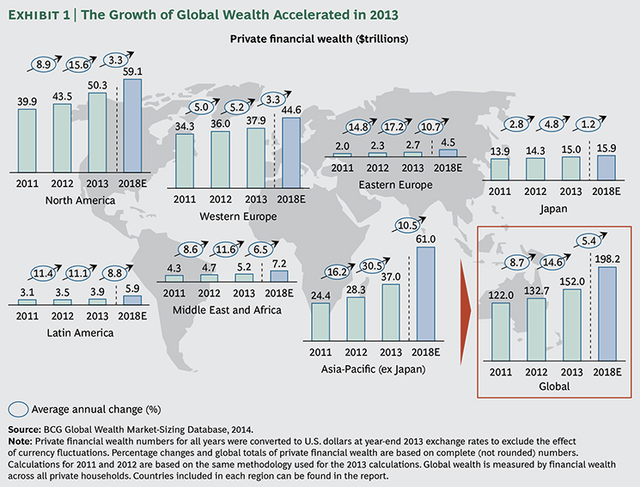
Global financial private wealth grew by 14.6 percent in 2013, according to a new report by The Boston Consulting Group. The surge, concentrated in the hands of the billionaires and millionaires of the world, has been driven by the policy of the Obama administration and other governments to pump cheap cash into the hands of the major banks and stock markets.
Private financial wealth, as defined by the Boston Consulting Group, “includes cash and deposits, money market funds, and listed securities…life and pension assets, and other onshore and offshore assets.” However, it does not include “investors’ own businesses, any real estate, and luxury goods.”
Total global private financial wealth grew to $152.0 trillion in 2013. The percentage increase was almost double the 2012 increase of 8.7 percent.
Source: BCG Global Wealth Market-Sizing Database
The growth in wealth was driven, overwhelmingly, by the inflation of the stock market. Of the total growth of $19.3 trillion, $15.2 trillion came from already existing assets and only $4.1 trillion came from newly created wealth. The entirety of the growth in already existing assets came from “equity performance.” This growth actually made up for losses in the performance of bonds.
The world’s actual GDP expansion rate in 2013, 2.9 percent, tells a completely different story. Throughout the world, economic growth has slowed. Wealth, primarily concentrated in the hands of the super-rich, has increased at a rate that is five times faster than the actual growth of the economy.
The data point to an unmistakable trend: the global economy is not in a recovery. New wealth in the world has primarily been an increase in the paper value of existing assets, not the expansion of production.
This process has been driven by the policy of quantitative easing and low, and even negative, real interest rates. The US Federal Reserve has been purchasing tens of billions of dollars’ worth of assets every month from the major banks. Half of this money goes to buy Treasury bonds and the other half to the virtually worthless mortgage-backed securities, which still plague the books of the major banks and investment funds.
At its peak, the US central bank was purchasing $85 billion a month from the major banks. Though the Federal Reserve has begun to “taper” purchases, Janet Yellen, the Fed’s current chairman, has said the agency “is still adding to its holdings, and those sizable holdings continue to put significant downward pressure on long-term interest rates, support mortgage markets, and contribute to favorable conditions in broader financial markets.”
This policy is echoed in Europe and Japan. Earlier this month the European Central Bank (ECB) brought down one of its interest rates to below zero percent and its major rate to a historic low of 0.15 percent. In Japan, the central bank has been generating between $585 and $680 billion every year to keep interest rates low.
This policy of an open spigot to the banks has benefited the ultra-rich and rich exclusively. While the global economy grew at the rate of 2.9 percent in 2013, those owning more than $100 million dollars in assets saw their wealth increase by 19.7 percent. Again, this excludes the wealth that a capitalist may have through his own company’s stock.
While the millionaires living in China grew in 2013, from 1.5 million to 2.4 million, the millionaires living in Japan fell from 1.5 million to 1.2 million. In the United States in 2013 there were 16.3 million households that had over a million dollars in total assets, up from 13.7 million in 2012.
Meanwhile poverty, hunger, homelessness and joblessness are on the rise throughout the world. In Britain, a new report estimates that a third of children in Britain will live in poverty by 2020. The 85 richest people in the world have more wealth than the bottom half of humanity, 3.5 billion people.
The report from the Boston Consulting Group also projects where wealth will be generated over the next four years. The report predicts that in Japan and North America new wealth will come primarily from already existing assets, whereas in the Asia-Pacific (excluding Japan) new wealth will primarily be from new assets. The report predicts that there will be a total growth of $46.2 trillion in personal financial wealth between 2013 and 2018. Asia-Pacific (excluding Japan) accounts for more than half of that wealth.
Also of note is the extreme growth of private wealth in China in 2013. During the course of the year, there was a 49.2 percent growth in private wealth held in China. This growth was primarily the result of the ballooning of the country’s “shadow banking” sector.
In the Asia-Pacific (excluding Japan) as a whole, private wealth grew by 30.5 percent. The report notes the rise of offshore banking centers in Asia, specifically Hong Kong and Singapore, as being a haven for the ultra-rich when it comes to their money management. By 2018, the private wealth of this region is set to overtake North America at an estimated $61.0 trillion.

The Economic-Corporate Oligarchy of the World

& hows that work~in 4 US , huh  hows that going hum


OLIGARCHY
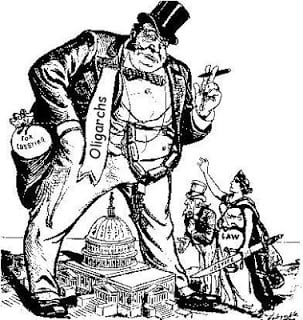
Today’s world is ruled by a myriad of multinational corporations and financial institutions that belong to a network of private round table organisations that stretch across the planet. There exists an international ruling elite that has been building an economic-corporate empire for over a century, which oppresses any dissent to their agenda.
A recent study conducted by Northwestern and Princeton University on America’s political system supports the thesis that political systems are not directed by the people of the country, but rather by a network of “economic elites” and “business interests”. The study concluded that the US political system is an oligarchy, where the “wishes of corporations and business and professional associations” are the driving forces behind policy decisions within the government.
“The central point that emerges from our research is that economic elites and organised groups representing business interests have substantial independent impacts on US government policy, while mass-based interest groups and average citizens have little or no independent influence” (Gilens and Page, 2014, p.3).
This study illustrates the influence that trans-national corporations along with international financiers can have on a population if they are given the conditions to flourish. The Council on Foreign Relations (CFR) epitomises the economic-corporate governance that exists in most countries of the world today, with democratic political systems often corrupted by lobbying groups and special interests. A self titled “independent, nonpartisan membership organisation, think tank and publisher”, the CFR is a private organisation which holds the real power in American politics. It has a membership which is made up from the top echelons of the political, academic, media, corporate, and banking fields. Hilary Clinton revealed the nature of her (along with the US State Department’s) relationship with the CFR when she addressed the council at their newly opened outpost in Washington D.C in 2009:
“I have been often to the mother ship in New York City, but it’s good to have an outpost of the Council right here down the street from the State Department. We get a lot of advice from the Council, so this will mean I won’t have as far to go to be told what we should be doing and how we should think about the future.”
A look at the corporate membership of the council reveals the level of power vested in such a small amount of hands, with approximately 200 of the most influential corporate players on the planet members of the council, including: Exxon Mobil Corporation, Goldman Sachs Group Inc, BP plc, Barclays, Google Inc, Lockheed Martin, Deutsche Bank AG, Shell Oil Company and Soros Fund Management.
The CFR is part of a shadowy network of private organisations that stretches across the globe to influence policy of most nation states. Professor Carroll Quigley was an insider at the CFR and knew “of the operations of this network because” he “studied it for twenty years and was permitted for two years, in the early 1960’s, to examine its papers and secret records” (Quigley, 1966, p. 950). He wrote two books about the activities of the network, the first titled Tragedy and Hope: A History of the World in our Time published in 1966, and the second was The Anglo-American Establishment published in 1981.
The father of the CFR is the British based Royal Institute of International Affairs (RIIA) which is headquartered at Chatham House in St James’s Square, London. Growing out of the Cecil Rhodes Secret Society and the Lord Alfred Milner Group, the RIIA was formed in 1919 by Lionel Curtis and fellow members of the Milner Group:
“In 1919 they founded the Royal Institute of International Affairs (Chatham House) for which the chief financial supporters were Sir Abe Bailey and the Astor family (owners of The Times). Similar Institutes of International Affairs were established in the chief British dominions and in the United States (where it was known as the Council on Foreign Relations) in the period 1919-1927” (Quigley, 1966, p. 132).
These organisations are composed of inner circles and outer circles, with the larger institutes serving as a front organisation for the inner circle who direct the group. This has been the case since RIIA was established as a front organisation for the Milner Group in 1919:
“The Milner Group controls the Institute. Once that is established, the picture changes. The influence of Chatham House appears in its true perspective, not as the influence of an autonomous body but as merely one of the many instruments in the arsenal of another power” (Quigley, P.197, 1981).
Lord Alfred Milner and Cecil Rhodes both shared an ethos that British expansionism would lay the foundation for a world system that was to come in the future:
“The goals which Rhodes and Milner sought and the methods by which they hoped to achieve them were so similar by 1902 that the two are almost indistinguishable. Both sought to unite the world, and above all the English-speaking world, in a federal structure around Britain. Both felt that this goal could best be achieved by a secret band of men united to one another by devotion to the common cause and by personal loyalty to one another. Both felt that this band should pursue its goal by secret political and economic influence behind the scenes and by the control of journalistic, educational, and propaganda agencies” (Quigley, 1981, P.49).
Quigley was honest at admitting the dangers of a small oligarchical group having such a concentration of power vested in it:
“No country that values its safety should allow what the Milner Group accomplished in Britain – that is, that a small number of men should be able to wield such power in administration and politics, should be given almost complete control over the publication of the documents relating to their actions, should be able to exercise such influence over the avenues of information that create public opinion, and should be able to monopolise so completely the writing and teaching of the history of their own period” (Quigley, 1981, p. 197).
Today, Chatham House is one of the world’s pre-eminent organisations on world affairs, which conducts its activities under a veil of secrecy. Very little mainstream media spotlight is put on the organisation which has been at the centre of British policy for close to a century – perhaps due to the fact that the BBC, Thomas Reuters, Bloomberg, the Telegraph Media Group, the Daily Mail and General Trust plc, the Guardian and the Economist are all corporate members of the RIIA. Raytheon, the Ministry of Defence, the British Army, the Foreign & Commonwealth Office UK, BAE Systems plc, Chevron, the Royal Bank of Scotland, HSBC Holdings plc, the Scottish Government and the European Commission, are just a handful of organisations that also belong to the Institute.
Chatham House is one of the most influential organisations relating to western imperial policy, with the creation of an Anglo-American-European world empire the core objective of the institute. The Director of Chatham House has recently been announced as the chair of a new North Atlantic Treaty Organisation (NATO) policy group, which will advise and recommend future NATO policy. The Director Dr Robin Niblett revealed the intimate relationship between the RIIA and NATO since its formation in a speech about the new initiative last month, stating: “Chatham House has been involved in debates around the role of NATO since its inception”. The European branch of this organisation (the European Council on Foreign Relations (ECFR)) has also had a strong affiliation with NATO, as 3 of the former Secretary Generals are individual members of the council: including the previous leader Jaap De Hoop Scheffer (Jan 2004 – Aug 2009), along with George Robertson (Oct 1999 – Dec 2003) and Javier Solana(Dec 1995 – Oct 1999).
A further example of the network of economic and corporate elites is the annual Bilderberg conference that took place in Copenhagen between the 29th May and 1st June, where a percentage of the world’s elite meet to discuss geopolitical, social and economic affairs. Founded in 1954 by Prince Bernard of the Netherlands, the group is a mix of corporate and banking giants meeting with military heavyweights, media moguls, politicians and royalty from North America and Europe. This year’s meeting was an especially high level affair with the Managing Director of the IMF Christine Lagarde, the Secretary General of NATO Andres Fogh Rasmussen, the former head of the National Security Agency (NSA) Keith Alexander, the Executive chairman of Google Inc Eric Schmidt, the Chancellor of the Exchequer George Osborne and H.M the Queen of Spain, all amongst this year’s participants.
Back in 2009, the Belgian Minister of State and former chairman of the Bilderberg Group Étienne Davignon revealed that the group ‘helped create the Euro in 1990’s’, demonstrating the power of the group in making major decisions regarding Europe’s economic affairs. The President of the European Central Bank (ECB) Mario Draghi has also attended the conference in 2009 when he was Governor of the Bank of Italy, two years before taking office at the ECB.
The elite will remain in control as long as people allow themselves to be Balkanised by the media and the political establishment along the lines of race, class and status, whilst the true enemy to a free world continues to roll on unabated.

Additional Sources:
Carroll Quigley, Tragedy and Hope: A History of the World in our Time, 1966.
Carroll Quigley, The Anglo-American Establishment, 1981.
www.globalresearch.ca/the-economic-corporate-oligarchy-of-the-world/5386794" data-title="The Economic-Corporate Oligarchy of the World">