Friday, May 16, 2014

First living thing with ‘alien’ DNA created in the lab: We are now officially playing God

if "they"  R revealing it !   "they" R  way ,way past what's REALLY  go~in on ?    & there IS no such ..thing as God ..until "their" fuck~in MONSTER  is run~in ...loose  :O  Oops

Alien DNA, ha ha ha

Share This article

Scientists have succeeded in creating the first organism with “alien” DNA. In normal DNA, which can be found within the genes of every organism , the twin strands of the double helix are bonded together with four bases, known as T, G, A, and C. In this new organism, the researchers added two new bases, X and Y, creating a new form of DNA that (as far as we know) has never occurred after billions of years of evolution on Earth or elsewhere in the universe. Remarkably, the semi-synthetic alien organism continued to reproduce normally, preserving the new alien DNA during reproduction. In the future, this breakthrough should allow for the creation of highly customized organisms — bacteria, animals, humans — that behave in weird and wonderful ways that mundane four-base DNA would never allow.
DNA TattooThis landmark study, 15 years in the making, was carried out by scientists at the Scripps Research Institute and published in Nature today [doi:10.1038/nature13314 - "A semi-synthetic organism with an expanded genetic alphabet"]. In normal DNA, two separate strands are entwined in a double helix. These strands are connected together via four different bases, adenine (A), thymine (T), cytosine (C), and guanine (G). A always bonds with T, and C always bonds with G, creating a fairly simple “language” of base pairs — ATCGAAATGCC, etc. Combine a few dozen base pairs together in a long strand of DNA and you then have a gene, which tells the organism how to produce a certain protein. If you know the sequence of letters down one strand of the helix, you always know what other letter is. This “complementarity” is the fundamental reason why a DNA helix can be split down the middle, and then have the other half perfectly recreated. There, I just explained in about 150 words two of the most vital processes to all life that we know of.
In this new study, the Scripps scientists found a method of inserting a new base pair into the DNA of an e. coli bacterium. These two new bases are represented by the letters X and Y, but the actual chemicals are the rather cryptic “d5SICS” and “dNaM.” A previous in vitro (test tube) study had shown that these two chemicals were compatible with the enzymes that split and copy DNA. “We didn’t even think back then that we could move into an organism with this base pair,” said Denis Malyshev, first author of the paper. Fortunately, he was wrong.
The full Nature write-up is worth reading if you want the nitty-gritty details, but here’s the short version. First, the scientists genetically engineered an e. coli bacterium to allow the new chemicals (d5SICS and dNaM) through the cell membrane. Then they inserted a DNA plasmid (a small loop of DNA) that contained a single XY base pair into the bacterium. As long as the new chemicals were available, the bacterium continued to reproduce normally, copying and passing on the new DNA, alien plasmid and all. In the study, this process seems to have carried on flawlessly for almost a week.
Synthetic DNA, with a new XY base pair
For now, the XY base pair does nothing; it just sits there in the DNA, waiting to be copied. In this form, it could be used as biological data storage — which, as we’ve covered previously, could result in hundreds of terabytes of data being stored in a single gram of synthetic, alien DNA. Floyd Romesberg, who led the research, has much grander plans. “If you read a book that was written with four letters, you’re not going to be able to tell many interesting stories,” Romesberg says. “If you’re given more letters, you can invent new words, you can find new ways to use those words and you can probably tell more interesting stories.”
DNA headerNow his target is to find a way of getting the alien DNA to actually do something, such as producing amino acids (and thus proteins) that aren’t found in nature. If Romesberg and co. can crack that nut, then it will suddenly become possible to engineer cells that produce proteins that target cancer cells, or special amino acids that help with fluorescent microscopy, or new drugs/gene therapies that do weird and wonderful things. (Read: What is transhumanism, or, what does it mean to be human?)
Ultimately it may even be possible to create a wholly synthetic organism with DNA that contains dozens (or hundreds) of different base pairs that can produce an almost infinitely complex library of amino acids and proteins. At that point, we’d basically be rewriting some four billion years of evolution. The organisms and creatures that would arise would be unrecognizable, and be capable of… well, just about anything that a white-coat wearing maniac can dream up.

Psychiatrists: the drug pushers

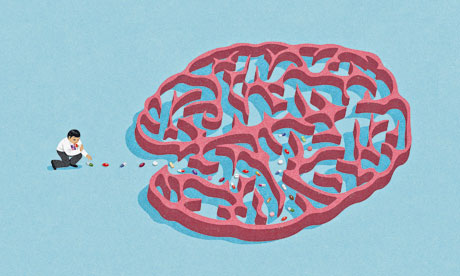
Is the current epidemic of depression and hyperactivity the result of disease-mongering by the psychiatric profession and big pharma? Does psychiatry have any credibility left at all?
Illustration by John Holcroft
A psychiatrist who once "treated" me used to recite this rueful little mantra: "They say failed doctors become psychiatrists, and that failed psychiatrists specialise in drugs." By drugs this psychiatrist meant drugs of addiction – and his "treatment" of me consisted of prescribing Temgesic, a synthetic opiate, as a substitute for the heroin I was more strongly inclined to take. So, he undertook this role: acting, in effect, as a state-licensed drug dealer; and he also attempted a kind of psychotherapy, talking to me about my problems and engaging with my own restless critique of – among many other things – psychiatry itself. Together we conceived of doing some sort of project on drugs and addiction, and began undertaking research. On one memorable fact-finding trip to Amsterdam, we ended up smoking a great deal of marijuana as well as drinking to excess – I also scored heroin and used it under the very eyes of the medical practitioner who was, at least nominally, "treating" me.
All of this happened more than 20 years ago, and I drag it up here not in order to retrospectively censure the psychiatrist concerned, but rather to present him and his behaviour as a perversely honest version of the role played by his profession. For what, in essence, do psychiatrists specialise in, if not mood-altering drugs? Or, to put it another way, what do psychiatrists have to offer – over and above the other so-called "psy professions" – beyond their capacity to legally administer psychoactive drugs, and in some cases forcibly confine those they deem to be mentally ill?
Psychiatry is undergoing one of its periodic convulsions at the moment – one that coincides with the publication by the American Psychiatric Association of the fifth edition of their hugely influential "Diagnostic and Statistical Manual of Mental Disorders" (DSM–5) – and I think we should all take the opportunity to join in the profession's own collective navel-gazing and existential angst. After all, while the influence of the talking cures is pervasive in our society – running all the way up the scale from anodyne advice dispensed on daytime TV shows, to the wealthy shelling out hundreds of pounds a week to pet their neuroses in the company of highly qualified black dog walkers – psychotherapy and psychoanalysis remain essentially voluntaristic undertakings; only psychiatry deals in mandatory social care and legal sanction. Besides, only psychiatry partakes of the peculiar mystique that attaches to medical care. We may dismiss the opinions of all sorts of counsellors and therapists, secure in the knowledge that their very multifariousness is indicative of their lack of overall traction, but psychiatry, dealing, as it claims, with well-defined maladies – and treating them with drugs and hospitalisation – exerts an enormous pull on our collective self-image. Just what the nature of this pull is, and how it has come to condition our understanding of ourselves and our psychic functioning, is what I wish to unpick.
Full-blown mental illness is an extremely frightening phenomenon to observe – let alone experience. And much of the debate that surrounds the efficacy of contemporary psychiatry is warped by the knowledge – lurking in the wings of our minds – that we wish to have as little as possible to do with it. We may understand rationally that psychosis isn't a contagion, yet still we turn aside from the street soliloquisers and avoid the tormented gazes of those being "cared for in the community". Arguably, the response of those who treated a trip to Bedlam to view the madmen and women as an entertainment had the virtue of at least being a form of contact. At their peak, mental hospitals such as Bedlam (and formerly known as "lunatic asylums") housed over 100,000 inmates, many of whom had been confined for behaviours that today would be regarded as lifestyle choices, such as socialism or sexual promiscuity. The hospitals were also dumping grounds for patients who we now know to have had organic brain diseases. It's sobering for those on the left to realise that the first politician to commit to their abolition was Enoch Powell. By the early 1990s many long-stay inmates had been returned to the outside world, but their lives were for the most part still grossly circumscribed: living in sheltered accommodation and visited by mental health teams, confined not by physical walls but by the chemical straitjackets of neuroleptic drugs.
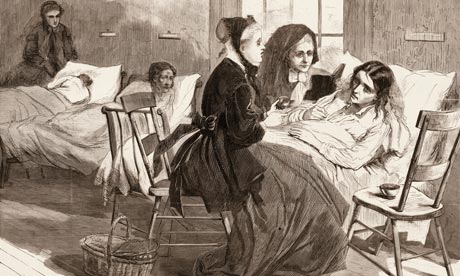
 New York City Lunatic Asylum Hospital An engraving of a bedridden patient at the New York City Lunatic Asylum Hospital in the late 1860s. Photograph: Stock Montage/Getty Images Still, if you wish to visit Bedlam you can do so. The locked mental wards of our hospitals present a terrifying spectacle of seriously disturbed patients shouting, yelping, gurning and shaking – I know, I've seen them. And it's the much-repressed knowledge that this is going on that helps, I would argue, to prevent too much criticism of the psychiatric profession. Just as we are quietly grateful to prison officers for banging up criminals, so too we are grateful for psychiatrists and psychiatric nurses for providing a cordon sanitaire between us and flamboyant insanity. Yet while the regime under which those diagnosed with mental pathologies has changed immensely in the last half-century, the prognosis remains no better. Some say that it is manifestly worse, and that psychiatry itself is to blame. But the truth is that hardly anyone – apart from the professionals, whose livelihoods depend on it – can either be bothered to wade through the reams of scientific papers concerned with the alternative treatment regimens, or understand the different methodologies arrived at to assess competing claims.
Early in Our Necessary Shadow, his lucid, humane and in many ways well-balanced account of the nature and meaning of psychiatry, Tom Burns, professor of social psychiatry at Oxford University, makes a supremely telling remark: "I am convinced psychiatry is a major force for good or I would not have spent my whole adult life in it." This is a form of the logical fallacy post hoc ergo propter hoc ("After this, therefore because of this"), and it seems strange that an academic of such standing should so blithely retail it because, of course, if we reverse the statement it makes just as much sense: "Having spent my whole adult life as a psychiatrist I must maintain the conviction that it is a major force for good." After all, the alternative – for Burns and for thousands of other psychiatrists – is to accept that in fact their working lives have constituted something of a travesty: either locking up or drugging patients whose diseases are defined not by organic dysfunction but by socially unacceptable behaviours. Burns has the honesty and integrity to admit that the major mental pathologies – schizophrenia, bipolar disorder, depression inter alia – cannot be defined in the same way as physical diseases, and he cleaves to the currently fashionable view of psychiatry as seeking to understand mental maladies through the tripartite lens of the social, the psychological and the biological. He also states that he sees the role of psychotherapy as central to the practise of psychiatry – and in this he dissents from the more mainstream "biological" model of treatment that has been in the ascendancy since the 1970s.
But what Burns cannot quite bring himself to do is give up the drugs. In a 333 page book (complete with a glossary, a bibliography and an index), there are just three references to the most commonly prescribed psychiatric drugs: the SSRIs, or selective serotonin reuptake inhibitors (such as Prozac and Seroxat). When he does consider the SSRIs, he notes that they may indeed be overprescribed (as of 2011 46.7m prescriptions had been written in the UK for antidepressants), and in particular that they may be used to "treat" commonplace unhappiness rather than severe depression. What he doesn't venture near are the systematic critiques of antidepressants – and neuropharmacology in general – that have emerged in recent years. The work of Irving Kirsch, whose meta-analysis of SSRI double-blind trials revealed that in clinical terms – for a broad spectrum of depressed patients – SSRIs acted no better than a placebo, is something Burns doesn't want to look at. He also doesn't wish to examine too closely the underlying "chemical imbalance" theory of depression on which the alleged efficacy of the SSRIs is based, presumably because he knows that it's essentially bunk: no fixed correlation has been established, despite intensive study, between levels of serotonin in the brain and depression.

Antidepressant tablets Antidepressant tablets. Photograph: Jonathan Nourok/Getty Images I've swerved into consideration of antidepressants because I believe the exponential increase in their use is a function of the problem of legitimacy that psychiatry currently faces. Psychiatrists, of course, tell the public that the vast majority of these drugs are prescribed by general practitioners – not by them. But what has made it possible for someone recently bereaved or unemployed to have a prescription written by their doctor to alleviate their "depression", is, I would argue, very much to do with psychiatry's search for new worlds to conquer, an expedition that has been financed at every step by big pharma. Put bluntly: unable to effect anything like a cure in the severe mental pathologies, at an entirely unconscious and weirdly collective level psychiatry turned its attention to less marked psychic distress as a means of continuing to secure what sociologists term "professional closure". After all, if chlorpromazine (commonly known as Largactil) and other neuroleptics don't cure schizophrenia – any more than lithium "cures" bipolar illness – then why exactly do you need a qualified medical doctor to dole them out?
The proliferation of new psycho-pharmacological compounds has advanced in lock-step with the proliferation of new mental illnesses for them to "treat". As Ian Hacking observes in a review of DSM–5 in the current London Review of Books, the first DSM – published in 1952 – and its successor in 1968, were heavily influenced by the psychoanalytic theories then dominating psychiatry in the US. In 1980, with DSM–III there came a step-change. Hacking traces this to the efficacy of lithium in managing mania: "Now there was something that worked … clear behavioural criteria were necessary to identify who would benefit from lithium." James Davies begins his book, Cracked: Why Psychiatry Is Doing More Harm Than Good, with an examination of how these behavioural criteria were arrived at by the compilers of DSM–III and its subsequent incarnations. You may be thinking that all this is so much arcane knowledge – and wondering why we in Britain should be preoccupied by a diagnostic manual published in the US. But in fact the ICD (International Classification of Diseases) used by British doctors is compiled in the same way as the DSM – indeed most NHS psychiatrists favour the latter over the former. In the US it's simple: your insurance won't pay out unless you are diagnosed with a malady detailed in the DSM, but in Britain we have a less tangible – but for all that pervasive – form of socio-medical discrimination: no sick note – and no social benefits – unless what ails you conforms to the paradigms set out in DSM.
The focus of Davies's critique is that the criteria for what constitutes ADHD (attention deficit hyperactivity disorder), or autism, or indeed depression, are not arrived at by any commonly understood scientific procedure, but rather by committee: psychiatrists getting together and pooling their understanding of how patients with these maladies "present" (in the jargon). Under these circumstances it becomes somewhat easier to understand how the tail can begin to wag the dog: rather than arriving at a commonly agreed set of symptoms that constitute a gestalt – and hence a malady – psychiatrists become influenced by what psycho-pharmacological compounds alleviate given symptoms, and so, as it were, "create" diseases to fit the drugs available. This in itself, Davies might argue, explains why there are more and more new "diseases" with each edition of the DSM: it isn't a function of scientific acumen identifying hitherto hidden maladies, but of iatrogenesis: doctor-created disease. So, while it may well be general practitioners who do the doling out, psychiatrists are required to legitimate what they are doing and provide it with the sugar-coating of scientific authenticity. It's a dirty, well-paid and high-status job – but someone has to do it, no?
The vast number of "hyperactive" children in the US prescribed Ritalin is so well attested to that it's become a trope in popular culture – just like the SSRI-munching depressive. But these are our version of low-level "care in the community", the sad are becoming oddly co-morbid (afflicted with the same sorts of diseases) with the mad. Davies treads a familiar path in his critique of the influence of the multinational pharmaceutical companies on the structure and practice of psychiatry. If you aren't familiar with the fact that almost all drug trials are funded by those who stand to profit from their success then … well, you jolly well should be. You should also be familiar with the extent to which university research departments and learned journals are funded by those who stand to profit – literally – from their presumed objectivity. The money generated by the SSRIs in particular is vast, easily enough to warp the dynamics and the ethics of an entire profession, and indeed I would agree with Davies that it has in fact done just this. The sections of his book that deal in particular with the way big pharma has moved into markets outside the English-speaking world and effected a wholesale cultural change in their perception of sadness (rebranding it, if you will, as chemically treatable "depression"), simply in order to flog their dubious little blue pills, make for chilling reading.
Actually, Burns would agree with some of this critique as well; and recall, he's a psychiatrist who fervently believes that his profession has been, and continues to be, a force for good. Davies is a psychologist, and to the outsider the fierceness of his attack might be dismissed as part of a turf war among the psy professions (Irving Kirsch is a clinical psychologist as well). However, I don't think it helps anyone to see the current imbroglio as simply a function of late capitalism in its most aggressive aspect. I'm afraid I have to mouth the old lily-livered liberal shibboleth at this point and observe that, yes, we are all to blame; and our responsibility is just as difficult for us to acknowledge because we are largely unaware of it. We don't consciously collude in the chemical repression of the psychotic (and Davies produces quite convincing statistics to support the view that those with psychosis actually recover better if they aren't medicated at all), any more than we consciously collude in the fiction of depression as a chemical imbalance that can be successfully treated with SSRIs.
Instead, what both clinicians and patients experience is quite the reverse: we feel absolutely bloody miserable, we can't get up in the morning, we are dirty and unkempt, and we go along to our GP and are prescribed an antidepressant, and lo and behold we recover. My GP, who has just retired, and who is a wise and compassionate man who I absolutely trusted, told me that he prescribed SSRIs because they worked, and I believed him. That they worked because of the overpoweringly efficacious curative power we believe doctors and their nostrums to possess rather than because of any real change in our brain chemistry was beside the point for him – and I suspect it's beside the point for the vast majority of patients as well. By the same token, Burns is at pains to stress, contra-DSM, that the great strength and skill of the practising psychiatrist lies in being able to intuit diagnoses by empathising with patients. Diagnosis, for Burns, is an art form – not a science. By his own account I've little doubt that he's a good and effective psychiatrist who can make a real difference to the lives of those plagued by demons that undermine their sense of self. One of my oldest friends is a consultant psychiatrist who I've actually seen practising in just this way, with preternatural flair and compassion.
In both their cases, however, I feel about them rather the way I do about the last archbishop of Canterbury: I consider Rowan Williams to be a wise and spiritual man mostly despite rather than because of his Christianity; and I think many psychiatrists are good healers mostly despite rather than because of the medical ideology of mental illness to which they subscribe.
Interestingly there is one large sector of the "mentally ill" that Burns believes are manifestly unsuitable for treatment – drug addicts and alcoholics. He points to the ineffectiveness of almost all treatment regimens, possibly because the cosmic solecism of treating those addicted to psychoactive drugs with more psychoactive drugs hits home despite his well-padded professional armour. Elsewhere in Our Necessary Shadow he seems to embrace the idea that self-help groups of one kind or another could help to alleviate a great deal of mental illness, and it struck me as strange that he couldn't join the dots: after all, the one treatment that does have long-term efficacy for addictive illness is precisely this one.
Psychiatrists are notoriously unwilling to endorse the 12-step programmes, and argue that statistically the results are not convincing. There may be some truth in this – but there's also the inconvenient fact that there's no place for psychiatrists, or indeed any of the psy professionals, in autonomously organised self-help groups. Burns agrees with Davies that our reliance on psychiatry, and by extension, psycho-pharmacology, may well be related to our increasingly alienated state of mind in mass societies with weakened family ties, and often non-existent community ones. Surely self-help groups can play a large role in facilitating the rebirth of these nurturing and supportive networks? But Burns seems to feel that just as we will always need a professional to come and mend the septic tank, so we will always need a pro to sweep out the Augean psychic stables. I'm not so sure; psychiatry has been bedevilled over the last two centuries by "treatments" and "cures" that have subsequently been revealed to be significantly harmful. From mesmerism, to lobotomy, to electroconvulsive therapy, to Valium and other benzodiazepines – the list of these nostrums is long and ignoble, and I've no doubt that the SSRIs will soon be added to their number.
Sooner or later we will all have to wake up, smell the snake oil, and realise that while medical science may bring incalculable benefit to us, medical pseudo-science remains just as capable of advance. After all, one of the drugs that Irving Kirsch's meta‑analysis of antidepressant trials revealed as being just as efficacious as the SSRIs was … heroin.

The World’s Most Dangerous Drug Dealers

maybe it's ALL just a big ... "C"    huh  ...The pay day: One third of trillion dollars – every year… funny  how the "normal" people who don't believe  in ANY  "C"   shit  r  in the end the 1's  wear~in   the ...."foil"   hats lol   oops

21st Century Wire says…

This ruthless drug cartel change laws in their favour, can overthrow governments at will, pays little or no taxown the US mainstream media, and routinely pay for the election campaigns of nearly every US politician in high office.

No, they are not from Colombia, Mexico or Afghanistan.

They are the Pharmaceutical Industrial Complex cartel of international corporations, based in the US, UK and Germany and Switzerland.

They work with legions of bought-and-paid-for doctors and medical care providers – harvesting the souls of millions each day through pushing anti-depressant drugs on children and adults, and are killing people every day with products hardly tests and fast-tracked through a matador regulatory process


Drugging America into a stupor


Brasscheck TV

One hundred million people are on psychiatric drugs.
40 years ago, the use of psychiatric drugs was extremely rare and there was a real debate as to whether it was ethical to use them even on severely disturbed psychiatric patients.

Now, idiot school teachers and school administrators intimidate parents into putting their kids on these drugs. These drugs breed dependence, they are very difficult to get off of once on, and they are dangerous.

Making a Killing: The Untold Story of Psychotropic Drugging - Full Movie (Documentary)


The pay day: One third of trillion dollars – every year

Bankers killing bankers for the insurance money and another look at 9/11

Reuters / Daniel Munoz
Two big, macabre stories came out of Wall Street recently: the rash of banker deaths by apparent murder and/or suicide, and speculation that bank CEOs themselves are behind the trend to cash in on the insurance.
It turns out that banks take out life insurance policies on their employees, and those policies pay out death benefits to the banks – not the families. In other words, to add to the banks’ other crimes, they appear to also be involved in the “suicides” and deaths of their own, as a way to fatten their bottom line and bonuses.
Should we be surprised by this banker-on-banker death scam? After all, wasn’t this what 9/11 was all about?
A new book by James Rickards, ‘The Death of Money’ (read: ‘Death of Bankers’), opens with a timeline starting three days before the 9/11 attacks on the Twin Towers and describes them from a first-person account from inside the CIA, which was monitoring trading on airline stocks (specifically ‘put options’), from traders who were profiting from the 9/11 disaster.
Jim Rickards is both a Washington insider and a Wall Street insider. He’s a hedge fund manager and a lawyer who, amongst other roles, advised the government during the collapse of Long Term Capital Management (LTCM), as well as during the release of the hostages during the Iran Hostage Crisis of 1981. If anyone has the inside track on the Wall Street-Washington corridor of corruption, it’s Mr. Rickards. And in his new book, he provides an eyewitness account of 9/11 insider ‘terror trading’ that was missing from the government’s own report. Rickards is an unimpeachable source, and he has done a great service by blowing the whistle on this scandal, at least partially.
I’ve interviewed Jim Rickards on my show ‘Keiser Report’ many times and spent time with him personally comparing notes from our Wall Street days. One topic that often comes up is ‘Drexel.’ We were both working on Wall Street during the collapse of Drexel Burnham Lambert and the Ivan Boesky scandal – a seminal moment in establishing the modern, post-regulatory environment on Wall Street, where virtually anything goes and laws are either ignored, rewritten, or created on the spot to manage and profit from the avalanche of insider trading, market manipulation, back room dealing, larceny, forgery, extortion, and other crimes that are the hallmarks of American finance today. When talking about finance scandals, all roads lead back to Drexel and it provides common ground to start a conversation amongst Wall Street veterans.
Reuters / Brendan McDermid
Both Rickards and I agree that judging by the price action and volume in the options market ahead of the 9/11 attacks, it was clear we were witnessing insider trading. I was one of the biggest producing option brokers when I worked on Wall Street, keep in mind, so I am very familiar with that market. The put options before the disaster were trading like you would expect them to do after a disaster, not before. It was very obvious that advanced knowledge of the attacks was circulating amongst traders. The options market was in fact screaming insider trading, and brokers and bankers were talking about it in the days leading up to the attacks.
Rickards’ information timeline in his book almost exactly mirrors the stories I was hearing at the time, when talking to brokers who had heard of, and in some cases were trading, based on this rumor of an impending airline disaster.
Rickards quotes Buzzy Krongard in his book, deputy chairman of the CIA, who was also the former head of Alex Brown – a firm that factors significantly in the story. I used to work for Buzzy at Alex Brown and I still keep in touch with my former colleagues, some of whom were ‘buzzing’ about the action in airline puts. Additionally, a company I started in Los Angeles, a dot-com, had been sold to a Wall Street broker just a few months before the attacks and the company had relocated their acquisition to the top floor of the World Trade Center. I was in touch with employees who were also ‘buzzing’ about the put option frenzy in airline stocks, and they cited Alex Brown as the source of the rumors. (They were ironically speculating on their own demise, as we were to find out later).
Coyly, Rickards wants us to believe that the original ‘terror traders’ – the original airline put option buyers – started buying put options somewhere other than Washington DC or Wall Street. Without much by way of explanation, he suggests that there is no way of knowing for sure where these trades originated, who did the trades, or how to track them. This of course is wrong. All trades are cleared via the OCC (Option Clearing Corporation) and are routed in ways that leave a paper trail that is easily examined and reconstructed. Why is Rickards evasive on these points? Take a close look again at his resume; he is not going to point the finger at the CIA even though there is overwhelming evidence to suggest the trades originated there. So be it. We can read between the lines. To highlight just one obvious point missing in his narrative: millions of dollars worth of profits from 9/11 insider trading still sit uncollected in an Alex Brown account (now owned by Deutsche Bank) in Baltimore, just down the road from the CIA’s HQ at Langley.
Rickards claims these trades originated “by unknown traders working overseas somewhere,” and this is clearly a dodge. But let’s focus on the fact that Rickards at least has repudiated the government’s claim that there was no insider trading at all. For this I take my hat off to him.
For some, the 9/11 story has faded into history and they consider it not terribly interesting anymore, but I think it’s important to keep in mind the ruthlessness of bankers on Wall Street today who are now apparently killing each other for the insurance money and who, we can now say with some certainty, were trading options to cash in on their own deaths on 9/11. This is the Wall Street culture that is tearing America apart. This is the Wall Street disease that is undermining America’s ability to control events around the world.
Max Keiser, the host of RT’s ‘Keiser Report,’ is a former stockbroker, the inventor of the virtual specialist technology, virtual currencies, and prediction markets.
Contributed by RT.com
The statements, views and opinions expressed in this column are solely those of the author and do not necessarily represent those of RT.

Hollywood Is Still On The Wrong Side Of Net Neutrality

from the that's-unfortunate dept

A few days ago, BitTorrent's Chief Content Officer, Matt Mason, posted a plea to Hollywood to get on the net neutrality/open internet bandwagon, pointing out that having a free and open internet is very much in their interest, if they really want new platforms to emerge that give Hollywood more options than just the big players who dominate the space:
Let’s also consider what an open Internet has meant for Hollywood so far, and why it might be worth protecting. An open Internet has made new financing, production, distribution and marketing models a reality. More users are being reached, and re-engaged, thanks to platforms like Facebook, Twitter and Tumblr. More films are being produced. The global box office hit a new record of $35.9 billion in the last year. And digital movie purchases surged 47%, now making up for declines in physical sales and rentals. If you look at the facts and figures, the industry is in the best shape it’s ever been in. It’s impossible to ignore the impact of the open Internet on film.

It’s worth thinking about what’s at stake, beyond the lot. The Internet has ushered in a new era of funding, and with it, an emerging creative middle class; an unprecedented indie boom. The startups and platforms that fund our creative middle class are poised to disappear with Net Neutrality. Any studio or production company that can’t pay for access or funding will fail.

The impact of a closed Internet is not abstract: something felt only in Silicon Valley, something for the government to work out. An unequal Internet is an Internet that’s unsustainable for film.
And, indeed, many in the entertainment business certainly do appear to recognize the issue. One of the leading proponents of net neutrality and the open internet is Senator Al Franken, who has long been a supporter of Hollywood, given his past career. And it was great to see a large group of famous musicians recently speak out in favor of net neutrality.

But, tragically, the powers that be among the legacy entertainment industry still seem to view net neutrality as a problem, not an important part of their future. It appears this is a combination of a few factors, led by their continued and irrational fear of "piracy." Because of this, they seem to think that any sort of "open" internet is a problem. In fact, back in 2007, the MPAA specifically argued that net neutrality would harm its anti-piracy efforts. Similarly, both the RIAA and MPAA have lobbied strongly in the past for special loopholes and exceptions to any net neutrality rules that would allow ISPs to block content the legacy guys don't like. In fact, one of the most famous net neutrality violations involved Comcast throttling BitTorrent connections. The Songwriters Guild of America once claimed that net neutrality would mean an end to songwriting.

Of course, none of that is true. Many are simply kneejerk reactions to being overly fearful of the internet. One hopes that in the years since all those statements were made, many in those industries have since realized that an open internet is important to their future. The end of net neutrality would actually be incredibly damaging to them, as it would also lock in the power of a few larger internet players of whom the entertainment industry is already distrustful. Netflx, Amazon and Google will survive just fine on a non-neutral internet. They can pay the bills. It's the other guys, the new and innovative startups that will provide the necessary competition, who may get left behind.

The MPAA, RIAA and others seemed to hope that without net neutrality, the internet could be crafted into a system more like cable TV, with more centralized power and less innovation. But hopefully they now realize that's not a good thing. It would be good if they finally spoke up about it, though.

Trade, Climate, Finance and Agriculture. The European Commission’s Corrupt Reforms on Behalf of Big Business

The European Commission “A Disgrace to the Democratic Traditions in Europe”


free trade
Corporate Europe Observatory has just released a critical report on the record of the European Commission over the last five years. The report sums up the record of the outgoing Barroso II Commission and how it has interacted with big business lobby groups during its term.
The critique of the Commission in the report is damning. The Commission has pursued a corporate agenda, with little regard for other interests in society. Moreover, the Commission has fought tooth and nail to avoid effective regulation of lobbyists, including by opposing a mandatory register and avoiding serious reform of its advisory structure, with its so-called expert groups dominated by big business representatives in many areas.
Kenneth Haar, co-author of the report, says:
“The Barroso II Commission is the European Commission at its worst…. It has used its new powers to impose policies that fit neatly with the interests of big business. This will be a term that Europeans won’t forget any time soon. It leaves the Commission with less legitimacy.”
Olivier Hoedeman, coordinator and co-author says:
“The outgoing Commission leaves a sad record of putting big business at the steering wheel of a large number of EU policies. This stresses the urgency for reform.”
Pascoe Sabido, co-author says:
“This report underlines just why the Commission’s dogged insistence on listening to big business rather than European citizens is driving people into the streets. On 15 May thousands of Europeans will be in Brussels to surround the European Business Summit and send a clear message to our political leaders – democracy is not for sale at any price.”
Various policy areas are looked at by the report, including trade, climate, finance and agriculture.
The authors state that the Commission’s Directorate General for Trade has served to open new markets for business, but all to often to the detriment of ordinary people and the environment in various regions of the globe. The trade negotiations between the EU and India have put big business in the driving seat, and the outcome could jeopardise the livelihoods of millions of people in India. While granting privileged access to big business, details about the negotiations have been withheld from the public. Furthermore, the report discusses how the officials and corporate lobbyists sit together to discuss how to remove regulations in key markets, such asIndia.
Similar criticisms are leveled at the EU-US negotiations over the Transatlantic Trade and Investment Partnership. Here too, closed door meetings with corporate lobbyists highlight how big business is been granted privileged access to policy makers. The report highlights the danger that business lobbyists could eventually have the power to co-write legislation and bypass democratic processes.
The authors conclude that the Commission’s trade and investment policy reveals a bunch of unelected technocrats who care little about what ordinary people want and negotiate on behalf of big business.
As for agriculture, the authors conclude that the Commission has sided with agribusiness on GMOs and pesticides. Far from shifting Europe to a more sustainable food and agriculture system, the opposite has happened, as agribusiness and its lobbyists continue to dominate the Brusselsscene.
Consumers in Europe reject GM food, but the Commission has made various attempts to meet the demands from the biotech sector to allow GMOs into Europe, aided by giant food companies, such as Unilever, and the lobby group FoodDrinkEurope. The authors note links between these concerns and the top echelons of the Commission.
Aggressive lobbying by BASF led to the authorisation for GM Amfora potato commercial cultivation. According to the report, conflicts of interest in favour of the biotech industry within the European Food and Safety Agency led to disputed and heavily criticised scientific advice being offered on the matter.
The danger is that further approvals for GMO cultivation could follow because proposals could see biotech companies having a role in decisions on whether to allow cultivation.
In the report, it is also noted that the industry is also exerting strong pressure to prevent action by the EU on endocrine disruptors and pesticides.
The report concludes that the Commission has eagerly pursued a corporate agenda in all the areas investigated and has pushed for policies in sync with the interests of big business. It had done this in the apparent belief that such interests are synonymous with the interests of society at large.
While the problems noted in the report have arguably always been present within the Commission, the last five years have seen a watershed in so far as there has been a concentration of power in the hands of the Commission and that it is pursuing a more vigorous corporate agenda with more success than ever before.
The report is a damning indictment of the conflicts of interest, secrecy, corporate lobbying, lack of accountability to the public (and the European Parliament) and the revolving door between decision makers and vested corporate interests. A deepening of democratic transparency within the Commission is called for along with a roll back of its powers.
The report’s ultimate conclusion is that the Commission is a disgrace to democratic traditions in Europe. It is effectively a captive but willing servant of a corporate agenda.
The full report, including all the policy areas investigated, can be read here:http://corporateeurope.org/sites/default/files/record_captive_commission.pdf

New Harvard Study Proves Why The Bees Are All Disappearing

“If the bee disappeared off the face of the earth, man would only have four years left to live.” - Albert Einstein

by .   http://www.collective-evolution.com/2014/05/15/new-harvard-study-proves-why-the-bees-are-all-disappearing/


3
beesThe human race is really starting to feel the consequences of their actions. One area we are waking up to is the massive amount of pesticides we spray (especially in North America) on our food that has not only been linked to human disease, but a massive die off in the global bee population within the past few years.
A new study out of Harvard University, published in the June edition of the Bulletin of Insectology puts the nail in the coffin, neonicotinoids are killing bees at an exponential rate, they are the direct cause of the phenomenon labeled as colony collapse disorder (CCD). Neonicotinoid’s are the world’s most widely used insecticides. (1)
“The results from this study not only replicate findings from the previous study, but also reinforce the conclusion that the sublethal exposure to neonicotinoids is likely the main culprit for the occurrence of CCD.” (1)
For this study, researchers examined 18 bee colonies at three different apiaries in central Massachusetts over the course of a year. Four colonies at each apiary were regularly treated with realistic doses of neonicotinoid pesticides, while a total of six hives were left untreated. Of the 12 hives treated with the pesticides, six were completely wiped out.
Neonicotinoids insecticides, persist in “extremely high levels” in planter exhaust material produced during the planting of crops treated with these insecticides. This runs contrary to industry claims that the chemicals biodegrade and are not a threat. These pesticide components are found in soil, they are also found in fields where the chemicals are not even sprayed.  Bees also actively transfer contaminated pollen from primarily pesticide treated corn crops and bring it back to their hives. Furthermore, bees transfer these pesticides to other plants and crops that are not treated with the chemicals, which goes to show just how persistent these chemicals truly are in the environment. 
There has been an enormous amount of research which shows that our current regulations which protect the creatures that pollinate much of our food is extremely inadequate. It’s been published in a number of peer-reviewed journals showing how widely used pesticides have a very damaging effect on bees.
A paper published in the journal Nature discusses how bees are twice as likely to die when exposed to pesticides; two-thirds of the bees are lost when exposed compared to a third when not exposed. The exposed bees are also half as successful in gathering food. (2)
Scientists from the US Department of Agriculture as well as the University of Maryland published a study that linked chemicals, including fungicides, to the large scale die-off of bees that has recently plagued the planet, you can read that study here. 
In the United Stats alone, the honey bee population declined by approximately 30 percent, with some beekeepers reporting losses up to 90 and 100 percent. More than 100 US crops rely on honey bees to pollinate them. The study determined that fields ranging from Maine to Delaware contained nine different agricultural chemicals. These included fungicides, herbicides, and insecticides. In some cases they even recorded samples of 21 different agricultural chemicals. 
Europe also recently recorded the largest bee loss in their history.
Not only have these pesticides been linked to various health ailments, they are killing bees all over the world. It’s not just bees, the disappearance of Monarch Butterflies has also been linked to Monsanto’s roundup herbicide. It’s time we completely ban something that has absolutely no reason to exist, we can do better than this.
As we continue to take actions like this we continue to see that how we are currently doing things simply cannot be sustained. This type of issue does not just reflect how we treat nature but also reflects how we operate as a whole. If money wasn’t so important, we wouldn’t be finding unnatural ways to do everything on this planet. If we weren’t so concerned with maintaining an economy, issues such as these wouldn’t affect us. This is all a perfect lesson for us to ask “what the heck are we doing to our planet?” We are at a point where our very survival is now threatened because we are fighting so hard to maintain a system we all don’t like anyway.
“If the bee disappeared off the face of the earth, man would only have four years left to live.” - Albert Einstein
Related CE Articles:
For more information on how pesticides are harming human health, click HERE

The Bees Are Back…As Robots? Harvard Project Funds The Engineering Of Robotic Bees Soon To Be In Flight


ah um oh yea & "we" just happen 2 ???

by .   http://www.collective-evolution.com/2014/05/14/the-bees-are-back-as-robots-harvard-project-funds-the-engineering-of-robotic-bees-soon-to-be-in-flight/
With the alarming decline in the honey bee population sweeping our globe, fear of the multi-billion dollar crop industry collapsing has been on many people’s minds.
To tackle this issue, Harvard’s School of Engineering and Applied Sciences has been working with staff from the Department of Organismic and Evolutionary Biology and Northeastern University’s Department of Biology to develop robot bees. Yes that’s right, Robobees. And according to a new video just released, these insectoid automatons have already taken flight.
2013_3_19_image-b6f0564b
According to the creators of Robobee:

Robotic insects make first controlled flight

The demonstration of the first controlled flight of an insect-sized robot is the culmination of more than a decade’s work . . . Half the size of a paperclip, weighing less than a tenth of a gram, the robot was inspired by the biology of a fly, with submillimeter-scale anatomy and two wafer-thin wings that flap almost invisibly, 120 times per second.
Environmental organization Greenpeace released an unnerving public service announcement video showcasing what a potential world would look like if it were inhabited by these Robobees. The video utilizes calming music and mesmerizing imagery to paint the picture of this ‘perfect’ world.

NewBees

Not sure about anyone else, but after watching the video I felt disturbed about the entire project. Micro-robots that fly around and kill other insects and monitor our environment? Does anyone else think this is a little bit strange?
Harvard University listed on their website the possible benefits of such technology, alluding to the Robobees being a technological means to efficiently pollenate crops without the dependence on the declining honey bee population. Of course, this decline is in part due to the insecticide GMO crops plaguing our planet. So in reality these Robobees are not targeting the root of the problem, but hey, it’s a start….
Harvard’s “Micro Air Vehicles Project” is inspired by the biology of a bee and the insect’s hive behaviors. While the developers have created these micro-bots to be autonomous, meaning that they have a ‘mind’ of their own, they also plan on coordinating large numbers of the Robobees to accomplish more complicated tasks faster and efficiently.
robobees1
The robots are created through an incredible micro-engineering process specifically designed for mass production. Each “Bee” is designed with its own electronic nervous system and power source, and able to target tasks with a microscopic UV targeting sensor. On top of that, these bees can be programmed to only work with specific crops.
However, Harvard’s official website has stated that this isn’t a long term solution to Colony Collapse Disorder (CCD) and the crop failure crisis,
“If robots were used for pollination it would only be as a stop-gap measure while a solution to CCD is implemented to restore natural pollinators.”
So if these Robobees are not meant to solve the CCD crisis, then what could be their alternative purpose? It’s interesting to note some other ‘practical’ applications of the Robobees which Harvard lists on their website:
  • search and rescue (e.g., in the aftermath of a natural disaster);
  • hazardous environment exploration;
  • military surveillance;
  • high resolution weather and climate mapping; and
  • traffic monitoring.
Need I say more?
We want to hear your thoughts on the Robobees, share with us below!
References:
1.) http://robobees.seas.harvard.edu/home
2.) http://www.fooddemocracynow.org/blog/2013/mar/20/scientists_develop_flying_robobees_to_pollinate/

Robots Over Russia: The Great Anglo-Techno Game

    http://jaysanalysis.com/2014/04/30/robots-over-russia-the-great-anglo-techno-game/#more-4904

NATO expansion encloses Russia.
By: Jay
In order to understand the crisis in Ukraine, it is crucial to grasp the key players and plans in the global chess game.  In the last hundred years, the world has been dominated by the Anglo-American imperium.  The British “Great Game” of keeping Russia at bay was a torch passed on to the American establishment following the Bolshevik Revolution (sponsored by Western banks, including in particular Paul Warburg), as the British shadow establishment contented itself by ruling America from afar, through its Pratt House and Council on Foreign Relations versions of the Royal Society Round Table.  From this behemoth came the OSS and CIA, as well as covert support for Sovietism as I’ve demonstrated here from the CFR’s own history.
Britain thus pioneered the practice of containment, strategy of tension, and overt infiltration and subversion of Russia through its own exported Kulturkampf, Marxism.   As Russian civilization labored under the burden of Sovietism, the West enlisted its best and brightest in a great propaganda campaign known as the Cold War.   While existing as something real on one level, at a higher level, the goal was always convergence between the West and the East, as the polar opposites merged into a single globo-state, merging the worst of the communist and capitalist systems.  The Cold War therefore allowed the western military industrial complex the onus to work towards its grand project: the great Skynet/DARPA grid that would come online as a result of endless black budget funding from covert projects.  For proof of this, one need look no further than the computer screen in front them, wired to the internet – DARPA’s master creation.  As DARPA’s own history shows, the creation of the Internet was always a spying masterplan of the western military industrial intelligence establishment through Harvard, RAND, AT&T, Xerox, the NSA and London!  Consider as well that even at that time, the plan was to link the “NET” to satellites (Skynet).  When Russian President Vladimir Putin recently said the Internet was a CIA creation, he was 100% correct.
DARPA states as follows concerning its creation and reason for existence:
“The Soviet Union’s launch of Sputnik showed that a fundamental change was needed in America’s defense science and technology programs. DARPA was formed to meet this need and rejuvenated our defense technological capabilities.”
The 1977 ARPANET, precursor to the Internet, connected to RAND, Harvard, Stanford, London, etc., and the satellite grid.
The greatest of those projects (along with the Manhattan Project from World War 2) would be the secret space program hatched at Bohemian Grove known as the Star Wars Defense Initiative.  SDI, the Strategic Defense Initiative, would see countless billions siphoned off of the taxpayers’ backs into endless black holes of research and development.  In order to justify the intelligence state and its black budget techno ops, a great enemy was needed.  That enemy continued to be the Russians, as American establishment elites justified their Faustian bargain with techno obsession through the “liberal” Marxist enemy of the Russians.  Just as the British created and manufactured an enemy in the Wahhabis and Jihadism through the letters and works of Sir Lawrence of Arabia, so too did the American establishment manufacture the same with Al Qaeda in 1979.   Brzezinski explains of the creation of Al Qaeda and the Mujahadeen:
Brzezinski's 1997 The Grand Chessboard outlines the modern plan against Russia.
Brzezinski’s 1997 The Grand Chessboard outlines the modern plan against Russia.
“Q: The former director of the CIA, Robert Gates, stated in his memoirs ["From the Shadows"], that American intelligence services began to aid the Mujahadeen in Afghanistan 6 months before the Soviet intervention. In this period you were the national security adviser to President Carter. You therefore played a role in this affair. Is that correct?
Brzezinski: Yes. According to the official version of history, CIA aid to the Mujahadeen began during 1980, that is to say, after the Soviet army invaded Afghanistan, 24 Dec 1979. But the reality, secretly guarded until now, is completely otherwise: Indeed, it was July 3, 1979 that President Carter signed the first directive for secret aid to the opponents of the pro-Soviet regime in Kabul. And that very day, I wrote a note to the president in which I explained to him that in my opinion this aid was going to induce a Soviet military intervention.” Brzezinski was channeling Lawrence of Arabia.
British Intelligence expert Mark Curtis gives the background to the “Great Game”:
“The British strategy of divide and rule, and reliance on Muslim forces to promote imperial interests, reached its apogee in the Middle East during and after the First World War.  The carving up of the region by British and French officials has been endlessly commented on – though less so as an illustration of the long-standing British ‘use’ of Islam, which then took a new turn.  The Middle East was seen by British planners as critical for both strategic and commercial reasons.  Strategically, the Islamic territories were important buffers against Russian expansion into the Imperial land route from British India to British-controlled Egypt.  But oil had by now also entered the  picture, with the founding of the Anglo-Iranian Oil Corporation in Persia in 1909, the discovery of oil in Iraq soon after, and its increasingly important role in powering the military during the First World War.  British planners viewed control over Iraqi and Persian oil to be a ‘first class British War aim.’” (Curtis, Secret Affairs, 5)

Indeed, we now see why the West has always been the secret fan of the radical Islam it professes to hate.  The British Government itself wrote to the Sauds (future heads of the British-created “nation,” Saudi Arabia):
“If the Amir [ie, Hussein] … and Arabs in general assist Great Britain in the conflict that has been forced upon us by Turkey, Great Britain will promise not to intervene in any manner whatsoever whether in things religious or otherwise … Till now we have defended and befriended Islam in the person of the Turks; henceforward it shall be in that of the noble Arab.  It may be that an Arab of true race will assume the Khalifate at Mecca or Medina, and so good may come by the help of God out of all the evil that is now occurring.” (Curtis, 8)
Sir Lawrence. It's a bloody British Jihad!
Sir Lawrence. It’s a bloody British Jihad!
The parallels with Brzezinski and Al Qaeda are unmistakable.  The same plan of funding both sides of a conflict while propagandizing the masses at home continues unabated.  Britain knew the Turks could not be controlled, so the plan was hatched to try to control a Khalifate through the Sauds and thereby control all of Islam.  In other words, the Anglo-establishment has ever and always utilized modern Islamic radicalism and belief for the purpose of creating a buffer zone between it and Russia in the Middle East.  Brzezinski writes in his well-known 1997 book The Grand Chessboard of the same goals regarding Russia in our day:
“Understandably, the immediate task has to be to reduce the probability of political anarchy or a reversion to a hostile dictatorship in a crumbling state still possessing a nuclear arsenal.  But the long-range task remains: how to encourage Russia’s democratic transformation and economic recovery while avoiding the reemergence of the Russian Empire that could obstruct the American Geo-strategic goal … But in the meantime, it is imperative that no Eurasian challenger emerges, capable of dominating Eurasia and thus of also challenging America.” (The Grand Chessboard, 87).
The “democratic transformation” Brzezinski is writing about is found in the phony, western-funded NGOs that have sparked a host of “color revolutions” over the last few decades in Middle Eastern and former Soviet satellite nations.  The goal is thus to flank Russia and eventually “democratize” and McDonalidize Russia and its satellites even further through perpetual social disorder, collapse, and GMO cheeseburgers,  just as the United States itself undergoes tyrannical “democratization” from its degenerate, so-called elite.  This plan of Brzezinski to transform Russia at the end of the 90s resulted in the Yeltsin regime, wherein a host of former communist party oligarchs looted the nation through the Clinton Administration’s IMF “aid.”  This “aid” resulted in 500 billion being looted from the Russian people, as well as the collapse of the Russian ecomomy.   The same Clintonistas that organized this debacle through organized (NGO) crime also organized the banker bailout of recent fame, through unending, repackaged derivatives scams.
What, then, is the connection between Ukraine, DARPA, Al Qaeda and the Russian collapse?  Precisely this: the Anglo-US/EU/NATO axis is employing the same methodology of destabilization and subversion in Ukraine as it has for the last century, to keep Russia at bay.  The dread enemies the Anglo axis creates are shadow enemies – enemies of its own Manichaean machinations.  Without the great enemy (built up by the West itself), the basis for the Skynet control grid could not be justified.  So whether the faux enemy is radical Islam in the form of Al Qaeda, or Sovietism in the form of the evil, godless Russians of Reagan propaganda, the reality is the West loves its so-called enemies.  Without them, the liberal, democratic (read crony capitalist mixed with cultural Marxist) world order could not exist, due to its negative view of the state and amorphous view of “liberty” and “freedom.”  Generic, revolutionary “liberty” and “freedom” from tends to equal de facto slavery and tutelage to international monetarism and mystical market materialism.
The strategy of the West in the Great Game has not changed one iota.  What has changed are the means of employing those plans, which will eventually morph into the use of their great weapon: Skynet.  However, the real enemy is not Russia.  The masters of propaganda and media subterfuge have unleashed a hellstorm of psy ops and trickery of late, all with the intentions of reviving the Cold War canard, as if “Russia” were the enemy of the “free peoples of the West.”  Meanwhile, the West slides into total collapse, as the same IMF shock doctrine of derivatives debt and fiat money scams destroy the West in exactly the same way Russia was looted twenty years prior.
A sampling of the western-funded, NGO-run, faux color revolutions.
When the created bubble pops, Wall Street and its NGO hounds appear like vultures to snatch up any nation’s assets in the engineered “fire sale.”  NATO is running the same operation in Ukraine, with the intention of splitting the nation for its coming banker austerity.  As the destabilization continues to take effect, the same pattern becomes clear – the IMF will offer loans as the guarantee of a stabilized economy.  Then, Ukraine will be looted and billions siphoned off, or at least in the western half.  Whether it’s Iraq, Libya, Egypt, Greece, Georgia or Ukraine, the same economic and political instability with branded color revolutions and IMF looting occurs like clockwork.  Yet with Ukraine, as well as with Africa and AFRICOM, the goal is not Kony or some other fake oppressor, but natural resources and military bases.  The regions in question are prime targets for oil, natural gas, and rare earth minerals, just as the British plan of a 100 years ago said regarding Iraq.   Nothing has changed.
The ace in the hole the West holds is Skynet.  The SDI plan was to create a great global grid of technological surveillance and control that would encompass every area of life.  Full spectrum dominance became full spectrum techno surveillance.  If the recent revelations about the NSA show anything, they show that the DARPA/SDI plan of global techno control never ended or abated, but rather, world government through technocracy was always the goal.  Luciferian luminaries of the Anglo establishment like Bertrand Russell always said that was the goal, though.  Aldous and T.H. Huxley made very clear the goals of the Fabian socialist one-worlders: a technocracy.  The long-term goals of the countless think tanks and environmental planners thus converges in this – to make all the chess moves necessary to eliminate Russia as a potential opposition.  Once Russia’s nationalism is destroyed, the nationalism of all nation states will give way through cultural disintegration (through cultural Marxism) to the World State.  The World State will then go under Skynet: the global AI control grid, where supposedly human error will no longer be a factor.
The Star Wars Strategic Defense Initative.
In the meantime, we must bear with endless, childish propaganda on the “news” about how Russia is making moves towards causing World War III.  On the contrary, Russia is not the enemy.  The enemy is our own degenerate elite, who openly say they want all humanity dead.  The Anglo global elite want Russians dead as much as they want fat, dumb Americans dead.  The only goal they have is genocide and technocracy.  And the Cold War is what allowed them to build the infrastructure for that technocracy.  So from Sir Lawrence of Arabia to Al Qaeda, from the Soviet threat to Ukraine, the endgame is always the same: stop Russia from ever posing a threat to the new world order, which is really nothing more than a repackaged version of the old British world order, yet far worse.  It is a world order intent on putting robots, not just over Russian skies, but over all skies.  And as the robots fly above all skies, the demoniacal transhumanist delusion of Anglo elites who lust for mass genocide will go into orgiastic fervor as their kill grid goes online, unless Russia rises to the task of waking the world to the techno great game.