Sunday, June 12, 2016

History of World War II: Nazi Germany was Financed by the Federal Reserve and the Bank of England
réserve fédérale
More than 70 years ago was the start of the greatest slaughter in history.
The recent resolution of the parliamentary Assembly of the OSCE fully equalizes the role of the Soviet Union and Nazi Germany at the outbreak of the Second World War, except that it had the purely pragmatic purpose of extorting money from Russia on the contents of some of the bankrupt economies, intended to demonize Russia as the successor state to the USSR, and to prepare the legal ground for the deprivation of her right to speak out against revision of results of war.
But if we approach the problem of responsibility for the war, then you first need to answer the key question: who helped the Nazis come to power? Who sent them on their way to world catastrophe? The entire pre-war history of Germany shows that the provision of the “necessary” policies were managed by the financial turmoil, in which, by the way, the world was plunged into.
The key structures that defined the post-war development strategy of the West were the Central financial institutions of Great Britain and the United States — the Bank of England and the Federal Reserve System (FRS) — and the associated financial and industrial organizations set out a target to establish absolute control over the financial system of Germany to control political processes in Central Europe. To implement this strategy it is possible to allocate the following stages:
1st: from 1919 to 1924 — to prepare the ground for massive American financial investment in the German economy;
2nd: from 1924 to 1929 — the establishment of control over the financial system of Germany and financial support for national socialism;
3rd: from 1929 to 1933 — provoking and unleashing a deep financial and economic crisis and ensuring the Nazis come to power;
4th: from 1933 to 1939 — financial cooperation with the Nazi government and support for its expansionist foreign policy, aimed at preparing and unleashing a new World War.
In the first stage, the main levers to ensure the penetration of American capital into Europe began with war debts and the closely related problem of German reparations. After the US’ formal entry into the first World War, they gave the allies (primarily England and France) loans to the amount of $8.8 billion. The total sum of war debts, including loans granted to the United States in 1919-1921, was more than $11 billion.
To solve this problem, creditor nations tried to impose a extremely difficult conditions for the payment of war reparations at the expense of Germany. This was caused by the flight of German capital abroad, and the refusal to pay taxes led to a state budget deficit that could be covered only through mass production of unsecured Marks. The result was the collapse of the German currency — the “great inflation” of 1923, which amounted to 578 (512%), when the dollar was worth 4.2 trillion Marks. German Industrialists began to openly sabotage all activities in the payment of reparation obligations, which eventually caused the famous “Ruhr crisis” — Franco-Belgian occupation of the Ruhr in January 1923.
The Anglo-American ruling circles, in order to take the initiative in their  own hands, waited for France to get caught up in a venturing adventure and to prove its inability to solve the problem. US Secretary of State Hughes pointed out: “It is necessary to wait for Europe to mature in order to accept the American proposal.”
The new project was developed in the depths of “JP Morgan & Co.” under the instruction of the head of the Bank of England, Montagu Norman. At the core of his ideas was representative of the “Dresdner Bank” Hjalmar Schacht, who formulated it in March 1922 at the suggestion of John Foster Dulles (future Secretary of state in the Cabinet of President Eisenhower) and legal adviser to President W. Wilson at the Paris peace conference. Dulles gave this note to the chief Trustee “JP Morgan & Co.”, and then JP Morgan recommended that H. Schacht, M. Norman, and the last of the Weimar rulers. In December, 1923, H. Schacht would become Manager of the Reichsbank and was instrumental in bringing together the Anglo-American and German financial circles.
In the summer of 1924, the project known as the “Dawes plan” (named after the Chairman of the Committee of experts who created it – American banker and Director of one of the banks of the Morgan group), was adopted at the London conference. He called for halving the reparations and solved the question about the sources of their coverage. However, the main task was to ensure favorable conditions for US investment, which was only possible with stabilization of the German Mark.
To this end, the plan gave Germany a large loan of $200 million, half of which was accounted for by JP Morgan. While the Anglo-American banks gained control not only over the transfer of German payments, but also for the budget, the system of monetary circulation and to a large extent the credit system of the country. By August 1924, the old German Mark was replaced by a new, stabilized financial situation in Germany, and, as the researcher G.D Preparta wrote, the Weimar Republic was prepared for “the most picturesque economic aid in history, followed by the most bitter harvest in world history” — “an unstoppable flood of American blood poured into the financial veins of Germany.”
The consequences of this were not slow to appear.
This was primarily due to the fact that the annual reparations were to cover the amount of debt paid by the allies, formed by the so-called “absurd Weimar circle”. The gold that Germany paid in the form of war reparations, was sold, pawned, and disappeared in the US, where it was returned to Germany in the form of an “aid” plan, who gave it to England and France, and they in turn were to pay the war debt of the United States. It was then overlayed with interest, and again sent  to Germany. In the end, all in Germany lived in debt, and it was clear that should Wall Street withdraw their loans, the country will suffer complete bankruptcy.
Secondly, although formal credit was issued to secure payment, it was actually the restoration of the military-industrial potential of the country. The fact is that the Germans were paid in shares of companies for the loans so that American capital began to actively integrate into the German economy.
The total amount of foreign investments in German industry during 1924-1929 amounted to almost 63 billion gold Marks (30 billion was accounted for by loans), and the payment of reparations — 10 billion Marks. 70% of revenues were provided by bankers from the United States, and most of the banks were from JP Morgan. As a result, in 1929, German industry was in second place in the world, but it was largely in the hands of America’s leading financial-industrial groups.
“Interessen-Gemeinschaft Farbenindustrie”, the main supplier of the German war machine, financed 45% of the election campaign of Hitler in 1930, and was under the control of Rockefeller “Standard oil”. Morgan, through “General Electric”, controlled the German radio and electrical industry via AEG and Siemens (up to 1933, 30% of the shares of AEG owned “General Electric”) through the Telecom company ITT — 40% of the telephone network in Germany.
In addition, they owned a 30% stake in the aircraft manufacturing company “Focke-Wulf”. ”General Motors”, belonging to the DuPont family, established control over ”Opel”. Henry Ford controlled 100% of the shares of  ”Volkswagen”. In 1926, with the participation of the Rockefeller Bank “Dillon, Reed & Co.” the second largest  industrial monopoly in Germany after “I.G Farben” emerged — metallurgical concern “Vereinigte Stahlwerke” (Steel trust) Thyssen, Flick, Wolff, Feglera etc.
American cooperation with the German military-industrial complex was so intense and pervasive that by 1933 the key sectors of German industry and large banks such as Deutsche Bank, Dresdner Bank, Donat Bank etc were under the control of American financial capital.
The political force that was intended to play a crucial role in the Anglo-American plans was being simultaneously prepared. We are talking about the funding of the Nazi party and A. Hitler personally.

As former German Chancellor Brüning wrote in his memoirs, since 1923, Hitler received large sums from abroad. Where they went is unknown, but they were received through Swiss and Swedish banks. It is also known that, in 1922 in Munich, a meeting took place between A. Hitler and the military attache of the US to Germany – Captain Truman Smith – who compiled a detailed report for his Washington superiors (in the office of military intelligence), in which he spoke highly of Hitler.
It was through Smith’s circle of acquaintances Hitler was first introduced to Ernst Franz Sedgwick Hanfstaengl (Putzie), a graduate of Harvard University who played an important role in the formation of A. Hitler as a politician, rendered him significant financial support, and secured him the acquaintance and communication with senior British figures.
Hitler was prepared in politics, however, while Germany reigned in prosperity, his party remained on the periphery of public life. The situation changed dramatically with the beginning of the crisis.
Since the autumn of 1929 after the collapse of the American stock exchange was triggered by the Federal Reserve, the third stage of the strategy of Anglo-American financial circles started.
The Federal Reserve and JP Morgan decided to stop lending to Germany, inspired by the banking crisis and economic depression in Central Europe. In September 1931, England abandoned the gold standard, deliberately destroying the international system of payments and completely cutting off the financial oxygen to the Weimar Republic.
But a financial miracle occurred with the Nazi party: in September 1930, as a result of large donations from Thyssen, “I.G. Farben”, Kirdorf’s party got 6.4 million votes, and took second place in the Reichstag, after which generous investments from abroad were activated. The main link between the major German industrialists and foreign financiers became H. Schacht.
On January 4th, 1932, a meeting was held between the largest English financier M. Norman, A. Hitler, and von Papen, which concluded a secret agreement on the financing of the NSDAP. This meeting was also attended by US policymakers and the Dulles brothers, something which their biographers do not like to mention. On January 14th, 1933, a meeting between Hitler, Schroder, Papen and Kepler took place, where Hitler’s program was fully approved. It was here that they finally resolved the issue of the transfer of power to the Nazis, and on 30th January Hitler became Chancellor. The implementation of the fourth stage of the strategy thus begun.

The attitude of the Anglo-American ruling circles to the new government was very sympathetic. When Hitler refused to pay reparations, which, naturally, called into question the payment of war debts, neither Britain nor France showed him the claims of the payments. Moreover, after the visit in the United States in May 1933, H. Schacht was placed again as the head of Reichsbank, and after his meeting with the President and the biggest bankers on Wall Street, America  allocated Germany new loans totalling $1 billion.
In June, during a trip to London and a meeting with M. Norman, Schacht also sought an English loan of $2 billion, and a reduction and then cessation of payments on old loans. Thus, the Nazis got what they could not achieve with the previous government.
In the summer of 1934, Britain signed the Anglo-German transfer agreement, which became one of the foundations of British policy towards the Third Reich, and at the end of the 30′s, Germany became the main trading partner of England. Schroeder Bank became the main agent of Germany in the UK, and in 1936 his office in New York teamed up with the   Rockefellers to create the “Schroeder, Rockefeller & Co.” investment Bank, which “Times” magazine called the “economic propagandist axis of Berlin-Rome”. As Hitler himself admitted, he conceived his four-year plan on the basis of foreign financial loans, so it never inspired him with the slightest alarm.
In August 1934, American “Standard oil” in Germany acquired 730,000 acres of land and built large oil refineries that supplied the Nazis with oil. At the same time, Germany  secretly took delivery of the most modern equipment for aircraft factories from the United States, which would begin the production of German planes.
Germany received a large number of military patents from American firms Pratt and Whitney”, “Douglas”, “Curtis Wright”, and American technology was building the “Junkers-87″. In 1941, when the Second world war was raging, American investments in the economy of Germany amounted to $475 million. “Standard oil” invested – 120 million, “General motors” – $35 million, ITT — $30 million, and “Ford” — $17.5 million.
The close financial and economic cooperation of Anglo-American and Nazi business circles was the background against which, in the 30′s, a policy of appeasement led to world war II.
Today, when the world’s financial elite began to implement the “Great depression — 2″ plan, with the subsequent transition to the “new world order”, identifying its key role in the organization of crimes against humanity becomes a priority.
Yuri Rubtsov is a doctor of historical sciences, academician of the Russian Academy of military sciences, and member of  the International Association of historians of world war II
Translated from Russian by Ollie Richardson for Fort Russ
ru-polit.livejournal (originally from 2009) 

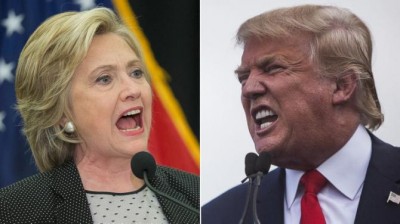
Trump v. Clinton: Both Widely Reviled, Unfit to Serve. “Americans Want Neither Candidate” ~ hehe that's EASY ...just 'vote'    ...no confidence !!!    all's u's dummycocks & republipubes     ... ......

Region:
In-depth Report:

hillary-clinton-donald-trump
Polls show most US voters want neither candidate elected president. One or the other will succeed Obama, continuing his deplorable agenda, likely exceeding his contempt for democratic values and rule of law principles – including four more years of endless imperial wars at home and abroad.
Comments the presumptive candidates made in Friday speeches signaled what’s shaping up as likely the nastiest rough and tumble campaign in memory.
They focused on pejoratives, each calling the other unfit to serve – likely a rare truthful comment either aspirant will make throughout the summer/fall campaign.
“When Donald Trump says ‘(l)et’s make America great again,’ that is code language for let’s take America backward,” Clinton blustered.
She ignored her unaccountable high crimes of war and against humanity as first lady, US senator, and secretary of state, as well as the Clinton crime family’s foundation, a racketeering operation masquerading as a charitable NGO.
Will Trump raise these issues in the weeks ahead? Failure to highlight them so far suggests not, featuring pejorative mudslinging instead.
Pretending to support progressive issues her public record shows otherwise, Clinton blasted Trump, saying he’ll “take us in the wrong direction on so many issues that we care about.”
She consistently ignores her longstanding pro-war, pro-Wall Street, pro-business, anti-labor, anti-populist agenda – including her deplorable record as arguably America’s worst ever secretary of state.
Trump was largely restrained, addressing an evangelical conference, mostly sticking to prepared remarks, using a teleprompter he usually spurns.
“Hillary Clinton has jeopardized, totally jeopardized, national security by putting her emails on a private server all to hide her corrupt dealings,” he told attendees.
“Bill and Hillary made $153 million, giving speeches to special interest groups since 2001. These donors own Hillary Clinton,” saying he spent $55 million of his own money on his campaign to date.
He defended Washington’s indefensible war on Islam, calling it “radical Islamic terrorism,” ignoring its US creation and support, an agenda he’ll follow if elected president.
“We will defend Christian Americans,” he blustered – for emphasis repeating “Christian Americans.”
Clinton will appoint “radical judges who will legislate from the bench…abolish the Second Amendment and destroy the rule of law.”
Trump ignored today’s federal courts stacked with right-wing extremists, notably America’s Supremes, mostly pro-dirty business as usual, largely likeminded under Democrat and Republican administrations since the Warren court, progressive jurists excluded from consideration.
Trump claiming “(w)e’re going to bring our nation together” belies a bipartisan system run by monied interest, self-serving oligarch governance, benefitting themselves exclusively, popular needs and concerns increasingly ignored.
Trump v. Clinton in November highlights fascist tyranny’s triumph over democratic rule. Continuing the worst of Bush/Obama awaits – possible WW III if war goddess Clinton wins.
Stephen Lendman lives in Chicago. He can be reached at lendmanstephen@sbcglobal.net.
His new book as editor and contributor is titled “Flashpoint in Ukraine: US Drive for Hegemony Risks WW III.”
http://www.claritypress.com/LendmanIII.html
Visit his blog site at sjlendman.blogspot.com.
Listen to cutting-edge discussions with distinguished guests on the Progressive Radio News Hour on the Progressive Radio Network.

What is a Conspiracy Theory? What is the Truth?

The Real AIG Conspiracy
First published in February 2015
Obama is on a hot war footing. Western civilization is allegedly “threatened by the Islamic State”.  
 The “Global War on Terrorism” is  heralded as a humanitarian endeavor.
We have a “Responsibility to Protect”. Humanitarian warfare is the solution. 
Evil folks are lurking. ‘Take ‘em out”, said George W. Bush.

The Western media is beating the drums of war. Obama’s military agenda is supported by a vast propaganda apparatus. 
One of the main objectives of war propaganda is to “fabricate an enemy”. As the political legitimacy of the Obama Administration falters, doubts regarding the existence of this “outside enemy”, namely Al Qaeda and its network of (CIA sponsored) affiliates  must be dispelled.
The purpose is to tacitly instil, through repeated media reports, ad nauseam, within people’s inner consciousness, the notion that Muslims constitute a threat to the security of the Western World.  
Humanitarian warfare is waged on several fronts: Russia,  China and the Middle East are currently the main targets.
Xenophobia and the Military Agenda
The wave of xenophobia directed against Muslims which has swept across Western Europe is tied into geopolitics. It is part of a military agenda. It consists in demonizing the enemy.
Muslim countries possess more than 60 percent of total oil reserves.  In contrast, the United States of America has barely 2 percent of total oil reserves. Iraq has five times more oil than the United States. (See Michel Chossudovsky, The “Demonization” of Muslims and the Battle for Oil, Global Research, Jannuary 4, 2007).
A large share of the World’s oil lies in Muslim lands. The objective of the US led war is to steal and appropriate those oil reserves. And to achieve this objective, these countries  are targeted: war, covert ops, economic destabilization, regime change.
The American Inquisition
A consensus building process to wage war is similar to the Spanish inquisition. It requires social subordination, the political consensus cannot be questioned. In its contemporary version, the inquisition requires and demands submission to the notion that war is a means to spreading Western values and democracy.
A good versus evil dichotomy prevails. We must go after the bad guys.
War is peace.
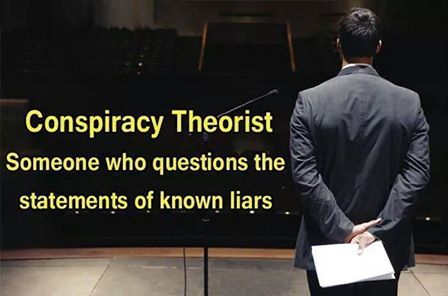
The ‘big lie’ has now becomes the truth … and the truth has become a ‘conspiracy theory’.
Those who are committed to the Truth are categorized as “Terrorists”.
According to Paul Craig Roberts (2011), the conspiracy theory concept “has undergone Orwellian redefinition”…
A “conspiracy theory” no longer means an event explained by a conspiracy.  Instead, it now means any explanation, or even a fact, that is out of step with the government’s explanation and that of its media pimps….
In other words, as truth becomes uncomfortable for government and its Ministry of Propaganda, truth is redefined as conspiracy theory, by which is meant an absurd and laughable explanation that we should ignore.
Fiction becomes fact.
Investigative journalism has been scrapped.
Factual analysis of social, political and economic issues is a conspiracy theory because it challenges a consensus which is based on a lie.
What is the Truth
The real threat to global security emanates from the US-NATO-Israel alliance, yet realities in an inquisitorial environment are turned upside down: the warmongers are committed to peace, the victims of war are presented as the protagonists of war.
The homeland is threatened.
The media, intellectuals, scientists and the politicians, in chorus, obfuscate the unspoken truth, namely that the US-NATO led war destroys humanity.
When the lie becomes the truth there is no turning backwards.
When war is upheld as a humanitarian endeavor, Justice and the entire international legal system are turned upside down: pacifism and the antiwar movement are criminalized. Opposing the war becomes a criminal act. Meanwhile, the war criminals in high office have ordered a witch hunt against those who challenge their authority.
The Big Lie must be exposed for what it is and what it does.
It sanctions the indiscriminate killing of men, women and children.
It destroys families and people. It destroys the commitment of people towards their fellow human beings.
It prevents people from expressing their solidarity for those who suffer. It upholds war and the police state as the sole avenue.
It destroys both nationalism and internationalism.
Breaking the lie means breaking a criminal project of global destruction, in which the quest for profit is the overriding force.
This profit driven military agenda destroys human values and transforms people into unconscious zombies.
Let us reverse the tide.
Challenge the war criminals in high office and the powerful corporate lobby groups which support them.
Break the American inquisition.
Undermine the US-NATO-Israel military crusade.
Close down the weapons factories and the military bases.
Bring home the troops.
Members of the armed forces should disobey orders and refuse to participate in a criminal war.

WATCH ME PULL A RADICAL ISLAMIST OUT OF MY HAT!

Posted by George Freund on June 12, 2016


US citizen Omar Mateen, 29, the suspected Islamic extremist who slaughtered at least 50 people inside a gay club in Orlando

Suspected Islamic extremist opened fire inside Pulse gay club in Orlando in the early hours of this morning

Law enforcement sources have identified the shooter as US citizen Omar Mateen, from Port St. Lucie in Florida

He killed at least 50 people, injured 53 and took party-goers hostage before being shot dead by police

Shooter, 29, was carrying a suspicious device, possibly a suicide vest, when he began shooting in the nightclub

Police used an explosive device to distract the gunman and rescue around 30 people who had been taken hostage

Police engaged in gunfire with the man and an officer was shot in the head, but he was saved by his helmet

FBI says gunman may have 'leanings to radical Islamic terrorism' and it is being investigated as 'an act of terrorism'

Took place four miles from where The Voice singer Christina Grimmie, 22, was shot dead at The Plaza Live on Friday

See more of the latest news on the Orlando shooting at Pulse gay club as gunman shoots at least 50 dead


Omar Mateen, 29, was 'on the radar' of U.S. officials for some time


He even shops at the NYPD Tuck Shop. So it appears a man well known to authorities works at a juvenile detention center and owns a gun in NYC of all gun control paradises. I strongly suspect this is another staged event or if it did occur an MK Ultra classic. None of the pictures seem to have the blood and gore as of yet. I guess we'll have to check for the casting call for South Florida. 

The suspect is Omar Mateen.


Omar Mateen's ex-wife says of Omar:


"He was violent and mentally unstable


"He wasn't very religious and worked out at the gym often.


"She said in the few months they were married he gave no signs of having fallen under the sway of radical Islam.


"She said he owned a small-caliber handgun and worked as a guard at a nearby facility for juvenile delinquents.

Bilderberg 2016: Middle Class Becomes Aimless As Tech Takes Over

Posted by George Freund on June 8, 2016


JUNE 7, 2016

By Aaron Dykes

This 2016 Bilderberg Meeting will be characterized by its focus on the growing underclass of “precariats” with insecure jobs and no future in an age of A.I.

While Bilderberg handles the propaganda coup to stop Brexit from succeeding and while they discuss the ways they have of dealing with Donald Trump, there will be a topic with far greater significance for your future…

More than ever, the effect of technology is being felt, and is ready to shake the foundations that our society is built upon. That means jobs with no security, few benefits and an economy with an uncertain future.

(Please see the notes under the list and topics for further information.)

This was just released via BilderbergMeetings.org for June 7, 2016:

2016 Bilderberg Meeting – 64th Annual

9 – 12 June 2016 in Dresden, Germany

Topics

Current events

China

Europe: migration, growth, reform, vision, unity

Middle East

Russia

US political landscape, economy: growth, debt, reform

Cyber security

Geo-politics of energy and commodity prices

Precariat and middle class

Technological innovation

Participants

Final list of Participants

CHAIRMAN

Castries, Henri de (FRA), Chairman and CEO, AXA Group

Aboutaleb, Ahmed (NLD), Mayor, City of Rotterdam

Achleitner, Paul M. (DEU), Chairman of the Supervisory Board, Deutsche Bank AG

Agius, Marcus (GBR), Chairman, PA Consulting Group

Ahrenkiel, Thomas (DNK), Permanent Secretary, Ministry of Defence

Albuquerque, Maria Luís (PRT), Former Minister of Finance; MP, Social Democratic Party

Alierta, César (ESP), Executive Chairman and CEO, Telefónica

Altman, Roger C. (USA), Executive Chairman, Evercore

Altman, Sam (USA), President, Y Combinator

Andersson, Magdalena (SWE), Minister of Finance

Applebaum, Anne (USA), Columnist Washington Post; Director of the Transitions Forum, Legatum Institute

Apunen, Matti (FIN), Director, Finnish Business and Policy Forum EVA

Aydin-Düzgit, Senem (TUR), Associate Professor and Jean Monnet Chair, Istanbul Bilgi University

Barbizet, Patricia (FRA), CEO, Artemis

Barroso, José M. Durão (PRT), Former President of the European Commission

Baverez, Nicolas (FRA), Partner, Gibson, Dunn & Crutcher

Bengio, Yoshua (CAN), Professor in Computer Science and Operations Research, University of Montreal

Benko, René (AUT), Founder and Chairman of the Advisory Board, SIGNA Holding GmbH

Bernabè, Franco (ITA), Chairman, CartaSi S.p.A.

Beurden, Ben van (NLD), CEO, Royal Dutch Shell plc

Blanchard, Olivier (FRA), Fred Bergsten Senior Fellow, Peterson Institute

Botín, Ana P. (ESP), Executive Chairman, Banco Santander

Brandtzæg, Svein Richard (NOR), President and CEO, Norsk Hydro ASA

Breedlove, Philip M. (INT), Former Supreme Allied Commander Europe

Brende, Børge (NOR), Minister of Foreign Affairs

Burns, William J. (USA), President, Carnegie Endowment for International Peace

Cebrián, Juan Luis (ESP), Executive Chairman, PRISA and El País

Charpentier, Emmanuelle (FRA), Director, Max Planck Institute for Infection Biology

Coeuré, Benoît (INT), Member of the Executive Board, European Central Bank

Costamagna, Claudio (ITA), Chairman, Cassa Depositi e Prestiti S.p.A.

Cote, David M. (USA), Chairman and CEO, Honeywell

Cryan, John (DEU), CEO, Deutsche Bank AG

Dassù, Marta (ITA), Senior Director, European Affairs, Aspen Institute

Dijksma, Sharon (NLD), Minister for the Environment

Döpfner, Mathias (DEU), CEO, Axel Springer SE

Dudley, Robert (GBR), Group Chief Executive, BP plc

Dyvig, Christian (DNK), Chairman, Kompan

Ebeling, Thomas (DEU), CEO, ProSiebenSat.1

Elkann, John (ITA), Chairman and CEO, EXOR; Chairman, Fiat Chrysler Automobiles

Enders, Thomas (DEU), CEO, Airbus Group

Engel, Richard (USA), Chief Foreign Correspondent, NBC News

Fabius, Laurent (FRA), President, Constitutional Council

Federspiel, Ulrik (DNK), Group Executive, Haldor Topsøe A/S

Ferguson, Jr., Roger W. (USA), President and CEO, TIAA

Ferguson, Niall (USA), Professor of History, Harvard University

Flint, Douglas J. (GBR), Group Chairman, HSBC Holdings plc

Garicano, Luis (ESP), Professor of Economics, LSE; Senior Advisor to Ciudadanos

Georgieva, Kristalina (INT), Vice President, European Commission

Gernelle, Etienne (FRA), Editorial Director, Le Point

Gomes da Silva, Carlos (PRT), Vice Chairman and CEO, Galp Energia

Goodman, Helen (GBR), MP, Labour PartyGoulard, Sylvie (INT), Member of the European Parliament

Graham, Lindsey (USA), Senator

Grillo, Ulrich (DEU), Chairman, Grillo-Werke AG; President, Bundesverband der Deutschen Industrie

Gruber, Lilli (ITA), Editor-in-Chief and Anchor “Otto e mezzo”, La7 TV

Hadfield, Chris (CAN), Colonel, Astronaut

Halberstadt, Victor (NLD), Professor of Economics, Leiden University

Harding, Dido (GBR), CEO, TalkTalk Telecom Group plc

Hassabis, Demis (GBR), Co-Founder and CEO, DeepMind

Hobson, Mellody (USA), President, Ariel Investment, LLC

Hoffman, Reid (USA), Co-Founder and Executive Chairman, LinkedIn

Höttges, Timotheus (DEU), CEO, Deutsche Telekom AG

Jacobs, Kenneth M. (USA), Chairman and CEO, Lazard

Jäkel, Julia (DEU), CEO, Gruner + Jahr

Johnson, James A. (USA), Chairman, Johnson Capital Partners

Jonsson, Conni (SWE), Founder and Chairman, EQT

Jordan, Jr., Vernon E. (USA), Senior Managing Director, Lazard Frères & Co. LLC

Kaeser, Joe (DEU), President and CEO, Siemens AG

Karp, Alex (USA), CEO, Palantir Technologies

Kengeter, Carsten (DEU), CEO, Deutsche Börse AG

Kerr, John (GBR), Deputy Chairman, Scottish Power

Kherbache, Yasmine (BEL), MP, Flemish Parliament

Kissinger, Henry A. (USA), Chairman, Kissinger Associates, Inc.

Kleinfeld, Klaus (USA), Chairman and CEO, Alcoa

Kravis, Henry R. (USA), Co-Chairman and Co-CEO, Kohlberg Kravis Roberts & Co.

Kravis, Marie-Josée (USA), Senior Fellow, Hudson Institute

Kudelski, André (CHE), Chairman and CEO, Kudelski Group

Lagarde, Christine (INT), Managing Director, International Monetary Fund

Levin, Richard (USA), CEO, Coursera

Leyen, Ursula von der (DEU), Minister of Defence

Leysen, Thomas (BEL), Chairman, KBC Group

Logothetis, George (GRC), Chairman and CEO, Libra Group

Maizière, Thomas de (DEU), Minister of the Interior, Federal Ministry of the Interior

Makan, Divesh (USA), CEO, ICONIQ Capital

Malcomson, Scott (USA), Author; President, Monere Ltd.

Markwalder, Christa (CHE), President of the National Council and the Federal Assembly

McArdle, Megan (USA), Columnist, Bloomberg View

Michel, Charles (BEL), Prime Minister

Micklethwait, John (USA), Editor-in-Chief, Bloomberg LP

Minton Beddoes, Zanny (GBR), Editor-in-Chief, The Economist

Mitsotakis, Kyriakos (GRC), President, New Democracy Party

Morneau, Bill (CAN), Minister of Finance

Mundie, Craig J. (USA), Principal, Mundie & Associates

Murray, Charles A. (USA), W.H. Brady Scholar, American Enterprise Institute

Netherlands, H.M. the King of the (NLD)

Noonan, Michael (IRL), Minister for Finance

Noonan, Peggy (USA), Author, Columnist, The Wall Street Journal

O’Leary, Michael (IRL), CEO, Ryanair Plc

Ollongren, Kajsa (NLD), Deputy Mayor of Amsterdam

Osborne, George (GBR), First Secretary of State and Chancellor of the Exchequer

Özel, Soli (TUR), Professor, Kadir Has UniversityPapalexopoulos, Dimitri (GRC), CEO, Titan Cement Co.

Petraeus, David H. (USA), Chairman, KKR Global Institute

Philippe, Edouard (FRA), Mayor of Le Havre

Pind, Søren (DNK), Minister of Justice

Ratti, Carlo (ITA), Director, MIT Senseable City Lab

Reisman, Heather M. (CAN), Chair and CEO, Indigo Books & Music Inc.

Rubin, Robert E. (USA), Co-Chair, Council on Foreign Relations

Rutte, Mark (NLD), Prime Minister

Sawers, John (GBR), Chairman and Partner, Macro Advisory Partners

Schäuble, Wolfgang (DEU), Minister of Finance

Schieder, Andreas (AUT), Chairman, Social Democratic Group

Schmidt, Eric E. (USA), Executive Chairman, Alphabet Inc.

Scholten, Rudolf (AUT), CEO, Oesterreichische Kontrollbank AG

Schwab, Klaus (INT), Executive Chairman, World Economic Forum

Sikorski, Radoslaw (POL), Senior Fellow, Harvard University; Former Minister of Foreign Affairs

Simsek, Mehmet (TUR), Deputy Prime Minister

Sinn, Hans-Werner (DEU), Professor for Economics and Public Finance, Ludwig Maximilian University of Munich

Skogen Lund, Kristin (NOR), Director General, The Confederation of Norwegian Enterprise

Standing, Guy (GBR), Co-President, BIEN; Research Professor, University of London

Thiel, Peter A. (USA), President, Thiel Capital

Tillich, Stanislaw (DEU), Minister-President of Saxony

Vetterli, Martin (CHE), President, NSF

Wahlroos, Björn (FIN), Chairman, Sampo Group, Nordea Bank, UPM-Kymmene Corporation

Wallenberg, Jacob (SWE), Chairman, Investor AB

Weder di Mauro, Beatrice (CHE), Professor of Economics, University of Mainz

Wolf, Martin H. (GBR), Chief Economics Commentator, Financial Times

——

What will be most important at the 2016 discussion?

There are gigantic moves underway with regard to the price of oil and the end of the petrodollar era. The geopolitical effects are not only being played out in conflict regions like Syria, Yemen and the Ukraine, but in the headlines (as seen in the public passing of the blame between Saudi Arabia and U.S. over 9/11) and in economic sabotage seen most blatantly with Venezuela, but happening all across the globe.

The Brexit referendum would be a particularly large blow to the European Union’s credibility and image, and the Bilderberg crowd – who gave birth to the EU – have reputations and egos invested deeply in the superstate project.

But in the long-term, it is the drastic changes in the economic landscape that will cause the most instability, outrage and upheaval.

It is largely centered around the rapid pace of technological growth and the online world, and the grave implications it has for employment and living standards.

Just check out the topics Bilderberg is focusing on – United States “economy: growth, debt, reform” as well as discussion on the impact of “technological innovation” and migration to economic and social factors. Looming largest of all is the ominous topic “precariat and middle class.”

What the hell is the precariat? And why is this term important for Bilderberg or the middle class?

In the age where even the Davos elite are preoccupied with the wealth gap and the power of the 1% over the ‘revolutionary’ masses… the term “precariat” is a modern spin on the proletariat of the next era… getting by from gig-to-gig an in an economy with no clear future and uncertain job security.

Precariat via Wikipedia:

In sociology and economics, the precariat is a social class formed by people suffering from precarity, which is a condition of existence without predictability or security, affecting material or psychological welfare. Unlike the proletariat class of industrial workers in the 20th century who lacked their own means of production and hence sold their labour to live, members of the Precariat are only partially involved in labour and must undertake extensive “unremunerated activities that are essential if they are to retain access to jobs and to decent earnings”. Specifically, it is the condition of lack of job security, including intermittent employment or underemployment and the resultant precarious existence.[1] The emergence of this class has been ascribed to the entrenchment of neoliberal capitalism.

Like the sardonic question posed by Bilderberg in 2014 – Does Privacy Exist? – the precariat is meant to poke at all the American Dream leftovers who will find themselves without direction, meaningful employment or much other hope for the coming decades of innovation under robotics and automation.

The topic is one that has been probed by Guy Standing, who is Professor of Development Studies at SOAS, University of London and has promoted the idea of basic income as a global right.

Northeastern University reported on Professor Standing’s new agenda:

Guy Standing, author of The Precariat: The New Dangerous Class, and A Precariat Charter, spoke about his new work to an overflow group of students and faculty in the Raytheon Amphitheater on February 22nd, 2016.

Standing defines the precariat as an emerging class of people facing lives of economic insecurity, moving in and out of jobs that give little meaning to their lives. As such, they develop emotions of anomie, anxiety, alienation, and anger. The precariat is a “dangerous class” because it is internally divided, including college graduates without career prospects, adjuncts and other involuntary part-time workers, migrants and other vulnerable groups that tend to be vilified, as well as what Standing called “atavists” and “nostalgics”. Lacking agency, its members may be susceptible to the calls of political extremism.

What will happen to people when millions can no longer find work? Who will support their cost of living and what will justify their place in society?

How will a dead broke government pay for all its dependents in the larger collectivist society? Global government shall apparently aim to provide…

In considering these questions, please also note the presence of David M. Cote, the Chairman and CEO of Honeywell (a major defense contractor) who has not previous shown up on any Bilderberg attendee rosters.

He is almost certainly in Dresden to give a special presentation on: US political landscape, economy: growth, debt, reform.

How will financial futures be dealt with in the face of bankrupt and bloated obligations for benefits? How can governments pay for all those people to retire, have health care and live decent lives?

David M. Cote is there to give an answer bankers can believe in.

David M. Cote is an expert on financial “risk” who is known for losing $2 billion in derivatives while at JP Morgan Chase, who served on the NY Federal Reserve board and who was appointed by President Obama to a key committee on debt wherein Cote has recommended cutting social benefits in order to reduce the budget deficit.

According to the Union Leader:

In 2010, President Barack Obama named Cote to serve on the bipartisan National Commission on Fiscal Responsibility and Reform, more commonly known as the Simpson-Bowles Commission.

Cote said he [….] discuss[ed] reigning in federal entitlement programs as part of an overall effort to curb budget deficits and reduce the federal debt.
….
“By and large, a majority of politicians understand the problem,” he said. “It’s a lack of political will out of fear their decision will be used against them.”
….
Cote is a co-founder of Fix the Debt, a group of executives and former legislators who campaign for deficit reduction and tax reform. In a 2013 interview with the New Hampshire Union Leader, Cote […] framed the options for deficit reduction in terms of either increases in taxes or a reduction in social security benefits, saying, “If you have people saying, ‘Don’t raise my taxes, but don’t cut my benefits,’ it makes it really difficult to get anything done.”

The rapidly aging baby boomers have created a giant problem for taxes and debt. But there are even more important factors on the horizon.

While dealing with these issues is clearly important, and the prospect of cutting benefits might even sit well with many conservatives, keep in mind that Bilderberg is operating in the shadows, and creating a solution for the elite.

These insider titans stand to prosper through the management of pension funds and their investment in derivatives and other vehicles, through increased profits in health care and through the management of a society that has become entirely dependent upon social welfare and benefits just to get by.

In the wake of continuing technological revolution, human labor has officially been discounted, rendered obsolete and has become secondary in usefulness only. The effects of that truth are about to widely felt.

The bureaucrats know it. The banksters know it. The executives know it. The Silicon Valley elite know it.

And here they are, gathered round the table to discuss how to handle the public relations problem of a society about to tear into pieces, or become completely under the thumb. What happens then?

#Bilderbergwherethejobsat

Also Read: Economic Elite Announce Plan to Replace Human Labor with Machines

Aaron Dykes is a co-founder of TruthstreamMedia.com. As a writer, researcher and video producer who has worked on numerous documentaries and investigative reports, he uses history as a guide to decode current events, uncover obscure agendas and contrast them with the dignity afforded individuals as recognized in documents like the Bill of Rights.

http://www.activistpost.com/2016/06/bilderberg-2016-middle-class-tech-takeover.html?utm_source=Activist+Post+Subscribers&utm_medium=email&utm_campaign=b393695649-RSS_EMAIL_CAMPAIGN&utm_term=0_b0c7fb76bd-b393695649-387842013