Tuesday, March 11, 2014

We can track a shark across the Atlantic, but flight MH370 can’t be found

We can track a shark across the Atlantic, but flight MH370 can’t be found

By now, many have heard that Flight MH370, a flight from Kuala Lumpur to Beijing, mysteriously disappeared during its flight

By Tim Brown
(INTELLIHUB) — Terrorism has not been ruled out, as evidence has emerged that two of the passengers on the missing Malaysian Airlines jet were traveling with stolen passports. Somehow, we can track a 14 foot great white shark across the Atlantic, but can’t find a Boeing 770-200 Type 2 Class aircraft.
Chris Carrington reported:
An Austrian and an Italian both reported having passports stolen, one two years ago and the other at some point during the last 18 months, reports vary as to exactly how long ago the passport was stolen from a rental car. Both passports were stolen in Thailand.

Other questions are starting to be asked, like why no distress call was made. The 777-200 would have been at cruising altitude and experts say that even if all engines had failed there would have been ample time to send a mayday call. The fact that there was no call could indicate that there wasn’t time to put in a call before whatever happened to flight MH370 occurred.
Investigative journalist Aaron Klein posed the theory that the jet was possibly brought down by a North Korean missile. He writes:
While the international probe is in its early stages and questions are being raised about the prospect of terrorism, investigators would be wise to thoroughly examine the possibility of a missile attack, however remote, in light of recent information about the global proliferation of projectiles capable of downing civilian airliners.

Further, China has issued a series of warnings about North Korean missiles, including one that crossed paths with a Chinese airliner carrying 220 people just last week.

On Friday, China complained to North Korea when one of its missiles came dangerously close to a civilian jet last Tuesday. The airplane had departed Tokyo’s Narita airport en route to the northeastern Chinese city of Shenyang.

One day earlier, South Korea’s defense ministry released a statement saying the Chinese civilian plane had “passed as the ballistic missile (from North Korea) was in the course of descending.”

Chinese Foreign Ministry spokesman Qin Gang told reporters, “On this issue, we have already contacted the North Korean side to convey our deep concern.”

“If any country is to hold training or exercises, it should take measures in accordance with international practice to ensure the safety of civil [facilities] in relevant airspace and maritime space,” said Qin.

Qin said the jet was flying over international waters at an altitude of 10,000 meters, or 32,800 feet.

“The rocket could have hit the plane on its way down,” he said. “North Korea had not given any warning. It was an unexpected and immoral act that goes against international norms.” One week earlier, North Korea reportedly test-fired two short-range missiles into the sea.

The Malaysian Airlines flight reportedly lost contact with air traffic controllers some 2 hours after departing Kuala Lumpur, when the plane was about one-third of the way into its trip.
According to Klein, airplane parts have been discovered by Vietnamese searchers, but have yet to determine if they are part of flight MH 370.
However, there is another concern, one that we and others warned about years ago when the US government under Barack Hussein Obama, aided al-Qaeda in their overthrow of the Libyan government. During that time, 20,000 shoulder-fired missiles were obtained by jihadists. At the time of the writing of my article (May 2012), only 5,000 had been recovered.
<a href="http://us-ads.openx.net/w/1.0/rc?cs=d6cbf454ca&cb=INSERT_RANDOM_NUMBER_HERE" ><img src="http://us-ads.openx.net/w/1.0/ai?auid=536880831&cs=d6cbf454ca&cb=INSERT_RANDOM_NUMBER_HERE" border="0" alt=""></a>
Then there was Benghazi. We learned that Benghazi was nothing more than an international Fast and Furious involving stinger missiles. This is what they do not want to come out, but all the pieces are there.
Just this past January, former CIA Director David Petraeus warned of a “nightmare” scenario in which the proliferation of missiles could provide terrorists the ability to shoot down passenger airplanes.
“I mean, shooting down a helicopter with an apparent shoulder-fired missile is a big deal,” Petraeus said. “As you know, that was always our worst nightmare, that a civilian airliner would be shot down by one. Which is why we were so concerned when they moved around,” he said.
Now, the Associated Press is reporting that nuclear experts want to check to see if the plane exploded.
The head of the organization that monitors the nuclear test ban treaty said Monday he has asked its experts to see if they detected an explosion at high altitude of the missing Malaysian Airlines plane.

Lassina Zerbo, executive director of the Comprehensive Nuclear Test Ban Treaty Organization told a news conference that the CTBTO uses “infrasound” — or infrasonic sensors — to monitor the earth mainly for atmospheric nuclear explosions.


“Infrasound is produced by a variety of natural and man-made sources: exploding volcanoes, earthquakes, meteors, storms and auroras in the natural world; nuclear, mining and large chemical explosions, as well as aircraft and rocket launches in the man-made arena,” the CTBTO said.
I’m with my friend Shea Bernard on this one. He commented:
A Boeing 770-200 Type 2 Class aircraft, weighing 545,000 lbs, at 209ft in length and a 200 ft wingspan sporting state-of-the-art navigation and other electronic tracking, 2 massive Pratt and Whitney 4700 engines spitting out 77,000 lbs of thrust each, carrying 239 people, just ups and drops off the map, radar, GPS, satellite, and other tracking technologies, including every military satellite over the region, with likely 3/4′s of the passengers using cell and data connections, without a trace, no wreckage, and no data from a myriad of sources as to where it last was or what happened.
Got it.
Not possible. I smell a rat.

Disappearance of Malaysia Airlines Flight 370 begins to demand supernatural explanations

naturalnews.com

Originally published March 11 2014
explanation

Disappearance of Malaysia Airlines Flight 370 begins to demand supernatural explanations

by Mike Adams, the Health Ranger, NaturalNews Editor

(NaturalNews) As the search for Malaysia Airlines Flight 370 continues to absolutely baffle investigators, explanations for what might have happened to the flight have entered the realm of the supernatural. Astonishingly, the Washington Post is now reporting that smartphones of some passengers who boarded the flight are still active and connected to the 'net even though the plane they were on has vanished.
As WashPost reports:

One of the most eerie rumors came after a few relatives said they were able to call the cellphones of their loved ones or find them on a Chinese instant messenger service called QQ that indicated that their phones were still somehow online.

A migrant worker in the room said that several other workers from his company were on the plane, including his brother-in-law. Among them, the QQ accounts of three still showed that they were online, he said Sunday afternoon.

Adding to the mystery, other relatives in the room said that when they dialed some passengers' numbers, they seemed to get ringing tones on the other side even though the calls were not picked up.


Four mind-bending possibilities, none of which seem possible

This brings up the immediate bind-bending question of how electronic devices on a commercial flight that vanished still appear to be connected to the internet. The explanations for this defy everything we think we know about reality:

• Mind-bending possibility #1, the "kidnapped" explanation: The plane somehow landed somewhere without leaving a radar signature of any kind, all the passengers are being held hostage there (and are thus still alive), their mobile devices are somehow within cell tower range and yet for some reason have not been confiscated. (This explanation seems extremely unlikely.)

• Mind-bending possibility #2, the "Stargate" explanation: A teleportation portal of some kind exists in the skies, through which the plane inadvertently flew and was teleported somewhere else. Yet, astonishingly, electromagnetic signals can still make it through the portal, and the two sides of the portal remain in contact across the radio spectrum. (This explanation sounds like pure science fiction and also seems extremely unlikely, yet we must at least acknowledge that modern physics has already demonstrated the instantaneous teleportation of information across apparently infinite space due to the "non-locality" of entangled electrons as described in quantum theory.)

• Mind-bending possibility #3, the "failed search" explanation: This far more mundane explanation supposes that the massive, multi-day search for plane wreckage and debris simply hasn't stumbled upon the correct location yet. The fact that airplane black boxes broadcast homing signals adds to the skepticism that this explanation holds any water, as it is extremely unlikely that the airplane's black boxes could have been obliterated. Nevertheless, this explanation still seems far more believable than supernatural explanations.

• Mind-bending possibility #4, the "advanced military weapons" explanation: Some military entity, either human or non-human, was testing an advanced weapon capable of either instantly obliterating large airborne objects or teleporting them to another place (or dimension). This explanation seems incredibly far-fetched, but then again, barely a hundred years ago, so did the idea that machines could ever fly at all. Related to this is the legend of the Philadelphia Experiment which some believe caused a U.S. Navy ship to vanish and reappear.

We must first stick to mundane explanations until more searches can be conducted

As someone who is trained in the sciences, I remain very skeptical that Flight 370 vanished for supernatural reasons, yet its disappearance unquestionably defies all known conventional explanations so far.

The vanishing of aircraft over the ocean is not without precedent, either. According to historical records, the so-called "Bermuda Triangle" causes both ships and aircraft to vanish for reasons that defy apparent scientific explanation. While the disappearance of ships can theoretically be explained by underwater volcanoes emitting large quantities of gas that mix with ocean waters and cause ships to immediately lose bouyancy, there has never been any convincing scientific explanation behind the disappearance of the many aircraft there. Click here for a list of the top 10 mysteries of vanishing aircraft, including some lost in the Bermuda Triangle.

With each passing day that this search goes on without finding any debris from the fight, it is incredibly reasonable to at least entertain supernatural possibilities in the quest for answers. At some point, if no debris ever appears, we must expand our window of possibilities to include what military strategists refer to as "unknown unknowns."


All content posted on this site is commentary or opinion and is protected under Free Speech. Truth Publishing LLC takes sole responsibility for all content. Truth Publishing sells no hard products and earns no money from the recommendation of products. NaturalNews.com is presented for educational and commentary purposes only and should not be construed as professional advice from any licensed practitioner. Truth Publishing assumes no responsibility for the use or misuse of this material. For the full terms of usage of this material, visit www.NaturalNews.com/terms.shtml

Malaysia Plane Hidden With Electronic Weapon? 20 Hi-Tech EW Defense Passengers

Sunday, March 9, 2014


Update: March 11, 2014, 12:00 P.M.

Villagers near Marang, on Malaysia’s eastern coast, told police they heard a “loud and frightening noise” around 1.20am Saturday morning, according to Tom Phillips, a Telegraph correspondent in Kuala Lumpur.


Alias Salleh, a 36-year-old truck driver told Malaysia’s The Sun Daily, he and friends had run towards the source of the noise, “but did not see anything unusual.”


The noise sounded like “the fan of a jet engine,” Mr Salleh added.

“My friends and I heard the ringing noise for about two minutes,” said Mohd Yusri Mohd Yusof, a 34-year-old villager.

Read the rest of this update here: Evidence Malaysia Plane Hidden By Electronic Weapon: Villagers Heard But Could Not See It


Original story: Malaysia Plane Hidden With Electronic Weapon? 20 High-Tech EW Defense Passengers

Four people in particular who boarded the missing Malaysian plane are being investigated, two for stolen passports and two other passport-related suspects. Those four suspects plus twenty people on board involved in cutting edge electric technology. some used for defense purposes, raise a question with this reporter about electronic weaponry hiding the plane.

Added to the tragic mystery is why not one country checked databases for information about stolen passports used to board the Malaysia Airlines flight.

New electronic weapons allow jamming, blinding, deafening and more, so that a plane could possibly vanish from radar detection and security systems would not be activated. Basic radar Electronic Counter-Measure strategies used in electronic warfare (EW) are: 1) radar interference, 2) target modifications, and 3) changing electrical properties of air.

For example, a U.S. intelligence assessment described to The Daily Beast by current and former U.S. intelligence officials, concluded any Israeli attack on Iran would go far beyond fighter plane airstrikes and would likely deploy EW against Iran’s electric grid, Internet, cellphone network, and emergency frequencies for firemen and police officers. 

“For example, Israel has developed a weapon capable of mimicking a maintenance cellphone signal that commands a cell network to “sleep,” effectively stopping transmissions, officials confirmed. The Israelis also have jammers capable of creating interference within Iran’s emergency frequencies for first responders.”

In a 2007, “the Syrian military got a taste of this warfare when Israeli planes ‘spoofed’ the country’s air-defense radars, at first making it appear that no jets were in the sky and then in an instant making the radar believe the sky was filled with hundreds of planes.”

Last year, it was announced that new stealth technology makes airplanes invisible not only to radar, it also renders them hidden to the human eye as well — “just like an invisibility cloak in a Hollywood sci-fi thriller,” reported Military.com. 

China had just touted its work on a “cloaking” technology using a hexagonal array of glass-like panels to bend light around an object, obscuring it from view, as though hidden by an invisibility cloak. Experts confirmed that the technology was legit — and not unlike American and European projects from the past few years.

“The general public … might not hear about how far the U.S. has really come, because it is and should remain classified,” firearms expert Chris Sajnog, a former Navy SEAL, told FoxNews.com. “Other countries are still playing catch-up — but they’re closing the gap.”

Military.com stated, “But while classified work progresses, several public projects from universities and military supply companies show just how real this futuristic technology is.”


“Major arms developers such as BAE Systems readily acknowledge work on this kind of technology, such as the Adaptiv program, which aims to hide armored vehicles.”

“The U.S. military is among many who have expressed interest in Adaptiv, which could be transferred to other platforms, such as ships and helicopters,” said Mike Sweeney, a spokesman for BAE.

 
On the other hand, some experts dispute these new technologies can work at all.
 
 
“Invisibility cloak is a poorly chosen term,” Thomas Way, associate professor of computing science at Villanova University, wrote to FoxNews.com in an email. “Invisible to what? We already have stealth aircraft that are invisible to radar (usually), but there is absolutely no way given our current understanding of physics that something could be made invisible to the naked eye… If that’s what they are claiming, it’s a hoax.”


In Electronic Warfare jargon, however, electronic countermeasure exists. ECM is an electrical or electronic device designed to trick or deceive radar, sonar or other detection systems, like infrared (IR) or lasers.

ECM can be used offensively and defensively to deny targeting information to an enemy.


The system can “make the real target appear to disappear or move about randomly. It is used effectively to protect aircraft from guided missiles.


“Most air forces use ECM to protect their aircraft from attack. It has also been deployed by military ships and recently on some advanced tanks to fool laser/IR guided missiles. It is frequently coupled with stealth advances so that the ECM systems have an easier job. Offensive ECM often takes the form of jamming. Defensive ECM includes using blip enhancement and jamming of missile terminal homers.”

Austin-based Freescale Semiconductor (NYSE:FSL) launched a major initiative dedicated to serving RF power needs of U.S. aerospace and defense (A&D) sector. It has a team of specialists dedicated to supporting defense customers.

Freescale confirmed yesterday that 20 of its employees were on Malaysia Airlines Flight MH370, twelve from Malaysia and eight from China. The company’s key product solutions include those for electric vehicles, as this reporter highlighted yesterday:

“Freescale Semiconductor (NYSE:FSL) is a global leader in embedded processing solutions, providing industry leading products that are advancing the automotive, consumer, industrial and networking markets,” the company says on its website and in its statement today. ”… our technologies are the foundation for the innovations that make our world greener, safer, healthier and more connected.”

Freescale says its “key applications and end-markets include: automotive safety,hybrid and all-electric vehiclesnext generation wireless infrastructuresmart energy management, portable medical devices, consumer appliances and smart mobile devices. The company is based in Austin, Texas, and has design, research and development, manufacturing and sales operations around the world. www.freescale.com
 

  • Battlefield communications
  • Avionics
  • HF through L- and S-Band radar
  • Missile guidance
  • Electronic warfare
  • Identification, friend or foe (IFF)

Human rights regarding security and privacy, possibly terrorism

Evidence of terrorism and the human rights related to security and privacy mount regarding the plane that vanished from radar with 239 people on board Saturday, less than an hour after leaving Kuala Lumpur, Malaysia, bound for Beijing. Family and friends are suffering and furstrated with the lack of answers and even clues.

“By late Sunday, the lack of answers — or even many clues — to the plane’s disappearance added to misery of family members left behind,: the New York Times reported. “With Malaysian officials refusing to release many details of their investigation and sometimes presenting conflicting information, the families and friends of victims became increasingly frustrated.”

Officials say fragments spotted in the ocean ealier in the day are not from where the plane last had contact are not plane debris. 

While everyone who boarded the plane are being investigated, four are under particular investigation. Two had stolen passports to board the now vanished Malaysia plane. They bought their tickets with two other people who boarded the plane and are also targets of the investigation.

A Chinese national, whose passport number was listed on the passenger manifest, did not board the plane, is still in China and this individual’s passport was never stolen, China’s state media reported.

The stolen passport carriers and the other two suspects have increased officials’ suspicions that the event is one of terrorism, but officials stress that the event has not been declared a terrorist event.

Hishammuddin Hussein, who holds two ministerial positions, said that “the four names are with me,” but added that the investigation was focusing on “the entire passenger manifest.” Hussein also said investigators from the FBI have joined the probe.

Names of all of the passengers is on the manifest here.


Interpol said not one country checked its database for information about stolen passports used to board the Malaysia Airlines flight.

Officials had said what might have been parts of the missing Malaysia Airlines plane were spotted, but later they confirm that the debris is not part of the plane.

The Wall Street Journal tweets Sunday morning had indicated the fragments might be part of the plane, but Vietnamese officials had warned that it was too early to confirm the debris was from the plane.

Earlier, Malaysia’s air force chief told reporters that military radar indicated that the plane may have turned from its flight route before losing contact.

“There is a distinct possibility the airplane did a turn-back, deviating from the course,” Malaysian air force chief General Rodzali Daud said Sunday, citing radar data.

Malaysia Airlines (MAS) chief executive Ahmad Jauhari Yahya said the Boeing 777′s systems would have set off alarm bells.

“When there is an air turn-back, the pilot would be unable to proceed as planned,” he said, adding authorities were “quite puzzled” over the situation.

Sunday, air force chief Rodzali Daud did not say which direction the plane possibly took when it apparently went off route.

“We are trying to make sense of this,” he said at a media conference. “The military radar indicated that the aircraft may have made a turn back and in some parts, this was corroborated by civilian radar.”

Pilots are supposed to inform the airline and traffic control authorities if the plane does start to return, according to Malaysia Airlines Chief Executive Ahmad Jauhari Yahya.

“From what we have, there was no such distress signal or distress call per se, so we are equally puzzled,” he said.

Suspected fragments were located around 50 miles from southwest of Tho Chu Island, according to the Wall Street Journal tweets, but these have been found to be debris not from the plane.

The fragments were believed to be a composite inner door and a piece of the tail, Vietnam’s ministry of information and communication said in a posting on its website. They were located some 80 kilometers south-southwest of Tho Chu island.

A photograph of one fragment floating in the water was released, as seen above.

Flight MH370 had relayed no distress signal, indications of rough weather, or other signs of trouble. Malaysia’s national carrier and the Boeing 777-200 model used on the route are known for solid safety records.

Relatives of the missing passengers camped out at the main international airport in China’s capital, bemoaning lack of news Sunday.

Instead of the airline, a friend had contacted one of the loved ones.

“The airline company didn’t contact me, it was a friend,” a middle-aged woman surnamed Nan told reporters, holding back tears, after finding out her brother-in-law was on the flight.

“I can’t understand the airline company. They should have contacted the families first thing,” she said.

A Shadow Government Controls America

v
Is the real power hiding in the shadows? (photo: Scott Galindez/RSN)

A Shadow Government Controls America

By Mike Lofgren, Moyers & Company
22 February 14

here is the visible government situated around the Mall in Washington, and then there is another, more shadowy, more indefinable government that is not explained in Civics 101 or observable to tourists at the White House or the Capitol. The former is traditional Washington partisan politics: the tip of the iceberg that a public watching C-SPAN sees daily and which is theoretically controllable via elections. The subsurface part of the iceberg I shall call the Deep State, which operates according to its own compass heading regardless of who is formally in power. [1]
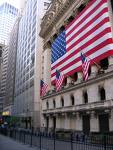
During the last five years, the news media has been flooded with pundits decrying the broken politics of Washington. The conventional wisdom has it that partisan gridlock and dysfunction have become the new normal. That is certainly the case, and I have been among the harshest critics of this development. But it is also imperative to acknowledge the limits of this critique as it applies to the American governmental system. On one level, the critique is self-evident: In the domain that the public can see, Congress is hopelessly deadlocked in the worst manner since the 1850s, the violently rancorous decade preceding the Civil War.
Yes, there is another government concealed behind the one that is visible at either end of Pennsylvania Avenue, a hybrid entity of public and private institutions ruling the country…
As I wrote in The Party is Over, the present objective of congressional Republicans is to render the executive branch powerless, at least until a Republican president is elected (a goal that voter suppression laws in GOP-controlled states are clearly intended to accomplish). President Obama cannot enact his domestic policies and budgets: Because of incessant GOP filibustering, not only could he not fill the large number of vacancies in the federal judiciary, he could not even get his most innocuous presidential appointees into office. Democrats controlling the Senate have responded by weakening the filibuster of nominations, but Republicans are sure to react with other parliamentary delaying tactics. This strategy amounts to congressional nullification of executive branch powers by a party that controls a majority in only one house of Congress.
Despite this apparent impotence, President Obama can liquidate American citizens without due processes, detain prisoners indefinitely without charge, conduct dragnet surveillance on the American people without judicial warrant and engage in unprecedented - at least since the McCarthy era - witch hunts against federal employees (the so-called "Insider Threat Program"). Within the United States, this power is characterized by massive displays of intimidating force by militarized federal, state and local law enforcement. Abroad, President Obama can start wars at will and engage in virtually any other activity whatsoever without so much as a by-your-leave from Congress, such as arranging the forced landing of a plane carrying a sovereign head of state over foreign territory. Despite the habitual cant of congressional Republicans about executive overreach by Obama, the would-be dictator, we have until recently heard very little from them about these actions - with the minor exception of comments from gadfly Senator Rand Paul of Kentucky. Democrats, save a few mavericks such as Ron Wyden of Oregon, are not unduly troubled, either - even to the extent of permitting seemingly perjured congressional testimony under oath by executive branch officials on the subject of illegal surveillance.
These are not isolated instances of a contradiction; they have been so pervasive that they tend to be disregarded as background noise. During the time in 2011 when political warfare over the debt ceiling was beginning to paralyze the business of governance in Washington, the United States government somehow summoned the resources to overthrow Muammar Ghaddafi-s regime in Libya, and, when the instability created by that coup spilled over into Mali, provide overt and covert assistance to French intervention there. At a time when there was heated debate about continuing meat inspections and civilian air traffic control because of the budget crisis, our government was somehow able to commit $115 million to keeping a civil war going in Syria and to pay at least £100m to the United Kingdom-s Government Communications Headquarters to buy influence over and access to that country-s intelligence. Since 2007, two bridges carrying interstate highways have collapsed due to inadequate maintenance of infrastructure, one killing 13 people. During that same period of time, the government spent $1.7 billion constructing a building in Utah that is the size of 17 football fields. This mammoth structure is intended to allow the National Security Agency to store a yottabyte of information, the largest numerical designator computer scientists have coined. A yottabyte is equal to 500 quintillion pages of text. They need that much storage to archive every single trace of your electronic life.
Yes, there is another government concealed behind the one that is visible at either end of Pennsylvania Avenue, a hybrid entity of public and private institutions ruling the country according to consistent patterns in season and out, connected to, but only intermittently controlled by, the visible state whose leaders we choose. My analysis of this phenomenon is not an exposé of a secret, conspiratorial cabal; the state within a state is hiding mostly in plain sight, and its operators mainly act in the light of day. Nor can this other government be accurately termed an "establishment." All complex societies have an establishment, a social network committed to its own enrichment and perpetuation. In terms of its scope, financial resources and sheer global reach, the American hybrid state, the Deep State, is in a class by itself. That said, it is neither omniscient nor invincible. The institution is not so much sinister (although it has highly sinister aspects) as it is relentlessly well entrenched. Far from being invincible, its failures, such as those in Iraq, Afghanistan and Libya, are routine enough that it is only the Deep State-s protectiveness towards its higher-ranking personnel that allows them to escape the consequences of their frequent ineptitude. [2]
How did I come to write an analysis of the Deep State, and why am I equipped to write it? As a congressional staff member for 28 years specializing in national security and possessing a top secret security clearance, I was at least on the fringes of the world I am describing, if neither totally in it by virtue of full membership nor of it by psychological disposition. But, like virtually every employed person, I became, to some extent, assimilated into the culture of the institution I worked for, and only by slow degrees, starting before the invasion of Iraq, did I begin fundamentally to question the reasons of state that motivate the people who are, to quote George W. Bush, "the deciders."
Cultural assimilation is partly a matter of what psychologist Irving L. Janis called "groupthink," the chameleon-like ability of people to adopt the views of their superiors and peers. This syndrome is endemic to Washington: The town is characterized by sudden fads, be it negotiating biennial budgeting, making grand bargains or invading countries. Then, after a while, all the town-s cool kids drop those ideas as if they were radioactive. As in the military, everybody has to get on board with the mission, and questioning it is not a career-enhancing move. The universe of people who will critically examine the goings-on at the institutions they work for is always going to be a small one. As Upton Sinclair said, "It is difficult to get a man to understand something when his salary depends upon his not understanding it."
A more elusive aspect of cultural assimilation is the sheer dead weight of the ordinariness of it all once you have planted yourself in your office chair for the 10,000th time. Government life is typically not some vignette from an Allen Drury novel about intrigue under the Capitol dome. Sitting and staring at the clock on the off-white office wall when it-s 11:00 in the evening and you are vowing never, ever to eat another piece of takeout pizza in your life is not an experience that summons the higher literary instincts of a would-be memoirist. After a while, a functionary of the state begins to hear things that, in another context, would be quite remarkable, or at least noteworthy, and yet that simply bounce off one-s consciousness like pebbles off steel plate: "You mean the number of terrorist groups we are fighting is classified?" No wonder so few people are whistle-blowers, quite apart from the vicious retaliation whistle-blowing often provokes: Unless one is blessed with imagination and a fine sense of irony, growing immune to the curiousness of one-s surroundings is easy. To paraphrase the inimitable Donald Rumsfeld, I didn-t know all that I knew, at least until I had had a couple of years away from the government to reflect upon it.
The Deep State does not consist of the entire government. It is a hybrid of national security and law enforcement agencies: the Department of Defense, the Department of State, the Department of Homeland Security, the Central Intelligence Agency and the Justice Department. I also include the Department of the Treasury because of its jurisdiction over financial flows, its enforcement of international sanctions and its organic symbiosis with Wall Street. All these agencies are coordinated by the Executive Office of the President via the National Security Council. Certain key areas of the judiciary belong to the Deep State, such as the Foreign Intelligence Surveillance Court, whose actions are mysterious even to most members of Congress. Also included are a handful of vital federal trial courts, such as the Eastern District of Virginia and the Southern District of Manhattan, where sensitive proceedings in national security cases are conducted. The final government component (and possibly last in precedence among the formal branches of government established by the Constitution) is a kind of rump Congress consisting of the congressional leadership and some (but not all) of the members of the defense and intelligence committees. The rest of Congress, normally so fractious and partisan, is mostly only intermittently aware of the Deep State and when required usually submits to a few well-chosen words from the State-s emissaries.
I saw this submissiveness on many occasions. One memorable incident was passage of the Foreign Intelligence Surveillance Amendments Act of 2008. This legislation retroactively legalized the Bush administration-s illegal and unconstitutional surveillance first revealed by The New York Times in 2005 and indemnified the telecommunications companies for their cooperation in these acts. The bill passed easily: All that was required was the invocation of the word "terrorism" and most members of Congress responded like iron filings obeying a magnet. One who responded in that fashion was Senator Barack Obama, soon to be coronated as the presidential nominee at the Democratic National Convention in Denver. He had already won the most delegates by campaigning to the left of his main opponent, Hillary Clinton, on the excesses of the global war on terror and the erosion of constitutional liberties.
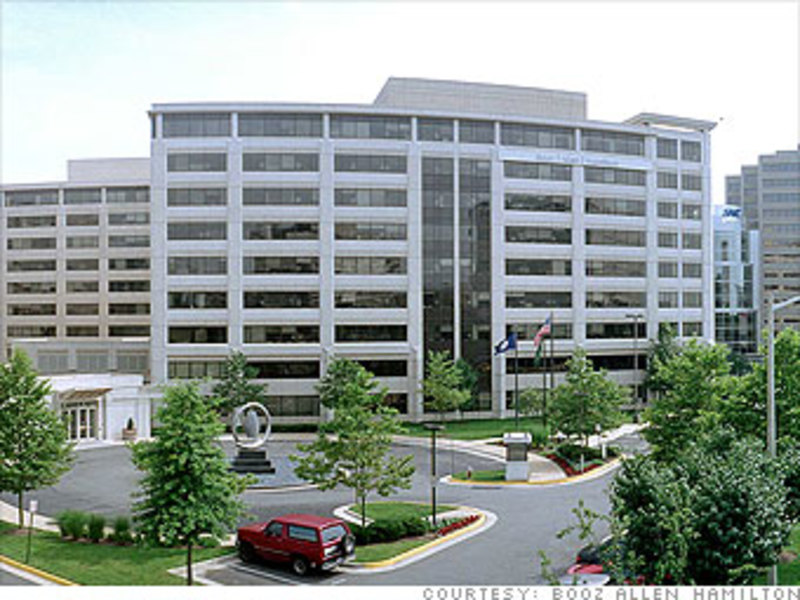
As the indemnification vote showed, the Deep State does not consist only of government agencies. What is euphemistically called "private enterprise" is an integral part of its operations. In a special series in The Washington Post called "Top Secret America," Dana Priest and William K. Arkin described the scope of the privatized Deep State and the degree to which it has metastasized after the September 11 attacks. There are now 854,000 contract personnel with top-secret clearances - a number greater than that of top-secret-cleared civilian employees of the government. While they work throughout the country and the world, their heavy concentration in and around the Washington suburbs is unmistakable: Since 9/11, 33 facilities for top-secret intelligence have been built or are under construction. Combined, they occupy the floor space of almost three Pentagons - about 17 million square feet. Seventy percent of the intelligence community-s budget goes to paying contracts. And the membrane between government and industry is highly permeable: The Director of National Intelligence, James R. Clapper, is a former executive of Booz Allen Hamilton, one of the government-s largest intelligence contractors. His predecessor as director, Admiral Mike McConnell, is the current vice chairman of the same company; Booz Allen is 99 percent dependent on government business. These contractors now set the political and social tone of Washington, just as they are increasingly setting the direction of the country, but they are doing it quietly, their doings unrecorded in the Congressional Record or the Federal Register, and are rarely subject to congressional hearings.
Washington is the most important node of the Deep State that has taken over America, but it is not the only one. Invisible threads of money and ambition connect the town to other nodes. One is Wall Street, which supplies the cash that keeps the political machine quiescent and operating as a diversionary marionette theater. Should the politicians forget their lines and threaten the status quo, Wall Street floods the town with cash and lawyers to help the hired hands remember their own best interests. The executives of the financial giants even have de facto criminal immunity. On March 6, 2013, testifying before the Senate Judiciary Committee, Attorney General Eric Holder stated the following: "I am concerned that the size of some of these institutions becomes so large that it does become difficult for us to prosecute them when we are hit with indications that if you do prosecute, if you do bring a criminal charge, it will have a negative impact on the national economy, perhaps even the world economy." This, from the chief law enforcement officer of a justice system that has practically abolished the constitutional right to trial for poorer defendants charged with certain crimes. It is not too much to say that Wall Street may be the ultimate owner of the Deep State and its strategies, if for no other reason than that it has the money to reward government operatives with a second career that is lucrative beyond the dreams of avarice - certainly beyond the dreams of a salaried government employee. [3]
The corridor between Manhattan and Washington is a well trodden highway for the personalities we have all gotten to know in the period since the massive deregulation of Wall Street: Robert Rubin, Lawrence Summers, Henry Paulson, Timothy Geithner and many others. Not all the traffic involves persons connected with the purely financial operations of the government: In 2013, General David Petraeus joined KKR (formerly Kohlberg Kravis Roberts) of 9 West 57th Street, New York, a private equity firm with $62.3 billion in assets. KKR specializes in management buyouts and leveraged finance. General Petraeus- expertise in these areas is unclear. His ability to peddle influence, however, is a known and valued commodity. Unlike Cincinnatus, the military commanders of the Deep State do not take up the plow once they lay down the sword. Petraeus also obtained a sinecure as a non-resident senior fellow at the Belfer Center for Science and International Affairs at Harvard. The Ivy League is, of course, the preferred bleaching tub and charm school of the American oligarchy. [4]
Petraeus and most of the avatars of the Deep State - the White House advisers who urged Obama not to impose compensation limits on Wall Street CEOs, the contractor-connected think tank experts who besought us to "stay the course" in Iraq, the economic gurus who perpetually demonstrate that globalization and deregulation are a blessing that makes us all better off in the long run - are careful to pretend that they have no ideology. Their preferred pose is that of the politically neutral technocrat offering well considered advice based on profound expertise. That is nonsense. They are deeply dyed in the hue of the official ideology of the governing class, an ideology that is neither specifically Democrat nor Republican. Domestically, whatever they might privately believe about essentially diversionary social issues such as abortion or gay marriage, they almost invariably believe in the "Washington Consensus": financialization, outsourcing, privatization, deregulation and the commodifying of labor. Internationally, they espouse 21st-century "American Exceptionalism": the right and duty of the United States to meddle in every region of the world with coercive diplomacy and boots on the ground and to ignore painfully won international norms of civilized behavior. To paraphrase what Sir John Harrington said more than 400 years ago about treason, now that the ideology of the Deep State has prospered, none dare call it ideology. [5] That is why describing torture with the word "torture" on broadcast television is treated less as political heresy than as an inexcusable lapse of Washington etiquette: Like smoking a cigarette on camera, these days it is simply "not done."
After Edward Snowden-s revelations about the extent and depth of surveillance by the National Security Agency, it has become publicly evident that Silicon Valley is a vital node of the Deep State as well. Unlike military and intelligence contractors, Silicon Valley overwhelmingly sells to the private market, but its business is so important to the government that a strange relationship has emerged. While the government could simply dragoon the high technology companies to do the NSA-s bidding, it would prefer cooperation with so important an engine of the nation-s economy, perhaps with an implied quid pro quo. Perhaps this explains the extraordinary indulgence the government shows the Valley in intellectual property matters. If an American "jailbreaks" his smartphone (i.e., modifies it so that it can use a service provider other than the one dictated by the manufacturer), he could receive a fine of up to $500,000 and several years in prison; so much for a citizen-s vaunted property rights to what he purchases. The libertarian pose of the Silicon Valley moguls, so carefully cultivated in their public relations, has always been a sham. Silicon Valley has long been tracking for commercial purposes the activities of every person who uses an electronic device, so it is hardly surprising that the Deep State should emulate the Valley and do the same for its own purposes. Nor is it surprising that it should conscript the Valley-s assistance.
Still, despite the essential roles of lower Manhattan and Silicon Valley, the center of gravity of the Deep State is firmly situated in and around the Beltway. The Deep State-s physical expansion and consolidation around the Beltway would seem to make a mockery of the frequent pronouncement that governance in Washington is dysfunctional and broken. That the secret and unaccountable Deep State floats freely above the gridlock between both ends of Pennsylvania Avenue is the paradox of American government in the 21st century: drone strikes, data mining, secret prisons and Panopticon-like control on the one hand; and on the other, the ordinary, visible parliamentary institutions of self-government declining to the status of a banana republic amid the gradual collapse of public infrastructure.
The results of this contradiction are not abstract, as a tour of the rotting, decaying, bankrupt cities of the American Midwest will attest. It is not even confined to those parts of the country left behind by a Washington Consensus that decreed the financialization and deindustrialization of the economy in the interests of efficiency and shareholder value. This paradox is evident even within the Beltway itself, the richest metropolitan area in the nation. Although demographers and urban researchers invariably count Washington as a "world city," that is not always evident to those who live there. Virtually every time there is a severe summer thunderstorm, tens - or even hundreds - of thousands of residents lose power, often for many days. There are occasional water restrictions over wide areas because water mains, poorly constructed and inadequately maintained, have burst. [6] The Washington metropolitan area considers it a Herculean task just to build a rail link to its international airport - with luck it may be completed by 2018.
It is as if Hadrian-s Wall was still fully manned and the fortifications along the border with Germania were never stronger, even as the city of Rome disintegrates from within and the life-sustaining aqueducts leading down from the hills begin to crumble. The governing classes of the Deep State may continue to deceive themselves with their dreams of Zeus-like omnipotence, but others do not. A 2013 Pew Poll that interviewed 38,000 people around the world found that in 23 of 39 countries surveyed, a plurality of respondents said they believed China already had or would in the future replace the United States as the world-s top economic power.
The Deep State is the big story of our time. It is the red thread that runs through the war on terrorism, the financialization and deindustrialization of the American economy, the rise of a plutocratic social structure and political dysfunction. Washington is the headquarters of the Deep State, and its time in the sun as a rival to Rome, Constantinople or London may be term-limited by its overweening sense of self-importance and its habit, as Winwood Reade said of Rome, to "live upon its principal till ruin stared it in the face." "Living upon its principal," in this case, means that the Deep State has been extracting value from the American people in vampire-like fashion.
We are faced with two disagreeable implications. First, that the Deep State is so heavily entrenched, so well protected by surveillance, firepower, money and its ability to co-opt resistance that it is almost impervious to change. Second, that just as in so many previous empires, the Deep State is populated with those whose instinctive reaction to the failure of their policies is to double down on those very policies in the future. Iraq was a failure briefly camouflaged by the wholly propagandistic success of the so-called surge; this legerdemain allowed for the surge in Afghanistan, which equally came to naught. Undeterred by that failure, the functionaries of the Deep State plunged into Libya; the smoking rubble of the Benghazi consulate, rather than discouraging further misadventure, seemed merely to incite the itch to bomb Syria. Will the Deep State ride on the back of the American people from failure to failure until the country itself, despite its huge reserves of human and material capital, is slowly exhausted? The dusty road of empire is strewn with the bones of former great powers that exhausted themselves in like manner.
But, there are signs of resistance to the Deep State and its demands. In the aftermath of the Snowden revelations, the House narrowly failed to pass an amendment that would have defunded the NSA-s warrantless collection of data from US persons. Shortly thereafter, the president, advocating yet another military intervention in the Middle East, this time in Syria, met with such overwhelming congressional skepticism that he changed the subject by grasping at a diplomatic lifeline thrown to him by Vladimir Putin. [7]
Has the visible, constitutional state, the one envisaged by Madison and the other Founders, finally begun to reassert itself against the claims and usurpations of the Deep State? To some extent, perhaps. The unfolding revelations of the scope of the NSA-s warrantless surveillance have become so egregious that even institutional apologists such as Senator Dianne Feinstein have begun to backpedal - if only rhetorically - from their knee-jerk defense of the agency. As more people begin to waken from the fearful and suggestible state that 9/11 created in their minds, it is possible that the Deep State-s decade-old tactic of crying "terrorism!" every time it faces resistance is no longer eliciting the same Pavlovian response of meek obedience. And the American people, possibly even their legislators, are growing tired of endless quagmires in the Middle East.
But there is another more structural reason the Deep State may have peaked in the extent of its dominance. While it seems to float above the constitutional state, its essentially parasitic, extractive nature means that it is still tethered to the formal proceedings of governance. The Deep State thrives when there is tolerable functionality in the day-to-day operations of the federal government. As long as appropriations bills get passed on time, promotion lists get confirmed, black (i.e., secret) budgets get rubber-stamped, special tax subsidies for certain corporations are approved without controversy, as long as too many awkward questions are not asked, the gears of the hybrid state will mesh noiselessly. But when one house of Congress is taken over by tea party Wahhabites, life for the ruling class becomes more trying.
If there is anything the Deep State requires it is silent, uninterrupted cash flow and the confidence that things will go on as they have in the past. It is even willing to tolerate a degree of gridlock: Partisan mud wrestling over cultural issues may be a useful distraction from its agenda. But recent congressional antics involving sequestration, the government shutdown and the threat of default over the debt ceiling extension have been disrupting that equilibrium. And an extreme gridlock dynamic has developed between the two parties such that continuing some level of sequestration is politically the least bad option for both parties, albeit for different reasons. As much as many Republicans might want to give budget relief to the organs of national security, they cannot fully reverse sequestration without the Democrats demanding revenue increases. And Democrats wanting to spend more on domestic discretionary programs cannot void sequestration on either domestic or defense programs without Republicans insisting on entitlement cuts.
So, for the foreseeable future, the Deep State must restrain its appetite for taxpayer dollars. Limited deals may soften sequestration, but agency requests will not likely be fully funded anytime soon. Even Wall Street-s rentier operations have been affected: After helping finance the tea party to advance its own plutocratic ambitions, America-s Big Money is now regretting the Frankenstein-s monster it has created. Like children playing with dynamite, the tea party and its compulsion to drive the nation into credit default has alarmed the grown-ups commanding the heights of capital; the latter are now telling the politicians they thought they had hired to knock it off.
The House vote to defund the NSA-s illegal surveillance programs was equally illustrative of the disruptive nature of the tea party insurgency. Civil liberties Democrats alone would never have come so close to victory; tea party stalwart Justin Amash (R-MI), who has also upset the business community for his debt-limit fundamentalism, was the lead Republican sponsor of the NSA amendment, and most of the Republicans who voted with him were aligned with the tea party.
The final factor is Silicon Valley. Owing to secrecy and obfuscation, it is hard to know how much of the NSA-s relationship with the Valley is based on voluntary cooperation, how much is legal compulsion through FISA warrants and how much is a matter of the NSA surreptitiously breaking into technology companies- systems. Given the Valley-s public relations requirement to mollify its customers who have privacy concerns, it is difficult to take the tech firms- libertarian protestations about government compromise of their systems at face value, especially since they engage in similar activity against their own customers for commercial purposes. That said, evidence is accumulating that Silicon Valley is losing billions in overseas business from companies, individuals and governments that want to maintain privacy. For high tech entrepreneurs, the cash nexus is ultimately more compelling than the Deep State-s demand for patriotic cooperation. Even legal compulsion can be combatted: Unlike the individual citizen, tech firms have deep pockets and batteries of lawyers with which to fight government diktat.
This pushback has gone so far that on January 17, President Obama announced revisions to the NSA-s data collection programs, including withdrawing the agency-s custody of a domestic telephone record database, expanding requirements for judicial warrants and ceasing to spy on (undefined) "friendly foreign leaders." Critics have denounced the changes as a cosmetic public relations move, but they are still significant in that the clamor has gotten so loud that the president feels the political need to address it.
When the contradictions within a ruling ideology are pushed too far, factionalism appears and that ideology begins slowly to crumble. Corporate oligarchs such as the Koch brothers are no longer entirely happy with the faux-populist political front group they helped fund and groom. Silicon Valley, for all the Ayn Rand-like tendencies of its major players, its offshoring strategies and its further exacerbation of income inequality, is now lobbying Congress to restrain the NSA, a core component of the Deep State. Some tech firms are moving to encrypt their data. High tech corporations and governments alike seek dominance over people though collection of personal data, but the corporations are jumping ship now that adverse public reaction to the NSA scandals threatens their profits.
The outcome of all these developments is uncertain. The Deep State, based on the twin pillars of national security imperative and corporate hegemony, has until recently seemed unshakable and the latest events may only be a temporary perturbation in its trajectory. But history has a way of toppling the altars of the mighty. While the two great materialist and determinist ideologies of the twentieth century, Marxism and the Washington Consensus, successively decreed that the dictatorship of the proletariat and the dictatorship of the market were inevitable, the future is actually indeterminate. It may be that deep economic and social currents create the framework of history, but those currents can be channeled, eddied, or even reversed by circumstance, chance and human agency. We have only to reflect upon defunct glacial despotisms such as the USSR or East Germany to realize that nothing is forever.
Throughout history, state systems with outsized pretensions to power have reacted to their environments in two ways. The first strategy, reflecting the ossification of its ruling elites, consists of repeating that nothing is wrong, that the status quo reflects the nation-s unique good fortune in being favored by God and that those calling for change are merely subversive troublemakers. As the French ancien régime, the Romanov dynasty and the Habsburg emperors discovered, the strategy works splendidly for a while, particularly if one has a talent for dismissing unpleasant facts. The final results, however, are likely to be thoroughly disappointing.
The second strategy is one embraced to varying degrees and with differing goals, by figures of such contrasting personalities as Mustafa Kemal Atatürk, Franklin D. Roosevelt, Charles de Gaulle and Deng Xiaoping. They were certainly not revolutionaries by temperament; if anything, their natures were conservative. But they understood that the political cultures in which they lived were fossilized and incapable of adapting to the times. In their drive to reform and modernize the political systems they inherited, their first obstacles to overcome were the outworn myths that encrusted the thinking of the elites of their time.
As the United States confronts its future after experiencing two failed wars, a precarious economy and $17 trillion in accumulated debt, the national punditry has split into two camps. The first, the declinists, sees a broken, dysfunctional political system incapable of reform and an economy soon to be overtaken by China. The second, the reformers, offers a profusion of nostrums to turn the nation around: public financing of elections to sever the artery of money between the corporate components of the Deep State and financially dependent elected officials, government "insourcing" to reverse the tide of outsourcing of government functions and the conflicts of interest that it creates, a tax policy that values human labor over financial manipulation and a trade policy that favors exporting manufactured goods over exporting investment capital.
All of that is necessary, but not sufficient. The Snowden revelations (the impact of which have been surprisingly strong), the derailed drive for military intervention in Syria and a fractious Congress, whose dysfunction has begun to be a serious inconvenience to the Deep State, show that there is now a deep but as yet inchoate hunger for change. What America lacks is a figure with the serene self-confidence to tell us that the twin idols of national security and corporate power are outworn dogmas that have nothing more to offer us. Thus disenthralled, the people themselves will unravel the Deep State with surprising speed.
[1] The term "Deep State" was coined in Turkey and is said to be a system composed of high-level elements within the intelligence services, military, security, judiciary and organized crime. In British author John le Carré-s latest novel, A Delicate Truth, a character describes the Deep State as "… the ever-expanding circle of non-governmental insiders from banking, industry and commerce who were cleared for highly classified information denied to large swathes of Whitehall and Westminster." I use the term to mean a hybrid association of elements of government and parts of top-level finance and industry that is effectively able to govern the United States without reference to the consent of the governed as expressed through the formal political process.
[2] Twenty-five years ago, the sociologist Robert Nisbet described this phenomenon as "the attribute of No Fault…. Presidents, secretaries and generals and admirals in America seemingly subscribe to the doctrine that no fault ever attaches to policy and operations. This No Fault conviction prevents them from taking too seriously such notorious foul-ups as Desert One, Grenada, Lebanon and now the Persian Gulf." To his list we might add 9/11, Iraq, Afghanistan and Libya.
[3] The attitude of many members of Congress towards Wall Street was memorably expressed by Rep. Spencer Bachus (R-AL), the incoming chairman of the House Financial Services Committee, in 2010: "In Washington, the view is that the banks are to be regulated, and my view is that Washington and the regulators are there to serve the banks."
[4] Beginning in 1988, every US president has been a graduate of Harvard or Yale. Beginning in 2000, every losing presidential candidate has been a Harvard or Yale graduate, with the exception of John McCain in 2008.
[5] In recent months, the American public has seen a vivid example of a Deep State operative marketing his ideology under the banner of pragmatism. Former Secretary of Defense Robert M. Gates - a one-time career CIA officer and deeply political Bush family retainer - has camouflaged his retrospective defense of military escalations that have brought us nothing but casualties and fiscal grief as the straight-from-the-shoulder memoir from a plain-spoken son of Kansas who disdains Washington and its politicians.
[6] Meanwhile, the US government took the lead in restoring Baghdad-s sewer system at a cost of $7 billion.
[7] Obama-s abrupt about-face suggests he may have been skeptical of military intervention in Syria all along, but only dropped that policy once Congress and Putin gave him the running room to do so. In 2009, he went ahead with the Afghanistan "surge" partly because General Petraeus- public relations campaign and back-channel lobbying on the Hill for implementation of his pet military strategy pre-empted other options. These incidents raise the disturbing question of how much the democratically elected president - or any president - sets the policy of the national security state and how much the policy is set for him by the professional operatives of that state who engineer faits accomplis that force his hand.

The State, the Deep State, and the Wall Street Overworld


wallstreetflag
In the last decade it has become more and more obvious that we have in America today what the journalists Dana Priest and William Arkin have called
two governments: the one its citizens were familiar with, operated more or less in the open: the other a parallel top secret government whose parts had mushroomed in less than a decade into a gigantic, sprawling universe of its own, visible to only a carefully vetted cadre – and its entirety…visible only to God.1
And in 2013, particularly after the military return to power in Egypt, more and more authors referred to this second level as America’s “deep state.”2 Here for example is the Republican analyst Mike Lofgren:
There is the visible government situated around the Mall in Washington, and then there is another, more shadowy, more indefinable government that is not explained in Civics 101 or observable to tourists at the White House or the Capitol. The former is traditional Washington partisan politics: the tip of the iceberg that a public watching C-SPAN sees daily and which is theoretically controllable via elections. The subsurface part of the iceberg I shall call the Deep State, which operates according to its own compass heading regardless of who is formally in power.3
At the end of 2013 a New York Times Op-Ed noted this trend, and even offered a definition of the term that will work for the purposes of this essay:
DEEP STATE n. A hard-to-perceive level of government or super-control that exists regardless of elections and that may thwart popular movements or radical change. Some have said that Egypt is being manipulated by its deep state.4
The political activities of the deep state are the chief source and milieu of what I have elsewhere called “deep politics:” “all those political practices and arrangements, deliberate or not, which are usually repressed rather than acknowledged.”5
Others, like Tom Hayden, call the deep state a “state within the state,” and suggest it may be responsible for the failure of the Obama administration to follow the policy guidelines of the president’s speeches:
We have seen evidence of a “state within the state” before, going back as far as the CIA’s operations against Cuba. In Obama’s time, the president correctly named the 2009 coup in Honduras a “coup”, and then seemed powerless to prevent it.6
This development of a two-level or dual state has been paralleled by two other dualities: the increasing resolution of American society into two classes – the “one percent” and the “ninety-nine percent” – and the bifurcation of the U.S. economy into two aspects: the domestic, still subject to some governmental regulation and taxation, and the international, relatively free from governmental controls.7 All three developments have affected and intensified each other – particularly since the
Reagan Revolution of 1980, which saw American inequality of wealth cease to diminish and begin to increase.8 Thus for example we shall see how Wall Street – the incarnation of the “one percent” – played a significant role in increasing the deep state after World War Two, and how three decades later the deep state played a significant role in realigning America for the Reagan Revolution.
In earlier books I have given versions of this America-centered account of America’s shift into empire and a deep state. But another factor to be mentioned is the shift of global history towards an increasingly global society dominated by a few emergent superpowers. This trend was accelerated after the Industrial Revolution by new technologies of transport, from the railroad in the 19th century to the jet plane and space travel in the 20th.9
In the fallout from this rearrangement we must include two world wars, as a result of which Britain ceased to act as the dominant superpower it had been since Napoleon. Not surprisingly, the Soviet Union and the United States subsequently competed in a Cold War to fill the gap. It was not however predetermined that the Cold War would be as thuggish and covertly violent as for decades it continued to be. For that we should look to more contingent causes on both sides of the Iron Curtain – starting with the character of Stalin and his party but also including the partly responsive development of the American deep state.
The Deep State, The Shadow Government and the Wall Street Overworld
The “deep state” was defined by the UK newsletter On Religion as “the embedded anti-democratic power structures within a government, something very few democracies can claim to be free from.”10 The term originated in Turkey in 1996, to refer to U.S.-backed elements, primarily in the intelligence services and military, who had repeatedly used violence to interfere with and realign Turkey’s democratic political process. Sometimes the definition is restricted to elements within the government (or “a state-within-the state”), but more often in Turkey the term is expanded, for historical reasons, to include “members of the Turkish underworld.”11 In this essay I shall use “deep state” in the larger sense, to include both the second level of secret government inside Washington and those outsiders powerful enough, in either the underworld or overworld, to give it direction. In short I shall equate the term “deep state” with what in 1993 I termed a “deep political system:” “ one which habitually resorts to decision-making and enforcement procedures outside as well as inside those publicly sanctioned by law and society.”12
Like myself, Lofgren suggests an ambiguous symbiosis between two aspects of the American deep state:
1) the Beltway agencies of the shadow government, like the CIA and NSA, which have been instituted by the public state and now overshadow it, and
2) the much older power of Wall Street, referring to the powerful banks and law firms located there.
In their words,
It is not too much to say that Wall Street may be the ultimate owner of the Deep State and its strategies, if for no other reason than that it has the money to reward government operatives with a second career that is lucrative beyond the dreams of avarice – certainly beyond the dreams of a salaried government employee.13
I shall argue that in the 1950s Wall Street was a dominating complex. It included not just banks and oil firms but also the oil majors whose cartel arrangements were successfully defended against the U.S. Government by the Wall Street law firm Sullivan and Cromwell, home to the Dulles brothers. This larger complex is what I mean by the Wall Street overworld.
The Long History of the Wall Street Overworld
Lofgren’s inclusion of Wall Street is in keeping with Franklin Roosevelt’s observation in 1933 to his friend Col. E.M. House that “The real truth … is, as you and I know, that a financial element in the larger centers has owned the Government ever since the days of Andrew Jackson.”14
FDR’s insight is well illustrated by the efficiency with which a group of Wall Street bankers (including Nelson Rockefeller’s grandfather Nelson Aldrich and Paul Warburg) were able in a highly secret meeting in 1910 to establish the Federal Reserve System – a system which in effect reserved oversight of the nation’s currency supply and of all America’s banks in the not impartial hands of its largest.15 The political clout of the quasi-governmental Federal Reserve Board (where the federal Treasury is represented but does not dominate) was clearly demonstrated in 2008, when Fed leadership secured instant support from the successive administrations of a Texan Republican president, followed by a Midwest Democratic one, for public money to rescue the reckless management of Wall Street banks: banks Too Big To Fail, and of course far Too Big To Jail, but not Too Big To Bail.16
Wall Street and the Launching of the CIA
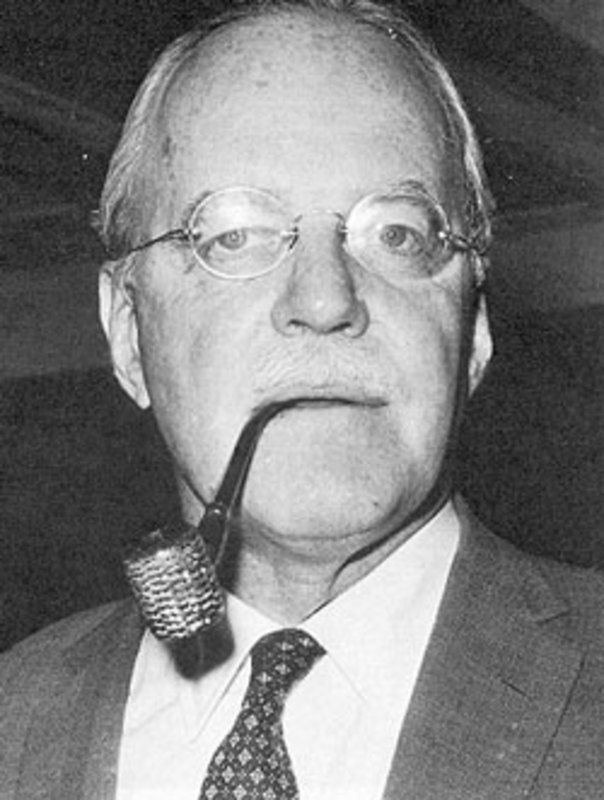
Top-level Treasury officials, CIA officers, and Wall Street bankers and lawyers think alike because of the “revolving door” by which they pass easily from private to public service and back. In 1946 General Vandenberg, as Director of Central Intelligence (DCI), recruited Allen Dulles, then a Republican lawyer at Sullivan and Cromwell in New York, “to draft proposals for the shape and organization of what was to become the Central Intelligence Agency in 1947.” Dulles promptly formed an advisory group of six men, all but one of whom were Wall Street investment bankers or lawyers.17 Dulles and two of the six (William H. Jackson and Frank Wisner) later joined the agency, where Dulles proceeded to orchestrate policies, such as the overthrow of the Arbenz regime in Guatemala, that he had previously discussed in New York at the Council on Foreign Relations.18
There seems to be little difference in Allen Dulles’s influence whether he was a Wall Street lawyer or a CIA director. Although he did not formally join the CIA until November 1950, he was in Berlin before the start of the 1948 Berlin Blockade, “supervising the unleashing of anti-Soviet propaganda across Europe.”19 In the early summer of 1948 he set up the American Committee for a United Europe (ACUE), in support of what became by the early 1950s “the largest CIA operation in Western Europe.”20
The Deep State and Funds for CIA Covert Operations
Wall Street was also the inspiration for what eventually became the CIA’s first covert operation: the use of “over $10 million in captured Axis funds to influence the [Italian] election [of 1948].”21 (The fundraising had begun at the wealthy Brook Club in New York; but Allen Dulles, still a Wall Street lawyer, persuaded Washington, which at first had preferred a private funding campaign, to authorize the operation through the National Security Council and the CIA.)22
Dulles’s friend Frank Wisner then left Wall Street to oversee an enlarged covert operations program through the newly created Office of Policy Co-ordination (OPC). Dulles, still a lawyer, campaigned successfully to reconstruct Western Europe through what became known as the Marshall Plan.23 Together with George Kennan and James Forrestal, Dulles also “helped devise a secret codicil [to the Marshall Plan] that gave the CIA the capability to conduct political warfare. It let the agency skim millions of dollars from the plan.”24
This created one of the earlier occasions when the CIA, directly or indirectly, recruited local assets involved in drug trafficking. AFL member Irving Brown, the assistant of AFL official Jay Lovestone (a CIA asset), was implicated in drug smuggling activities in Europe, at the same time that he used funds diverted from the Marshall Plan to establish
a “compatible left” labor union in Marseilles with Pierre Ferri-Pisani. On behalf of Brown and the CIA, Ferri-Pisani (a drug smuggler connected with Marseilles crime lord Antoine Guerini), hired goons to shellack striking Communist dock workers.25
An analogous funding source for the CIA developed in the Far East: the so-called
“M-Fund,” a secret fund of money of enormous size that has existed in Japan [in 1991] for more than forty years. The Fund was established by the United States in the immediate postwar era for essentially the same reasons that later gave rise to the Marshall Plan of assistance by the U.S. to Western Europe, including the Federal Republic of Germany….. The M-Fund was used not only for the building of a democratic political system in Japan but, in addition, for all of the purposes for which Marshall Plan funds were used in Europe.26
For at least two decades the CIA lavishly subsidized right-wing parties in countries including Japan and Indonesia, possibly still using captured Axis funds.27 (One frequently encounters the claim that the source of the M-fund was gold looted by Japan during World War Two (“Yamashita’s gold”).28
As a general rule the CIA, rather than assimilating these funds into its own budget, appears to have left them off the books in the hands of cooperative allied powers – ranging from other U.S. agencies like the Economic Cooperation Administration (ECA. set up in 1948 to administer the Marshall Plan) to oil companies to powerful drug kingpins.29
The CIA never abandoned its dependency on funds from outside its official budget to conduct its clandestine operations. In Southeast Asia, in particular, its proprietary firm Sea Supply Inc., supplied an infrastructure for a drug traffic supporting a CIA-led paramilitary force, PARU.30 The CIA appears also to have acted in coordination with slush funds from various U.S. government contracts, ranging from the Howard Hughes organization to (as we shall see) the foreign arms sales of U.S. defense corporations like Lockheed and Northrop.31
Lockheed Payoffs and CIA Clients: the Netherlands, Japan, Italy, Indonesia, and Saudi Arabia
Kodama Yoshio, war criminal, drug trafficker, and purveyor of deep state US funds to Japanese politicians. Source.
Through the 1950s payouts from the M-fund were administered by Kodama Yoshio, “probably the CIA’s chief asset in Japan;” while ”All accounts say that after the end of the occupation, the fund’s American managers came from the CIA.”32 Kodama also received and distributed millions of funds from Lockheed to secure military contracts – an operation the CIA knew about but has never admitted involvement in.33 Lockheed’s system of payoffs was world-wide; and one sees CIA involvement with it in at least four other countries: the Netherlands, Italy, Indonesia and Saudi Arabia. (Lockheed, the builder of the U-2, was a major CIA-cleared contractor.)34
The beneficiary in the Netherlands was Prince Bernhard, a close friend of CIA directors Walter Bedell Smith and Allen Dulles, and the organizer of the Bilderberg Group.35 In the case of Italy, payments were handled through a contact (“Antelope Cobbler”) who turned out to be whoever was the Italian Prime Minister of the moment (always from one of the parties subsidized earlier by the CIA).36
In the revealing instance of Indonesia, Lockheed payments were shifted in May 1965, over the legal objections of Lockheed’s counsel, to a new contract with a company set up by the firm’s long-time local agent or middleman, August Munir Dasaad.86 This was just six months after a secret U.S. decision to have the CIA covertly assist
“individuals and organizations prepared to take obstructive action against the PKI [Indonesian Communist Party].” Over the longer term this meant identifying and keeping tabs on “anti-regime elements” and other potential leaders of a post-Sukarno regime.37
Although Dasaad had been a long-time supporter of Sukarno, by May 1965 he was already building connections with Sukarno’s eventual successor, Gen. Suharto, via a family relative, General Alamsjah, who knew Suharto and was the beneficiary of the new Lockheed account.38 After Suharto replaced Sukarno, Alamsjah, who controlled certain considerable funds, at once made funds available to Suharto, earning him the gratitude of the new President.39
While this was happening, Stanvac (a joint venture of the Standard companies known later as Exxon and Mobil) increased payments to the army’s oil company, Permina, headed by an eventual political ally of Suharto, General Ibnu Sutowo.Alamsjah is said to have been allied with Ibnu Sutowo in plotting against Sukarno, along with a well-connected Japanese oilman, Nishijima Shigetada.40 After Suharto’s overthrow of Sukarno, Fortune wrote that “Sutowo’s still small company played a key part in bankrolling those crucial operations, and the army has never forgotten it.”41
We shall deal later with the special case of Lockheed kickbacks to Saudi Arabia, which were far greater than those to Japan. It is important to note, however, the linkage between Middle East oil and arms sales: as U.S. imports of Middle East oil increased, the pressure on the U.S. balance of payments was offset by increased U.S. arms sales to the region. “In the period 1963-1974, arms sales to the Middle East went from 10 per cent of global arms imports to 36 per cent, half of which was supplied by the United States.”42
Iran in 1953: How an Oil Cartel Operation Became a Job for the CIA or]
Wall Street, the Dulles Brothers, and the International Oil Cartel
The international lawyers of Wall Street did not hide from each other their shared belief that they understood better than Washington the requirements for running the world. As John Foster Dulles wrote in the 1930s to a British colleague,
The word “cartel” has here assumed the stigma of a bogeyman which the politicians are constantly attacking. The fact of the matter is that most of these politicians are highly insular and nationalistic and because the political organization of the world has under such influence been so backward, business people who have had to cope realistically with international problems have had to find ways for getting through and around stupid political barriers.43
This same mentality also explains why Allen Dulles as an OSS officer in 1945 simply evaded orders from Washington forbidding him to negotiate with SS General Karl Wolff about a conditional surrender of German forces in Italy – an important breach of Roosevelt’s agreement with Stalin at Yalta for unconditional surrender, a breach that is regarded by many as helping lead to the Cold War.44 And it explains why Allen, as CIA Director in 1957, dealt summarily with Eisenhower’s reluctance to authorize more than occasional U-2 overflights of the USSR, by secretly approving a plan with Britain’s MI-6 whereby U-2 flights could be authorized instead by the UK Prime Minister Macmillan.45
This mentality exhibited itself in 1952, when Truman’s Justice Department sought to break up the cartel agreements whereby Standard Oil of New Jersey (now Exxon) and four other oil majors controlled global oil distribution. (The other four were Standard Oil Company of New York, Standard Oil of California or Socony, Gulf Oil, and Texaco; together with Royal Dutch Shell and Anglo-Iranian, they comprised the so-called Seven Sisters of the cartel.) Faced with a government order to hand over relevant documents, Exxon’s lawyer Arthur Dean at Sullivan and Cromwell, where Foster was senior partner, refused: “If it were not for the question of national security, we would be perfectly willing to face either a criminal or a civil suit. But this is the kind of information the Kremlin would love to get its hands on.”46
48 Wall Street, the former headquarters of both Sullivan and Cromwell and the J. Henry Schroder Banking Corporation. Source.
At this time the oil cartel was working closely with the British Anglo-Iranian Oil Company (AIOC, later BP) to prevent AIOC’s nationalization by Iran’s Premier Mossadeq, by instituting, in May 1951, a successful boycott of Iranian oil exports.
In May 1951 the AIOC secured the backing of the other oil majors, who had every interest in discouraging nationalisation…. None of the large companies would touch Iranian oil; despite one or two picturesque episodes the boycott held.47
As a result Iranian oil production fell from 241 million barrels in 1950 to 10.6 million barrels in 1952.
This was accomplished by denying Iran the ability to export its crude oil. At that time, the Seven Sisters controlled almost 99% of the crude oil tankers in the world for such export, and even more importantly, the markets to which it was going.48
But Truman declined, despite a direct personal appeal from Churchill, to have the CIA participate in efforts to overthrow Mossadeq, and instead dispatched Averell Harriman to Tehran in a failed effort to negotiate a peaceful resolution of Mossadeq’s differences with London.49
Allen and John Foster Dulles, pillars of both the state and the deep state. Source.
All this changed with the election of Eisenhower in November 1952, followed by the appointment of the Dulles brothers to be Secretary of State and head of CIA. The Justice Department’s criminal complaint against the oil cartel was swiftly replaced by a civil suit, from which the oil cartel eventually emerged unscathed.50
Eisenhower, an open friend of the oil industry…changed the charges from criminal to civil and transferred responsibility of the case from the Department of Justice to the Department of State – the first time in history that an antitrust case was handed to State for prosecution. Seeing as how the Secretary of State was John Foster Dulles and the defense counsel for the oil cartel was Dulles’ former law firm (Sullivan and Cromwell), the case was soon as good as dead.51
Thereafter
Cooperative control of the world market by the major oil companies remained in effect, with varying degrees of success, until the oil embargo of 1973-74. That the cooperation was more than tacit can be seen by the fact that antitrust regulations were specifically set aside a number of times during the 1950-1973 period, allowing the major companies to negotiate as a group with various Mideastern countries, and after its inception [in 1960], with the Organization of Petroleum Exporting Countries or OPEC.52
Also in November 1952 CIA officials began planning to involve CIA in the efforts of MI6 and the oil companies in Iran53 — although its notorious Operation TP/AJAX to overthrow Mossadeq was not finally approved by Eisenhower until July 22, 1953.54
The events of 1953 strengthened the role of the oil cartel as a structural component of the American deep state, drawing on its powerful connections to both Wall Street and the CIA.55 (Another such component was the Arabian-American Oil Company or ARAMCO in Saudi Arabia, which increased oil production in 1951-53 to offset the loss of oil from Iran. Until it was fully nationalized in 1980, ARAMCO maintained undercover CIA personnel like William Eddy among its top advisors.)56 The five American oil majors in particular were also strengthened by the success of AJAX, as Anglo-Iranian (renamed BP) was henceforth forced to share 40 percent of the oil from its Iran refinery with them.
Nearly all recent accounts of Mossadeq’s overthrow treat it as a covert intelligence operation, with the oil cartel (when mentioned at all) playing a subservient role. However the chronology, and above all the belated approval from Eisenhower, suggest that it was CIA that came belatedly in 1953 to assist an earlier oil cartel operation, rather than vice versa. In terms of the deep state, the oil cartel or deep state initiated in 1951 a process that the American public state only authorized two years later. Yet the inevitable bias in academic or archival historiography, working only with those primary sources that are publicly available, is to think of the Mossadeq tragedy as simply a “CIA coup.”
The CIA, Booz Allen Hamilton, and the Wall Street Overworld
The “revolving door” also circulates top-level intelligence officials and the chiefs of the cleared contractors referred to by Mike Lofgren as part of the deep state. Tim Shorrock revealed in 2007 that “about 70 percent of the estimated $60 billion the government spends every year on…intelligence” is outsourced to private intelligence contractors like Booz, Allen & Hamilton (now Booz Allen Hamilton) and SAIC.57 For example Mike McConnell “went from being head of the National Security Agency under Bush 41 and Clinton directly to Booz Allen, one of the nation’s largest private intelligence contractors, then became Bush’s Director of National Intelligence (DNI), then went back to Booz Allen, where he is now Executive Vice President.” Intelligence officers in government write the non-competitive contracts for the private corporations that they may have worked for and may work for again.58 And over the years the “revolving door” has also exchanged personnel between Booz Allen and the international oil companies served by the firm.
The original firm of Booz, Allen, & Hamilton split in 2008 into Booz Allen Hamilton, focused on USG business, and Booz & Company in New York, assuming the old company’s commercial and international portfolio. Booz Allen Hamilton is majority owned by the private equity firm the Carlyle Group, noted for its association with political figures like both presidents Bush.59
Booz Allen Hamilton Headquarters. Source.
Lofgren points to the deep state importance of Booz Allen Hamilton, 99 percent of whose business dependent on the U.S. government.60 Booz Allen has been linked in the media to NSA ever since its employee Edward Snowden decamped with NSA records. But Booz Allen, one of the oldest and largest of the “cleared contractors,” has been intertwined with the CIA’s covert operations since Allen Dulles became CIA Director in 1953.61 In the same year, Booz Allen began “to take on several overseas assignments…: a land-registration system in the Philippines, a restructuring of Egypt’s customs operations and textile industries, and work for Iran’s national oil company.”62 All three assignments overlapped with CIA covert ops in 1953, including the Philippine land distribution program which Edward Lansdale promoted in order to fight a Huk insurrection, and the CIA’s operation TP/AJAX (with Britain’s MI6) to rescue the Anglo-Iranian oil company (later BP).63
Miles Copeland, Jr., ex-CIA, ex-Booz Allen @ Hamilton, ex-Khashoggi’s private CIA. Source.
But the most important CIA-Booz Allen cooperation may have been in Egypt. In March 1953 Miles Copeland, having resigned from the CIA to join Booz-Allen, “returned to Cairo under what was, for all practical purposes, a joint CIA-BA&H mission.”64 In addition to offering management advice to the Egyptian government in general, and to a private textile mill, Miles also gave Nasser advice on establishing his intelligence service (the Mukhabarat), and “soon became his closest Western advisor” (as well as his top channel to the USG, more important than either the local US ambassador or CIA chief)65
Copeland’s role with Nasser did not make him a shaper of U.S. policy; his pro-Nasser views were largely subordinated to the pro-British anti-Nasserism of the Dulles brothers. But they did establish a bond between Copeland and the Eisenhower White House. By 1967, when Nixon was preparing to run for president, Copeland had taken a leave of absence from Booz Allen to become a prestigious and well-paid consultant for oil companies.
The CIA, Miles Copeland, and Adnan Khashoggi
In 1966 Copeland, while technically on leave from Booz Allen, made close contact with Adnan Khashoggi, a young Arab who was in the course of becoming both a “principal foreign agent” of the U.S. and also extremely wealthy on the commissions he earned from Lockheed and other military firms on arms sales to Saudi Arabia.66 (“To give some sense of the size of the business, the company acknowledged in the mid-1970s that it had provided $106 million in commissions to Khashoggi between 1970 and 1975, more than ten times the level of payments made to the next most important connection, Yoshi [sic] Kodama of Japan.”67
Adnan Khashoggi, shadowy backer of politicians (Time, Jan. 19, 1987). Source.
By Copeland’s own account in 1989, this encounter with Khashoggi “put the two of us on a ‘Miles-and-Adnan’ basis that has lasted for more than twenty years of business, parties, and a very special kind of political action.”68 Copeland adds that
Adnan and I, separately had been called on by our respective friends in Langley [i.e., CIA] to… have an official [sic], off-the-record exchange of ideas on the emerging crisis in the Middle East, and come up with suggestions that the tame bureaucrats would like to have made but couldn’t.69
Copeland almost immediately flew to Cairo and immersed himself in a series of high-level but ultimately unsuccessful efforts to forestall what soon became the 1967 Six Day Egyptian-Israeli Six Day War. By his account, his mission, though unsuccessful, gave a “tremendous boost” to his reputation, enabling him “to accelerate the attempt I had already started to establish a ‘private CIA’ by use of confidential arrangements with politically astute members of the client companies.”70
Copeland’s self-promoting claims are controversial, and a number of establishment writers have described his books as “unreliable.”71 But eyewitness Larry Kolb corroborates that Copeland was close to Khashoggi, and that the two of them
had written a white paper… proposing that… rich countries, including not only the United States but also the Arab oil states, should establish a “Marshall Plan” for all the needy countries of the Middle East, including Israel.
Rewritten with Kolb’s assistance after consultation with the Reagan White House, the plan would be backed by a “Mideast Peace Fund” to which “Adnan was pledging a hundred million dollars of his own money.”72
The proposal failed, partly because of the Middle East’s resistance to negotiated solutions, but also partly because by the 1980s Khashoggi was no longer as rich and influential as he had once been. His function as an agent of influence in the Middle East and elsewhere had been sharply limited after the United States, by the Corrupt Federal Practices Act of 1978, outlawed direct payments by US corporations to foreign individuals. Henceforward the function of bestowing money and sexual favors on client politicians passed primarily from Khashoggi to another CIA connection, the Bank of Credit and Commerce International (BCCI).73 A major shareholder in BCCI was Saudi intelligence chief Kamal Adham, Khashoggi’s friend and business partner and (according to the Senate BCCI Report) “the CIA’s former principal contact in the Arab Middle East.”74
What the story of the failed “Mideast Peace Fund” reveals is first, that Khashoggi (like BCCI after him) was of interest to Washington because of his ability to negotiate with both Israel and Arab countries; and second, that Copeland and what Copeland called his “private CIA,”75 was in a commanding position as lead adviser to
Khashoggi, while still on unpaid leave from Booz Allen Hamilton.
Khashoggi, the CIA’s Asset Edward K. Moss, and Political Corruption
A powerful connection was formed by combining Copeland’s political contacts with Khashoggi’s millions. Copeland may have been responsible for Khashoggi’s inspired choice of the under-recognized Edward K. Moss, another man with CIA connections, as his p.r. agent in Washington.76
Back in November 1962, the CIA, as part of its planning to get rid of Castro, decided to use Moss for the Political Action Group of the CIA’s Covert Action (CA) staff.77 This was more than a year after the FBI had advised the CIA that Moss’s mistress Julia Cellini and her brother Dino Cellini were alleged to be procurers, while “the Cellini brothers have long been associated with the narcotics and white slavery rackets in Cuba.”78
This FBI report suggests an important shared interest between Moss and Khashoggi: sexual corruption. Just as his uncle Yussuf Yassin had been a procurer of women for King Abdul-Aziz, so Khashoggi himself was said to have “used sex to win over U.S. executives.” The bill for the madam who supplied girls en masse to his yacht in the Mediterranean ran to hundreds of thousands of dollars.79 Khashoggi made a practice of supplying those he wished to influence with dollars as well as sex.
Khashoggi’s Superyacht Kingdom 5KR, now owned by Prince Al-Waleed bin Talal. Source.
The CIA of course was forbidden to use sex and money in this way in the United States, or to make in the United States the payments to right-wing politicians that characterized its behavior in the rest of the world. But no such prohibition applied to Khashoggi. According to Anthony Summers,
Khashoggi had courted Nixon in 1967 by putting a plane at his disposal to tour the Middle East after the Six-Day War. Soon afterward, using a proxy, he opened an account at Rebozo’s [Bebe Rebozo, Nixon’s close confidante] in Florida. He did so, he explained to Watergate prosecutors, hoping to “curry favor with Rebozo,” to get an entrée to the man who might become president, and to pursue business deals.80
Khashoggi in effect served as a “cutout,” or representative, in a number of operations forbidden to the CIA and the companies he worked with. Lockheed, for one, was conspicuously absent from the list of military contractors who contributed illicitly to Nixon’s 1972 election campaign. But there was no law prohibiting their official representative, Khashoggi, from cycling $200 million through the bank of Nixon’s friend Bebe Rebozo.81
(Pierre Salinger heard from Khashoggi that in 1972 he had donated $1 million to Nixon, corroborating the often-heard claim that Khashoggi had brought it in a briefcase to Nixon’s western White House in San Clemente, and then “forgotten” to take it away.)82
Khashoggi of course did not introduce such corruption to American politics; he merely joined a milieu where defense companies had used money and girls for years to win defense contracts in Washington and Las Vegas.83 Prominent in this practice was Howard Hughes, whom Khashoggi soon joined in international investments. (After a Senate investigator on Khashoggi’s trail registered at the Hughes-owned Sands Hotel in Las Vegas, a blonde came unexpectedly to his hotel room, and said, “I’m here for your pleasure.”)84
But Khashoggi’s corruption channels and targets overlapped with those of others with CIA connections. In 1972 it was alleged that funds from the Paradise Island casino in the Bahamas were being secretly carried to Nixon and his friend Bebe Rebozo, by a casino employee. This was Seymour (Sy) Alter, who was both “a friend of Nixon and Rebozo since 1962” and also an associate of Edward Moss’s brother-in-law Eddie Cellini, the casino manager at Paradise Island. 85 The funds came from the Paradise Island Bridge Company, a company partly owned by an officer of Benguet International, a firm represented in America by Paul Helliwell. 86 It is likely that Nixon himself had a hidden interest in the Bridge Company, which might explain the revelation through Operation Tradewinds that a “Richard M. Nixon” (not otherwise identified) had an account at Helliwell’s Castle Bank.87
Three facts point to a deep state interest in what might otherwise seem a matter of personal corruption. The first is that Paul Helliwell had set up two companies for the CIA — CAT Inc. (Later Air America) and SEA Supply Inc. in Bangkok — that became the infrastructure of the CIA’s covert operations with drug-trafficking armies in Southeast Asia.88 The second is that Paul Helliwell’s banking partner, E.P. Barry, had been the postwar head of OSS Counterintelligence (X-2) in Vienna, which oversaw the recovery of SS gold in Operation Safehaven.89 The third is that for over four decades persons from Booz Allen Hamilton have been among the very small group owning the profitable Paradise Island Bridge Company. (A recent partner in the Paradise Island Bridge Company is Booz Allen Senior Vice-President Robert Riegle.)90
The Safari Club, now the Fairmont Mount Kenya Safari Club. Source.
Moss, Khashoggi, the Safari Club, and the International Overworld
The power exerted by Khashoggi and Moss was not limited to Khashoggi’s access to funds and women. By the 1970s, Moss was chairman of the elite Safari Club in Kenya, where he invited Khashoggi in as majority owner.91 The exclusive property became the venue for an alliance between intelligence agencies that wished to compensate for the CIA’s retrenchment in the wake of President Carter’s election and Senator Church’s post-Watergate reforms.92
As former Saudi intelligence chief Prince Turki bin Faisal once told Georgetown University alumni,
In 1976, after the Watergate matters took place here, your intelligence community was literally tied up by Congress. It could not do anything. It could not send spies, it could not write reports, and it could not pay money. In order to compensate for that, a group of countries got together in the hope of fighting Communism and established what was called the Safari Club. The Safari Club included France, Egypt, Saudi Arabia, Morocco, and Iran.93
Prince Turki’s candid remarks– “your intelligence community was literally tied up by Congress. …. In order to compensate for that, a group of countries got together … and established what was called the Safari Club.” – made it clear that the Safari Club, operating at the level of the deep state, was expressly created to overcome restraints established by political decisions of the public state in Washington.
Obviously the property owned by Khashoggi and Moss in Kenya should not be confused with the intelligence operation of the same name. But it would be wrong also to make a radical separation between the two: the two men Khashoggi and Moss would appear to be part of this supranational intelligence milieu.
Specifically Khashoggi’s activities of corruption by sex and money, after they too were somewhat curtailed by Senator Church’s post-Watergate reforms, appear to have been taken up by the Bank of Credit and Commerce International (BCCI), a bank where Khashoggi’s friend and business partner Kamal Adham, the Saudi intelligence chief and Safari Club member, was a part-owner.94
BCCI on the cover of Time, July 6, 1991. Source.
The Safari Club Milieu: George H.W. Bush, Theodore Shackley, and BCCI
The usual account of this super-agency’s origin is that it was
the brainchild of Count Alexandre de Marenches, the debonair and mustachioed chief of France’s CIA. The SDECE (Service de Documentation Extérieure et de Contre-Espionnage)…. Worried by Soviet and Cuban advances in postcolonial Africa, and by America’s post-Watergate paralysis in the field of undercover activity, the swashbuckling Marenches had come to Turki’s father, King Faisal, with a proposition…. [By 1979] Somali president Siad Barre had been bribed out of Soviet embrace by $75 million worth of Egyptian arms (paid for… by Saudi Arabia)….95
Joseph Trento adds that “The Safari Club needed a network of banks to finance its intelligence operations,… With the official blessing of George Bush as the head of the CIA, Adham transformed… the Bank of Credit and Commerce International (BCCI), into a worldwide money-laundering machine.”.96
Trento claims also that the Safari Club then was able to work with some of the controversial CIA operators who were then forced out of the CIA by Turner, and that this was coordinated by perhaps the most controversial of them all: Theodore Shackley.
Shackley, who still had ambitions to become DCI, believed that without his many sources and operatives like [Edwin] Wilson, the Safari Club—operating with [former DCI Richard] Helms in charge in Tehran—would be ineffective. … Unless Shackley took direct action to complete the privatization of intelligence operations soon, the Safari Club would not have a conduit to [CIA] resources. The solution: create a totally private intelligence network using CIA assets until President Carter could be replaced.97
Kevin Phillips has suggested that Bush on leaving the CIA had dealings with the bank most closely allied with Safari Club operations: the Bank of Credit and Commerce International (BCCI). In Phillips’ words,
After leaving the CIA in January 1977, Bush became chairman of the executive committee of First International Bancshares and its British subsidiary, where, according to journalists Peter Truell and Larry Gurwin in their 1992 book ‘False Profits’ [p. 345], Bush ‘traveled on the bank’s behalf and sometimes marketed to international banks in London, including several Middle Eastern institutions.’98
Joseph Trento adds that through the London branch of this bank, which Bush chaired, “Adham’s petrodollars and BCCI money flowed for a variety of intelligence operations”99
It is clear moreover that BCCI operations, like Khashoggi’s before them, were marked by the ability to deal behind the scenes with both the Arab countries and also Israel.100
It is clear that for years the American deep state in Washington was both involved with and protected BCCI. Acting CIA director Richard Kerr acknowledged to a Senate Committee “that the CIA had also used BCCI for certain intelligence-gathering operations.”101
Later, a congressional inquiry showed that for more than ten years preceding the BCCI collapse in the summer of 1991, the FBI, the DEA, the CIA, the Customs Service, and the Department of Justice all failed to act on hundreds of tips about the illegalities of BCCI’s international activities.102
Far less clear is the attitude taken by Wall Street banks towards the miscreant BCCI. The Senate report on BCCI charged however that the Bank of England “had withheld information about BCCI’s frauds from public knowledge for 15 months before closing the bank.”103
Of course the scope and influence of BCCI reflected changes in the global superstructure of finance since the oil price hikes of the 1970s. A recent study of the dangerously unstable concentration of ownership in the world showed only four recognizable Wall Street institutions among the top twenty: JPMorgan Chase & Co, the Goldman Sachs Group, Bank of New York Mellon Corp, and Merrill Lynch.104 Of these, Bank of New York, the bank heavily involved in the 1990s looting of Russia, interlocked with BCCI through the Swiss banking activities of the international banker Bruce Rappaport, “thought to have ties to US and Israeli intelligence.” (Alfred Hartmann, a board member of BCCI, was both vice-chairman of Rappaport’s Swiss bank, Bank of New York-Intermaritime, and also head of BCCI’s Swiss subsidiary, the Banque de Commerce et de Placements).105
The collapse of BCCI in 1991 did not see an end to systematic Saudi-financed political corruption in the U.S. and elsewhere. After a proposed major arms sale in the 1980s met enhanced opposition in Congress from the Israeli lobby, Saudi Arabia negotiated a multi-billion pound long-term contract with the United Kingdom – the so-called al-Yamamah deal. It developed much later that overpayments for the purchased weapons were siphoned off into a huge slush fund for political payoffs, including “hundreds of millions of pounds to the ex-Saudi ambassador to the US, Prince Bandar bin Sultan.”106 According to Robert Lacey, the payments to Prince Bandar were said to total one billion pounds over more than a decade, including “a suitcase containing more than $10 million” that went to a Vatican priest for the CIA’s long-time clients, the Christian Democratic Party.107
As we saw earlier. the CIA had “laundered over $10 million in captured Axis funds to influence the [Italian] election [of 1948].”108 These practices, in other words, survived the legal efforts to end them.
Conclusion: A Supranational Deep State
The complex milieu of Khashoggi, the BCCI, and the Safari Club can be characterized as a supranational deep state, whose organic links to the CIA may have helped consolidate it. It is clear however that decisions taken at this level by the Safari Club and BCCI were in no way guided by the political determinations of those elected to power in Washington. On the contrary, Prince Turki’s candid remarks revealed that the Safari Club (with the alleged participation of two former CIA Directors, Bush and Helms) was expressly created to overcome restraints established by political decisions in Washington.
A former Turkish president and prime minister once commented that the Turkish deep state was the real state, and the public state was only a “spare state,” not the real one.109 A better understanding of the American deep state is necessary, if we are to prevent it from assuming permanently the same role.
Peter Dale Scott, a former Canadian diplomat and English Professor at the University of California, Berkeley, is the author of Drugs Oil and WarThe Road to 9/11, and The War Conspiracy: JFK, 9/11, and the Deep Politics of War. His most recent book is American War Machine: Deep Politics, the CIA Global Drug Connection and the Road to Afghanistan. His website, which contains a wealth of his writings, is here
Notes
1 Dana Priest and William Arkin, Top Secret America: The Rise of the New American Security State (New York: Little Brown, 2011), 52.
2 E.g. Marc Ambinder and D.G. Grady, Deep State: Inside the Government Secrecy Industry (New York: Wiley, 2013); cf. John Tirman, “The Quiet Coup: No, Not Egypt. Here,” HuffingtonPost, July 9, 2013: “Now we know: the United States of America is partially governed by a deep state, undemocratic, secret, aligned with intelligence agencies, spying on friend and foe, lawless in almost every respect.”
3 Mike Lofgren, “ A Shadow Government Controls America,” Reader Supported News, February 22, 2014.
4 Grant Barrett, “A Wordnado of Words in 2013,” New York Times, December 21, 2013.
5 Peter Dale Scott, Deep politics and the death of JFK (Berkeley: University of California Press, 1998), 7.
6Tom Hayden discussing the crisis in Venezuela,” Tikkun, February 25, 2014.
7 To take a single telling example, six of Sam Walton’s heirs are now reportedly wealthier than the bottom 30% of Americans, or 94.5 million people (Tim Worstall, “Six Waltons Have More Wealth Than the Bottom 30% of Americans,” Forbes, December 14, 2011). Cf. the devastating picture of a disintegrating America in George Packer, The Unwinding: An Inner History of the New America (New York: Farrar, Straus and Giroux, 2013).
8 See Kevin Phillips, The politics of rich and poor: wealth and the American electorate in the Reagan aftermath (New York: HarperCollins, 1991). Cf. John T. Stinson, The Reagan Legacy (Bloomington, IN: iUniverse, 2009), 146; Timothy Noah, The great divergence: America’s growing inequality crisis and what we can do about it (New York: Bloomsbury, 2012).
9 For the impact of railroads on expanded social awareness, see Benedict Anderson, Imagined communities: reflections on the origin and spread of nationalism (London: Verso, 1991).
10What is the Deep State?” On Religion [2013].
11 Gareth Jenkins, “Susurluk and the Legacy of Turkey’s Dirty War,” Terrorism Monitor, May 1, 2008; quoted in Peter Dale Scott, “9/11, Deep State Violence and the Hope of Internet Politics,” Global Research, June 11, 2008. For the Susurluk incident, see also Scott, American War Machine, 19-20, etc.
12 Scott, Deep Politics and the Death of JFK, xi-xii.
13 Lofgren, “ A Shadow Government Controls America.”
14 Quoted in Peter Dale Scott, The Road to 9/11: Wealth, Empire, and the Future of America, 1.
15 Forbes magazine founder Bertie Charles Forbes wrote six years later: “Picture a party of the nation’s greatest bankers stealing out of New York on a private railroad car under cover of darkness, stealthily riding hundred[s] of miles South, embarking on a mysterious launch, sneaking onto an island [the appropriately named Jekyll Island] deserted by all but a few servants, living there a full week under such rigid secrecy that the names of not one of them was once mentioned, lest the servants learn the identity and disclose to the world this strangest, most secret expedition in the history of American finance. I am not romancing; I am giving to the world, for the first time, the real story of how the famous Aldrich currency report, the foundation of our new currency system, was written (B.C. Forbes, Leslie’s Weekly, October 19, 1916; in T. Cushing Daniel, Real money versus false money-bank credits; the most important factor in civilization and least understood by the people. Washington, D.C., The Monetary educational bureau, 1924], 169; cf. B.C. Forbes, Men who are making America [New York: Forbes Publishing Co., 1922], 398; cf. G. Edward Griffin, The Creature from Jekyll Island: A Second Look at the Federal Reserve [Westlake Village, CA: American Media, 1994]). Paul Warburg later wrote that “Though eighteen years have since gone by, I do not feel free to give a description of this most interesting conference, concerning which Senator Aldrich pledged all participants to secrecy” (Paul Warburg, The Federal Reserve System: Its Origin and Growth [New York, Macmillan, 1930], ZZ). 
16 Congress was persuaded to provide perfunctory support of the bailout, under an alleged mysterious threat of martial law. See Peter Dale Scott, “Martial Law, the Financial Bailout, and War,” Global Research, January 8, 2009; reprinted in Michel Chossudovsky and Andrew Gavin Marshall, eds., The Global Economic Crisis: The Great Depression of the XXI Century (Montreal, Global Research Publishers. Centre for Research on Globalization, 2010), 219-40; Llewellyn H. Rockwell, Jr., “Sen. Inhofe: [Henry] Paulsen [Secretary of the Treasury and former Chief Executive Officer of Goldman Sachs] Threatened Martial Law To Pass Bailout,” LewRockwell.com, November 20, 2008.
17 Richard Helms with William Hood A look over my shoulder: a life in the Central Intelligence Agency (New York: Random House, 2003), 82-83. Cf. Scott, American War Machine, 26-28.
18 Laurence H Shoup and William Minter, Imperial brain trust: the Council on Foreign Relations and United States foreign policy (New York: Monthly Review Press, 1977).
19 Gordon Thomas, Secret Wars: One Hundred Years of British Intelligence Inside MI5 and MI6 (New York: Thomas Dunne Books/ St. Martin’s Press, 2009), 98. This may have occurred during Dulles’s visit to Europe in the spring of 1947 (James Srodes, Dulles: Master of Spies [Washington: Henry Regnery, 1999], 392).
20 Richard Aldrich, The Hidden Hand: Britain, America, and Cold War secret intelligence (Woodstock, NY: Overlook Press, 2001), 343. Dulles also chaired the executive committee of the companion National Committee for a Free Europe (behind the Iron Curtain), whose legal affairs were handled by Sullivan and Cromwell (Wilson D. Miscamble, George F. Kennan and the Making of American Foreign Policy, 1947-1950 (Princeton, NJ: Princeton University Press, 1992), 204.
21 Amy B. Zegart, Flawed by Design: The Evolution of the CIA, JCS, and NSC (Stanford: Stanford UP, 1999), 189; citing Christopher Andrew, For the President’s Eyes Only (New York: HarperCollins, 1995), 172; see also Church Committee, Final Report, Book 4, 28-29.
22 David Wise and Thomas B. Ross, The Espionage Establishment (New York: Random House, 1967), 166; Scott, Road to 9/11, 13.
23 “In January 1946 Dulles outlined in some detail a reconstruction plan that is one of the earliest notions of what would, a year later, be known as the Marshall Plan” (Srodes, Allen Dulles: Master of Spies, 374).
24 Tim Weiner, Legacy of ashes: the history of the CIA (New York: Doubleday, 2007), 28.
25 Douglas Valentine, “The French Connection Revisited: The CIA, Irving Brown, and Drug Smuggling as Political Warfare,” Covert Action.
26 Norbert Schlei, “Japan’s ‘M-Fund’ Memorandum, January 7, 1991,“ JPRI [Japan Policy Research Institute] Working Paper No. 11: July 1995: “Incident to the revision of the Security Treaty [in 1960], Vice President Nixon agreed to turn over exclusive control of the M-Fund to Japan. It has been alleged that this action by Nixon was part of a corrupt political bargain, whereby it was agreed that if Japan would assist him to become President of the United States, Nixon would agree to release control of the Fund to Japan and, if he became President, would return Okinawa to Japan.”
27 “C.I.A. Spent Millions to Support Japanese Right in 50′s and 60′s,” New York Times, October 9, 1994. Cf. Scott, American War Machine, 93-94, 298-99; citing Chalmers Johnson, “The 1955 System and the American Connection: A Bibliographic Introduction,” JPRI [Japan Policy Research Institute] Working Paper No. 11: July 1995.
28 Sterling Seagrave and Peggy Seagrave, Gold warriors: America’s secret recovery of Yamashita’s gold (London: Verso, 2003). Cf. Richard Hoyt, Old Soldiers Sometimes Lie (New York: Forge, 2002), 80.
29 Scott, American War Machine, 94, etc.
30 Scott, American War Machine,
31 Norman Mailer, “A Harlot High and Low: Reconnoitering Through the Secret Government,” New York, August 16, 1976 (Hughes); Michael Schaller, Altered states: the United States and Japan since the occupation (New York: Oxford University Press, 1997), 294 (Lockheed).
32 Johnson, “The 1955 System and the American Connection.”
33 David E. Kaplan and Alec Dubro, Yakuza: Japan’s Criminal Underworld (Berkeley: University of California Press, 2003), 89-90. Cf. Jonathan Marshall, in William O. Walker, III, ed., Drug control policy: essays in historical and comparative perspective (University Park, PA: Pennsylvania State University Press, 1992), 108:
“Yoshio Kodama’s fortune, built of profits from tungsten and opium, established the party that today rules Japan…. Kodama contributed to the pervasive corruption of Japanese politics by steering huge corporate contributions into the coffers of favored LDP members. This pattern culminated in the Lockheed scandal, which revealed that multi-million-dollar payoff by American aerospace firms had swayed key procurement decisions by Japan’s national airline and defense establishment and raised the possibility that the CIA had used Kodama and corporate funds to influence Japanese politics. The money-laundering channel used for Lockheed’s bribes was favored both by the CIA and international drug traffickers.”
34 Thomas Fensch, ed. The C.I.A. and the U-2 Program: 1954-1974 (The Woodlands, TX: New Century Books, 2001).
35 William D. Hartung, Prophets of war: Lockheed Martin and the making of the military-industrial complex (New York: Nation Books, 2011), 121; David Boulton, The Grease Machine (New York: Harper & Row, 1978), 97 (friends).
36 Andrew Feinstein, The shadow world: inside the global arms trade (New York: Farrar, Straus and Giroux, 2011), 265; Anthony Sampson, The Arms Bazaar (New York: Viking, 1977), 135-36.
37 Bradley R. Simpson, Economists with guns: authoritarian development and U.S.-Indonesian relations, 1960-1968 (Stanford: Stanford University Press, 2008), 142;
quoting from CIA, “Political Action Project,”, November 19, 1964; FRUS, 1964-1968, 26:181-84.
38 In addition there was “a US deal to deliver 200 light aircraft to the Indonesian Army in July 1965.” The aircraft went to the army’s Diponegoro division, which “ as well as supplying the bulk of the [September 30] “coup” personnel in Java, … also provided the bulk of the personnel for its suppression” (Nathaniel Mehr, Constructive bloodbath’ in Indonesia: the United States, Britain and the mass killings of 1965-66 [Nottingham: Spokesman Books, 2009], 36).
39 Peter Dale Scott, “The United States and the Overthrow of Sukarno, 1965-1967,” Pacific Affairs, 58, Summer 1985,; citing United States. Congress. Senate. Committee on Foreign Relations, Multinational corporations and United States foreign policy, hearings before the Subcommittee on Multinational Corporations (Washington: U.S. Govt. Printing Office, 1973-1976).
40 Masashi Nishihara, The Japanese and Sukarno’s Indonesia: Tokyo-Jakarta relations, 1951-1966 (Honolulu: University Press of Hawaii, 1976), 171, 194, 202; Scott, “The United States and the Overthrow of Sukarno.”
41 Fortune, July 1973, 154, cf. Wall Street Journal, April 18, 1967.
42 John Dumbrell and Axel R Schäfer (eds.), America’s ‘special relationships’: foreign and domestic aspects of the politics of alliance (London: Routledge, 2009), 187.
43 John Foster Dulles to Lord McGowan, Chairman of Imperial Chemical Industries; in Nancy Lisagor and Frank Lipsius, A law unto itself: the untold story of the law firm of Sullivan & Cromwell (New York: Morrow, 1988), 127.
44 Charles T. O’Reilly, Forgotten Battles: Italy’s War of Liberation, 1943-1945 (Lanham, MD: Lexington Books, 2001), 288; Peter Dale Scott, “How Allen Dulles and the SS Preserved Each Other,” Covert Action Information Bulletin, 25 (Winter 1986), 4-14. Dulles’s plans to use SS resources in post-war Germany cab be seen as part of a successful plan to frustrate the implementation of Roosevelt’s so-called Morgenthau Plan to deindustrialize Germany.
45 Stephen Dorril, MI6, 659-660.
46Ovid Demaris, Dirty Business: The Corporate-Political Money-Power Game (New York: Avon, 1974), 213-14.
47 J.P.D. Dunbabin, International relations since 1945 : a history in two volumes
(London: Longman, 1994), Vol 2, 344. The boycott is denied without argumentation in Exxon’s corporate history (Bennett H. Wall et al., Growth in a changing environment: a history of Standard Oil Company (New Jersey), Exxon Corporation, 1950-1975 (New York: McGraw-Hill, 1988), Vol. 4, 476: “Despite oft-printed statements to the contrary, the oil majors did not conspire to boycott NIOC oil.”
48 Robert Palmer Smith, Darkest truths of black gold: an oil industry executive breaks the industry’s code of silence (New York: iUniverse, 2007), 256. In July 1952 Mossadeq attempted to break the embargo by contracting to sell oil to a small private Italian oil firm. The manoeuver was frustrated by the British Royal Navy, which in July 1952 intercepted the Italian tanker Rose Mary and redirected it to Aden. The news dissuaded other tankers from trying to reach Abadan (Mary Ann Heiss, Empire and Nationhood: The United States, Great Britain, and Iranian Oil, 1950-1954 [New York: Columbia University Press, 1997], 130; Stephen Kinzer, All the Shah’s men: an American coup and the roots of Middle East terror Hoboken, NJ: John Wiley & Sons, 2003], 136).
49 Mostafa Elm, Oil, Power, and Principle: Iran’s Oil Nationalization and Its Aftermath (Syracuse, NY: Syracuse University Press, 1992), 198-99 (Churchill); Robert Moskin, American Statecraft: The Story of the U.S. Foreign Service (New York: Thomas Dunne Books/ St. Martin’s Press, 2013), 627-28 (Harriman).
50 Demaris, Dirty Business, 214-25: “The incoming Eisenhower Administration… quickly dropped the criminal case. The civil suit that was instituted alleged that the five American oil companies violated the Sherman Antitrust and the Wilson Tariff Acts by conspiring to divide and control foreign production and distribution…. An inadequate staff was assigned to the case and the action finally petered out a decade later with a couple of meaningless consent decrees.”
51 Robert Sherrill, The oil follies of 1970-1980: how the petroleum industry stole the show (and much more besides) (Garden City, NY: Anchor Press/Doubleday, 1983), 221).
52 William R. Freudenburg and Robert Gramling, Oil in troubled waters: perceptions, politics, and the battle over offshore drilling (Albany : State University of New York Press, 1994); 17; citing Shukri Mohammed Ghanem, OPEC, the Rise and Fall of an Exclusive Club (London : KPI, 1986); Mira Wilkins, “The Oil Companies in Perspective,” in Raymond Vernon (ed.), The Oil Crisis (New York: Norton, 1976).
53 William Roger Louis, “Britain and the Overthrow of Mossadeq,” in Mark J. Gasiorowski and Malcolm Byrne (eds.), Mohammad Mosaddeq and the 1953 coup in Iran (Syracuse: Syracuse University Press, 2004), 168. Cf. William R. Clark, Petrodollar warfare: oil, Iraq and the future of the dollar (Gabriola Island, B.C.: New Society Publishers, 2005), 125: “[T]he Dulles brothers had already conceived a plot when Eisenhower became president in January 1953.”
54 Scot Macdonald, Rolling the iron dice : historical analogies and decisions to use military force in regional contingencies (Westport, CT: Greenwood Press, 2000), 98. Cf. Richard H. Immerman, John Foster Dulles: Piety, Pragmatism, and Power in U.S. Foreign Policy (Wilmington, DE: Scholarly Resources, 1999), 67. Allen Dulles played a personal role in TP/AJAX, by flying to Italy and persuading the frightened Shah to return to Tehran.
55 In the past, wishing to dissociate the term “deep state” from organizational connotations, I have written of the American “deep state” as “a milieu both inside and outside government with the power to steer the history of the public state and sometimes redirect it” (“William Pawley, the Kennedy Assassination, and Watergate,” Global Research, November 29, 2012. But because there are extra-governmental structural components to the deep state, it might be better to think of it as not just a milieu, but more analogous to an oligopolistic market.
56 See Chalmers A Johnson, The Sorrows of Empire: Militarism, Secrecy, and the End of the Republic (New York: Metropolitan Books, 2004), 218-19; Timothy Mitchell, Carbon Democracy: Political Power in the Age of Oil (New York: Verso Books, 2011), 212.
57 Tim Shorrock, Spies for Hire (New York: Simon & Schuster, 2008), 6.
58 Glenn Greenwald, “Mike McConnell, the WashPost & the dangers of sleazy corporatism,” Salon, March 29, 2010.
59 George H. W. Bush was an adviser to Carlyle, which in its early days “backed a management-led buyout of Caterair and appointed George W Bush to the board” (Jamie Doward, “Bush Sr’s Carlyle Group Gets Fat On War And Conflict,”
The Observer, March 25, 2003.)
60 Lofgren, “ A Shadow Government Controls America.”
61 Booz Allen Hamilton’s headquarters is now in McLean, Virginia, close to the HQ of the CIA.
62 Art Kleiner, Booz Allen Hamilton: Helping Clients Envision the Future
(Old Saybrook, CT: Greenwich Publishing, 2004), 43.
63 John Prados, Safe for Democracy: The Secret Wars of the CIA (Chicago: Ivan R. Dee, 2006.), 139. Cf. Christine N. Halili, Philippine History (Manila: Rex Book Store, 2004), 258 (Philippines land distribution).
64 Miles Copeland, The Game Player: the confessions of the CIA’s original political operative (London: Aurum Press, 1989), 158.
65 Ephraim Kahana and Muhammad Suwaed, Historical dictionary of Middle Eastern intelligence (Lanham, MD: Scarecrow Press, 2009), 65 {“advisor”); Jack O’Connell, King’s Counsel: A Memoir of War, Espionage, and Diplomacy in the Middle East
(New York : W.W. Norton & Co., 2011), 20 (channel).
66 The BCCI Affair: BCCI, the CIA and Foreign Intelligence, Report to the U.S. Senate Committee on Foreign Relations by John Kerry and Hank Brown, December 1992; 102nd Congress, 2nd Session, Senate Print 102-140 (“agent”).
67 William D. Hartung, Prophets of war: Lockheed Martin and the making of the military-industrial complex (New York: Nation Books, 2011), 126.
68 Copeland, The Game Player, 231.
69 Copeland, The Game Player, 233.
70 Copeland, The Game Player, 239.
71 E.g. Evan Thomas, The Very Best Men: Four Who Dared: The Early Years of the CIA
(New York: Simon & Schuster, 1995), 380.
72 Larry J. Kolb, Overworld: The Life and Times of a Reluctant Spy [New York: Riverhead/Penguin, 2004], 237-38. Cf. Copeland, The Game Player, 230, 262-63; Ronald Kessler, The Richest Man in the World: The Story of Adnan Khashoggi (New York: Warner Books), 300-01: “[O]n May 17, 1983, [Khashoggi] submitted to President Reagan a confidential ‘yellow paper’ [which] proposed an economic aid program similar to the 1949 Marshall Plan developed by the U.S. for Europe. Called a Peace Fund, it would provide up to $300 billion in regional economic aid from the U.S., Saudi Arabia and Kuwait to Israel and any Arab country that signed a peace treaty with it.”
73 Peter Dale Scott, “Deep Events and the CIA’s Global Drug Connection,” 911truth.org, October 12, 2008; American War Machine, 160-65.
74The BCCI Affair.” Khashoggi’s status had declined, but by no means vanished. As late as 2003, Khashoggi was negotiating with Richard Perle, a member of the Cheney-Rumsfeld clique who at the time was still Chairman of the U.S. Defense Policy Board, to invest considerable Saudi money in Perle’s company Trireme (Seymour Hersh, New Yorker, 3/17/03).
75 Copeland, Game Player, 239; cf. 2128.
76 Kessler, The Richest Man in the World, 84, 188, etc.; Scott, American War Machine, 158-62.
77 “Moss, Edward K. #172 646,” CIA Memo of 19 April 1967, NARA #104-10122-10006; CIA Inspector General’s Report on CIA-Mafia Plots to Assassinate Fidel Castro, NARA # 104-10213-10101, p. 38. Cf. memo of 7 November 1962 in CIA’s Edward K. Moss folder, p. 26, NARA #1994.05.03.10:54:53:780005.
78 “Manuel Antonio Varona,” FBI Memorandum of January 16, 1961 to A. H. Belmont, p. 2, 105-76826-20; NARA #124-90055-10139. Cf. “Moss, Edward K. #172 646,” CIA Memo of 14 May 1973, in Meyer Lansky Security File, p. 9, NARA #1993.08.13.17:42:12:560059; CIA letter of 16 December 1960 to FBI, FBI file 105-76826-18; NARA #124-90055-10133. The CIA itself had notified the FBI on December 16, 1960, that Julia “Cellino” had advised that her brothers “have long been associated in the narcotics and white slavery rackets in Cuba (CIA letter of 16 December 1960 to Director, FBI, FBI File 105-76826-18; NARA #124-90055-10133; apparently no copy of this letter has been released from CIA files).
79 Kessler, Richest Man in the World, 29 (Yassin), 275–78 (Khashoggi). A friend of Khashoggi’s, Larry Kolb, reports that Khashoggi himself essentially corroborated the story that Khashoggi and John Kennedy had a friendship in the 1950s that “evolved primarily out of whoring together” (Larry J. Kolb, Overworld: The Life and Times of a Reluctant Spy [New York: Riverhead/Penguin, 2004], 236). The woman who destroyed the presidential aspirations of Senator Gary Hart in 1987 was one of Khashoggi’s many girls.
80 Anthony Summers with Robbyn Swan, The Arrogance of Power: The Secret World of Richard Nixon (New York: Viking, 2000), 283. Cf. Kessler, The Richest Man in the World, 171: Khashoggi told the prosecutors “that he churned millions through the tiny [Rebozo] bank to win favor with the president.”
81 Investigative reporter Jim Hougan reports the incredulity of congressional investigators that Lockheed was the only large corporation not to have made a contribution to Nixon’s 1972 election campaign (Hougan, Spooks, 457–58.
82 Scott, Road to 9/11, 35; citing Summers, Arrogance of Power, 283; Robert Baer, Sleeping with the Devil (New York: Crown, 2003), 43. (Baer reports the year of the briefcase as 1968, not 1972.) Kolb (“unequivocally, and from personal experience”) denies the briefcase story (Overworld, 299).
83 Scott, Deep politics and the death of JFK, 234-39.
84 Kessler, Richest Man in the World, 129, 160-61. When Hughes flew from Las Vegas to the Paradise Island casino in the Bahamas (where Edward Moss’s brother-in-law Eddie Cellini was casino manager, he did so on a Khashoggi plane. (Kessler, Richest Man, 149-50).
85 Summers with Swan, The Arrogance of Power, 242, 252; Jim Hougan, Spooks, 398. Cf. Denny Walsh, New York Times, January 21, 1974; Gerth, in Government by Gunplay, 137-39.
86 Block, Masters of Paradise, 94-96; Summers with Swan, The Arrogance of Power, 244-45. Benguet Mines have also been associated with Yamashita’s gold (Seagrave, Gold Warriors, 147; Scott, American War Machine, 322n15).
87 Summers with Swan, The Arrogance of Power, 244-45, 253-54.
88 Scott, American War Machine, 71-72. Cf. Wall Street Journal, April 18, 1980: “In 1951, Mr. Helliwell helped set up and run Sea Supply Corp., a concern controlled by the CIA as a front. For almost 10 years, Sea Supply was used to supply huge amounts of weapons and equipment to 10,000 Nationalist Chinese [KMT] troops in Burma as well as to Thailand’s police.”
89 In the course of Operation Safehaven, the U.S. Third Army took an SS major “on several trips to Italy and Austria, and, as a result of these preliminary trips, over $500,000 in gold, as well as jewels, were recovered” (Anthony Cave Brown, The Secret War Report of the OSS New York: Berkeley, 1976], 565-66).
90 Who’s who in Finance and Industry, Marquis Who’s Who, 1979, 568.
91 Kessler, Richest Man in the World, 238-41; Scott, American War Machine, 161-62.
92 The operation kept the name “Safari Club” even after moving from Khashoggi’s Club to a permanent headquarters in Cairo.
93 Ibrahim Warde, The price of fear: the truth behind the financial war on terror (Berkeley: University of California Press, 2007), 133. Cf. Lacey, Inside the Kingdom, 66, 72, 76.
94 Christopher Byron, “The Senate look at BCCI,” New York Magazine, October 28, 1991, 20–21.
95 Lacey, Inside the Kingdom, 66. Cf. John Cooley, Unholy Wars (London: Pluto Press, 1999), 24-27.
96 Joseph J. Trento, Prelude to terror: the rogue CIA and the legacy of America’s private intelligence network (New York: Carroll & Graf, 2005), 104-05. Kevin Phillips also notes that “Bush cemented strong relations with the intelligence services of both Saudi Arabia and the shah of Iran. He worked closely with Kamal Adham, the head of Saudi intelligence” (Kevin Phillips, “The Barrelling Bushes,” Los Angeles Times, January 11, 2004).
97 Trento, Prelude to terror, 113-14.
98 Phillips, “The Barrelling Bushes,” Los Angeles Times, January 11, 2004.
99 Trento, Prelude to Terror, 139.
100 There is no published evidence that Copeland was involved in the Safari Club covert operations. But it may be significant that Copeland’s activity of advising the Egyptian Army became after the creation of the Safari Club a franchise of a “private” U.S. firm, J.J. Cappucci and Associates, owned by Theodore Shackley (Trento, Prelude to Terror, 150, 247).
101 Kerry-Brown Report, Part 11, “BCCI, the CIA and Foreign Intelligence.”
102 Dan Bawley, Corporate Governance and Accountability: What Role for the Regulator, Director, and Auditor? (Westport, CT: Quorum, 1999). 37.
103 Bawley, Corporate Governance and Accountability, 37.
104Revealed – the capitalist network that runs the world.” New Scientist, October 24, 2011.
105 Scott, American War Conspiracy, 163; quoting from Peter Truell and Larry Gurwin, False Profits: The Inside Story of BCCI, the World’s Most Corrupt Financial Empire (Boston: Houghton Mifflin, 1992), 384 (“ties”).
106Saudi prince ‘received arms cash’,” BBC, June 7, 2007. It is unclear whether payments continued after 2001, when the UK signed the OECD’s Anti-Bribery Convention, making such overpayments illegal.
107 Robert Lacey, Inside the Kingdom: Kings, Clerics, Modernists, Terrorists, and the Struggle for Saudi Arabia (New York: Penguin Books, 2009), 108.
108 Amy B. Zegart, Flawed by Design: The Evolution of the CIA, JCS, and NSC (Stanford: Stanford UP, 1999), 189; citing Christopher Andrew, For the President’s Eyes Only (New York: HarperCollins, 1995), 172; see also Church Committee, Final Report, Book 4, 28-29.
109 Former Turkish President and Prime Minister Suleyman Demirel commented that “In our country… there is one deep state and one other state…. The state that should be real is the spare one, the one that should be spare is the real one” (Jon Gorvett, “Turkey’s ‘Deep State’ Surfaces in Former President’s Words, Deeds in Kurdish Town,” Washington Report on Middle East Affairs, January/February 2006);, quoted in Scott, American War Machine, 24.