---BREAKAWAY CIVILIZATION ---ALTERNATIVE HISTORY---NEW BUSINESS MODELS--- ROCK & ROLL 'S STRANGE BEGINNINGS---SERIAL KILLERS---YEA AND THAT BAD WORD "CONSPIRACY"--- AMERICANS DON'T EXPLORE ANYTHING ANYMORE.WE JUST CONSUME AND DIE.---
Judea/the
international Jewish community was the first to declare war against
Germany less than two months after Hitler was made chancellor. England
and France were next to follow six years latter.
A recent Associated Press article
reveals that about 500,000 Jews were part of the Communist Soviet
Union’s Red Army and that about 7,000 of them are now living in Israel.
The history of the Red Army is despicable. They played an important
part in the Holocaust of the Ukrainian people in which, according to the
well documented book The Harvest of Sorrow
by Robert Conquest, 14.5 million people were murdered by the Communists
through starvation, firing squads and being worked to death in
concentration camps/gulags (the image below and to the left is of a
young Ukrainian child who was a victim of this Communist brutality
against the people). Add to this the butchering the Red Army did during
and after World War II which includes massive raping rampages against
German, Polish, Ukrainian and even Russian girls and women as is
documented in Anthony Beevor’s powerful book The Fall of Berlin 1945 and we quickly see being a veteran of the Red Army is nothing to be proud of.
It’s not too surprising that the Red Army would have many Jewish
members. After all, the Red Army was started by the Communist Jew Lev
Davidovich Bronshtein aka Leon Trotsky.
Add to this fact an intelligence report of April 1918 from American
Expeditionary Forces which shows the race/ethnicity of the
Communist/Bolshevik leaders of the Russian Revolution. Of 384 commissars
more than 300 were Jewish and 264 of them were from the US (Records of
the American Expeditionary Forces (WW I, War Records Division of the
National Archives, Record Group 120.3.2).
As Winston Churchill is credited with saying, “History is written by
the victors.” This is the key reason there have not been any war crimes
trials for Soviet war criminals. And especially Jewish war criminals
from the Red Army living in Israel do not have to worry at all about
being brought to justice largely because Judaism was the major victor of
World War II.
Less than two months after Adolf Hitler was appointed chancellor of
Germany on January 30, 1933, the international Jewish community declared
war against Germany and initiated it with a boycott of German made
goods as the above pictured front page of the British newspaper the Daily Express
makes clear. England and France followed suit about six years latter
when they declared war on National Socialist Germany on September 3,
1939. (The official reason for England and France declaring war against
Germany was because Germany had invaded Poland. However, the USSR had
also invaded Poland but they never declared war against them. For a
detailed look at what lead to both WW I and WW II read Churchill, Hitler and the Unnecessary War by Patrick Buchanan.)
Based on the excuse given for the war, to keep Poland free, the
allies failed. After the war Poland was occupied by the Red Army and the
Polish people suffered extreme brutality for decades.
England did not benefit from WW II. Not only did it fail to achieve
its stated goal and reason for the war, to keep Poland free, but it also
suffered severe war casualties in both human lives and wealth. A
weakened England eventually ended up losing its once great empire.
This
starving innocent little child was a victim of the Ukrainian Holocaust
brought about by the Communist Party of the USSR. So far there haven’t
been any Hollywood block-buster movies made about this inhumane deadly
dark spot in history.
The USSR was a big victor in WW II in that it was able to gobble-up
most of eastern Europe and extend its influence around the globe. And it
kept its iron grip around the throats of the Ukrainian people for
decades.
Another party to the war, the initial party and the one that
benefited/benefits the most, was Judea/the international Jewish
community. Prior to the end of WW II there was not a Jewish state of
Israel. After WW II the modern Jewish state of Israel was born. Ever
since its birth in 1947 Israel has been expanding into Palestinian land
not only unchecked by the world community but actually aided and abetted
by the world community with the greedy and soulless politicians of the
US leading the way. Now armed with nuclear weapons of mass destruction
along with sophisticated German made submarines which can launch their
deadly nuclear payloads virtually anywhere in the world, Israel is
calling the shots in the Middle East.
The brutality of the Red Army and of the Israeli military can find
support from the Hebrew Bible. Although the Jews involved in the
creation and advancement of the Red Army were largely Atheistic, they
nonetheless almost certainly had been influenced in their upbringing by
Judaism and the Hebrew Bible. One example in the Hebrew Bible which is
directly inline with the mentality of brutality and child rape
perpetrated by the Red Army is Numbers 31:17-18
in which Moses orders the Israelite army regarding a recently defeated
people to “ kill every male among the little ones, and kill every woman
that hath known man by lying with him. But all the women children, that
have not known a man by lying with him, keep alive for yourselves.”
Verse 35 tells us the number of women children the Hebrews/Jews kept for
themselves was 32,000! The American founder and Deist Thomas Paine was correct when in his thought provoking landmark book on God, Deism and religion, The Age of Reason, The Complete Edition, he wrote, “The Jews made no converts; they butchered all.”
This insane repulsive mentality of the Hebrew Bible/Old Testament is
also promoted by the neoconservative movement which is a driving force
behind today’s wars. In fact, the founder of the neocon movement, Leo
Strauss, strongly believed
world society should be based on the Hebrew Bible. This twisted
thinking is what brought us the war against Iraq and is leading us to
war in Syria and Iran.
The short story The Minority Report by Philip K. Dick is a
fast-paced crime drama, set in a future where murder is predictable and
preventable. Like all of the Philip K. Dick works I’ve read, I enjoyed
it. However, the 2002 DreamWorks movie version of The Minority Report
was an improvement on the story, with several new characters
introduced. Further, existing characters were enhanced or changed in the
movie version.
One major change from the short story to the movie involved setting.
The short story took place in New York City and the surrounding
countryside. The movie took place in Washington, DC, Baltimore and
Northern Virginia.
The basic plot of both the short story and the movie involve a future
society where murders are preventable through the use of three gifted
individuals known as “precogs” or “precognitives.” These three
individuals are able to predict murders and the identities of the
assailants in advance of the crime, allowing agents of the Precrime Unit
to apprehend the future criminal, effectively preventing the murder.
In both the short story and the movie, law enforcement officer John
Anderton is framed for a future murder. In the short story, the
Precrime Unit had been in existence for fifteen years. In the movie
version, the Department of Precrime had been operating for six years.
For starters, let’s examine the lead character of John Anderton. In
Philip K. Dick’s story, John Anderton was the founder of the Precrime
Unit. Further, Anderton also served as police commissioner. In the
movie version of The Minority Report, John Anderton is police
chief of the Department of Precrime, but not the police commissioner.
In the short story, Anderton is quite a bit older than his wife Lisa,
who had previously been his secretary. Also, the short story portrayed
John Anderton as in his fifties, balding and out of shape.
In the movie version, Anderton’s ex-wife is a photographer and appears
to be about the same age as her ex-husband. Tom Cruise, who portrayed
John Anderton in the movie version, is a runner, obviously in excellent
shape, in his early forties and with a full head of hair. This
particular change in the character of John Anderton allowed for a more
believable and dynamic action sequence. It would be much harder to
believe an out of shape fifty something was capable of outrunning the
entire Precrime police force through the subway, down the side of a
building and through a car manufacturing plant.
In addition, the movie version of John Anderton was far more developed
than the short story version. The movie portrayed Anderton as a
divorced grieving father and drug addict. The movie version also
portrayed Anderton as a man with an intense internal drive and deep
faith and confidence in his work in the Department of Precrime. This
intensity and belief in his work was due, in large part, to the
abduction of his son six years prior. Following his son’s abduction,
Anderton went to work for Lamar Burgess in the newly formed Precrime
Unit, where he immersed himself completely in his work, to the detriment
of his marriage. Anderton completely devoted himself to ensuring that
no family would ever suffer the loss of a loved one again. This
eventually led to the dissolution of his marriage through divorce.
In addition, the movie dramatically changed one character from the
short story. In the short story, character Leopold Kaplan, retired
General of the Army of the Federated Westbloc Alliance was the intended
victim of John Anderton, as well as a major conspirator in the plot to
wrestle control of the Precrime Unit from civilian oversight and into
the hands of the military. In the movie version, Anderton’s victim is
Leo Crow, a prisoner granted release and financial compensation for his
family in exchange for his volunteer death at the hands of Anderton.
Leo Crow impersonates a pedophile and pretends to be the individual
responsible for the disappearance of Anderton’s son.
In addition, the movie version added an extra character, Lamar Burgess,
in the role of police commissioner and founder of the Precrime Unit. In
the end, Burgess is responsible for framing Anderton and murdering Danny
Witwer. Burgess commits these actions in an effort to keep Anderton
from uncovering a murder he had committed six years prior. This prior
murder had been committed in order to keep the lead precognitive,
Agatha, from being reclaimed by her mother who had been in rehab for
drug addiction. Had Agatha been returned to her mother, the Division of
Precrime would have been closed down and Burgess would have been out of
a job.
In the short story, the United States either no longer exists, or has
been incorporated into a larger world-nation. The story never fully
clarifies this point. The government in the short story consists of a
new entity known as the Federal Westbloc Government. Further, the world
has recently been aflame in a military conflict named the Anglo-Chinese
War. In addition, the nation had only recently begun to be ruled by
civilian authority, after a long period of martial law.
The story also contains descriptions of the countryside near New York
City as “war-ravaged rural countryside spread out like a relief map, the
vacant regions between cities crater-pitted and dotted with the ruins
of farms and small industrial plants.” By contrast, the movie pictured
the countryside near Washington, DC as green, peaceful and beautiful.
There is no reference to a recent war in the movie version.
Both the movie and the short story captured the existence of slums in
much the same way. The short story described the run-down areas of New
York as a “vast slum region” with “tumbled miles of cheap hotels and
broken-down tenements.” The vision of the slums in the movie, where
Anderton hid from the police, purchased drugs and changed his identity,
were quite similar.
In addition, the nation had recently endured martial law and military
rule. Further, there are detention camps and civil liberties are not as
respected and protected as they are in 2004. The movie version makes
it clear that the United States still exists and makes no mention of a
war with China. That’s a major plot change, that doesn’t really have a
large effect on the overall story.
Another character who appeared in both the movie and the short story was
Witwer. In the short story, his name was Ed Witwer. In the movie
version, he was named Danny Witwer. The Danny Witwer character in the
movie was an employee of the Department of Justice. His task in the
movie was to execute a warrant and investigate the Department of
Precrime.
Another difference between the movie version and the short story
involved their treatments of the precognitives. The short story
described the precognitives in this excerpt:
In the gloomy half-darkness the three idiots sat babbling.
Every incoherent utterance, every random syllable was analyzed,
compared, reassembled in the form of visual symbols, transcribed on
conventional punchcards, and ejected into various coded slots. All day
long the idiots babbled, imprisoned in their special high-backed chairs,
held in one rigid position by metal bands, and bundles of wiring,
clamps. Their physical needs were taken care of automatically. T hey
had no spiritual needs. Vegetable-like, they muttered and dozed and
existed. Their minds were dull, confused, lost in shadows.
Further, in the short story, John Anderton referred to the precognitives
as “deformed and retarded.” In the movie version, the precognitives
were first portrayed as semi-conscious morons, but later portrayed as
gifted and highly intelligent. Also, the names of the precognitives
were different in the movie version and the short story. In the movie
version, their names were Agatha, Dash and Arthur. In the short story,
they were named Jerry and Donna, with the third precognitive’s name
remaining unmentioned.
Another key difference between the movie version and the short story
involved the manner in which John Anderton assumed a new identity. In
the short story, a mysterious stranger hands Anderton an envelope with a
new identity card and other materials enclosed. In the movie version,
biometrics are used to verify an individual’s identity. Anderton is
forced to take much more drastic measures in the film. Anderton resorts
to the desperate act of submitting to an eye transplant from a black
market physician. Such a transplant, while risky, remains his only hope
of eluding the ever present biometric scanners that allow the
government to keep tabs on the citizenry.
Finally, the biggest difference between the film and the short story
related to the manner in which they presented the conspiracy to frame
John Anderton. In the short story, Anderton is framed by his “victim”,
General Leopold Kaplan. This conspiracy involved a military plot to get
John Anderton removed from the position of police commissioner, while
discrediting the Precrime Unit. The ultimate goal of this conspiracy
was to force the Senate to turn over control of domestic policing back
to the military.
In the movie version, the conspiracy was less a plot to gain control and
more a desperate attempt to retain control on the part of Lamar
Burgess. As the Justice Department and Danny Witwer investigated the
Department of Precrime, Anderton stumbled onto several older Precrime
cases with incomplete case files. During the course of investigating
these incomplete case files, Anderton discovers the fallibility of the
Precrime technique. In the short story, Anderton succeeds in killing
his victim, but only in order to stop him from orchestrating his
military coup. In the movie version, Anderton doesn’t kill his victim.
Rather, the victim kills himself while Anderton is holding a gun on him
attempting to arrest him. By removing the responsibility for the
killing from Anderton, the film made the character a bit more
sympathetic.
In addition, the movie didn’t have any mention of space travel, but the
short story featured a galaxy where planetary colonization had taken
place. Ultimately, Anderton and his wife elect to leave Earth following
the killing of General Kaplan in the short story. In the movie,
Anderton and his wife reconcile and are awaiting the birth of their
second child following the closure of the Department of Precrime. In
the short story, the Precrime Unit continues on, with Ed Witwer in
charge. The movie ends on a far more optimistic note than the short
story. Both are excellent stories in their own right and I enjoyed
reading and watching The Minority Report.
Annotated Bibliography and Works Cited
Dick, Philip K. “The Minority Report.“ The Minority Report and Other Stories. New York, NY: Citadel Press, 1987. 71-102.
This short story combines science fiction and criminal conspiracy while asking the question, “what if you predict the future.”
The Minority Report. Dir. Steven Spielberg. Perf. Tom Cruise, Colin Ferrell, Samantha Morton, and Max Von Sydow. DreamWorks. 2002.
This film is based on Philip K. Dick’s short story The Minority Report.
{mos_sb_discuss:7}
Last Updated ( Thursday, 27 October 2005 )
Robert Downey Jr: Hollywood's first $100million man
A FEW years ago it seemed that Robert Downey Jr was destined to become just another sad footnote in Hollywood history.
Robert Downey Jr at the premiere of his latest film Iron Man 3 The actor was found curled up in a
rat-infested alley behind a cheap Los Angeles hotel. He was muttering
incoherently as yet another drugs and alcohol binge took its toll.
In that dark period Downey was in and out of jail and rehabilitation centres.
The
actor who had received an Oscar nomination for his acclaimed portrayal
of Charlie Chaplin in Richard Attenborough’s 1992 biopic appeared
hell-bent on squandering his talent.
Now, in a remarkable
turnaround, he is poised to become the world’s highest paid actor and
Hollywood’s first $100million man to boot.
The star’s agents are reportedly on the verge of putting pen to paper for a deal, said to be worth that amount (£65million).
It involves Downey, 48, reprising his role as Tony Stark, better known as the superhero Iron Man, twice more.
Downey will replace Leonardo DiCaprio, Johnny Depp and Tom Cruise at the top of the league of Hollywood’s highest earners.
What
is even more stunning is that his elevation comes when film directors
are under pressure to cut salaries and it would once have been
unthinkable for Downey to become the actor to reach that earnings
landmark.
The career of Downey, who claims he was first offered a
joint by his actor father when he was eight years old, was blighted by a
series of drugs-related scandals.
He had his first brush with the law in 1996 when he was stopped for speeding and drink-driving.
A search of his vehicle revealed he was in possession of heroin and he was given a suspended jail sentence.
In another embarrassing meltdown he wandered into a neighbour’s home in Malibu, where he passed out in a child’s bed.
Then there was the time Downey was caught driving his Porsche naked as he threw imaginary rats out the window.
Over
the next five years it appeared that he was on a course of
self-destruction. Film roles still flooded in but there was the constant
shadow of drugs.
On the set of Two Girls And A Guy Downey had to take daily tests to prove he was clean but it didn’t last.
In December 1997 he was sentenced to 180 days at the Los Angeles County Jail for violating probation.
Unable to stay out of trouble, even while in prison, Downey was involved in a fight with another inmate.
The
actor once told a judge: “Taking drugs to me is like having a shotgun
in my mouth, with my finger on the trigger, and I like the taste of the
gun metal.”
In 1999 he was sentenced to three years in a drugs institute but was unexpectedly released after serving only 12 months.
Downey
was offered a part in the successful Ally McBeal TV series and
initially it seemed he had finally overcome his addiction.
He won a Golden Globe for his performance as the scatty attorney’s boyfriend.
However,
the actor soon slipped back into his old ways and his nadir came in
2001 when he was dropped from the show following another arrest on drugs
charges.
Even his staunchest supporters must have wondered if any film director would take a risk on the troubled star ever again.Robery Downey Jr and his Iron man co-star Gwyneth Paltrow
Taking drugs to me is like having a shotgun in my mouth,
with my finger on the trigger, and I like the taste of the gun metal
Robert Downey Jr
In his own words Downey was “the poster boy for pharmaceutical mismanagement”.
His antics also cost him his first marriage to Deborah Falconer, which formally ended after 12 years in 2004.
The split was, however, a turning point.
Downey is said to have become more introspective and set about transforming his life away from the glare of Hollywood.
For a while it seemed that he would turn his back on acting altogether.
He focused on music, showing himself to be an accomplished songwriter and released a debut album.
But the pull of the big screen proved irresistible.
Downey,
a perfectionist who prepared for the Chaplin part by learning to play
tennis left-handed and mastering the violin, was cast in the film
version of The Singing Detective in 2003.
It was only possible
because his old friend Mel Gibson showed faith by paying an insurance
bond, which would have been lost if Downey had failed to complete the
project.
In the same year the producer withheld 40 per cent of Downey’s salary until filming was over.
The father-of-two married for a second time in 2005.
He met his wife Susan Levin, a producer, on a film set and credits her with helping him kick drugs.
It has been reported that she would only marry him if he stayed clean.
Now, in a complete opposite to his old self, he is said to get his kicks from meditation and Pilates.
Downey
has said: “You can make miraculous recoveries from seemingly hopeless
situations if you put your mind to it and you have enough support. I
think it’s the process of maturing.”
Since then he has never looked back.
Downey
has always been highly regarded and the late film director Robert
Altman described him as: “America’s best actor. I don’t know anybody
better.” However, a blockbuster had always proved elusive.
That was until he was chosen for the title role of Iron Man, gaining 20lb of muscle in five months for the part.
The 2008 production grossed more than £200million in the US alone.
Iron
Man’s alter-ego Tony Stark is a billionaire industrialist and weapons
maker, originally based on Howard Hughes, who gets kidnapped by an
Afghan warlord and builds himself a metal suit covered in gadgets that
help him out of danger.
The role – along with its spin-off The
Avengers, the fastest film to gross $1billion in the US – moved Downey
into the rarefied world of A-list actors who can command more than
$20million (£13million) per film.
The story of Robert Downey Jr’s
journey from the gutter to commanding $50million for a single
performance is worthy of a Hollywood movie itself.
The actor who was once more likely to be seen in a prison-issue orange jump suit is now firmly back on the red carpet.
isn't THIS the Bill that douche bag said We should pass it 1st ..then Read it !!! THIS is the road you's Dummycrooks & Republithugs have sent U.S. down !!!
In an article at the UK Express we learn the following:
“THOUSANDS of Britons are carrying out DIY (Do It Yourself) dentistry, pulling their own teeth with pliers and using household glue to stick down fillings.
Unable to afford soaring charges, almost a fifth of people have all
but given up going to their dentist, the Sunday Express has discovered.
There has been a surge in sales of dental kits at pharmacies including chemicals to whiten teeth.
Experts say that up to 200,000 DIY dentists risk injuring themselves and missing out on potentially life-saving check-ups.
Up to a third of adults no longer have an NHS (National Health Service) dentist, according to the latest figures.
Gulf War veteran Ian Boynton, 46, from Woodmansey, East Yorkshire,
pulled out 13 of his teeth with pliers because he was in agony and could
not find an NHS (National Health Service) dentist to treat him.
In another case a 46-year-old man from Wandsworth, south London,
needed major surgery after he stuck a crown into his mouth with super
glue which rotted the bone in his gum.
Other DIY dentists have whitened teeth with household cleaning products and popped ulcers with pins.”
Is this where Obamacare will eventually take American health care? I believe it is.
I am asked, occasionally, why I still harp on Obamacare so much. The
answer is simple. America was sold a bill of goods. I should probably
qualify that last statement. Only those Americans who bought into the
idea of Obamacare, as Obama and the liberal-socialists who make up the
modern Democratic Party presented it, were hoodwinked. Most
clear-thinking adult human beings saw through the scam from the
beginning and warned and warned and WARNED against it. We TOLD you what
it was—and is—and we told you what it would do to America, as a whole,
and to you and I as individuals.
Obamacare is a lie, dear reader, one of the biggest lies ever told
the American people and one of the biggest lies/hoaxes ever perpetrated
upon any nation on the globe. It was—and is—a grand “CON.” It is
founded on Marxism and is, in fact, Socialism. But it is more than that –
much more. It brings America to the threshold of becoming a police
state.
Oh, uh, gun owners… you’re not going to like Obamacare. Here’s
why. Under Obamacare there is a strong likelihood that if you own a gun
you will not get healthcare insurance.
Far-fetched, you say? Maybe. Before you decide definitively for yourself, check out this article at the Washington Times entitled “U.S. quietly begins to study gun safety.”
And then read this article entitled: “Stealth Agencies for Gun Control”
Why would the national HEALTH agency (NIH) be studying gun control
issues or any issue having to do with guns? I mean, after all—it is a
HEALTH agency, right? Their intention, I believe, is to fix solidly in
the collective mind of the public that guns (and gun control) is
actually, a HEALTH issue. It’s a lie, of course. But tell a lie long enough and people begin to believe it.
With the extension of government control into the everyday lives of
American citizens, which Obamacare will certainly do, it will provide
the perfect vehicle for gun control.
By establishing gun violence as a health issue it will fall within the purview of the universal health care
laws. Once that is done, it is a very simple step, indeed, to declare
that an Obamacare Policy holder who owns guns, even for self-protection
in the home, does not qualify for national healthcare. Turn in your guns and get your healthcare, or keep your guns and don’t get healthcare.
Wait a minute! It will be against the law not to have healthcare, so you must turn in your guns or be fined, and not have healthcare, or heavens forbid, go to jail and not have healthcare… or simply turn in your guns and have healthcare and all is well. See? Is it clear now?
OK. So maybe not. But I think you begin to understand why it has gun owners across the nation, and a few in Congress worried.
Here’s a snippet from the article by Karen De Coster we mentioned above:
“But in the end, even the CDC couldn’t make its research
work in favor of its agenda. Its own studies could not link gun control
laws to the reduction of crime. Nevertheless, any time the government
studies “gun safety,” you know that in spite of the fact that all the
research in the world will not support its end goal of the necessity of
disarmament, the aim is to produce enough information, studies, and
opinions to influence the public against gun ownership and persuade them
to internalize the emotional aspect of the issue, thereby leading them
to despise guns, distrust gun owners, and desire more government
intervention to make gun ownership more difficult.
The anti-gun movement is built on pure emotion – hating guns and
being afraid of guns – so building perception among the masses through
fear mongering and emotional coercion is much more essential, and
uncomplicated, than actually proving a hard case through a mishmash of
statistics.”
Though the following 2002 court case ended with the liberal Ninth Circuit ruling
that, “the Second Amendment to the United States Constitution does not
guarantee individuals the right to bear arms,” at least one judge stood
in dissent.
In his dissent, Judge Alex Kozinski argued with the very reasoning
our founding fathers used to include the right to bear arms in the U.S.
Constitution to begin with.
It may be a decade since the Ninth Circuit attempted to rewrite our
fundamental law of the land (a move that was eventually nullified by the
U.S. Supreme Court), but Kozinski’s views on our right to bear arms
ring as true to Americans today as they did over two hundred years ago
when our founders argued the same.
But we shouldn’t take Kozinski’s views simply as opinion. His is a
lesson of history, and one that the likes of Washington, Adams,
Jefferson and Franklin knew well. It’s not often discussed in
our pedagogic institutions, nor in the political playing field, because
it is considered too controversial of a topic, especially in today’s
hyper-sensitive anti-self defense pro-state culture:
All too many of the other great tragedies of history –
Stalin’s atrocities, the killing fields of Cambodia, the Holocaust, to
name but a few – were perpetrated by armed troops against unarmed
populations. Many could well have been avoided or mitigated, had
the perpetrators known their intended victims were equipped with a
rifle and twenty bullets apiece, as the Militia Act required
here. If a few hundred Jewish fighters in the Warsaw Ghetto could hold
off the Wehrmacht for almost a month with only a handful of weapons, six
million Jews armed with rifles could not so easily have been herded
into cattle cars.
My excellent colleagues have forgotten these bitter lessons of history.
The prospect of tyranny may not grab the headlines the way vivid
stories of gun crime routinely do. But few saw the Third Reich coming
until it was too late. The Second Amendment is a doomsday provision, one designed
for those exceptionally rare circumstances where all other rights have
failed – where the government refuses to stand for reelection and
silences those who protest; where courts have lost the courage to
oppose, or can find no one to enforce their decrees. However improbable these contingencies may seem today, facing them unprepared is a mistake a free people get to make only once. Judge Alex Kozinski dissenting in Silveira v. Lockyer, 328 F.3d 567 (9th Circuit 2003) (full text)
We may live in a relatively peaceful and open society, but it is our right to bear arms that has made it possible.
Take that away, and in due time, a dark cloud of tyranny will inevitably descend upon the land of the free.
The storm clouds are already on the horizon.
“No free man shall ever be debarred the use of arms.
The strongest reason for the people to retain the right to keep and bear
arms is, as a last resort, to protect themselves against tyranny in
government” Thomas Jefferson, 1 Thomas Jefferson Papers, 334
Hattip Watchman
Mission Classified: Manned Government Surveillance Plane Hovers Over U.S. Town for Weeks *Video*
According to residents of Quincy, Massachusetts a low flying
plane has been hovering over their town non-stop for the last several
weeks, leaving many puzzled as to why it’s there.
No one in the Federal government is talking, and the FAA says they
are aware of the “authorized” flight pattern but are not releasing
additional details, other than to say, “we have to be very careful this
time.”
Suggesting that the government is conducting surveillance is often
disregarded as conspiracy theory, but in this case, it may be right on
target.
Normally, we could dismiss a simple flyover as a one-off event. In
this particular instance, however, the unmarked plane has been circling
the same town repeatedly, with residents reporting that it passes over
every 5 – 8 minutes, and it does so at odd hours – sometimes for
extended periods in the middle of the night.
One local city council member has been fielding calls from concerned constituents:
It’s not as if the flights are secret. You can stand in
your front yard and look at them. So, the fact that they won’t confirm
it’s law enforcement and we don’t need to worry about it is a little
concerning to me.
A local news source, however, claims there’s nothing to see here:
Residents here say they haven’t seen it since the rain moved in. Before that it was circling the city non-stop. Who’s behind it? What is it doing? Only the Feds seem to know.
…
Residents have seen it at all hours of the day, right over the roof tops so long as the weather’s clear.
…
Sources tells Newscenter5 the flights are government surveillance – the mission is classified. But residents should not be concerned.
Move along and pay no attention to the military surveillance plane making rounds over your town – it’s there to protect you:
What kind of ”top secret” mission utilizes
a low-flying aircraft overtly circling in such a way that residents of
the town can see it on a regular basis?
And what did the FAA mean when they said they, “have to be be very careful this time?”
Is this yet another government psy-op? Or is there something else going on in Quincy, Massachusetts?
Video: “We have to be very careful this time”
Jury finds Kermit Gosnell guilty of murder in three infants’ deaths
Kermit GosnellA
jury has found abortion Dr. Kermit Gosnell guilty of three counts of
first degree murder after deliberating for 10 days on the case.
Prosecutors are expected to now seek the death penalty for Gosnell.
Prosecutors contended that the 72 year old killed four premature
babies after they were born alive in his Philadelphia clinic by severing
their spinal cords. He was acquitted of one of those charges, and
convicted in three. Gosnell was also found guilty in the accidental
death of a patient, who died after receiving an abortion and a mix of
sedatives and painkillers at his clinic. Gosnell's lawyers said no
babies were born alive in the clinic.
A 2010 federal investigation described his West Philadelphia clinic
as a filthy "house of horrors" that primarily served low income women
seeking late-term abortions. The nearly 300-page grand jury report said
remains of fetuses were stored in freezers and that instruments used in
abortions were contaminated with sexually transmitted diseases.
Gosnell faced hundreds of lesser charges, including employing a minor
in his clinic and violating the state's 24-hour waiting period for
abortions. He was also charged with performing abortions on women who
were more than 24 weeks pregnant, which is illegal in the state.
Earlier on Monday, the jury said they were deadlocked on two of the
charges against Gosnell. They resumed deliberating and reached a
decision early afternoon. CNN reported that the prosecutor in the case
cried when the verdict was read Monday afternoon.
The trial has stoked debate over late term abortions in the country.
Pro abortion rights groups say Gosnell was an outlier breaking numerous
laws and regulations, while the anti-abortion rights movement has been
using the case to advocate for more state-level abortion restrictions.
--The Associated Press contributed to this report.
China’s $2.5 billion pipeline project in Myanmar is scheduled to be
completed this month. The WSJ’s Jacob Pedersen tells us about his
travels in Myanmar and how the people there feel about China’s quest for
energy.
NEAR HSIPAW, Myanmar—Two pipelines in the highlands of northeast
Myanmar will soon begin pumping oil and gas into China, representing a
major step in Beijing’s quest for energy security.
At the end of a bumpy road here, a 45-minute ride from the nearest
town, Cheng Chong Zhen, a 40-year-old Chinese electrician working for
state-owned energy giant China National Petroleum Corp., or CNPC, points
with his cigarette toward a wide trail of red dirt that disappears over
a hilltop. The pipelines lie underneath, stretching 800 kilometers, or
about 500 miles, from the Indian Ocean in the south—where the oil and
gas will be loaded—to the Chinese border in the north, where they will
help fuel China’s growing energy needs.
The $2.5 billion pipeline project, scheduled for completion this
month, is part of China’s land-based network of import routes that
includes completed pipelines from Kazakhstan, Turkmenistan and Russia.
In a region increasingly defined by its quest for energy, the new
pipelines could help China tip the geopolitical landscape in its favor. But in the process, its thirst for energy has fueled some local anti-China sentiment.
Energy security has been a priority for the Chinese government since
the early 1990s, when it began an economic gallop and became a net oil
importer. China overtook the U.S. as the world’s largest overall energy
consumer in 2009, with coal accounting for the biggest share.
However, the share of oil and natural gas in the country’s energy mix
continues to grow because of rising demand for refined oil products,
such as petrochemicals that serve as the building blocks of industry as
well as gasoline for vehicles—about 55,000 new cars roll onto China’s
roads every day. In December, net oil imports exceeded those of the U.S.
for the first time, and China’s ascent as the world’s biggest importer
could become permanent as early as next year.
While the country’s import dependency has prompted its state-owned
energy firms to search for oil in faraway regions such as Africa, South
America and the Middle East, it still faces a daunting challenge in
getting that oil to its shores. Last year, the lion’s share of China’s
total oil imports—about 4 million barrels a day out of 5.43 million
barrels—was shipped through the narrow Strait of Malacca,
near Singapore, where the U.S. Navy has a strong presence, and through
the South China Sea, where territorial disputes with Southeast Asian
neighbors have intensified as China has grown increasingly assertive.
The two pipelines through these dusty highlands in Myanmar are crucial
to Beijing’s efforts to diversify its energy-supply routes.
China’s twin pipelines stretch 800 kilometers from the Indian Ocean
to the Chinese border, where they will supply oil and gas for China’s
rising energy needs.
“The way the Chinese have been able to develop their energy oil
import infrastructure in recent years has been hugely impressive,” said
Richard Gorry, an analyst at consultancy JBC Energy. “When you’re an
economic powerhouse like China, you want to make sure you’re not held
hostage to potential supply disruptions in the Malacca Strait or South
China Sea.”
But, as has been the story in other places that attract China’s big
footprint, resentment is growing in Myanmar. Locals say the
pipelines—built under agreements made with Myanmar’s former ruling
military junta—bring little benefit to communities and threaten the
environment.
In the wake of similar local protests, Myanmar President Thein Sein in 2011 stopped an unpopular Chinese-backed $3.7 billion hydropower dam at Myitsone in the northern part of the country.
Since five decades of military rule came to an end in 2011, Myanmar
has opened to the West at a rapid pace, in part to distance itself from
China. Its reform process was backed during a visit by President Barack Obama in
November, intensifying speculation Myanmar is trying to get out from
under the shadow of its closest ally and trading partner of decades.
China National Petroleum isn’t taking
chances, donating millions of dollars for new schools and health clinics
in communities along the pipelines.
“When the project started, Myanmar was seen as Beijing’s close ally,
but there are now greater risks for the Chinese in this project,” said
Michal Meidan, an analyst at Eurasia Group. “They could get caught up in
political strife.”
The pipelines through Myanmar will mark the third leg of major
overland import routes, and will be capable of supplying 440,000 barrels
of oil a day and 12 billion cubic meters of natural gas a year to
China’s southern Yunnan province.
The gas will come from a new development off the coast of Myanmar,
while the oil will be shipped from the Middle East and Africa on
tankers. Today, the tankers transport the oil through the Strait of
Malacca to China’s coast. But as early as September, they will sail
around the southern tip of India and head north into the Bay of Bengal
to Myanmar’s coastal town of Kyaukpyu, where the oil will be loaded into
the new pipeline. The shortcut will reduce China’s reliance on the
Strait of Malacca route.
Myanmar’s Energy Minister Than Htay said in an interview that natural
gas will start flowing in June, followed by oil in September, though
the Chinese have said oil may not start before year-end.
Exports of natural gas have been a cause for controversy in Myanmar,
as it struggles to meet its own growing energy needs. Mr. Than Htay said
that in addition to China’s regular payments of land rental and transit
fees, Myanmar will be able to draw 40,000 barrels of crude oil a day
from the new pipeline.
“We will have very good access to those pipelines,” he said., adding
that relations with China remain solid. “This is a very big advantage
for our country.”
Mr. Cheng, the electrician, and about two dozen other Chinese workers
finish a lunch of rice and minced meat in the shade of a wooden canopy.
Stretching out before them is a plateau where the pipelines surface to
connect at a pumping station—a complicated network of pipes and valves
needed to maintain pressure to move the oil and gas.
China National Petroleum Corp.has donated $12.5 million for
construction of this school and 44 others, plus 24 health clinics and
other projects. The school is part of its soft diplomacy related to the
pipelines to reduce the kind of public outcry that has damaged other
international projects.
At a pumping station at the site of the pipelines, Min Neing, a
Myanmar native, sits not far from his Chinese co-workers. He was hired
as an unskilled worker for $136 a month—less than one-tenth what the
Chinese electrician Mr. Cheng earns.
CNPC says that more than half of all workers involved in the pipeline
project were recruited locally, but some locals say the project is
unlikely to result in many lasting jobs. Mr. Min Neing says his job will
end when the gas begins flowing.
“We finish here in May. Then we go back home,” Mr. Cheng, his co-worker, says before heading back out under the midday sun.
A version of this article appeared May 12, 2013, on page A16 in the
U.S. edition of The Wall Street Journal, with the headline: Myanmar
Pipelines to Benefit China.
LAS VEGAS (AP) — The last time O.J. Simpson was in a Las Vegas courtroom, he stood next to defense attorney Yale Galanter before being handcuffed and hauled off to prison for up to 33 years.
On Monday, the former football hero returns to Clark County District Court
with a different set of lawyers hoping to convince a judge that
Galanter shouldn't have been handling his armed robbery-kidnapping case —
that the lawyer who was paid nearly $700,000 for Simpson's defense had a
personal interest in preventing himself from being identified as a
witness to the crimes and so misled Simpson that the former football
star deserves a new trial.
"To me, the claims are solid. I don't know how the court can't grant
relief," said Patricia Palm, the Simpson appeals lawyer who produced a
94-page petition dissecting Galanter's promises, payments and
performance as Simpson's lawyer in the trial that ended with a jury
finding Simpson and a co-defendant guilty of 12 felonies.
Galanter declined to comment ahead of his is scheduled testimony.
Of the 22 allegations of conflict-of-interest and ineffective counsel
that Palm raised, Clark County District Court Judge Linda Marie Bell
has agreed to hear 19.
The proceedings, technically neither a trial nor appeal, are expected
to take all week before Bell decides whether Simpson deserves a new
trial. It's not clear whether she'll rule immediately.
Some who've watched the Simpson saga say he might have a chance.
"I think there's a lot to this," said John Momot, a lawyer nearing 40
years of criminal defense in Las Vegas who played himself in the 1995
movie "Casino" and provided expert cable TV commentary during Simpson's
monthlong trial in September 2008.
"I don't think O.J. Simpson could ever get a fair trial, period,
based on his reputation from California," Momot said. "But based on
these allegations, if you took Joe Jones from the street and put him in
the same situation, I think it would be possible he'd get a new trial."
Ozzie Fumo, a veteran Las Vegas trial lawyer now representing
Simpson, said it took two years of convincing by jailhouse lawyers at
Nevada's Lovelock Correctional Center before Simpson broke with
Galanter.
Simpson now says that Galanter not only knew ahead of time about his
plan to retrieve what he thought were personal mementoes but met with
Simpson in Las Vegas to discuss the plan the night before Simpson and
five other men confronted two sports memorabilia dealers and a middleman
in a cramped casino hotel room in September 2007.
Simpson maintains the plan was to take back what he expected would be
family photos and personal belongings stolen from him after his 1995
"trial of the century" acquittal in the slayings of his wife and her
friend in Los Angeles.
Galanter blessed the plan as within the law, as long as no one trespassed and no force was used, Simpson said.
During trial, Simpson contends Galanter "vigorously discouraged" him
not to testify, and never told him that prosecutors were willing to let
him plead guilty to charges that would have gotten him a minimum of two
years in prison.
"He consistently told me the state could not prove its case because I
acted within my rights in retaking my own property," Simpson said in a
sworn statement outlining what he plans to say when he testifies this
week.
Simpson's lawyers also say that while continuing to represent Simpson
through oral arguments in a failed 2010 appeal to the Nevada Supreme
Court, Galanter kept a lid on his own behind-the-scenes involvement.
That nearly extinguished any chance Simpson had to claim ineffective
representation in state or federal courts.
Simpson still says he had no idea two of the men with him brought
guns to the hotel room. Palm and Fumo noted that the possibility of
diminished perception wasn't raised at trial.
On Monday, Dr. Norman Roitman, a Las Vegas psychiatrist, is expected
to testify that Simpson's perception of what took place in the Palace
Station hotel room might have been hampered by football brain injuries
and the effects of several vodka and cranberry juice cocktails he
consumed before the confrontation.
H. Leon Simon, the chief deputy district attorney representing the
state, is scheduled to call another psychiatrist later in the week for
another opinion.
_____
Find Ken Ritter on Twitter: http://twitter.com/krttr
have you ever read what Barney Hill said closely ? or Lt. Corso ??? ..hint hint ! some thing about the NAZI'S ...oh, i have do doubt ..some thin is ~out~ there & the "elites" know some thin ??? about it ..but maybe, just maybe our good ole "elites" aren't share-in some thin wit the rest of us-ins :o about just "who" is abducting us-ins .hummmmm naw it's the lil ole "grey's " or ,or ,or ,or ,or ??? ...ever "wonder" about the "hidden" $$$ or the TRILLIONS & TRILLIONS of "our" tax $$$ hint (black budget ) & the "goodies" We The People pay 4 /bought ! ....Just 'google" Ben Rich or what ole Werner Von Braun told Carol Rosen ...nope lil ole "greys" probing us up the ass ! ...right
Alien Nation: Have Humans Been Abducted by Extraterrestrials?
A prestigious Harvard psychiatrist, John Edward Mack, thought so. His sudden death leaves behind many mysteries.
Courtesy
of Anne Ramsey Cuvelier (house), courtesy of JPL-Caltech/UCLA/NASA
(cosmos), courtesy of the family of John E. Mack (Mack).
Anne
Ramsey Cuvelier’s Victorian mansion in Newport, Rhode Island, where,
once a year, alien experiencers gather and exchange stories. Inset, John Edward Mack at Harvard University, where he earned his medical degree in 1955.
If you’re abducted by alien beings, are you physically absent?
This
happens to be an important issue for the media-shy people gathered one
afternoon last July on the porch of Anne Ramsey Cuvelier’s blue
Victorian inn on Narragansett Bay, in Rhode Island, once called “the
most elegantly finished house ever built in Newport.” Co-designed in
1869 by a cousin of Ralph Waldo Emerson’s, it has been in Cuvelier’s
family since 1895, when her great-grandfather bought it as a summer
getaway from his winter home blocks away, just as the Gilded Age
cottages of the Vanderbilts and Astors began springing up across the
island, redefining palatial extravagance. Still imposing with its
butternut woodwork, ebony trimmings, and four-story paneled atrium
frescoed in the Pompeian style, the harborside mansion turned B&B
seemed a fittingly baroque setting for the group of reluctant guests
Cuvelier describes as “not a club anyone wants to belong to.”
She
had gathered them to compare experiences as, well, “experiencers,” a
term they prefer to “abductees,” and to socialize free of stigma among
peers. Cuvelier, an elegant and garrulous woman in her 70s, isn’t one of
them. But she remembers as a teen in the 1940s hearing her father, Rear
Admiral Donald James Ramsey, a World War II hero, muttering about
strange flying craft that hovered and streaked off at unimaginable
speed, and she’s been an avid ufologist ever since. “I want to get
information out so these people don’t have to suffer,” she says. “Nobody
believes you. You go through these frightening experiences, and then
you go through the ridicule.”
So, for a week each summer for
almost two decades, she’s been turning away paying guests at her
family’s Sanford-Covell Villa Marina, on the cobblestoned waterfront in
Newport, to host these intimate gatherings of seemingly ordinary folk
with extraordinary stories, along with the occasional sympathetic
medical professional and scientist and other brave or foolhardy souls
not afraid to be labeled nuts for indulging a fascination with the
mystery. I had been invited as a journalist with a special interest who
has been talking to some of them for several years.
Top, Betty and Barney Hill pose with John G. Fuller’s book The Interrupted Journey, which chronicles the 1961 abduction that the two say they experienced. Above,
a plaque in Portsmouth, New Hampshire, commemorating the Hills’
experience as “the first widely-reported UFO abduction report in the
United States.”
Perched on a wicker settee was Linda Cortile, a mythic figure in
the canons of abduction literature, whom I’d come to know by her real
name, Linda Napolitano. A stylish young grandmother in a green T-shirt,
black shorts, and a charcoal baseball cap, she had agreed to meet me
months before at Manhattan’s South Street Seaport to point at her
12th-floor window overlooking the Brooklyn Bridge, where, she says, one
night in 1989 three small beings levitated her “like an angel” into a
hovering craft in view of horrified witnesses, including, it was said, a
mysterious world figure who might have been abducted with her. “If I
was hallucinating,” she told me, “then the witnesses saw my
hallucination. That sounds crazier than the whole abduction phenomenon.”
The
short-haired Florida woman in white capris and a fuchsia flowered
blouse was, like Cuvelier, not herself an abductee but the niece of two
and the co-author of a book on the first widely publicized and most
famous abduction case of all. Kathleen Marden, the director of abduction
research for the Mutual UFO Network, or MUFON, one of the oldest and
largest U.F.O.-investigating groups, was 13 in 1961, when her aunt and
uncle Betty and Barney Hill returned from a trip through the White
Mountains of New Hampshire with the stupefying tale of having been
chased by a giant flying disc that hovered over the treetops. They said
they had stopped for a look with binoculars, spotted humanoid figures in
the craft and, overcome with terror, sped away with their car suddenly
enveloped in buzzing vibrations. They reached home inexplicably hours
late and afterward recovered memories of having been taken into the ship
and subjected to frightening medical probes. Their car showed some
peculiar markings, and Betty’s dress had been ripped, the zipper torn.
She remembered that the aliens had fumbled with her zipper before
disrobing her for a pregnancy test with a needle in her navel. I was
surprised to hear from Marden (but confirmed it) that the garment is
preserved at the University of New Hampshire, in Durham.
Also
present was Barbara Lamb, a tanned and gold-coiffed psychotherapist and
family counselor from Claremont, California, who studies crop circles,
the enigmatic patterns left in fields, often in England, and practices
regression therapy, treating personality disorders by taking people back
to previous lives. She told me what she remembered happened to her
about seven years earlier: “I was walking through my home and there was
standing this reptilian being. It was three in the afternoon. I was
alert and awake. I was startled somebody was there.” Ordinarily, Lamb
said, she is repulsed by snakes and lizards, “but he was radiating such a
nice feeling. I went right over and had my hand out. He was taller than
I, this close to me”—she held her hands a foot apart—“with yellow
reptile eyes. Then he was suddenly gone.” She said she had recalled more
of the encounter when a colleague put her through hypnotic regression.
“He said telepathically, ‘Ha, Barbara, good, good. Now you know that we
are actually real. We do exist and have contacts with certain people.’”
Chatting
with this group were two astrophysicists from a leading institution and
the director of the Harvard-affiliated McLean Hospital Southeast. I was
intrigued by these eminent outsiders, who may have been risking their
careers.
But I was interested most of all in the dead man who
remained an icon to many on the porch. John Edward Mack, a Pulitzer
Prize–winning biographer and Harvard Medical School psychiatrist, spent
years trying to fathom their stories and reached an astonishing
conclusion: they were telling the truth. That is, they were not insane
or deluded; in some unknown space/time dimension, something real had
actually happened to them—not that Mack could explain just what or how.
But weeks after attending the 2004 Newport gathering, days before his
75th birthday, he looked the wrong way down a London street and stepped
in front of a drunk driver. Aside from
those of his circle and university colleagues, Mack is scarcely known
today. But 20 years ago, when he burst onto the scene as the Harvard
professor who believed in alien abduction, he was probably the most
famous, or infamous, academic in America, “the most important scientist
ever to dare to admit the truth about the abduction phenomenon,” in the
words of Whitley Strieber, whose best-selling memoir, Communion, introduced millions of Americans to alien encounters.
Tall, impulsive, and magnetic to women and men, Mack was everywhere, or so it seemed—on Oprah and Nova; on the best-seller lists; in The New York Times, The Washington Post, The Wall Street Journal, and Time;
at his Laurance S. Rockefeller–supported Program for Extraordinary
Experience Research; in scholarly journals, documentaries, poems,
theater pieces, and Roz Chast cartoons. And then suddenly he was under
investigation at Harvard, the target of a grueling inquisition. “I
didn’t think people would believe me,” Mack had confided to his longtime
assistant, Leslie Hansen, who was in Newport last July. “But I didn’t
think they’d get so mad.” In the end he achieved a measure of
vindication, but his freakish demise denied him a final reckoning in an
unpublished manuscript he saw as his cri de coeur against scientific
materialism and “ontological fascism.”
He left behind another
unpublished manuscript, with another mystery he was seeking to unravel, a
secret as dark as death itself. And now his interrupted journey may be
heading to the big screen. After a four-year negotiation, the film and
television rights to Mack’s story were granted by the Mack family to
MakeMagic Productions, which has partnered with Robert Redford’s
Wildwood Enterprises, and a major feature film is currently in
development. But two decades after Mack took alien abduction from the
pages of the National Enquirer to the hallowed halls of Harvard,
the question remains: why would a pillar of the psychiatric
establishment at America’s oldest university court professional suicide
to champion the most ridiculed and tormented outcasts of society?
On Cuvelier’s porch, a Vermont shopkeeper who wanted to be known as “Nona”—the way Mack identified her in Passport to the Cosmos, his 1999 follow-up to Abduction—remembered
filling 300 pages with “abduction recollections,” which Mack struggled
to accept as real. Had she actually traveled on shafts of crystalline
light? “John, I know when I’m physically gone,” she remembered replying.
“I know when I’m going through a wall.” Mack had had one nagging
disappointment, Nona recalled. He had never undergone an abduction, or
even spied a U.F.O. Why can’t I see one?, he wondered. Nona would twit him. “Probably because you’re not patient enough, John.” ‘I
was raised as the strictest of materialists,” Mack told the writer C.
D. B. Bryan. “I believed we were kind of alone in this meaningless
universe, on this sometimes verdant rock with these animals and plants
around, and we were here to make the best of it, and when we’re dead,
we’re dead.” A great-grandfather of his had pioneered the use of
anesthetics in eye surgery, and a great-uncle had been one of the first
Jewish professors at Harvard Medical School. His father, Edward, was a
noted literary biographer and scholar at the City College of New York
who had remarried a widow with a young daughter after his wife died of
peritonitis eight months after John was born. John’s socially prominent
stepmother, Ruth Prince, was an eminent feminist economist and New
Dealer whose first husband, a great-grandson of the founder of Gimbels
department store, had jumped or fallen from the 16th floor of the Yale
Club as the Great Depression deepened.
Courtesy of the family of John E. Mack.
John Edward Mack with his then wife, Sally, and their first child, Daniel, in Japan, 1960.
Mack graduated cum laude from Harvard Medical School and, while
only a resident, founded one of the nation’s first outpatient hospitals.
He took his social-worker bride, Sally, to an Air Force posting in
Japan and, once home, introduced psychiatric services to incarcerated
youths and impoverished nursery schoolers. He started the first
psychiatric department at Cambridge hospital, winning a prize for a
study of childhood nightmares, a field he would explore further in his
first book, Nightmares and Human Conflict. His second book, a groundbreaking psychological study of Lawrence of Arabia, A Prince of Our Disorder: The Life of T. E. Lawrence,
won the Pulitzer Prize for biography in 1977. He traveled in the Middle
East, lecturing on the Arab-Israeli conflict and going on “bomb runs,”
traveling from city to city warning what would happen if a one-mega-ton
bomb exploded overhead, and getting arrested with his family at
nuclear-test sites. He cornered Dr. Edward Teller, the father of the
H-bomb then pressing President Reagan for a Star Wars nuclear-weapons
shield in space. Teller denounced peacenik physicians and told Mack: “If
you are not in the pay of the Kremlin, you’re even more of a fool.”
After the cold war ended, Mack studied consciousness expansion with
Stanislav Grof, a Czech-born psychoanalyst who had experimented with
L.S.D. Grof and his wife, Christina, had developed a breathing
discipline called Holotropic Breathwork to induce an expanded state of
consciousness. In one breathwork session with Russians at California’s
Esalen Institute, Mack recounted that he became, “a Russian-father in
the 16th century whose four-year-old son was being decapitated by Mongol
hordes.’’ He owed a lot to the Grofs, Mack later said. “They put a hole
in my psyche, and the U.F.O.’s flew in.”
Courtesy of the family of John E. Mack.
Mack, at left, performs an autopsy as a student at Harvard Medical School, 1951.
They flew in with a man named Budd Hopkins. It
was January 10, 1990, Mack recalled, “one of those dates you remember
that mark a time when everything in your life changes.” A woman he had
met at the Grofs’ introduced him to Hopkins, a nationally known New York
Abstract Expressionist and intimate of Willem DeKooning, Jackson
Pollock, Mark Rothko, Franz Kline, and Robert Motherwell, whose works
hung with his in the permanent collections of the Museum of Modern Art,
the Guggenheim, and the Whitney. According to Hopkins, he had spotted a
U.F.O. on Cape Cod in 1964, and he went on to investigate the case of a
badly shaken neighbor who had reported seeing a spaceship with nine or
ten small beings land in a park near Fort Lee, New Jersey. Hopkins wrote
a story about it for The Village Voice that was picked up by Cosmopolitan.
He was soon being thronged by abductees, whom he examined under
hypnosis, and he would win renown as the father of the alien-abduction
movement, starting with his book Missing Time, in 1981, and its 1987 sequel, Intruders: The Incredible Visitations at Copley Woods.
Hopkins
was then beginning his investigation of the so-called Brooklyn Bridge
U.F.O. abduction of the woman he called Linda Cortile, which would
become his third book, Witnessed, in 1996. It would involve two
security guards for an international figure Hopkins never named but
believed to be U.N. secretary-general Javier Pérez de Cuéllar, who,
Hopkins would conclude, appeared to have been abducted with her. (I had a
local reporter in Lima ask the 92-year-old retired Peruvian diplomat
directly about the matter in April 2012. He responded enigmatically,
saying, “I’m not interested in those types of curiosities.” Asked if he
recalled being questioned by Hopkins, Pérez de Cuéllar, who was in the
process of updating his 1997 memoirs, said, “I don’t remember, but it is
possible. I can’t assure it nor deny it. My memory at this age fails
me.”)
Hopkins gave Mack a box of letters from people reacting to
aliens. “I think most of these people are perfectly sane, with real
experiences,” Hopkins recalled telling Mack when I visited him in his
art-filled Chelsea town house shortly before his death of cancer at 80,
in August 2011. But, he added, Mack could decide for himself. He was the
doctor.
“Nothing in my nearly 40 years of familiarity with psychiatry prepared me,” Mack later wrote in his 1994 best-seller, Abduction: Human Encounters with Aliens.
He had always assumed that anyone claiming to have been abducted by
aliens was crazy, along with those who took them seriously. But here
were people—students, homemakers, secretaries, writers, businesspeople,
computer technicians, musicians, psychologists, a prison guard, an
acupuncturist, a social worker, a gas-station attendant—reporting
experiences that Mack could not begin to fathom, things, he reflected,
that by all notions of reality “simply could not be.”
As he later
said, “These individuals reported being taken against their wills
sometimes through the walls of their houses, and subjected to elaborate
intrusive procedures which appeared to have a reproductive purpose. In a
few cases they were actually observed by independent witnesses to be
physically absent during the time of the abduction. These people
suffered from no obvious psychiatric disorder, except the effects of
traumatic experience, and were reporting with powerful emotion what to
them were utterly real experiences. Furthermore these experiences were
sometimes associated with UFO sightings by friends, family members, or
others in the community, including media reporters and journalists, and
frequently left physical traces on the individuals’ bodies, such as cuts
and small ulcers that would tend to heal rapidly and followed no
apparent psychodynamically identifiable pattern as do, for example,
religious stigmata. In short, I was dealing with a phenomenon that I
felt could not be explained psychiatrically, yet was simply not possible
within the framework of the Western scientific worldview.”
With
the new millennium, Mack began showing up at Newport, Leslie Hansen
remembered. She had been hired to help Mack transcribe recordings of his
sessions, and she came to believe in the process that she had buried
her own troubling childhood memories of aliens at her bedside. Mack’s
household was in turmoil. Sally was unhappy with Mack’s treatment
sessions in the house, especially the screams. Mack was also deeply in
love with his research associate, Dominique Callimanopulos, the
glamorous daughter of the Greek shipping tycoon who owned Hellenic
Lines. “John had a lot going on, but he was kind of like a child,”
Hansen recalled. “He kind of regarded every person as a fresh slate.”
And, she added, “he was very attractive.” Hansen had heard about
Cuvelier’s gatherings, and she invited him to attend. Mack was dubious.
“What’s this going to cost me?,” he asked. Hansen laughed. “John,” she
said, “you’re a guest.” Two years after
meeting Hopkins, Mack was working with dozens of experiencers, and one
day he told incredulous fellow psychiatrists at Cambridge Hospital about
alien abduction. In 1992 he and David E. Pritchard, a pioneering
physicist in atom optics at M.I.T., got that institution to open its
doors to a revolutionary alien-abduction conference. Mack presented his
findings, as did Hopkins and David M. Jacobs, an associate professor of
history at Temple University who was teaching the nation’s only fully
accredited college course on U.F.O.’s, and who had just published a
provocative book detailing alien encounters, called Secret Life. C. D. B. Bryan, the author of the best-seller Friendly Fire, was among a few select writers invited, for another book, Close Encounters of the Fourth Kind, which Knopf would publish in 1995.
“If what these abductees are saying is happening to them isn’t happening,” Mack demanded, “what is?”
Conferees
argued over the validity of a poll done by the Roper Organization for
the hotel and aerospace mogul and U.F.O. advocate Robert T. Bigelow that
sought for the first time to quantify alien abduction in America.
Because few were likely to admit to being an abductee, the pollsters
asked the 5,947 respondents if they had ever experienced five key
abduction-type symptoms: waking up paralyzed with the sense of a strange
presence or person in the room, missing time, feeling a sensation of
flying, seeing balls of light in the room, and finding puzzling scars.
(A trick question asked if “Trondant” held any secret meaning for them.
Anyone who answered yes to the nonsense word was eliminated as
unreliable.) Two percent of the respondents, or 119 people, acknowledged
at least four of the five experiences, which Roper said translated to
3.7 million adult Americans. At a minimum, Hopkins reported, the results
suggested that 560,000 adult Americans might be abductees.
Mack, a year before his death, with
Budd Hopkins, the American artist and abduction researcher, at the
International U.F.O. Congress Awards in 2003.
The beings didn’t have to come from outer space, Mack theorized, maybe just a parallel universe. But by the time he wrote Abduction,
he said his cases had “amply corroborated” the work of Hopkins and
Jacobs, “namely that the abduction phenomenon is in some central way
involved in a breeding program that results in the creation of
alien/human hybrid offspring.” He concluded furthermore that the aliens
were carrying warnings about dangers to the planet; almost all of his
abductees emerged with “a commitment to changing their relationship to
the earth.”
Some respected colleagues, asked to comment on his
manuscript, were dismayed. Anyone could espouse alien abduction, but
Mack was a renowned Harvard professor. “Can I believe any of this?,”
wrote the editor of a psychiatry journal who turned down publication
even though all of the peer reviewers urged it. An eminent Harvard
ethicist and philosopher responded: “Clearly you cannot easily go ahead
with publication so long as you do not have more incontrovertible
evidence.” Even Hopkins called Mack “gullible.”
Indeed, Mack soon
stepped into a minefield, adding to his circle of abductees a
37-year-old Boston writer who intrigued him with a bizarre tale of being
taken into a spaceship with Nikita Khrushchev and President John F.
Kennedy during the Cuban missile crisis. Then, saying she was a double
agent out to expose Mack’s U.F.O. cult, the woman, Donna Bassett,
supplied tapes of her sessions to Time, which ambushed Mack with
the hoax, calling him “The Man from Outer Space.” Mack countered that
Bassett had a troubled history at his office, but the betrayal stung. The Boston Globe followed up with a gleeful headline: ALIENS LAND AT HARVARD!
Undaunted, Mack appeared on The Oprah Winfrey Show
with five of his lucid, articulate, and normal-acting abductees. “He
believes them when they say they have been on the aliens’ spaceships,”
declared Oprah. “And Dr. Mack believes them, he says, when they say that
they have had children with aliens.” Mack put it differently. “Every
other culture in history except this one, in the history of the human
race, has believed there were other entities, other intelligences in the
universe,” he said. “Why are we so goofy about this? Why do we treat
people like they’re crazy, humiliate them, if they’re experiencing some
other intelligence?”
Harvard had had enough. In June 1994 it convened a confidential inquest under a former editor of The New England Journal of Medicine,
Professor Emeritus Arnold Relman. “If these stories are believed as
literal factual accounts,” Relman wrote Mack, “they would contradict
virtually all of the basic laws of physics, chemistry and biology on
which modern science depends.” Some went further, accusing Mack of
ushering in a new dark age of superstition and magic.
Mack
recruited a potent legal team: Daniel P. Sheehan, of the Christic
Institute, who had helped to uncover the Iran-Contra drugs-for-arms
deals of the Reagan administration and had represented Karen Silkwood’s
family in their successful lawsuit against the Kerr-McGee nuclear power
plant, and Roderick “Eric” MacLeish, former general counsel of the Civil
Liberties Union of Massachusetts, who was to achieve fame for exposing
sexual abuse by Catholic priests in Boston.
Experiencers who had appeared on Oprah
with Mack testified for him. Peter Faust, an acupuncturist in his 30s,
told of having been recognized on a spaceship by another abductee and of
possibly having been an alien himself in a previous lifetime.
And
then, as if scripted for dramatic timing, BBC journalist Tim Leach in
Zimbabwe called Mack’s office about a flurry of U.F.O. sightings. Mack
and his research partner Callimanopulos flew off to investigate a report
that on September 14, 1994, a large, saucer-shaped spacecraft and
several smaller craft had landed or hovered near a schoolyard in Ruwa,
40 miles northeast of Harare.
The children told Mack and
Callimanopulos on tape that the beings had large heads, two holes for
nostrils, a slit for a mouth or no mouth at all, and long black hair,
and were dressed in dark, single-piece suits. “I think it’s about
something that’s going to happen,” said one little girl. “What I thought
was maybe the world’s going to end. They were telling us the world’s
going to end.”
“How did that get communicated to you?,” Mack asked.
“I
don’t even know. It just popped up in my head. He never said anything.
He talked just with his eyes. It was just the face and the eyes. They
looked horrible.” By mid-December 1994,
with Mack back in Cambridge, the Harvard committee accused him of
failing to do systematic evaluations to rule out psychiatric disorders,
putting “persistent pressure” on his experiencers to convince them they
had actually been abducted by aliens, and preventing them from obtaining
the help they really needed. Mack countered with a fervent rebuttal.
As the inquiry hit the press, Harvard Law School professor Alan Dershowitz wrote an op-ed picked up by The Washington Post and The Harvard Crimson:
“Will the next professor who is thinking about an unconventional
research project be deterred by the prospect of having to hire a lawyer
to defend his ideas?”
When the final report came out, Mack was
dumbfounded. In a short statement, Harvard Medical School cautioned him
“not, in any way, to violate the high standards for the conduct of
clinical practice and clinical investigation that have been the
hallmarks of this Faculty.” But Harvard “reaffirmed Dr. Mack’s academic
freedom to study what he wishes and to state his opinions without
impediment. Dr. Mack remains a member in good standing of the Harvard
Faculty of Medicine.”
Mack had prevailed, but he realized in
retrospect that he had made a fateful error. As he wrote nearly a decade
later in a manuscript he was seeking to publish as his masterwork,
“When Worldviews Collide”: “I can see now that I had to a large extent
created my problem with the literalness that I had treated the encounter
phenomenon in the 1994 book. It is possible that in some cases people
are taken bodily into spacecraft. However, the question is more subtle
and complex.”
Whether space aliens were visiting, what planet
they came from, and whether they were friendly to humans seemed
increasingly less important than what such spiritual encounters revealed
about the cosmos, Mack wrote. The Western materialist worldview was
closed to such mysteries. But even without physical proof of the
encounters, scientific investigation could proceed through study of the
abductees themselves. What was needed, Mack argued, was a new “Science
of Human Experience” stressing “the value of the authentic Witness.”
In
any case, the aliens’ abduction phase may have ended, Mack and his
associates theorized. Had whatever hybrid-breeding program existed been
accomplished? What was the next step? The emergence of aliens among us?
How would humanity react? On Cuvelier’s
porch in Newport, a staff astronomer at a renowned astrophysics center,
in a short-sleeved sport shirt and cargo shorts, explained what he was
doing at a gathering of abductees. “I don’t mix the two,” he said. “As a
scientist, I would say we don’t have enough data.” So far, he said,
“it’s hearsay: somebody says they saw a light, somebody is telling a
story what they saw.” But that didn’t mean, the astronomer added, that
the stories weren’t interesting. He was joined soon by a towering,
bullet-headed friend of Mack’s who had arrived straight from McLean
Hospital Southeast, a psychiatric facility affiliated with Harvard
Medical School, where he is the medical director. Jeffrey D. Rediger,
who also holds a master-of-divinity degree, is no stranger to anomalous
experiences. A decade ago in Brazil, where he had gone to study the
claims of a mystical healer called John of God, Rediger said, he had
witnessed surgeries without instruments and experienced, on his own
chest, a sudden episode of spontaneous bleeding from an unexplained
incision that quickly healed.
Rudolph Schild, a noted
astrophysicist at the Harvard-Smithsonian Center for Astrophysics who
had spoken up for Mack at the Harvard inquest, joined the group. I had
talked to him several times about one of Mack’s friends and veteran
experiencers, a woman named Karin Austin, who, some two decades ago,
recalled somehow arriving at a clearing in a forest, where she and other
humans had been presented with their “hybrid” children. Schild had
interviewed Austin and was struck by her uncanny familiarity with the
double suns orbiting one another in the Orion belt. How, he marveled,
was she able to give such accurate descriptions of seasonal changes
particular to a binary system?
By Carl Studna.
Mack presents the Dalai Lama with a copy of his book Abduction: Human Encounters with Aliens in 1999.
With the new millennium, Mack’s interest
had shifted to a new mystery, the survival of consciousness,
particularly the story of his friends Elisabeth Targ, a psychiatrist
with an interest in the paranormal, and her husband, Mark Comings, a
theoretical physicist specializing in alternative energy. Targ’s
grandfather William, as editor in chief of G. P. Putnam’s, had published
The Godfather, and her father, Russell, an inventor of the
laser, conducted top-secret extrasensory experiments for the C.I.A. in
“remote viewing,” the ability to visualize objects thousands of miles
away. Elisabeth’s mother, Joan, was the sister of chess grandmaster
Bobby Fischer and had taught her little brother the game of chess.
Elisabeth was also a prodigy, with unusual mental powers. As a
psychiatrist, she practiced distant healing on AIDS patients, and,
later, on patients with rare brain tumors, glioblastomas. Then, in a
cruel twist of fate, she contracted the same type of cancer and, despite
her practice of the non-traditional prayer therapies she championed,
died. She was only 40. But now her husband was telling Mack that she was
sending him messages of love from beyond the grave. Mack was writing a
book about it, Elisabeth and Mark Before and After Death: The Power of a Field of Love.
He sent the proposal off to his literary agent with a note: “There is a
bit of urgency about this.” In a few days he would be leaving for
London to deliver a lecture on his idol, T. E. Lawrence, killed at 46 in
a motorcycle accident in England in 1935. In
Newport with the other experiencers, a Tom Hanks look-alike who wanted
to be known as “Scott,” the way Mack referred to him in Abduction,
remembered their last meeting at Cuvelier’s villa, in the summer of
2004. Mack was excited about his new book, on the survival of
consciousness. Scott confessed his own fear of death. Mack reassured
him. “You never know when it will be your time,” he said. “We could all
go at any time. I could walk out on the street and get hit by a car.”
Raymond
Czechowski, a 50-year-old computer technician, had spent
three-and-a-half hours at the Royal British Legion, a military charity
in north London, planning the latest poppy drive to aid the troops, in
the course of which he downed five or six pints of shandy—beer mixed
with lemonade and ice. Then, on that mild, clear Monday night of
September 27, 2004, he pointed his silver Peugeot north and started
driving home.
Just ahead, shortly after 11 P.M., in the north
London suburb of Barnet, John Mack climbed wearily out of the
Underground station at Totteridge and Whetstone. His talk had gone well,
and many in the audience had brought copies of his Lawrence biography,
which they asked him to sign. He had also spoken about the death of his
father, Edward Mack, who, 31 years before, almost to the day, had been
driving home with the groceries to their summer home in Thetford,
Vermont, when his car collided with a truck. In London, Mack was staying
with a family friend, Veronica Keen, a widow who told him she had been
receiving messages from her deceased husband—more evidence, Mack
thought, of survival of consciousness. She had said to call her from the
station and she would pick him up, but Mack decided to walk. He crossed
a divider and stepped into the busy street. His American instinct was
to look to the left.
Czechowski hit the brakes, but too late.
Mack’s body flew into the air, shattering the Peugeot’s windshield
before traveling over the roof and landing heavily on the ground. “He
just stepped there, bang,” Czechowski told the police, who registered
his alcohol level at well over the limit.
Mack never regained
consciousness. From a crumpled paper with an address on it found in his
pocket, the police learned his destination and his identity.
Keen,
who sat with Mack’s body at the morgue, said he materialized and told
her, “It was as if I was touched with a feather. I did not feel a thing.
I was given a choice: should I go or should I stay? I looked down at my
broken body and decided to go.”
At Mack’s funeral, many recalled one of his favorite quotes, from Rilke’s Letter to a Young Poet (as
translated by Stephen Mitchell): “That is at bottom the only courage
that is demanded of us: to have courage for the most strange, the most
singular and the most inexplicable that we may encounter. That mankind
has in this sense been cowardly has done life endless harm; the
experiences that are called ‘visions,’ the whole so-called
‘spirit-world,’ death, all those things that are so closely akin to us,
have by daily parrying been so crowded out of life that the senses with
which we could have grasped them are atrophied. To say nothing of God.”
Barbara Lamb and other friends also reported visitations.
Roberta
Colasanti, one of Mack’s research associates, said he communicated to
her a cryptic message on the abductions they had been studying: “It’s
not what we thought.” Colasanti waited breathlessly for the solution to
the mystery, but it didn’t come. Mack promised to return with more
information. So far he hasn’t.
Ralph Blumenthal worked for The New York Times from 1964
to 2009 as an investigative reporter; foreign correspondent in Germany,
Vietnam, and Cambodia; Texas bureau chief; and arts writer. In 1993, he
led the team covering the truck bombing of the World Trade Center, which
won the paper a Pulitzer Prize for spot reporting. In 2009, he broke
the story of the proposed mosque and Islamic cultural center two blocks
from Ground Zero. A Guggenheim fellow, he is the author of four
nonfiction books on organized crime and cultural history and is
currently a distinguished lecturer in journalism at Baruch College of
the City University of New York. He lives in Manhattan with his wife,
Deborah, a writer of children’s books and novels. They have two
daughters. No one in the family, so far as is known, has ever been
abducted by aliens. ralphblumenthal.com

 Posts
Posts




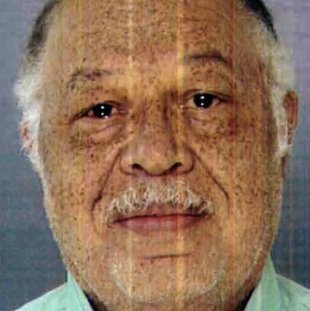


http://www.express.co.uk/news/showbiz/399138/Robert-Downey-Jr-Hollywood-s-first-100million-man