Insider Trading on 9/11: Speculative Trade in “Put Options”. The Financial Facts Laid Bare
There can be no dispute that speculative trade in put options –
where a party bets that a stock will drop abruptly in value – spiked in
the days around September 11, 2001 – even if the US Securities and
Exchange Commission and the 9/11 Commission will not say so. More than a
few people must have had advance warning of the terror attacks, and
they cashed in to the tune of millions of dollars.
Is there any truth in the allegations that informed circles made
substantial profits in the financial markets in connection to the terror
attacks of September 11, 2001, on the United States?
Arguably, the best place to start is by examining put options, which
occurred around Tuesday, September 11, 2001, to an abnormal extent, and
at the beginning via software that played a key role: the Prosecutor’s
Management Information System, abbreviated as PROMIS. [i]
PROMIS is a software program that seems to be fitted with almost
„magical“ abilities. Furthermore, it is the subject of a decades-long
dispute between its inventor, Bill Hamilton, and various
people/institutions associated with intelligence agencies, military and
security consultancy firms. [1]
One of the „magical“ capabilities of PROMIS, one has to assume, is
that it is equipped with artificial intelligence and was apparently from
the outset “able to simultaneously read and integrate any number of
different computer programs or databases, regardless of the language in
which the original programs had been written or the operating systems
and platforms on which that database was then currently installed.“ [2]
And then it becomes really interesting:
What would you do if you possessed software that could
think, understand every major language in the world, that provided
peep-holes into everyone else’s computer „dressing rooms“, that could
insert data into computers without people’s knowledge, that could fill
in blanks beyond human reasoning, and also predict what people do –
before they did it? You would probably use it, wouldn’t you? [3]
Granted, these capabilities sound hardly believable. In fact, the
whole story of PROMIS, which Mike Ruppert develops in the course of his
book Crossing the Rubicon in all its bizarre facets and turns,
seems as if someone had developed a novel in the style of Philip K Dick
and William Gibson. However, what Ruppert has collected about PROMIS is
based on reputable sources as well as on results of personal
investigations, which await a jury to take a first critical look at.
 This seems all the more urgent if you add to the PROMIS capabilities „that
it was a given that PROMIS was used for a wide variety of purposes by
intelligence agencies, including the real-time monitoring of stock
transactions on all the world´s major financial markets“. [4]
We are therefore dealing with a software that
This seems all the more urgent if you add to the PROMIS capabilities „that
it was a given that PROMIS was used for a wide variety of purposes by
intelligence agencies, including the real-time monitoring of stock
transactions on all the world´s major financial markets“. [4]
We are therefore dealing with a software that
a) Infiltrates computer and communication systems without being noticed.
b) Can manipulate data.
c) Is capable to track the global stock market trade in real time.
Point c is relevant to all that happened in connection with the never
completely cleared up transactions that occurred just before September
11, [5] and of which the former chairman of the Deutsche Bundesbank
Ernst Weltke said „could not have been planned and carried out without a
certain knowledge“. [6]
I specifically asked financial journalist Max Keiser, who for years
had worked on Wall Street as a stock and options trader, about the put
option trades. Keiser pointed out in this context that he „had spoken
with many brokers in the towers of the World Trade Center around that
time. “I heard firsthand about the airline put trade from brokers at
Cantor Fitzgerald days before.“ He then talked with me about an
explosive issue, on which Ruppert elaborated in detail in Crossing the Rubicon.
Max Keiser: There are many
aspects concerning these option purchases that have not been disclosed
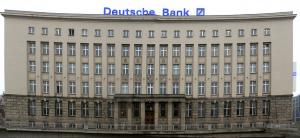
yet. I also worked at Alex Brown & Sons (ABS). Deutsche Bank bought
Alex Brown & Sons in 1999. When the attacks occurred, ABS was owned
by Deutsche Bank. An important person at ABS was Buzzy Krongard. I have
met him several times at the offices in Baltimore. Krongard had
transferred to become executive director at the CIA. The option
purchases, in which ABS was involved, occurred in the offices of ABS in
Baltimore. The noise which occurred between Baltimore, New York City and
Langley was interesting, as you can imagine, to say the least.
Under consideration here is the fact that Alex Brown, a subsidiary of
Deutsche Bank (where many of the alleged 9/11 hijackers handled their
banking transactions – for example Mohammed Atta) traded massive put
options purchases on United Airlines Company UAL through the Chicago
Board Option Exchange (CBOE) – „to the embarrassment of investigators“,
as British newspaper The Independent reported. [7]

Michael Ruppert
On September 12, the chairman of the board of Deutsche Bank Alex
Brown, Mayo A Shattuck III, suddenly and quietly renounced his post,
although he still had a three-year contract with an annual salary of
several million US dollars. One could perceive that as somehow strange.
A few weeks later, the press spokesperson of the Central Intelligence
Agency (CIA) at that time, Tom Crispell, declined all comments, when he
was contacted for a report for Ruppert´s website From the Wilderness,
and had being asked „whether the Treasury Department or FBI [Federal
Bureau of Investigation] had questioned CIA executive director and
former Deutsche Bank-Alex Brown CEO [chief executive officer], A B
‚Buzzy‘ Krongard, about CIA monitoring of financial markets using PROMIS
and his former position as overseer of Brown’s ‚private client‘
relations.“ [8]
Just before he was recruited personally by former CIA chief George
Tenet for the CIA, Krongard supervised mainly private client banking at
Alex Brown. [9]
In any case, after 9/11 on the first trading day, when the US stock
markets were open again, the stock price of UAL declined by 43%. (The
four aircraft hijacked on September 11 were American Airlines Flight 11,
American Airlines Flight 77 and UAL flights 175 and 93.)
With his background as a former options trader, Keiser explained an important issue to me in that regard.
Max Keiser: Put options are, if
they are employed in a speculative trade, basically bets that stock
prices will drop abruptly. The purchaser, who enters a time-specific
contract with a seller, does not have to own the stock at the time when
the contract is purchased.
Related to the issue of insider trading via (put or call) options
there is also a noteworthy definition by the Swiss economists Remo
Crameri, Marc Chesney and Loriano Mancini, notably that an option trade
may be „identified as informed“ – but is not yet (legally) proven –
„when it is characterized by an unusual large increment in open interest
and volume, induces large gains, and is not hedged in the stock
market“. [10]
 Open
interest describes contracts which have not been settled (been
exercised) by the end of the trading session, but are still open. Not
hedged in the stock market means that the buyer of a (put or call)
option holds no shares of the underlying asset, by which he might be
able to mitigate or compensate losses if his trade doesn’t work out, or
phrased differently: one does not hedge, because it is unnecessary,
since one knows that the bet is one, pardon, „dead sure thing.“ (In this
respect it is thus not really a bet, because the result is not
uncertain, but a foregone conclusion.)
In this case, the vehicle of the calculation was „ridiculously cheap
put options which give the holder the ‘right‘ for a period of time to
sell certain shares at a price which is far below the current market
price – which is a highly risky bet, because you lose money if at
maturity the market price is still higher than the price agreed in the
option. However, when these shares fell much deeper after the terrorist
attacks, these options multiplied their value several hundred times
because by now the selling price specified in the option was much higher
than the market price. These risky games with short options are a sure
indication for investors who knew that within a few days something would
happen that would drastically reduce the market price of those shares.“
[11]
Software such as PROMIS in turn is used with the precise intent to
monitor the stock markets in real time to track price movements that
appear suspicious. Therefore, the US intelligence services must have
received clear warnings from the singular, never before sighted
transactions prior to 9/11.
Of great importance with regard to the track, which should lead to
the perpetrators if you were seriously contemplating to go after them,
is this:
Open
interest describes contracts which have not been settled (been
exercised) by the end of the trading session, but are still open. Not
hedged in the stock market means that the buyer of a (put or call)
option holds no shares of the underlying asset, by which he might be
able to mitigate or compensate losses if his trade doesn’t work out, or
phrased differently: one does not hedge, because it is unnecessary,
since one knows that the bet is one, pardon, „dead sure thing.“ (In this
respect it is thus not really a bet, because the result is not
uncertain, but a foregone conclusion.)
In this case, the vehicle of the calculation was „ridiculously cheap
put options which give the holder the ‘right‘ for a period of time to
sell certain shares at a price which is far below the current market
price – which is a highly risky bet, because you lose money if at
maturity the market price is still higher than the price agreed in the
option. However, when these shares fell much deeper after the terrorist
attacks, these options multiplied their value several hundred times
because by now the selling price specified in the option was much higher
than the market price. These risky games with short options are a sure
indication for investors who knew that within a few days something would
happen that would drastically reduce the market price of those shares.“
[11]
Software such as PROMIS in turn is used with the precise intent to
monitor the stock markets in real time to track price movements that
appear suspicious. Therefore, the US intelligence services must have
received clear warnings from the singular, never before sighted
transactions prior to 9/11.
Of great importance with regard to the track, which should lead to
the perpetrators if you were seriously contemplating to go after them,
is this:
Max Keiser: The Options
Clearing Corporation has a duty to handle the transactions, and does so
rather anonymously – whereas the bank that executes the transaction as a
broker can determine the identity of both parties.
But that may have hardly ever been the intention of the regulatory
authorities when the track led to, amongst others, Alvin Bernard „Buzzy“
Krongard, Alex Brown & Sons and the CIA. Ruppert, however,
describes this case in Crossing the Rubicon in full length as far as possible. [12]
In addition, there are also ways and means for insiders to veil their tracks. In order to be less obvious,
„the insiders could trade small numbers of contracts.
These could be traded under multiple accounts to avoid drawing attention
to large trading volumes going through one single large account. They
could also trade small volumes in each contract but trade more contracts
to avoid drawing attention. As open interest increases, non-insiders
may detect a perceived signal and increase their trading activity.
Insiders can then come back to enter into more transactions based on a
seemingly significant trade signal from the market. In this regard, it
would be difficult for the CBOE to ferret out the insiders from the
non-insiders, because both are trading heavily.“ [13]
The matter which needs clarification here is generally judged by Keiser as follows:
Max Keiser: My thought is that
many (not all) of those who died on 9/11 were financial mercenaries –
and we should feel the same about them as we feel about all mercenaries
who get killed. The tragedy is that these companies mixed civilians with
mercenaries, and that they were also killed. So have companies on Wall
Street used civilians as human shields maybe?
According to a report by Bloomberg published in early October 2001,
the US Securities and Exchange Commission (SEC) began a probe into
certain stock market transactions around 9/11 that included 38
companies, among them: American Airlines, United Airlines, Continental
Airlines, Northwest Airlines, Southwest Airlines, Boeing, Lockheed
Martin Corp., American Express Corp., American International Group, AXA
SA, Bank of America Corp., Bank of New York Corp., Bear Stearns,
Citigroup, Lehman Brothers Holdings Inc., Morgan Stanley, General Motors
and Raytheon. [14]
So far, so good. In the same month, however, the San Francisco
Chronicle newspaper reported that the SEC took the unprecedented step to
deputize hundreds, if not even thousands of key stakeholders in the
private sector for their investigation. In a statement that was sent to
almost all listed companies in the US, the SEC asked the addressed
companies to assign senior staff for the investigation, who would be
aware of „the sensitive nature“ of the case and could be relied on to
„exercise appropriate discretion“. [15]
In essence, it was about controlling information, not about provision
and disclosure of facts. Such a course of action involves compromising
consequences. Ruppert:
What happens when you deputize someone in a national
security or criminal investigation is that you make it illegal for them
to disclose publicly what they know. Smart move. In effect, they become
government agents and are controlled by government regulations rather
than their own conscience. In fact, they can be thrown into jail without
a hearing if they talk publicly. I have seen this implied threat time
after time with federal investigators, intelligence agents, and even
members of United States Congress who are bound so tightly by secrecy
oaths and agreements that they are not even able to disclose criminal
activities inside the government for fear of incarceration. [16]
Among the reports about suspected insider trading which are mentioned in Crossing the Rubicon/From
the Wilderness is a list that was published under the heading „Black
Tuesday: The World’s Largest Insider Trading Scam?“ by the Israeli
Herzliyya International Policy Institute for Counterterrorism on
September 21, 2001:
- Between September 6 and 7, the CBOE saw purchases of 4,744 put
options on United Airlines, but only 396 call options. Assuming that
4,000 of the options were bought by people with advance knowledge of the
imminent attacks, these „insiders“ would have profited by almost $5
million.
- On September 10, 4,516 put options on American Airlines were bought
on the Chicago exchange, compared to only 748 calls. Again, there was no
news at that point to justify this imbalance; again, assuming that
4,000 of these options trades represent „insiders“, they would represent
a gain of about $4 million.
- [The levels of put options purchased above were more than six times higher than normal.]
- No similar trading in other airlines occurred on the Chicago exchange in the days immediately preceding Black Tuesday.
- Morgan Stanley Dean Witter & Co, which occupied 22 floors of the
World Trade Center, saw 2,157 of its October $45 put options bought in
the three trading days before Black Tuesday; this compares to an average
of 27 contracts per day before September 6. Morgan Stanley’s share
price fell from $48.90 to $42.50 in the aftermath of the attacks.
Assuming that 2,000 of these options contracts were bought based upon
knowledge of the approaching attacks, their purchasers could have
profited by at least $1.2 million.
- Merrill Lynch & Co, with headquarters near the Twin Towers, saw
12,215 October $45 put options bought in the four trading days before
the attacks; the previous average volume in those shares had been 252
contracts per day (a 1200% increase). When trading resumed, Merrill’s
shares fell from $46.88 to $41.50; assuming that 11,000 option contracts
were bought by „insiders“, their profit would have been about $5.5
million.
- European regulators are examining trades in Germany’s Munich Re,
Switzerland’s Swiss Re, and AXA of France, all major reinsurers with
exposure to the Black Tuesday disaster. (Note: AXA also owns more than
25% of American Airlines stock, making the attacks a „double whammy“ for
them.) [17]
- Concerning the statements of the former chairman of the Deutsche
Bundesbank Ernst Welteke, their tenor in various press reports put
together is as follows:
German central bank president Ernst Welteke later reports that a
study by his bank indicates, „There are ever clearer signs that there
were activities on international financial markets that must have been
carried out with the necessary expert knowledge,“ not only in shares of
heavily affected industries such as airlines and insurance companies,
but also in gold and oil. [Daily Telegraph, 9/23/2001] His researchers
have found „almost irrefutable proof of insider trading“. [Miami Herald,
9/24/2001] „If you look at movements in markets before and after the
attack, it makes your brow furrow. But it is extremely difficult to
really verify it.“ Nevertheless, he believes that „in one or the other
case it will be possible to pinpoint the source“. [Fox News, 9/22/2001]
Welteke reports „a fundamentally inexplicable rise“ in oil prices before
the attacks [Miami Herald, 9/24/2001] and then a further rise of 13
percent the day after the attacks. Gold rises nonstop for days after the
attacks. [Daily Telegraph, 9/23/2001] [18]
Related to those observations, I sent a request via e-mail to the
press office of the Deutsche Bundesbank on August 1, 2011, from which I
was hoping to learn:
How did the Bundesbank deal with this information?
Did US federal agencies ask to see the study?
With whom did the Bundesbank share this information? And additionally:
- Can you confirm that there is such a study of the Bundesbank
concerning 9/11 insider trading, which was carried out in September
2001?
- If Yes: what is the title?
- If Yes: who were the authors?
- If Yes: has the study ever been made available to the public?
On August 2, I was then informed: „Your mail has been received by us
and is being processed under the number 2011 / 011551.“ Ultimately,
however, the press office of the Deutsche Bundesbank was only available
for an oral explanation on the phone. With this explanation, I then
turned to the press office of the federal financial regulator in
Germany, the Bundesanstalt fur Finanzdienstleistungsaufsicht, BaFin,
with the following e-mail – and that because of obvious reasons:
Yesterday, I sent a request (see end of this e-mail) to the press
office of the Deutsche Bundesbank relating to insider trading connected
to the terrorist attacks on September 11, 2001, and respectively
relating to an alleged study carried by the Deutsche Bundesbank. The
request carries the reference number 2011 / 011551.
The press office or respectively Mr Peter Trautmann was only
available for an oral explanation. I repeat this now, because it is
related to your entity. This will be followed by my further questions.
According to an oral explanation from the press office of the
Deutsche Bundesbank, there has never been a detailed and official study
on insider trading from the Bundesbank. Rather, there has been probably
ad-hoc analysis with corresponding charts of price movements as
briefings for the Bundesbank board. In addition, it would have been the
duty of the Bundesfinanzaufsicht to investigate this matter. The press
office of the Bundesbank was also not willing to give out any written
information, not even after my hint that this alleged study by the
Bundesbank has been floating around the Internet for years without any
contradiction. That was the oral information from the Bundesbank press
office, or respectively from Mr Peter Trautmann.
Now my questions for you:
- Has the BaFin ever investigated the 9/11 insider trading?
- With what result? Have the results been made public?
- Have there not been any grounds for suspicion that would have
justified an investigation, for example as damaged enterprise: Munich
Re, and as buyers of put options of UAL’s United Airlines Company:
Deutsche Bank/Alex Brown?
- Has the Deutsche Bundesbank ever enquired with BaFin what
information they have regarding the 9/11 insider trading – for example
for the creation of ad-hoc analysis for the Bundesbank?
- Have the US federal agencies ever inquired if the BaFin could cooperate with them in an investigation?
Could you reply to me in writing, unlike the Deutsche Bundesbank, please? I would be very grateful for that!
The next day I did indeed receive an e-mail concerning this topic
from Anja Engelland, the press officer of the BaFin in which she
answered my questions as follows:
- Yes, the former Bundesaufsichtsamt fur Wertpapierhandel, BAWe
(federal supervisory for securities trading), has carried out a
comprehensive analysis of the operations.
- As a result, no evidence of insider trading has been found. Their
approach and results have been published by the BAWe or BaFin in the
annual reports for the years 2001 (cf S 26/27) and 2002 (cf p 156 above
first paragraph). Here are the links. [See here and here.]
- See annual reports 2001 and 2002. Put options on United Airlines
were not traded on German stock exchanges (the first EUREX options on US
equities were introduced only after the attacks on 9/11/2001); there
were warrants on UAL and other US stocks, but those traded only in low
volumes.
- I personally do not know about such a request. Furthermore, the Bundesbank itself would have to comment on this.
- BaFin is fundamentally entitled to the exchange of information with
foreign supervisory authorities, like SEC, on the basis of written
agreements, so-called memoranda of understanding (MoU). Regarding
potential inquiries from foreign supervisory authorities, the BaFin can
unfortunately not comment, this would be a matter of respective
authority. For this I ask for understanding.
Then I wrote another brief note to BaFin, „in order to prevent any
misunderstanding: your answers refers, as far as I understand, solely to
the financial markets in Germany and Frankfurt, or not?“ The reply from
BaFin:
The answers refer to the German financial market as a
whole and not only on the Frankfurt Stock Exchange. In terms of the
assessment of foreign financial markets, the relevant authorities are
the competent points of contact.
In my inquiries, I mentioned, among other things, a scientific study
by US economist Allen M Poteshman from the University of Illinois at
Urbana-Champaign, which had been carried out in 2006 regarding the put
option trading around 9/11 related to the two airlines involved, United
Airlines and American Airlines. Poteshman came to this conclusion:
„Examination of the option trading leading up to
September 11 reveals that there was an unusually high level of put
buying. This finding is consistent with informed investors having traded
options in advance of the attacks.“ [19]
Another scientific study was conducted by the economists Wong
Wing-Keung (Hong Kong Baptist University, HKBU), Howard E Thompson
(University of Wisconsin) and Kweehong Teh (National University of
Singapore, NUS), whose findings were published in April 2010 under the
title „Was there Abnormal Trading in the S&P 500 Index Options Prior
to the September 11 Attacks?“
Motivated by the fact that there had been many media reports about
possible insider trading prior to 9/11 in the option markets, the
authors looked in this study at the Standard & Poor’s 500 Index (SPX
Index Options), in particular with a focus on strategies emanating from
a bear market, namely those under the labels „Put Purchase,“ „Put Bear
Spread“ and „Naked ITM Call Write“, as each of these are in accordance
with the assumption that one would be betting on a general bear market
if one wanted to profit in anticipation of the 9/11 event. [20]
Along these lines, the authors refer to an article which Erin E
Arvedlund published on October 8, 2001, in Barron’s, the heading of
which suggested precisely that thesis:
„Follow the money: Terror plotters could have benefited
more from the fall of the entire market than from individual stocks.“
[21]
Basically, Wong, Thompson and Teh came to the conclusion „that our
findings show that there was a significant abnormal increase in the
trading volume in the option market just before the 9-11 attacks in
contrast with the absence of abnormal trading volume far before the
attacks“.
More specifically, they stated, „Our findings from the
out-of-the-money (OTM), at-the-money (ATM) and in-the-money (ITM) SPX
index put options and ITM SPX index call options lead us to reject the
null hypotheses that there was no abnormal trading in these contracts
before September 11th.“
Instead, they found evidence for „abnormal trading volume in
OTM, ATM and ITM SPX index put options“ for September 2001, and also in
„ITM-SPX index call options“ for the same month. „In addition, we find that there was evidence
of abnormal trading in the September 2001 OTM, ATM and ITM SPX index
put options immediately after the 9-11 attacks and before the expiration
date. This suggests that owning a put was a valuable
investment and those who owned them could sell them for a considerable
profit before the expiration date.“
From all of this, they took the position that whilst they couldn’t
definitively prove that insiders were active in the market, „our results
provide credible circumstantial evidence to support the insider trading
claim“. [22]
Disambiguation: „in the money“ means that the circumstances arise on
which the owner of a put option is betting – the market price of the
underlying asset, for example a stock (or in this case an index of
shares), is lower at that moment compared to the price at the time when
the transaction took place. „At the money“ means that the price of the
underlying asset has remained equal or nearly equal. And
„out-of-the-money“ means that the price of the underlying asset has gone
up, so the opposite of what the owner of the put option was betting on
took place. „In the money“: win. „Out of the money“: loss.
There are also ITM, ATM and OTM options both for trading strategies
with put and call options, depending on which kind of risk one would
like to take. For example, according to Wong, Thomson and Teh, the
„Put-Purchase Strategy“ in the case of a downward movement of the
underlying asset „is a cheaper alternative to short-selling of the
underlying asset and it is the simplest way to profit when the price of
the underlying asset is expected to decline“.
The use of the OTM put option compared to the ITM put option,
however, offers „both higher reward and higher risk potentials (…) if
the underlying asset falls substantially in price. However, should the
underlying asset decline only moderately in price, the ITM put often
proves to be the better choice (…) because of the relative price
differential.“
That is why speculators would fare best, if they bought ITM put
options, „unless the speculators would expect a very substantial decline
in the price of the underlying asset.“ [23]
After they calculated such strategies in the light of the available
trading data in the CBOE relating to 9/11, the three economists
ultimately do not accept a possible counter-argument that their results
could be attributed to the fact that the stock markets were generally
falling and that there had already been a negative market outlook.
Finally they pointed out: „More conclusive evidence is needed to prove
definitively that insiders were indeed active in the market. Although we
have discredited the possibility of abnormal volume due to the
declining market, such investigative work would still be a very involved
exercise in view of the multitude of other confounding factors,“ such
as confusing trading strategies, „intentionally employed by the
insiders“ in order to attract less attention. [24]
That would be – and if only to invalidate these scientific results
once and for all – primarily a task for the SEC, the FBI and other
governmental authorities of the United States. However, we will have to
wait for this in vain.
I think that not less worthy of a mention is an article that the
French financial magazine Les Echos published in September 2007 about a
study conducted by two independent economics professors from the
University of Zurich, Marc Chesney and Loriano Mancini. Journalist
Marina Alcaraz summarized the content of the findings in Les Echos with
these words and with these explanations by Professor Chesney, which I
for the first time translated into German (and do now translate from
French into English):
The atypical volumes, which are very rare for specific
stocks lead to the suspicion of insider trading.“ Six years after the
attacks on the World Trade Center this is the disturbing results of a
recent study by Marc Chesney and Loriano Mancini, professors at the
University of Zurich. The authors, one of them a specialist in
derivative products, the other a specialist in econometrics, worked on
the sales options that were used to speculate on the decline in the
prices of 20 large American companies, particularly in the aerospace and
financial sector.
Their analysis refers to the execution of transactions between the
6th and 10th of September 2001 compared to the average volumes, which
were collected over a long period (10 years for most of the companies).
In addition, the two specialists calculated the probability that
different options within the same sector in significant volumes would be
traded within a few days. „We have tried to see if the movements of
specific stocks shortly before the attacks were normal.“ We show that
the movements for certain companies such as American Airlines, United
Airlines, Merrill Lynch, Bank of America, Citigroup, Marsh &
McLehnan are rare from a statistical point of view, especially when
compared to the quantities that have been observed for other assets like
Coca-Cola or HP,“ explains Marc Chesney, a former Professor at the HEC
and co-author of Blanchiment et financement du terrorisme (Money laundering and financing of terrorism),
published by Editions Ellipses. „For example 1,535 put option contracts
on American Airlines with a strike of $30 and expiry in October 2001
were traded on September 10th, in contrast to a daily average of around
24 contracts over the previous three weeks. The fact that the market was
currently in a bear market is not sufficient to explain these
surprising volumes.
The authors also examined the profitability of the put options and
trades for an investor who acquired such a product between the 6th and
10th September. „For specific titles, the profits were enormous.“ „For
example, the investors who acquired put options on Citigroup with an
expiry in October 2001 could have made more than $15 million profit,“ he
said. On the basis of the connection of data between volumes and
profitability, the two authors conclude that „the probability that
crimes by Insiders (Insider trading) occurred , is very strong in the
cases of American Airlines, United Airlines, Merrill Lynch, Bank of
America, Citigroup and JP Morgan. „There is no legal evidence, but these
are the results of statistical methods, confirming the signs of
irregularities.“ [25]
As Alcaraz continued to state for Les Echos, the study by
Chesney/Mancini about possible insider trading related to the 9/11
attacks was not the first of its kind; but it was in sharp contrast to
the findings of the US Securities and Exchange Commission SEC and the
9/11 Commission, since they classified the insider trading as negligible
– the trades in question had no connection to 9/11 and had
„consistently proved innocuous“.
Different in the assessment is also the scientific work that Chesney
and Mancini had published together with Remo Crameri in April 2010 at
the University of Zurich, „Detecting Informed Trading Activities in the
option markets.“ In the segment that is dedicated to the terror attacks
of 9/11, the three authors come to the conclusion, that there had been
notable insider trading shortly before the terrorist attacks on
September 11 that was based on prior knowledge.
Without elaborating on the detailed explanation of the mathematical
and statistical method, which the scientific trio applied during the
examination of the put option transactions on the CBOE for the period
between 1996 and 2006, I summarize some of their significant
conclusions.
Companies like American Airlines, United Airlines,
Boeing” – the latter company is a contractor of the two airlines as
aircraft manufacturer – „and to a lesser extent, Delta Air Lines and KLM
seem to have been targets for informed trading activities in the period
leading up to the attacks. The number of new put options issued during
that period is statistically high and the total gains realized by
exercising these options amount to more than $16 million. These findings
support the results by Poteshman (2006) who also reports unusual
activities in the option market before the terrorist attacks.[26]
In the banking sector, Chesney, Crameri and Mancini found five
informed trading activities in connection to 9/11. „For example the
number of new put options with underlying stock in Bank of America,
Citigroup, JP Morgan and Merrill Lynch issued in the days before the
terrorist attacks was at an unusually high level. The realized gains
from such trading strategies are around $11 million. [27]
For both areas, the aviation and the banking sector, the authors
state that „in nearly all cases the hypothesis“, that the put options
were not hedged, cannot be rejected. [28]
Regarding the options traded on EUREX, one of the world’s largest
trading places for derivatives, which in 1998 resulted from the merger
between the German and Swiss futures exchanges DTB and SOFFEX, Chesney,
Mancini and Crameri focused on two reinsurance companies, which incurred
costs in terms of billions of dollars in connection with the World
Trade Center catastrophe: Munich Re and Swiss Re.
On the basis of EUREX trading data provided by Deutsche Bank, the
three scientists detected one informed option trade related to Munich
Re, which occurred on August 30, 2001. The authors write:
The detected put option with underlying Munich Re matured
at the end of September 2001 and had a strike of € 320 (the underlying
asset was traded at € 300, 86 on August 30th). That option shows a large
increment in open interest of 996 contracts (at 92.2% quintile of its
two-year empirical distribution) on August 30th.
Its price on that day was € 10, 22. … On the day of the terrorist
attacks, the underlying stock lost more than 15% (the closing price on
September 10th was € 261, 88 and on September 11th € 220, 53) and the
option price jumped to € 89, 56, corresponding to a return of 776% in
eight trading days. … The gains … related to the exercise of the 996 new
put options issued on August 30th correspond to more than 3.4 million.“
Similar is true, according to the authors, for one informed option
trade on Swiss Re on August 20, 2001 with „a return of 4,050% in three
trading weeks“, or „more than € 8 million. [29]
In a new version of their study that was published on September 7,
2011, the authors stuck to their findings from April 2010. They added
the emphasis that in no way the profits gained with the put options to
which they point could have been achieved due to sheer fortunate
coincidence, but that in fact they were based on prior knowledge which
had been exploited. [30]
With those results in terms of what went on at the EUREX according to
Chesney, Crameri and Mancini, I again addressed the BaFin, which had
written to me that for the financial centers in Germany insider trading
around 9/11 could be excluded, and asked:
How does this go with your information that the federal supervisory
for securities trading (BAWe) could in its comprehensive analysis not
find evidence for insider trading? Do the authors, so to speak, see
ghosts with no good reason?
In addition, I stated:
If it is true what Chesney, Crameri and Mancini write, or
if you at the BaFin cannot (ad hoc) refute it, would this then cause
the BaFin to thoroughly investigate the matter again? If the findings of
Chesney, Crameri, and Mancini were true, this would constitute illegal
transactions relating to a capital crime, which has no status of
limitations, or not?
In case that a need for clarification had arisen at the BaFin, I
added Professor Chesney to my e-mail-inquiry in the „carbon copy“ –
address field, as because these were the results of his scientific work.
The response that I received from BaFin employee Dominika Kula was as follows:
As I already told you in my e-mail, the former federal
supervisory for securities trading (BAWe) carried out a comprehensive
analysis of the operations in 2001. As a result, no evidence of insider
trading has been found. For clarification purposes, I wish to point out
that violations of statutory provisions of securities or criminal law
can never be excluded with absolute certainty. In order to pursue and
prosecute such matters concrete evidence of an unlawful act is required …
Such evidence does not exist here.
With regard to the sources you mentioned, I ask for understanding
that I can neither comment on scientific analyses, nor on reviews by
third parties.
Regarding the statutes of limitations for offences relating to the
violation insider trading regulations trading I can give you the
following information: A violation of the law to prohibit insider
trading is punishable with imprisonment up to 5 years or with fines. The
statutes of limitations applied for crimes carrying this kind of
penalty (section 78 paragraph 3 No. 4 Penal Code) are five years. These
limitations are described in the statutes of limitations (§§ 78 et seq.)
(Criminal Code).
In addition, I turned to the EUREX with three questions:
- How do you as EUREX comment on the findings of Messrs Chesney, Mancini and Crameri?
- Did you at EUREX perceive the particular trading in Munich Re and Swiss Re it in any way as strange?
- Have domestic (eg BAWe and BaFin) or foreign (such as the U.S.
Securities and Exchange Commission) authorities ever inquired if there
may have been evidence of insider trading via the EUREX in connection
with the 9/11 attacks?
I subsequently received the following response from Heiner Seidel,
the deputy head of the press office of the Deutsche Borse in Frankfurt.
We do not give you a public written response on behalf of
the Deutsche Börse or Eurex regarding the topics of your inquiry. This
is for the following reason: the trade monitoring agency (HüSt) is part
of the Exchange, but it is independent and autonomous. Their
investigations are confidential and are carried out in close
coordination with the BaFin. They are never public, a request which HüSt
is therefore not meaningful.
I leave it to the reader to draw his/her conclusions from these two
replies from the press offices of BaFin and Deutsche Borse. Regarding
the topic of option trades related to 9/11, I once more talked with
Swiss historian Dr Daniele Ganser („Operation Gladio“), by asking him
this time about the importance of those put options, which were traded
shortly before the attacks of September 11, 2001.
Daniele Ganser: This is an
important point. This is about demonstrating that there was insider
trading on the international stock exchanges before 11 September.
Specifically put options, ie speculation on falling stock prices were
traded. Among the affected stocks were United Airlines and American
Airlines, the two airlines involved in the attacks.
A colleague of mine, Marc Chesney, professor at the Institute of
banking at the University of Zurich, has examined these put options. You
first of all have to check if there may have been international
speculation that the aviation industry would be experiencing a weak
period and whether accordingly also put options on Singapore Airlines,
Lufthansa and Swiss were bought. This was not the case.
Very significant put option trades were only transacted for these two
airlines involved in the attacks. Secondly, you must examine the ratio
of put options to call options and look if they had also been purchased
to a similarly significant extent that would constitute speculations on
rising stock prices. And that is also not the case. There were only
significant put options and only significant transactions for United
Airlines and American Airlines.
Now you need to look further in order to see who actually bought the
put options, because that would be the insider who made millions on
September 11. Most people are unaware that money was also earned with
the attacks on September 11. The Security and Exchange Commission, SEC,
the Securities and Exchange Commission of the United States, however,
does not publish the information on who bought the put options, because
you can do this anonymously. It is disturbing that this data is not made
public.
What you have is the 9/11 Commission report, and here it is pointed
out , that there has been insider trading, but that this insider trading
cannot be traced to [al-Qaeda leader] Osama bin Laden, which means that
it is highly unlikely that it had been Bin Laden.
Question: If this is not pursued any further, what does it mean?
Daniele Ganser: This means that the
investigation of the terrorist attacks was incomplete, and always at the
point where there are contradictions to the SURPRISE story, no further
investigations are made. It looks very much as if one wants to examine
only one story, the investigation is therefore one-sided. But this does
not only apply to the put options. [31]
Interestingly enough, when Dr Ganser points out in his reply that
this important data is not published, it is actually only half of the
truth. Why? The answer is very simple and odd at the same time: David
Callahan, the editor of the US magazine SmartCEO, filed a request to the
SEC about the put options which occurred prior to September 11 within
the framework of the Freedom of Information Act (FOIA). The SEC informed
Callahan in its reply of December 23, 2009 under the number „09
07659-FOIA“ as follows:
This letter is in response to your request seeking access to and
copies of the documentary evidence referred to in footnote 130 of
Chapter 5 of the September 11 (9/11) Commission Report… We have been
advised that the potentially responsive records have been destroyed.
[32]
Therefore, we will unfortunately never know exactly how the SEC and
the 9/11 Commission came to their conclusions regarding the 9/11 put
options trading for their final report, because relevant documents were
not only held back, but also destroyed – and that in spite of an
agreement between the SEC and the National Archive of the United States,
in which the SEC has agreed to keep all records for at least 25 years.
[33]
The 9/11 Commission report wrote this in footnote 130 of Chapter 5, which briefly focuses on the alleged insider trading:
Highly publicized allegations of insider trading in
advance of 9 / 11 generally rest on reports of unusual pre-9/11 trading
activity in companies whose stock plummeted after the attacks. Some
unusual trading did in fact occur, but each such trade proved to have an
innocuous explanation. For example, the volume of put options –
investments that pay off only when a stock drops in price – surged in
the parent companies of United Airlines on September 6 and American
Airlines on September 10 – highly suspicious trading on its face.
Yet, further investigation has revealed that the trading had no
connection with 9/11. A single US-based institutional investor with no
conceivable ties to al-Qaeda purchased 95 percent of the UAL puts on
September 6 as part of a trading strategy that also included buying
115,000 shares of American on September 10. Similarly, much of the
seemingly suspicious trading in American on September 10 was traced to a
specific US-based options trading newsletter, faxed to its subscribers
on Sunday, September 9, which recommended these trades.
These examples typify the evidence examined by the investigation. The
SEC and the FBI, aided by other agencies and the securities industry,
devoted enormous resources to investigating this issue, including
securing the cooperation of many foreign governments. These
investigators have found that the apparently suspicious consistently
proved innocuous. (Joseph Cella interview (Sept 16, 2003; May 7, 2004;
May 10-11, 2004); FBI briefing (Aug 15, 2003); SEC memo, Division of
Enforcement to SEC Chair and Commissioners, „Pre-September 11, 2001
Trading Review,“ May 15, 2002; Ken Breen interview (Apr. 23, 2004); Ed
G. interview (Feb. 3, 2004).
The author Mark H Gaffney commented on this finding of “innocuousness”:
Notice … the commission makes no mention in its footnote
of the 36 other companies identified by the SEC in its insider trading
probe. What about the pre-9/11 surge in call options for Raytheon, for
instance, or the spike in put options for the behemoth Morgan Stanley,
which had offices in WTC 2? The 9/11 Commission Report offers not one
word of explanation about any of this. The truth, we must conclude, is
to be found between the lines in the report’s conspicuous avoidance of
the lion’s share of the insider trading issue.
Indeed, if the trading was truly „innocuous“, as the report states,
then why did the SEC muzzle potential whistleblowers by deputizing
everyone involved with its investigation? The likely answer is that so
many players on Wall Street were involved that the SEC could not risk an
open process, for fear of exposing the unthinkable. This would explain
why the SEC limited the flow of information to those with a „need to
know“, which, of course, means that very few participants in the SEC
investigation had the full picture.
It would also explain why the SEC ultimately named no names. All of
which hints at the true and frightening extent of criminal activity on
Wall Street in the days and hours before 9/11. The SEC was like a
surgeon who opens a patient on the operating room table to remove a
tumor, only to sew him back up again after finding that the cancer has
metastasized through the system.
At an early stage of its investigation, perhaps before SEC officials
were fully aware of the implications, the SEC did recommend that the FBI
investigate two suspicious transactions. We know about this thanks to a
9/11 Commission memorandum declassified in May 2009 which summarizes an
August 2003 meeting at which FBI agents briefed the commission on the
insider trading issue. The document indicates that the SEC passed the
information about the suspicious trading to the FBI on September 21,
2001, just ten days after the 9/11 attacks.
Although the names in both cases are censored from the declassified
document, thanks to some nice detective work by Kevin Ryan we know whom
(in one case) the SEC was referring to. The identity of the suspicious
trader is a stunner that should have become prime-time news on every
network, world-wide. Kevin Ryan was able to fill in the blanks because,
fortunately, the censor left enough details in the document to identify
the suspicious party who, as it turns out, was none other than Wirt
Walker III, a distant cousin to then-president G W Bush.
Several days before 9/11, Walker and his wife Sally purchased 56,000
shares of stock in Stratesec, one of the companies that provided
security at the World Trade Center up until the day of the attacks.
Notably, Stratesec also provided security at Dulles International
Airport, where AA 77 took off on 9/11, and also security for United
Airlines, which owned two of the other three allegedly hijacked
aircraft. At the time, Walker was a director of Stratesec. Amazingly,
Bush’s brother Marvin was also on the board.
Walker’s investment paid off handsomely, gaining $50,000 in value in a
matter of a few days. Given the links to the World Trade Center and the
Bush family, the SEC lead should have sparked an intensive FBI
investigation. Yet, incredibly, in a mind-boggling example of criminal
malfeasance, the FBI concluded that because Walker and his wife had „no
ties to terrorism … there was no reason to pursue the investigation.“
The FBI did not conduct a single interview. [34]
For this translation, I asked Kevin Ryan via e-mail if he could send
me a link for his „nice detective work“. Ryan, who’s in my humble
opinion one of roughly 10 people around the world who have to be taken
seriously regarding 9/11, replied:
You are referring to my paper „Evidence for Informed Trading on the Attacks of September 11.“ [See here.] The following two references from the paper are relevant to what you are describing. [2] 9/11 Commission memorandum entitled „FBI Briefing on Trading“, prepared by Doug Greenburg, 18 August 2003, [22].
The 9/11 Commission memorandum that summarized the FBI investigations
refers to the traders involved in the Stratesec purchase. From the
references in the document, we can make out that the two people had the
same last name and were related. This fits the description of Wirt and
Sally Walker, who were known to be stock holders in Stratesec.
Additionally, one (Wirt) was a director at the company, a director at a
publicly traded company in Oklahoma (Aviation General), and chairman of
an investment firm in Washington, DC (Kuwam Corp). Here are two other
recent articles on Stratesec and its operators. [See here and here.]
The stock of Stratesec, I should add by myself, increased in value
from $0.75 per share on September 11 to $1.49 per share when the market
re-opened on September 17. As a firm that provides technology-based
security for large commercial and government facilities, Stratesec
benefited from the soaring demand of security companies right after
9/11.
It is also remarkable what Ryan wrote to me regarding a company on
which he did some research, too: Viisage Corp, another high-tech
security firm.
Kevin Ryan: In late 2005,
George Tenet became a director for Viisage, which had been flagged by
the SEC for 9/11 trading but never investigated. Viisage was led by
Roger LaPenta, formerly of Lockheed.
Seven months later, in 2006, FBI director Louis Freeh also joined the
Viisage board. One might think that when both the CIA director (on
9/11) and the FBI director (from 1993 to June 2001) joined a company
suspected of 9/11 insider trading, we might want to go back and actually
investigate the SEC’s flagging of that company. But, of course, that
was not the case. In 2009, „Bandar Bush“ hired Freeh as his personal
attorney.
Freeh is nowadays the bankruptcy trustee of the alleged market
manipulator MF Global. And about his client, the former Saudi ambassador
Prince Bandar, I should add that we know for sure that he bankrolled
indirectly via his wife two of the alleged would-be 9/11 hijackers,
Khalid Al-Mihdhar and Nawaf Al-Hazmi. [35]
But let’s get back to the subject of destruction. On September 11,
not only human life, aircraft and buildings were destroyed in New York
City, but also data on computers and in archives. For example, several
federal agencies occupied space in Building 7 of the World Trade Center,
including the Securities and Exchange Commission on floors 11 to 13.
Those and other data could have given information about the alleged
9/11 insider trading (though it seems to be very unlikely that no backup
existed elsewhere independent of the local computer systems). In fact,
some technology companies were commissioned to recover damaged hard
disks, which had been recovered from the debris and dust of Ground Zero.
One of these companies was the English company group Convar, more
precisely: their data rescue center in the German city Pirmasens. Erik
Kirschbaum from the news agency Reuters reported in December 2001 that
Convar had at that time successfully restored information from 32
computers, supporting „suspicions that some of the 911 transactions were
illegal“.
“The suspicion is that inside information about the
attack was used to send financial transaction commands and
authorizations in the belief that amid all the chaos the criminals would
have, at the very least, a good head start,‘ says Convar director Peter
Henschel.”[36] Convar received the costly orders – according to
Kirschbaum´s report the companies had to pay between $20,000 and $30,000
per rescued computer – in particular from credit card companies,
because: “There was a sharp rise in credit card transactions moving
through some computer systems at the WTC shortly before the planes hit
the twin towers. This could be a criminal enterprise – in which case,
did they get advance warning? Or was it only a coincidence that more
than $100 million was rushed through the computers as the disaster
unfolded?”[37]
The companies for which Convar was active cooperated with the FBI. If
the data were reconstructed they should have been passed on to the FBI,
and the FBI, according to its statutory mandate, should have initiated
further investigation based on the data to find out who carried out
these transactions. Henschel was optimistic at the time that the sources
for the transactions would come to light.
Richard Wagner, a Convar employee, told Kirschbaum that „illegal
transfers of more than $100 million might have been made immediately
before and during the disaster. ‚There is a suspicion that some people
had advance knowledge of the approximate time of the plane crashes in
order to move out amounts exceeding $100 million,‘ he says. ‚They
thought that the records of their transactions could not be traced after
the main frames were destroyed‘.“ [38]
Wagner’s observation that there had been „illegal financial
transactions shortly before and during the WTC disaster“ matches an
observation which Ruppert describes in Crossing the Rubicon.
Ruppert was contacted by an employee of Deutsche Bank, who survived the
WTC disaster by leaving the scene when the second aircraft had hit its
target.
According to the employee, about five minutes before the attack the
entire Deutsche Bank computer system had been taken over by something
external that no one in the office recognized and every file was
downloaded at lightning speed to an unknown location. The employee,
afraid for his life, lost many of his friends on September 11, and he
was well aware of the role which the Deutsche Bank subsidiary Alex Brown
had played in insider trading. [39]
I was curious and wanted more information from Convar regarding their
work on the WTC-computer hard drives, but also about the statements
made by Peter Henschel and Richard Wagner. Thus, I contacted the agency
which represents Convar for press matters, with a written request. But
their agency „ars publicandi“ informed me swiftly:
Due to time constraints, we can currently offer you neither
information nor anyone on the part of our client to talk to regarding
this requested topic.
I also approached KrollOntrack, a very interesting competitor of
Convar in writing. Ontrack Data Recovery, which also has subsidiaries in
Germany, was purchased in 2002 by Kroll Inc – „one of the nation’s most
powerful private investigative and security firms, which has
long-standing involvement with executive protection US government
officials including the president. This would require close liaison with
the Secret Service.“ [40]
At the time of the 9/11 attacks, a certain Jerome Hauer was one of
the managing directors at Kroll Inc. He had previously established the
crisis center for the mayor of New York City as director of the Office
of Emergency Management (OEM), which occupied office space on the 23rd
floor of the WTC Building 7. Hauer helped former FBI agent John O’Neill
to get the post of the head of Security Affairs at the WTC, and spent
the night of September 11 with O’Neill in New York before the latter
lost his life on September 11 in the WTC. Hauer was most likely involved
in the planning of „Tripod II“, the war game exercise at the port of
New York City. [41]
Therefore, I found it appealing to uncover some more details of this
aspect, or, more accurately to find out if Ontrack or KrollOntrack had
received an order in 2001 or after to rescue computer hard drives from
the WTC. The answer I received from KrollOntrack said:
Kroll Ontrack was not at the site of the data recovery – the devices
at the Twin Towers have been completely destroyed or vaporized. The firm
Kroll was, however, at that time active in the field of
computer-forensic investigations, securing devices in the surrounding
buildings.
In essence, these two inquiries did not help me at all. If anything, a
further question arose: why did KrollOntrack send me a response, where
it was really obvious that the content did not match the facts? After
all, I had written in my inquiry that Convar had received orders to
restore damaged computer hard drives from the World Trade Center.
I sent a new inquiry, attaching a link for Erik Kirschbaum’s Reuters
article and additional cinematic reports on Convar’s which showed that
some of the WTC disks had not been „completely destroyed or vaporized“. I
stated to KrollOntrack: „Your answer does not seem to match the facts,
when it comes to ‚completely destroyed or vaporized‘. Will you still
stick to your answer?“
KrollOntrack then replied that their previously given assessment constituted „not a statement, but an opinion“.
I do not find this assessment worthless, because it is in line with
the knowledge of the general public and can easily be refuted in
argumentum in contrario by Convar´s activities.
One film report to which I referred to in my second inquiry to
KrollOntrack originated from the German television journal Heute-Journal
broadcast on March 11, 2002, on ZDF, and the other from the Dutch TV
documentary Zembla, broadcast on September 10, 2006.
The ZDF report showed that Convar received the WTC disks from the US
Department of Defense and that Convar had managed until March 2002 to
recover more than 400 hard drives. It also reported that the private
companies that employed Convar had paid between $25,000 and $50,000 per
hard drive. In the TV documentary Zembla, Convar essentially maintained
its position as it had been reported by Erik Kirschbaum in 2001.
Obviously, in connection with 9/11 there has not only been insider
trading via put options, but there is additional evidence that there
have been illegal financial transactions via credit cards through which
more than 100 million US dollars were removed from the WTC computer
systems.
Those occurred shortly before and during the WTC disaster. It remains
unclear what the FBI did later on with the data recovered by Convar. On
the other hand, it may have been not very much, as can be seen from a
memorandum from the 9/11 Commission, which was released in May 2009.
The 9/11 Commission asked the FBI about the use of credit cards for
insider dealing. On the basis of the information provided by the FBI,
the commission came to the conclusion that no such activity occurred
because „the assembled agents expressed no knowledge of the reported
hard-drive recovery effort or the alleged scheme“ – but above all
„everything at the WTC was pulverized to near powder, making it
extremely unlikely that any hard-drives survived“. [42]
The activities of Convar, however, prove the exact opposite.
But it gets even better. According to Zembla, the FBI was directly
involved with the data rescue efforts of Convar. And on top of it, the
broadcast of Heute-Journal reported that Convar worked in that „highly
sensitive“ matter with several federal agencies of the United States
government.
So there have been ample indications for insider trading based on
foreknowledge of the attacks, but there are very few hard facts as
Catherine Austin Fitts, a former managing director and member of the
board of the Wall Street investment bank Dillon, Read & Co, Inc (now
part of UBS), pointed out when I talked with her about this topic.
Ms Fitts, what are your general thoughts related to the alleged 9/11-insider trading?
Catherine Austin Fitts: Well,
I’ve never been able to see concrete evidence that the insider trading
has been proved. There’s a lot of anecdotal information from investment
bankers and people in the investment community that indicate that there
was significant insider trading, particularly in the currency and bond
markets, but again it hasn’t been documented.
I think around situations like 9/11 we’ve seen things that can only
be explained as insider trading. Therefore, it wouldn’t surprise me if
it turns out the allegations are true, because my suspicion is that 9/11
was an extremely profitable covert operation and a lot of the profits
came from the trading. It wouldn’t even surprise me if it turns out that
the Exchange Stabilization Fund traded it and that some of the funding
for the compensation fund for the victims came from the ESF.
Insider trading happens around these kinds of events, but if you
really want to produce evidence of insider trading, you need the
subpoena powers of the SEC, and of course we know that they haven’t
exercised them. If anything, right after 9/11, the government settled a
significant amount of cases I presume because a lot of the documents
were destroyed by the destruction of WTC building number 7, where the
SEC offices and other governmental investigation offices were. [43]
Fitts, who had written a longer essay in 2004 related to this, replied to my question about who had benefited from 9/11:
Catherine Austin Fitts: 9/11
was extraordinarily profitable for Wall Street, they of course got a
kind of „Get Out of Jail Free card“ as I’ve just described. In addition,
the largest broker of government bonds, Cantor Fitzgerald, was
destroyed, and there was a great deal of money missing from the federal
government in the prior four or five years. If you look at the amount of
funds involved, it is hard to come to a conclusion other than massive
securities fraud was involved, so I find it very interesting that this
happened. [44]
A short explanation: Cantor Fitzgerald’s headquarters were located in
the North Tower of the WTC (floors 101-105). On 9/11, the company lost
nearly two-thirds of its entire workforce, more than any other tenant in
the WTC. (Also two other government bonds brokers, Garbon Inter Capital
and Eurobrokers, occupied office space in the WTC towers that were
destroyed.) Back to Fitts and the question: „Cui bono 9/11?“
Catherine Austin Fitts: In
addition, the federal government took the position that they couldn’t
produce audited financial statements after 9/11, because they said the
office at the Pentagon that produced financial statements was destroyed.
Now given what I know of the federal set up of financial statements, I
am skeptical of that statement.
But needless to say, if you take the government on its word, you had
another „Get Out of Jail Free card“ for four trillion dollars and more
missing from the federal government. So if you’re just looking at the
financial fraud angle, there were a lot of parties that benefited from
9/11. But then of course what 9/11 did, it staged the passage of the
Patriot Act and a whole series of laws and regulations that I
collectively refer to as „The Control on Concentration of Cash Flow
Act.“ It gave incredible powers to centralize.
In addition, if you look at monetary policies right after 9/11 – I
remember I was over in the City of London driving around with a money
manager and his phone rang and he answered it on his speaker phone. It
was somebody on Wall Street who he hadn’t talked to since before 9/11,
and he said to him:
“Oh Harry, I am so sorry about what has happened, it must have been
very traumatic.” And the guy said: “Don’t be ridiculous! We were able to
borrow cheap short and invest long, we’re running a huge arbitrage,
we’re making a fortune, this is the most profitable thing that ever
happened to us!” – So you could tell the monetary policies and sort of
insider games were just pumping profits into the bank at that time, so
that was very profitable.
But of course the big money was used for a significant movement of
the military abroad and into Afghanistan and then into Iraq … You could
see that the country was being prepared to go to war. And sure enough,
9/11 was used as a justification to go to war in Afghanistan, to go to
war in Iraq, and commit a huge number of actions, and now much of the
challenges about the budget are the result of extraordinary expenditures
on war including in Afghanistan and Iraq and the costs of moving the
army abroad and engaging in this kind of empire building with ground
military force.
So I think if you ask Cui Bono on 9/11, one of the big categories was
all the people who made money on engineering the popular fear they
needed to engineer these wars. I believe whether it was financial fraud,
engineering new laws or engineering wars, it was a fantastically
profitable covert operation. [45]
In that category of people who benefit from 9/11 are also the arms
manufacturer Raytheon, whose share price gained directly from the 9/11
attacks. Trading of the shares of Raytheon, the producer of Tomahawk and
Patriot missiles (and parent company of E-systems, whose clients
include the National Security Agency and CIA), experienced an abrupt
six-time increase of call option purchases on the day immediately before
September 11. [46]
The outright purchase of call options implies the expectation that a
stock price will rise. In the first week after 9/11, when the New York
Stock Exchange opened again, the value of Raytheon actually shot up
considerably. Looking at the development of the stock price, the
impression is a very weak performance before the attacks – and then,
after resumption of trade, a „gap“ (at substantial volume) upwards. In
other words: just under $25 on September 10, the low in the period
between August 20 to September 28, at $31, 50 on September 17 and up to
$34,80 on September 27, 2001.
With regards to government bonds, buyers of US Treasury securities
with a maturity of five years were also winners. These securities were
traded in an unusually large volume shortly before the attacks. The Wall
Street Journal reported at least in early October 2001 that the Secret
Service had started an investigation into a suspiciously high volume of
US government bond purchases before the attacks. The Wall Street Journal
explained:
Five-year Treasury bills are the best investments in the
event of a global crisis, in particular one like this which has hit the
United States. The papers are treasured because of their safety, and
because they are covered by the US government, and usually their prices
rise if investors shun riskier investments, such as shares. [47]
Adding to this phenomenon, the government issues these bonds that
serve as a basis of money creation for funding a war such as the
immediately declared „war on terror“, engaging the Tomahawks from
Raytheon. And here it may again be useful to have a quick look at the
„cui bono“ relationship:
The US Federal Reserve creates money to fund the war and lends it to
the American government. The American government in turn must pay
interest on the money they borrow from the Central Bank to fund the war.
The greater the war appropriations, the greater the profits are for
bankers. [48]
A multi-layered combination, one could say.
I also talked about the topic of 9/11 insider trading with one of the
world’s leading practitioners at the interface between the
international capital markets, the national security policy of the US as
well as geopolitics, James G Rickards. He gave me some answers in a
personal discussion, which I am allowed to repeat here with his
expressed approval.
Question: Did suspicious trading activities of uncovered put options on futures markets occur shortly before 9/11?
James G Rickards: Well, the trading
documents certainly look suspicious. It is simply a fact that an
unusually high volume of purchases of put-options for the two airlines
occurred over the three trading days before the attacks. This is a mere
fact, no speculation, no guessing around. This is clearly obvious from
the documents of the trading sessions on the derivatives exchanges.
Question: Do you think that the intelligence agencies could have got a warning signal based on this information?
James G Rickards: Theoretically that is
possible, if are you are looking and watching out for this. But there
was far more significant information, which was ignored.
Question: Do you also think that some people with foreknowledge operated speculatively in the option markets?
James G Rickards: Based on the documentation of the trading session it seems that this has been the case, yes.
Let’s sum up a bit at the end. We have, among other things:
- The „nice detective work“ by Kevin Ryan related to Stratesec/Wirt Walker III.
- Some highly inconsistent information vis-a-vis Convar/illegal credit card transactions.
- Scientific papers supporting the allegations that there were indeed
unusual trading activities in the option market before the terrorist
attacks of 9/11, although the 9/11 Commission (based on the
investigation of the SEC and the FBI) ruled that possibility out.
As it became clear that I would publish this article here at Asia
Times Online, I contacted the US Federal Bureau of Investigation via its
press spokesman Paul Bresson in order „to give the FBI the opportunity
to give a public statement with regards to three specific issues“. Those
three specific issues were the ones I have just highlighted. Related to
each of them I’ve asked Mr Bresson/the FBI: „Could you comment on this
for the public, please?“ Up to this moment, Mr Bresson/the FBI did not
respond to my inquiry in any way whatsoever. Does this come as a
surprise?
I’ve also got back in touch with „ars publicandi“, the firm that does
public relations for Convar in Germany. The response said:
„Unfortunately I have to inform you that the status has not changed, and
that Convar considers the issue of 9/11 as dead in general.“
As you have read, the status in August of last year was slightly different.
At the end of this article, I should perhaps mention that this
research ultimately led to negative consequences for me. After I
contacted the FBI, I was informed by the publisher of a German financial
website, for which I conducted interviews for a professional fee (and
had already prepared more work), that no further cooperation was
possible. Now that I will come in one way or another into the focus of
the FBI, any association with me would be undesirable.
Well, you know the rules.
As far as the abnormal option trades around 9/11 are concerned, I
want to give Max Keiser the last word in order to point out the
significance of the story.
Max Keiser: Regardless of who
did it, we can know that more than a few had advance warning – the
trading in the option market makes that clear.
References:
[1] Compare
Michael C. Ruppert: “Crossing the Rubicon: The Decline of the American
Empire at the End of the Age Of Oil“, New Society Publishers, Gabriola
Island, 2004, page 152.
[2] Ibid., page 153.
[3] Ibid., page 154 – 155.
[4] Ibid., page 170.
[5] Ibid., page 238 – 253: “9/11 Insider Trading, or ‘You Didn’t Really See That, Even Though We Saw It.’“
[6] Ibid., page 239.
[7] Compare Chris Blackhurst: “Mystery of terror ‘insider dealers’”, published at The Independent on October 4, 2001 under:
[8] Compare “Profits of Death“, published at From the Wilderness on December 6, 2001 under:
[9] For the
fact, that it was George Tenet who recruited Krongard, compare George
Tenet: “At the Center of the Storm”, Harper Collins, New York, 2007,
page 19.
[10]
Compare Marc Chesney, Remo Crameri and Loriano Mancini: “Detecting
Informed Trading Activities in the Option Markets”, University of
Zurich, April 2010, online at:
[11] Nafeez
M. Ahmed: „Geheimsache 09/11. Hintergründe über den 11. September und
die Logik amerikanischer Machtpolitik“, Goldmann Verlag, Munich, 2004,
page 182. (Translated back into English from German.)
[12] Compare Michael C. Ruppert: “Crossing the Rubicon“, page 244 – 247.
[13]
Wing-Keung Wong, Howard E. Thompson und Kweehong Teh: “Was there
Abnormal Trading in the S&P 500 Index Options Prior to the September
11 Attacks?”, published at Social Sciences Research Network, April
2010, under:
[14]
Compare “Bank of America among 38 stocks in SEC’s attack probe”,
published at Bloomberg News on October 3, 2001, archived under:
[15] Michael C. Ruppert: “Crossing the Rubicon“, page 243.
[16] Ibid.
[17]
“Suppressed Details of Criminal Insider Trading Lead Directly into the
CIA’s Highest Ranks”, published at From the Wilderness on October 9,
2001 under:
[18] Compare “Early September 2001: Almost Irrefutable Proof of Insider Trading in Germany”, published at History Commons under:
[19] Allen
M. Poteshman: “Unusual Option Market Activity and the Terrorist Attacks
of September 11, 2001”, published in The Journal of Business, University
of Chicago Press, 2006, Vol. 79, Edition 4, page 1703-1726.
[20]
Wing-Keung Wong, Howard E. Thompson und Kweehong Teh: “Was there
Abnormal Trading in the S&P 500 Index Options Prior to the September
11 Attacks?”, see endnote 13.
[21] Ibid.
The authors refer to Erin E. Arvedlund: “Follow the money: terrorist
conspirators could have profited more from fall of entire market than
single stocks“, published in Barron’s on October 8, 2001.
[22] Wong, Thompson, Teh: “Was there Abnormal Trading in the S&P 500 Index Options Prior to the September 11 Attacks?”
[23] Ibid.
[24] Ibid.
[25] Marina
Alcaraz: “11 septembre 2001: des volumes inhabituels sur les options
peu avant l’attentat”, published in Les Echos, page 34, September 10,
2001, online at:
[26] Marc
Chesney, Remo Crameri and Loriano Mancini: “Detecting Informed Trading
Activities in the Option Markets”, see endnote 10.
[27] Ibid.
[28] ibid.
[29] Ibid.
[30]
Compare Marc Chesney, Remo Crameri and Loriano Mancini: “Detecting
Informed Trading Activities in the Option Markets”, published at the
University of Zurich on September 7, 2011 under:http://www.bf.uzh.ch/publikationen/pdf/2098.pdf
[31] Vgl.
Lars Schall: “Sapere Aude!“, German Interview with Dr. Daniele Ganser,
published at LarsSchall.com on August 18, 2011 under:
[32] Compare a copy of the letter by the SEC on MaxKeiser.com under:
[33]
Compare related to this agreement Matt Taibbi: “Is the SEC Covering Up
Wall Street Crimes?”, published at Rolling Stone on August 17, 2011
under:
[34] Mark H. Gaffney: “Black 9/11: A Walk on the Dark Side”, published at Foreign Policy Journal on March 2, 2011 under:
[35]
Compare Peter Dale Scott: “Launching the U.S. Terror War: the CIA, 9/11,
Afghanistan, and Central Asia”, The Asia-Pacific Journal, Vol 10, Issue
12, No 3, March 19, 2012, online at:http://japanfocus.org/-Peter_Dale-Scott/3723
[35] Erik
Kirschbaum: “German Firm Probes Last-Minute World Trade Center
Transactions“, published at Reuters on December 19, 2001, online at:
[36] Ibid.
[37] Ibid.
[38] Michael C. Ruppert: “Crossing the Rubicon“, page 244.
[39] Ibid., page 423.
[40] Ibid., page 423 – 426.
[42] Lars
Schall: “9/11 Was A Fantastically Profitable Covert Operation”,
Interview with Catherine Austin Fitts, published at LarsSchall.com on
September 3, 2011 under:
[44] Lars Schall: “9/11 Was A Fantastically Profitable Covert Operation”, see endnote 42.
[45]
Compare “Bank of America among 38 stocks in SEC’s attack probe”, see
endnote 14. “A Raytheon option that makes money if shares are more than
$25 each had 232 options contracts traded on the day before the
attacks, almost six times the total number of trades that had occurred
before that day. A contract represents options on 100 shares. Raytheon
shares soared almost 37 percent to $34.04 during the first week of
post-attack U.S. trading.”
[46]
Compare Barry Grey: “Suspicious trading points to advance knowledge by
big investors of September 11 attacks”, published at World Socialist Web
Site on October 5, 2001 under:
[47] J. S.
Kim: “Inside the Illusory Empire of the Banking Commodity Con Game”,
published at The Underground Investor on October 19, 2010 under:

 Posts
Posts