Sunday, February 24, 2013

Darpa, Venter Launch Assembly Line for Genetic Engineering

http://www.wired.com/dangerroom/2012/05/living-foundries/?utm_source=Contextly&utm_medium=RelatedLinks&utm_campaign=Previous        

Darpa, Venter Launch Assembly Line for Genetic Engineering


Darpa's "Living Foundries" program is looking to "transform biology into an engineering practice." Photo: VA
The military-industrial complex just got a little bit livelier. Quite literally.
That’s because Darpa, the Pentagon’s far-out research arm, has kicked off a program designed to take the conventions of manufacturing and apply them to living cells. Think of it like an assembly line, but one that would churn out modified biological matter — man-made organisms — instead of cars or computer parts.
The program, called “Living Foundries,” was first announced by the agency last year. Now, Darpa’s handed out seven research awards worth $15.5 million to six different companies and institutions. Among them are several Darpa favorites, including the University of Texas at Austin and the California Institute of Technology. Two contracts were also issued to the J. Craig Venter Institute. Dr. Venter is something of a biology superstar: He was among the first scientists to sequence a human genome, and his institute was, in 2010, the first to create a cell with entirely synthetic genome.
“Living Foundries” aspires to turn the slow, messy process of genetic engineering into a streamlined and standardized one. Of course, the field is already a burgeoning one: Scientists have tweaked cells in order to develop renewable petroleum and spider silk that’s tough as steel. And a host of companies are investigating the pharmaceutical and agricultural promise lurking — with some tinkering, of course — inside living cells.
But those breakthroughs, while exciting, have also been time-consuming and expensive. As Darpa notes, even the most cutting-edge synthetic biology projects “often take 7+ years and tens to hundreds of millions of dollars” to complete. Venter’s synthetic cell project, for example, cost an estimated $40 million.
Synthetic biology, as Darpa notes, has the potential to yield “new materials, novel capabilities, fuel and medicines” — everything from fuels to solar cells to vaccines could be produced by engineering different living cells. But the agency isn’t content to wait seven years for each new innovation. In fact, they want the capability for “on-demand production” of whatever bio-product suits the military’s immediate needs.
To do it, Darpa will need to revamp the process of bio-engineering — from the initial design of a new material, to its construction, to its subsequent efficacy evaluation. The starting point, and one that agency-funded researchers will have to create, is a library of “modular genetic parts”: Standardized biological units that can be assembled in different ways — like LEGO — to create different materials.
Once that library is created, the agency wants researchers to come up with a set of “parts, regulators, devices and circuits” that can reliably yield various genetic systems. After that, they’ll also need “test platforms” to quickly evaluate new bio-materials. Think of it as a biological assembly line: Products are designed, pieced together using standardized tools and techniques, and then tested for efficacy.
The process, once established, ought to massively accelerate the pace of bio-engineering — and cut costs. The agency’s asking researchers to “compress the biological design-build-test cycle by at least 10X in both time and cost,” while also “increasing the complexity of systems that can be designed and executed.”
No doubt, Darpa’s making some big asks of the scientists tasked with this research. And not everyone’s convinced they’ll pull it off. “The biology will fight them,” Daniel Drell, a program manager with the U.S. Department of Energy, predicted last year. Which suggests it might be a few years, at least, before Darpa’s bio-creations try to fight us.

Schrödinger's gardenia: Does biology need quantum mechanics?

http://arstechnica.com/science/2012/12/schrodingers-gardenia-does-biology-need-quantum-mechanics/              


Schrödinger's gardenia: Does biology need quantum mechanics?

A review of the processes that might exploit quantum weirdness.

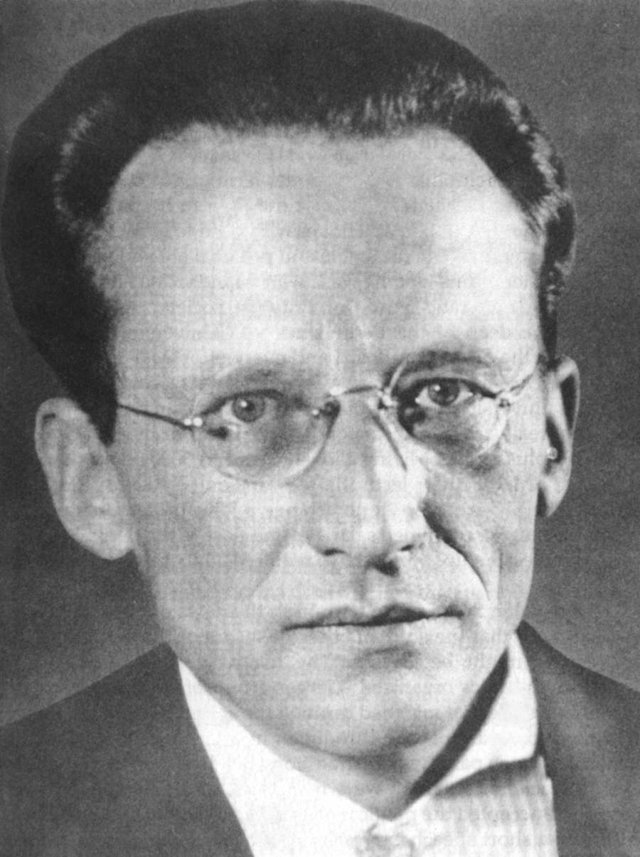
Enlarge / Erwin Schrödinger, who pondered the deep connection between quantum physics and biology. (We're not referring to his famous thought experiment involving cats, or his unconventional living arrangements, either.)
In a real sense, everything is quantum mechanical: matter and interactions are governed by the rules of quantum physics. True, we haven't figured out how gravity fits in yet, but the structure of atoms, nuclei, molecules, and solids—along with the characteristics of light—are best described by quantum mechanics. However, we don't need to take the unique features of quantum mechanics into consideration when modeling many systems, including most in chemistry or biology.
Nevertheless, it is possible life has evolved to exploit some quantum phenomena, including coherence and tunneling. In a new Nature Physics review article, Neill Lambert and colleagues examined the evidence in favor of quantum biological phenomena in photosynthesis, photoreception, magnetic sensation, and even our sense of smell. They conclude that the evidence is ambiguous: compared with other biochemical processes, any uniquely quantum influences appear small.
For something to be considered fully quantum, the researchers used the criterion that it could not be fully described using heuristic models. (The authors refer to such heuristic depictions as "classical." Though that's common, it's also misleading: talking about chemical bonds, electron transport, and the like isn't exactly the language of classical, Newtonian physics.) By contrast, quantum mechanics requires the use of the quantum state, the physical and mathematical description of a system that encodes the probability of the outcomes of measurements.
These states may be superpositions: combinations of mutually exclusive measurement outcomes, such as perpendicular polarizations of light, or spin orientations of electrons in atoms. Quantum information and computing are based on the preparation, manipulation, and entanglement of quantum states, but these generally require special conditions, including far lower temperatures than organisms can withstand. The present paper concerned itself with examining if life can get around those problems, exploiting quantum physics for evolutionary gain.

Photosynthesis

Tracing back along the food web, most of the energy organisms need to survive originates with the Sun. Green plants, cyanobacteria (also known as blue-green algae), and other organisms capture photons and use them to drive the chemical reactions of metabolism. Photosynthesis is incredibly efficient: nearly 100 percent of the energy from the photons absorbed by the photosynthetic machinery is transferred to the chemical reaction center.
A set of chemistry experiments that began in 2007 showed that this efficiency may be due to quantum mechanics. The data demonstrated coherence between the electrons in the various pigment molecules during the transfer process, meaning that the states of the electrons were coordinated and they acted as a single system, even though they resided in different atoms. The clearest results were obtained at 77 Kelvin, but follow-up experiments showed the coherence could also be present at room temperature. Additionally, complicated theoretical models of the energy transport process seem to support the hypothesis that coherence plays a role in photosynthesis.
At the present time, no one has observed quantum coherence in a living organism. Additionally, it's not clear whether the boost that should come from exploiting quantum states would be sufficient to explain the efficiency of photosynthesis. After all, it's one thing to observe this phenomenon under lab conditions, it's another to demonstrate it in a living organism, and yet another to show that quantum coherence is the reason for the remarkable efficiency. Finally, as always in evolution, it's important to remember that a particular feature may be adaptive but may have evolved for other reasons: perhaps efficient photosynthesis was the side effect of some other adaptation.
However, if coherence can be shown to exist in these biological systems at room temperature, then it's worth asking why it's there and how it might provide an evolutionary advantage. One possible explanation is that each pigment molecule experiences a lot of "noise," or random jiggling inside the cell. By exploiting quantum coherence, these random fluctuations can be canceled out during the electron transfer, meaning fewer photons are lost to photosynthesis.

Magnetic navigation in birds

Many migratory species use Earth's magnetic field for navigation, including a number of birds. Our understanding of how animals sense magnetic fields—magnetoreception—is still lacking some details, and not all species appear to use the same mechanisms. The authors of the review noted that European robins, along with a handful of other species, seem to navigate using photoreceptors: cells in the retina that measure light intensity. The behavior of these cells can be disrupted using magnetic fields, suggesting there may be a dual dependence on light and magnetism for navigation.
The photoreceptors contain radical pairs: two molecules bound to each other that have single electrons in their outer layers. When they are correlated, the spins of these electrons form a state similar to one used in quantum information theory and computing.
In the radical pair model of magnetic navigation, an incoming photon induces one of the electrons to undergo a transition between quantum states. Since it is correlated with the other electron, this induces a second transition, which sends a signal through the bird's nervous system. Since the spin states are sensitive to external magnetic fields (useful for navigation), they can also be disrupted by laboratory fields.
Even though the radical pair concept would explain all the aspects of navigation in some species, there's a major problem with this model. As the review points out, coherence between the electrons' states would need to be sustained for a relatively long time—longer than any current lab experiments have achieved. The very advantage of the model may end up making it untenable, unless researchers can figure out how the photoreceptor cells stabilize the quantum states for extended periods.

Tunneling our senses

A less finicky phenomenon based on quantum states is tunneling, the process by which a particle (or some more abstract quantum system) can pass through a barrier between states—a transition that would be forbidden in classical terms. Tunneling is used in many applications, including some types of diodes, where electrons pass from one side of a junction to another. Certain chemical reactions in biology appear to depend on the tunneling of electrons or protons over distances equivalent to dozens of atoms.
Experiments indicate that tunneling plays a part in photosynthesis and certain enzyme interactions, including possibly the sense of smell. In that case, it's not simply the size and shape of the molecules we perceive as odorants that trigger a smell: it's also the transfer of an electron from the odorant to the receptor in the nose via tunneling.
Finally, the authors discussed the possibility that photoreceptor cells used to sense light could depend on quantum coherence. In this scenario, light triggers a very rapid molecular change in a protein-linked molecule in the retina, which then induces a secondary change in a protein. The speed and efficiency of these processes hints at a possible underlying quantum effect, but experimental evidence to support this has not been obtained yet.
An intriguing aspect of all of these possibilities is that perhaps evolution has figured out a better way of performing tricky quantum manipulations than we have. In a sense, that's not surprising: life has had a long time to evolve photosynthesis, photoreception, and navigation, while our understanding of quantum mechanics just began in the 1920s and '30s.
It may also turn out that the phenomena described above don't really rely heavily on the quantum state after all, since evidence is sketchy at present. Nevertheless, the hints are there: we may be at the point where we can test if life has solved the problem of manipulating quantum states, meaning quantum biology could be a new field of study in this century.

MPAA: Millions Of DMCA Takedowns Proves That Google Needs To Stop Piracy

MPAA: Millions Of DMCA Takedowns Proves That Google Needs To Stop Piracy

from the huh? dept

The delusions of the MPAA are really impressive sometimes. For years, they've been pushing to make search engines like Google liable for blocking sites they don't like. That was a key provision in SOPA -- that it would force "information location services" to disappear links to sites deemed "dedicated" to infringement. Of course, as we've noted, it was only after SOPA failed that Hollywood finally started using the tools already available to it to ask Google to remove links to infringing works. At the same time, we noted that the fact that Google is now processing an astounding 2.5 million DMCA takedown notices a week suggests that something is really, really broken. We meant copyright law itself -- but our good friends at the MPAA went in the other direction, and suggested it showed how Google needs to do more, and how artists are overly burdened by the DMCA:
There is a staggering amount of copyright infringement taking place every day online and much of it is facilitated by Google, as their own data shows. According to Google, they receive 2.5 million takedown requests per week – and that data does not even include YouTube, where an enormous amount of infringement takes place. That means that by Google’s own accounting, millions of times each week creators are forced to raise a complaint with Google that the company is facilitating the theft of their work and ask that the infringing work or the link to that work be removed. Often, even when the links are removed, they pop right back up a few hours later. That’s not a reasonable -- or sustainable -- system for anyone....

We couldn’t agree more with Google that this data shows that our current system is not working – for creators, or for Google. But we can’t lose sight of the fact that it also confirms the important role that Google has to play in helping curb the theft of creative works while protecting an Internet that works for everyone. We look forward to continuing to work with them to tackle this urgent challenge.
Now, I agree that it's difficult for copyright holders (often not the actual creators, as the MPAA falsely implies) to have to monitor and track all of this stuff. That's a big burden. But... the MPAA ridiculously implies that there are only two options here: (1) "Creators" keep filing DMCA takedowns or (2) Google has to do more. That ignores reality in multiple ways. First off, the staggering number of bogus takedowns highlights the key point that we've made all along, which is that the only party who actually knows if a work is infringing is the copyright holder -- and even then, they often seem to get confused. Somehow thinking that a third party with no direct knowledge can somehow do more or should be more responsible is a little silly.

But the bigger issue is that this assumes -- as the MPAA always seems to assume -- that the only response to infringement is "more enforcement." What it seems to refuse to consider is that there's another path: it's the path in which the MPAA studios stop focusing so much on beating everyone with a stick, and start fixing the broken parts of their business model. Time and time again the evidence shows that if you offer people what they want, at a reasonable price, and with convenience, they pay -- and the "problem" of copyright infringement shrinks to being minimal (or, in some cases, it actually helps you). So, a rational individual or organization would look at the scale of the "problem" that the MPAA is talking about, along with all of the historical data on how little enforcement does to get people to actually buy -- and realize that perhaps that strategy is a mistake. Even the MPAA admits in this very post that the works often pop back up online.

Maybe -- just maybe -- the problem isn't search engines not doing enough, but rather the strategy that focuses on the stick of enforcement, rather than the carrot of providing consumers more of what they want. I recognize it's a crazy idea, especially at the MPAA -- where they have a whole freaking division of "content protection" VPs who need to justify their giant salaries, rather than a division for helping filmmakers embrace useful business models -- but it seems like a more productive path forward.

Oh, and one other thing. Could the MPAA stop with its bullshit claims that enforcing copyright couldn't possibly have an impact on free speech? This blog post has this in it:
One thing that’s important to make clear in any serious discussion about tackling online theft: absolutely no one is advocating for the restriction of speech on the Internet. Freedom of expression is a cornerstone of the Internet, and a cornerstone of the film community, which has spent the last century advocating for artists to be able to express themselves freely on the screen. Removing infringing works online isn’t limiting access to information or ideas, it's ensuring that the creativity and hard work that went into making a film is encouraged to flourish.
If the only thing taken down due to copyright claims was "infringing works," they'd have a point. But it's not. Copyright claims are used all the time to censor or take down sites or content that people just don't like. That's the concern. The massive expansion of copyright law and broad tools like the DMCA's notice-and-takedown lead to massive amounts of collateral damage that -- absolutely and without question -- infringe on free speech rights. Until the MPAA is willing to acknowledge that simple fact, it's difficult to take the organization seriously.

DARPA looks to create wireless Skynet with fiber-like, 100Gb bandwidth

http://arstechnica.com/information-technology/2012/12/darpa-looks-to-create-wireless-skynet-with-fiber-like-100gb-bandwidth/               

DARPA looks to create wireless Skynet with fiber-like, 100Gb bandwidth

Would allow for high speed links between aircrafts over hundreds of kilometers.

Despite all the advances in commercial wireless networking, even the most industrial-strength radio frequency links can't come close to the speed and reliability of wire and fiber. While industry groups such as the WiGig Alliance strive toward providing two gigabit-per-second wireless connections at short range, longer-range wireless links such as the directional microwave systems used on some cell towers top out at around 250 megabits per second—a small fraction of what can be pushed over a fiber backbone.
Of course, you can't run a fiber backbone through the air or summon one up at will on the battlefield. That's why the Defense Advanced Research Projects Agency has launched a program to create technology that can act as a backbone for an airborne network with the same sort of bandwidth as fiber optic backbones—100 gigabits per second. If successful, the program could mean not just faster data connections on the battlefield, but better broadband for people in remote areas and cheaper expansion of cellular networks.
The effort, called the 100 Gigabit-per-second RF Backbone (or 100G in DARPA shorthand), seeks to do more than just overcome the physics that limit current radio-based data connections using the Defense Department's Common Data Link (CDL) standard protocol. The initiative is searching for a solution that will be able to be deployed both to the battlefield and aboard aircraft—and work at distances of over 200 kilometers.
The goal set by DARPA isn't just pulled out of the air, so to speak. The amount of data collected by sensors on aircraft, such as synthetic aperture radars, are so vast that only a small amount of it can be pushed back to commanders on the ground—which is why the military has command and control aircraft like the E-3 Sentry Airborne Warning and Control System (AWACS), filled with crewmembers who can interpret the data close to the sensor. But AWACS are expensive. And with more and more drones carrying sophisticated radar systems to track targets on the ground—along with optical and infrared sensors—the DOD needs a way to beam all the data back at higher fidelity, either to an AWACS, another aircraft, or to a command center on the ground a hundred miles away.
The most likely route to creating this sort of Skynet is to use the same sort of technology used to collect much of the data in the first place—synthetic aperture antenna technology. There have been a number of efforts to turn the Active Electronically Scanned Array (AESA) radars of fighter aircraft into dual-purpose systems capable of both acting as a radar and as a data link. Raytheon, L-3 Communications and other companies working on previous DARPA-funded projects have demonstrated the creation of airborne mobile ad-hoc networks by connecting a data modem to an AESA radar. This turns some of its transmission array into a multiplexed transmitter and establishing network connections of over 4.5 gigabits per second.
DARPA sees the next leap in data throughput coming from improvements in extreme high frequency (EHF) radio technology. Using wavelengths measured in millimeters, EHF frequencies—such as the 60 gigahertz frequency used at the top end of the WiGig standard—are typically only effective for communications at short range and within line of sight. But DARPA believes that by using techniques in the modulation of signals, including quadrature amplitude modulation (QAM), the millimeter wave band can be used over much greater distances, through cloud cover, and to achieve even higher throughput. In a statement on the program, DARPA program manager Dick Ridgeway said the project "plans to demonstrate how high-order modulation and spatial multiplexing can be synergistically combined to achieve 100 Gigabits per second."
While DARPA is looking at this from a purely military perspective, 100-gigabit wireless connections could have much larger ramifications for wireless carriers. They may allow for the creation of temporary network backbones in response to disasters. They could also create an opportunity for an artificial intelligence to create a centrally controlled network of cybernetic killing machines (but that's not within the scope of this research project).

YOUR SERVICES ARE NO LONGER REQUIRED

http://www.conspiracy-cafe.com/apps/blog/show/19323731-your-services-are-no-longer-required          

YOUR SERVICES ARE NO LONGER REQUIRED

Posted by George Freund on October 12, 2012 at 5:40 PM

-
There is a common formula in the eddies and flows of history. It is the story of the assassination of those great and small. From the time of Rome and before there has been nothing more common in all civilizations than the 'CONSPIRACY' to oust someone whose services are no longer required. One of the most famous ancient ones was the execution of Julius Caesar on March 15, 44BC. There were about 40 'CONSPIRATORS' involved. Where the Republic erred is that they didn't effectively seal the patsy to eternal damnation by falsifying events. In the modern era that is the essential ingredient. There will be a patsy which may include an 'accident' or 'misfortune.'
-
As we review history, we see numerous examples of extreme prejudice being used to effect the coup d'etat or retire those with knowledge of plot or counter plot. Our short attention spans preclude us from seeing a pattern that spans millennia. Our victim, above, was one of the most famous American assassinations. He was Civil War President Abraham Lincoln. The cover story set the alleged assassin, John Wilks Booth, in the prisoner's box of history. His agent provocateur status was enhanced by the mystery surrounding his death where it has been thought he escaped a notorious barn fire that 'officially' killed him. You see when the 'CONSPIRATORS' include officials; they can report any tall tale as 'official.'
-
There was this President, Lincoln, who was going to issue honest money. The banking establishment usually frown of such activity. I have understood in the murder mystery genre the age old solution of the butler did it. In presidential assassinations I amend it to the Vice President did it. You see he satisfies the old Roman logic of Cui bono (who benefits). In the Lincoln assassination history concentrates on Lincoln and glosses over the other two targets Secretary of State William H. Seward and Vice President Andrew Johnson. Seward was viciously attacked in his home by one of the group and stabbed repeatedly. The assassin assigned to Jackson got drunk and failed in his attack. The CONSPIRACY not solved was that Booth left Johnson a note.
-
"I don't wish to disturb you. Are you at home? J. Wilkes Booth."
-

-
So the Vice President was in contact with the master assassin who may very well have survived. His assassin went through the motions so the most obvious suspect would not be considered. In fact President McKinley had no Vice President for two years prior to his assassination. After running with Theodore Roosevelt the orchestrator of the false flag war with Spain, he was shot. Sixty two years later President Kennedy entered Dealey Plaza. He wanted an honest money system too. His Vice President was a scoundrel named Johnson as well. Many have implicated him in the plot. However, in the modern era the lone assassin is legion in the 'official' story. They learn that in the dictator's handbook a fictional text book from the School of the Americas' depository.
-
"The U.S. Army School of the Americas is a school that has run more dictators than any other school in the history of the world."
-
— U.S. Congressman Joseph Kennedy
-
It is clear to those with eyes to see why the military industrial complex had no further use for the services of the Congressman above when he became President. In the modern era, all 'CONSPIRACIES' arise from the simple fact we have not resolved this one. Numerous wars and plots have followed along the line. They control the 'official' evidence. They rig the 'official' commission. They create the 'official' history. It is all a lie based on the lessons from the dictator's school. They know the curriculum well because they teach it. They teach it so well the great unwashed believe the deeply planted seed that we're the 'good' guys when nothing could be further from the truth. It is the School of the Americas that confirm God's word that we are all sinners. They are masters at it.
-

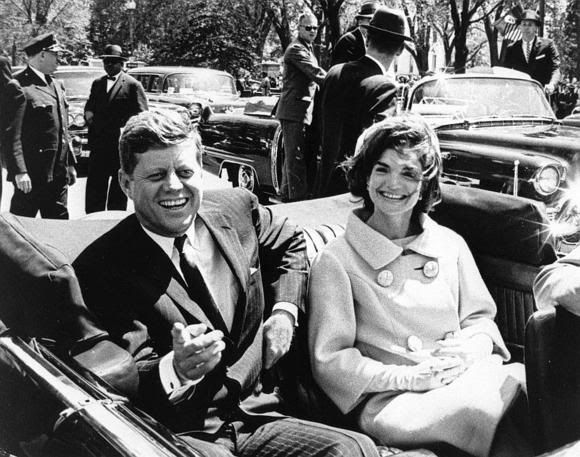
President Kennedy and his wife
-
In the latest plot, the American Ambassador to Libya Christopher Stevens, was murdered in Libya in a classic military operation. The beauty of such a plan is that the fog of war clouds the pinning of responsibility. Ambassador Stevens' murder was a text book operation than unfolded from a master of the art of war. In the lead up to the event it is revealed that the compound Ambassador Stevens sought refuge in was bombed twice before on April 6 and June 6. The second explosive blew a hole in the wall large enough for 40 men to get through. The first attack was made by 2 former security guards. So it is readily apparent that the area in question is HOT.
-
In the lead up to the attack, the diplomats were denied an aircraft to transport the security teams or evacuate personnel. They were told commercial aircraft were available. To those experienced in such matters alarm bells are ringing very loudly. You can smell the set up already. They did too. Sean Smith, the Foreign Service Information Management Officer, was sending out information under an alias Vile Rat on Eve On Line's Goonswarm. On Conspiracy Cafe we were concerned that he had been compromised and intelligence he was providing as to locations and situations were being intercepted.
-
”Assuming we don’t die tonight. We saw one of our ‘police’ that guard the compound taking pictures.”
-
Sean Smith message
-
Worse still was the reason d'etre. Ambassador Stevens was Hillary Clinton's translator. He spoke French and Arabic. He translated during the March 14, 2011 meeting between Hillary and Libyan rebel chief Mahmoud Jebril. This meeting concerned the initiation of the bombing in the overthrow of Libya. He was at the forefront of many negotiations. He would have known it ALL. Libya was the land of the great age of pirates. The marines were sent there in the age of the sailing ship. The equipment has changed, but the methods remain the same. Dead men tell no tales.
-

In 1786, America had to decide whether to fight the Barbary pirates or pay ransom. President Thomas Jefferson decided to fight and laid the foundation of the US Navy and Marine Corps.
-
Ambassador Stevens reveals with his eyes what troubles him. There was talk about a diary CNN, the media version of the CIA, found in the burned out compound. The rest of the files were left to the looters for weeks. They included confidential informants. Where a stellar reporter will go to jail to protect a source, the State Department will silence them by stealth. In the fog of war all the loose ends can be eliminated with extreme prejudice while the perpetrators appear to be victims of circumstances gone way out of control of the system.
-
This would be a viable assumption except the fog of war was caused by the release of a God awful video that was supposed to offend Muslims and stir up a giant cauldron of anger. The film, Innocence of Muslims, did nothing of the sort. No one showed up for the premiere. It was too bad to even be forgotten. So it was shown on Egyptian TV news to a broad audience. That may have upset people, but the nature of the protests assumed the level of the 'colour' revolutions that swept North Africa. These were CIA concocted events to cover regime change. It would seem likely that those elements helped to ignite the fuse of violence. It provided cover for the assassins to attack Ambassador Stevens at his twice bombed safe house where the security was called away. The 'protestors' came with rocket propelled grenades and small arms. They were the whack team. In the fog of war Ambassador Stevens was taken and tortured. They had to know what he knew. The worst case scenario is a stepping stone war to Moscow for a bankster backed New World Order. Julian Assange revealed the WWIII plan where NATO attacks Russia. Nothing has ever changed with world global domination. It has always been about ruling the world.
-

-
After a month, the spin doctors have released photos they must have had since day one. They show the Ambassador being dragged through the street and abused. They report Ambassador Stevens was gay, and that that was the reason he was abused and killed. That is the final proof of a School of the Americas finale - the cover story. No one will find the homophobic idea. It was created as an illusion anyway. This story strikes the emotional punch buttons of the most people all at once. The originator must be basking on a well earned vacation somewhere until now as this understanding casts suspicion upon him.
-
People will react emotionally to the story like Muslim radicals reacted to the film Innocence of Muslims. They will not search for the real reason d'etre like us. The School of the Americas will claim another and carefully craft the story to conceal reality and plant ideas in our heads to further their course of study domination and war. In a parody of John Paul Jones famous quote, we have not yet begun to think. When we do, the revolution will be for real. New World Order your services are no longer required. For what is maddening is even alternative giants are falling to the gay bomb and not the truth.
-

-
These photos are making the Persian and Arabic worlds:
-

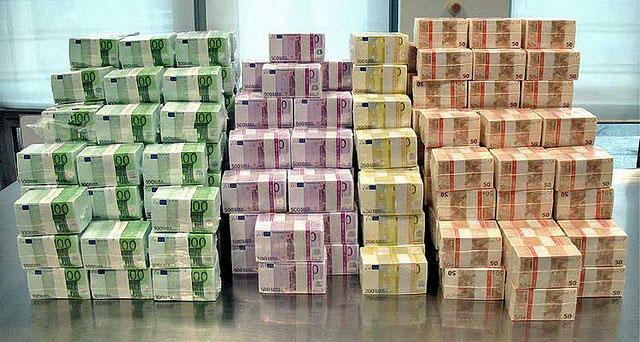
CASH STASH SOUTH OF FRANCE Sept 19.
-

TROPHY PHOTO AMBASSADOR STEVENS AND GADAFFI
-
Assassinated Libya Ambassador "had it coming"
-
In a bizarre twist this interview with the 'man' in the street says Stevens had it coming. You've got to look twice. Is it Stevens?
-

-
The ear has a very unique keyhole figure. The skin folds into the nose at the same place in the same manner. A little hair dye and styling and a damn good doppelganger.

Categories: New World Order

If TekSavvy Won't Oppose Copyright Trolls Who Want Customer Info, Who Will?

If TekSavvy Won't Oppose Copyright Trolls Who Want Customer Info, Who Will?

from the privacy-before-piracy dept

We recently covered the latest attempt by Voltage Pictures to identify alleged Canadian filesharers in order to launch one of their infamous copyright shakedown schemes. Rather than target one of the big ISPs, they made a list of thousands of IP addresses from TekSavvy, an independent service provider, and sought a court order forcing them to identify the users behind the addresses. TekSavvy has been admirably transparent and communicative about the issue, and was clear from the start that it would not release any information without a court order. On Monday, the court granted TekSavvy's request to adjourn until January so it could notify its customers and give them a chance to oppose the motion that would reveal their identities. However, TekSavvy has also been very clear about one thing: it won't be opposing the motion itself, and it's left a lot of customers and commentators wondering why.
Nobody would expect TekSavvy to personally defend each customer against accusations of infringement, and the company's statements so far seem to hinge on that idea as the reason it's not going to oppose Voltage's request in court. On the surface that might seem reasonable, but in fact it sidesteps the real issue: TekSavvy may not be responsible for its users' defence against infringement lawsuits, but it is responsible for protecting its users' privacy—and there are plenty of serious privacy issues with Voltage's motion that need to be addressed long before we get to the point of determining the actual guilt or innocence of individual users.
This isn't hypothetical. Howard Knopf explains the key legal comparison in this case—a 2004 attempt by BMG to get information on a mere 29 users from much larger ISPs. Not only did the ISPs oppose the motion, they won, and established important precedents in doing so.
Despite Teksavvy’s openness concerning this issue, questions are still bound to arise why Teksavvy is not actually opposing this disclosure motion in 2012, as Shaw and Telus actively and successfully did in 2004, with Bell and Rogers taking a similar if less vigorous position. In this regard, it is interesting to compare Voltage’s material with the BMG et al material filed in 2004 that was rejected by the Federal Court and Federal Court of Appeal at that time as inadequate in a very comparable situation, as a result of which we now have clear and binding appellate case law.

...

The law about all of this was clearly laid out by the Federal Court of Appeal in 2005. Here is a very balanced discussion of this presented by myself and one of my worthy opponents in that case, Richard Naiberg. The key criteria for potential success in a disclosure motion such as this is that there must be substantial, admissible, non-hearsay, and reliable evidence in the form of affidavit material and at least a bona fide case.
A key intervener in that case was the Canadian Internet Policy & Public Interest Clinic, which fought hard for the privacy of the Doe defendants. CIPPIC also sent a letter to the court regarding this recent Voltage motion, requesting the adjournment that was granted Monday. That letter focused heavily on the factors established in the BMG case, and when you run through those factors, you begin to see why this is a privacy issue before it's an infringement issue. The court's disclosure test was designed to ensure that customer info isn't released without a solid reason—and perhaps the most important requirement is that there be a bona fide claim, further clarified as a true intent to pursue further action based on the disclosure, and no ulterior motive. When it comes to a shakedown operation like Voltage's, everyone knows that the exact opposite is true, and CIPPIC's letter (pdf) cites the company's past (while explaining precisely what a "copyright troll" is) to make this point:
On the question of bona fides, the plaintiff has identified literally thousands of John Does and Jane Does. BMG v. Doe involved only 29 potential defendants. It is worth asking the plaintiff if it holds a bond fide intent to bring 2000 actions for copyright infringement. As will be noted below, this plaintiff has a track record in the United States of demanding subscriber data of internet service providers for the purposes of demanding exorbitant payments to settle under threat of litigation, with no bona fide intent to prosecute such litigation. In CIPPIC’s view, this scheme does not meet the requirements of the need to show a bona fide claim, but instead is evidence of another purpose.

...

the applicant has in the past engaged in similar mass litigation in the United States. The applicant’s business model for such litigation has earned it the label of “copyright troll”. Trolls’ business model involves alleging that consumers are liable for copyright infringement, and demanding compensation under threat of litigation. The compensation demanded invariably grossly exceeds the damages a troll might expect if the troll were to actually litigate and obtain judgement and a damages award. However, such compensation does not typically exceed the cost to a defendant of defending the action. Enough defendants will choose to pay rather than defend to make the scheme profitable to the troll. The troll typically never litigates through to a judgement, since the costs of doing so would render the scheme as a whole less profitable. The troll’s business model, thus, is an arbitrage game, exploiting judicial resources to leverage defendants’ fear and the costs of defending into a revenue stream. And, of course, no part of these revenues finds its way back to the court to offset costs borne by the taxpayer as the judiciary plays its inadvertent role in this scheme. In CIPPIC’s view, such a purpose is improper and bars the applicant from establishing a bona fide claim.
Not only that, as the letter notes, Voltage's motion accuses the users of commercial infringement—a much higher bar carrying much higher potential fines. This accusation seems completely unsupported by the evidence (which amounts to little more than "these IP addresses were connected to BitTorrent swarms") and even less likely to qualify as a bona fide claim.
Since we've been seeing lots and lots and lots of US judges slamming copyright trolling operations and dumping their cases, there's clearly an opportunity here for Canadian courts to smack down this practice before it gets off the ground—or re-assert their earlier smackdown, anyway. But the only way that can happen is if someone actually opposes Voltage's request (CIPPIC's letter was just supporting a delay). TekSavvy is still insisting it won't be them; CIPPIC might seem the logical candidate, and I'm sure they'll do what they can, but it's unclear how much they will be allowed to intervene if none of the directly-involved parties put up a fight. The only other option is the customers themselves, once TekSavvy notifies them—but, of course, the whole point of this scheme in the first place is that most people can't afford to take on a complex legal battle.
So will Voltage waltz right past the clearly-established test for the disclosure of private information? If TekSavvy doesn't do anything, they just might.

This Scientist Wants Tomorrow’s Troops to Be Mutant-Powered

ask Herr  Dr   Frankenstein   .......how "that " go 4  u ???             http://www.wired.com/dangerroom/2012/12/andrew-herr/all/           

This Scientist Wants Tomorrow’s Troops to Be Mutant-Powered

Andrew Herr in Mongolia. Photo: via Andrew Herr
Greater strength and endurance. Enhanced thinking. Better teamwork. New classes of genetic weaponry, able to subvert DNA. Not long from now, the technology could exist to routinely enhance — and undermine — people’s minds and bodies using a wide range of chemical, neurological, genetic and behavioral techniques.
It’s warfare waged at the evolutionary level. And it’s coming sooner than many people think. According to the futurists at the U.S. National Intelligence Council, by 2030, “neuro-enhancements could provide superior memory recall or speed of thought. Brain-machine interfaces could provide ‘superhuman‘ abilities, enhancing strength and speed, as well as providing functions not previously available.”
Qualities that today must be honed by years of training and education could be installed in a relative instant by, say, an injection or a targeted burst of electricity to the brain. Rapid advancements in neurology, pharmacology and genetics could soon make such installations fairly easy.
These modifications could give rise to new breeds of biologically enhanced troops possessing what one expert in the field calls “mutant powers.” But those troops may not American. So far, the U.S. military has been extremely reluctant to embrace human biological modification, or “biomods.” And that could result in a veritable mutant gap. In this new form of biological warfare, the U.S. could find itself outgunned.
But not if Andrew Herr can help it.
A 29-year-old Georgetown-trained researcher with degrees in microbiology, health physics and national security, Herr is one a handful of specialists in the defense community preaching greater U.S. investment in biomods. First as a consultant with the Scitor Corporation, a Virginia-based firm whose clients include top military and intelligence agencies, and later as the head of his own research organization, Herr’s job has been to think about biological modifications whose effects he says are “more than evolutionary.”
Another word for that: revolutionary.
Whether positive or negative, the impact of routine biomods could be huge. “The best-case scenario is extraordinary increases in quality of life in the First World and beyond,” Herr says. The worst-case scenario, he adds, is people being biologically modified “without them knowing it.” That is, an evolutionary sneak attack.
But it’s not clear how closely the government is listening.
Army, DHS and FBI doctors train train middle school teachers in Maryland. Photo: Army
Army, DHS and FBI doctors train middle school teachers in Maryland. Photo: Army

The Once-and-Future Mutant Age

Ten years ago, there were all sorts of biomods enthusiasts roaming the halls of the Pentagon’s premiere science division. In 2002 the Defense Advanced Research Projects Agency launched an ambitious effort aimed at tweaking troops’ physiology to reduce their susceptibility to stress, sleep deprivation, fatigue, pain and blood loss while enhancing their memory and learning. The idea was to help soldiers “perform at their peak, stay at their peak,” one former Darpa official told Wired.
The program was called Metabolic Dominance. It promised to produce America’s first mutant warriors.
Progress was slow — understandably so considering the scope and scale of the effort. In 2007 Tony Tether, then Darpa director, downplayed Metabolic Dominance, signaling the beginning of the end of the program. “We’re making it possible for people to be all that they can be, not making them be better than they can be,” Tether told Wired.
By 2008 the science agency had all but abandoned Metabolic Dominance. Herr began his work the next year, studying and advocating biomods for an alphabet soup of military and intelligence clients. In effect, Herr helped pick up the pieces from Darpa’s initial, failed effort.
In 2009 Herr was assigned to a Pentagon-funded project aimed at understanding “unit cohesion.” That is, what makes one group of soldiers keep fighting through hunger, thirst, exhaustion, confusion, and the deaths of comrades. Unit cohesion has won and lost conflicts since the beginning of warfare, but it was still poorly understood.
For his unit cohesion study, Herr interviewed Army infantrymen, Navy submariners and Air Force drone operators. Partway into the two-year study Herr had an epiphany. “The ‘aha’ moment,” Herr tells Danger Room, “was seeing a link between an objective physiological phenomenon — knowing the effects on the body and brain of stress hormones — and how that matched with all the literature on unit cohesion.”
In other words, Herr had a vision of the stress hormones that our glands pump into our bloodstreams in life-or-death situations, and, in turn, impact the behavior of trained combat units. Tracing this physiological blueprint for combat effectiveness, Herr realized it could be altered biologically. “All of sudden the Matrix made sense,” Herr says, referencing the secret world of the eponymous 1999 sci-fi film.
The military could select troops and their officers for their unique, inborn ability to cope with stress. Or it could directly tweak a soldier’s body functions — re-balancing the normal hormonal cocktail so the soldier doesn’t panic, doesn’t retreat and keeps on fighting, even when the odds are against him and any normal person would just give up.
Specific enhancement methods Herr studied include: focused diet and exercise regimens; injections of the stress-inhibiting brain molecule neuropeptide Y; electroshock-style Transcranial Direct Current Stimulation to boost thinking; and gene therapy for enhancing a whole host of body functions by literally altering a person’s DNA with viruses or chemicals.
Following the unit-cohesion study, Herr began teaching individual self-enhancement techniques in Washington, D.C. and Indiana. His students were officers and civilians slated to deploy to Afghanistan under a Pentagon program that embeds American mentors in the Afghan government. Among other tricks, Herr instructed them to minimize brain-stimulating blue light in order to protect their sleep cycles; eat small, frequent, protein-rich meals to maintain steady cognition; and exercise in order to biochemically neutralize the steady stream of stress hormones that advisers experience in their year-long, sometimes dangerous deployments.
Herr says the curriculum fed into his other projects, many of which are classified. “I can’t really talk about those,” he says. Clearly, the techniques Herr taught to the advisers could also be applied to pilots, sub and carrier crews and frontline infantry, for whom the stress is even greater and the work even more critical to U.S. national defense.
But for these combatants, the Pentagon wants to go beyond merely encouraging self-enhancement. Patrick Lin, a professor at California Polytechnic State, notes the military’s “ongoing interest in using pharmaceuticals, such as modafinil (a cognitive enhancer), dietary supplements, as well as gene therapy to boost the performance of warfighters.”
And in February the British Royal Society identified four small-scale DARPA biomodification efforts focusing on stress-reduction and neurological enhancement, plus an obscure Air Force program aimed at the “exploitation of external stimulant technology” to enable airmen “to receive and process greater amounts of operationally relevant information.” That’s generally understood to mean drugs.
Herr says defense planners are discussing a comprehensive strategy to unite these programs and coordinate growing military investment in modification technologies. “What I’ve been working on is trying to support and guide that discussion.” To that end, he has briefed the Defense Science Board, a panel of the Pentagon’s top technology advisers.
A comprehensive biomods strategy would get the Pentagon back to the same conceptual point it was at a decade ago at the launch of Metabolic Dominance — and prove that U.S. military leaders are serious about preparing for the coming era of mutant warfare.
Navy Seabees train for chemical, biological and nuclear warfare. Photo: Navy

Ready or Not

Whether or not the Pentagon is ready, the biomods bug is spreading, spurred by government programs and, increasingly, privately funded research all over the world. But Herr cautions against expecting biomods to transform society and warfare tomorrow. “We’re still in the foundational phase.”
For its part, the National Intelligence Council expects some resistance to biomods. “Moral and ethical challenges to human augmentation are inevitable,” the Council advised. Americans, especially, tend to have deep reservations about changing people’s biology, Herr points out. That doesn’t mean they won’t do it. He points out increasing acceptance of cognitive-enhancing drugs among American college students. “Seventy to 80 percent of upperclassman have at least once taken these drugs illegally to get better grades,” he says. “If the younger generation in our country is more comfortable with this, then that would make the use of these kinds of things in society, and by extension the military, very different.”
But the U.S. is still likely to move more slowly on biomods than say, China or Russia. “Other countries are probably much more likely to take advantage of these [technologies],” Herr says. “The question will be how they do it.”
“Other countries are also interested in these areas but are not so open as the U.S. about what they are doing, so it is difficult to know exactly what is going on in many cases,” notes Rod Flower, a professor at the William Harvey Research Institute in the U.K. and the chair of the Royal Society’s biomods study. It’s equally hard to tell to which terrorists, militants and criminal groups these countries might have ties — and whether new biological weaponry might proliferate through these channels.
The best-case scenario for biomods, Herr says, is widespread, legal and peaceful use of performance-boosting methods to elevate creativity, potentially leading to technological breakthroughs in other fields that in turn could “really enhance the quality of people’s lives.”
“It would be nice to think that the efforts of military scientists could be put to peaceful uses,” says Flower.
Herr says when it comes to weapons-grade mutations, it’s wisest to focus on worst-case scenarios, albeit only the most plausible one. “What can be useful is a body of research which says here are things, which if they happen, would cause major discontinuities.”
The most realistic future biomods apocalypse is one in which a hostile foreign government or terror group finds ways to subtly change a lot of people. “The worst-case scenario is people could start doing things that wouldn’t be recognized,” Herr says. “At least you can do something about if if you know it’s happening.”
Soldiers in training. Photo: Army

Genetic Sneak Attack

Among his duties at Scitor, Herr was tasked with “red teaming” the performance-enhancement field on behalf of the Defense Department in order to assess the approach America’s rivals are taking to the technology. Drawing on his childhood conversations with his world-traveling parents, Herr concluded that military biomodifications could develop very differently in other countries.
Herr says he achieved a breakthrough in his red-teaming in 2010, while in Boston attending what he describes as a “totally academic, non-military” conference on gene therapy, which typically involves “infecting” a person with a specially tailored virus that can modify DNA and in principle, cure a disease or correct a defect.
But fixing genes is hard. Damaging them is a lot easier, one of the speakers at the Boston conference admitted. “He said if our goal was figuring out how to create muscular dystrophy, we’ve been very successful, but if our goal is to treat it, we’re far from the goal,” Herr recalls. “He meant it as a laugh line. But I’m sitting in the back thinking … it’s kind of scary. They know how to break us but don’t know how to fix us.”
In one dire scenario, an army might attack its enemies by changing their physiology to make them dumber, slower, more afraid. In The Atlantic recently, two researchers even discussed the possibility of governments or terror groups genetically assassinating enemy leaders by tailoring cancers specifically to the target’s DNA. The authors pointed out that the U.S. State Department already surreptitiously collects DNA samples from foreign dignitaries.
There are several ways these theoretical bio-attacks could be accomplished. At an August war game hosted by the Army, Herr and other experts said biological agents could be slipped into an enemy’s food or water supplies or dispersed by air. Herr says it could also be possible to secretly add an agent to a commercial product. “Someone thinks he’s taking protein powder but he’s really taking God-knows-what.”
If America gets caught unaware by some future bio-assault, it won’t be because Herr didn’t try to prepare us. After three years at Scitor, this fall Herr struck out on his own with an ambitious plan to advance the biomods field. He started two companies: one, a research firm called Helicase; the other, a sort of personal consultancy called Cognitrition that Herr says will offer clients advice on “enhancing cognitive performance through nutrition and day-to-day activity.”
That’s right: Herr wants to help people develop their own potential powers. If he’s correct about the future of bio-weaponry, his clients will be just slightly ahead of the curve in the coming mutant age.

The top six business of technology stories of 2012 (Why six? Why not!)

http://arstechnica.com/business/2012/12/the-top-6-business-of-technology-stories-of-2012-why-6-why-not/            

Ministry of Innovation / Business of Technology


The top six business of technology stories of 2012 (Why six? Why not!)

Facebook went public, Bitcoin went mainstream, and Google Fiber launched in KCK.


Everyone in the KC region wants one of these trucks to show up at their house sooner rather than later.
Here at the Ministry of Innovation we've been bringing you loads of stories about all of the interesting and (hopefully useful!) changes that are coming out of Silicon Valley and elsewhere. Out of all of those stories, we've selected six that we feel not only had the most impact, but whose effects will continue to be felt into 2013 and beyond.

#6: Car-sharing services launch, fight the law

Back in June I heard about two San Francisco startups—Lyft and SideCar—that had similar business models. By the next month, I became a driver for both companies. Both companies allow individuals armed with smartphones to moonlight as not-quite-taxi drivers. Then, potential passengers can pop open their own app and request a pickup from whatever point in San Francisco they like. Payment is all handled within the app via credit card. It's sort of like Uber, except for those of us that don't need to travel by black car. However, state regulators (to say nothing of the incumbent taxi industry) haven't taken too kindly to these companies.
We reported about how the California Public Utilities Commission (which deals with taxi regulation) hit the companies with a cease-and-desist in October. The following month, they were slapped with $20,000 in fines which naturally were appealed. But earlier this month, the CPUC seemed to have softened its tone and appeared willing to at least consider legitimizing these companies by changing the rules.

#5: Bitcoin goes mainstream

If 2011 was the year that Bitcoin first appeared on many people's radars (including Sen. Chuck Schumer (D-NY)), then 2012 was the year that the cryptocurrency began to, slowly, but surely, move into the mainstream. Ok, your non-techy friends aren't going to be ditching their greenbacks anytime soon—but there were some signs that the digital cash may be strengthening and headed towards more ease-of-use.
First, the currency's exchange rate is on the rise. In April 2012, a Bitcoin was worth just $4.50. By July it had nearly doubled. Today, one Bitcoin is worth about $13.50. That's a massive increase by any measure. Second, in August, a company announced that it would be creating Bitcoin-based debit cards for all to use. Then, the Bitcoin Foundation threw open its doors hoping to spread the currency's gospel far and wide. WordPress started accepting Bitcoins, too.
Finally, perhaps the most exciting development is that Bitcoin Central, which operates in France, has been authorized by local authorities to operate as a bank under French law. As we reported in December, "The accounts will also be integrated with the French banking system, so users can have their paychecks automatically deposited into their accounts and converted to bitcoins."
Still, Bitcoin isn't perfect and definitely has some hurdles to overcome. In March, the lack of "chargebacks" prompted a lawsuit between two Bitcoin-related companies. In September, a Bitcoin company sustained a theft worth $250,000. And worse still, an August 2012 academic study on Bitcoin found that it had helped fuel $2 million per month in illegal drug sales online. So don't liquidate your Uncle Sam-backed bucks just yet.


#4: Google (and other tech companies) get slapped for legal financial shenanigans

As we reported back in November, the “Double Irish” and the “Dutch Sandwich” are sadly not items at your favorite lunch spot. Instead, you'll find them on the menu of legal financial shenanigans available to multinational corporations. And for around a decade, major international corporations have taken advantage of these complicated shell company rules and tax loopholes that allow them to minimize their tax burden in the United States, Ireland, the Netherlands, and elsewhere.
While this technique has been going on for years, only this year did it reach discussion in the highest levels of government. Back in October, French authorities forced Google to pay $1.3 billion in back taxes. All of this came to a head when, in November, a British parliamentary committee chided Google, Amazon (and even Starbucks) with this quip: "We're not accusing you of being illegal, we are accusing you of being immoral."
Bloomberg News, which has done extensively investigative journalism on this issue, found in December that new filings show that Google's income-shifting has reached record levels, hitting nearly $10 billion that went to its Bermuda-based shell company.

#3: Financial schadenfreude

While I've been senior business editor at Ars for less than a year, there's one story that seems to consistently resonate with readers: it's what I've come to call financial schadenfreude.
There's been loads of examples of this over the past year. Back in August, following the expiration of Facebook's lockup agreements (which prevent insider trading and restrict sales of the stock during a certain period), many investors dropped the stock like a rock, which sent the share price plummeting.
Later in August, there were also signs of trouble at Zynga—which lost 70 percent of its value since the company's December 2011 initial public offering. A number of the company's top executives and managers were hired away to other companies, surely not a good sign. By October, Zynga announced it was taking a write-down for OMGPOP (makers of Draw Something), meaning that the company drastically overpaid.
By September, chipmaker AMD's CFO mysteriously left the company, which sent that company's stock price tumbling as well. The following month, a Wall Street analyst called AMD "un-investable". We wonder, as probably do many of you, how long AMD will be able to stay afloat.
Then in November, we brought you two stories of how Japan's once-great electronics sector was struggling. Sharp said that after losing over $3 billion in its latest quarter and still holding $10 billion in debt, there was "material doubt" over its survival and the company has asked the Japanese government for a bailout. Meanwhile, Sony's credit rating was downgraded to just-above junk, and it posted a loss of nearly $200 million in its most recent quarterly earnings.
And finally, Groupon. The daily deals site that was once the darling of everyone's inbox posted a quarterly loss of $3 million in November—the stock has lost 90 percent of its value since its IPO in 2011. Perhaps it should put its own stock, as The Oatmeal suggested, up for sale as a deal?


Facebook maintains that it complies with all EU laws.

#2: Facebook's long-awaited IPO

The big news that Facebook would be opening up its financial doors and making company shares available through an initial public offering drew attention for the better part of 2011. Finally, by February 2012, it happened. The S-1 filing valued the company at $5 billion, a value that ballooned to $13 billion by May, when the company finally hit the NASDAQ exchange.
In the company's first quarterly report post-IPO, in July, the stock price took a hit following news that Zynga slashed its forecast for bookings—revenue less fees it pays Facebook. The other big question that looms large for Facebook is can it make money off of its increasing number of mobile users?
As we reported at the time, Facebook began its first ad campaign on mobile devices, with "Sponsored Stories" hitting handsets across the world. The company says that at the end of March 2012, there were 901 million monthly active users, with over half of those being mobile users, and 80 percent of those outside the United States and Canada.
More recently, Morgan Stanley got smacked with a $5 million fine over questionable behavior in the run-up to the IPO.

#1: Google Fiber finally arrives in all of its gigabit glory

After we first wrote about Google Fiber back in 2010, the search giant announced service's details and formally turned it on in 2012.
In July 2012, Google blew everyone away with pricing: Fiber is now the cheapest and fastest Internet connection anywhere in the country at $70 a month for 1Gbps. By contrast, Comcast's new 305Mbps costs more than four times that price. If Google does indeed expand to other regions of the country, it will certainly be massively disruptive.
For now, the service is limited to Kansas City, Kansas and is slated to expand across the stateline sometime next year. But we also found out that you, Ars readers, love reading about that sweet, juicy bandwidth. And so we delivered. We told you about efforts to lure startups to Kansas City, and when Google's service was finally turned on we told you about how real-world speeds came in around 700Mbps.
Ars sent me on a whirlwind tour of KCK, where I spent two nights at the Hacker Home, effectively ground zero of the "Kansas City Startup Village." The result? I discovered that the rest of the Internet is still largely too slow to really appreciate those high speeds.
More recently, though, Netflix agreed that Google Fiber is "now the most consistently fast ISP in America." Don't despair, though—Google's certainly not done with KCK or KCMO. The company says it wants to expand the service to other parts of the country. But where? Your guess is as good as ours.
Did we miss an important business item? What should we look ahead to in 2013? You know where the comments section is.

Communist Propaganda Poster: Comrades, Turn In Your Weapons!


Gun control advocates claim historical gun grabs by tyrannical regimes are a “myth”
By Paul Joseph Watson
Infowars.com 
February 23, 2013
This 1918 Communist propaganda poster from the Russian civil war serves as yet another reminder that tyrannical regimes throughout history have always sought to disarm their populations through gun control.
The poster shows Russian citizens turning in their rifles, handguns and even swords as a communist soldier looms over them with the words, “Comrades, turn in your weapons” appearing in front of a hammer and sickle inside a red star.
The text bears a chilling resemblance to Senator Dianne Feinstein’s infamous “turn em all in” quote from 1995.
Following Alex Jones’ explosive appearance on CNN’s Piers Morgan Tonight last month, gun control advocates reacted to Jones’ fiery historical defense of the right to bear arms by attempting to dismiss the fact that tyrannical regimes always disarmed their target populations as a myth or a hoax.
Numerous left-wing blogs successfully gamed Google’s search engine results so that when people searched for terms such as ‘Nazi gun control’, they were met with a plethora of articles claiming the historical basis for this connection was a fabrication.
In reality, the Nazis did take existing gun control laws and make them more draconian in order to target their political adversaries. That is a manifestly provable historical fact.
The Nazi Weapons Law of November 11, 1938 prohibited Jews from “acquiring, possessing, and carrying firearms and ammunition, as well as truncheons or stabbing weapons,” and ordered them to turn in all guns and ammunition to local police.
As historian William Sheridan Allen noted, the Nazis also began house to house gun confiscations targeting “subversives” shortly after they came to power.
In addition, historians like Israel Guttman have outlined how the Warsaw Ghetto uprising against the Nazis was hampered by the fact that imprisoned Jews did not have access to adequate arsenals of firearms, although their resistance did lead Goebbels to note in his diary:
“This just shows what you can expect from Jews if they lay hands on weapons.”
Similarly, as J.E. Simkin and Aaron Zelman document in their book “Gun Control”: Gateway to Tyranny, in October 1918, the Council of People’s Commissars (the Communist government) ordered citizens to surrender all firearms, ammunition, and sabres, having first mandated registration of all weapons six months earlier. Just like the Nazis, Communist Party members were exempt from the ban.
A 1920 decree then imposed a minimum six month prison sentence for any non-Communist possessing a weapon. After the civil war, possession became punishable with three months hard labor plus fines. After Stalin came to power, he made possession of unlawful firearms a crime punishable by death.
With Russians almost universally disarmed, Stalin was given free reign to carry out one of history’s most brutal prolonged genocide, with tens of millions of people executed or starved to death in the three decades that followed, a model subsequently mimicked in China and Cambodia.
This poster should remind us that brutal dictatorships have almost always been preceded by widespread gun confiscation, and to allow leftists to claim otherwise in the pursuit of their contemporary political agenda is an insult to the historical record.
H/T - This web page has an excellent and fully sourced list of all the countries where gun control was a precursor to mass genocide.
*********************
Paul Joseph Watson is the editor and writer for Infowars.com and Prison Planet.com. He is the author of Order Out Of Chaos. Watson is also a host for Infowars Nightly News.

Gun Control & Genocide

AGAIN you Can't reason with The  BANNERS   folks !!!     even with FACTS  --their fucked in the head  Lol          THERE IS ONLY 1 REASON ---THEY WANT  YOU  DIS_ARMED    just  1  !!!       

Gun Control & Genocide


Down through history, governments have disarmed their citizens only to tyrannize those citizens once they were disarmed.

The following chart documents just a few examples from recent history where "gun control" laws were enacted and then tyranny by the government proceeded.

*Click on a country in the chart in order to learn about what occurred in that country.
GOVERNMENT GENOCIDE CAMPAIGNS AND THE
"GUN CONTROL" LAWS THAT HELPED SLAUGHTER 56 MILLION PEOPLE


PERPETRATOR GOVERNMENT DATE TARGET # MURDERED (ESTIMATED) DATE OF GUN CONTROL LAW SOURCE DOCUMENT
Ottoman Turkey 1915-1917 Armenians 1-1.5 million 1886-1911 Art. 166, Penal Code
Art. 166 Penal Code
Soviet Union* 1929-1953 Anti-Communists / Anti-Stalinists 20 million 1929 Art. 182 Penal Code
Nazi Germany** & Occupied Europe 1933-1945 Jews, Gypsies, Anti-Nazis 13 million 1928-1938 Law on Firearms & Ammunition, April 12 Weapons Law, March 18
China* 1949-1952 1957-1960 1966-1976 Anti- Communists Rural Populations Pro-Reform Grou 20 million 1935-1957 Arts. 186-7, Penal Code Art. 9, Security Law, Oct. 22
Guatemala 1960-1981 Maya Indians 100,000 1871-1964 Decree 36, Nov 25 Decree 283, Oct 27
Uganda 1971-1979 Christians Political Rivals 300,000 1955-1970 Firearms Ordinance Firearms Act
Cambodia 1975-1979 Educated Persons 1 million 1956 Arts. 322-8, Penal Code
* The law(s) mentioned are part of an older/or wider body of law on and regulation of private firearms ownership ** For a complete translation of these laws, including regulations specifically banning Jews from owning any weapons and a side-by-side comparison of the Nazi Weapons Law with the U.S. Gun Control Act of 1968, see "Gun Control": Gateway to Tyranny, J.E. Simkin & A. Zelman, 1992; available from JPFO


A. Armenia
After the government of the Ottoman Empire quickly crushed an Armenian revolt in 1893, tens of thousands of Armenians were murdered by mobs armed and encouraged by the government. As anti-Armenian mobs were being armed, the government attempted to convince Armenians to surrender their guns. [4] A 1903 law banned the manufacture or import of gunpowder without government permission. [5] In 1910, manufacturing or importing weapons without government permission, as well as carrying weapons or ammunition without permission was forbidden. [6]

During World War I, in February 1915, local officials in each Armenian district were ordered to surrender quotas of firearms. When officials surrendered the required number, they were executed for conspiracy against the government. When officials could not surrender enough weapons from their community, the officials were executed for stockpiling weapons. Armenian homes were also searched, and firearms confiscated. Many of these mountain dwellers had kept arms despite prior government efforts to disarm them. [7]

The genocide against Armenians began with the April 24, 1915 announcement that Armenians would be deported to the interior. The announcement came while the Ottoman government was desperately afraid of an Allied attack that would turn Turkey's war against Russia into a two-front war. In fact, British troops landed at Gallipoli in western Turkey the next day. Although the Anglo-Russian offensives failed miserably, the Armenian genocide continued for the next two years. [8] Some of the genocide was accomplished by shooting or cutting down Armenian men. The bulk of the 1 to 1.5 million Armenian deaths, however, occurred during the forced marches to the interior. Although the marches were ostensibly for the purpose of protecting the Armenians through relocation, the actual purpose was to make the marches so difficult (for example, by not providing any food) that survival was impossible. [9]

The Armenian genocide differs from the six other genocides detailed in Lethal Laws in one important respect. Although many Armenians apparently complied with the gun control laws and the deportation orders, some did not. For example, in southern Syria (then part of the Ottoman Empire), "the Armenians refused to submit to the deportation order . . . . Retreating into the hills, they took up a strategic position and organized an impregnable defense. The Turks attacked and were repulsed with huge losses. They proceeded to lay siege." [10] Eventually 4,000 survivors of the siege were rescued by the British and French. [11] These Armenians who grabbed their guns and headed for the hills are the converse to the vast numbers of Armenian and other genocide victims in Lethal Laws who submitted quietly; although many of the Armenian fighters doubtless died from lack of medical care, starvation, or gunfire, so did many of the Armenians who submitted. As was the case of the Jewish resistance during World War II, armed resistance was enormously risky, but the resisters had a far higher survival rate than the submitters.


B. Soviet Union


As the authors note, the Bolsheviks were a minority of Communists in a vast and disparate nation where Communists themselves were a tiny minority. It should not be surprising that the Bolsheviks worked hard to ensure that any person potentially hostile to them did not possess arms. [12]

The first Soviet gun controls were imposed during the Russian Civil War, as Czarists, Western troops, and national independence movements battled the central Red regime. Firearm registration was introduced on April 1, 1918. [13] On August 30, Fanny Kaplan supposedly wounded Lenin during an assassination attempt; the attempted assassination spurred a nationwide reign of terror. [14] In October 1918, the Council of People's Commissars (the government) ordered the surrender of all firearms, ammunition, and sabres. [15] As has been the case in almost every nation where firearms registration has been introduced, registration proved a prelude to confiscation. Exempt from the confiscation order, however, were members of the Communist Party. [16] A 1920 decree imposed a mandatory minimum penalty of six months in prison for (non-Communist) possession of a firearm, even where there was no criminal intent. [17]

After the Red victory in the Civil War, the firearms laws were consolidated in a Criminal Code, which provided that unauthorized possession of a firearm would be punishable by hard labor. [18] A 1925 law made unauthorized possession of a firearm punishable by three months of hard labor, plus a fine of 300 rubles (equal to about four months' wages for a highly-paid construction worker). [19]

Stalin apparently found little need to change the weapons control structure he had inherited. His only contributions were a 1935 law making illegal carrying of a knife punishable by five years in prison and a decree of that same year extending "all penalties, including death, down to twelve-year-old children." [20]

This chapter of Lethal Laws summarizes the genocide perpetrated by Stalin from 1929 to 1953, starting with his efforts to collectivize farming by destroying the class of property-owning farmers. Altogether, about twenty million people were murdered, worked to death in slave labor camps, or deliberately starved to death by Stalin's government. From 1929 to 1939, Stalin killed about ten million people, more than all the people who died during the entirety of World War I. Stalin's successful campaign of genocide against the Kulaks and against dissident Communists served as a model for similar campaigns in China and Cambodia. [21]


C. Germany


German gun control laws are the authors' area of expertise. Mr. Simkin and Mr. Zelman have previously written a book analyzing the Weimar and Nazi gun laws in great detail. [22] The German chapter in Lethal Laws contains the most relevant statutes and regulations, but does not include gun registration forms and similar materials found in the previous book. Because Lethal Laws does contain more analysis of the German gun laws in their social context, Lethal Laws is the more valuable book to anyone except a specialist in German law.

After Germany's defeat in World War I, the democratic Weimar government, fearing (with good cause) efforts by Communists or the militaristic right to overthrow the government, ordered the surrender of all firearms. Governmental efforts to disarm the civilian population--in part to comply with the Versailles Treaty--apparently ended in 1921. [23]

The major German gun control law (which was not replaced by the Nazis until 1938) was enacted by a center-right government in 1928. [24] The law required a permit to acquire a gun or ammunition and a permit to carry a firearm. Firearm and ammunition dealers were required to obtain permits to sell and to keep a register of their sales. Also, persons who owned guns that did not have a serial number were ordered to have the dealer or manufacturer stamp a serial number on them. Permits to acquire guns and ammunition were to be granted only to persons of "undoubted reliability," [25] and carry permits were to be given "only if a demonstration of need is set forth." [26] Apparently police discretion cut very heavily against permit applicants. For example, in the town of Northeim, only nine hunting permits were issued to a population of 10,000 people. [27]

In 1931, amidst rising gang violence (the gangs being Nazi and Communist youths), carrying knives or truncheons in public was made illegal, except for persons who had firearm carry permits under the 1928 law. Acquisition of firearms and ammunition permits was made subject to proof of "need." [28]

When the Nazis took power in 1933, they apparently found that the 1928 gun control laws served their purposes; not until 1938 did the Nazis bother to replace the 1928 law. The leaving of the Weimar law in place cannot be attributed to lethargy on the Nazis' part; unlike some other totalitarian governments (such as the Khmer Rouge in Cambodia), the Nazis paid great attention to legal draftsmanship and issued a huge volume of laws and regulations. [29] The only immediate change the Nazis made to the gun laws was to bar the import of handguns. [30]

Shortly after the Nazis took power, they began house-to-house searches to discover firearms in the homes of suspected opponents. They claimed to find large numbers of weapons in the hands of subversives. [31] How many weapons the Nazis actually recovered may never be known. But as historian William Sheridan Allen pointed out in his study of the Nazi rise to power in one town: "Whether or not all the weapon discoveries reported in the local press were authentic is unimportant. The newspapers reported whatever they were told by the police, and what people believed was what was more important than what was true." [32]

Four days after Hitler's triumphant Anschluss of Austria in March 1938, the Nazis finally enacted their own firearms laws. Additional controls were layered on the 1928 Weimar law: Persons under eighteen were forbidden to buy firearms or ammunition; a special permit was introduced for handguns; Jews were barred from businesses involving firearms; Nazi officials were exempted from the firearms permit system; silencers were outlawed; twenty-two caliber cartridges with hollow points were banned; and firearms which could fold or break down "beyond the common limits of hunting and sporting activities" became illegal. [33]

On November 9, 1938 and into the next morning, the Nazis unleashed a nationwide race riot. Mobs inspired by the government attacked Jews in their homes, looted Jewish businesses, and burned synagogues, with no interference from the police. [34] The riot became known as "Kristallnacht" ("night of broken glass"). [35] On November 11, Hitler issued a decree forbidding Jews to possess firearms, knives, or truncheons under any circumstances, and to surrender them immediately. [36]

Nazi mass murders of Jews began after the invasion of the Soviet Union. Extermination camps were not set up until late 1941, so mass murder was at first accomplished by special S.S. units, Einsatzgruppen, on June 22, 1941. Working closely with regular army units, the Einsatzgruppen would move swiftly into newly-conquered areas, to prevent Jews from fleeing. In some cases, Jews were ordered to register with the authorities, an act which made them easy to locate for murder shortly thereafter. As noted above, most of the Soviet population had been disarmed by Lenin and Stalin or had never possessed arms in the first place. [37] Raul Hilberg, a leading scholar of the Nazi military, summarizes that

The killers were well armed, they knew what to do, and they worked swiftly. The victims were unarmed, bewildered, and followed orders. . . . It is significant that the Jews allowed themselves to be shot without resistance. In all reports of the Einsatzgruppen there were few references to "incidents." The killing units never lost a man during a shooting operation. . . . [T]he Jews remained paralyzed after their first brush with death and in spite of advance knowledge of their fate. [38]

How could Jews with "advance knowledge of their fate" allow themselves to be murdered? The authors suggest that

These Jews' passivity doubtless was the result of centuries of victimization in Russia. They had come to believe that being victimized was normal. In most cases in Jewish experience, the victimizers were satisfied after the first few victims. In such situations, resisting was likely to prolong the victimization, and thus to increase the number of victims. Most Jews did not realize that the Nazis were different. Most Jews did not realize the Nazis had no use for living Jews.

On top of this tendency to accept being victimized, twenty years of Communist rule--of which Stalin's terror had occupied ten years--had shown Jews that failure to obey orders was a fatal mistake. [39]

Although many Jews remained passive throughout the Holocaust, some did not. In 1943, the Nazis attempted to commence the liquidation of the Warsaw ghetto. [40] But as the Nazis moved in, members of the Jewish Fighting Organization opened fire. "[T]he shock of encountering resistance evidently forced the Germans to discontinue their work in order to make more thorough preparations." [41] The revolt continued, leading Goebbels to note in his diary: "This just shows what you can expect from Jews if they lay hands on weapons." [42] Although the Jews of the Warsaw ghetto were eventually defeated, the Warsaw battle was perhaps the most significant ever for the Jews, according to Raul Hilberg: "In Jewish history, the battle is literally a revolution, for after two thousand years of a policy of submission the wheel had been turned and once again Jews were using force." [43]

There were other Jewish uprisings; even in the death camps of Sobibor and Treblinka, Jews seized arms from the Nazi guards and attempted to escape. A few succeeded, and more significantly, the camps were closed prematurely. [44] The authors do not attempt to tell the complete story of Jewish guerilla resistance during World War II. [45]

The German chapter is the most successful in the book. The perpetrators and the victims of Naziism both left extensive written records, allowing Simkin, Zelman, and Rice to integrate their always-strong textual analysis of the gun laws with a discussion of the actual impact of the laws on the lives of victims. [46]


D. China


The China chapter is much less enlightening, mostly because the victims of Mao's genocide, unlike Hitler's, left much less of a record for Western historians to uncover. While many scholars agree that about one million people were murdered during the Cultural Revolution (1966-1976), the number of people who were starved to death by Mao's communization of the economy from 1957 to 1960 ("the Great Leap Forward") might be as low as one million, or as high as thirty million. [47]

Mao, like Hitler, inherited gun control from his predecessor's regime. [48] A 1912 Chinese law made it illegal to import or possess rifles, cannons, or explosives without a permit. [49] The law was apparently aimed at the warlords who were contesting the central government's authority; Chinese peasants were far too poor to afford guns. [50] Communist gun control was not enacted until 1957, when the National People's Congress outlawed the manufacture, repair, purchase, or possession of any firearm or ammunition "in contravention of safety provisions." [51]


E. Guatemala


Perhaps the most overlooked genocide of the twentieth century has been the Guatemalan government's campaign against its Indian population. One reason that the genocide has attracted little attention may be that the Guatemalan government has been friendly to the United States.

Gun control in Guatemala has always been intimately tied to the military's determination to maintain itself as the dominant institution in society. [52] After taking power with a revolutionary army of just forty-five men, the Guatemalan government of 1871 speedily decreed the registration of all "new model" firearms. [53] Registered guns were subject to impoundment whenever the government thought necessary. [54] In 1873, firearms sales were prohibited, and firearms owners were required to turn their guns over to the government. [55]

Apparently, the enforcement of the 1873 law began to wane. In 1923, General Jose Orellana, who had taken power in a coup a few years before, put into force a comprehensive gun control decree. [56] The law barred most firearms imports, outlawed the carrying of guns in towns (except by government officials), required a license for carrying guns "on the public roads and railways," set the fee for a carry license high enough so as to be beyond the reach of poor people, and prohibited ownership of any gun that could fire a military caliber cartridge. [57]

In 1944, two officers led a revolt against the military government. [58] "Distributing arms to students and civilian supporters, they soon gained control of the city [Guatemala City, the capital], and two days later Ponce [the dictator] resigned, though not before nearly a hundred people had died in the sporadic fighting." [59] The first free elections in half a century were held. [60] The new government did not eliminate the gun control laws, but it did regularize the issuance of carry permits by specifying that the permits would be issued to an applicant who could "prove his good character by means of testimonials from two persons of known honesty." [61]

In 1952, the democratically-elected government of Jacobo Arbenz began an agrarian reform plan that expropriated large uncultivated estates. [62] Compensation was based on the taxable value of the land. The United Fruit Company was angry at the seizure of 386,000 acres of the company's reserve land in exchange for what the company considered inadequate compensation. [63] In June 1954, a force of Guatemalan exiles, trained by the CIA, invaded Guatemala from Honduras. [64] "Unable accurately to assess the situation in the capital, Arbenz resolved to do as he had done in 1944 and distribute weapons to the workers for the defense of the government. The army refused to obey, and on 27 June, Arbenz resigned . . . ." [65]

Contrary to the assertion of the authors, [66] it is unclear whether total repeal of the gun controls a decade before would have saved the democratic government. Firearms at a free-market price might still have been beyond the financial reach of the peasants and students in a very poor country. What might have made a difference, however, is the actual distribution of surplus military arms for free to the citizens of Guatemala while the democratic regime was in power. [67] But such a policy was not implemented, and for all practical purposes, the military retained a monopoly of force. As the authors note, the monopoly "made Arbenz, a duly elected President, serve at the Military's pleasure. When they wanted him to go, he went." [68]

In November 1960, reformist military officers attempted a coup and garnered the support of about half the army. [69] Peasants, wanting to fight for their own land, asked the rebels for guns so that the peasants could join the battle; the rebels refused. [70] The coup was finally crushed by loyalist forces who were supported by the United States. [71] From the 1960s to the 1980s, the Guatemalan government found itself engaged in perpetual counterinsurgency campaigns. As part of these campaigns, right-wing terror squads were unleashed to murder suspected subversives, although regular army units also participated extensively. [72] Approximately 100,000 Mayan Indians were murdered by the government during this period. [73]

Amnesty International has waged a long and courageous campaign against human rights abuses in Guatemala. [74] The authors reviewing Amnesty International's proposals for restoring human rights to Guatemala, note that the group nowhere advocates recognition of a strong legal right to arms or the arming of the victim populations. [75] Instead, Amnesty argues that the government should control itself better:

The government should also thoroughly review the present method of reporting and certifying violent deaths, particularly those resulting from actions taken by any person in an official capacity. The aim of such an inquiry should be to create procedures which will ensure that such deaths are reported to the authorities, who then impartially investigate the circumstances and causes of the deaths. All efforts should be made to identify the unidentified bodies that are found in the country and frequently buried only as "xx", in order to determine time, place and manner of death and whether a criminal act has been committed. [76]

Is the Amnesty proposal realistic? "It seems absurd," write Simkin, Zelman, and Rice, "to appeal to so blood-drenched a government to 'impartially investigate' atrocities its officials have committed." [77]

The failure of the Guatemalan government to prosecute its agents for perpetrating government-sponsored genocide suggests that hopes for domestic legal reform may be of little use in actually stopping genocide. As the next two chapters illustrate, international law may be of little greater practical efficacy.


F. Uganda


If international organizations such as the United Nations were ever going to intervene to stop a genocide in progress, Uganda in the 1970s would have been the ideal spot. Ugandan dictator Idi Amin was a world pariah with no powerful allies. He was generally regarded as insane (perhaps from advanced venereal disease) and his army was, by world power standards, pitiful. [78] From 1990 to 1991, the United States assembled and led a worldwide coalition which easily drove Iraqi conquerors out of Kuwait. [79] A multinational coalition conquest of Uganda would have been all the easier, since Idi Amin's army was tiny compared to Saddam Hussein's war machine. [80] Kuwait, however, was a strategic oil resource, [81] while Uganda had few resources other than the Ugandan people who were being slaughtered by their government. Although the existence of the Ugandan genocide was well-established as it was being perpetrated, the possibility of a multinational campaign to oust Idi Amin was never even a topic for serious discussion, whereas discussion about the reconquest of Kuwait began days after Iraqi tanks entered Kuwait. [82]

Not once in this century has one nation or a coalition of nations launched a military action to stop a genocide in progress. It is true that wars have sometimes led to a genocidal regime being deposed; Tanzania ousted Amin, and the Allies defeated Hitler. But Tanzania and the Allies acted only because their territory had been invaded, not because they were moved to action by reports of the murders within Uganda or within Nazi Germany.

Notably, even when the Allies were engaged in all-out war against Hitler, they refused to take military action against the extermination camps, such as by bombing the rail lines that led to them. [83] As historian Raul Hilberg writes, "The Allied nations who were at war with Germany did not come to the aid of Germany's victims. The Jews of Europe had no allies. In its gravest hour Jewry stood alone, and the realization of that desertion came as a shock to Jewish leaders all over the world." [84] The people of Uganda likewise stood alone from 1971 to 1979, when Idi Amin's dictatorship killed about 300,000 people, roughly 2.3% of the total population. [85]

The authors began their study of Ugandan gun laws with a 1955 statute promulgated by the British imperial government, although this gun control law may not have been Uganda's first. [86] Although the British/Ugandan law had the length and complexity typical of modern statutes, the essence was a provision requiring that a person could only possess a firearm if he had a permit, and the permit would be granted by the police only upon a discretionary finding regarding the applicant's "fitness" to possess a firearm. [87]

Uganda achieved independence in 1962, [88] keeping the structure of the Colonial gun laws intact. In 1966, Milton Obote assumed dictatorial powers. In 1969, Obote tightened the gun laws, imposing a nationwide ban on firearms and ammunition possession, making exceptions only for government officials and for persons granted an exemption by the government. [89] In 1970, the 1955 British gun law was recodified, with some minor changes. [90]

Idi Amin took power in 1971, and the mass murders began shortly thereafter. The nation's large Asian population was expelled (not murdered), and in the process the Ugandan government seized approximately a billion dollars' worth of the Asians' property. [91] The main targets of the Ugandan government's mass murders were members of tribes whom Amin perceived as a threat to his power. [92] Because Uganda had far less of an infrastructure than Nazi Germany, the murders were perpetrated mostly by bands of soldiers who shot their victims, rather than through extermination camps. [93]

Amin's army numbered about 25,000 and his secret police--the "State Research Bureau"--only 3,000. [94] The army was ill-disciplined and incompetent, and collapsed not long after Amin began his ill-advised war against Tanzania in late 1978. [95] How could such a small and pathetic army get away with mass murder against a nation of thirteen million people? Is it possible that a disarmed Ugandan population was easier to murder than an armed one?

Idi Amin, by the way, now lives in Saudi Arabia. [96] As far as I know, there has been no effort to extradite him and put him on trial for murder. With the exceptions of the rulers of the nations that lost World War II, none of the perpetrators of genocide in the 20th century have been prosecuted for crimes against humanity.


G. Cambodia


Also enjoying a comfortable post-genocide life is Pol Pot, the perpetrator of the best known mass-murders of the post-World War II era.

Cambodian gun control was a legacy of French colonialism. [97] A series of Royal Ordinances, decreed by a monarchy subservient to the French, appears to have been enacted out of fear of the Communist and anti-colonial insurgencies that were taking place in the 1920s and 1930s throughout Southeast Asia, although not in Cambodia. [98] The first law, in 1920, dealt with the carrying of guns, while the last law in the series, in 1938, imposed a strict licensing system. [99] Only hunters could have guns, and they were allowed to own only a single firearm. [100] These colonial laws appear to have stayed in place after Cambodia was granted independence. The Khmer Rouge enacted no new gun control laws, for they enacted no laws at all other than a Constitution. [101]

Cambodia was a poor country, and few people could afford guns. [102] On the other hand, the chaos that accompanies any war might have given some Cambodians the opportunity to acquire firearms from corrupt or dead soldiers. There is no solid evidence about how many Cambodians, with no cultural history of firearms ownership, attempted to do so. [103]

As soon as the Khmer Rouge took power, they immediately set out to disarm the populace. One Cambodian recalls that

Eang [a woman] watched soldiers stride onto the porches of the houses and knock on the doors and ask the people who answered if they had any weapons. "We are here now to protect you," the soldiers said, "and no one has a need for a weapon any more." People who said that they kept no weapons were forced to stand aside and allow the soldiers to look for themselves. . . . The round-up of weapons took nine or ten days, and once the soldiers had concluded the villagers were no longer armed, they dropped their pretense of friendliness. . . . The soldiers said everyone would have to leave the village for a while, so that the troops could search for weapons; when the search was finished, they could return. [104]

People being forced out of villages and cities were searched thoroughly, and weapons and foreign currency were confiscated. [105] To the limited extent that Cambodians owned guns through the government licensing system, the names of registered gun owners were of course available to the new government. [106]

The Cambodian genocide was unique in the twentieth century, in that its target was not a single ethnic, religious, or political group, but rather the entire educated populace. Lacking infrastructure for sophisticated Nazi-style extermination camps, the Khmer Rouge used the genocide methods which had been used by the Turkish government (internal deportations with forced marches designed to kill), the Soviet government (hard labor under conditions likely to kill), and the Guatemalan government (murders of targeted victims). [107]

Like other victims of genocide, the Cambodians forced into slave labor were kept so desperately hungry that revolt became difficult to contemplate, as every thought focused on food. One slave laborer explained that

There was no possibility of an uprising. . . . Contact between many people was made impossible by the chlops [informers] . . . . Besides, we had no arms and no food. Even if we'd been able to produce arms and kill the fifty Khmer Rouge in the village, what would happen to us? We didn't have enough food to build up any reserves to sustain a guerilla army. In our state of weakness, after a few days wandering in the jungle, death would have been inevitable. [108]

The authors estimate that Pol Pot and his Khmer Rouge murdered about a million people, at least 14% of the Cambodian population. [109] The percentage was about the same as the percentage of the Soviet population murdered by Stalin, except that Pol Pot accomplished in three-and-a-half years what took Stalin twenty. [110]

The mass murders of the Khmer Rouge became well-known in the international community, but no nation made an effort to try to rescue the Cambodian people. Finally, Pol Pot was driven from power by a Vietnamese invasion that was motivated by imperialist, rather than humanitarian reasons. [111]

Pol Pot's fate was thus similar to Idi Amin's: the world would tolerate genocide, but threatening the borders of a neighboring country would lead to the regime's demise. According to the New York Times, "Pol Pot is today a free, prosperous and apparently unrepentant man who, 15 years after his ouster from Phnom Penh, continues to plot a return to power. The calls for some sort of international genocide tribunal for Pol Pot and his aides have not been heard for years." [112]

The authors have demonstrated that every nation in the twentieth century which has perpetrated genocide has chosen a victim population which was disarmed. If the intended victims were not already "gun-free," then the murderous governments first got rid of the guns before they attempted to begin the killing.
Notes
[4] Id. at 81.
[5] Id.
[6] Id. at 81, 94.
[7] Simkin et al., supra note 2, at 82.
[8] Id. at 79.
[9] Id. at 83.
[10] Id.
[11] Yves Ternon, Report on the Genocide of the Armenians in the Ottoman Empire, 1915-16 in A Crime of Silence: The Armenian Genocide 117-18 (Gerald Libridian ed., London, Zed Books 1985), quoted in Simkin et al., supra note 2 at 83.
[12] Simkin et al., supra note 2, at 98.
[13] Id., at 106-7.
[14] Id.
[15] Id.
[16] Financial rewards were offered for informants who turned in persons possessing unlicensed guns. Decree of the Council of People's Commissars, 10 December 1918, reprinted in 4 Decrees of Soviet Power 123 (Moscow 1968), reprinted in Simkin et al., supra note 2, at 123.
[17] Simkin et al., supra note 2, at 98.
The decree also specified that minors could not be given arms unless the license specified the name of an adult who would be responsible. As in New York City (for handguns) and New Jersey (for all guns) under current laws, unlicensed persons were not permitted even for a moment to touch a firearm, even for supervised use at a range. Decree of the Council of People's Commissars on the Issuing, Keeping, and Handling of Firearms, reprinted in 9 Decrees of Soviet Power 104 (Moscow, 1978), reprinted in Simkin et al., supra note 2, at 129. ("It is absolutely forbidden to hand over weapons to anyone, whether for temporary use, or for storage.")
[18] Simkin et al., supra note 2, at 101.
[19] Id.
[20] Id. The "crime bill" enacted by the United States Congress in August 1994 provides for the death penalty for offenders as young as thirteen-years-old. Violent Crime Control and Law Enforcement Act of 1994, 199th Pub. L. No. 103-332, 108 Stat. 1796.
[21] Id. at 100-04.
[22] Jay Simkin & Aaron Zelman, "Gun Control": Gateway to Tyranny (1992). The authors' copyright permission requires the following exact citation: "Gun Control": Gateway to Tyranny, Jay Simkin & Aaron Zelman, Jews for the Preservation of Firearms Ownership, 2872 South Wentworth Avenue, Hartford, WI 53027, (262) 767-0760.
[23] Simkin et al., supra note 2, at 150.
[24] Id. at 151.
[25] Id.
[26] Id.
[27] Id.
[28] Id. at 152.
[29] Id. at 153. The Nazis (on a pages per year basis) issued laws and regulations at 2.5 times the rate of the Weimar government. Id. at 155.
[30] Id. at 153.
[31] William Sheridan Allen, The Nazi Seizure of Power: The Experience of a Single German Town, 1922-1945, at 184-85 (1984), quoted in Simkin et al., supra note 2, at 154.
[32] Id.
[33] Simkin et al., supra note 2, at 163-70.
[34] As the then-head of the German police, Hermann Göring, stated, "I refuse the notion that the police are protective troops for Jewish stores. The police protect whoever comes into Germany legitimately, but not Jewish usurers." Restricting Handguns: The Liberal Skeptics Speak Out 188 (Don B. Kates, Jr. ed., 1979).
[35] Simkin et al., supra note 2, at 156.
[36] Id. at 156.
In the Atlanta suburb of Brownsville in 1906, the press incited the city over a non-existent epidemic of assaults on white women by blacks; a wave of beatings and shooting of blacks followed. The police arrested Negroes who armed themselves against further attack. American Violence: A Documentary History 237 (Richard Hofstadler & Michael Wallace, eds., 1971); see also Richard Maxwell Brown, Strain of Violence: Historical Studies in American Violence and Vigilantism 210-11 (1975).
In Michigan, handgun permit laws were enacted after Dr. Ossian Sweet, a black, shot and killed a person in a mob that was attacking his house because he had just moved into an all-white neighborhood. The Detroit police stood nearby, refusing to restrain the angry crowd. Don B. Kates, Jr., History of Handgun Prohibition in the United States, in Restricting Handguns: The Liberal Skeptics Speak Out, supra note 34, at 19. Indicted for first degree murder, Sweet was acquitted after a lengthy trial at which Clarence Darrow served as his attorney. Black newspapers such as the Amsterdam News and the Baltimore Herald vigorously defended blacks' right to use deadly force in self-defense against a mob. Walter White, The Sweet Trial, Crisis, Jan. 1926, at 125; Irving Stone, Clarence Darrow for the Defense 529-47 (1941); Herbert Shapiro, White Violence and Black Response: From Reconstruction to Montgomery 188-96 (1988).
Darrow summed up for the jury: "[T]hey may have been gunmen. They may have tried to murder. But they were not cowards . . . . [E]leven of them go into a house, gentlemen, with no police protection, in the face of a mob, and the hatred of a community, and take guns and ammunition and fight for their rights, and for your rights and for mine, and for the rights of every other human being that lives." Clarence Darrow, Attorney for the Damned 241-42 (Arthur Weinberg ed., 1957).
[37] See supra text accompanying notes 12-16.
[38] Raul Hilberg, The Destruction of the European Jews 318-20 (1985).
[39] Simkin et al., supra note 2, at 157.
[40] David I. Caplan, The Warsaw Ghetto: 10 Handguns Against Tyranny, Am. Rifleman, Feb. 1988, at 31.
[41] Caplan, supra note 40.
[42] Elliot Rothenberg, Jewish History Refutes Gun Control Activists, Am. Rifleman, Feb. 1988, at 30.
The Jews had built bunkers with underground tunnels, and grew increasingly well-armed with rifles, machineguns, handguns, grenades, and other explosives supplied by the Polish resistance, smuggled out of Nazi factories, or taken from dead Nazi soldiers. A major Nazi assault began on April 19, with the expectation that the ghetto would be cleared in time for Hitler's birthday on the 20th. The assault was led by a tank and two armored cars; a Jewish unit set the tank on fire twice, forcing a Nazi retreat. See Simkin et al., supra note 2; Caplan, supra note 40.
The Nazis returned with artillery, and after April 22, Nazi artillery drove many Jews into the Jewish tunnel system that connected with the sewers. The Nazis used poison gasses to attempt to clear the Jews out of the sewers. Nazi forces could not directly take on the buildings where the Jews had built hidden bunkers, cellars, and attics; room-to-room fighting would have inflicted unacceptably high casualties on the Nazis. So the Nazis began to burn down the Warsaw ghetto, one building at a time. Explosives and artillery were used to smash the buildings that were not flammable. On April 25, the Nazi commanding general recorded in his diary "this evening one can see a gigantic sea of flames." Even so, the Jewish will to resist was not broken. Finally, on May 15, the Warsaw synagogue was blown up, and the battle was over. In contrast to the usual result when the Nazis made an area into a "Jew-free-zone", there was nothing of economic value for the Nazis to take; to the contrary, the Nazis had been forced to pay a price in order to take Jewish lives. Id.
[43] Hilberg, supra note 38, at 499. For a full discussion of the Warsaw ghetto battle, see Yitzhak Zuckerman, A Surplus of Memory: Chronicle of the Warsaw Ghetto Uprising (1993); Jews for the Preservation of Firearms Ownership, The Warsaw Ghetto: The First Battle to Re-Establish Israel (1993).
[44] Simkin et al., supra note 2, at 158.
[45] The story can be found, among other places, in Harold Werner, Fighting Back: A Memoir of Jewish Resistance in World War II (1992); Yechiel Granatstein, The War of a Jewish Partisan (1986); Nechama Tec, Defiance: The Bielski Partisans (1993); and Chaika Grossman, The Underground Army: Fighters of the Bialystok Ghetto (1987).
For Jewish difficulty in obtaining arms for resistance, see Israel Gutman, The Armed Struggle of the Jews in Nazi-occupied Countries, in The Holocaust 457-98 (Leni Yahil ed. & Ina Friedman & Haya Galai trans., 1990).
[46] Another strength of the chapter is that the authors merely mention in passing, but do not elaborate on, their theory from their previous book that the Nazi gun law served as a model for America's Gun Control Act of 1968. Simkin et al, supra note 2, at 2. The theory is actually not quite as absurd as it might seem at first glance. The 1968 American law was primarily the work of Connecticut Senator Thomas J. Dodd, who served as a senior prosecutor on the American legal staff at the Nuremburg trials. Dodd was apparently familiar with the Nazi gun laws. See Lewis C. Coffin, Law Librarian, Library of Congress, to Senator Thomas J. Dodd, July 12, 1968 (sending Dodd a translation of the 1938 Nazi gun law, and noting that Dodd has supplied the Library of Congress with his own German text of the law). It is also true that Senator Dodd, as a Nuremburg prosecutor, had no reason in any of his professional work to need a copy of the German gun control law. Id. at 79-80. But the fact that Dodd was interested in the Nazi law is hardly proof, by itself, that the Nazi law was the basis for the American law.
Ultimately, any claim of linkage between the two laws must depend on common elements in those laws. What similarities do Simkin and Zelman see between the 1938 German law and the 1968 American law? Both laws: exempted the government from the controls that applied to law-abiding citizens; treated firearms ownership as a privilege granted by the government rather than as a right; and required that gun buyers meet some test of reliability. The 1968 American law requires the gun purchaser to affirm under felony penalty that he is not a convicted felon, dishonorably discharged from the military, an alcoholic, a drug user, or otherwise disqualified under federal law.) Simkin & Zelman, supra note 22, at 83. All these features are indeed common to the 1938 Nazi and 1968 American laws. But these features are common to virtually any gun control anywhere in the world. The premise of the vast majority of gun laws around the globe, before and after 1938, is that the government can be trusted with weapons, but certain classes of citizens should not, and accordingly gun acquisition or ownership should be regulated by the government so as to disarm those untrustworthy classes. These three common features, rather than proving that the American law derives from the Nazi law, simply prove that American and Nazi law both followed the standard world-wide pattern of gun control.
A fourth feature common to the Nazi and American laws is more intriguing. The Nazi law allowed guns with particular features to be banned based on governmental determination that they were not "sporting." The American law allowed the government to prohibit the import of guns which the government did not find to be "particularly suitable for or readily adaptable to sporting purposes." Gun Control Act of 1968, Pub. L. 90-618, 82 Stat. 1213 (codified as amended at 18 U.S.C. § 925(d)(3)).
The distinction between supposedly benign "sporting" weapons (supposedly used for killing animals) and other weapons (which might be used for killing government troops) is not, however, original to Nazi law. The 1921 Firearms Act in Great Britain, for example, set up a licensing system for handguns and rifles, but left shotguns unregulated. Although the Act did not use the word "sporting," the reason that shotguns were treated differently from rifles and handguns is that shotguns were seen as benign sports instruments for bird-hunting, whereas rifles and handguns were (in the wake of World War I) considered military weapons whose main purpose was anti-personnel. David B. Kopel, The Samurai, The Mountie, and The Cowboy: Should America Adopt the Gun Controls of Other Democracies? 78-79 (1992).
[47] Simkin et al., supra note 2, at 187.
[48] Id. at 188.
[49] Id.
[50] Id.
[51] Id. at 190.
[52] Id. at 229-234.
[53] Id. at 230.
[54] Id. at 237. The law actually listed particular firearms manufacturers ("as for example, a rifle or carbine made by Henry, Winchester, Sneider [sic], Remington, etc.). Id. The 1971 Guatemalan law was one of the very few brand-specific gun control laws ever enacted, until American local governments began enacting "assault weapon" bans in the late 1980's that defined "assault weapon" not by characteristic, but by brand name and model. David B. Kopel, Hold Your Fire, Pol'y Rev., Jan. 1993, at 58.
[55] Simkin et al., supra note 2, at 231.
[56] Id.
[57] Id.
[58] Id. at 232.
[59] Peter Calvert, Guatemala: A Nation in Turmoil 75 (1985), quoted in Simkin et al., supra note 2, at 232.
[60] Simkin et al., supra note 2, at 232.
[61] Id.
[62] Id. at 233.
[63] Id.
[64] Id.
[65] Id.
[66] Id.
[67] By way of historical precedent, some American colonies bought guns for militiamen who could not afford their own. Don B. Kates, Jr., Handgun Prohibition and the Original Meaning of the Second Amendment, 82 Mich. L. Rev. 204, 215 n.46 (1983).
[68] Simkin et al., supra note 2, at 233.
[69] Id.
[70] Id.
[71] Id.
[72] Id. at 234.
[73] Id. at 229.
[74] Id. at 234.
[75] Id.
[76] Amnesty International, Guatemala: The Human Rights Record 150-51 (1987), reprinted in Simkin et al., supra note 2, at 234. By way of disclosure, I should note that I have been a monthly donor to Amnesty International since 1984.
[77] Simkin et al., supra note 2, at 234.
[78] Id. at 275, 280. See also Angus Denning et al., Idi Amin's Rule of Blood, Newsweek, Mar. 7, 1977, at 29.
[79] The MacNeil/Lehrer NewsHour: Excerpts of Bush News Conference, Saddam's Future; Gergen & Shields; A Quiet Patriotism (Educ. Broadcasting and GWETA television broadcast, Mar. 1, 1991).
[80] Simkin et al., supra note 2, at 280; Lee Stokes, Iraq Warns Against Foreign Interference in Kuwait, UPI, Aug. 2, 1990, available in LEXIS, News Library, UPI File.
[81] Stokes, supra note 80.
[82] See excerpt from Gen. Norman Schwarzkopf, Schwarzkopf, in Newsweek, Sept. 28, 1992, at 52.
[83] Simkin et al., supra note 2, at 159.
[84] Hilberg, supra note 38, at 1048.
[85] Simkin et al., supra note 2, at 269.
[86] Id. at 271.
[87] Id.
[88] Id. at 272.
[89] Id. at 274.
[90] Id. at 271, 274, 283-99.
[91] Id. at 277.
[92] Id. at 276.
[93] Id. at 278.
[94] Id. at 280.
[95] Id.
[96] Chet Lunner, Idi Amin Benefits from Desert Storm Protection, Gannett News Service, Feb. 11, 1991, available in LEXIS, News Library, GNS File.
[97] Simkin et al., supra note 2, at 305.
[98] Id.
[99] Id.
[100] Id. at 305.
[101] Id. at 306.
[102] Id.
[103] Id.
[104] Alec Wilkinson, A Changed Vision of God, New Yorker, Jan. 24, 1994, at 54-55, quoted in Simkin et al., supra note 2, at 306. Similarly, one refugee recalled the days after the Cuban revolution overthrew Batista: "We believed [Castro] when he said we should surrender our arms because we did not need guns now that we were a free country . . . [and] we rushed to the police station to give up our guns." Lin Williams, The Rise of Castro: 'If only we hadn't given up our guns!', Medina County Gazette, Oct. 15, 1976, at 5.
[105] Simkin et al., supra note 2, at 306.
[106] Id.
[107] Id. at 312.
[108] Pin Yathay, Stay Alive, My Son 102 (N.Y., Simon & Schuster 1987), quoted in Simkin et al., supra note 2, at 314.
[109] Simkin et al., supra note 2, at 315.
[110] Id. As with the other nations studied, the authors use a conservative estimate for the total number of deaths. Other scholars of genocide put the number of killings in Cambodia much higher. R.J. Rummel, Death by Government 175 (1994).
[111] Simkin et al., supra note 2, at 316.
[112] Philip Shenon, Pol Pot, the Mass Murderer Who Is Still Alive and Well, N.Y. Times, Feb. 6, 1994, § 4 (Business), at 1.