To the National Security Agency analyst writing a briefing to
his superiors, the situation was clear: their current surveillance
efforts were lacking something. The agency's impressive arsenal of cable
taps and sophisticated hacking attacks was not enough. What it really
needed was a horde of undercover Orcs.
That vision of spycraft sparked a concerted drive by the
NSA and its UK sister agency
GCHQ to infiltrate the massive communities playing online
games, according to secret documents disclosed by whistleblower Edward Snowden.
The files were obtained by the Guardian and are being published on Monday in partnership with the
New York Times and
ProPublica.
The
agencies, the documents show, have built mass-collection capabilities
against the Xbox Live console network, which has more than 48 million
players. Real-life agents have been deployed into virtual realms, from
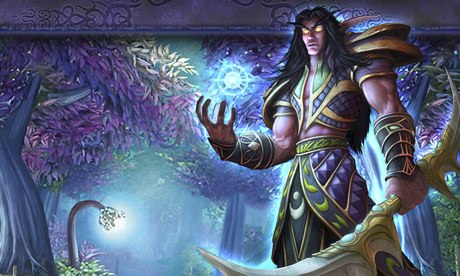
those Orc hordes in World of Warcraft to the human avatars of Second
Life. There were attempts, too, to recruit potential informants from the
games' tech-friendly users.
Online gaming is big business,
attracting tens of millions of users worldwide who inhabit their digital
worlds as make-believe characters, living and competing with the
avatars of other players. What the intelligence agencies feared,
however, was that among these clans of elves and goblins, terrorists
were lurking.
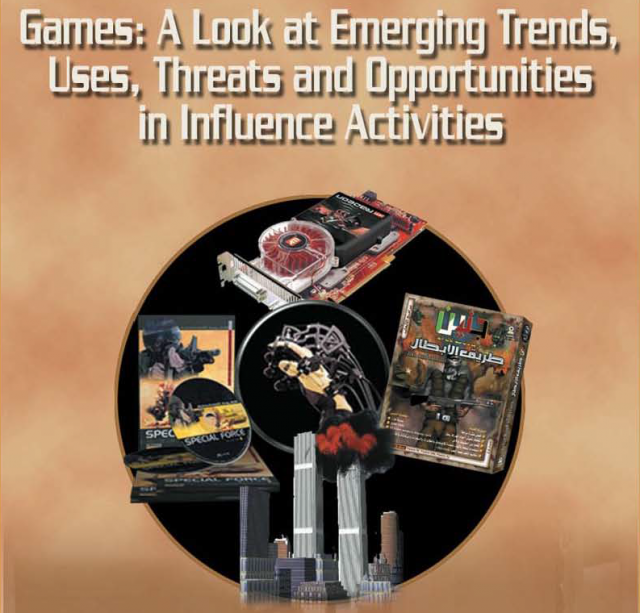
The NSA document, written in 2008 and titled
Exploiting Terrorist Use of Games & Virtual Environments, stressed
the risk of leaving games communities under-monitored, describing them
as a "target-rich communications network" where intelligence targets
could "hide in plain sight".
Games, the analyst wrote, "are an
opportunity!". According to the briefing notes, so many different US
intelligence agents were conducting operations inside games that a
"deconfliction" group was required to ensure they weren't spying on, or
interfering with, each other.
If properly exploited, games could
produce vast amounts of intelligence, according to the NSA document.
They could be used as a window for hacking attacks, to build pictures of
people's social networks through "buddylists and interaction", to make
approaches by undercover agents, and to obtain target identifiers (such
as profile photos), geolocation, and collection of communications.
The
ability to extract communications from talk channels in games would be
necessary, the NSA paper argued, because of the potential for them to
be used to communicate anonymously: Second Life was enabling anonymous
texts and planning to introduce voice calls, while game noticeboards
could, it states, be used to share information on the web addresses of
terrorism forums.
Given that gaming consoles often include voice
headsets, video cameras, and other identifiers, the potential for
joining together biometric information with activities was also an
exciting one.
But the documents contain no indication that the
surveillance ever foiled any terrorist plots, nor is there any clear
evidence that terror groups were using the virtual communities to
communicate as the intelligence agencies predicted.
The operations
raise concerns about the privacy of gamers. It is unclear how the
agencies accessed their data, or how many communications were collected.
Nor is it clear how the NSA ensured that it was not monitoring innocent
Americans whose identity and nationality may have been concealed behind
their virtual avatar.
The California-based producer of World of
Warcraft said neither the NSA nor GCHQ had sought its permission to
gather intelligence inside the game. "We are unaware of any surveillance
taking place," said a spokesman for Blizzard Entertainment. "If it was,
it would have been done without our knowledge or permission."
Microsoft
declined to comment on the latest revelations, as did Philip Rosedale,
the founder of Second Life and former CEO of Linden Lab, the game's
operator. The company's executives did not respond to requests for
comment.
The NSA declined to comment on the surveillance of games.
A spokesman for GCHQ said the agency did not "confirm or deny" the
revelations but added: "All GCHQ's work is carried out in accordance
with a strict legal and policy framework which ensures that its
activities are authorised, necessary and proportionate, and there is
rigorous oversight, including from the secretary of state, the
interception and intelligence services commissioners and the
intelligence and security committee."
Though the spy agencies
might have been relatively late to virtual worlds and the communities
forming there, once the idea had been mooted, they joined in
enthusiastically.
In May 2007, the then-chief operating officer of
Second Life gave a "brown-bag lunch" address at the NSA explaining how
his game gave the government "the opportunity to understand the
motivation, context and consequent behaviours of non-Americans through
observation, without leaving US soil".
One problem the paper's
unnamed author and others in the agency faced in making their case – and
avoiding suspicion that their goal was merely to play computer games at
work without getting fired – was the difficulty of proving terrorists
were even thinking about using games to communicate.
A 2007
invitation to a secret internal briefing noted "terrorists use online
games – but perhaps not for their amusement. They are suspected of using
them to communicate secretly and to transfer funds." But the agencies
had no evidence to support their suspicions.
The same still seemed
to hold true a year later, albeit with a measure of progress: games
data that had been found in connection with internet protocol addresses,
email addresses and similar information linked to terrorist groups.
"Al-Qaida
terrorist target selectors and … have been found associated with Xbox
Live, Second Life, World of Warcraft, and other GVEs [games and virtual
environments]," the document notes. "Other targets include Chinese
hackers, an Iranian nuclear scientist, Hizballah, and Hamas members."
However,
that information wasn not enough to show terrorists are hiding out as
pixels to discuss their next plot. Such data could merely mean someone
else in an internet cafe was gaming, or a shared computer had previously
been used to play games.
That lack of knowledge of whether
terrorists were actually plotting online emerges in the document's
recommendations: "The amount of GVEs in the world is growing but the
specific ones that CT [counter-terrorism] needs to be methodically
discovered and validated," it stated. "Only then can we find evidence
that GVEs are being used for operational uses."
Not actually
knowing whether terrorists were playing games was not enough to keep the
intelligence agencies out of them, however. According to the document,
GCHQ had already made a "vigorous effort" to exploit games, including
"exploitation modules" against Xbox Live and World of Warcraft.
That
effort, based in the agency's New Mission Development Centre in the
Menwith Hill air force base in North Yorkshire, was already paying
dividends by May 2008.
At the request of GCHQ, the NSA had begun a
deliberate effort to extract World of Warcraft metadata from their
troves of intelligence, and trying to link "accounts, characters and
guilds" to Islamic extremism and arms dealing efforts. A later memo
noted that among the game's active subscribers were "telecom engineers,
embassy drivers, scientists, the military and other intelligence
agencies".
The UK agency did not stop at World of Warcraft: by
September a memo noted GCHQ had "successfully been able to get the
discussions between different game players on Xbox Live".
Meanwhile,
the FBI, CIA, and the Defense Humint Service were all running human
intelligence operations – undercover agents – within Second Life. In
fact, so crowded were the virtual worlds with staff from the different
agencies, that there was a need to try to "deconflict" their efforts –
or, in other words, to make sure each agency wasn't just duplicating
what the others were doing.
By the end of 2008, such efforts had
produced at least one usable piece of intelligence, according to the
documents: following the successful takedown of a website used to trade
stolen credit card details, the fraudsters moved to Second Life – and
GCHQ followed, having gained their first "operational deployment" into
the virtual world. This, they noted, put them in touch with an "avatar
[game character] who helpfully volunteered information on the target
group's latest activities".
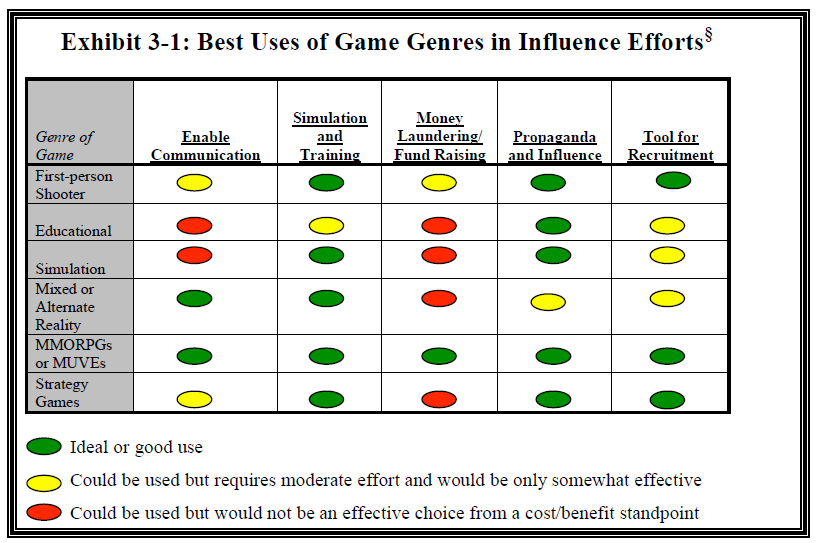
Second Life continued to occupy the
intelligence agencies' thoughts throughout 2009. One memo noted the
game's economy was "essentially unregulated" and so "will almost
certainly be used as a venue for terrorist laundering and will, with
certainty, be used for terrorist propaganda and recruitment".
In
reality, Second Life's surreal and uneven virtual world failed to
attract or maintain the promised mass-audience, and attention (and its
user base) waned, though the game lives on.
The agencies had other
concerns about games, beyond their potential use by terrorists to
communicate. Much like the pressure groups that worry about the effect
of computer games on the minds of children, the NSA expressed concerns
that games could be used to "reinforce prejudices and cultural
stereotypes", noting that Hezbollah had produced a game called Special
Forces 2.
According to the document, Hezbollah's "press section
acknowledges [the game] is used for recruitment and training", serving
as a "radicalising medium" with the ultimate goal of becoming a "suicide
martyr". Despite the game's disturbing connotations, the "fun factor"
of the game cannot be discounted, it states. As Special Forces 2 retails
for $10, it concludes, the game also serves to "fund terrorist
operations".
Hezbollah is not, however, the only organisation to
have considered using games for recruiting. As the NSA document
acknowledges: they got the idea from the US army.
"America's Army
is a US army-produced game that is free [to] download from its
recruitment page," says the NSA, noting the game is "acknowledged to be
so good at this the army no longer needs to use it for recruitment, they
use it for training".

 Posts
Posts




 By Michael Snyder, on December 8th, 2013



 For
the past few months City of London Police have been working together
with the music and movie industries to tackle sites that provide
unauthorized access to copyrighted content.
For
the past few months City of London Police have been working together
with the music and movie industries to tackle sites that provide
unauthorized access to copyrighted content.