This is what "they" are doing/have in store for us !!!!!!!!!!!!!!!!!!!!!....................................WE BETTER get Up to speed FAST !!!!!!!!!!...........
http://www.biolsci.org/v05p0706.htm
Int J Biol Sci
2009; 5(7):706-726.
doi:10.7150/ijbs.5.706
Research Paper
A Comparison of the Effects of Three GM Corn Varieties on Mammalian Health
Joël Spiroux de Vendômois
1, François Roullier
1, Dominique Cellier
1,2, Gilles-Eric Séralini
1,3 
1. CRIIGEN, 40 rue Monceau, 75008 Paris, France
2. University of Rouen LITIS EA 4108, 76821 Mont-Saint-Aignan, France
3. University of Caen, Institute of Biology, Risk Pole CNRS, EA 2608, 14032 Caen, France
How
to cite this article:
de Vendômois JS, Roullier F, Cellier D, Séralini GE. A Comparison of the
Effects of Three GM Corn Varieties on Mammalian Health.
Int J Biol Sci 2009; 5(7):706-726. Available from
http://www.biolsci.org/v05p0706.htm
Abstract
We present for
the first time a comparative analysis of blood and organ system data
from trials with rats fed three main commercialized genetically modified
(GM) maize (NK 603, MON 810, MON 863), which are present in food and
feed in the world. NK 603 has been modified to be tolerant to the broad
spectrum herbicide Roundup and thus contains residues of this
formulation. MON 810 and MON 863 are engineered to synthesize two
different Bt toxins used as insecticides. Approximately 60 different
biochemical parameters were classified per organ and measured in serum
and urine after 5 and 14 weeks of feeding. GM maize-fed rats were
compared first to their respective isogenic or parental non-GM
equivalent control groups. This was followed by comparison to six
reference groups, which had consumed various other non-GM maize
varieties. We applied nonparametric methods, including multiple pairwise
comparisons with a False Discovery Rate approach. Principal Component
Analysis allowed the investigation of scattering of different factors
(sex, weeks of feeding, diet, dose and group). Our analysis clearly
reveals for the 3 GMOs new side effects linked with GM maize
consumption, which were sex- and often dose-dependent. Effects were
mostly associated with the kidney and liver, the dietary detoxifying
organs, although different between the 3 GMOs. Other effects were also
noticed in the heart, adrenal glands, spleen and haematopoietic system.
We conclude that these data highlight signs of hepatorenal toxicity,
possibly due to the new pesticides specific to each GM corn. In
addition, unintended direct or indirect metabolic consequences of the
genetic modification cannot be excluded.
Keywords: GMO, toxicity, GM corn, rat, NK 603, MON 810, MON 863
1. Introduction
There is a world-wide debate concerning the safety and regulatory
approval process of genetically modified (GM) crops and foods [
1,
2].
In order to scientifically address this issue, it is necessary to have
access to toxicological tests, preferably on mammals, performed over the
longest time-scales involving detailed blood and organ system analyses.
Furthermore, these tests should, if possible, be in accordance with
OECD guidelines. Unfortunately, this has been a challenge since usually
these are regulatory tests performed confidentially by industry prior to
commercialization of their GM crops, pesticides, drugs or chemicals. As
a result, it is more instructive to investigate the available data that
allows comparisons of several GMOs consumptions on health effects. This
will allow the most appropriate statistical analyses to be performed in
order to avoid possible false positive as well as false negative
results. The physiological criteria used to either accept or reject any
GM significant effect as relevant should be made clear. Here we discuss
sex-related, temporal, linear and non-linear dose effects which are
often involved in the establishment of chronic and endocrine diseases.
We
investigated three different GM corn namely NK 603, MON 810 and MON
863, which were fed to rats for 90 days. The raw data have been obtained
by European governments and made publically available for scrutiny and
counter-evaluation. These studies constitute a model to investigate
possible subchronic toxicological effects of these GM cereals in mammals
and humans. These are the longest
in vivo tests performed with
mammals consuming these GMOs. The animals were monitored for numerous
blood and organ parameters. One corn (NK 603) has been genetically
engineered to tolerate the broad spectrum herbicide Roundup and thus
contains residues of this formulation. The two other types of GM maize
studied produce two different new insecticides namely modified versions
of Cry1Ab (MON 810) and Cry3Bb1 (MON 863)
Bacillus thuringiensis-derived
proteins. Therefore, all these three GM maize contain novel pesticide
residues that will be present in food and feed. As a result, the
potential effects on physiological parameters, due either to the
recognized mutagenic effects of the GM transformation process or to the
presence of the above mentioned novel pesticides within these plants can
be evaluated in animal feeding studies.
2. Materials and Methods
2.1. Experimental design
The three animal
feeding studies were conducted in two different laboratories and at two
different dates; at Monsanto (Missouri, USA) for NK 603 and MON 810
(June 7, 2000) and at Covance Laboratories Inc. (Virginia, USA) for MON
863 (March 14, 2001) on behalf of Monsanto. The young adult male and
female rats, approximately 4-6 week-old, were of the Sprague-Dawley
albino strain Crl:CD(SD)IGS BR
®, (obtained from Charles River
Laboratories Inc., NY, USA). The animals (400 per GMO; 200 for each
sex) were randomized for similar body weight distribution. In fact,
there were only two treated groups for each sex (20 animals each
consuming specific GM maize feed). Only 10 rats were measured per group
for blood and urine parameters and served as the basis for the major
statistical analyses conducted. In addition, the investigators claimed
that OECD guidelines and standards were followed. For each type of GM
maize, only two feeding doses were tested per sex. This consisted of
either 11 or 33% GM maize in an otherwise equivalent equilibrated diet;
that is when the diet contained only 11% GM maize, the difference was
made up by adding 22% non-GM maize (varieties not indicated). There were
also two comparative control groups fed diets containing similar
quantities of the closest isogenic or parental maize variety.
Furthermore, groups of animals were also fed with diets containing one
of six other normal (non-GM) reference maize lines; the same lines for
the NK 603 and MON 810 tests, but different types for the MON 863
trials. We note that these unrelated, different non-GM maize types were
not shown to be substantially equivalent to the GMOs. The quantity of
some sugars, ions, salts, and pesticide residues, do in fact differ from
line to line, for example in the non-GM reference groups. This not only
introduced unnecessary sources of variability but also increased
considerably the number of rats fed a normal non-GM diet (320) compared
to the GM-fed groups (80) per transformation event, which considerably
unbalances the experimental design. A group consisting of the same
number of animals fed a mixture of these test diets would have been a
better and more appropriate control. In addition, no data is shown to
demonstrate that the diets fed to the control and reference groups were
indeed free of GM feed.
2.2. Data collection
The raw biochemical
data, necessary to allow a statistical re-evaluation, should be made
publically available according to European Union Directive CE/2001/18
but unfortunately this is not always the case in practice. On this
occasion, the data we required for this analysis were obtained either
through court actions (lost by Monsanto) to obtain the MON 863 feeding
study material (June 2005), or by courtesy of governments or Greenpeace
lawyers. We thank the Swedish Board of Agriculture, May 30, 2006 for
making public the NK 603 data upon request from Greenpeace Denmark and
lawyers from Greenpeace Germany, November 8, 2006 for MON 810 material.
This allowed us to conduct for the first time a precise and direct
side-by-side comparison of these data from the three feeding trials with
these GMOs.
Approximately 80 different biochemical and weight parameters, including crude and relative measures (Table
A,
Annexes), were evaluated in serum and urine after 5 and 14 weeks of
feeding. We classified these per organ (markers by site of synthesis or
regulation). These organs weighed at the end of the experimental period,
along with the whole body were: adrenal glands, brain, gonads, heart,
kidneys, liver, and spleen. In addition, some parameters measured were
related to bone marrow (blood cells) and pancreas (glucose) function.
Unfortunately, some important measurements serving as markers for liver
function were not conducted for technical or unknown reasons. This
included gamma glutamyl transferase after 90 days feeding, cholesterol
and triglyceride levels in the NK 603 and MON 810 trials, and cytochrome
P450 family members in all cases. In addition, important sex difference
markers were also ignored such as blood sex or pituitary hormone
levels. Furthermore, it is well known and present in OECD guidelines
that measurements should be conducted for at least 3 different
experimental points to study dose- or time-related effects.
Contrastingly and for reasons that are not stated, in all three studies
for all three GMOs, only 2 doses and periods of feeding were measured,
which makes it difficult to evaluate dose and cumulative effects. We
have in a first instance indicated lacking values for different
parameters (Annexes, Tables
B,
C,
D).
2.3. Statistical power related to the experimental design
The
most fundamental point to bear in mind from the outset is that a sample
size of 10 for biochemical parameters measured two times in 90 days is
largely insufficient to ensure an acceptable degree of power to the
statistical analysis performed and presented by Monsanto. For example,
concerning the statistical power in a t test at 5%, with the comparison
of 2 samples of 10 rats, there is 44% chance to miss a significant
effect of 1 standard deviation (SD; power 56%). In this case to have a
power of 80% would necessitate a sample size of 17 rats. Therefore, the
statistical power is insufficient in these studies to allow an
a priori
dismissal of all significant effects. Indeed, this is true overall with
the amplitude of the effects that can usually be observed within three
months, in the case of usual chronic toxicity appearing after one year
of treatment. Hence, the lack of rejection of the null hypothesis at 5%
does not mean that this hypothesis is true. Thus, the assessment of
statistical power is absolutely necessary to understand the undetectable
size effect; the statistical power depends on the sample and effect
size, and the level of the test. This is exemplified when Monsanto
performed one-way analysis of variance (ANOVA) calculations at 5% with a
sample size of 10 animals for 10 groups. In this case the probability
of not detecting a medium size effect [
3]
(0.5 SD for a t test for instance) is about 70% (power of the test
30%). However, the fact is that within 90 days, a chronic toxicity has a
maximum chance of giving rise to a medium rather than large size
effects. The disturbance of parameters at the beginning of a disease is
generally less important than at its end or as time progresses.
Therefore, the protocol has to be drastically improved at this level,
and as a result we consider that based on the analysis as presented by
Monsanto that it fails to demonstrate that the consumption of these GM
maize feeds was indeed safe as claimed. Any sign of toxicity should be
taken into consideration to justify the prolongation of the experiment,
or, if this is not possible, to reassess the statistical analysis, and
to propose a scientifically valid physiological interpretation of any
findings relating to disturbed functional parameters on a per organ
basis. This was the ultimate objective of this investigation.
In
reality, in their report containing the raw data and statistical
analysis, Monsanto did not apply in any case their chosen and described
statistical methods. Only parametric tests (one-way ANOVA under
homoscedasticity hypothesis and Student t tests on contrasts) were
employed. Moreover, to select significant results, they only contrasted
the data sets from the 33% GM maize feeding groups (for NK 603 and MON
810) with all reference groups. Moreover, their biological
interpretation of statistically significant results differs from case to
case. In particular, sex differences were frequently used to reject
pathological significance, despite the fact that this was without
measuring effects on sex hormone levels. They also used the lack of
linear dose-related effects, which is almost inevitable given that only
two feeding doses were measured, to declare the diet as safe, as
proposed for MON 863 GM maize [
4].
In the MON 863 experiments, the authors still failed to apply their
declared methodology, which was slightly different. The ANOVA and
contrast analysis (33% GM feeding dose versus controls) were in this
case the determining criteria for evaluation of statistical
significance, but only if the mean of the 33% GM feeding group was
outside the range of the mean of the reference cohorts. All this
increases noticeably the risks of false negative results.
Consequently,
based on the clear inadequacy of the statistical power used to refute
toxic effects (for instance the unquestionable large size effects in
this study), knowing also that billions of people and animals can
consume these products prior to the performance of appropriate
in vivo safety evaluation, we applied an appropriate, experimentally validated statistical analytical methodology [
5], elements of which are described below.
2.4. Statistical methods employed
We first
repeated the same statistical analysis as conducted by Monsanto to
verify descriptive statistics (sample size, means, and standard
deviation) and ANOVA per sex, per variable and for each of the three
GMO. For all that, the normality of the residues was tested using the
Shapiro test and the homoscedasticity (homogeneity of the variances)
using the Bartlett test. In the case where the Shapiro and Bartlett
tests were non significant (*p > 0.05 and **p > 0.01,
respectively) we performed an ANOVA [
6,
7],
and in the case of heteroscedasticity the approximate Welch method was
used. In the case where the Shapiro test was significant, we performed
the Kruskal-Wallis rank sum test [
7,
8].
We
then analyzed the effects of the GM maize varieties on each sex and
each diet by pairwise comparisons of the parameters of GM-fed rats
versus control groups, and subsequently to the unrelated non-GM maize
reference groups. The statistical differences between reference and
control groups were calculated in order to study the effects of the
different normal diets
per se (due to differences in salts,
sugars, minerals, vitamins, pesticides, etc composition), and indicated
by contrast to Monsanto's work (see legend Table
1). In order to select the appropriate two-tailed comparison test [
7],
we again studied first normality (Shapiro test) and variance equality
(F test). According to the results, we performed the adapted test; that
is, an unpaired t test, a Welch corrected t test or a Mann-Whitney test
(which is generally more appropriate with a sample size of 10). To
perform multiple pairwise comparisons, we used the False Discovery Rate
approach (FDR, [
9])
to calculate adjusted p-values, in order to limit the rate of false
positives to 5%. We preferred Benjamini and Yekutieli's method [
10] rather than that of Benjamini and Hochberg [
11]
as the parameters under investigation are not independent. In addition,
after centering and scaling the data, Principal Components Analysis
(PCA, [
12]) was
performed in order to study the scattering of the different factors
(sex, period, diet, dose and group). Finally, we established per group
for each rat and by parameter the representations and paired tests
corresponding to the temporal changes between the two feeding periods.
We used the R language [
7] version 2.5 for all statistical computations [
13] with the appropriate package: pwr package for power studies, the bioconductor's multtest package for FDR [
14-
15] and the ADE4 package [
16,
17] for multivariate analysis.
3. Results
We have previously reported indications of toxicity in rats fed with MON 863 GM maize for 90 days [
5].
However, these signs of toxicity alone do not constitute proof of
adverse health effects. We have therefore extended our initial analysis
on the MON 863 feeding data by collectively compiling the significant
differences observed in the physiological and biochemical parameters
measured in feeding trials of rats with each of the three GM maize
varieties MON 863, MON 810 and NK 603 (Tables
1,
2; Annex Table
E).
When we then initially compare all p-values in our calculations with
those of Monsanto (significant and non significant differences, Annex
Table
E), we obtain
ratios of 432/452 (NK 603), 435/450 (MON 810) and 442/470 (MON 863). By
employing our statistical methods even if we reached a concordance with
Monsanto's results (Annex Table
E),
the level of precision of the main effects and their interpretation are
highly different. Therefore, we then progressed to consider only
relative differences over 5% (Tables
1 and
2).
3.1. NK 603
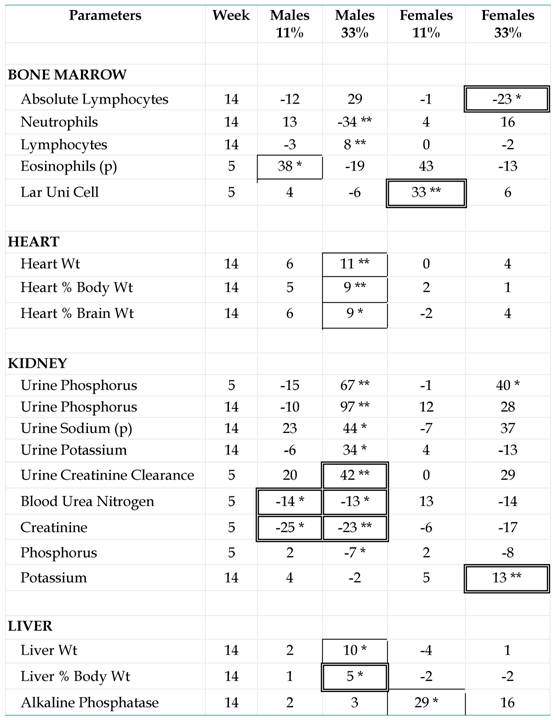
We first evaluated the results for the NK 603 feeding trials. The observations shown in Table
1
with relative differences versus controls reveal that of 23
significantly different effects that are supposed to be due to this GM
maize, 18 are in males (raw means with SEM; Annex Table
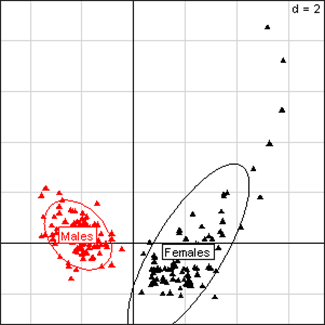
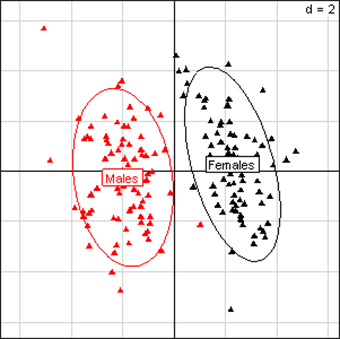
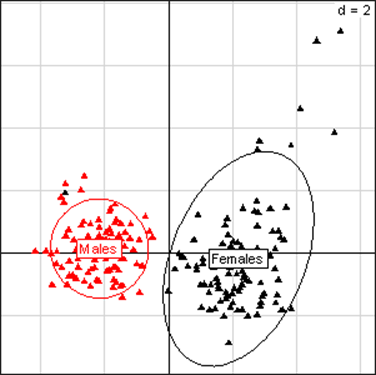
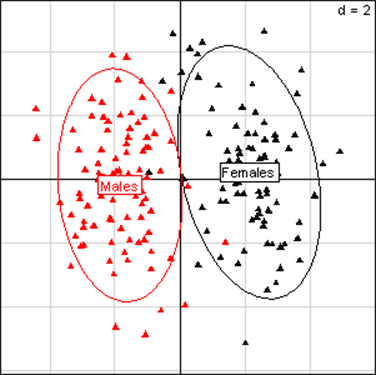
F). The repartition of effects is thus sex-dependent. In addition, in general liver (Fig.
1) and kidney (Fig.
2)
parameters in all rats are sex differentially expressed. This is
evident not only in the experiments involving NK 603, independently of
the treatment at week 14, but also at week 5 (data not shown), but
similarly observed in the MON 810 and MON 863 feeding tests (Annex Fig.
A- Fig.
D).
Males
are clearly more sensitive than female animals to show physiological
disturbances when fed NK 603. This is not observed for all three GM
maize varieties. Moreover, most effects appear to be dose-dependent
since 83% of male effects emerge only at the 33% feeding level (15/18),
the highest GM maize concentration in the diet (Table
1). The maximal mean differences are observed in male kidney parameters.
Urine
phosphorus, for instance, is importantly disturbed in a dose-dependent
manner and at both 5 and 14 week periods of feeding and hence
reproducible over time. The significant effect at this level does not
appear to be a false positive result (week 5, 33%, adjusted p<0.003
for FDR calculated according to Benjamini and Yekutieli), considering
that all parameters were not independent. Comparable results were also
obtained for relative lymphocyte and neutrophil differences (all for
males, week 14, 33%, adjusted p<0.005).
Table 1
Differences between NK 603-fed rats and controls. Study of the
GMO effects, which are indicated by mean differences (%) for each
parameter with the corresponding control group per sex and per dose. The
significant differences versus controls (*p < 0.05, **p < 0.01),
for all the parameters measured in the subchronic feeding tests, are
presented. The parameters were grouped by organs according to the sites
of synthesis or classical indicators of dysfunction. They were indicated
for all groups only if they showed at least for one sex or one diet a
significant and relatively ± 5% difference to the mean. The animals were
male (m) or female (f) young adult rats fed during 5 or 14 weeks with
the GM maize NK 603 (11 or 33% in the diet) and compared with controls
fed with a ''substantially equivalent'' isogenic maize line. The
parameters were measured for 10 rats, except for the organ weights (20
rats), obtained only at the end of the experiment. In single-boxed
numbers, we indicate the statistical differences between GMO-fed rats
and controls, which are not found between the mean of the six reference
groups and controls. A difference between reference and control groups
could indicate an effect of the diet per se. In double-boxed numbers,
among the effects due to the GMO, are indicated the statistical
differences between the GMO groups and the mean of the six reference
groups (which have not even eaten a genetically linked variety of maize
as the control and the GMO treated groups). (p): Differences for the
indicated parameters are not significant by a nonparametric test but by a
parametric one; all other differences by both. “Lar Uni Cell” means
percent of large unnucleated cell count.

(Click on the image to enlarge.)
Fig 1
Principal Component Analysis for liver parameters of all rats in the NK 603 feeding trial. The
scheme obtained for parameters at week 14 explains 66.65% of the total
data variability (inertia) expressed on 2 axes (49.84% for factor 1;
16.81% for factor 2), scale d=2. This demonstrates the clear separation
of parameters values according to sex.

(Click on the image to enlarge.)
Fig 2
Principal Component Analysis for kidney parameters of all rats in the NK 603 experiment. The
scheme obtained for parameters at week 14 explains 44.78% of the total
data variability (inertia) expressed on 2 axes (27.27% for factor 1;
17.51% for factor 2), scale d=2. This demonstrates the clear separation
of parameters values according to sex.

(Click on the image to enlarge.)
Among
18 GM maize-related effects versus controls, 11 show that groups of
reference and control animals are similar in these cases (Table
1, framed values). However 6 GM-linked effects are also significant versus all reference groups (Table
1,
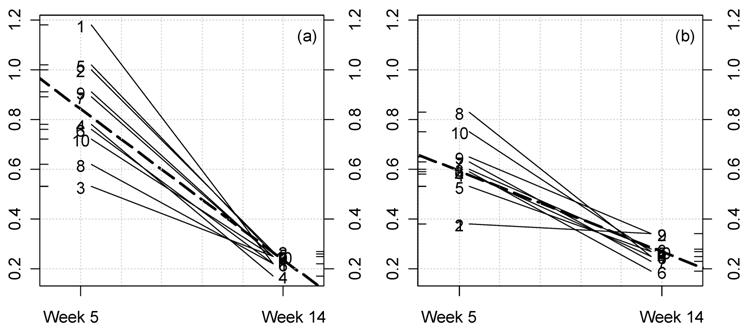
double framed values). At week 5, these relative maximal effects
concern a diminution of blood and increase of urine creatinine
clearance, and then a diminution of blood urea nitrogen. This is not
observed at week 14 (Fig.
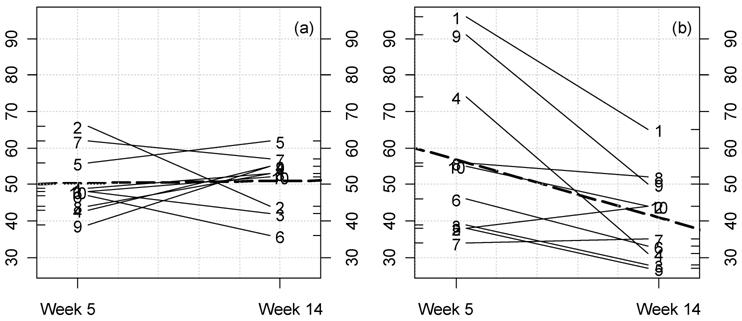
3a,b).
Even so, the kidney parameters measured are clearly the most reactive
in both sexes; 52% of significant effects are noticed at this level, but
kidney parameters represent only 31% of those measured in total. We
also observe that ion concentrations are enhanced in urine of male GM
fed rats. Besides this, crude and relative liver weights are also
affected at the end of the maximal (33%) GM maize feeding level as well
as that of the heart which for corresponding parameters to a comparable
extent, showed up to an 11% weight increase. Variations in females are
far less frequent (5/23), with no clear significant differences except
for urine phosphorus (major relative difference versus controls) and
blood potassium (versus all groups).
3.2. MON 810
Feeding of MON 810 resulted in 11/15 significant effects in females (Table
2, crude means with SEM; Annex Table
G),
which again highlights sex-differential effects. The sex-dependency for
the measured parameters in liver and kidney is observed for all rats
(Annex Fig.
A & Fig.
B).
The significant GM-maize linked effects are generally detected either
after 14 weeks of consumption or at a high GM feed dose in the diet.
Parameters affected relate to: blood cells, adrenal gland and kidney
weights, an increase in blood urea nitrogen and higher spleen weight.
Significantly disturbed parameters in males are concentrated in liver
function at the 33% GM-maize feeding level in the diet, with a slight
diminution in general serum albumin production. All disturbances are
<20% and p-values are significant but >1% (Table
2, starred values). However, p-values adjusted for FDR are not significant.
Table 2
Differences between MON 810-fed rats and controls. For details, see legend Table
1.

(Click on the image to enlarge.)
3.3. MON 863
We have already described our evaluation of the MON 863 rat feeding studies [
5]. Sex-dependency is well marked in this case also for the spreading of all parameters in liver and kidney (Annex Fig.
C & Fig.
D).
The 34 significant GM-linked effects are equally distributed among
males (16) and females (18). This contrasts with what is observed with
NK 603 and MON 810. Nevertheless, 9/16 (56%) of males show statistically
significant differences in kidney compared to 4/18 females. However,
although kidney parameters represent only 37.5% of all measurements,
these data show a male-specific effect in kidney function. This trend is
somewhat opposite to what is seen in liver parameters where males
showed significant effects in 5/16 cases whereas the rate is 9/18 in
females. Male rats also appear more sensitive to kidney disturbances at
the higher GM feeding dose (11 effects at 33% versus 5 at 11%).
Additional
statistically significant differences include (i) a serum glucose and
triglyceride increase (up to 40%) in females versus controls, together
with a higher liver (7%) and overall body (3.7%) weight, (ii) elevated
creatinine, blood urea nitrogen and urine chloride excretion in females,
but greater variation in male kidney function (creatinine, and in urine
sodium, potassium and phosphorus), (iii) up to a significant kidney
weight decrease (7%) with a noticeable chronic nephropathy in males [
18],
(iv) a decrease (3.3%) in male body weights and (v) some liver function
differences in males (albumin, globulin, as in females, plus alanine
aminotransferase), although none of the FDR-adjusted p-values are
significant.
Furthermore, we have also measured in this study for
the first time the differences between time-related variations (at weeks
5 and 14) for this GM maize variety, at each feeding dose versus
controls. We have represented these variations for each rat for all
parameters. Among these, the significant variations corresponding to
disturbed parameters are illustrated (Figs.
4-
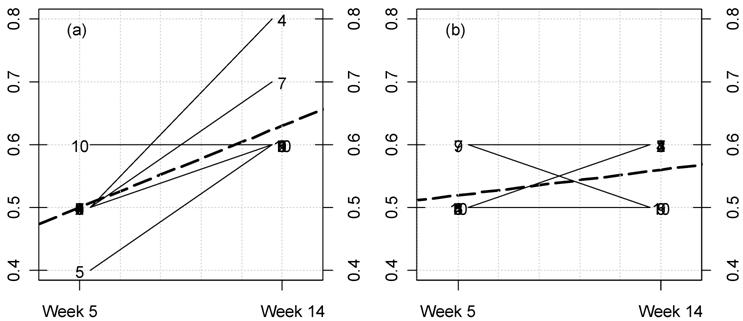
7). Our analysis clearly shows that female rat triglyceride levels vary between 5 and 14 weeks of feeding (Fig.
4;
p=0.025). Triglyceride levels increase over time within the GM maize
feeding group and whilst decreasing in the case of controls. Again in
females, the increase in creatinine caused by MON 863 is more evident
with longer feeding periods at an 11% level (Fig.
5;
p=0.022). Another significant difference (p=0.011), which we observe is
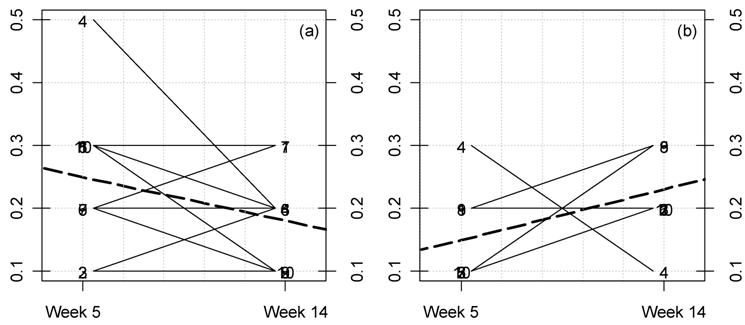
a reciprocal variation in female urine chloride excretion (Fig.
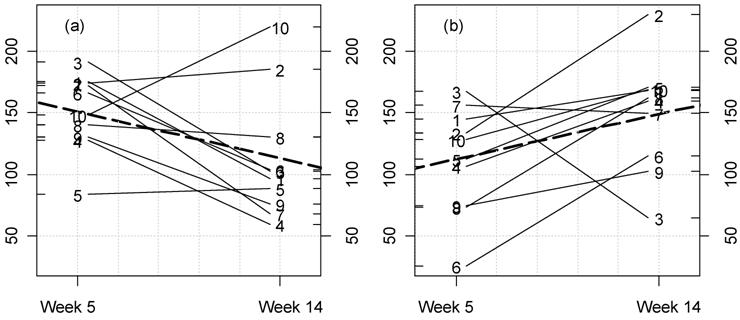
6). In the males, only urine potassium decreases over time with the consumption of GM feed but increases in controls (Fig.
7, p=0.011).
In
summary, the tendency for physiological disturbance is characteristic
of almost all rats of all GM-fed treatment groups, and
physio-pathological profiles differ according to dose or sex.
Fig 3
Kinetic plot for urine creatinine clearance in male rats fed NK 603.
For each rat at 33% GM maize feed level (a) and controls (b) the lines
represent the variations between week 5 and 14 for this parameter
(ml/min/100 g body weight). The dotted thick line represents the means
variation.

(Click on the image to enlarge.)
Fig 4
Kinetic plot for female rat triglyceride levels in the MON 863 feeding trial.
For each rat at 11% GM maize feed level (a) and controls (b) the lines
represent the variations between week 5 and 14 for this parameter
(mg/dL). The dotted thick line represents the mean variation.

(Click on the image to enlarge.)
Fig 5
Kinetic plot for creatinine levels in female rats fed MON 863.
For each rat at 11% GM maize feeding level (a) and controls (b) the
lines represent the variations between week 5 and 14 for this parameter
(mg/dL). The dotted thick line represents the mean variation.

(Click on the image to enlarge.)
Fig 6
Kinetic plot for urine chloride excretion in female rats fed MON 863.
For each rat at 33% GM feed level (a) and controls (b) the lines
represent the variations between week 5 and 14 for this parameter
(meq/time). The dotted thick line represents the mean variation.

(Click on the image to enlarge.)
Fig 7
Kinetic plot for urine potassium in male rats fed MON 863. For
each rat at 11% GM maize level (a) and controls (b) the lines represent
the variations between week 5 and 14 for this parameter (mmol/L). The
dotted thick line represents the mean variation.

(Click on the image to enlarge.)
4. Discussion
If a “sign of toxicity” may only provoke a reaction, pathology or a
poisoning, a so-called “toxic effect” is without doubt deleterious on a
short or a long term. Clearly, the statistically significant effects
observed here for all three GM maize varieties investigated are signs of
toxicity rather than proofs of toxicity, and this is essentially for
three reasons. Firstly, the feeding trials in each case have been
conducted only once, and with only one mammalian species. The
experiments clearly need to be repeated preferably with more than one
species of animal. Secondly, the length of feeding was at most only
three months, and thus only relatively acute and medium-term effects can
be observed if any similar to what can be derived in a process such as
carcinogenesis [
19,
20] or after endocrine disruption in adults [
21].
Proof of toxicity is hard to decide on the basis of these conditions.
Longer-term (up to 2 years) feeding experiments are clearly justified
and indeed necessary. This requirement is supported by the fact that
cancer, nervous and immune system diseases, and even reproductive
disorders for examples can become apparent only after one or two years
of a given intervention treatment under investigation, but they will not
be evident in all cases after three months of administration when first
signs of toxicity may be observed [
22,
23].
In addition, large effects (e.g. 40% increase in triglycerides) in all
likelihood will be missed with the protocol of the current studies,
since they are limited by the number of animals used in each feeding
group and by the nature of the parameters studied. Thirdly, the
statistical power of the tests conducted is low (30%) because the
experimental design of Monsanto (see Materials and Methods). However, it
is important to note that these short-term (3-month) rat feeding trials
are the only tests conducted on the basis of which regulators determine
whether these GM crop/food varieties are as safe to eat as conventional
types. Given that these GM crops are potentially eaten by billions of
people and animals world-wide, it is important to discuss whether the
experimental design, the statistical analyses and interpretations
originally undertaken are appropriate and sufficient.
Any
differences observed in comparison with the isogenic variety, has to be
taken into account as a potential physiological disruption. This is
particularly valid since any statistically differences that are observed
are highly unlikely to be arising from population variation as in the
case of humans due to the genetic homogeneity of the rat strain used in
these studies. Moreover, the standardized conditions of rat maintenance
employed, which are stated to be in accordance with OECD standards [
24,
25],
make the diet the only factor of variation in the protocol. Thus, the
GM maize component of the test diet is the major factor of difference if
one directly compares treated rats and controls. This is indicated by
stars in the Tables expressing the total characteristics of GM-linked
physio-pathological profiles. The other results that are encompassed by
frames in the Tables highlight that effects from the GM maize are over
and above those observed for any of the six different diets; for
instance, over that observed with a diet richer in salt or sugar over
the 3-month feeding period. These additional “control” diets could have
been avoided with an experimental design that truly focused on the
general question of GM toxicity.
The first observation that we
were able to make was that there is a good general concordance between
our data and the results of Monsanto as presented in their original
confidential reports, in particular on the proportion of statistically
significant observations. However, the methodology we employed revealed
different effects, which completely changed the interpretation of the
experimental results. For instance, the sex differences are fully taken
into account in our study, which contrasts with the first published
comments of these data [
18,
26,
27].
We evaluated and took note of differences in the reaction of male and
female rats to the GM maize test diets based on accepted and now
classical knowledge of endocrinology [
28], embryology [
29,
30], physiology [
31,
32], enzymology or hepatology [
33]
demonstrating sex-specific physio-pathological effects. Indeed, our
present results fully confirmed the sex-specific distribution of effects
on kidney and liver parameters for all rats in all three studies
analyzed here. An identical effect in both sexes would have been
exceptional, like with strong or acute toxicity. This is obviously not
the case here. In addition, we considered equally important effects that
were neither time nor dose related, even if we detailed these when
observed in the results. The proof for a linear dose dependency, as
requested by Doull and coll. [
4]
to determine the significance of effects, is impossible with only two
feeding points with no prior standardization. Furthermore, a metabolic
reaction either physiological or pathological is not necessarily linear
in its response [
34,
35]. Again, this does not invalidate a description of effects appearing at the higher GM feed doses.
Even
if the significant differences are around 5% of all comparisons for
each GM corn, we believe that they either constitute a very good
possibility to represent signs of toxicity, or at the very least should
be considered as sufficiently strong evidence to justify a repeat of the
experiments incorporating longer feeding times, for several reasons.
Firstly, the arguments of Hammond and coll. [
18,
26,
27] from Monsanto and Doull and co-workers [
4] cannot demonstrate that the statistically significant GM-feed linked differences are not physiologically relevant [
2].
Secondly, very few GM-feed effects appear only at the low dose or after
the shortest (5 week) feeding period; 8.6% for NK 603, 6.6% for MON
810, 14.7% for MON 863 (Tables
1,
2, and ref. [
5]).
Thirdly, the marked sex difference effects observed for the GM maize
feeding groups, in several instances, are found for physiological
markers in all rats. Therefore, there is little probability that these
effects were a random, chance occurrence. Fourthly, our stringent
statistical tools allowed differentiation of GM-feed impacts from
differences arising from variation in the composition of other reference
diet. This is the first time that such an analysis has been conducted.
Fifthly, there is a lack of cancer, hormonal or hepatic functional
marker measurements (for example, oncogene expression, sex steroid
hormone levels, cytochrome P450 levels), that could have provided
explanatory insight into the results. The lack of availability of this
type of data may be of benefit to those that doubt the current
observations provide evidence of potential signs of toxicity. Sixthly,
the physiological and biochemical parameters found to be disrupted in
these feeding studies frequently provide a coherent, GM-specific picture
of events, which corresponds and is in support of the generally
admitted concept held by industry and regulators that GM crops and food
should be considered on a case by case basis. Seventhly, several
double-framed outcomes encompass all dietary effects only after the 3
month period of feeding. Last but not least, the most marked and most
numerous effects are on organs involved in detoxification like the
kidney and liver, usually reached after a diet-linked toxicity.
For
instance in the NK 603 study statistically significant strong urine
ionic disturbances and kidney markers imply renal leakage. This includes
creatinine (increased urinary clearance), together with its diminution
in the blood, and the decrease in urea nitrogen. Blood creatinine
reduction has in some cases been found to be associated with muscle
problems. It is therefore perhaps of note that the heart, as a very
representative muscle organ was affected in the GM feeding groups. The
possibility of renal porosity as evidenced by these data may be due to
the presence of residues of Roundup herbicide, that are present in GM
crop varieties such as the NK 603 maize investigated here. We have
previously demonstrated that glyphosate-based herbicides such as Roundup
are highly toxic at very low concentrations to human embryonic kidney
cells [
36], inducing a decrease in viability, noticeably via inhibition of mitochondrial succinate dehydrogenase.
The
deficiency in kidney function we highlight to be present in male rats
is different between animals fed NK 603 and MON 863. The latter is
characterized by an increase in plasma creatinine levels and retention
of ions, which were associated with a chronic interstitial nephropathy,
as originally admitted in the Monsanto MON 863 report and by Hammond and
coll. [
18].
However, this disturbance in kidney function was dismissed in their
conclusions because the strain of rat used in the feeding studies is
apparently sensitive to this type of pathology, especially during aging,
which was not the case here. However, this reasoning was admitted by
various regulatory authorities (EFSA, CGB in France). These arguments
again appear flawed as the rats were still relatively young, 5 months by
the end of the experimental period and therefore below the age when
they might be expected to spontaneously develop kidney diseases. More
importantly, these kidney effects are clearly MON 863-specific since
they are not observed with all three GM maize varieties and the control
groups, and therefore could not have arisen from an inherent genetic
predisposition of the strain of rat used, which in addition was the same
in all cases. Overall, no kidney parameters in male animals are
disrupted in the MON 810 feeding group, even though sensitivity to
toxics appears in general to be greater in this sex [
37,
38].
An additional contributory factor to this disturbance in kidney
function could arise from either novel unintended toxic effect caused by
the inherent mutagenic effect of the GM technology, or possibly due to
the new mutant forms of Bt toxin produced by MON 863, which is
completely different from that engineered into MON 810. However, MON
810-fed females have a slight kidney weight enhancement, which may
correspond with a mild hyperplasia usually seen in association with
immune inflammatory processes. A re-evaluation of the histological
slides from these animals would be of interest to test this hypothesis.
Furthermore, analysis of some pertinent markers of kidney function such
as arterial tension or angiotensin levels are lacking from these
studies. This type of investigation including controls where animals are
fed a normal diet spiked with the corresponding purified Bt toxin,
would allow a more rational and precise interpretation of the results.
In the case of the MON 863 feeding trials, which have previously been discussed [
5] and are at the center of a debate [
2,
4],
new results have been obtained by the re-evaluation of the data with
more powerful statistical methods as we present here. In female rats,
there is a risk of becoming pre-occupied with the reactions already
ascribed to the GM feeding group since several parameters indicate
increases in circulating glucose and triglyceride levels, with liver
function parameters disrupted together with a slight increase in total
body weight [
5].
This physiological state is indicative of a pre-diabetic profile. We
demonstrate here that in female animals triglycerides profile,
creatinine or urine chloride excretion are differentially and
specifically altered over time in comparison to control groups,
depending on the GMO dose. All these disruptions and differences taken
together could be interpreted as clear signs of toxicity.
The
effects found after only 5 weeks of feeding or at lower 11% feed dose,
cannot be neglected simply on the basis that they are less frequently
observed. Compensation or recuperation could occur after tissues are
harmed, as possibly observed in the case of mice fed a diet containing
Roundup Ready GM soy [
39].
Peak inflammatory processes may occur in damaged tissues, followed by a
regeneration phase as observed after bacteria/viral infection or a
chemical toxic insult [
40,
41].
For instance, urine potassium decreases in male rats over time in the
GM MON 863 group at the 11% feed dose, which was not observed in all but
one of the controls. This effect is specifically time-dependent and
thus does not appear to be artefactual. This type of punctual
regeneration may be part of a carcinogenic process, and clearly even if
total recovery occurs, this should not be taken as a sign that the GM
feed is safe.
5. Conclusions
Patho-physiological profiles are unique for each GM crop/food,
underlining the necessity for a case-by-case evaluation of their safety,
as is largely admitted and agreed by regulators. It is not possible to
make comments concerning any general, similar subchronic toxic effect
for all GM foods. However, in the three GM maize varieties that formed
the basis of this investigation, new side effects linked to the
consumption of these cereals were revealed, which were sex- and often
dose-dependent. Effects were mostly concentrated in kidney and liver
function, the two major diet detoxification organs, but in detail
differed with each GM type. In addition, some effects on heart, adrenal,
spleen and blood cells were also frequently noted. As there normally
exists sex differences in liver and kidney metabolism, the highly
statistically significant disturbances in the function of these organs,
seen between male and female rats, cannot be dismissed as biologically
insignificant as has been proposed by others [
4].
We therefore conclude that our data strongly suggests that these GM
maize varieties induce a state of hepatorenal toxicity. This can be due
to the new pesticides (herbicide or insecticide) present specifically in
each type of GM maize, although unintended metabolic effects due to the
mutagenic properties of the GM transformation process cannot be
excluded [
42]. All
three GM maize varieties contain a distinctly different pesticide
residue associated with their particular GM event (glyphosate and AMPA
in NK 603, modified Cry1Ab in MON 810, modified Cry3Bb1 in MON 863).
These substances have never before been an integral part of the human or
animal diet and therefore their health consequences for those who
consume them, especially over long time periods are currently unknown.
Furthermore, any side effect linked to the GM event will be unique in
each case as the site of transgene insertion and the spectrum of genome
wide mutations will differ between the three modified maize types. In
conclusion, our data presented here strongly recommend that additional
long-term (up to 2 years) animal feeding studies be performed in at
least three species, preferably also multi-generational, to provide true
scientifically valid data on the acute and chronic toxic effects of GM
crops, feed and foods. Our analysis highlights that the kidneys and
liver as particularly important on which to focus such research as there
was a clear negative impact on the function of these organs in rats
consuming GM maize varieties for just 90 days.
Abbreviations
GM: genetically modified; m: modified toxin by mutagenesis.
Acknowledgements
We thank Michael Antoniou for assistance and comments on the
compilation of this manuscript. The support of the French Ministry of
Research is gratefully acknowledged.
Greenpeace contributed to the
start of the investigations by funding first statistical analyses in
2006, the results were then processed further and evaluated
independently by the authors.
Conflict of Interests
The authors declare that there is no conflict of interest.
References
1.
Konig A, Cockburn A, Crevel RWR. et al. Assessment of the safety of foods derived from genetically modified (GM) crops. Food Chem Toxicol. 2004;42:1047-88
2.
Séralini GE, Spiroux de Vendômois J, Cellier D. et al. How subchronic and chronic health effects can be neglected for GMOs, pesticides or chemicals. Int J Biol Sci. 2009;5:438-43
3.
Cohen J. Statistical power analysis for the behavioral sciences. Hillsdale, USA:
Lawrence Erlbaum Associates Publisher. 1988
4.
Doull J, Gaylor D, Greim HA. et al. Report of an Expert
Panel on the reanalysis by Séralini et al. (2007) of a 90-day study
conducted by Monsanto in support of the safety of a genetically modified
corn variety (MON 863). Food Chem Toxicol. 2007;45:2073-85
5.
Séralini GE, Cellier D, Spiroux de Vendômois J. New analysis of a rat feeding study with a genetically modified maize reveals signs of hepatorenal toxicity. Arch Environ Contam Toxicol. 2007;52:596-602
6.
Chambers JM, Freeny A, Heidelberger RM. Analysis of variance; design experiments in statistical models. London, UK:
Wadsworth & Brooks/Cole. 1992
7.
Crawley MJ. Statistics an introduction using R. London, UK:
Wiley. 2005
8.
Hollander M, Wolfe DA. Nonparametric statistical inference. In:
John Wiley & sons, ed, New York. 1973:115-20
9.
Shaffer JP. Multiple hypothesis testing. Annu Rev Psychol. 1995;46:561-84
10.
Benjamini Y, Yekutieli D. The control of the false discovery rate in multiple hypothesis testing under dependency. The Annals of Statistics. 2001;29:1165-88
11.
Benjamini Y, Hochberg Y. Controlling the false discovery rate: a practical and powerful approach to multiple testing. JRSSB. 1995;57:289-300
12.
Hotelling H. Analysis of a complex of statistical variables into principal components. J Educ Psychol. 1933;24:417-41
14.
Bioinformatics and Computational Biology Solutions Using R and Bioconductor; Series: Statistics for Biology and Health.
2005 Gentleman RC, Carey VJ, Huber W, et al.
http://www.springer.com/series/2848
16.
Thioulouse J, Chessel D, Dolédec S. et al. ADE-4: a multivariate analysis and graphical display software. Statistics and Computing. 1996;7:75-83
17.
Chessel D, Dufour AB, Thioulouse J. The ade4 package-I- One-table methods. R News. 2004;4:5-10
18.
Hammond B, Lemen J, Dudek R. et al. Results of a 90-day safety assurance study with rats fed grain from corn rootworm-protected corn. Food Chem Toxicol. 2006;44:147-60
19.
Farber E. Cancer development and its natural history a cancer prevention perspective. Cancer. 1988;62:1676-79
20.
Chakraborty T, Chatterjee A, Rana A. et al. Carcinogen-induced
early molecular events and its implication in the initiation of
chemical hepatocarcinogenesis in rats: Chemopreventive role of vanadium
on this process. Biochim Biophys Acta. 2007;1772:48-59
21.
Vos JG, Dybing E, Greim H A. et al. Health effects of endocrine-disrupting chemicals on wildlife, with special reference to the European situation. Crit Rev Toxicol. 2000;30:71-133
22.
Clarke J, Hurst C, Martin P. et al. Duration of chronic toxicity studies for biotechnology-derived pharmaceuticals: Is 6 months still appropriate. Regul Tox Pharmacol. 2008;50:2-22
23.
EFSA GMO Panel. Safety and nutritional assessment of GM plants and derived food and feed: the role of animal feeding trials. Food Chem Toxicol. 2008;46(Suppl 1):S2-70
24.
OECD: Safety evaluation of foods derived by modern biotechnology: Concepts and principles; Paris, France: 1993.
http://www.oecd.org
25.
OECD: Report of the workshop on the toxicological and nutritional testing of novel foods. SG/ICGB(98)1.1997.
http://www.oecd.org
26.
Hammond B, Dudek R, Lemen J. et al. Results of a 13 week safety assurance study with rats fed grain from glyphosate tolerant corn. Food Chem Toxicol. 2004;42:1003-14
27.
Hammond BG, Dudek R, Lemen JK. et al. Results of a 90-day safety assurance study with rats fed grain from corn borer-protected corn. Food Chem Toxicol. 2006;44:1092-9
28.
Reinisch JM, Ziemba-Davis M, Sanders SA. Hormonal contributions to sexually dimorphic behavioral development in humans. Psychoneuroendocrinology. 1991;16:213-78
29.
Agras K, Willingham E, Shiroyanagi Y. et al. Estrogen receptor-alpha and beta are differentially distributed, expressed and activated in the fetal genital tubercle. J Urol. 2007;177:2386-92
30.
Grimm VE, Frieder B. Differential vulnerability of male and female rats to the timing of various perinatal insults. Int J Neurosci. 1985;27:155-64
31.
Toufexis D. Region- and sex-specific modulation of anxiety behaviours in the rat. J Neuroendocrinol. 2007;19:461-73
32.
Weinberg J, Sliwowska JH, Lan N. et al. Prenatal alcohol exposure: foetal programming, the hypothalamic-pituitary-adrenal axis and sex differences in outcome. J Neuroendocrinol. 2008;20:470-88
33.
Lupp A, Hugenschmidt S, Rost M. et al. Influence of
recipient gender on intrasplenic fetal liver tissue transplants in rats:
cytochrome P450-mediated monooxygenase functions. Toxicology. 2004;197:199-212
34.
Goldsmith JR, Kordysh E. Why dose-response relationships are often non-linear and some consequences. J Expo Anal Environ Epidemiol. 1993;3:259-76
35.
Calabrese EJ, Baldwin LA. Hormesis: U-shaped dose responses and their centrality in toxicology. Trends Pharmacol Sci. 2001;22:285-91
36.
Benachour N, Sipahutar H, Moslemi S. et al. Time- and dose-dependent effects of roundup on human embryonic and placental cells. Arch Environ Contam Toxicol. 2007;53:126-33
37.
Iliescu R, Yanes LL, Bell W. et al. Role of the renal nerves in blood pressure in male and female SHR. Am J Physiol Regul Integr Comp Physiol. 2006;290:R341-44
38.
Attia DM, Goldschmeding R, Attia MA. et al. Male gender increases sensitivity to renal injury in response to cholesterol loading. Am J Physiol Renal Physiol. 2003;284:F718-26
39.
Malatesta M, Baldelli B, Battistelli S. et al. Reversibility of hepatocyte nuclear modifications in mice fed on genetically modified soybean. Eur J Histochem. 2005;49:237-42
40.
Mehendale HM. Mechanism of the lethal interaction of chlordecone and CCl4 at non-toxic doses. Toxicol Lett. 1989;49:215-41
41.
Pickart L. The human tri-peptide GHK and tissue remodeling. J Biomater Sci Polym Ed. 2008;19:969-88
42.
Latham JR, Wilson AK, Steinbrecher RA. The Mutational Consequences of Plant Transformation. J Biomed Biotech. 2006;25376:1-7
Author contact
Correspondence to: Prof. Gilles-Eric Séralini, Institute of Biology, EA
2608, University of Caen, Esplanade de la Paix, 14032 Caen Cedex,
France. Phone +33 2 31 56 56 84; Fax +33 2 56 53 20; Email: criigen@unicaen.fr.
Authors Biographies
Prof. Gilles-Eric Séralini is a molecular biologist at the
University of Caen, team leader and author of books on environment and
GMOs. He was expert for the French government (1998-2007) and the
European Union at the WTO level and for the council of Ministers on GMOs
(2003, 2008), president of the scientific council for independent
research on genetic engineering (CRIIGEN), and receiver of Order of
Merit for his scientific career (2008). Correspondence:
criigen@unicaen.fr
Dr. Joël Spiroux de Vendômois is doctor
in medicine, specialist in environmental pathologies and co-organizer of
the first European meeting on environmental pathologies.
François ROULLIER is a statistician.
Dr. Dominique CELLIER is a researcher in bioinformatics, co-organizer of a Master 2 in bioinformatics and statistics at the University of Rouen.
ANNEXES
Table A
Parameters as measured by Monsanto in subchronic toxicological studies in rats, sorted by organs. *
data available only for MON 863; ** raw data not analyzed by Monsanto
for MON863; # data available only for NK 603 and MON 810; ## raw data
lacking in the original NK 603 and MON 810 reports from Monsanto, ? non
understandable lack of data.
| Parameters (total 83) | Units | Weeks | Abbreviations |
|---|
| Body Weight (Wt) | g | 14 | TBWEIGHT |
| Adrenal (3) |
|
|
|
| Adrenal Wt | g | 14 | ADRENAL |
| Adrenal % Body Wt | % | 14 | ADRENAL_%Body |
| Adrenal % Brain Wt | % | 14 | ADRENAL_%Brain |
| Brain (2) |
|
|
|
| Brain Wt | g | 14 | BRAIN |
| Brain % Body Wt | % | 14 | BRAIN_%Body |
| Bone marrow (22) |
|
|
|
| White Blood Cell | x10E3/ µL | 5, 14 | WBC |
| Platelet Count | x10E3/ µL | 5, 14 | PLT |
| Absolute Neutrophils | x10E3/ µL | 5, 14 | ABS_NEUT |
| Absolute Lymphocytes | x10E3/ µL | 5, 14 | ABS_LYMPH |
| Absolute Monocytes | x10E3/ µL | 5, 14 | ABS_MONO |
| Absolute Eosinophils | x10E3 /µL | 5, 14 | ABS_EOS |
| Absolute Basophils | x10E3/ µL | 5, 14 | ABS_BASO |
| Absolute Lar Uni Cell # | x10E3/ µL | 5, 14 | ABS_LUC |
| Neutrophils ** | % | 5, 14 | NEUT |
| Lymphocytes ** | % | 5, 14 | LYMPH |
| Monocytes ** | % | 5, 14 | MONO |
| Eosinophils ** | % | 5, 14 | EOS |
| Basophils ** | % | 5, 14 | BASO |
| Lar Uni cell # | % | 5, 14 | LUC |
| Red Blood Cell | x10E6 µL | 5, 14 | RBC |
| Hemoglobin Conc. | g/dL | 5, 14 | HGB |
| Hematocrit | % | 5, 14 | HCT |
| Mean Corpuscular Vol. | fL | 5, 14 | MCV |
| Mean Corpuscular Hgb | pg | 5, 14 | MCH |
| Mean Corpuscular Hgb Conc. | g/dL | 5, 14 | MCHC |
| Absolute Reticulocyte Count * | x10E3/ µL | 5, 14 | ABS_RETIC |
| Reticulocyte Count * | %RBC | 5, 14 | RETIC |
| Liver (17) |
|
|
|
| Liver Wt | g | 14 | LIVER |
| Liver % Body Wt | % | 14 | LIVER_%Body |
| Liver % Brain Wt | % | 14 | LIVER_%Brain |
| Albumin | g/dL | 5, 14 | ALBUMIN |
| Globulin | g/dL | 5, 14 | GLOBULIN |
| Albumin/Globulin Ratio | - | 5, 14 | A/G_RATIO |
| Alanine Aminotransferase | U/L | 5, 14 | SGPT_ALT |
| Aspartate Aminotransferase | U/L | 5, 14 | SGOT_AST |
| Alkaline Phosphatase /AMP | U/L | 5, 14 | ALKPHOS |
| Total Protein | g/dL | 5, 14 | TOT_PROTEIN |
| Gamma Glutamyl Transferase | U/L | 5, ? | GAMMA_GT |
| Total Bilirubin | mg/dL | 5, 14 | TOT_BILI |
| Direct Bilirubin | mg/dL | 5, 14 | DIR_BILI |
| Cholesterol * | mg/dL | 5, 14 | CHOLEST |
| Triglycerides * | mg/dL | 5, 14 | TRIGLY |
| Individual Prothrombin Time | seconds | 14 | PT |
| Activated Partial Thromboplastin Time | seconds | 14 | APTT |
| Heart (3) |
|
|
|
| Heart Wt | g | 14 | HEART |
| Heart % Body Wt | % | 14 | HEART_%Body |
| Heart % Brain Wt | % | 14 | HEART_%Brain |
| Kidney (25) |
|
|
|
| Kidney Wt | g | 14 | KIDNEY |
| Kidney % Body Wt | % | 14 | KIDNEY_%Body |
| Kidney % Brain Wt | % | 14 | KIDNEY_%Brain |
| Urine Calcium | mg/dL | 5, 14 | U_CALCIUM |
| Urine Creatinine | mg/dL | 5, 14 | U_CREAT |
| Urine Protein | mg/dL | 5, 14 | U_PROTEIN |
| Urine Phosphorus | mg/dL | 5, 14 | U_PHOS |
| Urine Sodium | mmol/L | 5, 14 | U_SODIUM |
| Urine Potassium | mmol/L | 5, 14 | U_POTASSIUM |
| Urine Chloride | mmol/L | 5, 14 | U_CHLORIDE |
| Urine Creatinine Clearance # | mL/min/100 g body wt | 5, 14 | U_CREAT_Clear |
| Urine Sodium Excretion * | meq/time | 5, 14 | U_SOD_excr |
| Urine Potassium Excretion * | meq/time | 5, 14 | U_POT_excr |
| Urine Chloride Excretion * | meq/time | 5, 14 | U_CHLOR_excr |
| Total Urine Volume | mL/ collection period | 5, 14 | U_TOTALVOL |
| NA/K Ratio | - | 5, 14 | U_NA/K_RATIO |
| Blood Urea Nitrogen | mg/dL | 5, 14 | BUN |
| Calcium | mg/dL | 5, 14 | CALCIUM |
| Creatinine | mg/dL | 5, 14 | CREAT |
| Phosphorus | mg/dL | 5, 14 | PHOS |
| Sodium | mmol/L | 5, 14 | SODIUM |
| Potassium | mmol/L | 5, 14 | POTASSIUM |
| Chloride | mmol/L | 5, 14 | CHLORIDE |
| PH ## | U PH | 5, 14 | U_PH |
| Specific Gravity ## | U SG | 5, 14 | U_SG |
| Pancreas (1) |
|
|
|
| Glucose | mg/dL | 5, 14 | GLUCOSE |
| Gonads (6) |
|
|
|
| Testis Wt | g | 14 | TESTIS |
| Testis % Body Wt | % | 14 | TESTIS_%Body |
| Testis % Brain Wt | % | 14 | TESTIS_%Brain |
| Ovary Wt | g | 14 | OVARY |
| Ovary % Body Wt | % | 14 | OVARY_%Body |
| Ovary % Brain Wt | % | 14 | OVARY_%Brain |
| Spleen (3) |
|
|
|
| Spleen Wt | g | 14 | SPLEEN |
| Spleen % Body Wt | % | 14 | SPLEEN_%Body |
| Spleen % Brain Wt | % | 14 | SPLEEN_%Brain |
Table B
Values lacking in the NK603 subchronic toxicological feeding studies in rats. Except
for two deceased rats (*) for which organs were not weighed nor
biochemical parameters measured, the data lacking were generally
unexplained by Monsanto. The number of the group of 20 rats each is
indicated first, followed by two dots and the treatment (GMO, or
isogenic line as control Ctrl, and unrelated reference group number
among the 6 used as refX), as well as the sex, male (m) or female (f).
| Parameter | Group | Sex | Week | Dose (%) | Rat number |
|---|
| Urine | 1:GMO | m | 5 | 11 | 14 |
| 5: ref1 | m | 5 | 33 | 18 |
| 7: ref3 | m | 5 | 33 | 2 |
| 1:GMO | m | 14 | 11 | 18 |
| 4: Ctrl | m | 14 | 33 | 1 |
| 7: ref3 | m | 14 | 33 | 6 |
| 10:ref6 | m | 14 | 33 | 16 |
| 7: ref3 | f | 5 | 33 | 1 |
| 1:GMO | f | 14 | 11 | 2 |
| 1:GMO | f | 14 | 11 | 6 |
| 3: Ctrl | f | 14 | 11 | 14 |
| 4: Ctrl | f | 14 | 33 | 6 |
| 4: Ctrl | f | 14 | 33 | 16 |
| 5: ref1 | f | 14 | 33 | 11 |
| 5: ref1 | f | 14 | 33 | 14 |
| 5: ref2 | f | 14 | 33 | 6 |
| 5: ref3 | f | 14 | 33 | 17 |
| 5: ref3 | f | 14 | 33 | 18 |
| 5: ref4 | f | 14 | 33 | 16 |
| 5: ref5 | f | 14 | 33 | 18 |
|
|
|
|
|
|
|
|
| Hematology | 4: Ctrl | m | 14 | 33 | 14 |
| 6: ref2 | f | 5 | 33 | 14 |
| 8: ref4 | f | 5 | 33 | 11 |
| 9: ref5 | f | 5 | 33 | 11 |
| 2:GMO | f | 14 | 33 | 1 |
| 4: Ctrl | f | 14 | 33 | 17 |
|
|
|
|
|
|
| Organ weights | 2:GMO | m | 14 | 33 | 13* |
| 6: ref2 | m | 14 | 33 | 9* |
Table C
Values lacking in MON 810 subchronic toxicological feeding studies in rats. Except
for one deceased rat (*) for which organs are not weighted nor
biochemical parameters measured, the data lacking were generally
unexplained by Monsanto. See legend Table
B.
| Parameter | Group | Sex | Week | Dose (%) | Rat number |
|---|
| Urine | 5: ref1 | m | 5 | 33 | 18 |
| 7: ref3 | m | 5 | 33 | 2 |
| 3: Ctrl | m | 14 | 11 | 8 |
| 7: ref3 | m | 14 | 33 | 6 |
| 10:ref6 | m | 14 | 33 | 16 |
| 1:GMO | f | 5 | 11 | 9 |
| 3: Ctrl | f | 5 | 11 | 18 |
| 7: ref3 | f | 5 | 33 | 1 |
| 3: Ctrl | f | 14 | 11 | 2 |
| 3: Ctrl | f | 14 | 11 | 18 |
| 5: ref1 | f | 14 | 33 | 2 |
| 5: ref1 | f | 14 | 33 | 11 |
| 5: ref1 | f | 14 | 33 | 14 |
| 6: ref2 | f | 14 | 33 | 6 |
| 7: ref3 | f | 14 | 33 | 17 |
| 7: ref3 | f | 14 | 33 | 18 |
| 8: ref4 | f | 14 | 33 | 16 |
| 9: ref5 | f | 14 | 33 | 18 |
|
|
|
|
|
|
| Hematology | 1: GMO | m | 5 | 11 | 3 |
| 2: GMO | m | 5 | 33 | 3 |
| 6: ref2 | f | 14 | 33 | 14 |
| 8: ref4 | f | 14 | 33 | 11 |
| 9: ref5 | f | 14 | 33 | 11 |
|
|
|
|
|
|
| Organ weights | 6: ref2 | m | 14 | 33 | 9* |
Table D
Values lacking in MON 863 subchronic toxicological feeding studies in rats. See legend Table
B.
| Parameter | Group | Sex | Week | Dose (%) | Rat number |
|---|
| Urine | 2 :GMO | m | 14 | 33 | B38667 |
| 5 : ref1 | m | 14 | 33 | B38685 |
| 8 : ref4 | m | 14 | 33 | B38743 |
| 5 : ref1 | f | 14 | 33 | B38884 |
| 5 : ref1 | f | 14 | 33 | B38890 |
| 6 : ref2 | f | 14 | 33 | B38907 |
| 6 : ref2 | f | 14 | 33 | B38911 |
| 7 : ref3 | f | 14 | 33 | B38923 |
| 7 : ref3 | f | 14 | 33 | B38925 |
| 9 : ref5 | f | 14 | 33 | B38962 |
| 9 : ref5 | f | 14 | 33 | B38965 |
| 9 : ref5 | f | 14 | 33 | B38967 |
| 10 :ref6 | f | 14 | 33 | B38989 |
|
|
|
|
|
|
| Hematology | 8 : ref4 | m | 14 | 33 | B38749 |
| 2 :GMO | m | 14 | 33 | B38667 |
| 6 : ref1 | m | 14 | 33 | B38711 |
| 10 :ref6 | m | 14 | 33 | B38788 |
| 2 :GMO | m | 14 | 33 | B38667 |
| 3 : ctrl | f | 14 | 11 | B38809 |
| 1 :GMO | f | 14 | 11 | B38845 |
| 7 : ref3 | f | 14 | 33 | B38923 |
| 9 : ref5 | f | 14 | 33 | B38967 |
|
|
|
|
|
|
| Organ weights | 2 :GMO | m | 14 | 33 | B38667 |
| 7 : ref3 | f | 14 | 33 | B38923 |
| 9 : ref5 | f | 14 | 33 | B38967 |
Table E
Concordances between Monsanto (M) and present CRIIGEN (C) statistical analysis. The
total significant (signif.) and non significant (non signif.) effects
measured by p values for each GM corn treatment are detailed.
| M C | Signif. | non signif. | total |
|---|
| NK 603 |
| signif. | 24 | 5 | 29 |
| non signif. | 15 | 408 | 423 |
| total | 39 | 413 | 452 |
| MON 810 |
| signif. | 15 | 4 | 19 |
| non signif. | 11 | 420 | 431 |
| total | 26 | 424 | 450 |
| MON 863 |
| signif. | 23 | 15 | 38 |
| non signif. | 13 | 419 | 432 |
| total | 36 | 434 | 470 |
Table F
NK 603: Effects of GM feed treatment classified by organ type. Based on Table
1,
all the parameters statistically significant different between GM corn
fed rats and corresponding controls are represented by their crude means
± SEM in exact corresponding units. The differences were always p <
0.05 or < 0.01 compared to controls according to one or two asterisks
in Table
1. The
symbol (p) means that the difference is significant only in a parametric
test. The controls are submitted to substantially equivalent isogenic
maize with the same diet composition, with all usual conditions exactly
identical (genetic, temperature, light, space of caging, water and
others). The time of exposure (weeks 5 and 14 corresponding,
respectively, to 4 and 13 weeks of GMO diet), the sexes (males: m,
females: f), and the dose (11 or 33% of GM maize in the equilibrated
diet) are indicated.
| Parameters | Unit | Week | Sex | Dose (%) | Control | GMO |
|---|
| mean ± sem | mean ± sem |
|---|
|
|
|
|
|
|
|
| BONE MARROW |
|
|
|
|
|
|
| Abs. lymphocytes | µL (X10E3) | 14 | f | 33 | 6.01 ± 0.62 | 4.65 ± 0.24 |
| Neutrophils | µL (X10E3) | 14 | m | 33 | 17.51 ± 0.7 | 11.60 ± 0.89 |
| Lymphocytes | % | 14 | m | 33 | 74.41 ± 0.58 | 80.53 ± 1.06 |
| Eosinophils (p) | % | 5 | m | 11 | 1 ± 0.11 | 1.38 ± 0.11 |
| Lar uni cell | % | 5 | f | 11 | 1.23 ± 0.09 | 1.64 ± 0.11 |
|
|
|
|
|
|
|
| HEART |
|
|
|
|
|
|
| Heart Wt | g | 14 | m | 33 | 1.78 ± 0.04 | 1.98 ± 0.06 |
| Heart % Body Wt | % | 14 | m | 33 | 0.33 ± 0.01 | 0.36 ± 0.01 |
| Heart % Brain Wt | % | 14 | m | 33 | 80.18 ± 2.18 | 87.22 ± 2.47 |
|
|
|
|
|
|
|
| KIDNEY |
|
|
|
|
|
|
| Urine Phosphorus | mg/dL | 5 | m | 33 | 110.73 ± 8.66 | 185.38 ± 11.13 |
| Urine Phosphorus | mg/dL | 5 | f | 33 | 182.35 ± 15.4 | 254.08 ± 23.65 |
| Urine Phosphorus | mg/dL | 14 | m | 33 | 88.69 ± 19.86 | 174.77 ± 9.75 |
| Urine sodium (p) | mmol/L | 14 | m | 33 | 30 ± 4.11 | 43.2 ± 4.33 |
| Urine potassium | mmol/L | 14 | m | 33 | 166.72 ± 22.95 | 223.90 ± 12.02 |
| Urine creat. clearance | mL/min/100 g/bw | 5 | m | 33 | 0.59 ± 0.05 | 0.84 ± 0.06 |
| Blood urea nitrogen | mg/dL | 5 | m | 11 | 14.02 ± 0.61 | 12.10 ± 0.29 |
| Blood urea nitrogen | mg/dL | 5 | m | 33 | 14.84 ± 0.75 | 12.93 ± 0.47 |
| Creatinine | mg/dL | 5 | m | 11 | 0.32 ± 0.02 | 0.24 ± 0.02 |
| Creatinine | mg/dL | 5 | m | 33 | 0.31 ± 0.01 | 0.24 ± 0.02 |
| Phosphorus | mg/dL | 5 | m | 33 | 8.02 ± 0.15 | 7.48 ± 0.17 |
| Potassium | mmol/L | 14 | f | 33 | 7.30 ± 0.15 | 8.22 ± 0.19 |
|
|
|
|
|
|
|
| LIVER |
|
|
|
|
|
|
| Liver Wt | g | 14 | m | 33 | 14.86 ± 0.32 | 16.34 ± 0.61 |
| Liver % Body Wt | % | 14 | m | 33 | 2.82 ± 0.04 | 2.96 ± 0.04 |
| Alkaline phosphatase | U/L | 14 | f | 11 | 41.10 ± 2.44 | 53 ± 4.014 |
Table G
MON 810: Effects of GMO treatment classified by organs, based on Table
2. See legend Table
F.
| Parameters | Unit | Week | Sex | Dose (%) | Control | GMO |
|---|
| mean ± sem | mean ± sem |
|---|
|
|
|
|
|
|
|
| ADRENAL |
|
|
|
|
|
|
| Adrenal Wt | g | 14 | f | 11 | 0.07 ± 0.01 | 0.08 ± 0.01 |
| Adrenal % Brain Wt | % | 14 | f | 11 | 3.42 ± 0.11 | 3.89 ± 0.16 |
|
|
|
|
|
|
|
| BONE MARROW |
|
|
|
|
|
|
| White Blood Cell Count | µL (X10E3 ) | 5 | f | 33 | 9.83 ± 1.34 | 8.16 ± 1.58 |
| Absolute lymphocytes | µL (X10E3 ) | 5 | f | 33 | 8.57 ± 1.17 | 7.11 ± 1.39 |
| Basophils | % | 14 | f | 33 | 0.79 ± 0.1 | 0.68 ± 0.13 |
| Lar uni cell (p) | % | 5 | f | 11 | 1.02 ± 0.32 | 1.39 ± 0.46 |
|
|
|
|
|
|
|
| KIDNEY |
|
|
|
|
|
|
| Kidney Wt (p) | g | 14 | f | 11 | 2.23 ± 0.19 | 2.38 ± 0.25 |
| Kidney % Brain Wt (p) | % | 14 | f | 11 | 109.76 ± 2.08 | 117.29 ± 2.84 |
| Blood urea nitrogen | mg/dL | 5 | f | 33 | 15.02 ± 2 | 17.11 ± 1.91 |
|
|
|
|
|
|
|
| LIVER |
|
|
|
|
|
|
| Albumin | g/dL | 5 | m | 33 | 4.24 ± 0.14 | 3.97 ± 0.2 |
| Albumin | g/dL | 14 | m | 33 | 4.44 ±0.16 | 4.15 ± 0.22 |
| albumin/globulin ratio | - | 5 | m | 33 | 1.97 ± 0.27 | 1.77 ± 0.22 |
| albumin/globulin ratio | - | 14 | m | 33 | 1.85 ± 0.18 | 1.66 ± 0.13 |
|
|
|
|
|
|
|
| SPLEEN |
|
|
|
|
|
|
| Spleen Wt | g | 14 | f | 11 | 0.54 ± 0.09 | 0.63 ± 0.24 |
| Spleen % Brain Wt | % | 14 | f | 11 | 26.39 ± 0.86 | 31 ± 2.42 |
Fig A
Principal Component Analysis for liver parameters in all rats of the MON 810 experiment. The
scheme obtained for parameters at week 14 explains 62.48% of the total
data variability (inertia) expressed on 2 axes (47.46% for factor 1;
15.02% for factor 2), scale d=2. This demonstrates the clear separation
of parameters values according to sex.

(Click on the image to enlarge.)
Fig B
Principal Component Analysis for kidney parameters in all rats of the MON 810 experiment.
The scheme obtained for parameters at week 14 explains 43.16% of the
total data variability (inertia) expressed on 2 axes (24.87% for factor
1; 18.29% for factor 2), scale d=2. This demonstrates the clear
separation of parameters values according to sex.

(Click on the image to enlarge.)
Fig C
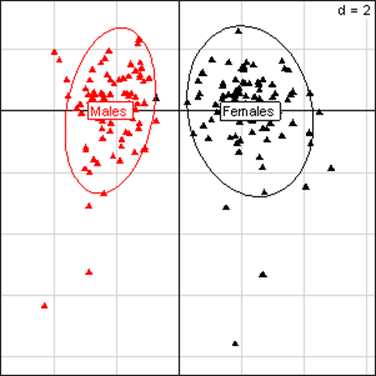
Principal Component Analysis for liver parameters in all rats of the MON 863 experiment. The
scheme obtained for parameters at week 14 explains 42.42% of the total
data variability (inertia) expressed on 2 axes (32.01% for factor 1;
10.41% for factor 2), scale d=2. This demonstrates the clear separation
of parameters values according to sex.

(Click on the image to enlarge.)
Fig D
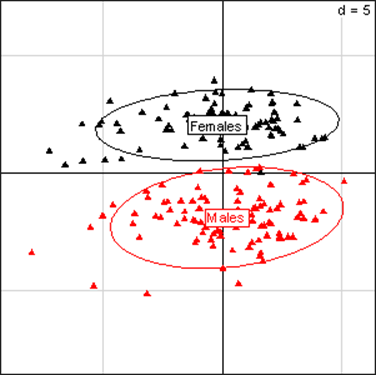
Principal Component Analysis for kidney parameters in all rats of the MON 863 experiment. The
scheme obtained for parameters at week 14 explains 47.73% of the total
data variability (inertia) expressed on 2 axes (26.95% for factor 1;
20.78% for factor 2), scale d=5. This demonstrates the clear separation
of parameters values according to sex.

(Click on the image to enlarge.)
Received 2009-7-23
Accepted 2009-11-17
Published 2009-12-10
 Posts
Posts


 A
study by Japanese researchers involving the use of stem cells to create
eggs and sperm, and fertilized eggs as a result, has been announced.
A
study by Japanese researchers involving the use of stem cells to create
eggs and sperm, and fertilized eggs as a result, has been announced.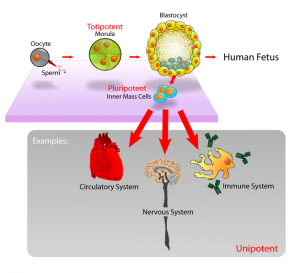














 By Michael, on October 7th, 2012