
 Posts
Posts


http://www.i-sis.org.uk/GMDangerousFutile.php
Invited Lecture at Conference on Future of Food: Climate Change, GMOs and Food Security, 1-2 October 2008, India International Centre, New Delhi
A fully referenced version of this article is posted on ISIS members’ website. Details here
An electronic version of this report with full references can be downloaded from the ISIS online store. Download Now
I am deeply and doubly honoured to be part of this important conference on
Mahatma Gandhi’s birthday, because it was Vandana Shiva and Tewolde Berhan Gebre
Egziabher who inspired me and turned me from an ivory tower academic into a
science activist. Consequently, I was thrown out of my university and liberated
to join civil society in fighting corrupt science and protecting good independent
science.
The headline appeared in the business section of the International Herald
Tribune 3 July 2007 [1]. The article went on to say: “The $73.5 billion global
biotech business may soon have to grapple with a discovery that calls into
question the scientific principles on which it was founded.”
It was referring to the findings of project ENCODE (Encyclopedia of DNA elements), organised by the US National Human Genome Research Institute. A consortium of 35 research groups went through 1 percent of the human genome with a fine-tooth comb to find out exactly how genes work.
To their surprise, researchers found that the human genome might not be a “tidy collection of independent genes” after all…Instead, genes appear to operate in a complex network, and interact and overlap with one another and with other components in ways not yet fully understood.”
The Human Genome Research Institute said that these findings will challenge scientists “to rethink some long-held views about what genes are and what they do.”
The author of the article Denis Caruso commented that, “the report is likely to have repercussions far beyond the laboratory. The presumption that genes operate independently has been institutionalized since 1976, when the first biotech company was founded. In fact, it is the economic and regulatory foundation on which the entire biotechnology industry is built.” She went on to point out that gene patents and safety assessment based on the same paradigm are also in trouble.
She is right on all counts. I pointed that out 10 years previously when a plethora of findings in molecular genetics had already invalidated the genetic determinist paradigm underpinning the biotech industry. In fact, the paradigm had begun to unravel almost as the industry was starting up twenty years earlier.
Genetic engineering of plants and animals began in the mid 1970s in the belief that the genome (the totality of all the genetic material of a species) is constant and static, and that the characteristics of organism are simply hardwired in their genome. This was encapsulated in the Central Dogma of molecular biology. The genetic information goes from DNA, the genetic material, to RNA, a kind of intermediate, to protein which determines the characteristic involved, such as tolerance to herbicide, for example. One gene determines one trait, so you can transfer one gene and get exactly the trait you want, be it herbicide tolerance, or resistance to insect pest.
But geneticists soon discovered that the genome is remarkably dynamic and ‘fluid’. It is constantly in conversation with the environment, and that determines which genes are turned on, when, where, by how much and for how long. Moreover, the genetic material itself could also be marked or changed according to experience, and the influence passed on to the next generation. Most of that was known by 1980, long before the Human Genome Project was conceived.
The best thing about the Human Genome Project is to finally explode the myth of genetic determinism [4] (The Myth that Launched a Thousand Companies, SiS 18), revealing the layers of molecular complexity that transmit, interpret and rewrite the genetic texts [5] (Life Beyond the Central Dogma series, SiS 24). The ENCODE project has confirmed and extended the complexities especially with regard to what constitutes a gene. Traditionally, a gene is a sequence of DNA that codes for a protein with a well-defined function. This idea has been well and truly shattered [6]; as Barry Patrick wrote in the Science News [7] “genes are proving to be fragmented, intertwined with other genes, and scattered across the whole genome.”
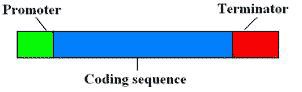
The genetic engineer’s idea of a gene is presented in Figure 1. It has a regulatory signal, a promoter that says to the cell, go and make lots of copies of the coding sequence that would be translated into a protein, and a terminator that says stop, end of message. This is what genetic engineers put into cells to make a genetically modified organism (GMO).
David M. Altshuler, associate professor of genetics and medicine at Harvard Medical School and his research team showed that the risk for type 2 diabetes involves more than a mutated gene. Instead, diabetes, heart disease, some cancers, and other deadly ailments involve non-coding DNA as well as in genes [8]. “We’re realizing that things happening ‘somewhere else’ in the genome, not in genes, are playing critical roles” in sickness and in health, Altshuler said.
David B. Goldstein at Duke University is very pessimistic. He said the effort to nail down the genetics of most common diseases is not working [9]: “There is absolutely no question that for the whole hope of personalized medicine, the news has been just as bleak as it could be. After doing comprehensive studies for common diseases, we can explain only a few percent of the genetic components of most of these traits.” For schizophrenia and biopolar disorder, there is almost nothing, for type 2 diabetes, 20 variants, but they explain only up to 3 percent of familial clustering, and so on.
Goldstein added: “we have cracked open the human genome and can look at the entire complement of common genetic variants, and what do we find? Almost nothing. That is absolutely beyond belief.”
That is just what I predicted soon after the human genome sequence was announced [10, 11] (Human DNA 'BioBank' Worthless, SiS 13/14; Why Genomics Won't Deliver, SiS 26)
Fresh attempts are now made to redefine a gene either in terms of a protein product [12] or a transcript [13], neither of which are satisfactory or would save the industry. All patents on genes based on the old concept are no longer valid; ultimately because the patent is awarded on a supposed function attached to a DNA sequence. But as genes exist in bits interweaving with other genes, so are functions. Multiple DNA sequences may serve the same function, and conversely the same DNA sequence can have different functions. Again, I have explained Why Biotech Patents Are Patently Absurd [14].
Despite the bewildering complexities of how the genome works, individual processes are precisely orchestrated and finely tuned by the organism as a whole, in a highly coordinated molecular ‘dance of life’ that’s necessary for survival.
In contrast, genetic engineering in the laboratory is crude, imprecise and invasive. The rogue genes inserted into a genome to make a GMO could land anywhere; typically in a rearranged or defective form, scrambling and mutating the host genome, and tend to move or rearrange further once inserted. Transgene instability is a big problem, and has been so right from the beginning. There is fresh evidence that GM crops grown commercially for years have rearranged [15, 16] (MON810 Genome Rearranged Again. Transgenic Lines Unstable hence Illegal and Ineligible for Protection, SiS 38). This is a real opportunity to challenge the validity of all biotech patents. Another key issue is safety. Transgene instability means that the original transgenic line has turned into something else, and even if it had been assessed as ‘safe’, this is no longer the case.
The genetically modified genes are a big hazard because they do not know the intricate dance of life that has been perfected in billions of years of evolution. That’s ultimately why genetic modification is both dangerous and futile.
Let me summarize the evidence stacked up against GMOs.
Different animals and human beings exposed to a variety of transgenic crops with different traits either fall ill or die. The evidence compels us to consider the possibility that the hazards of GMOs may be inherent to the technology, as I suggested more than ten years ago [2].
An epidemic of Morgellons Disease has hit the US and other countries that had
been involved in genetic modification technology [36] (Agrobacterium &
Morgellons Disease, A GM Connection?. SiS 38). The pathogen is suspected
to be Agrobacterium, which has been widely used in smuggling genes into cells
to make GMOs. Is this a disease created by GM? There have been close calls before.
The first case was on drug-producing GM crops in Hawaii. The court said that the USDA violated the Endangered Species Act as well as the National Environmental Policy Act.
The second court case not only ruled GM herbicide-tolerant creeping bentgrass illegal, but also that the USDA must halt approval of all new field trials until more rigorous environmental reviews are conducted.
EU Commissioner for the Environment Stavros Dimas has expressed
serious reservations concerning GMOs [53] (GM-Free
Europe Beginning?, SiS 36), which is unprecedented in the history
of the European Commission. On 7 May 2008, the European Commission delayed
a decision on allowing farmers to grow more GM crops, and asked European Food
Safety Authority to reconsider its previous review, which it had admitted
was inadequate, as it was unable to take indirect and long term impacts into
account [54].
The IAASTD calls for a fundamental change in farming practice to counteract soaring food prices, hunger, poverty and environmental disasters, it says GM crops are controversial with respect to safety for health and the environment, and will not play a substantial role in addressing climate change, loss of biodiversity, hunger and poverty. Small scale farmers and agro-ecological methods are the way forward, and indigenous and local knowledge are as important as formal scientific knowledge. It warns that growing crops for biofuels could worsen food shortages and price rises.
The conclusions of the IAASTD are remarkably similar to our own report Food Futures Now *Organic *Sustainable *Fossil Fuel Free [57] launched in UK Parliament a week later.
Our Food Futures Now report goes a step further. We argue that only organic agriculture can truly feed the world. More than that, organic agriculture and localised food and energy systems can potentially compensate for all greenhouse emissions due to human activities and free us from fossil fuels, and we need to implement this urgently.
The UN has declared 2008 the year of the Global Food Crisis, and it has been the top news story everyday for months now as the crisis deepens. Food prices increased by an average of 40 percent last year; a string of food riots and protests spread around the world including the UK, and more than 25 000 farmers killed themselves in India.
Most commentators agree that the immediate cause of the food crisis is the divestment of food grains into producing biofuels. BusinessWeek identified Monsanto as a “prime beneficiary”. Its stock correlated closely with the price of oil (better than ExxonMobile), and hardly correlated with the price of corn, basically because no one will eat its GM corn. Nevertheless the pro-GM lobby are out in force, using the food crisis to promote GM crops.
GM crops are one big failed experiment based on an obsolete scientific theory, and this failure has been evident since 2004 if not before [58] (Puncturing the GM Myths, SiS 22). Apart from yielding less and requiring more pesticides, anecdotal evidence since 2005 from farmers around the world indicates that GM crops also require more water [59]. Industrial Green Revolution agriculture is now generally acknowledged to be a major driver of climate change as well as being vulnerable to climate change because of its heavy dependence on fossil energies and water, and its susceptibility to pests, diseases and climate extremes [56, 60, 61] (Beware the New "Doubly Green Revolution", SiS 37)..GM crops have all the worst features of industrial Green Revolution varieties exaggerated, and not least, there are outstanding safety concerns as I mentioned. Growing GM crops for biofuels does not make them safe, as they will contaminate our food crops all the same.
Any further indulgence in GMOs will surely damage our chances of surviving global warming. We must get on with the urgent business of building organic, sustainable food and energy systems right now.
GM is Dangerous and Futile
We Need Organic Sustainable Food and Energy Systems Now
New genetics research invalidates the science underpinning the $73.5 billon global biotech industry and confirms why genetic modification is futile and dangerous; we must implement organic sustainable food and energy systems now Dr. Mae-Wan HoInvited Lecture at Conference on Future of Food: Climate Change, GMOs and Food Security, 1-2 October 2008, India International Centre, New Delhi
A fully referenced version of this article is posted on ISIS members’ website. Details here
An electronic version of this report with full references can be downloaded from the ISIS online store. Download Now
 |
 |
 “Change to gene theory raises new challenges for biotech”
The headline appeared in the business section of the International Herald
Tribune 3 July 2007 [1]. The article went on to say: “The $73.5 billion global
biotech business may soon have to grapple with a discovery that calls into
question the scientific principles on which it was founded.”It was referring to the findings of project ENCODE (Encyclopedia of DNA elements), organised by the US National Human Genome Research Institute. A consortium of 35 research groups went through 1 percent of the human genome with a fine-tooth comb to find out exactly how genes work.
To their surprise, researchers found that the human genome might not be a “tidy collection of independent genes” after all…Instead, genes appear to operate in a complex network, and interact and overlap with one another and with other components in ways not yet fully understood.”
The Human Genome Research Institute said that these findings will challenge scientists “to rethink some long-held views about what genes are and what they do.”
The author of the article Denis Caruso commented that, “the report is likely to have repercussions far beyond the laboratory. The presumption that genes operate independently has been institutionalized since 1976, when the first biotech company was founded. In fact, it is the economic and regulatory foundation on which the entire biotechnology industry is built.” She went on to point out that gene patents and safety assessment based on the same paradigm are also in trouble.
She is right on all counts. I pointed that out 10 years previously when a plethora of findings in molecular genetics had already invalidated the genetic determinist paradigm underpinning the biotech industry. In fact, the paradigm had begun to unravel almost as the industry was starting up twenty years earlier.
The Brave New World of GM Science
In Genetic Engineering Dream or Nightmare, the Brave New World of Bad Science and Big Business [2] first published in 1997/1998 I explained why the science behind GM is wrong and obsolete, and hence dangerous; a story elaborated further in Living with the Fluid Genome [3] published in 2003.Genetic engineering of plants and animals began in the mid 1970s in the belief that the genome (the totality of all the genetic material of a species) is constant and static, and that the characteristics of organism are simply hardwired in their genome. This was encapsulated in the Central Dogma of molecular biology. The genetic information goes from DNA, the genetic material, to RNA, a kind of intermediate, to protein which determines the characteristic involved, such as tolerance to herbicide, for example. One gene determines one trait, so you can transfer one gene and get exactly the trait you want, be it herbicide tolerance, or resistance to insect pest.
But geneticists soon discovered that the genome is remarkably dynamic and ‘fluid’. It is constantly in conversation with the environment, and that determines which genes are turned on, when, where, by how much and for how long. Moreover, the genetic material itself could also be marked or changed according to experience, and the influence passed on to the next generation. Most of that was known by 1980, long before the Human Genome Project was conceived.
The best thing about the Human Genome Project is to finally explode the myth of genetic determinism [4] (The Myth that Launched a Thousand Companies, SiS 18), revealing the layers of molecular complexity that transmit, interpret and rewrite the genetic texts [5] (Life Beyond the Central Dogma series, SiS 24). The ENCODE project has confirmed and extended the complexities especially with regard to what constitutes a gene. Traditionally, a gene is a sequence of DNA that codes for a protein with a well-defined function. This idea has been well and truly shattered [6]; as Barry Patrick wrote in the Science News [7] “genes are proving to be fragmented, intertwined with other genes, and scattered across the whole genome.”
The genetic engineer’s idea of a gene is presented in Figure 1. It has a regulatory signal, a promoter that says to the cell, go and make lots of copies of the coding sequence that would be translated into a protein, and a terminator that says stop, end of message. This is what genetic engineers put into cells to make a genetically modified organism (GMO).
Figure 1. A gene expression cassette,
the genetic engineer’s idea of a gene
Instead, within the human genome, and indeed other mammalian
genomes, coding sequences are in bits (exons) separated by non-coding introns,
and exons contributing to a single protein could be in different parts of
the genome. Coding sequences of different proteins frequently overlap. Regulatory
signals are similarly scattered upstream, downstream, within the coding sequence
or in some other distant part of the genome. Coding sequences occupy just
1.5 percent of the human genome, but between 74 and 93 percent of the genome
produce RNA transcripts [7], many now known to have regulatory functions.
So much so that the project of mapping genetic predisposition to diseases,
the original rationale for the Human Genome Project, has now run into serious
trouble.David M. Altshuler, associate professor of genetics and medicine at Harvard Medical School and his research team showed that the risk for type 2 diabetes involves more than a mutated gene. Instead, diabetes, heart disease, some cancers, and other deadly ailments involve non-coding DNA as well as in genes [8]. “We’re realizing that things happening ‘somewhere else’ in the genome, not in genes, are playing critical roles” in sickness and in health, Altshuler said.
David B. Goldstein at Duke University is very pessimistic. He said the effort to nail down the genetics of most common diseases is not working [9]: “There is absolutely no question that for the whole hope of personalized medicine, the news has been just as bleak as it could be. After doing comprehensive studies for common diseases, we can explain only a few percent of the genetic components of most of these traits.” For schizophrenia and biopolar disorder, there is almost nothing, for type 2 diabetes, 20 variants, but they explain only up to 3 percent of familial clustering, and so on.
Goldstein added: “we have cracked open the human genome and can look at the entire complement of common genetic variants, and what do we find? Almost nothing. That is absolutely beyond belief.”
That is just what I predicted soon after the human genome sequence was announced [10, 11] (Human DNA 'BioBank' Worthless, SiS 13/14; Why Genomics Won't Deliver, SiS 26)
Fresh attempts are now made to redefine a gene either in terms of a protein product [12] or a transcript [13], neither of which are satisfactory or would save the industry. All patents on genes based on the old concept are no longer valid; ultimately because the patent is awarded on a supposed function attached to a DNA sequence. But as genes exist in bits interweaving with other genes, so are functions. Multiple DNA sequences may serve the same function, and conversely the same DNA sequence can have different functions. Again, I have explained Why Biotech Patents Are Patently Absurd [14].
Despite the bewildering complexities of how the genome works, individual processes are precisely orchestrated and finely tuned by the organism as a whole, in a highly coordinated molecular ‘dance of life’ that’s necessary for survival.
In contrast, genetic engineering in the laboratory is crude, imprecise and invasive. The rogue genes inserted into a genome to make a GMO could land anywhere; typically in a rearranged or defective form, scrambling and mutating the host genome, and tend to move or rearrange further once inserted. Transgene instability is a big problem, and has been so right from the beginning. There is fresh evidence that GM crops grown commercially for years have rearranged [15, 16] (MON810 Genome Rearranged Again. Transgenic Lines Unstable hence Illegal and Ineligible for Protection, SiS 38). This is a real opportunity to challenge the validity of all biotech patents. Another key issue is safety. Transgene instability means that the original transgenic line has turned into something else, and even if it had been assessed as ‘safe’, this is no longer the case.
The genetically modified genes are a big hazard because they do not know the intricate dance of life that has been perfected in billions of years of evolution. That’s ultimately why genetic modification is both dangerous and futile.
Thirty years of GM are more than enough
We’d had 30 years of GM and more than enough damage done, as detailed in the ISP Report The Case for A GM-Free Sustainable World [17] and the dossier GM Science Expose : Hazards Ignored, Fraud, Regulatory Sham, Violation of Farmers Rights [18] we compiled for the European Parliament in June 2007. And more evidence has been piling up since. Why has this been allowed to go on? W documented how national and international regulators and advisory bodies such as the European Food Safety Authority not only routinely ignore the precautionary principle, but also actively abuse science, sidestep the law, and helping to promote GM technology in the face of evidence piling up against the safety of GM food and feed [19] (GM Food Nightmare Unfolding in the Regulatory Sham, ISIS scientific publication).Let me summarize the evidence stacked up against GMOs.
- No increase in yields
- No reduction in pesticides use
- Roundup lethal to frogs and toxic to human placental and embryonic cells [18].
- GM crops harm wildlife
- Bt resistance pests and Roundup tolerant superweeds render the two major GM crop traits practically useless [18].
- Vast areas of forests, pampas and cerrados lost to GM soya in Latin America
- Epidemic of suicides in the cotton belt of India
- GM food and feed linked to deaths and sicknesses
GM food and feed inherently hazardous to health [19]
Here are some highlights from our GM Science dossier [18] on the hazards of GM food and feed. Dr. Irina Ermakova of the Russian Academy of Sciences showed how GM soya made female rats give birth to severely stunted and abnormal litters, with more than half dying in three weeks, and those remaining are sterile. Hundreds of villagers and cotton handlers in India suffer allergy-like symptoms, thousands of sheep died after grazing on the Bt cotton residues, goat and cows as well were reported in 2007 and 2008 [35] (Mass Protests against GM Crops in India , SiS 38). (As reported by farmer witnesses as this conference, the problem is continuing and sterility in offspring of exposed animals has also been observed.) A harmless bean protein transferred to pea when tested on mice cause severe inflammation in the lungs and provoked generalised food sensitivities. Dozens of villagers in the south of the Philippines fell ill when neighbouring GM maize fields came into flower in 2003, at least five have died and some remain ill to this day. A dozen cows died having eaten GM maize in Hesse Germany and more in the herd had to be slaughtered from mysterious illnesses. Arpad Pusztai and his colleagues in the UK found GM potatoes with snowdrop lectin damaged every organ system of young rats; the stomach lining grew twice as thick as controls. Chickens fed GM maize Chardon LL were twice as likely to die as controls. And finally, GM maize Mon 863 was claimed to be as safe as non-GM maize by the company, and accepted as such by European Food Safety Authority. But independent scientists of CriiGen in France re-analysed the data and found signs of liver and kidney toxicity.Different animals and human beings exposed to a variety of transgenic crops with different traits either fall ill or die. The evidence compels us to consider the possibility that the hazards of GMOs may be inherent to the technology, as I suggested more than ten years ago [2].
Table 1. Summary of Exposure of Animals and Human Beings to GMOs | |||
| Species | GM species | Transgene trait | Effect |
| Rat | Soya | Roundup Ready | Stunting, death, sterility |
| Humans | Cotton | Cry1Ac/Cry1Ab | Allergy symptoms |
| Sheep | “ | “ | Death, liver toxicity |
| Cows | “ | “ | “ |
| Goats | “ | “ | “ |
| Mice | Pea | Alpha-amylase Inhibitor | Lung Inflammation, General food sensitivity |
| Mice | Soya | Roundup Ready | Liver, pancreas and testis Affected |
| Humans | Maize | Cry1Ab | Illnesses and death |
| Rats | Maize | Cry3Bb | liver and kidney toxicity |
| Cows | Maize | Cry1Ab/Cry1Ac | Death and illnesses |
| Rats | Potato | Snowdrop lectin | Damage in every organ system. Stomach lining twice as thick as controls |
| Mice | Potato | Cry1A | Gut lining thickened |
| Rats | Tomato | Delay ripening | Holes in the stomach |
| Chickens | Maize | Glufosinate tolerance | Deaths |
US courts rule GM crop field-tests and releases illegal
The message that GM crops are unsafe appears to have got through to the judiciary system in the United States. There have been three court rulings against the US Department of Agriculture (USDA) for failing to carry out proper environmental impact assessment, making the original releases illegal [37] (Approval of GM Crops Illegal, US Federal Courts Rule, SiS 34). These are the first rulings against GMOs in the top producing country in the world, which has been also promoting GMOs aggressively.The first case was on drug-producing GM crops in Hawaii. The court said that the USDA violated the Endangered Species Act as well as the National Environmental Policy Act.
The second court case not only ruled GM herbicide-tolerant creeping bentgrass illegal, but also that the USDA must halt approval of all new field trials until more rigorous environmental reviews are conducted.
The third decision was passed on Monsanto’s Roundup Ready alfalfa for
having been commercial released illegally without an Environment Impact Statement.
An avalanche of bans and rulings strikes GM crops worldwide
There have been numerous bans and restrictions imposed on GM crops in recent years, which say a lot about the inadequacies of regulatory regimes worldwide (see Box 1).|
Box 1
Rulings and bans on GMOs between May 2007 and May 2008
|
No case for GM crops, small scale organic farming is the way ahead
Meanwhile, on 15 April 2008, 400 scientists of the International Assessment of Agricultural Science and Technology for Development (IAASTD) released its 2 500-page report [55, 56] (GM-Free Organic Agriculture to Feed the World”, SiS 38) that took 4 years to complete. It is a thorough examination of global agriculture on a scale comparable to the Intergovernment Panel on Climate Change.The IAASTD calls for a fundamental change in farming practice to counteract soaring food prices, hunger, poverty and environmental disasters, it says GM crops are controversial with respect to safety for health and the environment, and will not play a substantial role in addressing climate change, loss of biodiversity, hunger and poverty. Small scale farmers and agro-ecological methods are the way forward, and indigenous and local knowledge are as important as formal scientific knowledge. It warns that growing crops for biofuels could worsen food shortages and price rises.
The conclusions of the IAASTD are remarkably similar to our own report Food Futures Now *Organic *Sustainable *Fossil Fuel Free [57] launched in UK Parliament a week later.
Our Food Futures Now report goes a step further. We argue that only organic agriculture can truly feed the world. More than that, organic agriculture and localised food and energy systems can potentially compensate for all greenhouse emissions due to human activities and free us from fossil fuels, and we need to implement this urgently.
The UN has declared 2008 the year of the Global Food Crisis, and it has been the top news story everyday for months now as the crisis deepens. Food prices increased by an average of 40 percent last year; a string of food riots and protests spread around the world including the UK, and more than 25 000 farmers killed themselves in India.
Most commentators agree that the immediate cause of the food crisis is the divestment of food grains into producing biofuels. BusinessWeek identified Monsanto as a “prime beneficiary”. Its stock correlated closely with the price of oil (better than ExxonMobile), and hardly correlated with the price of corn, basically because no one will eat its GM corn. Nevertheless the pro-GM lobby are out in force, using the food crisis to promote GM crops.
GM crops are one big failed experiment based on an obsolete scientific theory, and this failure has been evident since 2004 if not before [58] (Puncturing the GM Myths, SiS 22). Apart from yielding less and requiring more pesticides, anecdotal evidence since 2005 from farmers around the world indicates that GM crops also require more water [59]. Industrial Green Revolution agriculture is now generally acknowledged to be a major driver of climate change as well as being vulnerable to climate change because of its heavy dependence on fossil energies and water, and its susceptibility to pests, diseases and climate extremes [56, 60, 61] (Beware the New "Doubly Green Revolution", SiS 37)..GM crops have all the worst features of industrial Green Revolution varieties exaggerated, and not least, there are outstanding safety concerns as I mentioned. Growing GM crops for biofuels does not make them safe, as they will contaminate our food crops all the same.
Any further indulgence in GMOs will surely damage our chances of surviving global warming. We must get on with the urgent business of building organic, sustainable food and energy systems right now.


No comments:
Post a Comment