---BREAKAWAY CIVILIZATION ---ALTERNATIVE HISTORY---NEW BUSINESS MODELS--- ROCK & ROLL 'S STRANGE BEGINNINGS---SERIAL KILLERS---YEA AND THAT BAD WORD "CONSPIRACY"--- AMERICANS DON'T EXPLORE ANYTHING ANYMORE.WE JUST CONSUME AND DIE.---
More Than Half Of All People Want To Ditch Their Cable Provider, If Only They Could
from the what-competition? dept
Back in April, we noted that in a filing with the FCC, Comcast insisted that it had been voted one of the world's "most admired companies"
as it sought to hit back at the idea that it was where innovation went
to die (and that would get worse if it was allowed to merge with Time
Warner). Of course, we pointed out that Comcast did what Comcast did
best and was being quite misleading about it. The Fortune list of "most admired companies" does include Comcast... but only in the "cable and satellite providers" category, which only has four companies. And, more importantly, Comcast couldn't crack the top 50 in the full list of the companies that are actually the most admired.
And, of course, Comcast recently won Consumerist's World's Worst Company award. And, just a few weeks ago, the famed American Customer Satisfaction Index announced that Comcast and Time Warner Cable
have the two lowest customer satisfaction ratings of any ISP in the US
-- and had scores so low that they were basically the most hated
companies in America across any industry. Yes, people hate Comcast and Time Warner more than, say, banks, insurance companies or airlines.
And, just to pile on, a new survey has found that more than half of all cable subscribers would leave their current provider if they felt there was a legitimate alternative out there -- though 70% felt that they had no real
competition to go to. 72% noted that as these companies became larger,
they made things worse, not better, for consumers. And, 73% felt that
cable companies were "predatory" in their practices in taking advantage
of consumers. Not surprisingly, the report found that Comcast and Time
Warner Cable customers were the most likely to be interested in cutting the cord and ditching their cable service altogether.
So, uh, yeah: for all of Comcast insisting how great its merger will be
with Time Warner Cable, if allowed, it would appear that pretty much
everyone else recognizes that these are two giant companies who have
specialized in abusing their market power to not just limit competition,
but to then offer consumers terrible, terrible service.
Assassination Drones: A Tremendous Threat to Law Enforcement: This Technology Will Reshape the Meaning of “War”
Editor’s note: The following article from Mike Adams of Natural News
delves into the topic of micro drone technology and how it will shape
the future. We know that the U.S. military has been using drones to
effectively kill scores of enemies (and innocents) in the middle east,
and some local police departments have begun utilizing drone technology
for surveillance here at home. On the commercial side, we’ve seen
promotional videos that depict Amazon drones delivering boxes to
customers and real estate agents using them to promote homes for sale. But these implementations only scratch the surface of what’s to
come. With advancements in drone technology now leading to smaller,
faster and easier-to-control drone systems like quadracopters, it is
only a matter of time before these robotic devices are used for other,
not necessarily legal purposes. As Mike notes, one of the first up and coming uses will likely
include the ability to assassinate individuals remotely, either through
launching a projectile at a target, or simply going kamikaze and blowing
it up. This will undoubtedly spur new innovations in the self defense
market as well, as high value individuals the world over rush to
protect themselves against the possibility that they will be targeted by
a swarm of deadly drone bots. It is an interesting topic to explore,
because it will happen in the very near future. Micro-drones won’t just
be able to kill us or protect us, they’ll be capable of watching us
everywhere we go. In the next few years, when someone says “I wish I was
a fly on that wall,” they may well be able to realistically make it
happen. There is no stopping this technology. It’s coming whether we like
it or not. Counter technologies that can remotely shut down these
systems would be the only plausible solution to those concerned about
the threat. Portable non-nuclear electromagnetic pulse defense guns,
anyone? Citizens strike back: Tiny, low-cost drones may one day assassinate corrupt politicians, corporate CEOs and street criminals By Mike Adams (Natural News)
This is an important analysis article on what I believe will be a
coming wave of “Kamikaze assassination micro drones” which will soon be
affordable enough for everyday citizens to deploy against selected
targets. Why is this discussion important? Because these micro drones
have the very real potential to re-shape the distribution of power
across our planet… and they may pose a real danger to public safety and
security across society. (As you read this article, please bear in mind that I do not in
any way condone the tactical applications described herein. This article
is a WARNING, not an endorsement, of this very dangerous convergence of
trending technologies which may threaten us all.)
Tiny assassination drones must be understood as a revolutionary new
kind of weapon, and there is firm historical precedent for dramatic
sociopolitical shifts rising out of such revolutions.
For example, the invention of the gunpowder-based rifle radically
decentralized military power, making firepower affordable and available
to the masses. This caused a global wave of popular revolutions that
ultimately lead to modern-day representative government, where those in
power were suddenly forced to listen to the needs of their armed
citizens. (Before the invention of gunpowder, kings simply deployed
heavily-armored knights against citizens, forcing the peons into
obedience thanks to a vastly superior weapons and defense system that
was completely out of reach of the masses.)
Today we have large-scale militarized “drones”
— unmanned aerial vehicles or UAV’s — enjoying widespread deployment by
the Pentagon, which plans to spend $2.5 billion next year on these
drones (1). These UAVs conduct mission reconnaissance, target
acquisition and weapons delivery all on the same platform. For now, they
represent a battlefield tactical edge for the United States of America,
but that advantage is likely to be short-lived for reasons discussed
here.
Drone miniaturization, facial recognition systems and kinetic kamikaze missions
From studying trends in drone development, both in terms of software
and hardware, I am now predicting the development of facial-recognition
“kamikaze micro drones” capable of carrying out targeted human
assassination missions with remarkable precision and reliability. The
four trends that will lead to this are:
1) Drone miniaturization: The development of mass-produced,
affordable “micro drones” about the size of a common bird. These will
likely be produced as hobby aircraft which will be easily modified to
take on a more aggressive role.
2) Facial recognition systems: The miniaturization of facial recognition software / hardware systems which may be deployed on micro drones and powered by very small on-board power supplies.
3) Rapid advances in drone manufacturing efficiency, resulting in
greater affordability of drone platforms by smaller and smaller groups,
including corporations, smaller nations, universities, vigilantes and
even activist groups.
4) Incremental improvements in the power density of on-board
batteries, allowing greater flight time and more CPU-intensive on-board
computations.
These four trends will ultimately result in the creation of “Kamikaze
assassination micro drones” with the ability to search for, identify
and terminate a specific human target. It is likely, in fact, that many
governments of the world are already working on this technology.
This technology will reshape the meaning of “war“ by
allowing rogue nations like North Korea, for example, to simply ship
tens of thousands of such drones into the USA via China, marked as
“toys” on import manifests. Once in the USA, these micro assassination drones can
be dropped from low-flying airplanes or released from vehicles in city
parks to carry out their pre-programmed missions of targeted
assassinations across U.S. cities.
Future Air Force battles may be carried out by palm-sized aircraft
The United States Air Force already appears
to be developing such devices, by the way. As journalist Susanne Posel
writes at OccupyCorporatism.com: (2)
Under the Air Vehicles Directorate branch of the US Air Force,
research is being conducted to perfect remote-controlled micro air
vehicles (MAVs) that are expected to “become a vital element in the
ever-changing war-fighting environment and will help ensure success on
the battlefield of the future.”
See this promotional video about MAVs under development right now:
Terrifying Video Demonstrates Bug-Sized Lethal Drones Being Developed By U.S. Air Force
How Kamikaze micro drones will work
Kamikaze micro drones do not need to carry conventional weapons or
explosives of any kind. Instead, they may simply carry an on-board
serrated puncture weapon such as a crossbow hunting broad tip, affixed
to the end of a shaft in a spear arrangement. As shown in the image on the right, these devices are commonly available right now on Amazon.com, where they are called “Killzone broadheads” and boast the following marketing claims:
* The new Killzone Crossbow is a 2 blade rear-deploying broadhead that packs a devastating 2″ cutting diameter
* 2″ cutting diameter for devastating wound channels & excellent penetration
* Heavy-duty, Razor-sharp .039″ blades
These crossbow hunting tips can also be purchased with cash at any sporting goods store.
Next, the Kamikaze drone’s on-board operating system is loaded with
the facial imagery of the intended target, then released in an area the
target is known to frequent (such as near their home, a restaurant, or
their place of employment).
The micro drone expends energy to fly to a “perch” location from
which it can conduct covert facial recognition surveillance without
being spotted and without expending the enormous amount of energy needed
to hover in place. From this perch location, the drone will observe
faces passing by, comparing them to its intended target.
Once the micro drone spots the intended target, it can either “dial
home” and transmit a picture of the target to a remote operator for a
human kill decision, or it can be programmed to make that decision
autonomously based on a threshold of certainty in the facial recognition
match.
Once the kill decision has been made, the micro drone deploys its
serrated spear and launches itself toward the target at high speed,
aiming to thrust the spear into the neck of the subject. A two-inch-wide
cutting pattern almost guarantees the blades will slice through an
artery or possibly even sever the spinal column. Although the micro
drone’s mass seems quite small, the human neck is especially vulnerable
and can be easily penetrated by a serrated short spear carried with the
momentum of a small object flying at high speed.
Once the attack is complete, the drone is simply abandoned, having
completed its job. It can be pre-programmed to wide its own memory,
erasing any traces of its programming code or flight history.
What if anyone could kill almost anyone else for about five thousand dollars?
In time, such drones could be purchased or built for less than a
thousand dollars each. With an estimated mission success rate of 20%,
that means the out-of-pocket cost to successfully kill someone with one
of these drones might only be $5,000.
Before I explain why this matters, let me be clear that I am wholly
against the use of violence to achieve commercial or political gain, and
in no way do I condone the use of Kamikaze drones as described here. In
fact, this article should serve as a warning to what’s coming in the hopes that we might achieve some globally-observed limits on drone deployment.
But until that happens, here’s where this is headed: At $5,000 per
assassination, there is a very long list of corporations, politicians,
activists and individuals who would be willing to deploy these drones to
assassinate all kinds of targets: members of Congress, corporate
rivals, political enemies, competing drug dealers, ex-wives or
ex-husbands… and the list goes on.
These kamikaze micro drones could even be used as weapons of war.
Imagine Iran or North Korea, for example, deploying thousands of such
devices around Washington D.C. with the sole purpose of killing as many
U.S. Senators and members of Congress as possible. Tactically, that’s a
very low-cost war with a very high “return” in terms of “enemy
casualties” from the point of view of the attacker.
But individuals and vigilantes could also use the technology for
their own purposes at a local level. Ponder for a moment what happens
when anyone with a mere $5,000 and a few photos of their intended target
can simply release a small drone out of a backpack and set back while
that micro drone locates and assassinates their intended target (using
commonly available killing weapons, no less). The ease of operations is
shockingly low, making such solutions readily available to anyone
willing to surf the ‘net and download the operating system that carries
out such activities. (Source code will no doubt be posted on many
hacktivism sites.)
It’s not difficult to imagine local neighborhood watch groups pooling
their funds and deploying drones to kill local drug dealers who
terrorize the streets, for example. Even vigilantes who seek to protect
their fellow citizens might
see themselves as some sort of “drone superheroes” who deploy kamikaze
drones to take out local crime bosses or dirty politicians who violate
the law.
Everyday citizens would have the power to assassinate Presidents
What we are really looking at here — and again I must repeat and urge
that IN NO WAY DO I CONDONE OR ENCOURAGE SUCH ACTS OF VIOLENCE — is the
rise of a decentralized, affordable technology which could someday
allow ordinary citizens to quite literally assassinate Presidents.
Which Presidents? Any that you can imagine, of course: Presidents of
nations, Presidents of corporations, Presidents of universities and so
on. It is very difficult to imagine how highly-visible people could be
protected against such attacks based on present-day defensive tactics
and weaponry. Handguns and rifles, for example, would be very
hard-pressed to shoot down a fast-moving micro drone making a kamikaze
attack.
The U.S. Secret Service, a group of incredibly well-trained and
highly-dedicated individuals, probably has never faced a micro drone
attack and very likely has no training for how to deal with such an
attack. Clearly this is going to have to change in the very near future
as such drones come within reach of everyday people. Every high-ranking
member of every government around the world, in fact, is going to need
to start thinking about how to be safe out in the open once these micro
drones become a reality. (I have developed some detailed ideas on
defensive tactics against such attempts, if anybody from the U.S. Secret
Service is interested…)
The bottom line on this is that anyone who appears out in the open —
giving a speech, taking a walk in the park, or pursuing a campaign trail
— could be easily assassinated with one or more such Kamikaze micro
drones. No one is immune from such attacks.
Another key “advantage” of this weapon system — from the point of
view of the attacker — is that the attack is virtually untraceable. The
person who launches the attack could be miles away by the time the drone
actually strikes, and there’s no trail of gun registrations, ammo
purchases or explosives to track down. In fact, the drone could be
programmed to wipe its own memory clean after the attack is
carried out, erasing any on-board evidence of the executable code,
target images or operating system. The only evidence left behind would
be the hardware platform of the drone itself, which is likely to be
based on a readily available “hobby” drone chassis that’s impossible to
link to any specific individual.
As you can see, this would create real nightmares for law enforcement
investigators. And in a society that we all would like to see remain
peaceful and safe, the idea that some individuals could operate deadly
assassination drones with near-impunity should be downright alarming.
Because many people would use this technology with some highly
destructive intent.
A tremendous threat to law enforcement
As Natural News readers
already know, I have worked closely alongside law enforcement in the
past, engaging in fundraising, defensive martial arts training and more.
One of my greatest fears with this kamikaze micro drone weapons
platform is that it could easily be used by even a poorly-financed drug
gang to eliminate local law enforcement personnel en masse, right before a major drug run activity takes place.
A small air force of such drones — say, 100 drones at just $1,000
each — could swarm a small town and kill any member of law enforcement
spotted in public. That’s a mere $100,000 investment for a drug gang
that might be making a multi-million-dollar smuggling run through a
small urban chokepoint.
Similarly, an activist group committed to acts of violence could
quite literally launch a war on the CEOs or employees of any targeted
corporation. If some group didn’t like an oil company, or a factory
farming operations, or even a weapons manufacturer, it would quite
easily purchase and launch a swarm of micro-drones to kill employees as
they walk through the company’s parking lot each day, for example. It
doesn’t take very many casualties of key corporate scientists to derail
R&D programs.
In all, the potential for a “micro drone Wild West” is very real and
very concerning. And here’s why it could be even more wild than you
might imagine…
Mass chaos because there’s no personal risk
The availability of low cost but highly effective kamikaze micro
drones could unleash real chaos across society for a reason you may not
have anticipated: the attackers do not put themselves at risk.
Allow me to explain: In a town where everybody carries a loaded gun,
you have the widespread available of weapons, but each person puts their
own life at risk by deploying any such weapon. That’s why an armed
society “is a polite society,” as they say. Guns are everywhere, but
nobody wants to die in a gunfight, so the guns stay in their holsters.
In summary, you can’t deploy the weapon without the risk of getting
killed in the process.
But kamikaze micro drones take the risk of personal harm out of the
equation. The weapon is no longer attached to the person. They are
physically far apart. Now you have cheap killing machines with zero personal risk of harm on
the part of the attacker. If the drone gets destroyed, they’ve only
lost whatever money it costs to replace it. Even if the drone gets
captured, it’s not easy to link back to the attacker, so personal risk
is minimized.
So with micro drones, we have a society where everybody can have a
deadly assassination weapon without the risk that would traditionally
accompany an attempted assassination. In effect, we now have “anonymous
assassination weapons,” and as we’ve seen in online gaming, the results
of anonymous actions are often disastrous: when their own real life
isn’t at stake, people will behave in erratic, power-hungry ways that
would never be pursued if their own lives were at risk. And because the
micro drone does the killing for them, “killers” no longer have to do
any killing themselves. They don’t even need to know how to use a knife,
or a gun or explosives. All they need is to buy a micro drone, download
the kamikaze software, load up a couple of pictures of their target,
and let it loose on the sidewalk.
That makes killing frighteningly easy, affordable and accessible to
the masses. For obvious reasons, this is not something we would ever
want to see in a civilized society.
Drone anarchy?
In the minds of some people, this might in some ways be argued as a
good thing. In a world where power is increasingly centralized in the
hands of the few, the ability to easily acquire and deploy affordable,
targeted killing machines might be called by some a “leveling of the
playing field of power.”
Yet I would urge a careful review of all the implications of such
technology before reaching any firm conclusions. The widespread
availability of anonymous, autonomous killing machines
should be treated with extreme caution. Because in a world where
autonomous killing machines are readily available and affordable, those
who already sit in positions of centralized power would also have access
to these machines in very large numbers.
Anyone the authorities wanted to eliminate could simply have their
face images fed into a network of micro drones deployed across any given
city. A few hours later, they’re all dead, and the city didn’t even
have to involve human police officers or court judges. The drone
killings of citizens might even be sanctioned by the courts as a sort of
“affordable justice” in a society increasingly burdened by runaway debt
and bankruptcies.
Remember: President Obama has already built the “legal” framework for the drone killings of U.S. citizens on U.S. soil.
Now it’s only a question of the technology catching up with the
lawlessness that has already been embraced by the government itself
(where due process is now considered ancient history).
When considering the implications of these drones, it’s important to
look at all the various parties that might be tempted to use them (and
for what purpose). It’s not difficult to imagine all the following
groups wanting to deploy assassination drones: corporations, vigilantes,
drug gangs, the military, the CIA, local law enforcement, federal law
enforcement, terrorist groups, nation state enemies of America,
anarchists and possibly even entertainment junkies who would stage drone
killings just to post the “drone snuff films” on the ‘net.
How to hide from drones
All this means more and more people will
someday need to hide their faces if they wish to venture out into the
open world. This may soon include important political figures,
celebrities, corporate leaders and almost anyone with a
publicly-recognizable face.
A number of strategies are already being explored for this purpose. For example, artist Adam Harvey is currently working on the CV Dazzle project which explores face paint camouflage patterns that confuse facial recognition systems:
Here’s another face camouflage strategy that uses hair design and makeup to deter facial recognition systems:
As the Urme Surveillance website explains, “Our world is becoming
increasingly surveilled. For example, Chicago has over 25,000 cameras
networked to a single facial recognition hub. We don’t believe you
should be tracked just because you want to walk outside and you
shouldn’t have to hide either. Instead, use one of our products to
present an alternative identity when in public.”
With the rise of kamikaze micro drones, protecting your identity in
public may be more than a privacy tactic… it may mean the difference
between living and dying. Mike Adams (aka the “Health Ranger“) is the founding editor of NaturalNews.com, the internet’s No. 1 natural health news website, now reaching 7 million unique readers a month.
Three years into the disappearance of Bowe
Bergdahl in Afghanistan, Michael Hastings — the journalist whose
reporting cost General Stanley McChrystal his job — wrote a Rolling Stone story on the missing soldier, a piece which the magazine called “the definitive first account of Bowe Bergdahl.”
Hastings, who died in a car accident in Los Angeles in June 2013, had unparalleled access for that story.
He spoke to Bergdahl’s parents, who had by
that time stopped talking to the press, following “subtle pressure” from
the army, and he quoted from emails the young soldier had sent to them,
documenting his growing disillusion with the war and the US military.
Hastings also spoke to several unnamed men in
Bergdahl’s unit — soldiers who, we now know, had to sign a strict
nondisclosure agreement forbidding them from discussing the soldier’s
disappearance and search with anyone — let alone one of the top
investigative journalists in the country.
‘Michael and
Matt both worked really, really hard on that story, and I know for a
fact that they did it in a way that completely angered the US military
and the US government.’
But most controversially, Hastings’ piece
revealed what has been the subject of much debate and vitriol over the
last few days: That a disillusioned Bergdahl had actually abandoned his
post and “walked away.”
At the time of the story’s publication, the
media had all but forgotten about Bergdahl — who was released on
Saturday after five years in the hands of the Taliban, in exchange for
five Guantanamo prisoners. And, with the exception of some initial
chatter, Hastings’ piece, which paints a deeply unflattering picture of
Bergdahl’s unit and its leadership, hardly had the impact of some of his
other investigations.
But someone did pay attention to it: the FBI.
That, at least, is what was revealed in a heavily redacted document released
by the agency following a Freedom of Information Act (FOIA) request —
filed on the day of Hastings’ death — by investigative journalist Jason
Leopold and Ryan Shapiro, an MIT doctoral student whom the Justice
Department once called the “most prolific” requester of FOIA documents.
The document, partially un-redacted after
Leopold and Shapiro engaged in a lengthy legal battle with the FBI for
failing to fulfill its FOIA obligations, singles out Hastings’ Rolling Stonepiece
— “America’s Last Prisoner of War” — as “controversial reporting.” It
names Hastings and Matthew Farwell, a former soldier in Afghanistan and a
contributing reporter to Hastings’ piece.
‘If this deployment is lame, I’m just going to walk off into the mountains of Pakistan.’
The document also included an Associated Press report based on the Rolling Stone piece,
and what it identifies as a “blog entry” penned by Gary Farwell,
Matthew’s father — which actually appears to be a comment entry on the Idaho Statesman’s website.
“The article reveals private email excerpts,
from [redacted] to his parents. The excerpts include quotes about being
‘ashamed to even be American,’ and threats that, ‘If this deployment is
lame, I’m just going to walk off into the mountains of Pakistan,’” the
FBI file reads. “The Rolling Stone article ignited a media
frenzy, speculating about the circumstances of [redacted] capture, and
whether US resources and effort should continue to be expended for his
recovery.”
‘I’m happy the FBI is reading Rolling Stone on the job.’
The FBI file — as well as a Department of Justice document released
in response to Leopold and Shapiro’s lawsuit — suggests that Hastings
and Farwell’s reporting got swept up into an “international terrorist
investigation” into Bergdahl’s disappearance.
A spokesperson for the FBI told VICE News that
the agency does not normally comment on pending investigations and that
it lets FOIA documents “speak for themselves.” The investigation was
still pending as of last month, Leopold said.
According to the files — and a rare public statement by
the FBI following Hastings’ death — Hastings was never directly under
investigation by the agency, despite having pissed off a lot of people
in very high places.
But it is not exactly clear why Hastings and
Farwell’s “controversial” reporting made it into a criminal
investigation that was already active before they even wrote the Rolling Stone story.
‘The FBI says
Hastings was not a target of their investigation but his reporting was.
How do you investigate someone’s reporting without investigating them?’
“Michael and Matt both worked really, really
hard on that story, and I know for a fact that they did it in a way that
completely angered the US military and the US government, and while
other reporters were steering away from it, they were totally on it,”
Leopold told VICE News. “The FBI was investigating this, whether they
were investigating Michael or investigating the story, and there was a
lot of fear around it, because they characterized the story as
‘controversial’ — whatever that means.”
“Then the question became, why was the FBI
looking at this, what were they looking at?” Leopold added. “The FBI
says Hastings was not a target of their investigation but his reporting
was. How do you investigate someone’s reporting without investigating
them?”
Farwell declined to discuss the details of the file, but told VICE News, “I’m happy the FBI is reading Rolling Stone on the job.”
He had not known that his name, and his
father’s, showed up in the FBI’s files until Leopold pointed it out to
him. Leopold told VICE News: “When I showed Matt these files he was
like, oh my god, this is basically outlining my conversations.”
Entire paragraphs in the FBI documents remain
redacted — leaving many questions about the scope of the investigation
into the journalists’ work. But the un-redacted sections about Farwell
characterize him as a 10th Mountain infantryman, who helped broker a
meeting between Hastings and — presumably — some of the sources for the Rolling Stone story.
Now that Bergdahl is free, the lid on Pandora’s box has been lifted.
In his comment on the Idaho Statesman‘s site, also picked up in the FBI file, Farwell Senior comes to Bergdahl’s defense after the Rolling Stone article sparked backlash against the soldier, of a similar sort that we are seeing today. He also credits his son for brokering Hastings’ meeting with the Bergdahls.
“I’m going to excuse that young kid for his
choice of words, but I’m not going to excuse the leadership of his
outfit, nor the misguided policies of our government in Afghanistan and
elsewhere which have put our young people in harms way without a clear
vision of what they are doing,” Farwell, himself a retired Air Force
officer, wrote then. “It’s my hope this Rolling Stone article
helps the Bergdahl’s get their son back and helps expose some misguided
policies and conduct far above the pay grade of this young disillusioned
soldier.”
Now that Bergdahl is free, the lid on Pandora’s box has been lifted.
“For five years, soldiers have been forced to
stay silent about the disappearance and search for Bergdahl. Now we can
talk about what really happened,” Nathan Bradley Bethea, who served in
Bergdahl’s battalion, wrote in the Daily Beast on
Monday. “I served in the same battalion in Afghanistan and participated
in the attempts to retrieve him throughout the summer of 2009. After we
redeployed, every member of my brigade combat team received an order
that we were not allowed to discuss what happened to Bergdahl for fear
of endangering him. He is safe, and now it is time to speak the truth.”
“Bergdahl was a deserter, and soldiers from his own unit died trying to track him down,”Bethea stated.
Soldiers forced to silence for years have now taken their accounts — and anger — about the missing soldier’s ordeal to social media and
the press. Republican strategists eager to turn Bergdahl into the next
Benghazi have also jumped on the opportunity to offer critics of the
young “deserter” up for interviews, as the New York Times noted today.
‘As for the circumstances of his capture, when he is able to provide them, we’ll learn the facts.’
In the last few days, Bergdahl has been blamed
with the deaths of “every American soldier killed in Paktika Province
in the four-month period that followed his disappearance,” according to
the Times — charges that the Pentagon dismissed as unsubstantiated. Today it was reported that the army will launch an inquiry into the circumstances of Bergdahl’s disappearance and his personal conduct.
“The questions about this particular soldier’s
conduct are separate from our effort to recover ANY U.S. service member
in enemy captivity,” General Martin E. Dempsey said in a Facebookpost today.
“As for the circumstances of his capture, when he is able to provide
them, we’ll learn the facts. Like any American, he is innocent until
proven guilty. Our Army’s leaders will not look away from misconduct if
it occurred.”
A US Army investigation into Bergdahl’s own
conduct might appease or inflame his critics. But even before Bergdahl’s
release, some soldiers were eager to talk.
And while there is no suggestion — in the
un-redacted bits of the FBI file on Hastings — that the agency was after
any soldier who had taken his frustrations to the press, the fact that
the FBI was looking into the reporters’ sources and methods raises at
least the question.
Now, everyone wants to talk about it. But Hastings’ ever “controversial” reporting got to it first.
Exclusive
Above-top-secret details of Britain’s covert surveillance programme -
including the location of a clandestine British base tapping undersea
cables in the Middle East - have so far remained secret, despite being
leaked by fugitive NSA sysadmin Edward Snowden. Government pressure has
meant that some media organisations, despite being in possession of
these facts, have declined to reveal them. Today, however, the Register publishes them in full.
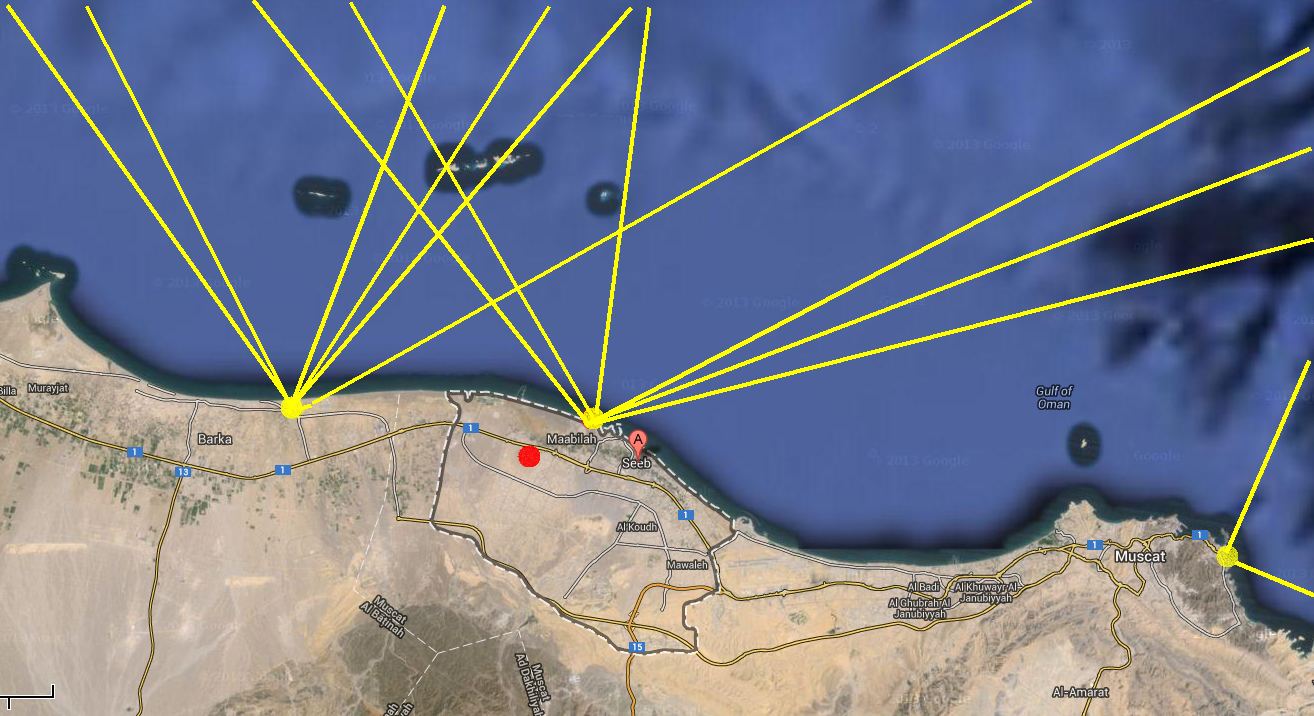
The
secret British spy base is part of a programme codenamed “CIRCUIT” and
also referred to as Overseas Processing Centre 1 (OPC-1). It is located
at Seeb, on the northern coast of Oman, where it taps in to various
undersea cables passing through the Strait of Hormuz into the
Persian/Arabian Gulf. Seeb is one of a three site GCHQ network in Oman,
at locations codenamed “TIMPANI”, “GUITAR” and “CLARINET”. TIMPANI, near
the Strait of Hormuz, can monitor Iraqi communications. CLARINET, in
the south of Oman, is strategically close to Yemen.
British
national telco BT, referred to within GCHQ and the American NSA under
the ultra-classified codename “REMEDY”, and Vodafone Cable (which owns
the former Cable & Wireless company, aka “GERONTIC”) are the two top
earners of secret GCHQ payments running into tens of millions of pounds
annually.
The Seeb spy base. Not in your name? My dear boy, that's the whole point
The actual locations of such codenamed “access points” into the
worldwide cable backbone are classified 3 levels above Top Secret and
labelled “Strap 3”. The true identities of the companies hidden behind
codenames such as “REMEDY”, “GERONTIC”, “STREETCAR” or “PINNAGE” are
classified one level below this, at “Strap 2”.
After these details were withheld, the government opted not to move against the Guardian
newspaper last year for publishing above-top-secret information at the
lower level designated “Strap 1”. This included details of the
billion-pound interception storage system, Project TEMPORA, which were
revealed in 2013 and which have triggered Parliamentary enquiries in
Britain and Europe, and cases at the European Court of Human Rights. The
Guardian was forced to destroy hard drives of leaked information
to prevent political embarrassment over extensive commercial
arrangements with these and other telecommunications companies who have
secretly agreed to tap their own and their customers’ or partners’
overseas cables for the intelligence agency GCHQ. Intelligence chiefs
also wished to conceal the identities of countries helping GCHQ and its
US partner the NSA by sharing information or providing facilities.
According
to documents revealed by Edward Snowden to journalists including Glenn
Greenwald among others, the intelligence agency annually pays selected
companies tens of millions of pounds to run secret teams which install
hidden connections which copy customers' data and messages to the
spooks’ processing centres. The GCHQ-contracted companies also install
optical fibre taps or “probes” into equipment belonging to other
companies without their knowledge or consent. Within GCHQ, each company
has a special section called a “Sensitive Relationship Team” or SRT.
BT
and Vodafone/C&W also operate extensive long distance optical fibre
communications networks throughout the UK, installed and paid for by
GCHQ, NSA, or by a third and little known UK intelligence support
organization called the National Technical Assistance Centre (NTAC).
Snowden’s
leaks reveal that every time GCHQ wanted to tap a new international
optical fibre cable, engineers from “REMEDY” (BT) would usually be
called in to plan where the taps or “probe” would physically be
connected to incoming optical fibre cables, and to agree how much BT
should be paid. The spooks' secret UK access network feeds Internet data
from more than 18 submarine cables coming into different parts of
Britain either direct to GCHQ in Cheltenham or to its remote processing
station at Bude in Cornwall.
Among the cables specifically
identified in one document as currently being intercepted or “on cover”
are an Irish connection, Hibernia Atlantic, landing in Southport, and
three European connections landing at Yarmouth, Dover, and Brighton.
Sending anything via a cable that lands in Britain? Or a country where the current ruler was put in by the SAS, maybe?
The
majority of large cables come ashore in Cornwall, and have been
connected directly to Bude. These include major connections such as FLAG
(Fibre optic Link Around the Globe), two of whose cables have been
intercepted. Because the FLAG interceptions had to be kept secret from
the cables’ owners, one report states, the tapping connections were
installed in an undisclosed UK location and “backhauled” to Bude, in the
technical language of the communications industry.
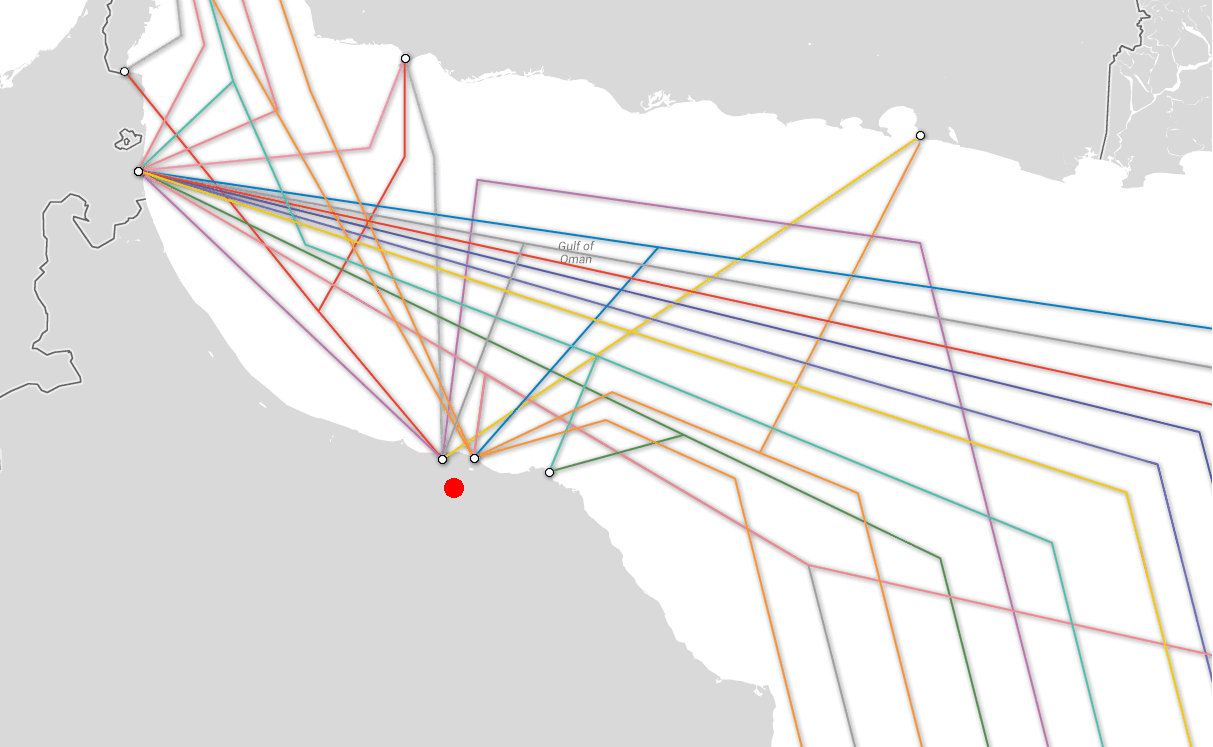
Northern Oman - a good place to be if you find the cables into the Gulf interesting (click to enlarge)
Although GCHQ interception of overseas communications can be
authorised by a general “external” tapping warrant, the wording of the
law does not permit storage of every communication for examination, as
GCHQ wished to do. In 2009, the spooks persuaded then Foreign Secretary
David Miliband to sign a new warrant legalising what they wished to do.
The terms of such warrants have never been published.
The special
“external” warrants, issued under the Regulation of Investigatory Powers
Act (RIPA), authorise the interception of all communications on
specified international links. Miliband’s first 2009 warrant for TEMPORA
authorised GCHQ to collect information about the “political intentions
of foreign powers”, terrorism, proliferation, mercenaries and private
military companies, and serious financial fraud.
Certificates
attached to external interception warrants are re-issued every six
months, and can be changed by ministers at will. GCHQ officials are then
free to target anyone who is overseas or communicating from overseas
without further checks or controls, if they think they fall within the
terms of a current certificate.
The secret overseas internet
monitoring centre, codenamed CIRCUIT, is at Seeb in the state of Oman.
It is the latest of a series of secret collaborations with the
autocratic Middle Eastern state, which has been ruled for 44 years by
Sultan Qaboos bin Said, installed as head of state in a British-led and
SAS-supported coup against his father. The Seeb centre was originally
built in collaboration with the Omani government to monitor civil
communications satellites orbiting above the Middle East. It has six
large satellite dishes, forming part of the well-known and long running
“ECHELON” intercept system run by the “Five Eyes” English-speaking
(US/UK/Australia/Canada/New Zealand) intelligence agencies.
Seeb - handily located (click to enlarge)
When GCHQ obtained government approval in 2009 to go ahead with
its “Mastering the Internet” project, the Seeb base became the first of
its global network of Internet tapping locations. Another centre,
OPC-2, has been planned, according to documents leaked by Snowden.
The
CIRCUIT installation at Seeb is regarded as particularly valuable by
the British and Americans because it has direct access to nine submarine
cables passing through the Gulf and entering the Red Sea. All of the
messages and data passed back and forth on the cables is copied into
giant computer storage “buffers”, and then sifted for data of special
interest.
Information about Project TEMPORA and the Seeb facility
was contained in 58,000 GCHQ documents which Snowden downloaded during
2012. Many of them came from an internal Wikipedia style information
site called GC-Wiki. GCHQ feared the political consequences of
revelations about its spying partners other than the United States and
English speaking nations, according to knowledgeable sources.
Although
information about the monitoring station at Seeb in its older ECHELON
role has been available on the public Internet for several years,
Cabinet Secretary Sir Jeremy Heywood was determined to prevent its new
importance and cost becoming known.
It was this which lay behind the British government’s successful-until-today efforts to silence the Guardian
and the rest of the media on the ultra-classified, beyond Top Secret
specifics of Project TEMPORA - the places and names behind the codewords
CIRCUIT, TIMPANI, CLARINET, REMEDY and GERONTIC. ®
Why Is The Food Industry Poisoning Us With Trillions of Nanoparticles?
The U.S. food industry is notorious for poisoning the
very consumers who drive their multi-billion dollar enterprise, even
spending millions against their right to informed consent (truthful GMO
labeling). So, is it any wonder that this deregulated and increasingly
deranged juggernaut is experimenting on its own customer base by
exposing them to trillions of toxic nanoparticles?
A new study published in Biomedicine and Pharmacotherapy titled, “Effects of titanium dioxide nanoparticles in human gastric epithelial cells in vitro,”
reveals for the first time that the nanoparticle form of the common
“whitening” agent known as titanium dioxide is capable of inducing
“tumor-like” changes in exposed human cells.[1]
Whereas previous cell research has established that titanium dioxide (TiO2) is cytotoxic (cell damaging),[2]
this is the first study of its kind to find exposed cells undergo a
‘phenotypal’ transition from normal to cancerous cell traits, including
an increased rate of cell proliferation and a decrease in programmed
cell death – hallmark features of precancerous and/or cancerous cells
associated with ‘immortalization.’
Owing to the fact that the researchers tested human gastric
epithelial cells, a type of stomach cell in direct contact with material
we eat, and considering the broad range of drug, personal care and food
products nanoparticle TiO2 is commonly used within, the toxicological implications of these findings are deeply concerning.
We Are Already Eating Titanium Dioxide
TiO2 is a naturally occurring oxide of titanium, and has a
wide range of industrial applications as a “whitening” pigment in
plastics, ceramic glazes and paints. It is used in sunscreens as a UV
absorbing “sun protection factor,” due to its high refractive index.
Most of our risk of exposure comes from its use in toothpaste, drugs and
excipient-heavy supplements as a pill coating, and food products,
including even milk (to ‘improve’ appearance and texture).
Indeed, given that TiO2 is found in thousands of consumer
products, the odds are that you are already being exposed to a
significant quantity of them on a daily basis. As reported by Everydayhealth.com, “You ingest around 100 trillion nanoparticles every day, researchers at Binghamton University and Cornell University say.”
So, what are some common brands who use it? Nanotitanium is found in
products produced by Jello, Nestlé, M&M’s, Mother’s, Mentos,
Albertson’s, Hostess and Kool Aid.
Below is a table from the 2012 E Magazine article “Eating Nano” revealing its presence in common U.S. packaged goods.
(Click to enlarge)
Is Titanium Dioxide Regulated?
Much like present day radiobiological risk assessments for technologies like mammography were developed long before the discovery of DNA, making it impossible to comprehend their DNA-damaging properties at that time, present day biosafety regulations of TiO2 were determined long before the advent of nanotechnology. In both cases, the true harms of these technologies were — and still are — greatly underestimated.
As a result of this information gap, TiO2is currently
classified as ‘generally recognized as safe’ (GRAS) by the FDA,
regardless of format. Remarkably, the FDA still allows titanium dioxide
in sunscreens
“at concentrations of up to 25 percent alone and 2 to 25 percent in
combination with any proposed Category I sunscreen active ingredient”
without considering the toxicity differential of particle size.[3]Considering that concentrations as low as 0.001% by weight have been found to exhibit clear cytotoxicity within exposed cells,[4] the biosafety regulations governing TiO2 are as great as 5 orders of magnitude or higher less stringent than they should be to protect the consumer.
Nanoparticles are so small they are below the threshold of
visibility. This is one reason why they are used for sun protection
factor, as 100 nanometers or smaller particles will not leave the white
pasty appearance on the skin associated with larger particles. What you
can’t see, however, is still there – and in the case of
nanotitanium, may slip through the surface layers of our skin into more
sensitive tissues, as well as our blood stream. This is also why, if you
use sunscreen, you should make sure the ingredients say
“non-nanoparticle” when describing titanium dioxide or zinc oxide. And
this rule applies to purportedly ‘natural’ brands as well. Article Contributed by Sayer Ji, Founder of GreenMedInfo.com
Sayer Ji is an author,
researcher, lecturer, and advisory board member of the National Health
Federation. He founded Greenmedinfo.com in 2008 in order to provide the
world an open access, evidence-based resource supporting natural and
integrative modalities. It is widely recognized as the most widely
referenced health resource of its kind.
Disclaimer: This article is not intended to provide medical
advice, diagnosis or treatment. Views expressed here do not necessarily
reflect those of GreenMedInfo or its staff.
Who said powerful payloads cannot come in small packages?
The problem with nano-packages is that their powerful payloads may cause harm to those who eat them in their food.
With the arrival of globalization and due to monopolistic practices
and technological advances, our food supply became dependent on a global
system of production, distribution and manufacturing. Today, food is
not anymore what we plant and harvest, but what others create in a lab,
often times without the proper supervision and almost always without
adequate testing.
If in the four previous articles of the Chemical Reality Series
the point was to warn people about chemicals that reach our food
supply, this one is a wake up call for anyone who is concerned with
their health, even if health is minimally important.
As we have learned, unwanted ingredients are not only contaminating
our food, but they are actually being used to test how humans react to
their ingestion on what can be called a worldwide, open air experiment.
Recently, the organization Friends of Earth (FoE) published a report titled Small Ingredients, Big Risks,
which details how the food industry uses technology to secretly add
unlabeled metals such as silver to well-known products like cheese,
chocolate, milk, soda, candy, soy, almond, and rice beverages, mints,
gum, popcorn, salad dressing and oils, yogurt, cereal, crackers, pasta,
and sports drinks. These products are manufactured by some of the
biggest names in the food industry, including Kraft, General Mills,
Hershey, Nestle, Coca-Cola, Unilever, Smucker’s and Albertsons.
The extent to which nanomaterials are used along the food chain continues to be shrouded with mystery.
Since the use of nano-ingredients is such a novel practice, companies
using them in our food do so without limitation. As of today, there are
no laws that describe the appropriate way in which nano-particles
should be used in food products. There are no parameters for adding them
and no obligation for testing their effects on us. What researchers
have found is that scientific evidence indicates these nano-ingredients
may indeed be toxic to humans and the environment.
“Nanotechnology is a powerful emerging technology for taking apart
and reconstructing nature at the atomic and molecular level. Nanoscale —
or extremely tiny — materials now show up in a broad array of consumer
products. Nanoparticles show novel physicochemical properties in
comparison to larger sized particles of the same substance. While
nanotechnology is being touted as a potential catalyst for the next
industrial revolution and could have far-ranging impacts, the field is
being commercialized largely outside of public view or debate, and with
few regulations to protect workers, the public and the environment,”
explains Friends of Earth in its report.
Unlike other environmentalist and consumer advocacy organizations,
Friends of Earth is asking governments and policymakers to begin
regulating the nano-tech industry as a precautionary measure. As in the
case of genetically engineered organisms used in crops like corn, sugar
cane, soy and others, using nano-ingredients in food products seems to
be guided by a desire to increase corporate profits above everything
else. As it happens in the GMO debate, calls are being made to make it
mandatory to label products whose ingredients include nano-particles
that are suspected of causing harm to humans and the environment.
“Our current focus is to achieve regulations on the use
of nano-materials in food, sunscreens and cosmetics — and on the
widespread and increasing use of nano-silver, a powerful germ-killer
that can be found in everything from toys to clothes to toothpaste,”
warns FoE. “Studies indicate that manufactured nano-materials used in
sunscreens (such as zinc oxide and titanium oxide) have the potential to
harm our health. These sunscreens can also harm our environment when
they wash off of people while in the shower or swimming, allowing
potentially toxic nano-materials to be absorbed up the food chain from
smaller to larger organisms and to damage microbes that are helpful to
ecosystems.”
Friends of Earth is part of Friends of Earth International, a network
of at least 2 million environmental activists that spreads to over 70
countries.
One of the main concerns about nano-ingredients in food products is
the exponential growth in their use. According to Friends of Earth, the
use of nano-ingredients has grown tenfold in only six years, and the
number of companies investing in this technology is growing as fast as
nano-particles are used to manufacture processed food. Some 200
transnational corporations all over the world are investing millions of
dollars in the development of nano-tech food, in an attempt to get a
piece of the US$20.4 billion nano-tech food market.
As you may suspect, not as much money is being invested by
transnationals in studying the harm that nano-metals, for example, could
cause to human health. Despite the clear disregard for the well-being
of their customers, there are other groups that are doing a fair amount
of work to unveil the details that the nano-tech and food industries
don’t want you to know about. “An increasingly large body of
peer-reviewed evidence indicates some nano-materials may harm human
health and the environment,” says FoE.
Some suspected consequences of the ingestion of nano-particles used
in processed foods originated on their ability to be more chemically
reactive and more bioactive than larger particles of the same chemicals.
Their very small size also provides nano-particles with greater access
to our bodies, which allows them to penetrate cells, tissues and organs.
The report published by FoE says that “greater bio-availability and
greater bio-activity may introduce new toxicity risks” and that these
nano-particles “can compromise our immune system response.”
Apparently, nano-materials have properties that open new
possibilities for the food industry that include being used as so-called
nutritional additives, stronger flavorings and colorings, antibacterial
ingredients, and others. The problem is that the properties that seem to
be advantageous for transnational trusted with making the food that is
eaten by billions of people may also result in greater toxicity for the
environment and consequently for humans. The toxicity threat posed by
nano-ingredients in processed food is suspected to express their
pathological effects in the long term, which makes it difficult for
physicians and patients to pinpoint them as the cause of disease.
Besides using silver nano-particles, processed foods contain titanium
dioxide, zinc, zinc oxide and others that are simply labeled as
nutritional supplements. These materials are “highly toxic to human
cells in test tube and animal studies,” says FoE. Other environmental
studies found that the substances may be toxic other species that are
important to the food chain. In spite of all the unknowns, the food and
nano-tech industries began their adventure without any regulation or
safety rules before adding nano-materials to processed foods, the
packaging and even to agricultural products that are later used on crop
plantations.
According to Friends of Earth, health experts are also concerned with
the use of nano-silver in some consumer products because it may
increase the problem of antibiotic-resistant bugs. But the most
concerning of all the tiny ingredients is nano-titanium dioxide. Its
nanoparticles are immunologically active, that is, they cause a reaction
from the body’s defensive system.
More recent studies concluded that nano-titanium dioxide particles
may play a significant role in the “exacerbation of gastrointestinal
inflammation” because it adsorbs bacterial fragments and then carries
them across the gastro-intestinal tract. Furthermore, nano-particles and
nanotechnology as a whole pose even greater challenges to developing
truly sustainable food and farming practices. Because nano-particles’s
increase the lifetime of some crops, the use of these ingredients in
food may come as a booster to promote the transport of food products —
both fresh and processed — to longer distances. The model of treating
fresh food to make them more resistant to the environment around it is
the one preferred by the food industry, and its ability to make food
less perishable would concentrate even more corporate control of global
agriculture.
An additional concern is the use of nano-agrochemicals on farms and
their release into the environment. As things stand now, agrochemicals
are already polluting soils and water sources, causing significant
damage to the ecosystems. The same agrochemicals and ingredients like
BPA, Dioxins and Atrazine are linked to more incidence of cancer and
reproductive problems. The use of nano-materials and consequently
nano-agrochemicals would only pile up on environmental contamination.
Friends of Earth is asking for a moratorium nano-materials used on
food products, packaging, and any other item that comes in contact with
food products at least until safety studies are conducted to determine
what needs to be done about the use of nanotechnology in the
manufacturing of processed foods. Specifically, FoE recommends that all
nano-materials be regulated as new substances. That includes: • All manufactured nanomaterials must be subject to safety
assessments as new substances, even where the properties of their larger
scale counterparts are well known. • All deliberately manufactured nanomaterials must be subject to
rigorous nano-specific health and environmental impact assessment and
demonstrated to be safe prior to approval for commercial use in foods,
food packaging, food contact materials or agricultural applications. • Assessments must be based on the precautionary principle and
the onus must be on manufacturers to comprehensively demonstrate the
safety of their product. No data, no market. • Safety assessment must be based on the nano content of products, not marketing claims. • Safety assessment must include the product’s entire life cycle.
On the side of industry, Friends of Earth recommends that companies
“respect people’s right to healthy foods, in which all ingredients have
been proven safe.” To that end, food manufacturers and others who profit
from the sale of nano-food should stop selling it as well as using
nano-materials in packaging or any other material that comes in contact
with processed food sold to consumers. The same practice should be true
to nano-agrochemicals.
As for the rest of us, the only way we can affect change in the way
nano-materials are used in food products is by asking and if necessary
demanding the nano-tech and food industries to stop using these
particles until they are deemed safe, asking government agencies to
study and regulate the use of nano-materials and more importantly, to
vote with our money. If neither government nor the food industry wishes
to change the way we are being used in the largest mass experiment ever
performed, we can always choose not to buy products from transnationals
whose processed foods are contaminated with nano-metals or
nano-chemicals.
Luis R. Miranda is the Founder and Editor of The Real Agenda.
His 16 years of experience in Journalism include television, radio,
print and Internet news. Luis obtained his Journalism degree from
Universidad Latina de Costa Rica, where he graduated in Mass Media
Communication in 1998. He also holds a Bachelor’s Degree in Broadcasting
from Montclair State University in New Jersey. Among his most
distinguished interviews are: Costa Rican President Jose Maria Figueres
and James Hansen from NASA Space Goddard Institute. Read more about Luis.

 Posts
Posts


 As shown in the image on the right, these devices are commonly


 Posted by

 The Seeb spy base. Not in your name? My dear boy, that's the whole point