Pages

Sunday, August 6, 2017


Jim Marrs - Gatekeeper Sacrificed for the Solar Eclipse                  https://www.youtube.com/watch?v=4djMA4KKm_Q

Gematrinator_64
...ya know ? maybe  ??   just maybe ALL  that "appears" 'bout ...these guys ...isn't as IT ...appears ???    food fer thought!

Def Leppard Claims Music Piracy Is Bringing Younger Audiences To Its ConcertsImage result for pic of pirating   those "new" biz ...models   ...Oops ???

from the rock-for-all-the-ages dept

The last time we checked in with 80's rock band Def Leppard, the band was busy "forging" its own songs as a way to release its own back catalog without having its label cash in off of it. So bad was the relationship with Universal Music, apparently, that re-recording all of that music was the better option compared with having to deal with the label. So, one might wonder how the band views illicit music downloads then, amidst its anger at its label for not paying them properly.
Well, it turns out that Def Leppard thinks music piracy is making them a killing in concert revenue.

In an interview with Ultimate Classic Rock, Def Leppard guitarist Vivian Campbell has been describing why he believes piracy has its upsides, particularly for enduring bands that are still trying to broaden their horizons.
“The way the band works is quite extraordinary. In recent years, we’ve been really fortunate that we’ve seen this new surge in our popularity. For the most part, that’s fueled by younger people coming to the shows,” Campbell said. “We’ve been seeing it for the last 10, 12 or 15 years, you’d notice younger kids in the audience, but especially in the last couple of years, it’s grown exponentially. I really do believe that this is the upside of music piracy.”
What's useful about Def Leppard's stance on this is that the band cuts around all of the usual pushback from copyright defenders. The band is not "just a startup with nothing to lose from piracy"; they're a household name. The band is also not "simply a bunch of has-beens trying to eek out a few more years of meager revenue"; their popularity is surging. Campbell's stance is also not simply one-sided in the belief that younger fans getting free music brings in the concert revenue. He also believes these new, young fans make the bands music better.

“There’s a whole new energy around Leppard, in fact. I think we’re playing better than we ever have. Which you’d like to think anyway. They always say that musicians, unlike athletes, you’re supposed to get better. I’m not sure that anyone other than the band really notices, but I notice it and I know that the other guys do too. When I play ‘Rock of Ages’ for the 3,000,000 time, it’s not the song that excites me, it’s the energy from the audience. That’s what really lifts our performance. When you’ve got a more youthful audience coming to your shows, it only goes in one direction,” he concludes.
This is the part of music obtained freely that never gets mentioned: the multiplier effect it has on a bands relevance and longevity. This isn't to say that such a model works for every band in every instance, but it's refreshing to see an artist step back and try to get the full picture of what's really going on here. It would be quite easy for someone like Campbell to see the young faces in his audience and never give a second thought to how those younger fans got to a Def Leppard concert. By taking an intelligent look at that question, however, Campbell has reached a place where he's found a friend where he might have seen an enemy.
The band is also very active on YouTube, even as the site has recently become a chief target of the music industry as a source of evil, evil piracy.

One only has to visit Def Leppard’s official YouTube channel to see that despite being born in the late fifties and early sixties, the band are still regularly posting new content to keep fans up to date. So, given the consumption habits of young people these days, YouTube seems a more likely driver of new fans than torrents, for example.
The band's embrace of the internet as a tool for generating interest and revenue isn't merely passive, in other words. The band that made its name decades ago is using today's tools to actively cultivate a new audience, which then shows up at the concerts, bringing in ticket revenue and revenue from merchandise. All, again, as the band is re-energized for its own on-stage performances. It's difficult to find the downside for the band in any of this, perhaps because one does not exist.

Factory chickens grown in the U.S. are too heavy to stand on their own feet; meat begins ROTTING even before they’re killed

http://www.naturalnews.com/2017-08-05-factory-chickens-grown-in-the-u-s-are-too-heavy-to-stand-on-their-own-feet-meat-begins-rotting-even-before-theyre-killed.html
Image: Factory chickens grown in the U.S. are too heavy to stand on their own feet; meat begins ROTTING even before they’re killed
(Natural News) Recent controversy in the U.K. about the prospect of U.S. chickens hitting British supermarkets post-Brexit has shed light on the horrific conditions these animals face, and it’s enough to make even the most passionate poultry eater go full vegan.
Why did the idea of these chickens being sold in the U.K. spark such a fierce Cabinet row? The fact that it is washed in chlorine is only part of the problem. It’s the reason that such an unappetizing measure is needed in the first place: the unfathomable conditions under which these chickens are bred and raised. (Related: Why factory farming will ultimately lead to mass global starvation.)
The U.S. does not have any minimum space requirements when it comes to breeding chicken, nor does it have rules regarding lighting levels in sheds or maximum allowable levels of ammonia to indicate the amount of fecal matter and urine present. The U.K. and Europe have laws governing such matters, whereas unlimited amounts of waste can and do fester inside American sheds. This helps explain why 97 percent of our country’s birds have to be cleaned in chlorine after being slaughtered, adding to the concern.
U.K. Environment Secretary Michael Gove spoke out against a trade deal that would see American chickens sold in U.K. stores, after Trade Secretary Liam Fox indicated he would consider dropping an EU ban on importing American chicken should it stand in the way of securing a trade deal with America following Brexit.

Farmers reveal chicken industry horrors

The American poultry industry is largely controlled by big agricultural firms, and some whistleblower farmers have provided some chilling insight into the lives of these poor animals.
One North Carolina farmer says that because the birds are bred for breast meat, they are too heavy to stand up and must spend their entire lives squatting. He likens them to “two toothpicks sticking out of a grape.” This position places them on the litter 95 percent of the time, which he describes as a mixture of pine shavings and fecal matter from the current flock as well as those that preceded it. Infections on the underside of their chests from contact with the filthy litter are common, with around 1,000 of the 30,000 chickens he raises every six weeks dying before reaching maturity.
He says, “Their flesh would rot and, when you have them crammed in so tight, they will walk over other birds if they want to get to the food or scratch the others and cause a wound. It is awful.”
He became so disgusted with the industry’s practices that he quit the poultry business entirely.

Big Ag rewards efficiency, disregards animal welfare

One big problem is the way the American system is structured, with almost all of the nation’s chicken farmers contracted by big producers that supply them with the chicks themselves along with feed and equipment. The farmers are paid using a “tournament system” wherein the farmer who can produce the most meat using the least feed is rewarded for his efficiency, while those who do not perform see money deducted from their base pay. This system essentially rewards farmers for cutting corners when it comes to animal welfare.
American chickens cost 20 percent less than British chickens, and big producers have cross-bred and interbred the animals to create “mutant” chickens that can grow bigger in less time. In fact, FreeFromHarm.org reports that chickens that are bred for their meat are among the most genetically manipulated animals there are, being forced to grow at a rate that is 65 times faster than their normal growth rate.
These “Frankenchickens” grow so fast that they simply cannot move around, and spend their lives sitting in their own waste before being killed. And unlike in the U.K. and Europe, there are no laws that chickens must be stunned unconscious prior to slaughter in the U.S., where 9 billion of the birds were slaughtered last year alone.
It’s easy to see why U.K. ministers were so outraged by the idea of these chickens being sold in their grocery stores, and it also begs the question: Why is this allowed to occur in the U.S.?
Sources include:
DailyMail.co.uk
FreeFromHarm.org

GUEST POST: CONSIDERING THE USS FITZGERALD INCIDENT      ~ hehe the "deep state"     "war"   IS   go~in ON ....right before OUR   i's

(Today's guest post is from Mr. R.P, who has a slightly different take on what may have happened in the USS Fitzgerald incident; if one allows the full implications of what he is saying sink in, then it's one of those involuntary throat-swallowing moments...  Here's his analysis and speculation on the incident, and who he thinks is sending messages):
While  listening to the members' vid-chat several weeks ago, the incident of the USS Fitzgerald came up. One of the commenters was aghast that the Captain was possibly sleeping. This article started as an explanation of how ship’s watches allow for things like eating, sleeping and other work rather than staying on a bridge for 24/7 for the entire deployment. As I dug into the Fitzgerald incident I was reminded of the USS Donald Cook. Then it got fun.
The USS Donald Cook is an Aegis class, guided missile destroyer. An Aegis radar system stitches together the disparate radar inputs and creates an environment-wide real-time electronic scenario with which to combat incoming threats. It is very similar to the "Catch a Pokemon" phenomenon a few months ago were NSA were linking all the inputs of all the smart phones for a 3D rendering of the environment around rare Pokemons. These ships' main weapons are guided missiles and secondary armament is the 5"/54 gun.
The entire ‘attack’ of the USS Donald Cook incident can be summed up as a pair of second line Russian fighters did an over flight of the USS Donald Cook. The SU 24 is a Soviet era fighter-bomber, and it’s lucky if it’s second string. These unarmed aircraft flew past the USS Cook and disrupted the electronic systems. They then flew twelve attack passes on the Cook, "sending a message."
Several points can be unpacked here. The Black Sea is a Russian Lake. The USS Donald Cook was not just performing peaceful exercises in the Black Sea with the Turkish navy but collecting electronic intelligence on radio chatter from the Russian coast. It is capable of filling the role of spy ship or listening post.
The ‘attack’ took place on the 11th and 12th of April, 2016. Less than six months previously, on the 24th of November 2015, Turkey shot down a Russian SU 24. It was probably doing aerial reconnaissance and electronic warfare operations. There can be passive electronic warfare operations where one just "listens" (think of a sonarman on a submarine and you get the idea). Aegis destroyers would have been patching together radar inputs to guide the Turkish F 16s onto the target aircraft, killing one airman.
The pair of SU-24 knocked out electronic systems. No article I could find said it affected the propulsion of the ship. It may have been a type of targeted electronic warfare attack. One very telling photo shows a breaking bow wave on the Cook. (http://www.voltairenet.org/article185860.html) The ship had propulsion systems operational. Only its combative capacity was reduced dramatically. This will be a very important point when we consider the USS Fitzgerald.
The USS Fitzgerald incident happened at 1:30 am in the Philippine Sea. This is the Sea bordered by Japan, China and The Philippines. It was struck amidships by a cargo containership. Seven US sailors lost their lives and others were injured, including the captain of the Fitzgerald. The Fitzgeraldlike the Donald Cook, is a guided missile destroyer.
Several questions arise: Did the Fitzgerald have way? Was it steaming along and able to navigate? This is important as a naval destroyer compares to a container ship as a Porshe to a double decker bus. Why did the Crystal (the container ship) reverse course several times in an obvious attempt to hit the Fitzgerald? (https://en.wikipedia.org/wiki/USS_Fitzgerald_and_MV_ACX_Crystal_collision)
Note the speed of the Crystal. The map also shows some very erratic maneuvering of the container ship after the collision. I found no information of the Fitzgerald’s course; just the Crystal's.
Nevertheless, a few points immediately spring to mind. I have sailed in that sea aboard a warship, the Canadian HMCS Restigouche. While at sea there are a minimum of six people on the bridge at all times. Two of these people are sailors who are the port and starboard lookouts. This brings us to the next point: a container ship is tough to miss. Even at night you can use your binoculars to see them as either a ship with running lights or a warship that is a shadow, a negation of the normal light and sea and sky. In several sources, in fact almost all of them, I found that the Fitzgerald is taking the blame for this. Most articles say that the captain was asleep, and the crew were tucked in their berths.  This is a typical sort of article about the incident. http://www.dailymail.co.uk/news/article-4718884/Investigation-suggests-USS-Fitzgerald-fault-crash.html
All the articles (even Wikipedia!) allege or imply that the American ship was responsible. (See, for example: https://en.wikipedia.org/wiki/USS_Fitzgerald_and_MV_ACX_Crystal_collision ) Imagine that. It’s not only the government admitting culpability but the Navy!
But there's a huge problem: In one of the photos you can see the damage on the Fitzgerald. Look closely. It’s a kiss from a container ship that weighed eight times as much as the destroyer. It hit amidships. With enough speed from the Crystal it would have ripped the smaller ship, the destroyer in half. Think PT 109. With my checkered background I think something else very likely happened: like Dr. Farrell, I think that an electro-magnetic pulse hit the Fitzgerald, disabling all the systems on board the ship leaving it dead in the water. A parked Porsche. Once the entire ship was ‘nuked’ it would have gone to Action Stations without the bonging and intercoms. All red openings would have been sealed, i.e., all the hatches below the waterline. The crew would have been at action stations and the captain on the bridge. They saw the Crystal coming, but there was nothing they could do.  In this scenario, the navigational systems on the Crystal were "hacked," and possibly then steerage taken over remotely. On the maps it shows the Crystal steaming into the destroyer. It had power and their radar would have picked up the warship. It then hit the destroyer amidships, bounced off, and then turned around for another pass at the disabled destroyer. Which stayed there. Not moving. Parked.
The entire crew of the Crystal would have been at their version of emergency stations. Engineers may have turned off the fuel to the engines manually to limit the damage to the ship. Look at the speed of the Crystal for the second pass at the Fitzgerald. I have been involved in a collision at sea. There would have been sheer terror on both bridges as the inevitable occurred, a slow motion train wreck. Both ships would have been at a very heightened state of readiness and the crew on both vessels will be traumatized.
It is more than coincidental that a Philippine registered ship hit an American warship. Those poor folks in the Philippines have enough trouble with ISIS in their country, to now have to deal with this.  Unless this was a message. To whom? Duterte? I would say no. The US "Deep State" is, I think, the recipient of this message: "We know who ISIS is and we’re not happy." may be the message.
But who sent it?
The Philippine Sea shares its border with Japan, The Philippines and China. You connect the dots if there are any to connect to China. I suggest a Chinese submarine "pulsed" the Fitzgerald. The Crystal would have been hacked from the mainland through Chinese satellites. It would account for a bit of the lag of the collision and track of the Crystal.
Immediately, the USN would either have to "take the blame", or admit to the world that its ships are open to being completely shut down in a war time situation while container ships, like giant torpedoes, "pinball" off the sides of its aircraft carriers and cruisers.
Is this what happened? I don’t know and can’t say. But I can say that I think the USN "doth protest too much."
This second attack is different from the Cook. That was the Russians talking. This is the Chinese talking. The Russians were more surgical yet the Chinese could have caused greater loss of life if the Crystal hit at full speed. I think the war is a lot hotter than we want to believe. All sides are being very creative to not let it get into a shooting war.

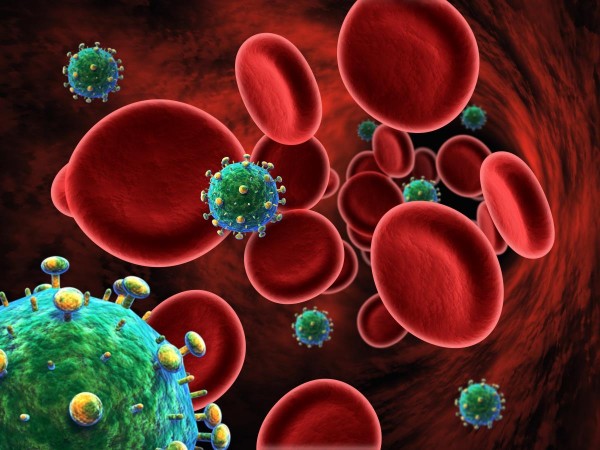
Powerful anti-HIV medicine discovered in Asian herb that might out-perform all synthetic drugs   ~ & hehe IT grows in the ....wild ???


Image: Powerful anti-HIV medicine discovered in Asian herb that might out-perform all synthetic drugshttp://www.collective-evolution.com/2017/07/13/chinese-researchers-just-teleported-the-first-object-ever-from-earth-to-orbit/

(Natural News) An evergreen plant that grows abundantly throughout Southeast Asia contains a powerful compound that outperforms a clinically-used drug against human immunodeficiency virus (HIV), a study in the Journal of Natural Compounds revealed. The plant, known as willow-leaved justicia, is native to China and is found to grow extensively in India, Sri Lanka, and Malaysia.
Researchers said a newly-identified chemical called patentiflorin A, extracted from different parts of the plant, was more effective in inhibiting an HIV enzyme compared with the commercial drug azidothymidine (AZT). The drug was introduced and approved in 1987 and works by mitigating the reverse transcriptase (RT) enzyme, a harmful compound needed by HIV in order to incorporate its genetic code into a cell’s DNA. AZT remains to be a key component for various anti-retroviral drugs that help slow down the progression of the disease.
To carry out the multi-year research, a team of health experts from the University of Illinois at Chicago, Hong Kong Baptist University, and the Vietnam Academy of Science and Technology collected samples of  the plant’s leaves, stems, and roots. The research team then analyzed the extracts along with thousands of other plant extracts to determine new drugs for various diseases including HIV. The results showed that the plant’s patentiflorin A compound was superior than AZT in inhibiting the RT enzyme.
“Patentiflorin A was able to inhibit the action of reverse transcriptase much more effectively than AZT, and was able to do this both in the earliest stages of HIV infection when the virus enters macrophage cells, and alter infection when it is present in T cells of the immune system. If we can make the drug in the lab, we don’t need to establish farms to grow and harvest the plant, which requires significant financial investment, not to mention it has an environmental impact. Patentiflorin A represents a novel anti-HIV agent that can be added to the current anti-HIV drug cocktail regimens to increase suppression of the virus and prevention of AIDS,” lead co-author Lijun Rong said in an article on the Medical News Today website.

Another plant also shows greater potency than HIV drugs

The study on willow-leaved justicia was only the most recent one in a vast number of research that have identified countless natural compounds that fend off HIV. For instance, a study published in 2008 revealed that a traditional Chinese herbal medicine called astragalus showed potential in treating the virus. As part of research, a team of health experts from the University of California Los Angeles examined the herbal medicine and found that it prevented the progressive shortening of telomeres.
“The problem is that when we’re dealing with a virus that can’t be totally eliminated from the body, such as HIV, the T-cells fighting that virus can’t keep their telomerase turned on forever. They turn off, and telomeres get shorter and they enter this stage of replicative senescence…This has the potential to be either added to or possibly even replace the HAART (highly active antiretroviral therapy), which is not tolerated well by some patients and is also costly,” said co-author Rita Effros, a professor of pathology and laboratory medicine at the David Geffen School of Medicine at UCLA and member of the UCLA AIDS Institute.
Sources include: 
Sci-News.com
MedicalNewsToday.com
ScienceDaily.com
NaturalNews.com