Congressional Interference
Posted by Conspiracy Cafe on March 25, 2017 ~ after the father of our country ...it's been ALL down hill since ...no ? 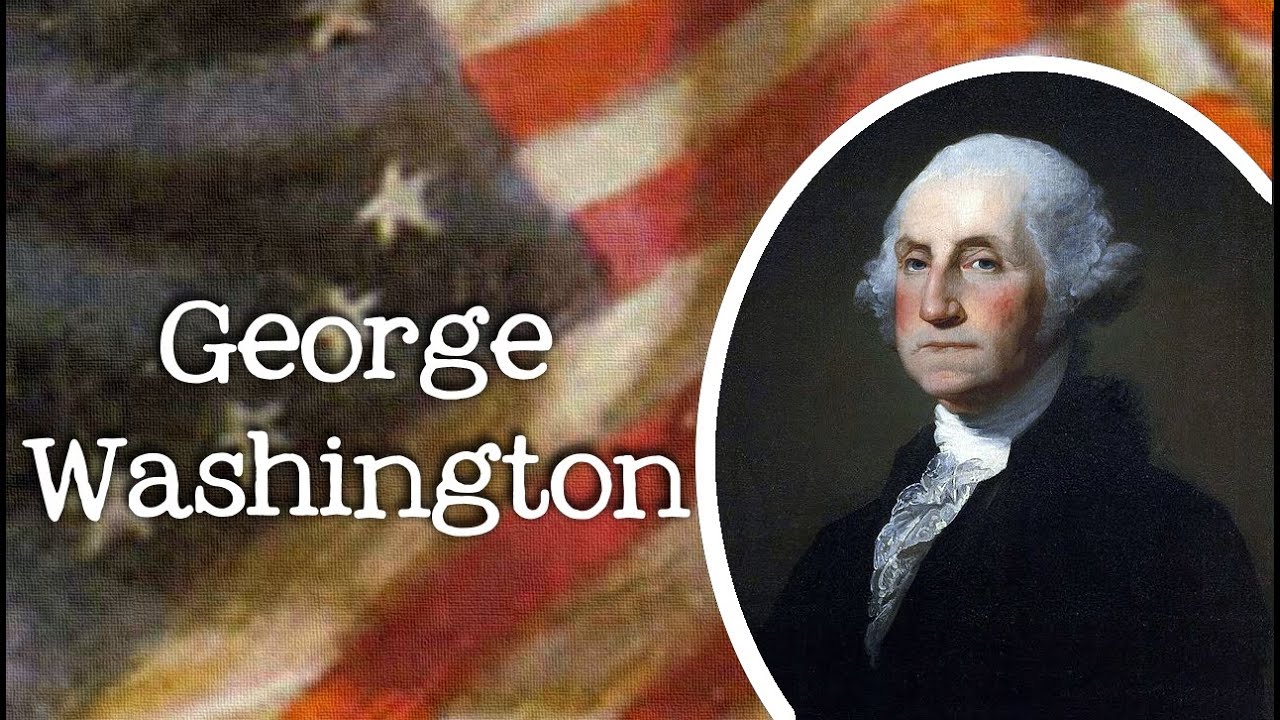 just think what can be accomplished wit an set of ...nades just think what can be accomplished wit an set of ...nades |

To make matters worse, politics were allowed to play a prominent part in the selection of officers, and Washington complained that "the different States [were], without regard to the qualifications of an officer, quarrelling about the appointments, and nominating such as are not fit to be shoeblacks, from the attachments of this or that member of Assembly." As a result, so he wrote of New England, "their officers are generally of the lowest class of the people; and, instead of setting a good example to their men, are leading them into every kind of mischief, one species of which is plundering the inhabitants, under the pretence of their being Tories." To this political motive he himself would not yield, and a sample of his appointments was given when a man was named "because he stands unconnected with either of these Governments; or with this, or that or tother man; for between you and me there is more in this than you can easily imagine," and he asserted that "I will not have any Gentn. introduced from family connexion, or local attachments, to the prejudice of the Service."

To misbehaving soldiers Washington showed little mercy. In his first service he had deserters and plunderers "flogged," and threatened that if he could "lay hands" on one particular culprit, "I would try the effect of 1000 lashes." At another time he had "a Gallows near 40 feet high erected (which has terrified the rest exceedingly) and I am determined if I can be justified in the proceeding, to hang two or three on it, as an example to others." When he took command of the Continental army he "made a pretty good slam among such kind of officers as the Massachusetts Government abound in since I came to this Camp, having broke one Colo, and two Captains for cowardly behavior in the action on Bunker's Hill,—two Captains for drawing more provisions and pay than they had men in their Company—and one for being absent from his Post when the Enemy appeared there and burnt a House just by it Besides these, I have at this time—one Colo., one Major, one Captn., & two subalterns under arrest for tryal—In short I spare none yet fear it will not at all do as these People seem to be too inattentive to every thing but their Interest" "I am sorry," he wrote, "to be under a Necessity of making frequent Examples among the Officers," but "as nothing can be more fatal to an Army, than Crimes of this kind, I am determined by every Motive of Reward and Punishment to prevent them in future." Even when plundering was avoided there were short commons for those who clung to the General. The commander-in-chief wrote Congress that "they have often, very often, been reduced to the necessity of Eating Salt Porke, or Beef not for a day, or a week but months together without Vegetables, or money to buy them;" and again, he complained that "the Soldiers [were forced to] eat every kind of horse food but Hay. Buckwheat, common wheat, Rye and Indn. Corn was the composition of the Meal which made their bread. As an Army they bore it, [but] accompanied by the want of Cloaths, Blankets, &c., will produce frequent desertions in all armies and so it happens with us, tho' it did not excite a mutiny." Even the horses suffered, and Washington wrote to the quartermaster-general, "Sir, my horses I am told have not had a mouthful of long or short forage for three days. They have eaten up their mangers and are now, (though wanted for immediate use,) scarcely able to stand."
Two results were sickness and discontent. At times one-fourth of the soldiers were on the sick-list. Three times portions of the army mutinied, and nothing but Washington's influence prevented the disorder from spreading. At the end of the war, when, according to Hamilton, "the army had secretly determined not to lay down their arms until due provision and a satisfactory prospect should be offered on the subject of their pay," the commander-in-chief urged Congress to do them justice, writing, "the fortitude—the long, & great suffering of this army is unexampled in history; but there is an end to all things & I fear we are very near to this. Which, more than probably will oblige me to stick very close to my flock this winter, & try like a careful physician, to prevent, if possible, the disorders getting to an incurable height." In this he judged rightly, for by his influence alone was the army prevented from adopting other than peaceful measures to secure itself justice.
A chief part of these difficulties the Continental Congress is directly responsible for, and the reason for their conduct is to be found largely in the circumstances of Washington's appointment to the command.
When the Second Congress met, in May, 1775, the battle of Lexington had been fought, and twenty thousand minute-men were assembled about Boston. To pay and feed such a horde was wholly beyond the ability of New England, and her delegates came to the Congress bent upon getting that body to assume the expense, or, as the Provincial Congress of Massachusetts naively put it, "we have the greatest Confidence in the Wisdom and Ability of the Continent to support us."
The other colonies saw this in a different light. Massachusetts, without our advice, has begun a war and embodied an army; let Massachusetts pay her own bills, was their point of view. "I have found this Congress like the last," wrote John Adams. "When we first came together, I found a strong jealousy of us from New England, and the Massachusettes in particular, suspicions entertained of designs of independency, an American republic, Presbyterian principles, and twenty other things. Our sentiments were heard in Congress with great caution, and seemed to make but little impression." Yet "every post brought me letters from my friends ... urging in pathetic terms the impossibility of keeping their men together without the assistance of Congress." "I was daily urging all these things, but we were embarrassed with more than one difficulty, not only with the party in favor of the petition to the King, and the party who were zealous of independence, but a third party, which was a southern party against a Northern, and a jealousy against a New England army under the command of a New England General."
Under these circumstances a political deal was resorted to, and Virginia was offered by John and Samuel Adams, as the price of an adoption and support of the New England army, the appointment of commander-in-chief, though the offer was not made with over-good grace, and only because "we could carry nothing without conceding it." There was some dissension among the Virginia delegates as to who should receive the appointment, Washington himself recommending an old companion in arms, General Andrew Lewis, and "more than one," Adams says of the Virginia delegates, were "very cool about the appointment of Washington, and particularly Mr. Pendleton was very clear and full against it" Washington himself said the appointment was due to "partiality of the Congress, joined to a political motive;" and, hard as it is to realize, it was only the grinding political necessity of the New England colonies which secured to Washington the place for which in the light of to-day he seems to have been created.
As a matter of course, there was not the strongest liking felt for the General thus chosen by the New England delegates, and this was steadily lessened by Washington's frank criticism of the New England soldiers and officers already noticed. Equally bitter to the New England delegates and their allies were certain army measures that Washington pressed upon the attention of Congress. He urged and urged that the troops should be enlisted for the war, that promotions should be made from the army as a whole, and not from the colony- or State-line alone, and most unpopular of all, that since Continental soldiers could not otherwise be obtained, a bounty should be given to secure them, and that as compensation for their inadequate pay half-pay should be given them after the war. He eventually carried these points, but at the price of an entire alienation of the democratic party in the Congress, who wished to have the war fought with militia, to have all the officers elected annually, and to whom the very suggestion of pensions was like a red rag to a bull.
A part of their motive in this was unquestionably to prevent the danger of a standing army, and of allowing the commander-in-chief to become popular with the soldiers. Very early in the war Washington noted "the jealousy which Congress unhappily entertain of the army, and which, if reports are right, some members labor to establish." And he complained that "I see a distrust and jealousy of military power, that the commander-in-chief has not an opportunity, even by recommendation, to give the least assurance of reward for the most essential services." The French minister told his government that when a committee was appointed to institute certain army reforms, delegates in Congress "insisted on the danger of associating the Commander-in-chief with it, whose influence, it was stated, was already too great," and when France sent money to aid the American cause, with the provision that it should be subject to the order of the General, it aroused, a writer states, "the jealousy of Congress, the members of which were not satisfied that the head of the army should possess such an agency in addition to his military power."
His enemies in the Congress took various means to lessen his influence and mortify him. Burke states that in the discussion of one question "Jersey, Pennsylvania, North Carolina, and South Carolina voted for expunging it; the four Eastern States, Virginia and Georgia for retaining it. There appeared through this whole debate a great desire, in some of the delegates from the Eastern States, and in one from New Jersey, to insult the General," and a little later the Congress passed a "resolve which," according to James Lovell, "was meant to rap a Demi G—over the knuckles." Nor was it by commission, but as well by omission, that they showed their ill feeling. John Laurens told his father that
"there is a conduct observed towards" the General "by certain great men, which as it is humiliating, must abate his happiness.... The Commander in Chief of this army is not sufficiently informed of all that is known by Congress of European affairs. Is it not a galling circumstance, for him to collect the most important intelligence piecemeal, and as they choose to give it, from gentlemen who come from York? Apart from the chagrin which he must necessarily feel at such an appearance of slight, it should be considered that in order to settle his plan of operations for the ensuing campaign, he should take into view the present state of European affairs, and Congress should not leave him in the dark."
Furthermore, as already noted, Washington was criticised for his Fabian policy, and in his indignation he wrote to Congress, "I am informed that it is a matter of amazement, and that reflections have been thrown out against this army, for not being more active and enterprising than, in the opinion of some, they ought to have been. If the charge is just, the best way to account for it will be to refer you to the returns of our strength, and those which I can produce of the enemy, and to the enclosed abstract of the clothing now actually wanting for the army." "I can assure those gentlemen," he said, in reply to political criticism, "that it is a much easier and less distressing thing to draw remonstrances in a comfortable room by a good fireside, than to occupy a cold, bleak hill, and sleep under frost and snow, without clothes or blankets."
The ill feeling did not end with insults. With the defeats of the years 1776 and 1777 it gathered force, and towards the end of the latter year it crystallized in what has been known in history as the Conway Cabal. The story of this conspiracy is so involved in shadow that little is known concerning its adherents or its endeavors. But in a general way it has been discovered that the New England delegates again sought the aid of the Lee faction in Virginia, and that this coalition, with the aid of such votes as they could obtain, schemed several methods which should lessen the influence of Washington, if they did not force him to resign. Separate and detached commands were created, which were made independent of the commander-in-chief, and for this purpose even a scheme which the General called "a child of folly" was undertaken. Officers notoriously inimical to Washington, yet upon whom he would be forced to rely, were promoted. A board of war made up of his enemies, with powers "in effect paramount," Hamilton says, "to those of the commander-in-chief," was created It is even asserted that it was moved in Congress that a committee should be appointed to arrest Washington, which was defeated only by the timely arrival of a new delegate, by which the balance of power was lost to the Cabal.
Even with the collapse of the army Cabal the opposition in Congress was maintained. "I am very confident," wrote General Greene, "that there is party business going on again, and, as Mifflin is connected with it, I doubt not its being a revival of the old scheme;" again writing, "General Schuyler and others consider it a plan of Mifflin's to injure your Excellency's operations. I am now fully convinced of the reality of what I suggested to you before I came away." In 1779 John Sullivan, then a member of Congress, wrote,—
"Permit me to inform your Excellency, that the faction raised against you in 1777, is not yet destroyed. The members are waiting to collect strength, and seize some favorable moment to appear in force. I speak not from conjecture, but from certain knowledge. Their plan is to take every method of proving the danger arising from a commander, who enjoys the full and unlimited confidence of his army, and alarm the people with the prospects of imaginary evils; nay, they will endeavor to convert your virtue into arrows, with which, they will seek to wound you."
But Washington could not be forced into a resignation, ill-treat and slight him as they would, and at no time were they strong enough to vote him out of office. For once a Congressional "deal" between New England and Virginia did not succeed, and as Washington himself wrote, "I have a good deal of reason to believe that the machination of this junto will recoil on their own heads, and be a means of bringing some matters to light which by getting me out of the way, some of them thought to conceal," In this he was right, for the re-elections of both Samuel Adams and Richard Henry Lee were put in danger, and for some time they were discredited even in their own colonies. "I have happily had," Washington said to a correspondent, "but few differences with those with whom I have had the honor of being connected in the service. With whom, and of what nature these have been, you know. I bore much for the sake of peace and the public good"
As is well known, Washington served without pay during his eight years of command, and, as he said, "fifty thousand pounds would not induce me again to undergo what I have done." No wonder he declared "that the God of armies may incline the hearts of my American brethren to support the present contest, and bestow sufficient abilities on me to bring it to a speedy and happy conclusion, thereby enabling me to sink into sweet retirement, and the full enjoyment of that peace and happiness, which will accompany a domestic life, is the first wish and most fervent prayer of my soul."
The day finally came when his work was finished, and he could be, as he phrased it, "translated into a private citizen." Marshall describes the scene as follows: "At noon, the principal officers of the army assembled at Frances' tavern; soon after which, their beloved commander entered the room. His emotions were too strong to be concealed. Filling a glass, he turned to them and said, 'With a heart full of love and gratitude, I now take leave of you; I most devoutly wish that your latter days may be as prosperous and happy, as your former ones have been glorious and honorable.' Having drunk, he added, 'I cannot come to each of you to take my leave; but shall be obliged to you, if each of you will come and take me by the hand.' General Knox, being nearest, turned to him. Incapable of utterance, Washington grasped his hand, and embraced him. In the same affectionate manner he took leave of each succeeding officer. In every eye was the tear of dignified sensibility, and not a word was articulated to interrupt the majestic silence, and the tenderness of the scene. Leaving the room, he passed through the corps of light infantry, and walked to Whitehall, where a barge waited to convey him to Powles-hook. The whole company followed in mute and solemn procession, with dejected countenance ... Having entered the barge, he turned to the company, and, waving his hat, bade them a silent adieu."
http://www.infoplease.com/t/history/true-washington/congrsssional-interference.html


