---BREAKAWAY CIVILIZATION ---ALTERNATIVE HISTORY---NEW BUSINESS MODELS--- ROCK & ROLL 'S STRANGE BEGINNINGS---SERIAL KILLERS---YEA AND THAT BAD WORD "CONSPIRACY"--- AMERICANS DON'T EXPLORE ANYTHING ANYMORE.WE JUST CONSUME AND DIE.---
Pages
▼
Thursday, March 2, 2017
Bill Paxton dies from surgery as failed medical system takes another beloved life
(Natural News)
Actor Bill Paxton died yesterday from “surgery complications.” The
widely acclaimed actor was 61 years old and starred in a long list of
blockbuster films including Aliens, Titanic, The Terminator, Apollo 13 and Twister. Sadly, Bill Paxton’s death is yet another example of the failed
medical system that routinely kills innocent people while reaping
billions in profits from drugs and surgeries that harm far more people
than they save. So-called “iatrogenic deaths” — deaths caused by medicine — are
killing a shocking 783,000 Americans each year, vastly exceeding even
the nearly 600,000 annual deaths attributed to cancer. (In truth, even
the 600,000 “cancer deaths” statistic is actually filled with people who
died from the chemotherapy, not the cancer.)(SOURCE: Death by Medicine – PDF)
Superbug infections kill hundreds of thousands during surgery
Although details have not been released about what complications caused Bill Paxton’s death, the most likely culprit is a superbug infection. Specifically, it’s likely either c. diff or MRSA, both of which are now endemic in hospitals across the USA. UPDATE: TMZ is now reporting Paxton died from “complications” and a “stroke.” Take it for what it’s worth. Because hospitals refuse to use colloidal silver or copper solutions —
both of which kill superbugs on contact — they are stuck in a “chemical
antibiotics” paradigm that keeps killing people by the tens of
thousands each year while literally generating more superbugs due to the
widespread abuse of antibiotics. Already, superbug infections (which are often introduced during surgery) are killing more Americans than breast cancer. According to a report published in The Review on Antimicrobial Resistance,superbug deaths in U.S. hospitals will exceed cancer deaths by the year 2050 unless something drastic changes. As the report states: One of the greatest worries about AMR [antimicrobial resistance]
is that modern health systems and treatments that rely heavily on
antibiotics could be severely undermined. When most surgery is
undertaken, patients are given prophylactic antibiotics to reduce the
risk of bacterial infections. In a world where antibiotics do not work, this measure would become largely useless and surgery would become far more dangerous. Note that superbugs were created by modern medicine
as an unintended emergent microbial response to the widespread abuse of
high-profit prescription antibiotics which earned trillions of dollars
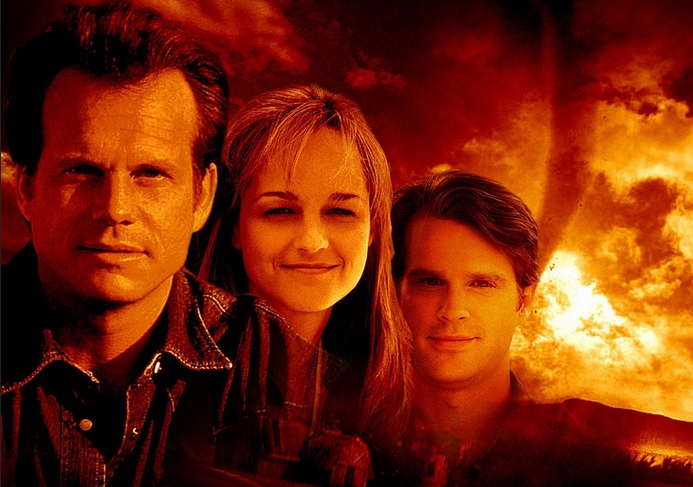
for the pharmaceutical drug cartels. Natural News mourns the loss of Bill Paxton, who was a beloved actor revered by tens of millions of fans. Feature image credit: Twister movie poster
(NaturalNews) It may be hard to believe, but a recent study shows that
cancer is 100 percent a man-made disease, and that it is caused by
modern-day phenomena like pollution and dietary intake.
Researchers
at the University of Manchester's KNH Centre for Biomedical Egyptology
in England, reached that conclusion in 2010, after reviewing remains and
literature from ancient Egypt and Greece, as well as earlier periods, a
study that also included the first historical diagnosis of cancer in an
Egyptian mummy.
The study, published at the time in the journal Nature Reviews Cancer,
noted that researchers found only one occurrence of cancer while
investigating hundreds of Egyptian mummies. In addition, they found very
few references to the disease in period literature, which indicates
that cancer cases were extremely rare during the period.
However,
after the Industrial Revolution, cancer rates exploded, and in
particular among children, which proves that the rise in cases is not
exclusively tied to longer life.
"In industrialized societies,
cancer is second only to cardiovascular disease as a cause of death. But
in ancient times, it was extremely rare," said Prof. Rosalie David, of
the Faculty of Life Sciences. "There is nothing in the natural
environment that can cause cancer. So it has to be a man-made disease,
down to pollution and changes to our diet and lifestyle.
"The
important thing about our study is that it gives a historical
perspective to this disease," she continued. "We can make very clear
statements on the cancer
rates in societies because we have a full overview. We have looked at
millennia, not one hundred years, and have masses of data."
Modern industrialization
The
research includes the first-ever histological diagnosis of cancer in an
Egyptian mummy, which was made by Prof. Michael Zimmerman, a visiting
scholar at the KNH Center, who is based at Villanova University near
Philadelphia. He managed to diagnose rectal cancer in an unidentified
mummy, an "ordinary" person who lived in the Dakhleh Oasis during the
Ptolemaic period (200-400 AD).
"In an ancient society lacking
surgical intervention, evidence of cancer should remain in all cases.
The virtual absence of malignancies in mummies must be interpreted as
indicating their rarity in antiquity, indicating that cancer causing
factors are limited to societies affected by modern industrialization,"
Zimmerman said.
The research team examined mummified remains as
well as literary documentation and evidence for ancient Egypt, but only
literary evidence from ancient Greece,
because there are no known human remains from this period. The team
also looked at medical studies of animal and human remains from earlier
periods, extending all the way back to the age of dinosaurs.
Short lifespans not a factor
Overall,
evidence of cancer in early humans and animal fossils, as well as
non-human primates, is extremely rare. There are only a few dozen
examples in animal fossils, though these are mostly disputed. However,
there has been a metastatic cancer discovery of unknown primary origin
in an Edmontosaurus fossil, while a separate study lists several
possible neoplasms – new and abnormal growths of tissue in some part of
the body, especially as a characteristic of cancer – in fossil remains.
Some
scientists and medical researchers have suggested that the rare
incidence of cancer in antiquity was due in large part to short
lifespans. While this statistical construct is accurate, humans in
ancient Egypt did not develop other conditions that primarily affect
young persons.
Another explanation for the lack of cancerous
tumors in ancient times is that tumors possibly are not well-preserved.
Zimmerman has performed some experimental studies indicating that
mummification actually preserves the features of a malignancy and thus,
tumors should actually be more well-preserved than normal tissues.
Still,
though hundreds of mummies from around the world have been examined,
there are still only two publications showing microscopic confirmation
of cancer. Radiological exams of mummies from the Cairo Museum have also
failed to show evidence of cancer. Sources:
Prescription opioid deaths surpass gun-related deaths… Big Pharma literally killing more people than GUNS ~ hehe & YET we don't hear SHIT from the ban the guns "crowd" HUH ... u's (banners) fucked in the heads lid douche bags heheehehheeeeeehhehehehee
(Natural News)
The opioid epidemic in America is killing more people than guns and the blame rests squarely on Big Pharma.
Until 2007, the number of deaths by firearm was five times greater than
those caused by overdoses, but in 2015 overdose deaths surpassed gun
deaths for the first time – and it looks like the trend will continue. Drug companies have orchestrated and encouraged the over-prescription
of powerful opioid painkillers for the past couple of decades – a
policy which created problems now threatening to spiral out of control
as the overdose death toll continues to rise dramatically each year. America’s current opioid crisis can be traced directly to the
introduction of extremely potent – and highly addictive – opioid
painkillers such as OxyContin, which was first marketed in 1995 and soon
became a problem, both with patients who became addicted and with
recreational drug users, who could snort or inject the drug much in the
same fashion as heroin, and with similar results. The federal government has finally ordered stricter limits on the
prescription of opioid painkillers, but that has driven many
opioid-dependent people to the streets in search of substitutes like
heroin or increasingly, synthetic opioids such as fentanyl – an often
illicitly-manufactured drug many times stronger than heroin and far more
dangerous in terms of overdose potential. From The Week: “Now that federal regulations have finally caught up to the
pharmaceutical drug problem in this country and doctors have wised up to
the sinister realities of the drug nicknamed ‘Hillbilly Heroin,’ the hard and fast days of OxyContin are over.” “Many are now arguing that the epidemic hasn’t gone away so much as
it has evolved: Heroin use is again on the upswing. Like a shrewd virus
that mutates once it confronts a vaccine, Americans’ addiction to
opioids has survived the government crackdown on OxyContin and fled to
the seedy asylum of heroin.” It’s true that heroin use is on the rise – fatal overdoses from
heroin have quadrupled over the past five years. But increasingly,
overdose deaths are being attributed to synthetic opioids, particularly
fentanyl, which is often mixed into street heroin. Fentanyl is 50 times stronger than heroin and has been the cause of
waves of deaths in many communities throughout the country – in one week
during the spring of 2016, forty six people died from fentanyl
overdoses in Sacramento; in August of 2015, twenty seven people died
from fentanyl overdoses during a 48-hour period in just one Pennsylvania county. From The Wall Street Journal: Fentanyl played a major role in driving opioid deaths in the U.S. up
nearly 16% to 33,091 in 2015, according to the most recent federal data,
and hard-hit states have reported even more grim statistics for 2016. Much of the fentanyl hitting the streets of America appears to be
coming from China, and a ban on four fentanyl-class opioids will go into
effect in China on March 1 of this year. The DEA says the ban will be a
“game changer” but some are skeptical whether it will make a real
difference. Some believe it will only force fentanyl production to go
underground, with the possibility of even more dangerous analogs ending
up mixed with street heroin and killing addicts in America. There are no clear and easy solutions to America’s opioid addiction
crisis, but it’s clear how and why it became a problem in the first
place. At the very least, Big Pharma should be responsible for funding
drug rehab for all the addicts it has created. But of course that will never happen as long as the big drug companies are able to continue to influence policy in Washington. President Trump has promised to clean up the pharmaceutical industry –
if he makes good on his pledge, it will be one of the greatest single
achievements of his political career. Sources: TheWeek.com DailyCaller.com TheHerald-News.com Vocativ.com