Pages

Tuesday, November 26, 2013

Sally the geriatric porn star tells all

Sally D’Angelo is a prolific ‘granny porn’ actress who describes herself as ‘the original MILF’. Jeremy Wilson tracked her down.
BOQAmo9CcAAKtVb
Listening to anti-porn campaigners, you might get the impression that porn stars are all eighteen-year-old starlets discarded by the industry at the first hint of sag. But, as we’ve pointed out before, there’s an incredible diversity of pornographic material online and if you’re into something a little more “mature” than the usual fare of “barely legal” actresses, the internet has you covered.
From glossy productions by big studios to shaky amateur footage of grannies pleasuring their “grandchildren”, the internet caters to the diverse tastes of “mature porn” aficionados… along with the perennially curious. But what’s the appeal of all this for the more mature porn star?
We got in touch with a prolific older porn actress who describes herself as “the world’s first GILF ['granny I’d like to fuck', in case you weren't sure]” to find out what life is like for an older lady in the adult entertainment industry. Meet Sally D’Angelo, the “almost 60″ porn star.
BY5OWSvCMAA6IFq
How did you get involved in mature porn?
Many many years ago (25 or more maybe) I was at a lifestyle/swinger convention in Vegas and as I was going through the convention center I was stopped by none other than Nina Hartley. She was chit chatting with some other girls and she said to me, “you have what it takes to make it in the porn business” (and she was a mega star at that time). And with my Dolly Parton personality I can talk to anyone so I stopped and thanked her.
[At the time] I knew I couldn’t do it with my husband’s high profile job.
Many years passed and I ran into an old acquaintance in the porn business who used to be a cameraman and he said, “Damn, Sally, you’re still looking very hot. Do you realise there is a major market for cougar/mature porn?”
I said yeah right, who wants to watch a 50-something get laid. [But] he gave me a contact and with my husband’s consent I contacted them and thought it would be fun.
‘I love every ass-pounding minute of it.’
[That's how] I did my first movie in over 25 years and it was quite a hit, so they asked me back.
So here I am today. My site sallydangelo.com will be launching any day now and I’m doing porn star radio every Sunday night at 7-9.
Getting back into the porn business has been wonderful for me, plus I love being fucked so it’s a dream job, and better yet I do it on camera for my fans.
I love every ass-pounding minute of it.
BX1GcSrIIAA5d35
What is it about performing in mature porn that you enjoy the most?
I guess I’m the eternal lover, Sure, it’s a rush to be wanted by guys (and women) half your age, I cannot deny that, so I guess the proper answer is I love the fact I’m still highly sought after, probably more so now than when i was younger.
Having sex with guys in their 20-30s is a major turn on. I never fake an orgasm, not even on film. What you see is what you get with me.
Whats different about sex for you now that you’re older?
Difference now from then? NOTHING! I have always been very sexual and highly orgasmic, I love having sex. In fact I just got laid before I did this interview.
BX1CG5_IIAAjUpT
What’s your favourite position?
I love being fucked from behind, especially if it’s a huge cock. And if I’m in a 3-way having my pussy ate [sic] while I’m being fucked from behind is Heaven.
BWKDI_SCQAA5vKA
What in particular do you think interests people about your performances?
What performance? I’m all natural, baby. Like I said, what you see is what you get with me. I never fake anything and I have been told on several occasions, “I’m the best fuck they have ever had” Even XXX stars have told me that.
I’d fuck them all if I could.
So I guess my ability to be myself. I’m told I have quite a naughty mouth when fucking, but honestly I don’t remember as I get caught up in the sex and forget about the cameras).
I love giving my fans the best fuck they have ever seen and hopefully with enough emotion that they can fantasize about being right there in bed with me. I’d fuck them all if I could.
How long do you plan to continue your porn career?
I plan on doing it as long as my fans want me to, or it just isn’t fun any more. At the moment I don’t see retirement coming any time soon.
It puts such a big smile on my face when fans write me and say, “Sally you’re just too smokin’ hot… WE WANT MORE!”

Michelle Obama Says Americans Will Need To Make “Sacrifices” For Obamacare To Work

People have been referencing this speech that Michelle made back in 2008, but video has finally surfaced giving context to what she was saying.
In the speech, Michelle attempts to address concerns over so many Americans not being able to afford health insurance.  However, what she demands was a bit more revealing.
According to the FLOTUS, the American people will need to make sacrifices so that Obama will get what he wants.  She was referring to Obamacare and the financial blow it will deal to our country.
michelle
In my opinion, this perfectly sums up the Obama family.

Judge's ruling today 11/26/13, Sandy Hook 911 Calls will be released on December 4th,


portion:


Judge Eliot D. Prescott ordered police to release the tapes by 2 p.m. on Dec. 4 unless Danbury State’s Attorney Stephen J. Sedensky III can convince the Appellate Court to reverse the ruling.

It is time for them to be released and interesting enough, the calls in do not say a child was shot per the judge in deciding the ruling.

portion:

 "There is no dispute in this case that the audio recordings of the 911 calls made from the Sandy Hook Elementary School on Dec. 14, 2012, are public records within the FOIA," he wrote.Under Sedensky's effort to use confidential provisions relating to the reporting of child abuse, the judge wrote that under the prosecutor's rationale, all records pertaining to the Sandy Hook shooting would be exempt from public disclosure.
The judge said the calls are harrowing, but they do not identify any children, nor do they describe any injuries to a child.

This will be just in time for the media and the government to spew propaganda and try and get gun control going again at the one year anniversary of Sandy Hook.

People need to understand the only reason we have the story of Sandy Hook is because the media and government told us it happened.  Yet there has not been one shred of evidence or real proof any children were murdered that day.

The fact is there is more evidence that it did not happen then us just being told it did.

Does that sound cold to some people?  That I would say that when they believe 20 children were shot?

Remember this is the same government that lied over and over again about people keeping their health insurance when they knew for years it would actually be cancelled.   Besides all the other lies they have been caught in - Benghazi, IRS, etc.

So are we really just suppose to take their word that people were murdered that day without providing proof?

Remember too some authorities slipped up when they spoke, including the Governor of Connecticut saying that Holder had told him the week before that something as this was going to happen.

The news channels faked police running into the school.  They showed them running into St. Rosa school that day.

Remember there was a drill with this exact scenario going on less than a mile away.

This is besides the fact they didn't allow any EMS into the building too.

The list goes on and on, including my finding and showing in a video how the people recycled into the firehouse that day.

We shall see what the 911 calls say and we will have fun trying to figure out why the police have wanted them to stay unheard from the public.

If everything is as they have said, then what are they hiding?


Monsanto, the TPP, and Global Food Dominance

Monsanto and Gates Foundation Push Genetically Engineered Crops on Africa
Control oil and you control nations,” said US Secretary of State Henry Kissinger in the 1970s.  “Control food and you control the people.”
Global food control has nearly been achieved, by reducing seed diversity with GMO (genetically modified) seeds that are distributed by only a few transnational corporations. But this agenda has been implemented at grave cost to our health; and if the Trans-Pacific Partnership (TPP) passes, control over not just our food but our health, our environment and our financial system will be in the hands of transnational corporations.
Profits Before Populations
Genetic engineering has made proprietary control possible over the seeds on which the world’s food supply depends. “Terminator” genes enable the production of sterile seeds, using a synthetic chemical catalyst appropriately called “Traitor” to induce seed sterility. Farmers must therefore buy seeds from their patent owners year after year. To cover these costs, food prices are raised; but the harm is far greater than to our pocketbooks.
According to an Acres USA interview of plant pathologist Don Huber, Professor Emeritus at Purdue University, two modified traits account for practically all of the genetically modified crops grown in the world today. One involves insect resistance. The other, more disturbing modification involves insensitivity to glyphosate-based herbicides (plant-killing chemicals). Often known as Roundup after the best-selling Monsanto product of that name, glyphosate poisons everything in its path except plants genetically modified to resist it.
Glyphosate-based herbicides are now the most commonly used herbicides in the world. Glyphosate is an essential partner to the GMOs that are the principal business of the burgeoning biotech industry. Glyphosate is a “broad-spectrum” herbicide that destroys indiscriminately, not by killing unwanted plants directly but by tying up access to critical nutrients.
Because of the insidious way in which it works, it has been sold as a relatively benign replacement for the devastating earlier dioxin-based herbicides. But a barrage of experimental data has now shown glyphosate and the GMO foods incorporating it to pose serious dangers to health. Compounding the risk is the toxicity of “inert” ingredients used to make glyphosate more potent. Researchers have found, for example, that the surfactant POEA can kill human cells, particularly embryonic, placental and umbilical cord cells. But these risks have been conveniently ignored.
The widespread use of GMO foods and glyphosate herbicides helps explain the anomaly that the US spends over twice as much per capita on healthcare as the average developed country, yet it is rated far down the scale of the world’s healthiest populations. The World Health Organization has ranked the US LAST out of 17 developed nations for overall health.
Sixty to seventy percent of the foods in US supermarkets are now genetically modified. By contrast, in at least 26 other countries—including Switzerland, Australia, Austria, China, India, France, Germany, Hungary, Luxembourg, Greece, Bulgaria, Poland, Italy, Mexico and Russia—GMOs are totally or partially banned; and significant restrictions on GMOs exist in about sixty other countries.
A ban on GMO and glyphosate use might go far toward improving the health of Americans. But the Trans-Pacific Partnership, a global trade agreement for which the Obama Administration has sought Fast Track status, would block that sort of cause-focused approach to the healthcare crisis.
Roundup’s Insidious Effects
Roundup-resistant crops escape being killed by glyphosate, but they do not avoid absorbing it into their tissues. Herbicide-tolerant crops have substantially higher levels of herbicide residues than other crops. In fact, many countries have had to increase their legally allowable levels—by up to 50 times—in order to accommodate the introduction of GM crops. In the European Union, residues in food are set to rise 100-150 times if a new proposal by Monsanto is approved. Meanwhile, herbicide-tolerant “super-weeds” have adapted to the chemical, requiring even more toxic doses and new toxic chemicals to kill the plant.
Human enzymes are affected by glyphosate just as plant enzymes are: the chemical blocks the uptake of manganese and other essential minerals. Without those minerals, we cannot properly metabolize our food. That helps explain the rampant epidemic of obesity in the United States. People eat and eat in an attempt to acquire the nutrients that are simply not available in their food.
According to researchers Samsell and Seneff in Biosemiotic Entropy: Disorder, Disease, and Mortality (April 2013):
Glyphosate’s inhibition of cytochrome P450 (CYP) enzymes is an overlooked component of its toxicity to mammals. CYP enzymes play crucial roles in biology . . . . Negative impact on the body is insidious and manifests slowly over time as inflammation damages cellular systems throughout the body. Consequences are most of the diseases and conditions associated with a Western diet, which include gastrointestinal disorders, obesity, diabetes, heart disease, depression, autism, infertility, cancer and Alzheimer’s disease.
More than 40 diseases have been linked to glyphosate use, and more keep appearing. In September 2013, the National University of Rio Cuarto, Argentina, published research finding that glyphosate enhances the growth of fungi that produce aflatoxin B1, one of the most carcinogenic of substances. A doctor from Chaco, Argentina, told Associated Press, “We’ve gone from a pretty healthy population to one with a high rate of cancer, birth defects and illnesses seldom seen before.” Fungi growths have increased significantly in US corn crops.
Glyphosate has also done serious damage to the environment. According to an October 2012 report by the Institute of Science in Society:
Agribusiness claims that glyphosate and glyphosate-tolerant crops will improve crop yields, increase farmers’ profits and benefit the environment by reducing pesticide use. Exactly the opposite is the case. . . . [T]he evidence indicates that glyphosate herbicides and glyphosate-tolerant crops have had wide-ranging detrimental effects, including glyphosate resistant super weeds, virulent plant (and new livestock) pathogens, reduced crop health and yield, harm to off-target species from insects to amphibians and livestock, as well as reduced soil fertility.
Politics Trumps Science
In light of these adverse findings, why have Washington and the European Commission continued to endorse glyphosate as safe? Critics point to lax regulations, heavy influence from corporate lobbyists, and a political agenda that has more to do with power and control than protecting the health of the people.
In the ground-breaking 2007 book Seeds of Destruction: The Hidden Agenda of Genetic Manipulation, William Engdahl states that global food control and depopulation became US strategic policy under Rockefeller protégé Henry Kissinger. Along with oil geopolitics, they were to be the new “solution” to the threats to US global power and continued US access to cheap raw materials from the developing world. In line with that agenda, the government has shown extreme partisanship in favor of the biotech agribusiness industry, opting for a system in which the industry “voluntarily” polices itself. Bio-engineered foods are treated as “natural food additives,” not needing any special testing.
Jeffrey M. Smith, Executive Director of the Institute for Responsible Technology, confirms that US Food and Drug Administration policy allows biotech companies to determine if their own foods are safe. Submission of data is completely voluntary. He concludes:
In the critical arena of food safety research, the biotech industry is without accountability, standards, or peer-review. They’ve got bad science down to a science.
Whether or not depopulation is an intentional part of the agenda, widespread use of GMO and glyphosate is having that result. The endocrine-disrupting properties of glyphosate have been linked to infertility, miscarriage, birth defects and arrested sexual development. In Russian experiments, animals fed GM soy were sterile by the third generation. Vast amounts of farmland soil are also being systematically ruined by the killing of beneficial microorganisms that allow plant roots to uptake soil nutrients.
In Gary Null’s eye-opening documentary Seeds of Death: Unveiling the Lies of GMOs,Dr. Bruce Lipton warns, “We are leading the world into the sixth mass extinction of life on this planet. . . . Human behavior is undermining the web of life.”
The TPP and International Corporate Control
As the devastating conclusions of these and other researchers awaken people globally to the dangers of Roundup and GMO foods, transnational corporations are working feverishly with the Obama administration to fast-track the Trans-Pacific Partnership, a trade agreement that would strip governments of the power to regulate transnational corporate activities. Negotiations have been kept secret from Congress but not from corporate advisors, 600 of whom have been consulted and know the details. According to Barbara Chicherio in Nation of Change:
The Trans Pacific Partnership (TPP) has the potential to become the biggest regional Free Trade Agreement in history. . . .
The chief agricultural negotiator for the US is the former Monsanto lobbyist, Islam Siddique.  If ratified the TPP would impose punishing regulations that give multinational corporations unprecedented right to demand taxpayer compensation for policies that corporations deem a barrier to their profits.
. . . They are carefully crafting the TPP to insure that citizens of the involved countries have no control over food safety, what they will be eating, where it is grown, the conditions under which food is grown and the use of herbicides and pesticides.
Food safety is only one of many rights and protections liable to fall to this super-weapon of international corporate control. In an April 2013 interview on The Real News Network, Kevin Zeese called the TPP “NAFTA on steroids” and “a global corporate coup.” He warned:
No matter what issue you care about—whether its wages, jobs, protecting the environment . . . this issue is going to adversely affect it . . . .
If a country takes a step to try to regulate the financial industry or set up a public bank to represent the public interest, it can be sued . . . .
Return to Nature: Not Too Late
There is a safer, saner, more earth-friendly way to feed nations. While Monsanto and US regulators are forcing GM crops on American families, Russian families are showing what can be done with permaculture methods on simple garden plots. In 2011, 40% of Russia’s food was grown on dachas (cottage gardens or allotments). Dacha gardens produced over 80% of the country’s fruit and berries, over 66% of the vegetables, almost 80% of the potatoes and nearly 50% of the nation’s milk, much of it consumed raw. According to Vladimir Megre, author of the best-selling Ringing Cedars Series:
Essentially, what Russian gardeners do is demonstrate that gardeners can feed the world – and you do not need any GMOs, industrial farms, or any other technological gimmicks to guarantee everybody’s got enough food to eat. Bear in mind that Russia only has 110 days of growing season per year – so in the US, for example, gardeners’ output could be substantially greater. Today, however, the area taken up by lawns in the US is two times greater than that of Russia’s gardens – and it produces nothing but a multi-billion-dollar lawn care industry.
In the US, only about 0.6 percent of the total agricultural area is devoted to organic farming. This area needs to be vastly expanded if we are to avoid “the sixth mass extinction.” But first, we need to urge our representatives to stop Fast Track, vote no on the TPP, and pursue a global phase-out of glyphosate-based herbicides and GMO foods. Our health, our finances and our environment are at stake.
Ellen Brown is an attorney, president of the Public Banking Institute, and author of twelve books, including the best-selling Web of Debt. In The Public Bank Solution, her latest book, she explores successful public banking models historically and globally. Her blog articles are at EllenBrown.com.

There Already Is A Government Health Care System In America And It Is The Medical Version Of Hell

Injured VetWhat would happen if the entire health care system in the United States was run by the federal government?  Would such a system be better or worse than what we have today?  To get an answer to these questions, all we have to do is take a look at what is already happening.  The truth is that there already is a government health care system in America and it is the medical version of hell.  You are about to read about the horrifying state of health care being provided by the federal government at VA hospitals and on Indian reservations around the country.  Injured military veterans and those that live on Indian reservations are some of the most vulnerable members of our society, and the government is doing an absolutely nightmarish job of taking care of them.
Theoretically, the government should be able to provide at least a basic level of care for these people, but as you will see this is simply not happening.
Why?
The bottom line is that the federal government is completely and utterly incompetent.  This has been demonstrated once again in recent months by the launch of Obamacare.  What a train wreck that has been.
But we shouldn’t be surprised.  When it comes to health care, the U.S. government can’t seem to get anything right.
Most Americans don’t realize this, but government-run health care for our military veterans is a complete and total joke.  In some instances, it can take critically injured military veterans more than a year to see a doctor…
CJ Jackson, a Purple Heart recipient and 101st Airborne medic, was severely wounded during a battle in Afghanistan when an enemy rocket-propelled grenade hit a wall a couple of feet from him, sending debris into his arm and leg. He said he waited over a year to see a doctor at the Jackson VA despite being considered critically injured.
And once a vet is finally able to see a doctor and have surgery scheduled, those surgeries are often conducted in facilities that are beyond disgusting.  The following is what one orthopedic surgeon recently told CNBC
“Occasionally we’d find pieces of bone” on equipment, he told CNBC. “What it really shows is that no one is really taking the time or care to clean the instruments.”
His story was backed up by Dr. Phyllis Hollenbeck, who still works at the hospital. She testified on Sept. 9 about problems at the Jackson center. “Essentially everything that happens in primary care at the Jackson VA can be included under the umbrella of being unethical, illegal, heartbreaking, and life threatening for the veterans, and everything in the care of the veterans starts in primary care.”
Of course this is not the first investigation that discovered these kinds of conditions at VA hospitals.  A few years ago, ABC News also conducted an investigation of conditions at VA facilities across the United States.  What ABC News discovered was absolutely staggering.  The following are just a few of the things that they found during the course of their investigation
*Bathrooms filthy with what appeared to be human excrement
*Dirty linens from some patients mixed in with clean supplies
*Examining tables that had dried blood and medications still on them
*Equipment used to sterilize surgical instruments that had broken down
*Some patients that were begging for food and water
*Vets neglected so badly that they had developed horrific bedsores and dangerous infections
Is this how the federal government should be treating the men and women that have shed blood fighting for our country?
Unfortunately, it appears that the mistreatment of our military veterans has gotten even worse since Barack Obama took power.  For much more on all of this, please see my previous article entitled “25 Signs That Military Veterans Are Being Treated Like Absolute Trash Under The Obama Administration“.
The funny thing is that many of the people that run these VA facilities are greatly rewarded for their “hard work”.  For example, CNBC discovered that those running the VA facility in Jackson, Mississippi described above are receiving huge bonuses…
The director of the Jackson VA, Joe Battle, received a $6,500 bonus last year on top of his $165,000 salary, and Rica Lewis-Payton, the network director of the South Central Health Care Network, which includes Jackson, got almost $36,000 in bonuses last year, on top of her $180,000 salary.
Are you disgusted yet?
You should be.
And we see the exact same thing happening in government-run health care facilities on Indian reservations.
By treaty, the U.S. government is required to provide health care on Indian reservations.  But the level of health care being provided is of extremely low quality and the programs are very underfunded.
In fact, things are so bad that the following expression is very commonly heard on Indian reservations across America…
“Don’t get sick after June”.

Do not get sick AFTER JUNE on the Reservation?

Why would they say that?
Well, because in the fall and winter the waits to see a doctor and the rationing of care get particularly bad.  If you get seriously ill, you might end up dying before you ever get the care that you need.
Posted below is a video news report featuring Judge Andrew Napolitano about the horrific state of government-run health care on Indian reservations…
In light of all of this, should we have more government interference in the health care system or less?
Please feel free to share what you think by posting a comment below…
Our Military Veterans Deserve Better

Thailand to become the Germany of Asia?

Source: East Asia Forum
Thailand to become the Germany of Asia
Is Thailand poised to become the Germany of Asia — a rich, export-driven manufacturing powerhouse and regional logistics hub?
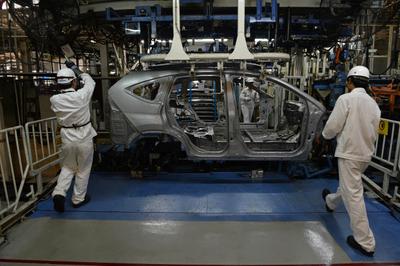
Employees working on a car assembly line at the Honda plant in Ayuthaya, north of Bangkok, 18 June 2013. (Photo: AAP)
At first thought, the notion strikes as somewhat preposterous. But deeper consideration — and allowance for the Asian context — lends not just credibility to the possibility, but a likelihood of it eventuating.
The prime factors underpinning Germany’s economic success are its strong manufacturing base (particularly automotive), industrious workforce and fortunate geography enabled by first-rate infrastructure. Thailand already has most of these characteristics, albeit at a different stage of development. The Thai government is now moving in a very deliberate, some might say strategic, way to fill in a missing piece of the equation — infrastructure.
Thailand’s central regional location — much like Germany’s in Europe — is of enormous value. Located at the heart of mainland Southeast Asia, Thailand is a natural point of convergence for economic flows across the entire 600 million ASEAN market. Draw a larger circle around Thailand and it takes in North and East Asia (most notably China, Japan, Taiwan and Korea), much of South and West Asia (India in particular) and parts of the Pacific including Australia.
Like Germany, Thailand is a globally important — and prolific — manufacturer. Official statistics show there are over 380,000 manufacturing enterprises in Thailand, ranging from micro businesses to major multinationals. There are 38 dedicated industrial estates dotted throughout the country, covering an area of 44,878 acres. Its auto industry has grown exponentially. Output is set to rise to 3 million vehicles this year. Considering Thailand delivered just 400,000 units in 2000, it could soon rival Germany’s yearly average production of 5.5 million.
Whereas Germany’s national success owes much to its conscientious and productive workforce, Thailand too has an advantage in human capital. Thais are highly capable, loyal and committed employees. Thai metal fabricators, for example, are widely regarded as amongst the best in the world. Two Thai metal specialists played a central role in the historic 2010 rescue of workers trapped in a Chilean mine for 69 days. Thai engineers are also in extremely high demand across Asia.
Thailand has over 150 higher education institutions with around 2 million students. More than 18,000 engineers and approximately 87,000 general science and technology scholars graduate annually. Thailand also has the second-highest tertiary school enrolment levels in ASEAN, just after Singapore. And, while the education system has received some well-earned criticism, the Thai government is committed to improving its quality and thus further boosting the competitiveness of its labour force.
The Thai government is now moving decisively to fully capitalise on its Asian hub potential. In January this year, Thai Prime Minister Yingluck Shinawatra announced a massive 2 trillion Baht (US$64 billion) government investment in infrastructure. The grand plan encompasses a range of projects including high-speed trains, conventional rail, expansion of Bangkok’s metro rail and investment in seaports, as well as new and upgraded customs checkpoints along Thailand’s borders.
Much of the infrastructure investment aims to address deficiencies in Thailand’s domestic connectivity, particularly its ailing rail network. Secondary roads are too often logistics choke-points and also demand attention.
Thailand’s leaders have a keen eye on the big picture. The infrastructure spend will plug Thailand directly into the regional arteries that are part of the Master Plan of ASEAN Connectivity — a lesser known but expertly detailed (and potentially transformational) component of the ASEAN Economic Community. As well as expanded access to Thailand’s surrounding markets, Thailand’s infrastructure investment would super-charge its status as a vital gateway from China to the rest of Southeast Asia. It would be a milestone step in Thailand becoming the intersection point that connects an expanded north–south logistics route with a newly created east–west corridor that traverses Myanmar and funnels outward into South and West Asia.
As Thailand’s infrastructure vision moves closer to reality, sceptics will rightly question whether the Thais can deliver. Infrastructure projects in the Kingdom have a notorious track record of corruption-fuelled price premiums, delays and even cancellations. But they have an even better record of success. The controversial Suvarnabhumi airport now serves more passengers than Singapore’s Changi, for example.
Of course Thailand could never be a carbon copy of Germany. Like all nations, it operates according to its own unique cultural, social and political norms. But it would be a mistake to discount Thailand’s role as a manufacturing and logistic epicentre in Asia, in a similar way that Germany is to Europe. And if the comparison between Germany and Thailand seems fanciful, it would be worthwhile recalling that Thailand’s prowess in the automotive industry has seen it earn the nickname ‘the Detroit of the East’. Just ten or so years ago, that notion would have seemed ridiculous to many.
Mark Carroll is Executive Director and Janna De Vos is Communications and Research Coordinator at the Australian–Thai Chamber of Commerce, Bangkok.

If You Don't Care About The NSA Because You 'Haven't Done Anything Wrong,' You're Wrong

from the you-have-done-many-things-wrong dept

Cardinal Richelieu's famous line is:
If you give me six lines written by the hand of the most honest of men, I will find something in them which will hang him.
It's easy to twist almost anything to be used against you if someone cares enough. And with a legal code that means people are committing, on average, three felonies a day (at least according to one estimate), it can be even worse.

That's worth keeping in mind any time someone writes off the NSA as not being an issue for them because they've "done nothing wrong." Driving home that point is an excellent short "Op-Doc" in the NY Times by filmmaker Brian Knappenberger, which has brief interviews with a bunch of great people (many of whom you'll hopefully recognize) explaining in very clear terms why you should absolutely care about the NSA. There are many reasons discussed, but a simple one, highlighted by David Sirota, goes back to that quote above. You can claim that you've done nothing wrong all you want. However, if someone really powerful decides they want to railroad you, you'd be surprised at how much it can be made to look like you've "done wrong." And when the NSA (or the FBI) can readily access all sorts of data about your life, their ability to build such a story increases tremendously.
The video has people answering a few different questions, beyond just why the "I haven't done anything wrong" mindset is a mistake. It also discusses how corporations tracking individuals is quite different from the government doing so and a variety of other issues. The short film is actually from outtakes that Knappenberger put together from the documentary he's been working on about Aaron Swartz. It just so happened that he's obviously interviewing a ton of people who were familiar with both Aaron's work and the NSA stuff (the Venn diagram of people knowledgeable about both would include quite a lot of overlap), and so he asked some NSA questions, leading to this video. Check it out.http://www.techdirt.com/articles/20131126/01352025373/if-you-dont-care-about-nsa-because-you-havent-done-anything-wrong-youre-wrong.shtml