Wednesday, September 4, 2013
US and Allied Warships off the Syrian Coastline: Naval Deployment Was Decided “Before” the August 21 Chemical Weapons Attack
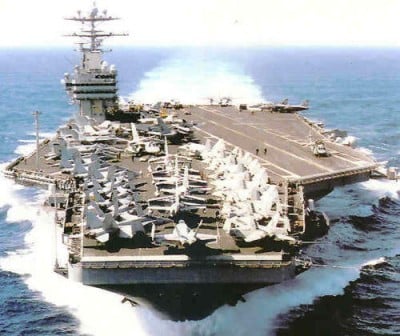
While this display of military might may not be part of an immediate attack plan on Syria, it is creating an atmosphere of fear and panic within Syria.
The US Navy has deployed the USS San Antonio, an amphibious transport ship to the Eastern Mediterranean. The San Antonio is joining five US destroyers which “are already in place for possible missile strikes on Syria, a defense official said Sunday.”
The USS San Antonio, with several helicopters and hundreds of Marines on board, is “on station in the Eastern Mediterranean” but “has received no specific tasking,” said the defense official, who spoke on condition of anonymity. US Navy deploys five warships, one amphibious ship to Mediterranean for SyriaWhile the USS San Antonio has amphibious landing equipment, which can be used to land some six thousand sailors and marines, “no boots on the ground”, however, remains the official motto.
So why then has the US deployed its most advanced amphibious landing ship? The reports suggest that this is routine and there are no attack plans:
“No amphibious landing is in the works, however, as President Barack Obama has ruled out any “boots on the ground” (Ibid)

USS San Antonio
There are currently five destroyers off the coast of Syria: the USS Stout, Mahan, Ramage, Barry and Graveley, not to mention the San Antonio amphibious landing vessel.
The destroyers are equipped with Tomahawk cruise missiles which “are ready to fire … if Obama gives the order.”
On 28 August the U.S. Navy announced the deployment of the Arleigh Burke-class destroyer USS Stout en route to join four other destroyers “amid allegations that the regime of Syrian president Bashar al-Assad used chemical weapons against civilians on August 21″.
In a not unusual twist, this deployment of US and allied naval forces preceded the chemical weapons attack which is being blamed on president Bashar al Assad.
According to Naval records, the guided missile destroyer USS Stout (DDG 55) departed Naval Station Norfolk, Va. on August 18, 2013, “for deployment to the U.S. 6th Fleet area of responsibility” (see image below upon its departure in Norfolk on August 18).
The USS Ramage destroyer left Naval Station Norfolk on August 13 for the Eastern Mediterranean, “to relieve the Mahan”.
Yet in fact what was decided was to deploy all five destroyers along the Syrian coastline. This decision was taken by the Pentagon well in advance of the chemical attacks of August 21, which constitute Obama’s pretext to intervene on humanitarian grounds.
The amphibious transport dock San Antonio, carrying elements of the 26th Marine Expeditionary Unit, has joined the five Navy destroyers in the eastern Mediterranean Sea, a defense official confirmed [August 30].
“No specific tasking has been received at this point,” the official said, speaking on condition of anonymity. “The San Antonio is being kept in the sea as a prudent decision should ship capabilities be required.”
The five destroyers positioned near Syria are the: Barry, Gravely, Mahan, Ramage and Stout.
The Navy had been operating with three destroyers in the Med, and the Ramage and Stout were expected to replace Mahan and Gravely, respectively, when they arrived there this month. But officials decided to keep all five in place as the U.S. weighs an attack. Each destroyer is capable of carrying up to 90 Tomahawk cruise missiles, although they usually have fewer on hand during deployment. marinecorpstimes.com, August 30, 2013
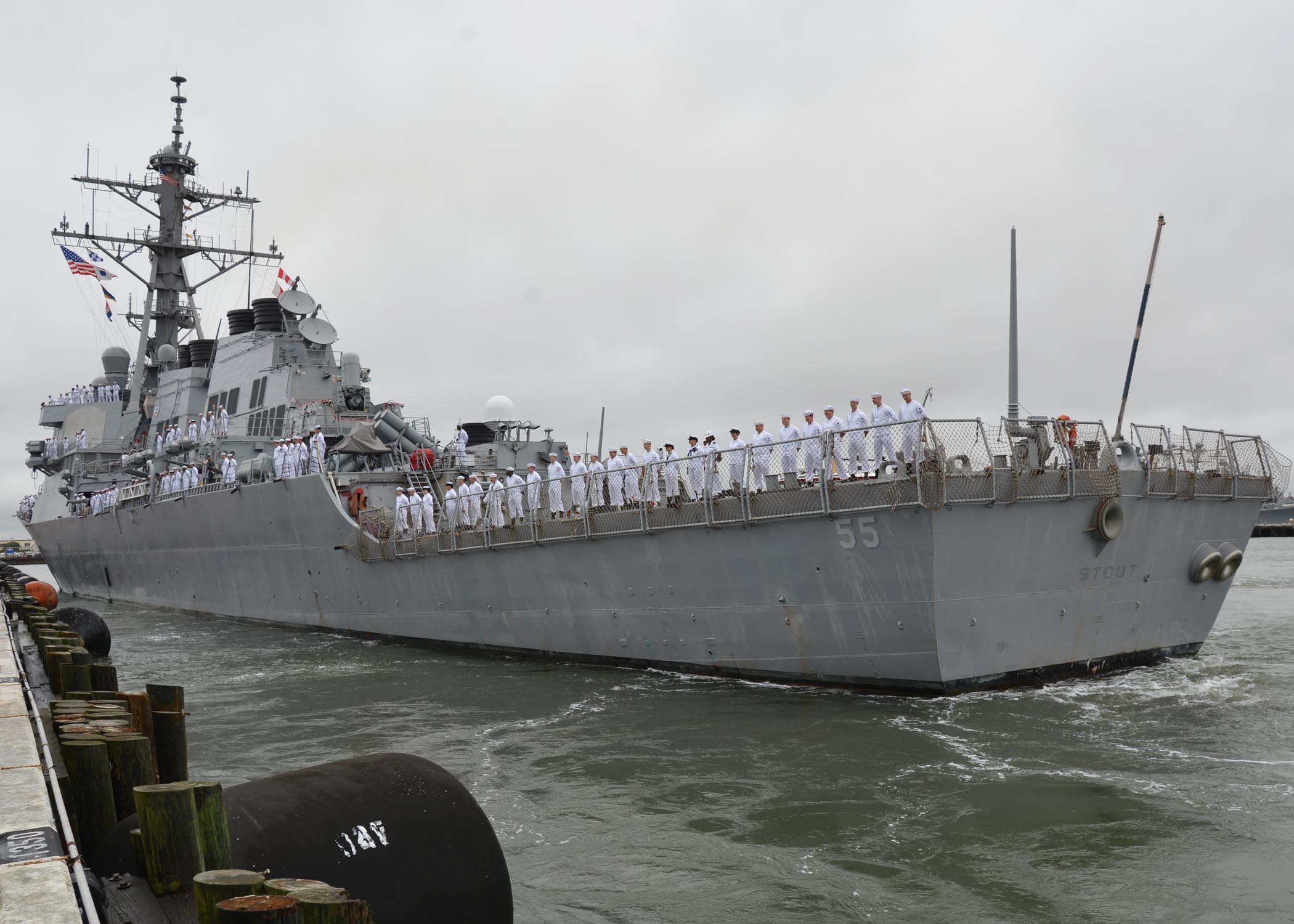
USS Stout leaving Norfolk on August 18. USS Stout was used as part of Operation Odyssey Dawn in the 2011 US-NATO war on Libya.
This massive naval deployment which also includes strategic submarines was ordered prior to the tragic event of August 21, which begs the question:
If the chemical weapons attack is a
justification for intervening, why was the order to launch an R2P
“humanitarian” naval operation against Syria decided upon “Prior” to
August 21?
Was there advanced knowledge or intelligence regarding the timing and occurrence of the 21 August Chemical Weapons attack?
A strike against Syria in the immediate short-term is unlikely. Obama
announced on August 31st that he would seek formal approval of the US
Congress, which reconvenes on September 9.With independent news reports providing firm evidence that the US sponsored Al Qaeda rebels (recruited and trained by Allied Special Forces) have chemical weapons in their possession, this delay does not favor the president’s political credibility.
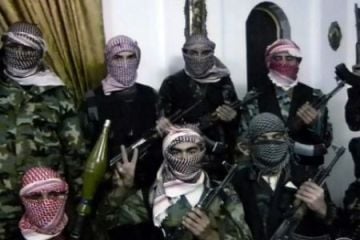 Moreover, there is evidence that the US sponsored rebels used chemical weapons against civilians. (see image right)
In providing those chemical weapons to al Qaeda “rebels”, the US-NATO-Israel alliance is in violation of international law, not to mention their own anti-terrorist legislation.
Overtly supporting Al Qaeda has become the “New Normal”.
When the various pieces of evidence are put together, the picture which emerges is that of a covert “flag flag operation” carried out by the US sponsored “rebels” and special forces, intent upon blaming president Bashar Al Assad for killing his own people. As mentioned above, the naval deployment was decided upon ex ante, before the 21 August chemical Weapons attack.
This diabolical false flag attack which consists in killing civilians and blaming the Syrian government constitutes the justification for military intervention on “humanitarian grounds”.
The US and its allies are still in the process of deploying their naval forces off the Syrian coastline.
The Pentagon has confirmed that aircraft carrier USS Nimitz and its carrier strike group has moved into the Red Sea from the Indian Ocean, but, according to official statements, “it has not been given orders to be part of the planning for a limited U.S. military strike on Syria”
“The official said the carrier strike group has not been assigned a mission and the move to the Red Sea was a prudent move in case its resources are needed to “maximize available options”.The other ships in the USS Nimitz strike group are: USS Princeton and three destroyers: USS William P. Lawrence, USS Stockdale and USS Shoup.
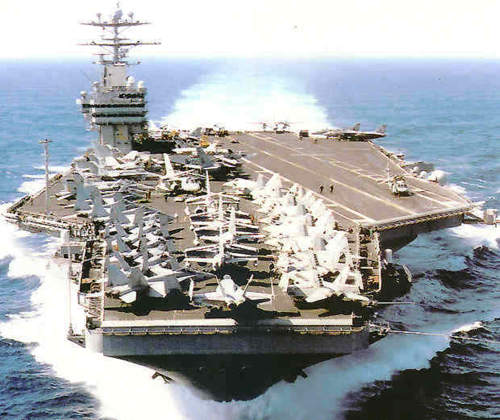
USS Nimitz
Latest reports are that The USS Harry S. Truman aircraft carrier and strike group is in the northern Arabian Sea.
Meanwhile reports confirm that France has dispatched its anti-air warfare frigate “Chevalier Paul” to the eastern Mediterranean. The French warship is joining the flotilla of US and British warships “including US navy destroyers and British and American submarines, which are armed with Tomahawk cruise missiles.”
Syria is being portrayed in the French media as the aggressor:
The Chevalier Paul vessel is one of France’s “most up-to-date destroyers of the Horizon-class, …[ it ] will be “extremely useful” if Syria decides to launch its air attacks against the international flotilla.”
Nuclear-powered French aircraft carrier the Charles de Gaulle remains in dock at the southern French naval port Toulon, according to news agencies.”Russian Warships to the Syrian Coastline
A critical situation is unfolding:
Moscow has announced that is also sending two warships to the Eastern Mediterranean to reinforce its naval strength which operates out of Russia’s naval base at the port of Tartus in Southern Syria.
The agency quoted a source in the armed forces’ general staff as saying an anti-submarine vessel and a missile cruiser would be sent in the coming days because the situation “required us to make some adjustments” in the naval force. French and Russian warships ‘head for Syria’ – SYRIA – FRANCE 24Syria’s Air Defense System
The Russian built S-300 is functional. The deployment of the S-300 Surface to Air Missile system in Syria has been on the drawing board of the Russian Ministry of Defense since 2006.

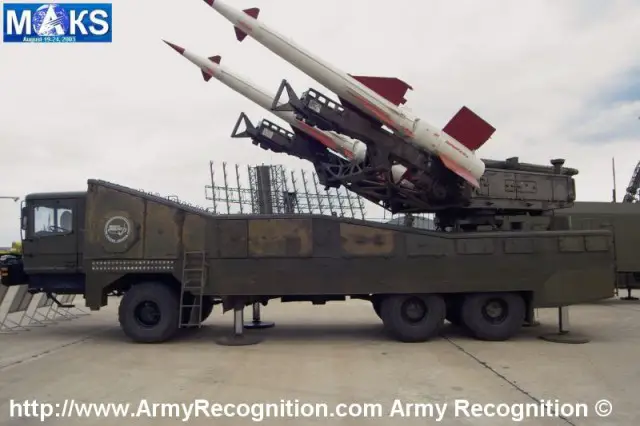
Syria also possesses the Pechora-2M air defense system, The Pechora-2M is a sophisticated ground to air multiple target system which can also be used against cruise missiles.
Had this air defense not been in place, the implementation of a US-NATO led “no fly zone” would no doubt have been contemplated at an earlier date.
 |
|
Description
|
|
The Pechora-2M is a
surface-to-air anti-aircraft short-range missile system designed for
destruction of aircraft, cruise missiles, assault helicopters and other
air targets at ground, low and medium altitudes.
|
The Iskander is described as a surface-to-surface missile system “that no missile defense system can trace or destroy”:
The superior Iskander can travel at hypersonic speed of over 1.3 miles per second (Mach 6-7) and has a range of over 280 miles with pinpoint accuracy of destroying targets with its 1,500-pound warhead, a nightmare for any missile defense system.

Iskander Mach 6-7
Concluding Remarks
The World is at a dangerous crossroads.
The US and allied naval deployment in the Eastern Mediterranean with US-NATO warships is contiguous to the deployment of Russian warships out of Russia’ naval base in Tartus.
Syria has an advanced air defense system which will be used in the case of a US sponsored attack. Russian military advisers are assisting Syrian forces.
Syria also has significant ground forces.
Syria has been building up its air defense system with the delivery and installation over the last few years of the Russian S300 system.
History tells us that wars are often triggered unexpectedly as a result of “political mistakes” and human error. The latter are all the more likely within the realm of a divisive and corrupt political system in the US and Western Europe.
US-NATO military planning is overseen by a centralised military hierarchy. Command and Control operations are in theory “coordinated” but in practice they are often marked by human error. Intelligence operatives often function independently and outside the realm of political accountability.
While military planners are acutely aware of the dangers of escalation, civilian politicians responding to dominant economic interests ultimately decide on the launching of a major theater war.
Any form of US-NATO direct military intervention against Syria would destabilize the entire region, potentially leading to escalation over a vast geographical area, extending from the Eastern Mediterranean to the Afghanistan-Pakistan border with Tajikistan and China.
Military planning involves intricate scenarios and war games by both sides including military options pertaining to advanced weapons systems. A Third World War scenario has been contemplated by US-NATO-Israeli military planners since early 2000.
Escalation is an integral part of the military agenda. War preparations to attack Syria and Iran have been in “an advanced state of readiness” for several years.
We are dealing with complex political and strategic decision-making involving the interplay of powerful economic interest groups, the actions of covert intelligence operatives.
In the case of Syria, US intelligence and its Western and Israeli counterparts are supporting an armed insurgency largely integrated by Al Qaeda mercenaries and death squads.
The role of war propaganda is paramount not only in molding public opinion into accepting a war agenda, but also in establishing a consensus within the upper echelons of the decision-making process. A selective form of war propaganda intended for “Top Officials” (TOPOFF) in government agencies, intelligence, the Military, law enforcement, etc. is intended to create an unbending consensus in favor of War and the Police State.
For the war project to go ahead, it is essential that both politicians and military planners are rightfully committed to leading the war “in the name of justice and democracy”. For this to occur, they must firmly believe in their own propaganda, namely that war is “an instrument of peace and democracy”.
They have no concern for the devastating impacts of advanced weapons systems, routinely categorized as “collateral damage”, let alone the meaning and significance of pre-emptive warfare, using nuclear weapons.
I should be noted that the Humanitarian warfare consensus is extremely fragile will large sector of public opinion taking a stance against the war-makers.
Wars are invariably decided upon by civilian leaders and corporate interests rather than by the military. War serves dominant economic interests which operate from behind the scenes, behind closed doors in corporate boardrooms, in the Washington think tanks, etc.
Realities are turned upside down. War is peace. The Lie becomes the Truth.
War propaganda, namely media lies, constitutes the most powerful instrument of warfare.
Without media disinformation, the US-NATO-Israel led war agenda would collapse like a deck of cards. The legitimacy of the war criminals in high office would be broken.
It is therefore essential to disarm not only the mainstream media but also a segment of the self proclaimed “progressive” alternative media, which has provided legitimacy to NATO’s “Responsibility to protect” (R2P) mandate, largely with a view to dismantling the antiwar movement.
The road to Tehran goes through Damascus. A war on Iran would involve, as a first step, the destabilization of Syria as a nation state. Military planning pertaining to Syria is an integral part of the war on Iran agenda.
The war on Syria could evolve towards a US-NATO-Israel military campaign directed against Iran, in which Turkey and Israel would be directly involved.
It is crucial to spread the word and break the channels of media disinformation.
A critical and unbiased understanding of what is happening in Syria is of crucial importance in reversing the tide of military escalation towards a broader regional war.
Our objective is ultimately to dismantle the US-NATO-Israeli military arsenal and restore World Peace.
It is essential that people in the US, Canada, UK, France, Italy, Israel, Turkey and around the World prevent this war from occurring.
Updated September 03, 2013
Spread the word. Forward this article. Post it on Facebook.
[part of these concluding remarks was written in August 2012]
US transfers nuclear warheads to East Coast, allegedly prepares for World War 3
|
|

The US Dyess Air Force base located in southwest of Abilene, Texas, is actively moving nuclear warheads to the East Coast of the United States in a secret transfer that has no paper trail, the Infowars source reports.
The Dyess Air Force Commander authorized unknown parties to transfer the nuclear warheads to an unknown location that has been reported to be South Carolina, where the warheads will then be picked up and potentially utilized, according to the leaked info.
"Dyess is beginning to move out nuclear war heads today. I got a tap from DERMO (a military base in Florida) earlier. He said it was the first time they have been even acknowledged since being put there in the 80′s. No signature was required for transfer… There was no directive. He said that Dyess Commander was on site to give authority to release. No one knew where they were going really, but the truck driver said to take them to South Carolina and another pick up will take them from there."
The transfer is happening during the escalation of the conflict in Syria which can turn to a hot war scenario; in addition, the Dyess base has repeatedly denied the existence of nuclear warheads inside the base.
The source notes that the nuclear warheads are not usually moved without a reason, and if the US has decided to transfer them it means that the US is planning to use them. The source concludes that the US has turned the war in Syria into a hot proxy war against Russia via the Syrian rebels and Assad’s troops.
"By secretly helping Syrian rebels since 2011 Barack Obama has been building up a World War 3 scenario between Russia and the United States," concludes the author of the Infowars.
Voice of Russia, infowars.com
http://voiceofrussia.com/news/2013_09_04/US-transfers-nuclear-warheads-to-East-Coast-and-prepares-for-World-War-3-5596/
Exclusive: High Level Source Confirms Secret US Nuclear Warhead Transfer to East Coast
Wrritten by Anthony Gucciardi & Alex Jones
A high level source inside the military has now confirmed to us that Dyess Air Force base is actively moving nuclear warheads to the East Coast of the United States in a secret transfer that has no paper trail.
According to the high level military source, who has a strong record of continually being proven correct in deep military activity, the Dyess Air Force Commander authorized unknown parties to transfer the nuclear warheads to an unknown location that has been reported to be South Carolina, where the warheads will then be picked up and potentially utilized. This is of particular interest not only due to the fact that the Syrian situation has escalated to the point of a very realistic hot war scenario, but due to the fact that Dyess has repeatedly denied the existence of nuclear warheads inside the base.
“Dyess is beginning to move out nuclear war heads today. I got a tap from DERMO earlier. He said it was the first time they have been even acknowledged since being put there in the 80′s. No signature was required for transfer… There was no directive. He said that Dyess Commander was on site to give authority to release. No one knew where they were going really, but the truck driver said to take them to South Carolina and another pick up will take them from there.”
The fact that this transfer was not signed for and there were no papers is key. It shows how the military is now secretly operating with the transfer of nuclear weapons, and what’s more, we know that DERMO (a military base in Florida) is a hotbed of special operations. Why is DERMO operating the nuclear warheads out of Dyess Air Force base with no paper trail? This shows that this is a highly secretive, black ops style move here that the military does not want on record.
The fact is that they don’t move all of these assets unless they plan on using them. Nuclear warheads are not simply moved to the East Coast for no reason, and the bottom line is that these missiles are likely being used for something even much greater than Syria.
Top Level Military Officer ‘Extremely Alarmed’
This leak inside the military industrial complex comes after prior sources have also revealed to us that B-1′s and B-2 bombers were ordered to head out of their respective bases across the nation and they haven’t come back. All of this is happening amid the growing Syrian crisis that has developed amid the ignition of a WW3-level wrestling match between the United States and Russia. Now, based on the transfer to South Carolina that is not on record and was not signed for, we may be looking at a pattern that reveals an extremely hot war scenario.And here’s what’s essential to understand: There’s no question that the Syrian issue is huge, and it’s very possible that the US military is now under orders by Obama to prepare a strike, but the reality is that the much greater issue here is what’s going on with the US and Russia. What we’re seeing here is a proxy war turned hot with Syria, and we’ve been covering this for months now. Even the mainstream media has reported in the past how the evolution of war in Syria has turned into a hot proxy war against Russia via the Syrian rebels and Assad’s troops.
We now even have the Russian media openly discussing the hot war by the United States against Russia and how this will essentially lead to World War 3. But the fact of the matter is that we’re already progressively moving towards World War 3 . Obama and United States officials are already talking about boots on the ground in Syria and taking down the Russian-backed Assad regime. They are already moving forward following the blatantly staged chemical attacks that were absolutely carried out by the Obama-funded Syrian rebels in order to initiate a war scenario.
Why do you think Obama has been aiding in the training, funding, and supplying of the bloodthirsty Syrian rebels since 2011 through secret orders admitted by Reuters? The entire angle here is not to help the civilians of Syria, who the Obama-backed rebels already are beheading and murdering to cheering crowds. No, this has always been a buildup to a World War 3 scenario between Russia and the United States. And now, with the absolute insanity of Obama and the military industrial complex pushing these wars, it’s here.
World War 3 Is Starting
I have spoken to my connections in the Russian media and they are all confirming that World War 3 is the hottest topic right now amid the populace, and the fact of the matter is that all of the top level military officials over there are looking at this Syrian incident as the catalyst — as the spark. There’s a reason that Russia has begun amassing 160,000 troops and heavy military equipment following an Israeli strike on Russian missiles in Syria. There’s a reason that the troops were called along with naval ships and bombers to attain ‘immediate combat readiness’ along the border. We reported on this months ago while the media was too busy focusing on the Trayvon Martin case to talk about the ignition of World War 3.What we’re looking at right now is the beginning of World War 3 unless we manage to stop it. The elite are crazy enough and drunk enough with power to launch anything if it means advancing their vast lust for power and control. Thankfully, we now have a public that is much more awake to what’s going on and able to put a speed bump in the overall war plan as admitted by Obama adviser Zbigniew Brzezinski last week, but it will take a lot of awakening to stop Obama from launching these attacks that have been in the works for years.
We encourage you to continue checking out Infowars and Storyleak for more updates on this and the latest news and information we find out on this developing situation.
12-Year-Old Targeted By Idaho Tax Commission For Raspberry Stand
A 12-year-old boy in Pocatello is being targeted by the Idaho Tax Commission for setting up a small raspberry stand without giving the state a percentage of his profits.
 Tayson
Weeks, who decided to sell raspberries from his family’s farm to save
up for a small motorcycle, was confronted by the tax commission on his
second day selling to local residents. Following an earlier accident
that landed him in the hospital with a concussion, Tayson hoped to spend
his summer learning how to properly save money through the raspberry
stand.
Tayson
Weeks, who decided to sell raspberries from his family’s farm to save
up for a small motorcycle, was confronted by the tax commission on his
second day selling to local residents. Following an earlier accident
that landed him in the hospital with a concussion, Tayson hoped to spend
his summer learning how to properly save money through the raspberry
stand.“He wanted to buy himself a little Honda pit bike. I told him he’d have to pay it for himself,” said Jason Weeks, the boy’s father.
According to Jason, the Tax Commission handed his son a tax form and gave him until Oct. 15 to send the state 6 percent of his earnings. The piece comes following a report by Anthony Gucciardi detailing how, meanwhile, a top bureaucrat works for around 2 hours per day and makes over $400,000 in cash paid for by union workers.
“When I was young, I would sell farm-grown produce from a stand in Park City and no sales tax was involved,” Jason told the Idaho State Journal.
According to Saul Cohen, a tax policy specialist for Idaho’s Tax Commission, it wouldn’t be fair to let the young boy make a few dollars on the side without being taxed.
“What the youngster is doing is selling tangible products. Our mission is to advance fairness in collection,” said Cohen.
Whether or not Tayson plans to pay the state or even continue with his raspberry stand is currently unknown.
What was once considered a healthy, educational and entrepreneurial childhood activity in America has now seemingly become criminal behavior. Children across the country selling anything from cupcakes to lemonade are being shaken down for cash or threatened for not having the “proper papers.”
Children Targeted by Tax Commission for Selling Lemonade
In 2011, a 4-year-old in Coralville, Iowa, had her lemonade stand shut down by police after officers informed her father that she needed a $400 vendor permit and a health inspection to operate.That same year, police in Georgia closed a lemonade stand started by three girls who wanted to save money to go to a local water park. The girls were told they needed a business license, food permit and a peddler’s permit to sell lemonade on their own property.
Police in Montgomery County, Mayland, shut down a lemonade stand that was donating 50 percent of its profits to a pediatric cancer center. The children’s parents were also slapped with a $500 fine.
Activists, protesting the county-wide crackdown, set up a rouge lemonade stand on the lawn of the capitol in Washington, DC. Police eventually arrested the stand’s operators after being enraged by tourists and children ignoring their demands to not purchase the lemonade.
Patenting everyday life: “Business method” lawsuits are growing fast
41 percent of troll-spawned suits now involve patents on how to run your business.

Increasingly, the very way a business operates can be the subject of a patent lawsuit.
Using a gift card? Finding real estate online? Automatic online bidding? All have been patented, and all by so-called "patent trolls" with no business other than suing over their patents.
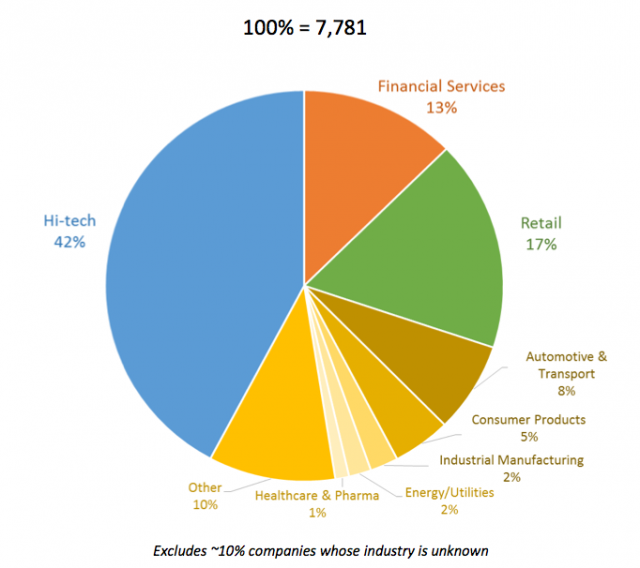
Defenders of current patent law tend to portray these situations as outliers. But trolls asserting patents on business practices is increasingly becoming the norm. That's the finding of a new study (PDF) on business method patents published today by PatentFreedom, a defense-oriented patent analytics company. The study focused only on business method patents asserted by trolls, which PatentFreedom more diplomatically calls non-practicing entities, or NPEs.
To conduct the study, PatentFreedom first had to sift through the database it maintains of more than 3,700 patents that have been litigated by NPEs. It isolated a set of 1,990 patents that had some type of indicator that they might be business method patents—for example, fitting into certain "classes" in the US Patent Office's classification system. Then it did a manual review of those patents to find 954 patents that fit the definition of business method patents—that is, they claim methods used in "the practice, administration, or management of an enterprise, the processing of financial data, or the determination of the charge for goods and services."
The study produced several notable findings.
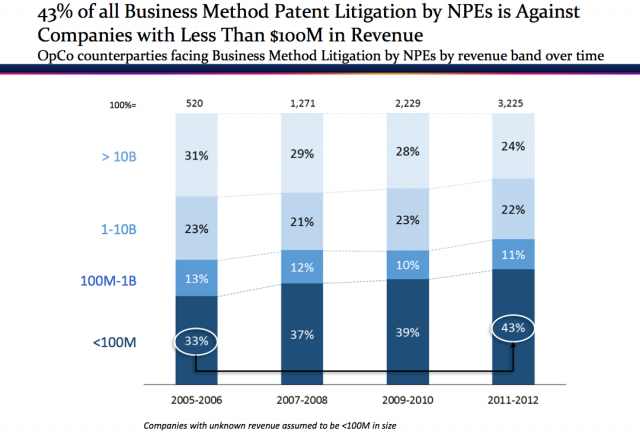
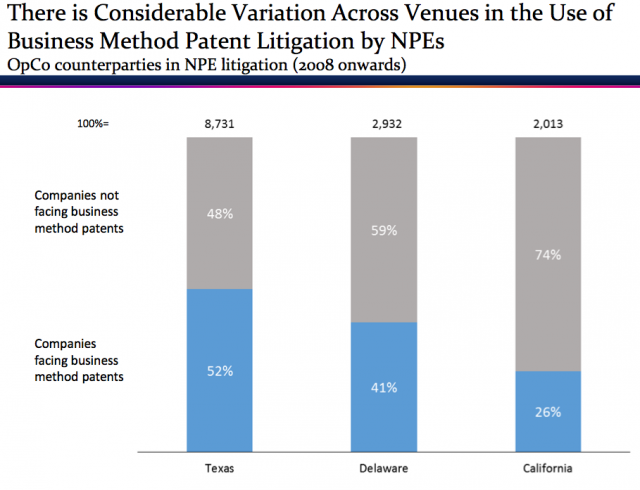
First, lawsuits over business method patents are becoming more common. Such lawsuits are growing in general, and they're growing when measured as a proportion of all NPE litigation. The number of companies facing business method patent lawsuits brought by NPEs has grown at 28 percent per year since 2004. While NPE lawsuits in general have grown during that time, business method lawsuits have grown faster. The share of NPE lawsuits that involve business method patents went from 27 percent in 2005-06 to 41 percent in 2011-12.

PatentFreedom 2013
PatentFreedom
PatentFreedom
PatentFreedom
One thing that has always struck me about PatentFreedom is the company's elegant and sensible definition of what a "non-practicing entity," or troll, really is. The company's definition of an NPE is "any entity that earns, or plans to earn, the majority of its revenue from enforcing patents." That's really the only definition that makes sense. It emphasizes the true innovation of trolling, which is the invulnerability to counter-suit. Emphasizing whether or not an inventor is involved, as some have, has always seemed like an irrelevant distraction. The PatentFreedom definition dispenses with other distracting arguments, like the idea that universities are NPEs. None of that is to say that universities or operating companies can't abuse the patent system in other ways, as they certainly can.
"Our definition actually includes my great-grandfather, who was an inventor," said PatentFreedom President Chris Reohr, who spoke with Ars about the results of the study. "One of his patents clearly is a business method patent. I have no objection to someone who invests time and money and takes some risk trying to use a patent. I think it's the nature of the conduct which can sometimes be reprehensible."
Reohr is steadfastly neutral on the patent debate, never using the word "troll" and seeing his role as an information provider to PatentFreedom clients. However, the finding that business method patents are increasingly being used to attack small companies was striking to him. He acknowledged that the increase in litigation against small companies "really gets me angry sometimes."
If one excludes NPE litigation, patent litigation would have been essentially flat since 2004, notes Reohr. And now there does seem to be a shift in exposure to business method patents, he said.
Kim Dotcom Resigns as Mega Director to Focus on Music Venture
- September 4, 2013
 On January 20, a year after Megaupload was raided in 2012, Kim Dotcom launched his new file-storage service Mega.
 In a matter of days the site’s membership went from zero to more than a million and in the weeks that followed the site continued to expand its user base.
The introduction of Mega has been one of the most prominent tech launches this year and the privacy company has big plans to expand its business in the future. But despite the early successes, Kim Dotcom has chosen to move on.
Filings to the New Zealand Companies Office reveal that Dotcom was replaced as Mega Director last week. The move was confirmed to BusinessDesk by Mega CEO Vikram Kumar, who said that Mega’s founder will use the time to work on his many other projects.
One of the new ventures Dotcom will focus on is the music platform formerly known as Megabox. Unlike Mega, the new music service will be operated by a company owned by the Internet entrepreneur himself.
Dotcom previously told TorrentFreak that he dropped the Megabox name for a better one, to be revealed at a later date. Dotcom did say that unlike his other projects, he will not be using the “Mega” brand for the new music service.
There are currently 22 developers working on the project and it’s expected to launch a few months from now.
In addition to the music service, Dotcom also has political aspirations. A few days ago he told TorrentFreak that he has written a draft program for a new party that he wants to participate in New Zealand’s elections next year.
“I’m excited about the party and I’m confident that I can help make New Zealand a significant Internet economy player. Someone needs to lead New Zealand into the future. Unfortunately the current government doesn’t know what the future looks like,” Dotcom said.
Aside from the music venture and his political aspirations, Dotcom will also be focusing on Megaupload’s legal battles. He and several of his Megaupload colleagues are fighting an extradition request from the United States, where they are wanted for several alleged crimes.
Dotcom’s extradition hearing is currently scheduled for November this year, but may be pushed to April 2014 because legal arguments on a number of issues have complicated the case. In the United States, Megaupload has asked the court to dismiss the criminal indictment against the company, but a decision on this request is yet to arrive.
FIRST THERE WAS THE BAGHDAD MUSEUM LOOTING, THEN EGYPTIAN ANTIQUITIES LOOTING. NOW IT’S SYRIA
September 4, 2013 By
I’ve long suspected that there was a hidden “antiquities agenda” to western intervention in the Middle East, and have even voiced concerns on this website that Syria may be the latest victim of having its priceless heritage deliberately plundered. A regular reader here, Mr. V.T., sent me the following article, which does confirm that Syrian antiquities are indeed being looted, and the article even suggests a scenario that emerges after some high octane speculation is applied to it. But before we can indulge in that, first, the article:
Syria’s Cultural Heritage Is Under Threat
The parts of this article that gives rise to my high octane speculation are these. First, from the beginning of the article:
To put it briefly, it would be all too easy for the military-industrial-intelligence-finance complex of the Western elites to disguise their searches for antiquities, and their acquisition of them, behind a tapestry of cutouts, illicit digs, smugglers, and antiquities brokers for a “black market. ” Time will tell if this is true or not, but if so, then it fits the familiar “inside job” pattern that we saw at work in the Baghdad Museum looting. And it would raise suspicions, once again, of the similar pattern of “looting” that occurred during the fall of the Mubarek regime, and now, again, in Egypt.
Call me crazy if you want, folks, but I think the goings on in the Middle East are about more than oil, petrodollars, or geopolitics.
I’ve long suspected that there was a hidden “antiquities agenda” to western intervention in the Middle East, and have even voiced concerns on this website that Syria may be the latest victim of having its priceless heritage deliberately plundered. A regular reader here, Mr. V.T., sent me the following article, which does confirm that Syrian antiquities are indeed being looted, and the article even suggests a scenario that emerges after some high octane speculation is applied to it. But before we can indulge in that, first, the article:
Syria’s Cultural Heritage Is Under Threat
The parts of this article that gives rise to my high octane speculation are these. First, from the beginning of the article:
“Scholars are warning of the destruction and looting of cultural goods, thousands of years old, as a result of the civil war in Syria.And then this:
“’Countless people have died because of the battles, and their culture, which is 5,000 years old and includes the earliest texts of mankind, has also been lost’, says Ancient Near Eastern Studies Scholar Prof. Dr. Hans Neumann from the committee of the 32nd German Oriental Studies Conference (Deutscher Orientalistentag, DOT) which over 1,000 Oriental researchers from all over the world are expected to attend in September at the University of Münster. The discipline of Ancient Near Eastern Studies reckons with irrecoverable losses in Syria. ‘Many Syrians are also suffering from the destructions and illicit excavations. They are proud of historical World Heritage Sites such as Aleppo, Damascus and Palmyra, and also base their identity on ancient Near Eastern history.’”(emphasis added)
“Smugglers take historical evidence such as cuneiform texts, seals, metal items or pottery abroad. These artefacts come from ancient palaces, temples or private residences and are then sold on the black market, explains the expert for Sumerian and Akkadian cuneiform texts, referring to the experiences since the Iraq War. ‘Even if the items are confiscated, what we researchers miss is the overall context: in which settlement, in which house and in which room were the items found? The finds’ complex historical and social context cannot be reconstructed this way.’”(emphasis added)What this suggests to me is a methodology of seeking and finding antiquities for the hidden elites that allows them to maintain a “plausible deniability” and even to be involved only second or third hand. Consider the following scenario. Let us say, in addition to the various geopolitical reasons the Anglosphere advances for its backing of Syrian “rebels,” that there is a hidden agenda to seek, find, and gather a “wish list” of various antiquities. In the chaotic conditions of an insurgency, “smugglers” could be “encouraged” by means of cut-outs, agents provocateur, and other western “handlers” to “dig here,” or “we have a buyer for this or that,” and the illicit digs will proceed. The cuneiform tablets that hidden elites would be seeking could be “ordered” off a “price list” compiled from field catalogs of known digs, and so on.
To put it briefly, it would be all too easy for the military-industrial-intelligence-finance complex of the Western elites to disguise their searches for antiquities, and their acquisition of them, behind a tapestry of cutouts, illicit digs, smugglers, and antiquities brokers for a “black market. ” Time will tell if this is true or not, but if so, then it fits the familiar “inside job” pattern that we saw at work in the Baghdad Museum looting. And it would raise suspicions, once again, of the similar pattern of “looting” that occurred during the fall of the Mubarek regime, and now, again, in Egypt.
Call me crazy if you want, folks, but I think the goings on in the Middle East are about more than oil, petrodollars, or geopolitics.
Read more: FIRST THERE WAS THE BAGHDAD MUSEUM LOOTING, THEN EGYPTIAN ANTIQUITIES LOOTING. NOW IT'S SYRIA


Two books, written from opposite viewpoints, help one better understand the forces at play today in America’s dealings on the global stage.
A COUNTRY’S foreign policy is shaped by its notion of its place in the world and by its image of the world order. Europe, a predominant player in the global order, twice committed suicide in the last century when its powerful nations went to war, needlessly and with lasting consequences. The United States intervened in both wars. But, while in 1919 it decided to turn its back on Europe, in 1945 it decided to stay on and impose its hegemony.
Charles de Gaulle, a great French nationalist, European and a realist to the core, recognised as early as in the summer of 1944, even as war was raging, that President Roosevelt was aiming for U.S. hegemony in the post-War world (Geoffrey Warner’s essay “Franklin D. Roosevelt and the post-War world” in David Duncan (ed.), Statecraft and Diplomacy in the Twentieth Century, Liverpool University Press, 1995, pages 155-156).
Zbigniew Brzezinski remarks: “Roosevelt’s highly principled opposition to colonialism did not prevent him from pursuing an acquisitive U.S. policy determined to gain a lucrative position for America in the key oil-producing Middle Eastern [West Asian] countries. In 1943, President Roosevelt not so subtly told Britain’s ambassador to the United States, Lord Halifax, while pointing at a map of the Middle East, that ‘Persian oil is yours. We share the oil of Iraq and Kuwait. As for Saudi Arabian oil, it’s ours.’” But he would not let two of Europe’s most powerful leaders enter into a similar pact about their own continent. He sabotaged the Churchill-Stalin Percentages Agreement, in Moscow on October 8, 1944, on Eastern Europe on the dishonest ground that he was opposed to spheres of interest. Winston Churchill revealed the details in 1954 in the last volume of his war memo. Churchill meekly complied, hoping to resume the dialogue with Joseph Stalin later. But he toed the American line, meanwhile, under the farcical banner of “a special relationship”, which Americans ridicule. De Gaulle retained his goal and sought to build a global order with France as an equal partner or a European order in accord with the Soviet Union.
The brutal methods that Stalin used to impose his version of “friendly states” on the borders of the Union of Soviet Socialist Republics (USSR) and, indeed, within his own country should not blind one to the fact that 80 per cent of German battle casualties were suffered on the Eastern Front. “Without this contribution, it would have been impossible for the West to defeat Hitler…. The Red Army, paradoxically, played a crucial part in saving Western Democracy” (David Wedgwood Benn, “Russian Historians Defend the Molotov-Ribbentrop Pact 1939”, International Affairs, 2011, pages 709-715).
With the Soviet Union having suffered 16 million casualties in the war, including eight million deaths, not to forget Anglo-French attempts to make peace with Hitler, it is hard to blame Stalin for seeking some territorial gains to ensure a secure frontier. Matters did not end there. Russia was cheated twice over after the collapse of the USSR in December 1991.
NATO expansion
The U.S. and West Germany secured Soviet President Mikhail Gorbachev’s consent to the reunification of Germany on the clear understanding that the North Atlantic Treaty Organisation (NATO) would not expand eastwards. This was arranged in talks in Moscow between U.S. Secretary of State James Baker III and Gorbachev on February 9, 1990, and between Gorbachev and German Chancellor Helmut Kohl the next day. Much of the tension between the U.S. and Russia today is due to the U.S. reneging on that understanding. St Petersburg was once roughly 1,200 miles (1,920 kilometres) away from the edge of NATO but is now less than 100 miles (160 km) away thanks to the enlistment of Estonia.
As in 1945, so in 1992, the U.S. treated victory as a step towards fully achieving “the American Dream”. The Cold War was governed by NSC-68 of 1948, the U.S. National Security Council’s document on “containment” of the USSR. In 1992, a paper of much wider import cropped up, which Patrick E. Tyler reported in The New York Times of March 8, 1992. The headline summed up the thesis: “U.S. Strategy Plan Calls for Insuring No Rivals Develop”. On May 15, 2006, The Washington Post disclosed a top-secret “Interim Global Strike Order” directing the military to assume and maintain a readiness to attack hostile countries, with nuclear arms if necessary.
This is “the story of the pursuit of unrivalled American power” as James Mann aptly calls it, Cold War triumphalism in excelsis. It led the U.S. to attack Afghanistan instead of responding to the Taliban’s offers of talks; invade Iraq; forcibly remove Muammar Qaddafi after he had agreed to shed the nuclear option; and go after Syria to the delight of the Taliban and the Salafists. Four countries of the Third World have been laid waste. North Korea cannot be touched because it has nuclear weapons. Iran’s overtures for talks are ignored. The United Nations has been emasculated completely.
The arrogance percolates downwards. The New York Times columnist Ross Douthat calls Egypt “a bought-and-paid-for (and Israel friendly)” country which is the U.S.’ “client”. India, no one can call a “client” OF ANY POWER. But India’s leverage is much more limited than what “a group of self-styled ‘experts’”, as The Economist called them, imagine.
The two books under review, written from opposite viewpoints, help one better understand the forces at play today. Not that this understanding will instil wisdom, given the culture of ad hoc knee-jerk reactions. Contrast this with the practice of China’s leadership. “The Chinese leaders have made efforts to anticipate problems, and even to study jointly pertinent foreign experience in tackling the unavoidable complications of domestic policy successes. (In quite a remarkable exercise, the Chinese politburo periodically convenes to study for a whole day some major external or internal issue in order to draw relevant foreign and historical parallels. The very first session dealt, rather revealingly, with the lessons to be learned from the rise and fall of foreign empires, with the most recent identified as being the American.) The current generation of leaders, no longer revolutionaries or innovators themselves, has thus matured in an established political setting in which the major issues of national policy have been set on a long-term course.”
This is high praise coming as it does from Zbigniew Brzezinski, a former U.S. National Security Adviser in the Jimmy Carter Administration. A certified hawk, he persuaded Carter to create Moscow’s “own Vietnam war”. He said in an interview with the Paris weekly Le Nouvel Observateur (January 15-21, 1998): “The reality, secretly guarded until now, [is that] it was 3 July 1979 that President Carter signed the first directive for secret aid to the opponents of the pro-Soviet regime in Kabul. And that very day, I wrote a note to the President in which I explained to him that in my opinion this aid was going to induce a Soviet military intervention…. We didn’t push the Russians to intervene, but we knowingly increased the probability that they would.” The U.S. in a sense provoked Soviet intervention in Afghanistan.
William Pfaff is one of the most insightful writers on international affairs. The International Herald Tribune closed his column because of his opposition to the U.S.’ invasion of Iraq, which its new owner, The New York Times company, resented.
In retirement, Brzezinski has mellowed, but he remains convinced that stories of America’s decline are exaggerated and that the U.S. can still perform as the world’s sheriff. “A stable global order ultimately depends on America’s ability to renew itself and to act wisely as the promoter and guarantor of a revitalised West and as the balancer and conciliator of a rising new East” (italics here in the original).
He is realistic enough to accept the need for change though not at the price of American supremacy. The book seeks to respond to four major questions: “1. What are the implications of the changing distribution of global power from the West to the East, and how is it being affected by the new reality of a politically awakened humanity? 2. Why is America’s global appeal waning, what are the symptoms of America’s domestic and international decline, and how did America waste the unique global opportunity offered by the peaceful end of the Cold War?… 3. What would be the likely geopolitical consequences if America declined from its globally preeminent position,… and could China assume America’s central role in world affairs by 2025? 4. Looking beyond 2025, how should a resurgent America define its long-term geopolitical goals, and how could America, with its traditional European allies, seek to engage Turkey and Russia in order to construct an even larger and more vigorous West?…”
China—not Europe or Russia or India—is the centre of his attention. “The crisis of global power is the cumulative consequence of the dynamic shift in the world’s centre of gravity from the West to the East, of the accelerated surfacing of the restless phenomenon of global political wakening, and of America’s deficient domestic and international performance since its emergence by 1990 as the world’s only superpower.… This book seeks to outline the needed strategic vision, looking beyond 2025.”
It is a thought-provoking book that takes a good overview of the volatility of contemporary international relations. As late as the year 1800, Asia accounted for about 60 per cent of the world’s total gross national product (GNP), in contrast to Europe’s 30 per cent. India’s share alone of the global GNP in 1750 amounted to 25 per cent. The decline began in the 18th and 19th centuries. He is right in holding that “in every significant and tangible dimension of traditional power—military, technological, economic, and financial—America is still peerless. It has by far the largest single national economy, the greatest financial influence, the most advanced technology, a military budget larger than that of all other states combined, and armed forces… capable of rapid deployment abroad…”.
But the author has an exaggerated estimate of America’s image abroad. Its Congress is paralysed by fierce partisanship—like our Parliament. The credibility of its chief executive has plumbed low. Its President personally approves the names of men to be assassinated. Its Supreme Court is a scandal, especially after its dishonest ruling on George W. Bush’s election. The universities still command respect as does America’s civil society.
Brzezinski is hopeful. “The continued attraction of the American system —the vital relevance of its founding principles, the dynamism of its economic model, the goodwill of its people and government—is therefore essential if America is to continue playing a constructive global role. Only by demonstrating the capacity for a superior performance of its social system can America restore its historical momentum, especially in the face of a China that is increasingly attractive to the Third World…. A state perceived by others to be riding the crest of history finds it less difficult to secure its interest” (emphasis added). There lies the rub. The U.S. is seen as promoting its own narrow self-interest—as every other member of global society does, India included.
His comments on India are not flattering. “Contemporary India is a complicated mixture of democratic self-governance, massive social injustice, economic dynamism, and widespread political corruption. As a result, its political emergence as a force in world affairs has lagged behind China’s. India was prominent in sharing leadership of the so-called non-aligned nations, a collection of neutral but politically wavering states, including Cuba and Yugoslavia, all allegedly opposed to the Cold War. Its brief military collision with China in 1962, which ended in India’s defeat, was only partially redeemed by its military successes in the two wars with Pakistan in 1965 and 1971. By and large, the prevailing view of India until relatively recently has been one of a country with strong moralistic opinions about world affairs but without commensurate influence.…
“India’s political elite is motivated by an ambitious strategic vision focussed on securing greater global influence and a conviction of its regional primacy. And the gradual improvement in U.S.-Indian relations during the first decade of the twenty-first century has further enhanced India’s global stature and gratified its ambitions. However, its simmering conflict with Pakistan, which includes a proxy contest with it for greater influence in Afghanistan, remains a serious diversion from its larger geopolitical aspirations. Therefore, the view —held by its foreign policy elite—that India is not only rival to China but also already one of the world’s superpowers lacks sober realism.”
Brzezinski’s comments on the domestic set-up are as sharp as those on the media’s hysterics on China. Read these. “The Indian political system has yet to prove that it can function as ‘the world’s largest democracy’. That test will take place when its population becomes truly politically awakened and engaged. Given the country’s very high levels of public illiteracy as well as the connection between privilege and wealth at the top of the political establishment, India’s current ‘democratic’ process is rather reminiscent of the British aristocratic ‘democracy’, prior to the appearance of trade unions, in the second half of the nineteenth century. The operational viability of the existing system will be truly tested when the heterogeneous public at large becomes both politically conscious and assertive. Ethnic, religious, and linguistic differences could then threaten India’s internal cohesion…. In that potentially conflicted setting, the stability of Asia will depend in part on how America responds to two overlapping regional triangles centred around China….
“On India’s side, the existing tensions and reciprocal national animosities are fuelled by the relatively uninhibited hostility towards China expressed in India’s uncensored media and in India’s strategic discussions. Invariably, China is presented in them as a threat, most often territorial in nature, and India’s publications frequently make reference to China’s 1962 occupation by force of disputed borderline territories. China’s efforts to establish an economic and political presence in Myanmar’s and in Pakistan’s Indian Ocean ports are presented to the public as a strategic design to encircle India. The Chinese mass media, under official control, are more restrained in their pronouncements but patronise India as a not-so-serious rival, further inflaming negative Indian sentiments.
“To a considerable extent, such Chinese feelings of aloofness towards India are derived from China’s superior societal performance. Its GNP is considerably larger than India’s, and its population is considerably more literate as well as ethnically and linguistically more homogenous. In any case, both sides are the strategic captives of their subjective feelings and of their geopolitical context. The Indians envy the Chinese economic and infrastructural transformation. The Chinese are contemptuous of India’s relative backwardness (on the social level most dramatically illustrated by asymmetrical levels of literacy of their respective populations) and of its lack of discipline. The Indians fear Chinese-Pakistani collusion; the Chinese feel vulnerable to India’s potential capacity to interfere with Chinese access through the Indian Ocean to the Middle East and Africa.
“America’s role in this rivalry should be cautious and detached. A prudent U.S. policy, especially in regard to an alliance with India, should not however be interpreted as indifference to India’s potential role as an alternative to China’s authoritarian political model…. The unwise U.S. decision of 2011 to sell advanced weaponry to India, in contrast to the ongoing embargo on arms sales to China, while also enhancing India’s nuclear programmes is already earning the United States the hostility of the Chinese by conveying the impression that America sees China as its enemy even before China itself had decided to be America’s enemy.”
On russia
It is important to note this thinking of an important school of opinion in the U.S. As one might expect of Brzezinski, Russia remains his blind spot. “Russia, twenty years after the fall of the Soviet Union, still remains undecided about its identity, nostalgic about its past, and simultaneously overreaching in some of its aspirations. Its efforts to create ‘a common economic space’ (under the aegis of the Kremlin) in the area of the former Soviet Union naturally worry the newly independent post-Soviet states. The dominant elements in its power elite still manoeuvre to dilute transatlantic links, and they still resent Central Europe’s desire for deep integration within the European Union and its defensive membership in NATO, even while also worrying about China’s growing power on the very edge of Russia’s mineral-rich and sparsely populated far east. At the same time, however, the increasingly politically important Russian middle class is evidently adopting the lifestyles of the West while a growing number of Russia’s intellectual community speak more openly of their desire for Russia to be a part of the modern West.”
The truth is that Russia is very much alive to its heritage, as a successor to the USSR as well as to tsarist Russia. It rightly complains of America’s expansionism, unilateralism and interference in its internal affairs. Unless the U.S. addresses Russia’s concerns about its security and treats it as an equal, tension between these two powers will persist.
William Pfaff’s assessment of Barack Obama in 2010 has proved all too true. “Wholly lacking military experience, preoccupied by the world economic crisis and his legislative campaign for health care reform, Mr Obama already had accepted the interpretation of the Afghanistan and Pakistan situation generally held in Washington and the press. Indeed, his campaign advisers had proposed a considerably exaggerated version of the dominant Washington scenario, emphasising the risk of Pakistan’s nuclear weapons falling into terrorist hands (and seemingly deaf to the risk of powerful Pakistani popular as well as official reactions against U.S. interference in the country’s affairs).”
Pfaff has been deservedly lauded by the American Academy of Diplomacy in its Award for Distinguished Reporting and Analysis of Foreign Affairs. “Few can rival his impact on thinking about the deepest dilemmas for foreign policy and of prime movers in human society. We are inspired by his moral vision of the proper uses of power and limits on its abuse.”
Recalling America’s expansionist career, he writes of the militarism that has possessed it. “Militarism is the domination of the military in society, an undue deference to military demands, and an emphasis on military considerations, spirits, ideals, and scales of value, in the lives of states. It has meant also the imposition of heavy burdens on a people for military purposes, to the neglect of welfare and culture, and the waste of a nation’s best manpower in unproductive army service.” We are no less militaristic.
The future is bleak. “Americans today conduct a colossally militarised but morally nugatory global mission supported by apparent majorities of the political, intellectual, and academic elites of the nation. It has lacked from the very beginning an attainable goal. It cannot succeed. George W. Bush is quoted by Bob Woodward as having said that American strategy was ‘to create chaos, to create vacuum’, in his enemies’ countries. This was very unwise. The United States risks becoming such a strategy’s ultimate victim.”